
Article

The Development of Children’s Request Strategies in L1 Greek
by
Stathis Selimis
1,* and
Evgenia Vassilaki
2
1
Department of Speech and Language Therapy, University of the Peloponnese, 24100 Kalamata, Greece
2
Department of Primary Education, University of Thessaly, 38221 Volos, Greece
*
Author to whom correspondence should be addressed.
Languages 2026, 11(1), 19; https://doi.org/10.3390/languages11010019
Submission received: 27 October 2025 / Revised: 7 January 2026 / Accepted: 16 January 2026 / Published: 22 January 2026
(This article belongs to the Special Issue Greek Speakers and Pragmatics)

Abstract

The study investigated the developmental trajectory of the speech act of request among L1 Greek-speaking children spanning the preschool and primary school years (ages 4–11), aiming to address the scarcity of pragmatic research within this age range in Greek. Seventy-three children participated in an experimental task that elicited oral requests based on scenarios systematically manipulating addressee status/familiarity and the cost of the requested action. Responses were analysed via a bottom-up coding method, which showed that three quarters of all utterances adhered to four highly conventionalised, interrogative request constructions: (i) Can-you V-SUBJUNCTIVE?, (ii) Will-you V?, (iii) Can-I V-SUBJUNCTIVE?, and (iv) V-PRESENT-YOU?. Notably, the direct Imperative mood was marginal even among the youngest participants. Results indicate a statistically significant variation in the distribution of these dominant patterns across age groups. Increasing age correlates with greater sensitivity to sociocultural parameters of communication, specifically the imposition/cost and the addressee’s face needs. This is further evidenced by a more elaborated repertoire of modifiers and supportive moves. We conclude that requestive behaviour progresses developmentally from largely underspecified directive forms toward a repertoire of more complex and contextually specified constructions, thereby providing empirical support for usage-based accounts of language acquisition.

1. Introduction

Requests are frequently described as the first type of speech act to emerge in the ontogenesis of language (e.g., Bates, 1976; Dore, 1977; S. Ervin-Tripp et al., 1990; Tomasello, 2015). Research indicates that children begin to attune to the social conventions governing linguistic communication—including those relevant to the formulation of requests—at a very early developmental stage (Ainsworth-Vaughn, 1990; Bernicot & Legros, 1987; S. Ervin-Tripp et al., 1990; Grosse et al., 2010; Rakoczy & Schmidt, 2013; Rakoczy & Tomasello, 2009; Ryckebusch & Marcos, 2004). This precocious sensitivity reflects their developing pragmatic competence within social interaction. However, the subsequent process of acquiring requests that are syntactically and pragmatically analogous to those used by adults requires a considerably longer period of maturation and experience (e.g., Axia & Baroni, 1985; S. Ervin-Tripp et al., 1990).
Concerning the development of requests in Greek, available evidence is limited, focusing primarily on early spontaneous speech (Georgalidou, 2008; Stephany, 2021; Stephany & Voeikova, 2015). In line with evidence from several typologically diverse languages, Stephany (2021) substantiates that requests in the form of imperatives and subjunctives are well documented in Greek child speech before the end of the second year of life. To our knowledge, there are no available empirical data for Greek concerning “the very interesting pragmatic skills that continue to develop” (Matthews, 2014, p. 7) after this early age until adolescence. To address this gap, the present study traces and describes the developmental trajectory of request production in Greek during childhood.
Summarising earlier research findings, Safont-Jordà (2013, p. 69) notes that the use of conventionally indirect requests and modification items increases with age, pointing to a developmental path from simple and more direct realisations to complex and indirect ones. However, recent research findings suggest that development is often characterised as a context-based, non-linear sequence of extensions, closely intertwined with maturation of children’s linguistic and inferential skills, rather than a simple progression from direct to indirect speech acts (Chen, 2017; Huls & van Wijk, 2012; Ogiermann, 2015; Zufferey, 2016). Consequently, the direct/indirect distinction, which originated in Searlian speech act accounts and was further established by the widespread codification schema of Blum-Kulka et al. (1989), seems not fully adequate to account for the complexities of children’s requestive development. We thus propose an alternate descriptive perspective which theorises illocutions as constructions. Specifically, we espouse the cognitively oriented conception of speech acts as illocutionary constructions—a notion put forward by a number of researchers (Baicchi, 2017; Panther & Thornburg, 2005; Pérez Hernández, 2013, 2020; Pérez Hernández & Ruiz de Mendoza, 2002; Ruiz de Mendoza & Baicchi, 2007; Takahashi, 2012; Vassilaki, 2017)—in an attempt to account for the development of request production via usage-based models of language acquisition (Diessel, 2013; Tomasello, 2003, 2006).
This study’s contribution is twofold. First, it offers empirical data on the development of requests throughout the preschool and school years in the context of the Greek language, an area that warrants further research. Second, and crucially, its methodology involves integrating a classic pragmatics instrument, namely the Cartoon Oral Production Task (COPT), with a constructional approach as a descriptive and interpretative framework. While the COPT would be an effective tool for eliciting empirical data from the targeted age group, the adoption of the constructional framework would allow for a nuanced representation of request acquisition as a dynamic process. The framework illustrates how form-meaning constructions tend to become more abstract, complex, and varied with increasing age (Dąbrowska, 2004; Diessel, 2013; Lieven & Tomasello, 2008; Matthews & Krajewski, 2019). For the field of pragmatic development, this combined approach illuminates the emergence of constructional networks, providing insights into how children develop the ability to select the most situationally appropriate construction to realise their communicative goals (Diessel, 2013).
The paper is organised as follows: We begin by briefly reviewing key milestones in child request development, with special reference to the available data on L1 Greek (Section 2.1). We then outline the theoretical construct of illocutionary constructions and how it was applied in the study (Section 2.2). Section 3 provides a detailed description of the participants, the COPT developed for the purposes of this study, the data collection procedure, and the data analysis. Section 4 reports the results as derived from our coding procedures and subsequent statistical analysis. Section 5 provides an overall discussion of the results, further outlining the implications and limitations of the study. Finally, Section 6 concludes the paper.

2. Empirical and Theoretical Background of the Study

2.1. The Development of Directive Repertoire in Children

Under the broader category of directives—speech acts aiming to direct or influence the subsequent behaviour of the addressee (e.g., commands, instructions, pleas, advice)— requests are defined as speech acts through which the speaker expresses the desire for the addressee to perform a certain action (Searle, 1976). Requesting is a basic and ubiquitous activity in human interaction, central to managing social cohesion and solidarity, integrating social, semiotic, and linguistic forms (Drew & Couper-Kuhlen, 2014, p. 2). The performance of requests is closely intertwined with interactional aspects of the communicative event in which they occur, such as the relationship between the speaker and the addressee in terms of familiarity and hierarchy. It is also shaped by sociocultural norms regarding the degree of imposition (Brown & Levinson, 1987) or the cost (Leech, 1983) that the requested action places on the addressee. Mastery of requests requires both the ability to construct complex linguistic forms as well as “a sophisticated understanding” (Küntay et al., 2014, p. 325) of interactional and transactional norms in any given language community. Therefore, cross-linguistic research on the developmental trajectory of children’s requests indicates that this process extends beyond the acquisition of new linguistic forms. It also reflects a growing understanding of how language is used effectively and appropriately in social interaction, in tandem with the development of social cognition (Zufferey, 2016).
The roots of requesting behaviour emerge well before the onset of language acquisition. Research demonstrates a clear pre-linguistic foundation for directives through embodied actions, such as gestural requests, where infants use pointing and reaching to direct others’ behaviour (Rossano & Liebal, 2014). This foundation transitions into early linguistic forms as children begin to speak. In fact, early research on speech act development, conducted on available child language corpora, put special emphasis on the role played by communicative intent in children’s emerging linguistic system (see Cameron-Faulkner, 2014). Apart from (elliptical) imperatives, vocalisations, exclamations and contextually direct single-word utterances (such as the addressee term Mummy! while pointing at a desired object) are identified as the first verbal directives (Huls & van Wijk, 2012). In these forms, the child relies heavily on the shared—physical and social—context for the utterance to be understood as a request. Even at this early age, though, language-specific inflected forms, e.g., the 2nd person imperative (Laalo, 2021), are recorded in children’s production. Accordingly, Stephany (2021) documents directive inflectional (imperative/subjunctive) forms and lexical markers (θέλω “want” and πρέπει “must”) in Greek children’s spontaneous speech before the end of the second year of life (see also, Stephany & Voeikova, 2015).
The main developmental task during the preschool years (ages 2 to 5) is the rapid refinement of social modulation in request formulation (Zufferey, 2016). Alongside their advanced comprehension (Bryant, 2015, pp. 444–445), preschoolers demonstrate the ability to strategically modify the form of their own directives to suit the social context, particularly the relative status of their addressee. These developmental trends have been documented across various typologically diverse languages. Young English-speaking children tend to use direct, unmitigated imperatives (e.g., Gimme an X) when speaking to peers but shift to more indirect and polite forms (e.g., May I have an X?) when addressing adults, who hold a higher-status position (S. M. Ervin-Tripp, 1977; Gordon & S. M. Ervin-Tripp, 1984). In addition, their productions reflect sensitivity to the vertical axis of their relationship with the addressee (social distance/familiarity). By age 4, they use more modals (e.g., Can I …?) and permission forms with outsiders than with parents (S. Ervin-Tripp et al., 1990). Moreover, children seem early on to take into account the perceived cost of the request, using more mitigating language when asking for a costly or disruptive item (e.g., a sibling’s toy; S. M. Ervin-Tripp & Gordon, 1986; see, also, Chen, 2017, for 2–3-year-old Mandarin-speaking children). They also strategically vary their linguistic formulations according to the immediate linguistic context of the interaction—the sequential position of the request—using declarative forms like I want … to insist on a previously rejected request and interrogative forms like Can I …? to modify and enhance the social acceptability of a request (Wootton, 1981/2014). Furthermore, the type of extra-linguistic, i.e., social, activity is a critical factor influencing how children formulate requests, often determining the level of linguistic explicitness and complexity. In their longitudinal study of a Dutch-speaking child, Huls and van Wijk (2012) suggest that activities like creative play and puzzles, which are employed increasingly with age, elicit more explicit and syntactically complex forms, such as questions about ability or willingness. Within highly routinised contexts like family mealtimes, younger Polish children—usually positioned as dependent receivers by their parents—tend to use more direct forms (imperatives, want statements) or context-specific hints (e.g., I don’t have a fork!). Older ones, though,—being positioned as autonomous participants (e.g., being able to prepare their own meal)—produce conventionally indirect forms (i.e., modal interrogatives, such as Could I get a tomato?), in a display of adult-like communicative competence (Ogiermann, 2015).
The sole research on preschoolers’ request production in the Greek context (Georgalidou, 2008) reveals similar developmental achievements. Georgalidou’s (2008) study drew on observational data from spontaneous conversations among 5-year-olds in their nursery schools setting and was informed by the frameworks of Speech Act Theory, Conversation Analysis, and Interactional Sociolinguistics. Her findings demonstrated that preschoolers’ utterances indicate an emerging awareness of the social context of the interaction. For instance, imperatives were used frequently and consistently with schoolmates but rarely directed toward the kindergarten teacher. However, children’s linguistic repertoire differed from conventional adult politeness markers; most notably, the use of V-forms (the formal plural to address the teacher) was totally absent. Furthermore, children communicated directivity through declarative statements with equal frequency to both peers and the teacher. Crucially, however, the content and function of these statements differed: children employed declarations to make demands or assert ownership with peers (e.g., the Greek equivalent of I don’t have you as a friend) but utilised them to report problems or seek intervention from the teacher (e.g., the Greek equivalent of Yannis hit me here in my belly).
Although research on middle and later childhood is more limited than in the early years, this research corroborates evidence that the directive repertoire continues to be refined through the dual developmental paths proposed by Huls and van Wijk (2012): the “linguistic road” and the “contextual road”. The linguistic road is characterised by increasing mastery of syntactically more complex and indirect forms, such as embedded requests (e.g., I wonder if you could pass the salt) and a shift from relying on gestures and simple expressions of need to employing more explicit and diverse verbal directives (Bock & Hornsby, 1981; S. Ervin-Tripp et al., 1990). Around ages 7–8, development is characterised by a major cognitive pivot that aligns with Piaget’s transition from egocentric cognition to the successful adoption of others’ perspectives (Hughes, 2012, p. 10). This allows children to formulate requests that anticipate potential obstacles to compliance (Do you have a pen I could use?) and reflects a deepening concern with the hearer’s perspective (S. M. Ervin-Tripp, 2009, p. 153; S. Ervin-Tripp et al., 1990).
As children progress through primary school, they develop a more nuanced understanding of social dynamics. Although the ability to react to the cost (or imposition) of a request is an early acquisition, the capacity to proactively maintain smooth social interactions through linguistic politeness emerges much later. It is not until the age of 9 that children consistently integrate linguistic politeness as a deliberate criterion for judging appropriateness, particularly regarding the addressee’s status or social rank (Axia & Baroni, 1985; Bates, 1976). These findings are echoed in recent research on diverse language groups such as the study of Al-Abbas (2023) on Jordanian-speaking children and the study of Andini et al. (2025) on Javanese- and Sundanese-speaking elementary students.
By late childhood, children’s growing sociopragmatic competence together with their heightened sensitivity to alternative linguistic forms (Liebling, 1988) allows them to agentially negotiate their social roles in interaction. Rather than a simple progression toward adult-like speech, the use of Can I …? formulations by 8- and 9-year-olds to acknowledge adult authority to grant the request reflects a sophisticated competence in identifying social categories and aligning language with socially negotiated roles (Sealy, 1999). During this stage, the importance of formulaic markers like “please” often decreases as children develop a more “multifaceted understanding of the pragmatics of indirectness” (Wilkinson et al., 1984, p. 2139). Towards the end of primary school, according to Liebling (1988), mental models of pragmatic relations develop through active participation in social language events. These models allow children to internalise the relationship between text and context and eventually comprehend directive intent through linguistic signals rather than a reliance on immediate situational cues. Further research findings, though from an interlanguage pragmatics perspective, demonstrate that 11-year-olds increasingly draw on lived experiences to contextualise language use, moving away from rigid, fossilised “rules of thumb” toward flexible, context-sensitive applications of their pragmatic knowledge (Savić et al., 2022).
To our knowledge, there is no empirical research focusing on request development among school-aged children who speak Greek as their first language. While this age group has recently received attention from the perspective of Interlanguage Pragmatics—specifically as learners of English as a Foreign Language, see, for example, the crosslinguistic studies of Economidou-Kogetsidis et al. (2026); Savić et al. (2022), there remains a significant research gap regarding the development of requests in children who speak Greek as their L1. Against this backdrop, the present study investigates the development of request strategies in school-aged children speaking Greek as their first language. Specifically, we aim to examine request pattern development relatively to the addressee and the social variables of the interaction across 4- to 11-year-olds. By focusing exclusively on L1 development, this research provides a necessary baseline for understanding pragmatic growth in the Greek context, independent of the influences often found in Interlanguage Pragmatics studies.
On conceptual grounds, consolidating previous research findings, it can be argued that the development of requesting behaviour does not follow a simple, linear progression from direct to indirect speech acts, but rather unfolds as a context-dependent, non-linear sequence of pragmatic extensions (Huls & van Wijk, 2012; Zufferey, 2016). To provide an adequate framework for describing how speech acts may be represented and are acquired not merely through their linguistic form but as complex social constructs governed by interactional variables (such as social power and distance), a descriptive model capable of capturing their multifaceted nature is sought after. In the present study, we propose the notion of illocutionary constructions as it has been formulated in pragmatics-oriented research in usage-based Cognitive Linguistics (Desagulier & Monneret, 2023).

2.2. Conceptual Framework: Illocutionary Constructions

Research in the Cognitive Linguistics framework construes speech acts as illocutionary constructions, i.e., non-compositional form-meaning pairings conventionally associated with specific uses in interaction (Ruiz de Mendoza & Baicchi, 2007; Pérez Hernández, 2020). Their conventionalisation or entrenchment follows from the semantic potential of the constructions to metonymically activate multiple links (multiple source-in-target metonymies; Pérez Hernández, 2013) of the relevant illocutionary cognitive model. Illocutionary cognitive models attempt to explicate how various speech acts are performed and interpreted as such. The successful identification of a speech act’s illocutionary force—for example, whether it is intended as a request or a statement—relies on the addressee having sufficient information, provided either linguistically or contextually. Since speakers rarely offer a fully explicit rendering of all features defining a speech act, interpretation is explained through the interaction between a non-dynamic cognitive model of propositional knowledge organisation (illocutionary frame) and a dynamic cognitive model like conceptual metonymy. Illocutionary frames have been described as higher-order cognitive organisational structures, such as scenarios (Panther & Thornburg, 2005), Idealised Cognitive Models (Marmaridou, 2000; Pérez Hernández, 2013, 2020; Pérez Hernández & Ruiz de Mendoza 2002), or high-level situational models (e.g., the Cost–Benefit Cognitive Model, Ruiz de Mendoza & Baicchi, 2007; Baicchi, 2017). These structures are extracted from everyday situations and incorporate crucial sociopragmatic conventions such as—in the case of requests—social power, distance, and the potential cost–benefit of the act for the addressee.
Each family of illocutionary constructions (e.g., directives) can be described as a finite inventory of base constructions, largely unspecified in nature, which metonymically activate a core attribute of the corresponding illocutionary frame. In any concrete interaction, other necessary, speech-act-specific attributes (such as cost–benefit, optionality, or mitigation for requests) are either overtly instantiated by a variable number of optional linguistic realisation procedures (Pérez Hernández, 2020, p. 63) or activated in connection with the situational context (Ruiz de Mendoza & Baicchi, 2007). Τhe higher the number of attributes that are overtly, i.e., linguistically instantiated, the higher the degree of specification and conventionalisation of the corresponding act and the easier it is to recognise the illocutionary intention of the speaker (Pérez Hernández, 2013). Pérez Hernández (2020, p. 66) highlights that these illocutionary constructions capture generalisations within a language just like constructions at other levels of linguistic description (see Fried & Nikiforidou, 2025) and are organised in an inheritance hierarchy, relating abstract, productive base constructions to their more conventional instantiations.
What this account of illocutions can possibly offer in the empirical investigation of the developmental trajectory of requests in children is two-fold: first, it gives justice to the multifaced nature of speech acts as linguistic as well as interactional and social constructs and can capture both the linguistic and sociopragmatic milestones of this trajectory. In essence, it may encompass both the linguistic and the contextual routes of development outlined by Huls and van Wijk’s (2012) proposal, postulating in a plausible manner how linguistic or/and contextual cues can instantiate attributes of the illocutionary frame of each construction. Second, the illocutionary construction framework is consistent with usage-based models of language acquisition (Diessel, 2013; Matthews & Krajewski, 2019; Tomasello, 2003, 2015) in the framework of which constructions (i.e., form-meaning pairings) are posited as the fundamental unit(s) of acquisition, and, in essence, provides a conceptually grounded notion for the pragmatic “mental models” that children develop as they grow through active participation in social language events (Liebling, 1988).
Although empirical research on how directive illocutionary constructions develop is scarce, and it is focused on early spontaneous speech (Kania, 2013, 2016; Stephany, 2021), it provides evidence that illocutionary constructions are learned as such (i.e., as form-function pairings) right from the beginning. Specifically, Kania’s (2013, 2016) findings on the age span of 2 to 4 years support a “one-step, direct-learning” model, where children internalise request forms as holistic, item-based pairings of form and communicative intent, with acquisition determined by the functional consistency and conventionality of a construction in context. In the 2013 study, it was found that the low-frequency Can-I-process? construction is acquired earlier than the high-frequency Can-you-process? because the former has a highly consistent and salient form-function mapping (i.e., seeking permission), overriding the quantitative advantage but functional diffusion of the latter. The 2016 cross-linguistic study (English- and German-speaking children’s data) further generalised this conclusion by showing that children acquire the most frequent and conventionalised function of a construction first, regardless of whether it is traditionally considered “direct” or “indirect” (e.g., they first acquire the “indirect” request function of Can I X? in English, but the direct/literal question function of the equivalent pattern in German).
Given this background and taking illocutionary constructions as our departure point, our research questions were formulated as follows:
  • How does the development of requestive behaviour manifest in terms of the range and types of request constructions used by preschool- and school-aged children across different communicative situations?
  • How are children’s request constructions related to their sociocognitive development, specifically their ability to take into account the social parameters of an interaction when making requests?

3. Methods

3.1. Participants

The data were collected as part of a small-scale research project involving preschool- and school-aged children who were either native speakers (L1) or learners (L2) of Greek. The analyses reported in this paper focus exclusively on L1 Greek-speaking children; results from the L2 component of the project have been published elsewhere (Vassilaki & Selimis, 2020a, 2020b, on 8- and 11-year-old children with intermediate levels of knowledge of Greek). The L1 data came from a convenience sample of 73 children (25 girls, 48 boys) recruited from state schools in Central Greece. Participants comprised four age groups of 17–20 children each: 4-, 6-, 8-, and 11-year-olds (see Table 1 for relevant details). All participants were healthy, typically developing children with Greek as their mother tongue. Written informed consent was obtained from the parents or legal guardians of all participating children (see also Ethics Approval Statement).

3.2. Instrument and Procedure

Given our research questions, data were elicited using a Cartoon Oral Production Task (COPT), following a pilot phase. The task consisted of a series of illustrated scenarios depicting everyday communicative situations that systematically varied along the social dimensions of cost, familiarity, and power (see Appendix A). Each participant was asked to orally produce what they would say in each scenario, with the requester always being a child of the same gender as the participant. This design enabled the collection of spontaneous yet comparable instances of request production.
More specifically, the task included eight target scenarios designed to elicit requests for actions differing in cost, defined as an unplanned or potentially negative consequence that fulfilling the requested action might impose on the addressee’s course of action. Requests were addressed to family members, friends, teachers, or strangers (reflecting the presence or absence of familiarity), and to adults or children (reflecting, in the former case, asymmetrical power relations). These social variables were balanced across the experimental scenarios to ensure comparability and control over contextual variation. To illustrate this design, refer to Appendix A. For example, both the Father Tired and Ball scenarios involve high-cost requests within asymmetrical child-adult relationships, yet they differ in terms of familiarity: the former scenario features a familiar interlocutor (the child’s father), whereas the latter scenario involves an unfamiliar adult (a stranger). In addition, four scenarios designed to elicit speech acts other than requests (e.g., compliments) were included as distractors.
A researcher or research assistant, who was a native speaker of Greek, presented each child with the cartoon scenarios in one of two pseudo-randomised orders. All sessions were conducted in a quiet room, typically at the children’s school, with each child and the researcher or the research assistant. Sessions were audio recorded for subsequent transcription and analysis.
While naturally occurring data constitute the most authentic source for analysing interactional behaviour (Kasper, 2000), the use of elicited data is a well-established and widespread practice in empirical pragmatics research (Ogiermann, 2018) for several reasons. First, in naturalistic data, contextual variables cannot be fully controlled, and the occurrence of the target speech act (e.g., requesting) cannot be reliably predicted (Gass & Houck, 1999). Moreover, “it may take an unreasonable amount of [authentic] data to obtain sufficient quantities of the pragmatic feature under study” (Kasper, 2000, p. 320). In contrast, elicited data provide systematic and comparable information about participants’ pragmatic knowledge and their awareness of the social dimensions of communication. As such, data elicited from children can serve as an index of their developing pragmatic competence (Rose, 2009). In addition, the COPT has been successfully used with children of the target age range in earlier research (Rose, 2000, 2009).

3.3. Coding Scheme

Children’s responses to the COPT were transcribed verbatim and analysed using a bottom-up coding approach, ensuring that categories emerged directly from the data rather than being imposed a priori. Each linguistic feature was subjected to binary coding, where the presence of a specific feature was recorded as 1 and its absence as 0. This numerical representation facilitated systematic frequency analysis and the application of Pearson’s chi-square tests.
The analysis focused on two levels: (a) base constructions (Pérez Hernández, 2013; see also Vassilaki, 2017), and (b) optional elements used to elaborate the requests. Base constructions represent the mandatory core syntactic and semantic structure of the speech act. Functioning as a scaffold, these constructions were anticipated to reflect the core patterns of the requests and were coded for parameters such as sentence type/mood (imperative, interrogative, declarative) and tense (present, past, or future). In contrast, optional elements—comprising internal lexical modifications, external supportive moves (e.g., justifications) and politeness markers (e.g., παρακαλώ “please”)—would serve to enrich the base. These elements metonymically activate additional specification links within the illocutionary frame of the request (Pérez Hernández, 2013). Together, this coding scheme would capture the interplay between core grammatical patterns and context-sensitive pragmatic modifications.
Initial coding was carried out by the first author, and cases requiring clarification were discussed and resolved with the second author. Supportive moves were subsequently coded for type by the first author and a doctoral student specialising in interlanguage pragmatics, yielding an interrater agreement of 90%. Remaining cases were resolved through joint discussion among the authors and the doctoral student. The full coding scheme is illustrated in Appendix B with specific examples.

3.4. Statistical Analysis

For the statistical analysis, SPSS version 23.0 was used. Pearson’s chi-square tests were conducted to identify statistically significant differences between variables. Statistical significance was set at p < 0.001.

4. Results

This section presents the study’s findings from a constructional perspective. It is divided into two parts: Section 4.1 examines the linguistic means employed by children to construct requests at different levels of abstractness across the age span studied; Section 4.2 considers how these means reveal children’s increasingly consolidated sensitivity to the social parameters (power, familiarity, and request cost) governing requestive communication.

4.1. Linguistic Resources Used in Request-Making

We first present the linguistic strategies identified in the data at a more schematic level—namely, the base constructions. We then explore the optional linguistic means through which children elaborate their requests, highlighting progressively advanced activation of the underlying contents of the illocutionary scenarios.
Analysis of the children’s responses revealed four base constructions that occurred in the majority of utterances, accounting for three-fourths of the total data (435 of 580 valid responses). These constructions formed the backbone of children’s requests, providing a consistent framework across participants. They comprised the interrogative forms presented in Table 2, listed in descending order of frequency. All four patterns correspond to “conventionally indirect” requesting strategies, in terms of Blum-Kulka et al. (1989). As shown, the Can-you V-SUBJUNCTIVE? construction was by far the most frequent (33%), followed by Will-you V? (16.9%), Can-I V-SUBJUNCTIVE? (12.9%), and V-PRESENT-YOU? (11.9%), a language-specific structure, “one of the conventionalised, most frequent means of request” (Sifianou, 1992, p. 140); described by Vassilaki (2017) as a metaphorical extension of the (coinciding) prototypical present tense construction. Notably, the prototypical directive form of the imperative, such as Δώσε μου ένα μπισκότο (“Give me a cookie”), produced by a 4-year-old addressing a friend, is rarely used (4.1%) compared to interrogatives, which dominate overall (83.6%). Imperatives are relatively more frequent at ages 4 and 6 (8.4% and 7%, respectively) but become virtually absent from age 8 onward (<1%) (χ2(3) = 18.44, p < 0.001). Other minimally used patterns include subjunctive interrogatives and want statements.
From a developmental perspective, two major and statistically significant changes were observed in the use of base constructions (χ2(9) = 61.48, p < 0.001). As illustrated in Figure 1, the use of the Can-you V-SUBJUNCTIVE? construction increased markedly, from 15.5% at age 4 to 63.9% at age 11. In contrast, V-PRESENT-YOU? decreased from 34.5% at age 4 to only 8.2% at age 11. Similarly, Will-you V? declined from 31% at age 4 to 13.1% at age 11, while Can-I V-SUBJUNCTIVE? remained stable across ages, initially balancing between expressions of permission and requests.
The analysis of base constructions thus indicates a developmental shift toward more syntactically elaborate forms that better reflect interactional parameters and approximate adult-likeness. Whereas younger children predominantly produced simple clauses, older children increasingly employed constructions combining a main verb with a complement or subordinate clause. For example, in the Cookie Familiar scenario, a preschool child might produce a simple clause such as Θα μου δώσεις ένα μπισκότο; (“Will you give me a cookie?”; interrogative of the Will-you V? type), which profiles the potential realisation of the requested act. By contrast, an older child (age 11) might use a more complex construction like Μπορείς να μου δώσεις ένα από τα μπισκότα σου; (“Can you give me one of your cookies?”; interrogative of the Can you V-SUBJUNCTIVE? type), combining a modal verb that profiles the addressee’s capability with a complement na-clause (subjunctive subordinate clause).
Further analysis of the developmental trajectory of children’s request patterns reveals a progressive, piecemeal elaboration of the base constructions, with key linguistic features across ages schematically presented in Table 3, Table 4, Table 5 and Table 6.
Regarding the Can-you V-SUBJUNCTIVE? construction (see Table 3), by age 6, three new elements are incorporated, remaining in use until around age 12:
(a)
λίγο (“a little/bit”), used as a hedge (Canakis, 2015), e.g., Μπορείς να μου δώσεις λίγο το ποδήλατό σου; (“Can you give me your bike for a bit?”; Bike scenario);
(b)
diminutives, such as σκυλάκι (“doggie”) in the utterance Μπορείς να μου δώσεις λίγο το σκυλάκι σου να παίξω; (“Can you give me your doggie to play with for a bit?” or “Can you let me play with your doggie for a bit?”; Dog scenario);
(c)
V-forms (“politeness plural”), a classic politeness strategy in Greek (as well as in many other languages) that elevates both the formality and social consideration of the request, as in the utterance … μπορείτε να μας φέρετε την μπάλα; (“… can you-PLURAL bring-PLURAL us the ball?”; Ball scenario).

These developments co-occur with the emergence of supportive moves, such as grounders, which provide additional context or justification for the request (cf. …να παίξω “to play with” above).
Likewise, by age 8, the present interrogative construction (see Table 4) shows increased elaboration through the use and gradual consolidation of the plural verb form, as illustrated in the utterance … θα μας δώσετε την μπάλα; (“… will you-PLURAL give-PLURAL us the ball?”) produced by an 11-year-old, compared to a preschooler’s utterance, Θα τρέξεις να πάρεις την μπάλα μου; (“Will you run-SINGULAR to fetch-SINGULAR my ball?” or “Will you go-SINGULAR get-SINGULAR my ball?”) (both from the Ball scenario).
The Can-I V-SUBJUNCTIVE? construction is already largely elaborated by age 4 (see Table 5). Nonetheless, not all components—or their specific values—appear with equal frequency at this age. Supportive moves, for example, are scarce in younger children, occurring in only a single instance at age 4. Regarding the politeness marker παρακαλώ (“please”), it follows a non-linear developmental pattern, being absent at age 8, despite its use at ages 4, 6, and 11 (see also Section 4.2 for a comprehensive account of παρακαλώ). An interesting shift is recorded in the use of plural forms: they appear at age 6 but disappear by age 11. This shift may signal a change in the illocutionary force of the construction: Whereas Can we? patterns (e.g., … μπορούμε να σταματήσουμε να μου πάρεις έναν χυμό; “… can we stop so you can get me a juice?”; from an 8-year-old in Juice scenario) intertwine between an inclusive directive and a permission seeking strategy, the exclusive use of the singular Can-I? permission construction at age 11 (e.g., Γιαγιά, μπορώ να πάρω ένα χυμό απ’ το περίπτερο; “Grandma, can I get a juice from the kiosk?”) may indicate a strategic choice by older children to defer decision-making power to the addressee (Sealy, 1999).
Finally, the Will-you V? construction becomes progressively more elaborate at two distinct points in development, as illustrated in Table 6. First, diminutives appear at age 6 but they disappear by age 11. Second, polite plural requests of this (i.e., future interrogative) type emerge at age 8 and persist through age 11. Once again, this pattern highlights a developmental shift toward grammatically marked politeness strategies.
In sum, the analysis identified four core base constructions accounting for 75% of all requestive utterances, all of which fall under “conventionally indirect” strategies (interrogatives). Developmentally, a clear progression emerged: the Can-you V-SUBJUNCTIVE? construction increased substantially with age, while simpler forms such as Will-you V? and V-PRESENT-YOU? declined, indicating a shift toward syntactically more elaborate and pragmatically refined request patterns. With age, children progressively enriched their constructions with devices such as hedges, diminutives, and polite plural forms, signalling growing sensitivity to interactional parameters as additional components of the underlying illocutionary frame became linguistically activated. In the same vein, supportive moves became increasingly frequent and diverse, providing contextual justification and further mitigating imposition. Overall, the results reveal a gradual developmental trajectory from core, unmodified constructions toward socially and grammatically marked realisations of requests that reflect an emerging adult-like communicative competence.

4.2. Indices of Children’s Increasingly Consolidated Sensitivity to Social Factors

This section examines the dataset in greater detail to explore children’s increasing sensitivity to social factors—such as power, familiarity, and request cost—starting from base constructions.
In particular, older children increasingly tailor their requests to the addressee’s perspective, taking into account both the ability to fulfil the request and the potential burden imposed. Characteristically, the Can-you V-SUBJUNCTIVE? construction occurred significantly more often in high-cost situations (53.7%) than in low-cost situations (35.2%) (χ2(3) = 31.35, p < 0.001), as illustrated by the utterance Μπορείς να μου χαρίσεις το παζλ σου? (“Can you give me your puzzle?”) from the Puzzle scenario—a high-cost situation that elicited 57.4% of instances of the Can-you V-SUBJUNCTIVE? construction. The addressee’s capacity to perform the requested action becomes linguistically salient through the modal verb, rather than presupposed (cf. Sifianou, 1992, p. 144, see also S. M. Ervin-Tripp, 2009, p. 153; S. Ervin-Tripp et al., 1990).
Furthermore, base constructions are progressively linguistically enriched with age, reflecting increasing sensitivity to the social factors of communication. For instance, elements emerging at ages 6 and 8, such as λίγο (“a little/bit”) and V-forms in relation to the Can-you V-SUBJUNCTIVE? pattern, are associated with factors like familiarity and social distance when making requests. Across the dataset, children appear to develop a preference for the hedge λίγο, a language-specific informal version of παρακαλώ (“please”), particularly in situations of high familiarity and power symmetry—though this effect is not statistically significant due to the small number of instances.
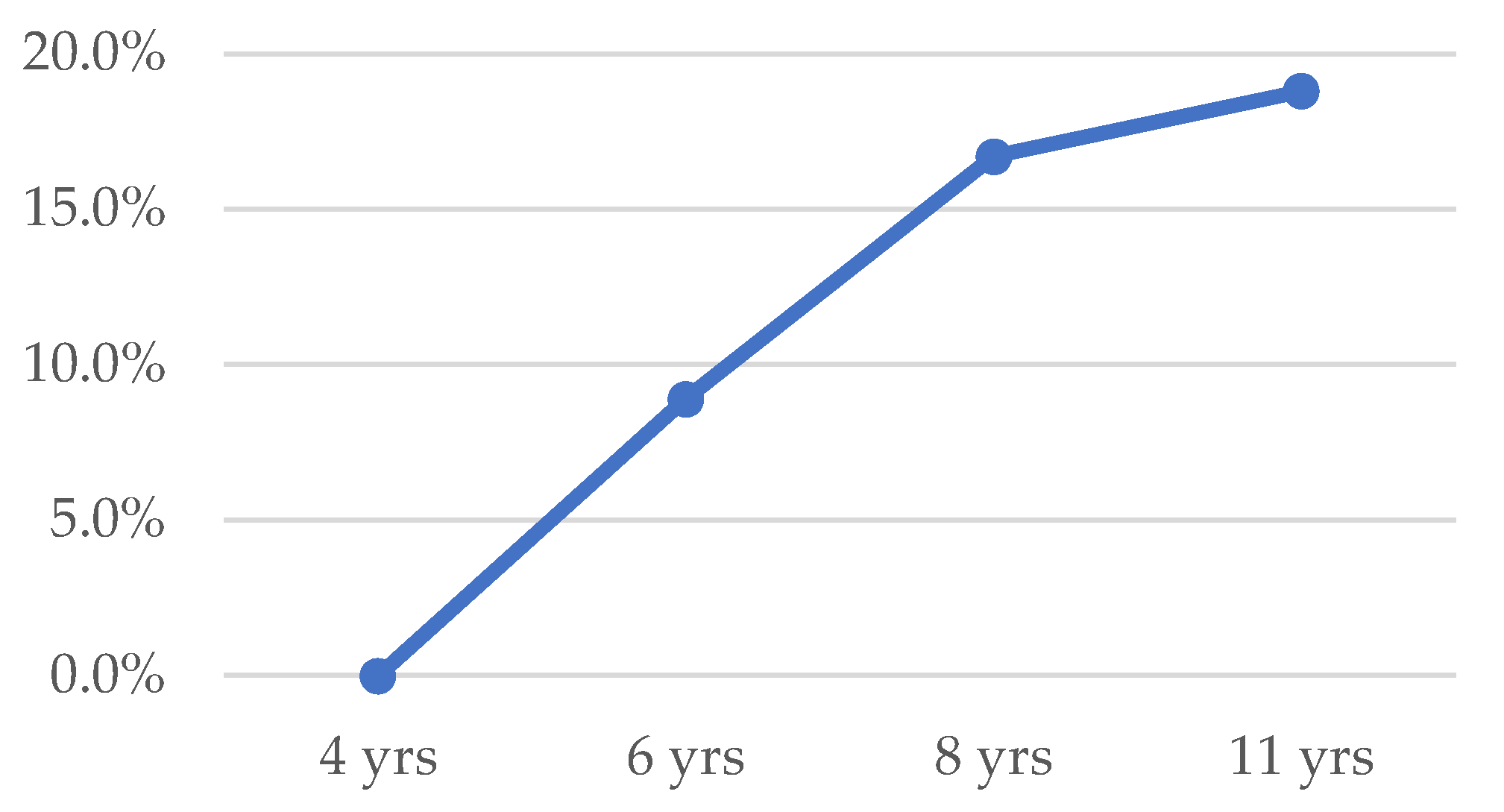
The polite plural form, completely absent at age 4, emerges at age 6 (8.9%) and increases to 16.7% at age 8 and 18.8% at age 11 (Figure 2). Notably, it appears only when addressing adults (24.9%) and is never used with peers (χ2(1) = 65.70, p < 0.001). Moreover, it is used exclusively with strangers (24.8%) and not with familiar addressees (χ2(1) = 65.10, p < 0.001). Finally, polite plural requests occur more frequently in high-cost situations (17.6%) than in low-cost situations (5.2%) (χ2(1) = 13.8, p < 0.001). Consider, for example, a request addressed by an 8-year-old to the passerby in the Ball scenario: Μπορείτε να πιάσετε την μπάλα; (“Can you-PLURAL catch-PLURAL the ball?”).
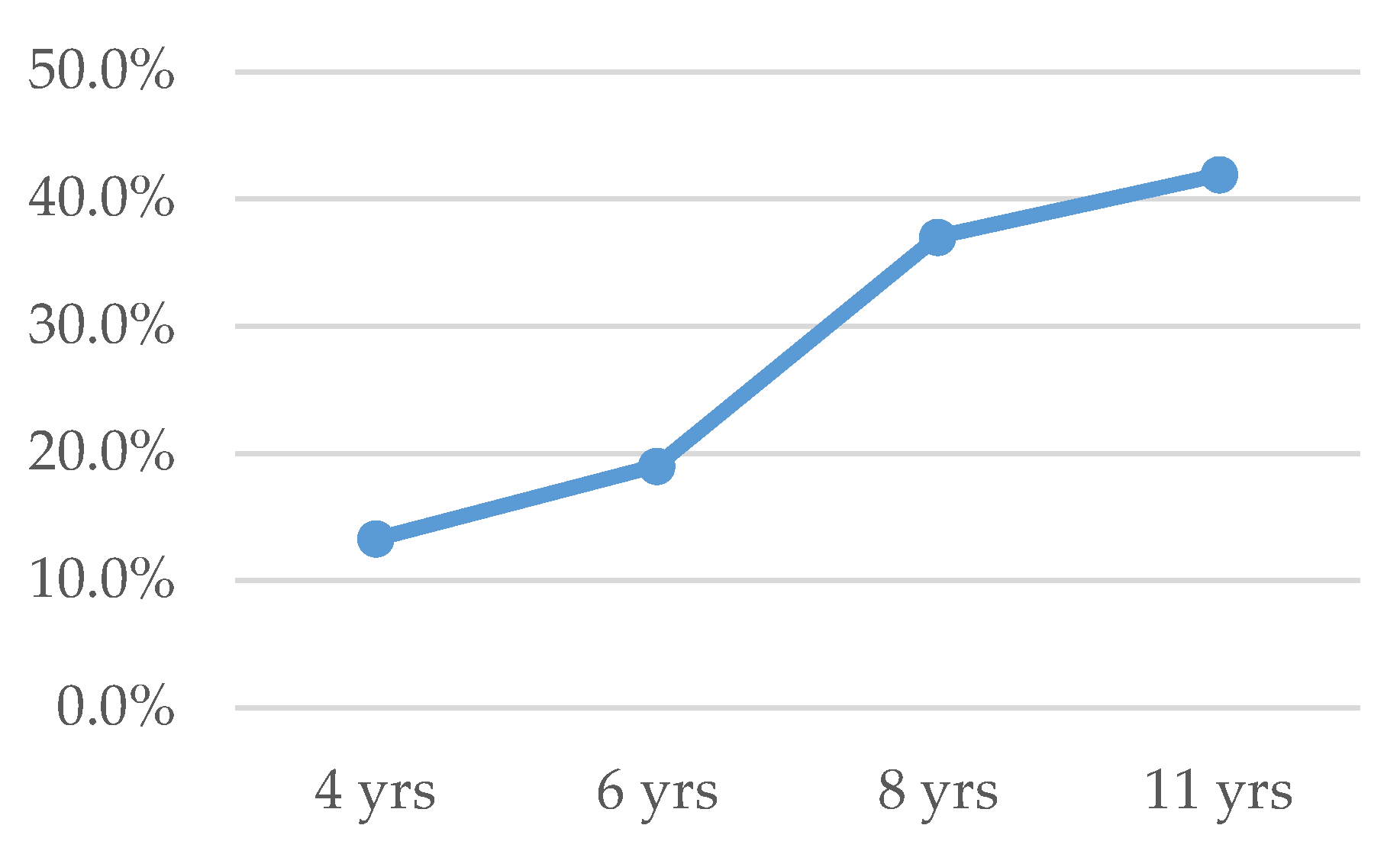
Regarding supportive moves, which are relatively frequent overall (163 instances or 28.1%), they become increasingly common and diverse with age in systematic ways. They appear even at age 4, albeit at low frequency (13.3%), and subsequently rise to 19% at age 6, 37% at age 8, and 41.9% at age 11 (see Figure 3). Moreover, while almost half of the supportive moves in the data are grounders—justifications for the requested actions—a variety of other types gradually emerge in children’s utterances, though at lower frequencies. These include, for instance, imposition minimisers (Μπαμπά, αν μπορείς, θα με πας στο σπίτι της φίλης μου; “Dad, if you can, will you drive me to my friend’s house?”), sweeteners (A, τι ωραίο σκυλάκι! Μπορώ να το πάω μια βόλτα; “Oh, what a cute puppy! Can I take it for a walk?”), and even small talk (Γεια σου παιδάκι, πώς σε λένε; Μπορείς να μου δώσεις ένα μπισκότο, επειδή βλέπω ότι δεν έχεις φάει όλα; “Hello, little one, what’s your name? Can you give me a cookie, since I see that you haven’t eaten them all?”; Cookie Unfamiliar scenario). Notably, supportive moves are more frequent in high-cost situations (37.2%), particularly in the Father Tired scenario (54.3%), than in low-cost situations (19.2%) (χ2(1) = 23.18, p < 0.001). For example, consider the disarmer preceding the base construction Will-you V?, produced by an 11-year-old in the utterance Ξέρω ότι είσαι πολύ κουρασμένος, αλλά, σε παρακαλώ, θα με πας στο σπίτι του φίλου μου; (“I know you are very tired, but please will you drive me to my friend’s house?”).
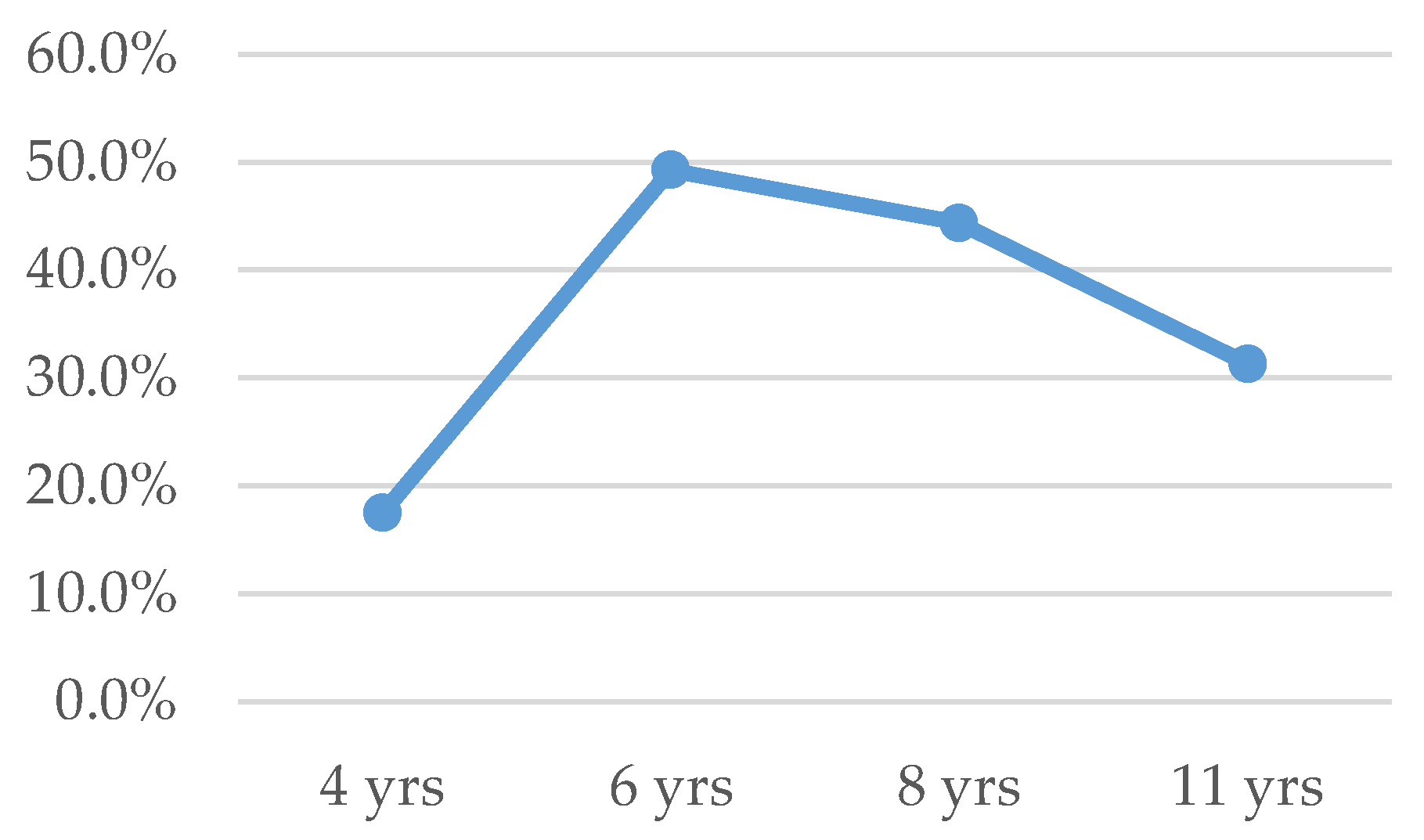
Furthermore, the politeness marker παρακαλώ (“please”), as in Παρακαλώ, μου δίνεις ένα μπισκότο; (literally, “Please, are you giving me a cookie”), elicited from a preschooler in the Cookie Familiar scenario, exhibits an inverted U-shaped developmental trajectory (Figure 4). Its use (total N = 205 tokens) increases in early childhood, from 17.5% at age 4 to 49.3% at age 6, but declines in older children, to 44.4% at age 8 and 31.3% at age 11 (χ2(3) = 38.12, p < 0.001), as children increasingly rely on more efficient linguistic strategies—such as supportive moves—to minimise the cost of requests (Wilkinson et al., 1984, p. 2139).
Similarly, diminutives, which appear from the preschool period, are less preferred by the oldest children, being absent from the Will-you V? and V-PRESENT-YOU? constructions, thus suggesting a developmental shift toward more “mature” strategies for modulating the optionality of their requests. These non-linear developmental patterns indicate that the acquisition of request constructions is a dynamic process shaped by both morphosyntactic development and pragmatic use.
In sum, children’s requests are shown to develop in sensitivity to social factors such as power, familiarity, and request cost. Older children strategically adjust their language to the addressee’s perspective, using constructions like Can-you V-SUBJUNCTIVE?, polite plural forms, and supportive moves, especially in high-cost or socially salient situations. The politeness marker παρακαλώ (“please”) peaks in early childhood before declining as more efficient strategies emerge. These developmental patterns highlight a gradual enrichment of base constructions towards more linguistically and socially attuned request forms.

5. Discussion

The present study traced the developmental trajectory of request constructions in L1 Greek-speaking children aged 4 to 11 years, adopting a constructional approach to speech acts and using controlled elicitation via the COPT instrument. The findings reveal a clear developmental trend from largely underspecified, structurally simple directive patterns toward increasingly complex, contextually adapted, and socially attuned constructions. This trajectory reflects not only grammatical growth but also the progressive consolidation of sociopragmatic competence in children—the ability to select the most situationally appropriate construction to realise their communicative goals (Diessel, 2013).

5.1. Key Findings and Theoretical Contributions

At the grammatical level, children’s requests were predominantly realised through a limited set of highly conventionalised base constructions. Although interrogative Can-you V-SUBJUNCTIVE? constructions are recorded as early as age 4, they emerge as the most preferred pattern by age 11. This consolidation coincides with a marked decline in more “direct” forms such as present and future interrogatives (Vassilaki, 2017), reflecting a shift toward constructions that linguistically profile the addressee’s ability rather than the speaker’s immediate desire. Further evidence from V-forms, hedges, and the politeness marker παρακαλώ (“please”) demonstrate children’s increasing ability to linguistically activate multiple components of the underlying request scenario, including cost, optionality, and mitigation. Additionally, supportive moves—providing justification, context, or mitigation—increase in both frequency and variety with age and are most prevalent in high-cost situations, highlighting children’s growing capacity to manage complex social interactions.
Although most prior research originates from diverse theoretical and methodological premises, the findings of the present study reveal some common trends with earlier work. Children as young as 4 years of age possess a repertoire of base constructions that reflects the key constructions of Greek for formulating requests (see Sifianou, 1992; Vassilaki, 2017). Even so-called “conventionally indirect” strategies, such as Can-you V-SUBJUNCTIVE? interrogatives, have been recorded in younger children’s production (see also, S. Ervin-Tripp et al., 1990), providing evidence that these patterns are learned as such (i.e., as form-function pairings) right from the beginning (Kania, 2013, 2016). The frequency, though, with which children employ more syntactically complex patterns increases with age. This development signifies the “linguistic road” of request pattern acquisition as described by Huls and van Wijk (2012), characterised by the mastery of more complex and “indirect” syntactic forms. In other words, the older the children grow, the more they deploy adult-like structures. A possible counter argument could be that the experimental condition—the fact that the data were elicited rather than spontaneous—prompted the older children to select these structures “to display good manners […] as competent members of their society” (Ogiermann, 2015, p. 80). Still, considering the potential of the data elicitation instrument to assemble large, representative, and generalisable corpora of speech act data (Ogiermann, 2018, p. 246), it can be argued that the results of our study represent “a measure of changes in knowledge and attitudes across groups that might be indicative of development” (Rose, 2009, p. 2347), thus reflecting the maturation of the children’s ability to manipulate symbols and develop grammar (Huls & van Wijk, 2012).
From a pragmatic perspective, request development is systematic and socially grounded. Children’s choices of constructions vary predictably with contextual factors such as the cost of the requested action, as well as power and familiarity relations. Their choices, as well as accompanying elaborations and enrichment, highlight that with increasing age children develop a heightened social awareness, becoming more sensitive, cooperative, and strategic, and demonstrating a clear cognition of social rules and norms (S. M. Ervin-Tripp, 2009; Huls & van Wijk, 2012, pp. 97–98; Sealy, 1999).
We further suggest that the illocutionary construction framework, which guided the present study, provided both methodological and conceptual advantages. First, it enabled a more nuanced and empirically grounded representation of children’s actual linguistic productions, moving beyond a priori assumptions about the discourse functions associated with specific forms. For example, contrary to traditional expectations, the prototypical form of directives—namely, the imperative—occurred only marginally in our data. Even at age 4, children produce a repertoire of interrogative constructions, albeit in a more basic (unelaborated) form. Thus, “simple” formulations are not necessarily equated with “direct” (i.e., non-interrogative) in the Searlean sense. Second, it provides a means to trace development in a non-compositional manner, conceptualised as the elaboration and enrichment of base constructions through linguistic realisation procedures that activate various necessary attributes of the request illocutionary frame. Following Pérez Hernández (2013), the degree of specification and conventionalisation of a construction is directly proportional to the number of attributes that are overtly (linguistically) instantiated. Development, therefore, represents a progression from underspecified core constructions—which may be vague or less communicatively effective—to patterns that are more specified, conventionalised, and contextually appropriate. Thus, while prior research has already demonstrated children’s early awareness of the social parameters of communication or politeness norms (see, for instance, Ainsworth-Vaughn, 1990; S. Ervin-Tripp et al., 1990; see, also, Georgalidou, 2008, on Greek), the illocutionary construction approach contributes by describing how children progress in linguistically realising this awareness. As children mature, they increasingly and consistently activate these social parameters through recognisable linguistic means (i.e., by instantiating more attributes of the illocutionary frame), leading to the entrenchment of conventionalised structures in their language repertoire (through processes of entrenchment and pre-emption; Tomasello, 2015, p. 106). In other words, as children mature, their background interactional experiences allow them to construct their pragmatic “mental models” (Liebling, 1988). We suggest that these models can be best described as illocutionary frames, i.e., higher-order organisational structures extracted from everyday situations, thereby enabling children to refine their ability to move beyond formulaic, fossilised “rules of thumb” (cf. Savić et al., 2022) towards linguistically tailored, context-sensitive requests.
Our findings can further provide empirical support for usage-based models of language acquisition (Diessel, 2013; Tomasello, 2003) in the development of children’s requestive repertoire. The base constructions identified in the data are initially employed to cover a broad range of requestive communicative events, reminiscent of overextensions in lexical acquisition. With increasing age, their use becomes more streamlined, aligning with the specifics of each communicative context and thereby enhancing the effectiveness of requests. The findings suggest that children treat base constructions as scaffolds, progressively enriching and refining them, and consistently applying these enhanced forms to produce full-fledged requests that reflect social factors such as cost, power, and familiarity.

5.2. Practical Implications

The findings of this study have important implications for education and language learning. Understanding the developmental trajectory of request constructions can inform classroom practices and curricula designed to foster pragmatic awareness and politeness strategies alongside grammatical competence. Teachers can use modelled dialogues or role-play activities that highlight contextual variation—such as differences in power and familiarity—to support children’s ability to select appropriate forms in diverse communicative situations. Furthermore, the findings provide benchmarks for early interventions targeting children with pragmatic language difficulties.

5.3. Limitations and Future Directions

Despite the potential of the study, several limitations should be acknowledged. First, the use of elicited rather than spontaneous data, while methodologically justified, may have constrained the range of strategies children employ in authentic interactions. Second, the relatively small sample size and cross-sectional design limit generalisability and prevent tracking of individual developmental trajectories. Finally, the operationalisation of social parameters (cost, power, familiarity) in simplified experimental terms cannot fully capture the nuance of real-life communicative dynamics. Addressing these limitations in future longitudinal and ecologically valid research will provide a more comprehensive understanding of first-language pragmatic development.

6. Conclusions

The present study investigated the developmental trajectory of request strategies in L1 Greek-speaking children aged 4 to 11. Through an experimental Cartoon Oral Production Task (COPT), we identified a clear progression from relatively underspecified directive forms toward a sophisticated repertoire of context-sensitive constructions. While the four dominant interrogative base constructions remain prevalent across all age groups, the way they are modified and deployed evolves significantly as children mature. Overall, children’s development of request strategies reflects the progressive enrichment of base constructions, both grammatically and pragmatically, and demonstrates the dynamic interplay between linguistic competence and social sensitivity in communication.
The study attempted to address a significant gap in Greek pragmatics by providing empirical data for the previously understudied 4–11 age range. Furthermore, the data provide empirical support for usage-based and constructional accounts of language acquisition. The transition from simple, item-based constructions to more complex, modified forms suggests that children gradually internalise a network of illocutionary frames. These frames allow them to balance communicative efficiency with social politeness requirements. In this respect, this study offers a more comprehensive understanding of how children become effective social communicators in their native language and sets the stage for future cross-linguistic comparisons and longitudinal studies to further map the less explored landscape of child pragmatic development.

Author Contributions

Author names are listed alphabetically, as both authors contributed equally to the research reported in this paper. Conceptualization, S.S. and E.V.; methodology, S.S. and E.V.; formal analysis, S.S. and E.V.; investigation, S.S.; data curation, S.S. and E.V.; writing—original draft, S.S. and E.V.; writing—review & editing, S.S. and E.V.; funding acquisition, E.V. All authors have read and agreed to the published version of the manuscript.

Funding

This research was conducted as part of a project on children’s pragmatic development in Greek L1 and L2, which was approved and funded by the Research Committee of the University of Thessaly (Decision No. 191/13.10.2015; Project Code 4962.01.33).

Institutional Review Board Statement

The study was conducted in accordance with the Declaration of Helsinki, with approval from the Research Committee of the University of Thessaly (Approval Code: 191/13.10.2015 Approval Date: 13 October 2015) (as noted under Funding) and permission from the school principals.

Informed Consent Statement

Informed consent was obtained from all participants’ parents or legal guardians prior to participation. Participants were assured of the voluntary nature of their involvement and their right to withdraw at any time without penalty. Confidentiality and anonymity of all data were strictly maintained throughout the study.

Data Availability Statement

Data are not publicly available due to the sensitive nature of the research and privacy considerations of the participants.

Acknowledgments

The authors thank Maria Economidou-Kogetsidis and Christine Savvidou for hosting our work in this special issue and supporting all stages of publication, and three anonymous reviewers for their constructive feedback. We also thank Tania Molocha for her contributions to data collection, Venetsiana Astara for her assistance in coding supportive moves and establishing interrater reliability, and Professor Olga-Jasmin Sarafidou, formerly of the University of Thessaly, and Stathis Xafakos for help with statistical analyses. An earlier version of this work was presented at the 10th International Conference on Construction Grammar (ICCG-10), Paris, 16–18 July 2018. S. Selimis conducted this study while holding dual affiliations with the Department of Primary Education at the University of Thessaly and the joint inter-university postgraduate program Education Science: Special Education for People with Oral and Written Language Difficulties, offered collaboratively by the Hellenic Open University, Patras, and the University of Thessaly.

Conflicts of Interest

The authors declare no conflicts of interest.

Appendix A

Table A1. Experimental Scenarios (Translated from the Original Greek COPT) and Incorporated Independent Variables.
High Cost
Familiarity +Familiarity −
Power +Your dad has just come back from work and he is very tired. You want him to drive you to a friend’s home who invited you to play together. What do you say exactly to your dad? (Father Tired scenario)You play football with your friends in a playground. The ball goes out of the fence, rolling fast down the street. At that moment a lady passes by. You ask her to go and get the ball. What do you say exactly? (Ball scenario)
Power −Your friend has an amazing puzzle. His godmother bought it for him from America and he is very excited. You don’t have any puzzles and ask him to give it to you as a gift. What do you say exactly? (Puzzle scenario)In the square, you come across a kid riding his/her new bike. This kid is not someone you know. You left your bike at home. You ask that kid to let you ride the bike for a while. What do you say exactly? (Bike scenario)
Low Cost
Familiarity +Familiarity −
Power +Your grandmother and you go for a walk and pass by a kiosk. You are thirsty and ask her to buy you some juice. What do you say exactly? (Juice scenario)–As you play in the square, you see a lady walking her dog. You want to play with the dog for a while, because you like animals very much. What do you say exactly to the lady? (Dog scenario)
Power −Your friend at school has a big pack of cookies and eats some during playtime. You ask for a cookie. What do you say exactly? (Cookie Familiar scenario)During playtime at school a kid who is not a classmate and a friend of yours (you don’t know his/her name) eats your favourite cookies. He/She has an almost full pack and you ask for a cookie. What do you say exactly to that kid? (Cookie Unfamiliar scenario)
Note. “+” = familiar or power-asymmetrical context; “−” = unfamiliar or power-symmetrical context.

Appendix B

Table A2. Examples of the Coding Scheme as Applied to Children’s Requests.
CategoryCodesExample 1Example 2
Μου δίνεις, σε παρακαλώ πολύ, ένα μπισκότο;
(lit.: “Are You Giving Me, Please, a Cookie?”/”Could You Please Give Me a Cookie?”)
Θα μπορούσες να μου δανείσεις το ποδήλατό σου και εγώ θα σου το επιστρέψω;
(“Could You Lend Me Your Bike, and I’ll Give It Back to You?”)
Sentence Type/ΜoodImperative00
Interrogative11
Subjunctive00
TensePresent10
Future00
Past (+ θα) (=would)01
(Modal)Want (θέλω)00
Can/May (μπορώ)01
Main Verb Inflectional MarkingPerson (1st vs. 2nd)00
Number (Singular vs. Plural)11
Optional ElementsPlease (παρακαλώ)10
A bit (λίγο)00
Diminutives00
Summons00
Supportive Moves01
Note. Example responses are drawn from the oldest participant group in the Cookie Unfamiliar and Bike scenarios, respectively. For the category Person, 1st person was coded as 1 and 2nd person as 0. For Number, singular was coded as 1 and plural as 0. Supportive moves were further classified by type (e.g., grounders/justifications, promises, disarmers). In all other cases, 1 indicates presence of a feature and 0 indicates its absence.

References

  1. Ainsworth-Vaughn, N. (1990). The acquisition of sociolinguistic norms: Style-switching in very early directives. Language Sciences, 12, 22–38. [Google Scholar] [CrossRef]
  2. Al-Abbas, L. (2023). Politeness strategies used by children in requests in relation to age and gender: A case study of Jordanian elementary school students. Frontiers in Education, 8, 1175599. [Google Scholar] [CrossRef]
  3. Andini, S., Sudarto, S., Ayatullah, A., & Farhan, H. M. (2025). Language politeness in Javanese and Sundanese border cultural landscapes in elementary school student learning. Journal of Innovation in Educational and Cultural Research, 6(4), 681–691. [Google Scholar] [CrossRef]
  4. Axia, G., & Baroni, M. R. (1985). Linguistic politeness at different age levels. Child Development, 56, 918–927. [Google Scholar] [CrossRef]
  5. Baicchi, A. (2017). How to do things with metonymy in discourse. In A. Athanasiadou (Ed.), Studies in figurative thought and language (pp. 75–104). John Benjamins. [Google Scholar]
  6. Bates, E. (1976). Language and contexts: The acquisition of pragmatics. Academic Press. [Google Scholar]
  7. Bernicot, J., & Legros, S. (1987). Direct and indirect directives: What do young children understand? Journal of Experimental Child Psychology, 43, 346–358. [Google Scholar] [CrossRef]
  8. Blum-Kulka, S., House, J., & Kasper, G. (Eds.). (1989). Cross-cultural pragmatics: Requests and apologies. Ablex. [Google Scholar]
  9. Bock, J. K., & Hornsby, M. E. (1981). The development of directives: How children ask and tell. Journal of Child Language, 8(1), 151–163. [Google Scholar] [CrossRef] [PubMed]
  10. Brown, P., & Levinson, S. (1987). Politeness: Some universals in language usage. Cambridge University Press. [Google Scholar]
  11. Bryant, J. B. (2015). Pragmatic development. In E. L. Bavin, & L. R. Naigles (Eds.), The Cambridge handbook of child language (pp. 438–457). Cambridge University Press. [Google Scholar]
  12. Cameron-Faulkner, T. (2014). The development of speech acts. In D. Matthews (Ed.), Pragmatic development in first language acquisition (pp. 37–52). John Benjamins. [Google Scholar]
  13. Canakis, C. (2015). Non-quantifying líγo constructions in Modern Greek. Constructions and Frames, 7(1), 47–78. [Google Scholar] [CrossRef]
  14. Chen, Y. (2017). Children’s early awareness of the effect of interpersonal status on politeness. Journal of Politeness Research, 13(1), 121–142. [Google Scholar] [CrossRef]
  15. Dąbrowska, E. (2004). Rules or schemas? Evidence from Polish. Language and Cognitive Processes, 19, 225–271. [Google Scholar] [CrossRef]
  16. Desagulier, G., & Monneret, P. (2023). Cognitive Linguistics and a usage-based approach to the study of semantics and pragmatics. In M. Díaz-Campos, & S. Balasch (Eds.), The handbook of usage-based linguistics, 1. Wiley. [Google Scholar] [CrossRef]
  17. Diessel, H. (2013). Construction grammar and first language acquisition. In T. Hoffmann, & G. Trousdale (Eds.), The Oxford handbook of construction grammar (pp. 347–364). Oxford University Press. [Google Scholar]
  18. Dore, J. (1977). Children’s illocutionary acts. In R. O. Freedle (Ed.), Discourse production and comprehension (pp. 227–244). Ablex. [Google Scholar]
  19. Drew, P., & Couper-Kuhlen, E. (2014). Requesting—From speech act to recruitment. In P. Drew, & E. Couper-Kuhler (Eds.), Requesting in social interaction (pp. 1–34). John Benjamins. [Google Scholar]
  20. Economidou-Kogetsidis, M., Myrset, A., & Savić, M. (2026). “If we are talking to the Minster of Education …”: L2 request appraisals and metapragmatic awareness in young learners of English. In G. Schauer, M. Economidou-Kogetsidis, M. Savić, & A. Myrset (Eds.), Second language pragmatics and young language learners: EFL primary school contexts in Europe (pp. 23–53). Multilingual Matters. [Google Scholar]
  21. Ervin-Tripp, S., Guo, J., & Lampert, M. (1990). Politeness and persuasion in children’s control acts. Journal of Pragmatics, 14, 307–331. [Google Scholar] [CrossRef]
  22. Ervin-Tripp, S. Μ. (1977). Wait for me, roller skate! In S. Ervin-Tripp, & C. Mitchell-Kernan (Eds.), Child discourse (pp. 165–188). Academic Press. [Google Scholar]
  23. Ervin-Tripp, S. M. (2009). Developmental psychology. In D. Sandra, J.-O. Östman, & J. Verschueren (Eds.), Cognition and pragmatics (pp. 146–156). John Benjamins. [Google Scholar]
  24. Ervin-Tripp, S. M., & Gordon, D. P. (1986). The development of children’s requests. In R. E. Schiefelbusch (Ed.), Communicative competence: Assessment and intervention (pp. 61–96). College Hill Press. [Google Scholar]
  25. Fried, M., & Nikiforidou, K. (2025). Construction grammar: Introduction. In M. Fried, & K. Nikiforidou (Eds.), The Cambridge handbook of construction grammar (pp. 1–20). Cambridge University Press. [Google Scholar]
  26. Gass, S. M., & Houck, N. (1999). Interlanguage refusals: A cross-cultural study of Japanese-English. De Gruyter Mouton. [Google Scholar]
  27. Georgalidou, M. (2008). The contextual parameters of linguistic choice: Greek children’s preferences for the formation of directive speech acts. Journal of Pragmatics, 40, 72–94. [Google Scholar] [CrossRef]
  28. Gordon, D. P., & Ervin-Tripp, S. M. (1984). The structure of children’s requests. In R. E. Schiefelbusch, & A. Pickar (Eds.), The acquisition of communicative competence (pp. 295–321). University Park Press. [Google Scholar]
  29. Grosse, G., Moll, H., & Tomasello, M. (2010). 21-Month-olds understand the cooperative logic of requests. Journal of Pragmatics, 42, 3377–3383. [Google Scholar] [CrossRef]
  30. Hughes, A. M. (2012). Problem solving, reasoning and numeracy in the early years foundation stage. Routledge. [Google Scholar]
  31. Huls, E., & van Wijk, C. (2012). The development of a directive repertoire in context: A case study of a Dutch speaking young child. Journal of Pragmatics, 44(1), 83–103. [Google Scholar] [CrossRef]
  32. Kania, U. (2013). “Can I ask you something?”: The influence of functional factors on the L1-acquisition of yes-no questions in English. Yearbook of the German Cognitive Linguistics Association, 1(1), 109–128. [Google Scholar] [CrossRef]
  33. Kania, U. (2016). Why don’t you just learn it from the input?: A usage-based corpus study on the acquisition of conventionalized indirect speech acts in English and German. In L. Ortega, A. E. Tyler, H. I. Park, & M. Uno (Eds.), The usage-based study of language learning and multilingualism (pp. 37–53). Georgetown University Press. [Google Scholar]
  34. Kasper, G. (2000). Data collection in pragmatics research. In H. Spencer-Oatey (Ed.), Culturally speaking (pp. 316–341). Continuum. [Google Scholar]
  35. Küntay, A., Nakamura, K., & Ateş, B. S. (2014). Crosslinguistic and crosscultural approaches to pragmatic development. In D. Matthews (Ed.), Pragmatic development in first language acquisition (pp. 317–341). John Benjamins. [Google Scholar]
  36. Laalo, K. (2021). Directives in Finnish language acquisition. In U. Stephany, & A. Aksu-Koç (Eds.), Development of modality in first language acquisition: A cross-linguistic perspective (pp. 347–378). De Gruyter Mouton. [Google Scholar]
  37. Leech, G. (1983). Principles of pragmatics. Longman. [Google Scholar]
  38. Liebling, C. R. (1988). Means to an end: Children’s knowledge of directives during the elementary school years. Discourse Processes, 11(1), 79–99. [Google Scholar] [CrossRef]
  39. Lieven, E., & Tomasello, M. (2008). Children’s first language acquistion from a usage-based perspective. In P. Robinson, & N. C. Ellis (Eds.), Handbook of cognitive linguistics and second language acquisition (pp. 168–196). Routledge/Taylor & Francis Group. [Google Scholar]
  40. Marmaridou, S. (2000). Pragmatic meaning and cognition. John Benjamins. [Google Scholar]
  41. Matthews, D. (2014). Introduction. An overview of research on pragmatic development. In D. Matthews (Ed.), Pragmatic development in first language acquisition (pp. 1–11). John Benjamins. [Google Scholar]
  42. Matthews, D., & Krajewski, G. (2019). First language acquisition. In E. Dąbrowska, & D. Divjak (Eds.), Cognitive linguistics: A survey of linguistic subfields (pp. 159–181). De Gruyter Mouton. [Google Scholar]
  43. Ogiermann, E. (2015). In/directness in Polish children’s requests at the dinner table. Journal of Pragmatics, 82, 67–82. [Google Scholar] [CrossRef]
  44. Ogiermann, E. (2018). Discourse completion tasks. In A. H. Jucker, K. P. Schneider, & W. Bublitz (Eds.), Methods in pragmatics (pp. 229–255). De Gruyter Mouton. [Google Scholar]
  45. Panther, K.-U., & Thornburg, L. (2005). Motivation and convention in some speech act constructions: A cognitive linguistic approach. In S. Marmaridou, K. Nikiforidou, & E. Antonopoulou (Eds.), Reviewing linguistic thought: Converging trends for the 21st Century (pp. 53–76). De Gruyter Mouton. [Google Scholar]
  46. Pérez Hernández, L. (2013). Illocutionary constructions: (Multiple source)-in-target metonymies, illocutionary ICMs, and specification links. Language & Communication, 33, 128–149. [Google Scholar]
  47. Pérez Hernández, L. (2020). Speech acts in English: From research to instruction and textbook development. Cambridge University Press. [Google Scholar]
  48. Pérez Hernández, L., & Ruiz de Mendoza, F. J. (2002). Grounding, semantic motivation, and conceptual interaction in indirect directive speech acts. Journal of Pragmatics, 34(3), 259–284. [Google Scholar] [CrossRef]
  49. Rakoczy, H., & Schmidt, M. F. H. (2013). The early ontogeny of social norms. Child Development Perspectives, 7(1), 17–21. [Google Scholar] [CrossRef]
  50. Rakoczy, H., & Tomasello, M. (2009). Done wrong or said wrong? Young children understand the normative directions of fit of different speech acts. Cognition, 113, 205–212. [Google Scholar] [CrossRef]
  51. Rose, K. (2000). An exploratory cross-sectional study of interlanguage pragmatic development. Studies in Second Language Acquisition, 22, 27–59. [Google Scholar] [CrossRef]
  52. Rose, K. (2009). Interlanguage pragmatic development in Hong Kong, phase 2. Journal of Pragmatics, 41, 2345–2364. [Google Scholar] [CrossRef]
  53. Rossano, F., & Liebal, K. (2014). “Requests” and “offers” in orangutans and human infants. In P. Drew, & E. Couper-Kuhler (Eds.), Requesting in social interaction (pp. 335–363). John Benjamins. [Google Scholar]
  54. Ruiz de Mendoza, F. J., & Baicchi, A. (2007). Illocutionary constructions: Cognitive motivation and linguistic realization. In K. Istvan, & L. Horn (Eds.), Explorations in pragmatics: Linguistic, cognitive, and intercultural aspects (pp. 95–127). De Gruyter Mouton. [Google Scholar]
  55. Ryckebusch, C., & Marcos, H. (2004). Speech acts, social context and parent-toddler play between the ages of 1;5 and 2;3. Journal of Pragmatics, 36, 883–897. [Google Scholar] [CrossRef]
  56. Safont-Jordà, M.-P. (2013). Early stages of trilingual pragmatic development: A longitudinal study of requests in Catalan, Spanish and English. Journal of Pragmatics, 59, 68–80. [Google Scholar] [CrossRef]
  57. Savić, M., Myrset, A., & Economidou-Kogetsidis, M. (2022). Lived experiences as a resource for scaffolding metapragmatic understandings with young language learners. Language Learning Journal, 50(4), 475–490. [Google Scholar] [CrossRef]
  58. Sealy, A. (1999). “Don’t be cheeky”: Requests, directives and being a child. Journal of Sociolinguistics, 3(1), 24–40. [Google Scholar] [CrossRef]
  59. Searle, J. (1976). The classification of illocutionary acts. Language in Society, 5, 1–24. [Google Scholar] [CrossRef]
  60. Sifianou, M. (1992). Politeness phenomena in England and Greece. Clarendon Press. [Google Scholar]
  61. Stephany, U. (2021). Development of modality in early Greek language acquisition. In U. Stephany, & A. Aksu-Koç (Eds.), Development of modality in first language acquisition: A cross-linguistic perspective (pp. 255–314). De Gruyter Mouton. [Google Scholar]
  62. Stephany, U., & Voeikova, M. D. (2015). Requests, their meanings and aspectual forms in early Greek and Russian child language. Journal of Greek Linguistics, 15, 66–90. [Google Scholar] [CrossRef]
  63. Takahashi, H. (2012). A cognitive linguistic analysis of the English imperative. With special attention to Japanese imperatives. John Benjamins. [Google Scholar]
  64. Tomasello, M. (2003). Constructing a language: A usage-based theory of language acquisition. Harvard University Press. [Google Scholar]
  65. Tomasello, M. (2006). Construction grammar for kids. Constructions, SV1-SV11, 1–23. [Google Scholar]
  66. Tomasello, M. (2015). The usage-based theory of language acquisition. In E. L. Bavin, & L. R. Naigles (Eds.), The Cambridge handbook of child language (pp. 89–106). Cambridge University Press. [Google Scholar]
  67. Vassilaki, E. (2017). Cognitive motivation in the linguistic realization of requests in Modern Greek. In A. Athanasiadou (Ed.), Studies in figurative thought and language (pp. 105–124). John Benjamins. [Google Scholar]
  68. Vassilaki, E., & Selimis, S. (2020a). Children’s requestive behavior in L2 Greek: Beyond the core request. Corpus Pragmatics, 4(3), 359–380. [Google Scholar] [CrossRef]
  69. Vassilaki, E., & Selimis, S. (2020b). Children’s requestive behavior in L2 Greek: The core request. Journal of Pragmatics, 170, 271–283. [Google Scholar] [CrossRef]
  70. Wilkinson, L. C., Wilkinson, A. C., Spinelli, F., & Chiang, C. P. (1984). Metalinguistic knowledge of pragmatic rules in school-age children. Child Development, 55(6), 2130–2140. [Google Scholar] [CrossRef]
  71. Wootton, A. J. (1981/2014). Two request forms of four year olds. In P. Drew, & E. Couper-Kuhler (Eds.), Requesting in social interaction (pp. 171–183). John Benjamins. (Original work published 1981). [Google Scholar]
  72. Zufferey, S. (2016). Pragmatic acquisition. In J.-O. Östman, & J. Verschueren (Eds.), Handbook of pragmatics. 2016 Installment. John Benjamins. [Google Scholar]
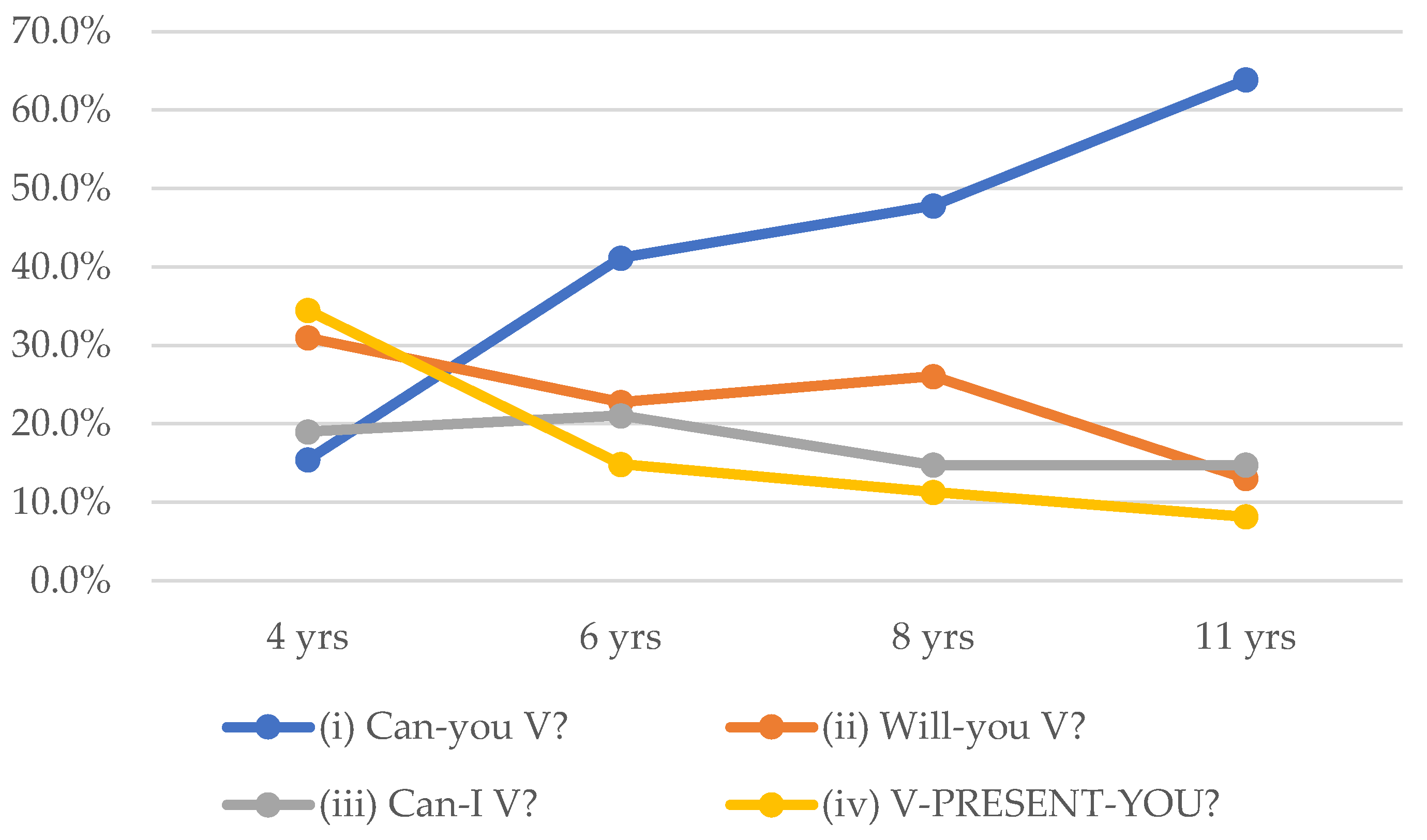
Figure 1. Distribution of request base constructions across age groups.
Languages 11 00019 g001
Figure 2. Frequency of the polite plural form across age groups.
Languages 11 00019 g002
Figure 3. Frequency of supportive moves across age groups.
Languages 11 00019 g003
Figure 4. Developmental trajectory of the use of the politeness marker παρακαλώ (“please”).
Languages 11 00019 g004
Table 1. Summary of participants details.
4-Year-Olds6-Year-Olds8-Year-Olds11-Year-Olds
Age Range (yrs;mos)3;8–5;06;1–7;18;2–9;211;1–12;5
Mean Age (yrs;mos)4;56;68;711;6
Total N18181720
Table 2. Most frequent base constructions identified in the data.
Base ConstructionFrequency
(N of Tokens)
Example
(i) Can-you V-SUBJUNCTIVE?33.3% (193)Μπορείς να μου δώσεις ένα μπισκότο;
(“Can you give me a cookie?”)
(ii) Will-you V?16.9% (98)Θα μου δώσεις ένα μπισκότο;
(“Will you give me a cookie?”)
(iii) Can-I V-SUBJUNCTIVE?12.9% (75)Μπορώ να πάρω ένα μπισκότο;
(“Can I take a cookie?”)
(iv) V-PRESENT-YOU?11.9% (69)Μου δίνεις ένα μπισκότο;
(“Are you giving me a cookie?”) [lit. transl.]
Note. All linguistic examples illustrating the dominant base constructions were drawn from our database and pertain to the Cookie Familiar scenario in the COPT.
Table 3. Progressive elaboration of the Can-you V-SUBJUNCTIVE? base construction across age groups.
Age (yrs)παρακαλώ (“Please”)λίγο
(“a Little”)
DiminutivesPluralSupportive Moves
4+
6+++++
8+++++
11+++++
Note. “+” = feature present (coloured cells); “−” = feature absent (uncoloured cells).
Table 4. Progressive elaboration of the V-PRESENT-YOU? base construction across age groups.
Age (yrs)παρακαλώ (“Please”)λίγο
(“a Little”)
DiminutivesPluralSupportive Moves
4++++
6++++
8+++++
11++++
Note. “+” = feature present (coloured cells); “−” = feature absent (uncoloured cells).
Table 5. Progressive elaboration of the Can-I V-SUBJUNCTIVE? base construction across age groups.
Age (yrs)παρακαλώ (“Please”)λίγο
(“a Little”)
DiminutivesPluralSupportive Moves
4++++
6+++++
8++++
11++++
Note. “+” = feature present (coloured cells); “−” = feature absent (uncoloured cells).
Table 6. Progressive elaboration of the Will-you V? base construction across age groups.
Age (yrs)παρακαλώ (“Please”)λίγο
(“a Little”)
DiminutivesPluralSupportive Moves
4+++
6++++
8+++++
11++++
Note. “+” = feature present (coloured cells); “−” = feature absent (uncoloured cells).
Disclaimer/Publisher’s Note: The statements, opinions and data contained in all publications are solely those of the individual author(s) and contributor(s) and not of MDPI and/or the editor(s). MDPI and/or the editor(s) disclaim responsibility for any injury to people or property resulting from any ideas, methods, instructions or products referred to in the content.