
Article

Active Energy Management Based on Meta-Heuristic Algorithms of Fuel Cell/Battery/Supercapacitor Energy Storage System for Aircraft


Mechanical Engineering Department, Faculty of Engineering, Gebze Technical University, 41400 Kocaeli, Turkey
*
Author to whom correspondence should be addressed.
Aerospace 2021, 8(3), 85; https://doi.org/10.3390/aerospace8030085

Submission received: 15 January 2021 / Revised: 9 March 2021 / Accepted: 16 March 2021 / Published: 19 March 2021

Abstract

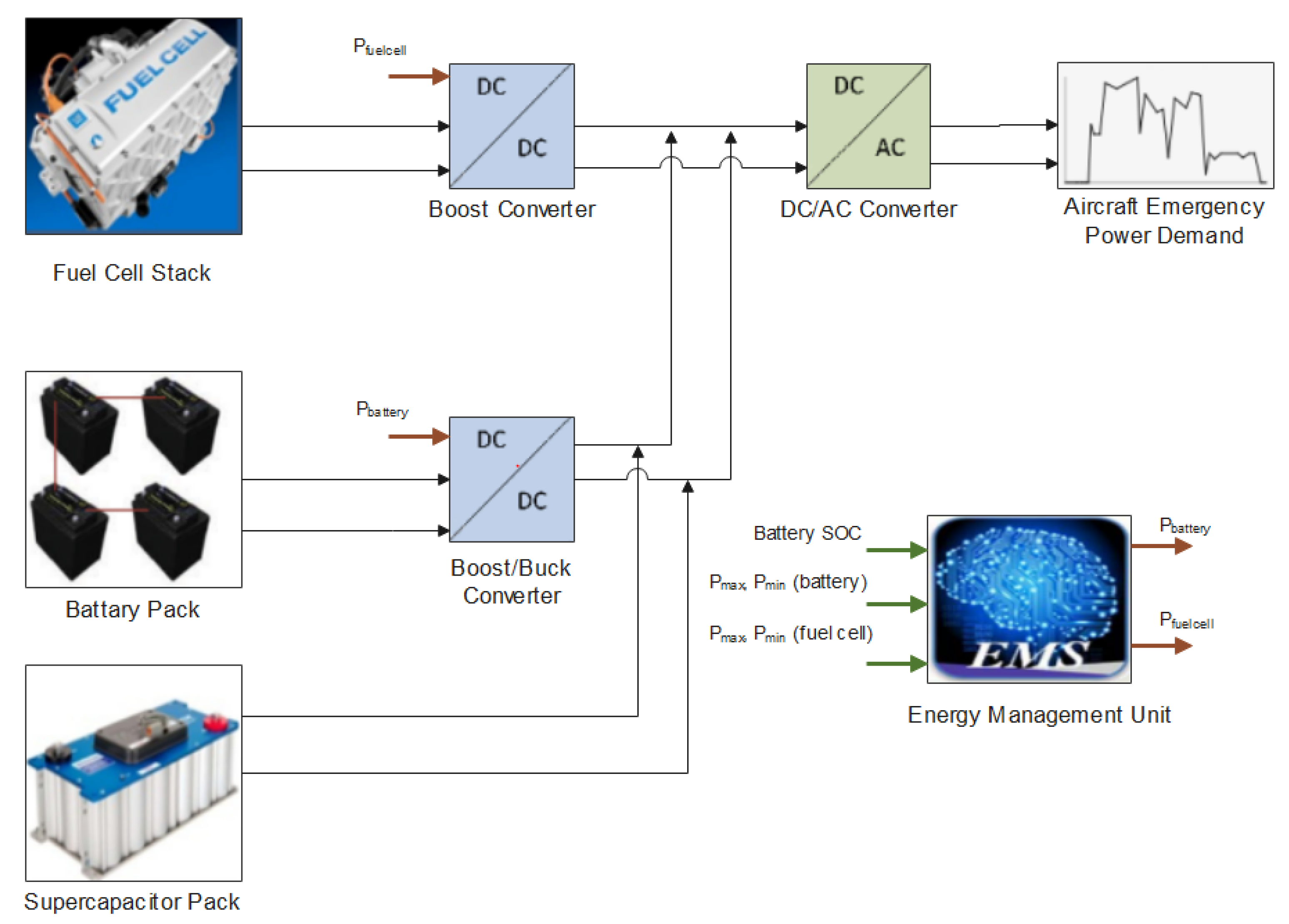
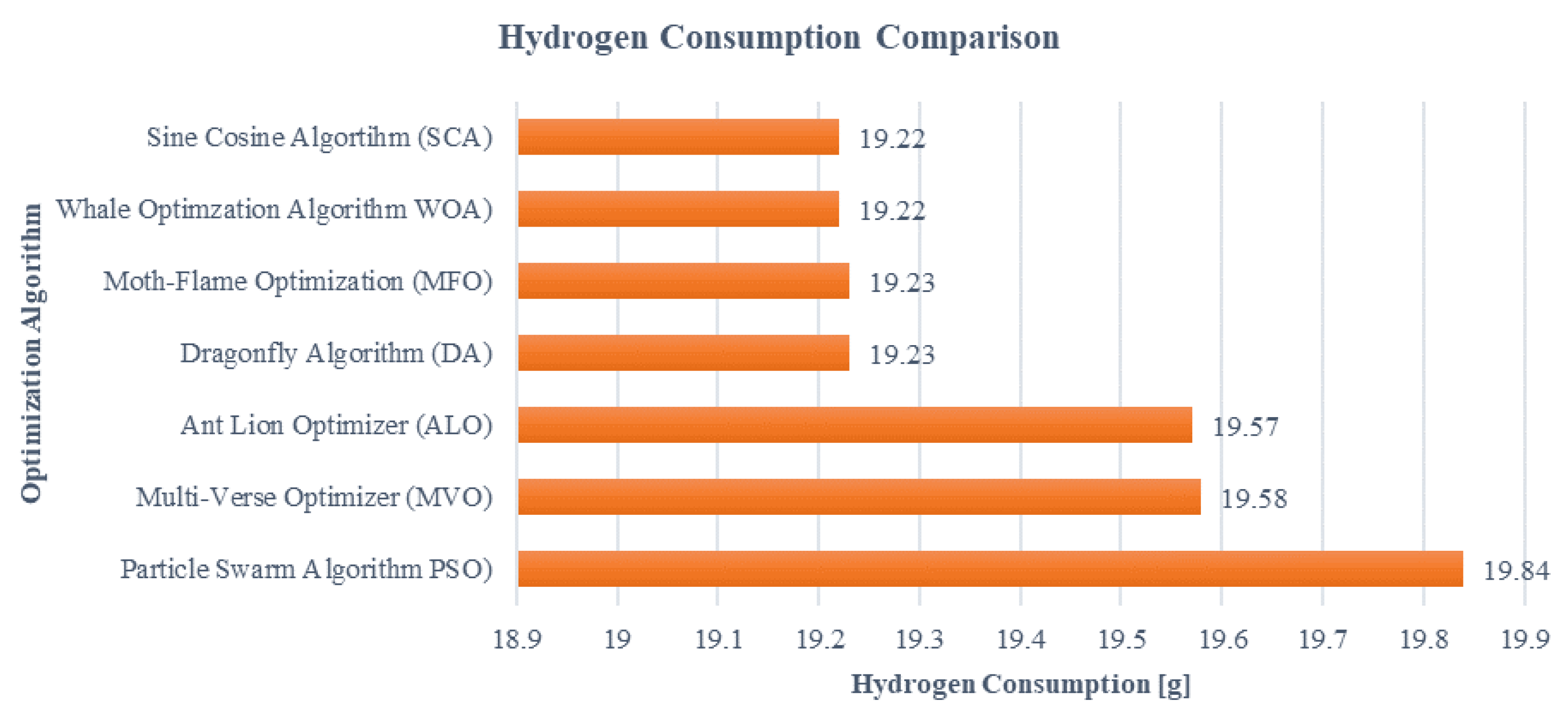
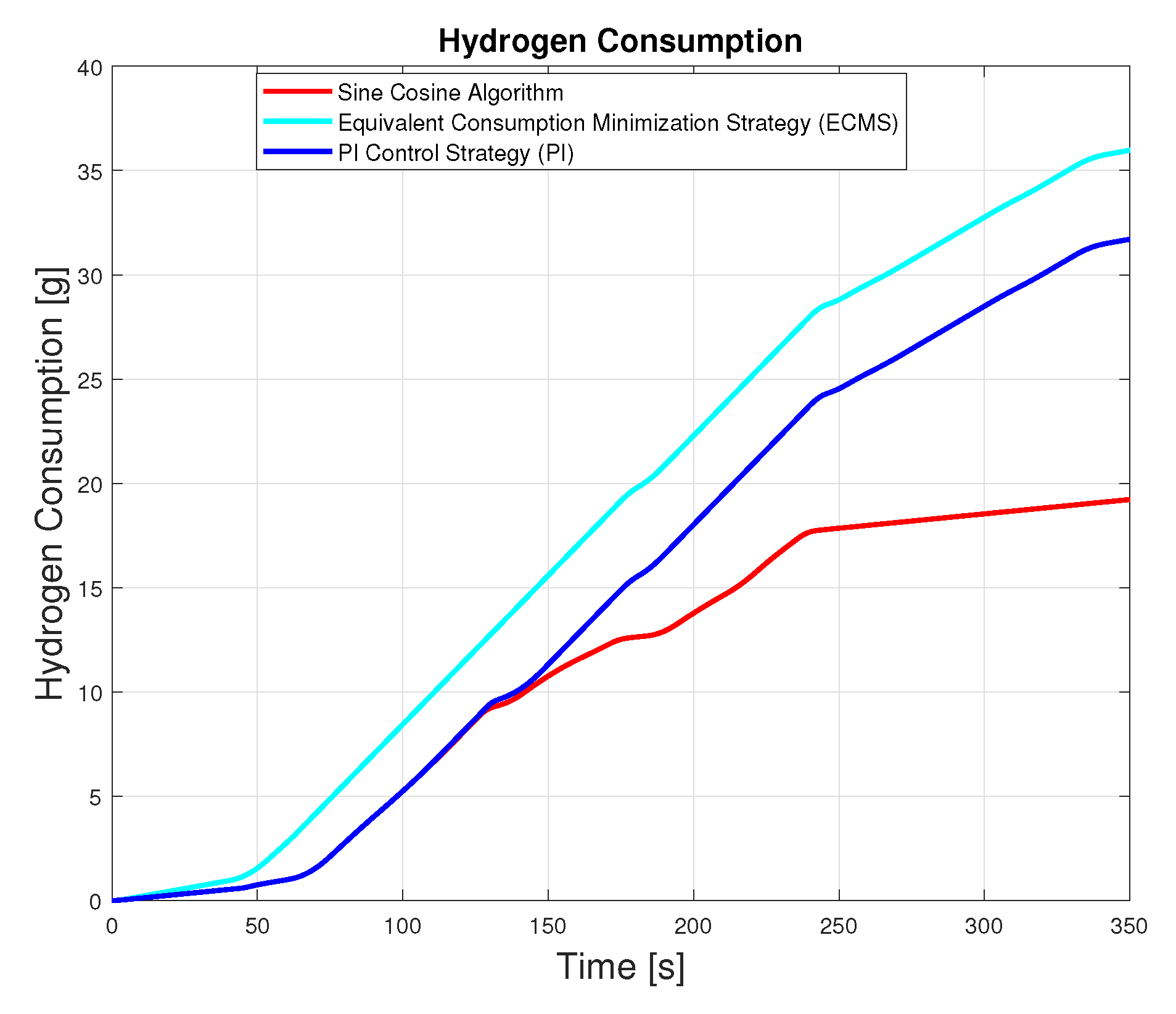
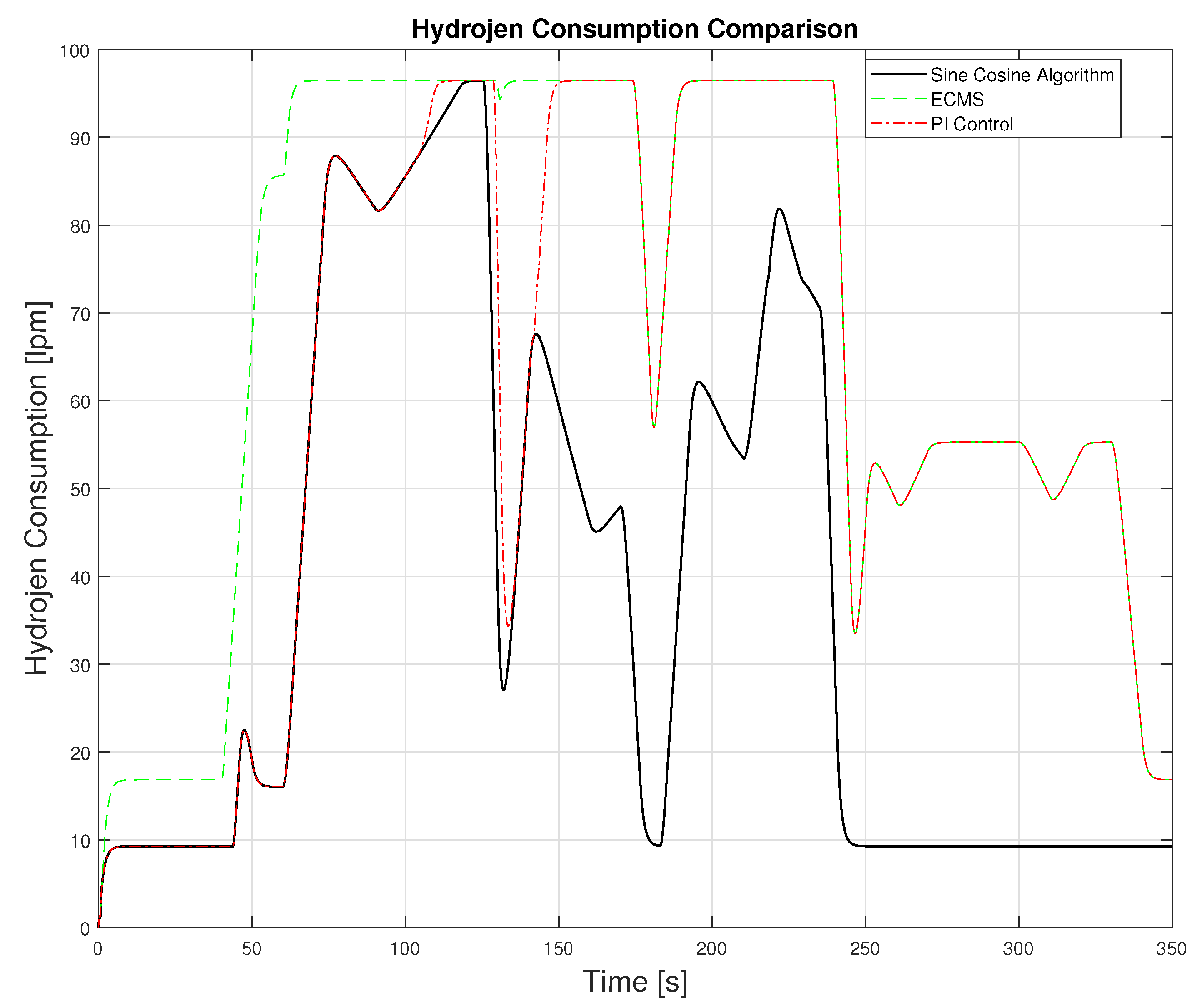
This paper presents the application of an active energy management strategy to a hybrid system consisting of a proton exchange membrane fuel cell (PEMFC), battery, and supercapacitor. The purpose of energy management is to control the battery and supercapacitor states of charge (SOCs) as well as minimizing hydrogen consumption. Energy management should be applied to hybrid systems created in this way to increase efficiency and control working conditions. In this study, optimization of an existing model in the literature with different meta-heuristic methods was further examined and results similar to those in the literature were obtained. Ant lion optimizer (ALO), moth-flame optimization (MFO), dragonfly algorithm (DA), sine cosine algorithm (SCA), multi-verse optimizer (MVO), particle swarm optimization (PSO), and whale optimization algorithm (WOA) meta-heuristic algorithms were applied to control the flow of power between sources. The optimization methods were compared in terms of hydrogen consumption and calculation time. Simulation studies were conducted in Matlab/Simulink R2020b (academic license). The contribution of the study is that the optimization methods of ant lion algorithm, moth-flame algorithm, and sine cosine algorithm were applied to this system for the first time. It was concluded that the most effective method in terms of hydrogen consumption and computational burden was the sine cosine algorithm. In addition, the sine cosine algorithm provided better results than similar meta-heuristic algorithms in the literature in terms of hydrogen consumption. At the same time, meta-heuristic optimization algorithms and equivalent consumption minimization strategy (ECMS) and classical proportional integral (PI) control strategy were compared as a benchmark study as done in the literature, and it was concluded that meta-heuristic algorithms were more effective in terms of hydrogen consumption and computational time.
Keywords: energy management; energy optimization; electrical aircraft; energy efficiency; hydrogen consumption; hybrid energy source energy management; energy optimization; electrical aircraft; energy efficiency; hydrogen consumption; hybrid energy source