1. Introduction
The burning-rate characteristics of solid propellants directly determine the internal ballistic performance, thrust-regulation capability, and operational stability of solid rocket motors (SRMs), making burning rate one of the most critical control parameters in solid propulsion [
1]. As modern weapon systems increasingly demand high mobility and rapid response, controllable burning-rate modulation and burning-rate enhancement technologies have become important directions for SRM design optimization [
2]. Embedding high-thermal-conductivity wires into propellants alters local heat-transfer pathways and accelerates heat conduction from the combustion gases into the propellant interior. This approach provides a practical and effective means for enhancing burning rate [
3]. However, the combustion process of wire-embedded propellants involves coupled heat transfer among the gases, the wire, and the propellant, and is jointly influenced by the geometry and material properties of the wires, as well as the thermophysical properties of the propellants. These coupled effects significantly complicate the resulting integrated burning rate behavior.
Most existing studies on wire-embedded propellants rely primarily on experimental investigations [
4]. Kubota et al. reported that embedding wires—particularly silver wires—into propellants can substantially increase the integrated burning rate, and that burning-rate variations along the wire are jointly governed by the propellant formulation, wire material, and wire diameter [
5]. Isert et al. proposed a burning-rate-enhancement approach using reactive wires, such as nickel/aluminum nanofoils and Pyrofuze
® self-alloying wires. Their results showed that these wires act not only as efficient heat-conduction pathways but also as reactive components that release additional energy and generate gas through exothermic reactions [
6]. Lee et al. investigated the combustion behavior of thermoplastic propellants with embedded wires using a ground-test system and demonstrated that aluminum and copper wires can effectively enlarge the burning surface and improve ignition performance, with the enhancement strongly correlated with wire thermal diffusivity [
7]. Sun et al. examined the effects of embedded silver wires on the burning rate of low-vulnerability propellants using underwater acoustic-emission testing and verified that strip burning-rate tests can, to some extent, reflect the overall combustion behavior of wire-embedded grains [
8]. Shen et al. studied composite propellants containing silver wires and reported nearly sixfold increases in the static burning rate, together with systematic evaluations of thermal stability, mechanical sensitivity, and electrostatic spark sensitivity [
9]. Wu et al. further analyzed the effects of wire-winding configuration and ambient temperature, showing that a tightly wound dual-silver-wire structure yields significant burning-rate enhancement, particularly under low-temperature conditions [
10]. In recent studies, several researchers have attempted to regulate the burning surface evolution and burning rate of propellants by embedding various wire configurations, thereby providing new multi-thrust control schemes for SRMs. Corresponding ignition tests have been conducted to obtain the integrated burning rate of the propellants and to validate the effectiveness of these approaches [
11,
12,
13,
14]. Although experimental approaches provide high-fidelity data and valuable insights into the effects of wire geometry and material properties on burning-rate enhancement, they are often constrained by long testing cycles, operational complexity, and high cost. Moreover, such methods are not well suited to multi-parameter sensitivity studies, rapid design iteration, or engineering-oriented optimization.
To overcome these limitations, several researchers have attempted to predict the integrated burning rate of wire-embedded propellants using numerical and theoretical approaches. Gossant et al. developed a simplified theoretical model to investigate the effects of wire diameter, baseline propellant burning rate, and initial temperature on the burning-rate enhancement ratio [
15]. King proposed an analytical model demonstrating the strong influence of wire thermal conductivity on axial burning-rate enhancement in wire-embedded solid rocket motors [
16]. Tong and Zhang solved the moving-boundary problem associated with a parabolic heat-transfer equation using finite-difference and iterative techniques to simulate the evolution of the wire-affected burning surface [
17]. Zhang et al. established a fully coupled numerical model incorporating a one-dimensional wire heat-transfer equation, a two-dimensional axisymmetric heat-transfer equation for the end-burning grain, and a gas-phase ordinary differential equation, enabling detailed analysis of the operating process of wire-embedded motors [
18]. Wei et al. further enhanced the coupling among combustion gas, wire, and propellant, providing time-resolved predictions of the burning-rate enhancement ratio during ignition [
19]. Despite these advances, existing prediction models often exhibit large discrepancies, involve cumbersome computational procedures, and lack a unified, generalizable framework. Consequently, their practical engineering applicability—particularly for multi-parameter coupled analysis and rapid design evaluation—remains limited.
This study proposes an integrated burning rate prediction method by integrating finite-element heat-transfer analysis with an enhanced burning-rate–initial-temperature correlation. The entire prediction process is implemented using Abaqus-Python scripting, thereby improving computational efficiency and overcoming the challenges posed by the complex, time-consuming nature of burning-rate testing and characterization.
2. Integrated Burning Rate Prediction Method
2.1. Burning-Rate Enhancement Mechanism
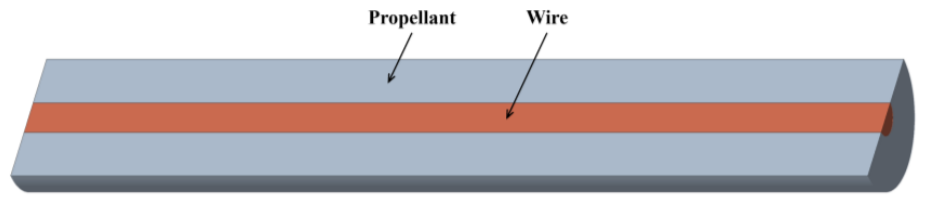
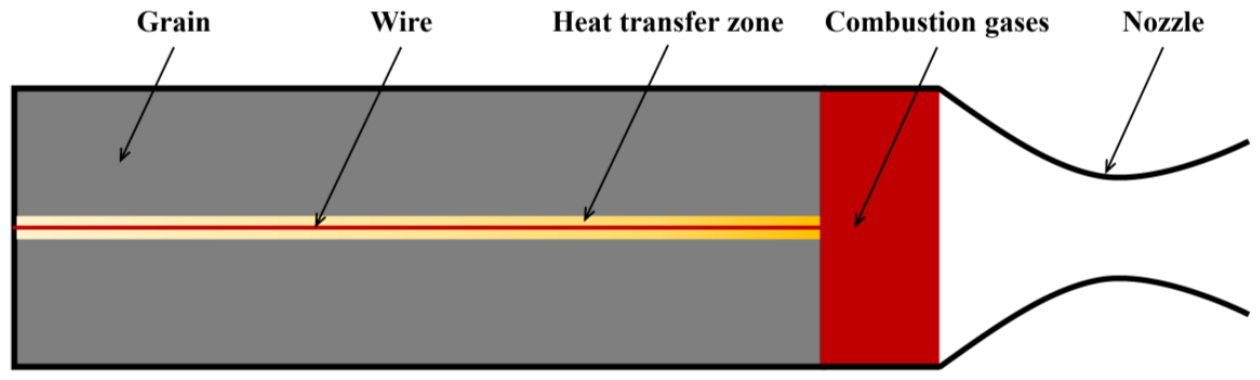
The combustion gases transfer heat to the wire through thermal convection and radiation. The wire then conducts heat to the surrounding propellant via thermal conduction, increasing the initial temperature and local thermal energy of the nearby propellant. Under identical external thermal-feedback conditions, the temperature of the surface reaction zone rises accordingly, accelerating the propellant’s decomposition rate and thus increasing the burning rate of the propellant region adjacent to the wire. Because the burning rate in this region is significantly higher than that of the propellant farther away, a cone-shaped burning surface centered on the wire is formed at the macroscopic scale. The combustion model of the wire-embedded propellant is shown in
Figure 1.
It should be noted that the heat-transfer region between the wire and the propellant is highly localized in the radial direction, with the effective thermal-influence zone typically confined to only a few millimeters from the wire surface [
20].
Figure 2 illustrates this localized region, in which the red area represents the combustion gases and the yellow area indicates the wire-induced heat-conduction region within the propellant.
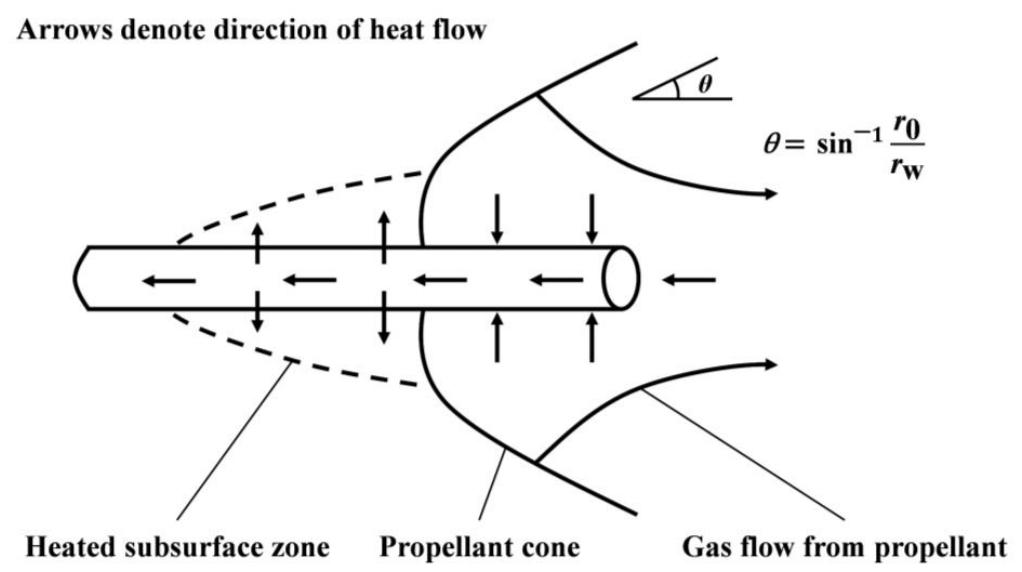
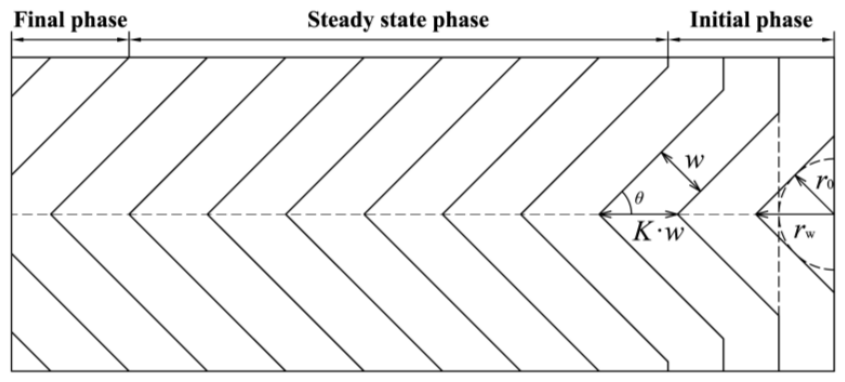
Figure 3 shows the regression process of the burning surface of the wire-embedded propellant. The baseline burning rate
of the propellant is oriented perpendicular to the combustion surface, whereas the burning rate along the wire direction
is referred to as the integrated burning rate. The integrated burning rate and the baseline burning rate satisfy:
where
denotes the half-cone angle of the conical burning surface, and the acceleration effect of the wire on the propellant is quantified by the burning-rate enhancement ratio
. The relationship among
, the integrated burning rate, and the baseline burning rate is given by:
2.2. Basic Assumptions
To establish the finite-element model for predicting the combustion process of the wire-embedded propellant, the following basic assumptions are adopted:
- (1)
Heat transfer between the wire and the propellant occurs solely through thermal conduction.
- (2)
Heat transfer between the wire and the combustion gases occurs through thermal convection and thermal radiation.
- (3)
The propellant is assumed to ignite instantaneously once its ignition temperature is reached. The wire is assumed to melt instantaneously upon reaching its melting point, and the influence of the resulting melt products on subsequent heat transfer is neglected [
19].
- (4)
Only the propellant within a radial distance not exceeding three times the wire diameter is considered to undergo significant heat transfer with the wire; the propellant beyond this range is neglected [
20].
2.3. Integrated Burning Rate Calculation Equation
The effect of initial propellant temperature on the burning rate is commonly characterized by the temperature sensitivity coefficient,
, defined as the relative change in the burning rate resulting from a 1 K change in the initial temperature. At constant pressure, the temperature sensitivity coefficient is expressed as:
Separating the variables and integrating both sides of the equation:
If
is assumed to be independent of temperature, Equation (4) can be integrated as:
Exponentiating Equation (5) gives the relationship between the two burning rates
and
:
where
denotes the temperature sensitivity coefficient of burning rate, and
and
denote the burning rates of the propellant at initial temperatures
and
, respectively.
Equation (6) indicates that the burning rate exhibits an exponential dependence on temperature. However, it is generally recognized that this relationship is only valid within a limited temperature interval of approximately 50 K [
16]. In the case of wire-embedded propellants, the local temperature in the vicinity of the wire can vary over a much wider range due to the strong heat-transfer coupling between the combustion gases, the wire, and the propellant. Therefore, Equation (6) cannot be directly applied to determine the integrated burning rate under such conditions.
To address this limitation, a simplified empirical correlation is introduced in this study. Considering that the exponential dependence of burning rate on temperature can be approximated locally within a finite temperature range, a quadratic polynomial is adopted to represent the nonlinear relationship between burning rate and local propellant temperature. This type of approximation is widely used in engineering practice because it facilitates numerical implementation while maintaining sufficient accuracy.
Accordingly, the integrated burning rate of the wire-embedded propellant is expressed as:
where
is the average temperature of the propellant region adjacent to the wire, and
,
, and
are dimensionless coefficients.
It should be noted that these coefficients are not arbitrarily assigned. Instead, they are determined through a calibration procedure based on known burning-rate data at selected reference temperatures. Specifically, three characteristic temperature points are used to construct a system of equations, including two reference temperatures (e.g., 300 K and 350 K) and the ignition temperature of the propellant. By substituting the corresponding burning-rate conditions into Equation (7), a system of equations is obtained:
where
denotes the ignition temperature of the propellant.
Solving this system yields unique values of , , and , ensuring that the empirical correlation is consistent with the known burning-rate behavior over the temperature range of interest. Therefore, Equation (7) should be regarded as a semi-empirical model constrained by physical boundary conditions rather than a purely arbitrary fitting function.
The average temperature of the propellant region in close contact with the wire is calculated using the following formula:
where
denotes the thermal diffusivity of the propellant;
denotes the wire radius; and
denotes the propellant temperature at radial position
.
Using Equations (7)–(9), the burning rate along the wire direction can be obtained from the average temperature of the propellant region adjacent to the wire. This burning rate represents the integrated burning rate of the wire-embedded propellant.
2.4. Finite-Element Heat-Transfer Analysis
The finite element software Abaqus, owing to its powerful nonlinear analysis capability, high computational efficiency, and flexible user subroutine interfaces, has become one of the most widely used commercial tools in the field of finite element analysis. It demonstrates significant advantages in structural mechanics, heat transfer, constitutive material modeling, and multiphysics coupling simulations. Consequently, it has been extensively applied in engineering design, structural optimization, material performance evaluation, and the numerical simulation of complex mechanical problems [
21]. In the field of propulsion technology, Abaqus is frequently employed for the numerical analysis of propellant structural response, heat transfer processes, and combustion-related physical phenomena [
22]. Therefore, in this study, Abaqus is adopted to perform numerical simulations of the heat transfer process in wire-embedded propellants. By establishing a finite element heat transfer model, the temperature field distribution and heat transfer characteristics are systematically analyzed.
The combustion process of wire-embedded propellants involves multiple heat transfer mechanisms, including heat conduction, convection, and radiation. In the heat transfer analysis, based on the law of energy conservation and in conjunction with Fourier’s law of heat conduction, the governing equation for heat conduction can be established, while the processes of convective and radiative heat transfer are described through their respective boundary conditions.
Based on the law of energy conservation and in conjunction with Fourier’s law of heat conduction, the governing equation for heat conduction within the solid can be expressed as:
where
is the material density,
is the specific heat capacity at constant pressure,
is the temperature,
is time,
is the thermal conductivity of the material,
denotes the temperature gradient, and
represents the volumetric heat source.
For the convective heat transfer process at a fluid or solid surface, the law of energy conservation is likewise satisfied. The boundary heat flux is typically described by Newton’s law of cooling as:
where
is the heat flux,
is the convective heat transfer coefficient, and
is the temperature difference between the wall surface and the fluid.
In addition, radiative heat transfer between surfaces can be characterized by Stefan–Boltzmann law, and the radiative heat flux can be expressed as:
where
is the emissivity of the object (less than 1),
is the Stefan–Boltzmann constant (5.67 × 10
−8 W/(m
2·K
4)), and
is the thermodynamic temperature of the blackbody.
A finite-element model of the wire-embedded propellant was established in Abaqus by assigning the material properties, applying the boundary conditions, and generating the computational mesh. A transient heat-transfer analysis step is then adopted to simulate the heat-transfer process.
Figure 4 shows the half-model of the wire-embedded propellant constructed in accordance with basic assumption (4) of the burning-rate prediction method. The model consists of two coaxial components: the propellant grain and the wire. The radius of the propellant grain is four times that of the wire, and perfect thermal contact between the two components is assumed, with no interfacial gap.
Owing to the simple geometry and axisymmetric characteristics of the configuration, a 1/18-sector model was employed for the transient heat-transfer analysis. After assigning the corresponding material properties and applying the boundary conditions, the model was meshed with DC3D8 elements, as shown in
Figure 5. The transient analysis was then performed to obtain the temperature field of the wire-embedded propellant.
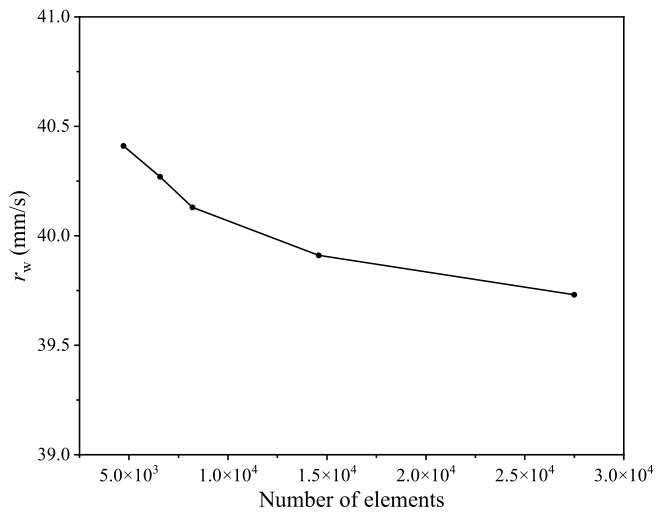
In addition, taking the 0.8 mm copper wire as an example, a mesh convergence study was performed. The variation in the integrated burning rate with respect to the number of mesh elements is shown in
Figure 6. When the number of elements increases from 14,595 to 27,500, the relative error is 0.45%, indicating that the mesh is sufficiently refined.
2.5. Abaqus Python Scripting
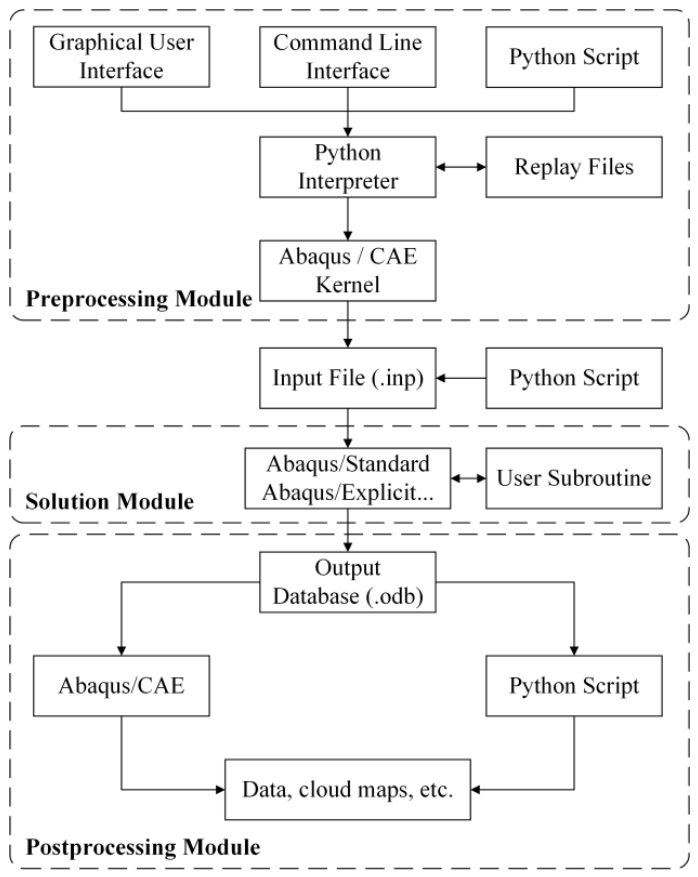
The Abaqus software (Version 2023) provides two powerful interfaces for secondary development: the user subroutine interface and the Abaqus Scripting Interface (ASI). The ASI, which is implemented in the Python environment integrated within Abaqus 2023, supports model customization and automation. It is widely used for preprocessing tasks such as rapid model generation, as well as for creating and accessing output databases and performing automated post-processing.
Figure 7 illustrates the interaction between the scripting language and the Abaqus analysis workflow.
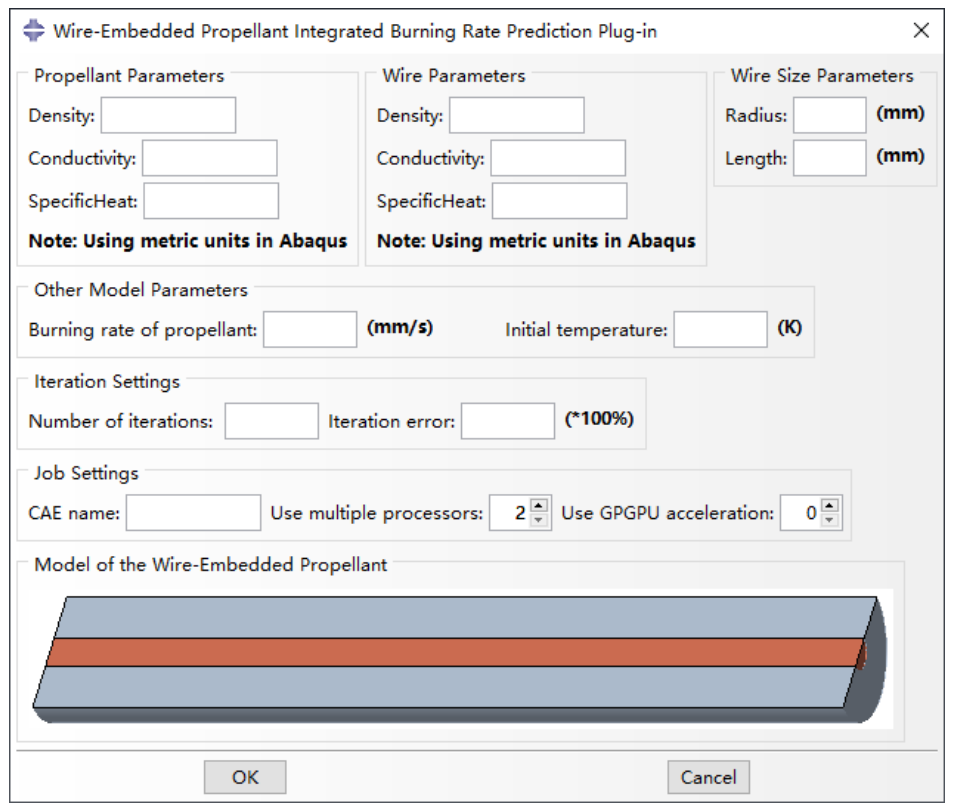
In this study, the steps of the integrated burning rate prediction method for wire-embedded propellants were implemented using Abaqus-Python scripting for secondary development. A fully automated analysis plug-in, including automatic model generation, transient heat-transfer analysis, and post-processing, is developed in Abaqus. The plug-in’s GUI is shown in
Figure 8. The plug-in automatically constructs the finite-element model of the wire-embedded propellant, performs the transient heat-transfer analysis, and extracts the average temperature of the propellant region adjacent to the wire from the output database. This temperature is then substituted into Equation (7) to obtain the integrated burning rate under the corresponding operating conditions.
During the iterative calculation process, the time increment of the transient heat-transfer step is set to Δ
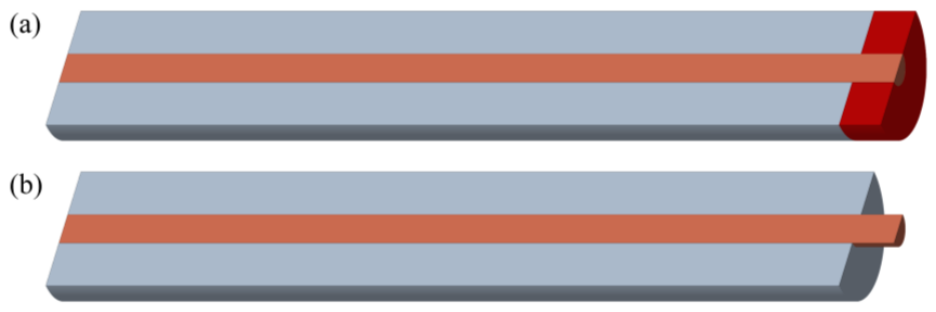
t = 0.1 s. After each solution of the integrated burning rate, the script automatically performs a relative error check. If the current integrated burning rate does not satisfy the specified relative error tolerance, the elements that have reached the specified temperature threshold (i.e., the propellant ignition temperature or the wire melting point) are removed. As shown in
Figure 9a, the burned region is highlighted in red, and the resulting temperature field is used as the initial temperature field for the subsequent iteration.
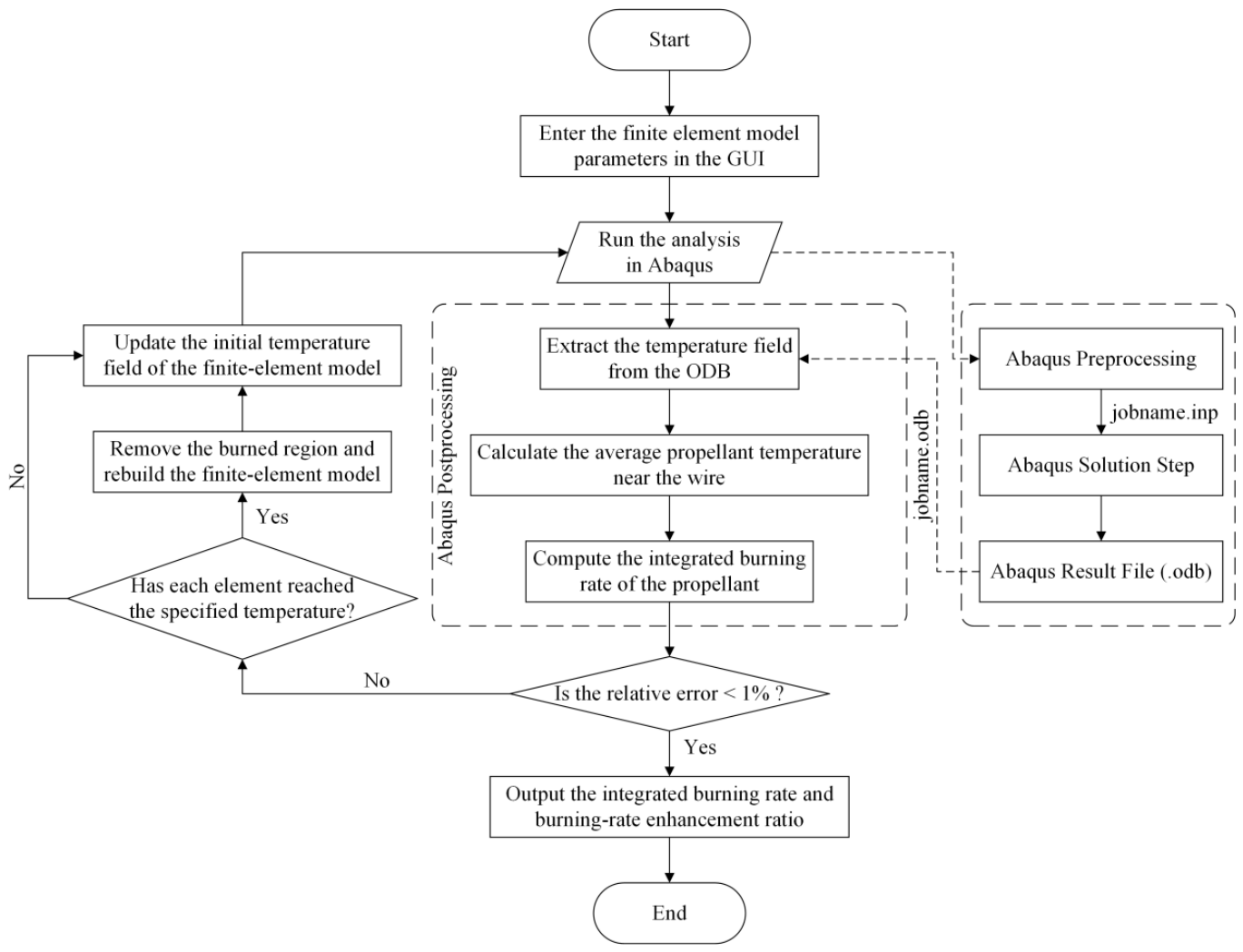
Subsequently, the program automatically reconstructs the finite-element model of the wire-embedded propellant and proceeds to the next iteration. This procedure is repeated until the integrated burning rate converges within the specified relative error tolerance, at which point the computation terminates automatically. The overall integrated burning rate prediction workflow developed using Abaqus-Python scripting is shown in
Figure 10.
2.6. Experimental Validation
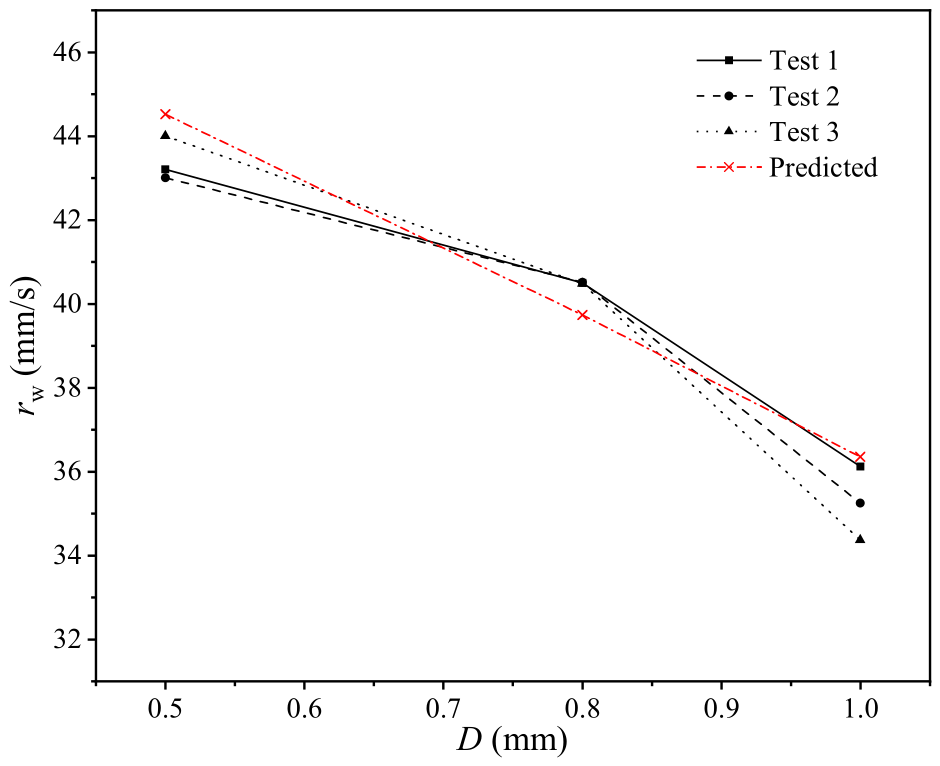
To validate the accuracy of the integrated burning rate prediction method proposed in this study, underwater acoustic emission tests were conducted on propellants embedded with copper wires of different diameters. The underwater acoustic emission method is one of the commonly used techniques for measuring the burning rate of solid propellants. Its main advantage is that the propellant strand does not require coating, and the measurement accuracy is relatively high. In this method, the burning duration is determined by capturing the acoustic signals corresponding to the ignition and burnout moments of the propellant. With the known length of the propellant strand, the burning rate can then be calculated. For each copper wire diameter, three independent tests (denoted as Test 1, Test 2, and Test 3) were performed to ensure the repeatability and reliability. The comparison of experimental and predicted integrated burning rates of copper wire-embedded propellants. are presented in
Figure 11.
For each copper wire diameter, the average value of the three test results was taken as the experimental integrated burning rate and compared with the corresponding predicted value obtained using the present method. The prediction relative errors are summarized in
Table 1. The results show good agreement between the predicted and experimental integrated burning rates across all test cases. The relative discrepancies are within 5%, suggesting that the proposed method is capable of predicting the integrated burning rate of wire-embedded propellants with reasonable accuracy for the cases investigated in this study.
3. Analysis of Factors Influencing the Integrated Burning Rate
3.1. Effect of Wire Materials on the Propellant’s Integrated Burning Rate
In wire-embedded propellants, the wire material directly influences the heat transfer efficiency and, consequently, the combustion characteristics of the propellant. To investigate the effect of wire material on the integrated burning rate, the integrated burning rate prediction method developed in this study was applied to analyze propellant grains embedded with wires made of different materials. The parameters of the wires, propellant and gases used in the calculations and analysis are listed in
Table 2 and
Table 3.
Thermal diffusivity characterizes a material’s ability to attain thermal equilibrium; a higher thermal diffusivity corresponds to faster propagation of temperature within the material. In this section, the effect of the thermal diffusivity of wires on the integrated burning rate of wire-embedded propellants is analyzed with the wire diameter fixed. According to Ref. [
23], under a typical wire diameter of
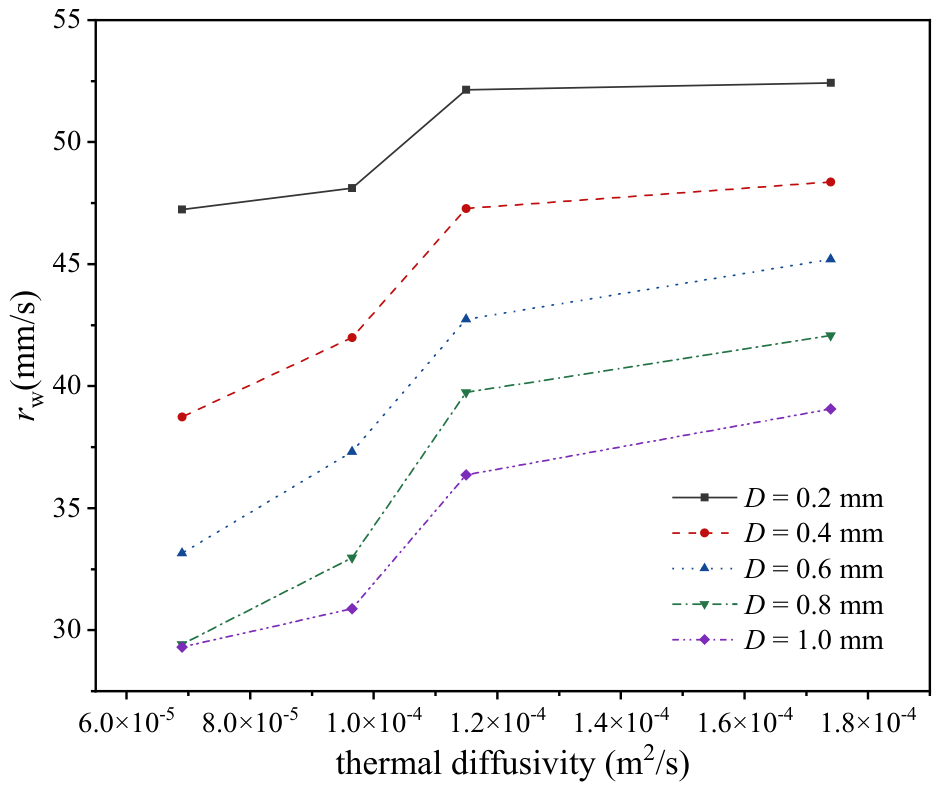
D = 0.4 mm, the integrated burning rates of propellants embedded with silver, copper, aluminum, and tungsten wires are calculated using the integrated burning rate prediction method developed in this study. The relationship between the thermal diffusivity of the wire and the integrated burning rate of the propellant is illustrated in
Figure 12.
The results indicate that, under the same diameter condition, the burning rate enhancement follows the order: silver > copper > aluminum > tungsten, which is consistent with the conclusions reported in Ref. [
24]. A positive correlation is observed between the thermal diffusivity of the wire and the integrated burning rate of the propellant. This is primarily because wires with higher thermal diffusivity can transfer heat more efficiently from the combustion gases into the wire and subsequently conduct it to the surrounding propellant. As a result, the temperature of the propellant adjacent to the wire increases, leading to an enhancement in the propellant burning rate.
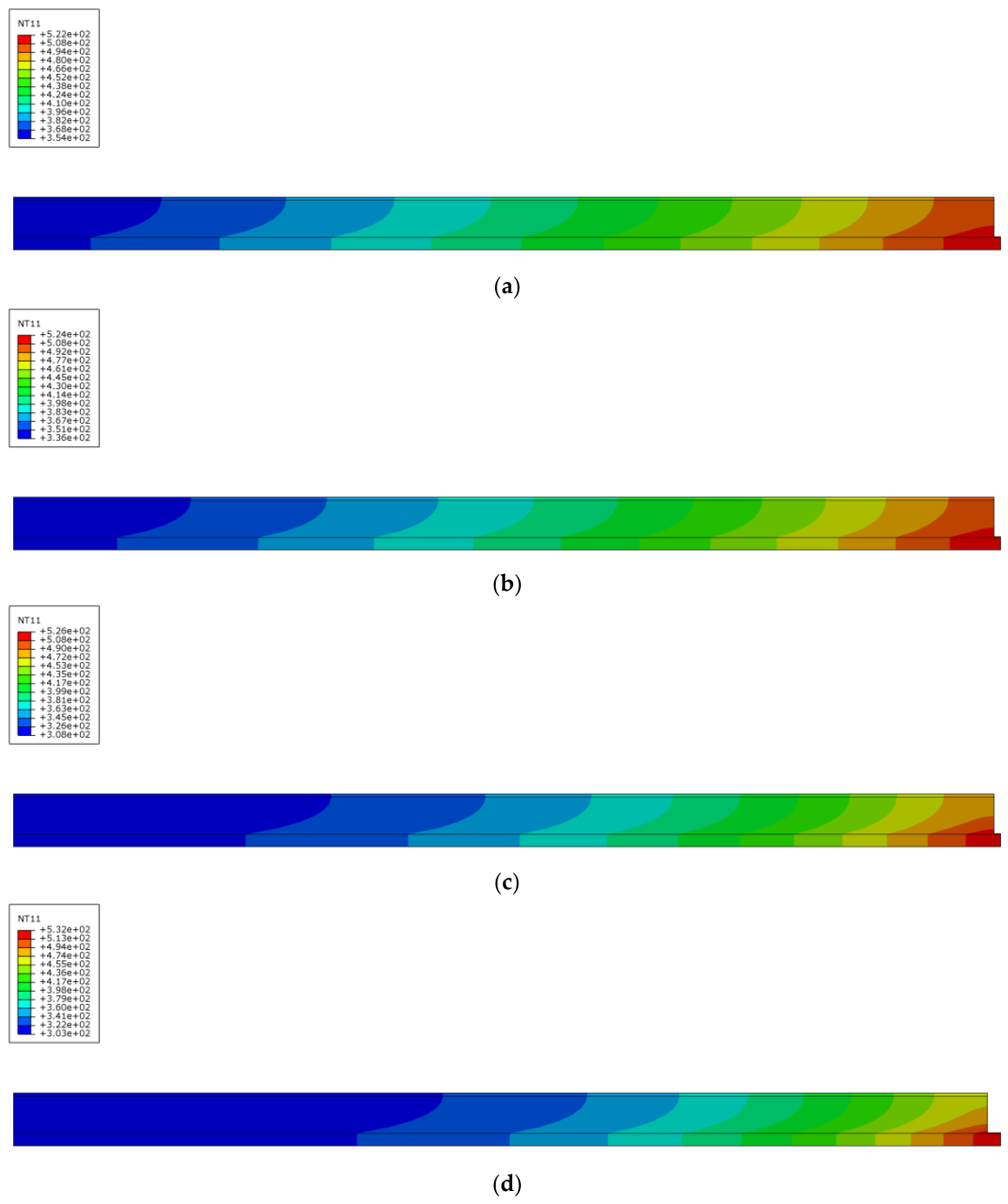
The temperature-field contours of propellants embedded with wires of different materials are shown in
Figure 13. It can be observed that wires with higher thermal diffusivity (e.g., silver) produce a broader high-temperature region within the surrounding propellant, whereas wires with lower thermal diffusivity (e.g., tungsten) generate a much narrower high-temperature region, indicating a weaker heating effect on the adjacent propellant. During the burning-rate prediction process, propellants embedded with wires of higher thermal diffusivity require a longer time to reach thermal equilibrium, leading to an increase in the computational time for heat transfer analysis and a delayed attainment of a steady combustion state.
Overall, as the thermal diffusivity of the wire increases, its enhancement effect on the propellant burning rate gradually approaches a stable value. This suggests that the physical burning-rate enhancement induced by high-thermal-diffusivity materials exhibits a saturation characteristic.
It should be noted that the experimental validation in this study is limited to copper wires, while the results for other wire materials are based on numerical simulations. Nevertheless, the consistent trends observed suggest that the proposed method has potential applicability to other wire materials.
3.2. Effect of Wire Diameters on the Propellant’s Integrated Burning Rate
The diameter of the metal wire is also an important factor affecting the integrated burning rate of wire-embedded propellants. In this section, with the wire material fixed, the influence of wire diameter on the integrated burning rate of wire-embedded propellants is systematically analyzed.
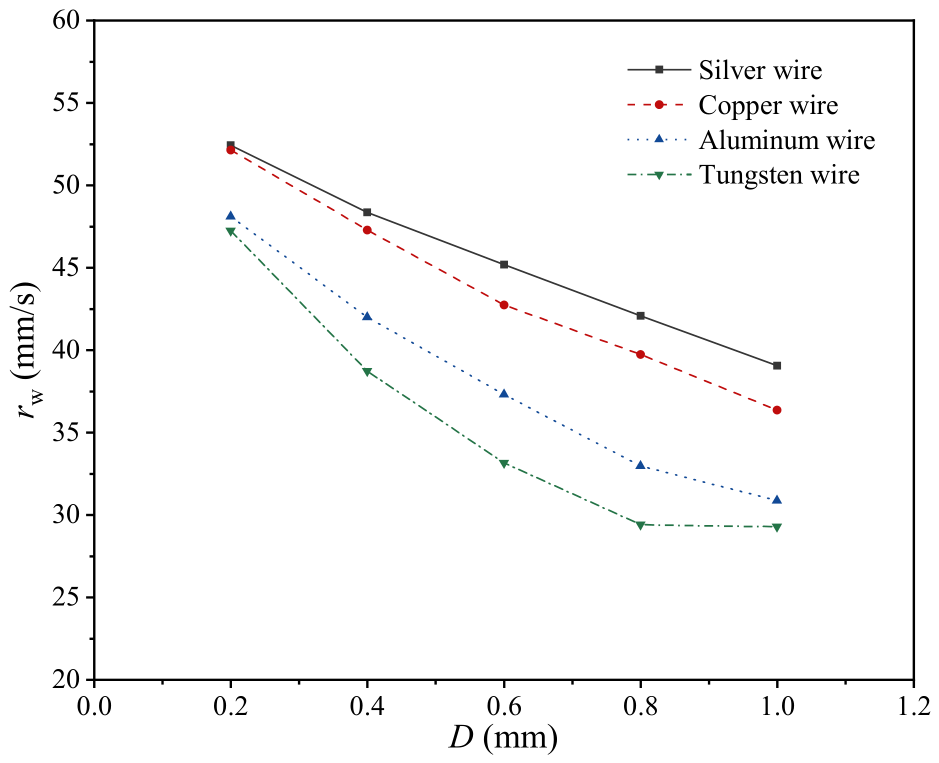
For four types of metal wires—silver, copper, aluminum, and tungsten—the integrated burning rates of propellants embedded with wires of five different diameters (0.2 mm, 0.4 mm, 0.6 mm, 0.8 mm, and 1.0 mm) are calculated using the integrated burning rate prediction method. The relationship between the wire diameter and the integrated burning rate of the wire-embedded propellant is shown in
Figure 14.
As shown in
Figure 14, for a given wire material, the integrated burning rate of the propellant gradually decreases with increasing wire diameter, while the time required for the combustion process to reach a steady state correspondingly shortens. The influence of wire diameter on the integrated burning rate primarily arises from differences in heat transfer characteristics induced by geometric size. Under the condition of the same wire material, the burning-rate enhancement effect weakens with increasing wire diameter when the propellant reaches combustion equilibrium. The underlying mechanisms can be summarized as follows.
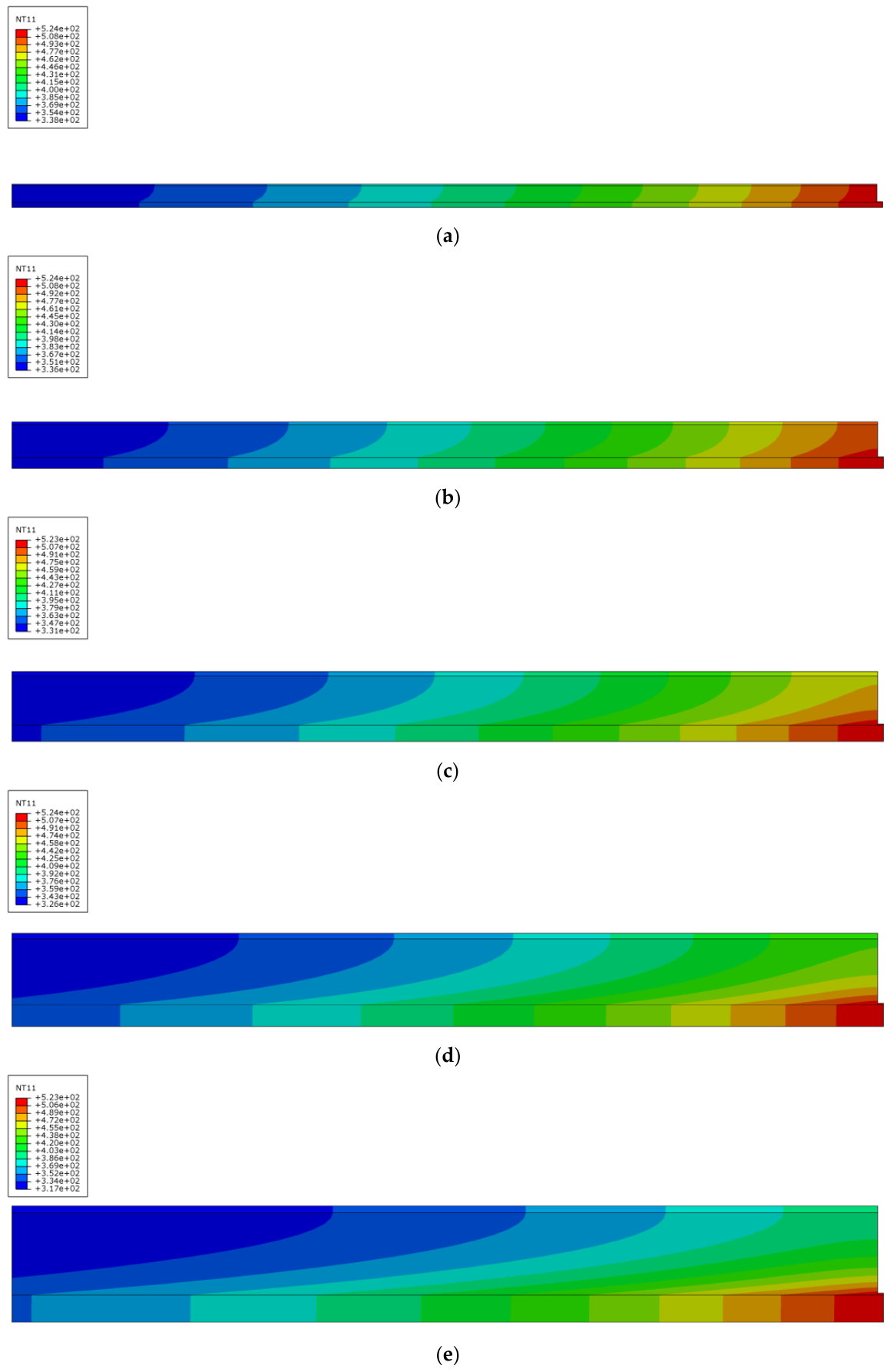
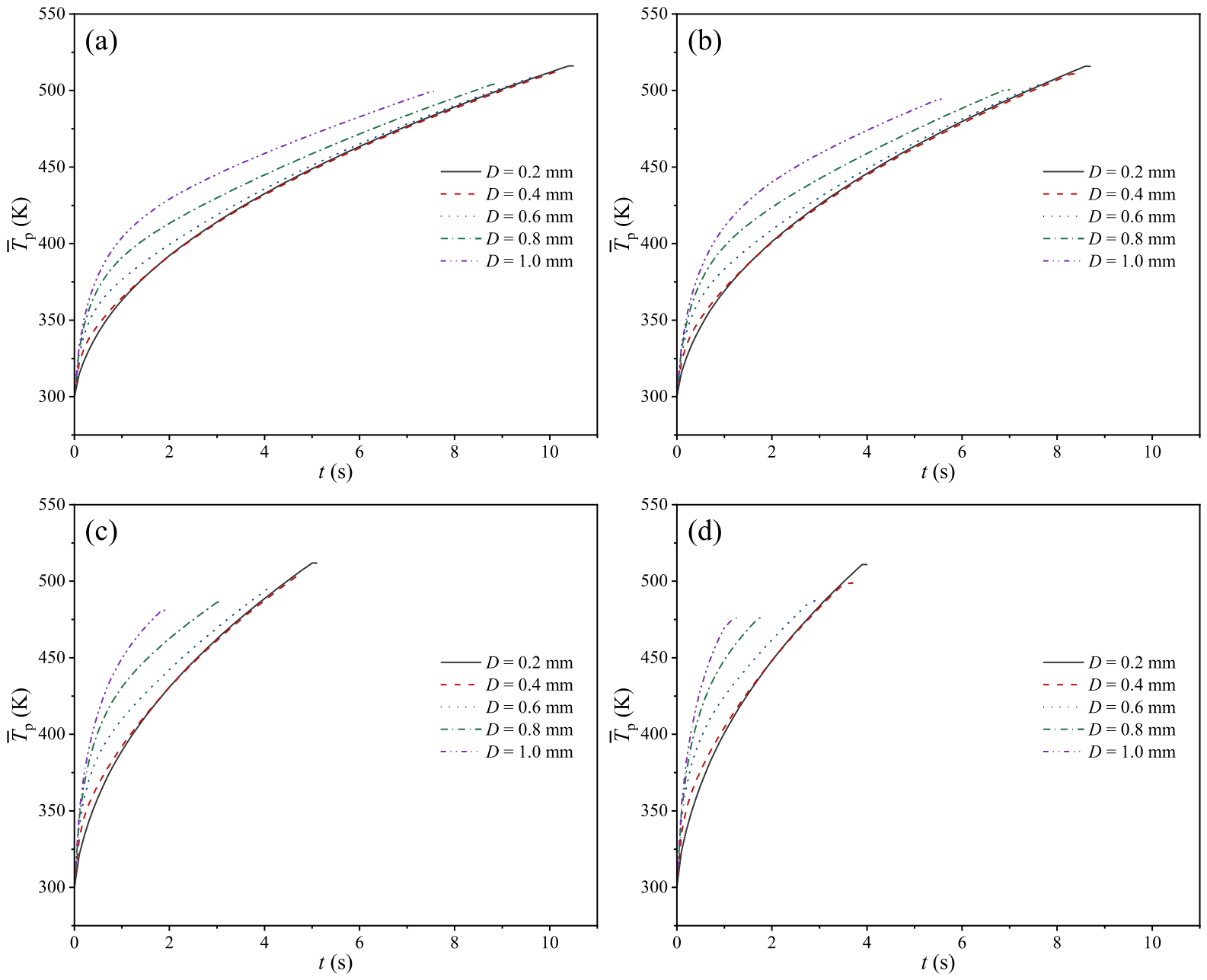
First, as the wire diameter increases, the surface-area-to-volume ratio decreases, resulting in a reduction in the effective heat transfer area per unit volume and a slower temperature rise in the wire. Meanwhile, the increase in volume leads to a higher thermal capacity, prolonging the time required for heat conduction within the wire. This results in a more non-uniform temperature distribution along the axial direction and reduces the overall heat transfer efficiency. Second, variations in wire diameter alter the temperature distribution characteristics at the propellant interface. Although wires with larger diameters exhibit a slower overall temperature rise, the local heat tends to be more concentrated, which slightly accelerates the temperature increase in the propellant in the vicinity of the wire. Consequently, the propellant can reach its ignition temperature earlier, reducing the duration of heat transfer from the wire to the propellant. The temporal evolution of the average temperature of the propellant adjacent to the wire is shown in
Figure 15. In this study, the condition that the temperature at the wire–propellant interface reaches the ignition temperature of the propellant is adopted as the ignition criterion. Once this condition is satisfied, the local propellant is assumed to ignite rapidly (and the corresponding combustion region is subsequently removed).
Figure 16 shows the temperature contours of wire-embedded propellants with different wire diameters.
Although smaller-diameter wires generally provide greater burning-rate enhancement, excessively small wire diameters are not optimal. When the wire diameter is too small, axial heat conduction along the wire becomes excessively rapid and insufficient heat is transferred to significantly raise the temperature of the adjacent propellant within a short time. Consequently, before the propellant temperature increases appreciably due to wire heating, the propellant burns at a rate only slightly higher than the baseline burning rate, resulting in a reduction in the overall burning-rate enhancement. Simulation results indicate that each wire material exhibits a critical or optimal diameter that maximizes the burning-rate enhancement. For copper wires, the integrated burning rate increases with decreasing diameter; however, the enhancement trend levels off near D = 0.2 mm, suggesting an optimal geometric scale in this range that balances heat-transfer efficiency and the time required to reach combustion equilibrium. This result is consistent with engineering experience, thereby validating the accuracy of the integrated burning rate prediction method proposed in this study. Moreover, the optimal diameter depends on the wire material and operating conditions.
In practical applications, the selection of wire diameter must also consider manufacturing constraints. Although excessively thin wires may provide favorable burning-rate enhancement, they are generally unsuitable for engineering implementation. Wire-embedded propellants are typically manufactured using a wall-casting process, during which thin wires are prone to deformation, increasing manufacturing complexity. Furthermore, wire bending or fracture may alter the internal ballistics of the SRMs to varying degrees, potentially leading to deviations from the intended ballistic performance and, in severe cases, compromising combustion stability.
3.3. Effect of Wire Thermophysical Properties on the Propellant’s Integrated Burning Rate
The results in
Section 3.1 and
Section 3.2 indicate that both wire thermal diffusivity and diameter significantly influence the integrated burning rate of the propellant. However, thermal diffusivity is not an independent material parameter; instead, it is determined by three fundamental thermophysical properties: specific heat capacity, thermal conductivity, and density. Therefore, it is necessary to further evaluate the individual contributions of these properties to the integrated burning rate.
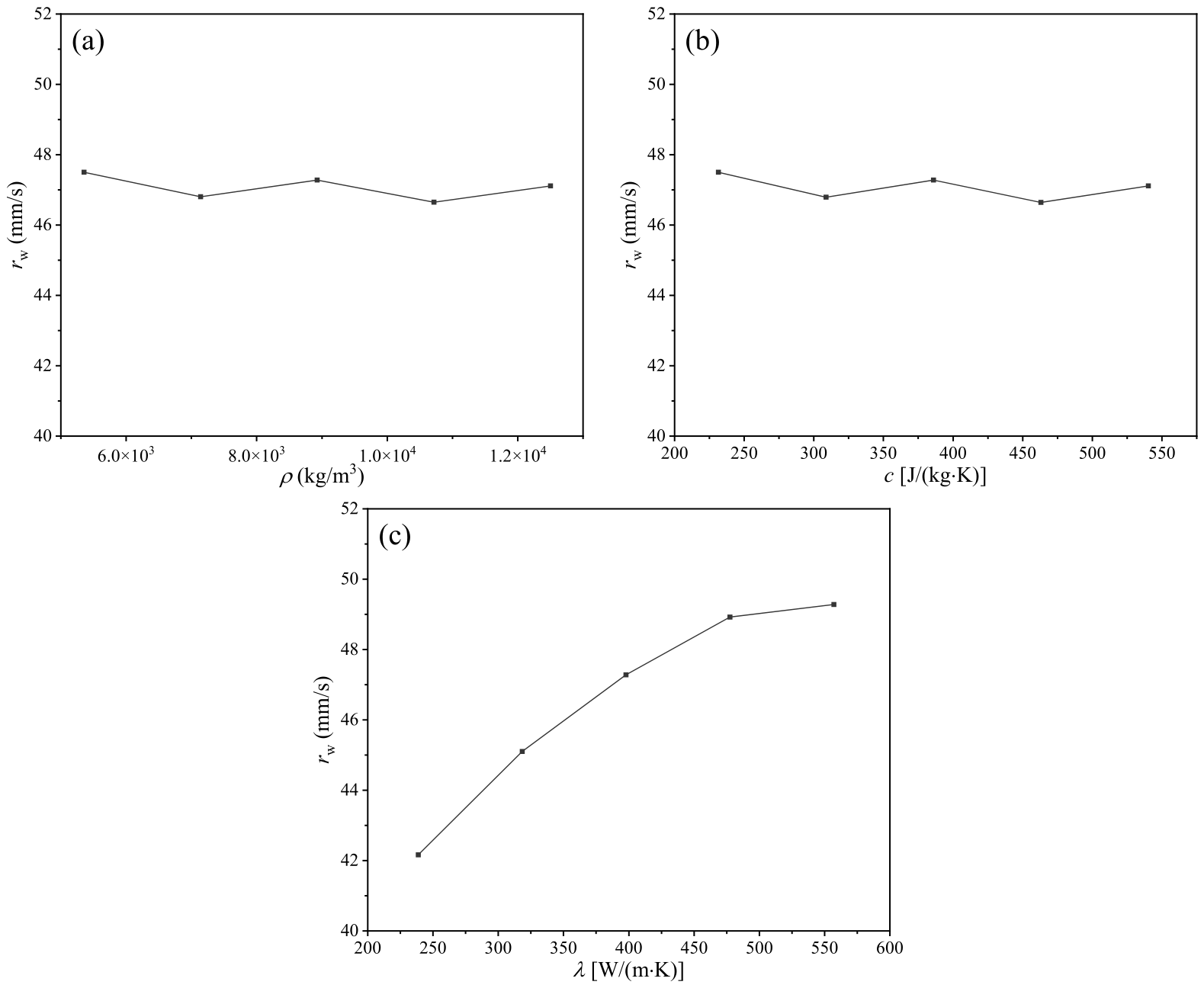
In this section, pure copper wire is selected as the reference material. Its density, specific heat capacity, and thermal conductivity are independently scaled by factors of 0.6, 0.8, 1.0, 1.2, and 1.4, while all other parameters are held constant. The controlled-variable method is then employed to compute the corresponding integrated burning rate of the wire-embedded propellant, enabling a systematic assessment of the effects of these three thermophysical properties.
Figure 16 illustrates the effects of three fundamental thermophysical properties of the wire—density, specific heat capacity, and thermal conductivity—on the integrated burning rate of the propellant, while the remaining parameters are held constant.
As shown in
Figure 17a, variations in wire density have only a limited influence on the integrated burning rate. When the density is increased from 0.6 to 1.4 times its baseline value, the integrated burning rate exhibits only minor changes. This behavior can be explained by the fact that, although density affects the thermal inertia of the wire on a volumetric basis, the wire diameter is small and the total mass participating in heat transfer is limited. Consequently, density variations do not substantially alter the axial temperature distribution or the overall heating capability of the wire. Compared with thermal conductivity, the influence of density on thermal diffusion is weaker and negatively correlated, and this effect becomes even less significant at small geometric scales.
Figure 17b shows the influence of specific heat capacity on the integrated burning rate under constant thermal conductivity and density. The results indicate that changes in specific heat capacity have a negligible effect on the integrated burning rate, with only slight differences observed among the five operating conditions. Physically, an increase in specific heat capacity means the wire must absorb more heat to achieve the same temperature rise. However, in wire-embedded propellant systems, the wire has a small characteristic size and limited absolute heat capacity. Moreover, the wire primarily functions as a heat-transfer pathway rather than a heat-storage element. As a result, variations in specific heat capacity do not significantly affect the rate of heat transfer to the surrounding propellant, leading to minimal changes in the integrated burning rate.
In contrast,
Figure 17c demonstrates that thermal conductivity exerts a pronounced influence on the integrated burning rate and represents the most dominant factor among the three thermophysical properties. As the thermal conductivity increases from 0.6 to 1.4 times its baseline value, the integrated burning rate increases substantially, although the rate of increase gradually diminishes, exhibiting a characteristic trend of rapid enhancement followed by saturation. This behavior arises because higher thermal conductivity enables faster heat diffusion within the wire, allowing heat extracted from the combustion gases to be efficiently conducted in both axial and radial directions into the surrounding propellant. Consequently, the propellant adjacent to the wire reaches its ignition temperature more rapidly, resulting in a significant enhancement of the integrated burning rate. When the thermal conductivity becomes sufficiently high, however, the controlling mechanism gradually shifts from wire heat transfer to the inherent heat-absorption and decomposition characteristics of the propellant, causing the enhancement effect to plateau.