1. Introduction
Experimental validation of important mechanical properties remains a key activity in broadly defined engineering analysis, despite the widespread use and dominance of numerical modeling techniques. In vibration engineering, reliable identification of natural frequencies and vibration mode shapes is essential for assessing the integrity of machines and structures and their susceptibility to resonant excitation. A clear and reliable assessment of dynamic properties is particularly important in the analysis of rotor components, such as disks, drums, compressor blades, and turbine blades, where small changes in excitation or stiffness can significantly affect vibration behavior.
Among experimental techniques, laser Doppler vibrometry (LDV) has become a widely adopted non-contact method because it avoids sensor mass loading and eliminates the need for cabling and physical attachment, which can be difficult in confined measurement spaces and on small rotating components. Comprehensive overviews of LDV capabilities and its increasing adoption across applications are provided in the literature, including rotor-oriented measurement strategies such as continuous scanning approaches [
1,
2]. At the same time, LDV accuracy and robustness can be affected by optical phenomena and practical acquisition constraints, such as speckle-related signal degradation or instrument-specific limitations, which motivates ongoing research on improving LDV performance and measurement reliability [
3,
4,
5]. These considerations become particularly important when measurements are to be carried out at higher frequencies and applied to an object with a complex external geometry shape.
Conventional modal testing using piezoelectric accelerometers and dedicated measurement hardware, such as LMS-class analyzer, remains a proven reference approach. However, it requires sensor placement and cable routing, which can be time-consuming and may be impractical for small or densely featured components. Such approaches are well established for large, relatively stationary structures, for example in aircraft ground vibration testing, where instrumentation effort is justified and widely documented [
6,
7,
8,
9]. Full-field optical methods such as digital image correlation (DIC) provide displacement fields but typically require complex optical preparation and are often less suitable for high-frequency vibration characterization than LDV-based measurements [
10,
11]. Consequently, LDV is frequently selected when non-contact measurement, high bandwidth responses, and reduced test preparation are prioritized.
Despite the increasing use of LDV in modal analysis, an important practical question remains insufficiently addressed in experimental studies focused on turbomachinery-scale components: to what extent can simplified one-dimensional (1D) LDV measurements can provide reliable modal information while comparing to full three-dimensional (3D) LDV measurements? Though 1D setups are generally easier and faster to implement, they inherently capture motion only along a selected direction and may therefore underrepresent modes with significant lateral or angular components. In contrast, 3D LDV can reconstruct the full velocity vector but introduces additional practical challenges, including multi-head alignment, line-of-sight limitations, and potentially reduced usable scanning areas, which may affect both measurement effort and the interpretability of results. The trade-off between achievable modal fidelity and experimental cost, including setup complexity and total measurement time, is therefore crucial when selecting a method for engineering practice.
The aim of this study is to compare 1D and 3D LDV experimental techniques for identifying the natural vibration modes of a miniature turbofan rotor. The comparison focuses on: (i) frequency identification consistency, (ii) mode-shape representation and interpretability, and (iii) practical limitations observed during data acquisition on a complex rotor geometry [
1,
2,
3,
4,
5,
10,
11]. In the context of the undertaken study, the following usability aspects can be indicated:
an experimental, same-excitation comparison of 1D and 3D LDV for a miniature turbofan rotor;
a quantified assessment of agreement and discrepancies across identified modes, with emphasis on modes involving lateral and/or angular motion components;
practical guidance on method selection by balancing modal fidelity against setup complexity and measurement effort.
2. Measurement Equipment
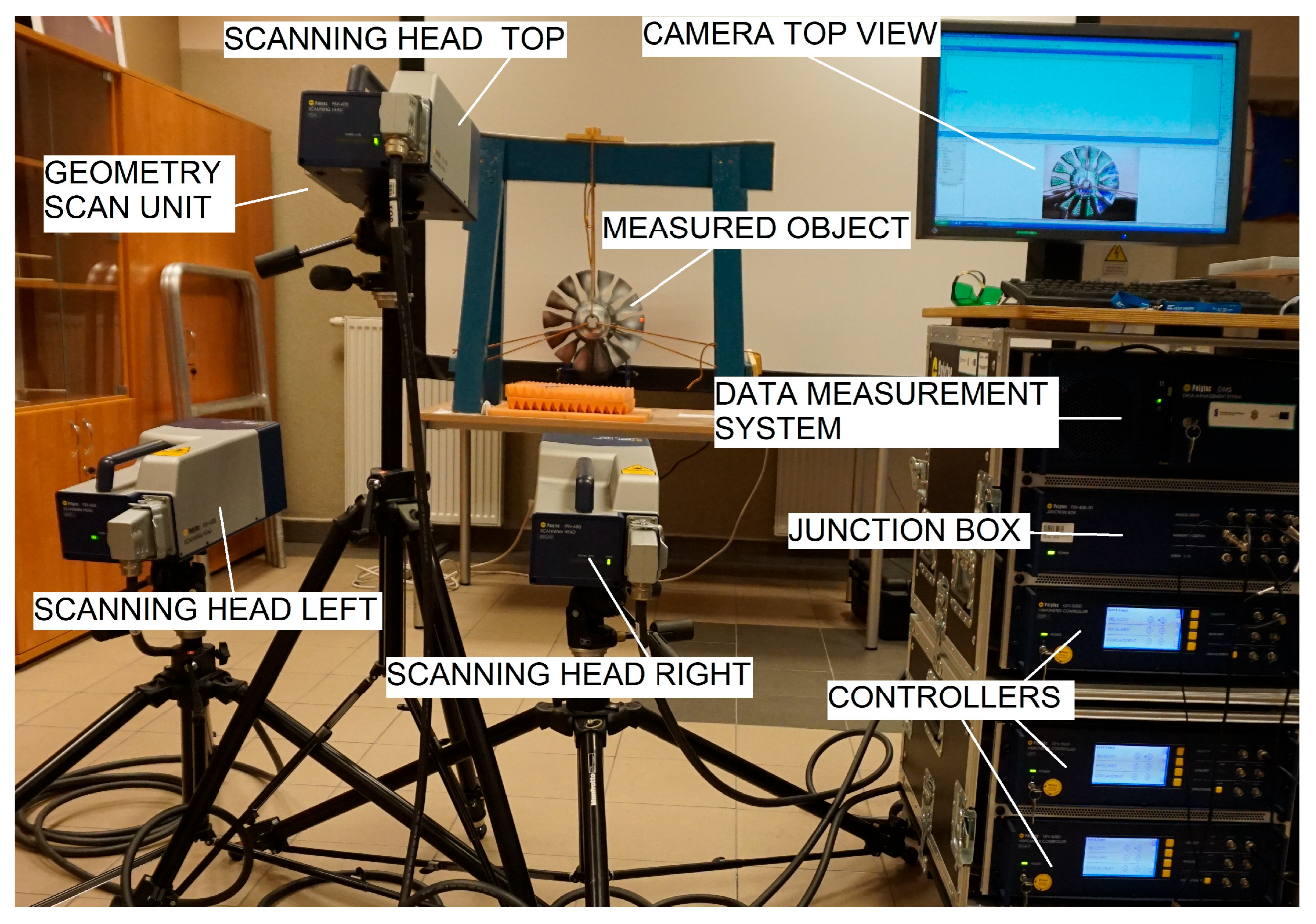
The experimental campaign was carried out using a Polytec PSV-400-3D scanning laser vibrometer (Polyec GmbH, Waldbronn, Germany) (
Figure 1). The operating principle of the system is based on laser Doppler vibrometry, in which the frequency shift in a laser beam reflected from a vibrating surface is used to determine the surface velocity component along the beam direction [
12,
13,
14,
15,
16]. Depending on the configuration, the system operates either in a one-dimensional (1D) mode using a single scanning head or in a three-dimensional (3D) mode employing three independent scanning heads to reconstruct the vibration velocity vector in three-dimensional space.
Laser vibrometry relies on optical interference between two coherent light beams: a reference projected beam and a return beam reflected from the vibrating surface. The resulting optical intensity detected by a photodetector depends on the phase difference Δ
φ between the two beams and can be expressed according to [
16] as:
The phase difference Δ
φ is related to the optical path difference
L between the beams according to
where
λ is the laser wavelength. If the object beam is reflected from a moving surface, the optical path difference becomes time-dependent
L =
L(
t). As a result, the phase varies in time and produces modulation of the interference signal.
The instantaneous Doppler frequency shift
fD is defined as the time derivative of the phase:
Substituting Equation (2) into Equation (3) yields a direct relationship between the Doppler frequency shift and the surface velocity component
v along the laser beam direction:
This expression shows that the Doppler frequency shift is proportional to the velocity component projected onto the beam axis. Since a basic interferometric measurement does not directly distinguish the sign of the velocity, a constant frequency offset, referred to as the Bragg frequency shitt fB—is introduced in the interferometer.
The resulting modulation frequency detected by the system is therefore given as:
By evaluating the modulation frequency
fmod, the vibrometer system determines both the magnitude and direction of the surface velocity component along the laser beam [
17,
18,
19].
3. Tested Object
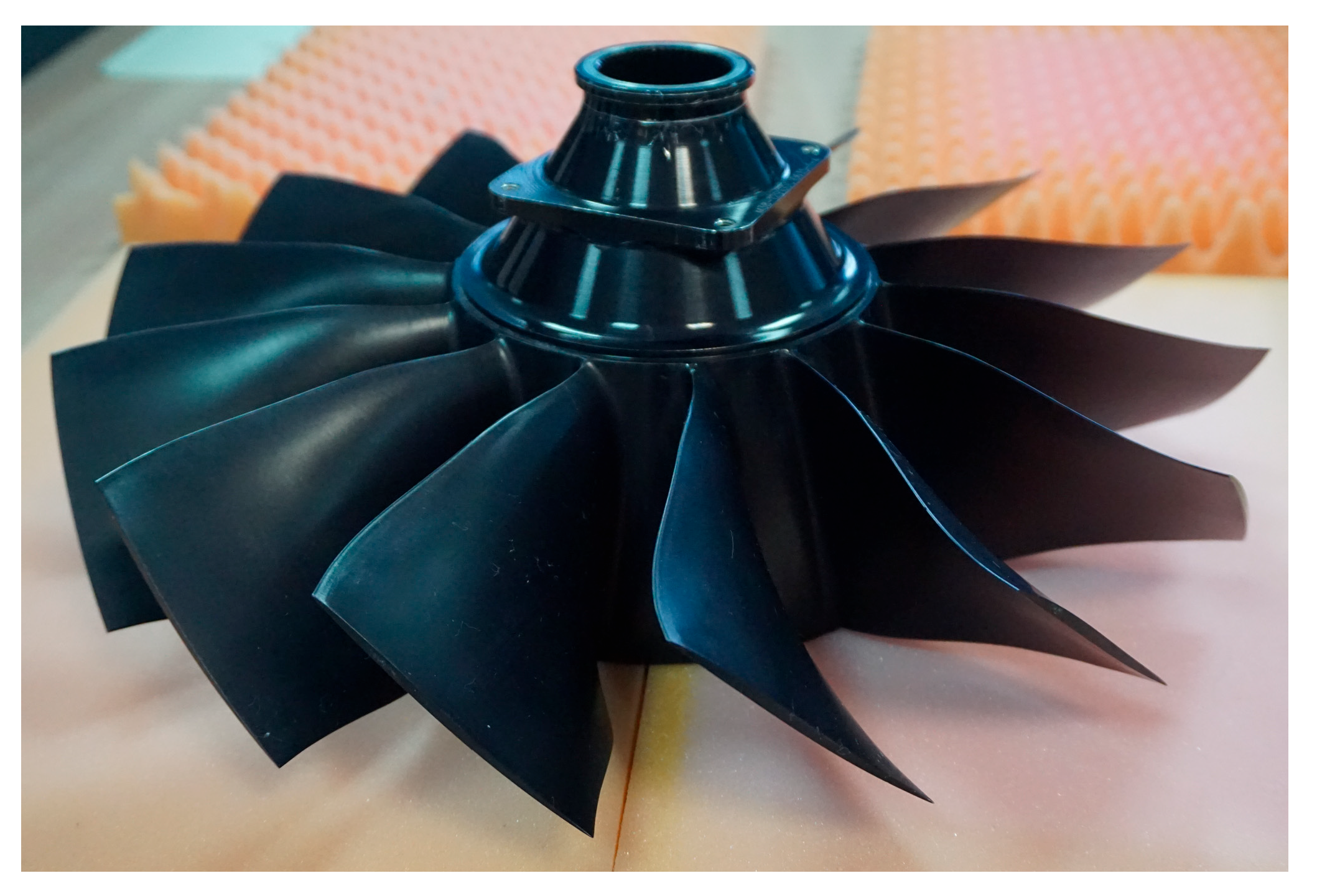
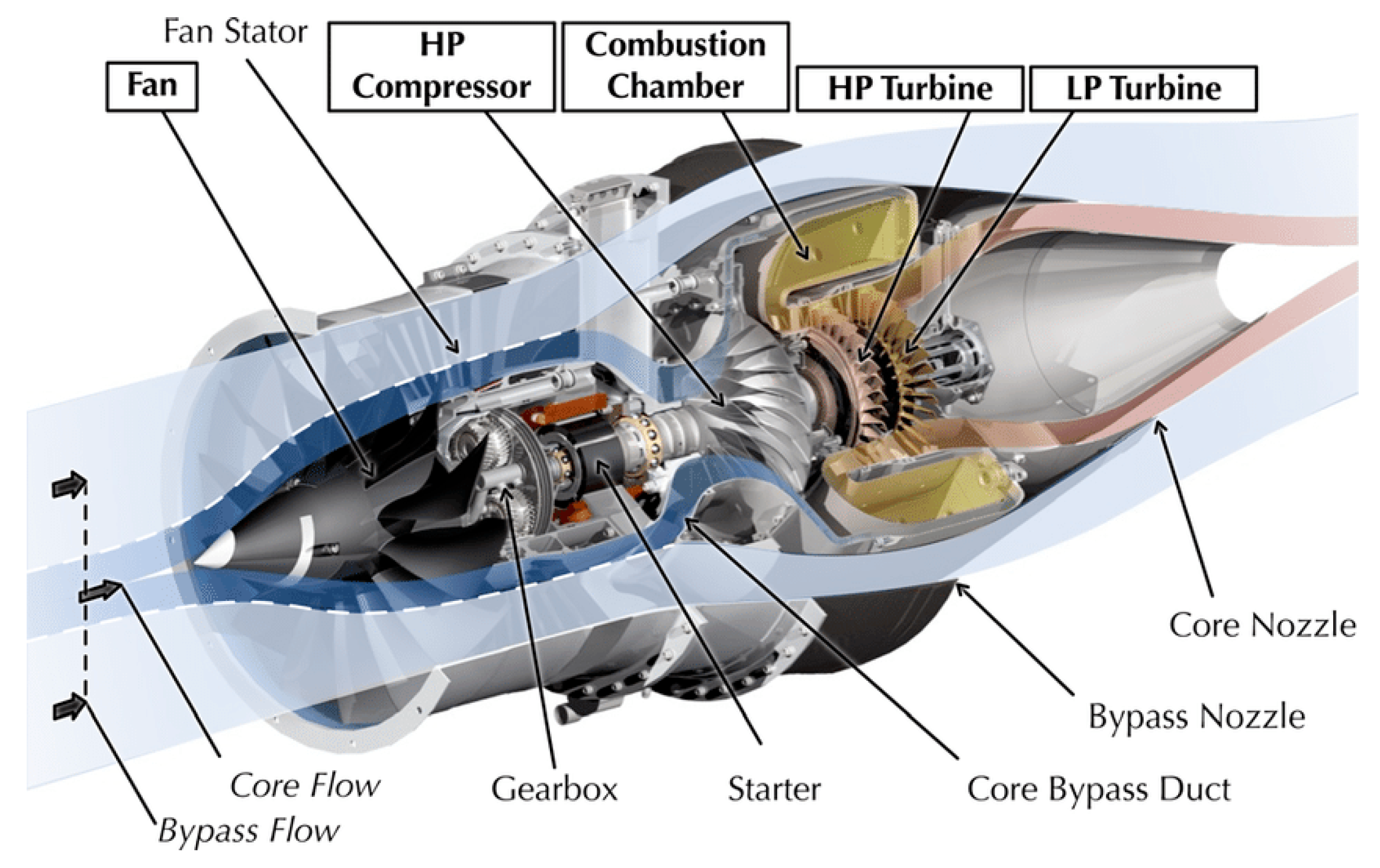
The test object was the first compressor stage of a DGEN-380 miniature turbofan engine (PRICE INDUCTION, Anglet, France) (
Figure 2 and
Figure 3) [
20,
21]. The DGEN-380 is a small turbine engine intended for Very Light Jet aircraft and larger unmanned aerial vehicles. Its fan has a diameter of 14 inches, consists of 14 blades, and operates at a nominal rotational speed of 13,000 rpm. The engine is characterized by a geared fan architecture, separate exhaust flows, a centrifugal compressor, a bypass ratio of 6.8, and a thrust of approximately 560 lbf, corresponding to 2.58 kN. The investigated rotor represents a particularly challenging object for laser vibrometry because of its complex geometry, resembling a hollow truncated cone with highly curved blades and limited optical accessibility.
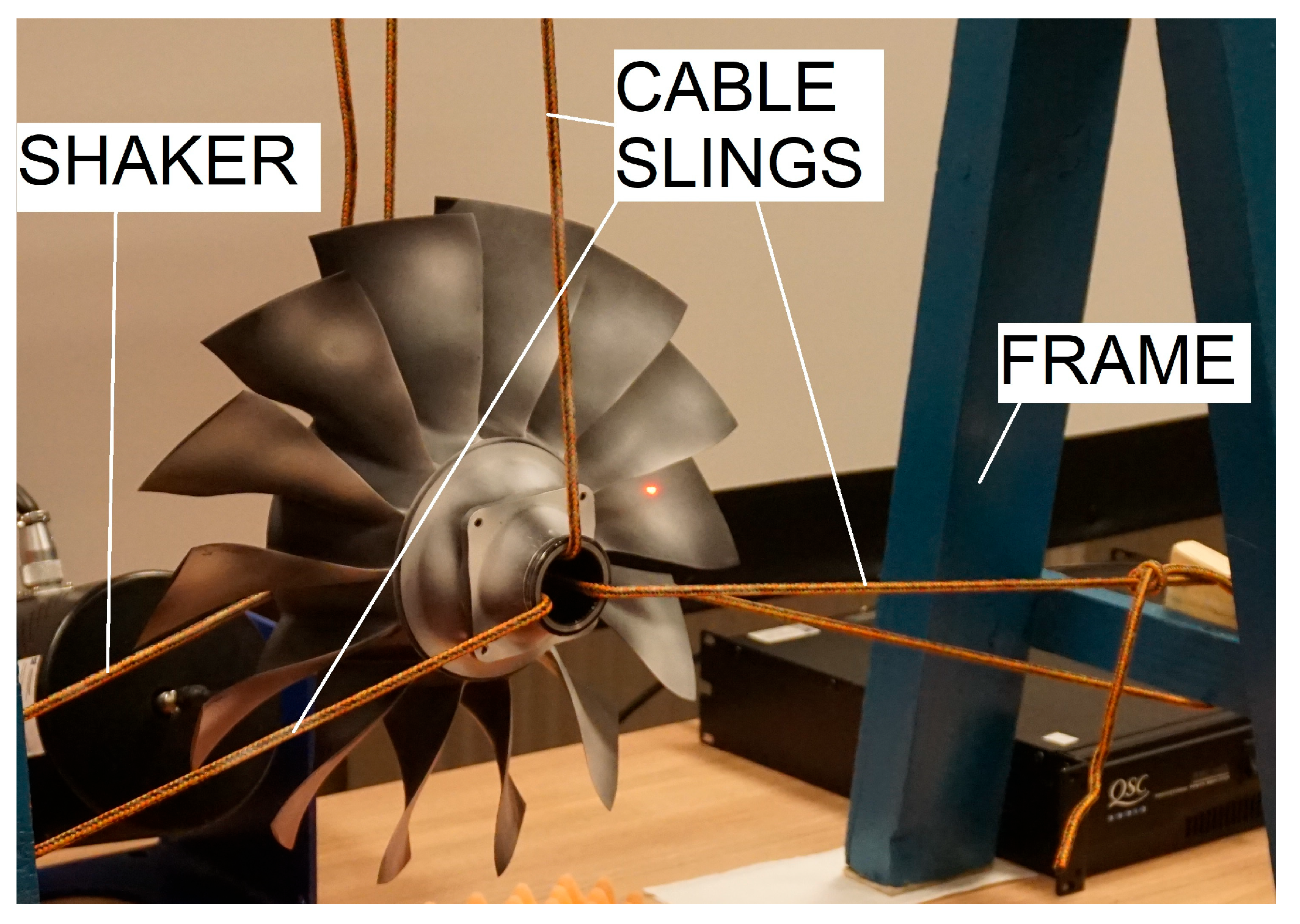
The rotor was mounted inside a rigid frame using three tensioned cable slings (
Figure 4). This suspension was selected to provide a stable measurement configuration while approximating quasi-free boundary conditions required for modal testing. Since the measured surface was dark and produced a weak reflected signal, several surface preparation methods were initially assessed. The best optical response was obtained using a thin layer of spray chalk, which was therefore applied to improve laser reflectivity. A light fabric was additionally placed behind the test stand to provide a uniform background and improve visibility during scan-point definition.
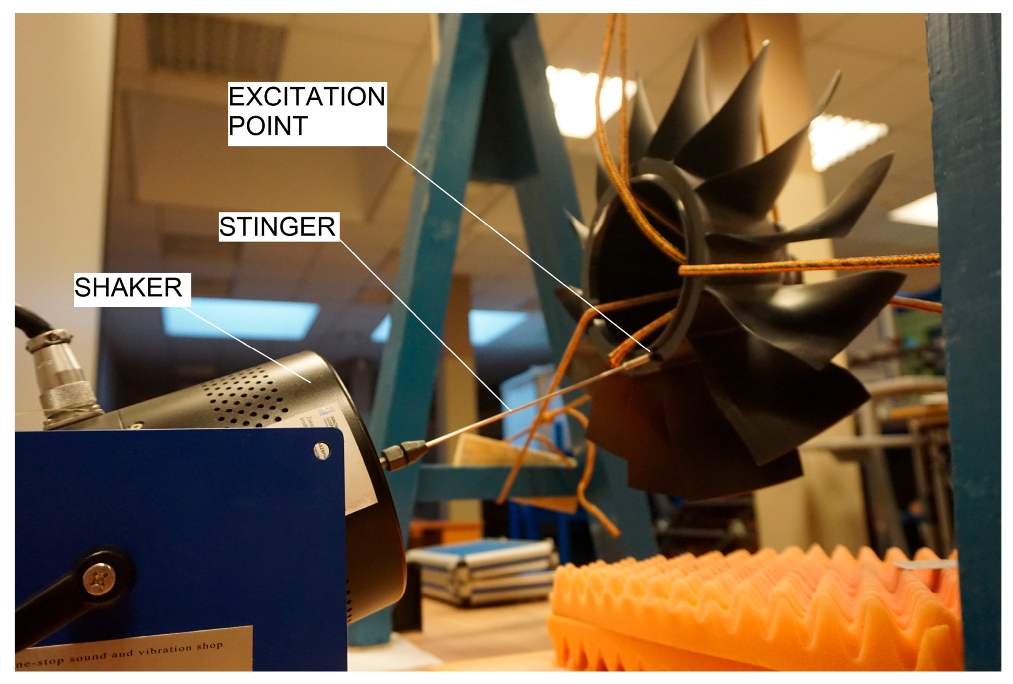
The rotor was excited using a modal electrodynamic shaker, The Modal Shop 2100E11, driven through a QSC RMX 450 amplifier. The excitation force was transmitted through a stinger with a rubber tip, positioned on the undercut of the fan closing ring opposite the upper suspension point (
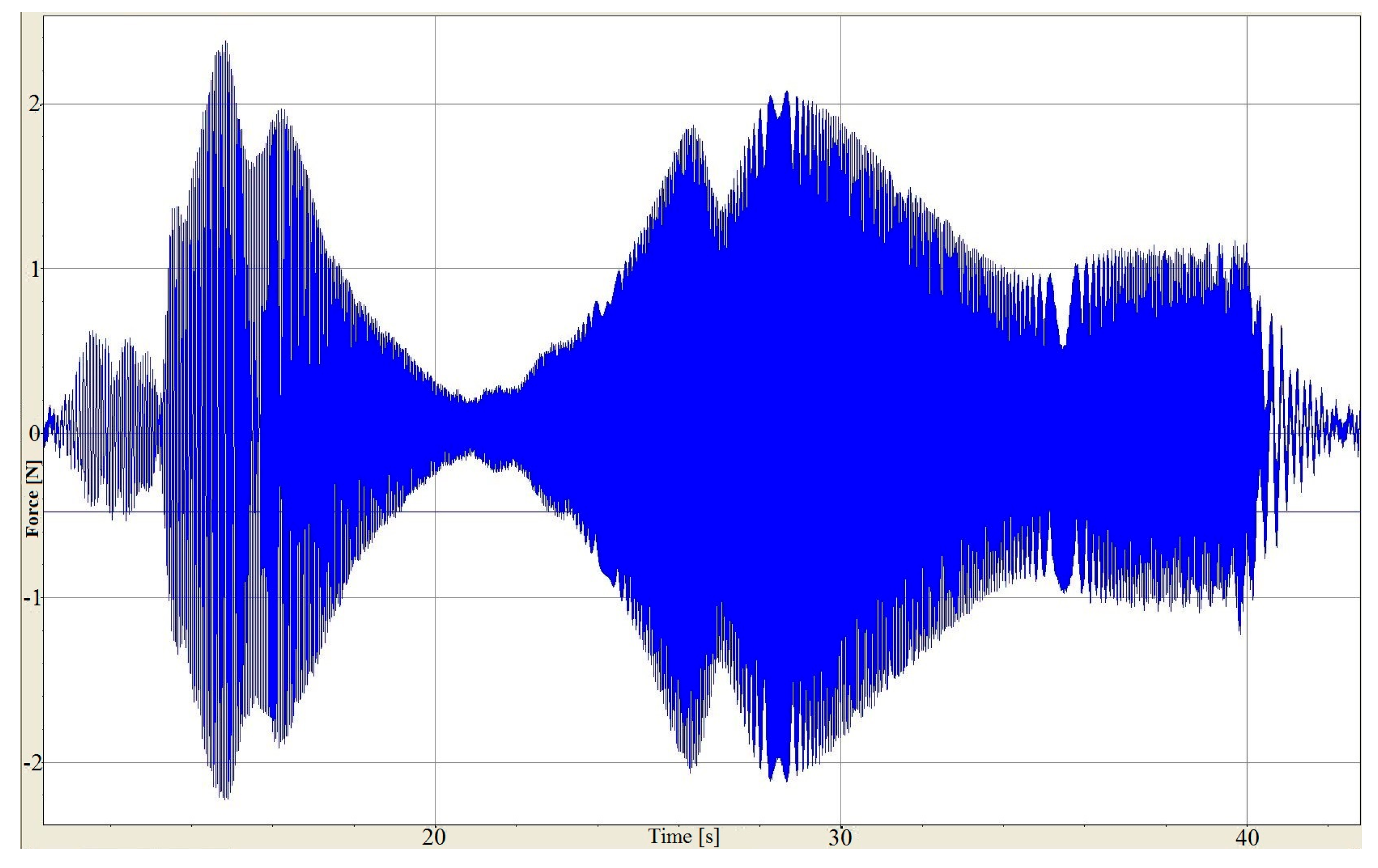
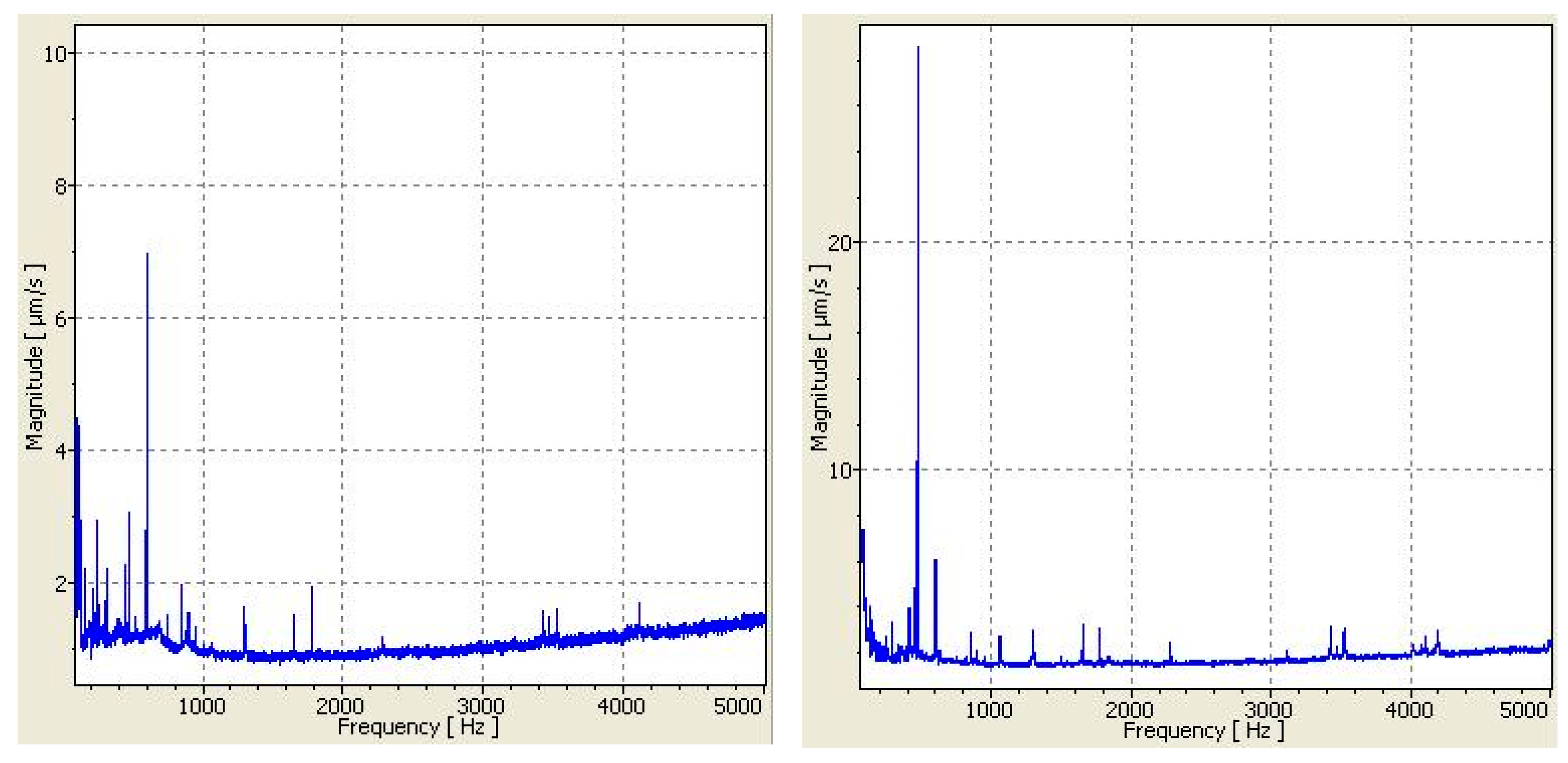
Figure 5). A broadband Periodic Chirpsignal was used as the excitation waveform (
Figure 6), as it enables efficient modal identification over a wide frequency range. The excitation level was set to approximately 1 V with an amplifier gain of 10 dB. Data acquisition, scan definition, and measurement control were performed using the dedicated Polytec PSV 8.7 software.
The measurement procedure consisted of two main stages. First, preliminary measurements were performed in the 1D configuration using a single scanning head positioned along the rotor axis. This stage was intended to verify the feasibility of laser vibrometry on the complex rotor geometry, assess the quality of the optical signal, and identify the dominant vibration directions. Since the largest vibration amplitudes were expected along the airflow axis, the 1D configuration was considered sufficient for this initial assessment.
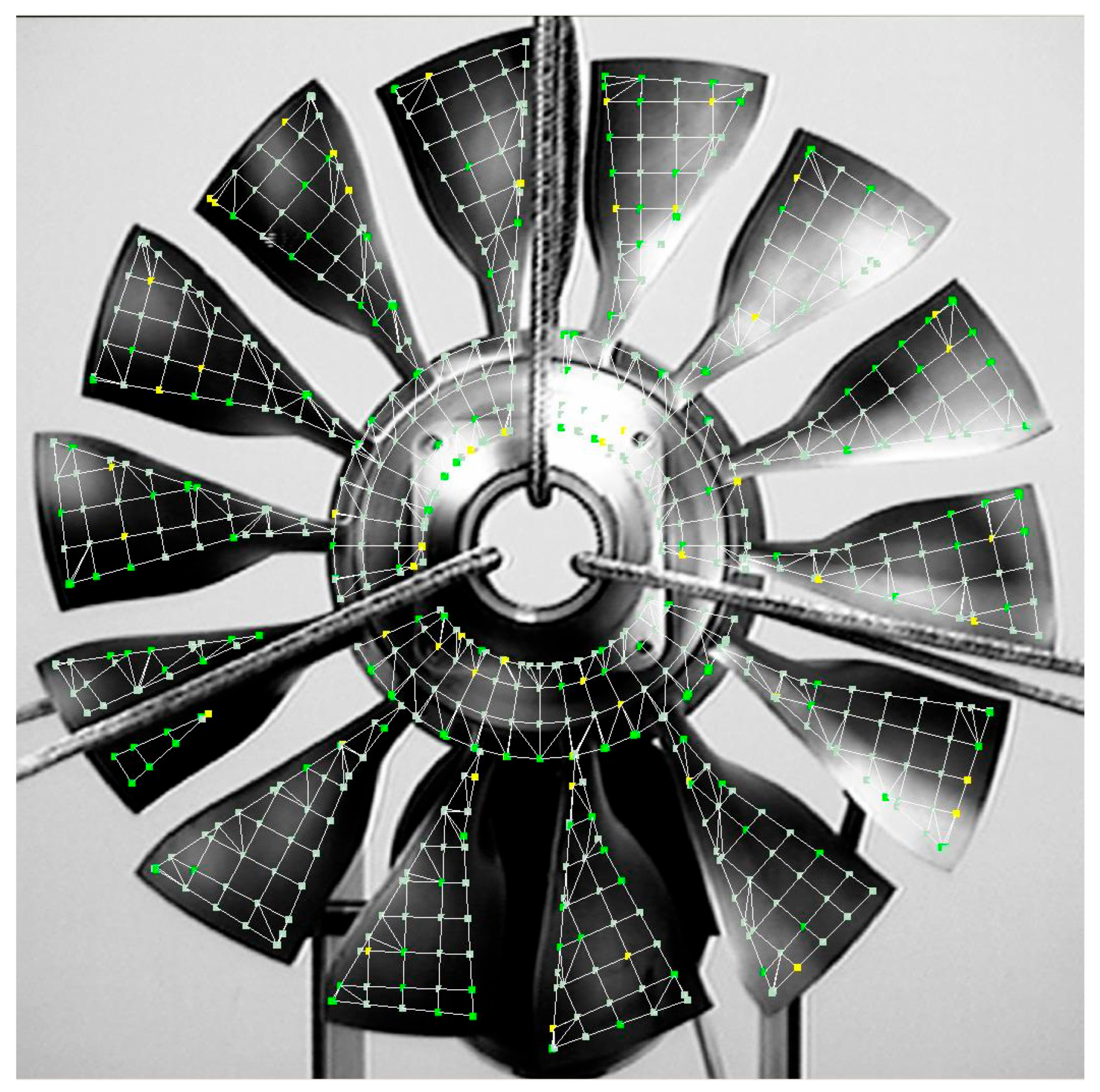
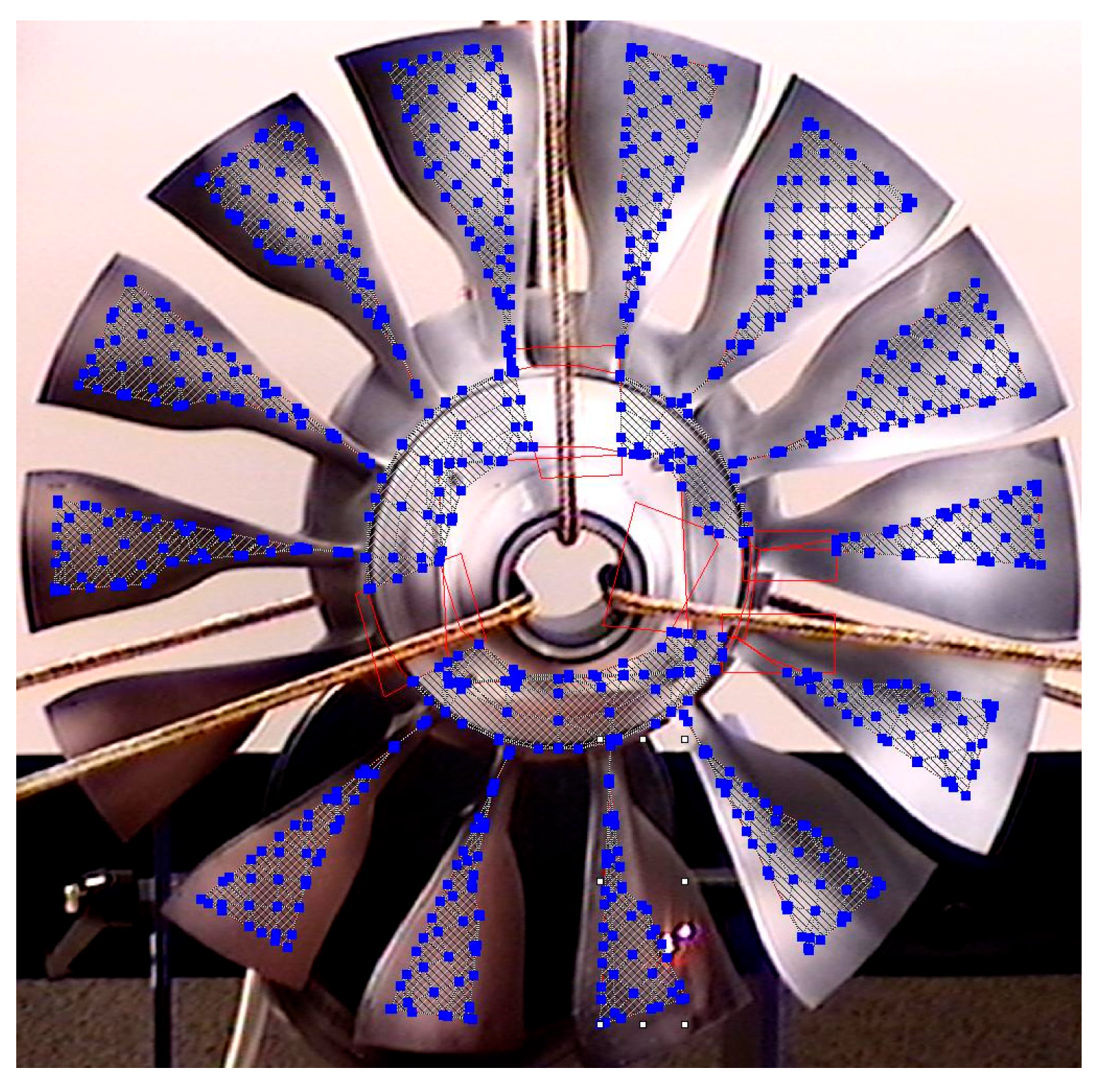
After preliminary adjustment of the measurement parameters, the scan grid was refined to 782 points, as shown in
Figure 7. The high spatial density of the grid enabled detailed mapping of the rotor geometry and improved visualization of the deformation patterns. In the applied measurement system, points with insufficient signal quality, overrange response, or invalidated status were excluded or remeasured by the software. Where applicable, interpolation from neighboring valid scan points was used only for visualization purposes, while the original measured data remained unchanged.
In the second stage, full-field measurements were performed in the 3D configuration. The three scanning heads were arranged approximately at the vertices of an equilateral triangle, with the rotor positioned near the center of the measurement volume. Each head was calibrated independently and then aligned within a common coordinate system. The relative positions of the heads and the corresponding laser incidence angles were used to reconstruct the resultant vibration velocity vector in three-dimensional space.
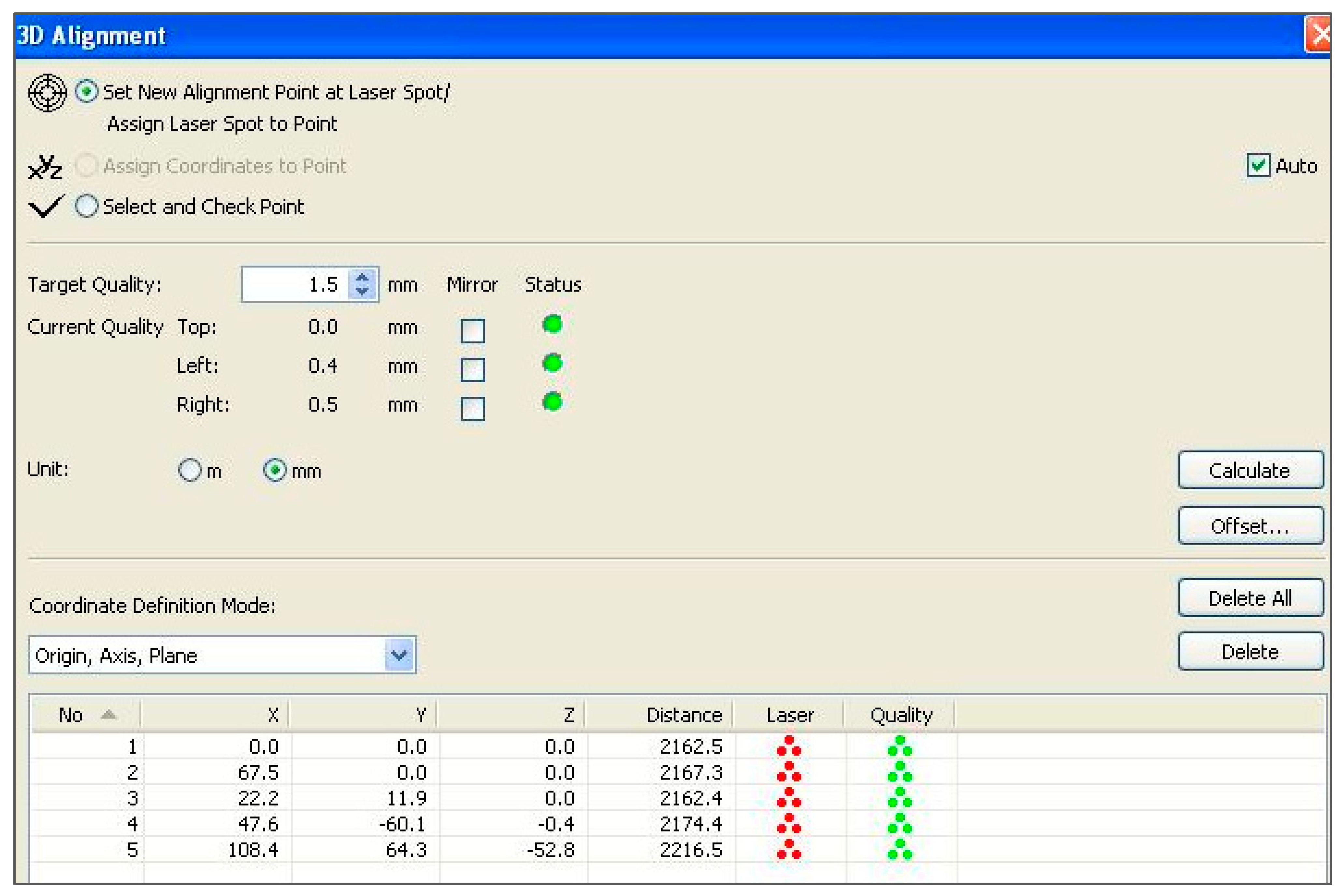
To improve alignment quality, the number of 2D alignment points was increased from the minimum recommended number to approximately 20–50 points per head, and the 3D alignment procedure was repeated several times. The final positional accuracy was 0.4 mm for the left head and 0.5 mm for the right head, while the reference top head retained an accuracy of 0.0 mm. The distance between the scanning heads and the rotor was approximately 2.1 m.
Due to the different incidence angles of the three laser beams and the line-of-sight limitations caused by the rotor geometry, the effective measurement area in the 3D configuration was smaller than that obtained in the 1D setup. This limitation results from the fact that the final 3D scan area corresponds to the common visible region of all three scanning heads. Therefore, particular attention was paid to the definition and verification of scan points located near blade edges and other geometrically complex regions.
After an initial sparse-grid measurement, the 3D scan grid was densified to 927 points (
Figure 8) in order to evaluate the stability of the identified dynamic response with respect to spatial sampling density. In the applied measurement system, the scan grid is not a fixed mesh defined a priori. Instead, it is generated and adjusted during the measurement setup according to the camera image, surface visibility, laser spot positioning, and signal quality. Consequently, the measurement grids are documented using screenshots from the instrument interface, which reflect the actual acquisition conditions and optical constraints.
The frequency range was selected to cover structural responses up to 10 kHz. A maximum of 6400 FFT lines were used, resulting in a sampling time of 640 ms and a frequency resolution of 1.5625 Hz. Three averages were applied for each measurement point. Since the system automatically repeated measurements for points with insufficient signal quality, the total acquisition time for a complete measurement set ranged from approximately 1.5 to 2 h.
4. Results
During the test, the natural vibration modes of the fan impeller were identified using a scanning laser vibrometer and the dedicated Polytec software. Two measurement approaches were applied: a 1D configuration using a single scanning head and a 3D configuration employing three independent scanning heads. In both cases, the geometry of the object was successfully reconstructed and used for subsequent modal analysis.
To reduce the influence of optical interference and locally elevated noise levels, the Interpolate Data function was applied during post-processing. This procedure was used only to improve visualization and mode-shape continuity and did not affect the original measured frequency values. When defining the measurement grids, particular attention was paid to ensuring sufficient spatial resolution with respect to the maximum analyzed vibration frequency. Scan points were also carefully selected to avoid unfavorable measurement conditions, such as grazing laser incidence at blade edges or unintentional probing of openings and shadowed regions.
The identified natural frequencies obtained from the 1D and 3D measurements are summarized in
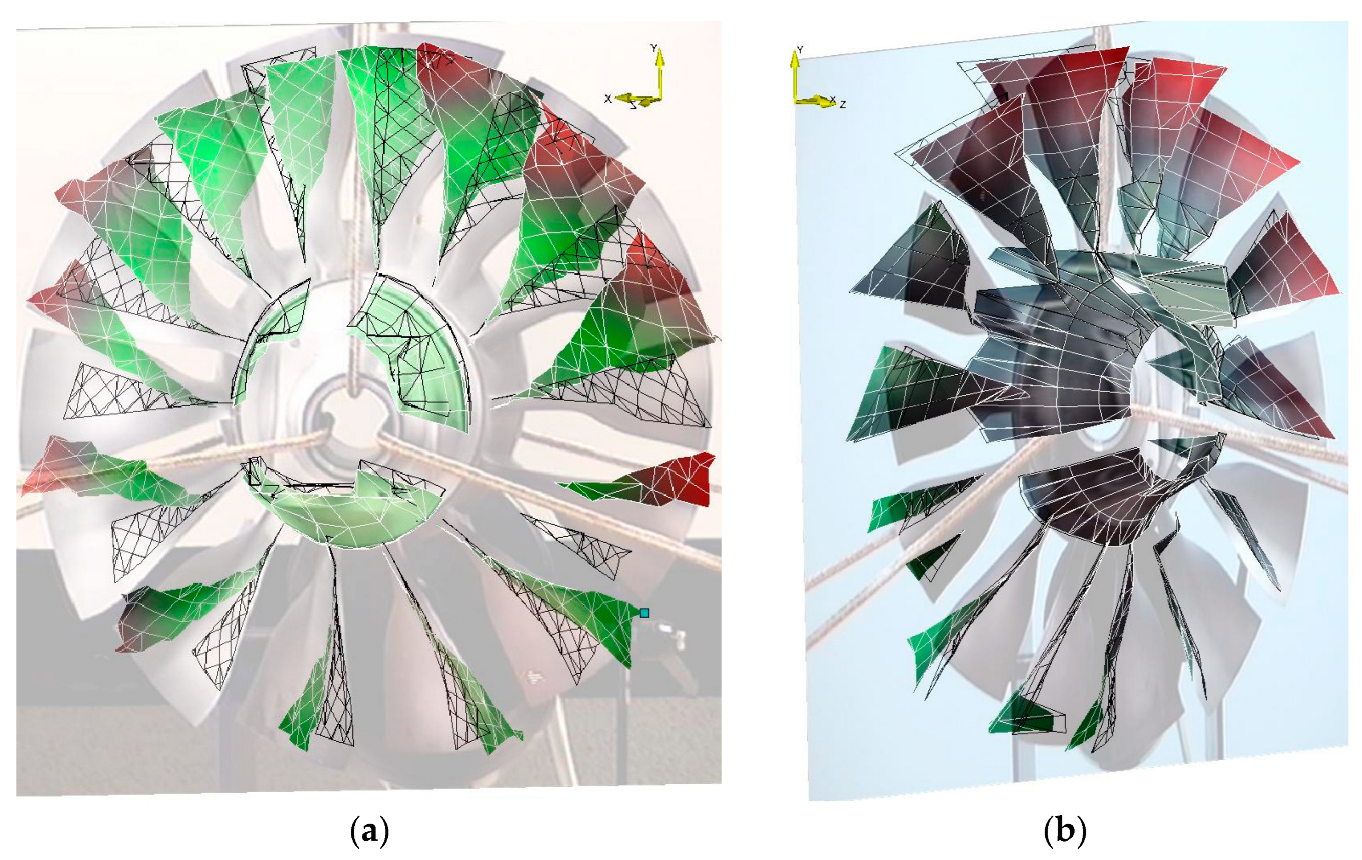
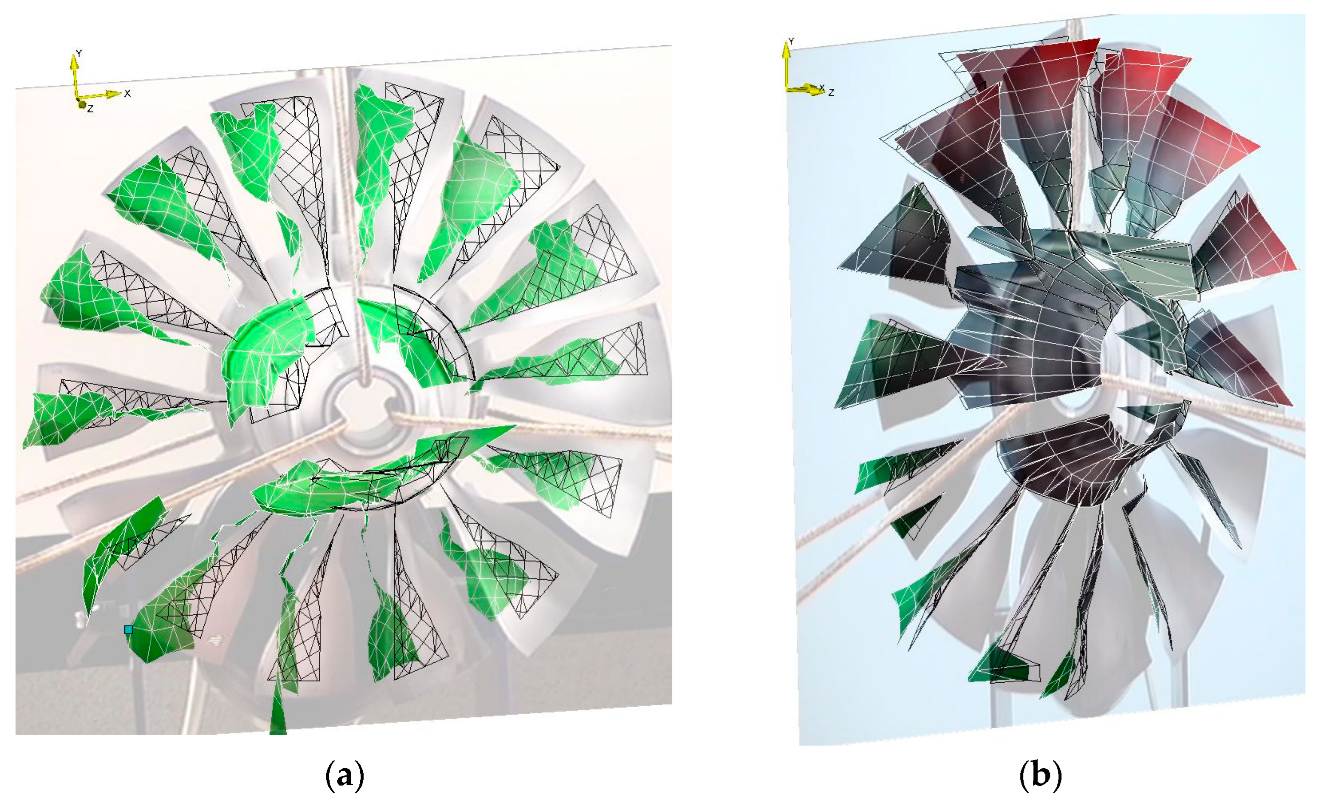
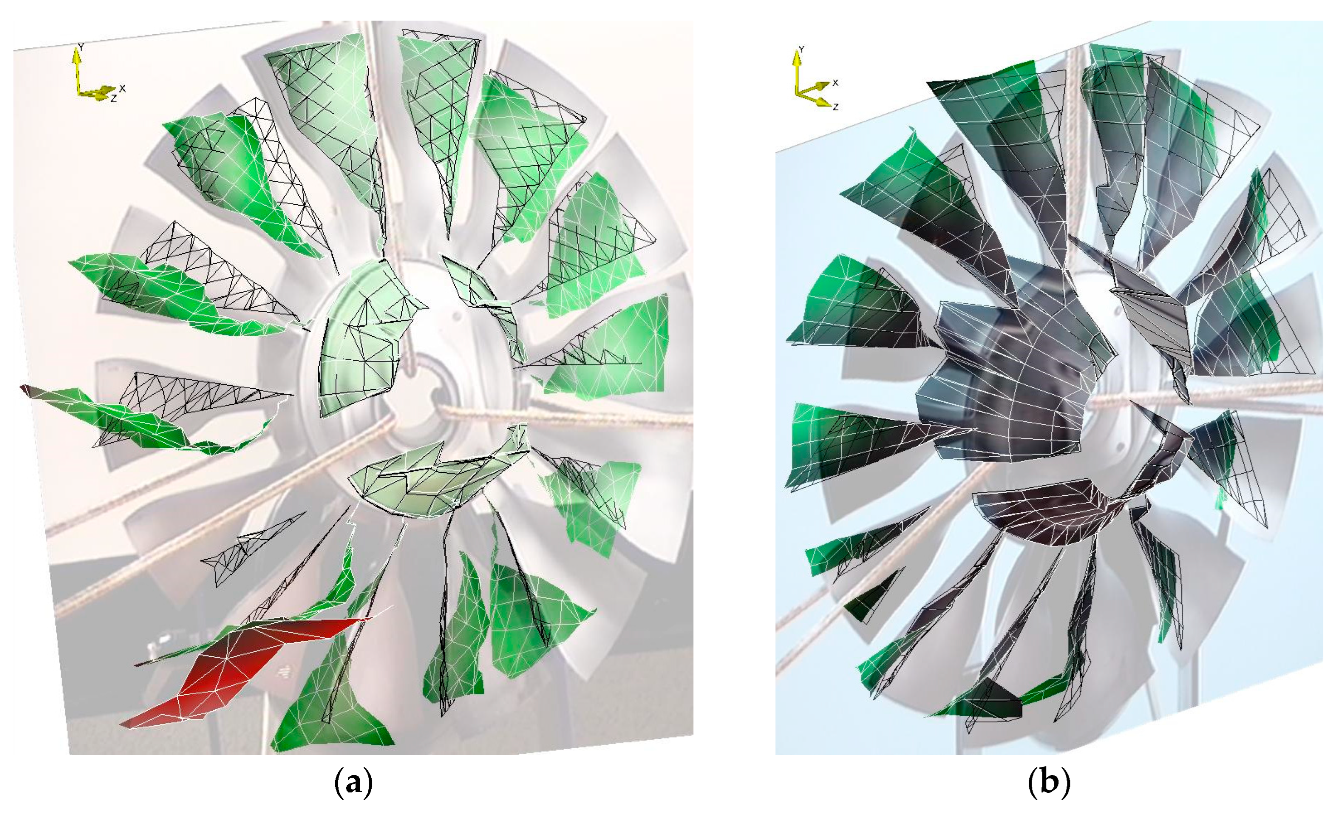
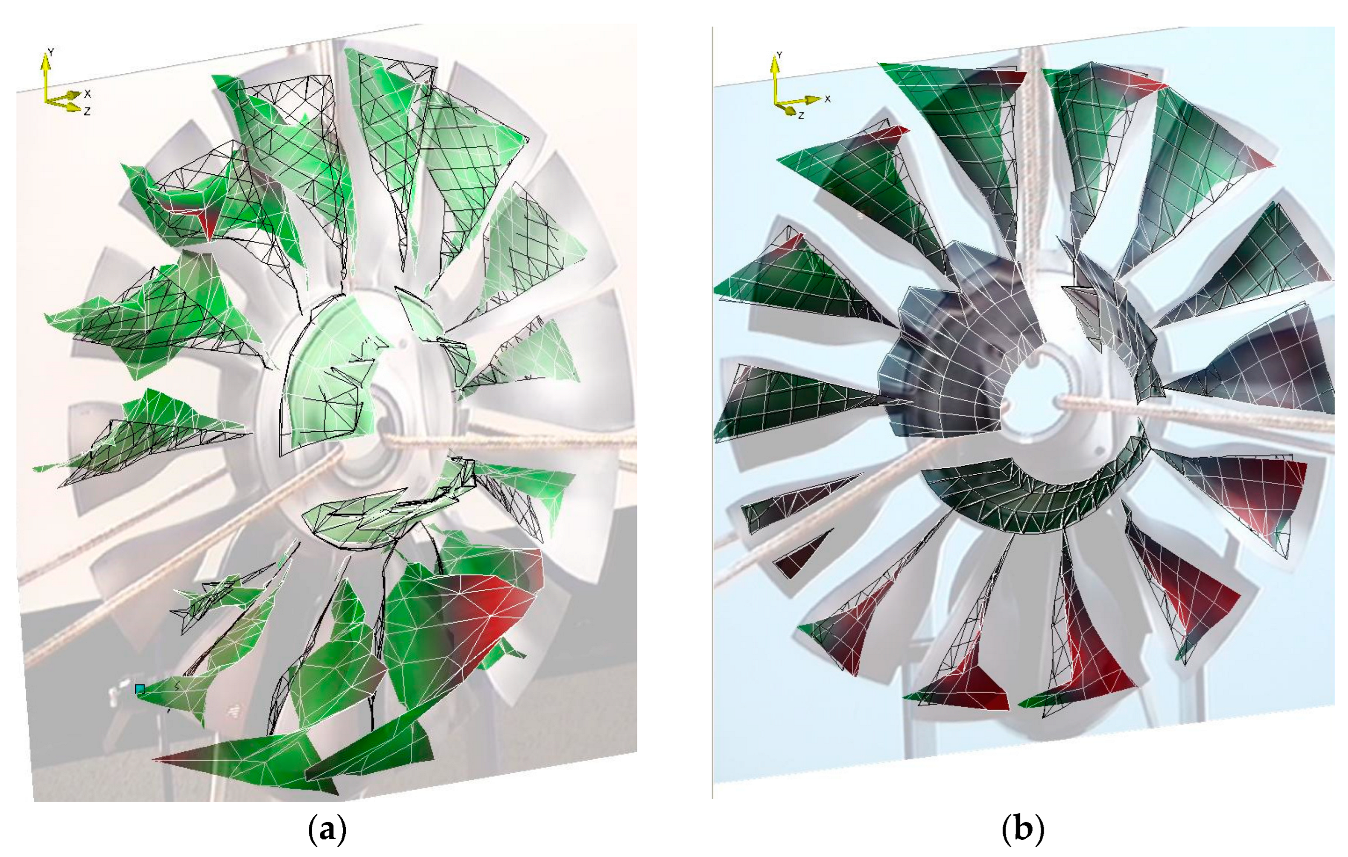
Table 1. Corresponding vibration modes between the two measurement configurations were identified based on a combined assessment of (i) proximity of natural frequencies, (ii) similarity of mode shape patterns, and (iii) dominant vibration direction. In particular, mode-shape obtained from the 3D measurements were projected onto the axial direction to enable a consistent comparison with the 1D results, which are inherently sensitive only to motion along the laser beam direction (
Figure 9).
For the majority of the identified modes, the difference between the natural frequencies obtained from the 1D and 3D measurements was below 1%, indicating very good agreement between the two approaches. Larger discrepancies were observed primarily for modes exhibiting significant lateral or circumferential motion components. In such cases, the reduced sensitivity of the 1D configuration to non-axial vibration components leads to less accurate frequency estimation and mode identification, which explains the observed differences (
Figure 10,
Figure 11,
Figure 12 and
Figure 13).
5. Discussion
The comparison of results obtained from 1D and 3D measurements shows good agreement for most of the identified natural frequencies. In most cases, the differences are small, typically below 1%, which suggests that 1D measurements can provide useful frequency-identification results under suitable measurement conditions. At the same time, larger discrepancies can be observed for modes that involve more complex motion, especially those with significant lateral components. In such cases, the limitation of the 1D approach becomes more visible, as only the vibration component along the measurement direction is captured. From a practical point of view, the 1D method offers clear advantages. The setup is much simpler, requires less time, and does not involve complex multi-head alignment procedures. This makes it particularly useful in preliminary testing or in cases where axial vibration is dominant. On the other hand, 3D vibrometry provides a complete description of the vibration field and is necessary when detailed analysis of mode shapes is required.
Compared with classical modal testing using accelerometers, such as LMS-type systems, laser vibrometry eliminates the need for physical sensors and avoids mass-loading effects. In comparison with digital image correlation, LDV is better suited for high-frequency measurements and does not require high-speed camera systems. The consistency between the 1D and 3D results obtained in this study can also be treated as an indirect confirmation of measurement reliability, particularly for modes dominated by axial motion.
6. Conclusions
This study presented an experimental comparison of one-dimensional (1D) and three-dimensional (3D) laser Doppler vibrometry for non-contact modal analysis of a miniature turbofan engine rotor, conducted under identical excitation and mounting conditions. The investigation focused on the accuracy of the identified modal parameters, experimental complexity, and practical applicability of both measurement approaches.
The results show that, for vibration modes dominated by axial motion, the natural frequencies obtained from 1D and 3D measurements exhibit very good agreement, with typical relative deviations below 1%. In particular, the lowest-order modes, characterized by large global deformation amplitudes and of primary relevance for resonance avoidance in turbomachinery, were consistently identified using both techniques. These findings confirm that, under the investigated conditions, 1D laser vibrometry can provide reliable modal information for selected vibration modes.
At the same time, noticeable discrepancies were observed for modes involving significant lateral, circumferential, or angular motion components. For such cases, the directional sensitivity inherent to the 1D configuration limits its ability to fully capture the spatial characteristics of the vibration response. Consequently, 3D laser vibrometry remains necessary when full three-dimensional mode-shape reconstruction and comprehensive spatial characterization are required.
From a practical perspective, the results indicate that 1D laser vibrometry may be effectively applied in selected engineering applications where the expected vibration response is predominantly aligned with the measurement direction and where reduced experimental complexity and shorter measurement time are desirable. For detailed modal investigations of complex turbomachinery components, particularly those exhibiting strongly three-dimensional vibration behavior, 3D laser vibrometry continues to represent the more robust and informative measurement approach.
The team’s future investigations will aim to expand the intensity and effectiveness of experimental studies, while simultaneously employing comparative model simulations. Additional, more sophisticated validation methods are planned to be applied, such as the Modal Assurance Criterion (MAC), designed to directly assess the similarity of vibrational modes determined using various techniques (measurement or simulation). New measurement cases undertaken in subsequent research challenges will continue to be conducted using one- or three-dimensional image detection of recorded vibrations, to further assess the applicability limits of reduced-dimension laser vibrometry (
Figure 14).
Author Contributions
Conceptualization, A.O. and R.R.; methodology, A.O.; validation, M.S. and R.R.; formal analysis, M.S.; investigation, M.S.; resources, R.R.; data curation, M.S.; writing—original draft preparation, M.S.; writing—review and editing, R.R.; visualization, M.S.; supervision, R.R.; project administration, A.O. All authors have read and agreed to the published version of the manuscript.
Funding
This work was funded by the Military University of Technology (Warsaw, Poland) under the university research project no. UGB 531-000041-W200-22 entitled: Parametric modeling of light aircraft geometry and structure for optimization tasks in the field of structural strength and aeroelasticity. The project was conducted at the Faculty of Mechatronics, Armament and Aerospace of the Military University of Technology (Warsaw, PL), in 2025.
Institutional Review Board Statement
Not applicable.
Informed Consent Statement
Not applicable.
Data Availability Statement
The data presented in this study are publicly available and can be shared with interested parties upon request to the corresponding author. Data could be shared in reference to each paragraph for any stage of the research presented here.
Acknowledgments
Special thanks for the financial, equipment and substantive support to the highly respected Aleksander Olejnik from the Military University of Technology—the prime initiator and manager of investment projects for the expansion of equipment resources and development of competences of the research team of the Aircraft Propulsion Research Laboratory of the Institute of the Aeronautical Technology in the FMAA MUT.
Conflicts of Interest
The authors declare no conflicts of interest.
References
- Halkon, B.J.; Rothberg, S.J. Vibration measurements using continuous scanning laser vibrometry: Advanced aspects in rotor applications. Mech. Syst. Signal Process. 2006, 20, 1286–1299. [Google Scholar] [CrossRef] [Scilit]
- Rothberg, S.J.; Allen, M.S.; Castellini, P.; Di Maio, D.; Joris, D.; Ewins, D.J.; Halkon, B.J.; Muyshondt, P.; Paone, N.; Ryan, T.; et al. An international review of laser Doppler vibrometry: Making light work of vibration measurement. Opt. Lasers Eng. 2017, 99, 11–22. [Google Scholar] [CrossRef] [Scilit]
- Hasheminejad, N.; Vuye, C.; van den Bergh, W.; Dirckx, J.; Vanlanduit, S. A Comparative Study of Laser Doppler Vibrometers for Vibration Measurements on Pavement Materials. Infrastructures 2018, 3, 47. [Google Scholar] [CrossRef] [Scilit]
- Jin, X.; Shen, Y.; Wang, Y.; Kong, X.; Zhang, W. Research on the Speckle Effect Suppression Technology of a Laser Vibrometer Based on the Dual-Wavelength Detection Principle. Appl. Sci. 2025, 15, 4858. [Google Scholar] [CrossRef] [Scilit]
- Seydipour, F.; Rezae, F. Evaluation of laser Doppler vibrometer’s performance by a multimode laser and changeable reference arm length, equipped with an auto-focus system. Sci. Rep. 2025, 15, 39831. [Google Scholar] [CrossRef] [Scilit] [PubMed]
- Göge, D.; Böswald, M.; Füllekrug, U.; Lubrina, P. Ground Vibration Testing of Large Aircraft—State-of-the-Artand Future Perspectives. In Proceedings of the Modal Analysis Conference 2007—A Conference and Exposition on Structural Dynamics (IMAC XXV), Orlando, FL, USA, 19–22 February 2007. [Google Scholar]
- Lau, J.; Peeters, B.; Debille, J.; Guzek, Q.; Flynn, W.; Lange, D.S.; Kahlmann, T. Ground Vibration Testing Master Class: Modern testing and analysis concepts applied to an F-16 aircraft. In Proceedings of the 29th IMAC, A Conference on Structural Dynamics, 2011, 1st ed.; Advanced Aerospace Applications; River Publishers: Aalborg, Denmark, 2011; Volume 1. [Google Scholar]
- Giclais, S.; Lubrina, P.; Stephan, C. Testing in Aerospace Research—Aircraft Ground Vibration testing at ONERA. Aerosp. Lab J. 2016, AL12-05. [Google Scholar] [CrossRef]
- Guérin, N.; Stephan, C.; Lubrina, P.; Soal, K.; Tang, M.; Volkmar, R.; Govers, Y.; Kier, T.; Bartasevicius, J.; Teubl, D.; et al. Contribution of the Ground Vibration Tests for the Preparation of Flutter Supression Flight Test Campaigns: Case of the Flipased P-FLEX UAV. In International Forum on Aeroelasticity and Structural Dynamics (IFASD) 2024, NVvL; The Dutch Association for Aviation: The Hague, The Netherlands, 2024. [Google Scholar]
- Kempny, M. Digital Image Corelation—Method Development, Scope, Principle of Functioning, and Future Goals. J. Met. Mater. 2022, 74, 30–41. [Google Scholar]
- Mousa, M.A.; Yussof, M.M.; Hussein, T.S. A Digital Image Correlation Technique for Laboratory Structural Tests and Applications: A Systematic Literature Review. Sensors 2023, 23, 9362. [Google Scholar] [CrossRef] [Scilit] [PubMed]
- Szczeciński, S.; Balicki, W.; Chachurski, R.; Głowacki, P.; Kawalec, K.; Kozakiewicz, A.; Szczeciński, J. Lotnicze Zespoły Napędowe; Wojskowa Akademia Techniczna: Warszawa, Poland, 2009. (In Polish) [Google Scholar]
- Olejnik, A.; Rogólski, R.; Szcześniak, M. Non-contact Vibration Measurement of Selected Rotor Elements from Aircraft Turbine Engines. Probl. Mechatron.—Armament Aviat. Saf. Eng. 2018, 9, 129–146. (In Polish) [Google Scholar] [CrossRef] [Scilit]
- Software Manual—Polytec Scanning Vibrometer, Software 8.7; Polytec Deutschland: Lohne, Germany, 2009.
- Hardware Manual, Polytec Scanning Vibrometer PSV-400-3D.
- Theory Manual—Polytec Scanning Vibrometer; Polytec Deutschland: Lohne, Germany, 2007.
- Kaliski, S.; Solarz, L.; Dzygadlo, Z.; Wlodarczyk, E. Drgania i Fale w Ciałach Stałych; Państwowe Wydawnictwo Naukowe: Warsaw, Poland, 1966. (In Polish) [Google Scholar]
- Lipka, J. Wytrzymałość Maszyn Wirnikowych; Wydawnictwa Naukowo-Techniczne: Warszawa, Poland, 1967. (In Polish) [Google Scholar]
- Rao, S.S. Mechanical Vibrations, 5th ed.; Pearson Education, Inc.: London, UK; Prentice Hall: Hoboken, NJ, USA, 2011. [Google Scholar]
- Sutliff, D.; Upadhyay, P.; Gold, J. DGEN380 Aero-propulsion Research Turbofan (DART)—Status Update. In Acoustics Technical Working Group Meeting; NASA Glenn Research Center: Cleveland, OH, USA, 1 November 2023. [Google Scholar]
- Lagha, M.; Duplaa, S.; Binder, N.; Carbonneau, X. Unified classification and characterization of axial turbomachines and propellers. In Proceedings of the 13th International Symposium on Experimental Computational Aerothermodynamics of Internal Flows, Okinawa, Japan, 7–11 May 2017. [Google Scholar]
| Disclaimer/Publisher’s Note: The statements, opinions and data contained in all publications are solely those of the individual author(s) and contributor(s) and not of MDPI and/or the editor(s). MDPI and/or the editor(s) disclaim responsibility for any injury to people or property resulting from any ideas, methods, instructions or products referred to in the content. |