
Article

Estimating Active Space Noise Extent from Two Aircraft Weight Classes over the Great Smoky Mountains National Park

1
Department of Horticulture and Natural Resources, Kansas State University, Manhattan, KS 66506, USA
2
Natural Sounds and Night Skies Division, United States National Park Service, Fort Collins, CO 80525, USA
3
Department of Geography and Geospatial Sciences, Kansas State University, Manhattan, KS 66506, USA
*
Author to whom correspondence should be addressed.
Aerospace 2026, 13(4), 363; https://doi.org/10.3390/aerospace13040363
Submission received: 2 March 2026 / Revised: 2 April 2026 / Accepted: 9 April 2026 / Published: 14 April 2026
(This article belongs to the Special Issue Aircraft Noise Mitigation—Concepts, Assessment, and Implementation)

Abstract

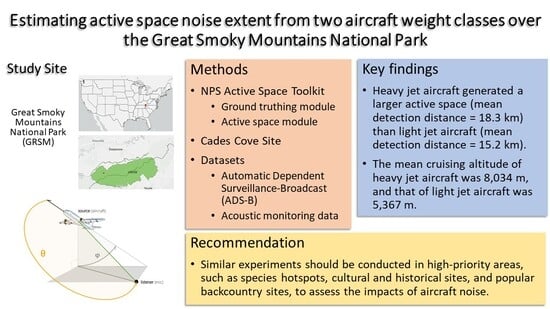
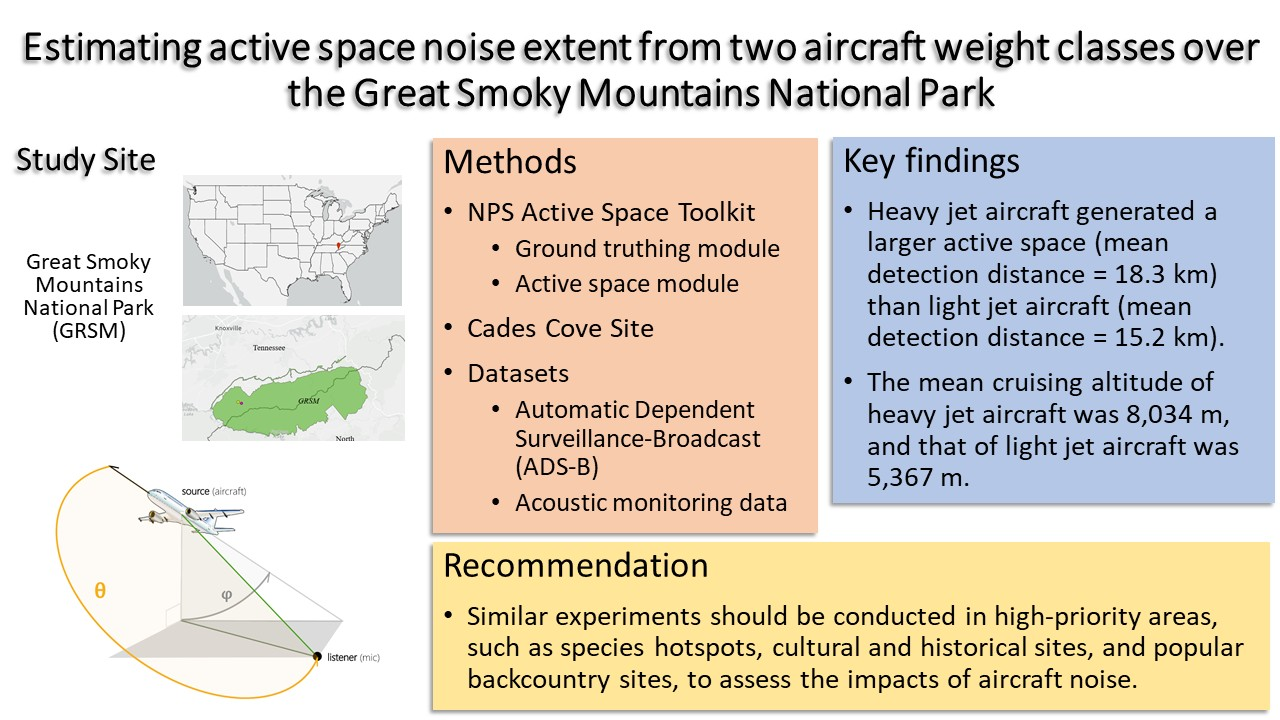
The natural and cultural components of the acoustic environment are a resource intrinsic to parks and protected areas and are critical to wildlife and the visitor experience. However, noise degrades the natural acoustic environment, and aircraft introduce spatially extensive noise into such environments. This study examined aircraft noise events at Great Smoky Mountains National Park, U.S., for different jet aircraft types categorized as “Light” (<20,000 pounds) and “Heavy” (>20,000 pounds). Detection distances were determined for these aircraft types by examining the active space of each aircraft’s noise events. The results of this study determined mean detection distances of 15.2 km for “Light” aircraft and 18.3 km for “Heavy” aircraft to the active space boundaries. Increased thrust or jet velocity from the higher mean altitude resulted in a larger active space. From a practical management perspective, to minimize noise impacts on the park’s natural and cultural resources, efforts should focus on “Heavy” aircraft because they produce greater thrust and frequently operate above GRSM. Using detection distances, managers could work with these aircraft operators or airports to reduce thrust and velocity when flying above protected areas and to discuss routing around noise-sensitive areas, especially with low-level overflights.

Graphical Abstract

1. Introduction

Acoustic environments consist of all sounds in an area and the physical capacity to transmit them to a listener [1]. They may consist solely of natural sounds or a combination of natural and human-made sounds [2]. Acoustic resources enhance visitors’ experiences and foster tranquility [3]. Organisms in the animal kingdom possess auditory capabilities that guide their behavioral ecology [4]. When noise is introduced to a natural acoustic environment, it reduces the three-dimensional “active space” humans and other organisms can hear within [5]. Active space is the sensory area surrounding an individual, within which information is perceived or exchanged [6].
Natural acoustic environments are increasingly threatened by transportation networks that generate extensive noise footprints [7]. Terrestrial animals exhibit responses to noise stimuli as low as 40 dBA, with noticeable effects at levels below 50 dBA [8]. Noise disrupts and degrades visitors’ experiences at parks and protected areas (PPAs). Since the passing of the U.S. National Park Service (NPS) Organic Act of 1916, natural sounds have been recognized as essential park resources and contribute to quality visitor experiences. Consequently, various strategies have been implemented to preserve or restore natural soundscapes [9]. Aircraft and road vehicles were the most common sources of anthropogenic noise in parks in the United States [10]. The Natural Sounds and Night Skies Division (NSNSD) of the NPS has been conducting acoustic monitoring since the 2000s, collecting long-term data on acoustical conditions in PPAs and providing important metrics such as existing and natural ambient sound levels [7,11]. The NPS’s acoustic monitoring equipment can be categorized into three distinct generations or phases, all of which use ANSI Type 1 sound level meters (SLMs) with 1/2 microphones. These meters record 33 one-third octave sound pressure level (SPL) in decibels per second across a frequency range of 12.5 to 20,000 Hz [7]. At the time of this analysis, the SLM model in use was the Larson Davis 831, which features a solid-state audio recorder which can simultaneously record wind speed, wind direction, temperature, and humidity. Acoustic monitoring data have a wide variety of management applications in PPAs, including establishing baseline existing and natural ambient, identifying noise sources, identifying species presence/absence and abundance, and quantifying the effects of management actions. Noise modeling demonstrates the spatial extent of noise and the varying areas of noise audibility from sources such as low-level overflights. Subsequently, noise mitigation strategies are developed based on findings from noise monitoring, spatial modeling, and quantitative estimates of active space.
Numerous technologies have been used to track aircraft across time and space; however, most recent research has focused on Automatic Dependent Surveillance-Broadcast (ADS-B). ADS-B Out in an aircraft receives information from satellites and aircraft avionics and then broadcasts it as signals containing real-time data on geographical position, altitude, velocity, heading, barometric altitude, and a unique identification code to other aircraft and air traffic controllers. Aircraft are registered with the FAA with unique codes (hex-code), and other metadata are stored in the publicly available FAA Releasable Database [12]. ADS-B signals are broadcast at approximately 0.5 s intervals at a frequency of 1090 MHz [13]. These unencrypted and publicly accessible signals can be collected by terrestrial ADS-B data loggers deployed at suitable locations with unobstructed skyward exposure and no terrain shielding. The Federal Aviation Administration (FAA) has mandated that all aircraft must be equipped with ADS-B Out Avionics to fly in its controlled airspace in the U.S. as of 1 January 2020 (14 CFR § 91.225 and 14 CFR § 91.227).
A combination of aircraft tracking and sound level monitors has been used for aircraft noise monitoring and detection [5]. Aircraft operating under PPAs include single-engine fixed-wing, multi-engine fixed-wing, and rotorcraft. Each aircraft type has a specific configuration that determines thrust and noise emissions [14]. In an experiment comparing two-blade and three-blade propeller aircraft, the two-blade configuration generated slightly higher interior noise levels across all rotational speeds, demonstrating differences in noise emissions between the two propeller types [15]. Ref. [5] demonstrated optimal active space estimates for aircraft noise for only a single aircraft type. However, an active space has yet to be constructed for other aircraft types, which will help identify the variations in the noise exposure model based on source types in the park. Thus, our objective is to expand on the work of [5] by considering different jet aircraft types based on maximum takeoff weight classes.
The primary research question is the following:
How does aircraft weight affect the active space perceived by a terrestrial listener?

2. Literature Review

2.1. Acoustic Environment and Noise Pollution

Semantically, a national park’s soundscape can be divided into three primary components: biophony (animal sounds), geophony (sounds resulting from geological, hydrological, or meteorological processes), and anthrophony (human-induced sounds) [1]. Ambient sound refers to the presence of natural sounds that vary in response to ecological and natural processes [1]. Anthropogenic noise originates from vehicles, aircraft, watercraft, and heavy equipment operations. A park’s acoustic environment consists of all natural sounds present within the park, the physical capacity to transmit those sounds, and the interrelationships among natural sounds of varying frequencies and amplitudes [9].
Noise masks natural sounds and interrupts important signals for wildlife [10]. Noise alters animals’ behavior, response mechanisms, physiology, individual fitness, agility, foraging behavior, and the structure of wildlife communities [8]. For humans, noise reduces the benefits of experiencing natural acoustics, which has been shown to increase relaxation, restore attention [16], improve mood and focus [17], and reduce stress and annoyance [10].
Noise pollution is a major issue in PPAs, and aircraft, especially low-level overflights, are a primary source of noise [18]. Acoustic recordings collected from 251 sites in 66 park units in the U.S. showed that 37% of the samples contained anthropogenic noise, with aircraft and vehicle sounds being the most common noise sources [19]. Surveys in Denali National Park and Preserve (DENA) found aircraft noise to be annoying and unacceptable, as evaluated by visitors, and thus recommended that managers focus on aircraft noise as a potential indicator for assessing the wilderness soundscape experience [20]. In a laboratory simulation experiment with three aircraft noise conditions, rotorcraft noise was found to be the most disruptive to the national park experience, followed by propeller plane noise and then jetliner noise [21]. A study was conducted with park visitors in four different front country settings in DENA to identify the threshold of acceptability for noise. The probability of rating aircraft noise as unacceptable at 54 dB LAeq, 30 s, or higher was 26% for the visitors uninterested in air tours, which suggests that visitors not interested in air tours are even more sensitive to aircraft noise impacts [22]. Apart from sound pressure level as a predictor of acceptability and threshold in visitor experience, sound qualities such as roughness (sound irregularities) also influence visitors’ experience and acceptability in protected areas [23].
The Grand Canyon National Park Enlargement Act of 1975 paved the way for studies on noise pollution caused by aircraft in the canyon [24]. This was followed by the National Parks Overflights Act of 1987. A congressional assessment study was drafted in 1995 to evaluate the need for air tour management at all NPS units. To mitigate noise and maintain the safety and esthetics of national parks and tribal lands, Congress passed the National Park Air Tour Management Act of 2000, which requires the FAA to cooperate with the NPS in developing and implementing an air tour management plan [25]. The NPS and FAA were required to establish the National Parks Overflights Advisory Group (NPOAG), an advisory body comprising representatives of all stakeholder groups [1]. Aircraft are considered an extrinsic sound in parks because they do not form an essential part of the establishing purpose or originate from outside the park boundary [26].

2.2. Noise Monitoring

Human-induced noise, including that from air traffic routes, disrupts the natural “acoustic zones” of PPAs, leading to altered, non-natural acoustical conditions [2]. Assessing the spatial distribution of noise pollution, especially in protected lands, is important [27]. Typically, normal human hearing ranges from 20 Hz to 20 kHz [28,29]. Sound measurements are often weighted for differential human hearing sensitivity over this range by using adjustments such as the A-weighting network [29]. In a sound assessment setting, sound pressure levels were categorized as existing (median) and natural ambient sound levels, which were presented as exceedance levels (Lx). Exceedance level shows the sound level (measured in dBA, dBC, dBT, or dBZ) exceeded x percent of the time during the measurement period [26]. Existing ambient sound is represented by the median sound pressure level (L50). L50 shows the sound level exceeded 50% of the time or the median sound level in the measurement period. The existing (median) ambient sound level (L50) is an average background level consisting of both natural and anthropogenic sound sources, and NPS uses the term existing ambient sound level [7]. Exceedance metrics L10 and L90 (also 90th percentile and 10th percentile of sound pressure level, respectively) estimate the sound level exceeded 10% and 90% of the measurement observation period. These metrics are convenient estimates of the upper and lower energy bounds of a given acoustic environment as it varies over the observation period [26]. The natural ambient (Lnat) sound level of an environment is an estimate of the sound level energy from natural sound sources alone, without any human-caused noise.

2.3. Active Space

The concept of active space is widely used in animal ecology, where it describes an area within which sensory information is received or relayed by an individual organism, guiding navigation, prey and predator detection, and social interactions [6,30,31]. Active space defines the distance between an emitter and a receiver and is influenced by background or ambient sound levels, which can often lead to acoustic masking of the desired sound or signal. The active space concept was applied to define a causal geometric relationship, i.e., the spatial intersection of a listener (a visitor or wildlife) and a specific sound source [5]. Cetacean species in marine environments use acoustic active space, or niche space, for ecological interactions, such as sending and receiving habitat information and engaging in social interactions [6], and the extent of active space is often reduced due to masking or impedance by anthropogenic noise in the underwater soundscape [32].
In an assessment conducted by NASA Langley Research Center, a single-engine de Havilland DHC-3 airplane flying at 1000 feet above ground level (AGL) was estimated to have a planar detection distance exceeding 10 km (6.2 miles) for a listener against a sound level of approximately LAeq, * [20–10 k Hz] of 40 dB [33]. Various soundscape modeling softwares have been used to understand the spatial extent of noise impacts. The NODSS (National Overflight Decision Support System) model was previously used by the NPS to analyze air tour data for the Grand Canyon [24,34]. The acoustic condition of HALE was modeled using an Integrated Noise Model Analysis tool (INMA), where the input parameters included nominal air tour routes, hours of operation, the average number of flights per day, and the types of aircraft flown, as collected from air tour operator reports [35]. The Integrated Noise Model generated acoustic metrics and audibility contours for an area based on percent time audible [% TAud] or equivalent continuous sound level [LAeq]. The tool is Windows-based and was developed by the U.S. Department of Transportation. In an experiment at a non-towered general aviation (GA) airport, ADS-B data were integrated with the FAA Releasable Database and EUROCONTROL NPD curves, and the noise model accurately identified aircraft noise events with an average error of 4.50 dBA when compared with benchmark noise data from sound level meters [36]. Similarly, the NMSIM model, which includes the NORD2000 sound propagation algorithm, is incorporated into the NPS Active Space Toolkit. NMSIM is Windows-based, more user-friendly, and features an expanded noise library [24]. NMSIM was developed based on the fundamental physics of noise transmission to incorporate range-dependent models of sound propagation, which allow it to consider effects such as terrain shadowing.
The NPS Active Space Toolkit was applied to estimate the optimal active space for aircraft noise at two sites—one in Hawai‘i Volcanoes National Park (HAVO) and another in Denali National Park and Preserve (DENA) [5]. Both sites experience a high volume of low-altitude overflights, including air tours, with mean detection distances of 7.9 km (4.9 mi) at HAVO and 13.1 km (8.2 mi) in their active spaces at DENA. Each of these sites experienced minimal noise other than aircraft. The optimal active space in that study was computed using a single aircraft type.
The ultimate goal of this line of research is to broadly and specifically understand how aircraft travel patterns influence the acoustic environment across the landscape of noise-sensitive protected areas [5]. However, multiple aircraft types traverse airspace at varying altitudes, each producing distinct sound pressure levels in different frequency bands and exerting varying impacts on people and wildlife, thereby posing challenges in land use planning [37]. Further, the noise exposure model varies according to aircraft type and operational phase (e.g., ascending, descending, or cruising). Therefore, it is important to estimate optimal active spaces and detection distances separately for various aircraft types. To date, no comparative analysis of observer-based modeling has been conducted concurrently across multiple aircraft types. Ref. [5] recommended incorporating additional sources (aircraft) in the Active Space Toolkit in future analysis. The current study applied the NPS Active Space Toolkit separately to two different types of jets, classified by maximum takeoff weight (Light and Heavy), using data recorded over the Great Smoky Mountains National Park (GRSM) during the study period.

3. Study Objectives

Previously, an optimal active space was generated for a single aircraft type by integrating overflight data, associated noise measurements, and landscape attributes into the noise exposure model using the NPS Active Space Toolkit [5]. Here, we expanded on the prior approach by integrating aircraft type into active space development. Specifically, we focus on jet aircraft (fixed-wing multi-engine), which can be categorized into different types based on their maximum takeoff weight. Ref. [14] also classified aircraft types according to maximum takeoff weight in their noise emission model. The FAA Releasable Database contains registered aircraft classified as Class 1, Class 2, Class 3, and Class 4 based on aircraft weight [38]. We relied on this classification scheme, which provided an ample sample size for generating the acoustic active space. This study aims to estimate active space from the listener’s point to the aircraft noise source for the two jet types, classified based on their weight classes—one with a takeoff weight of less than 20,000 pounds (weight class 1 and 2 and denoted as “Light”) and the other with a takeoff weight of more than 20,000 pounds (weight class 3 and denoted as “Heavy”). The following research questions guide the methodology and analysis.
  • RQ1: What are the microphone-to-aircraft distances for various sound level categories (i.e., exceedance levels) for the two aircraft types?
  • RQ2: What are the detection distances for the two aircraft weight types based on their quantitative estimate of active spaces?

4. Methods

The key steps for separating the aircraft types and generating active spaces are outlined below.
  • Record acoustic data using a sound level meter and aircraft tracking data using an ADS-B data logger for the same timeframe in the same geographic location.
  • Temporally join the acoustic data with the overflight data. Identify the audible segment of aircraft noise events using a spectrogram.
  • Retrieve aircraft metadata using the FAA Releasable Database to identify “Light” and “Heavy” aircraft.
  • Parse the geospatial file into two: one for aircraft weight class “Light” and another for aircraft weight class “Heavy.”
  • Estimate the audible distance and generate quantitative estimates of active space for two aircraft types.

4.1. Study Site

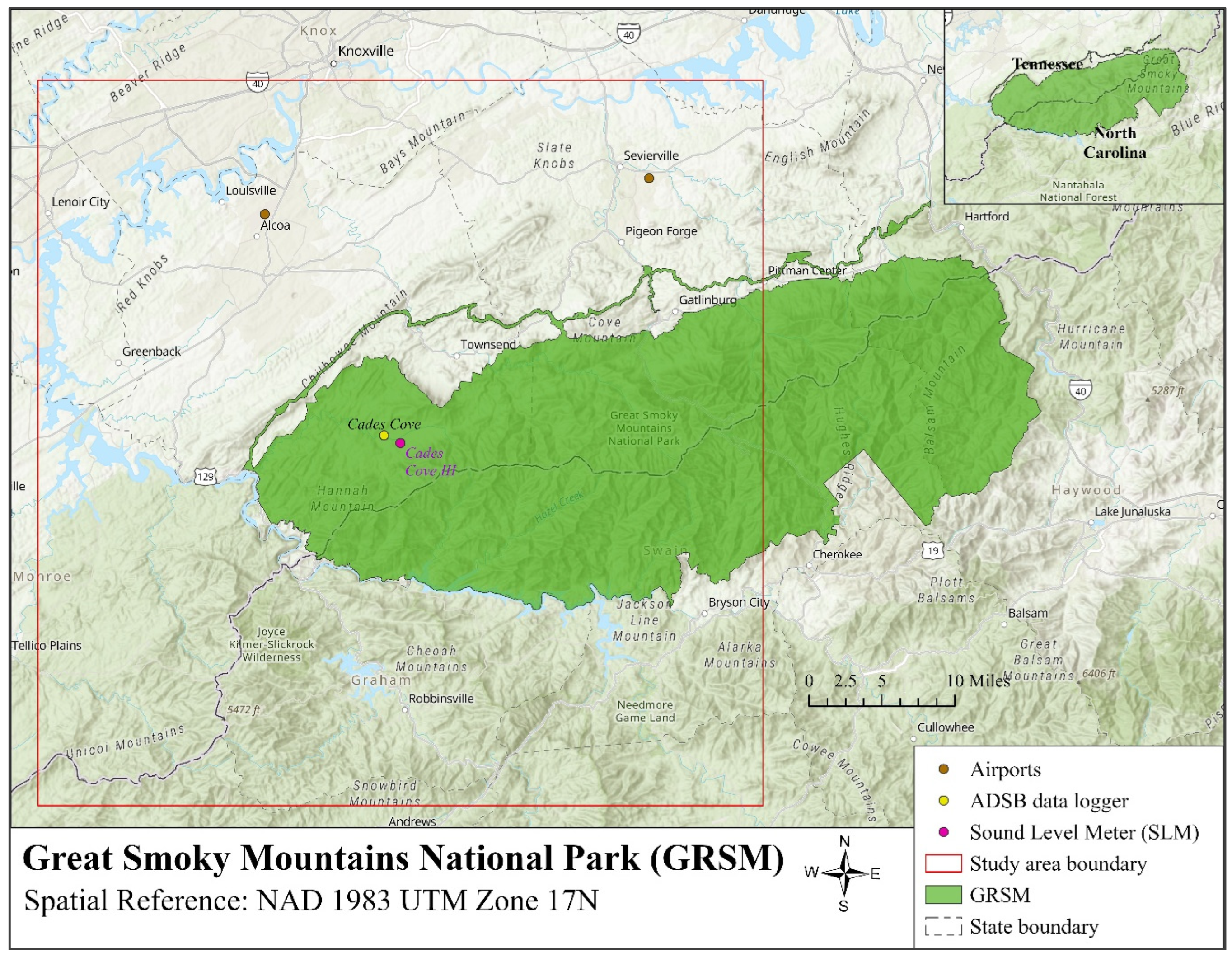
The study site is GRSM, which lies on the border between Tennessee and North Carolina and has elevations ranging from 875 ft at Abrams Creek to 6643 ft on top of Kuwohi (also known as Clingmans Dome) (Figure 1). The park covers 522,000 acres, of which 464,544 acres—nearly 89% of the park area—are recommended or proposed wilderness [25]. The park has diverse flora and fauna, including threatened and endangered species such as the Carolina Northern Flying Squirrel (Glaucomys sabrinus coloratus), Gray Bat (Myotis grisescens), Northern Long-eared Bat (Myotis septentrionalis), Indiana bat (Myotis sodalis), Bald Eagle (Haliaeetus leucocephalus), and Peregrine Falcon (Falco peregrinus). GRSM is the most visited national park in the U.S., attracting over 12 million visitors per year, and was classified as “extremely concerned” regarding the effects of overflights on the national park system in an NPS report to Congress in 1994. In 2019, 983 air tours were reported [39]. Jet aircraft were the most common aircraft noise source above GRSM, and the area near the Cades Cove site (Parson Branch) lies beneath a common flight path for high-altitude commercial jets [28]. The Cades Cove site was selected for analysis because it receives high visitation by terrestrial visitors and numerous overflights of different aircraft types, and protecting the acoustic environment is a park management objective. A study area boundary measuring 80 km × 80 km was delineated around Cades Cove to incorporate a sufficient sample of acoustic and overflight data that could result in active space development.
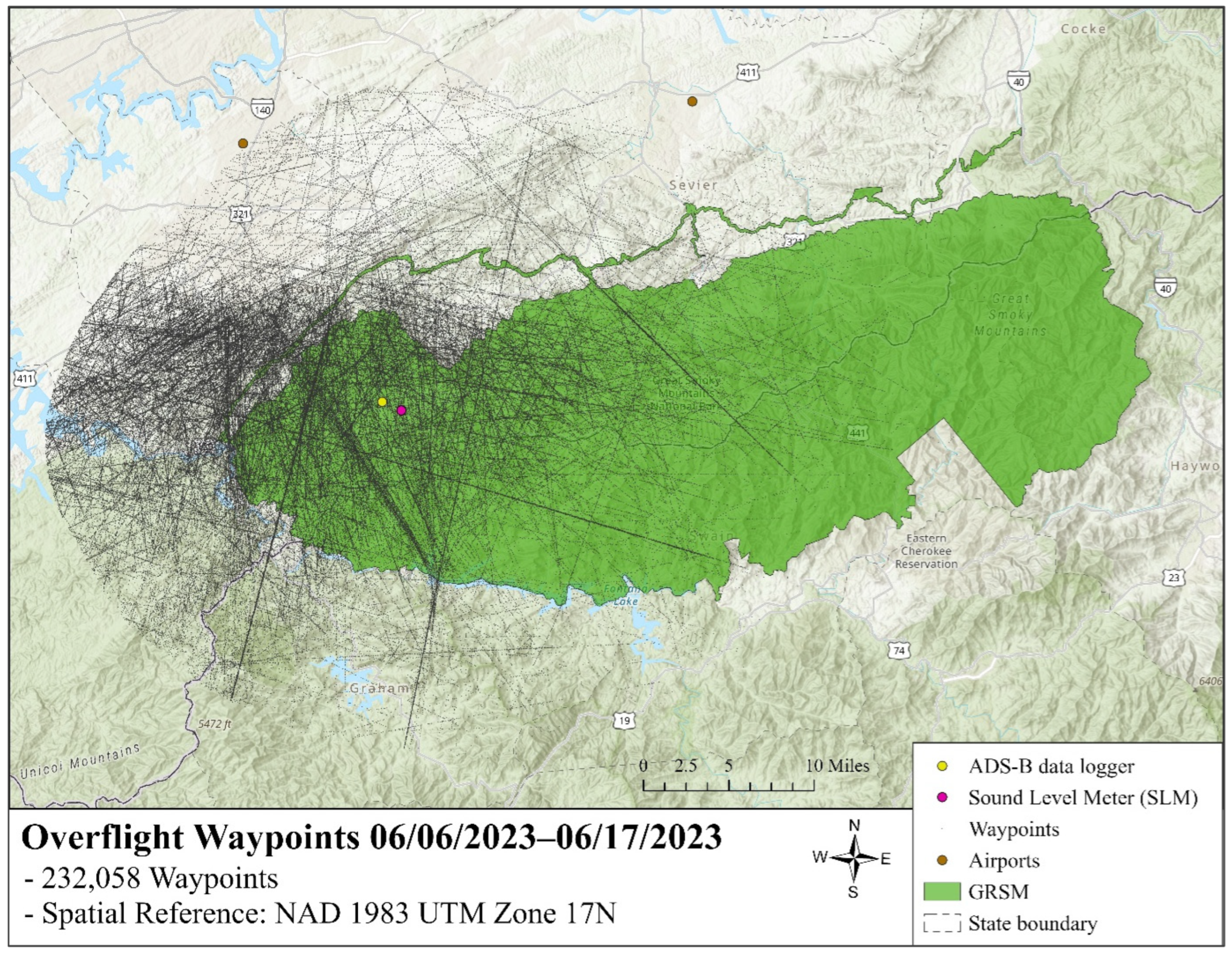
  • The map presented in Figure 1 was created using ArcGIS Pro 3.6 (Esri).

4.2. Data Collection

Overflight and acoustic data collected from the Cades Cove site were used for the analysis. ADS-B data were collected using a data logger deployed at Cades Cove (35.59510, −83.84158; 521.9 m mean sea level [MSL]). The Cades Cove record contained ADS-B data from 3 March 2023, to 18 September 2023. The data were saved and transferred in TSV format. The ADS-B data logger (NPS, Washington, DC, USA) included a uAvionix PingRX ADS-B receiver, an Arduino-based microcontroller, an RTC and microSD card logging shield, a DC–DC regulator, and PVC housing [5]. The uAvionix PingRX receiver is dual-band, collecting both 978 MHz and 1090 MHz radio signals. Acoustic data were collected from Cades Cove (35.59510, −83.84158; 536 m MSL). The Cades Cove record contained audio data from 6 June 2023, to 17 June 2023. The data were collected using an omnidirectional ANSI Type 1 sound level meter (Larson-Davis 831-A, Depew, NY, USA) and following NPS protocols for deployment [5,7].
There was a total of 12 days of overlap between ADS-B and acoustic data for the Cades Cove site, which contained enough jet aircraft acoustic data for our analysis.

4.3. NPS Active Space Modules

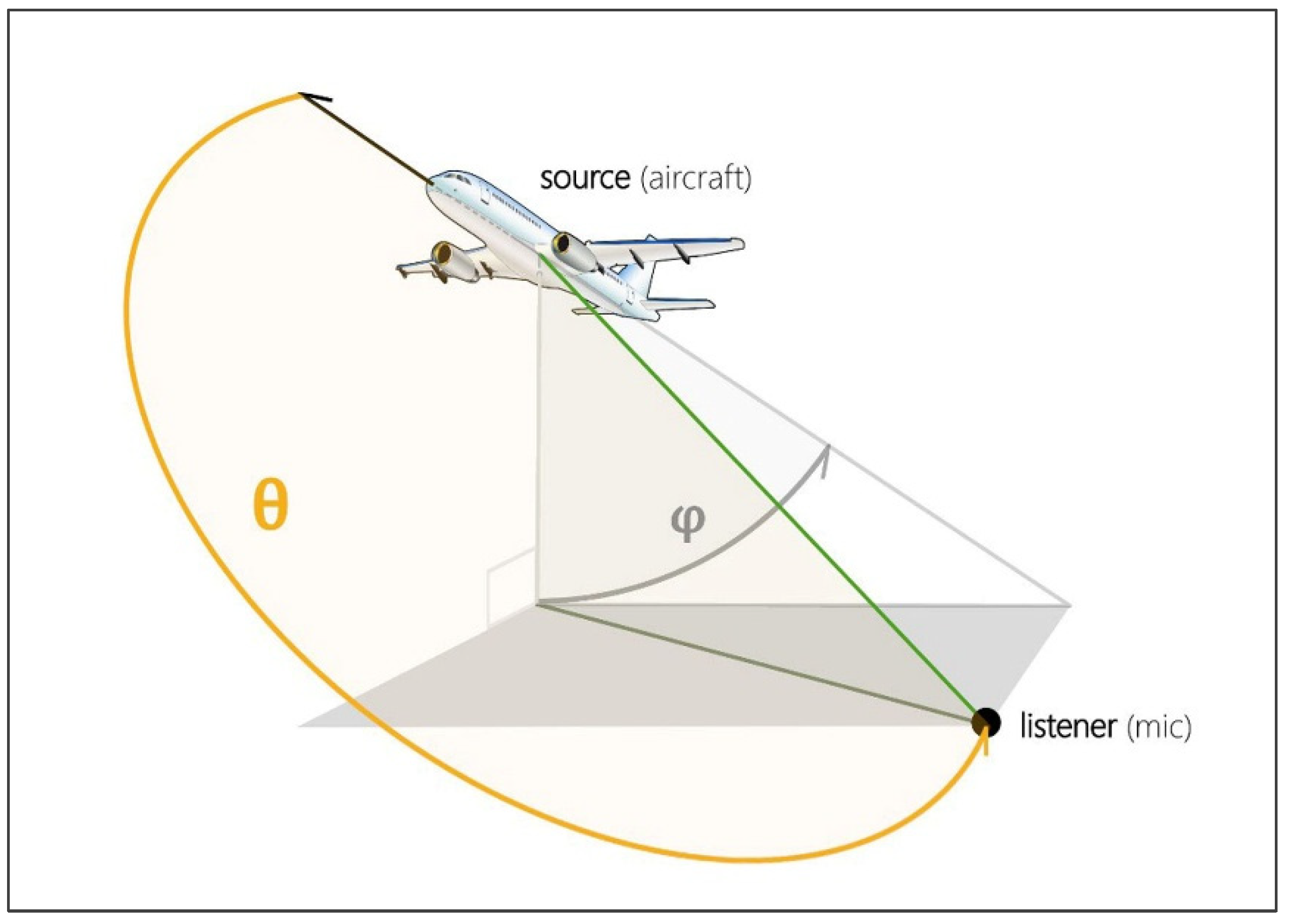
An aircraft noise exposure model in the lower half-sphere of the aircraft is demonstrated with an overflight offset from a listener (mic) with longitudinal (θ) and lateral (φ) sound emission angles from the noise source (Figure 2).
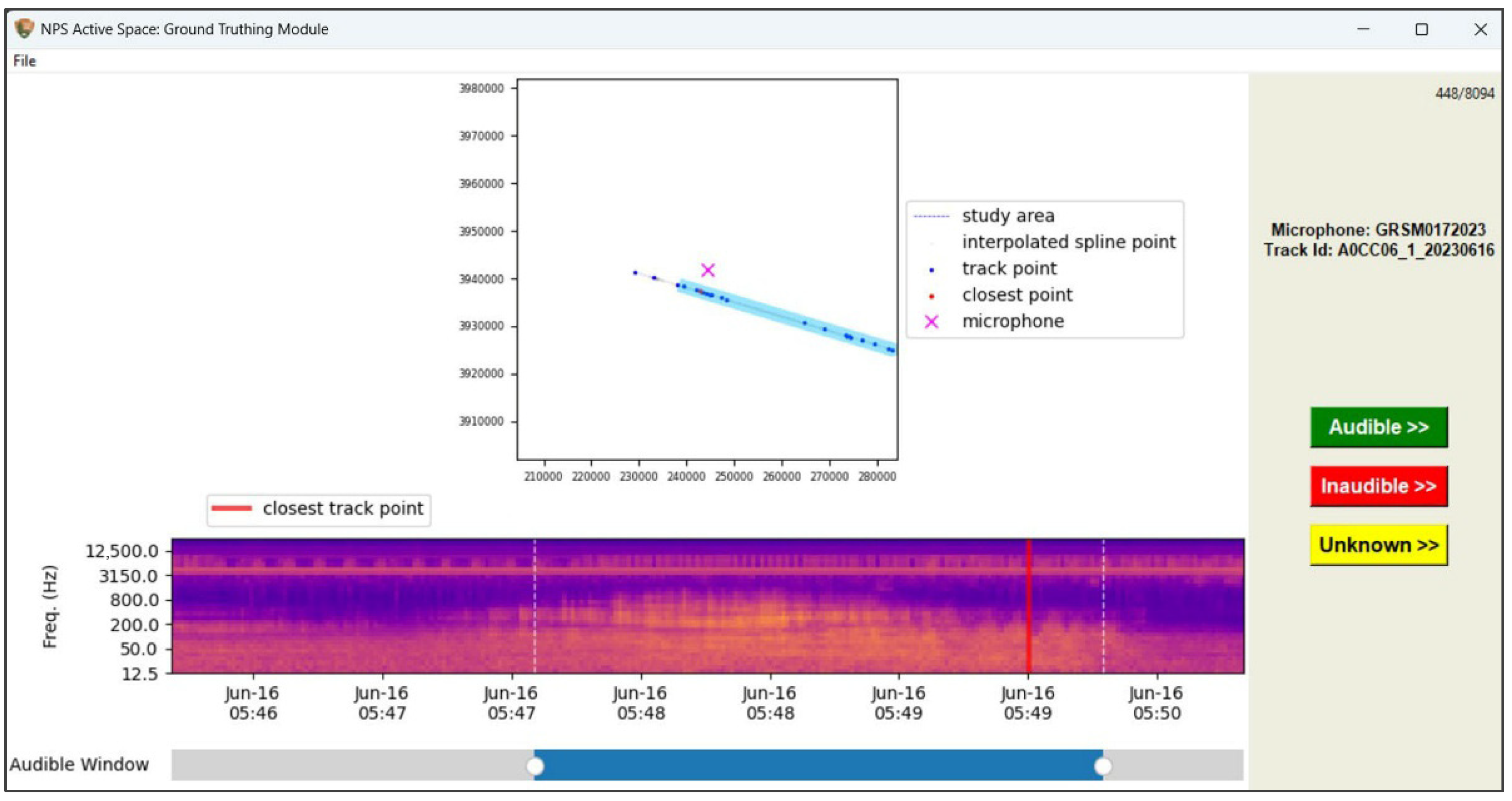
NPS Active Space is an open-source geoprocessing toolkit that provides a quantitative estimate of active space using NMSIM. The tool analyzes acoustic data and georeferenced overflight data. The geoprocessing toolkit comprises two modules. In its ground-truthing module, the toolkit identifies the closest point from the sound receiver to the flight path as the temporal reference for determining the noise event window in the acoustic data. The selected flight track points are spatiotemporally interpolated using a cubic spline function to achieve a one-second temporal resolution, consistent with the acoustic data [5]. The toolkit delimits audible and inaudible sections of overflight within the study area. The acoustic data and flight track data are manually matched. Records are manually inspected to verify whether the sound data correspond to the selected flight record. The timestamp is applied as a primary key to track aircraft data alongside its corresponding noise data in a spectrogram. Interpolated flight track points are classified as audible or inaudible based on sound pressure level from the aircraft. A map is generated to visualize the aircraft track (line) and its overlapping noise data.
In the active space module, a polygon representing a quantitative estimate of active space is generated by sound propagation modeling. The active space module is a synthesis of five inputs: the sound receiver location (listener’s position), the spectral residual sound level at the listener’s position, the study area around the receiver point, a 30 m Digital Elevation Model (DEM) spanning the study area, and the spatiotemporally joined overflight trajectory segments created as outputs of the ground-truthing module [5]. The active space module then uses optimization to fit the active space from the listener’s point. The mean altitude of aircraft flights was considered for estimating the active space. The toolkit generates a planar, polygonal estimate of active space for a given geographic setting based on the gain in dB in the back-propagation sound model. For a specific aircraft position, iterative audibility testing is performed, retaining audible points while adding new points to the updated test set. A Cartesian grid is used to generate the estimated polygon or interior rings for different aircraft headings (e.g., 0°, 120°, and 240°). The polygons or interior rings define the final active space. NMSIM models sound propagation from the aircraft, incorporating geometric divergence, atmospheric absorption, diffraction, and ground reflection. The parameters are presented in Appendix A. The residual sound level for the area under investigation is set at the 10th percentile or the exceedance metric L90, LAeq, 1 s [20–1250 Hz], which represents the sound level exceeded 90% of the time. This represents the background sound pressure level for parks, which excludes anthropogenic sources commonly associated with ambient noise, and is therefore used to characterize the detection properties of the acoustic environment [41]. Aircraft noise is detected if ambient sound exceeds the residual sound level in any one-third octave band at the receiver location. An aircraft noise event was marked as audible when the measured LAeq, 1 s in the one-third octave band exceeded both the threshold of human hearing and the concurrent residual sound level in the same band by ≥4 dB [8]. The F-measure, incorporating recall and precision, was applied to select the optimal active space using ground truth points [5].
F 1 = 2   A i n 2   A i n + I i n + A o u t
Here, A is audible, I is inaudible, in is inside the active space, and out is outside of the active space.
The active space module also calculates the three-dimensional microphone-to-aircraft distance for interpolated audible points across functional effect categories of sound pressure level, as considered in this experiment. Finally, it is noteworthy that here we use LAeq, 1 s [20–1250 Hz] rather than the LAeq, 1 s [20–20,000 Hz] used in [5]. Most noise produced by human motorized activities is typically confined to lower frequency ranges, whereas many natural sounds, such as those made by insects and birds, occur at higher pitches. The ANS weighting (LAeq, 1 s [20–1250 Hz]) filters out high-frequency sounds (such as leaf rustling, equipment noise, and certain biological noises), enabling more accurate comparisons of low-frequency ambient sound levels among various land use types, including urban areas and protected regions [41]. The spectromorphological trace of jet aircraft shows that the received energy primarily occurs in 1/3-octave bands below 2000 Hz, and the limiting band—defined as the band with the highest sound level relative to the residual ambient level—is nearly always below 1250 Hz. Prior research conducted at Cades Coves in 2023 revealed significant differences between the two frequency ranges in terms of exceedance levels (Table 1).

5. Results

5.1. Ground-Truthing for Two Aircraft Categories

Overflight data within the 10-mile boundary around the park, recorded by the ADS-B data logger deployed at the Cades Cove site, are shown below (Figure 3). The 10-mile boundary was used to clip overflight data to characterize flight paths beyond the park boundary and to ensure a sufficiently large area to capture aircraft audibility in Cades Cove. Overflight data and acoustic data were analyzed from 6 June to 17 June 2023, and used for annotation in the ground-truthing module. The map presented in Figure 3 was created using ArcGIS Pro 3.6 (Esri).
The spatiotemporal pairing of acoustic and overflight data, based on timestamps, is illustrated below (Figure 4). The spectrogram displays the spectral morphology, including noise emitted by a jet aircraft, with frequency on the y-axis and time on the x-axis. The square box at the top represents the study area boundary and shows the overflight track points and interpolated points along the flight path. The cross mark represents the location of the microphone (i.e., listener’s position). An audible window, represented by a horizontal blue bar below the spectrogram, can be adjusted to encompass the duration of an aircraft noise event, including its onset and terminus, by identifying recognizable spectromorphological features (noise signatures) relative to the residual sound level and the presence of Doppler shift [7,14]. As the audible section of aircraft noise is selected in the spectrogram by adjusting the horizontal blue bar in the audible window, the corresponding blue line in the upper square box shifts accordingly, indicating the selection of overflight track points associated with that noise event.
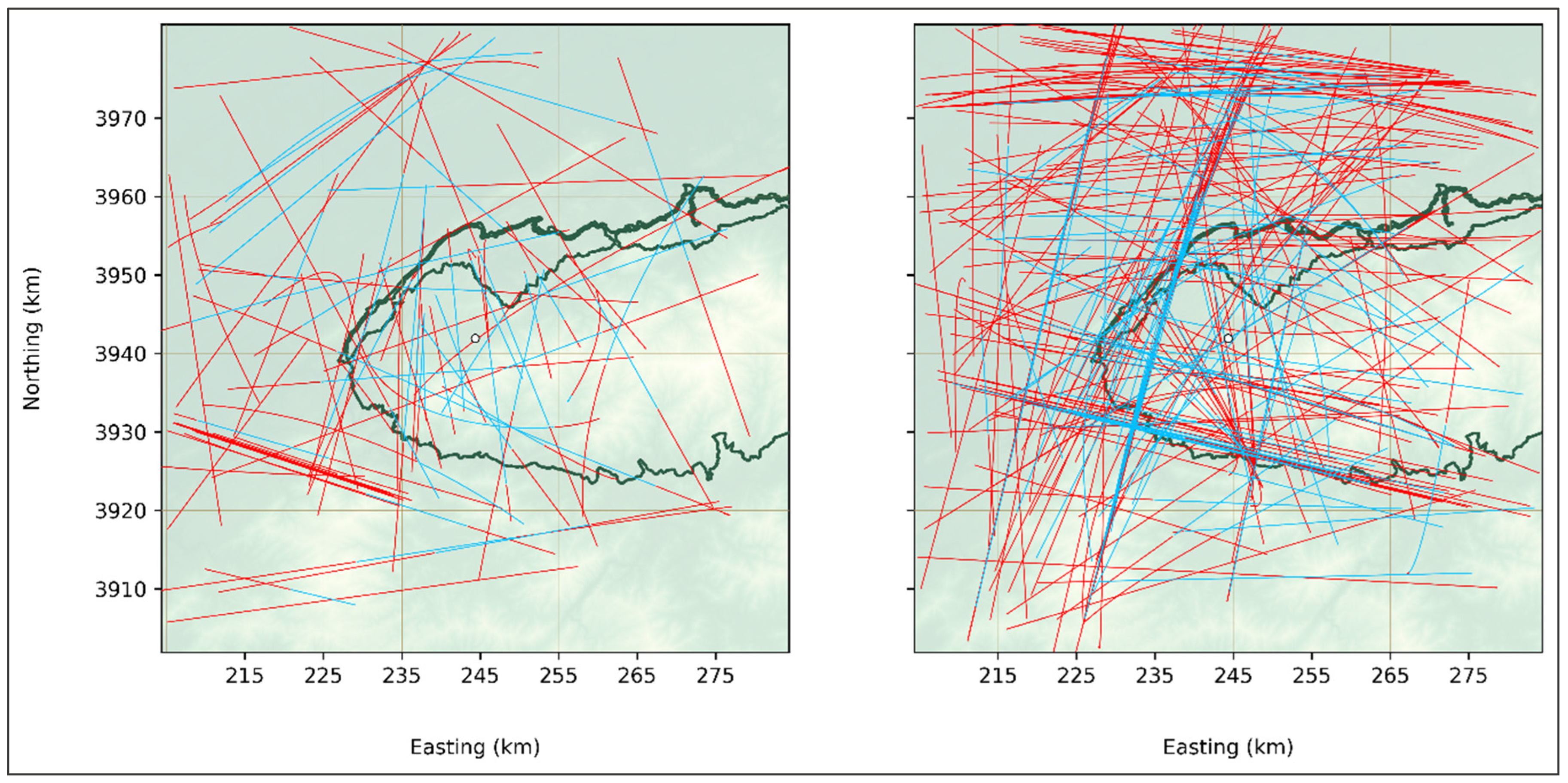
For “Light” aircraft, 154 usable aircraft noise events were annotated on the spectrogram, of which 48 were identified as audible. For “Heavy” aircraft, 515 usable aircraft noise events were annotated, resulting in 157 audible events. Thus, a total of 205 aircraft noise events were analyzed. The inaudible track points had no corresponding noise signals, primarily due to sound attenuation or elevated background noise levels. Figure 5 displays a two-dimensional representation of audible and inaudible sections of aircraft noise events identified after spatiotemporal pairing for “Light” and “Heavy” aircraft. Blue lines indicate audible sections, while red lines represent inaudible sections. The Cades Cove site is marked by a white dot on the maps. Because the altitudes of flight track points are not represented in a two-dimensional plane and sound pressure decreases with distance, the inaudible track points were likely located farther from the receiver than the audible track points.

5.2. Estimating Audible Distance at Various Sound Level Categories or Thresholds (Research Question 1)

The active space module of the toolkit calculated the audible distance from the microphone (immission point) to the aircraft (emission point), based on two functional effect categories, LAeq, 1 s ≥ 35 dB and >52 dB, corresponding to the two aircraft types. The sound level categories of 35 dB and 52 dB were considered because LAeq, 1 s [12.5–20,000 Hz] = 35 dB represents a threshold above which the outdoor experience is degraded, while 52 dB represents a threshold at which speech interference occurs between a speaker and listener at a distance of 5 m (or 16 ft) [5]. Table 2 summarizes microphone-to-aircraft distances for all audible interpolated points at various sound level categories for “Light” aircraft. Additionally, the overall (mean) microphone-to-aircraft distance (slant distance) was 17.9 ± 0.1 km (standard error), which resulted in a median LAeq, 1 s [20–1250 Hz] of 49.1 dB and an interquartile range of 9.6 dB (Q3–Q1). The mean thrust for this aircraft weight class was 17,906 Newtons.
Table 3 summarizes the microphone-to-aircraft distances for all audible interpolated points at various sound level categories for “Heavy” aircraft. Additionally, the overall (mean) microphone-to-aircraft distance (slant distance) was 21.7 ± 0.1 km (standard error), which resulted in a median LAeq, 1 s [20–1250 Hz] of 48.3 dB and an interquartile range of 9.0 dB (Q3–Q1). The mean thrust for this aircraft weight class was 104,801 Newtons.
The comparison of the overall microphone-to-aircraft distances (slant distances) at which aircraft were audible showed a mean difference of 3.8 km, with “Heavy” aircraft audible significantly farther from the receiver than “Light” aircraft (Welch’s t-test with unequal variances, one-sided, p < 0.047). The Cohen’s d-value was −0.296 (absolute value = 0.296 or 0.3), indicating a small to small–medium effect size.
Additionally, the theoretical increase in sound power level for “Heavy” aircraft relative to “Light” aircraft based on mean thrust values (104,801 N and 17,906 N) was calculated using the following expression, yielding a value of 7.6 dB.
L w = 10   log 10 M e a n   T h r u s t H M e a n   T h r u s t L   =   7.6   dB

5.3. Estimating Active Space (Research Question 2)

The optimal active space and the planar detection distances for the two aircraft types are presented in Table 4. The mean altitude was 5367 ± 337 (standard error) meters MSL for “Light” aircraft and 8034 ± 183 (standard error) meters MSL for “Heavy” aircraft. The residual sound level measured as the 10th percentile (LANS90), LAeq, 1 s [20–1250 Hz] was 12.7 dB. The corresponding broadband level (LA90), LAeq, 1 s [12.5–20,000 Hz] was 22.2 dB. The F1 scores were 0.38 for “Light” aircraft and 0.35 for “Heavy” aircraft. Similarly, the optimal gains were −50.5 dB for “Light” aircraft and −43.0 dB for “Heavy” aircraft.
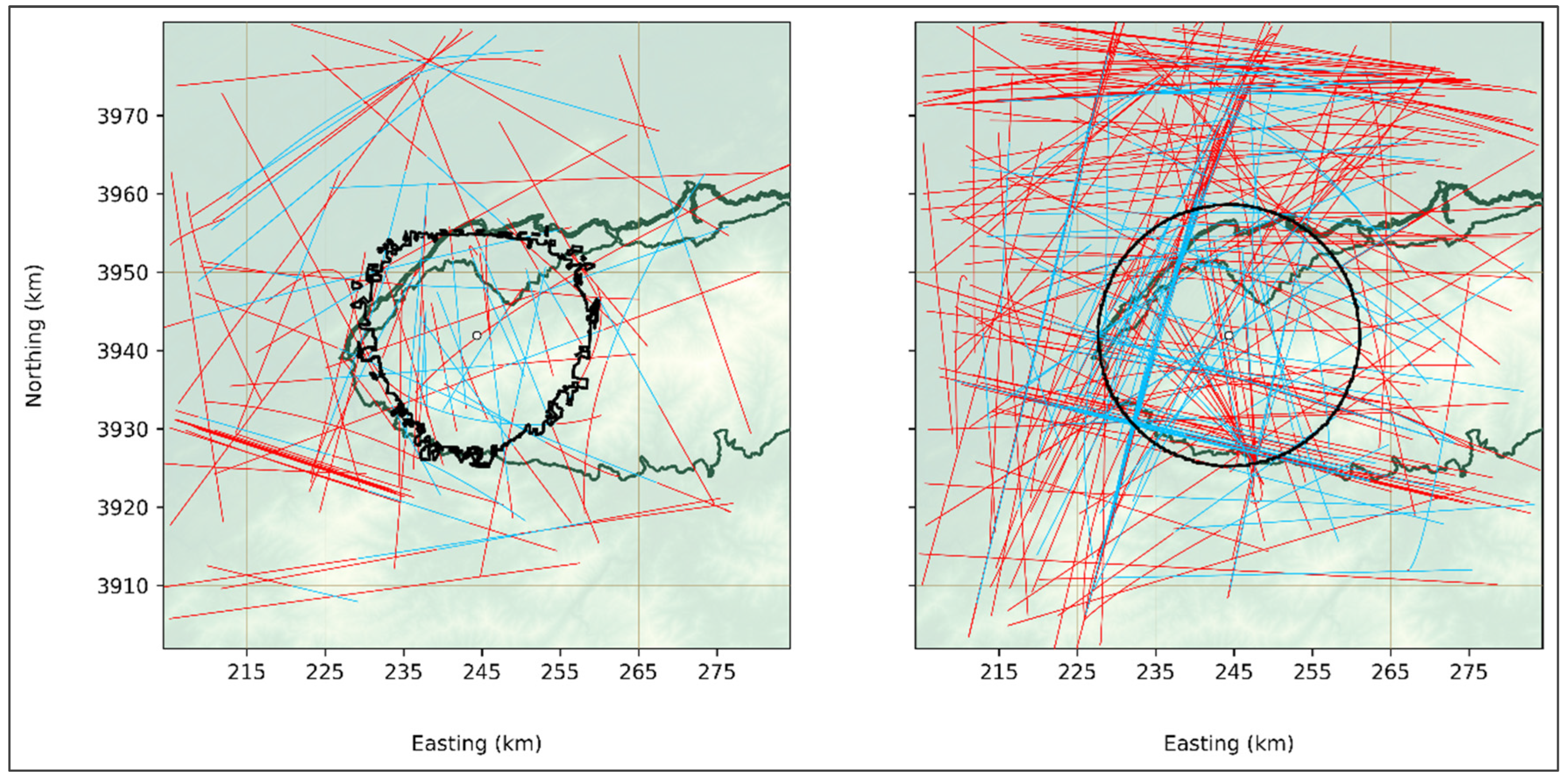
Figure 6 presents the polygonal estimates of active space for the two aircraft types from the listener’s point. The left panel represents the estimate for “Light” aircraft, while the right panel represents the estimate for “Heavy” aircraft.
The offset distance for the active space for the “Heavy” aircraft, as compared to “Light” aircraft, was estimated using the following expression, yielding
O f f s e t   d i s t a n c e = ( 18.3 15.2 ) 2 + ( 8.0 5.4 ) 2   4.0   km
Here, 18.3 km and 15.2 km are the mean detection distances to the active space boundary for “Heavy” and “Light” aircraft, whereas 8.0 km and 5.4 km are the mean altitudes (z-values) for “Heavy” and “Light” aircraft.
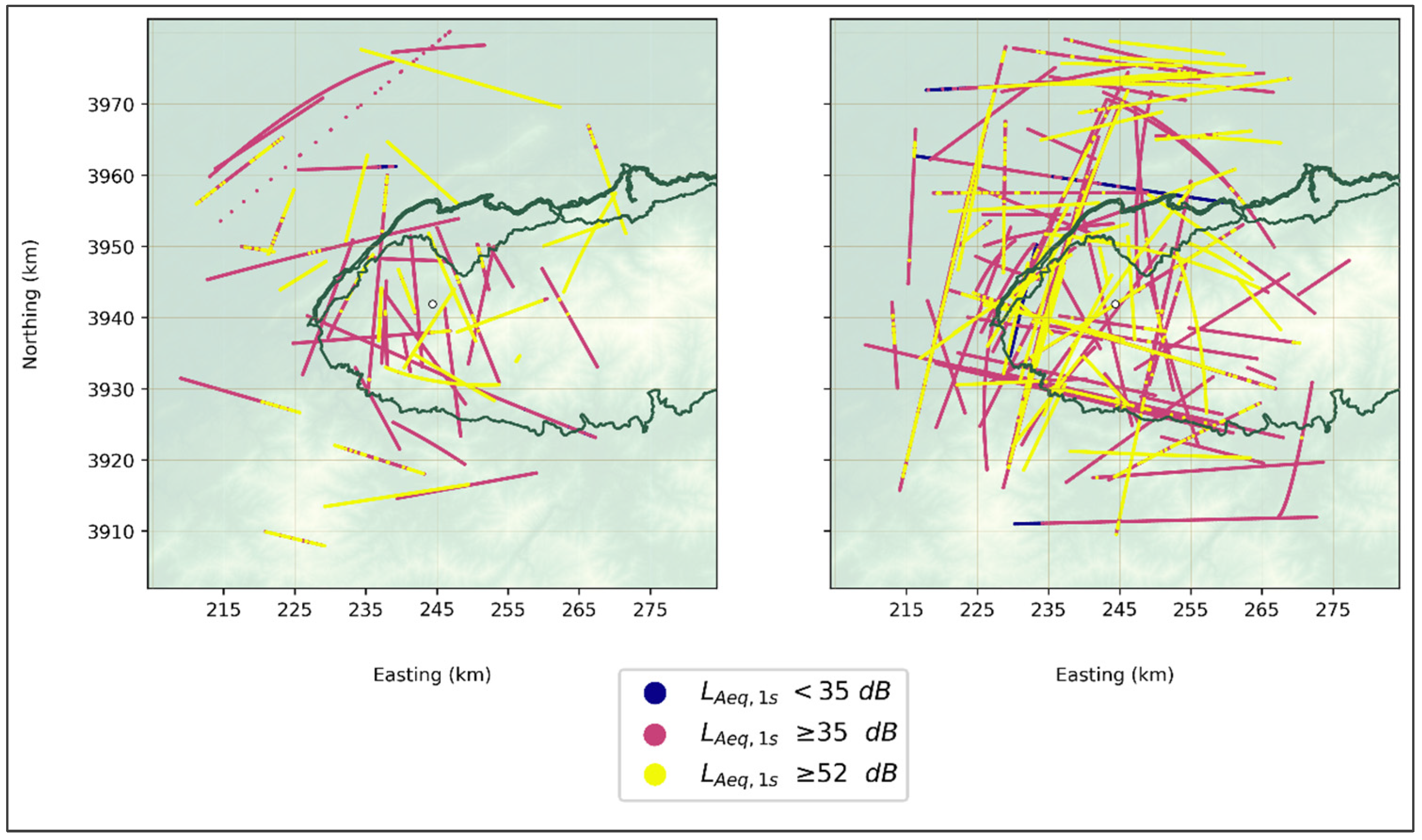
Additionally, the estimated sound levels at audible points are mapped below (Figure 7) for the two aircraft types, incorporating the results from Table 2 and Table 3 and Figure 6. The sound level thresholds for audible points were defined as LAeq, 1 s ≥ 35 dB and LAeq, 1 s ≥ 52 dB in the two-dimensional representation (Figure 7). The left panel displays the distribution of categorical sound level of audible points within the study area for “Light” aircraft, while the right panel displays the distribution of audible points for “Heavy” aircraft.

6. Discussion

Overflights influence the acoustic environment at Cades Cove in GRSM, with the potential to disrupt both wildlife ecology and visitors’ recreational experience. This study is the second of its kind to analyze acoustic data, specifically, aircraft noise, alongside overflight position data using the NPS Active Space Toolkit. A previous study by [5] examined aircraft noise in HAVO and DENA sites, also utilizing the NPS Active Space Toolkit, and calculated the microphone-to-aircraft distances for various sound level categories in those environments. The current study extends the methodology by differentiating the aircraft noise sources based on aircraft takeoff weight, classifying them into two categories: Light (<20,000 pounds) and Heavy (>20,000 pounds). Furthermore, this study utilizes data from another park, GRSM, located in an area with a more energetic existing acoustic ambient and less terrain shielding.
Aircraft noise exposure generally follows the noise-power-distance (NPD) table in the source model, where noise levels depend on the engine power and the distance from the noise source [40]. However, many other factors influence the sound propagation model, such as aircraft position and directivity, acoustic impedance, and meteorological disturbances. The noise exposure model is also sensitive to aircraft type [37,43]. Jetliners emit the highest sound levels at the tail, and their overall noise emission is influenced by the aircraft type, engine type, and engine configuration.
Here, we applied the FAA Releasable Database metadata to our ADS-B data to parse the jet aircraft (fixed-wing multi-engine) into two categories based on their weight classes—“Light” and “Heavy”—for our analysis. The aircraft noise events in the dataset included sufficient audible samples for both aircraft types to construct the optimal active space. Table 2 and Table 3 displayed the mean microphone-to-aircraft distances for various sound level categories for “Light” and “Heavy” aircraft (research question 1), and Figure 7 maps these relationships. The final columns of the two tables present the number of audible track points used to calculate the distance from the microphone to the aircraft across different sound level categories. A higher point count improves both the accuracy and precision of noise exposure modeling. For “Light” aircraft, the mean distance from the microphone to the aircraft decreased from 24.5 km to 17.2 km when moving from the Lp ≤ 35 dB category to the 35 < Lp ≤ 52 dB category. However, the mean distance increased slightly—from 17.2 km to 18.2 km—when moving from 35 < Lp ≤ 52 dB category to 52 < Lp category, contrary to the expected decreasing trend. The marginal increase rather than a decrease could be attributed to atmospheric absorption and meteorological uncertainty, and ground effects, which are known to affect noise attenuation. Sample size (i.e., point count) could also be a factor. For “Heavy” aircraft, both the mean and median audible distances from the microphone to the aircraft decreased consistently as sound levels increased from Lp ≤ 35 dB to 35 < Lp ≤ 52 dB, and further to 52 < Lp. For “Heavy” aircraft, the flight within 20.7 km (12.9 miles) of the receiver could be loud enough to disrupt speech at a 5 m distance (Table 3), as noise levels exceeding 52 dB are known to interfere with speech communication at that range when using a normal speaking voice [5,44]. For “Light” aircraft, the flight within 18.2 km (11.3 miles) of the receiver could be loud enough to disrupt the speech at a 5 m distance (Table 2) because the noise level would exceed 52 dB at the receiver’s point. The overall (mean) audible distance (microphone-to-aircraft distance) was greater for “Heavy” aircraft than for “Light” aircraft, primarily because the mean thrust generated by “Heavy” aircraft exceeded that of “Light” aircraft by a factor of more than five (104,801 N vs. 17,906 N) and “Heavy” aircraft were cruising at the higher altitudes. Engine thrust or jet velocity is the primary physical driver of jet noise [14]. Consequently, the sound pressure level produced at the emission point by “Heavy” aircraft exceeded that of “Light” aircraft, with an overall (mean) audible microphone-to-aircraft distance (slant distance) of 21.7 km for “Heavy” aircraft compared to 17.9 km for “Light” aircraft from the listener’s point. Further, all things being equal, a higher flight would have a larger spatial footprint but lower noise intensity.
Two active spaces were generated using the mean altitudes for “Light” aircraft and “Heavy” aircraft, with “Heavy” aircraft having a higher mean altitude than that of “Light” aircraft, reflecting the higher cruising altitude of the heavier aircraft. Accordingly, the mean detection distance to the active space boundary was greater for “Heavy” aircraft than for “Light” aircraft (Table 4) (research question 2). Active space estimates based on the propagation model from the Cades Cove site were projected onto a two-dimensional (2-D) plane (Figure 6), where the planar listening area associated with “Heavy” aircraft is larger than that associated with “Light” aircraft. However, the polygonal boundary of the active space for “Light” aircraft is more granular compared to that of “Heavy” aircraft—likely a result of altitude differences (higher for Heavy, generating nearly isotropic active space).
Similarly, based on the mean thrust values of the two aircraft types, we estimated a theoretical increase in sound power level of approximately 7.6 dB for “Heavy” aircraft relative to “Light” aircraft (Equation 2). Given the geometric nature of the sound propagation model, as well as the inverse square law, where the intensity decreases inversely with the square of the distance [45], this level increase is expected to extend the audible range of “Heavy” aircraft. Using the F1-based optimization procedure [5], we found that the active space required an expansion of 4.0 km to encompass the audible points from “Heavy” aircraft (Equation 3). This corresponded to an increase in optimal gain of 7.5 dB (difference in optimal gains between “Heavy” and “Light”), consistent with the theoretical expectation due to differences in thrust, i.e., L w g . This can be expressed as
L w = 10   log 10 M e a n   T h r u s t H M e a n   T h r u s t L g = ( g l a r g e g s m a l l )
Additionally, the difference in microphone-to-aircraft distances (slant distances) at which aircraft were audible was statistically significant between “Light” and “Heavy” aircraft, with a mean difference of 3.8 km. The agreement among the theoretical prediction, the empirical active space optimization, and the statistical summary supports the interpretation that increased thrust and associated acoustic power result in a larger active space for “Heavy” aircraft (weight class 3) than for “Light” aircraft (weight class 1 and 2).

6.1. Management Implications

Prior researchers have noted a future goal of modeling aircraft noise across landscapes using aircraft tracking data [5,18]. This analysis brings that goal one step closer to reality by identifying (1) the importance of aircraft type in the consideration of any future models, and (2) general detection level distances for Heavy and Light jets.
This study also demonstrated the continued value of the NPS Active Space Toolkit for revealing a tangible spatial boundary within which the effects of noise must be managed. However, this study also revealed an important consideration in the use of the toolkit. The GRSM site experienced higher ambient levels than the prior study’s locations at DENA and HAVO. In short, the existing ambient at the site masked the lower-level noise of aircraft, making the identification of aircraft noise events at lower exceedance levels more difficult. These findings should be considered when protected area managers seek to use the NPS Active Space Toolkit for understanding aircraft noise at specific sites within parks. Further, to improve specificity, this study focused on a band from 20 to 1250 Hz rather than the wider 20–20,000 Hz acoustic band used in other documents. Such analytical specificity is useful for monitoring purposes because it improves the attribution of noise energy to a given source of interest. The tradeoff to such an approach is that the sound levels reported here may be less easily compared to other scientific work.
Managing aircraft within protected areas poses significant challenges for park managers, namely because airspace is generally managed and regulated by another government organization, specifically in the U.S., the Federal Aviation Administration. Park managers must work with the airspace regulator or directly with aircraft operators. Understanding the locations of noise-sensitive areas, existing flight patterns, noise detection distances, and exceedance levels can assist park managers when communicating with regulators or operators. Further, many protected areas use aviation services for administrative purposes, including transportation of supplies and emergency response personnel. Again, understanding aircraft patterns and related noise can assist park managers in identifying the best routes, altitudes, and set-down/landing locations to minimize the impacts of noise on cultural and natural resources, as well as the visitor experience.
A listener’s point can be a historic site for visitors (such as Cades Cove Historic District, Elkmont Historic District) or a wildlife hotspot for species such as bald eagles and peregrine falcons [25]. While we focused on sound levels within three functional effect categories (below 35 dB, between 35 and 52 dB, and above 52 dB), the microphone-to-aircraft distance can be estimated for various sound level values or categories at which the wildlife behavior and ecology are impacted. Birds and terrestrial animals apply their acoustic mode as well as their visual and olfactory cues to determine the extent of their active space [6]. Similar to this study, park managers can identify sound level thresholds for various sensitive sites, focusing on backcountry users, wildlife endemism, and cultural hotspots, to determine the direct three-dimensional detection distances at which aircraft become audible: the listener’s active space. These thresholds can also inform recommendations for minimum vertical and lateral distances or the adoption of quieter aircraft technologies over or along these areas. However, sufficient acoustic data samples within the study area boundary are necessary to precisely differentiate the aircraft types and the distances.
Specifically, for GRSM’s Cades Cove, our findings revealed that the majority of audible air traffic was associated with aircraft originating from nearby airports—specifically, McGhee Tyson Airport and Gatlinburg–Pigeon Forge Airport, located north of GRSM. It would be valuable to examine the audible distance (microphone-to-aircraft distance) and detection distance for rotorcraft, as these aircraft constitute the majority of the air tours operated by the authorized agencies in the park [25] and typically fly below the designated 5000 ft above ground level within the park. A few of these air tours operate above Cades Coves, so a future study would be required to analyze air tours. This consideration is particularly important for the Cherokee Orchard site, as the nearby sampling location at Bullhead Trail experienced greater helicopter noise exposure than other sites [28]. However, such an analysis could require a full summer and fall of acoustic and ADS-B data collection to ensure robust results for important sites.

6.2. Limitations of the Study

One area of concern could be the F1 scores for both aircraft types, which were 0.38 for “Light” aircraft and 0.35 for “Heavy” aircraft. A higher F1 score is desirable in such experiments, for example, F1 > 0.6. The lower F1 scores indicated fewer audible events (and more inaudible events) inside the Cades Cove active space boundary, which, in turn, could affect the precision and accuracy of the estimated microphone-to-aircraft distance and the detection distance to the active space boundary. As discussed above, this is likely due to the increased background ambient noise of Cades Cove and a relatively low number of audible points in the usable aircraft noise events. Therefore, in areas with a higher background level, increasing the volume of acoustic and aircraft tracking data within the study area boundary could help address this limitation. In the previous study by [5], there were 25,047 audible points for the HAVO site and 32,777 audible points for the DENA site, with corresponding F1 scores exceeding 0.7. Another area of concern was the number of flight track points (point count) used to estimate the mean microphone-to-aircraft distance for the sound level category, Lp ≤ 35 dB, for both aircraft types (see the last columns of Table 2 and Table 3). These point counts were substantially lower than those associated with the sound level categories, namely 35 < Lp ≤ 52 dB and 52 < Lp. Estimates based on larger point counts are likely to be more accurate than those derived from fewer points.
Finally, we acknowledge that our analysis focused on lower-frequency (20–1250 Hz) noise, the most common frequency range of noise in National Parks. We did this because, at the distances involved, atmospheric absorption strongly attenuates higher-frequency sound (i.e., low-frequency sounds travel further than do those at higher frequencies) and lower-frequency sounds are less likely to be blocked by vegetation and other obstacles. However, due to stridulating insects, we were prohibited from comparing lower and higher frequency ranges or examining the full frequency band sound level. Future research could examine a wider range of frequencies.

6.3. Concluding Remarks

The study demonstrated that active spaces can be simultaneously constructed and compared for different anthropogenic noise sources, as demonstrated by the two jet aircraft types in GRSM. Based on the NPS Active Space modules, the two jet aircraft categories generated distinct active spaces at the Cades Cove point, with the active space and detection distance of “Heavy” aircraft exceeding those of “Light” aircraft. “Heavy” aircraft were dominant over the area with a higher occurrence of aircraft noise events. Similar experiments can be conducted at ecologically and culturally significant sites in the park to inform noise mitigation strategies that account for the minimum lateral and vertical distances between the noise sources and the sites.

Author Contributions

Conceptualization, B.G., D.H.B., J.A.B. and B.A.P.; methodology, B.G., D.H.B., J.A.B., B.A.P., T.A.O., S.A. and S.H.; software, B.G., D.H.B. and J.A.B.; validation, B.G., D.H.B., J.A.B., B.A.P., T.A.O., S.A., S.H., S.J. and D.J.; investigation, B.G., D.H.B., J.A.B., B.A.P., T.A.O. and S.H.; data curation, B.G. and D.H.B.; writing—original draft preparation, B.G.; writing—review and editing, B.G., D.H.B., J.A.B., B.A.P., T.A.O., S.A., S.H., S.J. and D.J.; visualization, B.G., D.H.B., J.A.B., B.A.P. and T.A.O.; supervision, J.A.B. and B.A.P.; project administration, J.A.B. and B.A.P.; funding acquisition, J.A.B. All authors have read and agreed to the published version of the manuscript.

Funding

This research is supported by the U.S. National Park Service under Agreement P21AC10586.

Data Availability Statement

A subset of anonymized data can be made available upon request to the corresponding author.

Acknowledgments

The authors would like to thank Jim Renfro, Ethan McClure, and Grant Fisher of the Great Smoky Mountains National Park for their assistance with data logger maintenance, collection, and upload.

Conflicts of Interest

The authors declare no conflicts of interest.

Appendix A

The parameters applied in the noise propagation model are listed.
A detailed description of the optimizing geoprocessing is already included in the methods paper [5], and the code is open-source. “NORD2000” acoustic propagation algorithm accounts for geometric divergence, atmospheric absorption, and ground reflection. It also accounts for diffraction effects by automatically selecting one of three simple terrain templates (flat, hill-shaped, valley-shaped). The following parameters were used:
  • Air temperature: 15 °C;
  • Relative humidity: 70%;
  • Thermal gradient: −6.5 °C/1000 m [standard adiabatic lapse];
  • Wind speed: 0 m/s;
  • Wind direction: 0 degrees;
  • Mechanical turbulence: 0.1200 m4/3/s2;
  • Thermal turbulence: 0.0080 K/s2;
  • Standard deviation of thermal gradient: 0.0000 C/m;
  • Standard deviation wind speed: 0.0 m/s;
  • Roughness length: 0.100 m.

References

  1. Maher, R.C.; Gregoire, B.J.; Chen, Z. Acoustical Monitoring Research for National Parks and Wilderness Areas. In Proceedings of the Audio Engineering Society, New York, NY, USA, 7–10 October 2005; Convention Paper 6609. Available online: https://www.montana.edu/rmaher/audio_monitor/AES119_maher.pdf (accessed on 25 October 2024).
  2. Ambrose, S.; Burson, S. Soundscape studies in national parks. Georg. Wright Forum 2004, 21, 29–38. [Google Scholar]
  3. Watts, G.R.; Pearse, J.; Delikostidis, I.; Kissick, J.; Donohue, B.; Dalley, J. Tranquillity mapping in New Zealand national parks–a pilot study. Noise Mapp. 2020, 7, 303–315. [Google Scholar] [CrossRef]
  4. Zeller, K.A.; Ditmer, M.A.; Squires, J.R.; Rice, W.L.; Wilder, J.; DeLong, D.; Egan, A.; Pennington, N.; Wang, C.A.; Plucinski, J.; et al. Experimental recreationist noise alters behavior and space use of wildlife. Curr. Biol. 2024, 34, 2997–3004.e3. [Google Scholar] [CrossRef]
  5. Betchkal, D.H.; Beeco, J.A.; Anderson, S.J.; Peterson, B.A.; Joyce, D. Using aircraft tracking data to estimate the geographic scope of noise impacts from low-level overflights above parks and protected areas. J. Environ. Manag. 2023, 348, 119201. [Google Scholar] [CrossRef]
  6. Burnham, R.; Duffus, D. Implication of Altered Acoustic Active Space for Cetacean Species That Result from Soundscape Changes and Noise Additions. Acoustics 2023, 5, 444–461. [Google Scholar] [CrossRef]
  7. Lynch, E.; Joyce, D.; Fristrup, K. An assessment of noise audibility and sound levels in U.S. National Parks. Landsc. Ecol. 2011, 26, 1297–1309. [Google Scholar] [CrossRef]
  8. Shannon, G.; McKenna, M.F.; Angeloni, L.M.; Crooks, K.R.; Fristrup, K.M.; Brown, E.; Warner, K.A.; Nelson, M.D.; White, C.; Briggs, J.; et al. A synthesis of two decades of research documenting the effects of noise on wildlife. Biol. Rev. 2016, 91, 982–1005. [Google Scholar] [CrossRef] [PubMed]
  9. National Park Service. Management Policies 2006; U.S. Department of Interior: Washington, DC, USA, 2006. [Google Scholar]
  10. Buxton, R.T.; Pearson, A.L.; Allou, C.; Fristrup, K.; Wittemyer, G. A synthesis of health benefits of natural sounds and their distribution in national parks. Proc. Natl. Acad. Sci. USA 2021, 118, e2013097118. [Google Scholar] [CrossRef] [PubMed]
  11. National Park Service. Natural Sounds Program Acoustic Monitoring Reports; NPS Natural Sounds and Night Sky Division: Fort Collins, CO, USA, 2025. [Google Scholar]
  12. Beeco, J.A.; Joyce, D. Automated aircraft tracking for park and landscape planning. Landsc. Urban Plan. 2019, 186, 103–111. [Google Scholar] [CrossRef]
  13. Zha, H.; Tian, Q.; Lin, Y. Real-World ADS-B signal recognition based on Radio Frequency Fingerprinting. In Proceedings of the 2020 IEEE 28th International Conference on Network Protocols (ICNP); IEEE: Madrid, Spain, 2020; pp. 1–6. [Google Scholar]
  14. Zellmann, C.; Schäffer, B.; Wunderli, J.M.; Isermann, U.; Paschereit, C.O. Aircraft Noise Emission Model Accounting for Aircraft Flight Parameters. J. Aircr. 2018, 55, 682–695. [Google Scholar] [CrossRef]
  15. Miljković, D.; Ivošević, J.; Bucak, T. Two vs. Three Blade Propeller–Cockpit Noise Comparison. In Proceedings of the 5th Congress of Alps-Adria Acoustics Association, Petrčane, Croatia, 12–14 September 2012; Available online: https://www.researchgate.net/publication/304079790_Two_vs_Three_Blade_Propeller_-_Cockpit_Noise_Comparison/citations (accessed on 20 March 2026).
  16. Abbott, L.C.; Taff, D.; Newman, P.; Benfield, J.A.; Mowen, A.J. The Influence of Natural Sounds on Attention Restoration. J. Park Recreat. Adm. 2016, 34, 57–74. [Google Scholar] [CrossRef]
  17. Benfield, J.A.; Taff, B.D.; Newman, P.; Smyth, J. Natural sound facilitates mood recovery. Ecopsychology 2014, 6, 183–188. [Google Scholar] [CrossRef]
  18. Peterson, B.A.; Brownlee, M.T.J.; Beeco, J.A.; Hallo, J.C.; White, D.L.; Joyce, D. Spatiotemporal analysis to understand overflight travel patterns at HawaiI Volcanoes National Park. J. Outdoor Recreat. Tour. 2022, 37, 100476. [Google Scholar] [CrossRef]
  19. Buxton, R.T.; McKenna, M.F.; Mennitt, D.; Brown, E.; Fristrup, K.; Crooks, K.R.; Angeloni, L.M.; Wittemyer, G. Anthropogenic noise in US national parks–sources and spatial extent. Front. Ecol. Environ. 2019, 17, 559–564. [Google Scholar] [CrossRef]
  20. Miller, Z.; Taff, B.D.; Newman, P. Visitor experiences of wilderness soundscapes in Denali National Park and Preserve. Int. J. Wilderness 2018, 24, 25–33. [Google Scholar]
  21. Mace, B.L.; Corser, G.C.; Zitting, L.; Denison, J. Effects of overflights on the national park experience. J. Environ. Psychol. 2013, 35, 30–39. [Google Scholar] [CrossRef]
  22. Ferguson, L.A.; Newman, P.; McKenna, M.F.; Betchkal, D.H.; Miller, Z.D.; Keller, R.; Fristrup, K.M.; Taff, B.D. How much noise is too much? Methods for identifying thresholds for soundscape quality and ecosystem services. Appl. Acoust. 2023, 209, 109388. [Google Scholar] [CrossRef]
  23. Miller, Z.D.; Rice, W.L.; Newman, P.; Taff, B.D.; Gottschalk, J.; Meyer, C.; Beeco, J.A. Pavement treatment type influences visitor experiences related to vehicular road sound in Death Valley National Park. J. Ecotourism 2021, 20, 211–223. [Google Scholar] [CrossRef]
  24. Schmidt, W.B. The Analysis and Protection of the Natural Soundscape in National Parks; National Park Service: Washington, DC, USA, 2013. [Google Scholar]
  25. National Park Service. Final Air Tour Management Plan: Great Smoky Mountains National Park; National Park Service: Washington, DC, USA, 2022. [Google Scholar]
  26. Betchkal, D. Acoustic Monitoring Report, Denali National Park and Preserve-2013; Natural Resource Data Series NPS/DENA/NRDS—2015/989; National Park Service: Fort Collins, CO, USA, 2015. [Google Scholar]
  27. Buxton, R.T.; McKenna, M.F.; Mennitt, D.; Fristrup, K.; Crooks, K.; Angeloni, L.; Wittemyer, G. Noise pollution is pervasive in U.S. protected areas. Science 2017, 356, 531–533. [Google Scholar] [CrossRef]
  28. Carpenter, G.; Beeco, J.A. Great Smoky Mountains National Park: Acoustic Monitoring Report 2016; National Park Service: Fort Collins, CO, USA, 2021. [Google Scholar]
  29. ISO 226:2003; Acoustics—Normal Equal-Loudness-Level Contours. International Organization for Standardization (ISO): Geneva, Switzerland, 2023.
  30. Gabriele, C.M.; Ponirakis, D.W.; Clark, C.W.; Womble, J.N.; Vanselow, P.B.S. Underwater Acoustic Ecology Metrics in an Alaska Marine Protected Area Reveal Marine Mammal Communication Masking and Management Alternatives. Front. Mar. Sci. 2018, 5, 270. [Google Scholar] [CrossRef]
  31. Marten, K.; Marler, P. Sound transmission and its significance for animal vocalization: I. Temperate habitats. Behav. Ecol. Sociobiol. 1977, 2, 271–290. [Google Scholar] [CrossRef]
  32. Burnham, R.E. Acoustic Disturbance Risk Estimates and Mitigation Strategies: An Animal-Centric Approach. In The Effects of Noise on Aquatic Life; Popper, A.N., Sisneros, J.A., Hawkins, A.D., Thomsen, F., Eds.; Springer International Publishing: Cham, Switzerland, 2024; pp. 1821–1851. [Google Scholar]
  33. Hubbard, H.H.; Maglieri, D.J. An Investigation of Some Phenomena Relating to Aural Detection of Airplanes; National Aeronautics and Space Administration: Washington, DC, USA, 1958. [Google Scholar]
  34. Reddingius, N.H. User’s Manual for the National Park Service Overflight Decision Support System; National Park Service: Washington, DC, USA, 1994. [Google Scholar]
  35. McKenna, M.F.; Lignell, B.; Rapoza, A.; Lee, C.; Ward, V.; Rocchio, J. A Framework to Assess the Effects of Commercial Air Tour Noise on Wilderness. J. For. 2016, 114, 365–372. [Google Scholar] [CrossRef]
  36. Yang, C.; Mott, J.H. An Experimental and Analytical Approach to Evaluate Transponder-Based Aircraft Noise Monitoring Technology. Aerospace 2024, 11, 199. [Google Scholar] [CrossRef]
  37. Schäffer, B.; Plüss, S.; Thomann, G. Estimating the model-specific uncertainty of aircraft noise calculations. Appl. Acoust. 2014, 84, 58–72. [Google Scholar] [CrossRef]
  38. Federal Aviation Administration. Aircraft Registration: Releasable Aircraft Database Download; Federal Aviation Administration: Washington, DC, USA.
  39. National Park Service. Reporting Information for Commercial Air Tour Operations over Units of the National Park System, 2019 Annual Report; National Park Service: Washington, DC, USA, 2020. [Google Scholar]
  40. Zellmann, C.; Wunderli, J.M.; Paschereit, C.O. The sonAIR Sound Source Model: Spectral Three-Dimensional Directivity Patterns in Dependency of the Flight Condition; Springer: Hamburg, Germany, 2016. [Google Scholar]
  41. ANSI/ASA. Methods to Define and Measure the Residual Sound in Protected Natural and Quiet Residential Areas; ANSI/ASA: New York, NY, USA, 2014. [Google Scholar]
  42. White, K.; Rapoza, A. Great Smoky Mountains National Park: Acoustic Monitoring Report for Cades Cove and Cherokee Orchard Roadways, 2023; National Park Service: Fort Collins, CO, USA, 2025. [Google Scholar]
  43. Dekoninck, L. Detecting and Correlating Aircraft Noise Events below Ambient Noise Levels Using OpenSky Tracking Data. In Proceedings of the 8th OpenSky Symposium 2020; Springer: Hamburg, Germany, 2020; p. 13. [Google Scholar]
  44. Environmental Protection Agency (EPA). Information on Levels of Environmental Noise Requisite to Protect Public Health and Welfare with an Adequate Margin of Safety; Office of Noise Abatement and Control: Washington, DC, USA, 1974. [Google Scholar]
  45. Maekawa, Z. Noise reduction by distance from sources of various shapes. Appl. Acoust. 1970, 3, 225–238. [Google Scholar] [CrossRef]
Figure 1. ADS-B data logger and sound level meter (SLM) sites in GRSM; a red square displays an 80 km × 80 km study area boundary for the Cades Cove site.
Aerospace 13 00363 g001
Figure 2. A schematic representation of a noise exposure model based on flight path and SLM on the ground [40].
Aerospace 13 00363 g002
Figure 3. Overflight waypoints within a 10-mile boundary of the GRSM, recorded by an ADS-B data logger deployed at the Cades Cove site.
Aerospace 13 00363 g003
Figure 4. A spatiotemporal pairing in the ground-truthing module for jet aircraft in an 80 km × 80 m study area boundary. The upper frame shows the study area boundary containing aircraft track points (ADS-B data) above the listener’s location (i.e., the microphone). The lower frame is a spectrogram displaying acoustic data (sound waves or noise), with sound frequency on the vertical axis, time on the horizontal axis, and sound intensity represented by color contrast. The vertical red line corresponds to the nearest aircraft track point (ADS-B data). A window is shown below the spectrogram and can be adjusted (or slid) to select the aircraft’s audible event. As the audible window (blue bar at the bottom) is adjusted, the corresponding blue highlight selects the aircraft track points (ADS-B data) in the upper frame. Once the audible event is confirmed, it is saved in GeoJSON format by clicking the “Audible” button (green) in the right pane.
Aerospace 13 00363 g004
Figure 5. The audible (blue tracks) and inaudible (red tracks) sections of aircraft noise events for “Light” aircraft on the left panel and for “Heavy” aircraft on the right panel. The green line represents the GRSM boundary.
Aerospace 13 00363 g005
Figure 6. Active space estimates (represented by a black line) for two aircraft types with mean altitudes of 5367 m (Light; left panel) and 8034 m MSL (Heavy; right panel). Blue tracks indicate audible sections, whereas red tracks indicate inaudible sections of aircraft noise events.
Aerospace 13 00363 g006
Figure 7. Estimated sound levels of audible points based on the functional effects thresholds for the two aircraft types. The various sound levels for “Light” aircraft are shown on the left panel, and those for the “Heavy” aircraft on the right panel.
Aerospace 13 00363 g007
Table 1. Time above metrics for Cades Cove 2023 [42].
SiteFrequency Range (Hz)Time Above Sound Level (% of Daytime Hours, 07:00–19:00)Time Above Sound Level (% of Nighttime Hours, 19:00–7:00)
35 dB A45 dB A52 dB A60 dB A35 dB A45 dB A52 dB A60 dB A
Cades Cove (Summer 2023)Full (12.5–20,000)93.816.21.60.159.32.10.20.0
ANS (20–1250)41.76.10.80.07.10.70.10.0
A dB LAeq, 1 s re: 20 μPa.
Table 2. Mean and median 3-dimensional distances from the microphone to the aircraft for three functional effect categories, aircraft type “Light”.
Estimated Sound Level Category of the Audible Points (LAeq, 1 s) Mean Microphone-to-Aircraft DistanceMedian Microphone-to-Aircraft DistancePoint Count
Lp ≤ 35 dB24.5 km (15.2 mi)22.1 m (13.7 mi)16
35 < Lp ≤ 52 dB17.2 km (10.7 mi)13.8 km (8.6 mi)3594
52 < Lp18.2 km (11.3 mi)17.0 km (10.6 mi)2071
Table 3. Mean and median 3-dimensional distances from the microphone to the aircraft for three functional effect categories, aircraft type “Heavy”.
Estimated Sound Level Category of the Audible Points (LAeq, 1 s) Mean Microphone-to-Aircraft DistanceMedian Microphone-to-Aircraft DistancePoint Count
Lp ≤ 35 dB26.4 km (16.4 mi)26.6 km (16.5 mi)496
35 < Lp ≤ 52 dB21.6 km (13.4 mi)20.2 km (12.5 mi)10,941
52 < Lp20.7 km (12.9 mi)18.5 km (11.5 mi)5097
Table 4. Mean and maximum 3-dimensional detection distances from the listener to the active space boundaries, estimated for two aircraft types.
Estimated Detection Distance, Listener to AircraftAircraft Type “Light”Aircraft Type “Heavy”
Mean15.2 km (9.4 mi)18.3 km (11.4 mi)
Maximum18.2 km (11.3 mi)18.5 km (11.5 mi)
Disclaimer/Publisher’s Note: The statements, opinions and data contained in all publications are solely those of the individual author(s) and contributor(s) and not of MDPI and/or the editor(s). MDPI and/or the editor(s) disclaim responsibility for any injury to people or property resulting from any ideas, methods, instructions or products referred to in the content.