1. Introduction
Within a narrow band of flight conditions in the transonic regime, interactions between shock waves and intermittently separated boundary layers give rise to large-amplitude, self-sustained shock oscillations—a phenomenon known as transonic shock buffet. First observed by Hilton and Fowler in the 1950s [
1], this aerodynamic instability has been the subject of extensive research for over seven decades. The physical mechanisms underlying transonic buffet have been investigated from multiple perspectives: Lee [
2] proposed a self-excited feedback model in which pressure waves propagate from the trailing edge to the shock foot, driving the shock oscillation, while Crouch et al. [
3] attributed the origin of transonic buffet to a global flow instability. It is now widely recognized that the shock wave/boundary layer interaction and flow separation on upper wing surfaces exhibit strongly unsteady and nonlinear characteristics, which are triggered when the Mach number or angle of attack exceeds certain thresholds [
4,
5,
6]. The resulting unsteady aerodynamic loads are detrimental to both aircraft handling quality and structural integrity, potentially interfering with flight control systems or even causing structural failure [
7]. Consequently, these flow conditions must be excluded from the operational flight envelope. Given these constraints, attenuating transonic buffet remains a problem of substantial interest in aerospace engineering, as it addresses one of the most limiting aeroelastic phenomena in the transonic flight regime [
8].
Numerous research efforts have been devoted to suppressing transonic buffet through both passive and active control strategies. Passive control methods primarily include vortex generators (VGs) [
9], shock control bumps (SCBs) [
10,
11], and porous trailing edges [
8]. Vortex generators have a significant impact on separated flows and can delay buffet onset at higher incidence angles, but their use may incurs a drag penalty at cruise conditions [
9]. Shock control bumps have been widely studied for their ability to weaken shock intensity and delay buffet boundary by spreading the pressure rise over a larger region. However, a fundamental limitation of passive SCBs is that their position and shape are fixed, meaning they can only eliminate buffeting loads within a limited range of incoming flow states and may degrade aerodynamic performance in non-buffeting conditions [
12,
13,
14].
Active control strategies, on the other hand, offer greater flexibility in adapting to varying flow conditions. Trailing edge deflectors (TEDs) [
15], trailing edge flaps (TEFs) [
16,
17,
18,
19], and jet-based active flow control [
20] have demonstrated considerable effectiveness in suppressing buffet. Caruana et al. [
15] showed that selected deflections of the trailing edge deflector can increase the wing’s aerodynamic performance and delay the onset of buffet. Furthermore, in closed-loop active control using measurements of unsteady wall static pressures, TEDs can significantly reduce buffet. Gao et al. [
17] proposed a closed-loop control strategy using trailing edge flap with lift coefficient feedback, showing that buffet can be completely suppressed through optimized delay time that achieves reversed-phase relationship between flap rotation and lift response. Jet-based active flow control has also been investigated [
20], where physics-guided control frameworks based on resolvent analysis can determine optimal jet positions and angles for buffet suppression.
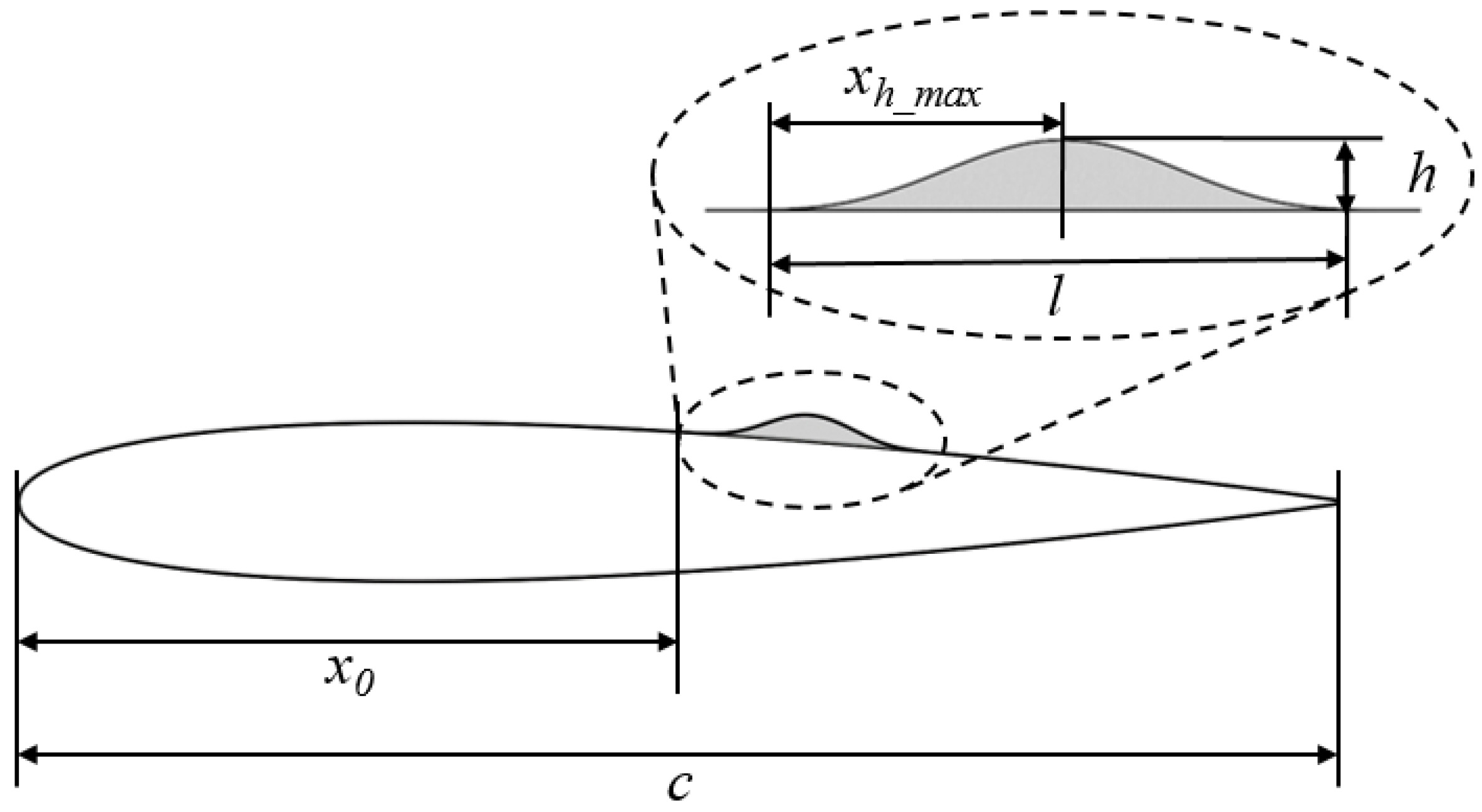
While trailing edge devices have proven effective, their location far from the shock wave region inherently limits control authority and response speed. Localized morphing skin (also referred to as “local smart skin” or “active shock control bump”) represents an innovative actuator concept that combines the advantages of both passive shock control bumps and active trailing edge devices [
21,
22,
23]. Unlike fixed-geometry shock control bumps, the morphing skin can dynamically adjust the local surface height in response to real-time flow feedback. Since the actuator height is dynamically adjusted only after the occurrence of transonic buffet, the smart skin can suppress fluctuating loads without affecting aerodynamic performance in non-buffeting conditions. Ren et al. [
22] proposed a smart skin system that employs model-free adaptive control to dynamically adjust the local skin height based on lift coefficient feedback. The numerical results demonstrated that buffet loads can be completely suppressed while preserving aerodynamic performance in buffeting conditions, and the control strategy exhibits robustness across different flow states. Deng et al. [
23] applied closed-loop control with lift coefficient feedback to an active shock control bump (SCB), demonstrating that buffet can be effectively suppressed through appropriate tuning of the gain and delay time. Notably, compared to trailing edge flaps, SCB-based control exhibits lower sensitivity to control parameters and achieves a faster response time, further highlighting the potential of near-shock actuation strategies.
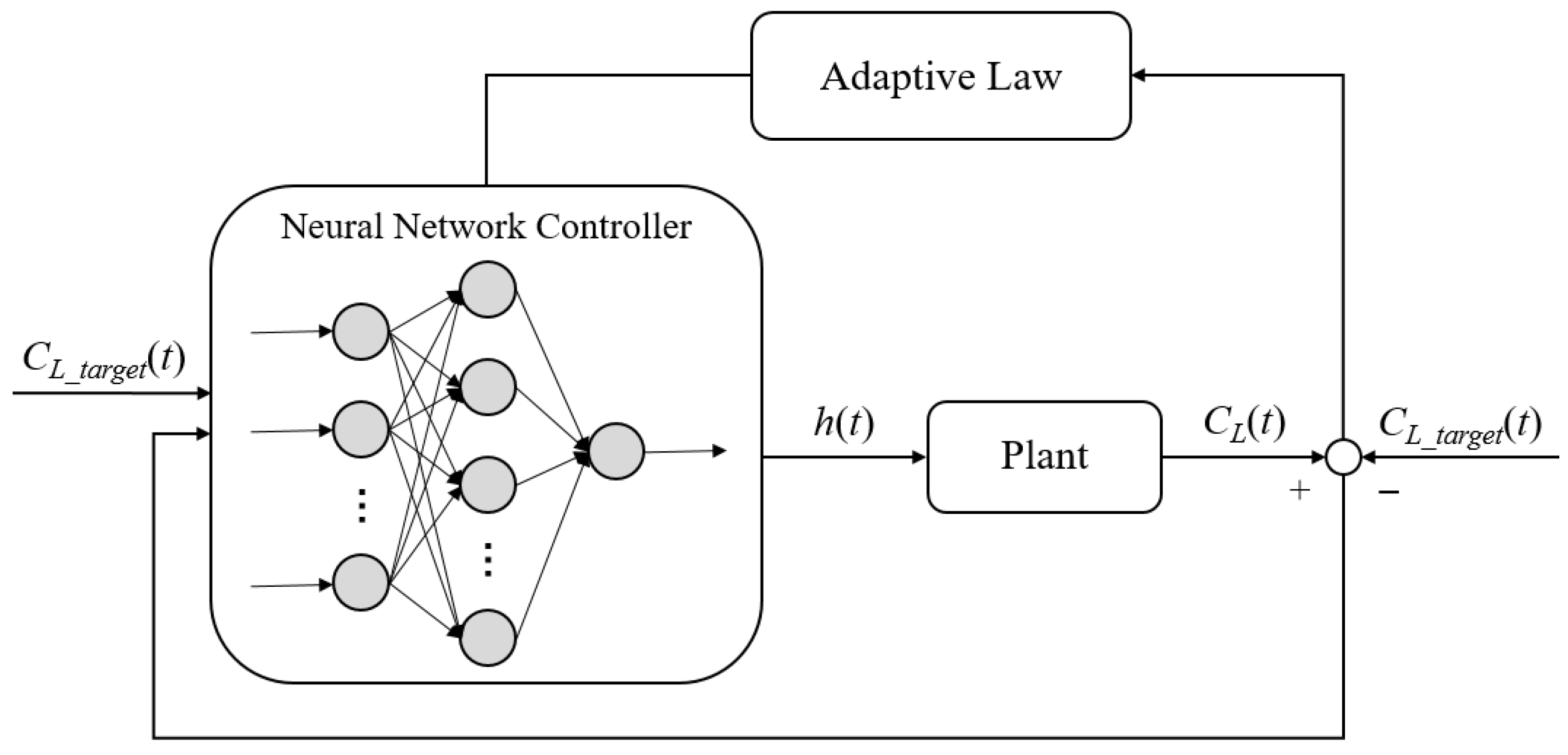
In complex flight environments, flow states can be altered by multiple disturbances and uncertain factors, necessitating the automatic adjustment of control laws to adapt to changing flow conditions. Although considerable progress has been made in transonic buffet control using localized morphing skin actuators under fixed flow conditions, buffet control under time-varying flow parameters remains largely unexplored. Practical application scenarios often involve dynamic variations in Mach number and angle of attack during flight maneuvers [
24]. Under such conditions, the aforementioned control strategies face two fundamental limitations: first, control laws optimized for fixed flow conditions cannot maintain their suppression performance as flow parameters evolve; second, these methods rely on prior knowledge of the unstable steady-state solution or time-averaged flow field to determine the reference lift coefficient
, which is often difficult to access in practice. From a control perspective, this implies that existing closed-loop strategies based on localized morphing skin actuators are typically effective only around fixed operating points, as they rely on pre-identified reference lift coefficients and exhibit limited capability for buffet suppression under time-varying flow conditions. These constraints collectively render existing methodologies inapplicable to realistic flight scenarios.
Recent advances in artificial intelligence and machine learning have opened up new avenues for addressing transonic buffet challenges. Neural network approaches have been increasingly applied to various aspects of buffet phenomena, primarily focusing on buffet onset prediction [
25,
26,
27] and reduced-order modeling [
28,
29,
30]. For instance, Wang et al. [
25] developed a CNN-based buffet classifier integrated with explainable machine learning techniques to establish interpretable physical metrics for accurate onset prediction in supercritical airfoil design. Zahn et al. [
28] presented a hybrid deep learning framework combining a convolutional variational autoencoder with an LSTM neural network to predict transonic buffet pressure distributions from experimental wind tunnel data, successfully capturing the dominant buffet flow features. Despite these advances in prediction and analysis, research on NN-based buffet control remains limited. Among the few existing studies, most have focused on traditional actuators such as trailing-edge flaps [
18,
19] or employed optimization algorithms for airfoil shape design [
31]. Notably, the integration of data-driven adaptive control with localized morphing skin actuators for transonic buffet suppression remains largely unexplored. This combination is particularly promising, as adaptive control strategies can learn from real-time flow measurements to naturally accommodate time-varying flow conditions, with the potential to achieve effective buffet suppression across diverse operating conditions.
In the present study, we propose a data-driven adaptive control framework for transonic buffet suppression utilizing localized morphing skin as the actuation mechanism. The principal novelty of this work lies in the integration of neural network-based adaptive control strategies with localized morphing skin actuators. This approach overcomes the fundamental limitation of conventional methods, namely the requirement for unstable steady-state solutions, while enabling real-time adaptive buffet suppression under time-varying flow conditions. Within this framework, the lift coefficient serves as the feedback signal, with the local skin height dynamically adjusted through the proposed data-driven algorithm. As a model-free approach, this methodology eliminates the necessity of establishing an accurate mathematical model of the flow system while achieving robust buffet suppression. The proposed framework is validated through numerical simulations, demonstrating its capability to suppress fluctuating aerodynamic oscillations and maintain stable aerodynamic performance under varying flow conditions.
The remainder of this paper is organized as follows.
Section 2 introduces the control system, including the intelligent localized morphing skin actuator and the neural network-based adaptive control strategy.
Section 3 describes the numerical methodology, encompassing the unsteady Navier-Stokes equation solver and its validation.
Section 4 presents the results, examining the effects of actuator configuration on buffet control and evaluating the control performance under both different flow conditions and time-varying flow conditions. Finally,
Section 5 summarizes the main conclusions and outlines directions for future research.
4. Results
To validate the effectiveness of the proposed method for transonic buffet control, this study adopts a three-stage approach. First, we investigate the influence of actuator configuration on transonic buffet control, focusing on the effects of morphing skin length and chordwise position. Second, we apply the proposed method to buffet control under different flow conditions to demonstrate its robustness. Finally, we extend the control method to time-varying flow conditions to further evaluate its adaptive control performance.
4.1. Effects of Actuator Configuration on Buffet Control
To investigate the effects of actuator configuration on buffet control performance, a baseline flow condition is established with a Mach number of , angle of attack of , temperature of K, and Reynolds number of . Parametric studies are conducted to examine how skin length and position influence the buffet suppression effectiveness under this representative transonic flow condition.
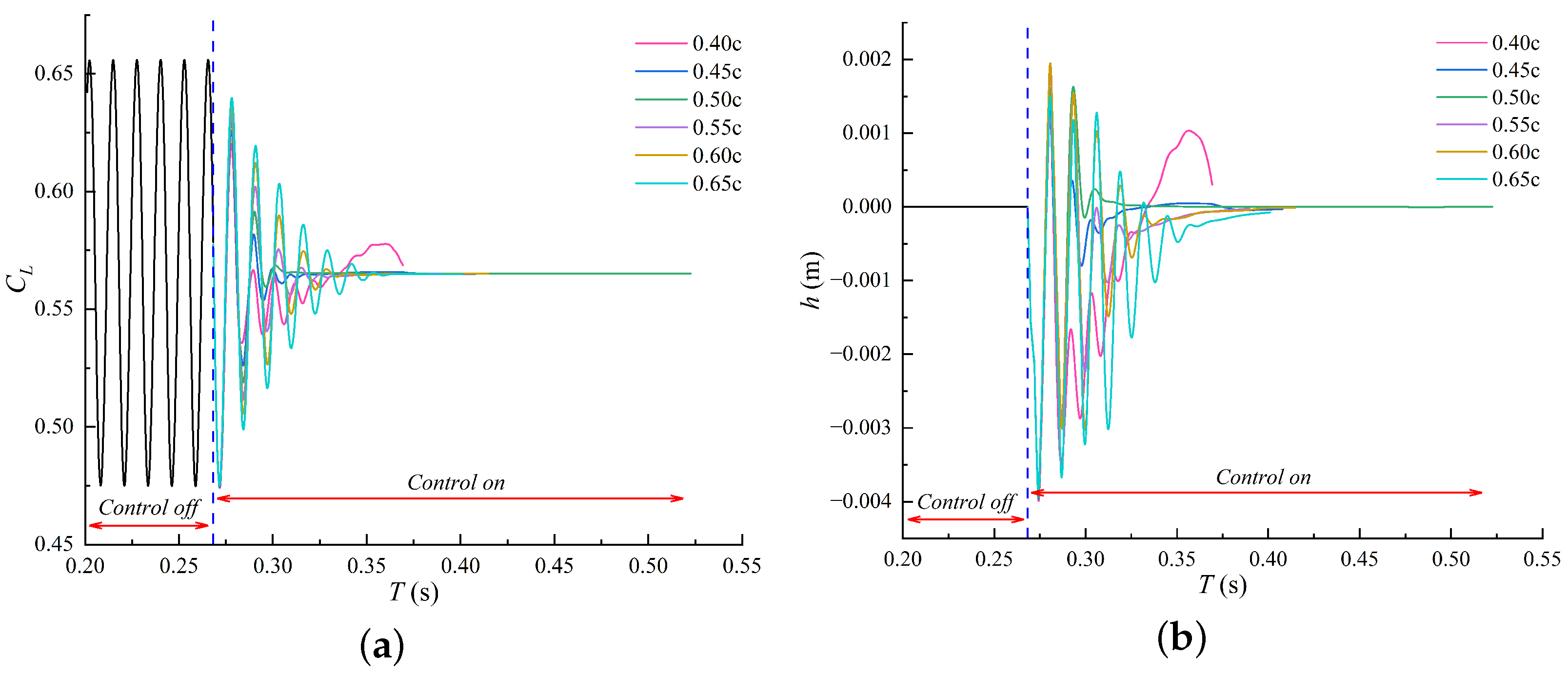
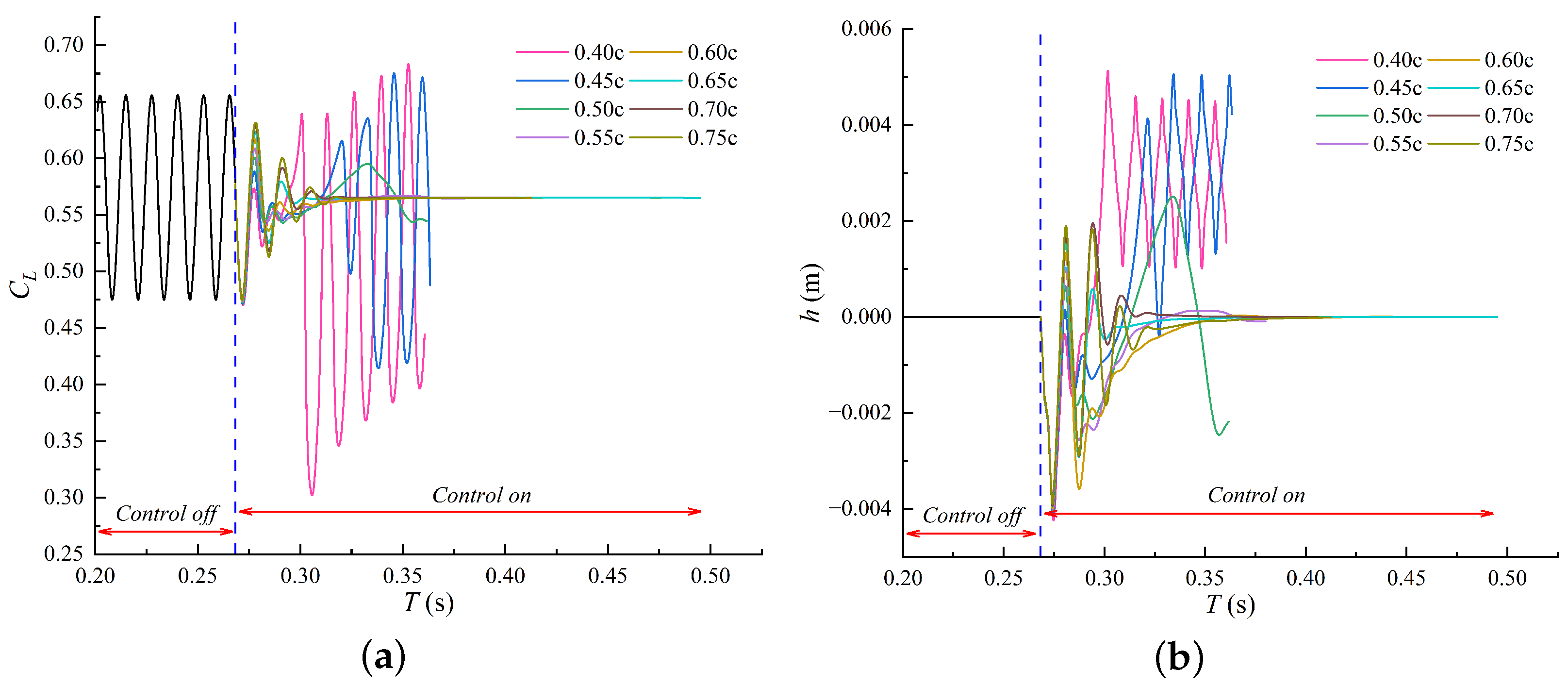
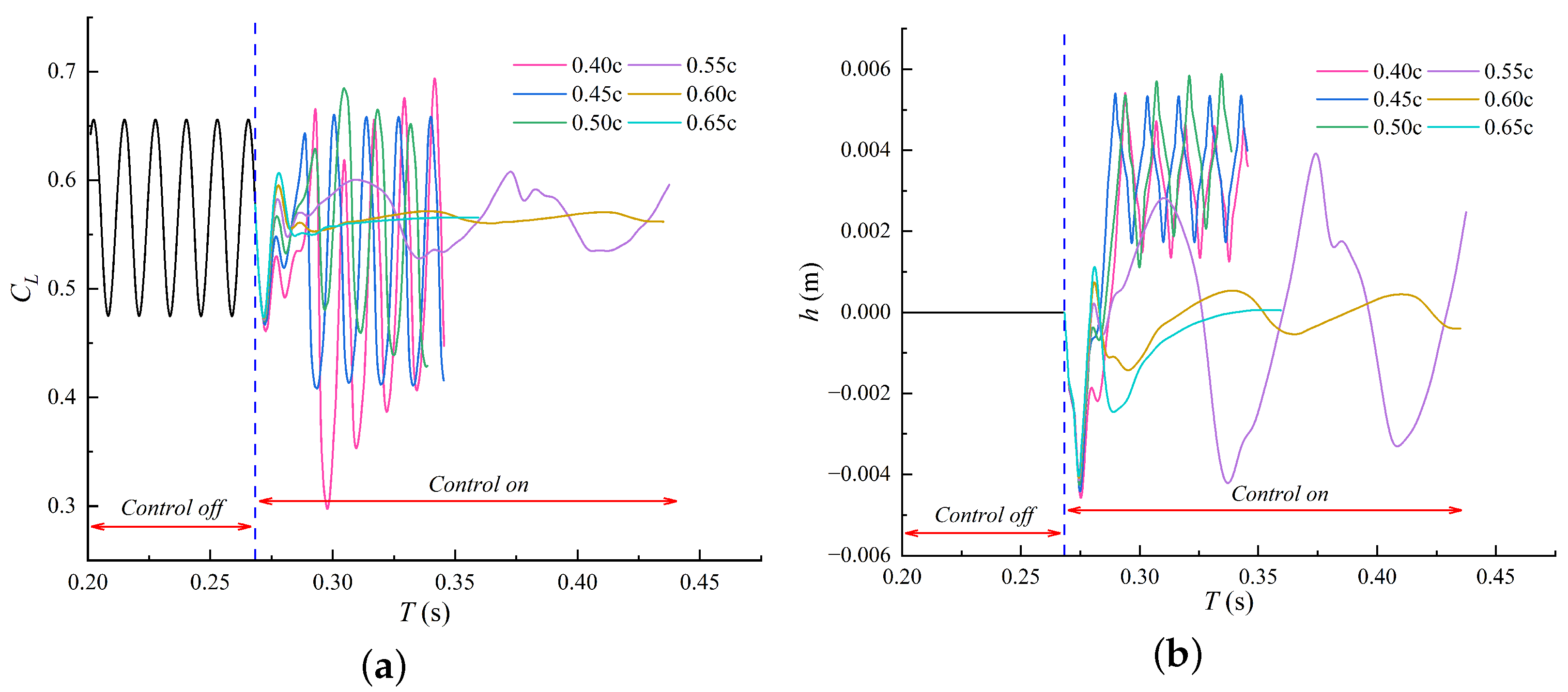
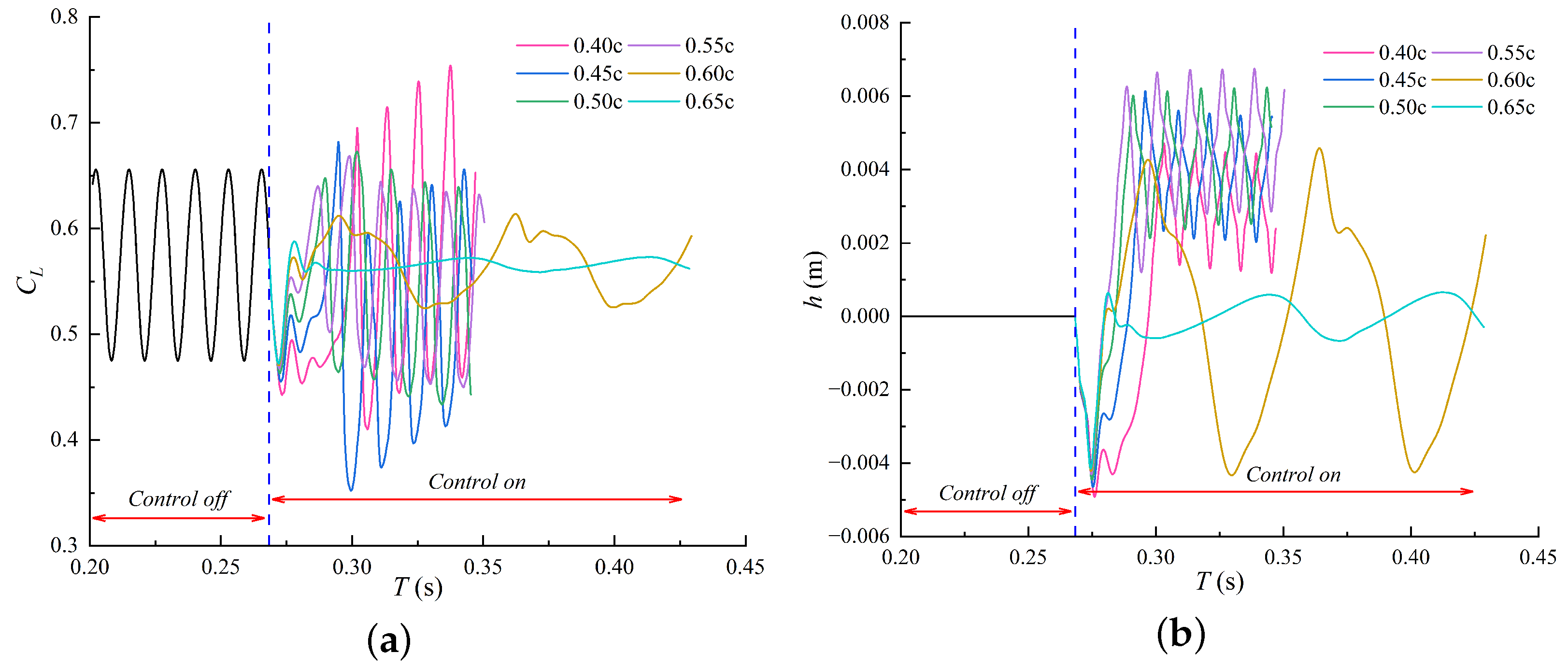
The influence of skin position is first examined by fixing the skin length and systematically varying the chordwise location of maximum height.
Figure 4,
Figure 5,
Figure 6 and
Figure 7 present the buffet control results for four different skin lengths (
,
,
, and
), where each configuration is tested at multiple chordwise positions ranging from
to
. Here, the notation
,
,
,
,
, and
denotes the chordwise location at which the maximum height of the morphing skin occurs. For each skin length, the lift coefficient (
) and actuator height (
h) responses are compared across these different positions to evaluate the control performance, with the vertical dashed line indicating the moment of control activation transitioning from the uncontrolled state (“
Control off”) to the controlled state (“
Control on”). A quantitative summary of the control performance for all tested configurations, including control success and settling time, is provided in
Table 2.
The results demonstrate that both the chordwise position and length of the morphing skin significantly influence the control effectiveness. When the maximum height of the morphing skin is located at chordwise position less than , effective suppression of transonic buffet cannot be achieved regardless of the skin length. Moreover, this deficiency becomes increasingly pronounced with increasing skin length. Among the tested configurations, the skin length exhibits the most favorable overall control performance. Under this skin length configuration, effective transonic buffet control can be achieved for nearly all tested positions except when the skin maximum height is located at and . Conversely, excessive skin lengths prove detrimental to control effectiveness; configurations with skin lengths of and fail to achieve effective buffet suppression across all tested chordwise positions, exhibiting persistent oscillations and unstable control behavior. Notably, the variation in skin position and length exerts minimal influence on the maximum deformation amplitude of the morphing surface.
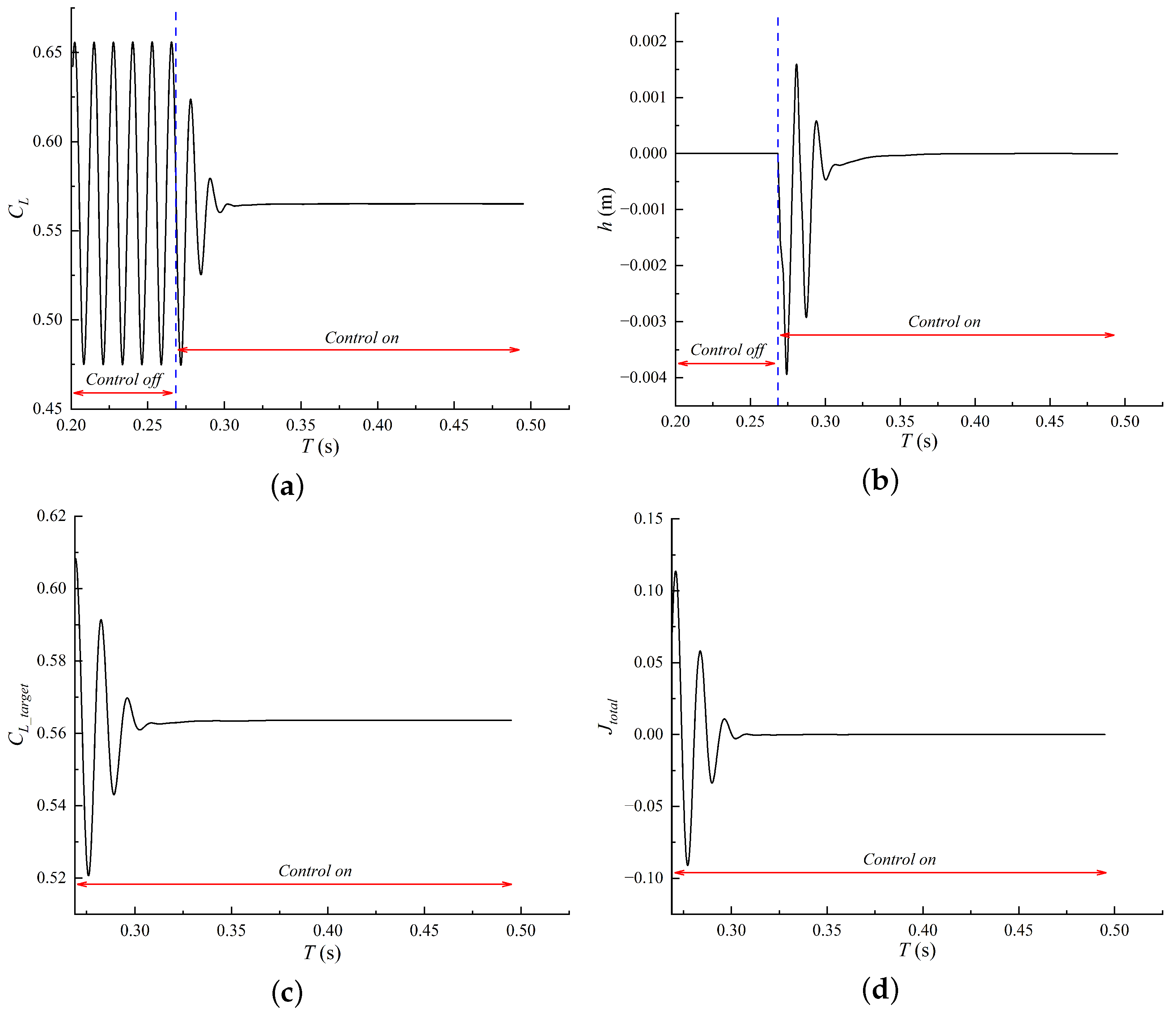
Based on the comprehensive analysis presented above, the optimal actuator configuration featuring a skin length of
with maximum deformation height positioned at
demonstrated superior control effectiveness for transonic buffet suppression. This configuration achieved effective buffet control with minimal settling time while requiring reduced skin deformation magnitudes.
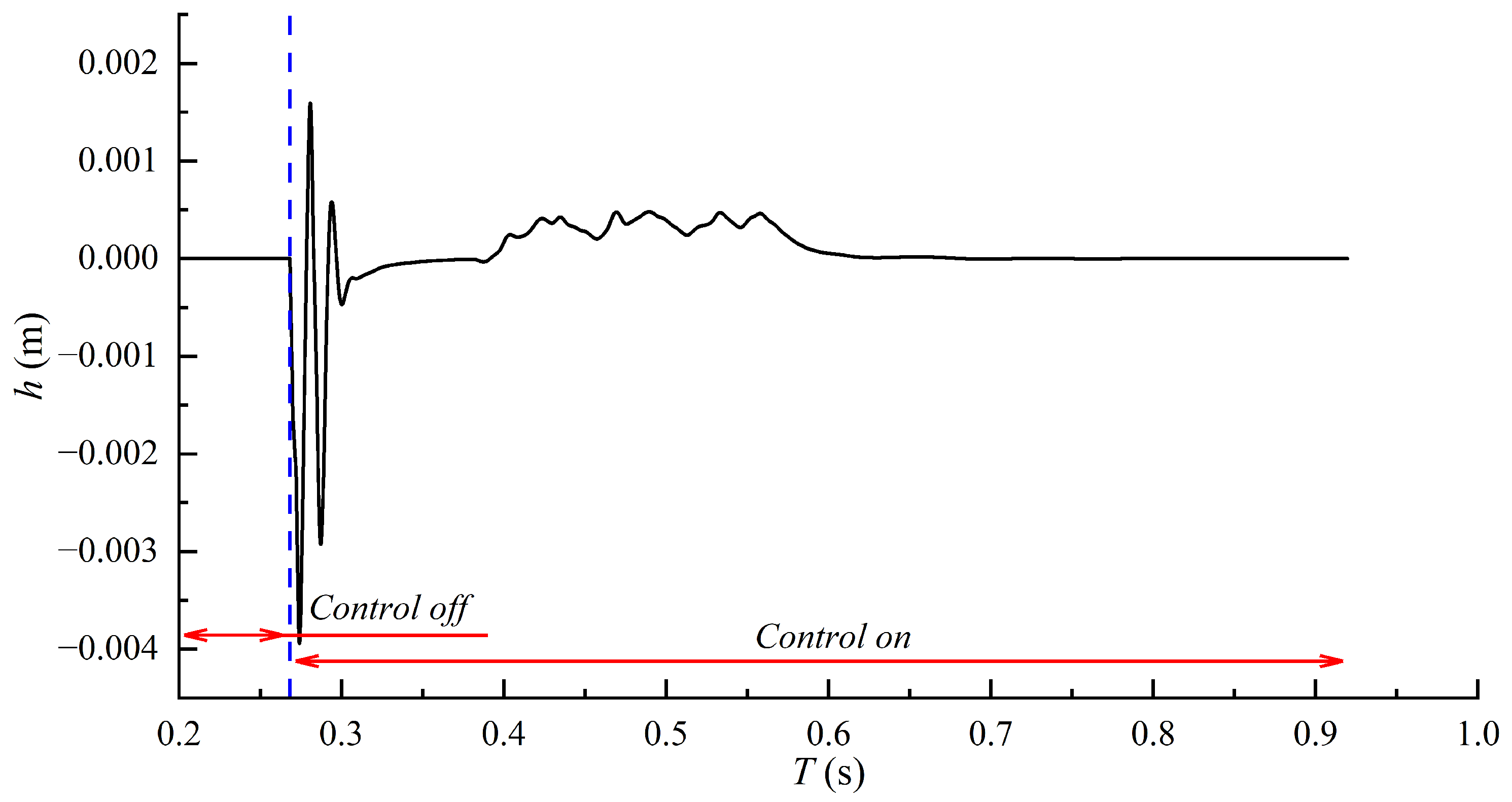
Figure 8 illustrates the complete adaptive control process under this optimal actuator configuration, showing the temporal evolution of lift coefficient response, actuator height response, target lift coefficient, and total error response.
The results reveal several key observations: (a) the lift coefficient exhibits significant oscillations during the uncontrolled phase and rapidly converges to the target value upon activation of the adaptive control system, demonstrating effective buffet suppression; (b) the actuator height response indicates that the control system efficiently modulates skin deformation to suppress the aerodynamic oscillations, with the final deformation height returning to near-zero; (c) the target lift coefficient rapidly stabilizes to a constant value following control initiation, indicating robust reference tracking performance; and (d) the total error response demonstrates rapid convergence to near-zero values upon control activation, confirming the effectiveness of the adaptive control strategy under the optimal actuator configuration in achieving precise buffet suppression.
4.2. Buffet Control Under Different Flow Conditions
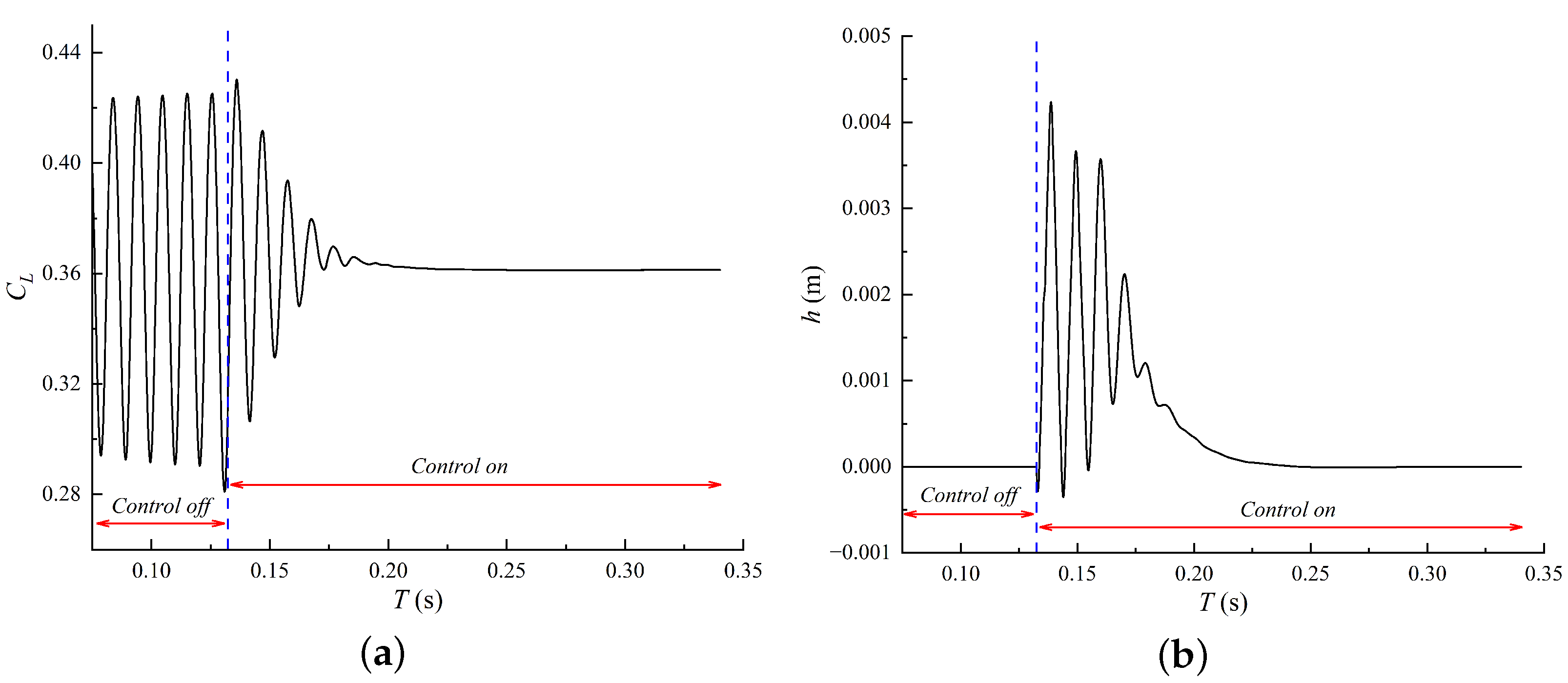
To validate the robustness of the proposed adaptive control method for transonic buffet suppression, it is essential to examine its performance under different flow conditions. In realistic flight scenarios, atmospheric turbulence and operational variations lead to changes in freestream conditions, particularly Mach number and angle of attack. These variations alter the dynamic characteristics of the transonic buffet system, affecting parameters such as shock wave oscillation amplitude, mean lift coefficient, and flow field structure. To demonstrate the controller’s capability to maintain effectiveness across different operating points, the adaptive control strategy is applied to two additional flow conditions: with , and with .
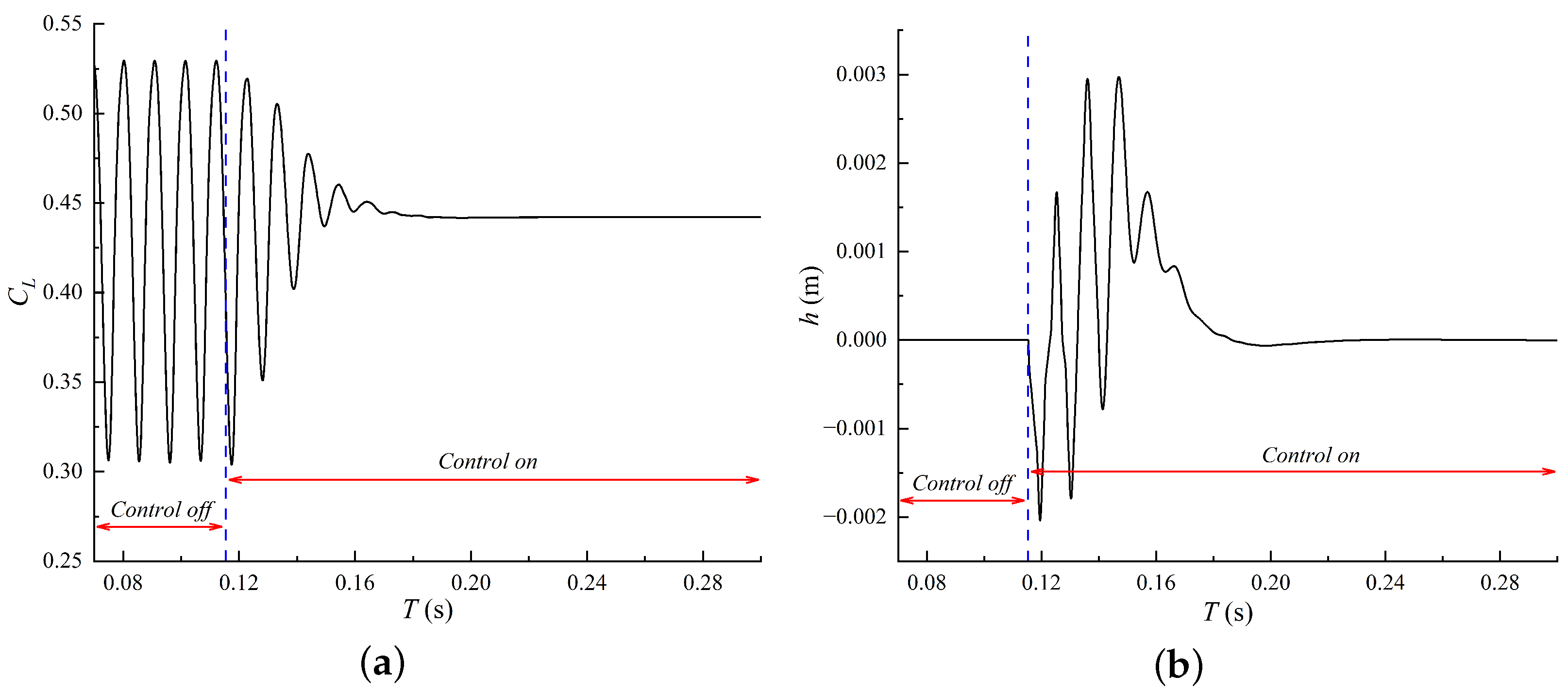
Figure 9 and
Figure 10 present the time history responses of the lift coefficient (
) and actuator height (
h) for both test cases. In both scenarios, the control system successfully suppresses the large-amplitude oscillations characteristic of transonic buffet. As shown in
Figure 9a and
Figure 10a, when the control is activated at the marked time instant, the lift coefficient oscillations are rapidly attenuated, with the system converging to a steady state within approximately 0.1 s. The corresponding actuator responses in
Figure 9b and
Figure 10b demonstrate that the controller adaptively adjusts the actuation magnitude to counteract the buffet-induced aerodynamic oscillation, eventually settling at near-zero values once the flow stabilizes.
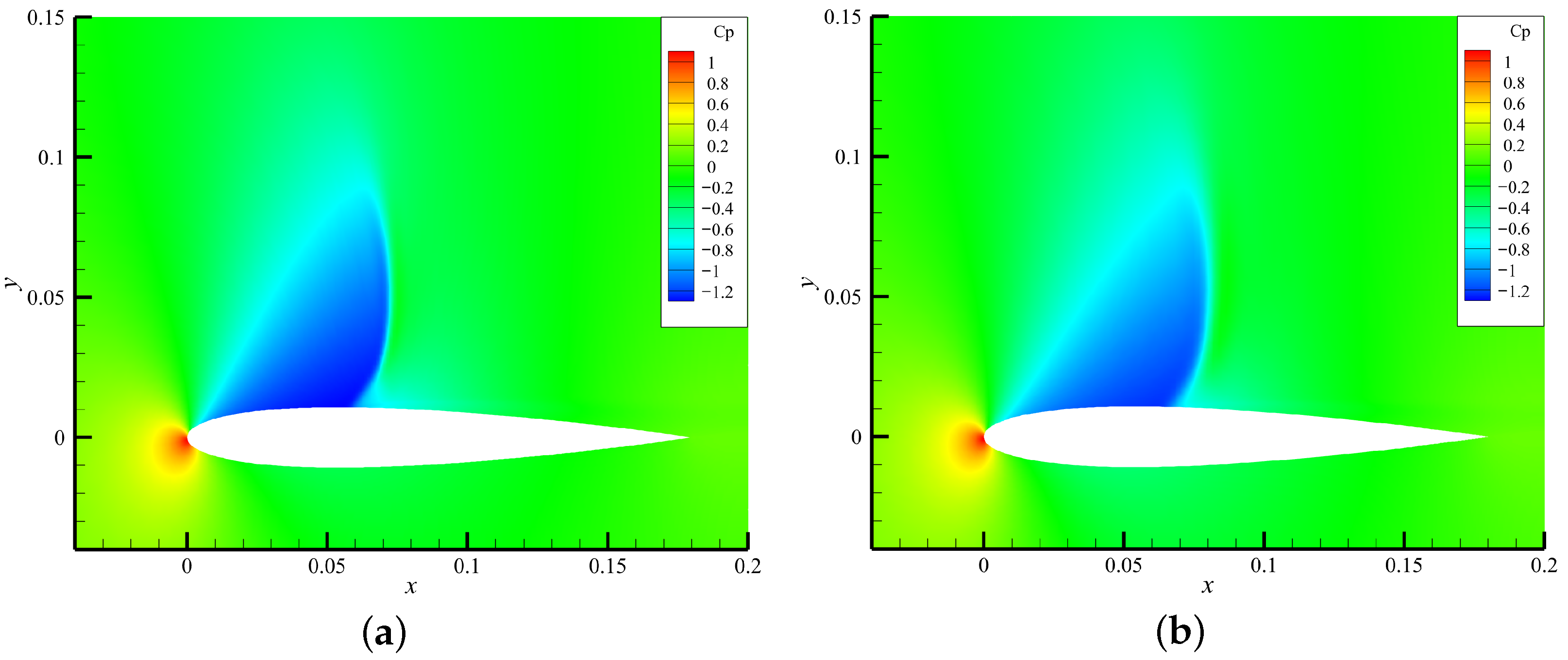
The effectiveness of the control strategy is further illustrated through pressure coefficient distributions.
Figure 11 displays the pressure coefficient (
) contours around the airfoil after control convergence for both flow conditions. Comparing these results reveals that despite the different Mach numbers and angles of attack, the controller successfully establishes stable shock positions and eliminates the unsteady flow features. The pressure distributions exhibit well-defined shock structures without the diffuse patterns typical of oscillatory buffet conditions.
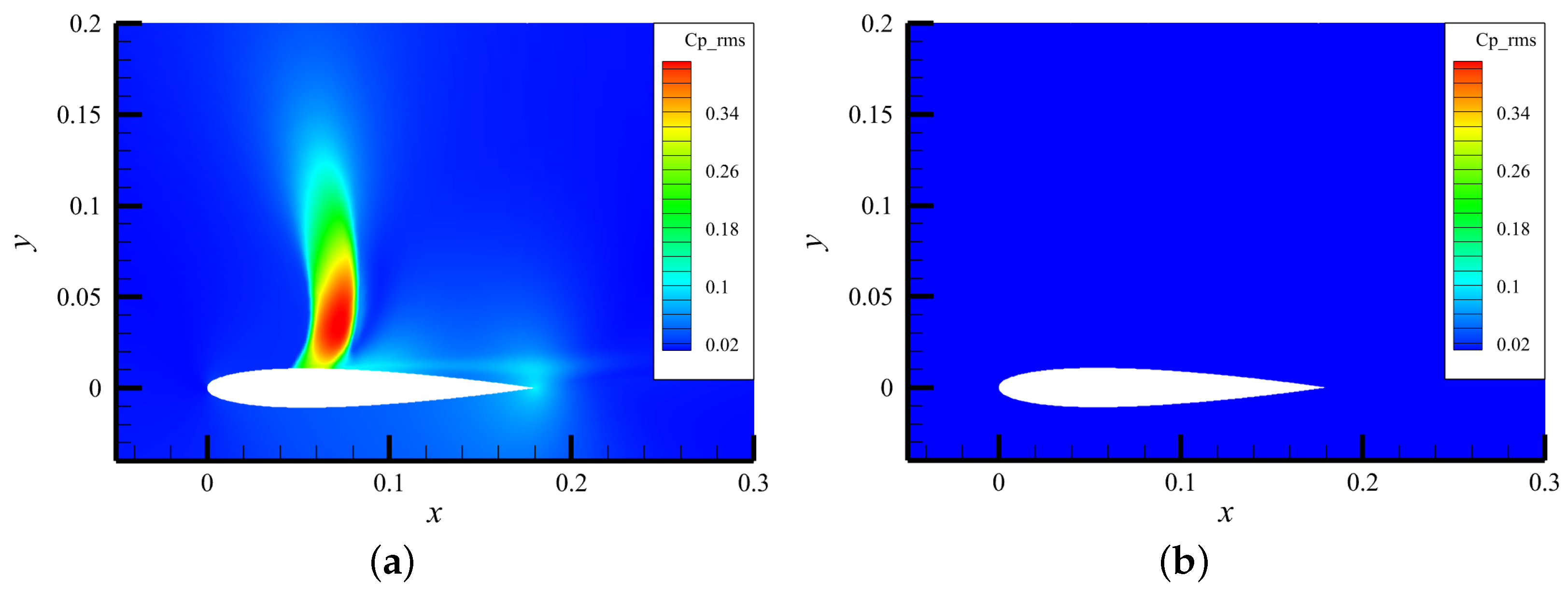
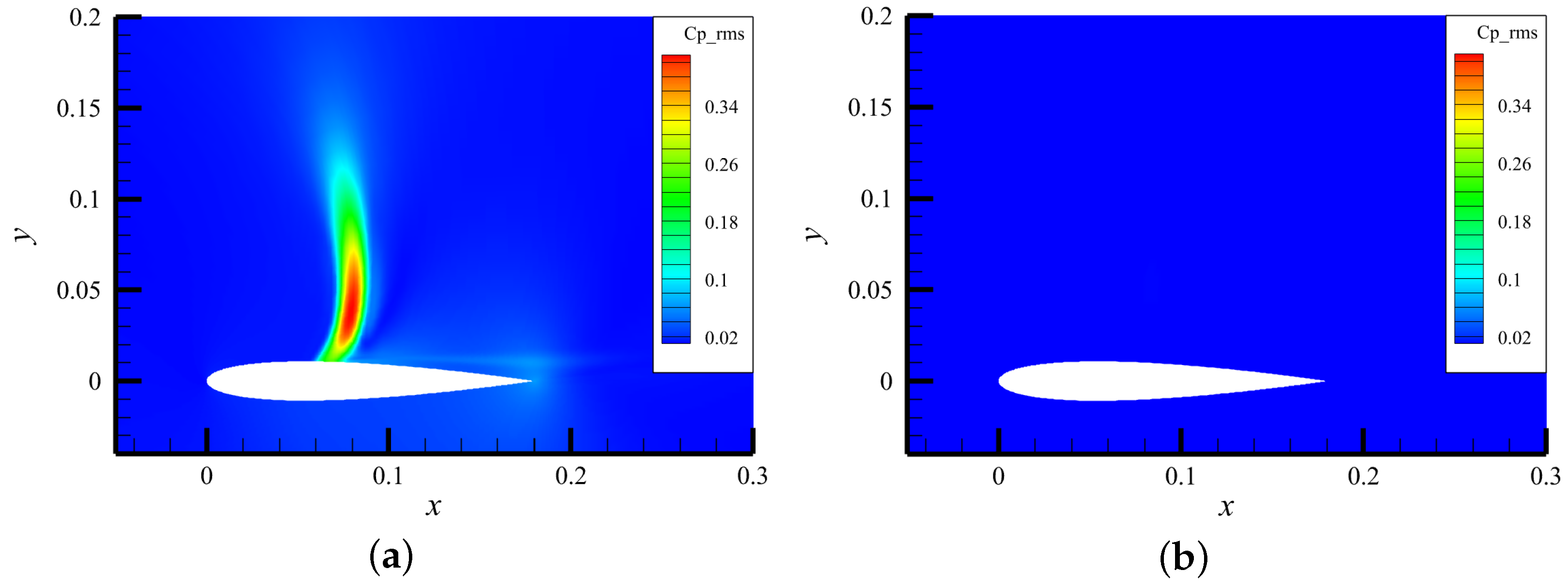
The buffet suppression capability is most clearly demonstrated in
Figure 12 and
Figure 13, which compare the root-mean-square (RMS) of pressure coefficient fluctuations with and without control. For the
,
case (
Figure 12), the uncontrolled flow exhibits a prominent region of high
values concentrated near the shock location, indicating severe pressure fluctuations. Upon activation of the adaptive control (
Figure 12b), this high-intensity fluctuation region is substantially diminished, demonstrating effective suppression of buffet-induced unsteadiness. Similar results are observed for the
,
condition (
Figure 13), where the controller again significantly reduces the RMS pressure fluctuation levels throughout the flow field.
These results collectively demonstrate that the proposed adaptive control method exhibits excellent robustness across different transonic flow conditions. The controller effectively suppresses buffet despite variations in Mach number and angle of attack, which fundamentally alter the system’s dynamic characteristics. This validates its potential for practical aerospace applications under different flight conditions.
4.3. Buffet Control Under Time-Varying Flow Conditions
To further validate the adaptability of the proposed control method under realistic flight scenarios, this subsection extends the investigation to time-varying flow conditions. During actual flight operations, aircraft frequently encounter dynamic changes in flow parameters due to maneuvering, atmospheric disturbances such as gusts, or altitude variations. Under these circumstances, both Mach number and angle of attack may vary continuously over time, presenting a considerably more challenging control problem than time-invariant flow conditions where these parameters remain constant.
Three representative scenarios are examined to comprehensively assess the control performance: (1) varying angle of attack with constant Mach number, (2) varying Mach number with constant angle of attack, and (3) simultaneous variation of both parameters. In all cases, the temporal variations are prescribed as linear functions to simulate gradual changes in flight conditions. The control system is activated after an initial period without control, allowing the establishment of baseline uncontrolled buffet characteristics before demonstrating the control effectiveness.
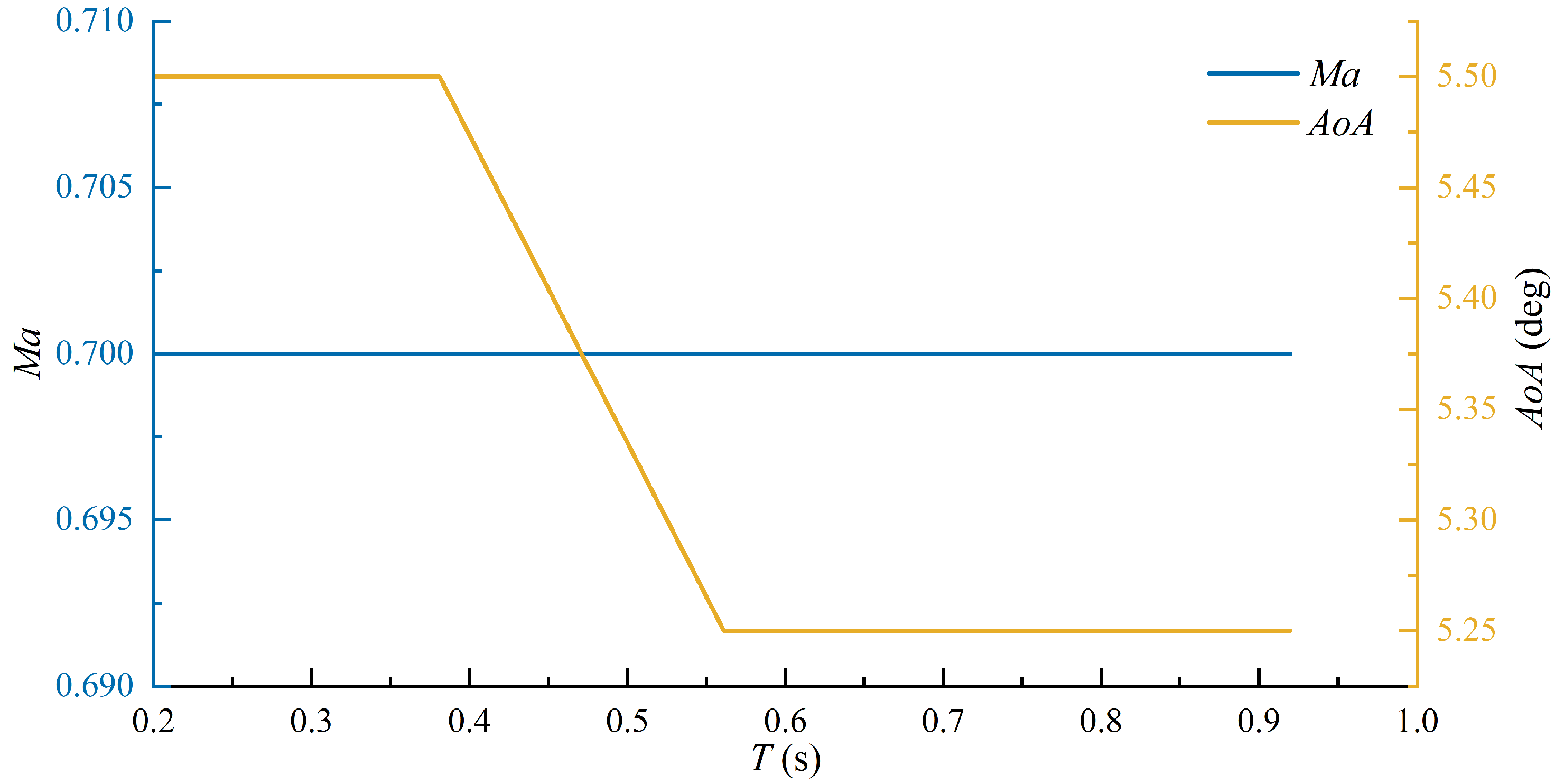
The first scenario investigates the control performance when the angle of attack decreases linearly from
to
while maintaining a constant Mach number of
, as illustrated in
Figure 14. This configuration simulates a typical pitch-down maneuver or transition between flight conditions.
Figure 15 presents the lift coefficient response comparison between controlled and uncontrolled cases. Without control (black curve), the airfoil exhibits persistent large-amplitude oscillations throughout the simulation period, with the oscillation characteristics evolving as the angle of attack changes. The oscillation amplitude shows a gradual decrease corresponding to the reduction in angle of attack, as the flow moves away from the deep buffet regime. In contrast, when the adaptive control is activated (green curve), the oscillations are rapidly suppressed and the lift coefficient quickly converges to a steady state with minimal residual fluctuations, demonstrating the controller’s ability to maintain aerodynamic stability despite the continuously changing flow conditions. The actuator response during the control phase is shown in
Figure 16. Upon activation, the actuator first suppresses the initial buffet oscillations to achieve a stable state, then adaptively adjusts with relatively small amplitude variations to counteract flow disturbances during the angle of attack transition period, ultimately converging to near-zero displacement. The relatively small actuator displacements highlight the efficiency of the control strategy in achieving significant buffet suppression throughout the angle of attack variation process with minimal actuation effort.
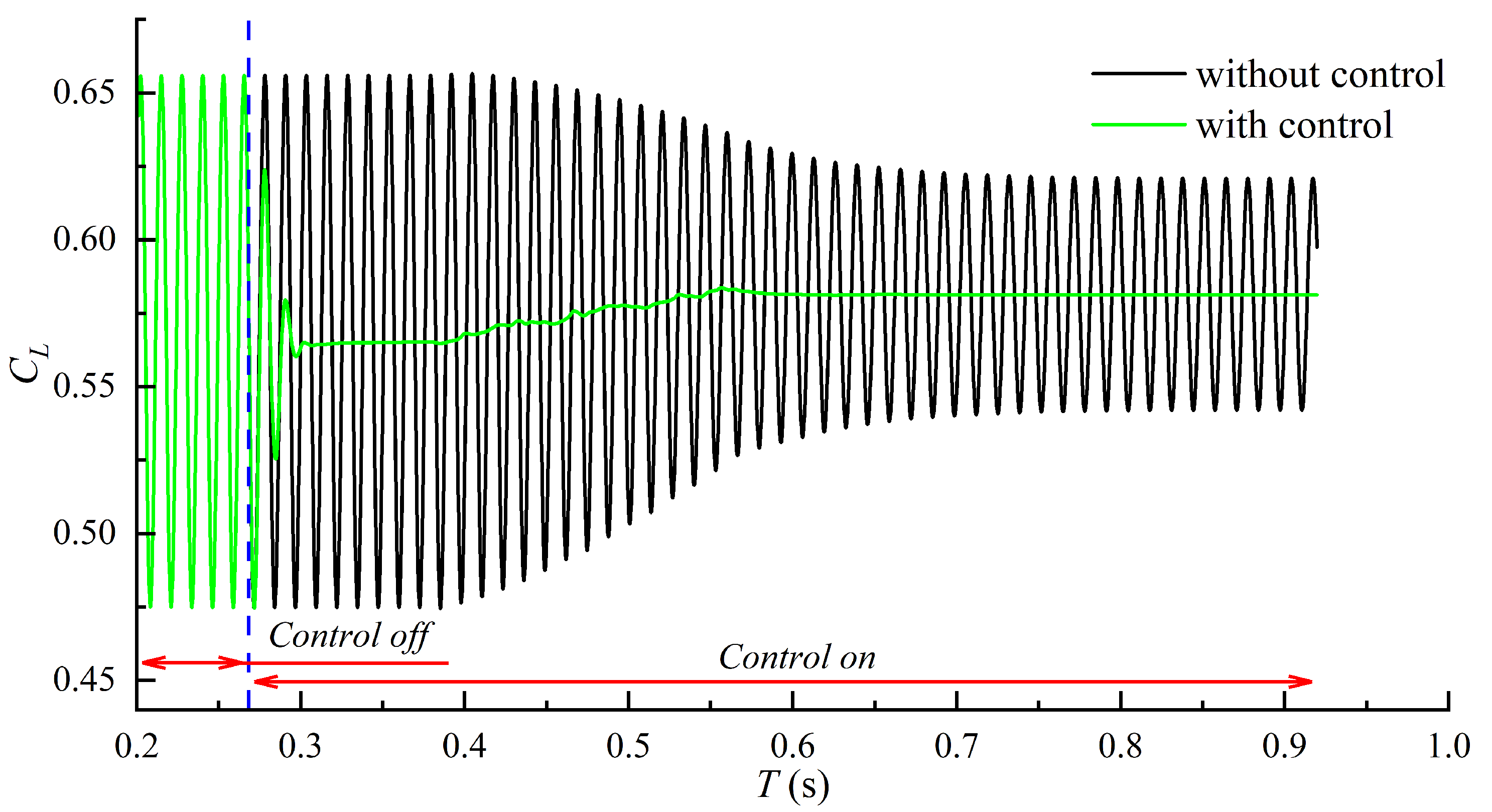
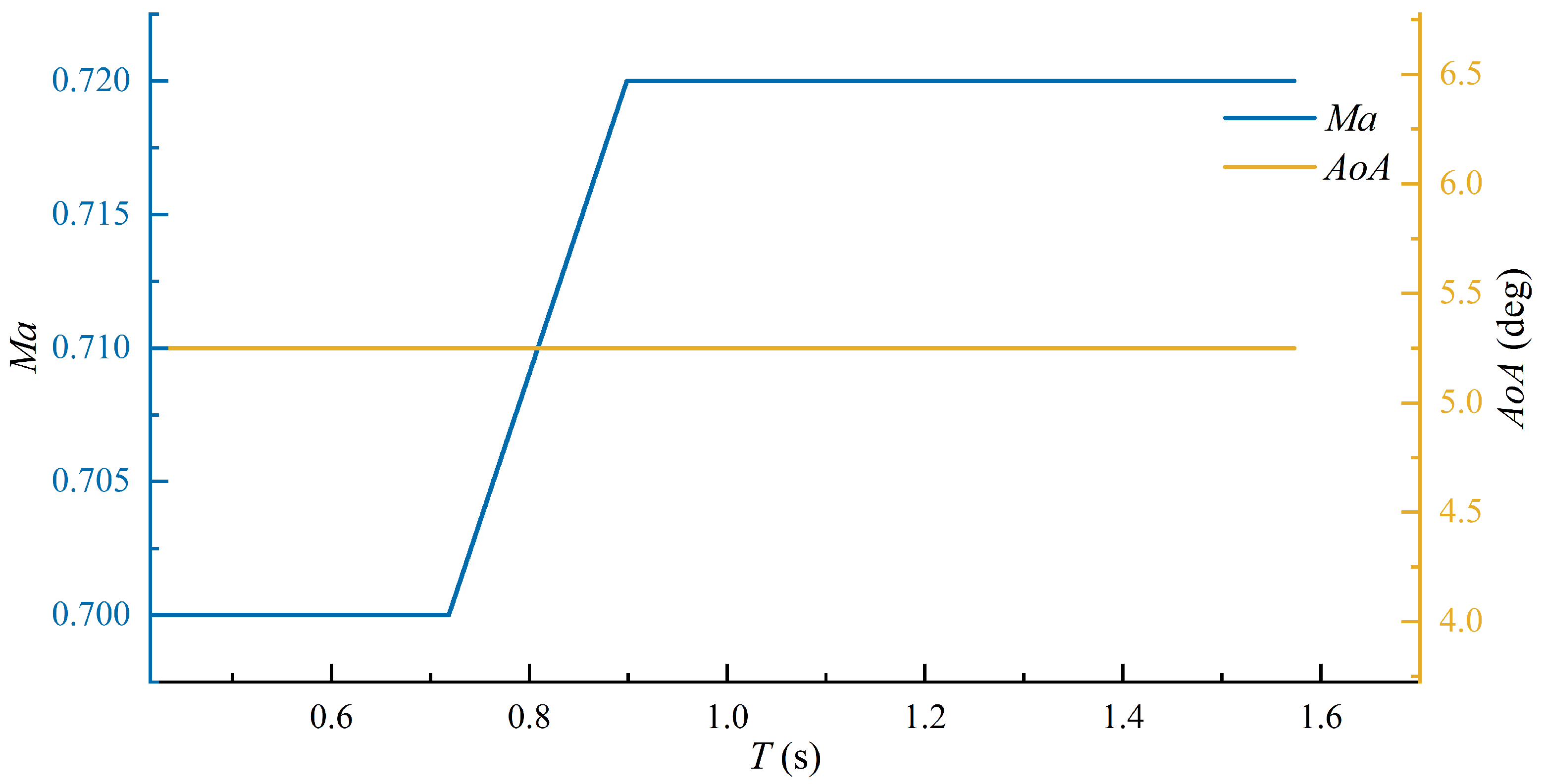
The second scenario examines the control effectiveness when the Mach number increases linearly from
to
while holding the angle of attack constant at
, as depicted in
Figure 17. This case represents conditions where the aircraft accelerates through a range of transonic speeds, potentially encountering changes in shock wave strength and buffet characteristics.
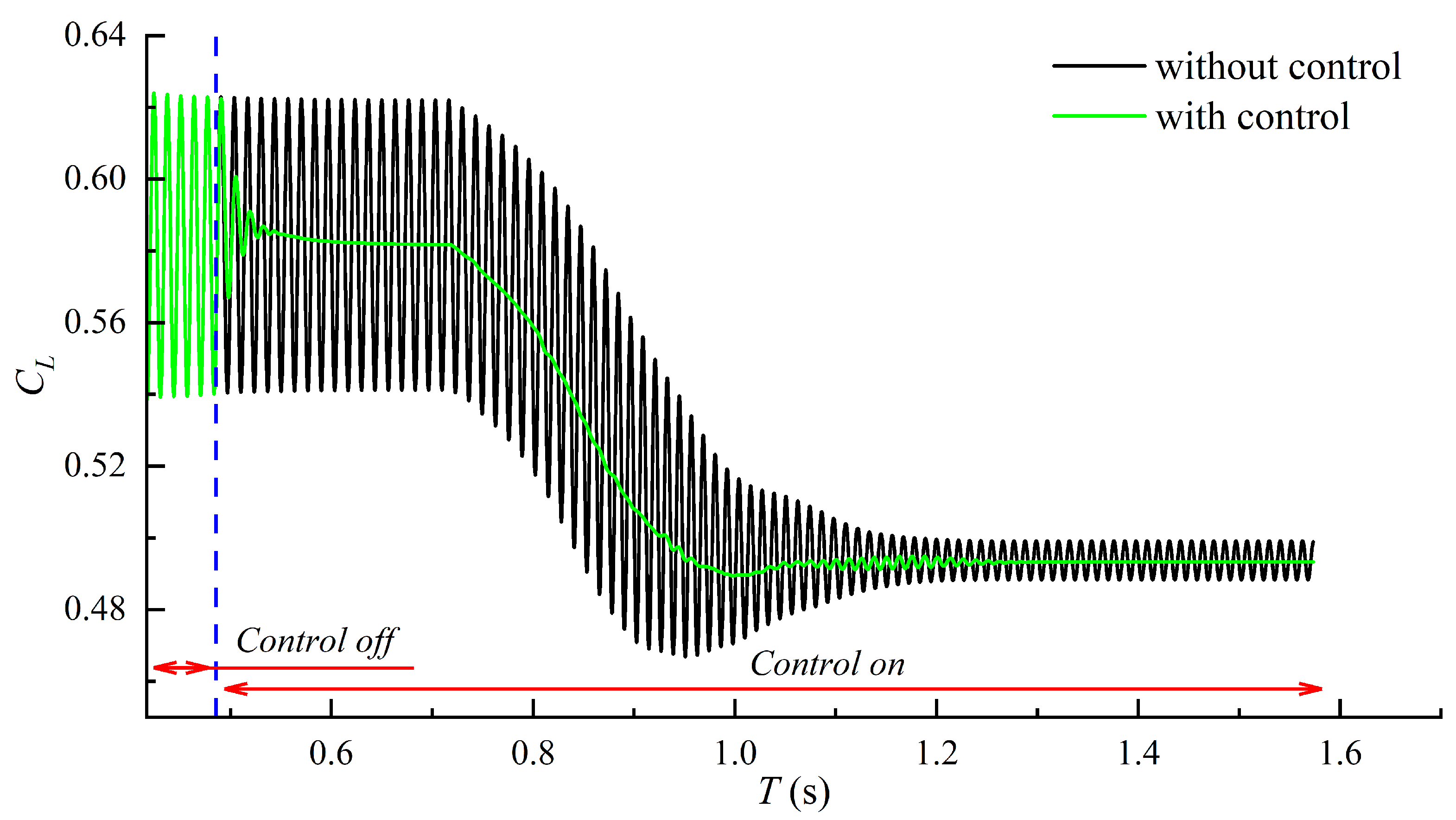
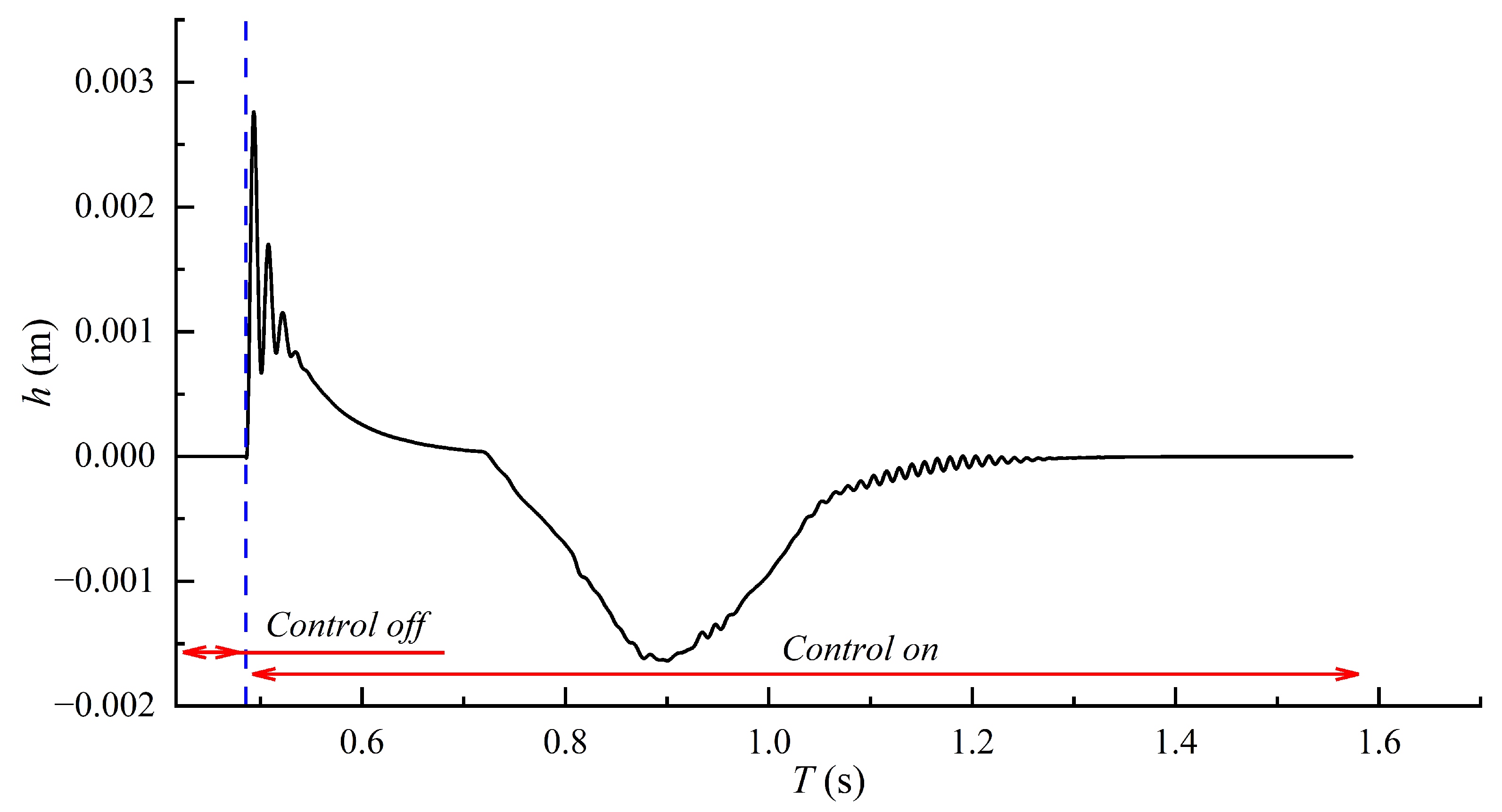
Figure 18 demonstrates the lift coefficient response under these conditions. The uncontrolled case (black curve) displays sustained oscillations that gradually decrease in amplitude and increase in frequency as the Mach number rises, reflecting the sensitivity of buffet characteristics to Mach number variations in the transonic regime. Upon control activation (green curve), the oscillations are effectively eliminated, with the lift coefficient stabilizing rapidly. The controlled response exhibits a smooth transition following the Mach number change, with only minor fluctuations that are quickly damped. The corresponding actuator behavior is presented in
Figure 19. Similar to the previous case, the actuator initially suppresses the buffet oscillations to achieve a stable state, then performs adaptive adjustments to accommodate the varying Mach number. The actuator successfully adapts to the evolving flow conditions, continuously adjusting its output to maintain effective buffet suppression throughout the Mach number variation.
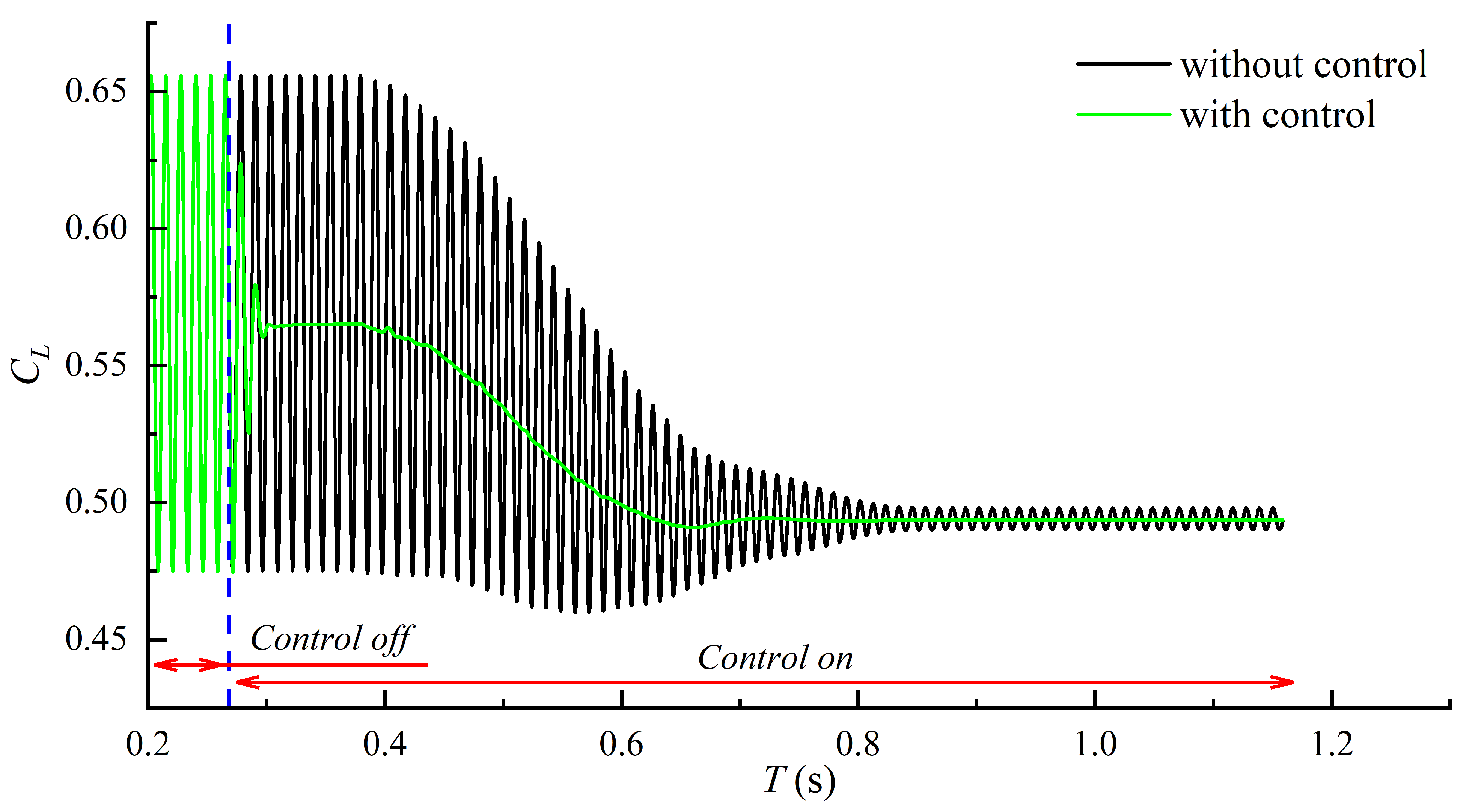
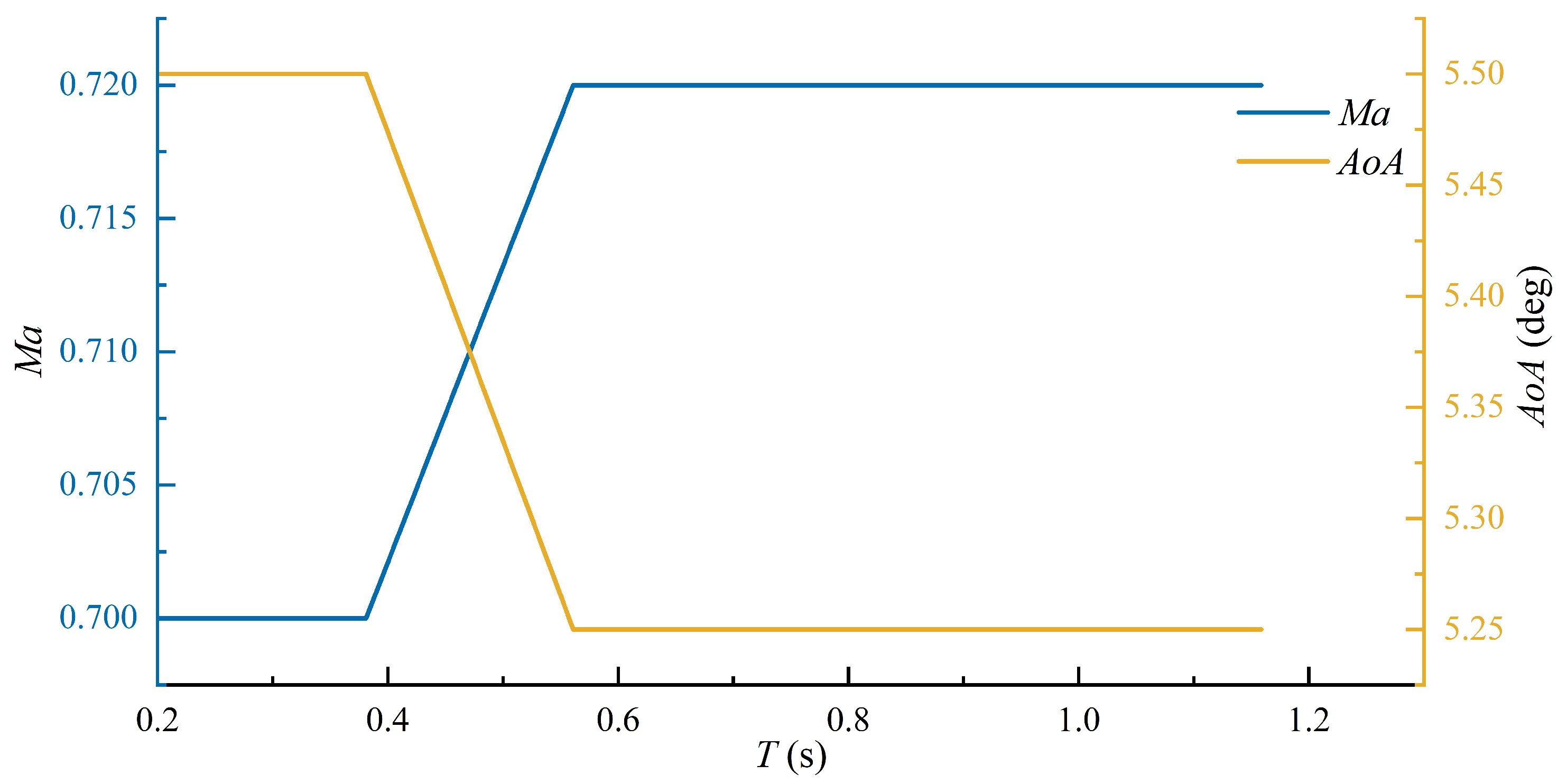
The third and most challenging scenario involves simultaneous variations of both flow parameters: the angle of attack decreases from
to
while the Mach number increases from
to
, as shown in
Figure 20. This case represents complex flight maneuvers where multiple parameters change concurrently, such as accelerated descents or specific trajectory segments.
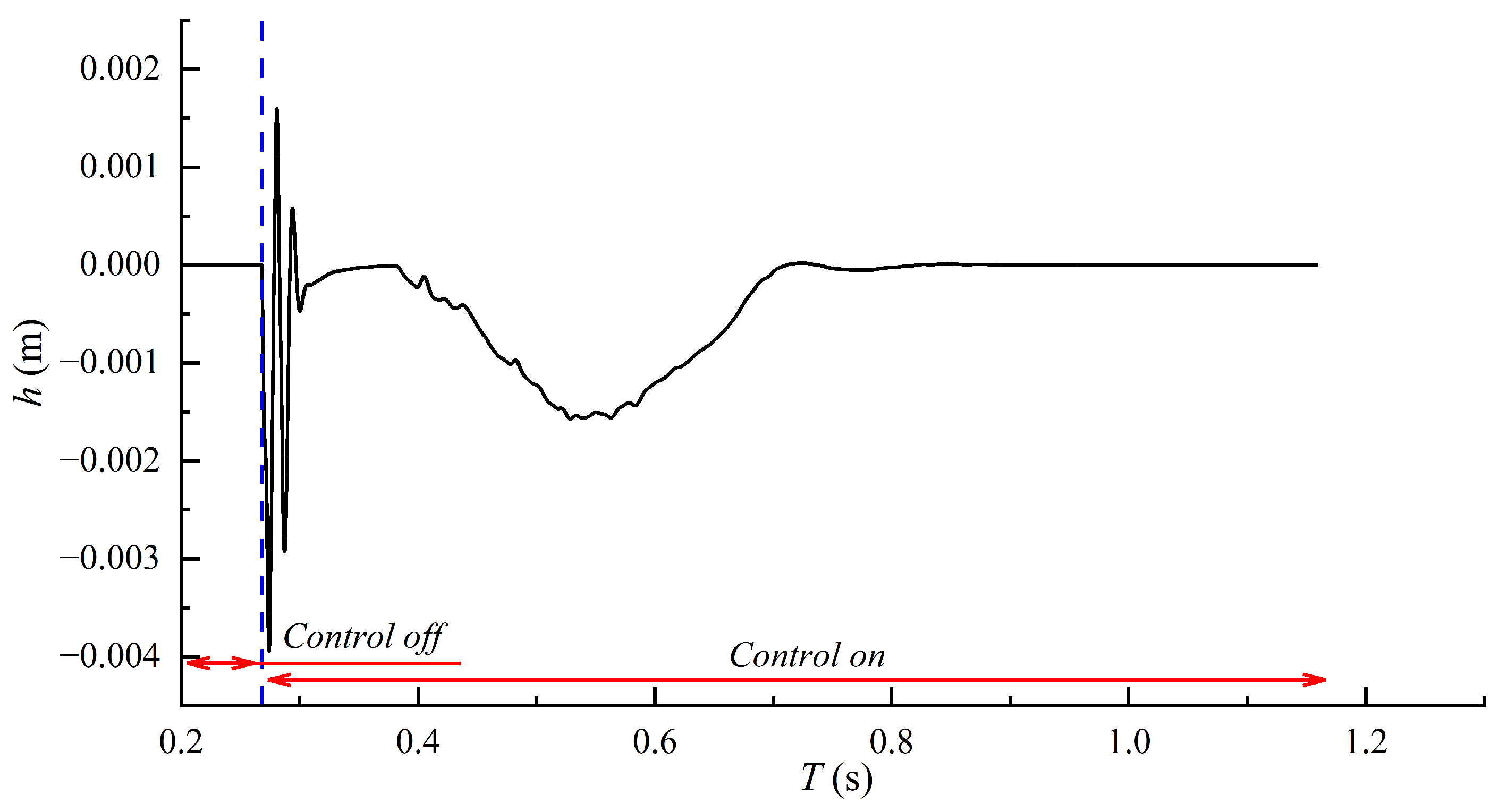
Figure 21 illustrates the lift coefficient response under these demanding conditions. The uncontrolled case (black curve) exhibits complex oscillatory behavior influenced by the combined effects of changing both angle of attack and Mach number, with oscillation characteristics evolving continuously throughout the transition. Despite this complexity, the adaptive control system (green curve) successfully suppresses the oscillations and achieves stable lift coefficient behavior. The controller demonstrates remarkable adaptability, simultaneously compensating for the effects of both parameter variations and maintaining aerodynamic stability throughout the transition. The actuator response for this combined variation case is shown in
Figure 22. The actuator height exhibits behavior similar to the previous two scenarios, ultimately returning to its neutral position (near-zero height) as the flow stabilizes. The actuator displacement pattern also shows clear adaptation to the changing flow field, with varying oscillation characteristics that reflect the controller’s real-time response to the compound parameter variations. Notably, the actuator successfully maintains buffet suppression throughout the entire transition period despite the increased complexity of the flow conditions.
These three test cases collectively demonstrate the robustness and adaptability of the proposed control method under time-varying flow conditions. The control system exhibits consistent effectiveness across all scenarios, rapidly suppressing buffet oscillations regardless of whether angle of attack, Mach number, or both parameters vary. The suppression is achieved within a short time after control activation, typically within a few oscillation cycles.
The actuator responses demonstrate appropriate adaptation to evolving flow conditions. Once the initial buffet state is suppressed, the system maintains effective control with relatively small actuator height variations to accommodate the continuously changing flow field, suggesting favorable energy efficiency and practical feasibility for implementation. Particularly noteworthy is the controller’s capability to handle compound parameter variations without performance degradation, indicating that the adaptive mechanism can effectively accommodate multiple simultaneous disturbances. This characteristic is especially critical for practical applications, where flight conditions rarely involve isolated parameter changes.
Although the linear variation profiles employed in these simulations represent idealized conditions, they provide a systematic framework for assessing controller performance and establish confidence in the method’s applicability to more complex, realistic flight scenarios. The successful suppression of buffet under these time-varying conditions confirms that the proposed adaptive control approach is well-suited for dynamic flight environments and represents a significant advancement toward the practical implementation of active buffet control systems.