
Article

Continuous Detonation Combustor Operating on a Methane–Oxygen Mixture: Test Fires, Thrust Performance, and Thermal State


by
Sergey M. Frolov
1,2,
Vladislav S. Ivanov
1,
Yurii V. Kozarenko
3 and
Igor O. Shamshin
1,*
1
N.N. Semenov Federal Research Center for Chemical Physics of the Russian Academy of Sciences, 4 Kosygin Str., Moscow 119991, Russia
2
Chemical Physics Department, Institute for Laser and Plasma Technologies (LAPLAS), National Research Nuclear University “MEPhI”, 31 Kashirskoe Sh., Moscow 115409, Russia
3
Transport of the Future Ltd., Belaya Vezha Village, Belgorod Region 309927, Russia
*
Author to whom correspondence should be addressed.
Aerospace 2026, 13(1), 30; https://doi.org/10.3390/aerospace13010030 (registering DOI)
Submission received: 24 November 2025 / Revised: 23 December 2025 / Accepted: 25 December 2025 / Published: 28 December 2025
(This article belongs to the Special Issue Advances in Detonative Propulsion (2nd Edition))

Abstract

Test fires of a rotating detonation engine (RDE) annular combustor operating on a methane–oxygen mixture were conducted. Compared to the original RDE combustor previously tested, it was modified in terms of changing the layout of the water cooling system, the positions of ports for sensors, and the shape of the supersonic nozzle. The stable operation process with a single detonation wave continuously rotating in the annular gap with the velocity of ~1900 m/s (rotation frequency of ~6 kHz) was obtained in the wide range of flow rates of propellant components. This is an important distinguishing feature of the present RDE combustor compared to the analogs known from the literature, which usually exhibit an increase in the number of simultaneously rotating detonation waves with an increase in the flow rates of propellant components. Compared to the original RDE combustor, the maximum duration of operation and the attained sea-level specific impulse were increased from 1 to 30 s and from 250 to 277 s, respectively. The thermal states of all heat-stressed elements of the combustor were obtained. The maximum heat fluxes are registered in the water cooling jackets of the central body and the combustor outer wall. Heat losses in the water cooling system are shown to increase with the average pressure in the combustor. The maximum value of the average heat flux over 20 MW/m2 is achieved on the combustor outer wall. The average heat flux into the combustor outer wall is approximately 20% higher than that into the central body. The average heat flux into the nozzle is several times lower than similar values for the combustor outer wall and central body. The total heat loss into the water-cooled walls of the combustor reach about 10% of the total thermal power of the combustor.

1. Introduction

Currently, a number of promising approaches for the development of launch vehicles into low Earth orbit are being considered in space propulsion engineering. These include replacing kerosene with methane or liquefied natural gas (LNG) in liquid propellant rocket engines (LPREs) [1,2] and replacing subsonic deflagrative combustion with supersonic detonative combustion of propellant components in the rocket engine referred to as the rotating detonation engine (RDE) [3,4,5,6]. Theoretically, compared to an LPRE using kerosene and oxygen as propellants, the use of methane or LNG instead of kerosene could yield a 3–4% increase in the specific impulse [1,2], while the use of detonative rather than deflagrative combustion in RDEs could yield another 13–15% increase [7,8], in particular at relatively low pressures in the combustion chamber (CC). Thus, the transition to methane or LNG and to detonative combustion ultimately promises a 16–19% increase in the specific impulse (the sea-level specific impulse is calculated as I s p =   F / ( g G ) , where F is the sea-level thrust; g is the acceleration of gravity; and G is the mass flow rate of propellants). Such an increase in the specific impulse as compared to contemporary LPREs will improve the thrust performance of RDEs while maintaining the same propellant mass flow rates and pressure in the CC or reducing the pressure in the CC while maintaining the same thrust performance. Furthermore, replacement of kerosene–oxygen LPREs by RDEs fueled with the methane–oxygen propellant could considerably improve many other characteristics of the rocket engine. First, this could drastically simplify the design of the injector head by replacing complex multistage units, thus ensuring complete, uniform and stable combustion with a belt of holes in the wall [9] due to the capability of the rotating detonation wave to intensely mix the propellant components. Second, this could avoid the use of a gas generator to power the propellant turbopumps due to the high recuperative heating potential of detonation products [6,10]. Third, this could allow using a lower pressure turbopump unit [11]. Fourth, this could decrease environmental pollution due to a significantly lower concentration of intermediate products and soot in the exhaust plume [12,13]. Finally, this could essentially reduce launch costs [14]. It should be noted that the energy efficiency of using detonative combustion in rocket engines has been experimentally proven in [15].
Experiments with continuous detonative combustion of a methane–oxygen gas mixture in an annular combustor were conducted, e.g., in [7,9,16,17]. The maximum sea-level specific impulse of I s p 270 s was experimentally obtained at an average pressure in the combustor of P C C 3.2 MPa [8]. Comparison of these values with those relevant to the well-known RD 107-A engine operating on deflagrative combustion of a kerosene–oxygen propellant ( I s p = 263 s and P C C = 6.1 MPa [18]) shows that a similar sea-level specific impulse was achieved at half of the combustor pressure. This demonstrates the higher energy efficiency of continuous detonative combustion compared to deflagrative combustion, as well as the potential for improving the weight and size characteristics of a turbopump unit. Most recent experimental developments in RDEs utilizing methane and oxygen as propellants include studies exploring the effect of various nozzle geometries [19], pulse-mode firings demonstrating a potential for using RDEs for attitude control [20], successful space flight demonstration [21,22], comparisons of the performance of annular- and hollow-type RDEs [23], assessment of a fully additively manufactured water-cooled RDE with LOx/LCH4 bipropellant for up to 133 s in a single test [24], and investigations of RDE size scaling [25]. Some other recent accomplishments in this field of science and technology can be found elsewhere [26].
Despite the many potential advantages of methane–oxygen RDEs mentioned above, there is still a lack of experimental data on the achievable sea-level specific impulse and thermal state of the various RDE structural components at different pressures in the CC, which influences the RDE operation life. Therefore, the objective of this work is to continue research [8] into increasing the sea-level specific impulse of the RDE fueled by methane–oxygen propellant, extending its operation life, and determining the thermal state of its structural components. Note that the detailed physical and mathematical model of the methane–oxygen RDE, including the governing equations with the mechanism of chemical reactions and Chapman–Jouguet analysis, as well as the direct comparison of calculated RDE performances with those measured in [8] are presented in [27,28].

2. Materials and Methods

2.1. Propellant Components

Fuel is gaseous methane with a purity of 99.9 vol.% accumulated in a fuel receiver composed of ten 40-L cylinders at a pressure of up to 15 MPa. Oxidizer is gaseous oxygen with a purity of 99.9 vol.% accumulated in an oxidizer receiver composed of sixteen 40-L cylinders at a pressure of up to 15 MPa. Gaseous nitrogen accumulated in a 40-L cylinder at a pressure of 7 MPa is used for actuating pneumatic valves in the control valve system.

2.2. Test Rig and Combustor

The original RDE was previously developed, manufactured, and tested by the Center for Pulsed Detonation Combustion [8]. Compared to the RDE used in [8], the RDE used in the present study was modified by improving the water cooling system, changing the ports for sensors, and re-profiling the supersonic section of the combustor nozzle to the Laval shape. Test fires of the modified RDE were conducted at the Biruch Engineering Center of the Transport of the Future Ltd. (Belaya Vezha Village, Russia).
Figure 1 shows a schematic and photograph of the modified RDE. Its main element is an annular CC, with oxidizer and fuel supply manifolds at the inlet and a converging-diverging nozzle with a conical central body (CB) and with a geometric expansion ratio of 6.25 at the outlet. The throat diameter of the nozzle is 30 mm. The supersonic section of the nozzle has a Laval profile and a total cone opening angle of 11.5° at the nozzle outlet. The CC is formed by the side surfaces of two coaxial cylinders with a 5-mm wide annular gap (outer diameter 100 mm, inner diameter 90 mm). The walls of the CC, CB, and nozzle are made of copper. The distinguishing features of the CC are its short length (19 mm) and a cross-sectional area 50% greater than the nozzle throat cross-sectional area. Methane is fed into the CC through a belt of 144 holes that are 1 mm in diameter uniformly distributed over the outer surface of the annular CC at a distance of 1 mm (in the direction of the nozzle from a disk with sharp edges, forming a 2.5-mm high annular gap with the CC outer wall). The oxidizer is supplied from the oxidizer receiver to the oxidizer plenum through four openings, each 18 mm in diameter, and then to the CC through the mentioned annular gap. Fuel is supplied to the CC from the fuel receiver first to the fuel plenum through eight 6-mm tubes and then through the orifice belt of the fuel injector head. At oxygen and methane initial flow rates of 0.5 and 0.15 kg/s, respectively, the gas volumes in the propellant receivers ensure CC operation for up to 30 s, with flow rates decreasing by less than 10% of their initial values. The gas supply lines from the propellant receivers to the valve system are made of 8-mm and 26-mm diameter tubing for fuel and oxidizer, respectively. Upstream of the valve system, special flow control nozzles are installed, setting the required oxygen and methane flow rates. To reduce pressure surges in the propellant supply lines when the valves open, the volumes of the tubing between the flow control nozzles and the first shut-off valves are minimized. The T228 shut-off valves (VMZ, Voronezh, Russia) used for this purpose are designed for a maximum pressure of 20 MPa and are actuated using pneumatic control valves. The control valve system operates with nitrogen gas supplied from a nitrogen receiver through an appropriate pressure reducer. After the valve system, the propellants enter the corresponding plenums in the RDE.
All heat-stressed components of the RDE are cooled using the water cooling system consisting of three independent cooling circuits: the CB, the outer wall of the CC, and the nozzle. Each cooling circuit has one inlet and one outlet. Water is supplied to each cooling circuit by a separate pump (Pedrollo PluriJet 4/200X, San Bonifacio, Italy), which provides a flow rate of up to 1.6 kg/s. The water mass flow rate is determined by measuring the pump outlet pressure and its flow rate characteristics. An adjustable shut-off valve is installed at the outlet of each cooling circuit. This valve is used for regulating the backpressure at the outlet. Water pressure and temperature are measured upstream of the valve. The temperature of water at the outlet of the cooling circuits is recorded during testing along with other operating parameters of the RDE.
The detonation initiation system consists of a tungsten ignition electrode and a voltage pulse generator (7 kV amplitude, 100 Hz frequency). The electrode is positioned between the CC and the nozzle throat. The tip of the ignition electrode is located 2–3 mm from the conical CB.
When voltage is applied to the electrode, an arc discharge occurs in the gap, initiating ignition. At a specified time interval after ignition, the voltage is removed from the electrode, whereas the protruding portion of the electrode burns out and is carried out by the flow from the CC. The igniter position is optimized in the preliminary investigations. The mixture is ignited during the transient filling process of the RDE when the flow is subsonic.
The detonation wave, occupying a portion of the CC length, continuously circulates within the annular gap, burning all the fuel mixture introduced into the CC during one revolution of the detonation wave within the annular gap. The detonation products outflow into the surrounding space through the nozzle.
The recording system is based on a QMS20 (R-Technology, Moscow, Russia) analog-to-digital converter (ADC) connected to a personal computer and measures the main parameters of the rig and CC with a sampling rate of up to 350 kHz. A complete list of the measured parameters and corresponding sensors is provided in Table 1.
The gas flow rate during rig operation is calculated based on the rate of pressure drop in the oxygen and methane supply ramps. The pressure drop in the ramps is close to linear, which ensures an error in determining the gas flow rates of less than 2%. The pressure pulsation sensor is mounted at a distance of 200 mm from the CC outer wall in a 6-mm diameter waveguide tube that is 20 m long [29], and the waveguide tube itself is installed in a mounting fixture on the outer wall at a distance of 7 mm downstream from the belt of fuel supply holes. The error in measuring the detonation velocity using pressure pulsation sensor recordings is less than 2%. A membrane-type strain gauge (M50-0.50-C3, Tenso-M, Kraskovo, Russia) compression sensor is used to measure the thrust generated by the RDE. The error in thrust measurement is less than 3%. In addition to recording operation process parameters by these sensors, high-speed video recordings of RDE operation are carried out during test fires (these records are provided as the Supplementary Materials).

3. Test Fire Results and Discussion

Depending on the specified cyclogram, the duration of the RDE test fire, t , ranges from 1 to 30 s. In addition to the actual operation process with detonative combustion of the fuel mixture, this time includes the opening and closing times of the fast-acting fuel and oxidizer supply valves. The signal to ignite the fuel mixture in the CC is sent 1 s before the start of propellant injection. As soon as the combustible mixture forms in the CC, it is ignited. During the operation process, a pressure pulsation sensor records thousands of revolutions of a detonation wave in the CC annular gap. Test results show that, over the entire studied range of propellant flow rates, the combustor operates with a single detonation wave ( n   =   1 ), continuously rotating in the annular gap at a frequency of f   6 kHz, corresponding to a detonation rotation speed of D     1900 m/s. This distinguishes the RDE from the known analogues, in which an increase in the consumption of propellants and, accordingly, increase in the average pressure leads to the degeneration of detonative combustion into deflagrative combustion due to an increase in the number of detonation waves simultaneously rotating in the annular CC.
Table 2 presents the results obtained in three (of total 9) representative test fires: the longest test fire 1 with a relatively low average pressure in the CC of 550 kPa, the standard test fire 2 with an average pressure of 950 kPa, and the emergency test fire 3 with an average pressure of 2150 kPa recorded before the CC wall burnout. The following additional designations are used in Table 2: G is the mass flow rate of propellants; Ф is the fuel-to-oxidizer equivalence ratio; P o x is the pressure in the oxidizer plenum; P f is the pressure in the fuel plenum; q L = Q L / Q C C is the relative heat loss in the water cooling system ( Q L is the total power of heat loss in three water cooling circuits and Q C C is the thermal power of the RDE).
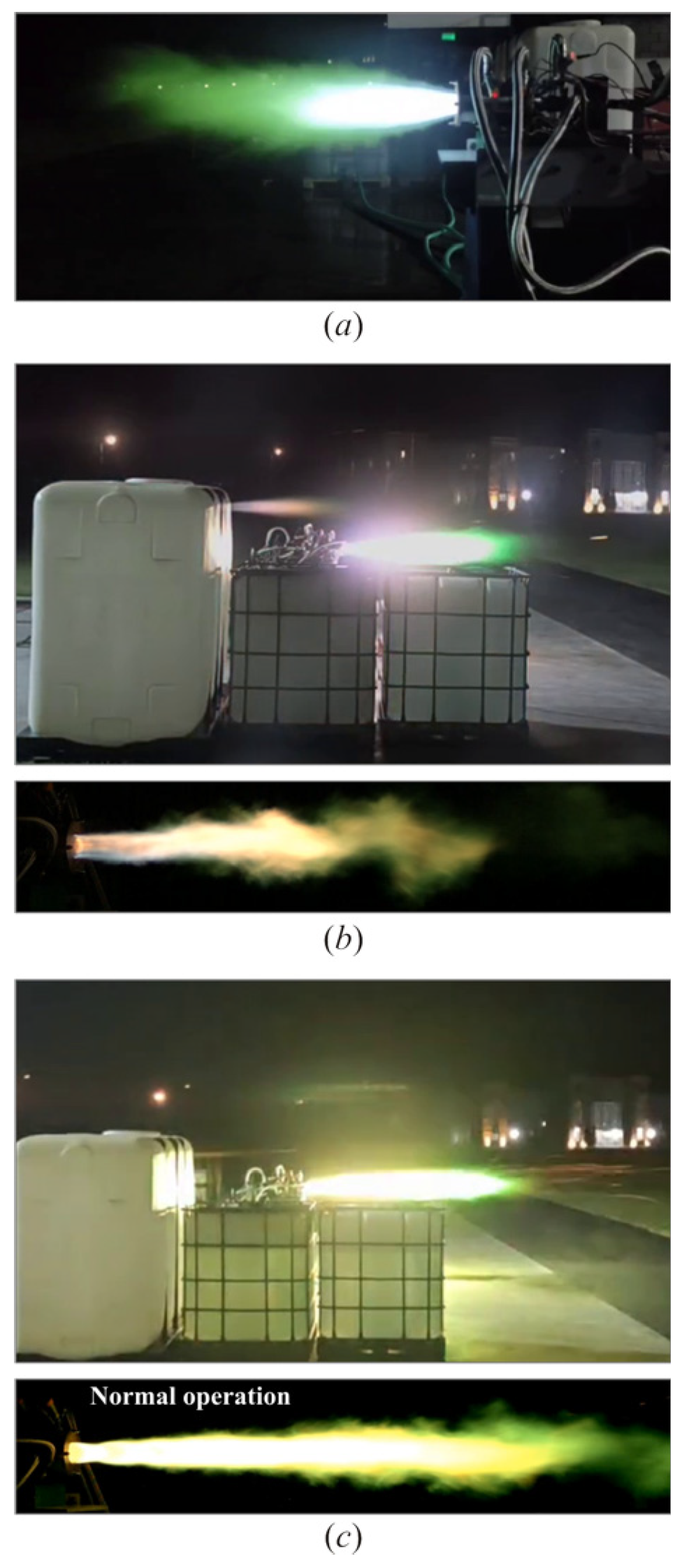
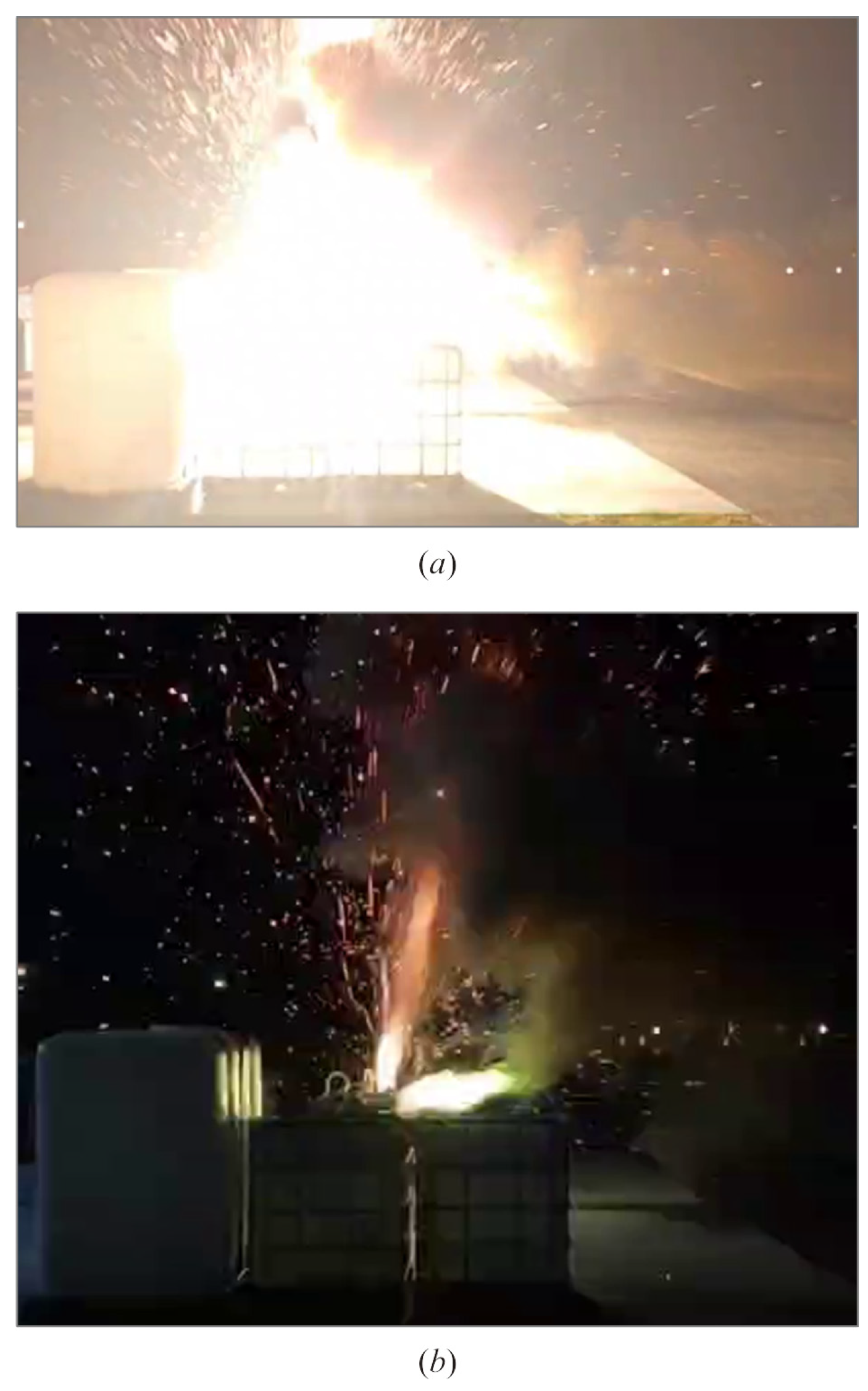
Figure 2 shows video frames of test fires 1, 2, and 3 during normal operation of the RDE (the video records are also provided as a Supplementary, see Videos S1–S3), and Figure 3 shows video frames of test fire 3 after CC wall burnout and emergency shutdown of the propellant supply. The metal hoses in the foreground of Figure 2a are elements of three circuits of the water cooling system. The plastic tanks in the foreground in Figure 2b,c are water tanks of the water cooling system. Burnout of the CC wall is accompanied by an external flash (brightly glowing area in Figure 3a) and the dispersion of burning particles of the CC structural materials (tracks in Figure 3a,b). The results of the defect detection of the RDE model after test fire 3 are presented in Appendix A. After each test fire the RDE interior was visually checked and no changes on the surface were detected except for test fire 3 with RDE burnout.
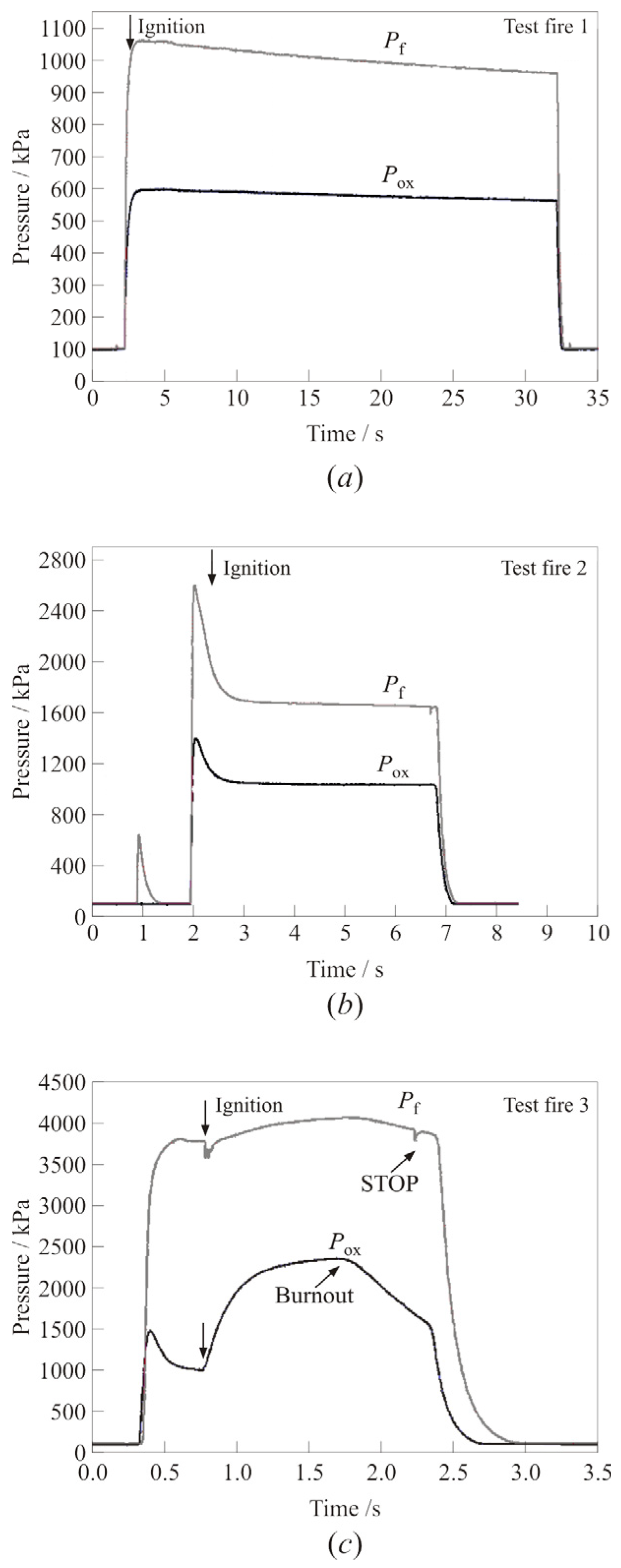
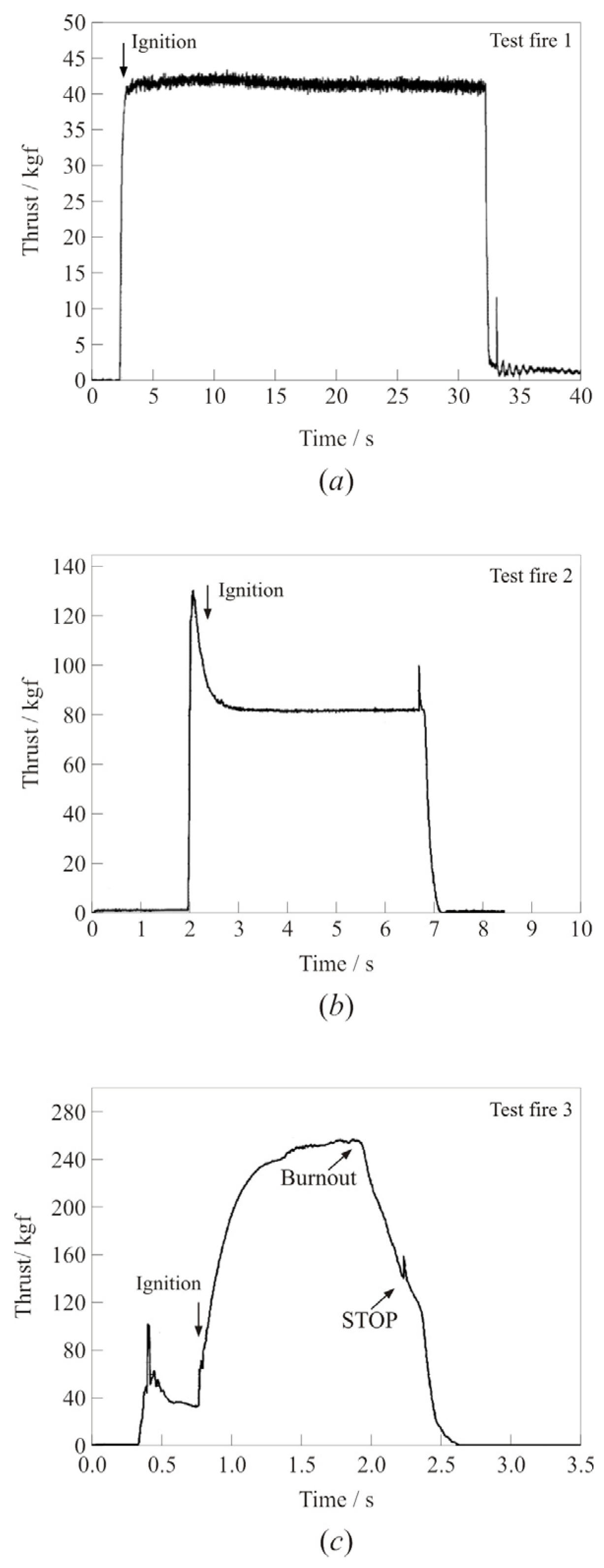
Figure 4 shows the measured dependencies of the static pressure in the oxidizer plenum P o x and in the fuel plenum P f in test fires 1, 2, and 3. In test fire 1, the pressure in the plenums rises from the initial (atmospheric) to the nominal values within a short time of approximately 500 ms. This starting time period is followed by the working period with a small (less than 10%) monotonic decrease in the nominal pressures P o x and P f , caused by the pressure drop in the ramps. The values of P o x and P f in test fire 1 were approximately 600 and 1060 kPa, respectively. Closing the fuel supply valves approximately 30 s after the start leads to a sharp decrease in P o x and P f to the initial values. Unlike test fire 1, test fire 2 exhibited initial surges in oxygen and methane supply pressures of approximately 35% and 55% of their nominal values, respectively, followed by a decrease to the nominal values within 1 s. This was due to a design change in the flow orifice unit and an increase in the volume of the lines between the flow control nozzles and the shut-off valves. The values of P o x and P f in test fire 2 were approximately 1040 and 1670 kPa, respectively, and the average pressure in the CC was 950 kPa. Closing the fuel supply valves approximately 5 s after the beginning of the test fire results in a sharp decrease in P o x and P f to their initial values. In test fire 3, approximately 1 s after ignition, when oxygen and methane supply pressures reached 2340 and 4050 kPa, respectively, and the pressure in the CC reached 2150 kPa, a burnout of the CC outer wall occurred, destroying the cooling circuit shell. In addition, the control system issued a signal for emergency shut off the supply of propellant components to the CC. Figure 5 shows the records of the load cell in test fires 1, 2, and 3. The thrust curves in Figure 5 for all test fires are largely similar to the pressure curves in the oxidizer plenum shown in Figure 4, with the exception of positive thrust surges accompanying the shutdown of propellant supply to the CC, caused by a change in the fuel mixture composition. The measured combustor thrust was 41 kgf (402 N) in test fire 1, 82 kgf (804 N) in test fire 2, and 240 kgf (2550 N) in test fire 3 (before the CC outer wall burned through).
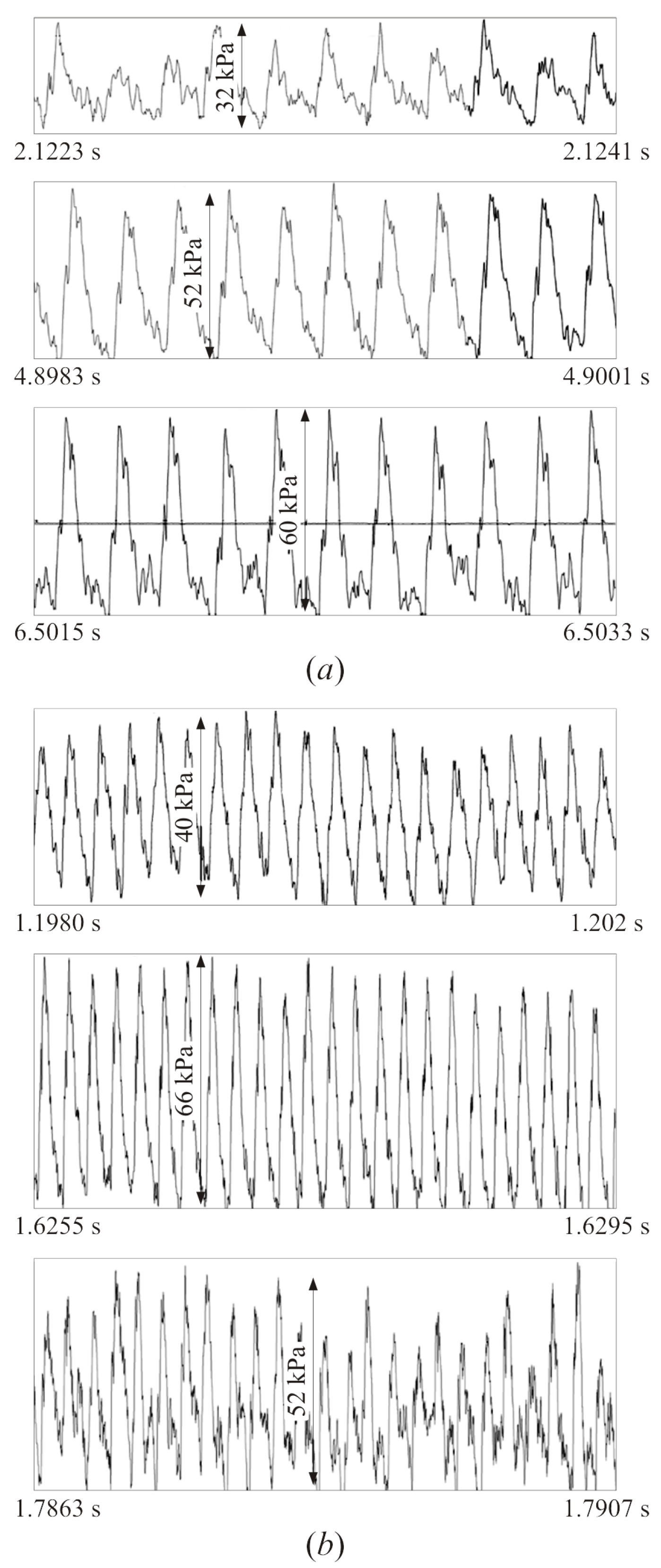
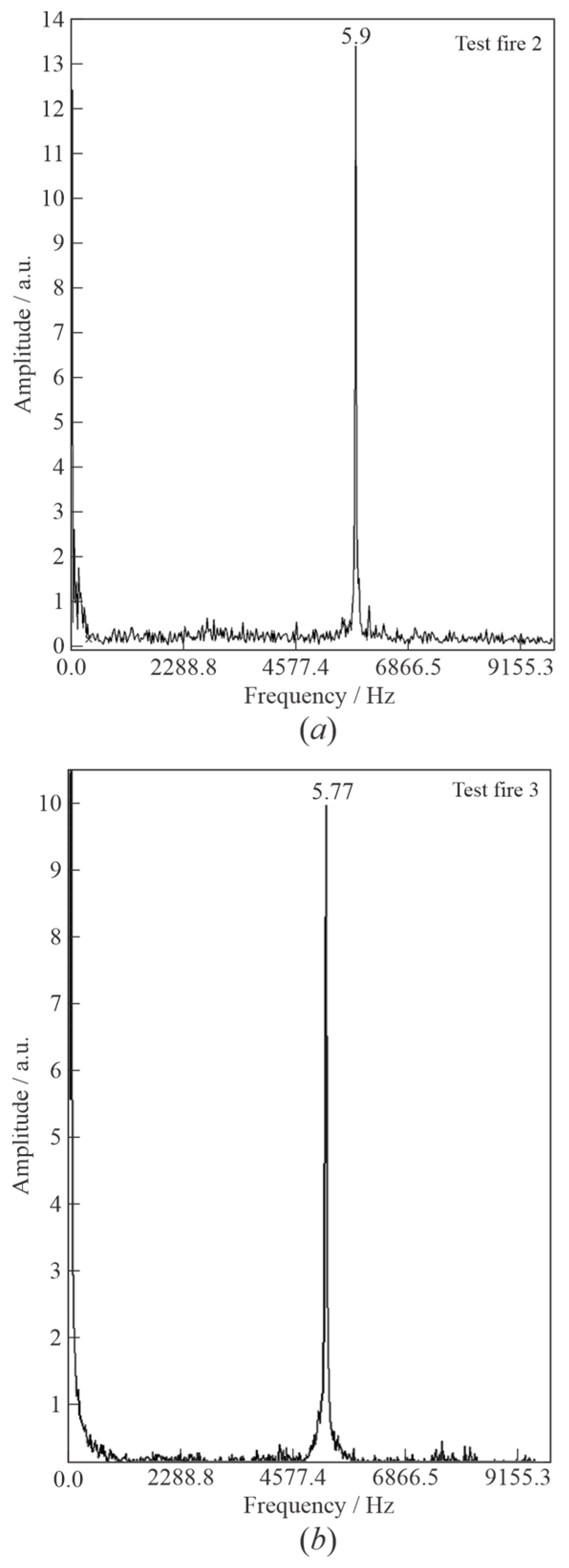
Figure 6 shows the records of the pressure pulsation sensor in the CC in test fires 2 and 3 (pressure pulsations were not recorded in test fire 1). For greater clarity, each figure shows only short fragments of the record at the beginning, in the middle, and at the end of the test fires. Regarding their shape and amplitude, the signals under consideration correspond to the characteristic pressure signal measured by a remote pressure pulsation sensor [29]. The amplitude of the signals at the beginning of the test fire is somewhat lower than the amplitude in the middle of the test fire due to the lower pressure in the CC and, accordingly, the lower pressure amplitude in the exhaust gas. At the beginning of the test fire, some unevenness of the pressure signals is observed, which indicates an unsteady operation process in the CC. Unstable pressure signals are also observed during a burnout of the CC. The fragment of the record shown at the bottom of Figure 6b corresponds to the instant of the CC outer wall burnout. It is evident that the signal has a pronounced unevenness in amplitude. Secondary pressure peaks are also observed between the main signals, which may be associated with parasitic ignition of the mixture in overheated areas of the CC wall. The steadiness of the continuous detonation operation process in the CC is confirmed by the spectral Fourier analysis of pressure pulsation sensor records (Figure 7). The characteristic frequencies of the operation process in test fires 2 and 3 (before the CC outer wall burnout) were 5.9 and 5.77 kHz, respectively, corresponding to a mode with a single detonation wave ( n   =   1 ) circulating in the CC annular gap at a velocity of 1800–1850 m/s.
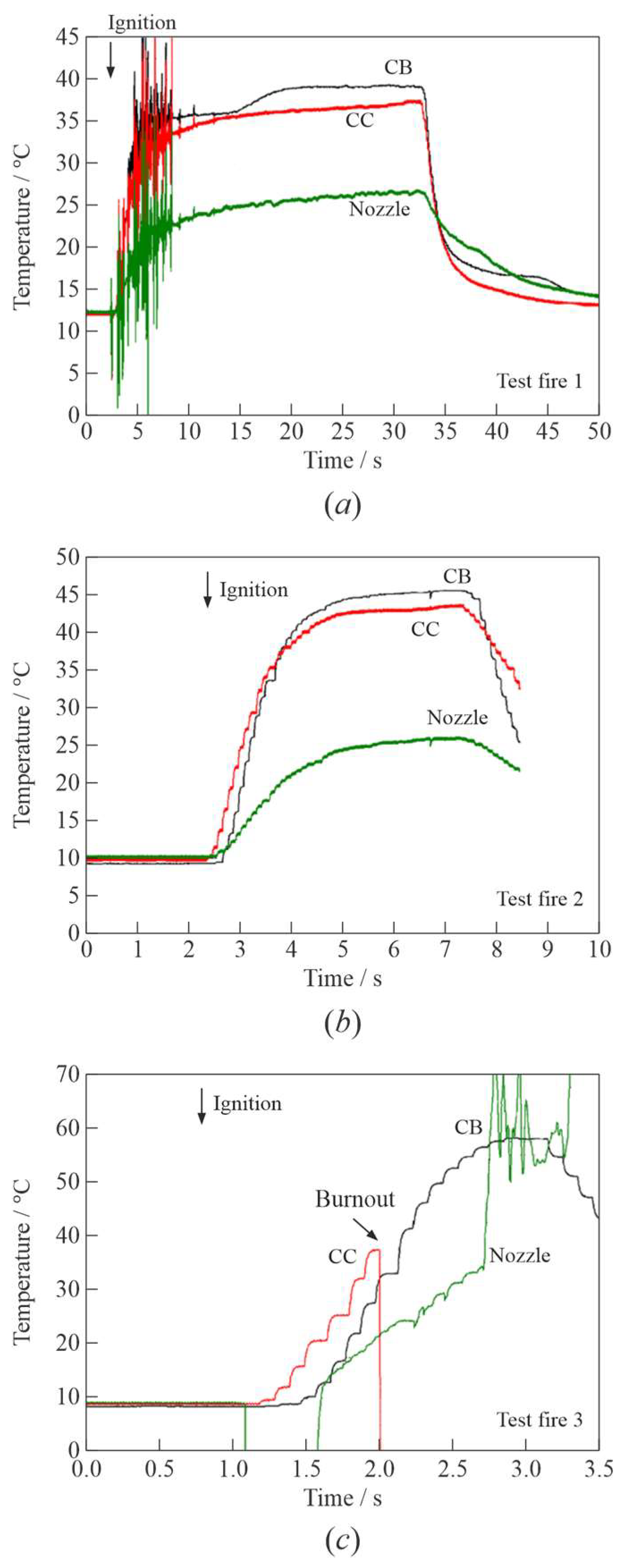
The thermal state of the CC walls is assessed based on the measured temperature difference between the inlet and outlet of the water cooling circuits. The water temperature at the inlet to the CC is determined at the beginning of the test fires. The water flow rate is determined by the pump outlet pressure and its flow rate characteristics. Figure 8 shows thermocouple readings for the water temperature at the outlet of the water cooling circuits in test fires 1, 2, and 3. The following observations are noteworthy. First, in all test fires, the maximum heat fluxes are recorded in the water cooling circuits of the CB and the CC outer wall, while the amount of heat removed from the nozzle is minimal in all test fires. Because the cooled area of the CC outer wall is significantly smaller than the cooled area of the CB, the specific heat fluxes are maximal on the CC outer wall. Second, heat losses in the water cooling system increase with the average pressure in the CC. Thus, in test fire 1, the temperature in the water cooling circuits reaches 27–39 °C and remains at a virtually constant level (the water heating rate is less than 0.1 °C/s). In test fire 2, the temperature in the water cooling circuits reaches 26–46 °C and also remains at a virtually constant level (the water heating rate is less than 0.5 °C/s). As for test fire 3, by the time the outer wall of the CC burns through, the water temperature in the water cooling circuits reaches 22–37 °C during operation and over 55 °C after the CC outer wall burns through. However, the water heating rate is significantly higher than in test fires 1 and 2 at approximately 40 °C/s.
Table 3 presents the main data on the measured parameters of the water cooling system and the thermal state of the CC in test fires 1, 2, and 3. It shows the water flow rates G w in all three water cooling circuits, water temperature at the inlet to the water cooling circuit T i n , the measured value of water heating at the outlet of the water cooling circuit T = T o u t T i n , the water heating power, the average heat fluxes into the water cooling circuits, the total thermal power of all cooling circuits Q L , the thermal power of the CC Q C C , and the relative heat loss due to cooling q L . The data in Table 3 show that the difference in heat loss due to cooling between test fires 1 and 2 is small. In test fire 2, the total thermal power in the nozzle water cooling circuit decreased slightly, which was associated with the flow in the CC nozzle reaching the supersonic regime. In test fire 3, heat fluxes into the CC walls exceeded 20 MW/m2, which is generally consistent with the literature data and the results of three-dimensional gas dynamic calculations [6]. The total heat loss into the CC walls during their cooling with water amount to approximately 10% of the total thermal power of the CC. The higher relative heat losses in test fire 1 are explained by the off-design subsonic flow regime in the supersonic combustor nozzle.
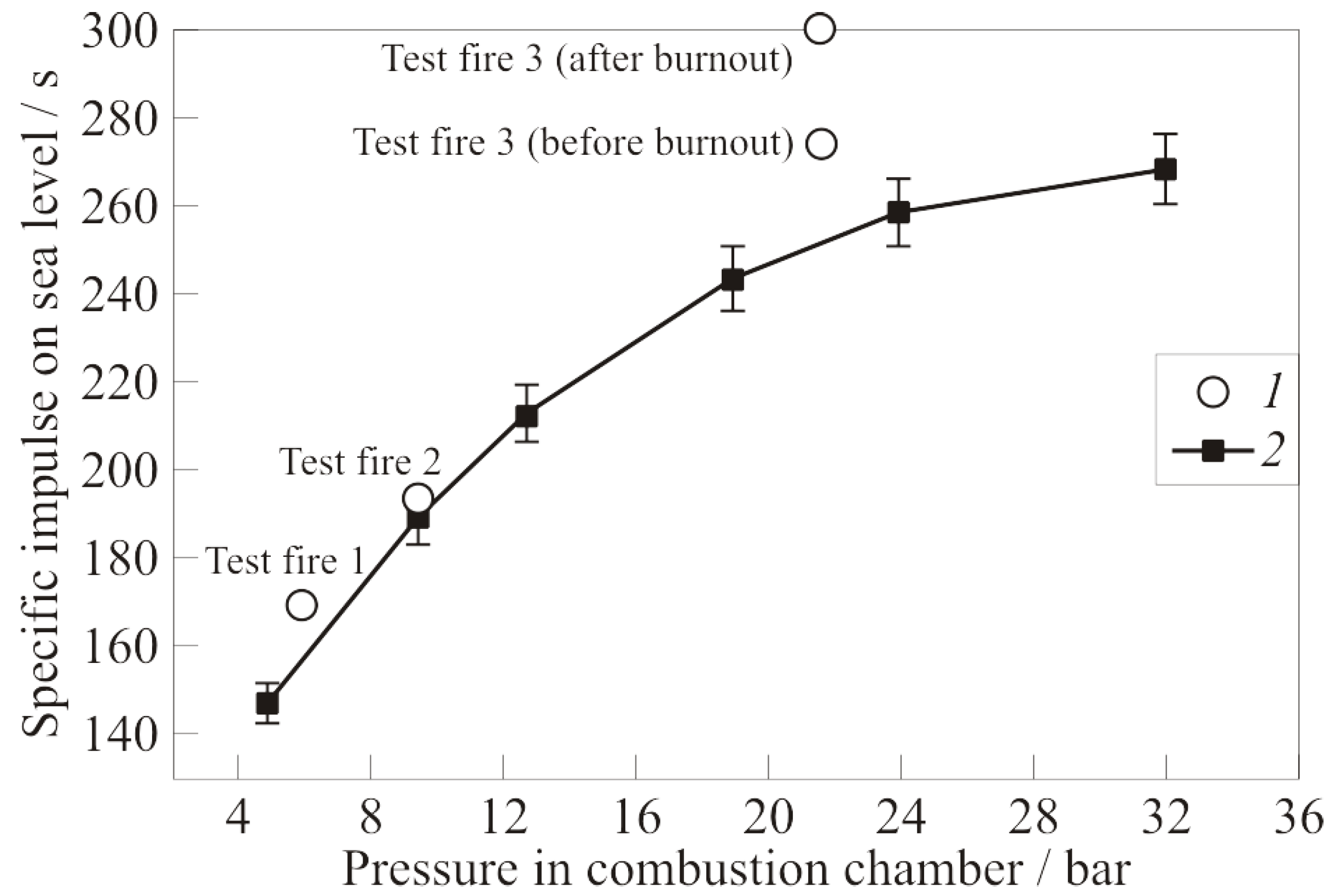
In Figure 9, a comparison is made between the data on the specific impulse I s p obtained in this work and the data obtained in [8] on the CC of the initial configuration. In general, it is clear that for test fires 1 and 2, the values are close to the values obtained in [8]. The higher value of I s p in test fire 1 may be associated with a significantly longer start-up duration and the transition of the CC thermal state to a steady-state mode with a higher wall temperature compared to the results obtained in [8] in test fires with a relatively cold CC lasting for about 1 s. The high value of I s p obtained in test fire 3 (300 s, see Table 2) requires additional confirmation, since during burnout of the CC outer wall, additional masses of water and hot metal could enter the CC and cause an increase in thrust. However, even before the burnout, the thrust of the CC exceeded 2350 N, which corresponded to the specific impulse 11% higher ( 277 s) than the specific impulse of 250 s obtained in [8] at the same average pressure in the combustor ( P C C 2.15 MPa) and 2.6% higher than the maximum specific impulse of 270 s obtained in [8] at P C C 3.2 MPa. These results are explained by the re-profiling of the subsonic and supersonic parts of the nozzle in the modified RDE. Comparison of I s p and P C C values obtained for the modified RDE with those relevant to the RD 107-A engine operating on deflagrative combustion of a kerosene–oxygen propellant ( I s p = 263 s and P C C = 6.1 MPa [18]) shows that the modified RDE produced a 5% higher specific impulse at sea level with about one-third of the combustor pressure in the RD 107-A engine.

4. Conclusions

Thus, we have conducted test fires of a modified RDE operating on methane and oxygen. Compared to the original RDE used in [8], this RDE was modified in terms of changing the cooling scheme of the combustor walls and the ports for sensors and re-profiling the supersonic section of the combustor nozzle. The main practical implication of this study is that the adopted design of the methane–oxygen RDE allows maintaining a single rotating detonation wave in the combustion chamber irrespective of the propellant mass flow rate or operation pressure. In fact, the results of the test fires showed that, over the entire studied range of flow rates of propellant components, the combustor operated with a single detonation wave continuously rotating in the annular gap with a frequency of about 6 kHz, which corresponded to a rotation speed of the detonation wave of D   1900 m/s. This distinguishes the RDE under consideration from the known analogues, in which an increase in the flow rate of propellant components and, accordingly, the average pressure in the combustor leads to the degeneration of detonative combustion into deflagrative combustion due to an increase in the number of detonation waves simultaneously rotating in the annular gap.
Compared to the original RDE, the maximum operation time was increased from 1 to 30 s, and the sea-level specific impulse was increased from 250 to 277 s at the same average pressure in the combustor ( 2.15 MPa). Thermal state estimates for all heat-stressed structural elements of the RDE were obtained. Specifically, for all test fires, maximum heat fluxes were detected in the water cooling circuits of the central body and outer wall of the combustor, and heat losses into the water cooling system increased with the average pressure in the combustor. The maximum value of the average heat flux (above 20 MW/m2) was achieved at the combustor outer wall. The average heat flux into the combustor outer wall was approximately 20% higher than into the central body. The average heat flux into the nozzle was several times lower than similar values for the outer wall and central body of the combustor. Total heat losses into the combustor walls, when cooled by water, amounted to approximately 10% of the total thermal power of the combustor irrespective to the combustor thermal power.
The future work will be focused on the modification of the combustion chamber cooling jacket to ensure long-term RDE operation at higher pressures.

Supplementary Materials

The following supporting information can be downloaded at: https://www.mdpi.com/article/10.3390/aerospace13010030/s1, Video S1: High-speed video record of Test fire 1 (full 30 s of test), Video S2: High-speed video record of Test fire 2 (full 5 s of test), Video S3: High-speed video record of Test fire 3 (first 1.2 s of normal operation of the RDE).

Author Contributions

Conceptualization, S.M.F. and V.S.I.; methodology, S.M.F. and V.S.I.; formal analysis, V.S.I. and I.O.S.; investigation, V.S.I., Y.V.K. and I.O.S.; resources, Y.V.K. and I.O.S.; data curation, V.S.I. and I.O.S.; writing—original draft preparation, S.M.F. and V.S.I.; writing—review and editing, S.M.F.; visualization, Y.V.K. and I.O.S.; supervision, S.M.F.; project administration, S.M.F.; funding acquisition, S.M.F. All authors have read and agreed to the published version of the manuscript.

Funding

This research received no external funding.

Data Availability Statement

The data will be available on the reasonable request.

Conflicts of Interest

Author Y.V.K. was employed by the company Transport of the Future Ltd. Other authors declare no conflicts of interest.

Appendix A. Combustor Inspection Results After Test Fire 3
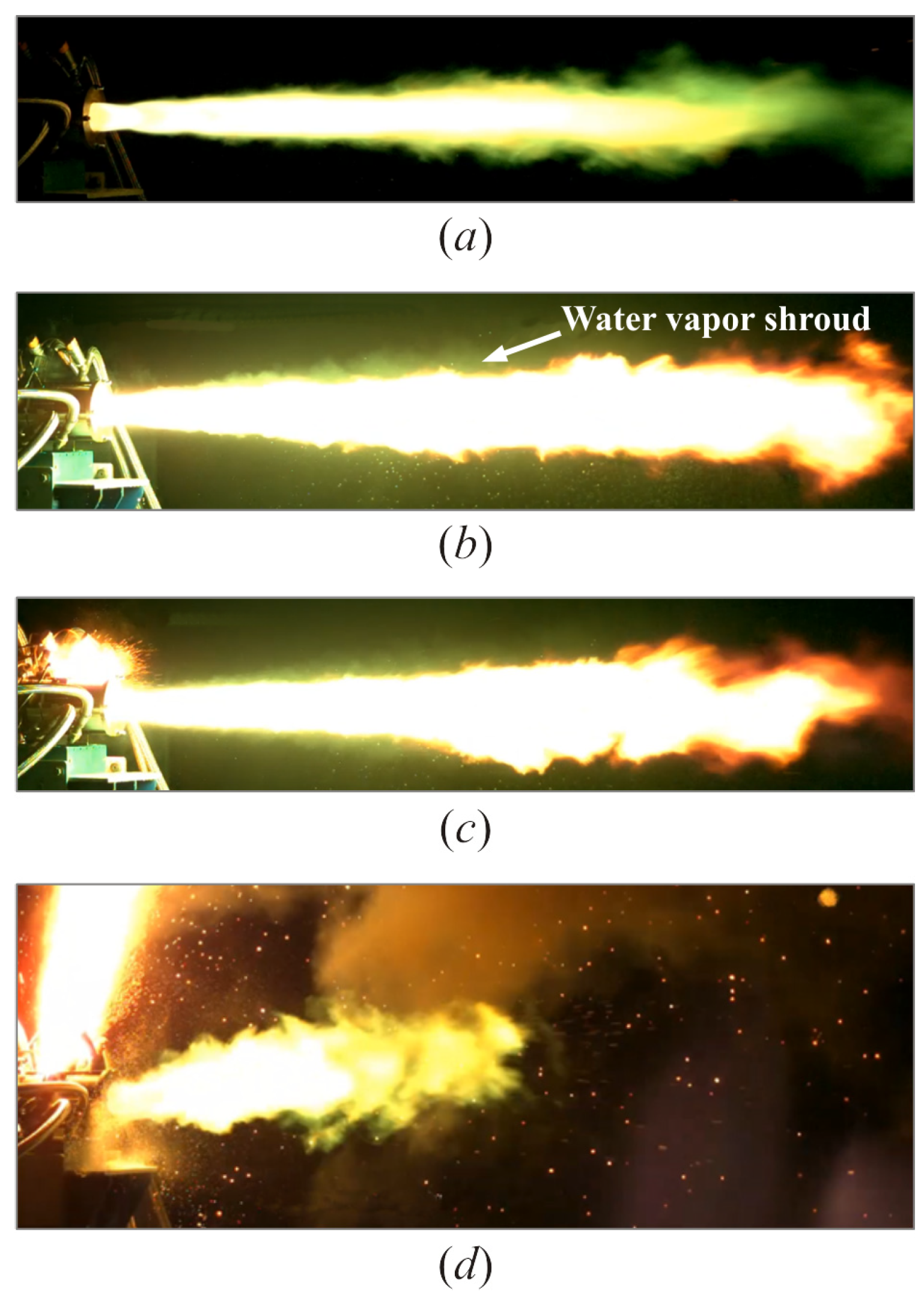
After test fire 3 with a CC burnout, an inspection was conducted. The burnout occurred along the CC outer wall. Video recording of CC operation (Figure A1) shows that the CC wall burnout occurs in approximately 850 ms after startup. The greenish color of the exhaust plume in Figure A1a could be attributed to some oxidation reaction of copper. The burnout instant was determined by the appearance of a water vapor shroud in the exhaust plume (see Figure A1b). The burnout of the water cooling circuit occurred 1 s after the start (Figure A1c).
Figure A1. Video frames of test fire 3: (a) normal operation; (b) burnout of the firewall with water entering the CC and formation of water vapor shroud; (c) burnout of the water cooling circuit of the CC outer wall; (d) shutdown of test fire.
Aerospace 13 00030 g0a1
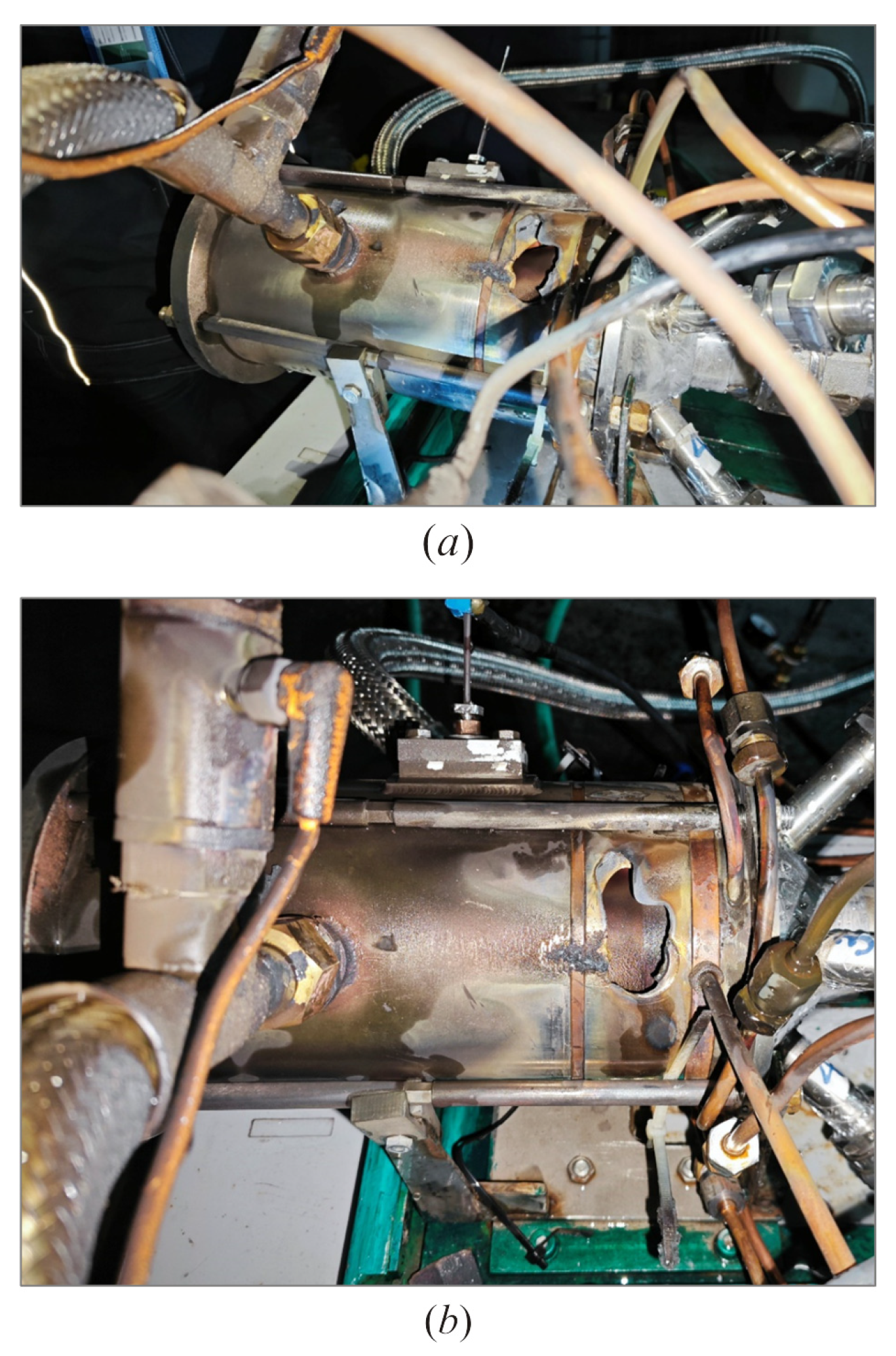
Figure A2 shows photographs of the RDE immediately after the completion of the emergency test fire 3. The CC burnout begins approximately 10–15 mm downstream of the methane feed orifice belt and measures approximately 30 × 50 mm near the water outlet manifold. This section, which corresponds to the height of the CC, is the most heat-stressed area of the CC. The water outlet manifold of the CC outer wall water cooling circuit burned out completely and is not visible in the photographs.
Figure A2. Photographs of the destruction of the CC after emergency test fire 3: (a) top view; (b) side view.
Aerospace 13 00030 g0a2
Disassembly of the CC confirmed that the failure occurred due to a burnout of the CC outer wall near the water outlet manifold from the water cooling system. The most likely burnout scenario is boiling of water near the water outlet manifold due to overheating and a drop in water pressure in the water cooling circuit (a decrease in boiling point) leading to choking of the water outlet by steam. No erosion of the gas sampling hole for the pressure pulsation sensor was detected. The oxygen and methane supply manifolds are intact. The ignition electrode input unit is intact. The central body of the CC is intact, although it has a metal deposit, apparently caused by a burnout of the CC outer wall. The tarnish color on the central body indicates the detonation wave rotation zone.

References

  1. Klepikov, I.; Katorgin, B.; Chvanov, V. The new generation of rocket engines, operating by ecologically safe propellant “liquid oxygen and liquefied natural gas(methane)”. Acta Astronaut. 1997, 41, 209–217. [Google Scholar] [CrossRef]
  2. Haeseler, D.; Goetz, A.; Mäding, C.; Roubinski, V.; Khrissanfov, S.; Berejnoy, V. Testing of LOX-Hydrocarbon Thrust Chambers For Future Reusable Launch Vehicles. In Proceedings of the 38th AIAA/ASME/SAE/ASEE Joint Propulsion Conference & Exhibit, Indianapolis, Indiana, 7–10 July 2002. AIAA Paper 2002-38454. [Google Scholar]
  3. Zel’dovich, Y.B. To the Question of Energy Use of Detonation Combustion. J. Technol. Phys. 1940, 10, 1453–1458. [Google Scholar] [CrossRef]
  4. Heiser, W.H.; Pratt, D.T. Thermodynamic cycle analysis of pulse detonation engines. J. Propuls. Power 2002, 18, 68–76. [Google Scholar] [CrossRef]
  5. Lu, F.K.; Braun, E.M. Rotating detonation wave propulsion: Experimental challenges, modeling, and engine concepts. J. Propuls. Power 2014, 30, 1125–1142. [Google Scholar] [CrossRef]
  6. Heister, S.D.; Smallwood, J.; Harroun, A.; Dille, K.; Martinez, A.; Ballintyn, N. Rotating Detonation Combustion for Advanced Liquid Propellant Space Engines. Aerospace 2022, 9, 581. [Google Scholar] [CrossRef]
  7. Stechmann, D.; Lim, D.; Heister, S.D. Experimental study of a high pressure rotating detonation wave combustor for rocket applications. In Proceedings of the 6th EUCASS, Krakow, Poland, 29 June–3 July 2015. EUCASS Paper 372. [Google Scholar]
  8. Frolov, S.M.; Aksenov, V.S.; Ivanov, V.S.; Medvedev, S.N.; Shamshin, I.O.; Yakovlev, N.N.; Kostenko, I.I. Rocket engine with continuous detonation combustion of the natural gas–oxygen propellant system. Dokl. Phys. Chem. 2018, 478, 31–34. [Google Scholar] [CrossRef]
  9. Bykovsky, F.A.; Zhdan, S.A. Continuous Spin Detonation; SB RAS Publs: Novosibirsk, Russia, 2013; 423p. [Google Scholar]
  10. Paxson, D.E.; Perkins, H.D. A simple model for rotating detonation rocket engine sizing and performance estimates. In Proceedings of the AIAA Scitech 2021 Forum, Virtual Event, 11–15+19–21 January 2021. [Google Scholar]
  11. Tchvanov, V.K.; Frolov, S.M.; Sternin, E.L. Liquid detonation rocket engine. In Proceedings of the NPO Energomash, Moscow Region, Russia, 17 August 2012; Volume 29, pp. 4–14. [Google Scholar]
  12. Anand, V.; Gutmark, E. Rotating detonation combustors and their similarities to rocket instabilities. Prog. Energy Combust. Sci. 2019, 73, 182–234. [Google Scholar] [CrossRef]
  13. Teasley, T. NASA’s Rotating Detonation Rocket Engine Development. Available online: https://ntrs.nasa.gov/api/citations/20250000643/downloads/NASAs%20RDRE%20Dev%20AAS%20Teasley%20Final.pdf (accessed on 17 November 2025).
  14. Methane-Powered Rocket to Come Twice as Cheap as Soyuz-2 Carrier—Developers. Available online: https://tass.com/science/1109553 (accessed on 17 November 2025).
  15. Frolov, S.; Aksenov, V.; Ivanov, V. Experimental proof of Zel’dovich cycle efficiency gain over cycle with constant pressure combustion for hydrogen–oxygen fuel mixture. Int. J. Hydrogen Energy 2015, 40, 6970–6975. [Google Scholar] [CrossRef]
  16. Kindracki, J.; Wolański, P.; Gut, Z. Experimental research on the rotating detonation in gaseous fuels–oxygen mixtures. Shock Waves 2011, 21, 75–84. [Google Scholar] [CrossRef]
  17. Ivanov, V.S.; Aksyonov, V.S.; Frolov, S.M.; Shamshin, I.O. Experimental studies of a stand sample of rocket engine with continuous-detonation combustion of natural gas–oxygen mixture. Goren. Vzryv 2016, 9, 51–64. [Google Scholar]
  18. RD-107A Engine. Available online: https://www.uecrus.com/products-and-services/products/raketnye-dvigateli/dvigatel-rd-107a/ (accessed on 12 May 2025).
  19. Bennewitz, J.W.; Bigler, B.; Danczyk, S.; Hargus, W.A.; Smith, R.D. Performance of a rotating detonation rocket engine with various convergent nozzles. In Proceedings of the AIAA Propulsion and Energy 2019 Forum, Indianapolis, IN, USA, 19–22 August 2019; AIAA: Reston, VA, USA, 2019; pp. 2019–4299. [Google Scholar] [CrossRef]
  20. Smith, R.D.; Stanley, S.B. Experimental investigation of rotating detonation rocket engines for space propulsion. J. Propuls. Power 2021, 37, 463–473. [Google Scholar] [CrossRef]
  21. Goto, K.; Yokoo, R.; Kim, J.; Kawasaki, A.; Matsuoka, K.; Kasahara, J.; Matsuo, A.; Funaki, I.; Nakata, D.; Uchiumi, M.; et al. Experimental performance validation of a rotating detonation engine toward a flight demonstration. In Proceedings of the AIAA Scitech 2019 Forum, San Diego, CA, USA, 7–11 January 2019. [Google Scholar] [CrossRef]
  22. Goto, K.; Matsuoka, K.; Matsuyama, K.; Kawasaki, A.; Watanabe, H.; Itouyama, N.; Ishihara, K.; Buyakofu, V.; Noda, T.; Kasahara, J. Flight demonstration of detonation engine system using sounding rocket S-520-31: Performance of rotating detonation engine. In Proceedings of the AIAA SciTech 2022 Forum, San Diego, CA, USA, 3–7 January 2022; AIAA: Reston, VA, USA, 2022. [Google Scholar] [CrossRef]
  23. Zhang, Y.; Sheng, Z.; Rong, G.; Shen, D.; Wu, K.; Wang, J. Experimental research on the performance of hollow and annular rotating detonation engines with nozzles. Appl. Therm. Eng. 2023, 218, 119339. [Google Scholar] [CrossRef]
  24. Teasley, T.W.; Fedotowsky, T.M.; Gradl, P.R.; Austin, B.L.; Heister, S.D. Current state of NASA continuously rotating detonation cycle engine development. In Proceedings of the AIAA SciTech 2023 Forum, National Harbor, MD, USA, 23–27 January 2023; AIAA: Reston, VA, USA, 2023. [Google Scholar] [CrossRef]
  25. Mundt, T.; Knowlen, C.; Kurosaka, M. Scale effects on rotating detonation rocket engine operation. Appl. Energy Combust. Sci. 2024, 19, 100282. [Google Scholar] [CrossRef]
  26. Yun, M.-S.; Roh, T.-S.; Lee, H.J. Analysis of development trends for rotating detonation engines based on experimental studies. Aerospace 2024, 11, 570. [Google Scholar] [CrossRef]
  27. Frolov, S.M.; Smetanyuk, V.A.; Ivanov, V.S.; Basara, B. The influence of the method of supplying fuel components on the characteristics of a rotating detonation engine. Combust. Sci. Technol. 2021, 193, 511–538. [Google Scholar] [CrossRef]
  28. Frolov, S.M.; Aksenov, V.S.; Ivanov, V.S.; Medvedev, S.N.; Shamshin, I.O. Flow structure in rotating detonation engine with separate supply of fuel and oxidizer: Experiment and CFD. In Detonation Control for Propulsion: Pulse Detonation and Ro-tating Detonation Engines; Li, J.-M., Teo Boo Cheong Khoo, C.J., Wang, J.-P., Wang, C., Eds.; Springer International Publishing: Berlin/Heidelberg, Germany, 2018; pp. 39–59. [Google Scholar]
  29. Ivanov, V.S.; Frolov, S.M.; Sergeev, S.S.; Mironov, Y.M.; Novikov, A.E.; Schultz, I.I. Pressure measurements in detonation engines. Proc. Inst. Mech. Eng. Part G J. Aerosp. Eng. 2021, 235, 2113–2134. [Google Scholar] [CrossRef]
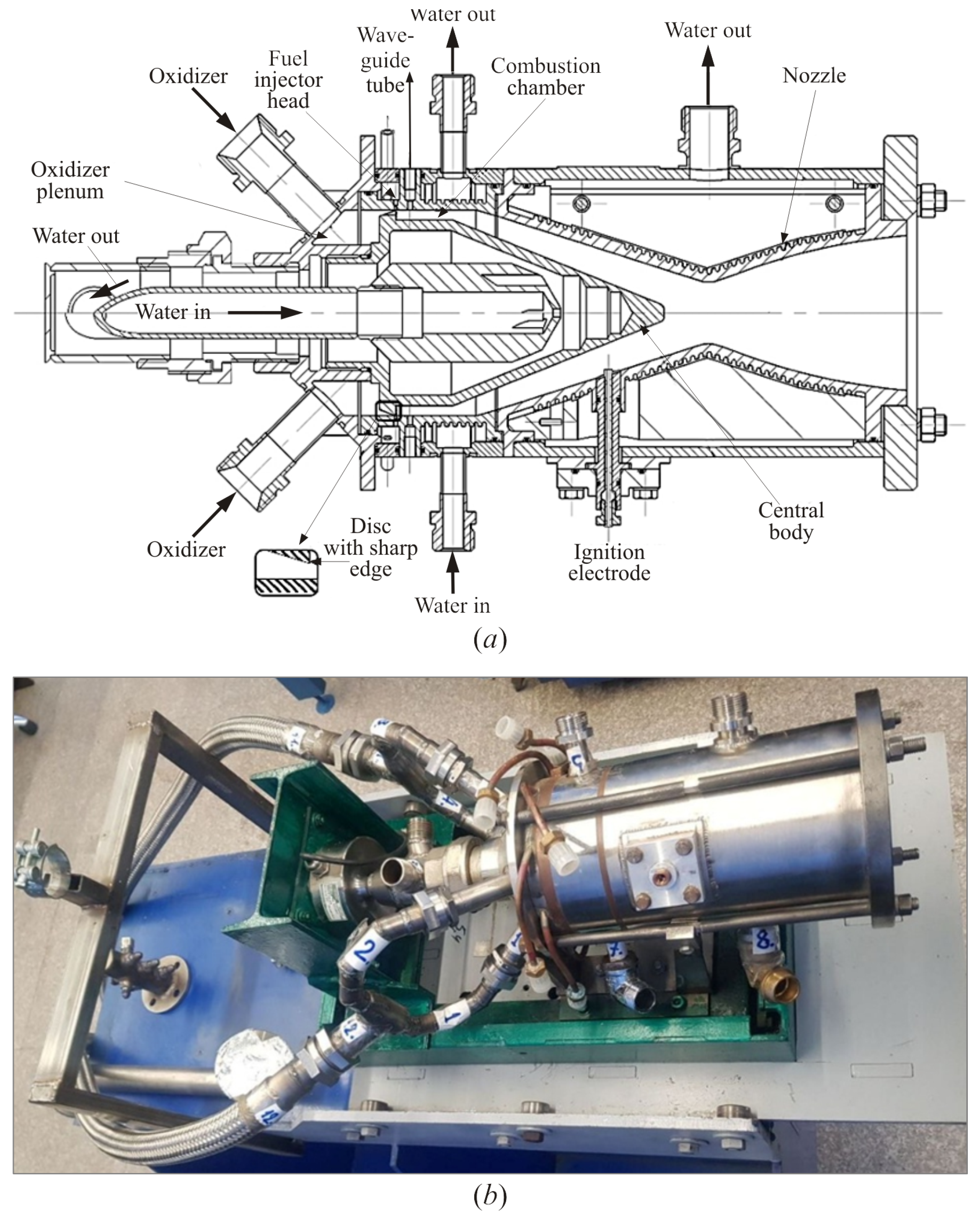
Figure 1. Schematic (a) and photograph (b) of a RDE.
Aerospace 13 00030 g001
Figure 2. Video frames of test fires 1 (a), 2 (b), and 3 (c) during normal operation of the RDE.
Aerospace 13 00030 g002
Figure 3. Video frames of test fire 3 at the moment of burnout of the CC outer wall (a) and after the emergency shutdown of the propellant supply (b).
Aerospace 13 00030 g003
Figure 4. Measured dependencies of oxygen and methane supply pressures in the RDE manifolds on time: (a) test fires 1, (b) 2, and (c) 3 (STOP corresponds to the emergency shutdown of the propellant supply to the CC).
Aerospace 13 00030 g004
Figure 5. Measured dependencies of the RDE thrust on time: (a) test fires 1, (b) 2, and (c) 3 (STOP corresponds to the emergency shutdown of the supply of propellants to the CC).
Aerospace 13 00030 g005
Figure 6. Fragments of pressure pulsation sensor records in the CC at the beginning (top), in the middle (center), and at the end (bottom) of a test fire: (a) test fire 2 and (b) test fire 3.
Aerospace 13 00030 g006
Figure 7. Spectral Fourier analysis of pressure pulsation sensor records: (a) test fire 2 and (b) test fire 3.
Aerospace 13 00030 g007
Figure 8. Measured dependencies of the water temperature at the outlet of the water cooling circuits of the central body (CB), the CC outer wall (CC), and the nozzle (Nozzle): (a) test fires 1, (b) 2, and (c) 3.
Aerospace 13 00030 g008
Figure 9. Dependencies of the sea-level specific impulse on the average pressure in the CC obtained in this work (1) and in [8] (2).
Aerospace 13 00030 g009
Table 1. List of measured parameters, sensors, and measuring ranges.
#ParameterSensorMeasuring RangeAccuracy
1Methane pressure, receiverKurant DA0–20 MPa0.5%
2Oxygen pressure, receiverKurant DA0–20 MPa0.5%
3Methane pressure, CC plenumKurant DA0–2.5 MPa0.5%
4Oxygen pressure, CC plenumKurant DA0–2.5 MPa0.5%
5Water temperature at exits of cooling jackets (3 pc.)IFM TM2405–50–150 °C0.5%
6ThrustTenso-M M50-0.50-C30–5000 N0.02%
7Pressure pulsations in CCPCB 113B240–6.9 MPa1%
Table 2. Main results obtained in representative test fires 1 to 3.
Test
Fire
t sG
kg/s
ФPox
kPa
Pf kPaPCC kPaf kHznD
m/s
F
N
Isp
s
q L
%
1300.2321.506001060550---40217716.1
250.4291.22104016709505.90118538041919.5
320.8671.172340405521505.7711812255030010.7
Table 3. Data on the thermal state of the CC walls.
Test FireGw
kg/s
T i n
°C
T = T o u t T i n °CWater Heating Power
kW
Average Heat Flux
MW/m2
Q L
kW
QCC
MW
q L %
CBCCNozzleCBCCNozzleCBCCNozzleCBCCNozzle
11.61.61.612.526.524.514.5178165977.610.82.74403.213.8
21.41.21.49.536.33415.8213171939.111.22.64785.09.5
3 *1.41.21.48.758.873.156.934636833314.824.19.2610479.810.7
* Calculations are based on the comparison of water heating rates in test fire 2; G w is the flow rate of water; T i n is the water temperature at the inlet of the cooling jacket; Q L is the total power of heat loss; Q C C is the thermal CC power; q L = Q L / Q C C is the relative heat loss.
Disclaimer/Publisher’s Note: The statements, opinions and data contained in all publications are solely those of the individual author(s) and contributor(s) and not of MDPI and/or the editor(s). MDPI and/or the editor(s) disclaim responsibility for any injury to people or property resulting from any ideas, methods, instructions or products referred to in the content.