Article

Hot Streak Migration and Exit Temperature Distribution in a Model Combustor Under Inlet Velocity Distortion Conditions

1
School of Power and Energy, Nanchang Hangkong University, Nanchang 330063, China
2
Beijing Power Machinery Institute, Beijing 100074, China
3
Engineering Research Center of Aero-Engine Technology for General Aviation, Ministry of Education, Nanchang 330063, China
4
Jiangxi Key Laboratory of Green General Aviation Power, Nanchang 330063, China
*
Author to whom correspondence should be addressed.
Aerospace 2026, 13(1), 20; https://doi.org/10.3390/aerospace13010020
Submission received: 4 October 2025 / Revised: 9 December 2025 / Accepted: 9 December 2025 / Published: 25 December 2025
(This article belongs to the Section Aeronautics)

Abstract

The non-uniformity of the inlet velocity profile (referred to as inlet distortion) in a gas turbine combustor critically influences the outlet temperature distribution, which is a key factor for the operational safety and durability of the turbine blades. To investigate the influence of inlet velocity distortion on the outlet temperature distribution factor (OTDF) and the hot streak evolution in a combustor, scaled-adaptive simulations (SAS) and experiments were conducted at an inlet temperature of 400 K, an inlet total pressure of 0.20 MPa, and a fuel–air ratio (FAR) of 0.018. RP-3 aviation kerosene was used as fuel for this investigation. The results show that in the primary zone, the heat release rate is quite low in the counter-current region, while it is very high in the co-current region. In the area downstream of the primary zone, intense heat release mainly takes place near the primary and dilution jets. The substantial penetration of the jets results in a relatively low FAR at the mid-height part of the liner, while the FAR is relatively high near the wall leading to the formation of hot streaks. Critically, experimental data demonstrate that the defined inlet distortions substantially increase the OTDF by 40 percentage points (from approximately 10% to 50%), highlighting a significant challenge for combustor design. This work provides validated insight into the linkage between inflow distortions and critical thermal loads, which is essential for developing more robust combustion systems.

1. Introduction

The combustor is one of the hot components of gas turbines, and its exit temperature distribution directly affects the performance and life of the turbine [1]. Combustors are typically designed assuming uniform inlet flow [2]. However, in real gas turbine operations, inlet flow distortion is inevitable due to factors such as air leakage between stages of the compressor, boundary layer, flow separation, wake flow of the guide vanes, and so on [1]. In the 1970s, Pratt & Whitney evaluated the flow uniformity of the compressor discharge airflow from J58 and F100/F401 aviation gas turbines [3,4]. Circumferential airflow deviations of up to 52% (from maximum to minimum) were found for the J58, and up to 40% for the F100/F401. These results demonstrate that compressor outlet flow distortion, i.e., combustor inlet flow distortion, is considerable. Inlet distortion alters the flow field structure within the combustor, affects flow splits and local equivalent ratio, and significantly impacts the temperature distribution at the combustor exit [5,6]. This, in turn, can lead to a highly non-uniform exit temperature profile, intensifying local hot streaks and elevating the OTDF, which poses a significant threat to turbine durability. Despite its critical impact, the specific pathways through which systematic inlet velocity distortions affect the combustion dynamics and final temperature distribution in complex annular combustors remain insufficiently characterized and are often overlooked during the design stage.
Existing research has established that inlet distortion significantly impacts combustor performance. Investigations on various combustor types, including short annular combustors and reverse-flow designs, consistently report that distortion can dramatically increase radial and circumferential temperature non-uniformity. For instance, circumferential distortion has been shown to increase OTDF by over 100% in some studies [7,8,9,10,11,12]. The work of Gur’yanova and Piralishvili [13] further highlights the intricate link between inlet velocity profiles, diffuser aerodynamics, and turbulence characteristics. Numerical studies employing detailed chemistry, such as the work by Kong [14], confirm that inlet non-uniformity alters flow field asymmetry, thereby affecting air–fuel mixing and combustion characteristics. Experimental results from researchers like Gu [15] and Yang [2] also demonstrate that the impact of distortion is highly dependent on its specific pattern (e.g., radial-inner peak vs. radial-outer peak) and the baseline temperature profile of the combustor.
However, a common limitation in the current literature is a frequent focus on reporting quantitative changes in OTDF/RTDF under specific distortion patterns, without always providing a comprehensive, mechanistic explanation of the underlying flow and combustion interactions. Furthermore, there is a need for studies that systematically isolate and analyze the propagation of defined inlet velocity distortions through the combustion process in a multi-sector configuration representative of real engines.
Building upon this foundation, the present study aims to bridge this gap by systematically investigating the effects of well-defined radial and circumferential inlet velocity distortions on the outlet temperature distribution and hot streak evolution in a three-dome model combustor. Unlike an idealized model, this configuration allows for the examination of interaction between adjacent flame zones, which is crucial for understanding inter-sector variability in real engines. Combining scale-adaptive simulation (SAS) with experimental validation, this work seeks to elucidate the causal relationship between inlet flow conditions, internal heat release distribution, and the formation of the exit temperature profile. The primary objective is to provide validated insights that can contribute to the design of more robust combustion systems capable of maintaining acceptable turbine inlet conditions under realistic, non-uniform inlet flow.

2. Materials and Methods

2.1. Model Combustor Configuration

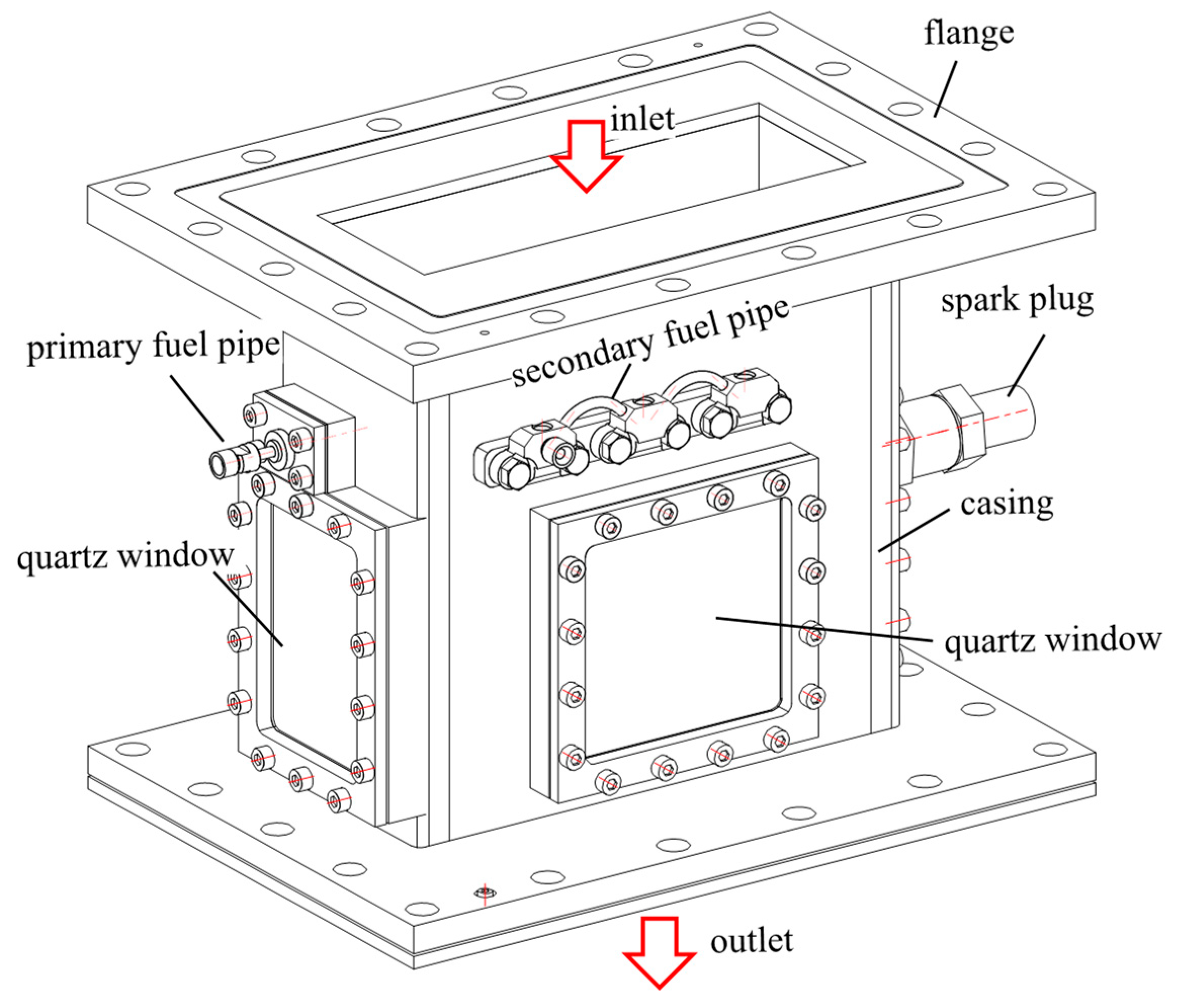
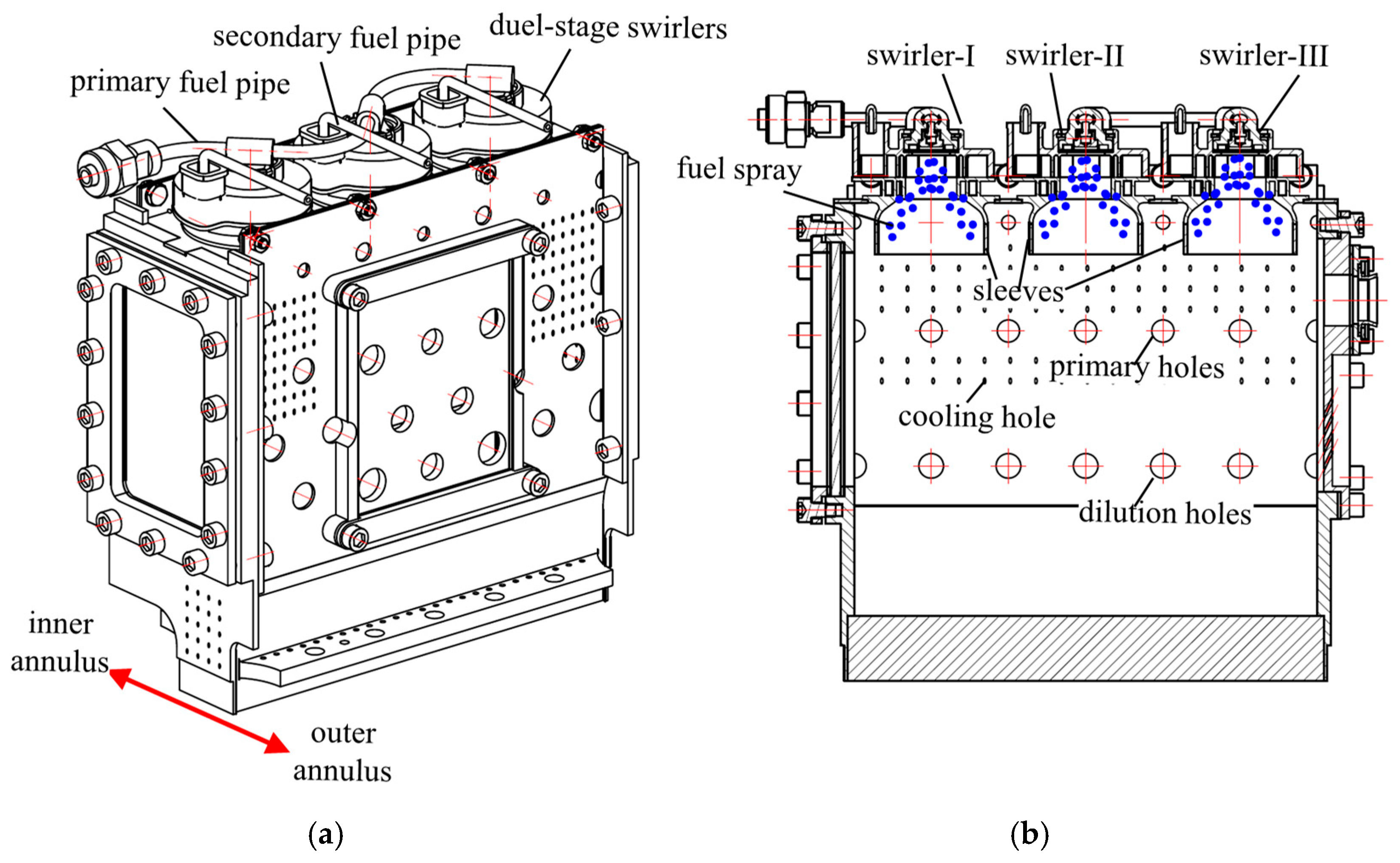
The triple-dome axial-flow combustor studied here is shown in Figure 1 and Figure 2. The model combustor primarily comprises a casing, a liner, three dual-stage swirlers, three primary fuel pressure-swirl atomizers, three plain orifice fuel injectors, and a spark plug. Quartz windows are installed on both the casing walls and liner walls, enabling direct observation of the flame within the liner. The liner wall features various holes, including primary holes, dilution holes, and cooling holes. However, a diffuser was not incorporated into the combustor design.

2.2. Numerical Simulation Description

2.2.1. Numerical Simulation Approach

The commercial software ANSYS FLUENT 2021R1 was employed for numerical simulations. The SAS (scale-adaptive simulation) model was used for turbulence modeling. The SAS is an improved URANS formulation, which allows the resolution of the turbulent spectrum in unstable flow conditions. The SAS concept is based on the introduction of the von Kármán length-scale into the turbulence scale equation. The information provided by the von Kármán length-scale allows SAS models to dynamically adjust to resolved structures in a URANS simulation, which results in an LES-like behavior in unsteady regions of the flow field. At the same time, the model provides standard RANS capabilities in stable flow regions.
The flamelet-generated manifold (FGM) was used for simulation of turbulent combustion. The FGM model assumes that the scalar evolution (that is the realized trajectories on the thermochemical manifold) in a turbulent flame can be approximated by the scalar evolution in a laminar flame [16]. The FGM model was used to numerically simulate the unsteady combustion process of the DLR combustor [17,18,19]. The results show that the FGM combustion model has a good accuracy in predicting reacting flow field and temperature distribution in the combustion chamber.
For chemical reaction mechanism, an RP-3 aviation kerosene skeleton mechanism [20], which is a three-component alternative fuel model, was applied in the numerical simulations. This alternative fuel contains 73.0% n-dodecane (s0C12H26), 14.7% 1,3,5-trimethylcyclohexane (s1C9H18), and 12.3% n-propyl benzene (PHC3H7). The mechanism consists of 44 species and 78 steps reaction. The validation data for this reaction mechanism can be found in the Appendix A.
Non-reacting and reacting flow in a gas turbine combustor [21,22,23] was numerically simulated using SAS-SST and FGM methods. The combustor was investigated experimentally at ITS (Institut für Thermische Strömungsmaschinen) of the University of Karlsruhe. Flame stabilization and mixing in the ITS combustor are achieved by means of the two coaxial inlets, see in Figure 11 in Reference [21]. Both inlet streams are swirling in the same direction, with the higher swirl for the axial inlet. The radial distributions of the statistically averaged axial and tangential velocity in the mixing zone were derived, see in Figure 12 and Figure 14 in Reference [21]. Comparison among experimental, SAS, and RANS data shows that superior accuracy of the SAS results relative to the URANS simulation confirms that SAS is a viable method for such a swirl combustor.

2.2.2. Boundary Conditions and Transient Setup

Time steps of 1 × 10⁻⁵ s were selected based on Courant–Friedrichs–Lewy (CFL) number analysis maintaining CFL < 1 throughout the domain. Statistical convergence was achieved after 15 flow-through times, with residual monitoring showing fluctuations within 0.5% of mean values for key variables. Boundary conditions are consistent with the experimental setup: mass-flow inlet (0.2 kg/s, 400 K), pressure outlet (ambient), no-slip walls with standard wall functions.

2.2.3. Mesh Setup

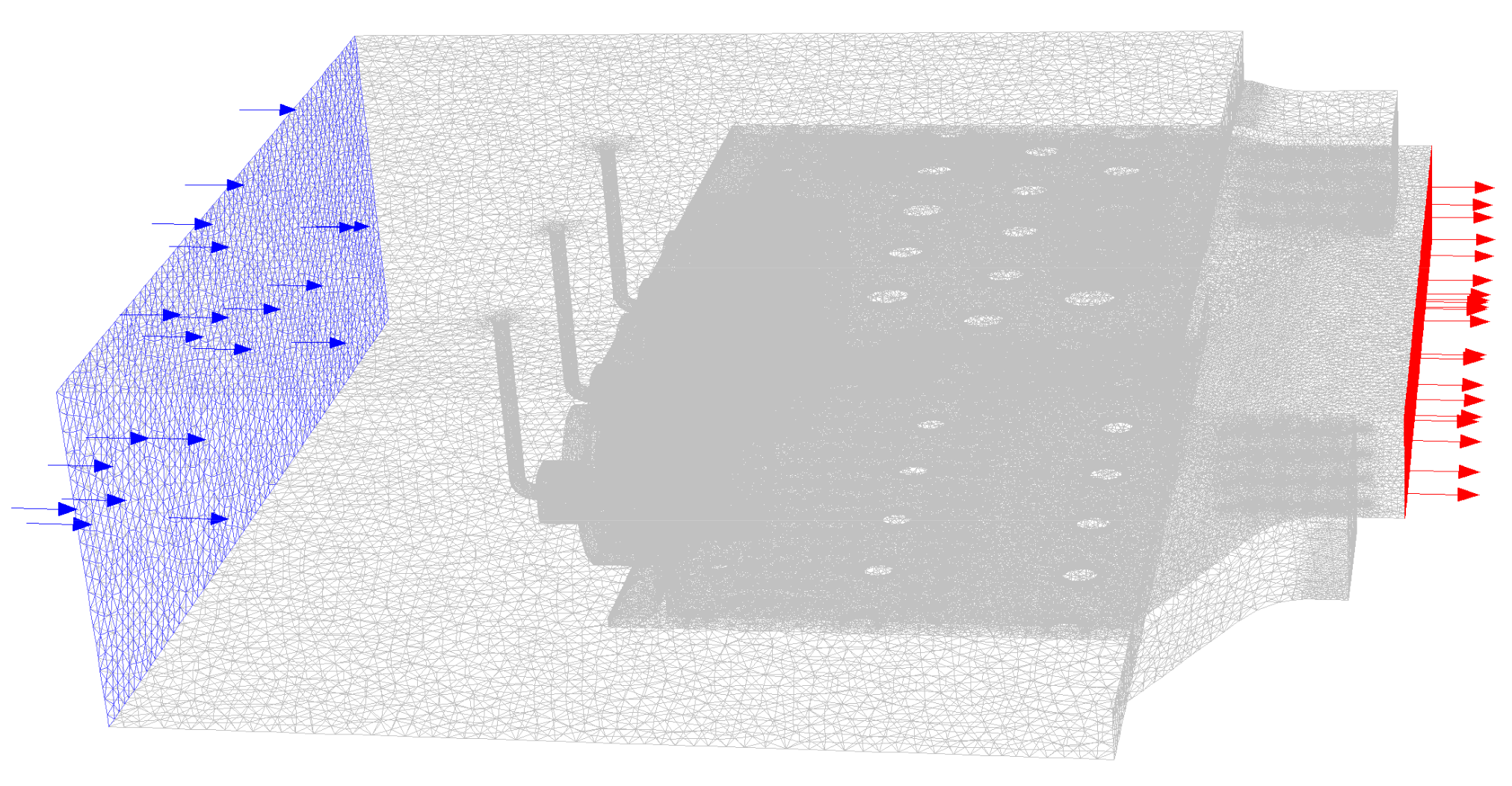
Commercial software ANSYS ICEM 2021R1 was used to generate the grid of the combustor. An unstructured tetrahedral mesh with local refinement was used, as illustrated in Figure 3. Small-scale components such as swirlers and cooling holes were locally refined to resolve geometric details. The total number of grid cells is 17.89 million.

2.3. Experiment Methods

2.3.1. Distortion Generator

To quantify the degree of inlet velocity distortion, a new variable is defined as the relative difference between the maximum axial velocity and the mean axial velocity at the combustor inlet, normalized by the mean axial velocity, i.e.,
D = v a , max v ¯ a v ¯ a
where v a , max is the maximum axial velocity at the combustor inlet, and v ¯ a is the mean axial velocity.
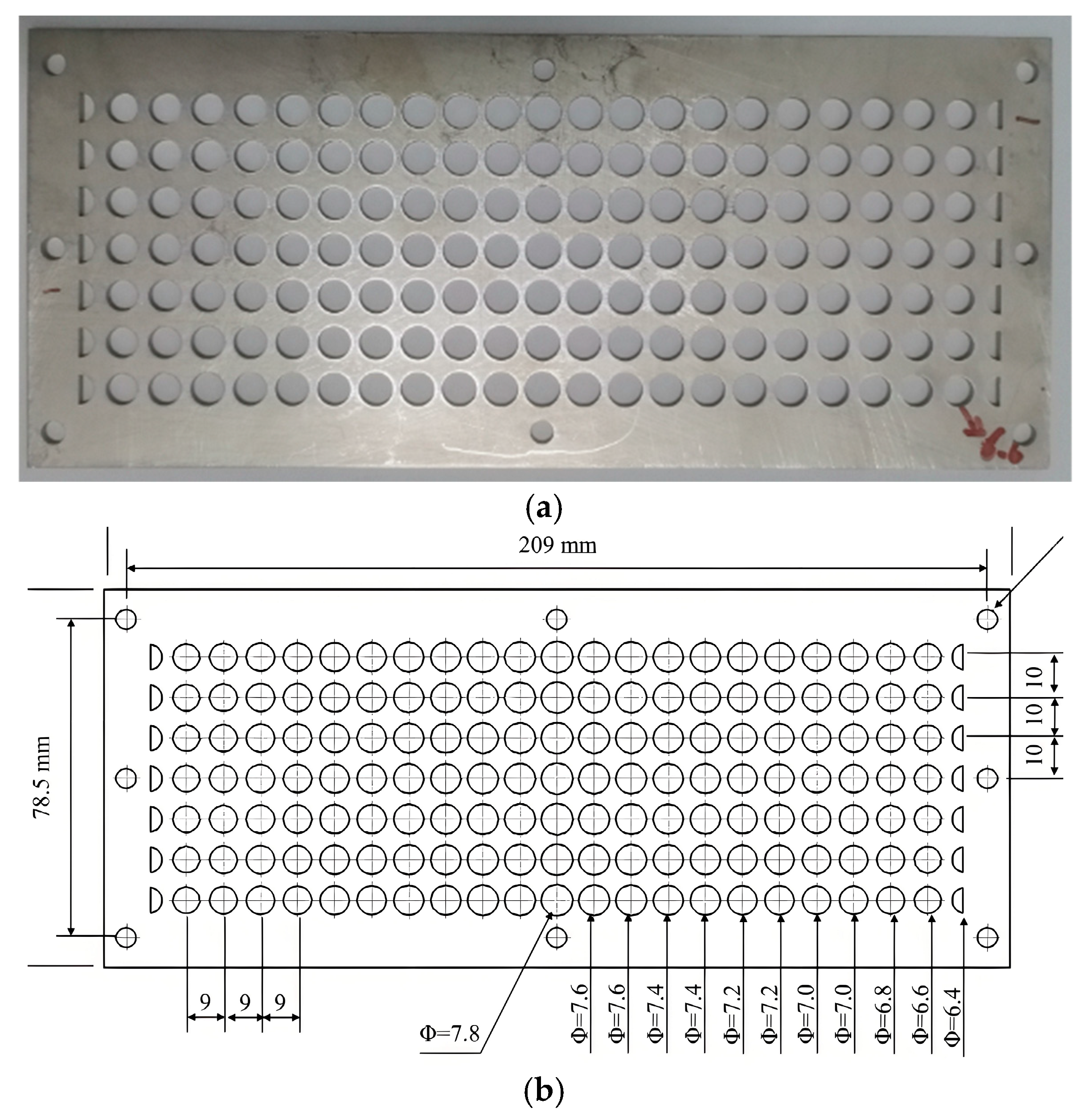
Multi-orifice plates (as seen in Figure 4) were employed as distortion generators to produce inlet distortion. Each plate is divided into a 9 × 22 grid of rectangular units, with each unit containing a circular orifice. The sizes of these orifices dictate the resulting velocity fields at the combustor inlet, thereby determining the inlet velocity distortion patterns.
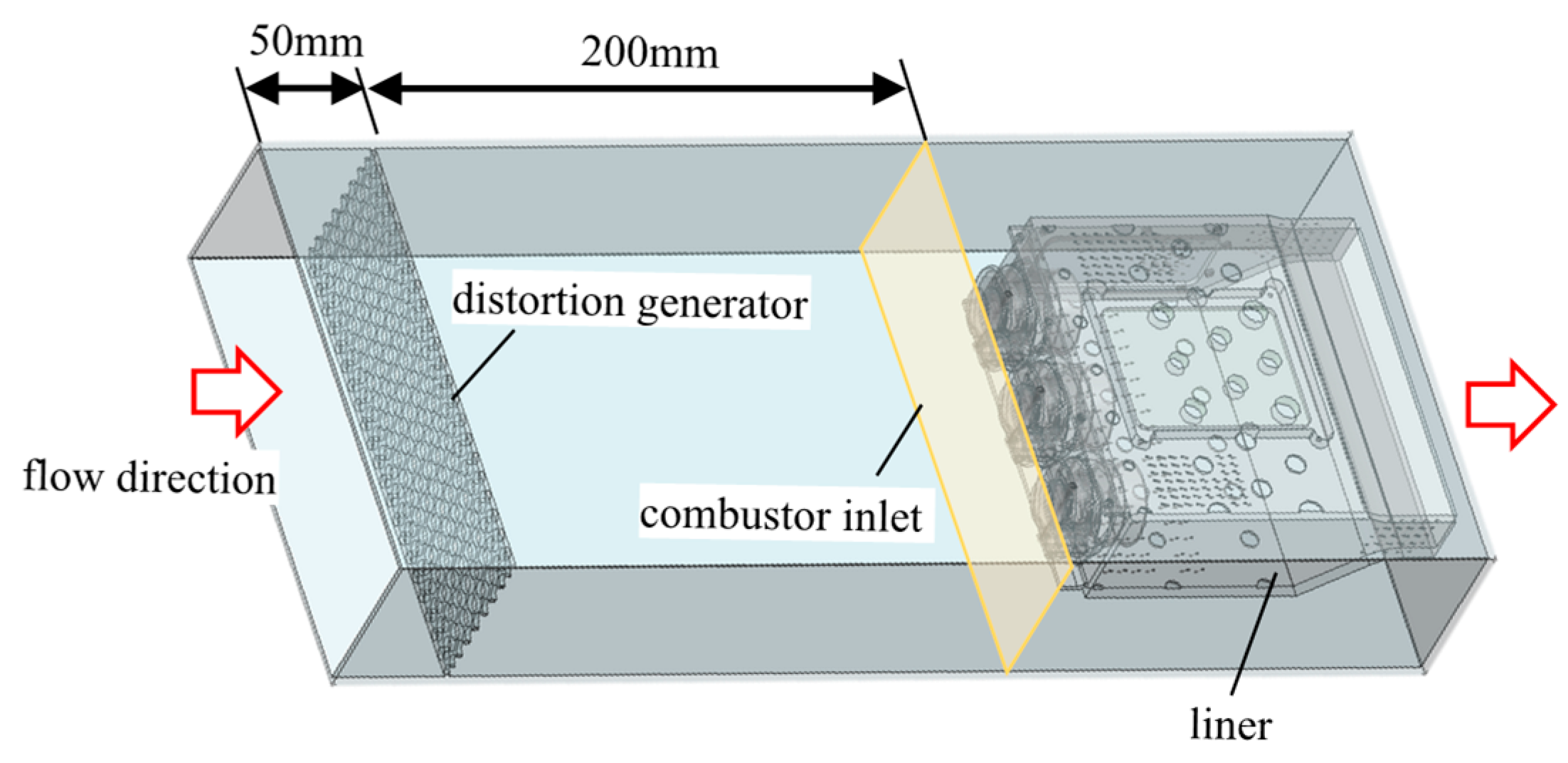
The distortion generators are positioned at 200 mm upstream from the combustor inlet, as depicted in Figure 5. This distance corresponds to more than 20 times the characteristic size of the distortion generator—specifically, the maximum hole diameter is 7.5 mm, and the rectangular units are smaller than 9 mm × 10 mm—ensuring fully developed airflow before entry into the combustor.
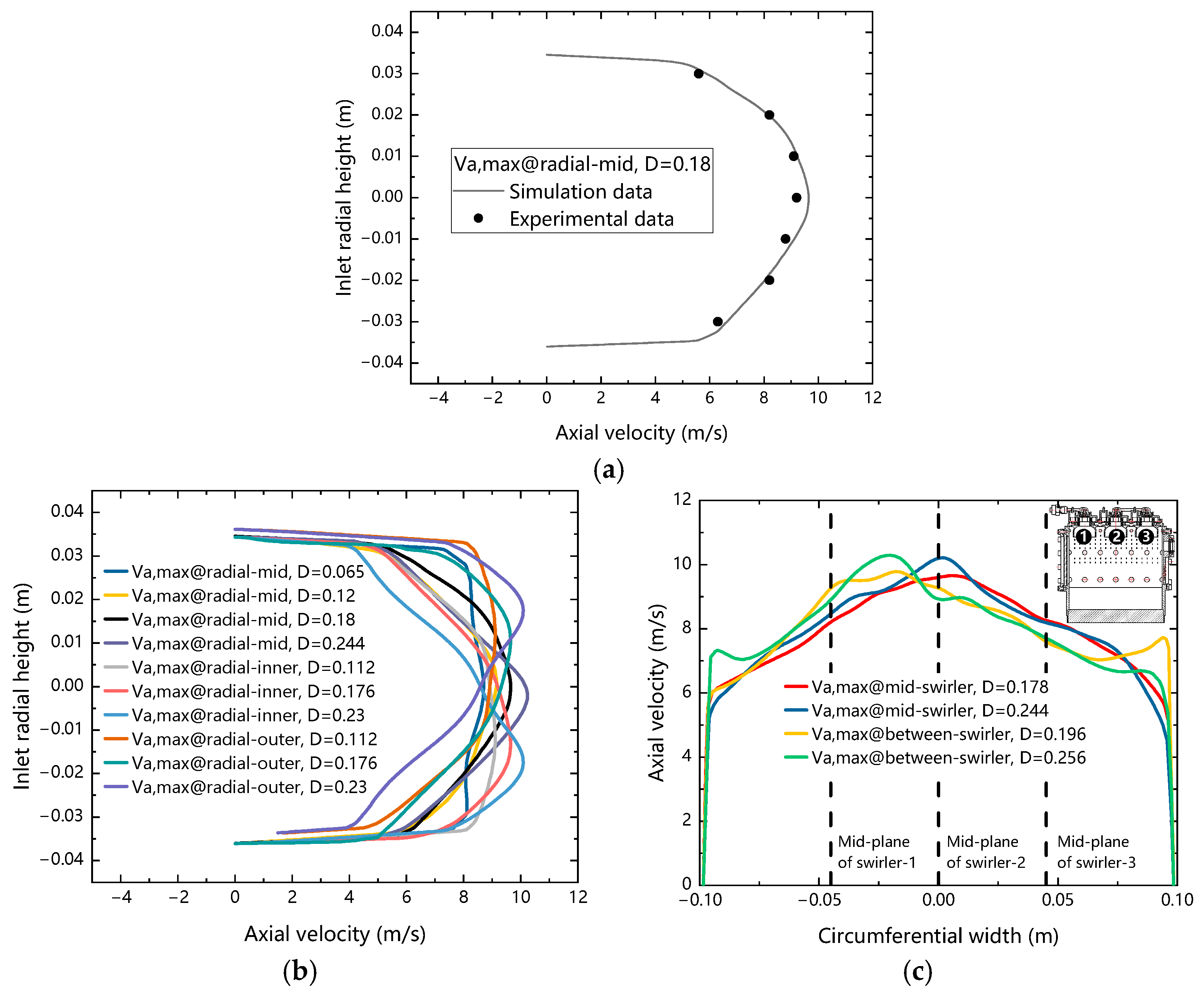
Using five-hole probe velocity measurements, the axial velocity distribution under the condition of D = 0.18 with a radial mid-peak distortion was obtained, which is shown in Figure 6a. Additionally, a numerical simulation based on the standard k-ε turbulence model was conducted under this condition. It can be seen that the experimental and simulated data exhibit good agreement, validating the accuracy of the numerical approach. Leveraging this validated framework, numerical simulations for other typical distortion conditions were performed to obtain the inlet velocity profiles, with results presented in Figure 6b,c. The inlet mass-flow rate is 0.2 kg/s, the inlet temperature is 400 K, the total pressure is 0.2 MPa, and the fuel–air ratio is 0.018. Two variables are used to identify different distortion conditions: the magnitude of inlet velocity distortion and the position of the peak axial velocity. For radial velocity distortions, the maximum axial velocities are positioned at the radial-mid, radial-inner, and radial-outer regions, with distortion magnitude D ranging from 0.065 to 0.244. For circumferential velocity distortions, the maximum axial velocities are located upstream of the mid-swirler (swirler-II in Figure 2b) and the inter-swirler (between swirler-I and swirler-II in Figure 2b), with distortion magnitude varies from 0.178 to 0.256.

2.3.2. Experimental Facilities

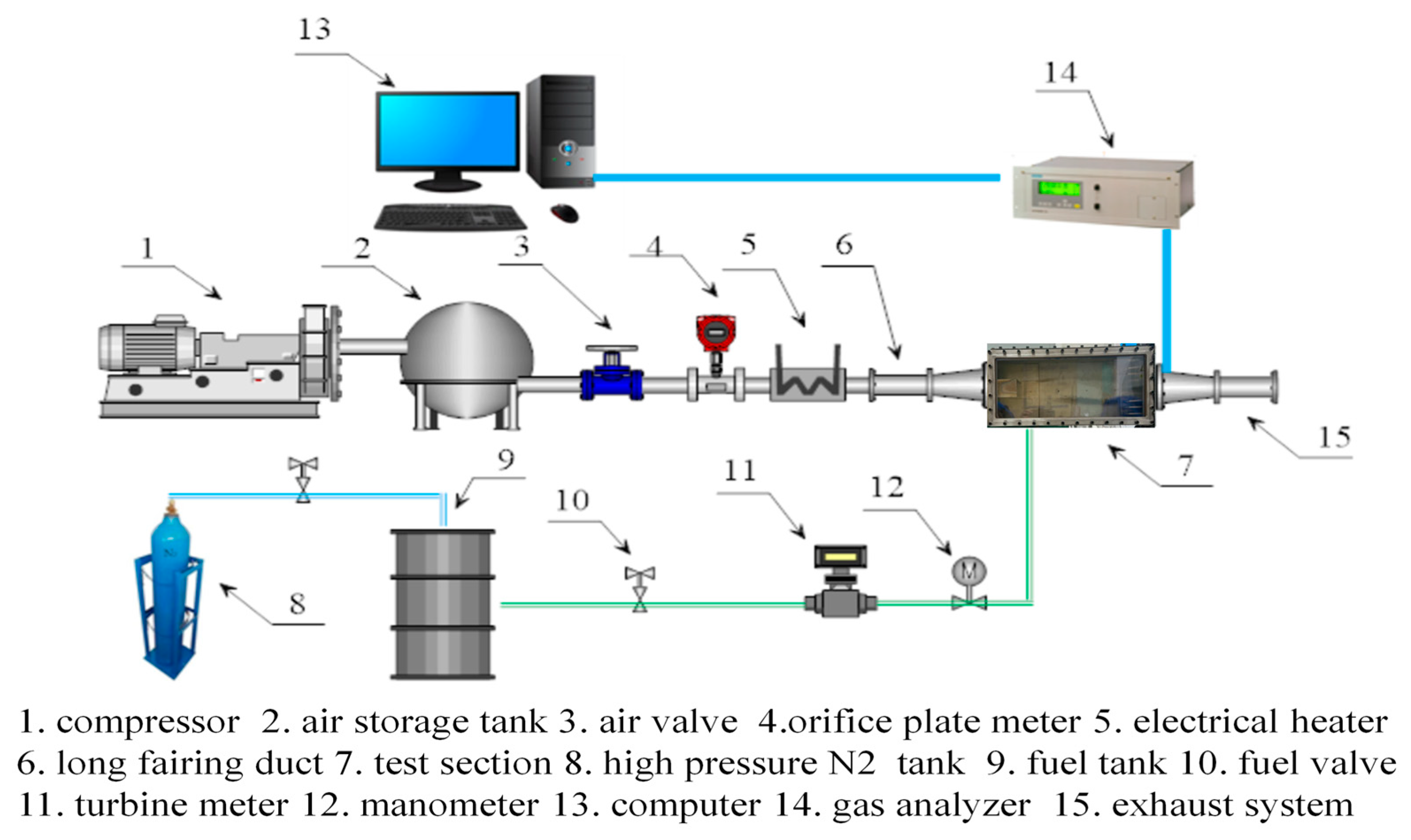
As depicted in Figure 7, a schematic diagram of the experimental system employed in this study is presented. The air, supplied by the screw air compressor, initially entered the air storage tank. This step was crucial for stabilizing the airflow speed and pressure. Subsequently, the air made its way through a series of pipes, valves, and flow meters. It then proceeded to an electric heater. The purpose of the electric heater was to heat the combustor inlet temperature to specific levels, as described in Section 2.3.5. The measurement of the airflow was carried out using a vortex flow meter, which had an uncertainty of 1%. In terms of air temperature measurement, a K-type thermocouple was utilized, and its uncertainty stood at 0.75%. In addition, the inlet air pressure of the combustion chamber was measured by the pressure transmitter and pressure gauge together, and through mutual calibration.
Liquid RP-3 aviation kerosene serves as the fuel. It was stored in a fuel tank and delivered to the combustor through high-pressure nitrogen extrusion. The fuel flow was carefully monitored using a turbine flow meter with an uncertainty of 1%. Ignition of the fuel–air mixture was achieved by an electric spark plug. This spark plug was remarkable, featuring 20 J of stored energy and operating at a frequency of 16 Hz.
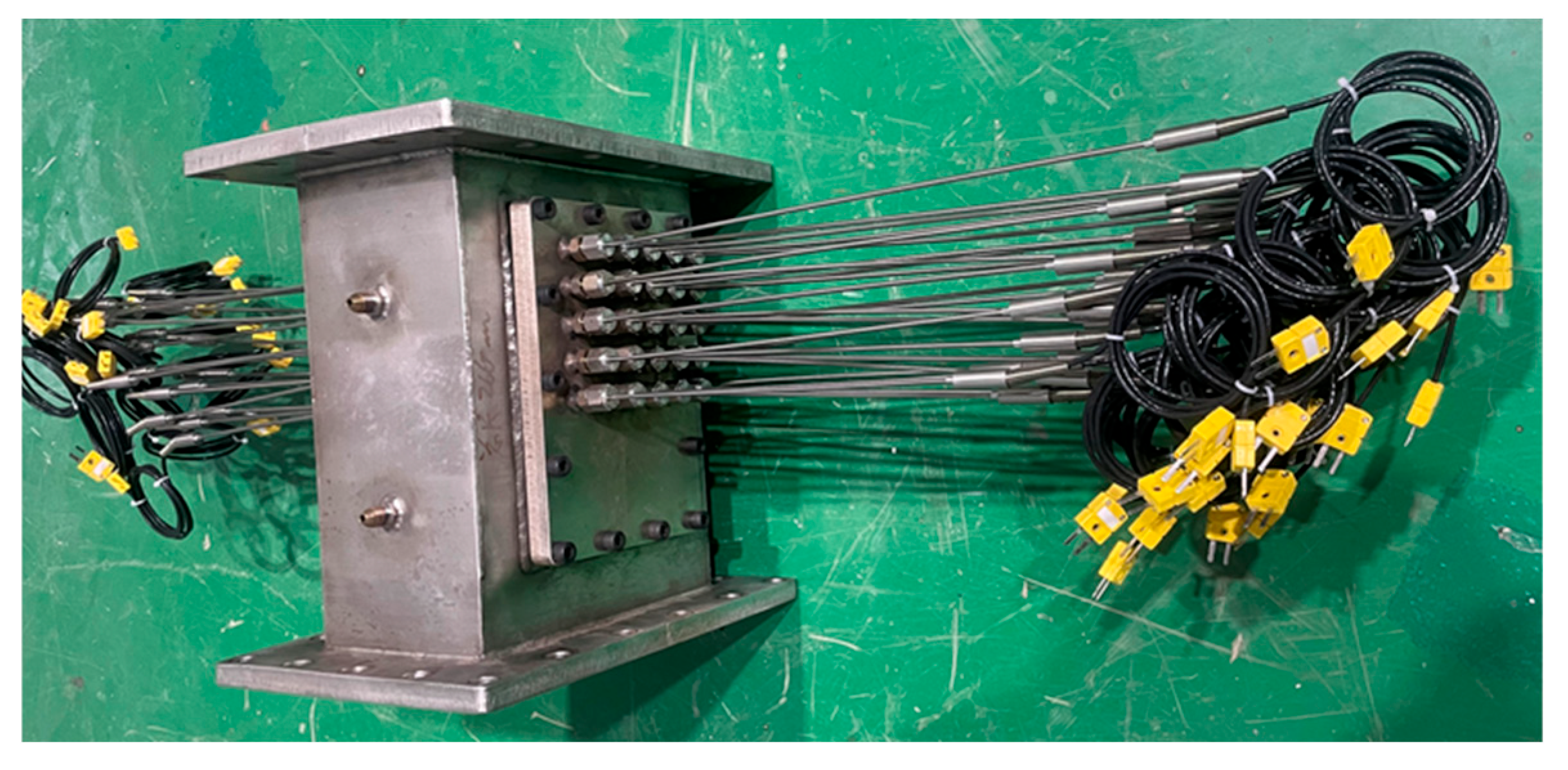
As for the measurement of the combustor exhaust temperature, a multi-channel temperature tester (EX6000 module, Yili Technology Co., Ltd., Shenzhen, China) was used. It was equipped with a stationary K-type thermocouple rake that had 45 test points, as seen in Figure 8, which was connected with compensation wires. In an effort to minimize the temperature measurement error, a number of measures were taken. One of the key measures was the shielding of the temperature rake. It was shielded by a rectangular steel tube. The purpose of this shielding was to reduce the radiation heat transfer that could occur between the thermocouple and the casing wall. By doing so, the accuracy of the temperature measurement was significantly improved. This careful design and implementation of the outlet temperature acquisition system ensured that the temperature data obtained would be more precise and reliable for further analysis and research.
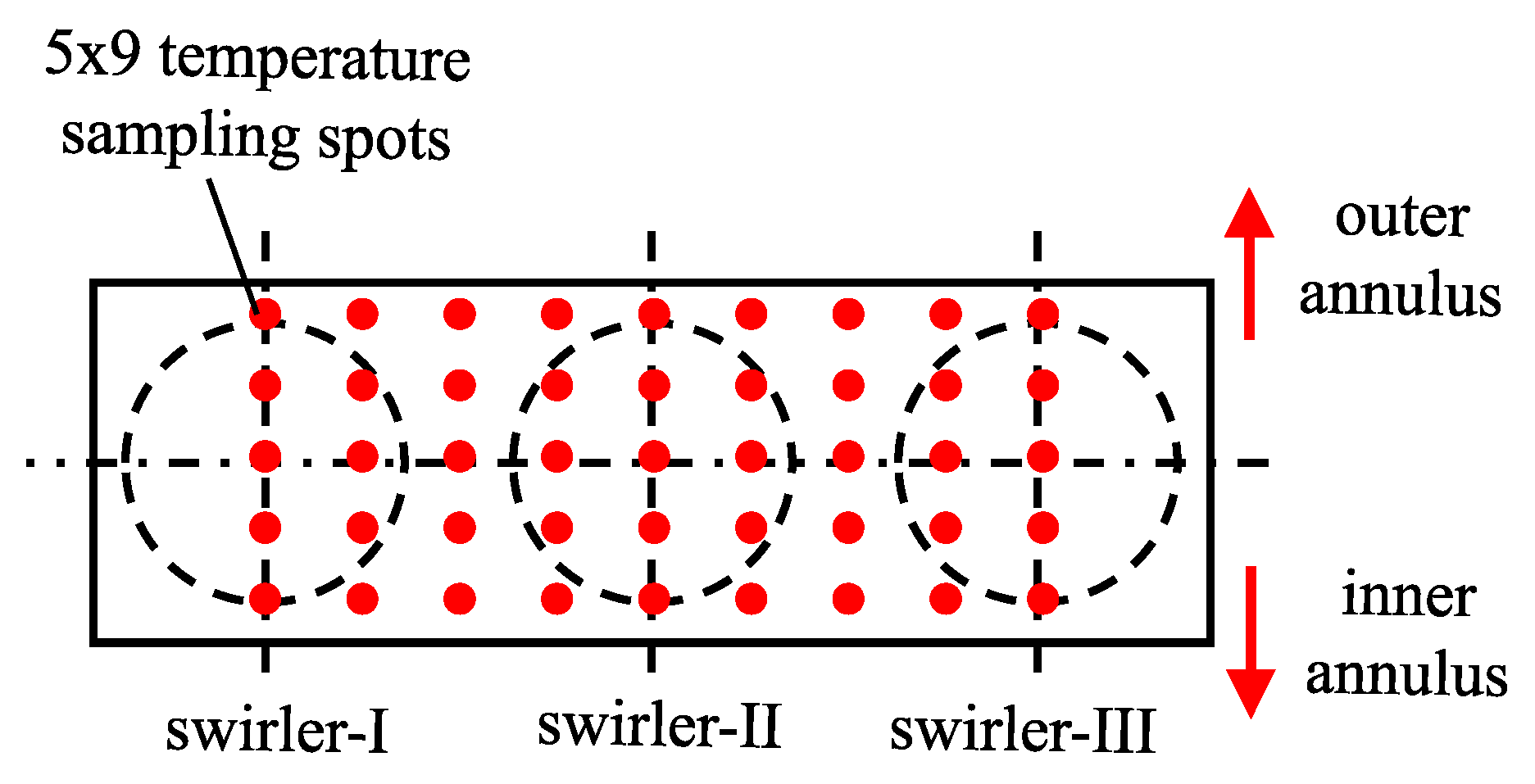
Figure 9 presents the arrangement of the temperature sampling points. A total of 5 × 9 sampling points were meticulously positioned. These points circumferentially covered two domes, including the entire central dome and half of the two side-domes. Radially, they span from 10% to 90% of the outlet height. In the current experiment, the sampling point density was calculated to be 0.52 cm2/point. This particular arrangement proved to be appropriate. The reason lies in its sufficient sampling point density. With such a density, it was able to effectively capture the temperature variations across the specified areas. This ensured that the data collected would be comprehensive and reliable for further analysis.

2.3.3. Definition of OTDF

Outlet temperature distribution factors (OTDF) were used to evaluate the temperature distribution characteristics of the combustor outlet. The OTDF is defined as the ratio of the difference between the maximum total gas temperature and the average total gas temperature at the outlet and the temperature rise in the combustion chamber, namely
O T D F = T t 4 max T t 4 T t 4 T t 3
where T t 4 max represents the maximum total temperature at the outlet of the combustor; T t 4 represents the mean total temperature at the outlet; T t 3 represents the inlet temperature of the combustor.

2.3.4. Radiation Correction of Measured Temperature

The directly measured physical quantities involved in the test process are inlet/outlet temperature, inlet flow rate, and inlet pressure. The error of inlet flow rate and inlet pressure is evaluated by the accuracy of the instrument. In addition to the measurement accuracy of the thermocouple itself, the error of the inlet/outlet temperature of the combustion chamber, especially the error of the outlet temperature of the combustion chamber, also involves the error caused by the radiation heat transfer between the measuring point of the thermocouple and its surrounding environment. Therefore, it is also necessary to evaluate the measurement error caused by thermal radiation for the measured value of combustion chamber outlet temperature. In the process of measuring the total temperature at the outlet of the combustion chamber, the measurement error caused by thermal radiation is evaluated using the following formula [24]:
T g = T t c + ε t c σ 0 d k N u [ ( T t c 4 T w 4 ) ]
where T g represents the actual temperature of the high-temperature gas under measurement; T t c represents the temperature measured by the thermocouple; T w stands for the temperature of the heat insulated pipe wall; ε t c is said emissivity, ε t c = 0.23 ; Stephan–Boltzmann constant is σ 0 = 5.67 × 10 8   W / m 2 K 4 ; d is the hot end diameter of thermocouple; k is thermal conductivity of the gas, taking k = 7 × 10 2   W / m K here; N u stands for Nusselt number. For spheres, it is
N u d , s p h = 2.0 + 0.4 Re d 1 / 2 + 0.06 Re d 2 / 3 Pr 0.4 μ / μ s 1 / 4
which was obtained for 0.71 < Pr < 380 and 3.5 < Re < 76 , 000 , with the properties (except μ s ) evaluated at T . μ s is the gas viscosity evaluated at the surface temperature.

2.3.5. Experiment Parameters

A combustion experiment was conducted based on the 3-dome axial-flow combustor. In the test, the inlet total pressure was 0.2 MPa, the inlet total temperature was 400 K, and the air mass-flow rate was 0.2 kg/s. In addition, RP-3 aviation kerosene [25,26] was used as fuel and the fuel–air ratio is 0.018.
The distortion type, position of peak velocity, and magnitude of distortion studied in the experiment are listed in Table 1.

3. Results and Discussions

3.1. Evolution of Hot Streak Under Uniform Inlet Velocity

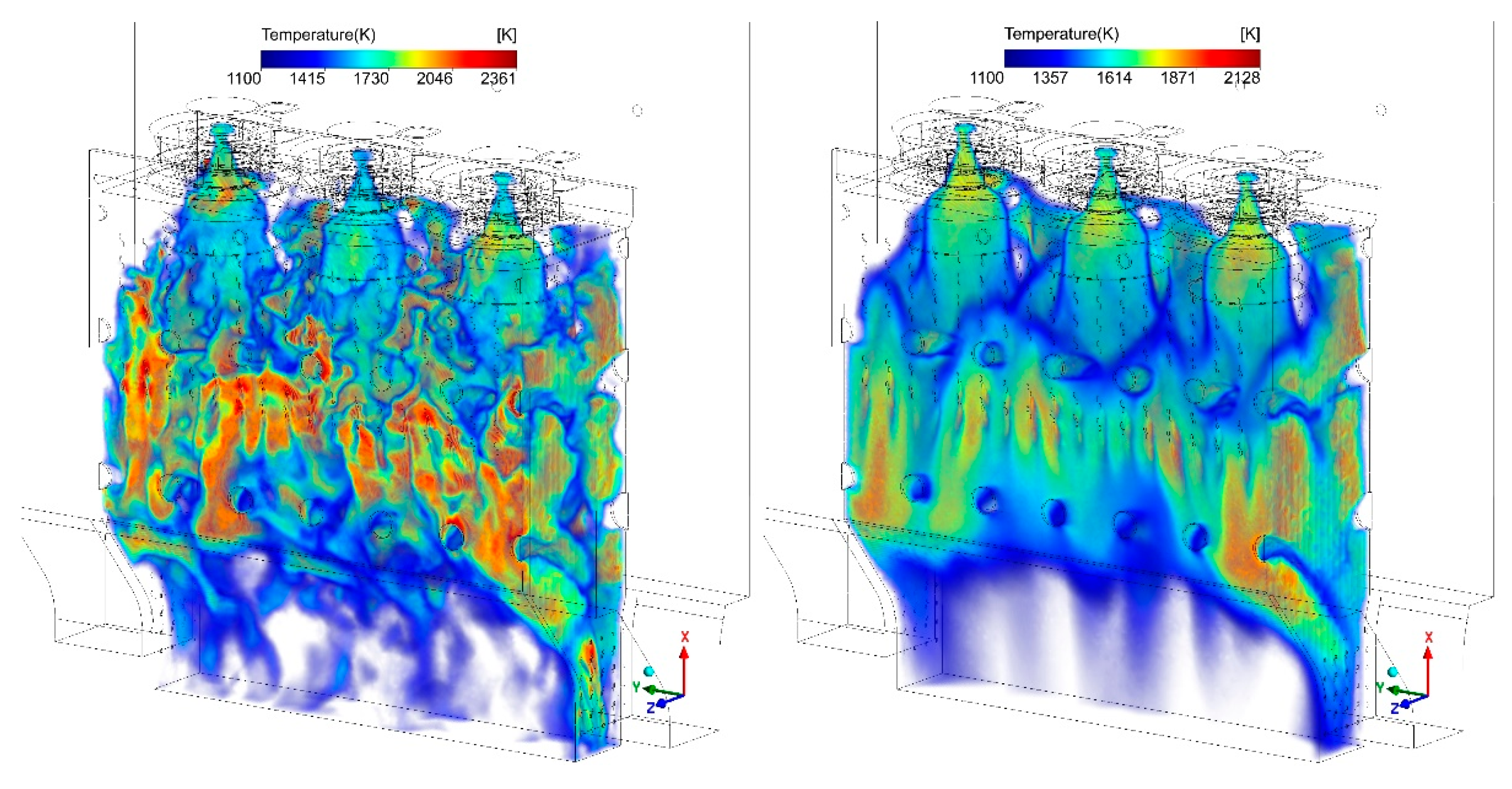
An unsteady numerical simulation using SAS model was carried out to study the reaction flow field within the combustor under uniform inlet condition. Figure 10 shows 3D transient and time-averaged temperature distribution. The left portion of the figure exhibits distinct transient features, while the right portion shows a smooth time-averaged temperature distribution, indicating that the unsteady simulation duration is sufficient to achieve a stable time-averaged reaction flow solution. Visual analysis reveals higher temperatures near the inner and outer walls, contrasting with lower values in the central region. Downstream of the dilution holes, mixing improves and hot streak temperatures decrease due to continuous turbulent mixing.
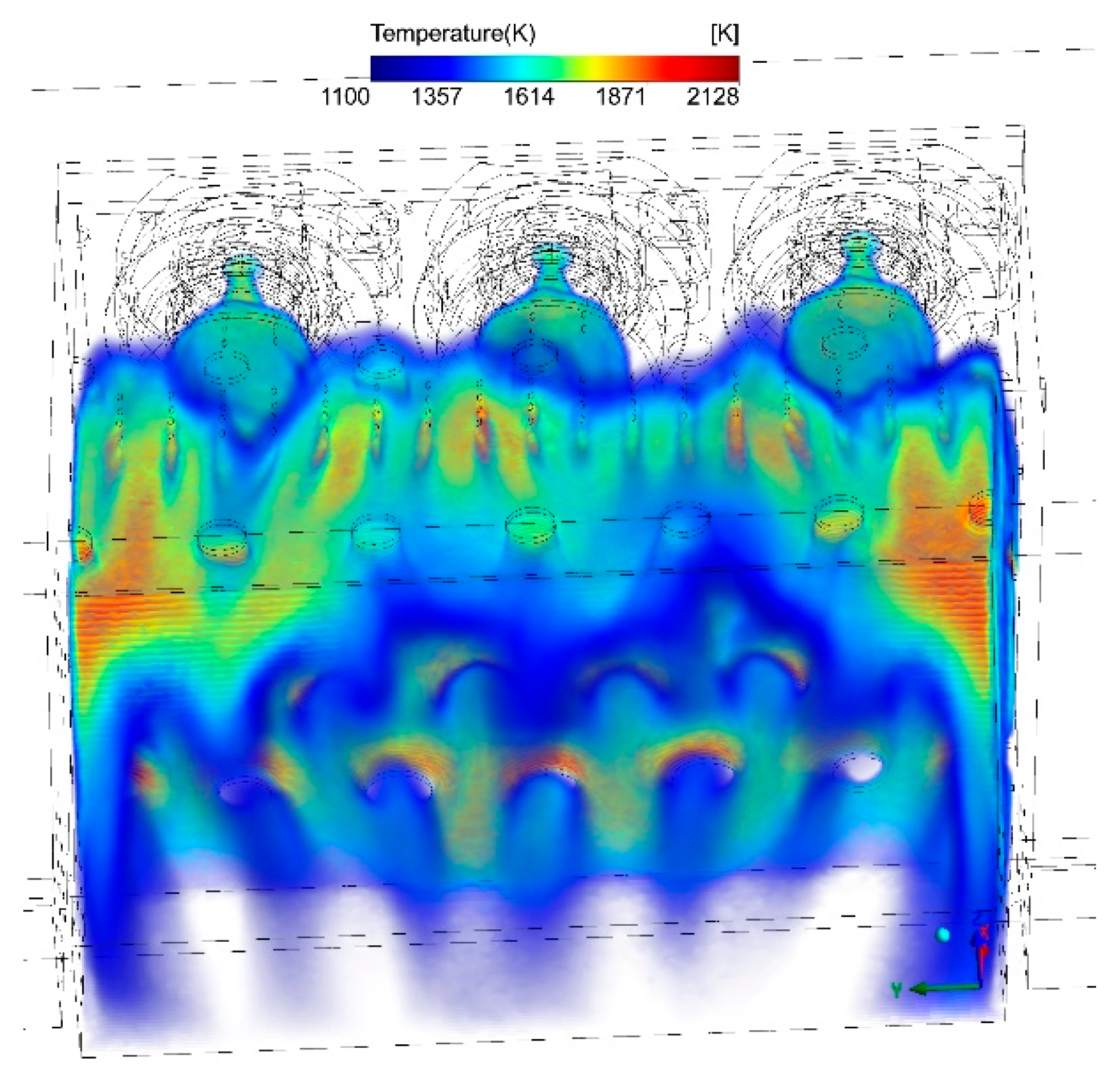
Additionally, the rear view of the 3D time-averaged temperature distribution (Figure 11) reveals distinct high-temperature regions in the wake zones of the primary and dilution hole jets, while the central liner region—far from the walls—exhibits lower temperatures. The deep penetration of primary and dilution hole jets, as observed from the hot region development within the liner, results in a lower fuel–air ratio (FAR) in the central region and a higher FAR near the walls. This gradient drives hot streak formation near the walls, a phenomenon further analyzed below from the heat release perspective.
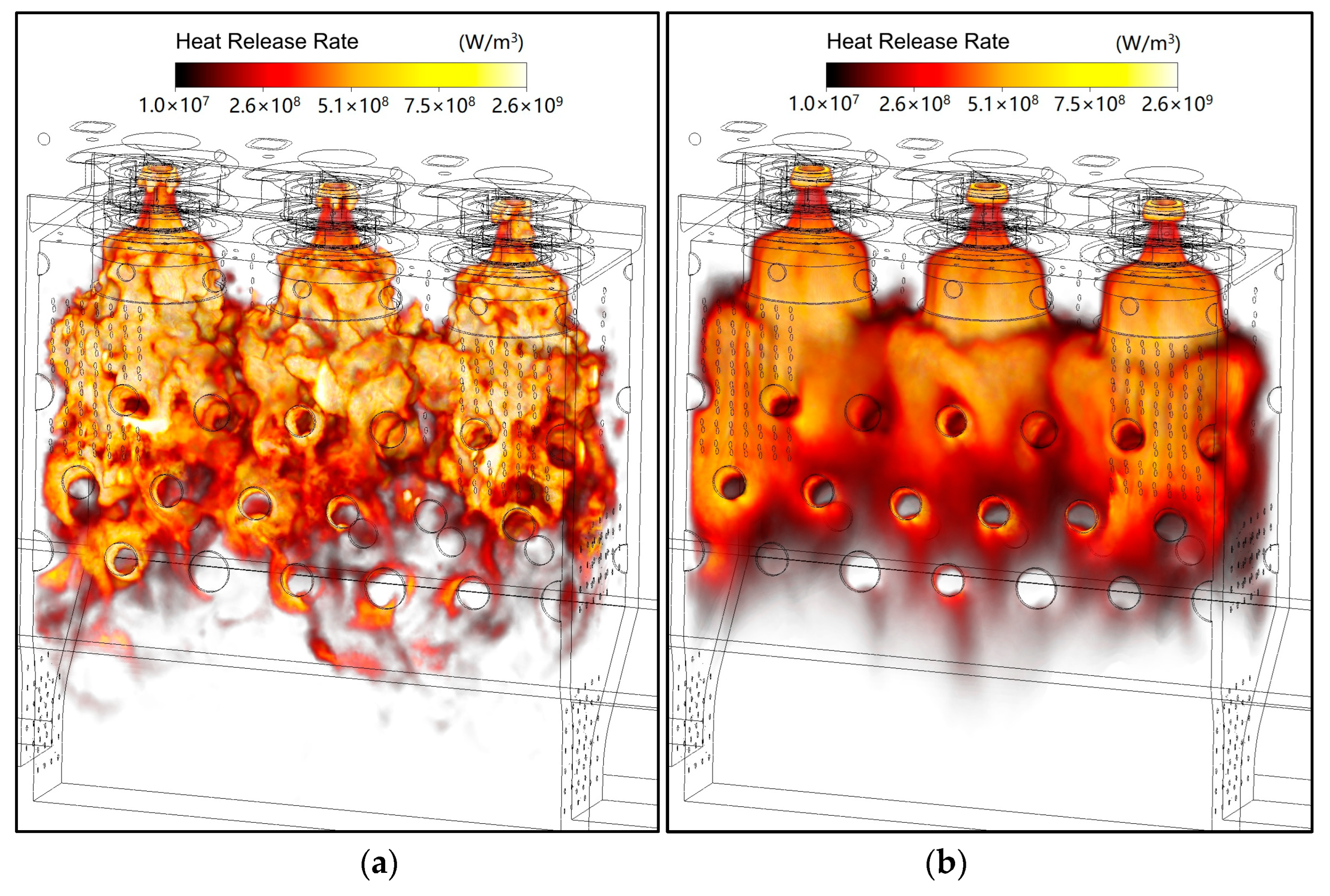
Figure 12 illustrates the transient and time-averaged 3D distribution of heat release rate in the combustor under the uniform inlet velocity condition. It reveals significant heat release in the wall-adjacent region around dilution holes downstream of the primary zone, which indicates incomplete fuel consumption in the primary zone and subsequent combustion occurring in this area.
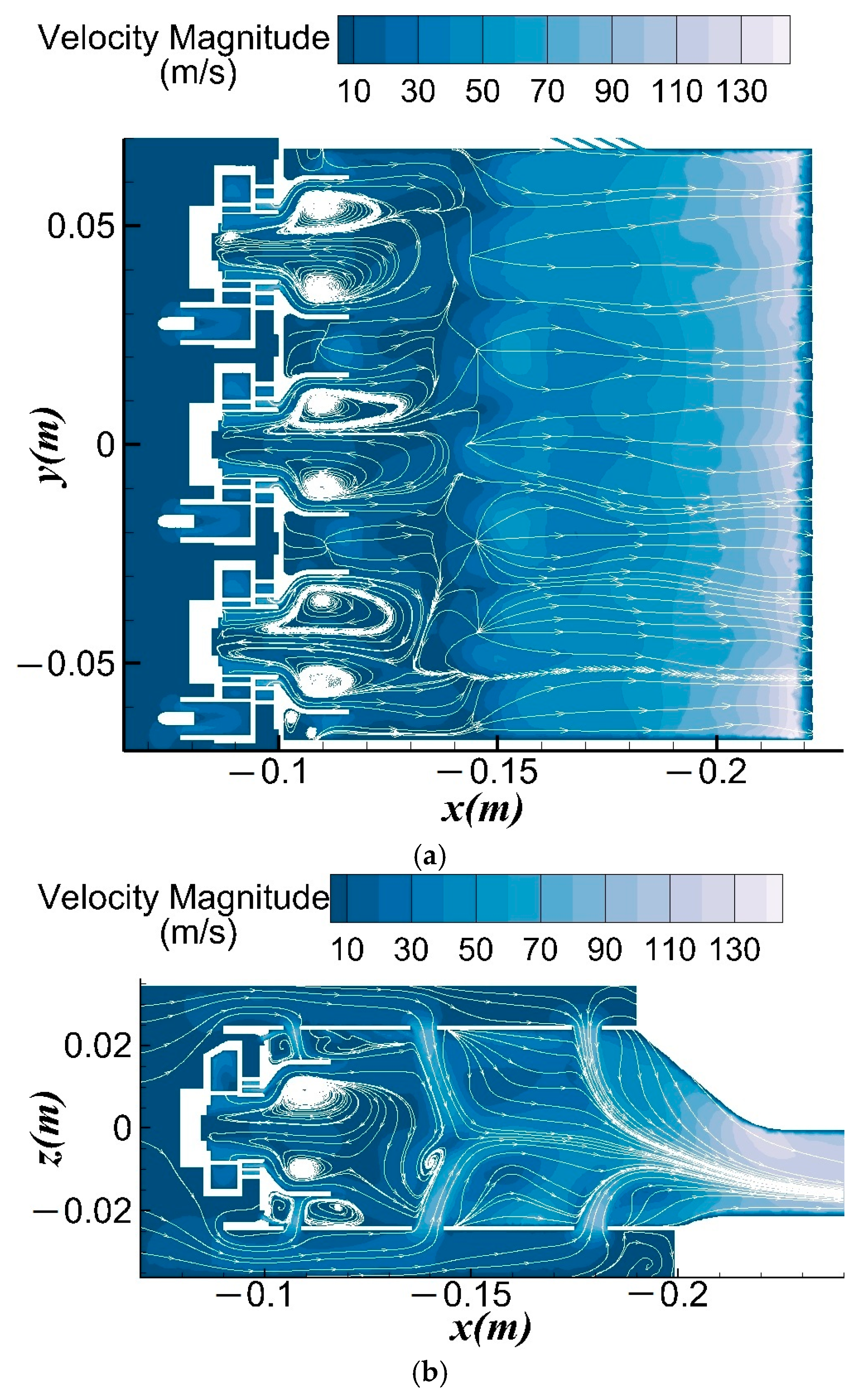
The velocity field overlaid with streamlines under uniform inlet velocity is shown in Figure 13. Streamline visualization reveals that when driven by swirlers, sleeves, and primary hole jets, a regular recirculation zone forms downstream of each dome, with these zones truncated by primary hole flows. Reverse flow between the sleeves of each head is significantly reduced due to air jets emanating from the holes outside the sleeves.
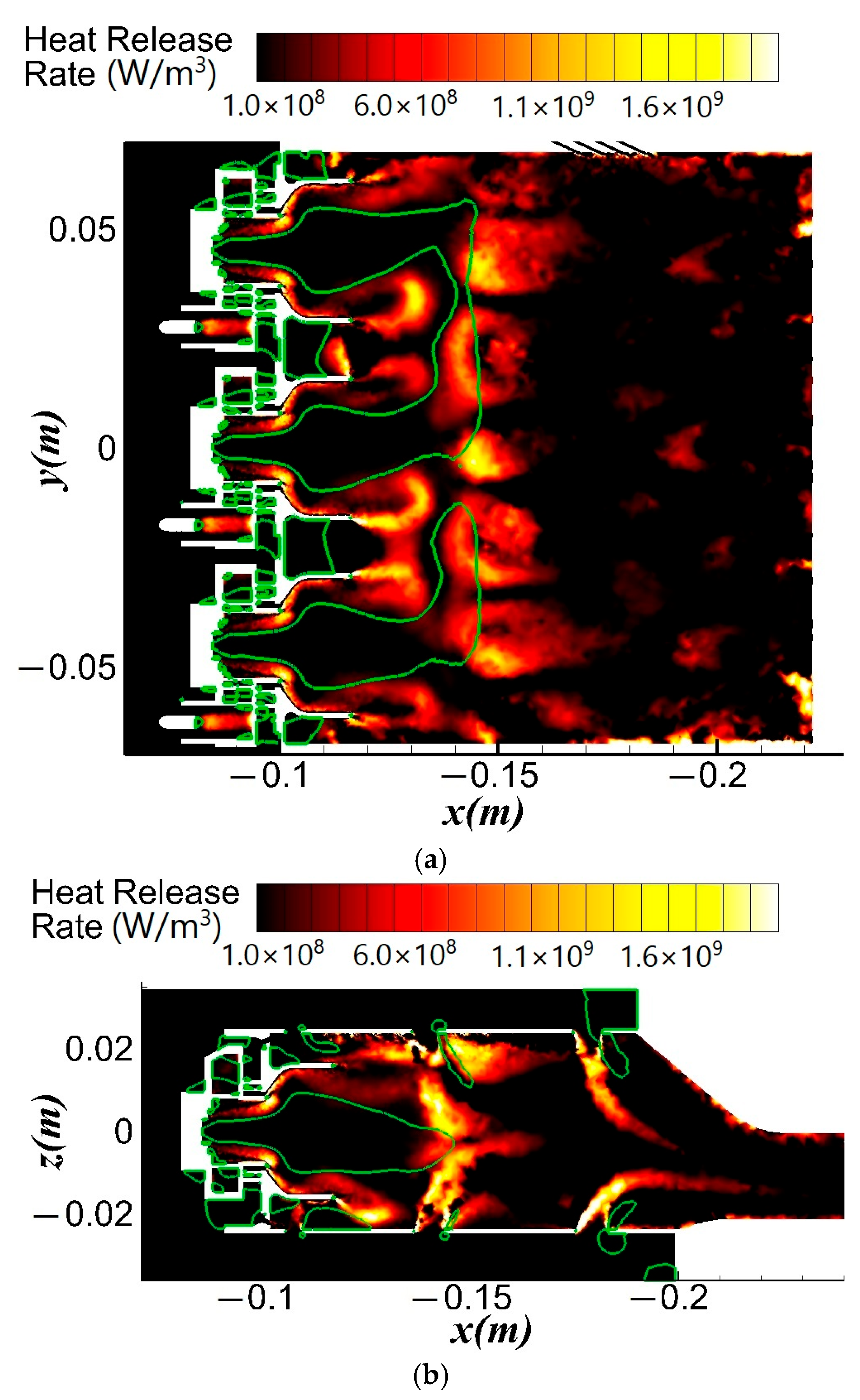
Figure 14 shows the heat release rate distribution overlaid with axial zero-velocity lines under the uniform air inlet condition. Within regions enclosed by axial zero-velocity lines, namely the counter-current zone of the primary region, heat release rates are extremely low, while the primary heat release zones predominate in the co-current regions (outside the zero-velocity boundaries). Additionally, downstream of the primary combustion zone, high heat release regions from combustion reactions concentrate in the near-field areas of primary and dilution jets.
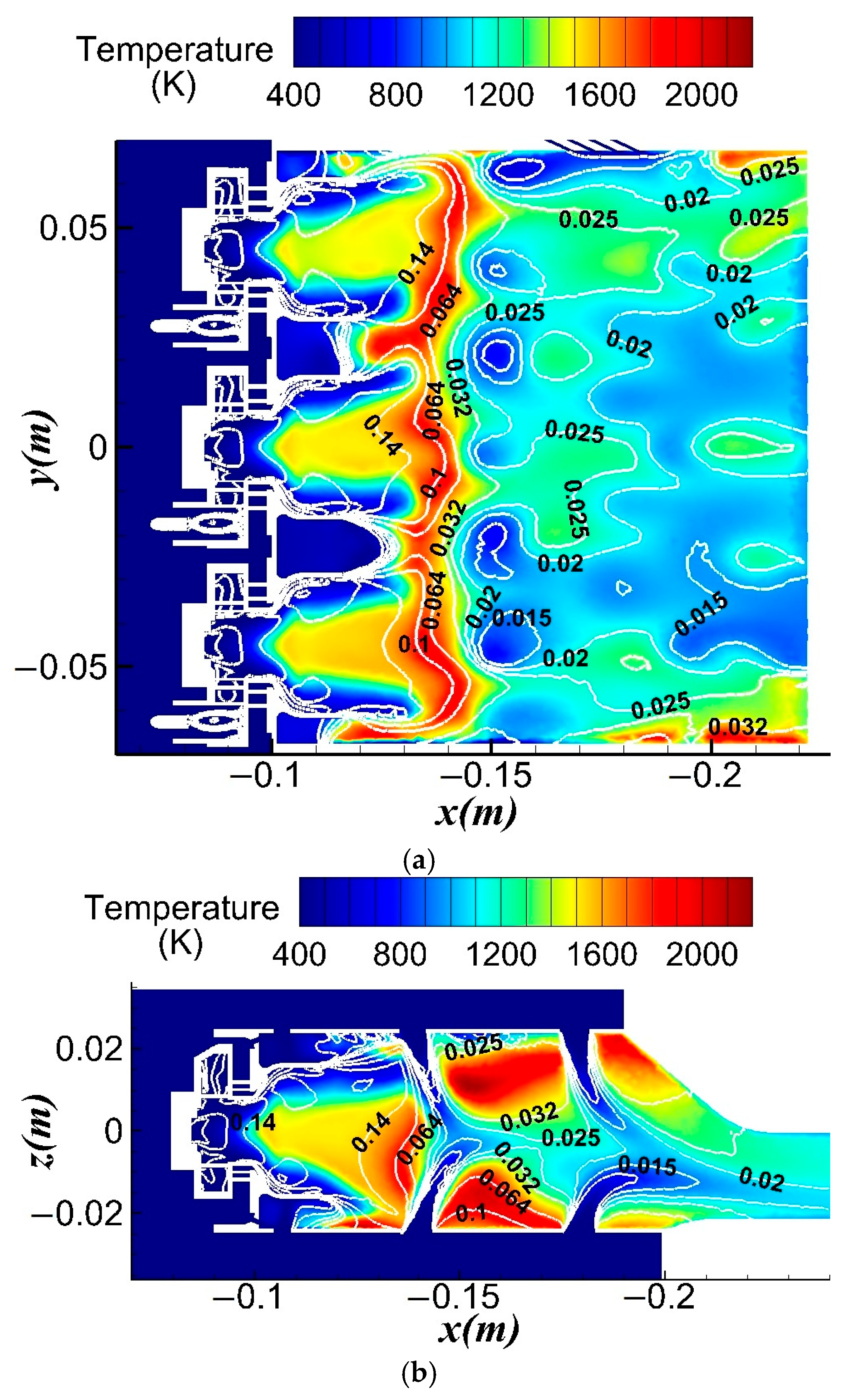
Figure 15 presents temperature contours overlaid with mixture fraction under uniform inlet velocity conditions.
A stable high-temperature ignition source forms within the recirculation zone. Due to the fuel-rich dome design, the fuel–air ratio (FAR) in this zone is relatively high, with mixture fractions exceeding 0.14, resulting in moderate temperatures (≈1500 K). In the transition region between the recirculation zone and primary jets, the mixture fraction decreases rapidly from 0.14 to below 0.032, where the stoichiometric ratio (corresponding mixture fraction: 0.064) is achieved. Concurrently, temperature rises sharply from 1500 K to 2200 K before decreasing to under 1200 K.
On the y = 0 plane, jets from primary holes in both inner and outer annuli exhibit strong penetration, reaching the liner’s central region. This results in a very low FAR and corresponding temperature in the middle section (z = 0 m). Conversely, substantial high-temperature regions exist in the wake of primary jets, forming secondary combustion zones through mixing of fuel-rich products with jet air—consistent with prior analysis. The FAR in these zones is higher than in the central region, explaining elevated temperatures near the liner wall. Additionally, the y = 0 plane reveals high-temperature regions in the wake of dilution jets, further corroborating the observed combustion behavior.

3.2. Influence of Radial Velocity Distortion on Exit Temperature Profile

Using the three-dome axial-flow combustor, outlet temperature distribution measurements were conducted under the conditions described in Section 2.3.5 to investigate the effect of radial distortion on combustor outlet hot streaks.
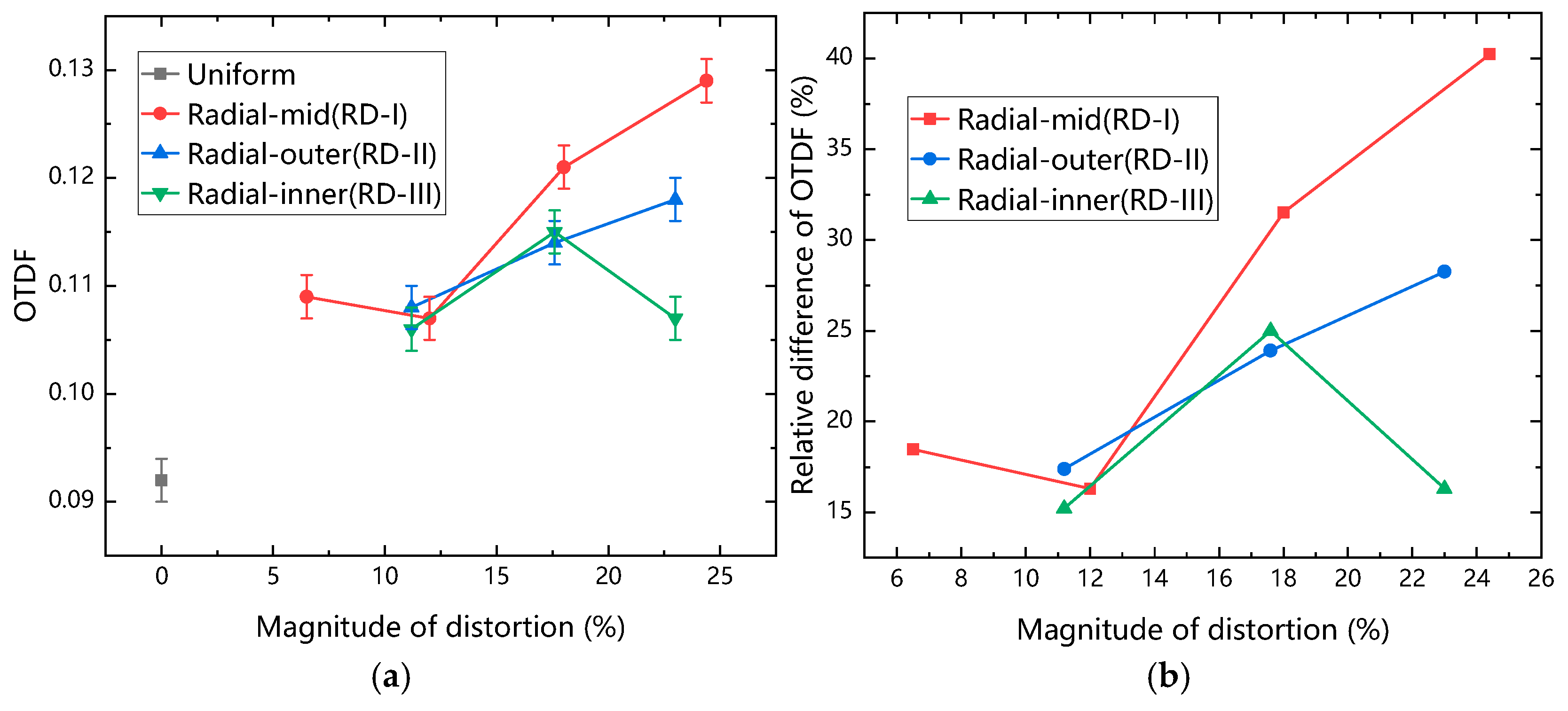
Figure 16 illustrates the effect of inlet radial velocity distortion on OTDF. The figure presents OTDF data under uniform inlet velocity, radial-mid peak velocity (RD-I), radial-outer peak velocity (RD-II), and radial-inner velocity (RD-III), as detailed in Table 1. Figure 16a reveals that radial velocity distortion significantly impacts the OTDF. In general, OTDF increases with escalating velocity distortion at the combustor inlet. This trend arises because velocity distortion induces alterations in flow split and local fuel–air mixing within the combustor, influencing the generation, evolution, and development of local hot streaks. Detailed physical mechanisms require further analysis using numerical simulation results. By comparing different distortion positions, the influence of velocity distortion at the mid-radial peak is slightly greater than that at the outer-radial and inner-radial peaks.
Figure 16b shows the relative variation in OTDF under radial velocity distortion conditions compared to the uniform baseline. For the mid-radial peak distortion (RD-I), the mean and maximum relative OTDF differences induced are +26.6% and +40.2%, respectively. Radial-outer peak distortion (RD-II) results in a mean relative difference of +17.3% and a maximum of +28%, while radial-inner peak distortion (RD-III) yields mean and maximum values of +18.8% and +25%, respectively. Overall, the relative OTDF difference under mid-radial peak conditions is greater than those under outer-radial and inner-radial peak conditions.

3.3. Influence of Circumferential Velocity Distortion on Exit Temperature Profile

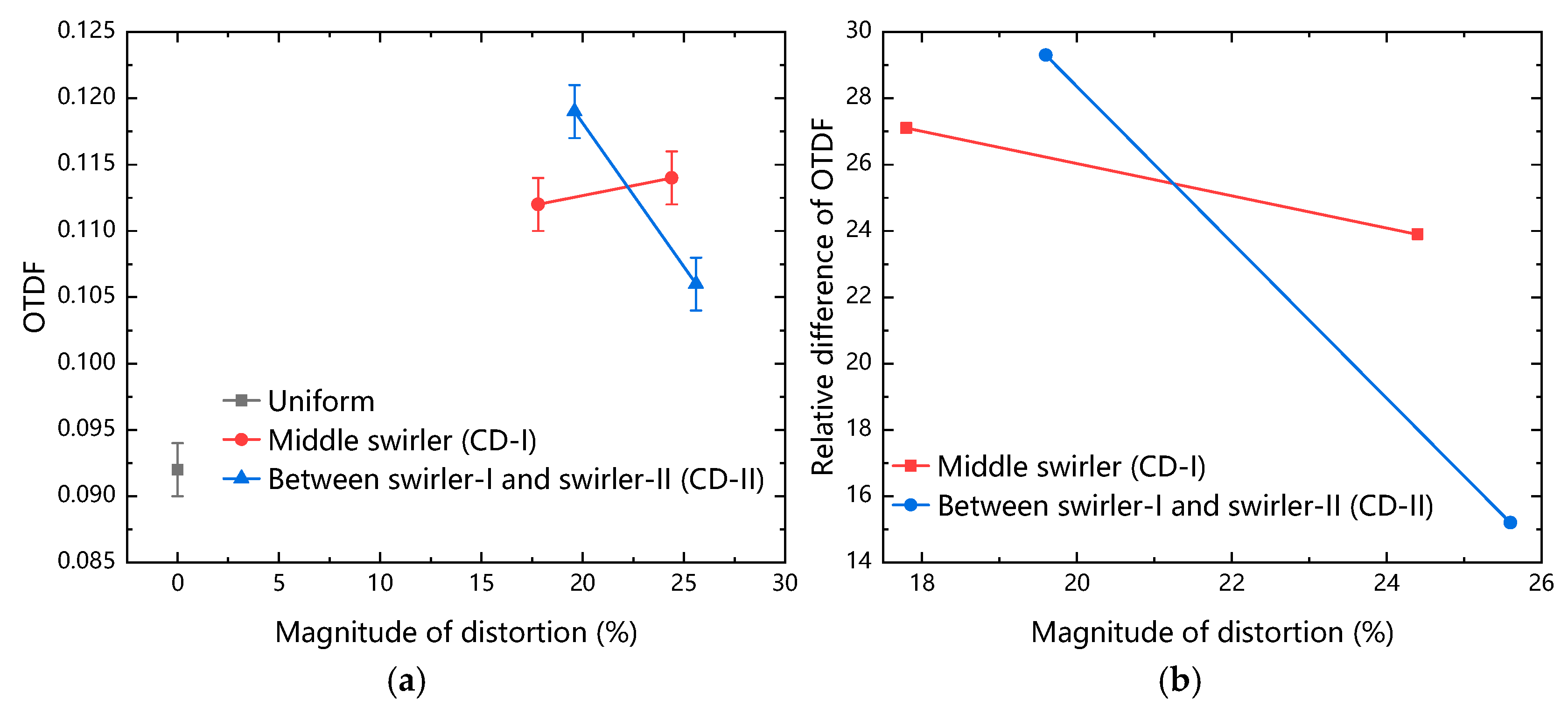
Figure 17 shows the influence of circumferential velocity distortion at the combustor inlet on OTDF. The figure presents OTDF data under two conditions: peak velocity at the middle swirler (CD-I) and peak velocity between swirler-1 and swirler-2 (CD-II), as listed in Table 1. Figure 17a reveals that circumferential velocity distortion has a great influence on OTDF: (1) when the peak velocity is opposite to the middle swirler (CD-I), the OTDF increases as the magnitude of circumferential distortion escalates; (2) when the peak velocity is positioned between the two swirlers (CD-II), the OTDF decreases as the distortion magnitude increases. Overall, compared to the uniform inlet baseline, circumferential velocity distortion at the combustor inlet increases the OTDF.
Figure 17b presents the relative difference in OTDF under circumferential velocity distortion compared with the uniform condition. For the CD-I condition, where the peak circumferential velocity is opposite the middle swirler, the mean and maximum relative OTDF differences are +25.5% and +24.4%, respectively, compared to the uniform case. In the CD-II condition, these values are +22.3% and +29.3%, respectively. These results highlight that circumferential inlet velocity distortion significantly impacts the outlet hot streak characteristics.

4. Conclusions

Orifice-baffle-type distortion generators were designed to simulate radial and circumferential inlet velocity distortions for the combustor. Numerical simulations and experimental investigations were conducted to reveal the effect of inlet velocity distortion on the hot streak characteristics of a three-dome axial-flow combustor. Additionally, a correlation for the OTDF was developed, achieving high prediction accuracy.
According to the scale-adaptive simulation (SAS) results, the heat release rate within the counter-current zone of the primary region is negligible. The primary heat release zone concentrates in the co-current region of the primary zone. Downstream of the primary zone, high heat release regions localize in the near-field areas of primary and dilution jets. Sufficient penetration of these jets lowers the fuel–air ratio (FAR) in the central region while increasing it near the liner wall, driving hot streak formation in the wall-adjacent areas.
Radial velocity distortion at the combustor inlet significantly elevates the outlet hot streak index (OTDF). Within the investigated range of radial distortion magnitudes, OTDF increases by 15–40%. Similarly, circumferential velocity distortion also significantly impacts OTDF, with increases ranging from 15% to 30% depending on the circumferential distortion magnitude.

Author Contributions

Conceptualization, Z.W. and W.C.; methodology, X.T. and Y.L.; validation, P.J.; investigation, X.C. and K.H.; writing—original draft preparation, X.C.; writing—review and editing, Z.W.; visualization, K.H.; supervision, Z.W.; project administration, Z.W.; funding acquisition, Z.W. All authors have read and agreed to the published version of the manuscript.

Funding

This research was funded by Jiangxi Provincial Natural Science Foundation (Project No. 20242BAB25279) and Jiangxi Key Laboratory of Green General Aviation Power.

Data Availability Statement

The original contributions presented in this study are included in the article. Further inquiries can be directed to the corresponding author.

Conflicts of Interest

The authors declare no conflicts of interest.

Abbreviations

The following abbreviations are used in this manuscript:
FARfuel–air ratio
FGMflamelet-generated manifold
NuNusselt number
OTDFoutlet temperature distribution factor
RTDFradial temperature distribution factor
SASscale-adaptive simulation

Appendix A

Validation of the combustion reaction mechanism for RP-3 aviation kerosene [20].

Appendix A.1. Description of the Mechanism

Wide-temperature-range two-parameter skeletal mechanism for RP-3 aviation kerosene.
  • A wide-temperature-range two-parameter skeletal mechanism with a three-component surrogate fuel model, comprising mass fractions of 73.0% n-dodecane (s0C12H26), 14.7% 1,3,5-trimethylcyclohexane (s1C9H18), and 12.3% n-propylbenzene (PHC3H7).
  • A two-parameter rate constant is employed in the Arrhenius equation.

Appendix A.2. Validation

Appendix A.2.1. Ignition Delay Time Comparison

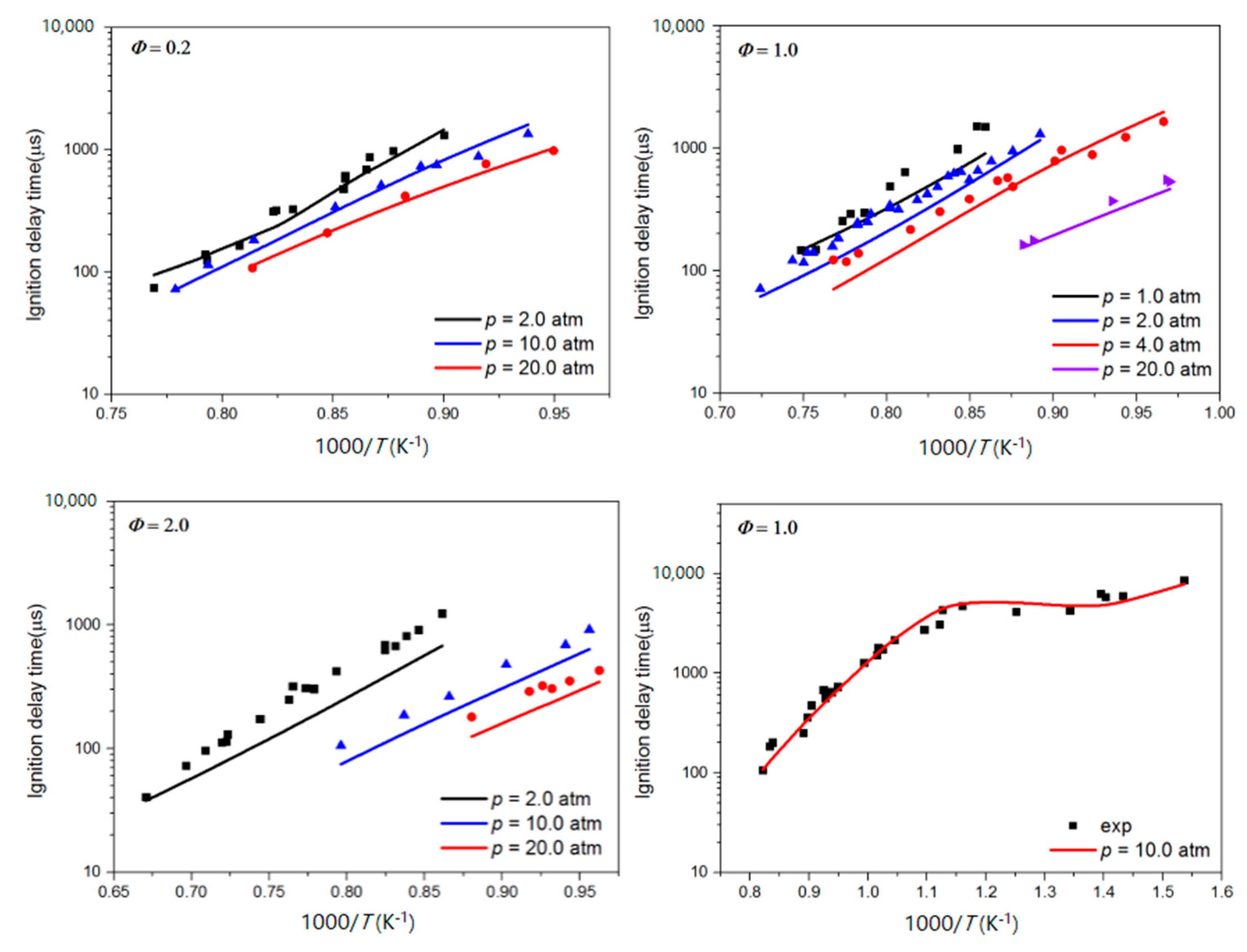
The wide-temperature-range skeletal mechanism was validated against the ignition delay times measured by Zhang [27] under conditions covering equivalence ratios (ϕ) of 0.2–2.0, pressures of 1–20 atm, and temperatures of 650–1500 K. Figure A1 presents a comparison between the experimentally measured data and the kinetic simulation results across 11 distinct operating conditions. Under fuel-rich conditions (ϕ = 2.0) at a pressure of 2.0 atm, the performance of the mechanism was slightly less satisfactory. However, the mechanism demonstrated good overall performance across the majority of the tested conditions.
Figure A1. Comparison of kinetic simulation results and experimental data for ignition delay times of RP-3 surrogate fuel/air mixtures under multiple conditions. Symbols: experimental data; lines: simulation results.
Aerospace 13 00020 g0a1

Appendix A.2.2. Laminar Flame Speed Comparison

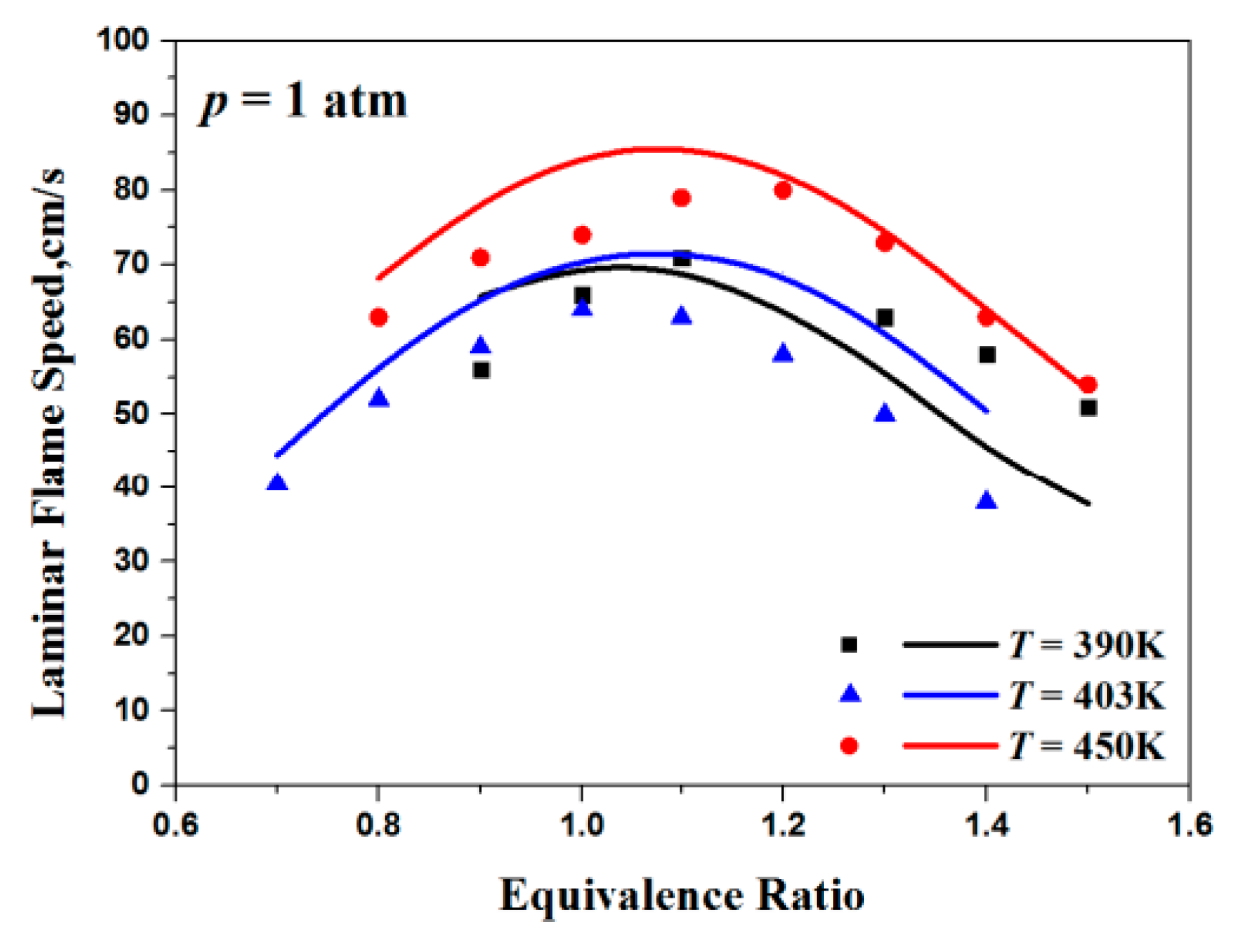
The wide-temperature-range skeletal mechanism constructed in this work was validated against the laminar flame speed experimental data from Zheng [28] and Ma [29]. The validation was performed at an experimental pressure of 1 atm and temperatures of 390 K, 403 K, and 450 K. As shown in Figure A2, the simulation results exhibit a consistent trend with the experimental values.
Figure A2. Comparison of kinetic simulation results and experimental data for laminar flame speeds of an RP-3 surrogate fuel/air mixture at different initial temperatures (1 atm). Symbols: experimental data; lines: simulation results.
Aerospace 13 00020 g0a2

Appendix A.2.3. Species Concentrations

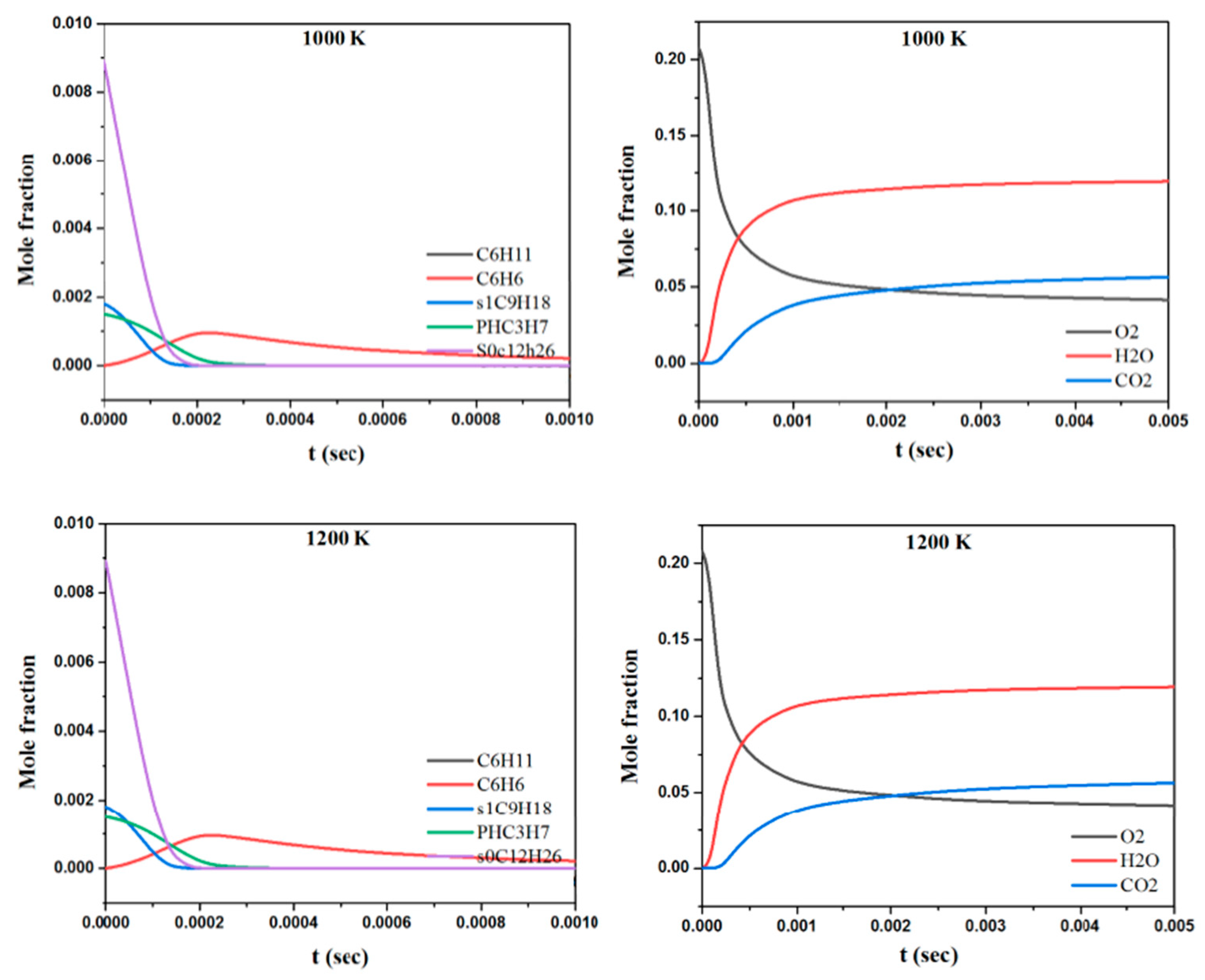
Species concentrations at temperatures of 1000 K and 1200 K, an equivalence ratio of 1.0, and a pressure of 10 atm are shown in Figure A3. As shown in Figure A3, the reaction time for reactant consumption and the equilibration time for product formation fall within reasonable limits.
Figure A3. Concentration profiles of reactants, products, and intermediate species.
Aerospace 13 00020 g0a3

References

  1. Lefebvre, A.H.; Ballal, D.R. Gas Turbine Combustion: Alternative Fuels and Emissions, 3rd ed.; Taylor & Francis Group CRC Press: New York, NY, USA, 2010. [Google Scholar]
  2. Yang, R. Influence of inlet flow distortion on combustor performance. Aeroengine 1994, 3, 28–33. [Google Scholar]
  3. Shadowen, J.H.; Egan, W.J., Jr. Evaluation of Circumferential Airflow Uniformity Entering Combustors from Compressors. Volume 1—Discussion of Data and Results; Pratt & Whitney Aircraft Florida Research and Development Center: Jupiter, FL, USA, 1972. [Google Scholar]
  4. Shadowen, J.H.; Egan, W.J., Jr. Evaluation of Circumferential Airflow Uniformity Entering Combustors from Compressors. Volume 2—Data Supplement; Pratt & Whitney Aircraft Florida Research and Development Center: Jupiter, FL, USA, 1972. [Google Scholar]
  5. Hou, X.; Ji, H.; Liu, Q.; Yan, C.; Zhao, J. Combustion Technology for High Performance Aviation Gas Turbine, 1st ed.; N.D.I. Press: Beijing, China, 2002. [Google Scholar]
  6. Jin, R.; Suo, J. Advance Gas Turbine Combustor; A.I. Press: Beijing, China, 2016. [Google Scholar]
  7. Schultz, D.F.; Perkins, P.J. Effects of Radical and Circumferential Inlet Velocity Profile Distortions on Performance of a Short-Length Double-Annular Ram-Induction Combusto; Lewis Research Center, National Aeronautics and Space Administration: Cleveland, OH, USA, 1972. [Google Scholar]
  8. Wu, P. Research on Influences of Inlet Distortion and Fuel Injection Pulse on Combustor Combustion Flow Field; Nanjing University of Aeronautics and Astronautics: Nanjing, China, 2012. [Google Scholar]
  9. Zhu, D.-Q.; Wu, P.-L.; Jin, R.-H.; Li, P.-F.; Liu, Y. Numerical Simulation for Influences of Fuel Injection Pulse on Temperature Profile. Aeroengine 2015, 41, 51–56. [Google Scholar]
  10. Liang, Z.; Lin, Y.; Xu, Q.; Zhang, C.; Dai, W. Effects of inlet velocity distortion on oulet temperature distribution of a reverse-flow combustor. J. Aerosp. Power 2016, 31, 1142–1148. [Google Scholar]
  11. Yan, Y. Study on the Effect of Inlet Prewhirl on Combustion Chamber Outlet Gas Temperature Field; Shanghai Jiaotong University: Shanghai, China, 2017. [Google Scholar]
  12. Wang, M.; Cheng, S.; Song, S.; Chen, Y. Numerical simulation on influence of flow field of combustor inlet on a certain reversed-flow combustor performance. J. Aerosp. Power 2018, 33, 1281–1289. [Google Scholar]
  13. Gur’yanova, M.M.; Piralishvili, S.A. Joint effect of input asymmetrical velocity profile and initial turbulence intensity on hydraulics of a separated diffuser of GTE combustion chamber. Russ. Aeronaut. (Iz VUZ) 2016, 59, 197–205. [Google Scholar] [CrossRef]
  14. Kong, L.; Zhang, G.; Qian, Y.; Hou, L. Effect of inlet distortion on performance of combustion chamber. J. Aerosp. Power 2018, 33, 642–648. [Google Scholar]
  15. Gu, M. Experimental study on influence of inlet flow distortion on outlet temperature field quality of combustor. Aeroengine 1994, 1–11. [Google Scholar]
  16. Oijen, J.A.V.; Goey, L.P.H.D. Modelling of Premixed Laminar Flames using Flamelet-Generated Manifolds. Combust. Sci. Technol. 2000, 161, 113–137. [Google Scholar] [CrossRef]
  17. Donini, A.; Bastiaans, R.J.M.; Oijen, J.A.V.; de Goey, L.P.H. A 5-D Implementation of FGM for the Large Eddy Simulation of a Stratified Swirled Flame with Heat Loss in a Gas Turbine Combustor. Flow Turbul. Combust. 2017, 98, 887–922. [Google Scholar] [CrossRef] [PubMed]
  18. Weigand, P.; Meier, W.; Duan, X.R.; Stricker, W.; Aigner, M. Investigations of swirl flames in a gas turbine model combustor I. Flow field, structures, temperature, and species distributions. Combust. Flame 2006, 144, 205–224. [Google Scholar] [CrossRef]
  19. Meier, W.; Duan, X.R.; Weigand, P. Investigations of swirl flames in a gas turbine model combustor II. Turbul. –Chem. Interactions. Combust. Flame 2006, 144, 225–236. [Google Scholar] [CrossRef]
  20. Ren, H.; Wang, J.; Li, X. Combuston Dynamics; Center for Combustion Dynamics, Sichuan University: Chengdu, China, 2021; Available online: http://cds.scu.edu.cn/ (accessed on 8 December 2025).
  21. Egorov, Y.; Menter, F.R.; Lechner, R.; Cokljat, D. The Scale-Adaptive Simulation Method for Unsteady Turbulent Flow Predictions. Part 2: Application to Complex Flows. Flow Turbul. Combust. 2010, 85, 139–165. [Google Scholar] [CrossRef]
  22. Schildmacher, K.U.; Koch, R.; Wittig, S.; Krebs, W.; Hoffmann, S. Experimental Investigations of the Temporal Air-Fuel Mixing Fluctuations and Cold Flow Instabilities of a Premixing Gas Turbine Burner; ASME: New York, NY, USA, 2000. [Google Scholar]
  23. Widenhorn, A.; Noll, B.; Aigner, M. Numerical Study of a Non-Reacting Turbulent Flow in a Gas-turbine Model Combustor. In 47th AIAA Aerospace Sciences Meeting including The New Horizons Forum and Aerospace Exposition; American Institute of Aeronautics and Astronautics: Reston, VA, USA, 2009. [Google Scholar]
  24. Shaddix, C.R. Correcting thermocouple measurements for radiation loss: A critical review. In Proceedings of the 33rd National Heat Transfer Conference, Albuquerque, NM, USA, 15–17 August 1999; ASME: Albuquerque, NM, USA, 1999; pp. 1–10. [Google Scholar]
  25. Zhao, Y.; He, X.; Li, M.; Yao, K. Experimental investigation on spray characteristics of aircraft kerosene with an external-mixing atomizer. Fuel Process. Technol. 2020, 209, 106531. [Google Scholar] [CrossRef]
  26. Zhao, Y.; He, X.; Li, M.; Lu, R.; Yao, K. Ignition, efficiency and emissions of RP-3 kerosene in a three-staged multi-injection combustor. Fuel Process. Technol. 2021, 213, 106635. [Google Scholar] [CrossRef]
  27. Zhang, C.; Li, B.; Rao, F.; Li, P.; Li, X. A shock tube study of the autoignition characteristics of RP-3 jet fuel. Proc. Combust. Inst. 2015, 35, 3151–3158. [Google Scholar] [CrossRef]
  28. Zheng, D.; Yu, W.-M.; Zhong, B.-J. RP-3 Aviation Kerosene Surrogate Fuel and the Chemical Reaction Kinetic Model. Acta Phys. -Chim. Sin. 2015, 31, 636–642. [Google Scholar]
  29. Ma, H.; Xie, M.; Zeng, W.; Chen, B. Experimental study on combustion characteristics of Chinese RP-3 kerosene. Chin. J. Aeronaut. 2016, 29, 375–385. [Google Scholar] [CrossRef]
Figure 1. Schematic of the triple-dome axial-flow combustor.
Aerospace 13 00020 g001
Figure 2. Schematic of the liner: (a) 3D view; (b) section view.
Aerospace 13 00020 g002
Figure 3. Grids of the combustor: blue arrows denotes inlet, and red arrows denotes outlet.
Aerospace 13 00020 g003
Figure 4. An example of distortion generators: (a) a photo of the distortion generator; (b) structure parameters of the distortion generator.
Aerospace 13 00020 g004
Figure 5. Combustor/distortion-generator coupling model.
Aerospace 13 00020 g005
Figure 6. Axial velocity distribution along radial direction: (a) velocity distribution validation; (b) radial velocity distortion; (c) circumferential velocity distortion (the numbers 1, 2 and 3 correspond to swirler-I, swirler-II and swirler-III, respectively).
Aerospace 13 00020 g006
Figure 7. Schematic diagram of the experimental device.
Aerospace 13 00020 g007
Figure 8. A photo of the test section.
Aerospace 13 00020 g008
Figure 9. Schematic of outlet temperature sampling positions.
Aerospace 13 00020 g009
Figure 10. Three-dimensional temperature distribution under uniform inlet velocity. (Left): transient; (Right): time averaged.
Aerospace 13 00020 g010
Figure 11. Three-dimensional time-averaged temperature distribution (rear view) under uniform intake condition.
Aerospace 13 00020 g011
Figure 12. Three-dimensional heat release rate distribution under uniform inlet velocity. (a): transient; (b): time averaged.
Aerospace 13 00020 g012
Figure 13. Velocity distribution and streamline under uniform inlet velocity: (a) plane z = 0 m (at the middle of inlet height); (b) plane y = 0 m (at the center of spanwise, i.e., the middle swirler).
Aerospace 13 00020 g013
Figure 14. Distribution of heat release rate and axial zero-velocity line under uniform inlet condition: (a) plane z = 0 m (at the middle of inlet height); (b) plane y = 0 m (at the center of spanwise, i.e., the middle swirler).
Aerospace 13 00020 g014
Figure 15. Contours of heat release rate overlapped by iso-lines of mixture fraction: (a) plane z = 0 m (at the middle of inlet height); (b) plane y = 0 m (at the center of spanwise, i.e., the middle swirler).
Aerospace 13 00020 g015
Figure 16. OTDF under conditions of radial velocity distortion. (a): Absolute value of OTDF; (b): relative difference in OTDF compared with uniform inlet velocity.
Aerospace 13 00020 g016
Figure 17. OTDF under conditions of circumferential velocity distortion. (a): Absolute value of OTDF; (b): relative difference in OTDF compared with uniform inlet velocity.
Aerospace 13 00020 g017
Table 1. Inlet distortion conditioned studied in the test.
Distortion TypePosition of Peak VelocityMagnitude of Distortion
Uniform/0
Radial distortion (RD)Radial-mid(RD-I)6.5%
12%
18%
24.4%
Radial-outer(RD-II)11.2%
17.6%
23%
Radial-inner(RD-III)11.2%
17.6%
23%
Circumferential distortion (CD)Middle swirler (CD-I)17.8%
24.4%
Between swirler-1 and swirler-2 (CD-II)19.6%
Disclaimer/Publisher’s Note: The statements, opinions and data contained in all publications are solely those of the individual author(s) and contributor(s) and not of MDPI and/or the editor(s). MDPI and/or the editor(s) disclaim responsibility for any injury to people or property resulting from any ideas, methods, instructions or products referred to in the content.