1. Introduction
The Cooperative Detection and Guidance (CDG) method has been extensively studied. Since its proposal, this method has been mostly applied to scenarios where two interceptors engage one target aircraft or the number of interceptors exceeds that of the target aircraft [
1,
2]. Compared with the traditional one-to-one interception mode, although this method can improve guidance precision and interception success rate, it cannot achieve the maximum interception effectiveness. Therefore, based on the CDG method, studying the cooperative detection and guidance problem when the number of interceptors is equal to that of the target aircraft is of great significance.
Currently, cooperative detection is mostly applied in research on spacecraft orbital docking and aerial vehicle guidance [
3,
4,
5,
6,
7]. Both types of research aim for precise target positioning, and their theoretical applications are interoperable. The three-line-of-sight (3-LOS) cooperative positioning method has been widely used. Its principle is to form a detection triangle by acquiring the line-of-sight (LOS) angles of two of our aerial vehicles to the target aircraft and the positions of the two aerial vehicles, thereby estimating the target aircraft’s position, velocity, and acceleration information. However, this type of method is rarely used in scenarios such as autonomous rendezvous of non-coplanar spacecraft [
8,
9] and precise positioning, tracking, and identification of target aircraft by interceptors.
To address the scenario where a single aircraft launches multiple cooperative interceptor missiles simultaneously to counter incoming targets, Reference [
10] proposed a cooperative reduced-order estimation method based on information sharing. By enabling each defensive missile to share LOS angle data with other team members, this method achieves the estimation of relative states and unknown parameters of individual members within the group, thereby improving interception efficiency. To solve the problem of cooperative strikes against multiple maneuvering targets and enhance multi-missile detection efficiency, Reference [
11] proposed a group cooperative midcourse guidance law for heterogeneous missile formations. It introduced a super-twisting disturbance observer to estimate target acceleration, designed a cooperative guidance law using a group consensus protocol in the LOS angle direction, and developed a time-varying LOS angle formation tracking midcourse guidance law in the vertical direction using observer-estimated information. Its stability was proven via Lyapunov theory. Various noise errors are unavoidable during the detection and identification process. The multi-model adaptive estimation (MMAE) algorithm can ensure filter stability, improve filter tracking performance and estimation precision, and overcome the theoretical limitations of the extended Kalman filter (EKF) [
12,
13].
The original concept of cooperative guidance relies on the information interaction mechanism and coordinated control strategy among multiple aerial vehicle platforms to achieve cooperative strike operations under terminal spatiotemporal constraints. Divided by the constraint dimensions of technical implementation, the aerial vehicle swarm cooperative guidance technology under terminal spatiotemporal constraints can be further categorized into three types [
14,
15,
16]:
- (1)
Cooperative guidance technology with only strike time synchronization as the core constraint. Its core goal is to precisely control the flight speed and trajectory planning of each vehicle to ensure all strike platforms complete target strikes synchronously within a preset time window. It is mostly used in operational scenarios requiring “instantaneous saturation strikes” [
17,
18].
- (2)
Cooperative guidance technology with only strike angle precision as the core constraint. It focuses on precisely controlling the projectile-target intersection angle by optimizing parameters such as the pitch angle and yaw angle of the vehicle’s terminal trajectory to improve the damage effect on specific parts of the target, for example, top strikes against armored targets to meet high-precision damage requirements [
19,
20,
21].
- (3)
Dual-constraint cooperative guidance technology that simultaneously considers strike time synchronization and strike angle precision. This technology needs to comprehensively balance the priorities of temporal and angular constraints, coordinating the vehicle’s speed, attitude, and trajectory through a multivariable coupled control algorithm. It is suitable for complex operational missions with strict requirements on both time synchronization and damage precision, such as multi-platform joint precision strikes against high-value fixed targets [
22,
23].
Cooperative guidance technology with strike time synchronization as the core constraint lies in constructing physically compatible, consistent coordination parameters. Based on this, a dynamic model of remaining flight time error is established, followed by the design of a feedback control module, ultimately achieving synchronized strikes against targets by the aerial vehicle swarm.
In terms of technical performance, some studies have proposed an adaptive cooperative guidance scheme in the LOS direction based on fast fixed-time consensus theory, flight time parameters, and undirected topology. By designing a novel nonsingular terminal sliding mode method to construct an adaptive fixed-time guidance law, this study does not require the target’s maneuvering information. The stability is verified via Lyapunov theory, and simulation results show that the scheme can achieve time-synchronized attacks and meet the desired impact angle [
24].
To address the cooperative guidance challenge of multiple hypersonic glide vehicles, relevant research has proposed a method based on parametric design and analytical solutions of flight time: converting reentry trajectory optimization into parameter optimization to determine the angle of attack profile and reentry time; deriving an analytical formula for remaining flight time to satisfy cooperative constraints and calculate yaw angle control commands; optimizing parameters using the bee colony algorithm. Simulation results verify the time constraint satisfaction and cooperative precision of the method, and its robustness is confirmed through the Monte Carlo method [
25]. For maneuvering targets in three-dimensional space that require multi-missile cooperative interception with specified attack time and desired LOS angle, a study has proposed a three-dimensional leader-follower guidance law. Optimized performance indicators are designed for different directions, and theoretical proofs and multiple sets of numerical simulations have verified the effectiveness, superiority, and robustness of the guidance law [
26].
In addition, some studies focus on multi-vehicle spatiotemporal cooperative guidance technology that does not rely on remaining flight time, proposing a two-stage strategy combining cooperative guidance and proportional navigation to meet two-dimensional constraints. In three-dimensional scenarios, by adding a plane tracking guidance link, the scheme can still satisfy spatiotemporal constraints even when speed changes, and numerical simulation results have confirmed its effectiveness and application advantages [
27]. To solve the high-precision interception problem of aerial maneuvering targets under limited attack time, a study has proposed a guidance law based on a nonlinear virtual relative model for targets near the origin. Relevant coefficients are determined through polynomial functions to meet constraint requirements. Simulation results show that the errors of the guidance law in different scenarios are within an acceptable range, and its performance is superior to existing similar guidance laws [
28].
To solve the optimal initial and terminal guidance state problem for multi-missile interception of multi-targets, relevant research has proposed a midcourse guidance law considering the combined effect of flight time: constructing a three-dimensional model, designing an adaptive disturbance observer integrating finite-time theory and radial basis function, and setting intra-group and inter-group consensus protocols. Numerical simulation results have verified the effectiveness and superiority of the guidance law [
29].
Cooperative guidance technology with strike angle precision as the core constraint adopts a core approach: optimizing key parameters such as the pitch angle and yaw angle of the vehicle’s terminal trajectory to precisely regulate the intersection angle between the missile and the target, thereby improving the damage effectiveness to specific parts of the target.
In the relevant research field, some scholars have integrated the “bias term” design concept with a multi-phase composite approach, proposing a novel two-stage guidance method. This method stipulates that when the continuous time integral of the bias term reaches a preset threshold, the guidance mode is switched to pure proportional guidance, ultimately achieving precise control of the impact angle constraint [
30]. Another study proposed a multi-missile cooperative three-dimensional guidance law; although it can meet the requirement of impact angle constraint, this guidance law is only applicable to intercepting stationary targets [
31]. Additionally, researchers have designed a three-dimensional guidance law incorporating impact angle constraint based on optimal control theory, but this guidance law is mainly targeted at slow-moving targets such as warships [
32]. From a theoretical perspective, the optimal control method has the prominent advantage of “optimality.” On the basis of satisfying various constraints, it can achieve the optimization of specific performances, and naturally offers convenience in handling various constraints, such as minimum energy consumption and specific impact angle. For scenarios where relative velocity measurement data cannot be obtained, a study specifically explored the corresponding cooperative strike guidance scheme, successfully solving the technical problems caused by the lack of measurement information [
22]. Another study proposed a novel three-dimensional preset-time cooperative guidance law (3-D PTCGL) based on the dynamic event-triggered (DET) mechanism. This guidance law can be used for multi-missile salvo attacks to intercept maneuvering targets with impact angle constraints [
33]. Meanwhile, a study designed a two-phase impact angle control guidance scheme command controller suitable for air-to-air combat scenarios. This controller integrates two correction strategies: one based on the solution characteristics of the first phase, and the other, a prediction-based correction mechanism in the second phase. Incorporating these two correction strategies into the two-phase guidance scheme enables the interception of high-speed aerial targets at a specified impact angle [
34].
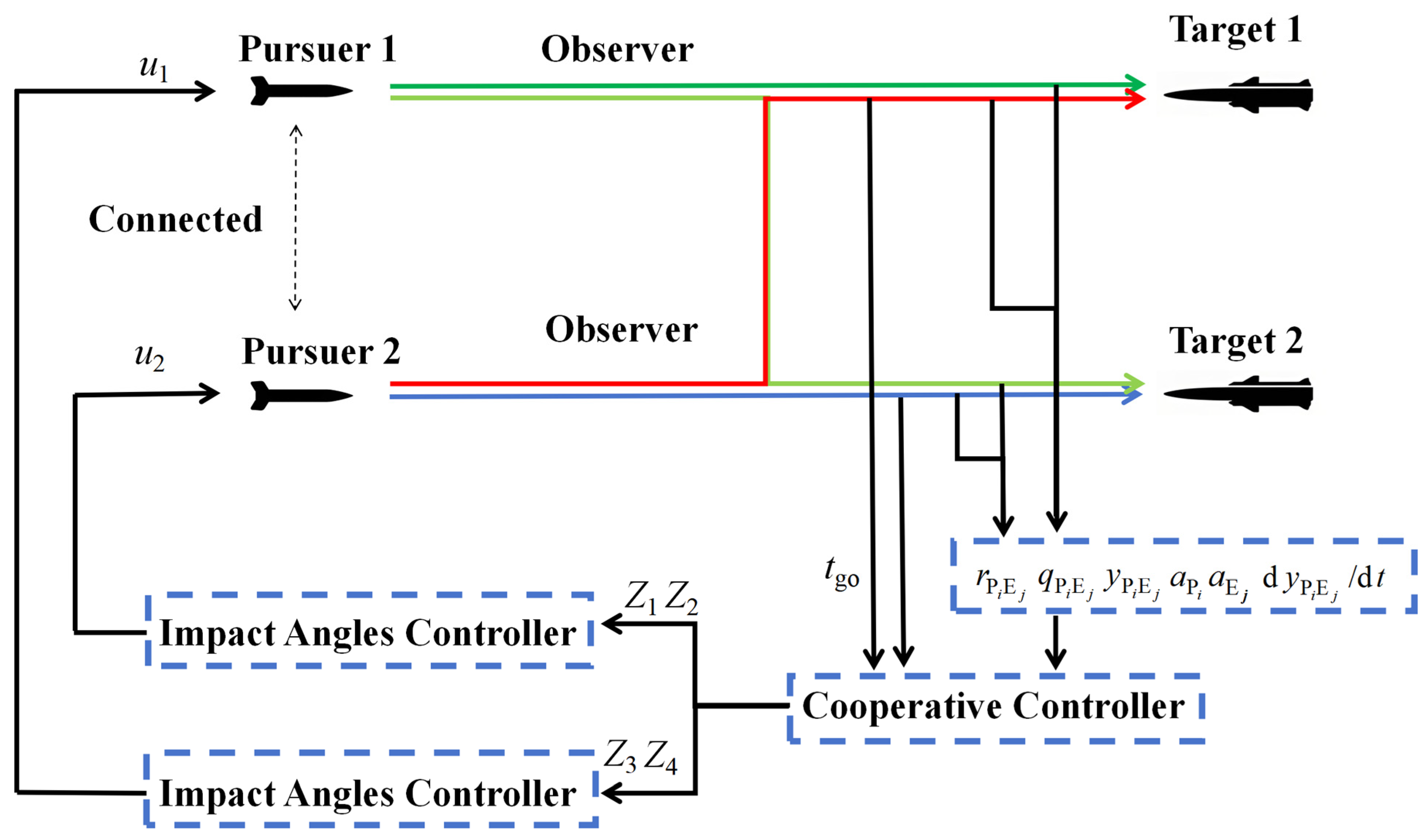
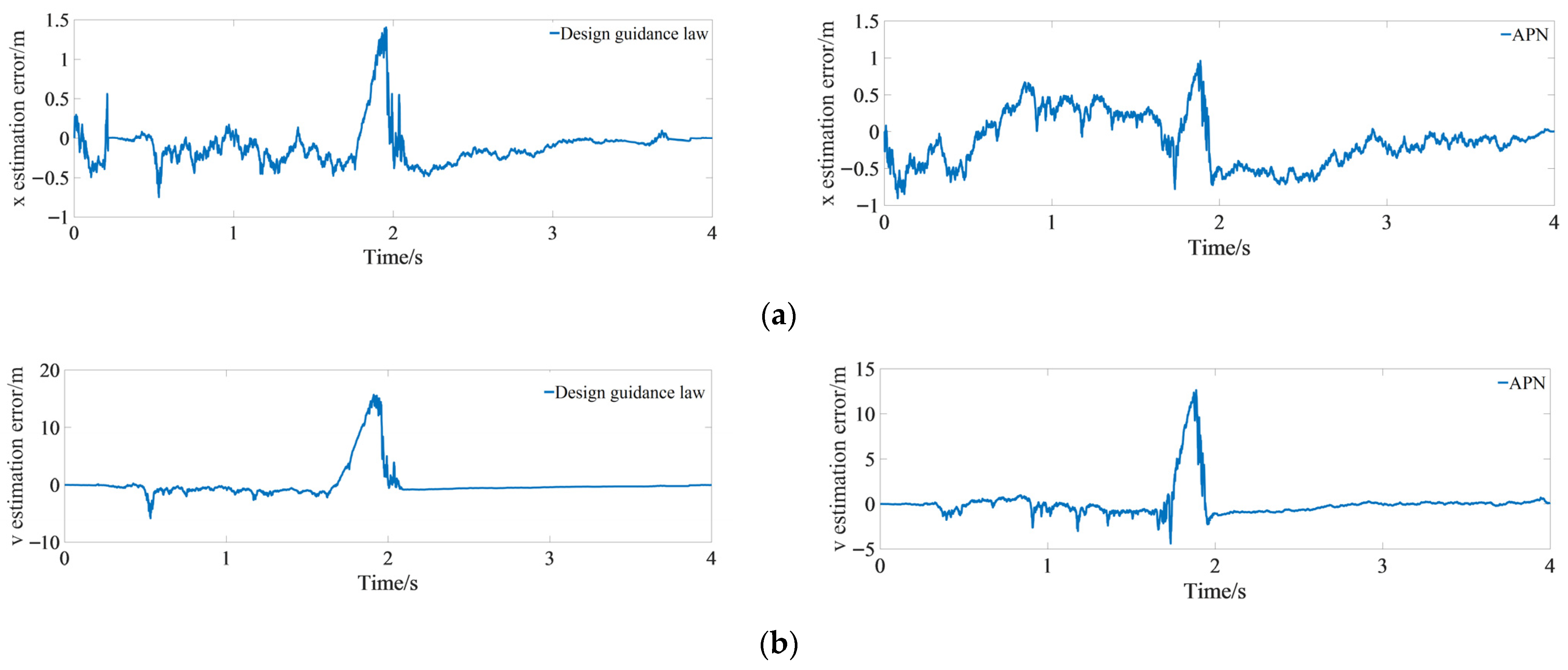
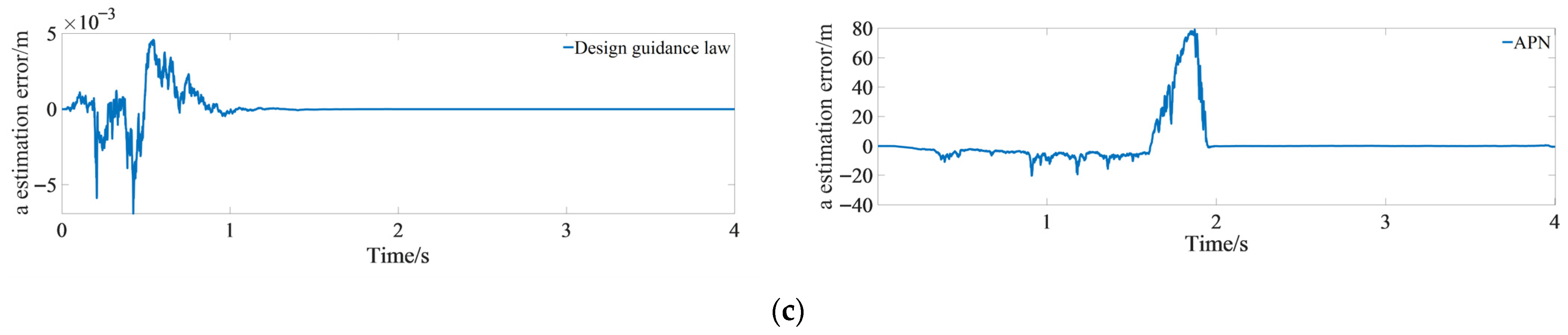
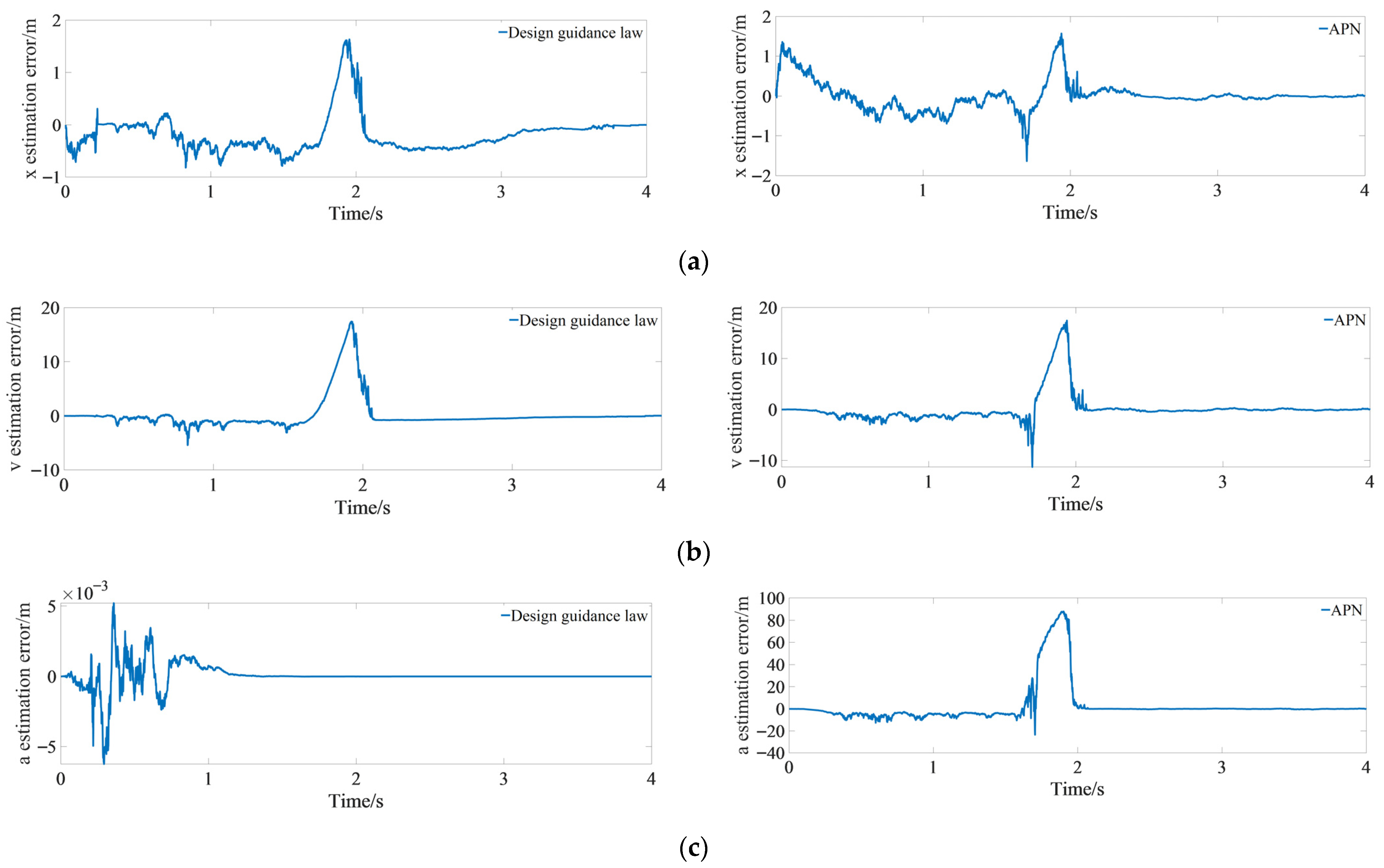
For the scenario where the number of interceptors equals that of the target aircraft, this paper designs a CDG method based on optimal control theory. Through two interceptors adjusting the LOS separation angles, the detection errors of the two target aircraft are reduced. Meanwhile, the Fast MMAE algorithm is introduced to estimate the flight states of target aircraft, obtaining accurate information such as their position, velocity, and acceleration, as well as identifying their maneuver switch times. This achieves the tracking, interception, and simultaneous hit of target aircraft by the two interceptors.
The innovations of this paper are mainly reflected in two aspects: (1) For the scenario where the number of interceptors equals that of target aircraft, this paper designs a CDG method based on optimal control theory. This method innovatively achieves the comprehensive integration of cooperative detection and cooperative guidance, enabling interceptors to adjust the LOS angle and flight trajectory during flight, thereby improving their detection precision of target aircraft. (2) This paper introduces the Fast MMAE algorithm to estimate the motion states and maneuver switch times of target aircraft, thereby enhancing the guidance precision of interceptors.
The rest of this paper is organized as follows:
Section 2 presents the establishment of the aircraft kinematic model and the miss distance model.
Section 3 focuses on the construction of the CDG method based on optimal control theory.
Section 4 describes the application method and steps of the Fast MMAE algorithm in this scenario.
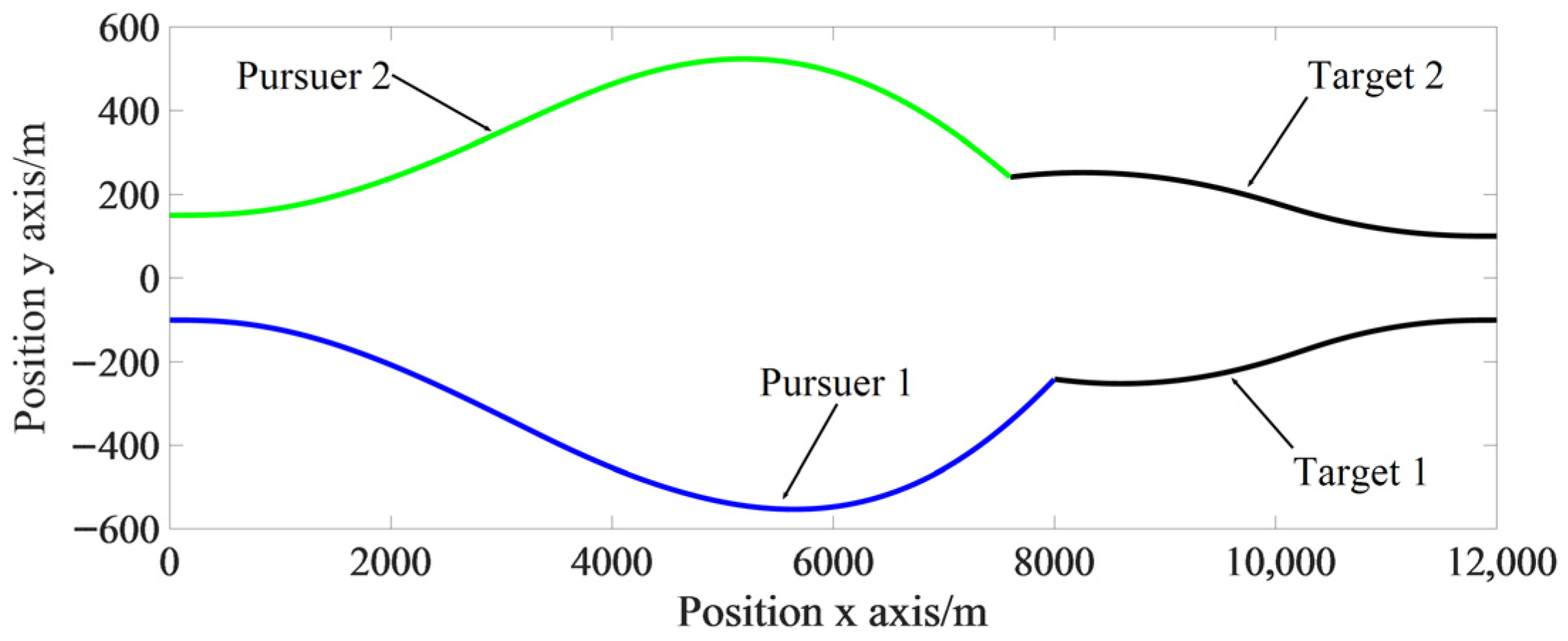
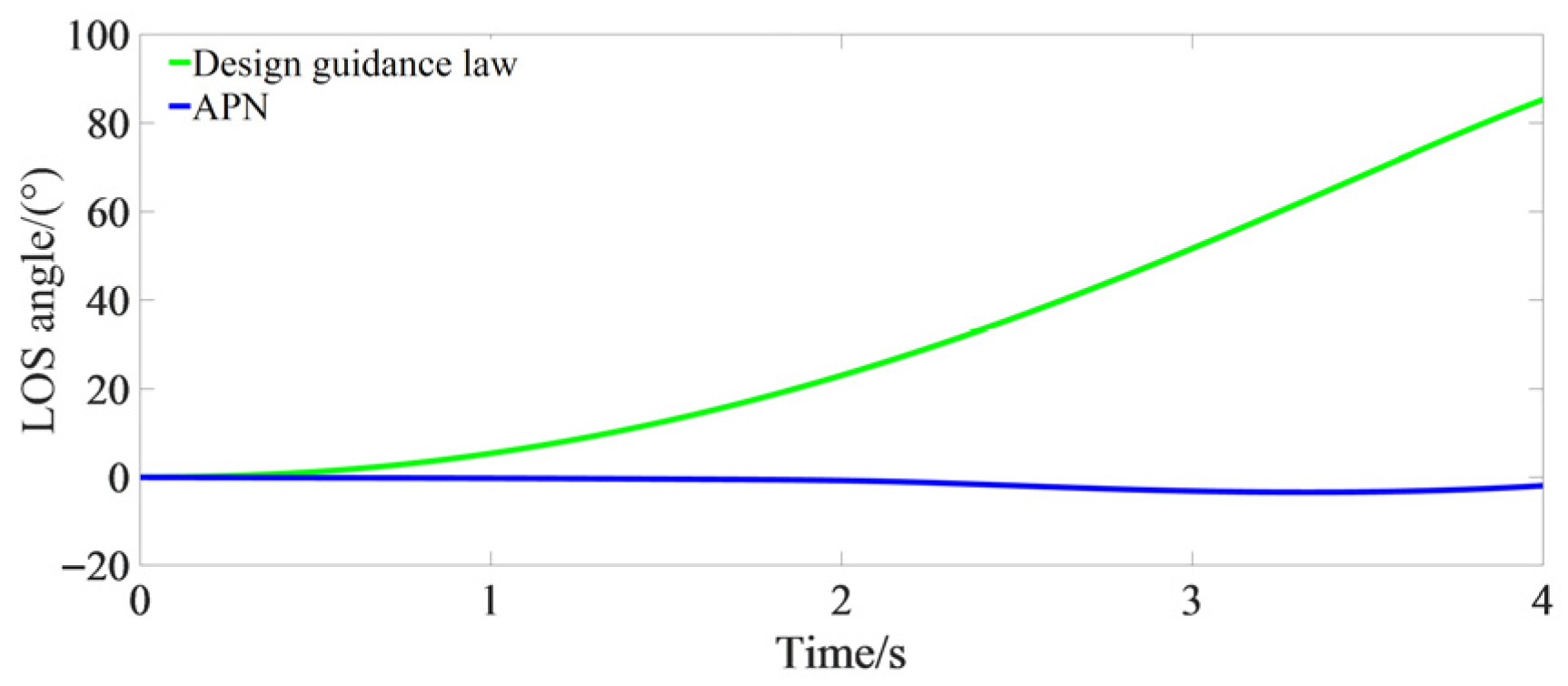
Section 5 conducts a simulation-based comparative analysis between the IDG method and the APN guidance law under the application background of Fast MMAE.
Section 6 summarizes the main conclusions of this study.
2. Problem Formulation
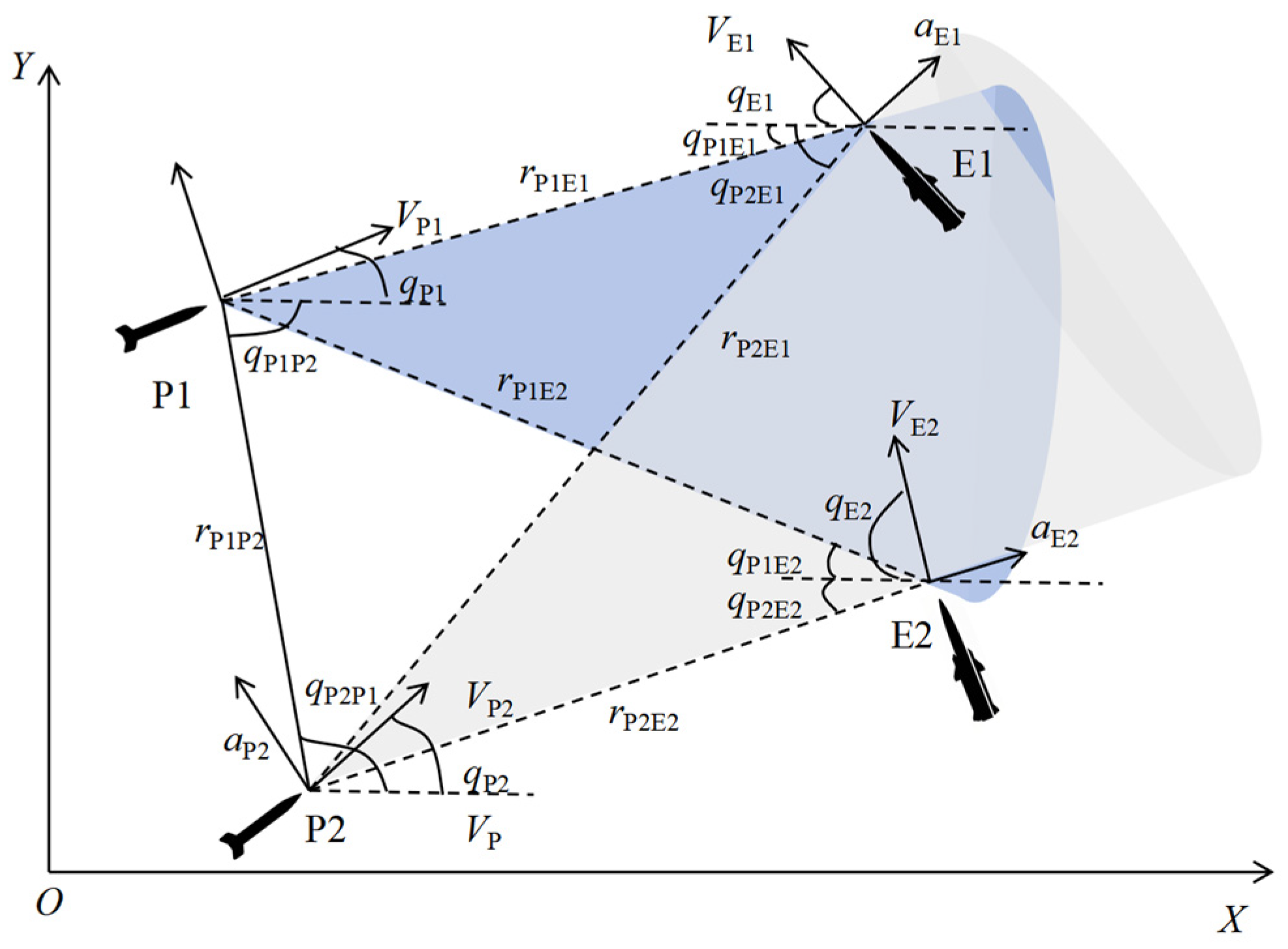
Two of our intercepting vehicles lock onto two target vehicles and maneuver toward them, while the target vehicles adopt the bang-bang optimal evasive maneuver strategy for evasion. While maneuvering, our two intercepting vehicles detect the positions of the target vehicles and conduct information exchange. The specific interception scenario is illustrated in
Figure 1. The kinematic models of intercepting vehicles P1, P2, and target vehicles E1, E2 are established in the inertial coordinate system
X-O-Y.
,
,
(
) denote the LOS normal acceleration, velocity, and flight-path angle of the vehicles, respectively.
,
,
,
denote the LOS angles between P1 and E1, P2 and E1, P1 and E2, and P2 and E2, respectively.
,
,
,
denote the relative distances between P1 and E1, P2 and E1, P1 and E2, and P2 and E2, respectively.
2.1. Kinematics Model
The intercepting vehicle and the target vehicle can be represented by a polar coordinate system composed of the relative distance
r and LOS angle
q between them:
,
denote the closing velocity and LOS angle rate of the intercepting vehicle relative to the target vehicle, respectively.
,
denote the velocity of the intercepting vehicle relative to the target vehicle along the LOS direction and the relative velocity perpendicular to the LOS direction, respectively, where
During the approach process between the intercepting vehicle and the target vehicle, since the acceleration
of each vehicle is perpendicular to its velocity
in direction, the acceleration can only change the direction of the vehicle’s velocity but not alter its magnitude. Therefore, the entire interception process can be regarded as a constant-velocity approach process, and the interception termination time between the intercepting vehicle and the target vehicle is given by:
Throughout the entire process, the LOS angle rate of the intercepting vehicle is given by:
Throughout the entire interception process, to ensure more accurate detection errors of the intercepting vehicles regarding the LOS angles and relative distances to the target vehicles, two detection triangles are specifically configured: namely, the detection triangle formed by intercepting vehicles P1 and P2 for target vehicle E1, and that for target vehicle E2. Thus, the entire interception process can be linearized, and accordingly, we set:
where
denotes the lateral displacement between intercepting vehicle
i and target vehicle
j, and
denotes the lateral velocity between them.
can be expressed as:
denotes the relative distance between each pair of vehicles, and
denotes the remaining time-to-go of the intercepting vehicle, where
Assuming the dynamic characteristics of each vehicle can be equivalent to a first-order inertial link, then:
In the formula, , (i = 1,2) denote the first-order dynamic time constants of each vehicle, and , denote the command accelerations of each vehicle, respectively.
Based on the kinematic models established above, the system state equation of the intercepting vehicles and target vehicles can be established as follows:
In the formula, denotes the command acceleration of the intercepting vehicle.
2.2. Measurement Model
Based on current detection technology, intercepting vehicles P1 and P2 can each detect the LOS angle information with target vehicles E1 and E2, but cannot directly measure the relative distances between the four vehicles. According to the interception scenario illustrated in
Figure 1, after forming two detection triangles, assuming the two interceptors can perform a real-time exchange of the LOS angle
(
i = 1, 2
j = 1, 2) detected from the target vehicles and their mutual relative position information, the relative distances between each pair of vehicles can be calculated using the law of sines:
where
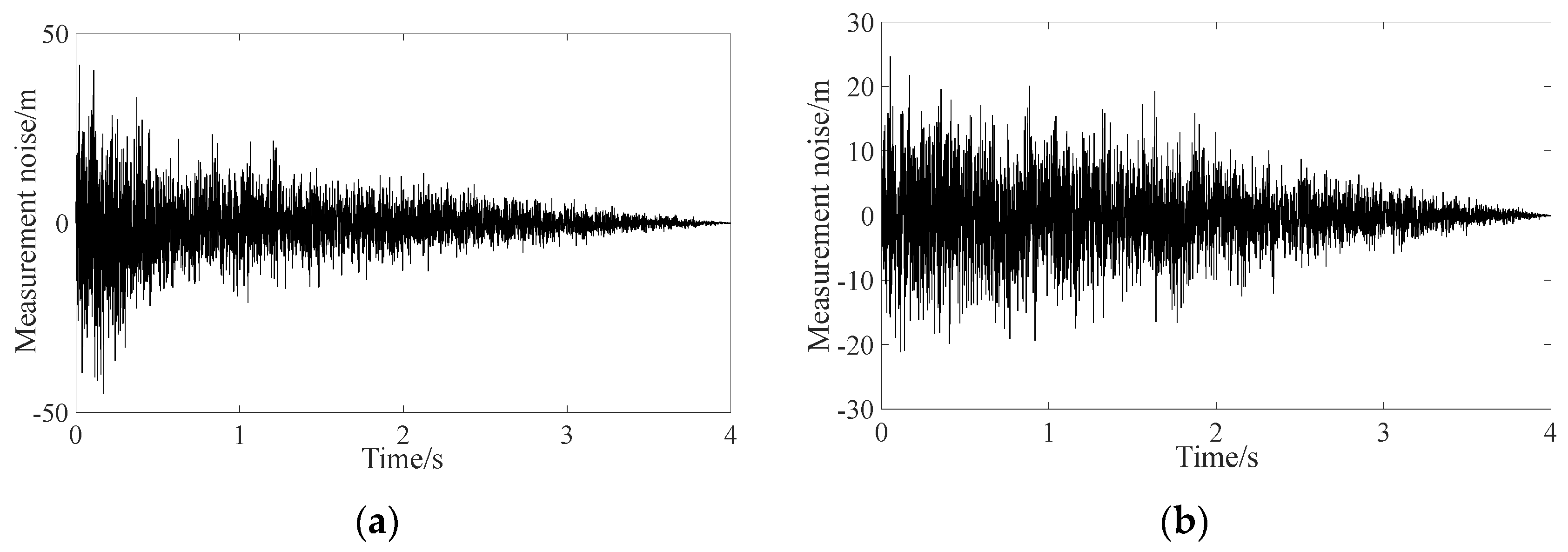
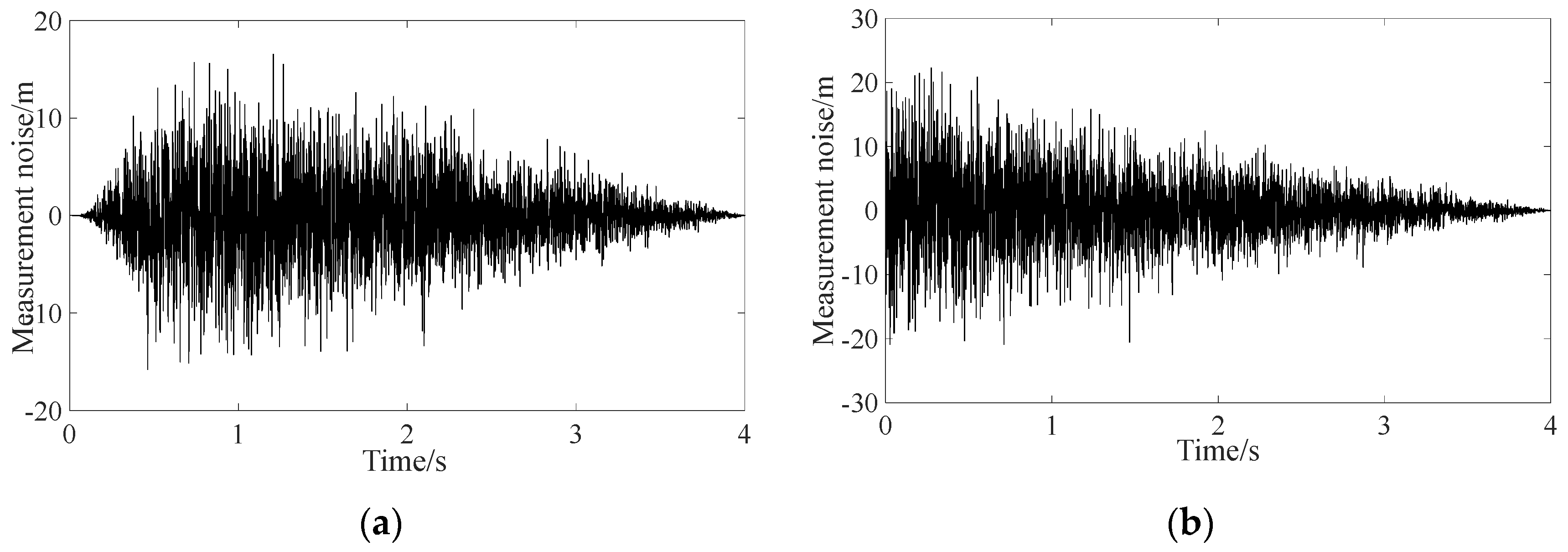
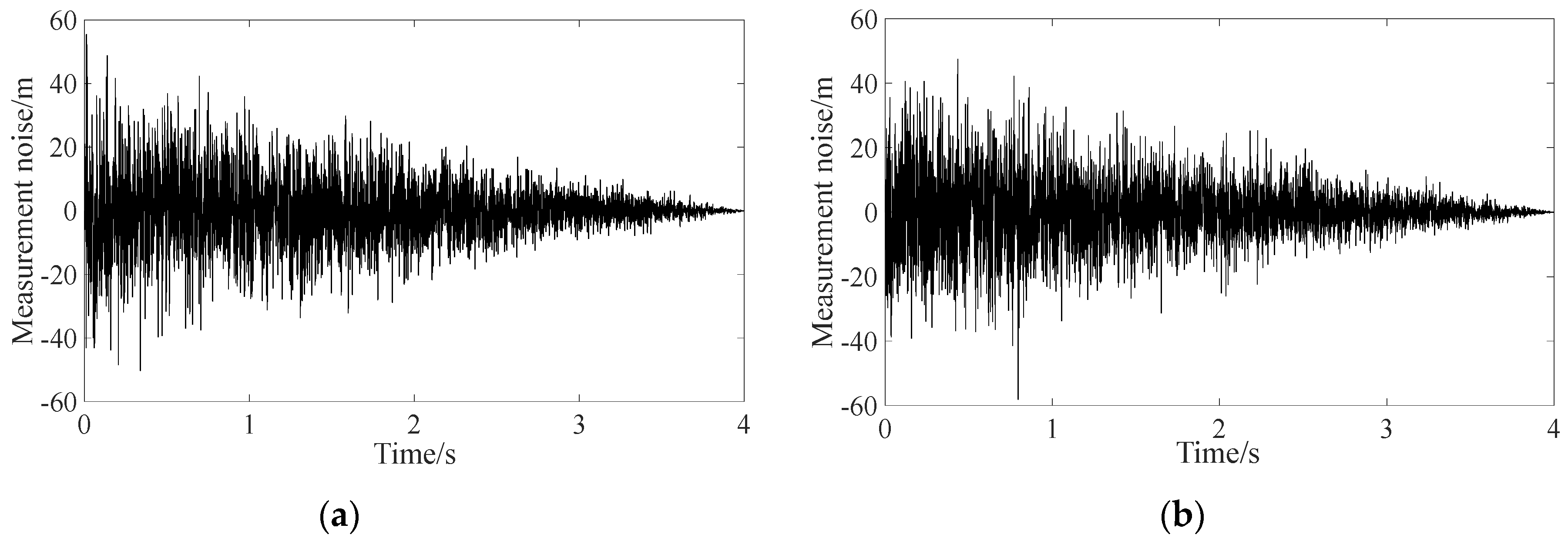
Considering practical scenarios, the detected LOS angle information contains noise, where
(
i = 1, 2
j = 1, 2) denotes the noise-corrupted LOS angle. Thus, errors also exist in the aforementioned relative distance calculation. Assuming the detection error
is Gaussian white noise, and all noise components are mutually independent, i.e.,
,
, the relative distance with error is given by:
where
represents the measurement error of the relative distance, which satisfies
, as
It can be inferred from the above equation that the detection error increases as the relevant angle parameter decreases. When , when the two intercepting vehicles are collinear with one of the target vehicles, the detection error will tend to infinity, making it impossible to effectively obtain the relative distance information of this target vehicle. Therefore, such a situation should be avoided in the process of cooperative guidance design.
2.3. Interception Indices
In addition to direct hits, an interception can also be regarded as successful if the minimum distance
M between the intercepting vehicle and the target vehicle is less than the lethal range
of the intercepting vehicle’s warhead, i.e.,
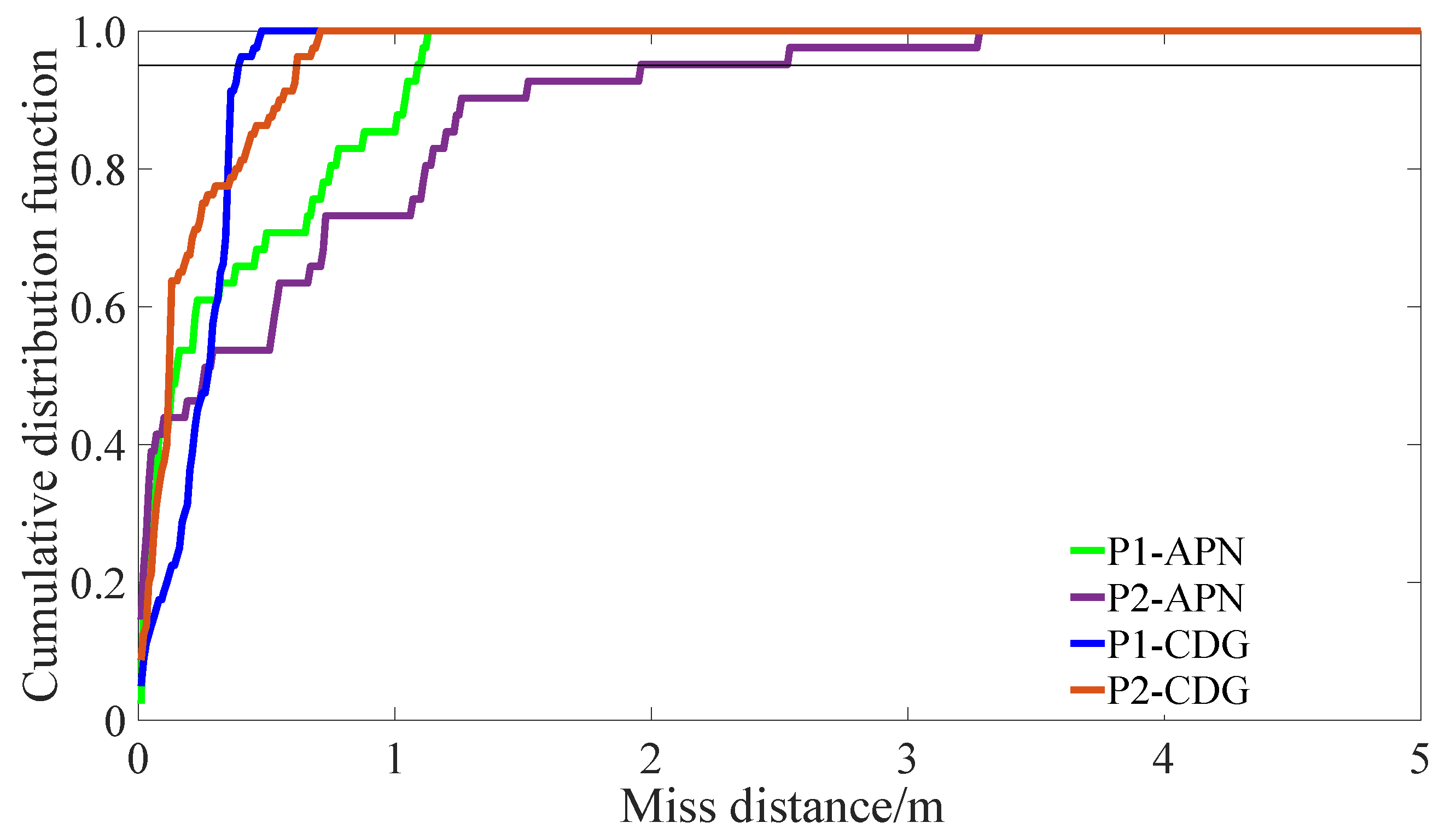
The miss distance becomes a random variable affected by target random maneuvers and detection noise. Thus, to evaluate its impact on guidance accuracy, the cumulative distribution function (CDF) is generally used for estimation. Therefore, we can judge the success of interception by the predetermined probability of successful interception based on the known lethal range of the warhead, i.e.,
The mathematical expectation
E of the miss distance can be calculated by the cumulative integral function, i.e.,
denotes the probability density function (PDF), and
denotes the CDF. According to Reference [
1], the interception probability is usually set to 95%, thus:
4. Fast Multiple Model Adaptive Estimation
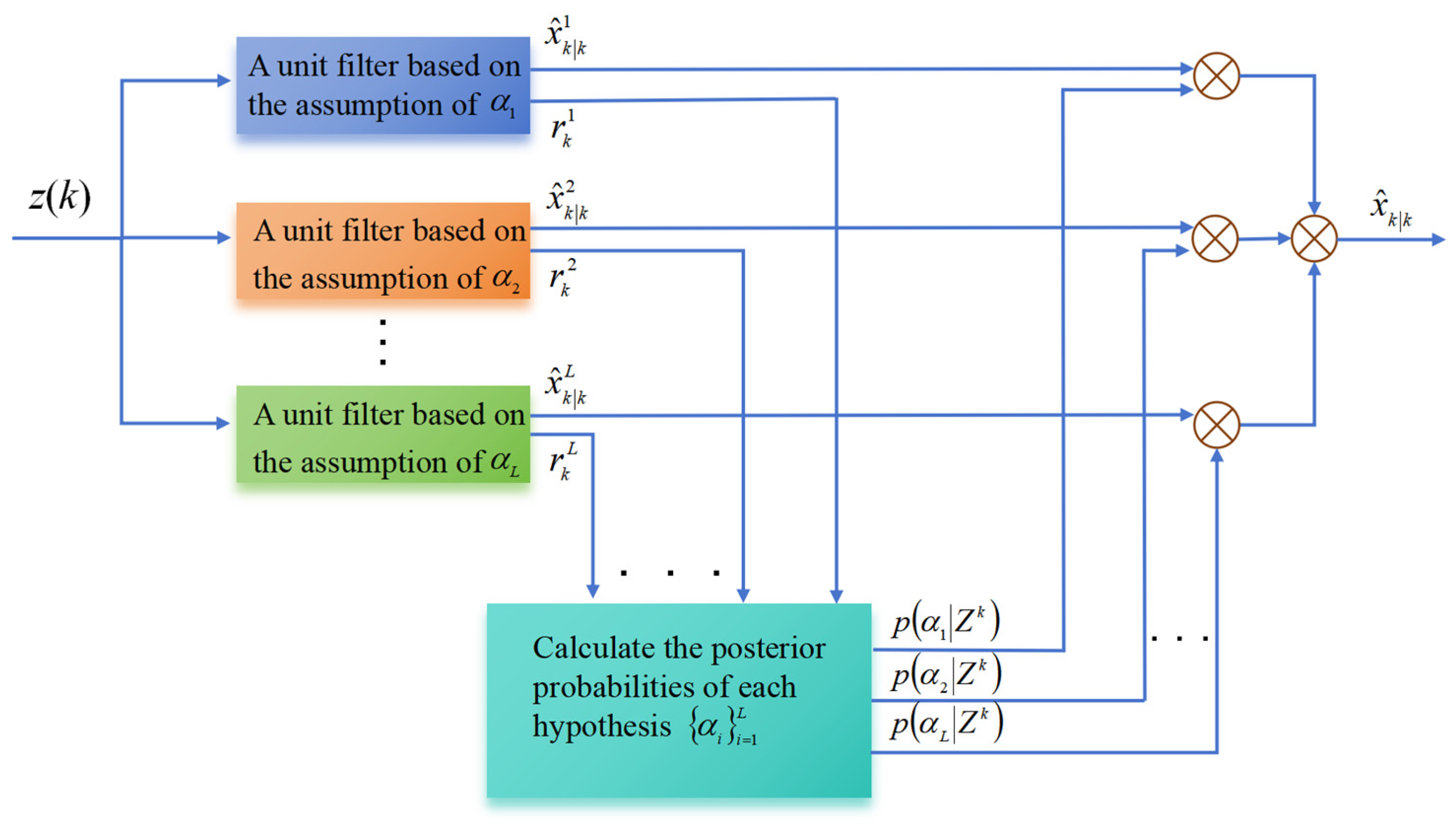
The Multiple Model Adaptive Estimation (MMAE) is a Bayesian technique that employs Kalman filters. It adapts to uncertainties in system states through multiple models, and dynamically adjusts the weights of these models based on current observation data to provide the most accurate state estimation. As shown in
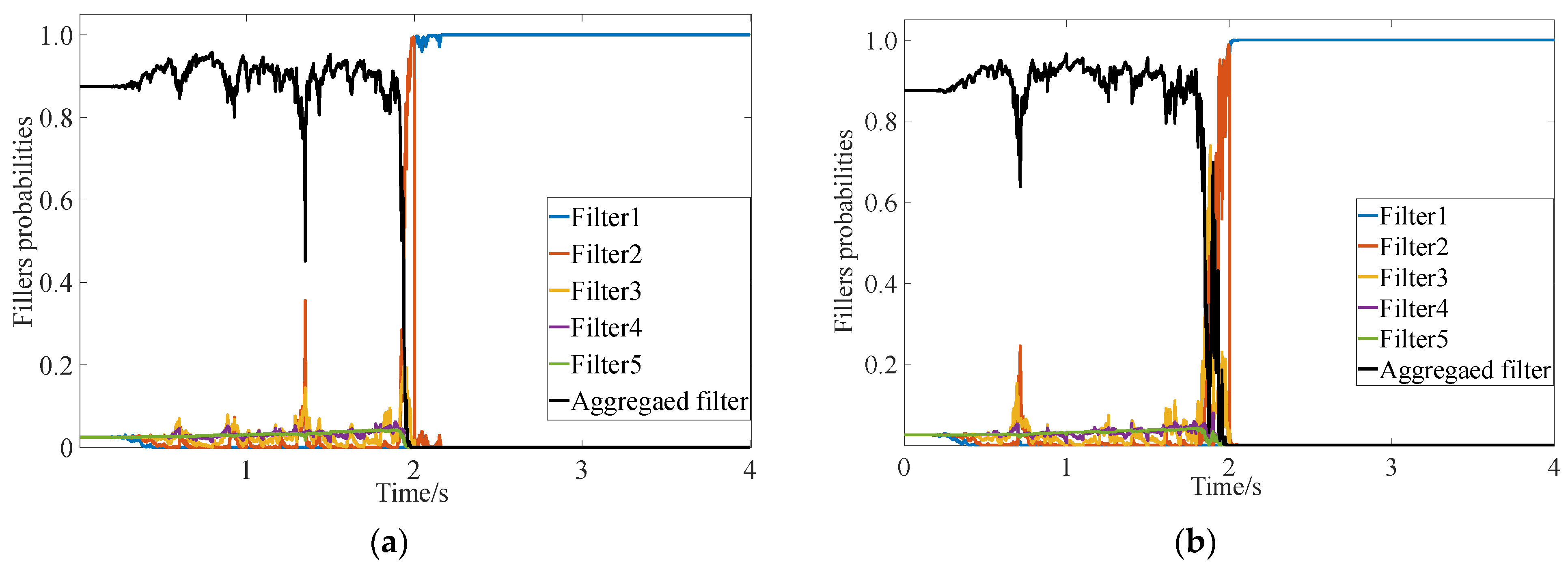
Figure 3, MMAE consists of multiple unit filters, each representing a possible hypothetical scenario. If the true unknown mode is included in the adopted model set, MMAE can serve as an optimal estimator.
In MMAE, all unit filters process the same set of measurement data and are mutually independent and operate in parallel. For the i-th unit filter, the basic state estimation output at time step
k is denoted as
, and the corresponding measurement residual is given by:
Based on the conditional Bayesian formula and the law of total conditional probability, the recursive formula for the posterior probability of
corresponding to the
i-th unit filter is constructed, i.e.,
where
is the likelihood function of
at time step
k, and this likelihood function follows a Gaussian distribution under the linear and Gaussian assumptions, i.e.,
where
is the measurement residual covariance matrix of
.
Since the target aircraft in this paper adopts a bang-bang maneuver, each occurrence time when the target aircraft randomly switches its maneuver direction to the opposite direction can be regarded as a maneuver mode. The acceleration identification problem of such randomly maneuvering targets belongs to the state estimation problem of hybrid systems under unknown and time-invariant modes. Under this maneuver mode, the traditional MMAE algorithm often requires a large number of unit filters related to escape strategy assumptions, and the more unit filters there are, the greater the computational load. It is therefore necessary to utilize an aggregated filter to replace the unit filters corresponding to the scenario assumptions before the moment when the aircraft’s maneuver switches, thereby simplifying the computational process and reducing the computational load. The terminal flight duration
of the aircraft is divided into
L equal parts. Assuming that the aircraft’s maneuver has switched before time
t, the number of unit filters contained in the aggregated filter at this moment is:
where
is the number of models where maneuver switches occurred before time
t;
is
of
. It can be seen from this that
is monotonically decreasing with
.
When a maneuver switch occurs, the unit filter corresponding to the
i-th model reached at time t is initialized, and the initial values are the state estimation value and estimation error covariance matrix of the aggregated filter. Since the state estimation, estimation error covariance, and corresponding model posterior probabilities of the unit filters replaced by the aggregated filter are identical, the posterior probabilities of these unit filters are:
where
is the posterior probability of the aggregated filter before initializing the unit filter, and the probability of the unit filter after initialization should be subtracted from that of the aggregated filter.
As indicated in Reference [
1], there exists a lower bound of the detection time for maneuver commands. Thus, any maneuver switch occurring at any time within the subsequent time interval of MMAE can be detected by the unit filter. If the maneuver is not detected by the unit filter within the time period after a certain maneuver switch, it indicates that the model posterior probability of this unit filter is always less than the predetermined threshold, and this maneuver switch will not be successfully identified in the future. Therefore, the unit filter corresponding to this maneuver should be eliminated.
After time period
, the number of unit filters corresponding to maneuver switch models whose maneuver detection time has not yet reached
is
. Together with the aggregated filter, the total number of all valid unit filters in MMAE is:
The total number of unit filters required is:
Thus, the number of unit filters in MMAE is reduced to of the original. This result indicates that the lower bound of the detection time for maneuver commands in MMAE is determined by and .
The implementation process of Fast MMAE is as follows:
First, initialize the model set
, the base state
, and the model probabilities
;
Then, calculate the mean and covariance:
The measurement residual and its covariance matrix are given by:
Finally, calculate the gain, and update the state mean and covariance:
To avoid numerical underflow when calculating model probabilities, let
,
,
, we can obtain
The maximum model probability can be expressed as
The updated model probabilities can be derived as
Therefore, the output overall state mean and covariance can be obtained as
If the current time reaches the switching instant corresponding to of the i-th model, where holds, and simultaneously is less than a predetermined threshold, then the model set is updated; otherwise, the model set is filtered again.
Next, update the model set and the unit filter bank.
where
,
and
denote, respectively, the basic state mean, covariance, and model probability before the model set update.
The normalized model probability is given by:
6. Conclusions
Based on optimal control theory, this paper proposes an integrated design method for cooperative detection and guidance (CDG) to solve the interception problem in scenarios where the number of interceptors equals that of target aircraft. This method comprehensively designs the detection and guidance stages, fully considering the impact of different configurations on detection precision. It adjusts the flight trajectories of interceptors by designing a guidance law, thereby improving their detection precision of target aircraft. Meanwhile, the Fast MMAE algorithm is introduced to estimate the motion states and maneuver switch times of target aircraft under both the CDG method and the APN guidance law in this scenario. Finally, through comparative simulation analysis, compared with the APN guidance law, the CDG method possesses the ability to adjust the LOS angle, demonstrating better detection precision and guidance precision. Additionally, the miss distance of the CDG method is significantly smaller than that of the APN guidance law. In the future, this method can be applied to military fields such as aerospace defense, it can improve the interception effectiveness of interceptors, reduce the requirement for the number of on-duty interceptors, and achieve optimal interception performance when responding to saturation attacks.
Due to the complexity of the calculation process of this method, when the number of interceptors is large, the computational power requirements for their on-board computers are relatively high. Therefore, simplifying the calculation process and designing a straightforward interception strategy will become the focus of future research.



 ,
,