1. Introduction
1.1. The Growing Importance of Local Climate Action
Climate change is intensifying worldwide and causing increasingly severe and frequent natural disasters. There is no doubt that these changes are driven by anthropogenic greenhouse gas (GHG) emissions, primarily resulting from human activities. Since the Paris Agreement in 2015, countries have committed to the shared long-term global goal of limiting climate change by reducing greenhouse gas emissions in line with scientific assessments. Recent expert assessments highlight that the Paris Agreement has shaped global climate governance by accelerating domestic mitigation pledges and strengthening science–policy linkages [
1,
2,
3]. To minimize the impact of climate change, policymakers worldwide are expected to stabilize global temperature increases over the next two to three decades by substantially reducing carbon dioxide (CO
2) and other GHG emissions [
4,
5].
However, achieving global net-zero emissions requires mitigation pathways that are not only technologically feasible but also socially and institutionally implementable [
6,
7]. International assessments consistently emphasize that local governments occupy a pivotal position in the governance of climate change mitigation and are responsible for designing and implementing measures tailored to local socioeconomic systems, land-use structures, and energy demands, including providing local leadership that can mobilize and coordinate mitigation efforts [
8,
9,
10]. The Intergovernmental Panel on Climate Change (IPCC) has also launched preparations for a Special Report on Cities, underscoring the essential role of urban areas in global climate stabilization efforts [
11]. Cities are critical areas for climate action because they concentrate population, infrastructure, and emissions, and thus hold substantial potential for climate mitigation and adaptation when supported by effective multilevel governance arrangements [
12,
13,
14,
15,
16]. Urban and regional authorities function as laboratories for climate experimentation, where innovative practices are piloted, adapted, and scaled through iterative learning and policy diffusion processes [
17,
18]. Consequently, experts have called for strengthening policy learning, institutional capacity, and implementation capabilities of local governments to meet national and global climate commitments. This includes enhancing their ability to absorb scientific knowledge, translate it into context-appropriate strategies, and coordinate among diverse stakeholders within multi-level governance systems [
19,
20,
21,
22].
1.2. Local Implementation Challenges and the Japanese Context
In Japan, the national government has declared its commitment to achieving carbon neutrality by 2050 in 2020 [
23]. To accelerate local-level action, the government introduced the Regional Decarbonization Roadmap in 2021 and designated the period until 2025 as the concentrated phase for mobilizing resources and promoting innovative local initiatives [
24]. The roadmap aims to trigger an “implementation domino” effect by scaling up the experiences of designated “leading decarbonization areas,” of which 90 proposals from 40 prefectures and 119 municipalities have been selected as of September 2025 [
25]. In parallel, 1188 municipalities—over two-thirds of all local governments in Japan—issued Zero Carbon City declarations [
26].
However, translating these political declarations into concrete measures is a persistent challenge. Although the Ministry of the Environment provides technical guidance through local government climate-action planning support sites and related programs [
27], these resources alone are insufficient to support municipalities in the practical stages of policy design and implementation. This is particularly true for small and resource-constrained municipalities, which often lack the administrative staff, technical expertise, and financial capacity required to identify regionally appropriate options and implement decarbonization initiatives. As a result, many local governments continue to struggle to bridge the gap between aspirational declarations and operationalized climate action.
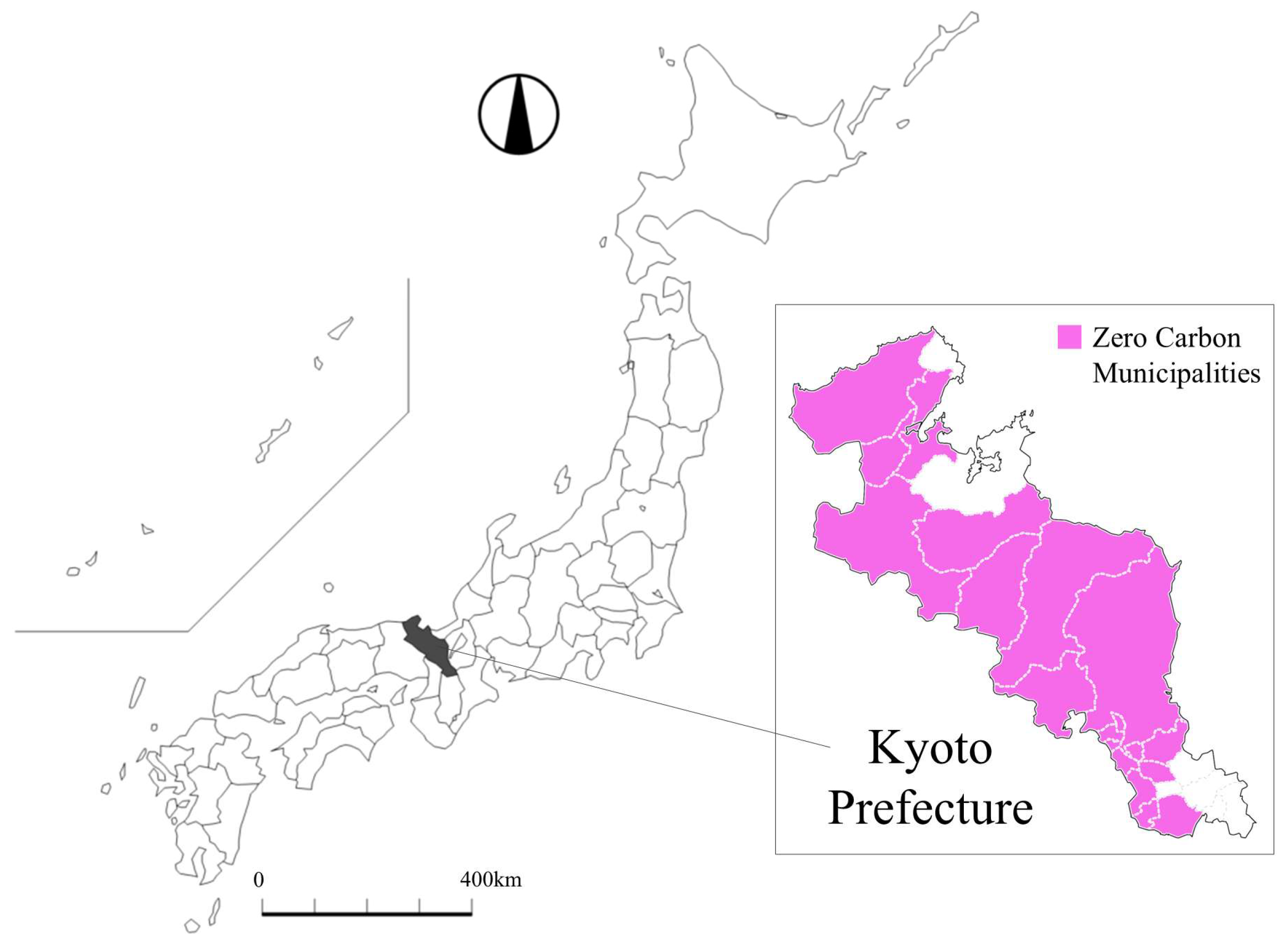
These national-level challenges are also evident in the Kyoto Prefecture, which clearly illustrates these dynamics. Following the launch of the Kyoto Roundtable initiative, the number of municipalities declaring carbon neutrality in the prefecture has increased at a pace exceeding the national average, reaching 19 municipalities by 2025 (
Figure 1). This trend indicates growing political momentum toward decarbonization within the prefecture. Nonetheless, efforts to develop and implement effective decarbonization measures remain at an early stage, highlighting the need for mechanisms that facilitate mutual learning, knowledge sharing, and coordinated policy development among local governments. Against this backdrop, Kyoto Prefecture and the leading environmental municipalities in this prefecture, together with the Research Institute for Humanity and Nature, established the Kyoto Roundtable, a transdisciplinary dialogue platform designed to strengthen science–policy interaction and promote practical decarbonization efforts across the prefecture [
28].
1.3. Integrating Policy Diffusion, Policy Learning, and Sustainability Transitions Perspectives
Advanced policies introduced by frontrunner municipalities often diffuse to other local governments—a phenomenon widely documented in environmental policy research internationally and in Japan [
29,
30,
31,
32,
33,
34]. Studies have examined how innovative policies diffuse through mechanisms such as emulation, learning, coercion, and competition, which form the core analytical foundation of policy diffusion research [
35,
36]. Policy diffusion focuses on the factors that drive the spread of policies across municipalities, while policy transfer emphasizes how governments selectively draw on external experiences and adapt them to local contexts [
37,
38]. Rose’s concept of lesson drawing [
39] further conceptualizes policy learning as a selective and context-sensitive process, in which policymakers extract insights from external cases based not only on past outcomes but also on perceived feasibility and local applicability. This framework is particularly relevant for understanding inter-municipal learning in Japan, where networks among local governments function as reference groups that facilitate joint problem framing, information exchange, and mutual learning [
31]. Such policy networks can therefore be understood both as analytical lenses for interpreting past diffusion processes and as practical mechanisms that actively shape ongoing policy formulation through repeated interactions among diverse actors [
38].
From the perspective of sustainability transitions, local decarbonization can be understood as a long-term sociotechnical transformation in which niche creation, learning, experimentation, and actor networking play central roles [
40,
41]. The emergence and stabilization of new practices and policy approaches depend on iterative learning processes in which actors reinforce one another’s efforts and engage in collaborative problem solving. This perspective suggests that the diffusion of local decarbonization policies is not limited to the replication of best practices but is fundamentally driven by continuous interaction, shared framing, and the co-production of procedural and experiential knowledge among municipalities [
42,
43].
Taken together, these perspectives highlight the importance of inter-municipal networks that support mutual learning as key drivers of early-stage policy transfer and as mechanisms that gradually create conditions for wider regional policy diffusion. In this study, these conceptual frameworks provide the theoretical foundation for analyzing how dialogue-based interactions among municipalities contribute to local decarbonization processes.
1.4. Transdisciplinary Dialogue as a Foundation for Local Policy Learning
Transdisciplinary research provides an important foundation for understanding how collaborative processes can support policy learning in local climate governance. Transdisciplinary approaches emphasize the co-design, co-production, and co-implementation of knowledge among researchers, policymakers, and societal actors. It can function as an implementation-oriented pathway that actively contributes to social and environmental transformation rather than remaining solely at the level of knowledge integration [
44,
45,
46,
47]. This perspective underscores the role of participatory and dialogic processes in enabling mutual learning and in translating scientific knowledge into context-sensitive policy action.
Dialogue-based platforms such as workshops, co-creation forums, and boundary-spanning arenas allow scientific expertise to be integrated with practitioners’ experiential and procedural knowledge, thereby increasing the usability, legitimacy, and contextual relevance of climate-related knowledge [
48,
49]. Beyond expert-oriented formats, participatory workshop approaches involving diverse stakeholders have been shown to facilitate science–society dialogue, deepen understanding of complex and wicked problems, and support deliberation on future pathways. Through collaborative knowledge provision, scenario exploration, and collective reflection, such processes enable actors to jointly examine trade-offs, uncertainties, and locally grounded solutions [
50,
51,
52].
In the context of local decarbonization, transdisciplinary dialogue provides opportunities for municipal officers to articulate practical constraints, align policy strategies with scientific insights, and collaboratively develop feasible policy options [
53,
54]. Such dialogue-based interactions strengthen policy learning at both individual and organizational levels and support experimentation and coordination across municipalities. Accordingly, this study conceptualizes the Kyoto Roundtable as a transdisciplinary dialogue mechanism and examines how such a platform supports municipal policy learning and inter-municipal interaction in the early stages of local decarbonization.
1.5. Research Questions and Analytical Focus of This Study
While policy learning and diffusion are widely discussed in local climate governance literature, empirical research remains limited regarding how the design and operation of such platforms shape municipal officers’ learning processes and create conditions conducive to inter-municipal policy transfer. To address this gap, this study focuses on the analytical role of dialogue-based platforms in fostering early-stage policy learning and coordination.
Accordingly, this study addresses the following research questions:
RQ1. How the design and operational principles of a transdisciplinary dialogue platform shape policy learning processes among municipal officers engaged in local decarbonization.
RQ2. In what ways participation in such a platform influences municipalities’ perceptions, intentions, and readiness regarding inter-municipal policy learning and transfer.
RQ3. To what extent dialogue-based learning processes contribute to creating conditions that support the early stages of policy diffusion across municipalities.
Empirically, the analysis draws on workshop discussions, action-planning sheets, participant surveys, and a prefecture-wide questionnaire. While this study focuses on policy learning and diffusion among municipalities, it also considers the potential relevance of supramunicipal coordination in shaping and supporting these processes.
3. Results
3.1. Overview of Major Themes Across Kyoto Roundtable Sessions
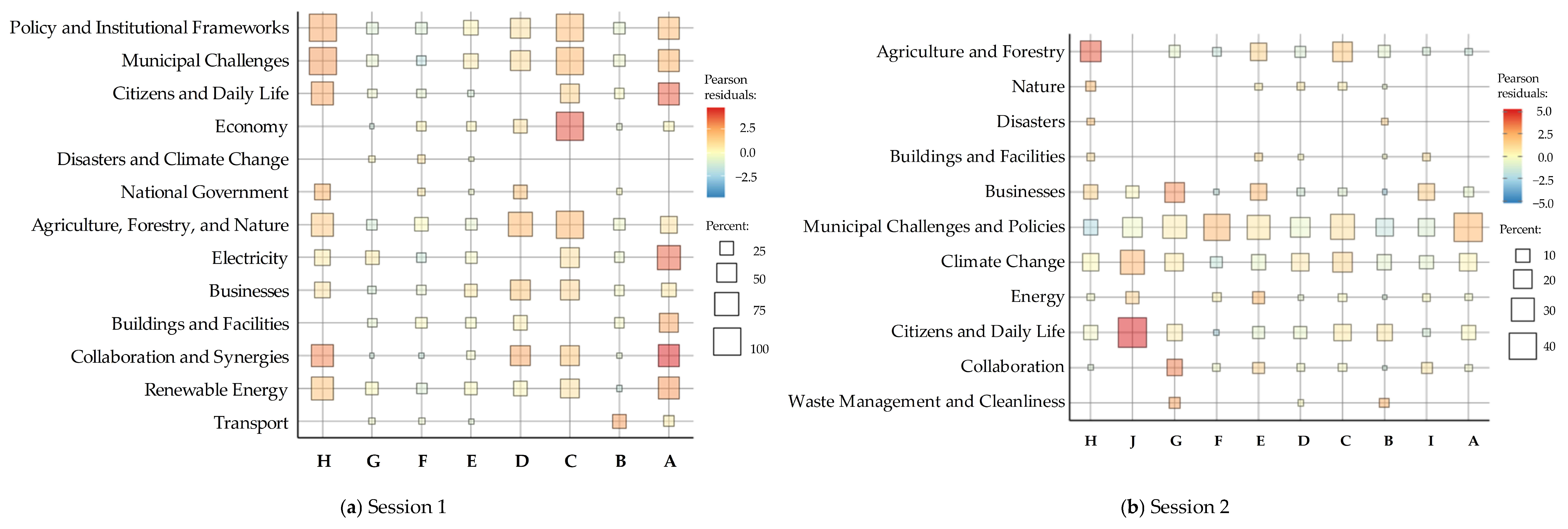
This section provides an overview of the major discussion themes identified across the Kyoto Roundtable sessions, based on the content analysis results shown in
Figure 3. While each session was designed around distinct discussion themes, the results reveal both recurring patterns and session-specific shifts in thematic emphasis related to local decarbonization. The figures cross-tabulate the proportion of discussion content by topic for each municipality, with the size of each square representing the relative volume of coded statements. To improve clarity and readability, the findings are organized below by session, highlighting key thematic focuses and their progression across the workshops.
3.1.1. Early Focus on Institutional Frameworks and Municipal Challenges (Session 1)
Figure 3a shows the results of the first Kyoto Roundtable session, in which discussions focused on the institutional and practical foundations of local decarbonization. Frequently addressed topics included support measures for small and medium-sized enterprises, mechanisms for monitoring and reducing greenhouse gas emissions, and technical considerations regarding the institutional positioning and evaluation of forest carbon sinks. In terms of thematic proportions, many statements were related to “policy and institutional frameworks” (25%) and “municipal challenges” (22%), reflecting concerns about organizational capacity, administrative workload, and implementation constraints. Expectations for improved coordination and potential synergies across municipal departments were captured in “collaboration and synergies” (10%), while concerns regarding financial costs and resource constraints were reflected in “municipal challenges” and “economy” (10%). In addition, participants pointed to the potential for enhancing information sharing and coordination through intermediary organizations, such as research institutes and local climate action centers, indicating a shared outlook toward future collaboration beyond individual municipalities.
3.1.2. Emphasis on Inter-Municipal Collaboration and Civic Engagement (Session 2)
As shown in
Figure 3b, the second Kyoto Roundtable session examined how local decarbonization initiatives, including pioneering measures, had diffused across municipalities within the prefecture and explored ways to further facilitate such inter-municipal diffusion. Discussions reflected shared experiences with existing policy practices and highlighted conditions under which initiatives were more likely to be taken up by other municipalities. In this context, “municipal challenges and policies” remained the most frequently referenced category (26%), while references to “climate change” (15%) and “citizens and daily life” (11%) increased relative to the first session.
Compared with Session 1, the discussions placed greater emphasis on collaboration across municipalities and on engaging citizens and local businesses as key actors in climate action. These patterns suggest a shift from identifying internal administrative challenges toward exploring cooperative approaches and broader social involvement as foundations for future policy learning and coordination.
3.1.3. Shifts in Municipal Decarbonization Strategies (Session 4)
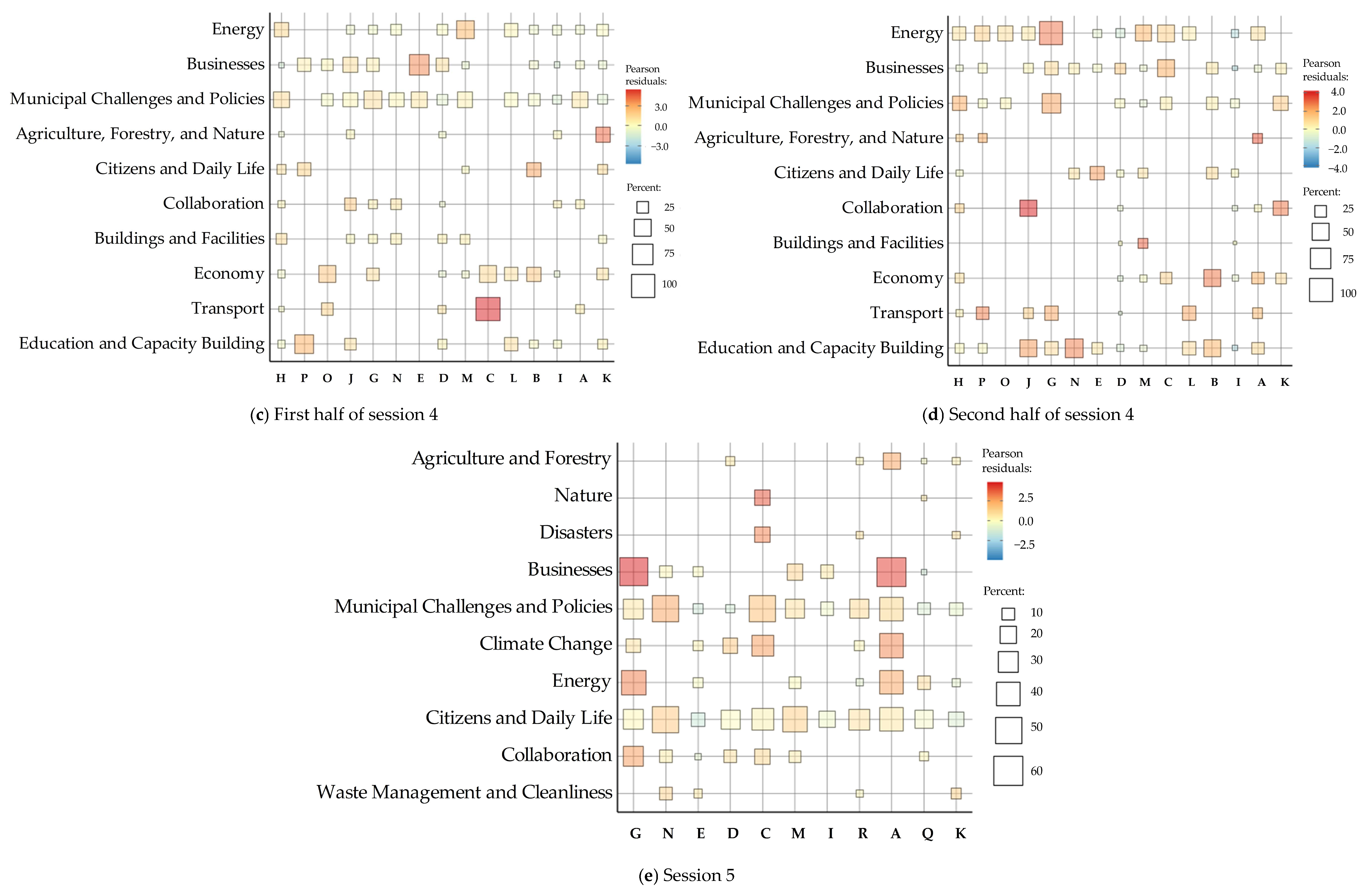
The fourth Kyoto Roundtable session assessed the current status of municipal decarbonization initiatives and explored possibilities for future collaborative projects. Because the session included a hands-on exercise using a greenhouse gas emission estimation tool, the analysis distinguishes between the first and second halves of the discussion (
Figure 3c,d).
In the first half (
Figure 3c), discussions focused on comparing existing decarbonization measures across municipalities and examining reasons for their implementation or non-implementation. “Municipal challenges and policies” was the most frequently referenced category (31%), with many statements addressing internal coordination structures, staffing constraints, and financial limitations. Participants frequently noted that independently developed measures remained limited and that most initiatives were implemented through prefectural programs or national subsidy schemes.
In the second half (
Figure 3d), the thematic focus shifted toward more concrete and forward-looking strategies. “Energy” emerged as the most frequently mentioned category (21%), with discussions centering on the introduction of renewable energy through regional collaboration and the potential use of local resources. As the discussion progressed, references to “citizens and daily life” and “education and capacity building” increased, reflecting a shift toward exploring next-stage opportunities for collaboration and co-creation.
3.1.4. Citizen Engagement, Education, and Future Collaboration (Session 5)
The fifth roundtable session focused on comparing decarbonization initiatives across municipalities, particularly on raising public awareness and environmental education, and on examining possibilities for future collaboration. As shown in
Figure 3e, the most frequently referenced category was “citizens and daily life” (24%), followed by “municipal challenges and policies” (16%). The discussions actively explored the mechanisms for encouraging behavioral change among residents and expanding educational and awareness programs through schools and community events. Participants also shared perspectives on potential inter-municipal collaboration toward realizing decarbonized local communities.
This figure visualizes the relative proportions of topic-based categories identified through content analysis for each Kyoto Roundtable workshop session. The proportions represent the relative share of discussion content coded to each category within a session, rather than the absolute frequency of individual statements. Because the workshop sessions were designed around different discussion themes and categories classified as “other” are not displayed, the number, composition, and order of categories vary across sessions, reflecting session-specific discussion dynamics. Accordingly, the figure is intended to visualize thematic emphasis and patterns of participant engagement across sessions, rather than to provide direct quantitative comparisons of policy outcomes.
3.2. Influence of the Action-Planning Sheets and Post-Session Surveys on Participants’ Attitudes and Intentions to Act
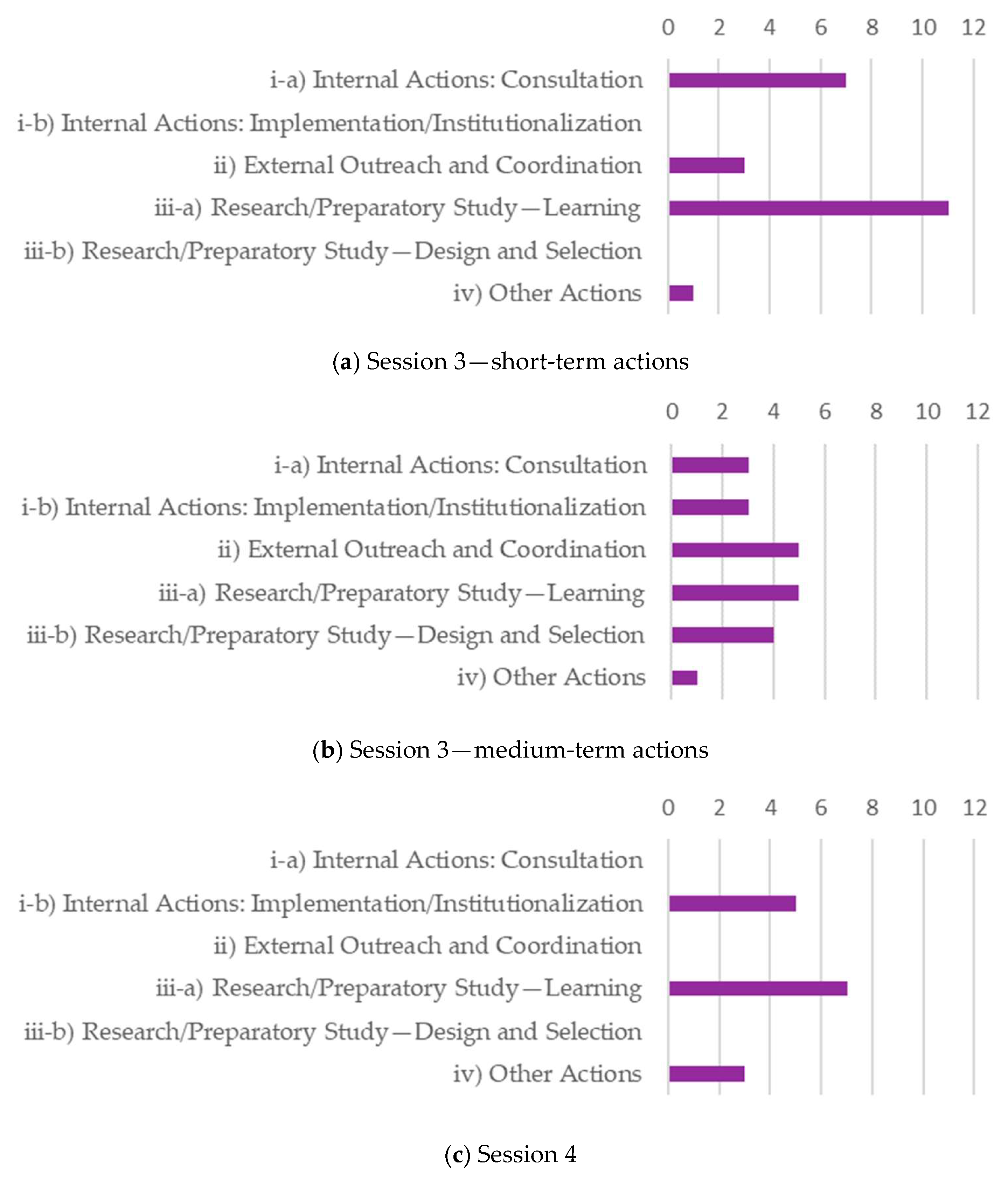
Action-planning sheets (combined with post-session surveys) were collected from 21 participants representing 13 municipalities in session 3, and 17 participants representing 12 municipalities in session 4. One respondent in session 3 and two respondents in session 4 did not complete the relevant items, and their entries were excluded from the coding analysis. Written responses were coded to analyze participants’ intentions for future actions. Because individual responses often contain multiple behavioral elements, multiple codes were assigned where appropriate. As shown in
Figure 4, the action items were classified into six categories: i-a) internal actions: consultation, i-b) internal actions: implementation/institutionalization, ii) external outreach and coordination, iii-a) research/preparatory study—learning, iii-b) research/preparatory study—design and selection, and iv) other actions.
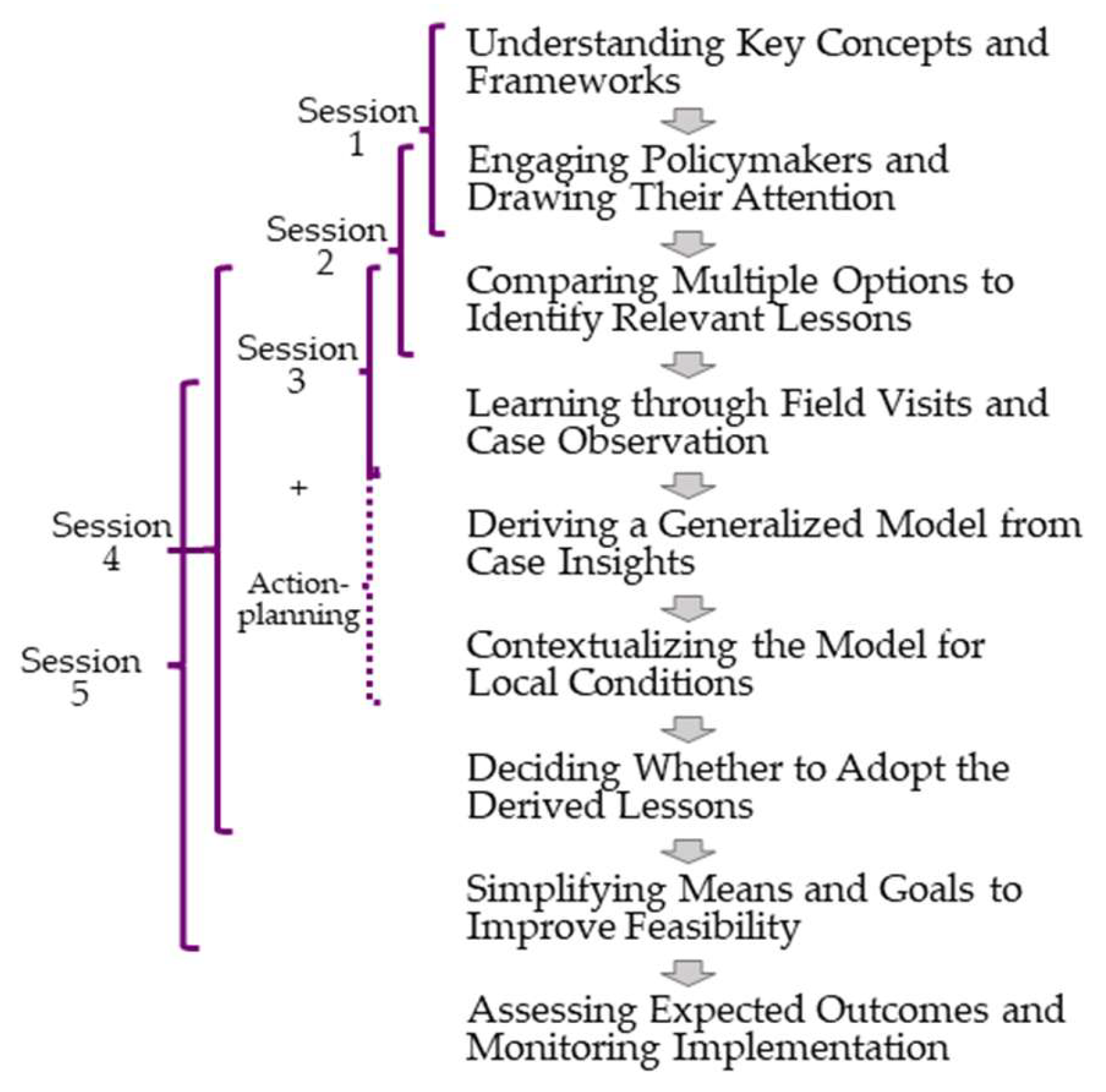
In session 3, participants described short-term (within one month), and medium-term (within the fiscal year) actions informed by field visits. Short-term entries were dominated by research-oriented actions, such as summarizing renewable energy benefits, listing solar photovoltaic installation methods, collecting information on post-feed-in-tariff options, identifying electricity use in public facilities, reviewing feasibility studies, and narrowing down candidate facilities for power purchase agreements. Many participants also reported internal consultation actions such as coordinating across divisions, requesting cooperation from related units, and sharing information within their bureaus. Medium-term actions became more concrete, including estimating potential solar photovoltaic capacity, examining subsidy schemes, reassessing facility portfolios, and considering new institutional arrangements, such as new subsidy programs, regulatory amendments, or new administrative guidelines. External outreach, including plans for joint workshops, coordination with Kyoto Prefecture or neighboring municipalities, and building foundations for wider-area collaboration, also increased. These insights were incorporated into the design of session 4, which provided additional time to discuss inter-municipal collaboration. The participants also reported that field visits and roundtable discussions served as useful reference materials for internal and institutional explanations.
In session 4, which focused on developing a decarbonization policy dashboard and practicing an emissions estimation tool, action planning entries were more abstract because of broader topics and an increased number of first-time participants. The simplified sheets were asked only for future actions without timeframes, and most entries fell under research-oriented categories, including deepening the understanding of emission estimation methods, gathering information for comparing mitigation measures, and clarifying the data-update procedures. Case-specific implementation planning, commonly observed in session 3, rarely appeared, indicating that the participants were in the early stages of the learning process within the policy transfer cycle. The internal actions in session 4 were mostly expressions of intent, such as the desire to implement at least one decarbonization measure within the fiscal year, with few entries referencing institutional or concrete implementation steps. External outreach occurred infrequently and was limited to a small number of participants planning broader inter-municipal coordination. Although the level of specificity decreased relative to session 3, many participants reported increased motivation toward future decarbonization efforts and progress in comparing policy options through mutual learning, which is consistent with the early learning stage of the policy transfer process.
3.3. Results of the Survey on Local Decarbonization Policies in Municipalities Across Kyoto Prefecture
Responses were obtained from 24 municipalities, with a response rate of 92%. Fewer than half of the municipalities employed staff dedicated exclusively to decarbonization or energy policy; in most cases, responsibilities were assigned as part of their concurrent duties. Even when including both dedicated and concurrent staff, more than 80% of the municipalities had five or fewer personnel engaged in decarbonization-related work, revealing substantial human resource constraints. Only one city reported maintaining a relatively large number of staff focusing specifically on climate mitigation and energy transition, whereas most municipalities had only a few personnel. However, in some towns, staffing levels exceeded those of certain cities, indicating that staff allocation did not necessarily scale with municipal size.
Patterns were also observed in the administrative divisions to which the concurrent staff were affiliated. In municipalities with relatively large teams, concurrent duties tended to involve other environment-related fields, such as waste management and nature conservation. By contrast, municipalities with very small teams frequently reported concurrent responsibilities extending beyond environmental domains, including social welfare, construction, agriculture, and economic development, suggesting that decarbonization tasks were widely dispersed across multiple administrative units. The use of temporary or contract staff also differed by municipality. Those with larger teams tended to employ one or two temporary staff members in support roles, whereas small municipalities rarely had such assistance, revealing a reliance on a limited number of regular staff members to manage a broad set of tasks.
Regarding intra-municipal collaboration, ten municipalities reported that cross-departmental coordination meetings were held “several times a year,” whereas nine municipalities indicated that no such formal mechanism existed. In many cases, collaboration with other departments consisted primarily of information sharing, and fewer than half of the municipalities advanced joint project implementation. Even among those who reported undertaking several joint initiatives with other departments, formal cross-departmental meetings were not necessarily established. Some operated with structured meeting formats, while others relied on informal ad hoc coordination. These findings revealed a wide variation in the institutionalization of intra-municipal collaboration.
With respect to inter-municipal learning and collaboration, fewer than half of the municipalities reported having referred to or collaborated with other municipalities within Kyoto Prefecture. However, a statistically significant relationship was observed: municipalities that expressed a desire for future inter-municipal collaboration were more likely to have previously referred to other local governments’ policies or engaged in inter-municipal collaboration (χ2 = 5.445, p = 0.020). This pattern suggests that prior exposure to policy learning may heighten the recognition of the need for broader inter-municipal cooperation. Open-ended responses further highlighted that many municipalities, particularly in the southern Yamashiro region (where several small municipalities are geographically adjacent), perceived a strong need for joint initiatives and information exchange. These comments indicated early signs of emerging regional-scale collaboration.
Overall, the networks and trust relationships cultivated through the Kyoto Roundtable facilitated survey participation and information sharing among municipalities. Collaboration between researchers and policymakers appeared to extend beyond simple information exchange, functioning as an institutional foundation that may support broader inter-municipal cooperation. Leveraging these emerging networks may enable municipalities to share implemented measures, jointly address sectors in which actions remain limited, and strengthen prefecture-wide decarbonization efforts through enhanced policy learning and diffusion.
4. Discussion
4.1. Expansion of Decarbonization Policy Diffusion and the Emerging Foundations for Regional Collaboration
This study reveals that inter-municipal collaboration in Kyoto Prefecture has begun to advance under the coordination of the prefectural government. Notably, in the early stages of such collaboration, the personal motivation and informal networks of individual municipal officers served as the primary driving forces. The Kyoto Roundtable, as a structured dialogue platform co-developed through this research, likely provided an institutional foundation for fostering these interactions, helping to strengthen emerging networks among practitioners across municipalities.
To clarify the analytical scope of this study, we distinguish between policy learning, policy transfer, and policy diffusion. Policy learning refers to changes in understanding, awareness, and problem framing at the individual and organizational levels among municipal officers. Evidence from workshop discussions and participant surveys indicates that such mutual learning processes were actively supported through the roundtable. Policy transfer is understood as the selective referencing and context-sensitive adaptation of policy ideas or practices observed in other municipalities. In this study, survey responses and action-planning sheets suggest that participants were beginning to recontextualize external initiatives to fit their local administrative and resource conditions. Policy diffusion, by contrast, denotes the broader spread of policy adoption across jurisdictions. While diffusion is often assessed through observable adoption outcomes, this study does not directly evaluate diffusion results. Rather, it focuses on the early-stage and preparatory processes through which policy learning and policy transfer contribute to the formation of conditions that may enable subsequent diffusion. The empirical findings should therefore be interpreted as capturing preparatory dynamics of diffusion, rather than diffusion outcomes themselves.
Beyond the sharing of advanced policy examples, the roundtable also facilitated open discussions of practical challenges inherent in planning and implementing decarbonization measures. These exchanges strengthened participants’ sense of ownership and helped them form clearer and more concrete images of potential policy actions within their own municipalities. In particular, officers from small municipalities emphasized that learning about initiatives undertaken by other municipalities was highly valuable and motivated them to pursue similar actions. Taken together, these findings highlight the effectiveness of the roundtable as a venue for policy learning that supports early-stage inter-municipal coordination.
4.2. Interactions Between Horizontal and Vertical Governance and the Potential of Inter-Municipal Networks
From the perspective of policy diffusion and learning, prior studies have highlighted the importance of horizontal governance, in which municipalities collaborate through shared policy initiatives and mutual support [
31,
35,
36]. Consistent with this view, our findings indicate that municipalities in Kyoto Prefecture recognize that their independently developed decarbonization efforts can be more effectively advanced when supported by information sharing and mutual learning with neighboring jurisdictions. Municipalities that had previously referred to or collaborated with others showed significantly stronger intentions for future inter-municipal cooperation. This suggests that the Kyoto Roundtable functioned as an intermediary arena that facilitated the exchange of practical experience-based knowledge and helped establish networks for ongoing collaboration.
Simultaneously, the role of vertical governance became evident. In this context, prefectural and national actors can be understood as supramunicipal coordinators that provide institutional, financial, and procedural conditions enabling municipal-level policy learning and diffusion. Kyoto Prefecture’s subsidy programs generated spillover effects, enabling the diffusion of decarbonization measures even among smaller municipalities with limited administrative capacity. These prefectural initiatives serve as important catalysts by lowering the barriers associated with initial policy adoption and encouraging broader regional engagement. In addition, the national government’s climate policies and financial support schemes provide an overarching institutional framework that guides local actions [
27]. These national initiatives created both incentives and procedural pathways for municipalities, reinforcing prefectural efforts, and contributing to the broader diffusion of decarbonization measures across the region. Spillover effects from Kyoto City were not identified; however, its relatively large administrative and technical resources indicate its potential to contribute to regional policy diffusion in the future.
The network formed through the Kyoto Roundtable supported not only the circulation of advanced policy practices, but also the exchange of practical insights into procedural hurdles, coordination challenges, and administrative constraints encountered during planning and implementation. The participants did not simply replicate external examples. Rather, they engaged in processes of recontextualization and institutional translation, adapting external lessons selectively to fit their own administrative arrangements, resource conditions, and sociocultural settings [
38,
39]. These dynamics align with arguments in policy transfer literature that emphasize the role of actor-to-actor interaction within transfer networks in enabling implementation-oriented learning [
31,
38]. The Kyoto Roundtable demonstrated these characteristics, indicating the potential for moving beyond isolated policy measures toward the broader forms of social and institutional transformation required for regional decarbonization. While tailoring policies to local contexts is essential for feasibility, sharing a common analytical framework to compare and evaluate initiatives across municipalities enhances the credibility, coherence, and effectiveness of the local climate planning. Discussions within the roundtable and analysis of action-planning sheets showed that participants interpreted external cases through the lens of their institutional settings and reconstructed them accordingly. This is consistent with Rose’s view of lesson drawing [
39] as a selective and reflective adaptation process rather than a straightforward imitation. Therefore, the policy-learning framework adopted in this study offers a practical means of facilitating policy transfer by allowing municipalities to contextualize external lessons while working within a shared conceptual structure that supports regional coherence. The Kyoto Roundtable facilitated policy transfer among municipalities by strengthening mutual learning and enabling context-sensitive adaptations. In turn, these transfer processes have begun to lay the foundation for broader regional policy diffusion in Kyoto Prefecture.
From a theoretical perspective, this study advances understanding of policy diffusion mechanisms by illustrating how horizontal inter-municipal learning is intertwined with vertical governance structures in the Japanese context. Rather than operating as separate or competing modes of governance, horizontal learning among municipalities and vertical support from supramunicipal actors interacted through the Kyoto Roundtable as an intermediary arena. This interplay enabled municipalities to engage in mutual learning while simultaneously aligning their efforts with broader institutional frameworks. By empirically demonstrating how such intermediary dialogue platforms mediate between horizontal and vertical governance, this study contributes to a more nuanced understanding of policy diffusion as a process shaped by multi-level interactions rather than by isolated learning or top-down diffusion alone.
4.3. Dilemmas and Coordination Challenges in Science–Policy Dialogue
The Kyoto Roundtable revealed that, while many participants recognized the importance of evidence-based policymaking, they also encountered dilemmas in applying scientific knowledge to administrative practices. One commonly raised issue is that highly technical or detailed scientific evidence could make it difficult for officers to provide explanations to supervisors, council members, and residents. Several participants noted that providing expert information alone was insufficient and that continuous, hands-on support was necessary to translate evidence into implementable policy actions, consistent with arguments in transdisciplinary research that emphasize the need to couple knowledge provision with ongoing collaboration and co-production [
44,
47]. The participants also pointed out that communicating decarbonization strategies requires different approaches depending on the audience. Officers often needed to adjust both the level of detail and style of explanation when interacting with colleagues in other departments or engaging with residents, mirroring findings from stakeholder-engagement studies that highlight the importance of tailoring communication formats to diverse actor groups [
50,
52].
These observations suggest that the manner in which scientific knowledge is communicated, as well as the design of the dialogue process itself, strongly influences how convincingly and effectively policies can be conveyed. Although the Kyoto Roundtable served as a venue for aligning scientific expertise with administrative needs, the demand from municipalities for tailored, ongoing implementation support exceeded what researchers could realistically provide. Addressing these needs requires organizational structures and human resource development capable of supporting sustained and systematic science–policy dialogue. Building such an institutional capacity is essential for advancing local decarbonization efforts.
4.4. Co-Designing Collaborative Processes That Support Individual and Organizational Learning
In local Japanese governments, personnel rotations occur regularly across a wide range of departments and not only within environmental divisions, making it essential to establish mechanisms that connect individual learning with broader organizational development. Findings from this study suggest that the networks formed through the Kyoto Roundtable may help maintain continuity in decarbonization policy efforts, even when the responsible officers change. Survey responses also indicated a willingness among participants to share and disseminate insights gained through the roundtable within their respective organizations. This pattern aligns with prior research showing that collaborative and transdisciplinary processes can strengthen both individual learning and the organizational capacity for sustainability transitions [
44,
48].
The co-design approach adopted in the roundtable, which involved continuously refining session content and facilitation based on participant feedback, helped ensure that the learning process progressed in a structured, stepwise manner, consistent with the intended program design. While each session consistently received positive evaluations, the focus of learning gradually shifted toward more practical elements of policy development as the participants accumulated experience through consecutive roundtable meetings. Ultimately, the roundtable enabled participants to apply the knowledge and skills gained through dialogue in their municipal contexts. The analysis of workshop discussions and action-planning sheets suggests that many participants sought to incorporate insights from the roundtable into their everyday responsibilities, indicating the platform’s potential effectiveness in supporting practice-oriented learning.
4.5. Policy Implications and Actionable Insights for Local Governments
The findings of this study offer actionable insights for local governments seeking to support early-stage decarbonization through dialogue-based policy learning, while remaining attentive to institutional constraints and capacity differences across municipalities.
First, the institutionalization of regular and structured dialogue is important for sustaining policy learning beyond ad hoc information exchange. The presence of neutral facilitators, such as researchers, universities, or regional climate action centers, can help bridge gaps between scientific expertise and administrative needs. Such intermediaries may reduce perceived risks associated with sharing policy failures, procedural hurdles, and implementation challenges across municipalities, thereby fostering trust-based learning environments. Dialogue platforms that are explicitly framed as learning-oriented rather than evaluative can also lower participation barriers and encourage more open and reflective exchange among municipal officers.
Second, supramunicipal actors, particularly prefectural governments, can play a supportive role in creating institutional conditions conducive to policy learning and diffusion. Beyond providing financial incentives through subsidy schemes, regional authorities may contribute by offering stable and institutionalized spaces for interaction and coordination. The experience of the Kyoto Roundtable suggests that embedding dialogue platforms within existing administrative frameworks can help sustain learning processes over time, even in contexts characterized by frequent personnel rotations. In this respect, supramunicipal coordination has the potential to complement horizontal inter-municipal learning by providing continuity and structural support.
Beyond dialogue-based learning mechanisms, local governments may also play a more proactive role in advancing decarbonization by shaping enabling institutional and market conditions, particularly in the energy domain. Beyond internal administrative measures, municipalities can act as facilitators of renewable energy deployment by coordinating local stakeholders and aligning regional energy demand with renewable supply. As studies on energy market design have emphasized, appropriate institutional and market settings are critical for promoting renewable energy uptake, and local administrations can function as coordinators within distributed energy systems [
57]. Discussions during the Kyoto Roundtable, especially in the fourth session, revealed strong interest in collaborative approaches to renewable energy deployment, including inter-municipal cooperation on the use of local resources, regional coordination of renewable energy projects, and the potential establishment or joint use of regional power retailers and suppliers. Integrating such market-oriented perspectives into dialogue-based learning platforms may further enhance their relevance for practical policy implementation.
Finally, for regions seeking to adopt similar dialogue-based approaches, the findings highlight the importance of hybrid governance arrangements that combine horizontal learning among municipalities with vertical support from regional or national authorities. Rather than prescribing a uniform model, higher-level frameworks should provide sufficient institutional flexibility to allow municipalities to adapt shared policy ideas to local resource conditions, administrative arrangements, and socio-political contexts. In this way, dialogue platforms can support context-sensitive learning while contributing to regional coherence in decarbonization efforts.
4.6. Limitations of the Study and Directions for Future Research
This study provides empirical insights into how transdisciplinary dialogue platforms can support early-stage policy learning and inter-municipal diffusion processes. At the same time, several limitations should be acknowledged.
First, the analysis primarily captures short- to medium-term learning processes and self-reported perceptions of municipal officers. While the results offer valuable evidence on learning dynamics and intention formation, this study does not assess long-term policy adoption, institutionalization, or sustained organizational change within municipalities.
Second, the findings should be interpreted in light of contextual constraints. Participation in the Kyoto Roundtable was voluntary, and the sample consisted mainly of municipalities that were already relatively engaged in decarbonization efforts. Although this does not undermine the internal validity of the observed learning processes, it may limit the generalizability of the findings to less-engaged municipalities or to regions with different administrative and institutional contexts. More broadly, the effectiveness of the Kyoto Roundtable might be shaped by context-specific conditions in Japan, including experiences with cross-sectoral personnel rotation, relatively dense inter-municipal networks, and established coordination mechanisms at the prefectural level. These conditions likely facilitated trust-building, sustained participation, and cumulative learning over time. At the same time, the analysis suggests that the core framework of dialogue-based policy learning is not entirely context-bound.
Third, resource considerations further delimit the scope of generalization. Establishing and maintaining transdisciplinary dialogue platforms requires time commitments and modest but stable financial resources, which may pose challenges for smaller municipalities with limited administrative capacity. However, the Kyoto Roundtable demonstrates that partially externalizing coordination and facilitation functions to researchers or supramunicipal authorities can help mitigate these resource burdens. Moreover, access to scientific and procedural knowledge through dialogue-based networks may be particularly beneficial for smaller municipalities, potentially lowering participation barriers and enabling broader engagement.
Fourth, there are methodological limitations related to the qualitative analytical approach. Although this study employed triangulation by combining multiple qualitative data sources and survey-based evidence, the topic-based categorization used in the content analysis inevitably involved interpretive judgments by the researchers. Interpretive consistency was ensured through iterative discussions among the research team; however, this study does not aim for full replicability, and alternative categorization schemes or analytical emphases may yield different perspectives on discussion dynamics.
Despite these limitations, this study provides a foundation for future comparative and longitudinal research on local climate governance. Future studies should adopt longitudinal research designs to examine how dialogue-based policy learning translates into sustained policy adoption and institutional change. Potential approaches include repeated surveys of participating municipalities, systematic tracking of policy adoption timelines, longitudinal analysis of municipal plans and budget allocations, and follow-up interviews with municipal officers to assess organizational learning and knowledge retention across personnel rotations. Developing and applying such longitudinal metrics would enable a more robust assessment of the long-term impacts of transdisciplinary dialogue platforms on local decarbonization trajectories.
5. Conclusions
This study designed and implemented the Kyoto Roundtable to support policy learning and transfer among the Zero Carbon City municipalities. The analysis showed that inter-municipal networks, together with a sustained space for science–policy dialogue, play crucial roles in advancing local decarbonization efforts. The roundtable, grounded in a policy-learning framework, helped strengthen officers’ capacity to plan and implement decarbonization measures while promoting mutual learning across municipalities. The approach demonstrated here has potential applicability to broader policy domains, including environmental management and sustainable urban development. The findings further indicate that combining horizontal collaboration among municipalities with vertical coordination involving prefectural and municipal authorities can enhance policy diffusion and capacity building on a regional scale.
Looking ahead, deeper forms of transdisciplinary collaboration are essential for systematically linking scientific knowledge to administrative practices. Future research should examine how the learning processes identified in this study translate into longer-term behavioral and organizational changes, as well as how they influence municipal plans and policy outcomes. Such insights will help to refine this framework into a model that can be adapted to other regional contexts. Overall, the findings of this study are expected to contribute to strengthening inter-municipal collaboration and accelerating local action toward the 2050 carbon-neutral goal.