Review

Heatwaves and Public Health: A Bibliometric Exploration of Climate Change Impacts and Adaptation Strategies


1
Ecotourism Management, Faculty of Human Sciences, Vaal University of Technology, Vanderbijlpark 1911, South Africa
2
Faculty of Business Management, Emirates Aviation University, Dubai Academic City, Dubai, United Arab Emirates
3
Mubadala Arabian Center for Climate and Environmental Sciences (Mubadala ACCESS), NYUAD Research Institute, New York University Abu Dhabi, Abu Dhabi P.O. Box 129188, United Arab Emirates
4
Faculty of Mathematics and Data Science, Emirates Aviation University, Dubai Academic City, Dubai, United Arab Emirates
*
Author to whom correspondence should be addressed.
Climate 2025, 13(12), 249; https://doi.org/10.3390/cli13120249
Submission received: 6 October 2025 / Revised: 1 December 2025 / Accepted: 4 December 2025 / Published: 12 December 2025

Abstract

The year 2024 has been recorded as the warmest year on record, with global temperatures temporarily exceeding the 1.5 °C threshold owing to rising anthropogenic greenhouse gas emissions. This has intensified global attention on heatwaves, which are a major public health threat linked to increased morbidity and mortality rates. This study conducted a bibliometric analysis of 901 Web of Science-indexed journal articles (2004–2024) using the term “heat wave health.” The findings revealed a significant increase in global temperatures, with an increasing frequency, intensity, and duration of extreme heat events. Heatwaves have been linked to higher rates of injuries, mental health disorders, and mortality, particularly in urban areas, due to ozone pollution, atmospheric contaminants, and the urban heat island effect, leading to increased emergency hospitalisation. Rural populations, especially outdoor labourers, face occupational heat stress and a higher risk of fatality. Adaptation measures, including early warning systems, heat indices, air conditioning, white and green roofs, and urban cooling strategies, offer some mitigation but are inadequate in the long term. Significant knowledge gaps persist regarding regional vulnerabilities, adaptation effectiveness, and socio-economic disparities, underscoring the urgent need for interdisciplinary research to inform heat-resilient public health policies and climate adaptation strategies. This study highlights the urgent need for further interdisciplinary research and targeted policy interventions to enhance heatwave resilience, particularly in under-researched and highly vulnerable regions of the world.

1. Introduction

The past few years have been characterised by increasing global temperatures and an increasing frequency of extreme heat events. According to the World Meteorological Organization, 2024 ranked among the warmest years which is in line with the persistent warming observed since the 1990s [1,2]. Among the extreme climatic events, heatwaves have emerged as one of the most pressing public health concerns, with increasing evidence of their impact on morbidity and mortality rates. Although climate change has led to an increase in extreme events such as flooding [3,4], sea level rise [5,6], and wildfires [7], the direct and immediate consequences of rising temperatures on human health remain critically understudied, with several knowledge gaps remaining.
The global rise in greenhouse gas emissions (GHGEs) is driving an increase in the frequency and intensity of heatwaves, exposing populations to prolonged periods of extreme temperatures [8,9,10]. The health implications of these changes are profound, particularly for vulnerable groups such as the elderly, children, and individuals with pre-existing health conditions. While early research has largely focused on the immediate physiological effects of heat stress, emerging evidence suggests that extreme heatwaves contribute to a broader range of health outcomes, including increased emergency hospital admissions, cardiovascular stress, mental health deterioration, and respiratory illnesses [11,12,13].
Urban environments are particularly vulnerable to extreme heat because of the combined effects of the urban heat island phenomenon, poor air quality, and elevated ozone levels, all of which increase heat-related health risks [14] Meanwhile, rural communities, especially those with a high proportion of outdoor workers, face significant challenges in mitigating heat stress, often lacking sufficient infrastructure and adaptation measures [15,16]. As the frequency and intensity of heatwaves continue to rise owing to increasing GHGEs, addressing the associated health risks requires a structured investigation into existing research, identification of critical gaps, and the development of informed public health strategies.
To address these challenges, this study used bibliometric analysis to systematically explore the impact of heatwaves on public health in China. Bibliometric analysis provides a quantitative and replicable method for assessing research trends, identifying knowledge gaps, and mapping thematic developments in large bodies of literature. Unlike traditional systematic reviews, which rely on manually selected datasets, bibliometric techniques enable a broader, data-driven evaluation of research output over time, minimising selection bias and offering a more comprehensive and scalable overview of the field.
Regardless of the increased concern regarding the intersection of heatwaves and public health, research remains fragmented across disciplines and geographies. This fragmentation highlights the need for systematic, quantitative mapping of the existing literature to understand the dominant themes, research gaps, and evolving policy priorities. To address this, this study applies bibliometric analysis to assess two decades of global research on heatwave-related health impacts and adaptation strategies. By analysing journal articles published between 2004 and 2024, this study aims to:
  • We assessed the evolving body of literature on heatwaves and public health impacts and identified key thematic areas and emerging research trends.
  • To identify the adaptive strategies adopted to reduce health vulnerabilities to heat events.
  • Identifying critical knowledge gaps that require further investigation to enhance heatwave preparedness and public health response.
To achieve these objectives, this study is theoretically built on vulnerability, climate adaptation, and resilience theories. Vulnerability theory provides a framework for assessing which populations are most at risk and why, considering factors such as socioeconomic status, geographic location, and adaptive capacity [17,18]. The vulnerability theory in this study was critical in shaping the conceptual framing and interpretation of the results. The integration of vulnerability theory into bibliometric mapping allowed researchers to go beyond the quantification of research output to the critical examination of where and why certain populations are disproportionately affected by heat waves. Climate adaptation and resilience theory helps us understand how communities respond to heatwaves and how effective adaptation measures can be designed.
This study contributes to the literature by synthesising existing knowledge on heatwaves and public health through a bibliometric analysis, which allows for a structured and large-scale assessment of research developments. By identifying research trends, emerging gaps, and adaptation strategies, this study provides actionable insights for policymakers, researchers, and health-care professionals. Given the projected increase in extreme heat events, such research is critical for developing evidence-based interventions and fostering climate resilience in vulnerable communities.

2. Materials and Methods

This study relied on a structured bibliometric analysis of Web of Science data, which was examined using VOSviewer version 1.6.20. Web of Science data for the period between 2004 and 2024 were collected using the search term “heatwave health OR extreme heat OR heatwave OR heatwave events OR hot temperatures OR urban heat vulnerability” to map research trends at the intersection of heatwaves and public health. The search was conducted on 15 February 2025. Web of Science data are often considered high quality because they are peer-reviewed and authored by leading scholars in various fields. Consequently, Web of Science data have been widely used in systematic literature reviews and bibliometric analyses [19,20,21].
The initial search retrieved 1213 documents without any restrictions on the publication year. However, after setting the time range between 2004 and 2024, the number of records was reduced to 1125 records. To maintain consistency and accessibility, only English-language publications were included, which reduced the dataset to 1101. Further refinement was applied to include only journal articles, as they provide peer-reviewed insights and empirical evidence, resulting in a final dataset of 901 relevant articles (Figure 1).
Web of Science data were analysed using VOSviewer, a bibliometric analysis tool that enables the visualisation of thematic clusters, research evolution, co-citation patterns and international research collaborations. By clustering key themes and identifying dominant research areas, VOSviewer allows for a systematic synthesis of research trends on heatwaves and their effects on the public health. Default settings were used to generate the co-occurrence networks and citation-based analyses. This bibliometric approach has been employed in previous review studies [22]. A fractional counting function was employed. Fractional counting has numerous advantages. Using fractional counting reduces bias in collaborative fields and allows for fairer comparisons across disciplines. It also affords each entity to have an equal total weight and allows for more accurate detailed demographics [23,24]. In the keyword analysis, the threshold was capped at five keywords. When the threshold was set, it was to ensure that only relevant themes most relevant to the research study persisted.
In addition to bibliometric mapping, the Web of Science Analysis tool was used to generate figures of publication trends, citation patterns, and interdisciplinary research contributions. A summary of the methodology is illustrated in Figure 1, which depicts the structured workflow used in this study. By integrating bibliometric techniques with climate datasets, this study provides a comprehensive assessment of the existing knowledge and identifies research gaps that require further investigation.
This study must be understood in the context of its methodological limitations. The first limitation is that the study relied on Web of Science-indexed publications only which might have resulted in some studies which are crucial to the debate being left out if they are not indexed in the database. A handful of studies written in languages other than English were excluded from the study. Given the search terms used, some studies could have been omitted from the analysis.

3. Results

3.1. Trends and Growth in Heatwave and Health Research

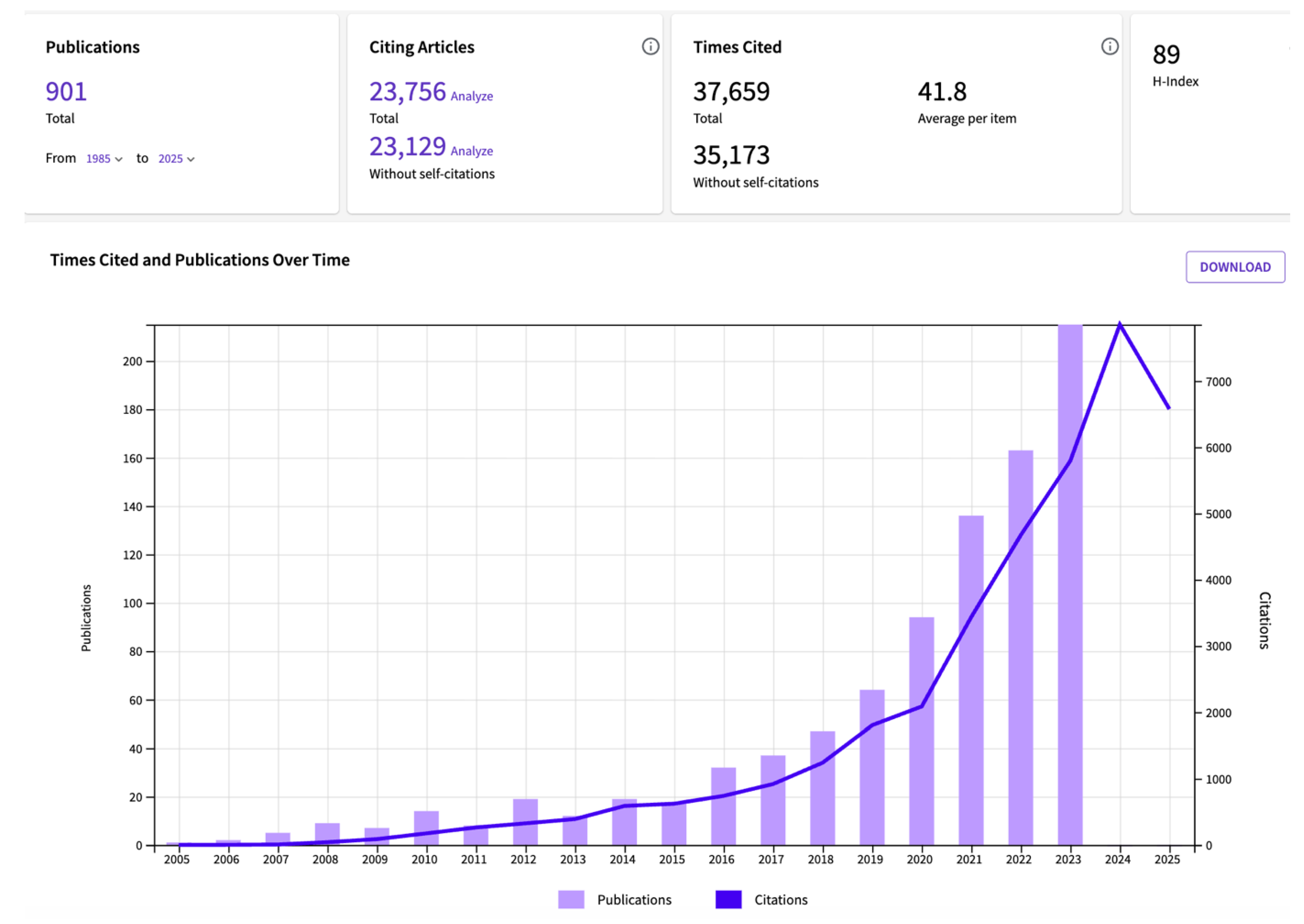
The analysis revealed a significant increase in the number of publications related to heatwaves and health over the past two decades, demonstrating greater interest in heatwave-related issues and increased focus by academics as a growing concern. In 2005, there was only one publication, but due to the growing interest in the topic, the number of publications rose to more than 200 publications per year in 2024. The increase in research output, especially between 2020 and 2024 (Figure 2), highlights the growing attention given to climate change risks, particularly the impact of heatwaves on human health and the need to tackle this growing global challenge driven by global warming and climate change-related weather extremes. Evidence from the available literature indicates that there has been a global increase in the number of extreme heatwaves which has complicated the lives of rural and urban dwellers [25,26].
The surge in research publications was accompanied by a notable increase in the number of citations (Figure 2). The 901 articles published between 2004 and 2024 were cited in 23,756 scholarly works, accumulating a total of 37,659 citations, with an average of 41.8 citations per article. The post-2016 increase in publications can be linked to key international and climatic events. Amongst these were the Paris Agreement in 2015 and the adoption of the Agenda 2030 for Sustainable Development which calls for greater efforts in tackling climate change for the world to achieve its developmental aspirations. These developments have broadened climate change into a transdisciplinary matter. The marked increase in publications between 2018 and 2019 coincided with unprecedented European and Australian heatwaves which caused record-breaking mortalities and further heightened awareness of heat vulnerability. The increased number of heatwave episodes in recent years across the world has sparked interest and public debate. Heat waves prompted intensified monitoring and policy-driven funding, particularly from the EU Horizon 2020 framework and the Australian National Health and Medical Research Council initiatives. The increase in publications post 2016 can be attributed to the response to political commitments under the Paris framework and experiential learning from successive extreme heat events, demonstrating how global climate policy and observed climate extremes shape scientific attention and funding trajectories.
The most cited article was by Patz et al. [27], who examined the impact of climate change on human health. They examined the vulnerability of different regions of the world to climate fluctuations and the compounding impact of urban heat islands. Another highly cited article is by Perkins et al. [28], who examined the increasing trends in regional heatwaves due to intensifying and increasing episodes of heatwaves on human health. There are similar studies which more or less cover the same subjects which are highly cited, such as articles on climate change and urban heat islands, focusing on the consequences for human health [29,30]. This high citation rate underscores the scientific significance of these publications in global discourse.
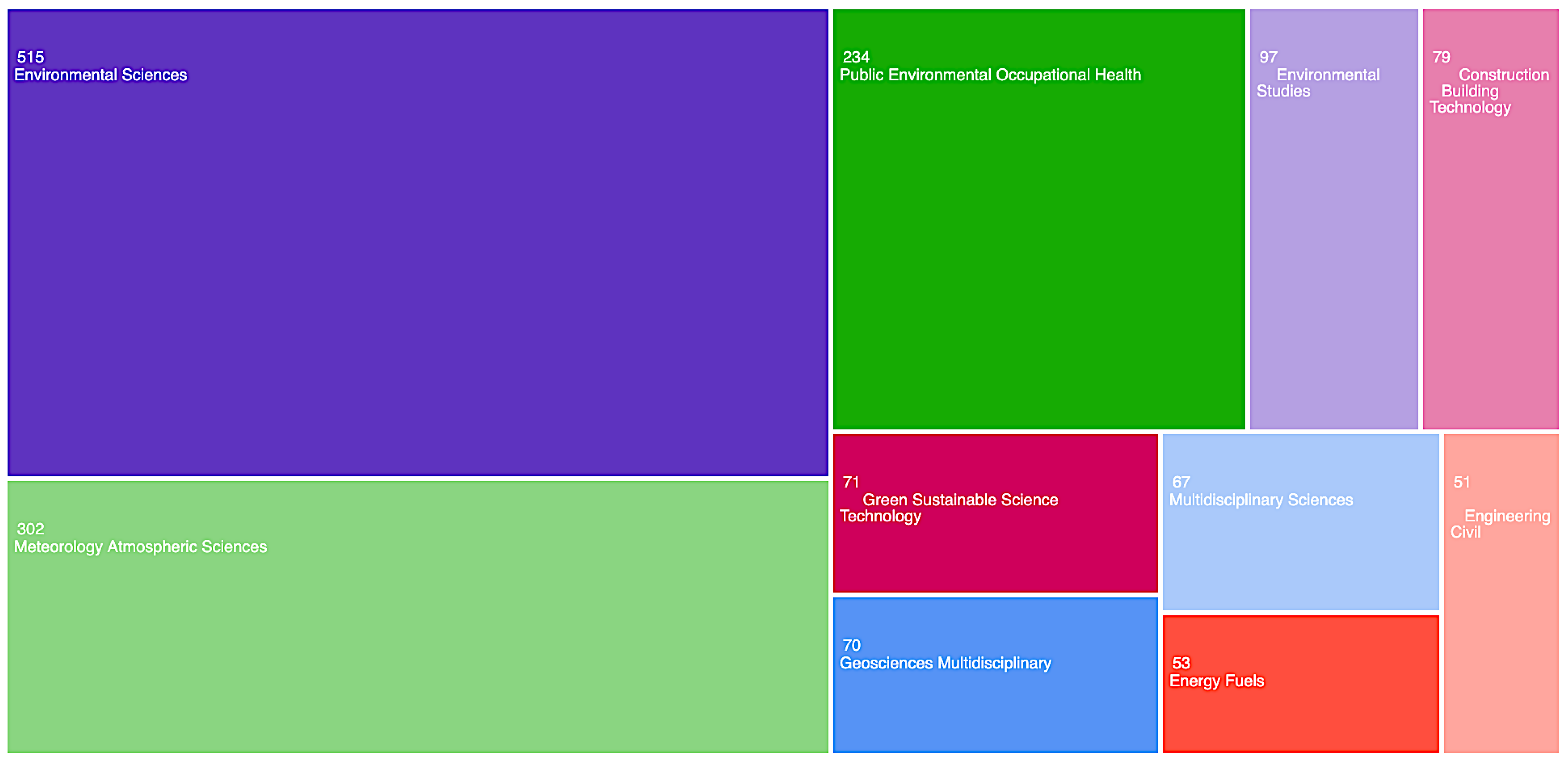
A diverse range of academic disciplines has contributed to the growing body of literature on heatwaves and health (Figure 3). The largest contributions come from Environmental Sciences, Meteorology and Atmospheric Sciences, and Public Environmental Occupational Health, followed by interdisciplinary areas such as Construction Building Technology, Sustainable Science, and Civil Engineering. These fields reflect the multifaceted nature of heatwave-related research, which spans climate science, public health, and adaptation strategies.
Research focus areas include those that are interested in mapping the impacts of heat waves from a meteorological perspective to understand current scenarios and project future scenarios [31,32,33]. Meteorologists worldwide are under pressure to provide accurate and actionable information in cases where heat waves occur. This is heightened by the health complications experienced by the public during heatwave episodes. In the same breath and vein, there is an increase in interest in public occupational environmental health. This should be understood from the perspective that as global temperatures increase along with the incidence of heat waves, such occurrences have consequences for public health, particularly in terms of occupational health. The incidence of occupational challenges faced by employees in the workplace has increased. Workplaces are looking to ensure the health and safety of employees during heatwave episodes [34,35]. Such heat waves undermine employee productivity and performance, with some organisations reporting increased morbidity and mortality [36,37].
This diverse citation pattern highlights the interconnected nature of heatwave-related research, emphasising the necessity of cross-disciplinary collaboration. Future studies should continue to integrate insights from climate science, urban planning, public health, and engineering to develop comprehensive heatwave adaptation and mitigation strategies.

3.2. Geographic Distribution of Heatwave and Health Research

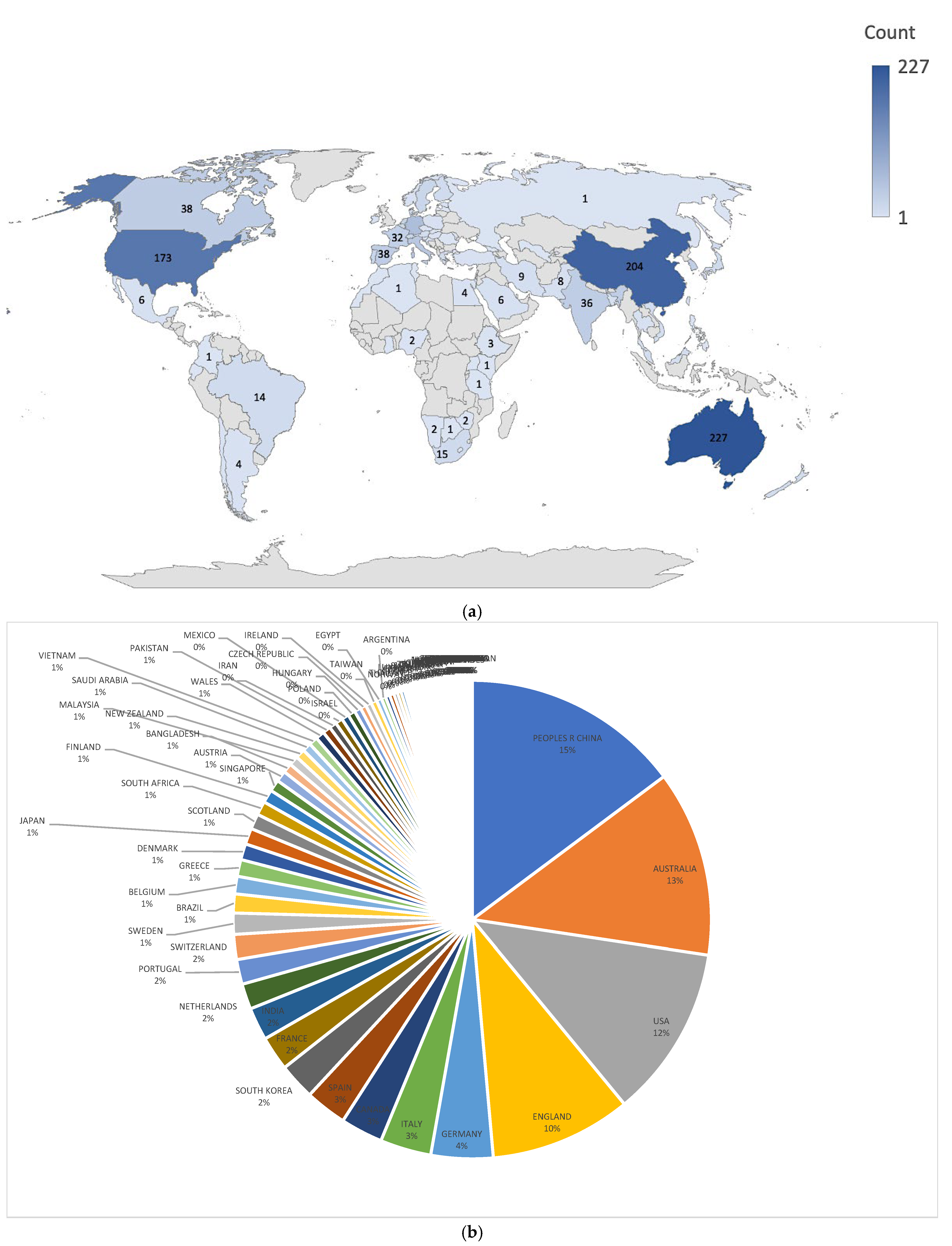
Figure 3 illustrates the geographic distribution of heatwave and health research, with much of the research on the subject matter having been produced in Australia, China, the USA, England, Germany, Italy, Spain, and Canada. It is surprising that Australia is one of the top countries in terms of research publications on heat waves and health, given its size and number of researchers from that region. This could be attributed to Australia experiencing some of the worst extreme weather events in its history, including extreme heatwaves. This regional focus aligns with scientific forecasts suggesting that heatwaves in these regions are expected to become more frequent and intense [38].
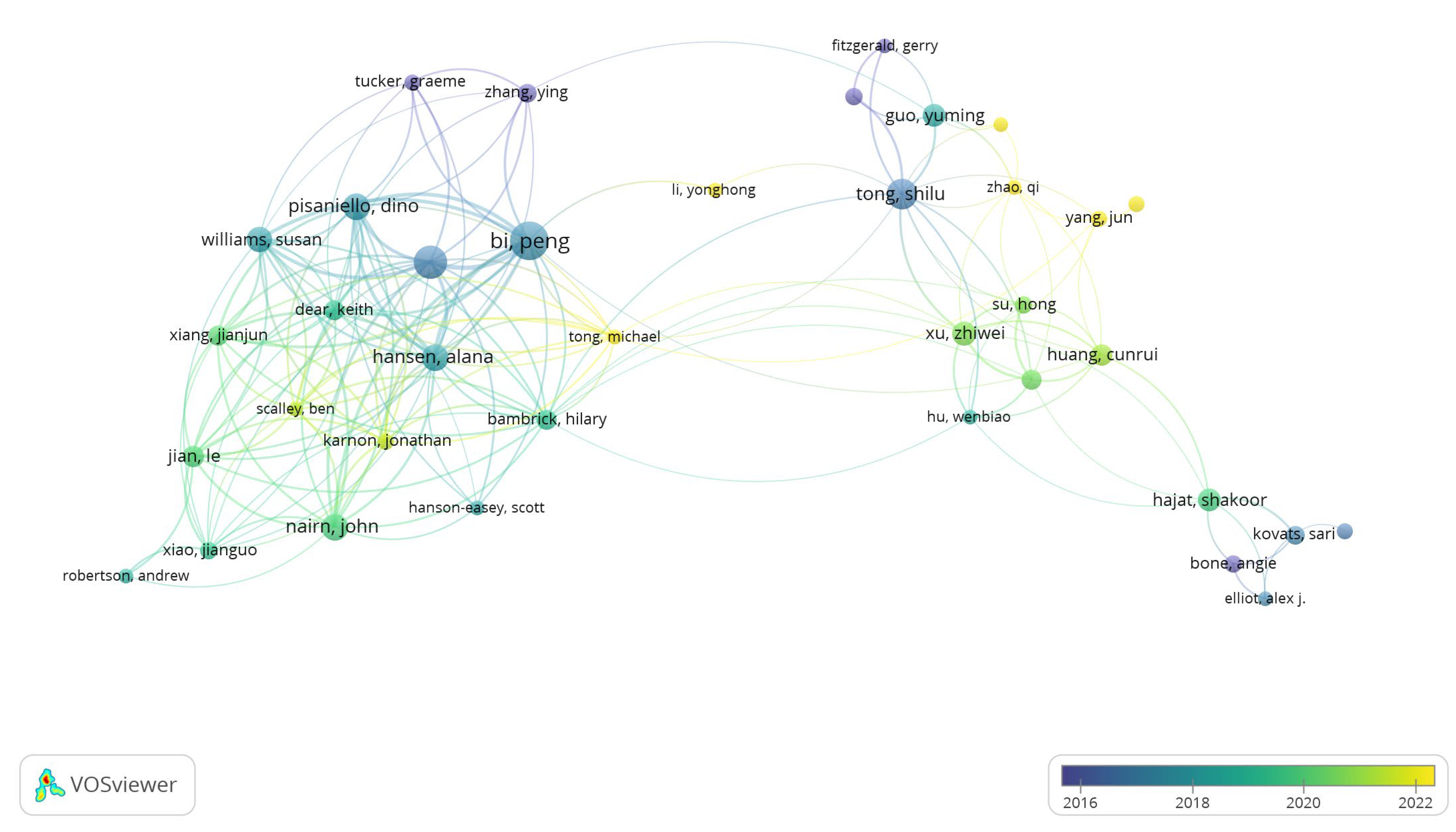
Some of the leading authors and authorities in Australia are Bi Peng (38 articles) and Monika Nitschke (28 articles). These two also emerged as the top scholars in this area of research (Figure 4). The two have written extensively on the topic, ranging from looking at the trends [39], mortality, impacts, morbidity [40,41], risk factors [42], early warning systems [43], and policy [44] among other such topics regarding heat waves and health. Most studies were conducted between 2018 and 2020. These works build upon the pioneers of this field, such as [45], who raised public health concerns that emanate from heat waves, citing the impacts on the elderly and increased concerns about heat strokes during heatwave events. They also called for early warning systems to reduce the impact and severity of such incidents.
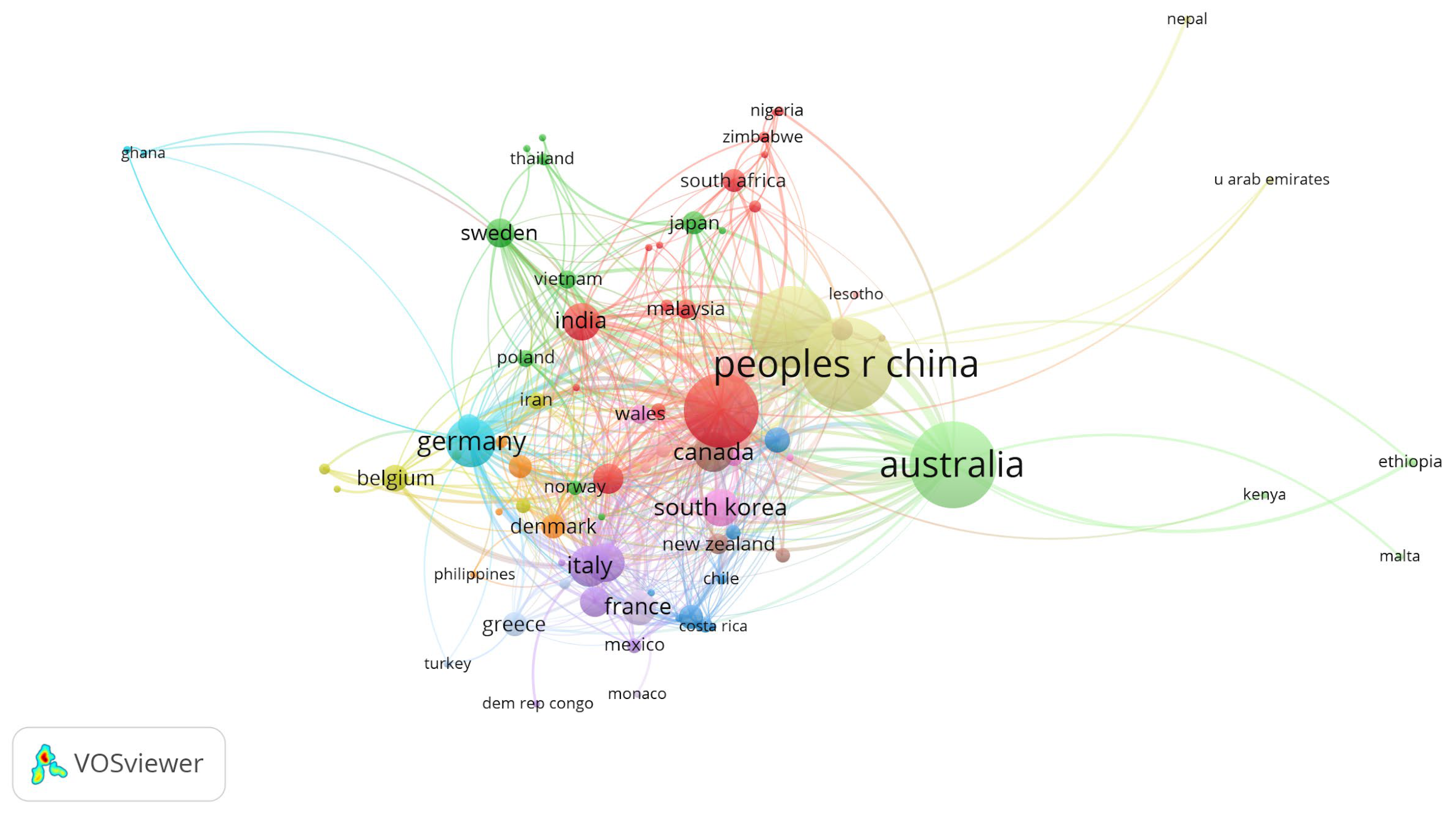
The study found that a number of authors from different countries have collaborated on the topic of heatwave and health (Figure 5) with the total link strength ranging between 127 and 2 for the most collaborated country, China, and the countries with the lowest link strength, such as Taiwan and Hungary which only have a link strength of 2. Amongst countries with some of the highest collaborated authors on this topic are China, where authors have collaborated on 256 documents; the USA, with a total link strength of 111 from 197 documents; England, with a total link strength of 99 from 160 documents; and Australia, with a total link strength of 97 from 220 publications. The Chinese Republic seems to be having a growing influence on the academic circle with their increased collaboration matching their dominance in other sectors, demonstrating the growing influence of China on the global stage. While there is some level of collaboration with developing countries, such collaborations remain weak which can increase geographic knowledge gaps in underrepresented regions. Greater collaboration with developing countries is crucial, given their vulnerability to extreme weather events induced by climate change. Weak economies often battle climate change finance for adaptation and mitigation efforts which increase population vulnerability to climate change.
Some of the most recent studies have focused on examining the economic costs of heat waves. Such studies have sought to understand how heatwaves impact people from an epidemiological perspective, focusing on how such heatwaves affect people with comorbidities in various parts of the world [46,47,48].
From a geographic perspective, there is generally a dominance of authorship from countries such as China (15%), Australia (13%), the USA (12%), England (10%), and Germany (4%), among others, with regard to the examination of the impacts of heat waves on human health (Figure 6a,b). The conversation among countries is still not as large across all countries, even if one considers publications that were made in languages other than English. Studies on the impact of heat waves on health are still very few in Africa, where there are barely any publications in several countries. The highest number of publications on the African continent, for example, is in South Africa (accounting for 1% of total publications), where there are 15 publications. The dominant publisher in South Africa has been Caradee Y. Wright (21% of publications) has collaborated on several publications, including the analysis of past and future heatwaves based on mortality thresholds to develop a heatwave health warning [49,50]. Another study [51] examined the human health effects of heat exposure.
However, despite their high vulnerability to extreme heat events, a notable research gap exists in Africa and South America. There are also gaps in the data from the Oceania region. This is concerning, given that some of these countries are highly exposed to high levels of humidity and other climatic catastrophes which can pose serious challenges. Countries in the tropics of the South American region also lack heatwave and climate change studies despite their vulnerability to heat exposure. The few publications in the Middle East are equally concerning, as most Mediterranean region countries have desert and coastal areas with a unique setup in terms of their experience with heat in other regions. Therefore, there is scope to understand how heat waves in some of the harshest climates from a meteorological perspective affect economic activities and livelihoods.

3.3. Key Terms and Evolving Themes on Heatwave and Health

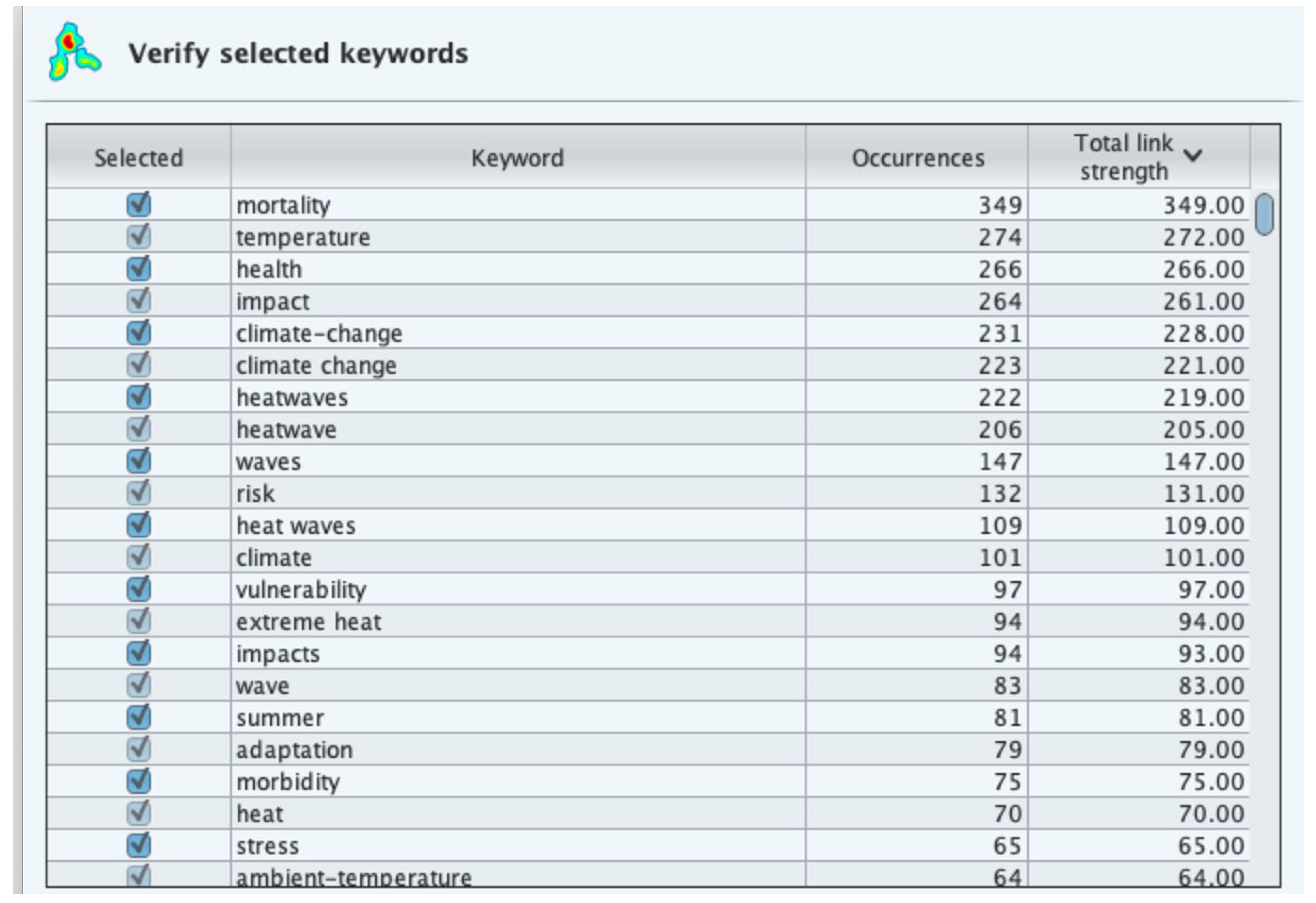
The study revealed that the key terms central to the research on the topic showed the predominance of the term mortality which occurred 349 times in keywords and also had the strongest link strength of 349 (Figure 7). Studies examining heat waves and health, therefore, seem to be concerned about the impact of heat waves on mortality. Several heatwave events that took place have resulted in deaths worldwide. Therefore, there is a need to ensure that such occurrences are prevented in the future. Temperature is equally a huge concern when studies on heatwaves and health are conducted, as evidence shows that this term occurs 274 times and has a total link strength of 272. The general concern is that as global warming from anthropogenic activities pushes the global temperatures upwards, there has been an equal increase in heatwave events which have had an adverse impact on people’s health (266 occurrences and total link strength of 266). Therefore, there are concerns that heat waves increase the risk and vulnerability of several people worldwide. Heatwaves that occur particularly during the summer months push up ambient temperatures, resulting in mortality, health challenges, increased morbidity, and stress, with several studies calling for the implementation of adaptation measures to ensure climate resilience.
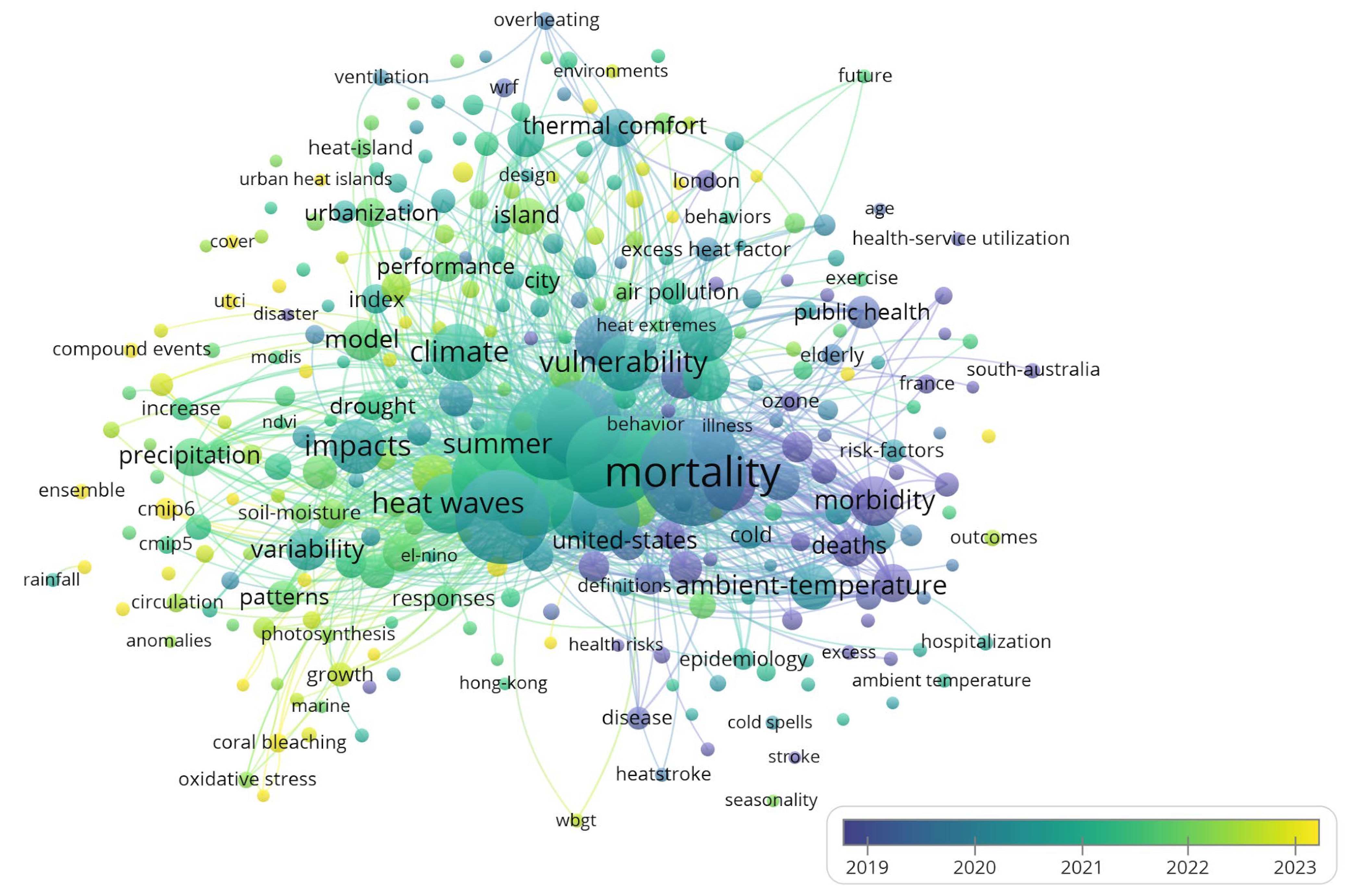
The keyword occurrence analysis in VOSviewer produced five major thematic concentration clusters in heatwave research (Figure 8). The clusters were colour-coded red, green, blue, yellow, and purple. The first cluster, in red, focused on public health and mortality impacts, and the top key terms were mortality (with 349 occurrences and a highest link strength of 2807), hospitalisation admissions, and cardiovascular disease. The cluster density shows that this cluster accounts for approximately 28% of the total link strength. The green cluster is on urban heat and environmental exposure, with dominant phrases being urban heat island, air pollution, and ozone. The third cluster which represents 19% of the total link strength in blue, deals with climate adaptation and resilience, with the top key words being vulnerability, resilience, policy, and adaptation. The fourth cluster, in yellow, is concerned with occupational health and outdoor workers, with key aspects being construction and workplace safety. Lastly, the 5th cluster deals with modelling and forecasting. This is linked to temperature indices, heat warming, and climate modelling.
One of the key themes that emerged from this study was climate change and health (Figure 7). There is recognition among Scholars that climate change is a trigger for several health challenges faced by the world, as it worsens morbidity and mortality. This is particularly true when considering the impacts of climate change, its influence on global warming, and the consequent heatwaves. The rise in global temperatures subsequently increases the vulnerability of some areas to heat-related illnesses and other challenges, such as heat stress, heat exhaustion, and heat stress. Evidence suggests that an increase in temperature could also have a secondary effect of introducing new zoonotic [52,53]. Anthropogenic increases in temperature also result in the spread of infectious diseases to new areas.
The increasing frequency and intensity of heatwaves have heightened scientific and public health interest in their impact on morbidity and mortality [34,54,55]. Heatwave exposure is strongly associated with adverse health outcomes, including increased emergency hospitalisation [56], heat-related illnesses [57] and excess mortality [34,58]. The severity of these effects varies according to region, demographic factors, and environmental conditions. Notably, the temperature thresholds that trigger heat-related deaths differ globally because local climate conditions influence population adaptation. Chen et al. [59] highlighted that mortality during heatwaves is exacerbated by ambient temperature and air pollution, with the elderly being particularly vulnerable.
While conventional wisdom has long suggested that infants and older adults are the primary groups at risk [14], recent studies have indicated that adolescents may also experience severe health impacts. For instance, He et al. [60] found a significant increase in unplanned hospital admissions among children and adolescents in New South Wales, Australia between 2001 and 2020. Conversely, Lee et al. ([61] demonstrated that older adults are more susceptible to heat stress than younger populations, underscoring the need for targeted public health interventions, particularly as heatwaves become more frequent and prolonged.

3.4. Physiological and Mental Health Consequences of Heatwaves

From an epidemiological perspective, extreme heatwaves disrupt normal physiological functions, triggering a cascade of adverse health effects. Prolonged exposure leads to excessive heat gain, causing elevated body temperature and increased perspiration as a cooling response. However, excessive sweating can result in dehydration, increased heart rate, and elevated cardiac output, which places significant stress on the cardiovascular system of the athlete. Vulnerability to heat stress varies based on factors such as age, sex, and underlying health conditions of the individual. Pre-existing comorbidities further amplify these risks, making heatwaves particularly dangerous for individuals with chronic diseases.
In addition to physical health, heatwaves have significant implications for mental well-being. Several studies [61,62,63] have documented an increase in psychiatric hospital admissions during heatwaves, with women suffering from mental disorders being at a higher risk of hospitalisation. Yi et al. [64] observed a notable increase in schizophrenia-related hospital admissions during extreme heat events, with marital status playing a role in vulnerability; married individuals were found to be more susceptible. Furthermore, research indicates gender-based disparities in heatwave-related mental health impacts, with women generally exhibiting higher vulnerability than men. These findings highlight the need for enhanced healthcare support systems and adaptive measures to protect vulnerable populations from extreme heat events.
Heatwaves have also been linked to the worsening of neurodegenerative diseases. Xu et al. [65] reported hospitalizations among patients with Alzheimer’s disease during heatwaves, with elevated post-discharge mortality rates. The preparedness of healthcare systems to manage such surges remains uncertain, raising concerns about the resilience of public health infrastructure. Addressing these challenges requires a proactive approach to ensure that healthcare facilities are adequately resourced to manage climate-related health crises.

3.5. Urban and Rural Disparities in Heatwave Exposure

Urban areas face intensified heatwave impacts owing to the urban heat island effect, in which built environments trap heat and exacerbate temperature extremes. Consequently, urban populations, particularly those with limited access to air conditioning, are at an increased risk of health problems [66,67,68,69]. Migration trends further complicate urban heat vulnerability, as rural populations increasingly relocate to cities in response to climate change-driven economic pressures and other socioeconomic and environmental issues [70].
Air pollution intensifies the dangers of urban heatwaves, with elevated levels of ozone and particulate matter (PM10 and PM2.5) significantly increasing respiratory risks and mortality rates. Heatwave conditions accelerate the formation of ground-level ozone, compounding air quality issues and further jeopardising public health [71].
Despite these concerns, rural populations face severe heatwave-related health risks. Agricultural workers and outdoor labourers are particularly vulnerable to heat stress, dehydration, and heat stroke owing to their prolonged exposure to extreme temperatures [72]. Limited access to cooling infrastructure in rural regions further worsens these challenges, restricting adaptive capacity and increasing the likelihood of productivity loss and occupational health risks. Research indicates that extreme heat exposure can reduce labour productivity by up to 18% [73], with younger and less experienced agricultural workers being particularly vulnerable [74,75].
These disparities underscore the urgent need for tailored adaptation strategies that separately address the distinct vulnerabilities of urban and rural populations. Key interventions should include localised early warning systems, climate-adaptive infrastructure investments, and community-based resilience programs that enhance preparedness and protect at-risk populations from the escalating health threats posed by extreme heat.

3.6. Regional and Global Perspectives on Heatwave Research

Scientific enquiry into heatwave impacts has concentrated on specific regions, with cities such as New York, Adelaide, and London receiving considerable research attention. These cities have been studied extensively because of their high population densities and vulnerability to extreme heat. Heatwaves pose a serious health risk to urban dwellers, with increased emergency room visits recorded during extreme temperature events. The most affected groups include the elderly, children, and socioeconomically disadvantaged populations with limited access to cooling technologies [76,77,78]. In response, municipal governments have implemented measures such as heat exposure advisories and public cooling stations to mitigate these risks to health. Researchers have also developed heat stress indices to assess and predict heatwave-related health risks [77].
Beyond urban centres, Europe, France, Australia, and Southern Australia have emerged as key regions for heatwave research. In Europe, heatwaves are exacerbated by climate change and the heat island effect, leading to increased morbidity and mortality rates [69,79,80]. Vulnerable populations, including the elderly and socioeconomically marginalised groups, bear the brunt of these impacts. As part of climate adaptation efforts, European nations have implemented Heat Health Action Plans (HHAPs) and Heat Health Warning Systems, which have proven effective in reducing heat-related health risks among vulnerable populations. However, financial and cultural barriers continue to limit the widespread adoption of these interventions in the field.
Similarly, Australia has witnessed a rise in heat-related mortality and morbidity, with urban centres such as Queensland reporting a 5% increase in deaths during extreme heat events, particularly in lower socioeconomic regions [40]. Heatwaves have also led to increased demand for emergency medical services, straining ambulances and hospital capacity [81]. In response, Australian meteorological agencies have introduced advanced warning systems, including the Excess Heat Factor (EHF), which provides early alerts to mitigate the health impacts of extreme heat [82].

3.7. Building Resilience and Adaptation to Heatwaves

Research on heatwaves has increasingly focused on identifying adaptive strategies and interventions to mitigate their impact on public health, reduce mortality, and minimise heat-related injuries. These interventions span policy reforms, urban planning, technological innovation and behavioural adaptation.
One widely recommended approach is the development of Heat Vulnerability Indices (HVI) to identify high-risk regions and vulnerable populations, particularly in urban environments where socioeconomic disparities and inadequate infrastructure exacerbate heat risks [77]. These indices facilitate targeted interventions, including optimised resource allocation and early warning systems. Given that heat vulnerability varies significantly within small geographic areas, localised assessments are essential for tailoring adaptation strategies to meet specific community needs. Heat stress indices play a critical role in protecting vulnerable populations from the impacts of heat waves, as they pave the way for quantifying and communicating thermal risks in a manner that provides for public health action. This is achieved by providing critical information for early warning and preparedness, identifying high-risk areas and groups, and providing guidance for occupational health and outdoor work. It also serves as a scientific benchmark for evidence-based policy and public health planning. Finally, it assists in enhancing public awareness of heatwave risks.
Another key adaptation measure is the transition to cleaner energy sources to mitigate urban heat islands and reduce the pollutants that intensify the heatwaves. Zeighami et al. [71] advocated for polluter-pay policies, particularly targeting power plants that emit airborne pollutants that amplify heat-related morbidity and mortality rates. Beyond reducing dependence on fossil fuels, these policies align with Just Energy Transition initiatives that aim to support vulnerable communities through measures such as energy-efficient housing, access to affordable air conditioning, and improved building designs [83,84]. These efforts are critical for bridging the equity gap in heatwave adaptation.
Nature-based solutions have also been proposed to counteract the urban heat island effect and enhance thermal comfort. The proposed interventions include expanding urban parks, implementing green roofs, and adopting reflective white roofs, all of which have been found to lower ambient temperatures and mitigate heat exposure in densely populated areas [66]. Additionally, urban infrastructure planning should integrate solar-powered cooling shelters and publicly accessible hydration stations, particularly in low-income and heat-vulnerable neighbourhoods, to protect at-risk populations during extreme heat events.
From a public health preparedness perspective, strengthening proactive measures before and during heatwave alerts is crucial [62]. These efforts should include ensuring adequate hydration, expanding access to cooling spaces, and adjusting outdoor work schedules to protect workers from heat stress during summer months. In regions that frequently experience extreme heat events, emergency healthcare services must enhance their preparedness by increasing staffing levels, deploying mobile cooling units, and streamlining response protocols to manage heat-related medical emergencies.
To maximise long-term effectiveness, adaptation strategies must be integrated into climate-resilience policies to ensure sustained investment in heatwave mitigation. Cities should incorporate HVIs into urban planning frameworks, and governments must prioritise equitable access to cooling technologies, heat preparedness infrastructure, and emergency medical resources.
The bibliometric co-occurrence network showed a distinct adaptation and resilience cluster in blue on VOSviewer, linking words such as vulnerability, heat health action plans, heat vulnerability index, green roofs, urban cooling, and public health adaptation. The cluster which accounts for approximately 19% of the total strength, demonstrates a growing scientific convergence between adaptation measures and health protection outcomes. Co-citation bursts were particularly evident for studies aimed at examining HHAP performance in Europe [79] and Australia [43], where quantitative evidence revealed reduced heat-related morbidity and mortality as a consequence of the introduction of structured warning systems. In the same breath, keywords such as green infrastructure, urban greening, and white roofs emerged in later years after the 2018 overlay, reflecting a shift towards evaluating nature-based cooling solutions as public health interventions. This indicates that adaptation-oriented studies are increasingly evidence-driven, connecting built environment modifications and early warning systems to measure reductions in heat-related illnesses and mortality.
Studies grouped within cluster 3 demonstrate that HHAPs and HVIs are among the most frequently co-cited tools linking early warning interventions with reductions in heat-related mortality, particularly in Europe and Australia. Co-citation bursts for terms such as early warning systems, vulnerability mapping, and heat health action plans indicate that empirical evaluation of these tools has intensified since 2018, reflecting increasing recognition of adaptation mechanisms. It is equally critical to note that keywords such as green roofs, urban cooling, and reflective materials show strong co-occurrence with urban heat island migration and public health benefits which points to how urban design strategies are being framed within the health adaptation debate.

3.8. Research Gaps Future Direction and Policy Perspectives

Despite significant advances in understanding the health impacts of heatwaves, critical knowledge gaps remain. The study found that although extreme heat events are increasing, there is limited research on the ability of healthcare infrastructure to cope with rising emergency hospitalisations and long-term medical consequences. Future studies should assess hospital readiness, resource allocation strategies, and emergency response efficiency during heatwaves.
However, the study also found that although heatwaves disproportionately affect developing countries, there is limited research on their impact in Africa, South America, and South Asia, where adaptation challenges are exacerbated by socioeconomic vulnerabilities and limited health-care infrastructure. The study revealed an equal lack of a universally accepted definition for heatwaves, and the absence of standardised heatwave definitions and classification frameworks complicates efforts to compare the health impacts across regions and populations.
Globally, the mental health impacts of heatwaves are underrepresented. Although the physiological consequences of heatwaves are well documented, research on their psychological effects, such as anxiety, depression, and cognitive impairment, remains scarce. Vulnerable groups, including those with pre-existing mental health conditions, remain under-studied.
The study also found that there are limited insights into public risk perception and behavioural responses; understanding how populations perceive heat risks and adopt protective behaviours is critical for designing effective public health campaigns and interventions.
In many respects, many adaptation strategies, such as heat health action plans, early warning systems, and urban cooling solutions, have been proposed, but their long-term effectiveness remains insufficiently evaluated, particularly in low-income and resource constrained settings. The study revealed that although forecasting and monitoring capabilities exist in some regions, they remain underdeveloped or inaccessible in many vulnerable areas. Strengthening these systems through data integration, mobile technology, and community engagement is essential for improving early response mechanisms.
Given the study’s findings, there is a need for governments worldwide to mandate hospitals and clinics to develop heatwave contingency plans. Such plans should enable health institutions to deal with surges associated with heatwaves, ensure staff training, and ensure the availability of mobile cooling units and emergency hydration facilities. There is also a need to encourage heat wave health monitoring dashboards so that they become part of the national disease surveillance programs aimed at tracking morbidity and mortality in real time. To make such dashboards actionable, they should integrate a minimum set of standardised data elements which link meteorological conditions with health outcomes in real time. Core environmental indicators should include the Wet Bulb Globe Temperature (WBGT), Universal Thermal Climate Index (UTCI), and Excess Heat Factor (EFH), all of which quantify human thermal stress under varying humidity, radiation, and wind conditions. These parameters provide a scientific foundation for defining heat alert thresholds and regional risk categorisation. In parallel, health system indicators such as daily hospital admissions, emergency medical services, call volumes, mortality counts, and heat-related outpatient visits should be integrated to capture the direct and indirect health impacts of extreme heat. Linking these datasets on a central platform allows for the spatial visualisation of merging heat-related hotspots.
Given the expected vulnerability of urban areas which will be compounded by urban heat islands, there may be a need to update building codes for urban areas to encompass green roofs, reflective materials, and ventilation standards. This is particularly true for urban areas which have recurring heatwave challenges. In some areas prone to heatwaves, municipalities may need to invest in public cooling shelters, cooling areas for transport stops, and hydration points, especially in areas that are habitats for low-income dwellers.
The study findings reveal the need to revisit occupational health and labour policies to enact and enforce heat exposure safety regulations, such as adjusted working hours, enforcement of rest breaks, and employers providing hydration to outdoor workers during the summer months. Sectors such as agriculture and construction need tailor-made protocols to reduce employee vulnerability to heat wave-related challenges.
In light of the fact that pollution tends to have a compounding impact on heatwaves there is a need to tighten the polluter pays legislation and link it to the Just Energy Transition programs. Nature-based solutions must be enhanced by investing in and enhancing urban green areas, such as parks, wetlands, and trees, to reduce the impact of heat island effects and improve air quality.
There is also a need for international bodies, such as the World Health Organization, Intergovernmental Panel on Climate Change, and World Meteorological Organization, to lead the development of a global standard heatwave classification to ensure the availability of a more consistent health risk assessment for heatwaves.

4. Conclusions and Recommendations

This study systematically examined the state of knowledge on heatwaves and public health, revealing a significant growth in research output, particularly post-2016, a period characterised by record-breaking global temperatures and intensifying heatwave events in the United States. The interdisciplinary nature of heatwave-related research has expanded to include climate science, public health, engineering, and urban planning, reflecting the multifaceted challenges posed by extreme heat.
The findings confirm that heatwaves disproportionately affect vulnerable populations, including older adults, children, socioeconomically disadvantaged groups, and outdoor labourers. In urban environments, the urban heat island effect and air pollution further intensify health risks, whereas rural communities face increased occupational exposure and resource limitations. Despite the growing body of research, knowledge gaps remain, particularly regarding developing regions, mental health impacts, behavioural responses and adaptation effectiveness.
Bibliometric evidence reinforces that adaptation measures, particularly HHAPs, HVIs, and green infrastructure, are not only conceptually recognised but empirically linked to improved public health outcomes through repeated co-citation and keyword clustering patterns across 2004–2024. Embedding WBGT, UTCI, EHF, and real-time health surveillance metrics within national dashboards while addressing inequalities in funding language and data visibility can transform early warning systems into proactive, inclusive decision-supported tools that protect vulnerable populations and strengthen climate resilience.
Given the projected increase in global temperatures, future research should focus on the following aspects.
Expanding research coverage to marginalised regions experiencing severe heatwave impacts is essential.
Enhancing real-time monitoring and forecasting systems for heatwave preparedness is thus crucial.
Assessing the effectiveness of existing adaptation measures and refining intervention strategies are also important.
Integrating multi- and transdisciplinary perspectives to develop holistic, evidence-based solutions for improving resilience.
This study highlights the urgent need for continued research and investment in adaptation strategies to safeguard public health from escalating heatwave risks. As global temperatures continue to rise, ensuring climate resilience of healthcare systems, urban infrastructure, and policy frameworks is paramount to mitigate the health burden of extreme heat events worldwide.
Future research and policy efforts must adopt a proactive, integrated approach that combines scientific, technological, and governance innovations to build climate-resilient healthcare systems, heat-adaptive infrastructure, and sustainable urban planning. Addressing these gaps is crucial for safeguarding global public health from the escalating risks of extreme heat events. Embedding WBGT, UTCI, EHF and real-time health surveillance metrics within national heat dashboards can transform early warning systems into proactive decision support tools that protect vulnerable populations and strengthen climate resilience.

Author Contributions

Conceptualization, K.D. and H.A.A.; methodology, K.D.; software, K.D.; validation, B.K. and A.D.; formal analysis, K.D.; investigation, A.D.; resources.; data curation, H.A.A.; writing—original draft preparation, K.D.; writing—review and editing, A.D.; visualization, B.K.; supervision, H.A.A.; project administration, K.D.; funding acquisition, H.A.A. All authors have read and agreed to the published version of the manuscript.

Funding

The Article Processing Fees and software was paid for Vaal University of Technology and Basit Khan received support from Tamkeen under the NYUAD Research Institute grant CG009 to Mubadala ACCESS.

Data Availability Statement

There is no data associated with this study.

Conflicts of Interest

The authors declare no conflicts of interest.

References

  1. Newman, R.; Noy, I. The Global Costs of Extreme Weather That Are Attributable to Climate Change. Nat. Commun. 2023, 14, 6103. [Google Scholar] [CrossRef] [PubMed]
  2. Sibitane, Z.E.; Dube, K.; Lekaota, L. Global Warming and Its Implications on Nature Tourism at Phinda Private Game Reserve, South Africa. Int. J. Environ. Res. Public. Health 2022, 19, 5487. [Google Scholar] [CrossRef]
  3. Bari, M.A.; Alam, L.; Alam, M.M.; Rahman, L.F.; Pereira, J.J. Estimation of Losses and Damages Caused by Flash Floods in the Commercial Area of Kajang, Selangor, Malaysia. Arab. J. Geosci. 2021, 14, 195. [Google Scholar] [CrossRef]
  4. Dube, K.; Nhamo, G.; Kilungu, H.; Hambira, W.L.; El-Masry, E.A.; Chikodzi, D.; Chapungu, L.; Molua, E.L. Tourism and Climate Change in Africa: Informing Sector Responses. J. Sustain. Tour. 2024, 32, 1811–1831. [Google Scholar] [CrossRef]
  5. Awuni, S.; Adarkwah, F.; Ofori, B.D.; Purwestri, R.C.; Bernal, D.C.H.; Hajek, M. Managing the Challenges of Climate Change Mitigation and Adaptation Strategies in Ghana. Heliyon 2023, 9, e15491. [Google Scholar] [CrossRef]
  6. Dube, K.; Nhamo, G.; Chikodzi, D. Rising Sea Level and Its Implications on Coastal Tourism Development in Cape Town, South Africa. J. Outdoor Recreat. Tour. 2021, 33, 100346. [Google Scholar] [CrossRef]
  7. Schinko, T.; Berchtold, C.; Handmer, J.; Deubelli-Hwang, T.; Preinfalk, E.; Linnerooth-Bayer, J.; Scolobig, A.; Serra, M.; Plana, E. A Framework for Considering Justice Aspects in Integrated Wildfire Risk Management. Nat. Clim. Chang. 2023, 13, 788–795. [Google Scholar] [CrossRef]
  8. Barriopedro, D.; García-Herrera, R.; Ordóñez, C.; Miralles, D.G.; Salcedo-Sanz, S. Heat Waves: Physical Understanding and Scientific Challenges. Rev. Geophys. 2023, 61, e2022RG000780. [Google Scholar] [CrossRef]
  9. Lala, B.; Hagishima, A. Impact of Escalating Heat Waves on Students’ Well-Being and Overall Health: A Survey of Primary School Teachers. Climate 2023, 11, 126. [Google Scholar] [CrossRef]
  10. Ullah, S.; You, Q.; Ullah, W.; Sachindra, D.A.; Ali, A.; Bhatti, A.S.; Ali, G. Climate Change Will Exacerbate Population Exposure to Future Heat Waves in the China-Pakistan Economic Corridor. Weather Clim. Extrem. 2023, 40, 100570. [Google Scholar] [CrossRef]
  11. Oh, J.; Kim, E.; Kwag, Y.; An, H.; Kim, H.S.; Shah, S.; Lee, J.H.; Ha, E. Heat Wave Exposure and Increased Heat-Related Hospitalizations in Young Children in South Korea: A Time-Series Study. Environ. Res. 2024, 241, 117561. [Google Scholar] [CrossRef] [PubMed]
  12. Xu, R.; Sun, H.; Zhong, Z.; Zheng, Y.; Liu, T.; Li, Y.; Liu, L.; Luo, L.; Wang, S.; Lv, Z.; et al. Ozone, Heat Wave, and Cardiovascular Disease Mortality: A Population-Based Case-Crossover Study. Environ. Sci. Technol. 2024, 58, 171–181. [Google Scholar] [CrossRef] [PubMed]
  13. López-Bueno, J.A.; Díaz, J.; Linares, C. Differences in the Impact of Heat Waves According to Urban and Peri-Urban Factors in Madrid. Int. J. Biometeorol. 2019, 63, 371–380. [Google Scholar] [CrossRef] [PubMed]
  14. Meade, R.D.; Akerman, A.P.; Notley, S.R.; McGinn, R.; Poirier, P.; Gosselin, P.; Kenny, G.P. Physiological Factors Characterizing Heat-Vulnerable Older Adults: A Narrative Review. Environ. Int. 2020, 144, 105909. [Google Scholar] [CrossRef]
  15. Nguyen, T.T.; Grote, U.; Neubacher, F.; Rahut, D.B.; Do, M.H.; Paudel, G.P. Security Risks from Climate Change and Environmental Degradation: Implications for Sustainable Land Use Transformation in the Global South. Curr. Opin. Environ. Sustain. 2023, 63, 101322. [Google Scholar] [CrossRef]
  16. Van De Vuurst, P.; Escobar, L.E. Climate Change and Infectious Disease: A Review of Evidence and Research Trends. Infect. Dis. Poverty 2023, 12, 51. [Google Scholar] [CrossRef]
  17. Joakim, E.P.; Mortsch, L.; Oulahen, G. Using Vulnerability and Resilience Concepts to Advance Climate Change Adaptation. In Environmental Hazards and Resilience; Routledge: London, UK, 2021; ISBN 978-1-003-17143-0. [Google Scholar]
  18. Lanlan, J.; Sarker, M.N.I.; Ali, I.; Firdaus, R.B.R.; Hossin, M.A. Vulnerability and Resilience in the Context of Natural Hazards: A Critical Conceptual Analysis. Environ. Dev. Sustain. 2024, 26, 19069–19092. [Google Scholar] [CrossRef]
  19. Echchakoui, S. Why and How to Merge Scopus and Web of Science during Bibliometric Analysis: The Case of Sales Force Literature from 1912 to 2019. J. Market. Anal. 2020, 8, 165–184. [Google Scholar] [CrossRef]
  20. Pranckutė, R. Web of Science (WoS) and Scopus: The Titans of Bibliographic Information in Today’s Academic World. Publications 2021, 9, 12. [Google Scholar] [CrossRef]
  21. Soosaraei, M.; Khasseh, A.A.; Fakhar, M.; Hezarjaribi, H.Z. A Decade Bibliometric Analysis of Global Research on Leishmaniasis in Web of Science Database. Ann. Med. Surg. 2018, 26, 30–37. [Google Scholar] [CrossRef]
  22. Dube, K. A Comprehensive Review of Climatic Threats and Adaptation of Marine Biodiversity. J. Mar. Sci. Eng. 2024, 12, 344. [Google Scholar] [CrossRef]
  23. Sivertsen, G.; Rousseau, R.; Zhang, L. The Motivations for and Effects of Modified Fractional Counting. J. Informetr. 2025, 19, 101681. [Google Scholar] [CrossRef]
  24. Mutz, R.; Daniel, H.-D. How to Consider Fractional Counting and Field Normalization in the Statistical Modeling of Bibliometric Data: A Multilevel Poisson Regression Approach. J. Informetr. 2019, 13, 643–657. [Google Scholar] [CrossRef]
  25. Chaston, T.B.; Broome, R.A.; Cooper, N.; Duck, G.; Geromboux, C.; Guo, Y.; Ji, F.; Perkins-Kirkpatrick, S.; Zhang, Y.; Dissanayake, G.S.; et al. Mortality Burden of Heatwaves in Sydney, Australia Is Exacerbated by the Urban Heat Island and Climate Change: Can Tree Cover Help Mitigate the Health Impacts? Atmosphere 2022, 13, 714. [Google Scholar] [CrossRef]
  26. Patel, D.; Jian, L.; Xiao, J.; Jansz, J.; Yun, G.; Robertson, A. Joint Effect of Heatwaves and Air Quality on Emergency Department Attendances for Vulnerable Population in Perth, Western Australia, 2006 to 2015. Environ. Res. 2019, 174, 80–87. [Google Scholar] [CrossRef]
  27. Patz, J.A.; Campbell-Lendrum, D.; Holloway, T.; Foley, J.A. Impact of Regional Climate Change on Human Health. Nature 2005, 438, 310–317. [Google Scholar] [CrossRef]
  28. Perkins-Kirkpatrick, S.E.; Lewis, S.C. Increasing Trends in Regional Heatwaves. Nat. Commun. 2020, 11, 3357. [Google Scholar] [CrossRef]
  29. Zhao, L.; Lee, X.; Smith, R.B.; Oleson, K. Strong Contributions of Local Background Climate to Urban Heat Islands. Nature 2014, 511, 216–219. [Google Scholar] [CrossRef]
  30. Luber, G.; McGeehin, M. Climate Change and Extreme Heat Events. Am. J. Prev. Med. 2008, 35, 429–435. [Google Scholar] [CrossRef]
  31. Jian, L.; Patel, D.; Xiao, J.; Jansz, J.; Yun, G.; Lin, T.; Robertson, A. Can We Use a Machine Learning Approach to Predict the Impact of Heatwaves on Emergency Department Attendance? Environ. Res. Commun. 2023, 5, 045005. [Google Scholar] [CrossRef]
  32. Tran, D.N.; Doan, V.Q.; Nguyen, V.T.; Khan, A.; Thai, P.K.; Cunrui, H.; Chu, C.; Schak, E.; Phung, D. Spatial Patterns of Health Vulnerability to Heatwaves in Vietnam. Int. J. Biometeorol. 2020, 64, 863–872. [Google Scholar] [CrossRef] [PubMed]
  33. Trancoso, R.; Syktus, J.; Toombs, N.; Ahrens, D.; Wong, K.K.-H.; Pozza, R.D. Heatwaves Intensification in Australia: A Consistent Trajectory across Past, Present and Future. Sci. Total Environ. 2020, 742, 140521. [Google Scholar] [CrossRef] [PubMed]
  34. McInnes, J.A.; Ibrahim, J.E. Minimising Harm to Older Victorians from Heatwaves: A Qualitative Study of the Role of Community-Based Health Profession and Carer Organisations. Australas. J. Ageing 2010, 29, 104–110. [Google Scholar] [CrossRef] [PubMed]
  35. Xiang, J.; Bi, P.; Pisaniello, D.; Hansen, A. The Impact of Heatwaves on Workers׳ Health and Safety in Adelaide, South Australia. Environ. Res. 2014, 133, 90–95. [Google Scholar] [CrossRef]
  36. Baek, S.-O.; Wee, D. Influence of Personal Cooling at Local Body Parts on Workers’ Thermal Comfort Levels under Thermal Environments with Elevated Ambient Temperatures: A Model Study. Int. J. Ind. Ergon. 2023, 95, 103456. [Google Scholar] [CrossRef]
  37. Bitencourt, D.P. Maximum Wet-Bulb Globe Temperature Mapping in Central–South Brazil: A Numerical Study. Meteorol. Appl. 2019, 26, 385–395. [Google Scholar] [CrossRef]
  38. Fischer, E.M.; Schär, C. Consistent Geographical Patterns of Changes in High-Impact European Heatwaves. Nat. Geosci. 2010, 3, 398–403. [Google Scholar] [CrossRef]
  39. Williams, S.; Nitschke, M.; Weinstein, P.; Pisaniello, D.L.; Parton, K.A.; Bi, P. The Impact of Summer Temperatures and Heatwaves on Mortality and Morbidity in Perth, Australia 1994–2008. Environ. Int. 2012, 40, 33–38. [Google Scholar] [CrossRef]
  40. Varghese, B.M.; Barnett, A.G.; Hansen, A.L.; Bi, P.; Nairn, J.; Rowett, S.; Nitschke, M.; Hanson-Easey, S.; Heyworth, J.S.; Sim, M.R.; et al. Characterising the Impact of Heatwaves on Work-Related Injuries and Illnesses in Three Australian Cities Using a Standard Heatwave Definition—Excess Heat Factor (EHF). J. Expo. Sci. Environ. Epidemiol. 2019, 29, 821–830. [Google Scholar] [CrossRef]
  41. Williams, S.; Venugopal, K.; Nitschke, M.; Nairn, J.; Fawcett, R.; Beattie, C.; Wynwood, G.; Bi, P. Regional Morbidity and Mortality during Heatwaves in South Australia. Int. J. Biometeorol. 2018, 62, 1911–1926. [Google Scholar] [CrossRef]
  42. Milazzo, A.; Giles, L.C.; Zhang, Y.; Koehler, A.P.; Hiller, J.E.; Bi, P. Heatwaves Differentially Affect Risk of Salmonella Serotypes. J. Infect. 2016, 73, 231–240. [Google Scholar] [CrossRef] [PubMed]
  43. Williams, S.; Nitschke, M.; Wondmagegn, B.Y.; Tong, M.; Xiang, J.; Hansen, A.; Nairn, J.; Karnon, J.; Bi, P. Evaluating Cost Benefits from a Heat Health Warning System in Adelaide, South Australia. Aust. N. Z. J. Public Health 2022, 46, 149–154. [Google Scholar] [CrossRef] [PubMed]
  44. Xu, R.; Yu, P.; Liu, Y.; Chen, G.; Yang, Z.; Zhang, Y.; Wu, Y.; Beggs, P.J.; Zhang, Y.; Boocock, J.; et al. Climate Change, Environmental Extremes, and Human Health in Australia: Challenges, Adaptation Strategies, and Policy Gaps. Lancet Reg. Health—West. Pac 2023, 40, 100936. [Google Scholar] [CrossRef] [PubMed]
  45. Kovats, R.S.; Kristie, L.E. Heatwaves and Public Health in Europe. Eur. J. Public Health 2006, 16, 592–599. [Google Scholar] [CrossRef]
  46. Huang, W.; Kan, H.; Kovats, S. The Impact of the 2003 Heat Wave on Mortality in Shanghai, China. Sci. Total Environ. 2010, 408, 2418–2420. [Google Scholar] [CrossRef]
  47. Cheng, Q.; Jin, H.; Ren, Y. Compound Daytime and Nighttime Heatwaves for Air and Surface Temperature Based on Relative and Absolute Threshold Dynamic Classified in Southwest China, 1980–2019. Sustain. Cities Soc. 2023, 91, 104433. [Google Scholar] [CrossRef]
  48. Huang, Y.; Song, H.; Cheng, Y.; Bi, P.; Li, Y.; Yao, X. Heatwave and Urinary Hospital Admissions in China: Disease Burden and Associated Economic Loss, 2014 to 2019. Sci. Total Environ. 2023, 857, 159565. [Google Scholar] [CrossRef]
  49. Kapwata, T.; Gebreslasie, M.T.; Wright, C.Y. An Analysis of Past and Future Heatwaves Based on a Heat-Associated Mortality Threshold: Towards a Heat Health Warning System. Environ. Health 2022, 21, 112. [Google Scholar] [CrossRef]
  50. Kapwata, T.; Abdelatif, N.; Scovronick, N.; Gebreslasie, M.T.; Acquaotta, F.; Wright, C.Y. Identifying Heat Thresholds for South Africa towards the Development of a Heat-Health Warning System. Int. J. Biometeorol. 2024, 68, 381–392. [Google Scholar] [CrossRef]
  51. Manyuchi, A.E.; Vogel, C.; Wright, C.Y.; Erasmus, B. The Self-Reported Human Health Effects Associated with Heat Exposure in Agincourt Sub-District of South Africa. Humanit. Soc. Sci. Commun. 2022, 9, 50. [Google Scholar] [CrossRef]
  52. Lian, X.; Huang, J.; Li, H.; He, Y.; Ouyang, Z.; Fu, S.; Zhao, Y.; Wang, D.; Wang, R.; Guan, X. Heat Waves Accelerate the Spread of Infectious Diseases. Environ. Res. 2023, 231, 116090. [Google Scholar] [CrossRef]
  53. Becvarik, Z.A.; Smurthwaite, K.S.; Lal, A. The Effect of Temperature on the Distribution of Zoonotic Pathogens in Livestock and Wildlife Populations: A Systematic Review. Transbound. Emerg. Dis. 2023, 2023, 2714539. [Google Scholar] [CrossRef]
  54. Elliot, A.J.; Bone, A.; Morbey, R.; Hughes, H.E.; Harcourt, S.; Smith, S.; Loveridge, P.; Green, H.K.; Pebody, R.; Andrews, N.; et al. Using Real-Time Syndromic Surveillance to Assess the Health Impact of the 2013 Heatwave in England. Environ. Res. 2014, 135, 31–36. [Google Scholar] [CrossRef] [PubMed]
  55. Xu, Z.; Cheng, J.; Hu, W.; Tong, S. Heatwave and Health Events: A Systematic Evaluation of Different Temperature Indicators, Heatwave Intensities and Durations. Sci. Total Environ. 2018, 630, 679–689. [Google Scholar] [CrossRef] [PubMed]
  56. Xu, Z.; Crooks, J.L.; Black, D.; Hu, W.; Tong, S. Heatwave and Infants’ Hospital Admissions under Different Heatwave Definitions. Environ. Pollut. 2017, 229, 525–530. [Google Scholar] [CrossRef]
  57. Yong, S.A.; Reid, D.A.; Tobin, A.E. Heatwave Hyponatraemia: A Case Series at a Single Victorian Tertiary Centre during January 2014. Intern. Med. J. 2015, 45, 211–214. [Google Scholar] [CrossRef] [PubMed]
  58. Tong, S.; Wang, X.Y.; Barnett, A.G. Assessment of Heat-Related Health Impacts in Brisbane, Australia: Comparison of Different Heatwave Definitions. PLoS ONE 2010, 5, e12155. [Google Scholar] [CrossRef]
  59. Chen, H.; Zhao, L.; Cheng, L.; Zhang, Y.; Wang, H.; Gu, K.; Bao, J.; Yang, J.; Liu, Z.; Huang, J.; et al. Projections of Heatwave-Attributable Mortality under Climate Change and Future Population Scenarios in China. Lancet Reg. Health West. Pac. 2022, 28, 100582. [Google Scholar] [CrossRef]
  60. He, C.; He, L.; Zhang, Y.; Kinney, P.L.; Ma, W. Potential Impacts of Cool and Green Roofs on Temperature-Related Mortality in the Greater Boston Region. Environ. Res. Lett. 2020, 15, 094042. [Google Scholar] [CrossRef]
  61. Lee, D.-G.; Kim, K.R.; Kim, J.; Kim, B.-J.; Cho, C.-H.; Sheridan, S.C.; Kalkstein, L.S.; Kim, H.; Yi, S.-M. Effects of Heat Waves on Daily Excess Mortality in 14 Korean Cities during the Past 20 Years (1991–2010): An Application of the Spatial Synoptic Classification Approach. Int. J. Biometeorol. 2018, 62, 575–583. [Google Scholar] [CrossRef]
  62. Almendra, R.; Loureiro, A.; Silva, G.; Vasconcelos, J.; Santana, P. Short-Term Impacts of Air Temperature on Hospitalizations for Mental Disorders in Lisbon. Sci. Total Environ. 2019, 647, 127–133. [Google Scholar] [CrossRef] [PubMed]
  63. Noelke, C.; McGovern, M.; Corsi, D.J.; Jimenez, M.P.; Stern, A.; Wing, I.S.; Berkman, L. Increasing Ambient Temperature Reduces Emotional Well-Being. Environ. Res. 2016, 151, 124–129. [Google Scholar] [CrossRef] [PubMed]
  64. Yi, W.; Zhang, X.; Pan, R.; Wei, Q.; Gao, J.; Xu, Z.; Duan, J.; Su, H. Quantifying the Impacts of Temperature Variability on Hospitalizations for Schizophrenia: A Time Series Analysis in Hefei, China. Sci. Total Environ. 2019, 696, 133927. [Google Scholar] [CrossRef]
  65. Xu, R.; Huang, S.; Shi, C.; Wang, R.; Liu, T.; Li, Y.; Zheng, Y.; Lv, Z.; Wei, J.; Sun, H.; et al. Extreme Temperature Events, Fine Particulate Matter, and Myocardial Infarction Mortality. Circulation 2023, 148, 312–323. [Google Scholar] [CrossRef]
  66. Carvalho, D.; Martins, H.; Marta-Almeida, M.; Rocha, A.; Borrego, C. Urban Resilience to Future Urban Heat Waves Under a Climate Change Scenario: A Case Study for Porto Urban Area (Portugal); Elsevier: Amsterdam, The Netherlands, 2017; Volume 19, pp. 1–27. [Google Scholar]
  67. Depietri, Y.; Renaud, F.G.; Kallis, G. Heat Waves and Floods in Urban Areas: A Policy-Oriented Review of Ecosystem Services; Springer: Berlin/Heidelberg, Germany, 2012; Volume 7, pp. 95–107. [Google Scholar]
  68. Joshi, K.; Khan, A.; Anand, P.; Sen, J. Understanding the Synergy between Heat Waves and the Built Environment: A Three-Decade Systematic Review Informing Policies for Mitigating Urban Heat Island in Cities. Sustain. Earth Rev. 2024, 7, 25. [Google Scholar] [CrossRef]
  69. Ward, K.; Lauf, S.; Kleinschmit, B.; Endlicher, W. Heat Waves and Urban Heat Islands in Europe: A Review of Relevant Drivers; Elsevier: Amsterdam, The Netherlands, 2016; Volume 569, pp. 527–539. [Google Scholar]
  70. Yazdanie, M.; Dramani, J.B.; Orehounig, K. Strengthening Energy System Resilience Planning under Uncertainty by Minimizing Regret. Renew. Sustain. Energy Transit. 2025, 6, 100093. [Google Scholar] [CrossRef]
  71. Zeighami, A.; Kern, J.; Yates, A.J.; Weber, P.; Bruno, A.A. U.S. West Coast Droughts and Heat Waves Exacerbate Pollution Inequality and Can Evade Emission Control Policies. Nat. Commun. 2023, 14, 1415. [Google Scholar] [CrossRef]
  72. Mikó, E.; Donyina, G.A.; Baccouri, W.; Tóth, V.; Flórián, K.; Gyalai, I.M.; Yüksel, G.; Köteles, D.; Srivastava, V.; Wanjala, G. One Health Agriculture: Heat Stress Mitigation Dilemma in Agriculture. One Health 2025, 20, 100966. [Google Scholar] [CrossRef]
  73. Sheng, D.; Zhao, X.; Edmonds, J.; Waldhoff, S.; Patel, P.; O’Neill, B.; Tebaldi, C.; Wise, M. Omitting Labor Responses to Heat Stress Underestimates Future Climate Impact on Agriculture. Commun. Earth Environ. 2025, 6, 400. [Google Scholar] [CrossRef]
  74. Di Blasi, C.; Marinaccio, A.; Gariazzo, C.; Taiano, L.; Bonafede, M.; Leva, A.; Morabito, M.; Michelozzi, P.; de’ Donato, F.K.; on behalf of the Worklimate Collaborative Group. Effects of Temperatures and Heatwaves on Occupational Injuries in the Agricultural Sector in Italy. Int. J. Environ. Res. Public. Health 2023, 20, 2781. [Google Scholar] [CrossRef]
  75. Venugopal, V.; Latha, P.K.; Shanmugam, R.; Krishnamoorthy, M. SS67-03 What Is the Health Burden of Heat Stress Combined with the Workload in India’s Informal Agriculture Sectors? Occup. Med. 2024, 74, i142–i143. [Google Scholar] [CrossRef]
  76. Ierardi, A.M.; Pavilonis, B. Heat Stress Risk among New York City Public School Kitchen Workers: A Quantitative Exposure Assessment. J. Occup. Environ. Hyg. 2020, 17, 353–363. [Google Scholar] [CrossRef]
  77. Nayak, S.G.; Shrestha, S.; Kinney, P.L.; Ross, Z.; Sheridan, S.C.; Pantea, C.I.; Hsu, W.H.; Muscatiello, N.; Hwang, S.A. Development of a Heat Vulnerability Index for New York State. Public Health 2018, 161, 127–137. [Google Scholar] [CrossRef] [PubMed]
  78. Wheeler, K.; Lane, K.; Walters, S.; Matte, T. Heat Illness and Deaths—New York City, 2000–2011. MMWR Morb. Mortal. Wkly. Rep. 2013, 62, 617–621. [Google Scholar]
  79. Casanueva, A.; Burgstall, A.; Kotlarski, S.; Messeri, A.; Morabito, M.; Flouris, A.D.; Nybo, L.; Spirig, C.; Schwierz, C. Overview of Existing Heat-Health Warning Systems in Europe. Int. J. Environ. Res. Public Health 2019, 16, 2657. [Google Scholar] [CrossRef] [PubMed]
  80. Weilnhammer, V.; Schmid, J.; Mittermeier, I.; Schreiber, F.; Jiang, L.; Pastuhovic, V.; Herr, C.; Heinze, S. Extreme Weather Events in Europe and Their Health Consequences—A Systematic Review. Int. J. Hyg. Environ. Health 2021, 233, 113688. [Google Scholar] [CrossRef]
  81. Xiao, J.; Spicer, T.; Jian, L.; Yun, G.Y.; Shao, C.; Nairn, J.; Fawcett, R.J.B.; Robertson, A.; Weeramanthri, T.S. Variation in Population Vulnerability to Heat Wave in Western Australia. Front. Public Health 2017, 5. [Google Scholar] [CrossRef]
  82. Nairn, J.; Ostendorf, B.; Bi, P. Performance of Excess Heat Factor Severity as a Global Heatwave Health Impact Index. Int. J. Environ. Res. Public Health 2018, 15, 2494. [Google Scholar] [CrossRef]
  83. Dalabajan, D.; Mayne, R.; Bobson, B.; Qazzaz, H.; Ushie, H.; Ocharan, J.; Farr, J.; Romero, J.; Priego, K.; Gomez Correa, L.V.; et al. Towards a Just Energy Transition: Implications for Communities in Lower- and Middle-Income Countries; Oxfam: Oxford, UK, 2022; ISBN 978-1-78748-993-6. [Google Scholar]
  84. Ustun, A.; Cizreli, B. Yeni Bir Dönemin Eşiğinde Adil Dönüşüm Yaklaşımı. İDEALKENT 2022, 13, 1913–1935. [Google Scholar] [CrossRef]
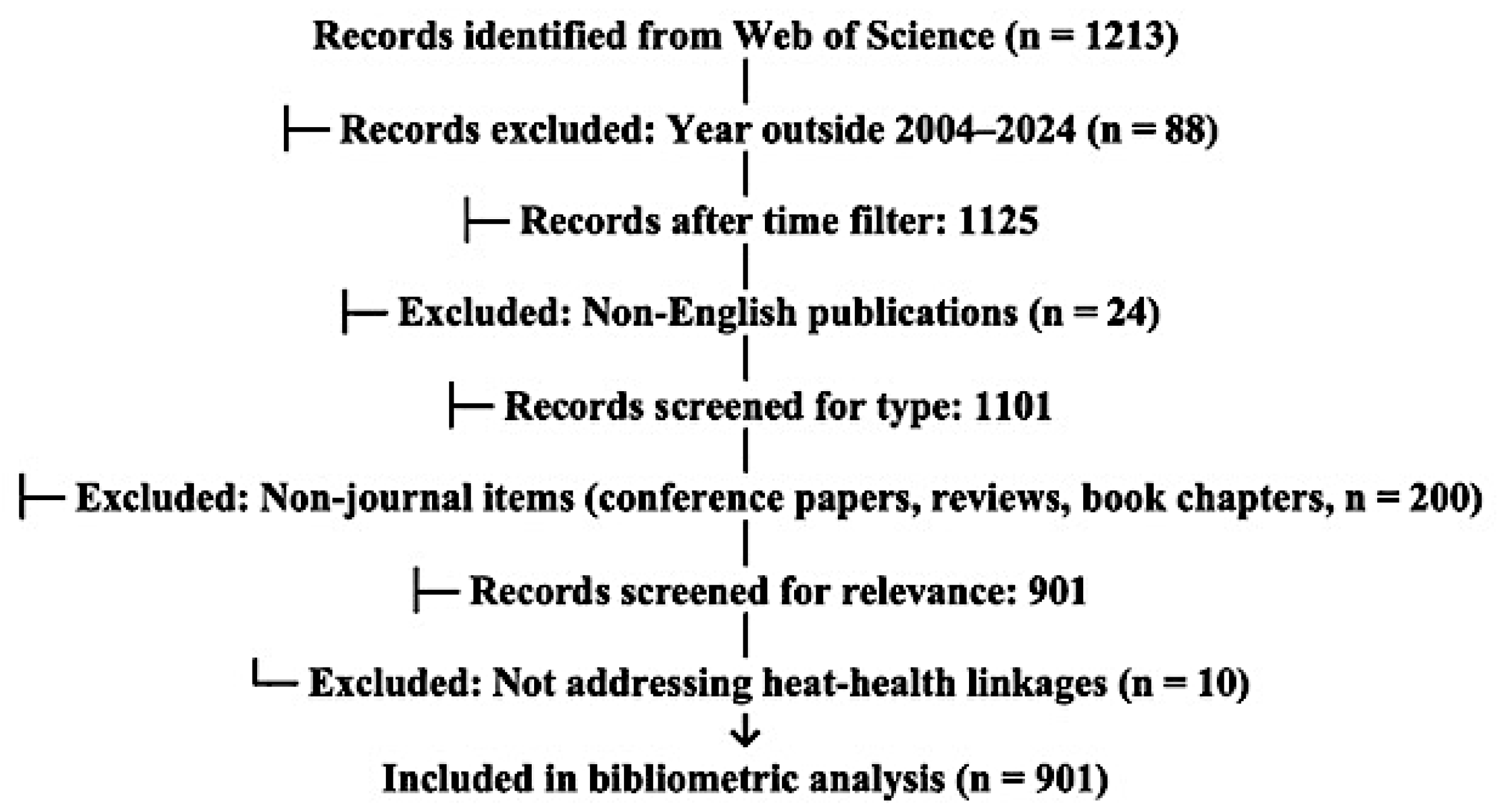
Figure 1. Data screening procedure.
Climate 13 00249 g001
Figure 2. Annual Trends in Publications and Citations on Heatwaves and Public Health (2004–2024).
Climate 13 00249 g002
Figure 3. Major focus fields of research for heat wave and health.
Climate 13 00249 g003
Figure 4. Some of the top publishing authors in the area of heat wave and health.
Climate 13 00249 g004
Figure 5. Country collaborations among different authors on heatwave and health.
Climate 13 00249 g005
Figure 6. (a) Geographic Distribution of journal publications on heatwaves and health. (b) Percentage National Contribution to publication on heatwave and health.
Climate 13 00249 g006
Figure 7. Central terms on keywords on heat wave and health _occurrences and total link strength.
Climate 13 00249 g007
Figure 8. Key evolving thematic issues on heat waves and health between 2004–2024.
Climate 13 00249 g008
Disclaimer/Publisher’s Note: The statements, opinions and data contained in all publications are solely those of the individual author(s) and contributor(s) and not of MDPI and/or the editor(s). MDPI and/or the editor(s) disclaim responsibility for any injury to people or property resulting from any ideas, methods, instructions or products referred to in the content.