Article

Decarbonising the EU Buildings|Model-Based Insights from European Countries

by
Theofano Fotiou
,
Panagiotis Fragkos
* and
Eleftheria Zisarou
E3 Modelling, SA, 11523 Athens, Greece
*
Author to whom correspondence should be addressed.
Climate 2024, 12(6), 85; https://doi.org/10.3390/cli12060085
Submission received: 5 April 2024 / Revised: 24 May 2024 / Accepted: 29 May 2024 / Published: 7 June 2024
(This article belongs to the Section Climate and Economics)

Abstract

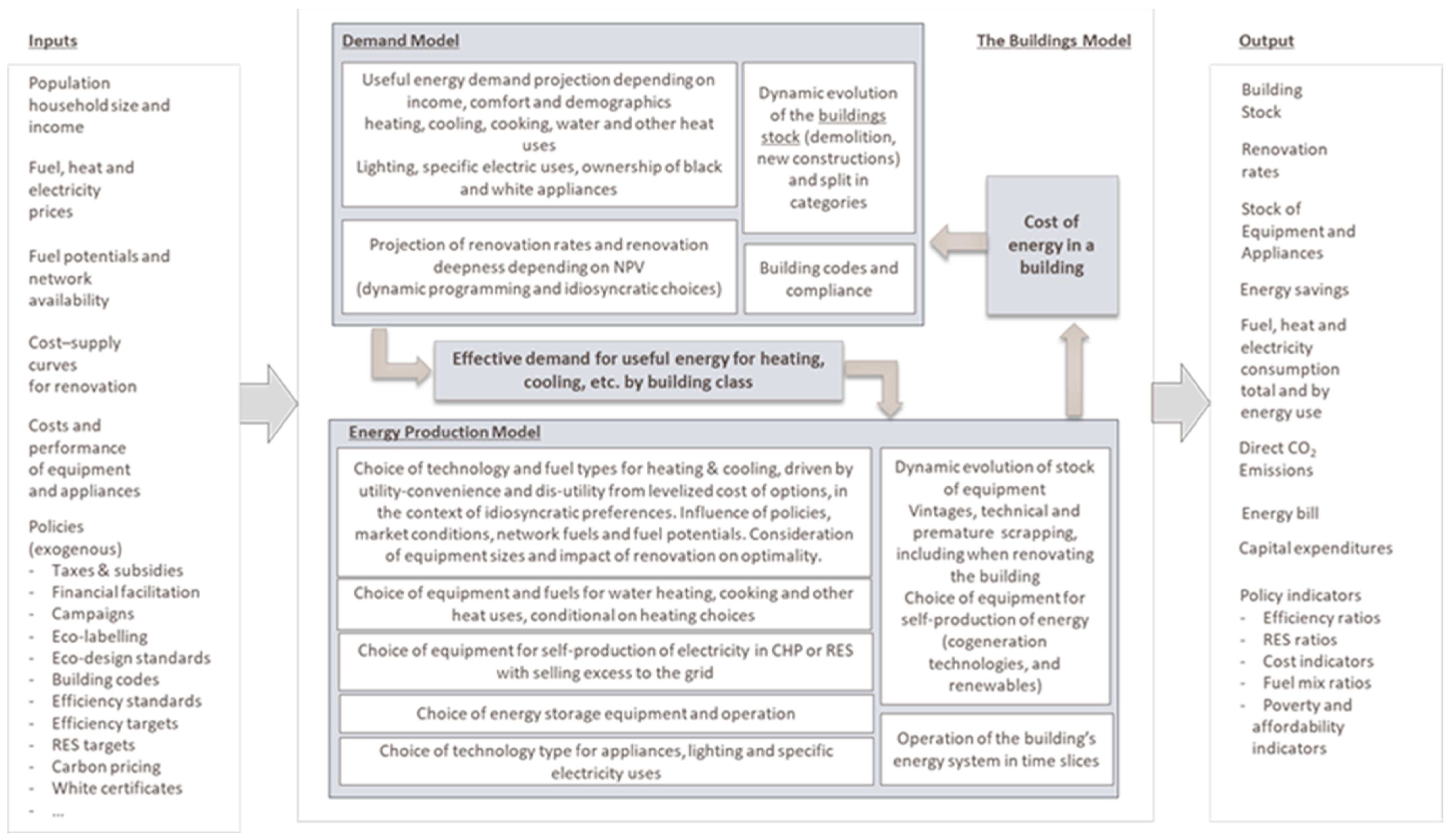
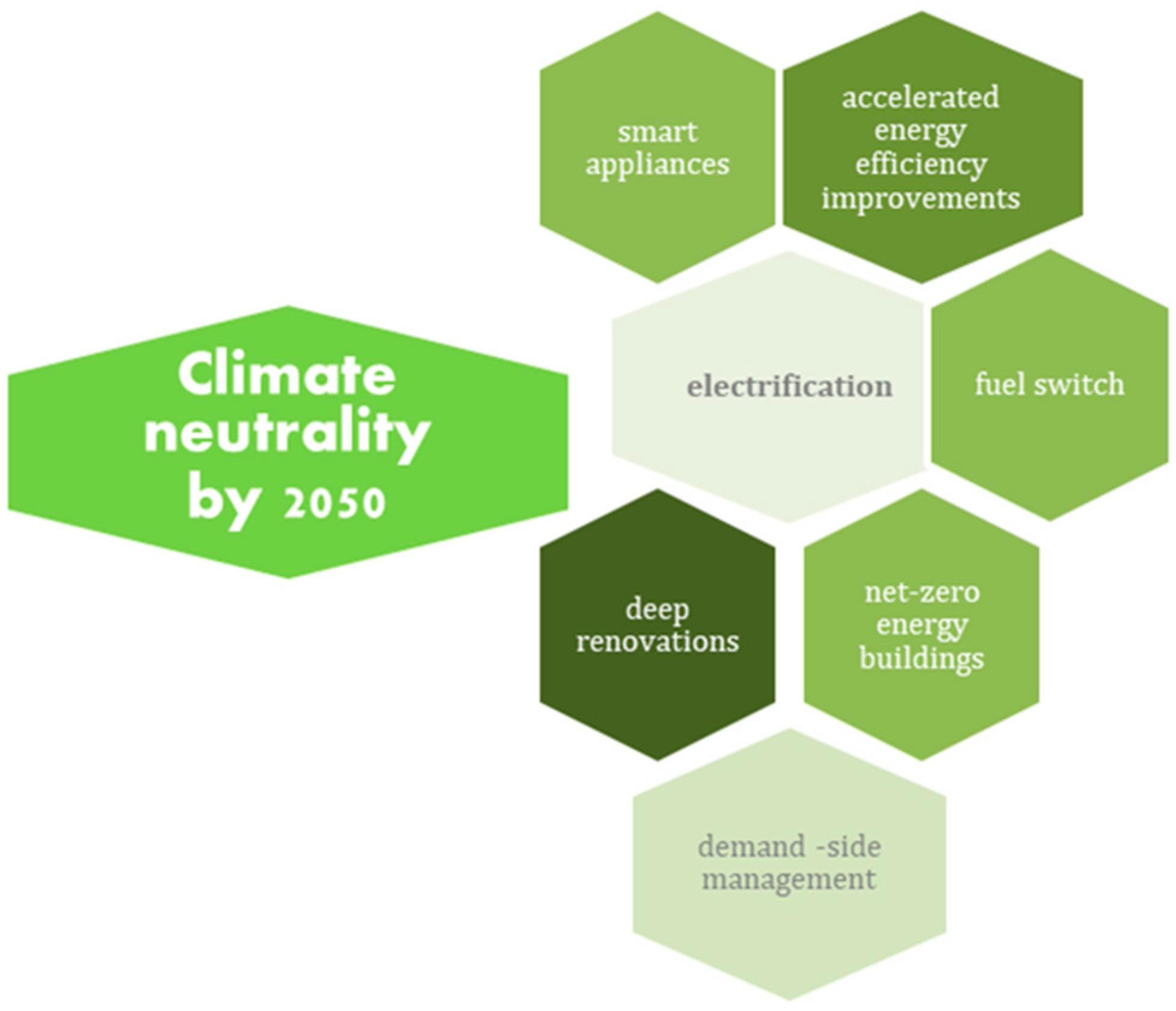
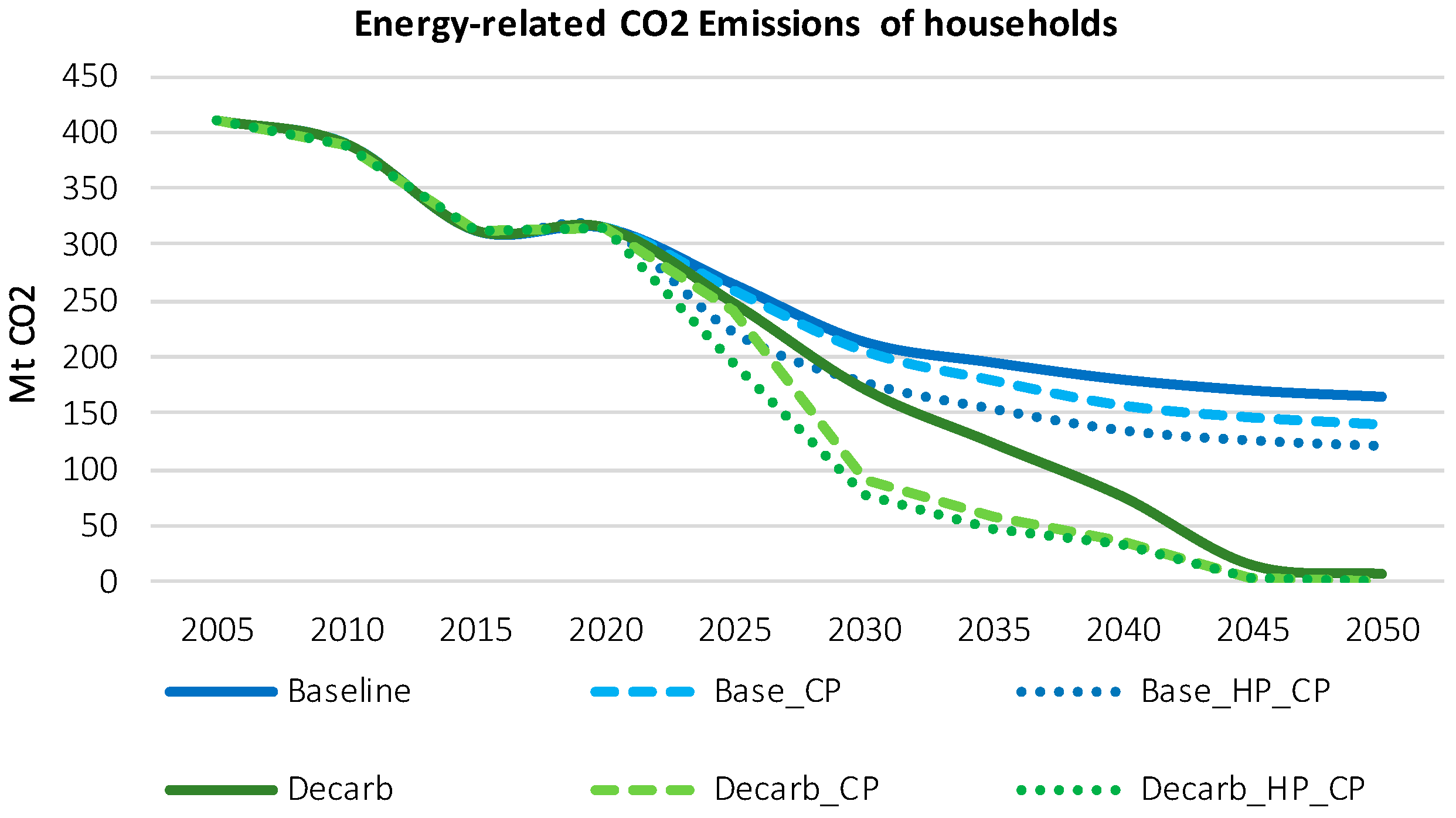
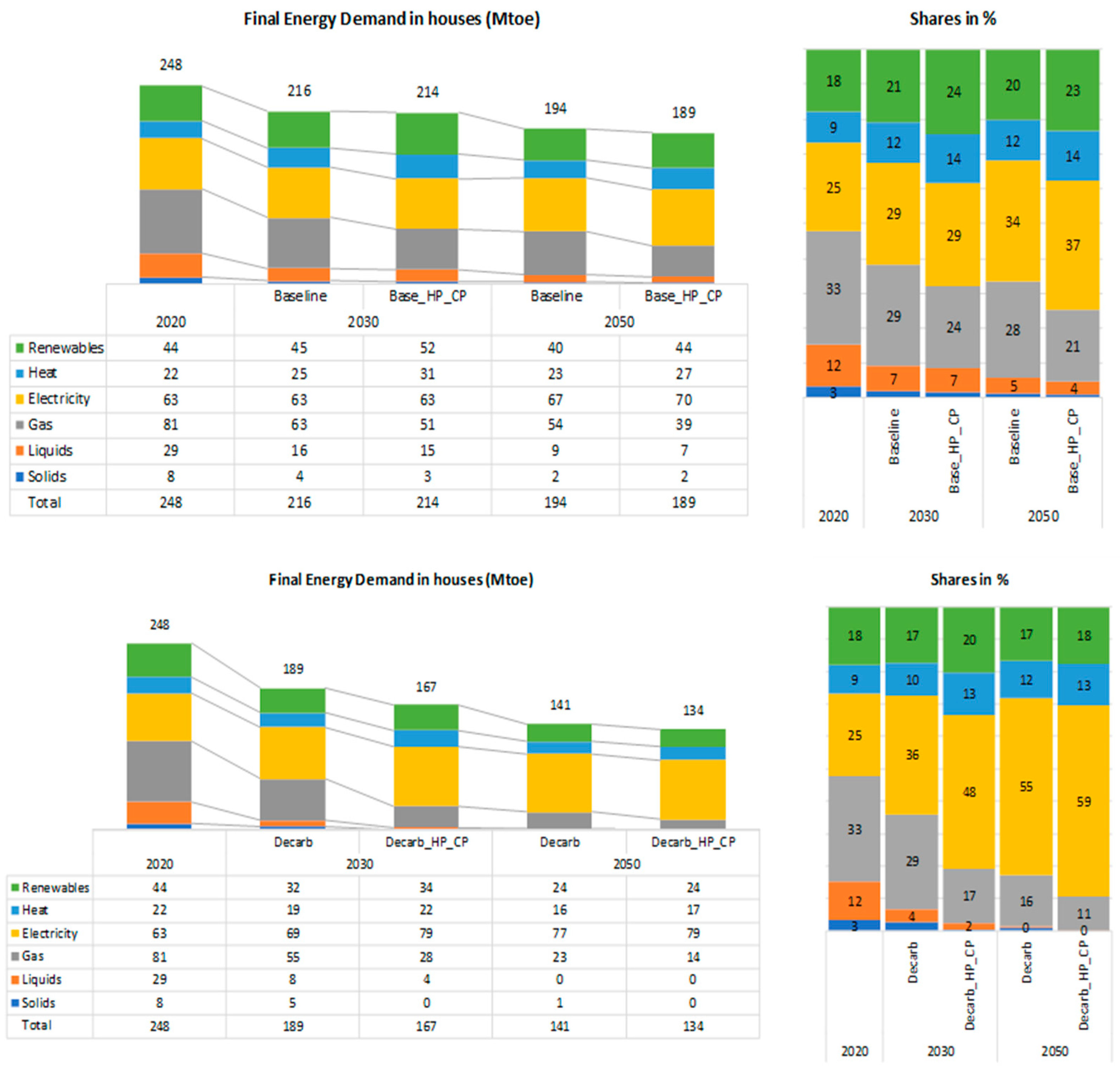
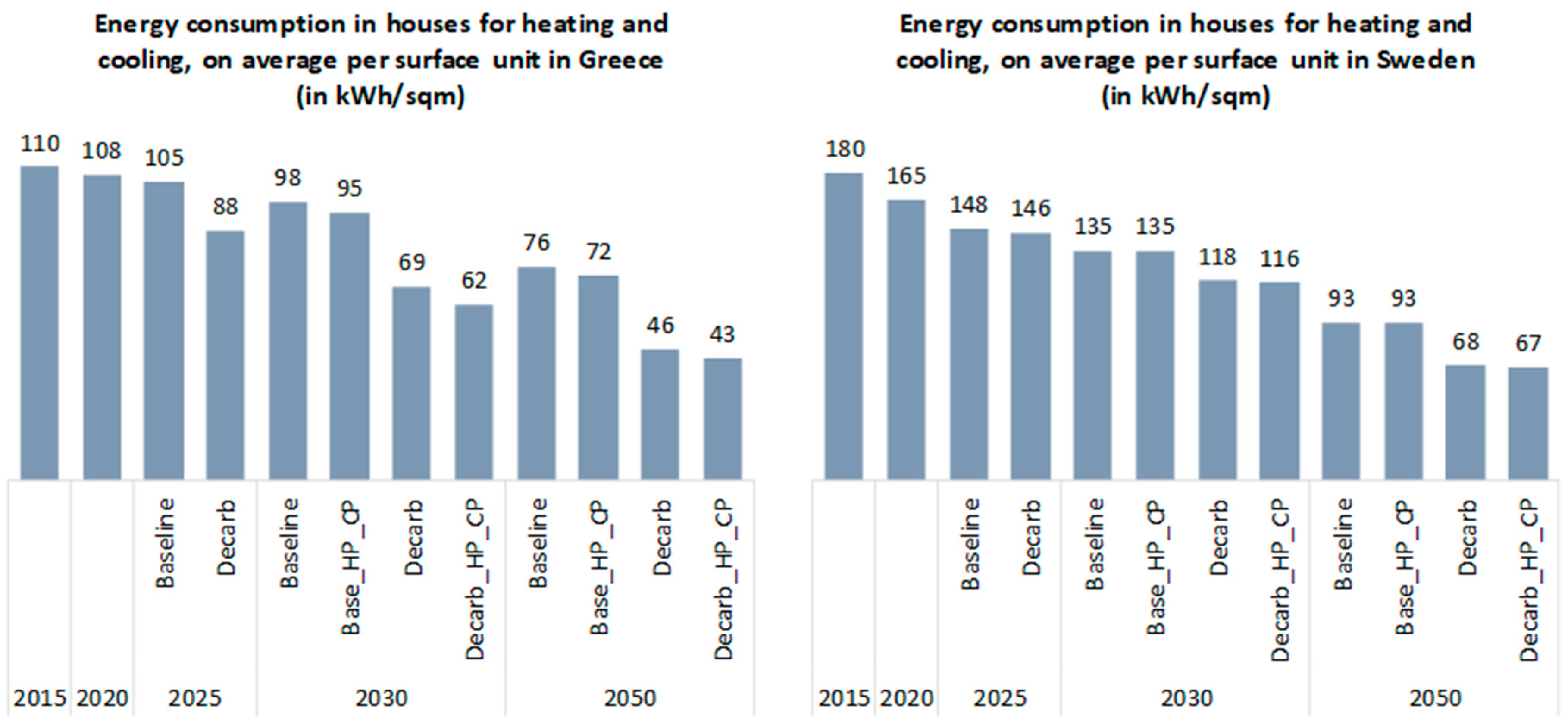
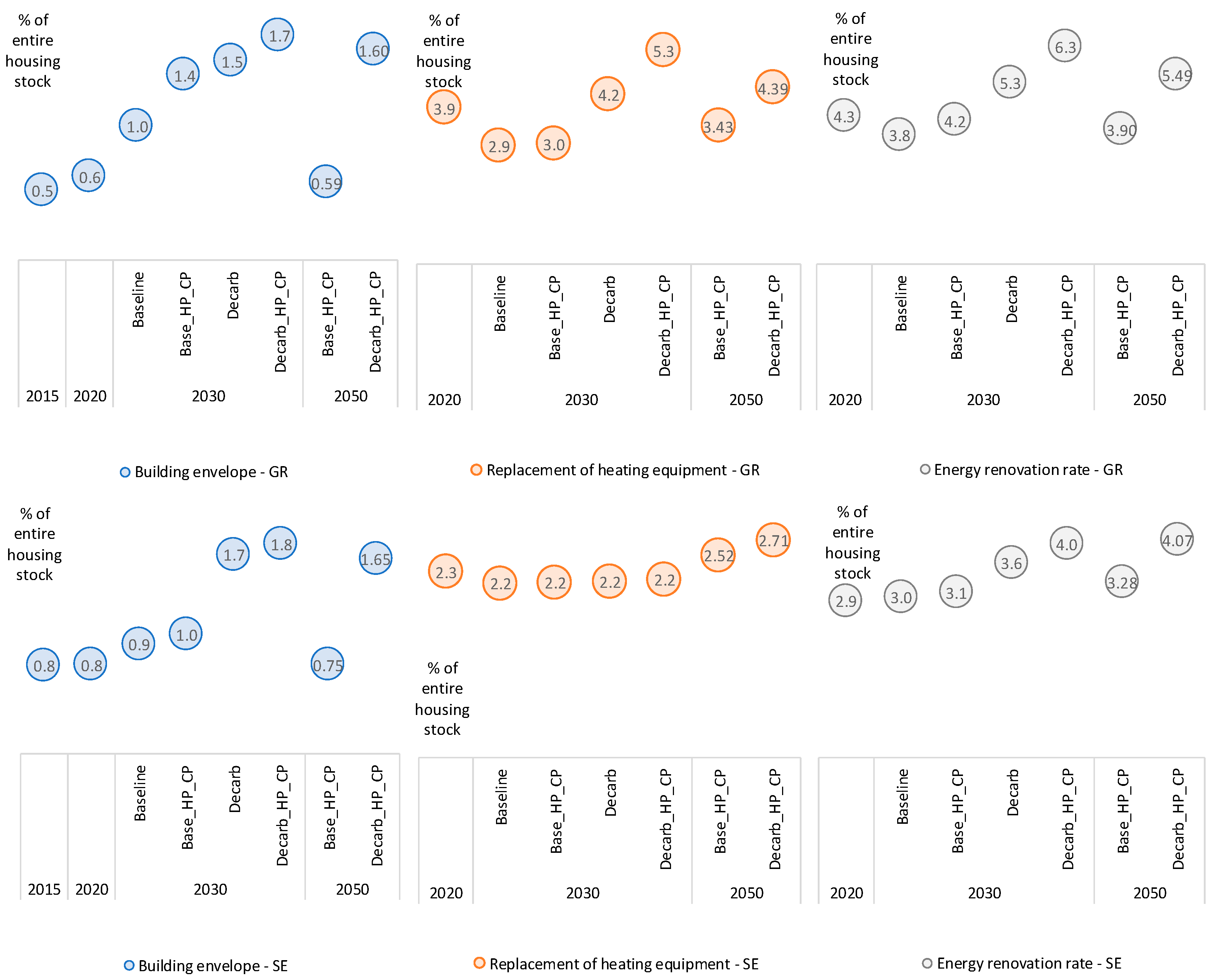
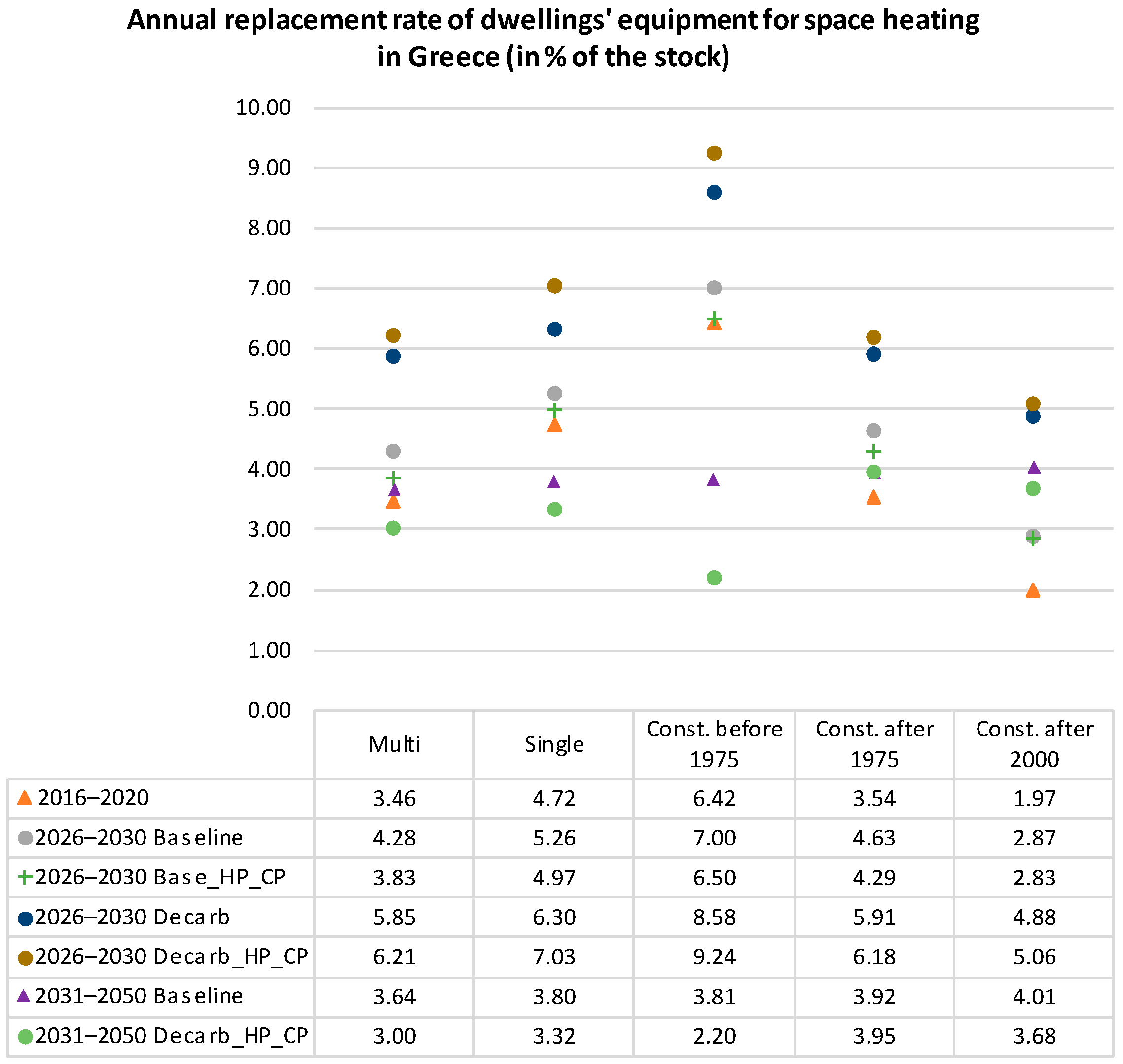
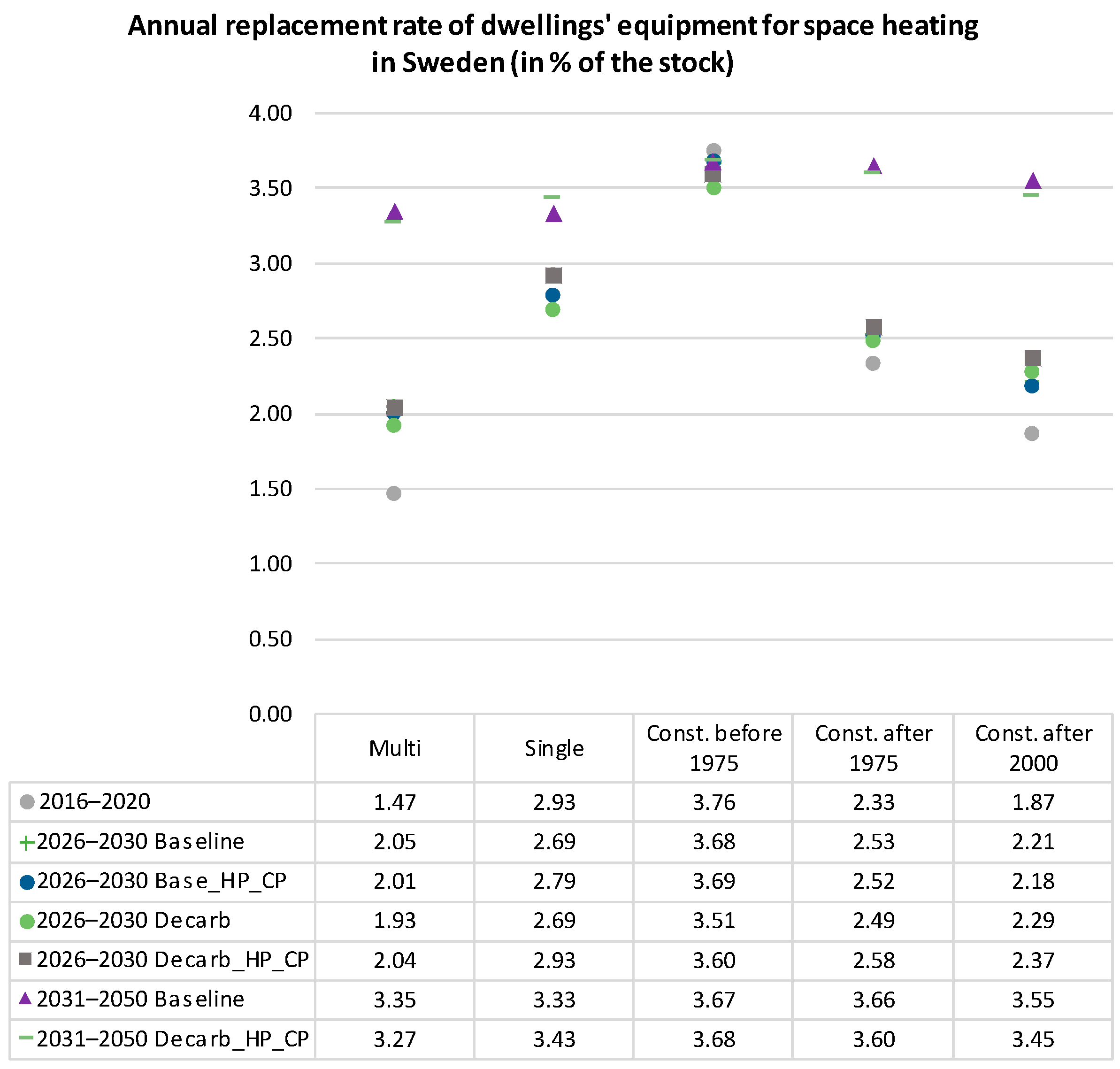
The European Union faces the pressing challenge of decarbonising the buildings sector to meet its climate neutrality goal by 2050. Buildings are significant contributors to greenhouse gas emissions, primarily through energy consumption for heating and cooling. This study uses the advanced PRIMES-BuiMo model to develop state-of-the-art innovative pathways and strategies to decarbonise the EU buildings sector, providing insights into energy consumption patterns, renovation rates and equipment replacement dynamics in the EU and in two representative Member States, Sweden and Greece. The model-based analysis shows that the EU’s transition towards climate neutrality requires significant investment in energy efficiency of buildings combined with decarbonisation of the fuel mix, mostly through the uptake of electric heat pumps replacing the use of fossil fuels. The Use Case also demonstrates that targeted policy interventions considering the national context and specificities are required to ensure an efficient and sustainable transition to zero-emission buildings. The analysis of transformational strategies in Greece and Sweden provides an improved understanding of the role of country-specific characteristics on policy effectiveness so as to inform more targeted and contextually appropriate approaches to decarbonise the buildings sector across the EU.
Keywords: decarbonisation; energy efficiency; EU buildings; policy effectiveness; PRIMES-Buimo decarbonisation; energy efficiency; EU buildings; policy effectiveness; PRIMES-Buimo