Physiological Approach to the Use of the Natural Compound Quinate in the Control of Sensitive and Resistant Papaver rhoeas

 , and
, and
Abstract
1. Introduction
2. Results and Discussion
2.1. Quinate Phytotoxicity Assay on Different Weed Species
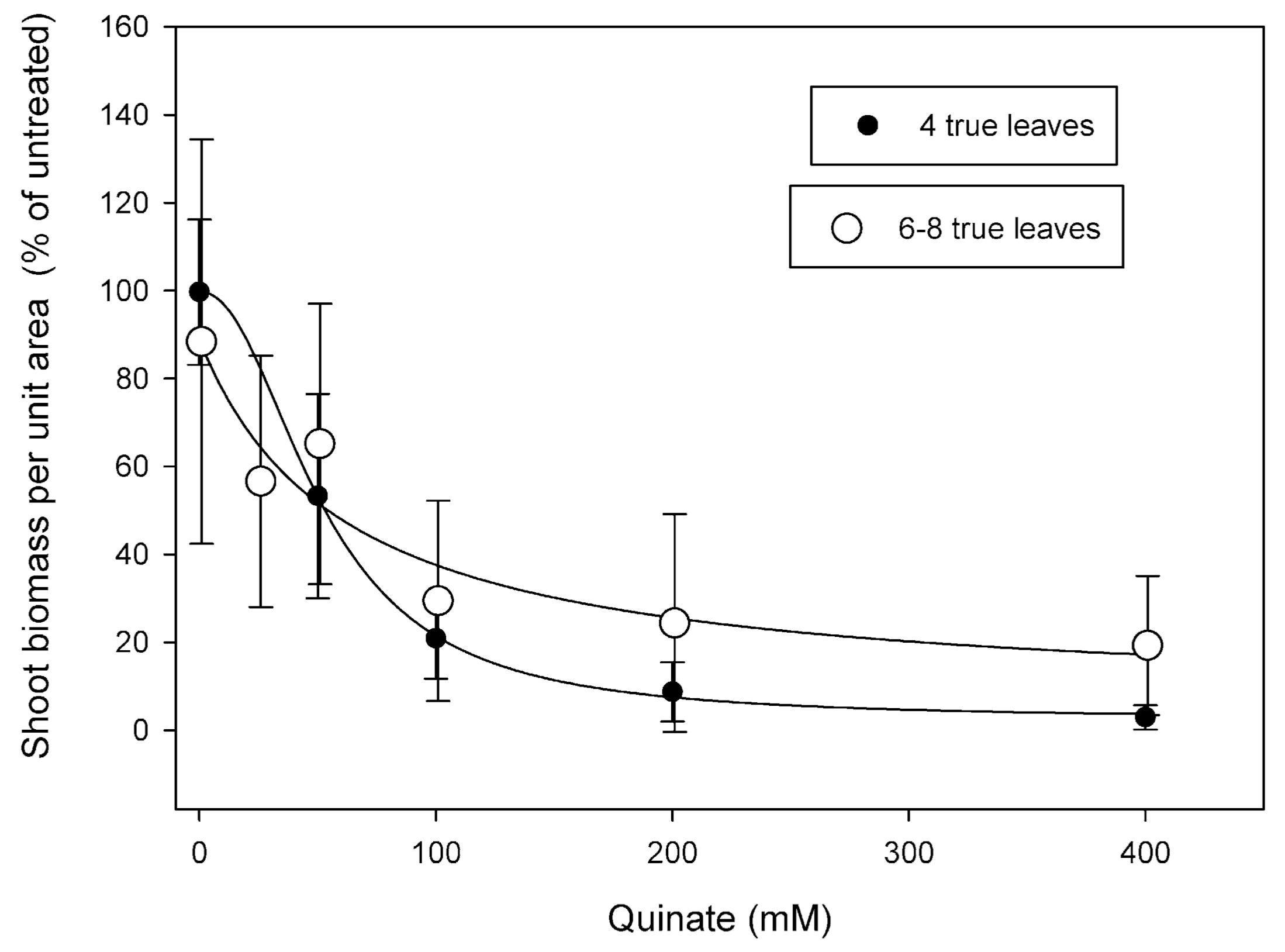
2.2. Dose-Response Assay of Quinate on P. rhoeas
2.3. Quinate or Sulfonylurea Herbicide Application on Sensitive and Resistant P. rhoeas Populations
2.3.1. Physiological Effects of Quinate or Sulfonylurea Herbicide
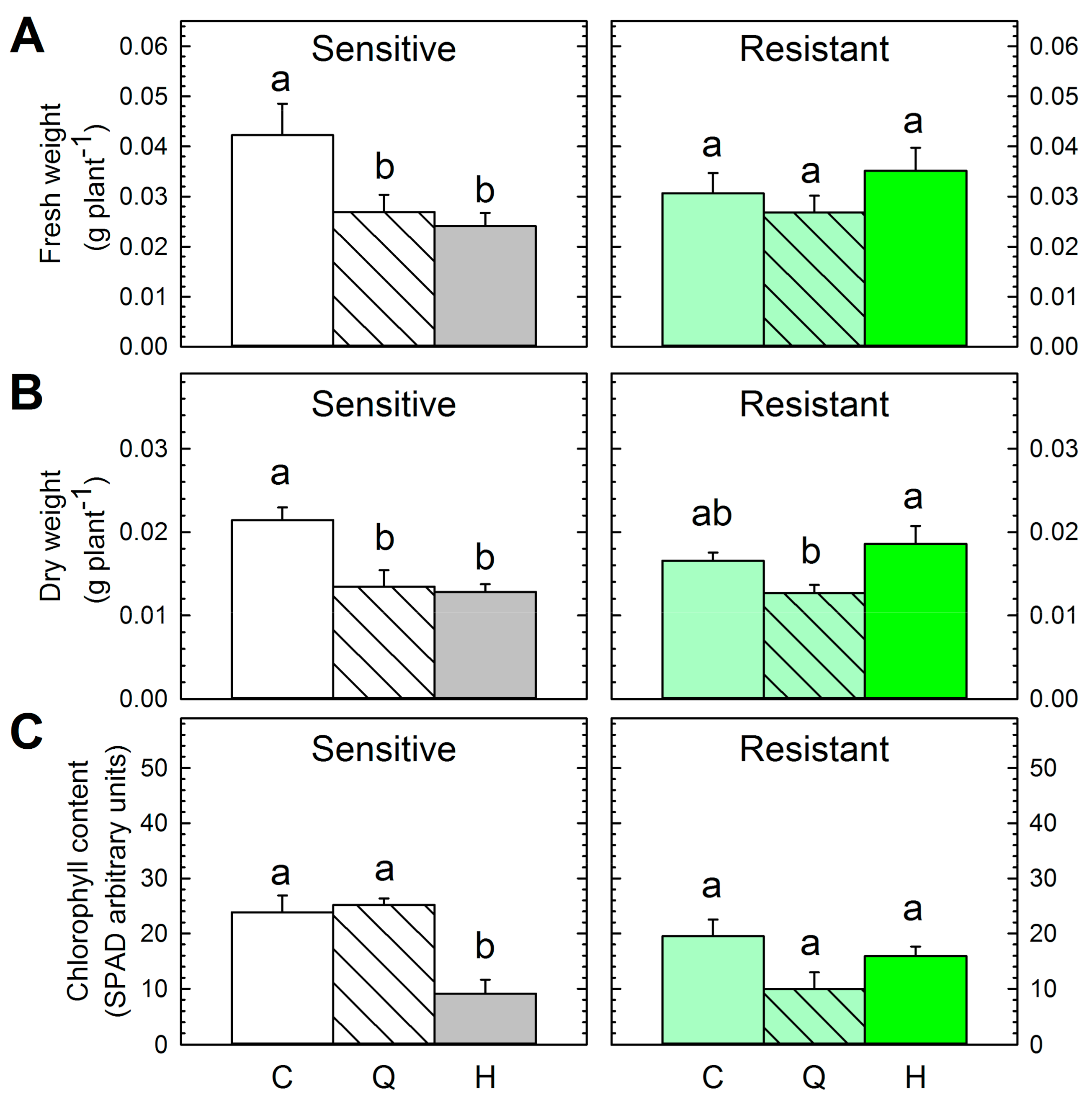
Shoot Biomass and Chlorophyll Content
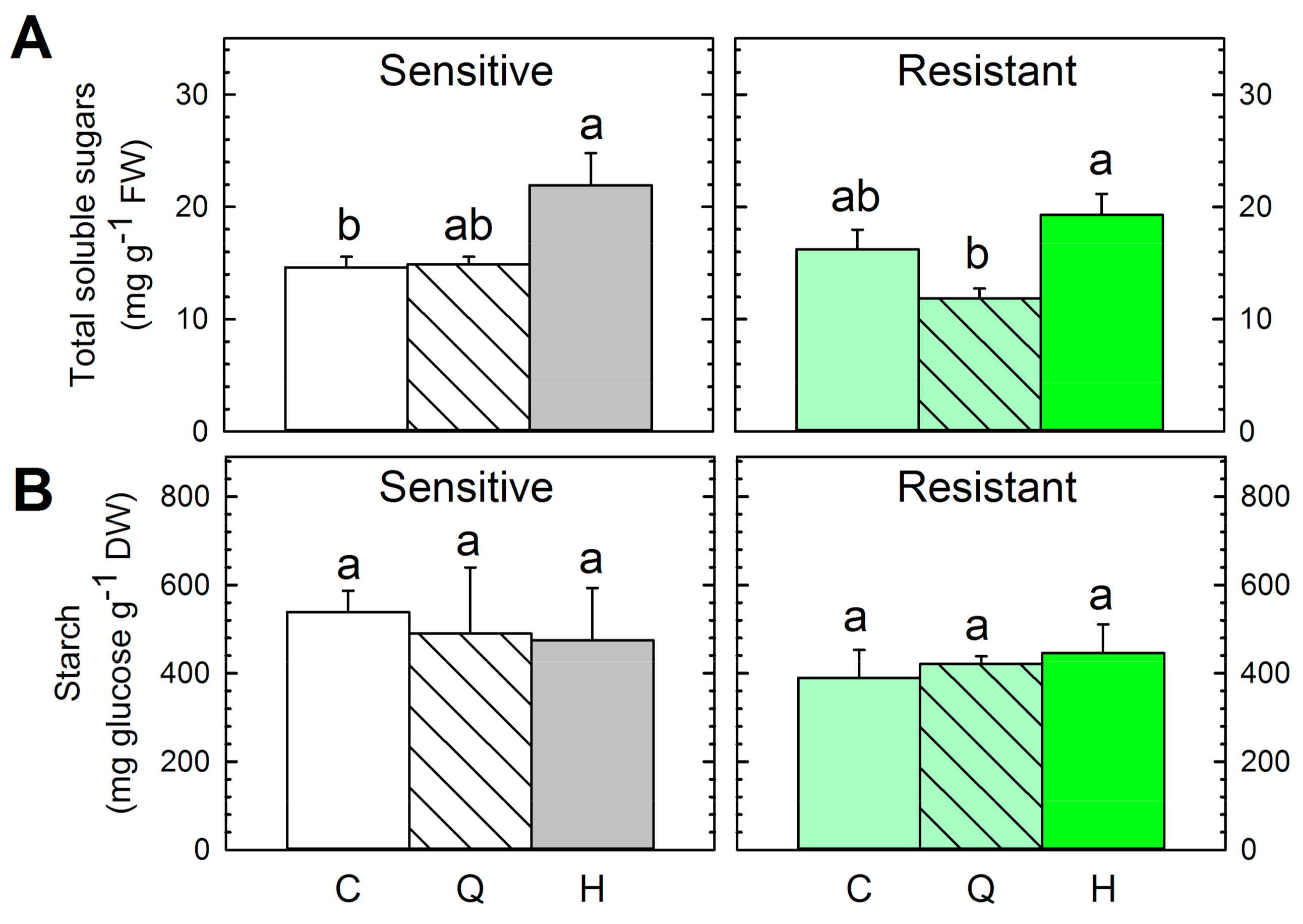
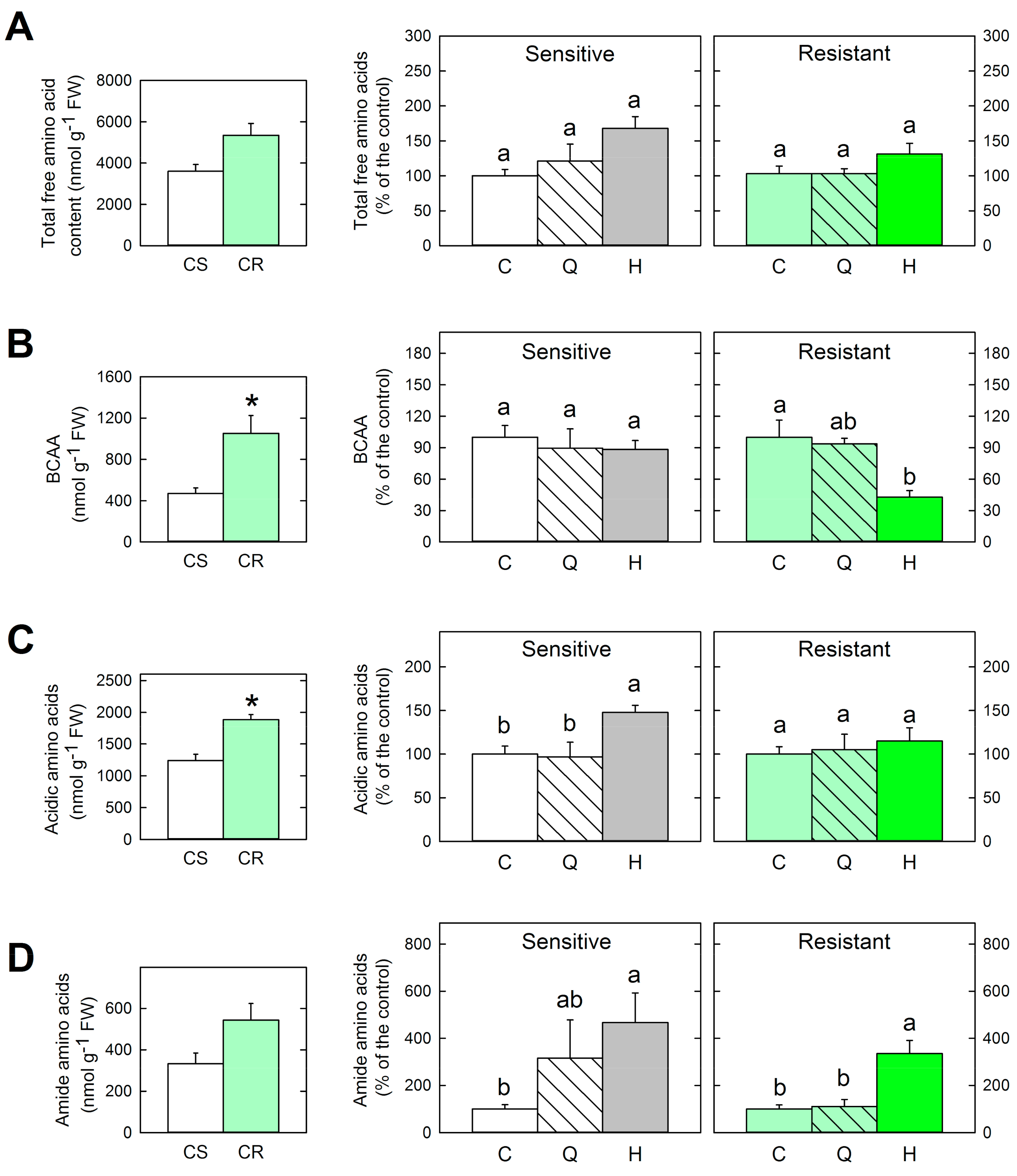
Physiological Parameters: Free Amino Acid Profile and Carbohydrate Content
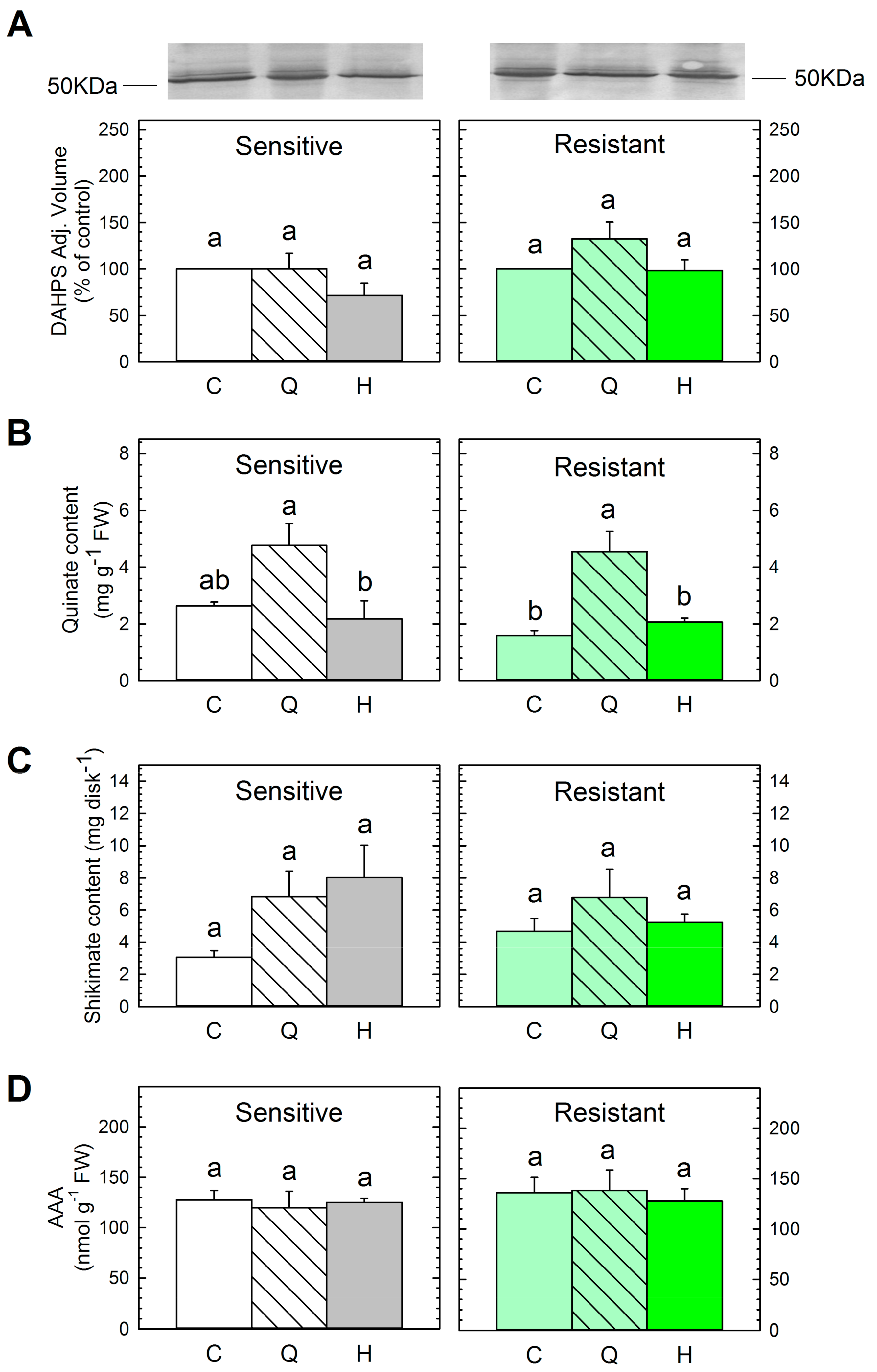
2.3.2. Approach to the Mode of Action of Quinate: Effects on the Shikimate Pathway
3. Concluding Remarks
4. Materials and Methods
4.1. Plant Material, Growing Conditions, and Treatments
4.2. Quinate Phytotoxic Effect on Different Weeds
4.3. Quinate Dose-Response Assay with P. rhoeas
4.4. Physiological Study on Sensitive and Resistant P. rhoeas Populations
4.4.1. Biomass
4.4.2. Chlorophyll Content
4.4.3. Analytical Determinations
- Amino acid content: Amino acid content was determined in the same extracts used for quinate determination using capillary electrophoresis equipped with a laser-induced fluorescence detector, as previously described [7].
- Carbohydrate content: The soluble carbohydrate (glucose, fructose, and sucrose) content was determined in ethanol-soluble extracts, and the ethanol-insoluble residue was extracted for starch analysis [5]. Carbohydrate levels were analyzed by ion chromatography in a 940 Professional IC Vario 2 instrument (Metrohm AG; Herisau: Switzerland) equipped with a Metrosep Carb2 guard 4.0 + Metrosep Carb2 150/4.0 column (Metrohm AG; Herisau: Suiza) at 30 °C. The eluent was 300 mM NaOH and 1 mM sodium acetate at a flow rate of 0.5 mL min−1. The detection was performed by amperometry.
- DAHPS content: Proteins were separated by 12.5% SDS-PAGE, and the immunoblots were produced according to standard techniques. DAHPS immunoblotting was performed, as described previously [53].
- Shikimate content: The determination of the content of shikimate in leaf disks of treated plants was determined spectrophotometrically, as described previously [43].
4.5. Statistical Analysis
Supplementary Materials
Author Contributions
Funding
Acknowledgments
Conflicts of Interest
References
- Peters, B.; Strek, H.J. Herbicide discovery in light of rapidly spreading resistance and ever-increasing regulatory hurdles. Pest Manag. Sci. 2018, 74, 2211–2215. [Google Scholar] [CrossRef] [PubMed]
- Amrhein, N.; Deus, B.; Gehrke, P.; Steinrucken, H.C. The site of the inhibition of the shikimate pathway by glyphosate II. Interference of glyphosate with chorismate formation in vivo and in vitro. Plant Physiol. 1980, 66, 830–834. [Google Scholar] [CrossRef] [PubMed]
- Ray, T.B. Site of action of chlorsulfuron: Inhibition of valine and isoleucine biosynthesis in plants. Plant Physiol. 1984, 75, 827–831. [Google Scholar] [CrossRef] [PubMed]
- Zulet, A.; Gil-Monreal, M.; Villamor, J.G.; Zabalza, A.; van der Hoorn, R.A.L.; Royuela, M. Proteolytic pathways induced by herbicides that inhibit amino acid biosynthesis. PLoS ONE 2013, 8, e73847. [Google Scholar] [CrossRef]
- Zabalza, A.; Orcaray, L.; Gaston, S.; Royuela, M. Carbohydrate accumulation in leaves of plants treated with the herbicide chlorsulfuron or imazethapyr is due to a decrease in sink strength. J. Agric. Food Chem. 2004, 52, 7601–7606. [Google Scholar] [CrossRef]
- Orcaray, L.; Zulet, A.; Zabalza, A.; Royuela, M. Impairment of carbon metabolism induced by the herbicide glyphosate. J. Plant Physiol. 2012, 169, 27–33. [Google Scholar] [CrossRef]
- Orcaray, L.; Igal, M.; Marino, D.; Zabalza, A.; Royuela, M. The possible role of quinate in the mode of action of glyphosate and acetolactate synthase inhibitors. Pest Manag. Sci. 2010, 66, 262–269. [Google Scholar] [CrossRef] [PubMed]
- Boudet, A.M. Polyphenols: From plant adaptation to useful chemical resources. In Recent Advances in Polyphenol Research; Cheynier, V., Sarni-Manchado, P., Quideau, S., Eds.; Wiley-Backwell: Chichester, West Sussex, UK, 2012; pp. 41–70. [Google Scholar]
- Mortensen, D.A.; Egan, J.F.; Maxwell, B.D.; Ryan, M.R.; Smith, R.G. Navigating a critical juncture for sustainable weed management. Bioscience 2012, 62, 75–84. [Google Scholar] [CrossRef]
- Heap, I. The International Survey of Herbicide Resistant Weeds. Available online: http://www.weedscience.com/Home.aspx (accessed on 17 July 2020).
- Westwood, J.H.; Charudattan, R.; Duke, S.O.; Fennimore, S.A.; Marrone, P.; Slaughter, D.C.; Swanton, C.; Zollinger, R. Weed management in 2050: Perspectives on the future of weed science. Weed Sci. 2018, 66, 275–285. [Google Scholar] [CrossRef]
- Dayan, F.E. Current status and future prospects in herbicide discovery. Plants 2019, 8, 341. [Google Scholar] [CrossRef]
- Dayan, F.E.; Owens, D.K.; Duke, S.O. Rationale for a natural products approach to herbicide discovery. Pest Manag. Sci. 2012, 68, 519–528. [Google Scholar] [CrossRef] [PubMed]
- Dayan, F.E.; Duke, S.O. Natural compounds as next-generation herbicides. Plant Physiol. 2014, 166, 1090–1105. [Google Scholar] [CrossRef] [PubMed]
- Zulet, A.; Zabalza, A.; Royuela, M. Phytotoxic and metabolic effects of exogenous quinate on Pisum sativum L. J. Plant Growth Regul. 2013, 32, 779–788. [Google Scholar] [CrossRef]
- Zulet-González, A.; Fernández-Escalada, M.; Zabalza, A.; Royuela, M. Enhancement of glyphosate efficacy on Amaranthus palmeri by exogenous quinate application. Pestic. Biochem. Physiol. 2019, 158, 1–11. [Google Scholar] [CrossRef]
- FAO. Wheat—The Largest Primary Commodity. Available online: http://www.fao.org/resources/infographics/infographics-details/es/c/240943/ (accessed on 17 July 2020).
- Vyvyan, J.R. Allelochemicals as leads for new herbicides and agrochemicals. Tetrahedron 2002, 58, 1631–1646. [Google Scholar] [CrossRef]
- Macías, F.A.; Castellano, D.; Molinillo, J.M.G. Search for a standard phytotoxic bioassay for allelochemicals. Selection of standard target species. J. Agric. Food Chem. 2000, 48, 2512–2521. [Google Scholar] [CrossRef]
- Sytykiewicz, H.; Kozak, A.; Łukasik, I.; Sempruch, C.; Goławska, S.; Mitrus, J.; Kurowska, M.; Kmieć, K.; Chrzanowski, G.; Leszczyński, B. Juglone-triggered oxidative responses in seeds of selected cereal agrosystem plant species. Polish J. Environ. Stud. 2019, 28, 2389–2397. [Google Scholar] [CrossRef]
- Schulz, M.; Marocco, A.; Tabaglio, V.; Macias, F.A.; Molinillo, J.M.G. Benzoxazinoids in rye allelopathy—From discovery to application in sustainable weed control and organic farming. J. Chem. Ecol. 2013, 39, 154–174. [Google Scholar] [CrossRef]
- Topal, S.; Kocaçalişkan, İ. Allelopathic effects of Dopa against four weed species. DPÜ Fen Bil Enst Derg. 2006, 11, 27–32. [Google Scholar]
- Torra, J.; Gonzalez-Andujar, J.L.; Recasens, J. Modelling the population dynamics of Papaver rhoeas under various weed management systems in a Mediterranean climate. Weed Res. 2008, 48, 136–146. [Google Scholar] [CrossRef]
- Holm, L.; Doll, J.; Holm, E.; Pancho, J.; Herbereger, J. Papaver rhoeas L. In World Weeds Natural Histories and Distribution; John Wiley and Sons: New York, NY, USA, 1997; pp. 555–561. [Google Scholar]
- Torra, J.; Recasens, J. Demography of corn poppy (Papaver rhoeas) in relation to emergence time and crop competition. Weed Sci. 2008, 56, 826–833. [Google Scholar] [CrossRef]
- Stankiewicz-Kosyl, M.; Synowiec, A.; Haliniarz, M.; Wenda-Piesik, A.; Domaradzki, K.; Parylak, D.; Wrochna, M.; Pytlarz, E.; Gala-Czekaj, D.; Marczewska-Kolasa, K.; et al. Herbicide resistance and management options of Papaver rhoeas L. and Centaurea cyanus L. in Europe: A review. Agronomy 2020, 10, 874. [Google Scholar] [CrossRef]
- Délye, C.; Pernin, F.; Scarabel, L. Evolution and diversity of the mechanisms endowing resistance to herbicides inhibiting acetolactate-synthase (ALS) in corn poppy (Papaver rhoeas L.). Plant Sci. 2011, 180, 333–342. [Google Scholar] [CrossRef] [PubMed]
- Scarabel, L.; Pernin, F.; Délye, C. Occurrence, genetic control and evolution of non-target-site based resistance to herbicides inhibiting acetolactate synthase (ALS) in the dicot weed Papaver rhoeas. Plant Sci. 2015, 238, 158–169. [Google Scholar] [CrossRef]
- Torra, J.; Royo-Esnal, A.; Rey-Caballero, J.; Recasens, J.; Salas, M. Management of herbicide-resistant corn poppy (Papaver rhoeas) under different tillage systems does not change the frequency of resistant plants. Weed Sci. 2018, 66, 764–772. [Google Scholar] [CrossRef]
- Torra, J.; Royo Esnal, A.; Recasens Guinjuan, J. Management of herbicide-resistant Papaver rhoeas in dry land cereal fields. Agron. Sustain. Dev. 2011, 31, 483–490. [Google Scholar] [CrossRef]
- Torra, J.; Cirujeda, A.; Taberner, A.; Recasens, J. Evaluation of herbicides to manage herbicide-resistant corn poppy (Papaver rhoeas) in winter cereals. Crop. Prot. 2010, 29, 731–736. [Google Scholar] [CrossRef]
- Duke, S.O. Why have no new herbicide modes of action appeared in recent years? Pest Manag. Sci. 2012, 68, 505–512. [Google Scholar] [CrossRef] [PubMed]
- Leuschner, C.; Schultz, G. Uptake of shikimate pathway intermediates by intact chloroplasts. Phytochemistry 1991, 30, 2203–2207. [Google Scholar] [CrossRef]
- Liu, X.-Q.; Yu, C.-Y.; Dong, J.-G.; Hu, S.-W.; Xu, A.-X. Acetolactate synthase-inhibiting gametocide amidosulfuron causes chloroplast destruction, tissue autophagy, and elevation of ethylene release in rapeseed. Front. Plant Sci. 2017, 8, 1625. [Google Scholar] [CrossRef]
- Zabalza, A.; Zulet, A.; Gil-Monreal, M.; Igal, M.; Royuela, M. Branched-chain amino acid biosynthesis inhibitors: Herbicide efficacy is associated with an induced carbon-nitrogen imbalance. J. Plant Physiol. 2013, 170, 814–821. [Google Scholar] [CrossRef] [PubMed]
- Qian, H.; Wang, R.; Hu, H.; Lu, T.; Chen, X.; Ye, H.; Liu, W.; Fu, Z. Enantioselective phytotoxicity of the herbicide imazethapyr and its effect on rice physiology and gene transcription. Environ. Sci. Technol. 2011, 45, 7036–7043. [Google Scholar] [CrossRef]
- Qian, H.; Li, Y.; Sun, C.; Lavoie, M.; Xie, J.; Bai, X.; Fu, Z. Trace concentrations of imazethapyr (IM) affect floral organs development and reproduction in Arabidopsis thaliana: IM-induced inhibition of key genes regulating anther and pollen biosynthesis. Ecotoxicology 2015, 24, 163–171. [Google Scholar] [CrossRef] [PubMed]
- Preston, C.; Stone, L.M.; Rieger, M.A.; Baker, J. Multiple effects of a naturally occurring proline to threonine substitution within acetolactate synthase in two herbicide-resistant populations of Lactuca serriola. Pestic. Biochem. Physiol. 2006, 84, 227–235. [Google Scholar] [CrossRef]
- Eberlein, C.V.; Guttieri, M.J.; Mallory-Smith, C.A.; Thill, D.C.; Baerg, R.J. Altered acetolactate synthase activity in ALS-inhibitor resistant prickly lettuce (Lactuca serriola). Weed Sci. 1997, 45, 212–217. [Google Scholar] [CrossRef]
- Endo, M.; Shimizu, T.; Fujimori, T.; Yanagisawa, S.; Toki, S. Herbicide-resistant mutations in acetolactate synthase can reduce feedback inhibition and lead to accumulation of branched-chain amino acids. Food Nutr. Sci. 2013, 4, 522–528. [Google Scholar] [CrossRef][Green Version]
- Yu, Q.; Han, H.; Vila-Aiub, M.M.; Powles, S.B. AHAS herbicide resistance endowing mutations: Effect on AHAS functionality and plant growth. J. Exp. Bot. 2010, 61, 3925–3934. [Google Scholar] [CrossRef]
- Durán-Prado, M.; Osuna, M.D.; De Prado, R.; Franco, A.R. Molecular basis of resistance to sulfonylureas in Papaver rhoeas. Pestic. Biochem. Physiol. 2004, 79, 10–17. [Google Scholar] [CrossRef]
- Fernández-Escalada, M.; Gil-Monreal, M.; Zabalza, A.; Royuela, M. Characterization of the Amaranthus palmeri physiological response to glyphosate in susceptible and resistant populations. J. Agric. Food Chem. 2016, 64, 95–106. [Google Scholar] [CrossRef]
- Zulet, A.; Gil-Monreal, M.; Zabalza, A.; van Dongen, J.T.; Royuela, M. Fermentation and alternative oxidase contribute to the action of amino acid biosynthesis-inhibiting herbicides. J. Plant Physiol. 2015, 175, 102–112. [Google Scholar] [CrossRef]
- Fernández-Escalada, M.; Zulet-González, A.; Gil-Monreal, M.; Royuela, M.; Zabalza, A. Physiological performance of glyphosate and imazamox mixtures on Amaranthus palmeri sensitive and resistant to glyphosate. Sci. Rep. 2019, 9, 18225. [Google Scholar] [CrossRef] [PubMed]
- Maeda, H.; Dudareva, N. The shikimate pathway and aromatic amino acid biosynthesis in plants. Ann. Rev. Plant Biol. 2012, 63, 73–105. [Google Scholar] [CrossRef] [PubMed]
- Tohge, T.; Watanabe, M.; Hoefgen, R.; Fernie, A.R. Shikimate and phenylalanine biosynthesis in the green lineage. Front. Plant Sci. 2013, 4, 62. [Google Scholar] [CrossRef]
- Orcaray, L.; Igal, M.; Zabalza, A.; Royuela, M. Role of exogenously supplied ferulic and p-coumaric acids in mimicking the mode of action of acetolactate synthase inhibiting herbicides. J. Agric. Food Chem. 2011, 59, 10162–10168. [Google Scholar] [CrossRef] [PubMed]
- Leuschner, C.; Schultz, G. Non-light-dependent shikimate pathway in plastids from pea roots. Bot. Acta 1991, 104, 240–244. [Google Scholar] [CrossRef]
- Zabalza, A.; Orcaray, L.; Fernández-Escalada, M.; Zulet-González, A.; Royuela, M. The pattern of shikimate pathway and phenylpropanoids after inhibition by glyphosate or quinate feeding in pea roots. Pestic. Biochem. Physiol. 2017, 141, 96–102. [Google Scholar] [CrossRef]
- Labhilili, M.; Joudrier, P.; Gautier, M.F. Characterization of cDNAs encoding Triticum durum dehydrins and their expression patterns in cultivars that differ in drought tolerance. Plant Sci. 1995, 112, 219–230. [Google Scholar] [CrossRef]
- Seefeldt, S.S.; Jensen, J.E.; Fuerst, P.E. Log-logistic analysis of herbicide dose-response relationships. Weed Technol. 1995, 9, 218–227. [Google Scholar] [CrossRef]
- Fernández-Escalada, M.; Zulet-González, A.; Gil-Monreal, M.; Zabalza, A.; Ravet, K.; Gaines, T.; Royuela, M. Effects of EPSPS copy number variation (CNV) and glyphosate application on the aromatic and branched chain amino acid synthesis pathways in Amaranthus palmeri. Front. Plant Sci. 2017, 8, 1970. [Google Scholar] [CrossRef]
- Hacham, Y.; Avraham, T.; Amir, R.; Galilee, M.; Pina, R.; Israel, Y.H. The N-Terminal region of Arabidopsis cystathionine γ-synthase plays an important regulatory role in methionine metabolism. Plant Physiol. 2002, 128, 454–462. [Google Scholar] [CrossRef]



| Species | Phenological Stage at Quinate Application | Fresh Weight/m2 (% of Control) | Dry Weight/m2 (% of Control) | |
|---|---|---|---|---|
| Zadok Scale | Height | |||
| Triticum aestivum | Z 12 | 8–10 cm | 73.6 ± 8.6 | 92.8 ± 12.4 |
| Cynodon dactylon | Z 12 | 5 cm | 103.2 ± 24.1 | 115.9 ± 37.3 |
| Z 12 | 6–8 cm | 82.1 ± 22.2 | 71.7 ± 16.4 | |
| Bromus diandrus | Z 13 | 10 cm | 78.7 ± 6.5 1 | 75.4 ± 4.7 1 |
| 2 true leaves | 84.1 ± 3.7 1 | 85.5 ± 4.9 1 | ||
| Lolium rigidum | 4 true leaves | 12.5 ± 4.4 1 | 12.3 ± 4.0 1 | |
| Sinapis alba | ||||
| Papaver rhoeas | ||||
| Phenological Stage at Quinate Application | Lower Limit | Upper Limit | Slope | ED50 | ANOVA p-Value |
|---|---|---|---|---|---|
| 4 true leaves | 2.17 | 97.1 | 2.58 | 51.94 | <0.0001 |
| 6–8 leaves | 1.00 | 90.4 | 8.53 | 62.25 | 0.0077 |
© 2020 by the authors. Licensee MDPI, Basel, Switzerland. This article is an open access article distributed under the terms and conditions of the Creative Commons Attribution (CC BY) license (http://creativecommons.org/licenses/by/4.0/).
Share and Cite
Zabalza, A.; Zulet-González, A.; Barco-Antoñanzas, M.; Eceiza, M.V.; Gil-Monreal, M.; Royuela, M. Physiological Approach to the Use of the Natural Compound Quinate in the Control of Sensitive and Resistant Papaver rhoeas. Plants 2020, 9, 1215. https://doi.org/10.3390/plants9091215
Zabalza A, Zulet-González A, Barco-Antoñanzas M, Eceiza MV, Gil-Monreal M, Royuela M. Physiological Approach to the Use of the Natural Compound Quinate in the Control of Sensitive and Resistant Papaver rhoeas. Plants. 2020; 9(9):1215. https://doi.org/10.3390/plants9091215
Chicago/Turabian StyleZabalza, Ana, Ainhoa Zulet-González, Maria Barco-Antoñanzas, Mikel V. Eceiza, Miriam Gil-Monreal, and Mercedes Royuela. 2020. "Physiological Approach to the Use of the Natural Compound Quinate in the Control of Sensitive and Resistant Papaver rhoeas" Plants 9, no. 9: 1215. https://doi.org/10.3390/plants9091215
APA StyleZabalza, A., Zulet-González, A., Barco-Antoñanzas, M., Eceiza, M. V., Gil-Monreal, M., & Royuela, M. (2020). Physiological Approach to the Use of the Natural Compound Quinate in the Control of Sensitive and Resistant Papaver rhoeas. Plants, 9(9), 1215. https://doi.org/10.3390/plants9091215