Article

Automatic Stomatal Segmentation Based on Delaunay-Rayleigh Frequency Distance


1
Facultad de Ingeniería y Ciencias, Universidad Adolfo Ibañez, Av. Diagonal Las Torres, 2700 Santiago, Chile
2
Facultad de Ingeniería Josemaría Escrivá de Balaguer 101, Campus Aguascalientes, Universidad Panamericana, Aguascalientes 20290, Mexico
3
Scientific Computing Group, São Carlos Institute of Physics, University of São Paulo, P.O. Box 369, São Carlos, SP 13560-970, Brazil
*
Author to whom correspondence should be addressed.
Plants 2020, 9(11), 1613; https://doi.org/10.3390/plants9111613
Submission received: 3 November 2020 / Revised: 16 November 2020 / Accepted: 17 November 2020 / Published: 20 November 2020
(This article belongs to the Collection Feature Papers in Plant Development and Morphogenesis)

Abstract

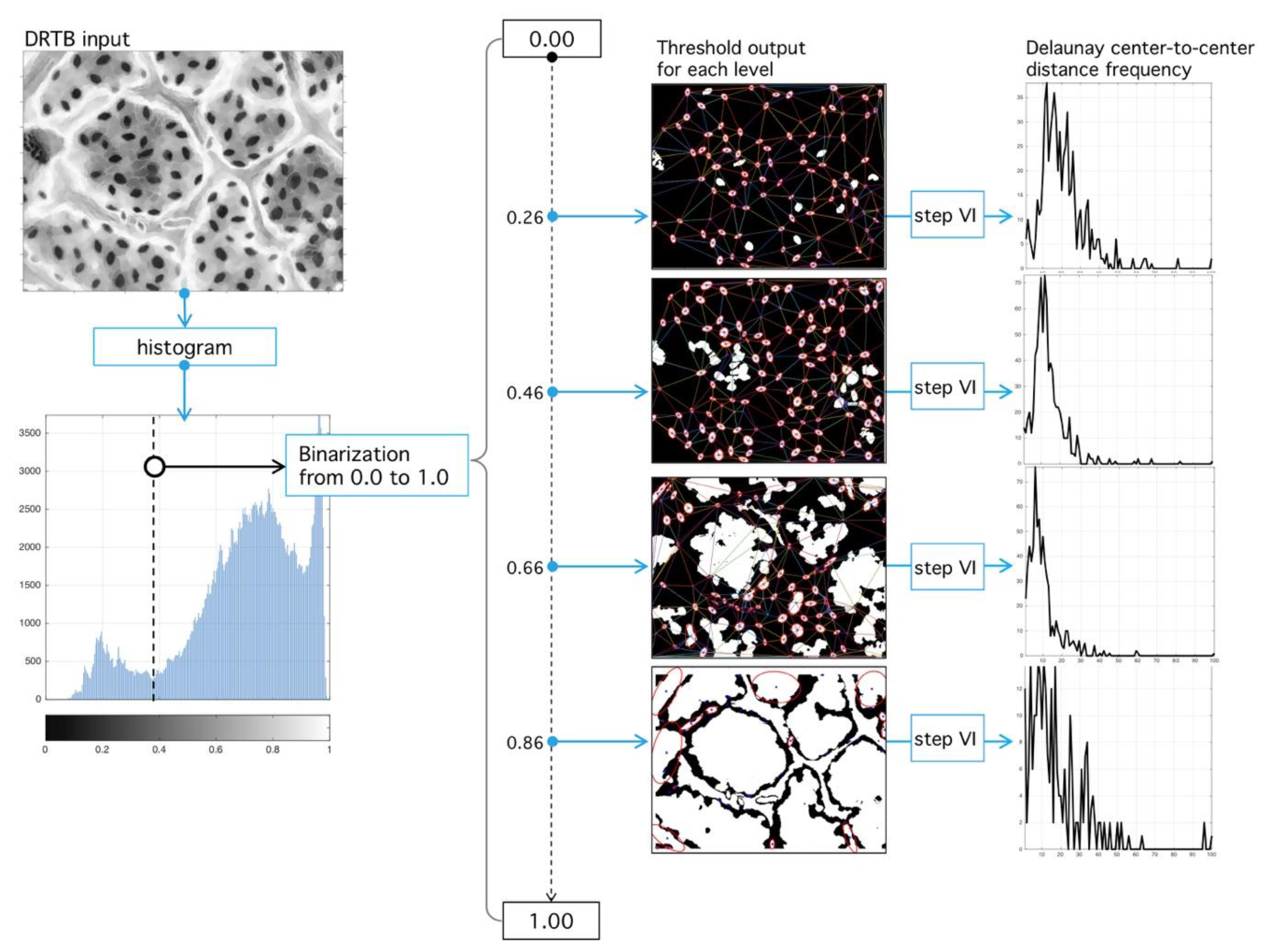
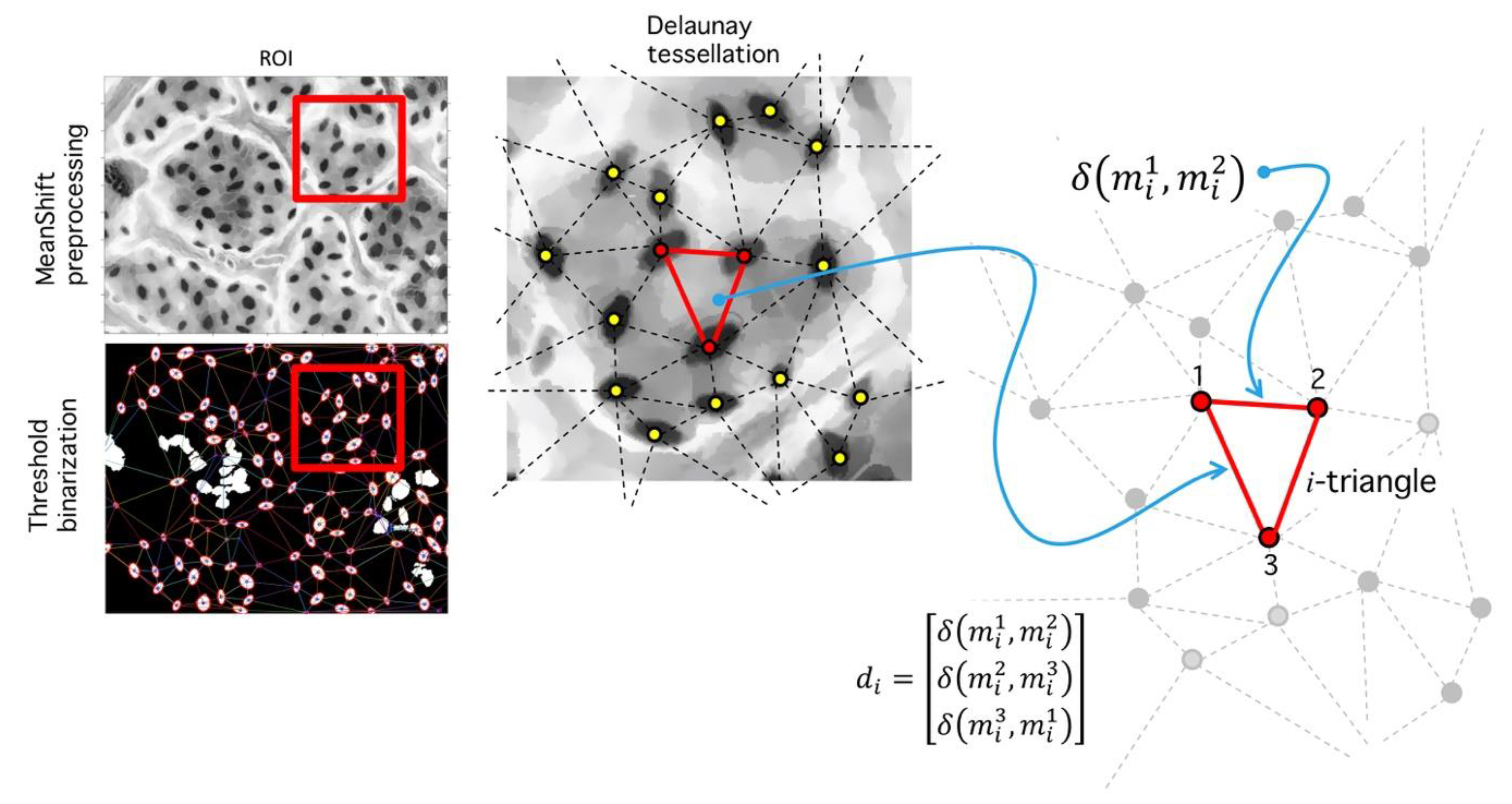
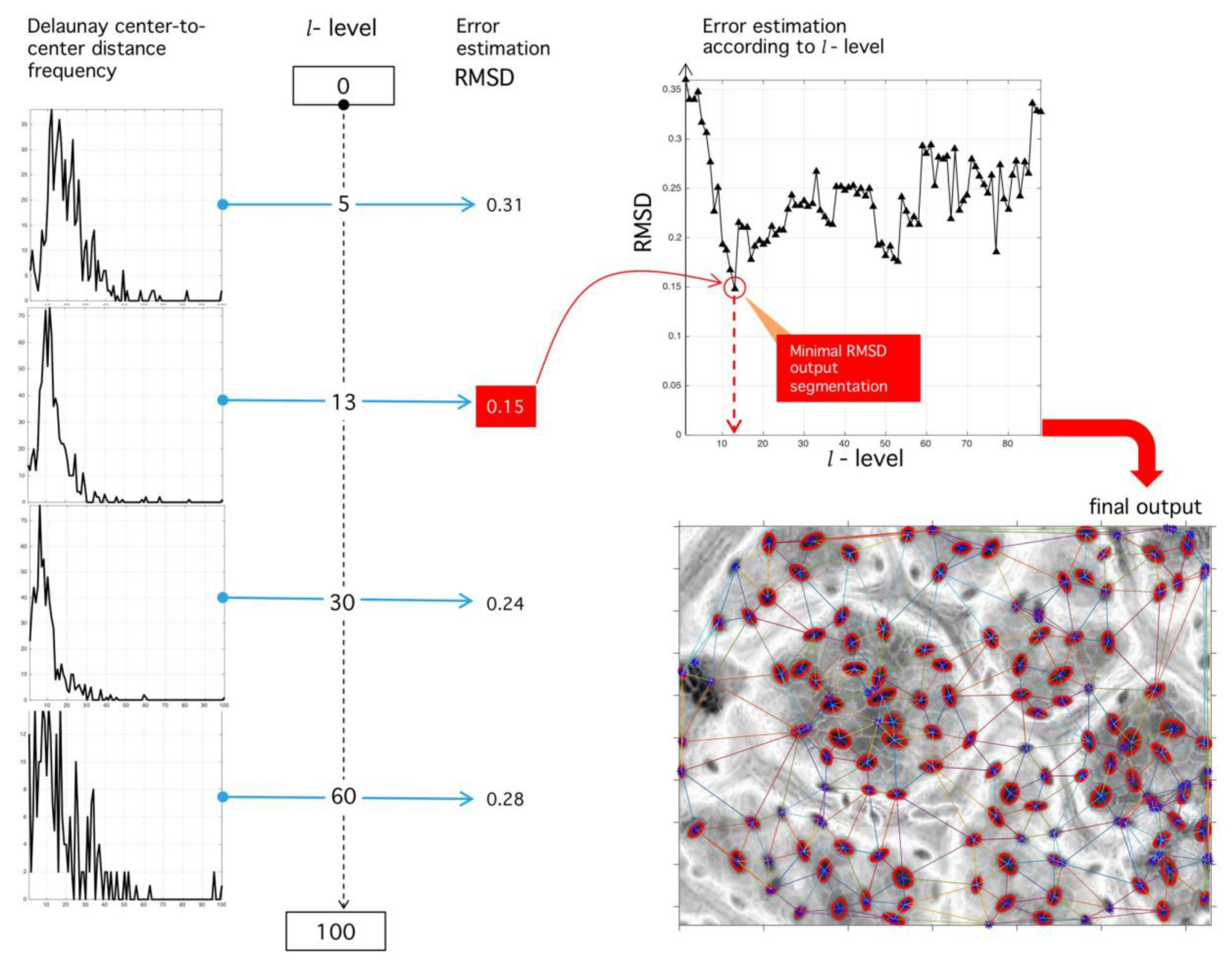
The CO2 and water vapor exchange between leaf and atmosphere are relevant for plant physiology. This process is done through the stomata. These structures are fundamental in the study of plants since their properties are linked to the evolutionary process of the plant, as well as its environmental and phytohormonal conditions. Stomatal detection is a complex task due to the noise and morphology of the microscopic images. Although in recent years segmentation algorithms have been developed that automate this process, they all use techniques that explore chromatic characteristics. This research explores a unique feature in plants, which corresponds to the stomatal spatial distribution within the leaf structure. Unlike segmentation techniques based on deep learning tools, we emphasize the search for an optimal threshold level, so that a high percentage of stomata can be detected, independent of the size and shape of the stomata. This last feature has not been reported in the literature, except for those results of geometric structure formation in the salt formation and other biological formations.
Keywords: stomatal segmentation; image segmentation; Delaunay-Rayleigh frequency stomatal segmentation; image segmentation; Delaunay-Rayleigh frequency