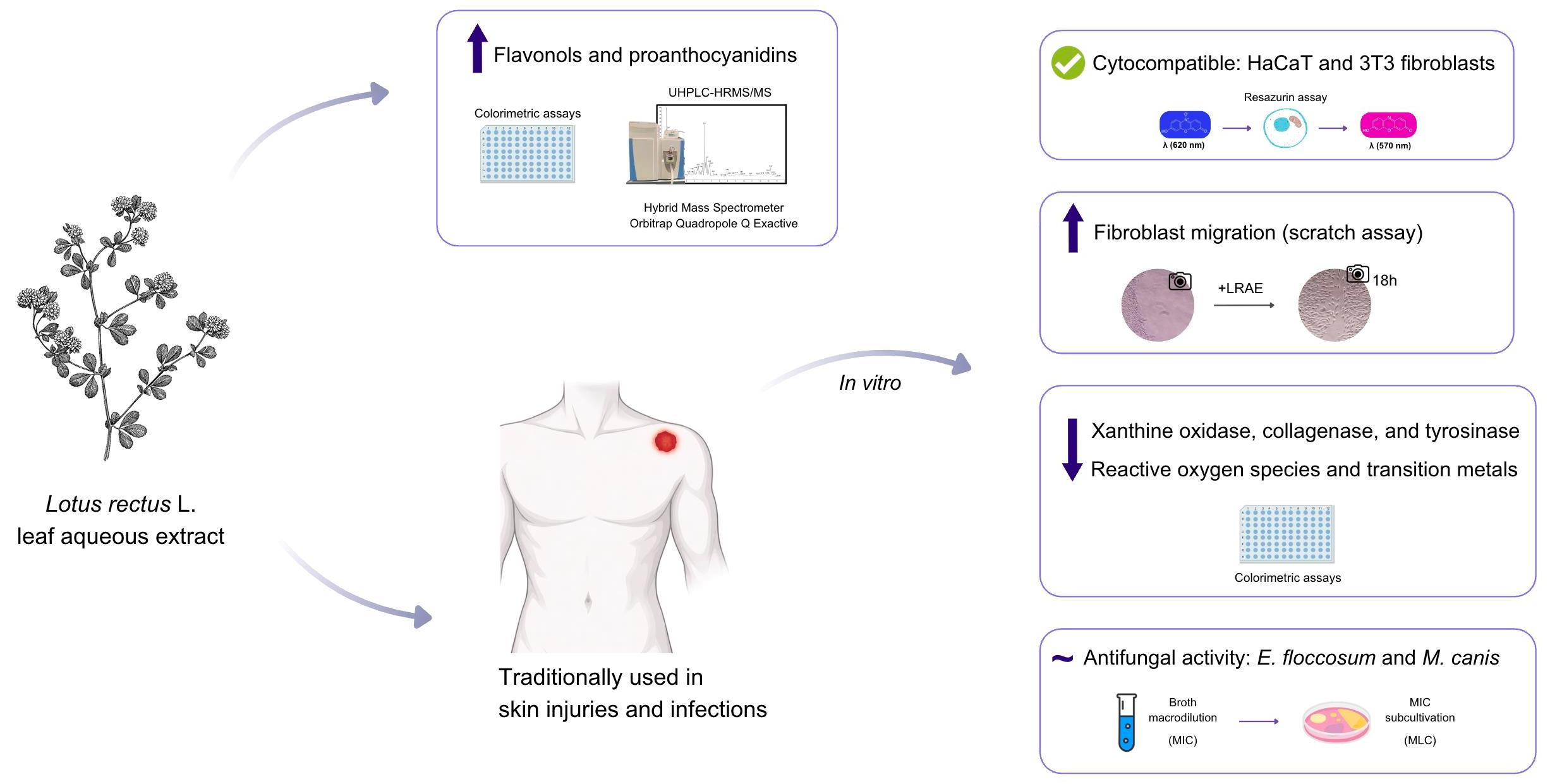
Phytochemistry and Wound-Healing, Enzyme-Inhibitory, and Antifungal Activities of the Wild Forage Legume Lotus rectus L.

 ,
,  ,
,  ,
,  , and
, and
Abstract
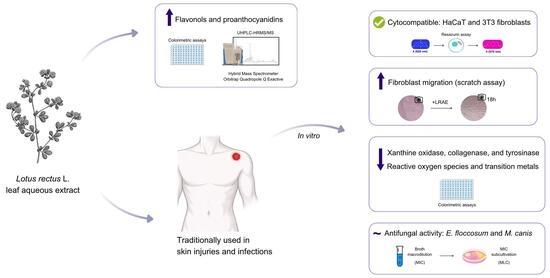
1. Introduction
2. Results
2.1. Phenolic Composition of the Aqueous Leaf Extract of L. rectus
2.1.1. Extraction Yield and Determination of Major Phenolic Groups
2.1.2. Identification of Phenolic Compounds by Ultra-High-Pressure Liquid Chromatography Coupled with High-Resolution Tandem Mass Spectrometry (UHPLC-HRMS/MS)
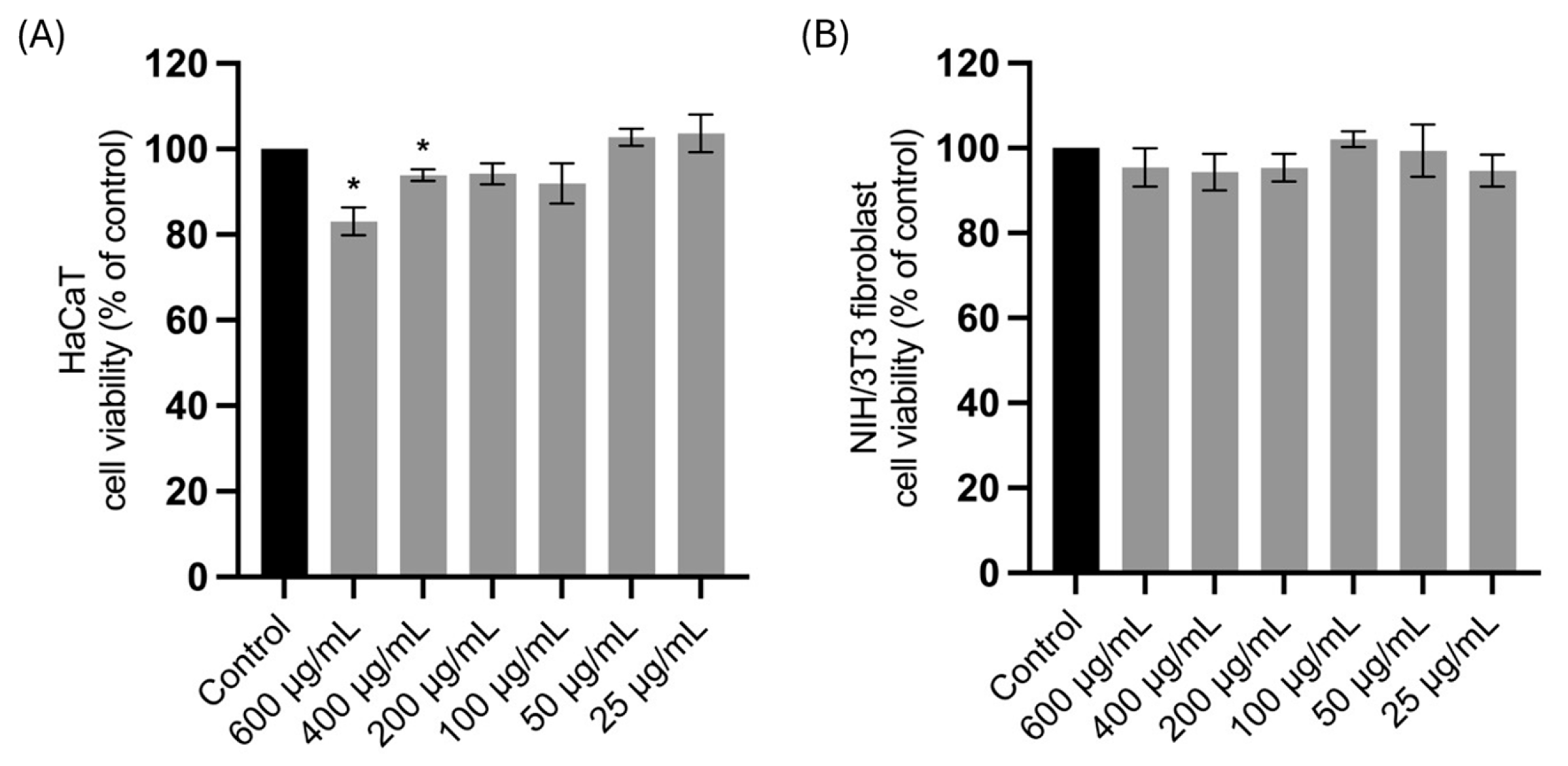
2.2. Effect of the Aqueous Leaf Extract of L. rectus on Cell Viability of HaCaT Keratinocytes and NIH/3T3 Fibroblasts
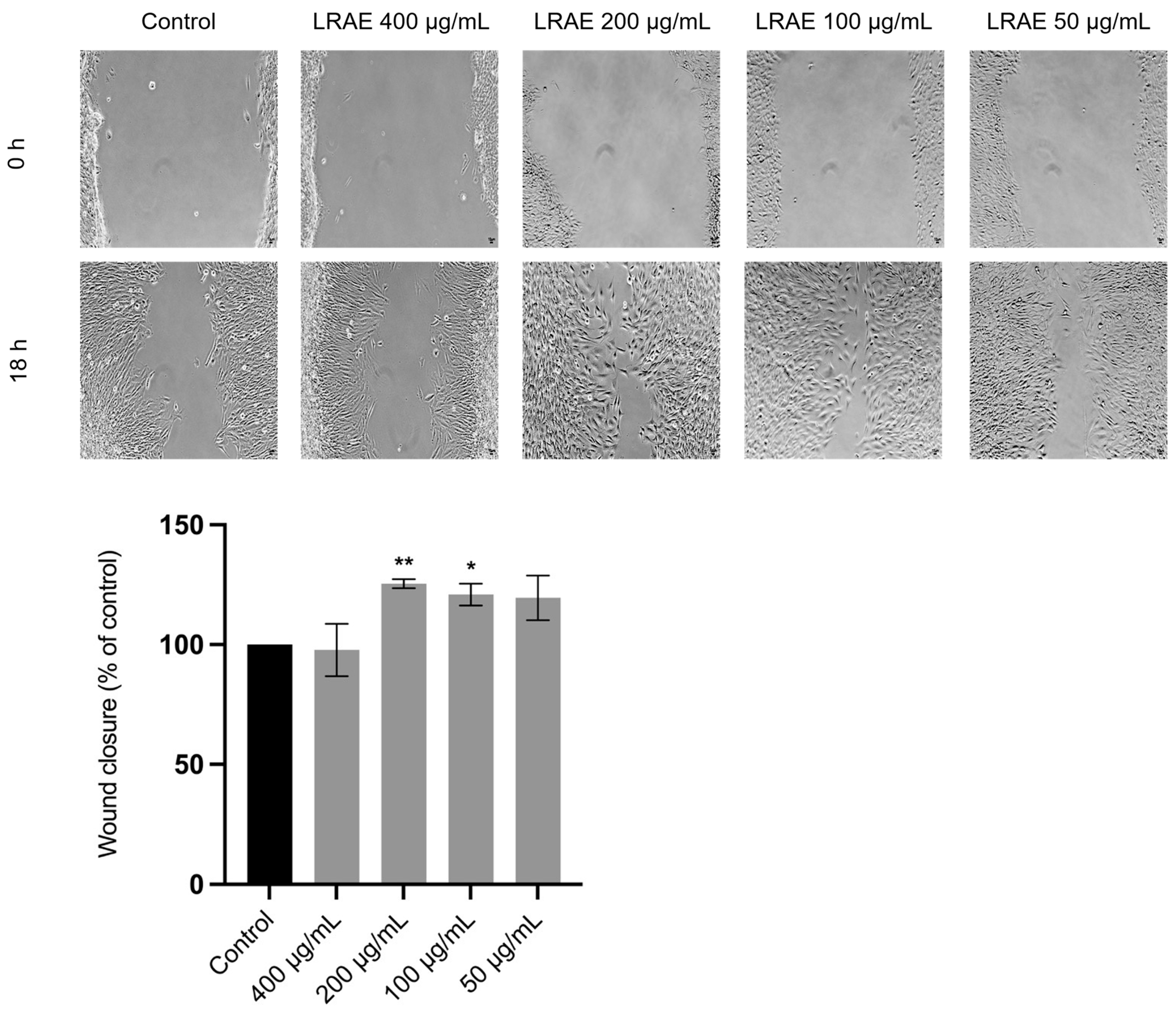
2.3. Wound-Healing Activity of the Aqueous Leaf Extract of L. rectus
2.4. Evaluation of the Enzyme-Inhibitory Activity of the Aqueous Leaf Extract of L. rectus L.
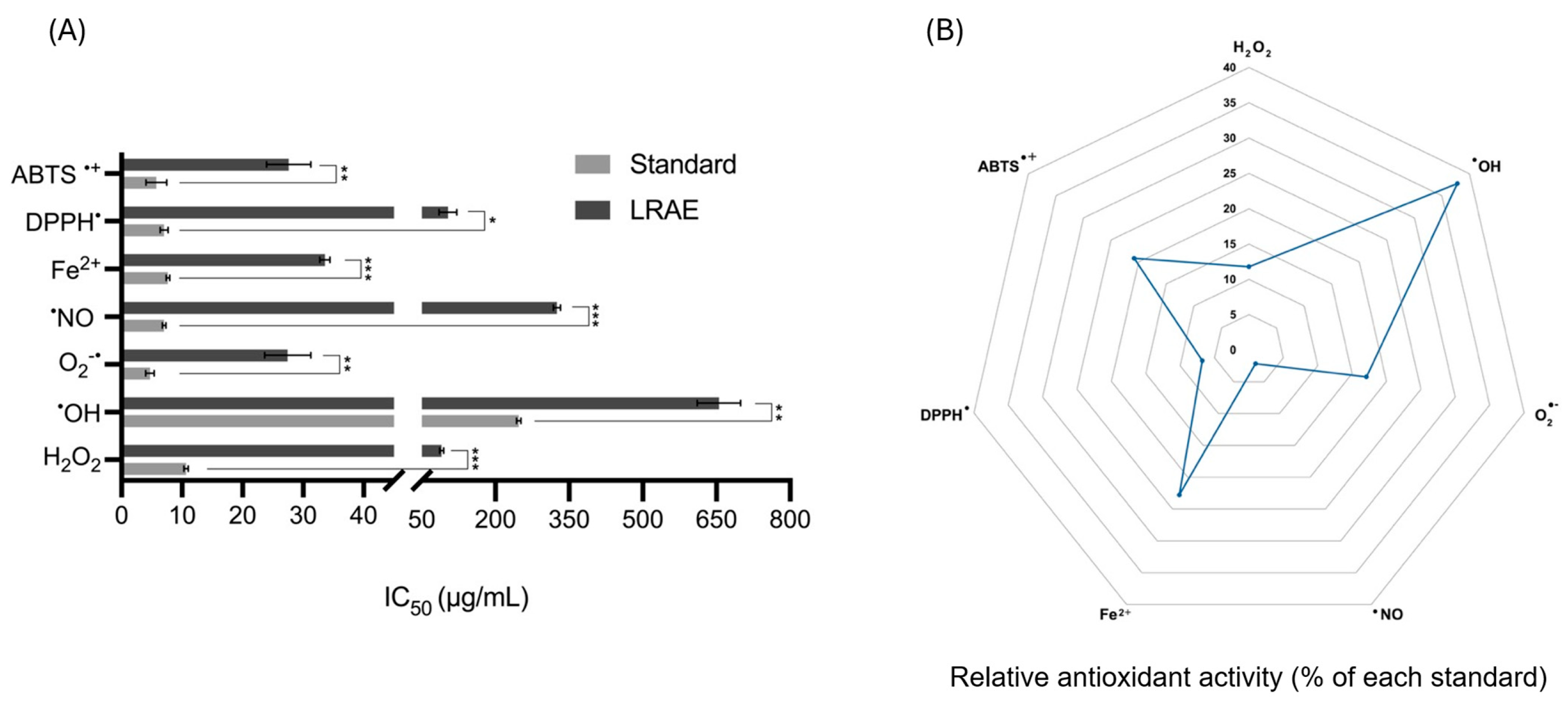
2.5. Antioxidant Capacity of the Aqueous Leaf Extract of L. rectus L. in Cell-Free Systems
2.6. Assessment of the Antimycotic Potential of the Aqueous Leaf Extract of L. rectus L. Against Dermatophytes and Yeasts
3. Discussion
4. Materials and Methods
4.1. Reagents and Standards
4.2. Plant Material and Aqueous Extract Preparation
4.3. Determination of Major Phenolic Constituents
4.4. Identification and Quantification of Phenolic Compounds by UHPLC-HRMS/MS
4.5. Cell Culture and Cell Viability
4.6. Scratch Assay
4.7. Enzyme-Inhibitory Assays
4.7.1. Xanthine Oxidase
4.7.2. Collagenase
4.7.3. Hyaluronidase
4.7.4. Tyrosinase
4.8. Determination of the Antioxidant Activity of LRAE
4.8.1. Reactive Oxygen Species, Nitric Oxide and Transition Metals (Biological Pro-Oxidants)
4.8.2. Non-Biological Radicals
4.9. Antifungal Susceptibility Testing
4.10. Data Analysis
5. Conclusions
Supplementary Materials
Author Contributions
Funding
Data Availability Statement
Acknowledgments
Conflicts of Interest
Abbreviations
| ABTS | 2,2′-azino-bis(3-ethylbenzothiazoline-6-sulfonic acid) diammonium salt |
| ALP | Allopurinol |
| ATCC | American Type Culture Collection |
| CAE | Caffeic acid equivalents |
| CE | Catechin equivalents |
| CECT | Spanish Collection of Type Cultures |
| DPPH | 1,1-diphenyl-2-picrylhydrazyl |
| ECM | Extracellular matrix |
| EGCG | Epigallocatechin gallate |
| GAE | Gallic acid equivalents |
| KA | Kojic acid |
| LRAE | Lotus rectus L. leaf aqueous extract |
| MIC | Minimum inhibitory concentration |
| MLC | Minimum lethal concentration |
| QRT | Quercetin |
| RE | Rutin equivalents |
| ROS | Reactive oxygen species |
| TA | Tannic acid |
| TRP | Tannin-related phenolics |
References
- Wilkinson, H.N.; Hardman, M.J. Wound healing: Cellular mechanisms and pathological outcomes. Open. Biol. 2020, 10, 341–370. [Google Scholar] [CrossRef] [PubMed]
- Wallace, H.A.; Basehore, B.M.; Zito, P.M. Wound Healing Phases; StatPearls Publishing: Treasure Island, FL, USA, 2023. Available online: https://www.ncbi.nlm.nih.gov/books/NBK470443/ (accessed on 14 February 2026).
- Falanga, V.; Isseroff, R.R.; Soulika, A.M.; Romanelli, M.; Margolis, D.; Kapp, S.; Granick, M.; Harding, K. Chronic wounds. Nat. Rev. Dis. Primers 2022, 8, 50. [Google Scholar] [CrossRef] [PubMed]
- Frykberg, R.G.; Banks, J. Challenges in the treatment of chronic wounds. Adv. Wound Care 2015, 4, 560–582. [Google Scholar] [CrossRef]
- Fernandez, M.L.; Stupar, D.; Croll, T.; Leavesley, D.; Upton, Z. Xanthine oxidoreductase: A novel therapeutic target for the treatment of chronic wounds? Adv. Wound Care 2018, 7, 95–104. [Google Scholar] [CrossRef]
- Dechert, T.A.; Ducale, A.E.; Ward, S.I.; Yager, D.R. Hyaluronan in human acute and chronic dermal wounds. Wound Repair Regen. 2006, 14, 252–258. [Google Scholar] [CrossRef]
- Díaz-Herrera, M.Á.; González-Durán, M.; Rodríguez-Martínez, F.J.; Tujillo-Flores, G.; Tuset-Mateu, N.; Verdú-Soriano, J.; Gea-Caballero, V.; Sanllorente-Melenchón, A.; Almeda-Ortega, J.; Cunillera-Puértolas, O.; et al. The financial burden of chronic wounds in primary care: A real-world data analysis on cost and prevalence. Int. J. Nurs. Stud. Adv. 2025, 8, 100313. [Google Scholar] [CrossRef] [PubMed]
- Ge, Y.; Wang, Q. Current research on fungi in chronic wounds. Front. Mol. Biosci. 2023, 9, 1057766. [Google Scholar] [CrossRef]
- Liu, E.; Gao, H.; Zhao, Y.; Pang, Y.; Yao, Y.; Yang, Z.; Zhang, X.; Wang, Y.; Yang, S.; Ma, X.; et al. The potential application of natural products in cutaneous wound healing: A review of preclinical evidence. Front. Pharmacol. 2022, 13, 900439. [Google Scholar] [CrossRef]
- Vitale, S.; Colanero, S.; Placidi, M.; Di Emidio, G.; Tatone, C.; Amicarelli, F.; D’Alessandro, A.M. Phytochemistry and biological activity of medicinal plants in wound healing: An overview of current research. Molecules 2022, 27, 3566. [Google Scholar] [CrossRef]
- Talavera Lozano, S.; Aedo Pérez, C.; Castroviejo Bolibar, S.; Romero Zarco, C.; Sáez i Goñalons, L.; Salgueiro González, F.J.; Velayos Rodríguez, M. (II) Leguminosae (Partim). In Flora Ibérica, 1st ed.; Talavera Lozano, S., Aedo Pérez, C., Castroviejo Bolibar, S., Romero Zarco, C., Sáez i Goñalons, L., Salgueiro González, F.J., Velayos Rodríguez, M., Eds.; Real Jardín Botánico, CSIC: Madrid, Spain, 1999; Volume 7, pp. 812–823. [Google Scholar]
- Pieroni, A.; Giusti, M.E.; de Pasquale, C.; Lenzarini, C.; Censorii, E.; Gonzáles-Tejero, M.R.; Sánchez-Rojas, C.P.; Ramiro-Gutiérrez, J.M.; Skoula, M.; Johnson, C.; et al. Circum-Mediterranean cultural heritage and medicinal plant uses in traditional animal healthcare: A field survey in eight selected areas within the RUBIA Project. J. Ethnobiol. Ethnomed. 2006, 2, 16. [Google Scholar] [CrossRef]
- Pardo de Santayana, M.; Morales Valverde, R.; Tardío, J.; Aceituno-Mata, L.; Molina, M. Inventario Español de los Conocimientos Tradicionales Relativos a la Biodiversidad. Segunda Fase, 1st ed.; Ministerio para la Transición Ecológica, Centro de Publicaciones: Madrid, Spain, 2018; pp. 149–152. [Google Scholar]
- Bell, L.W.; Ryan, M.H.; Ewing, M.A.; Moore, G.A.; Lane, P.A. Prospects for three Dorycnium species as forage plants in agricultural systems: A review of their agronomic characteristics. Aust. J. Exp. Agric. 2008, 48, 467–479. [Google Scholar] [CrossRef]
- Tavilla, G.; Crisafulli, A.; Ranno, V.; Picone, R.M.; Redouan, F.Z.; del Galdo, G.G. First contribution to the ethnobotanical knowledge in the Peloritani mounts (NE Sicily). Res. J. Ecol. Environ. Sci. 2022, 2, 1–34. [Google Scholar] [CrossRef]
- Waghorn, T.; Molan, A.; Deighton, M.; Alexander, R.; Leathwick, D.; McNabb, W.; Meagher, L. In vivo anthelmintic activity of Dorycnium rectum and grape seed extract against Ostertagia (Teladorsagia) circumcincta and Trichostrongylus colubriformis in sheep. N. Z. Vet. J. 2006, 54, 21–27. [Google Scholar] [CrossRef]
- Hupkens, P.; Boxma, H.; Dokter, J. Tannic acid as a topical agent in burns: Historical considerations and implications for new developments. Burns 1995, 21, 57–61. [Google Scholar] [CrossRef]
- Halkes, B.; van den Berg, A.J.J.; Hoekstra, M.; du Pont, J.S.; Kreis, R. The use of tannic acid in the local treatment of burn wounds: Intriguing old and new perspectives. Wounds 2001, 13, 144–158. [Google Scholar]
- El-Gazzar, N.; Abdallah, R.; Hammoda, H.; Sallam, S. Chemical constituents and biological activities of genus Lotus: An updated review. Rec. Pharm. Biomed. Sci. 2022, 6, 147–162. [Google Scholar] [CrossRef]
- Tosun, F.; Albayrak, S.; Şah, E.A.; ÇeÇen, Ö. Phytochemical profile and antioxidant activity potential of Lotus sanguineus (Vural) DD Sokoloff. Acta Pharm. Sci. 2024, 62, 172–182. [Google Scholar] [CrossRef]
- Sato, S.; Tabata, S. Lotus japonicus as a platform for legume research. Curr. Opin. Plant Biol. 2006, 9, 128–132. [Google Scholar] [CrossRef] [PubMed]
- Bilodeau, D.; Dupont, É.; Journet, M.; Oula, M.-L.; Gomez, J.; Léveillé, C.; Loing, E. An integral topical gel for cellulite reduction: Results from a double-blind, randomized, placebo-controlled evaluation of efficacy. Clin. Cosmet. Investig. Dermatol. 2014, 7, 73–88. [Google Scholar] [CrossRef][Green Version]
- Tito, A.; Barbulova, A.; Zappelli, C.; Leone, M.; Ruvo, M.; Mercurio, F.A.; Chambery, A.; Russo, R.; Colucci, M.G.; Apone, F. The growth differentiation factor 11 is involved in skin fibroblast ageing and is induced by a preparation of peptides and sugars derived from plant cell cultures. Mol. Biotechnol. 2019, 61, 209–220. [Google Scholar] [CrossRef]
- ISO 10993-5:2009; Biological Evaluation of Medical Devices—Part 5: Tests for In Vitro Cytotoxicity. International Organization for Standardization: Geneva, Switzerland, 2009.
- Martinotti, S.; Ranzato, E. Scratch Wound healing assay. Methods Mol. Biol. 2020, 2109, 225–229. [Google Scholar] [CrossRef] [PubMed]
- Molan, A.L.; Waghorn, G.C.; Min, B.R.; McNabb, W.C. The effect of condensed tannins from seven herbages on Trichostrongylus colubriformis larval migration in vitro. Folia Parasitol. 2000, 47, 39–44. [Google Scholar] [CrossRef] [PubMed]
- Norman, H.C.; Humphries, A.W.; Hulm, E.; Young, P.; Hughes, S.J.; Rowe, T.; Peck, D.M.; Vercoe, P.E. Productivity and nutritional value of 20 species of perennial legumes in a low-rainfall mediterranean-type environment in Southern Australia. Grass Forage Sci. 2021, 76, 134–158. [Google Scholar] [CrossRef]
- Moreno, A.; Martín-Cordero, C.; Iglesias-Guerra, F.; Toro, M.V. Flavonoids from Dorycnium rectum. Biochem. Syst. Ecol. 2002, 30, 73–74. [Google Scholar] [CrossRef]
- Sivakumaran, S.; Molan, A.L.; Meagher, L.P.; Kolb, B.; Foo, L.Y.; Lane, G.A.; Attwood, G.A.; Fraser, K.; Tavendale, M. Variation in antimicrobial action of proanthocyanidins from Dorycnium rectum against rumen bacteria. Phytochemistry 2004, 65, 2485–2497. [Google Scholar] [CrossRef] [PubMed]
- Mahomoodally, M.F.; Vlaisavljevic, S.; Berezni, S.; Abdallah, H.H.; Zengin, G.; Atanasov, A.G.; Mollica, A.; Lobine, D.; Aktumsek, A. Lotus aegaeus (Gris.) Boiss and Iberis sempervirens L.: Chemical fingerprints, antioxidant potential, and inhibition activities and docking on key enzymes linked to global health problems. Ind. Crops Prod. 2018, 120, 271–278. [Google Scholar] [CrossRef]
- Yerlikaya, S.; Baloglu, M.C.; Diuzheva, A.; Jekő, J.; Cziáky, Z.; Zengin, G. Investigation of chemical profile, biological properties of Lotus corniculatus L. extracts and their apoptotic-autophagic effects on breast cancer cells. J. Pharm. Biomed. Anal. 2019, 174, 286–299. [Google Scholar] [CrossRef]
- Houghton, P.J.; Hylands, P.J.; Mensah, A.Y.; Hensel, A.; Deters, A.M. In vitro tests and ethnopharmacological investigations: Wound healing as an example. J. Ethnopharmacol. 2005, 100, 100–107. [Google Scholar] [CrossRef]
- Bainbridge, P. Wound healing and the role of fibroblasts. J. Wound Care 2013, 22, 407–412. [Google Scholar] [CrossRef]
- Suktap, C.; Lee, H.K.; Amnuaypol, S.; Suttisri, R.; Sukrong, S. Wound healing effect of flavonoid glycosides from Afgekia mahidolae BL Burtt & Chermsir. leaves. Rec. Nat. Prod. 2018, 12, 391–396. [Google Scholar] [CrossRef]
- Doersch, K.M.; Newell-Rogers, M.K. The impact of quercetin on wound healing relates to changes in αv and β1 integrin expression. Exp. Biol. Med. 2017, 242, 1424–1431. [Google Scholar] [CrossRef]
- Zulkefli, N.; Che Zahari, C.N.M.; Sayuti, N.H.; Kamarudin, A.A.; Saad, N.; Hamezah, H.S.; Bunawan, H.; Baharum, S.N.; Mediani, A.; Ahmed, Q.U.; et al. Flavonoids as potential wound-healing molecules: Emphasis on pathways perspective. Int. J. Mol. Sci. 2023, 24, 4607. [Google Scholar] [CrossRef] [PubMed]
- Bei, Z.; Ye, L.; Tong, Q.; Yang, T.; He, X.; Chu, B.; Qian, Z. Tannic acid as a bioactive polyphenol for hydrogel engineering in wound healing. Collagen Leather 2026, 8, 4. [Google Scholar] [CrossRef]
- Rafiq, S.; Majeed, R.; Qazi, A.K.; Ganai, B.A.; Wani, I.; Rakhshanda, S.; Qurishi, Y.; Sharma, P.R.; Hamid, A.; Masood, A.; et al. Isolation and antiproliferative activity of Lotus corniculatus lectin towards human tumour cell lines. Phytomedicine 2013, 21, 30–38. [Google Scholar] [CrossRef]
- Clark, R.A.F. Oxidative Stress and “Senescent” Fibroblasts in non-healing wounds as potential therapeutic targets. J. Investig. Dermatol. 2008, 128, 2361–2364. [Google Scholar] [CrossRef]
- Kelley, E.E.; Khoo, N.K.H.; Hundley, N.J.; Malik, U.Z.; Freeman, B.A.; Tarpey, M.M. Hydrogen peroxide is the major oxidant product of xanthine oxidase. Free Radic. Biol. Med. 2010, 48, 493–498. [Google Scholar] [CrossRef]
- Wall, I.B.; Moseley, R.; Baird, D.M.; Kipling, D.; Giles, P.; Laffafian, I.; Price, P.E.; Thomas, D.W.; Stephens, P. Fibroblast dysfunction is a key factor in the non-healing of chronic venous leg ulcers. J. Investig. Dermatol. 2008, 128, 2526–2540. [Google Scholar] [CrossRef]
- Ramos, A.N.; Cerusico, N.; Chavez-Jara, R. Rethinking Chronic wound treatment: Unlocking the potential of combination products for an unmet multifactorial need: A review study. Health Sci. Rep. 2026, 9, e71798. [Google Scholar] [CrossRef]
- Fumić, B.; Končić, M.Z.; Jug, M. Development of cyclodextrin-based extract of Lotus corniculatus as a potential substrate reduction therapy in mucopolysaccharidoses type iii. J. Incl. Phenom. Macrocycl. Chem. 2018, 92, 369–379. [Google Scholar] [CrossRef]
- Baran, M.Y.; Emecen, G.; Simon, A.; Tóth, G.; Kuruuzum-Uz, A. Assessment of the antioxidant activity and genotoxicity of the extracts and isolated glycosides with a new flavonoid from Lotus aegaeus (Gris.) Boiss. Ind. Crops Prod. 2020, 153, 112590. [Google Scholar] [CrossRef]
- Liu, L.; Zhang, L.; Ren, L.; Xie, Y. Advances in structures required of polyphenols for xanthine oxidase inhibition. Food Front. 2020, 1, 152–167. [Google Scholar] [CrossRef]
- Spanou, C.; Veskoukis, A.S.; Kerasioti, T.; Kontou, M.; Angelis, A.; Aligiannis, N.; Skaltsounis, A.L.; Kouretas, D. Flavonoid glycosides isolated from unique legume plant extracts as novel inhibitors of xanthine oxidase. PLoS ONE 2012, 7, e32214. [Google Scholar] [CrossRef] [PubMed]
- Yuan, M.; Liu, Y.; Xiao, A.; Leng, J.; Liao, L.; Ma, L.; Liu, L. The interaction of dietary flavonoids with xanthine oxidase in vitro: Molecular property-binding affinity relationship aspects. RSC Adv. 2019, 9, 10781–10788. [Google Scholar] [CrossRef] [PubMed]
- Moini, H.; Guo, Q.; Packer, L. Enzyme inhibition and protein-binding action of the procyanidin-rich French maritime pine bark extract, pycnogenol: Effect on xanthine oxidase. J. Agric. Food Chem. 2000, 48, 5630–5639. [Google Scholar] [CrossRef]
- Ågren, M.S.; Taplin, C.J.; Woessner, J.F.; Eagistein, W.H.; Mertz, P.M. Collagenase in wound healing: Effect of wound age and type. J. Investig. Dermatol. 1992, 99, 709–714. [Google Scholar] [CrossRef]
- Taylor, K.B.; Windsor, L.J.; Caterina, N.C.M.; Bodden, M.K.; Engler, J.A. The mechanism of inhibition of collagenase by TIMP-1. J. Biol. Chem. 1996, 271, 23938–23945. [Google Scholar] [CrossRef]
- Danielsen, P.L.; Holst, A.V.; Maltesen, H.R.; Bassi, M.R.; Holst, P.J.; Heinemeier, K.M.; Olsen, J.; Danielsen, C.C.; Poulsen, S.S.; Jorgensen, L.N.; et al. Matrix metalloproteinase-8 overexpression prevents proper tissue repair. Surgery 2011, 150, 897–906. [Google Scholar] [CrossRef]
- Piyasena, N.P.; Jayasekara, A.; Napagoda, M.; Adikaram, N.; Jayasinghe, L. Collagenase inhibitory activities of plants: A review. Dermatol. Rev. 2026, 7, e70064. [Google Scholar] [CrossRef]
- Deniz, F.S.S.; Salmas, R.E.; Emerce, E.; Cankaya, I.I.T.; Yusufoglu, H.S.; Orhan, I.E. Evaluation of collagenase, elastase and tyrosinase inhibitory activities of Cotinus coggygria Scop. through in vitro and in silico approaches. S. Afr. J. Bot. 2020, 132, 277–288. [Google Scholar] [CrossRef]
- Pretzler, M.; Rompel, A. Tyrosinases: A family of copper-containing metalloenzymes. ChemTexts 2024, 10, 12. [Google Scholar] [CrossRef] [PubMed]
- Wang, Y.; Jiang, R.; Xiong, B.; Zhu, J.; Sang, J.; Li, H.; Chen, C.; Xu, Z.; Zhang, W.; Chen, Y.; et al. Clinical investigation of tyrosinase inhibitors: Past, present, and future. Drug. Dev. Res. 2025, 86, e70113. [Google Scholar] [CrossRef] [PubMed]
- Schmitt, M.; Magid, A.A.; Etique, N.; Hubert, J.; Duca, L.; Nuzillard, J.-M.; Voutquenne-Nazabadioko, L. Bio-guided studies of Lotus maritimus aerial parts and investigation of their antioxidant, tyrosinase and elastase inhibitory activities. Nat. Prod. J. 2022, 12, e270821195858. [Google Scholar] [CrossRef]
- Chang, T.S. An updated review of tyrosinase inhibitors. Int. J. Mol. Sci. 2009, 10, 2440–2475. [Google Scholar] [CrossRef]
- Barac, A.; Stjepanovic, M.; Krajisnik, S.; Stevanovic, G.; Paglietti, B.; Milosevic, B. Dermatophytes: Update on clinical epidemiology and treatment. Mycopathologia 2024, 189, 101. [Google Scholar] [CrossRef]
- Denning, D.W. Global incidence and mortality of severe fungal disease. Lancet Infect. Dis. 2024, 24, 428–438. [Google Scholar] [CrossRef]
- Mahasneh, A.M. Screening of some indigenous Qatari medicinal plants for antimicrobial activity. Phytother. Res. 2002, 16, 751–753. [Google Scholar] [CrossRef]
- Youssef, A.M.M.; El-Swaify, Z.A.S.; Maaty, D.A.M.; Youssef, M.M. Phytochemistry and antiviral properties of two Lotus species growing in Egypt. Vitae 2021, 28, 348069. [Google Scholar] [CrossRef]
- Girardi, F.A.; Tonial, F.; Chini, S.O.; Sobottka, A.M.; Schefferer-Basso, S.M.; Bertol, C.D. Phytochemical profile and antimicrobial properties of Lotus spp. (Fabaceae). An. Acad. Bras. Cienc. 2014, 86, 1295–1302. [Google Scholar] [CrossRef]
- Stefanović, O.D.; Tešić, J.D.; Čomić, L.R. Melilotus albus and Dorycnium herbaceum extracts as source of phenolic compounds and their antimicrobial, antibiofilm, and antioxidant potentials. J. Food Drug Anal. 2015, 23, 417–424. [Google Scholar] [CrossRef]
- Abdallah, B.M.; Ali, E.M. Green Synthesis of Silver Nanoparticles using the Lotus lalambensis aqueous leaf extract and their anti-candidal activity against oral candidiasis. ACS Omega 2021, 6, 8151–8162. [Google Scholar] [CrossRef]
- Zuzarte, M.; Lopes, G.; Pinto, E.; Salgueiro, L. Are natural products an alternative therapy for dermatophytosis? In Dermatophytes and Dermatophytoses; Springer International Publishing: Cham, Switzerland, 2021; pp. 473–519. [Google Scholar] [CrossRef]
- De la Puerta, R.; Fernández-Arche, M.A.; Lopez-Lazaro, M.; Garcia, M.D. Antioxidant and cytotoxic activities of Sideritis perezlarae (Borja) Roselló, Stübing and Peris. Nat. Prod. Res. 2013, 27, 1602–1606. [Google Scholar] [CrossRef]
- González-Vázquez, M.; Guerrero, A.Q.; Zuzarte, M.; Salgueiro, L.; Alves-Silva, J.; González-Rodríguez, M.L.; De la Puerta, R. Phytochemical analysis and therapeutic potential of Tuberaria lignosa (Sweet) Samp. aqueous extract in skin injuries. Plants 2025, 14, 2299. [Google Scholar] [CrossRef] [PubMed]
- Bobo-García, G.; Davidov-Pardo, G.; Arroqui, C.; Vírseda, P.; Marín-Arroyo, M.R.; Navarro, M. Intra-laboratory validation of microplate methods for total phenolic content and antioxidant activity on polyphenolic extracts, and comparison with conventional spectrophotometric methods. J. Sci. Food Agric. 2015, 95, 204–209. [Google Scholar] [CrossRef] [PubMed]
- Singleton, V.L.; Rossi, J.A. Colorimetry of total phenolics with phosphomolybdic-phosphotungstic acid reagents. Am. J. Enol. Vitic. 1965, 16, 144–158. [Google Scholar] [CrossRef]
- Lamaison, J.L.; Carnat, A. The amount of main flavonoids in flowers and feaves of Crataegus monogyna Jacq. and Crataegus laevigata (Poiret) DC. (Rosacea). Pharm. Acta Helv. 1990, 65, 315–320. [Google Scholar]
- Arnow, L.E. Colorimetric determination of the components of 3,4-dihydroxyphenylalanine-tyrosine mixtures. J. Biol. Chem. 1937, 118, 531–537. [Google Scholar] [CrossRef]
- López-Orenes, A.; Bueso, M.C.; Conesa, H.M.; Calderón, A.A.; Ferrer, M.A. Seasonal changes in antioxidative/oxidative profile of mining and non-mining populations of Syrian beancaper as determined by soil conditions. Sci. Total Environ. 2017, 575, 437–447. [Google Scholar] [CrossRef]
- Makkar, H.P.S. Measurement of total phenolics and tannins using Folin-Ciocalteu method. In Quantification of Tannins in Tree and Shrub Foliage; Springer: Dordrecht, The Netherlands, 2003; pp. 49–51. [Google Scholar] [CrossRef]
- Nickerson, M.N.; Moore, L.P.; U’Ren, J.M. The impact of polyphenolic compounds on the in vitro growth of oak-associated foliar endophytic and saprotrophic fungi. Fungal Ecol. 2023, 62, 101226. [Google Scholar] [CrossRef]
- Sun, B.; Ricardo-da-Silva, J.M.; Spranger, I. Critical factors of vanillin assay for catechins and proanthocyanidins. J. Agric. Food Chem. 1998, 46, 4267–4274. [Google Scholar] [CrossRef]
- Semmarath, W.; Srisawad, K.; Arjsri, P.; Umsumarng, S.; Yodkeeree, S.; Jamjod, S.; Prom-u-thai, C.; Dejkriengkraikul, P. Protective effects of proanthocyanidin-rich fraction from red rice germ and bran on lung cell inflammation via inhibition of NF-ΚB/NLRP3 inflammasome pathway. Nutrients 2023, 15, 3793. [Google Scholar] [CrossRef] [PubMed]
- Rea, J.; García-Giménez, M.D.; Santiago, M.; De la Puerta, R.; Fernández-Arche, M.A. Hydroxycinnamic acid derivatives isolated from hempseed and their effects on central nervous system enzymes. Int. J. Food Sci. Nutr. 2021, 72, 184–194. [Google Scholar] [CrossRef]
- Uhrovčík, J. Strategy for determination of LOD and LOQ values–Some basic aspects. Talanta 2014, 119, 178–180. [Google Scholar] [CrossRef]
- Boukamp, P.; Petrussevska, R.T.; Breitkreutz, D.; Hornung, J.; Markham, A.; Fusenig, N.E. Normal keratinization in a spontaneously immortalized aneuploid human keratinocyte cell line. J. Cell. Biol. 1988, 106, 761–771. [Google Scholar] [CrossRef]
- Alves-Silva, J.M.; Zuzarte, M.; Salgueiro, L.; Cocco, E.; Ghiani, V.; Falconieri, D.; Maccioni, D.; Maxia, A. Agroprospecting of Biowastes: Globe Artichoke (Cynara scolymus L. Cultivar Tema, Asteraceae) as Potential Source of Bioactive Compounds. Molecules 2024, 29, 3960. [Google Scholar] [CrossRef] [PubMed]
- Carrasco, C.J.; Pastor, A.; del Mar Conejo, M.; Álvarez, E.; Calderón-Montaño, J.M.; López-Lázaro, M.; Galindo, A. Synthesis, Characterization, and preliminary in vitro anticancer activity of zinc complexes containing amino acid-derived imidazolium-based dicarboxylate ligands. Int. J. Mol. Sci. 2025, 26, 3202. [Google Scholar] [CrossRef] [PubMed]
- Suarez-Arnedo, A.; Torres Figueroa, F.; Clavijo, C.; Arbeláez, P.; Cruz, J.C.; Muñoz-Camargo, C. An Image J plugin for the high throughput image analysis of in vitro scratch wound healing assays. PLoS ONE 2020, 15, e0232565. [Google Scholar] [CrossRef] [PubMed]
- Nile, S.H.; Park, S.W. Total phenolics, antioxidant and xanthine oxidase inhibitory activity of three colored onions (Allium cepa L.). Front. Life Sci. 2013, 7, 224–228. [Google Scholar] [CrossRef]
- Wang, L.; Lee, W.; Oh, J.Y.; Cui, Y.R.; Ryu, B.; Jeon, Y.J. Protective effect of sulfated polysaccharides from celluclast-assisted extract of Hizikia fusiforme against ultraviolet b-induced skin damage by regulating NF-ΚB, AP-1, and MAPKs signaling pathways in vitro in human dermal fibroblasts. Mar. Drugs 2018, 16, 239. [Google Scholar] [CrossRef]
- Jiratchayamaethasakul, C.; Ding, Y.; Hwang, O.; Im, S.-T.; Jang, Y.; Myung, S.-W.; Lee, J.M.; Kim, H.-S.; Ko, S.-C.; Lee, S.-H. In vitro screening of elastase, collagenase, hyaluronidase, and tyrosinase inhibitory and antioxidant activities of 22 halophyte plant extracts for novel cosmeceuticals. Fish. Aquatic. Sci. 2020, 23, 6. [Google Scholar] [CrossRef]
- Sahasrabud, A.; Deodhar, M. Anti-hyaluronidase, anti-elastase activity of Garcinia indica. Int. J. Bot. 2010, 6, 299–303. [Google Scholar] [CrossRef]
- No, J.K.; Soung, D.Y.; Kim, Y.J.; Shim, K.H.; Jun, Y.S.; Rhee, S.H.; Yokozawa, T.; Chung, H.Y. Inhibition of tyrosinase by green tea components. Life Sci. 1999, 65, 241–246. [Google Scholar] [CrossRef]
- Guo, T.; Wei, L.; Sun, J.; Hou, C.; Fan, L. Antioxidant activities of extract and fractions from Tuber indicum Cooke & Massee. Food Chem. 2011, 127, 1634–1640. [Google Scholar] [CrossRef]
- Aruoma, O.I.; Murcia, A.; Butler, J.; Halliwell, B. Evaluation of the antioxidant and prooxidant actions of gallic acid and its derivatives. J. Agric. Food Chem. 1993, 41, 1880–1885. [Google Scholar] [CrossRef]
- Aruoma, O.I.; Halliwell, B.; Hoey, B.M.; Butler, J. The antioxidant action of n-acetylcysteine: Its reaction with hydrogen peroxide, hydroxyl radical, superoxide, and hypochlorous acid. Free Radic. Biol. Med. 1989, 6, 593–597. [Google Scholar] [CrossRef] [PubMed]
- García-Prado, M.E. Aportación al Estudio Farmacológico de Uncaria Tomentosa (Willd) DC. Ph.D. Thesis, University of Seville, Seville, Spain, 2005. [Google Scholar]
- Green, L.C.; Wagner, D.A.; Glogowski, J.; Skipper, P.L.; Wishnok, J.S.; Tannenbaum, S.R. Analysis of nitrate, nitrite, and [15N]Nitrate in biological fluids. Anal. Biochem. 1982, 126, 131–138. [Google Scholar] [CrossRef]
- Carter, P. Spectrophotometric determination of serum iron at the submicrogram level with a new reagent (Ferrozine). Anal. Biochem. 1971, 40, 450–458. [Google Scholar] [CrossRef]
- Santos, J.S.; Alvarenga Brizola, V.R.; Granato, D. High-throughput assay comparison and standardization for metal chelating capacity screening: A proposal and application. Food Chem. 2017, 214, 515–522. [Google Scholar] [CrossRef] [PubMed]
- Sánchez-Moreno, C.; Larrauri, J.A.; Saura-Calixto, F. A procedure to measure the antiradical efficiency of polyphenols. J. Sci. Food Agric. 1998, 76, 270–276. [Google Scholar] [CrossRef]
- Cuendet, M.; Potterat, O.; Hostettmann, K. Flavonoids and phenylpropanoid derivatives from Campanula barbata. Phytochemistry 2001, 56, 631–636. [Google Scholar] [CrossRef] [PubMed]
- Re, R.; Pellegrini, N.; Proteggente, A.; Pannala, A.; Yang, M.; Rice-Evans, C. Antioxidant activity applying an improved ABTS radical cation decolorization assay. Free Radic. Biol. Med. 1999, 26, 1231–1237. [Google Scholar] [CrossRef] [PubMed]
- Clinical and Laboratory Standards Institute. Reference Method for Broth Dilution Antifungal Susceptibility Testing of Yeasts M27-A3, 3rd ed.; CLSI: Wayne, PA, USA, 2008. [Google Scholar]
- Clinical and Laboratory Standards Institute. Reference Method for Broth Dilution Antifungal Susceptibility Testing of Filamentous Fungi M38-A2, 2nd ed.; CLSI: Wayne, PA, USA, 2008. [Google Scholar]



| Assay | Content |
|---|---|
| LRAE | |
| Total Phenolic Content (mg GAE/g) | 88.11 ± 2.28 |
| Total Flavonoid Content (mg RE/g) | 58.59 ± 2.89 |
| Total Proanthocyanidin Content (mg CE/g) | 42.54 ± 3.32 |
| Total Tannin Content (TRP % w/w) | 51.24 ± 5.37 |
| Total Hydroxycinnamic acid Content (mg CAE/g) | ND |
| No. | RT (min) | Molecular Formula | Expected m/z | Measured m/z | Error (ppm) | MS/MS Fragments | Attribution | Content mg/g Dry Extract 1 |
|---|---|---|---|---|---|---|---|---|
| 1 | 5.97 | C27H30O14 | 577.1563 | 577.1568 | 0.8757 | 117.0344; 183.0452; 255.0301; 285.0405; 430.0905 | Kaempferol-3,7-O-α-di-rhamnopyranoside | 5.60 ± 0.006 |
| 2 | 5.67 | C21H20O12 | 463.0882 | 463.0884 | 0.3222 | 227.0356; 243.0301; 255.0301; 271.0252; 300.0278 | Hyperoside (Quercetin-3-O-galactoside) | 0.03 ± 0.001 |
| 3 | 1.1 | C7H6O5 | 169.0143 | 169.0142 | −0.2156 | 69.0346; 79.0191; 81.0346; 97.0296; 125.0245 | Gallic acid | N/A |
| 4 | 1.98 | C15H14O7 | 305.0667 | 305.0667 | −0.0220 | 109.0296; 125.0245; 137.0245; 167.0351; 219.0663 | (-)-Gallocatechin | N/A |
| 5 | 4.04 | C9H8O4 | 179.0350 | 179.0350 | −0.0809 | 89.0398; 107.0503; 134.0375; 135.0454; 179.0353 | Caffeic acid | <LOQ |
| 6 | 5.58 | C27H30O15 | 593.1512 | 593.1517 | 0.8077 | 183.0452; 255.0299; 283.0248; 430.0905; 447.0933 | Kaempferol-3-O-β-glucopyranoside-7-α-rhamnopyranoside | N/A |
| 7 | 5.77 | C7H6O3 | 137.0244 | 137.0243 | −0.8785 | 65.0398; 93.0347; 137.0245 | Salicylic acid | N/A |
| 8 | 6.06 | C21H20O11 | 447.0933 | 447.0937 | 1.0171 | 151.0038; 243.0300; 255.0303; 271.0252; 300.0279 | Quercitrin (Quercetin-3-O-rhamnoside) | N/A |
| 9 | 6.82 | C15H12O5 | 271.0612 | 271.0613 | 0.1800 | 65.0033; 83.0140; 107.0139; 119.0503; 151.0038 | Naringenin | <LOQ |
| 10 | 8.08 | C15H12O4 | 255.0663 | 255.0663 | 0.0313 | 65.0034; 83.0141; 107.0139; 151.0038; 171.0451 | Pinocembrin | N/A |
| 11 | 8.32 | C15H10O4 | 253.0506 | 253.0506 | −0.0455 | 63.0241; 65.0033; 107.0138; 119.0502; 143.0505 | Chrysin | N/A |
| Sample | IC50 (µg/mL) | % Inhibition | ||
|---|---|---|---|---|
| Xanthine Oxidase | Tyrosinase | Hyaluronidase | Collagenase | |
| LRAE | 93.84 ± 4.44 c | 581.01 ± 16.32 c | >600 | ## 48.93 ± 8.96 ns |
| ALP | 0.36 ± 0.03 | - | - | - |
| EGCG | - | - | - | # 61.39 ± 4.04 |
| KA | - | 19.66 ± 4.62 | - | - |
| TA | - | - | 160.74 ± 16.89 | - |
| Strains | LRAE | Fluconazole | ||
|---|---|---|---|---|
| MIC | MLC | MIC | MLC | |
| Epidermophyton floccosum FF9 | 1000 | 1000 | 16 | 16 |
| Microsporum canis FF1 | 800 | 800 | 128 | 128 |
| Microsporum gypseum CECT 2908 | >1000 | - | 128 | >128 |
| Trichophyton mentagrophytes FF7 | >1000 | - | 32 | 32–64 |
| Trichophyton mentagrophytes var. interdigitale CECT 2958 | >1000 | - | 128 | >128 |
| Trichophyton rubrum CECT 2794 | >1000 | - | 16 | 64 |
| Trichophyton verrucosum CECT 2992 | >1000 | - | >128 | - |
| Candida krusei H9 | >1000 | - | 64 | 64–128 |
| Candida albicans ATCC 10231 | >1000 | - | 1 | >128 |
| Candida guilliermondii MAT23 | >1000 | - | 4 | >128 |
| Candida parapsilosis ATCC 90018 | >1000 | - | 1 | 2 |
| Candida tropicalis ATCC 13803 | >1000 | - | 4 | >128 |
| Compound | Calibration Curve | Correlation Coefficient (R2) | Test Range (µg/mL) | Linear Range (µg/mL) | LOD (µg/mL) | LOQ (µg/mL) |
|---|---|---|---|---|---|---|
| Kaempferol-3,7-O-α-di-rhamnopyranoside | y = 1.269 × 10⁵x + 6.417 × 10⁷ | 0.995 | 0.01–10 | 1–10 | 0.87 | 2.64 |
| Hyperoside (Quercetin-3-O-galactoside) | y = 1.778 × 10⁵x + 8.738 × 10⁵ | 0.997 | 0.01–10 | 0.05–1 | 0.04 | 0.14 |
| Caffeic acid | y = 5.578 × 10⁵x − 2.677 × 10⁶ | 0.998 | 0.01–10 | 0.01–0.5 | 0.02 | 0.05 |
| Naringenin | y = 1.055 × 10⁶x − 7.949 × 10⁶ | 0.996 | 0.01–10 | 0.01–0.2 | 0.02 | 0.05 |
Disclaimer/Publisher’s Note: The statements, opinions and data contained in all publications are solely those of the individual author(s) and contributor(s) and not of MDPI and/or the editor(s). MDPI and/or the editor(s) disclaim responsibility for any injury to people or property resulting from any ideas, methods, instructions or products referred to in the content. |
© 2026 by the authors. Licensee MDPI, Basel, Switzerland. This article is an open access article distributed under the terms and conditions of the Creative Commons Attribution (CC BY) license.
Share and Cite
González-Vázquez, M.; Guerrero, A.Q.; Zuzarte, M.; Salgueiro, L.; Alves-Silva, J.; Puerta, R.D.l. Phytochemistry and Wound-Healing, Enzyme-Inhibitory, and Antifungal Activities of the Wild Forage Legume Lotus rectus L. Plants 2026, 15, 1367. https://doi.org/10.3390/plants15091367
González-Vázquez M, Guerrero AQ, Zuzarte M, Salgueiro L, Alves-Silva J, Puerta RDl. Phytochemistry and Wound-Healing, Enzyme-Inhibitory, and Antifungal Activities of the Wild Forage Legume Lotus rectus L. Plants. 2026; 15(9):1367. https://doi.org/10.3390/plants15091367
Chicago/Turabian StyleGonzález-Vázquez, Manuel, Ana Quílez Guerrero, Mónica Zuzarte, Lígia Salgueiro, Jorge Alves-Silva, and Rocío De la Puerta. 2026. "Phytochemistry and Wound-Healing, Enzyme-Inhibitory, and Antifungal Activities of the Wild Forage Legume Lotus rectus L." Plants 15, no. 9: 1367. https://doi.org/10.3390/plants15091367
APA StyleGonzález-Vázquez, M., Guerrero, A. Q., Zuzarte, M., Salgueiro, L., Alves-Silva, J., & Puerta, R. D. l. (2026). Phytochemistry and Wound-Healing, Enzyme-Inhibitory, and Antifungal Activities of the Wild Forage Legume Lotus rectus L. Plants, 15(9), 1367. https://doi.org/10.3390/plants15091367