1. Introduction
Catalpa ovata G. Don is a deciduous tree species endemic to China and is widely used in urban landscaping and ecological restoration due to its elegant crown architecture, conspicuous inflorescences, and strong adaptability to infertile soils and adverse environmental conditions [
1]. In addition to its ornamental and ecological value,
C. ovata tissues are rich in bioactive compounds, including acacetin glycosides and flavonoids, which have demonstrated anti-inflammatory, detoxifying, and skin-related biological activities, highlighting its medicinal and functional potential [
2,
3,
4]. However, the large-scale clonal propagation and biotechnological breeding of
C. ovata are severely constrained by inefficient conventional vegetative methods, such as cutting and grafting, which are typically limited by strong seasonal dependence, poor rooting ability, and low multiplication efficiency [
5].
Plant tissue culture has been successfully applied to numerous woody species as an efficient alternative propagation strategy [
6,
7,
8]. Compared with sexual propagation, in vitro regeneration avoids problems associated with low fertility, progeny segregation, and unstable germination, while offering higher multiplication rates and shorter production cycles than traditional vegetative propagation methods. More importantly, regeneration through somatic embryogenesis or adventitious organogenesis enables the production of genetically uniform plantlets, providing essential technical support for large-scale clonal propagation, rapid expansion of elite genotypes, and genetic transformation and functional genomics research in woody plants [
9,
10,
11].
The establishment of an efficient regeneration system is influenced by multiple interacting factors, among which explant source, genotype background, and the type and concentration of exogenous plant growth regulators (PGRs) are considered critical determinants [
12]. Auxins such as 2,4-dichlorophenoxyacetic acid (2,4-D), α-naphthaleneacetic acid (NAA), and indole-3-butyric acid (IBA) are commonly used to induce callus formation and embryogenic competence, whereas cytokinins including 6-benzylaminopurine (6-BA), zeatin (ZT), and thidiazuron (TDZ) are primarily involved in maintaining embryogenic potential and promoting shoot regeneration [
13,
14,
15,
16]. The ratio between auxins and cytokinins plays a pivotal role in directing developmental pathways, with high auxin-to-cytokinin ratios favoring embryogenic callus induction and high cytokinin-to-auxin ratios promoting adventitious shoot formation through activation of shoot meristem–related genes such as
WUSCHEL [
17,
18]. During callus induction, substantial interspecific differences exist in both the choice of basal media and the composition and concentration of PGRs. For instance, in
Paeonia suffruticosa ‘Hongxialanman’, a callus induction rate of 94.4% was achieved from petiole explants cultured on Murashige and Skoog (MS) medium supplemented with 1.0 mg·L
−1 TDZ and 0.1 mg·L
−1 NAA [
19]. In
Paeonia ostii ‘Fengdan’, an embryogenic callus induction rate as high as 97.3% was obtained on WPM medium containing 0.1 mg·L
−1 6-BA and 2.5 mg·L
−1 2,4-D [
20]. In
Punica granatum L., callus induction on MS medium supplemented with 1.0 mg·L
−1 6-BA and 1.0 mg·L
−1 NAA reached approximately 72% [
21]. Collectively, these findings highlight the pronounced species-specificity of callus induction systems, underscoring the necessity of optimizing basal media and PGR combinations for different plant materials.
Within the genus
Catalpa, in vitro regeneration has been explored, though significant bottlenecks remain, particularly for
C. ovata. To date, in vitro propagation of
C. ovata has been largely restricted to direct organogenesis, exhibiting a relatively low regeneration frequency (maximum 30%) on Schenk and Hildebrandt (SH) or Woody Plant (WP) media, which was strongly dependent on the application of cytokinins like ZT and 6-BA alongside the auxin indole-3-acetic acid (IAA) [
22]. In contrast, more advanced somatic embryogenesis systems have been established in the related species
C. bungei by employing specific basal media and PGR combinations. For example, a callus induction rate of 45.7% was reported on Driver and Kuniyuki Walnut (DKW) medium supplemented with 2.0 mg·L
−1 6-BA, 1.0 mg·L
−1 ZT, 0.1 mg·L
−1 NAA, 30 g·L
−1 sucrose, and 3 g·L
−1 Phytagel [
7]. Additionally, high-frequency callus induction (90%) from immature zygotic embryos was achieved using half-strength MS medium supplemented with 1.0 mg·L
−1 2,4-D and 0.1 mg·L
−1 6-BA, followed by SE induction using a modified ratio of 6-BA and NAA [
23]. Furthermore, the successful induction of embryogenic calli across multiple genotypes using mature seeds and stem segments has confirmed that regeneration efficiency in
Catalpa is heavily influenced by the specific explant source and the precise formulation of MS or DKW basal media with appropriate PGRs [
24]. Building upon the successful basal media (MS and DKW) and PGR profiles (auxins like 2,4-D and NAA; cytokinins like 6-BA and ZT) identified in these prior
Catalpa studies, we systematically optimized their concentrations and combinations in the present study. By doing so, we aimed to overcome the regeneration recalcitrance of
C. ovata, significantly improve the embryogenic callus induction rate, and establish a foundational, high-efficiency regeneration protocol.
In addition to hormonal regulation, epigenetic modifications have emerged as critical regulators of cellular totipotency. Histone deacetylation, mediated by histone deacetylases (HDACs), generally restricts cell fate reprogramming by compacting chromatin structure, whereas inhibiting HDAC activity can enhance regenerative competence [
25]. Trichostatin A (TSA), a potent HDAC inhibitor, has been reported to promote somatic embryogenesis in various plant species [
26]. Mechanistically, TSA treatment induces histone hyperacetylation, which leads to a relaxed chromatin state. This structural change facilitates the transcriptional activation of essential embryogenic pathways that are otherwise silenced during somatic development [
27,
28,
29]. Although this epigenetic regulation has been well-documented in model systems like
Arabidopsis thaliana and barley [
30,
31], its application in woody plants—particularly in ornamental tree species such as
C. ovata—remains limited, and the potential of TSA to overcome regeneration recalcitrance in these species is poorly understood.
Therefore, in this study, we established a high-efficiency regeneration system for C. ovata using mature zygotic embryos from five half-sib families. Beyond optimizing genotype and PGR combinations, we introduced the histone deacetylase inhibitor TSA to investigate its potential in enhancing embryogenic competence. This work aims to integrate somatic embryogenesis and organogenesis pathways, providing a robust technical platform for the genetic improvement and mass propagation of this valuable woody species.
4. Materials and Methods
4.1. Plant Material and Explant Preparation
Mature siliques were harvested from five half-sib families of C. ovata (designated as 22E1, 32F17, 32F34, 33H42, and 37A11) located in the germplasm repository of Mentougou District, Beijing, China (116°06′ E, 39°56′ N). These families were specifically selected based on the superior cold tolerance of their maternal lines. In this study, these five half-sib families represent distinct maternal genetic backgrounds (genotypes), serving as a primary variable to systematically evaluate genotypic effects on in vitro regeneration. Seeds were surface-sterilized by immersion in 75% (v/v) ethanol for 1 min, followed by treatment with 0.1% (w/v) HgCl2 (supplemented with 1–2 drops of Tween-20) for 10 min under continuous agitation. After being rinsed five times with sterile distilled water, mature zygotic embryos (ZEs) were meticulously excised as primary explants.
4.2. General Basal Medium and Culture Conditions
To avoid redundancy in subsequent descriptions, a standardized basal medium and environmental regime were applied across all experimental stages unless otherwise specified. All culture media were formulated using the DKW basal platform, supplemented with 30 g·L
−1 sucrose and solidified with 7 g·L
−1 agar [
48,
49]. The pH of all media was adjusted to 5.8 prior to autoclaving at 121 °C for 20 min.
Unless a dark treatment was specifically required (e.g., initial induction phases), all in vitro cultures were maintained in a controlled growth chamber at 26 ± 1 °C under a 16 h light/8 h dark photoperiod provided by cool-white fluorescent tubes with a photosynthetic photon flux density (PPFD) of 30–50 μmol·m−2·s−1.
4.3. Callus Induction and Morphogenesis
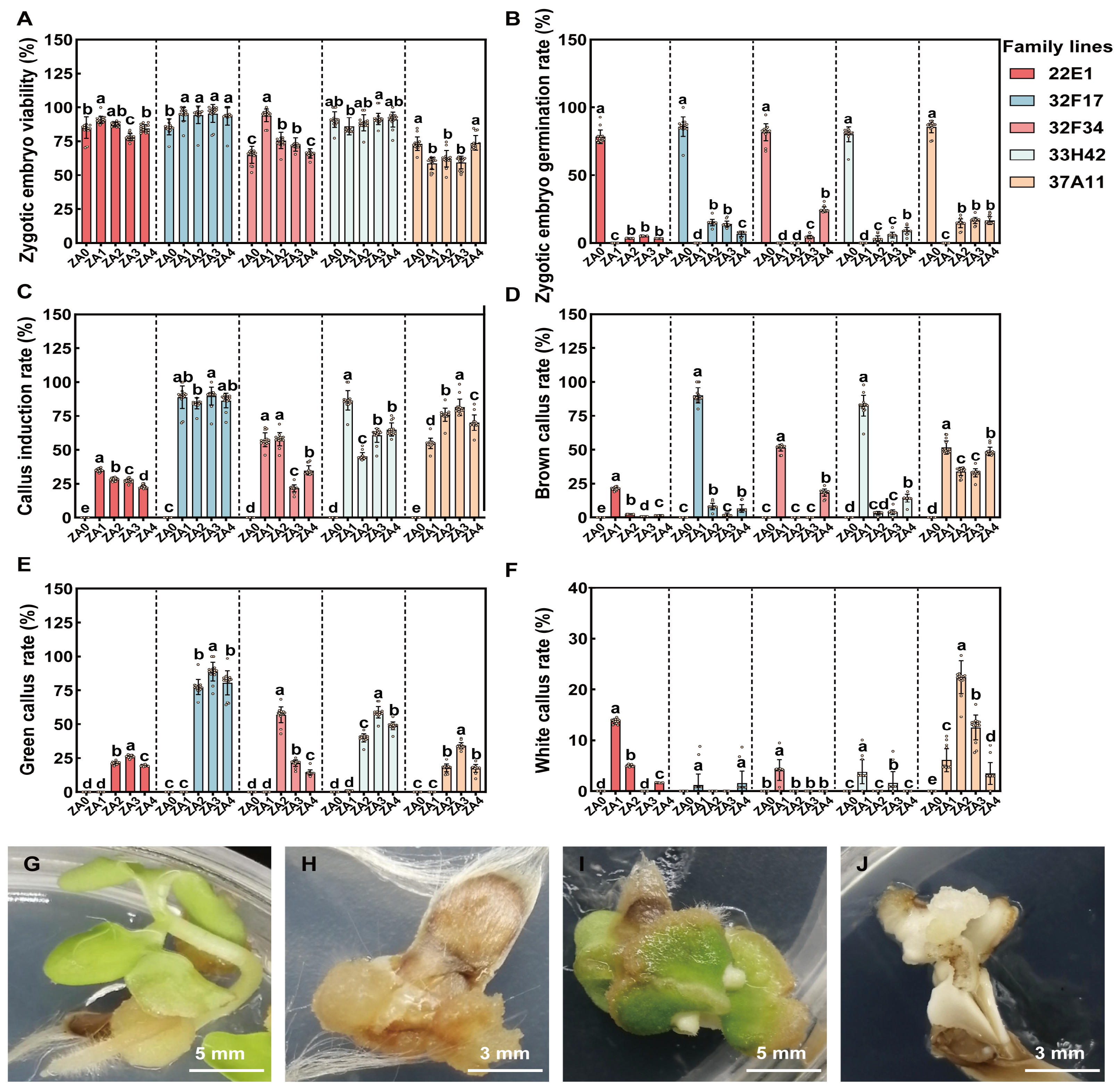
Excised ZEs were inoculated horizontally into 90 mm sterile Petri dishes containing the standardized DKW callus induction media supplemented with various PGR combinations (ZA1–ZA4,
Table 4). To promote cellular dedifferentiation, these initial cultures were maintained in total darkness for 30 d. At the end of the induction period, the callus induction frequency was quantified as the percentage of explants exhibiting visible callus formation, and the appearance (e.g., color, vigor, and texture) of the calli was documented.
4.4. Callus Subculture and Shoot Proliferation
Following the 30-day initial induction, to evaluate the carry-over effects of primary PGR treatments on subsequent morphogenesis, all primary calli (from ZA1–ZA4) were partitioned and transferred onto two subculture media with distinct physiological orientations (
Table 5):
4.4.1. Divergent Subculture Pathways
Following the initial 30 d of culture on the induction media (ZA1–ZA4), the responding explants were subcultured onto ZA3 and ZA5 media for adventitious shoot proliferation. The proliferation performance was evaluated and recorded after 15 d of subculture.
Shoot Induction Group (ZA3): The first set of calli was transferred to ZA3 medium, which features a high cytokinin-to-auxin ratio designed to trigger the organogenic pathway for adventitious shoot formation.
Embryogenic Maintenance Group (ZA5): Simultaneously, the second set was transferred to ZA5 medium containing the potent synthetic auxin 2,4-D. This treatment was specifically intended to suppress premature differentiation, sustain embryogenic competence, and generate high-quality donor material for the somatic embryogenesis experiments described in
Section 4.5.
4.4.2. Optimization of Shoot Proliferation
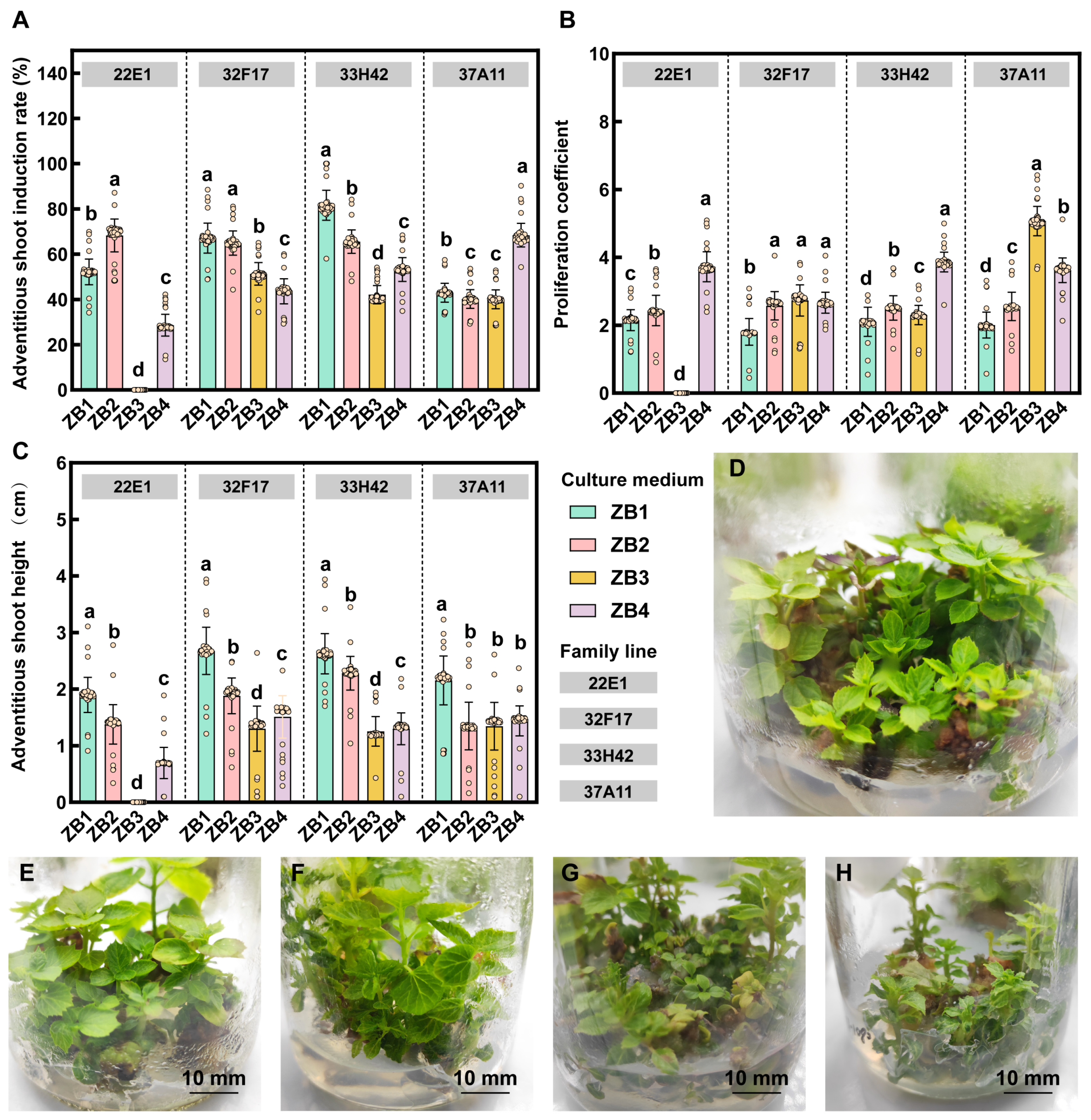
For shoots successfully regenerated via the ZA3 pathway, nodal segments (approximately 1.5–2.0 cm in length) were excised and inoculated onto shoot proliferation media (ZB1–ZB4,
Table 6). This experimental phase aimed to systematically evaluate the synergistic effects of various cytokinin concentrations (TDZ and ZT) on the multiplication coefficient (mean number of new shoots per explant) and internode elongation (shoot height) across the four responding half-sib families (22E1, 32F17, 33H42, and 37A11).
4.5. TSA-Mediated Somatic Embryogenesis
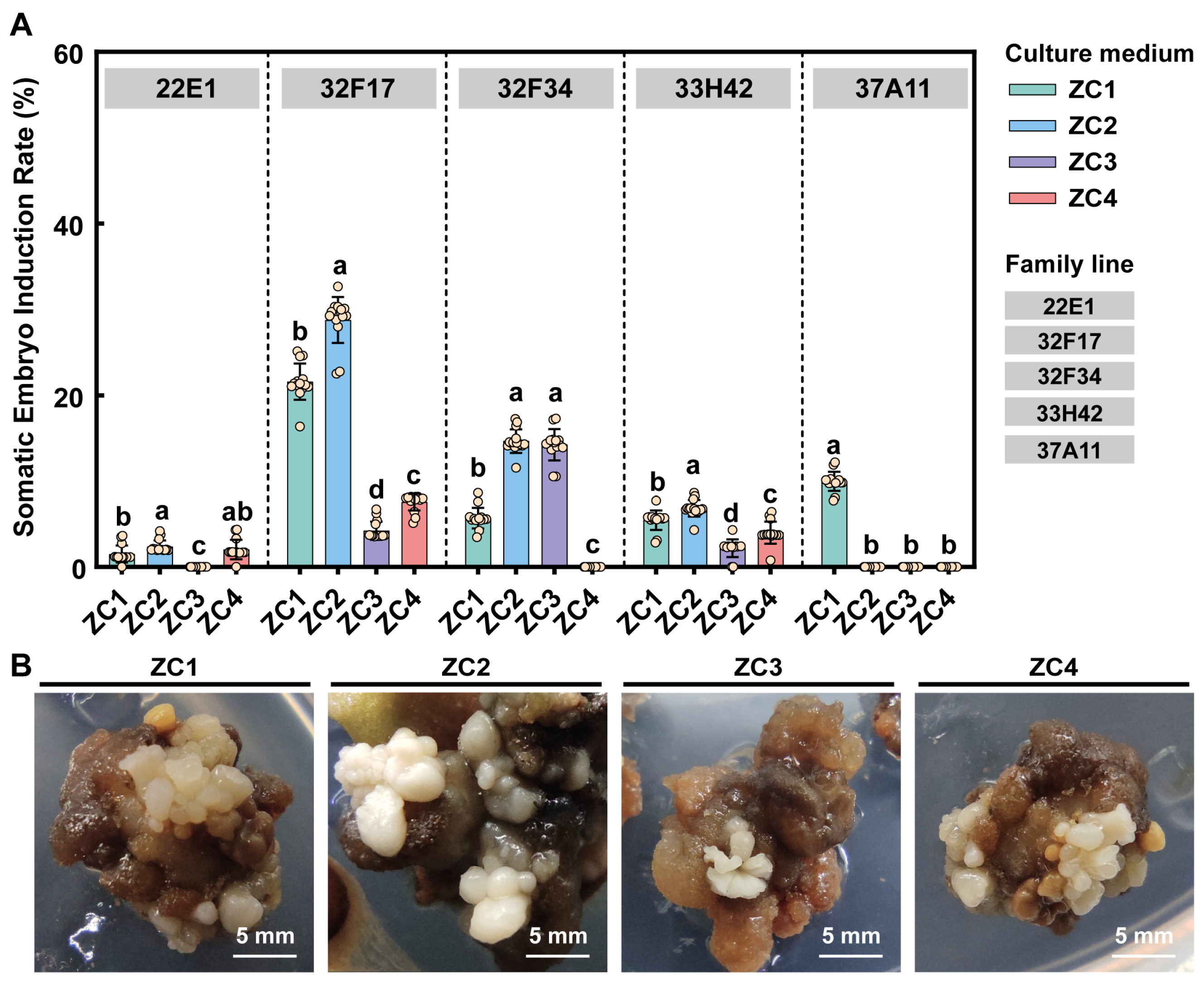
To explore the epigenetic modulation of somatic embryogenesis (SE), vigorous embryogenic calli derived from the ZA5 lineage were subcultured onto induction media (ZC1–ZC4,
Table 7) supplemented with or without 10 μM TSA and specific PGRs. Cultures were initially incubated in darkness to induce proembryogenic masses and were subsequently transferred to the standard photoperiod upon the appearance of globular embryos. After 30 d, the SE induction efficiency was determined as the percentage of callus clumps producing distinct somatic embryos.
4.6. Adventitious Root Induction
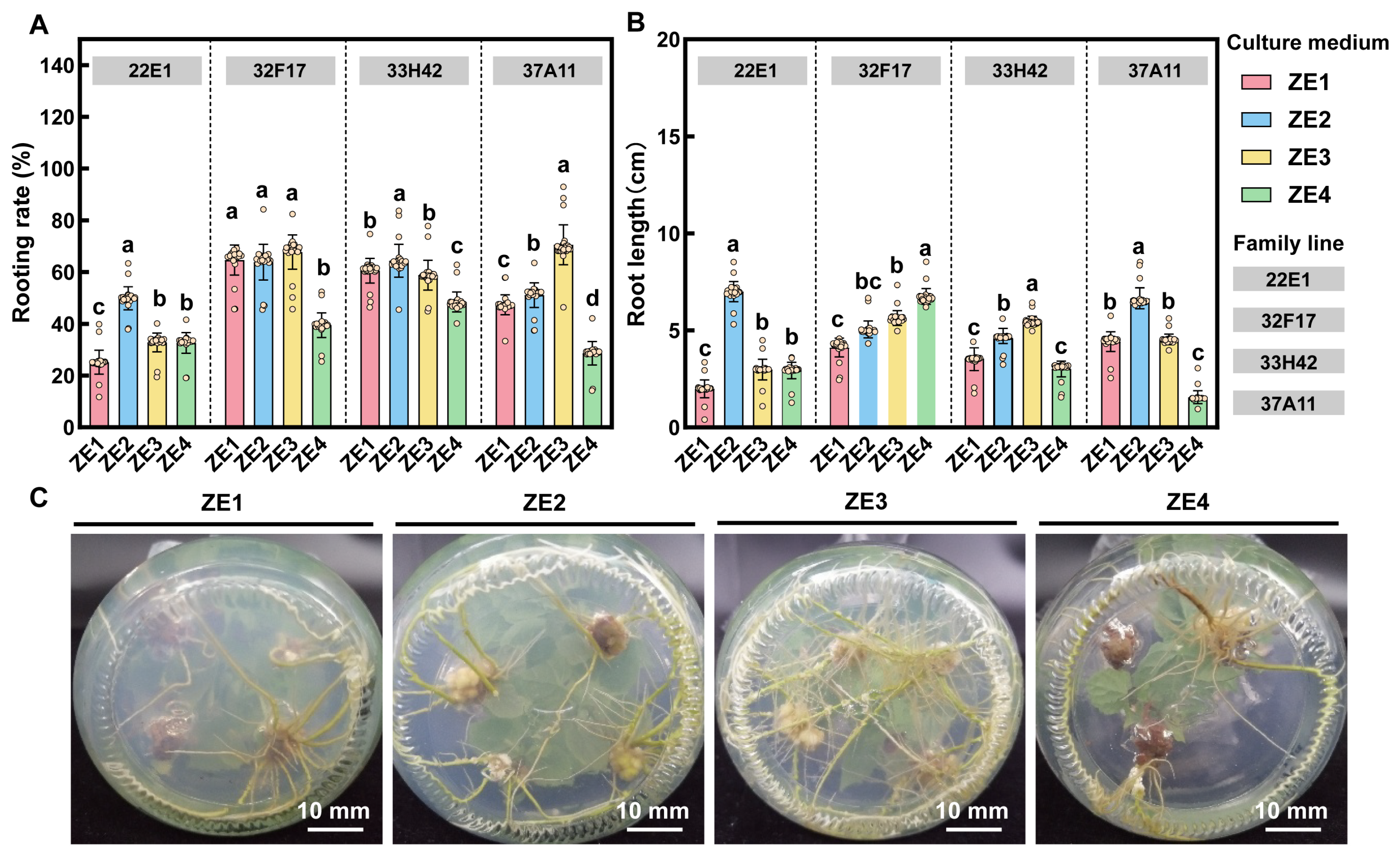
Robust individual shoots (approximately 3.0 cm in height) generated from the proliferation phase were transferred to rooting media (ZE1–ZE4,
Table 8) to identify optimal conditions for rhizogenesis. The experimental design evaluated the efficacy of the standardized DKW versus half-strength MS (1/2 MS) basal media, as well as the synergistic effects of combined auxins (NAA and IBA) [
50]. After 30 d, the rooting percentage and mean root length were recorded.
4.7. Ex Vitro Acclimatization and Transplantation
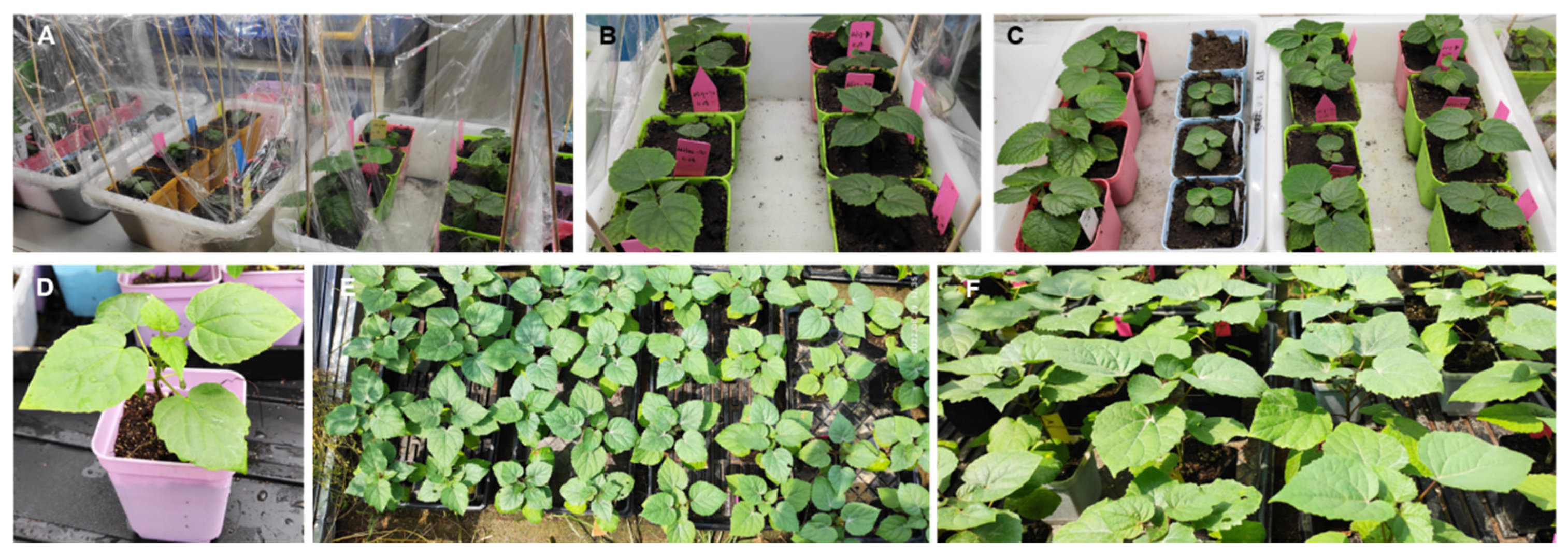
Regenerated plantlets possessing a robust root system measuring 2.0–3.0 cm were selected for ex vitro acclimatization in a greenhouse facility. The hardening process commenced by loosening the culture vessel caps for 3–5 d under natural illumination to facilitate gradual adaptation to ambient conditions. Subsequently, the plantlets were carefully extracted, and the root zone was gently rinsed with tepid water to eliminate residual agar before being transplanted into plastic plug trays filled with a sterilized substrate matrix of peat, perlite, and vermiculite (3:1:1). During the initial post-transplant phase, a microenvironment with high relative humidity (RH > 85%) and controlled temperature (26 ± 1 °C) was maintained using transparent plastic covers. Ventilation and light intensity were progressively increased over 2 weeks prior to the complete removal of the protective covers. Thirty days post-transplantation, the survival rate and vegetative growth recovery were evaluated. To ensure the reproducibility of the results, the ex vitro acclimatization and transplantation experiments were conducted in four independent batches at different times. The survival rate for each family was calculated based on the outcomes of these four separate experimental trials (n = 4).
4.8. Statistical Analysis
All experiments were conducted following a completely randomized design (CRD) with 15 biological replicates per treatment (n = 15). Prior to statistical evaluation, all percentage data (e.g., induction frequencies and rooting rates) were subjected to an arcsine square root transformation to ensure data normality and homogeneity of variance. Data were analyzed using factorial analysis of variance (ANOVA) to assess the main effects and interactions of genotypes and treatments. Significant differences were separated using Duncan’s multiple range test (DMRT). All statistical tests were performed at a significance level of p < 0.05 using SPSS version 25.0 software (SPSS Inc., Chicago, IL, USA). Data in all figures and tables are presented as the mean ± standard deviation (SD), and significant differences are indicated by different lowercase letters.




 ,
,