Article

Regulatory Effects of “Straw-Nitrogen Fertilizer” on Maize Yield Enhancement

1
College of Agriculture, Northeast Agricultural University, Harbin 150030, China
2
Institute of Crop Cultivation and Tillage, Heilongjiang Academy of Agricultural Sciences, Harbin 150086, China
*
Authors to whom correspondence should be addressed.
Plants 2026, 15(6), 962; https://doi.org/10.3390/plants15060962

Submission received: 23 February 2026 / Revised: 11 March 2026 / Accepted: 19 March 2026 / Published: 20 March 2026
(This article belongs to the Section Crop Physiology and Crop Production)

Abstract

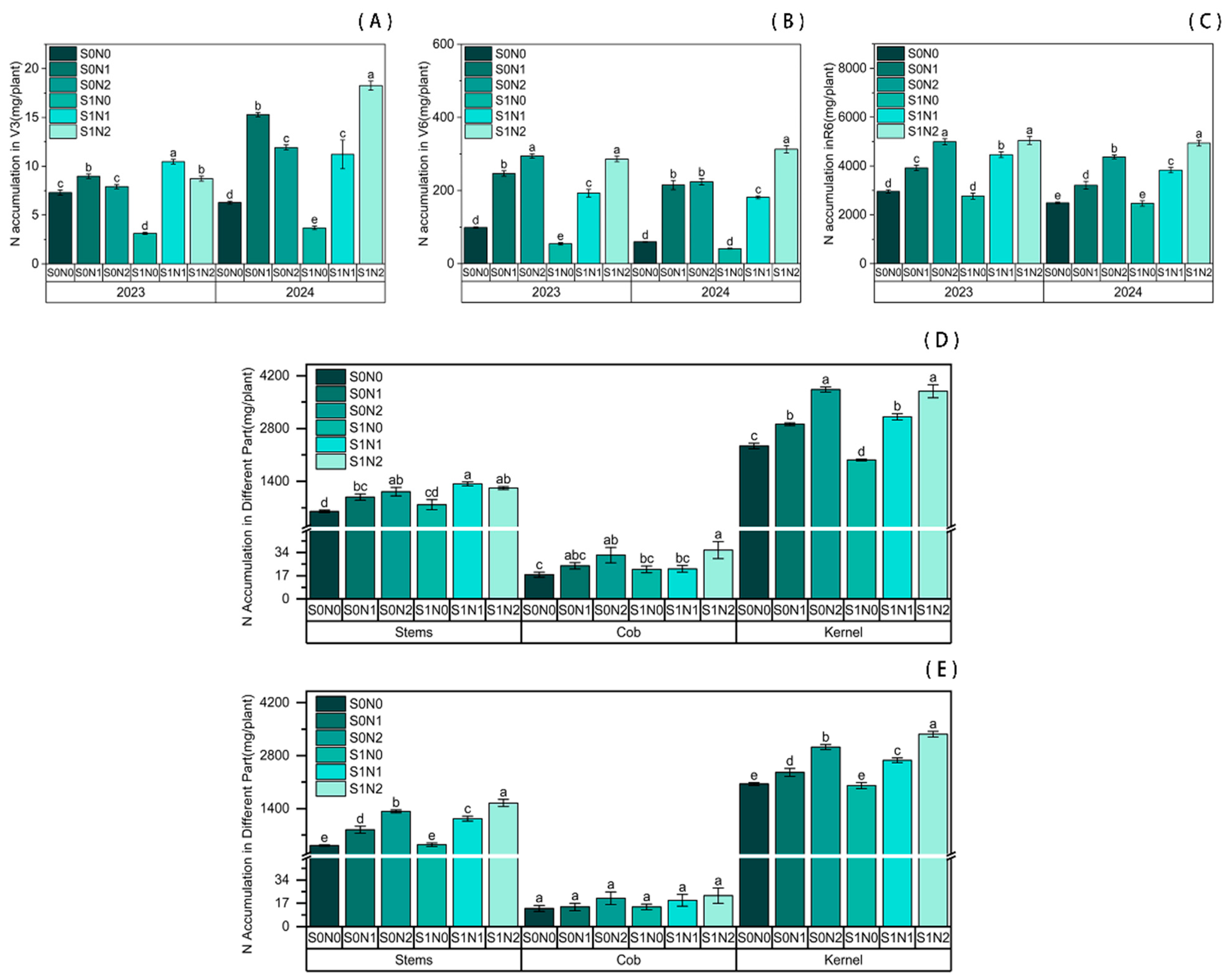
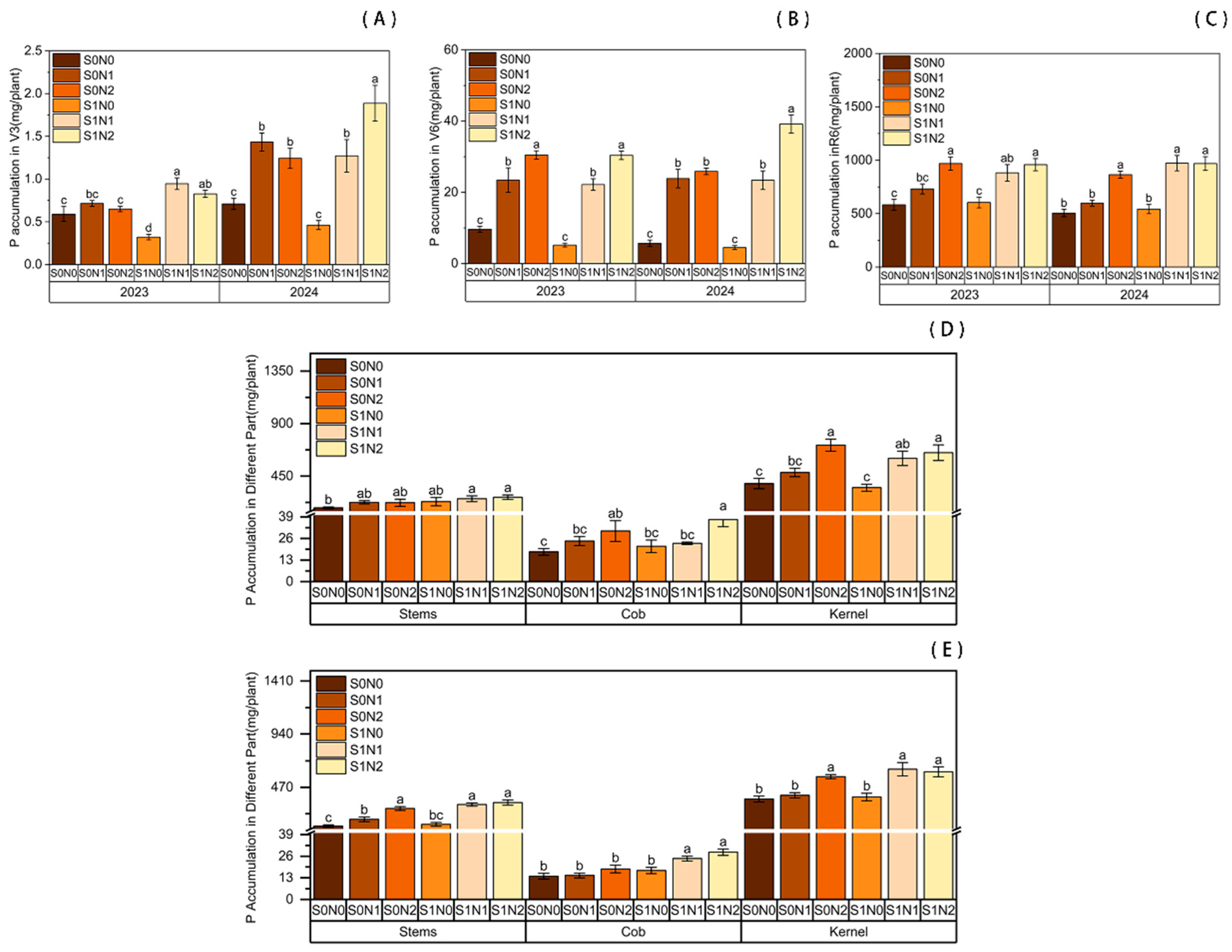
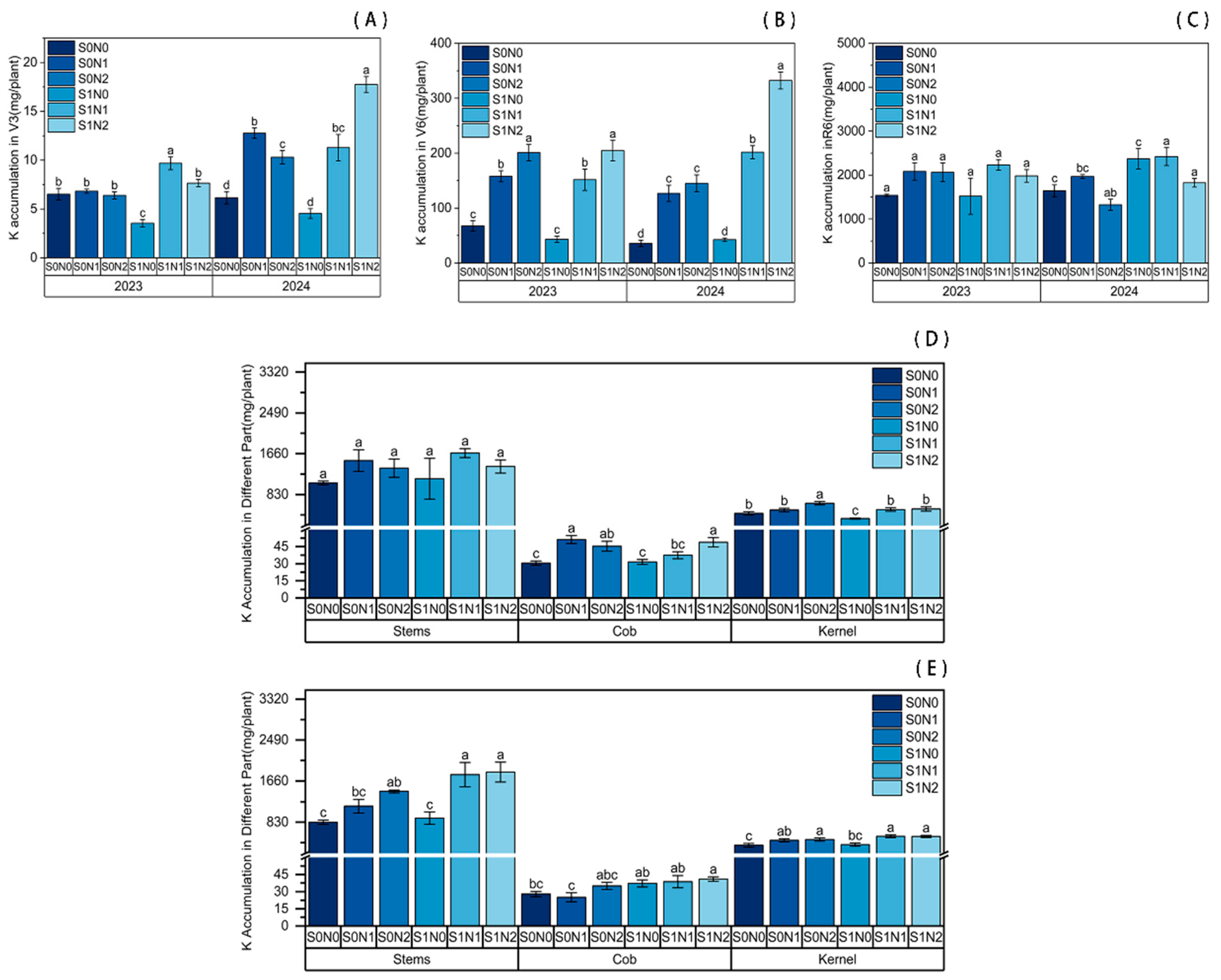
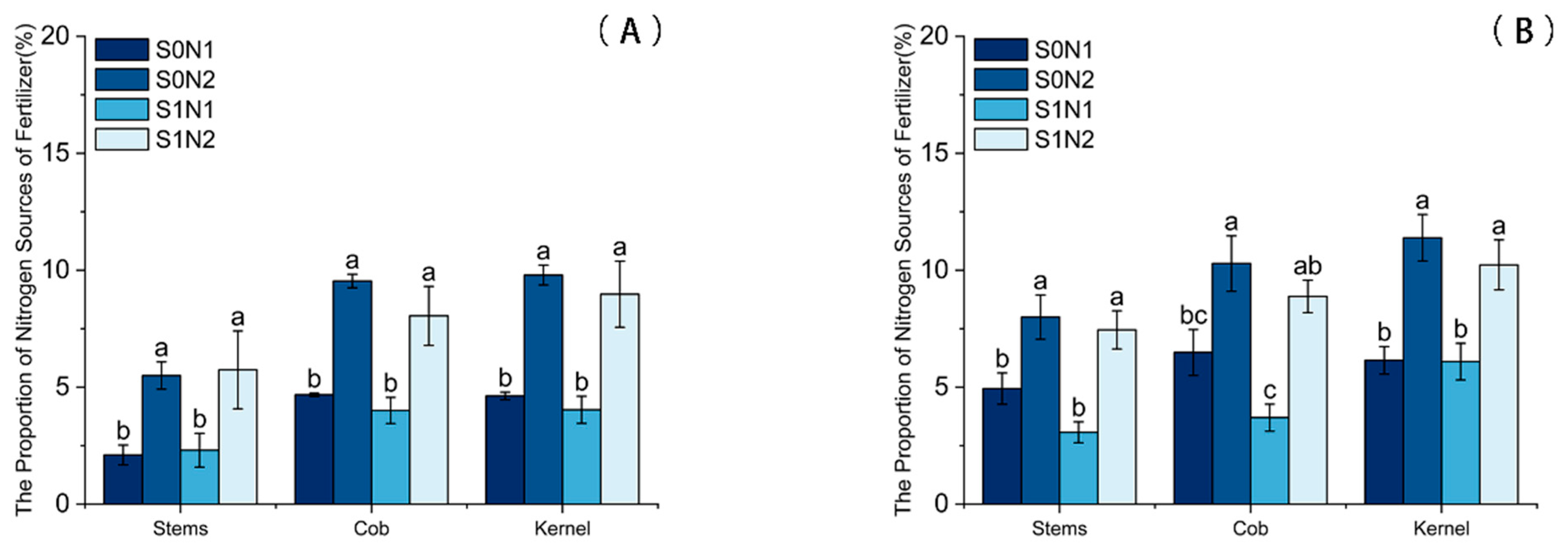
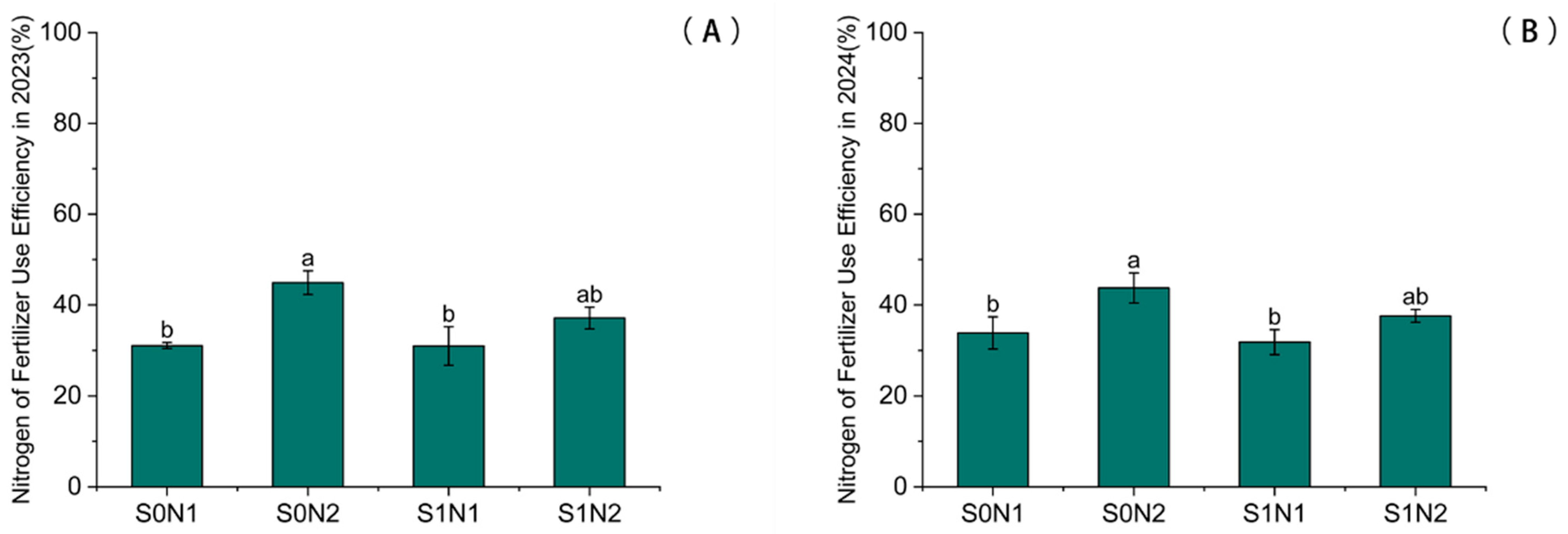
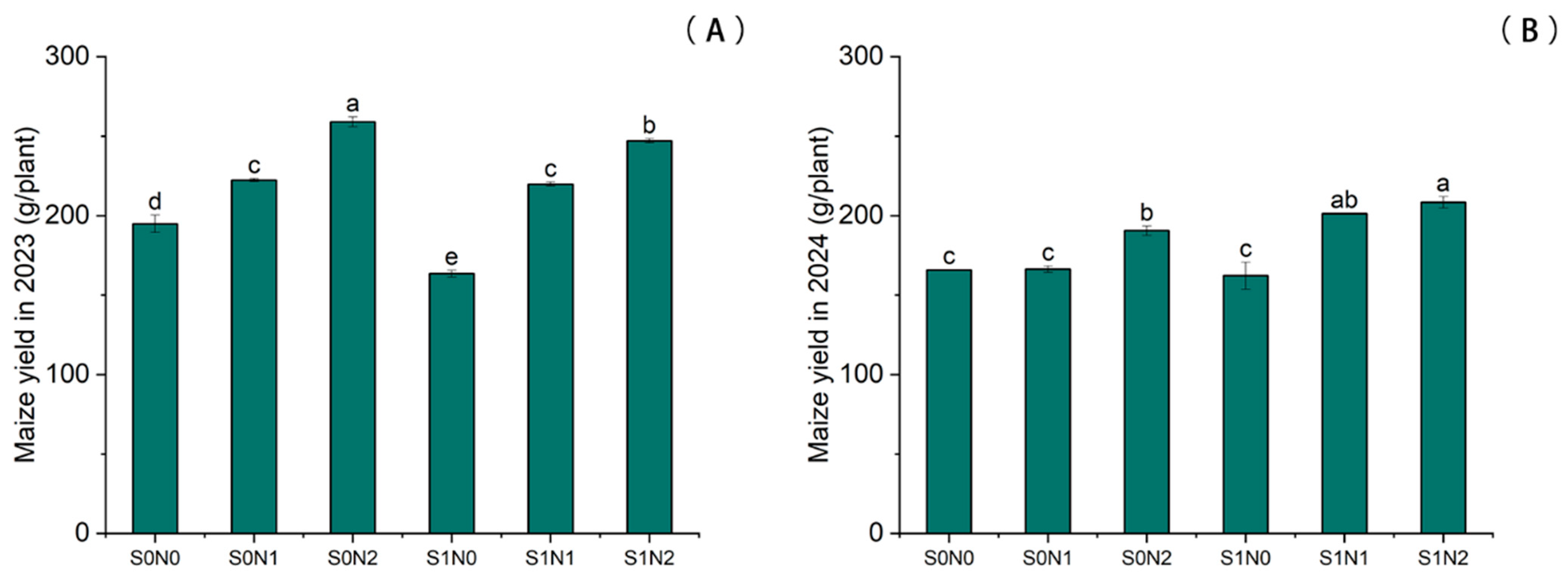
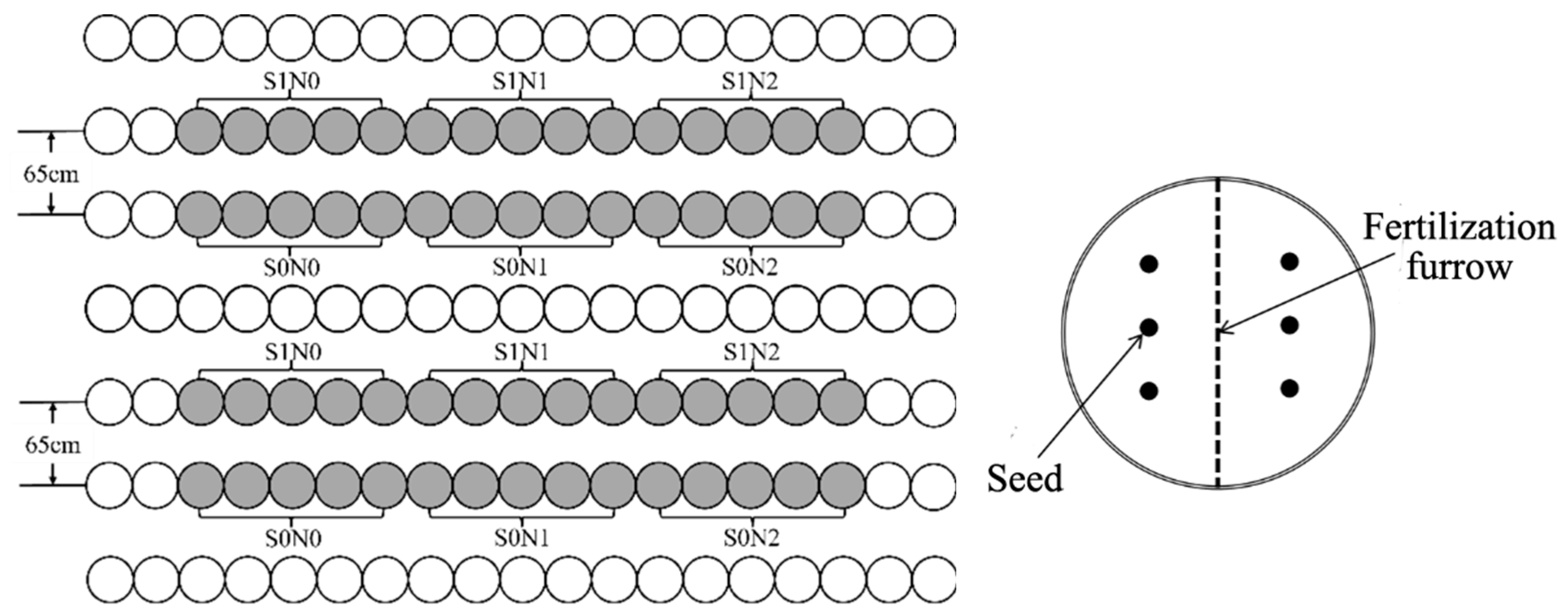
To elucidate the regulatory mechanisms underlying the interaction between straw return and nitrogen (N) fertilization on yield formation, nutrient uptake, and soil N cycling in a continuous maize cropping system, a two-year positioning experiment was conducted. The study established two straw treatments (S0: 0 g/box; S1: 84 g/box) combined with three N levels (N0: 0 g/box; N1: 1.24 g/box; N2: 2.47 g/box). (The box refers to the cylinder used for planting maize.) The responses of maize yield, plant nutrient accumulation and partitioning, fertilizer-derived N ratio, nitrogen fertilizer use efficiency (NUE), and soil microenvironment were analyzed. Results indicated that under N1 conditions, straw return had a negligible effect on crop growth and yield formation. Conversely, under N2 conditions, straw return significantly enhanced maize yield and promoted the accumulation of N, phosphorus (P), and potassium (K) in plant tissues. 15N isotope tracing revealed a novel mechanism: rather than significantly altering direct fertilizer nitrogen use efficiency, straw return improved crop yield primarily by elevating indigenous soil N content and boosting the activities of N-transforming enzymes, thereby beneficially altering the ultimate environmental fate of the fertilizer N. Furthermore, straw return significantly boosted the activities of enzymes involved in N transformation and optimized the soil microenvironment. Collectively, straw return coupled with increased N application (specifically the S1N2 treatment) significantly maximizes maize yield, providing a theoretical basis for rational straw utilization and N management.
Keywords: straw return; nitrogen fertilization; continuous maize cropping; nutrient uptake and utilization; soil nitrogen cycling straw return; nitrogen fertilization; continuous maize cropping; nutrient uptake and utilization; soil nitrogen cycling