Impact of Silicon-Based Biostimulant on Improving Growth and Morpho-Physiological Traits of Sweet Basil (Ocimum basilicum L.) in a Glasshouse Production System

Abstract
1. Introduction
2. Methods
2.1. Experiment Site and Plant Material
2.2. Fertilizers and Si Supplementation
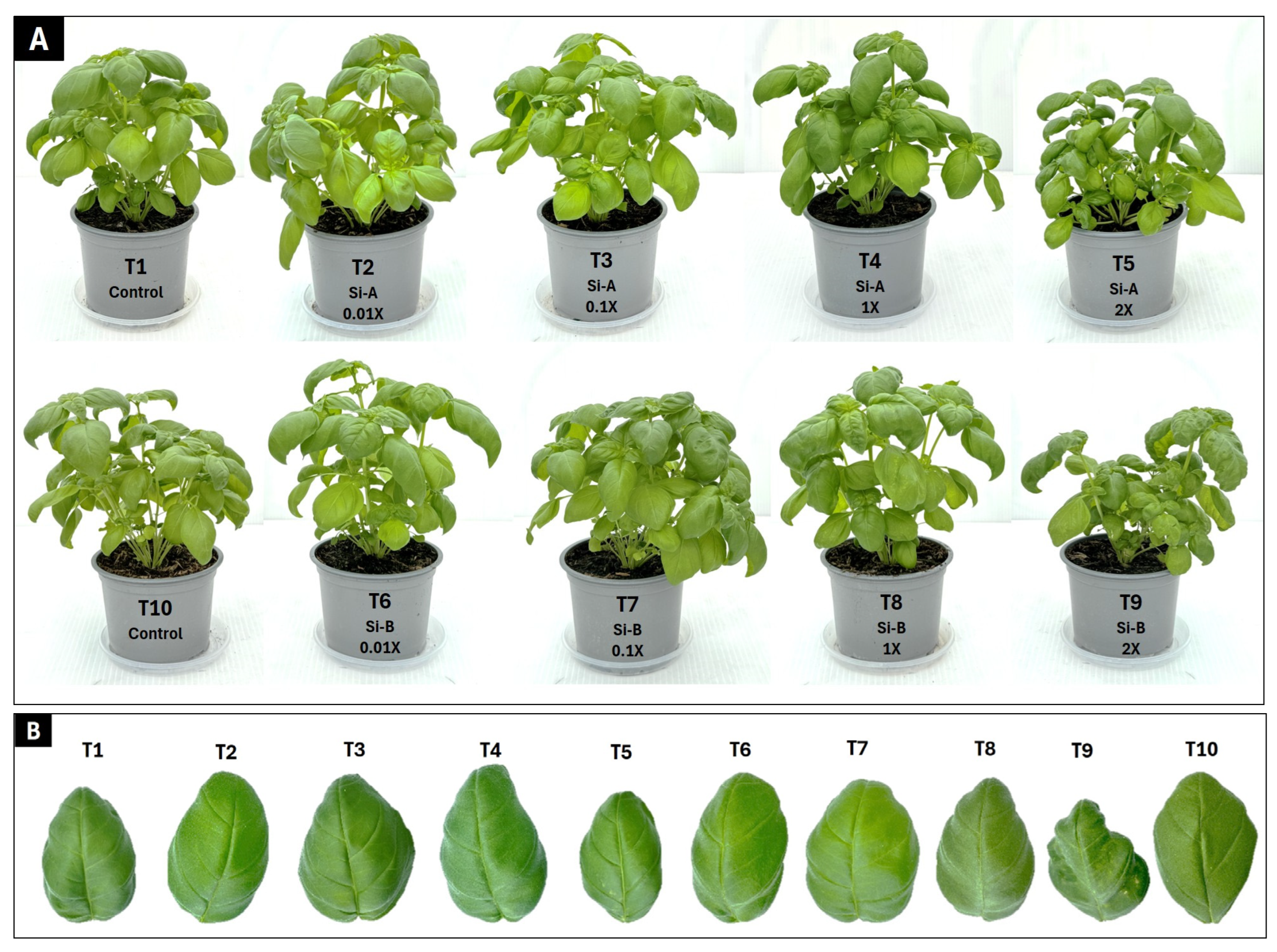
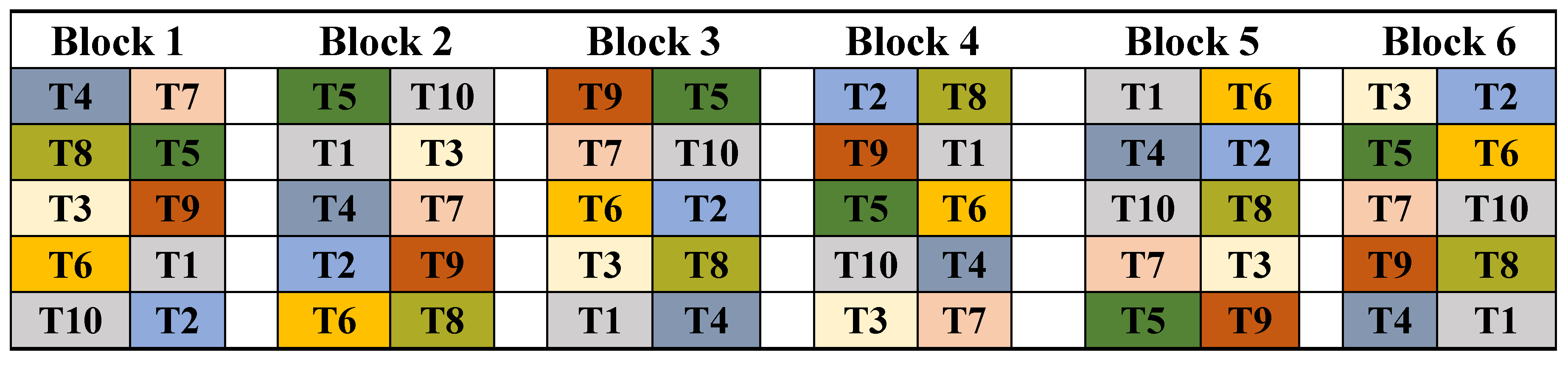
2.3. Experiment Design and Layout
2.4. Studied Attributes
2.4.1. Agronomic Parameters
- Shoot and root length (cm)
- Number of basil leaves
- Shoot fresh and dry weight (g)
2.4.2. Physiological Parameters
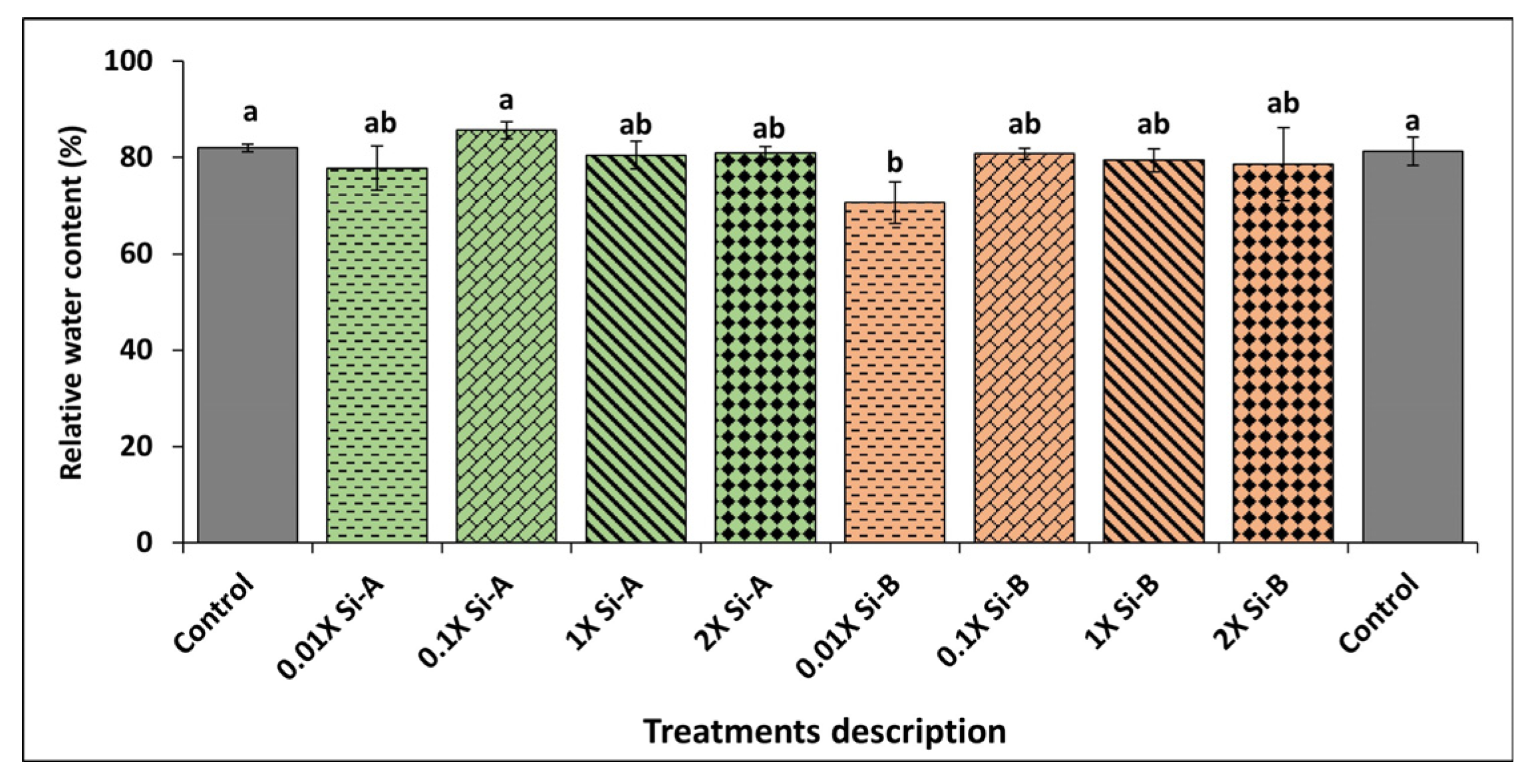
- Relative water content
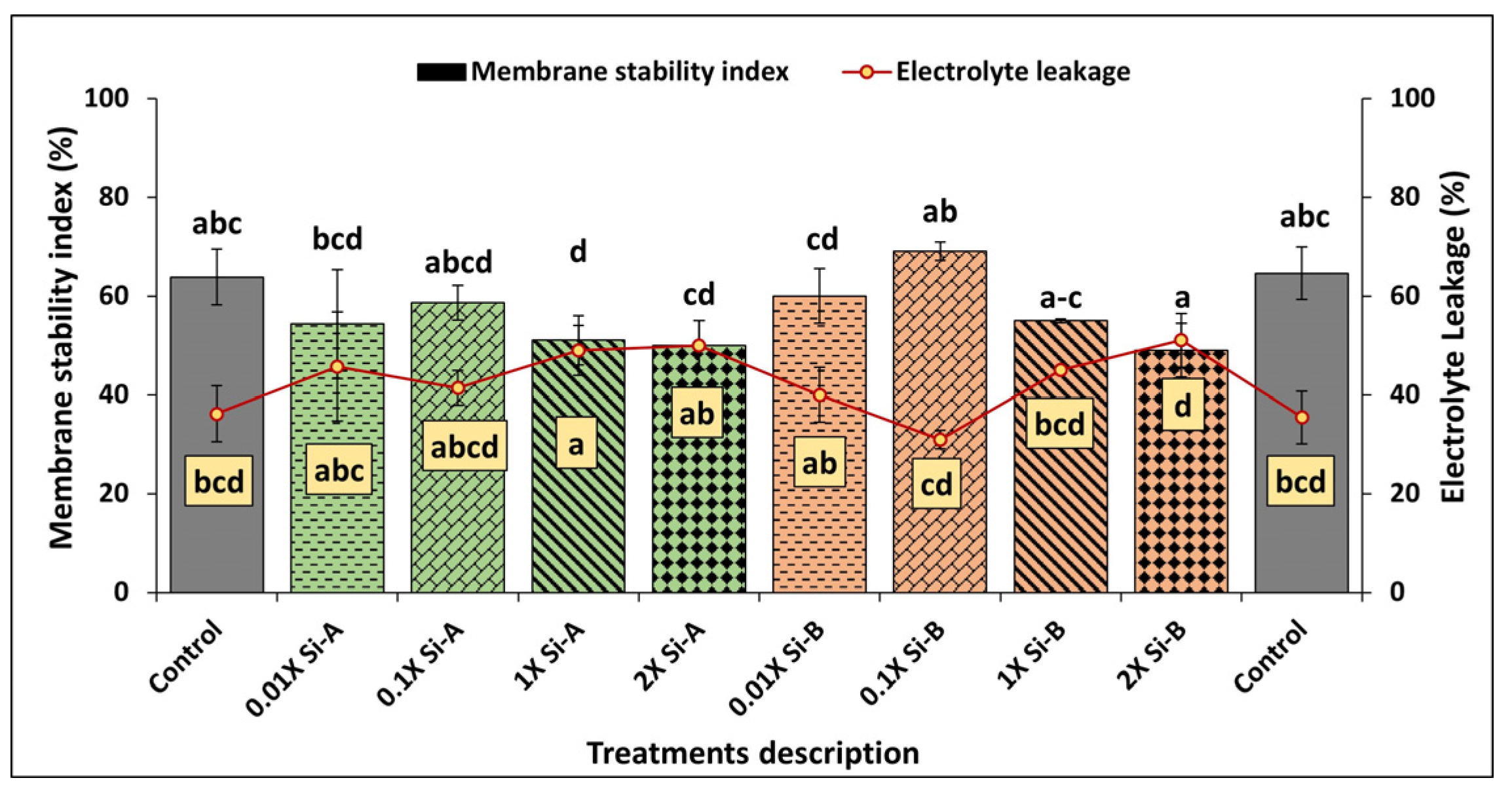
- Membrane stability index and Electrolyte leakage
2.4.3. Photosynthetic Parameters
- (a)
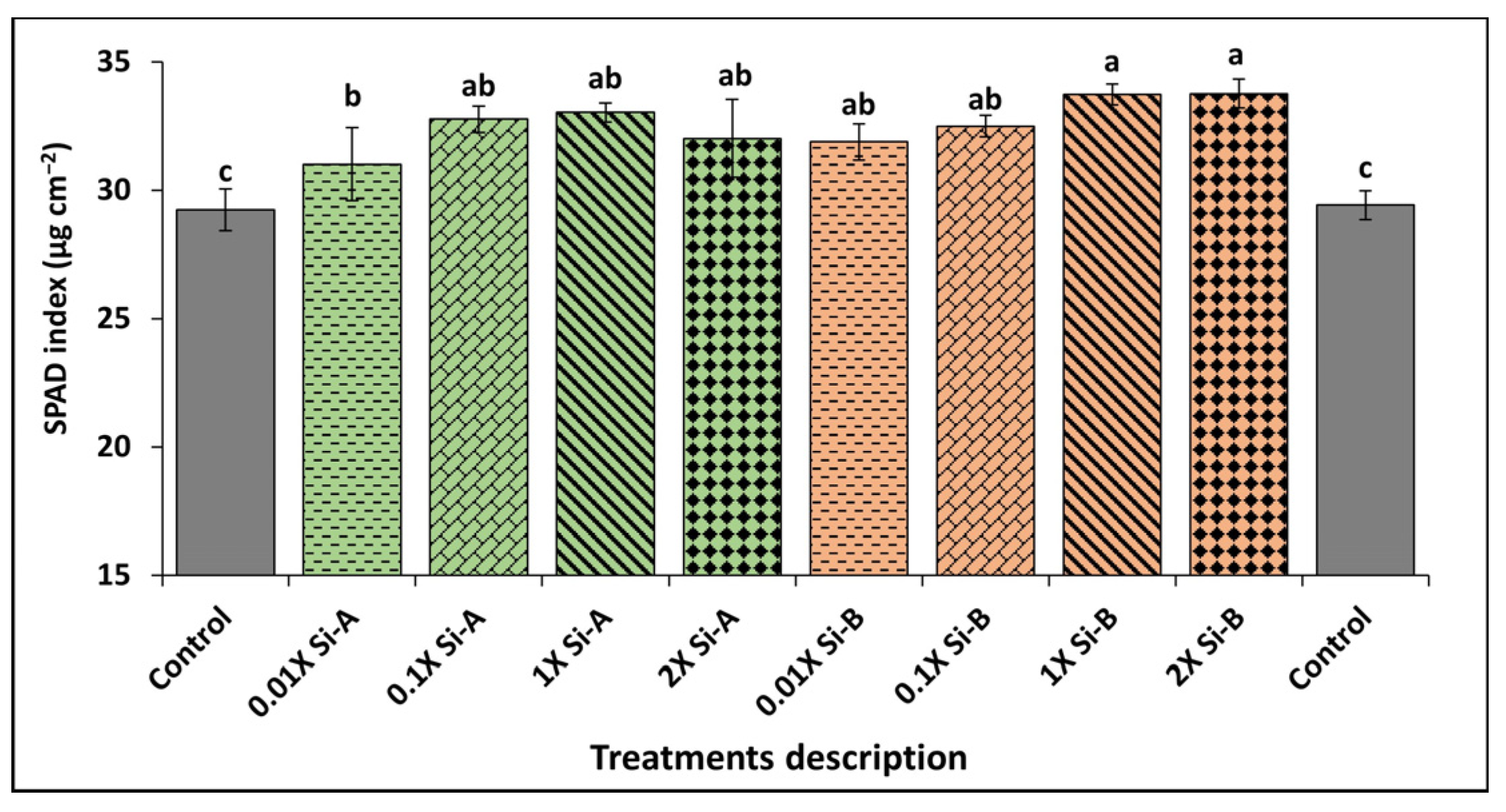
- SPAD index
- (b)
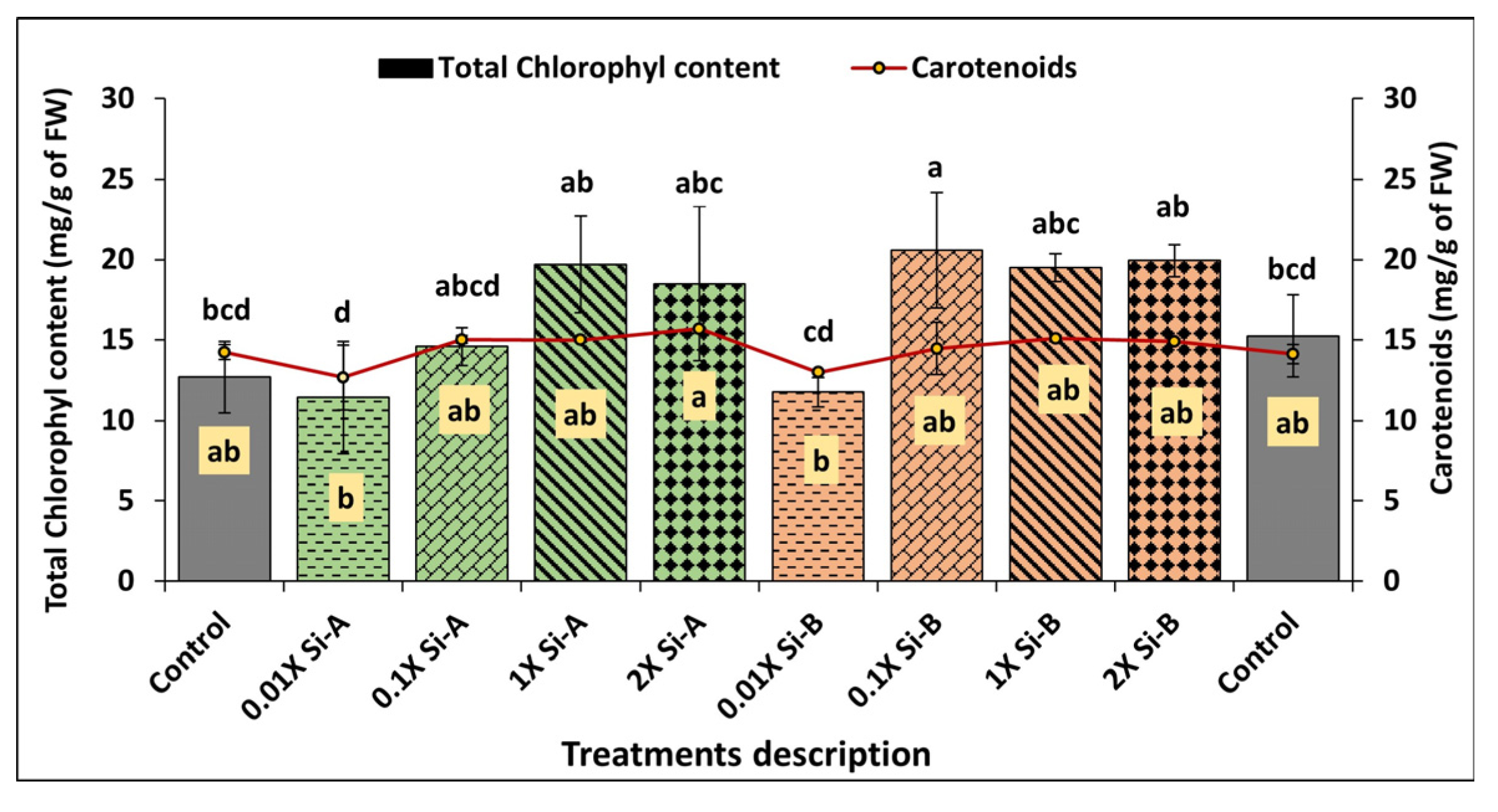
- Total chlorophyll content and carotenoids
2.5. Statistical Analysis
3. Results
3.1. Agronomic Parameters
3.1.1. Shoot and Root Length
3.1.2. Shoot Fresh and Dry Weight
3.1.3. Number of Leaves
3.2. Physiological Parameters
3.2.1. Relative Water Content (RWC)

3.2.2. Membrane Stability Index (MSI) and Electrolyte Leakage (EL)

3.3. Photosynthetic Parameters
3.3.1. SPAD Index

3.3.2. Total Chlorophyll Content and Carotenoids
4. Discussion
5. Conclusions
- (1)
- Under glasshouse production of sweet basil, the Si-based biostimulant silicic acid tetraethyl ester (0.01X and 0.1X dosages) can be used to promote growth.
- (2)
- The commercial recommended dose (1X) was not optimal for multiple indicators in this study, highlighting the potential risks of high doses/wasteful application.
- (3)
- The efficacy of Si-based biostimulants is highly dependent on the products’ chemical form and application dose. Targeted dose optimization trials are essential prior to application.
Supplementary Materials
Author Contributions
Funding
Data Availability Statement
Acknowledgments
Conflicts of Interest
References
- Rihan, H.Z.; Aldarkazali, M.; Mohamed, S.J.; McMulkin, N.B.; Jbara, M.H.; Fuller, M.P. A novel new light recipe significantly increases the growth and yield of sweet basil (Ocimum basilicum) grown in a plant factory system. Agronomy 2020, 10, 934. [Google Scholar] [CrossRef]
- Farouk, S.; Elhindi, K.M.; Alotaibi, M.A. Silicon supplementation mitigates salinity stress on Ocimum basilicum L. via improving water balance, ion homeostasis, and antioxidant defense system. Ecotoxicol. Environ. Saf. 2020, 206, 111396. [Google Scholar] [CrossRef]
- Bahcesular, B.; Yildirim, E.D.; Karaçocuk, M.; Kulak, M.; Karaman, S. Seed priming with melatonin effects on growth, essential oil compounds and antioxidant activity of basil (Ocimum basilicum L.) under salinity stress. Ind. Crops Prod. 2020, 146, 112165. [Google Scholar] [CrossRef]
- Farouk, S.; Omar, M.M. Sweet basil growth, physiological and ultrastructural modification, and oxidative defense system under water deficit and silicon forms treatment. J. Plant Growth Regul. 2020, 39, 1307–1331. [Google Scholar] [CrossRef]
- Caliskan, O.; Kurt, D.; Temizel, K.E.; Odabas, M.S. Effect of salt stress and irrigation water on growth and development of sweet basil (Ocimum basilicum L.). Open Agric. 2017, 2, 589–594. [Google Scholar] [CrossRef][Green Version]
- Barickman, T.C.; Olorunwa, O.J.; Sehgal, A.; Walne, C.H.; Reddy, K.R.; Gao, W. Interactive impacts of temperature and elevated CO2 on basil (Ocimum basilicum L.) root and shoot morphology and growth. Horticulturae 2021, 7, 112. [Google Scholar] [CrossRef]
- Rusu, T.; Cowden, R.J.; Moraru, P.I.; Maxim, M.A.; Ghaley, B.B. Overview of multiple applications of basil species and cultivars and the effects of production environmental parameters on yields and secondary metabolites in hydroponic systems. Sustainability 2021, 13, 11332. [Google Scholar] [CrossRef]
- Al-Huqail, A.; El-Dakak, R.M.; Sanad, M.N.; Badr, R.H.; Ibrahim, M.M.; Soliman, D.; Khan, F. Effects of climate temperature and water stress on plant growth and accumulation of antioxidant compounds in sweet basil (Ocimum basilicum L.) leafy vegetable. Scientifica 2020, 2020, 3808909. [Google Scholar] [CrossRef]
- Zulfiqar, F.; Chen, J.; Finnegan, P.M.; Younis, A.; Nafees, M.; Zorrig, W.; Hamed, K.B. Application of trehalose and salicylic acid mitigates drought stress in sweet basil and improves plant growth. Plants 2021, 10, 1078. [Google Scholar] [CrossRef]
- Araújo, W.B.; Teixeira, G.C.; de Mello Prado, R.; Rocha, A.M. Silicon mitigates nutritional stress of nitrogen, phosphorus, and calcium deficiency in two forages plants. Sci. Rep. 2022, 12, 6611. [Google Scholar] [CrossRef] [PubMed]
- Ismail, L.M.; Soliman, M.I.; Abd El-Aziz, M.H.; Abdel-Aziz, H.M. Impact of silica ions and nano silica on growth and productivity of pea plants under salinity stress. Plants 2022, 11, 494. [Google Scholar] [CrossRef]
- Chaiwong, N.; Pusadee, T.; Jamjod, S.; Prom-U-Thai, C. Silicon application promotes productivity, silicon accumulation and upregulates silicon transporter gene expression in rice. Plants 2022, 11, 989. [Google Scholar] [CrossRef]
- Asif, A.; Ali, M.; Qadir, M.; Karthikeyan, R.; Singh, Z.; Khangura, R.; Di Gioia, F.; Ahmed, Z.F. Enhancing crop resilience by harnessing the synergistic effects of biostimulants against abiotic stress. Front. Plant Sci. 2023, 14, 1276117. [Google Scholar] [CrossRef]
- Verma, K.K.; Song, X.P.; Liang, Q.; Huang, H.R.; Bhatt, R.; Xu, L.; Chen, G.L.; Li, Y.R. Unlocking the role of silicon against biotic stress in plants. Front. Plant Sci. 2024, 15, 1430804. [Google Scholar] [CrossRef] [PubMed]
- Manivannan, A.; Soundararajan, P.; Jeong, B.R. Silicon: A “Quasi-Essential” element’s role in plant physiology and development. Front. Plant Sci. 2023, 14, 1157185. [Google Scholar] [CrossRef] [PubMed]
- Basu, S.; Kumar, G. Exploring the significant contribution of silicon in regulation of cellular redox homeostasis for conferring stress tolerance in plants. Plant Physiol. Biochem. 2021, 166, 393–404. [Google Scholar] [CrossRef]
- Alayafi, A.H.; Al-Solaimani, S.G.; Abd El-Wahed, M.H.; Alghabari, F.M.; Sabagh, A.E. Silicon supplementation enhances productivity, water use efficiency and salinity tolerance in maize. Front. Plant Sci. 2022, 13, 953451. [Google Scholar] [CrossRef] [PubMed]
- Irfan, M.; Maqsood, M.A.; Rehman, H.U.; Mahboob, W.; Sarwar, N.; Hafeez, O.B.; Hussain, S.; Ercisli, S.; Akhtar, M.; Aziz, T. Silicon nutrition in plants under water-deficit conditions: Overview and prospects. Water 2023, 15, 739. [Google Scholar] [CrossRef]
- Mir, R.A.; Bhat, B.A.; Yousuf, H.; Islam, S.T.; Raza, A.; Rizvi, M.A.; Charagh, S.; Albaqami, M.; Sofi, P.A.; Zargar, S.M. Multidimensional role of silicon to activate resilient plant growth and to mitigate abiotic stress. Front. Plant Sci. 2022, 13, 819658. [Google Scholar] [CrossRef]
- Alhousari, F.; Greger, M. Silicon and mechanisms of plant resistance to insect pests. Plants 2018, 7, 33. [Google Scholar] [CrossRef]
- Abdelaal, K.A.; Mazrou, Y.S.; Hafez, Y.M. Silicon foliar application mitigates salt stress in sweet pepper plants by enhancing water status, photosynthesis, antioxidant enzyme activity and fruit yield. Plants 2020, 9, 733. [Google Scholar] [CrossRef] [PubMed]
- Šimková, L.; Fialová, I.; Vaculíková, M.; Luxová, M. The effect of silicon on the activity and isozymes pattern of antioxidative enzymes of young maize roots under zinc stress. Silicon 2018, 10, 2907–2910. [Google Scholar] [CrossRef]
- Al Murad, M.; Khan, A.L.; Muneer, S. Silicon in horticultural crops: Cross-talk, signaling, and tolerance mechanism under salinity stress. Plants 2020, 9, 460. [Google Scholar] [CrossRef] [PubMed]
- Hassan, K.M.; Ajaj, R.; Abdelhamid, A.N.; Ebrahim, M.; Hassan, I.F.; Hassan, F.A.; Alam-Eldein, S.M.; Ali, M.A. Silicon: A powerful aid for medicinal and aromatic plants against abiotic and biotic stresses for sustainable agriculture. Horticulturae 2024, 10, 806. [Google Scholar] [CrossRef]
- Bukhari, M.A.; Ahmad, Z.; Ashraf, M.Y.; Afzal, M.; Nawaz, F.; Nafees, M.; Jatoi, W.N.; Malghani, N.A.; Shah, A.N.; Manan, A. Silicon mitigates drought stress in wheat (Triticum aestivum L.) through improving photosynthetic pigments, biochemical and yield characters. Silicon 2021, 13, 4757–4772. [Google Scholar] [CrossRef]
- Ning, D.; Zhang, Y.; Li, X.; Qin, A.; Huang, C.; Fu, Y.; Gao, Y.; Duan, A. The effects of foliar supplementation of silicon on physiological and biochemical responses of winter wheat to drought stress during different growth stages. Plants 2023, 12, 2386. [Google Scholar] [CrossRef]
- Zargar, S.M.; Mahajan, R.; Bhat, J.A.; Nazir, M.; Deshmukh, R. Role of silicon in plant stress tolerance: Opportunities to achieve a sustainable cropping system. 3 Biotech 2019, 9, 73. [Google Scholar] [CrossRef]
- Lavinsky, A.O.; Detmann, K.C.; Reis, J.V.; Ávila, R.T.; Sanglard, M.L.; Pereira, L.F.; Sanglard, L.M.; Rodrigues, F.A.; Araújo, W.L.; DaMatta, F.M. Silicon improves rice grain yield and photosynthesis specifically when supplied during the reproductive growth stage. J. Plant Physiol. 2016, 206, 125–132. [Google Scholar] [CrossRef]
- Giordano, F.S.; Reynolds, A.; Frias, J.M.; Foley, L. Impact of silicon-enriched plant biostimulant treatment on shelf-life of baby spinach (Spinacia oleracea) crops. J. Agric. Food Res. 2024, 15, 100924. [Google Scholar] [CrossRef]
- Asadi, B.; Cheniany, M.; Lahouti, M. Comparative study the effect of the external treatments of silicon and ascorbic acid on antioxidant capacity of Basil (Ocimum basilicum L.) under salt stress. J. Plant Process Funct. 2019, 7, 135–150. [Google Scholar]
- Robatjazi, R.; Roshandel, P.; Hooshmand, S.D. Benefits of silicon nutrition on growth, physiological and phytochemical attributes of basil upon salinity stress. Int. J. Hortic. Sci. Technol. 2020, 7, 37–50. [Google Scholar]
- Parađiković, N.; Teklić, T.; Zeljković, S.; Lisjak, M.; Špoljarević, M. Biostimulants research in some horticultural plant species—A review. Food Energy Secur. 2019, 8, e00162. [Google Scholar] [CrossRef]
- Yakhin, O.I.; Lubyanov, A.A.; Yakhin, I.A.; Brown, P.H. Biostimulants in plant science: A global perspective. Front. Plant Sci. 2017, 7, 2049. [Google Scholar] [CrossRef] [PubMed]
- Reyer, C.P.; Leuzinger, S.; Rammig, A.; Wolf, A.; Bartholomeus, R.P.; Bonfante, A.; De Lorenzi, F.; Dury, M.; Gloning, P.; Abou Jaoudé, R.; et al. A plant’s perspective of extremes: Terrestrial plant responses to changing climatic variability. Glob. Change Biol. 2013, 9, 75–89. [Google Scholar] [CrossRef]
- De Boeck, H.J.; De Groote, T.; Nijs, I. Leaf temperatures in glasshouses and open-top chambers. New Phytol. 2012, 194, 155–1164. [Google Scholar] [CrossRef]
- Formisano, L.; Ciriello, M.; El-Nakhel, C.; Kyriacou, M.C.; Rouphael, Y. Successive harvests modulate the productive and physiological behavior of three genovese pesto basil cultivars. Agronomy 2021, 11, 560. [Google Scholar] [CrossRef]
- Lin, H.; Black, M.J.; Walsh, L.; Giordano, F.S.; Borrion, A. Life cycle assessment of baby leaf spinach: Reduction of waste through interventions in growing treatments and packaging. J. Clean. Prod. 2024, 449, 141723. [Google Scholar] [CrossRef]
- Walsh, É.; Borrion, A.; Mulla, M.F.; Shonte, T.T.; Pathania, S.; Walsh, L. Life cycle assessment of strawberry production and packaging interventions to reduce waste. J. Clean. Prod. 2025, 534, 147074. [Google Scholar] [CrossRef]
- Torres, I.; Sanchez, M.T.; Benlloch-Gonzalez, M.; Perez-Marin, D. Irrigation decision support based on leaf relative water content determination in olive grove using near infrared spectroscopy. Biosyst. Eng. 2019, 180, 50–58. [Google Scholar] [CrossRef]
- Godara, O.; Kakraliya, B.L.; Singh, A.; Choudhary, S.; Fagodiya, R.K. Membrane stability index of Indian mustard (Brassica juncea L Czern & Coss). IJCS 2017, 5, 1067–1068. [Google Scholar]
- Awan, Z.A.; Shoaib, A.; Khan, K.A. Variations in total phenolics and antioxidant enzymes cause phenotypic variability and differential resistant response in tomato genotypes against early blight disease. Sci. Hortic. 2018, 239, 216–223. [Google Scholar] [CrossRef]
- Lichtenthaler, H.K.; Wellburn, A.R. Determinations of total carotenoids and chlorophylls a and b of leaf extracts in different solvents. Biochem. Soc. Trans. 1983, 11, 591–592. [Google Scholar] [CrossRef]
- Giehl, R.F.; Lima, J.E.; von Wirén, N. Localized iron supply triggers lateral root elongation in Arabidopsis by altering the AUX1-mediated auxin distribution. Plant Cell 2012, 24, 33–49. [Google Scholar] [CrossRef] [PubMed]
- Noh, K.; Jeong, B.R. Silicon supplementation alleviates adverse effects of ammonium on ssamchoo grown in home cultivation system. Plants 2022, 11, 2882. [Google Scholar] [CrossRef]
- Liu, S.; Zheng, J. Adaptive strategies based on shrub leaf-stem anatomy and their environmental interpretations in the eastern Qaidam Basin. BMC Plant Biol. 2024, 24, 323. [Google Scholar] [CrossRef]
- Marafon, A.C.; Lauricio, E. Silicon: Fertilization and nutrition in higher plants. Rev. Cienc. Agrar. 2013, 56, 380–388. [Google Scholar] [CrossRef]
- Laîné, P.; Haddad, C.; Arkoun, M.; Yvin, J.C.; Etienne, P. Silicon promotes agronomic performance in Brassica napus cultivated under field conditions with two nitrogen fertilizer inputs. Plants 2019, 8, 137. [Google Scholar] [CrossRef]
- Galindo, F.S.; Pagliari, P.H.; Rodrigues, W.L.; Fernandes, G.C.; Boleta, E.H.; Santini, J.M.; Jalal, A.; Buzetti, S.; Lavres, J.; Teixeira Filho, M.C. Silicon amendment enhances agronomic efficiency of nitrogen fertilization in maize and wheat crops under tropical conditions. Plants 2021, 10, 1329. [Google Scholar] [CrossRef]
- ALKahtani, M.; Hafez, Y.; Attia, K.; Al-Ateeq, T.; Ali, M.A.; Hasanuzzaman, M.; Abdelaal, K. Bacillus thuringiensis and silicon modulate antioxidant metabolism and improve the physiological traits to confer salt tolerance in lettuce. Plants 2021, 10, 1025. [Google Scholar] [CrossRef] [PubMed]
- Luyckx, M.; Hausman, J.F.; Lutts, S.; Guerriero, G. Silicon and plants: Current knowledge and technological perspectives. Front. Plant Sci. 2017, 8, 411. [Google Scholar] [CrossRef]
- Zhu, Y.; Gong, H. Beneficial effects of silicon on salt and drought tolerance in plants. Agron. Sustain. Dev. 2014, 34, 455–472. [Google Scholar] [CrossRef]
- de Souza Lemos Neto, H.; de Almeida Guimaraes, M.; Sampaio, I.M.; da Silva Rabelo, J.; dos Santos Viana, C.; Mesquita, R.O. Can silicon (Si) influence growth, physiology and postharvest quality of lettuce? Aust. J. Crop Sci. 2020, 14, 71–77. [Google Scholar] [CrossRef]
- Venâncio, J.B.; Dias, N.D.; Medeiros, J.F.; Morais, P.L.; Nascimento, C.W.; Sousa Neto, O.N.; Andrade, L.M.; Pereira, K.T.; Peixoto, T.D.; Rocha, J.L.; et al. Effect of salinity and silicon doses on onion post-harvest quality and shelf life. Plants 2022, 11, 2788. [Google Scholar] [CrossRef] [PubMed]
- Ashfaq, W.; Fuentes, S.; Brodie, G.; Gupta, D. The role of silicon in regulating physiological and biochemical mechanisms of contrasting bread wheat cultivars under terminal drought and heat stress environments. Front. Plant Sci. 2022, 13, 955490. [Google Scholar] [CrossRef] [PubMed]
- Zhang, Y.; Yu, S.H.; Gong, H.J.; Zhao, H.L.; Li, H.L.; Hu, Y.H.; Wang, Y.C. Beneficial effects of silicon on photosynthesis of tomato seedlings under water stress. J. Integr. Agric. 2018, 17, 2151–2159. [Google Scholar] [CrossRef]
- Li, N.; Wang, K.; Lv, Y.; Zhang, Z.; Cao, B.; Chen, Z.; Xu, K. Silicon enhanced the resistance of Chinese cabbage (Brassica rapa L. ssp. pekinensis) to ofloxacin on the growth, photosynthetic characteristics and antioxidant system. Plant Physiol. Biochem. 2022, 175, 44–57. [Google Scholar] [CrossRef]
- Huot, B.; Yao, J.; Montgomery, B.L.; He, S.Y. Growth–defense trade-offs in plants: A balancing act to optimize fitness. Mol. Plant 2014, 7, 1267–1287. [Google Scholar] [CrossRef]
- He, Z.; Webster, S.; He, S.Y. Growth–defense trade-offs in plants. Curr. Biol. 2022, 32, R634–R639. [Google Scholar] [CrossRef]



| Treatments * | Application Rate | Si Concentration | |
|---|---|---|---|
| T1 | Untreated control | Without Si treatment | 0.000% |
| T2 | Si-bioA 0.01X | 10 mL/ha | 0.001% |
| T3 | Si-bioA 0.1X | 100 mL/ha | 0.010% |
| T4 | Si-bioA 1X | 1 L/ha | 0.100% |
| T5 | Si-bioA 2X | 2 L/ha | 0.200% |
| T6 | Si-bioB 0.01X | 10 mL/ha | 0.0017% |
| T7 | Si-bioB 0.1X | 100 mL/ha | 0.017% |
| T8 | Si-bioB 1X | 1 L/ha | 0.170% |
| T9 | Si-bioB 2X | 2 L/ha | 0.340% |
| T10 | Untreated control | Without Si treatment | 0.000% |
| Treatments * | SL (cm) | RL (cm) | SFW (g) | SDW (g) | NOL | RL:SL | |
|---|---|---|---|---|---|---|---|
| T1 | Untreated control | 18.17 ± 0.96 bc | 13.25 ± 1.44 c | 26.67 ± 0.33 b | 2.16 ± 0.06 c | 50 ± 3.19 cd | 0.72 |
| T2 | Si-bioA 0.01X | 19.67 ± 0.76 ab | 15.32 ± 1.25 ab | 27.67 ± 1.61 ab | 2.16 ± 0.17 c | 45 ± 3.37 d | 0.78 |
| T3 | Si-bioA 0.1X | 19.67 ± 0.83 ab | 15.83 ± 1.05 ab | 28.50 ± 1.02 ab | 2.18 ± 0.09 bc | 49 ± 1.83 cd | 0.81 |
| T4 | Si-bioA 1X | 18.58 ± 0.49 abc | 17.42 ± 0.85 a | 29.17 ± 0.70 ab | 2.45 ± 0.06 ab | 50 ± 2.23 cd | 0.94 |
| T5 | Si-bioA 2X | 16.58 ± 0.64 c | 14.00 ± 1.15 bc | 28.33 ± 0.99 ab | 2.49 ± 0.10 a | 50 ± 2.36 cd | 0.84 |
| T6 | Si-bioB 0.01X | 20.25 ± 0.89 a | 15.17 ± 0.94 ab | 29.67 ± 1.41 a | 2.47 ± 0.13 ab | 36 ± 2.26 e | 0.75 |
| T7 | Si-bioB 0.1X | 19.75 ± 1.15 ab | 12.67 ± 0.65 c | 29.67 ± 0.95 a | 2.51 ± 0.05 a | 46 ± 3.36 d | 0.64 |
| T8 | Si-bioB 1X | 18.25 ± 0.44 abc | 13.17 ± 0.53 c | 27.50 ± 0.99 ab | 2.29 ± 0.08 abc | 58 ± 4.30 ab | 0.72 |
| T9 | Si-bioB 2X | 18.58 ± 0.37 abc | 13.25 ± 0.59 bc | 26.33 ± 1.12 b | 2.09 ± 0.14 c | 65 ± 1.92 a | 0.74 |
| T10 | Untreated control | 17.75 ± 0.89 bc | 13.17 ± 1.38 bc | 26.33 ± 0.80 b | 2.25 ± 0.09 abc | 56 ± 2.41 bc | 0.78 |
| Si-Based Biostimulant Application Rate | Si-BioA | Si-BioB | |||||||
|---|---|---|---|---|---|---|---|---|---|
| 0.01X | 0.1X | 1X | 2X | 0.01X | 0.1X | 1X | 2X | ||
| Parameters | Agronomic | √√ | √√ | √√ | √ | √√√√√ | √√√ | − | − |
| Physiology | − | − | − | − | − | √√ | − | √√ | |
| Photosynthesis | √ | √√ | √√ | √√ | √ | √√ | √√ | √√ | |
| Overall Performance | − | * | * | − | ** | *** | − | * | |
Disclaimer/Publisher’s Note: The statements, opinions and data contained in all publications are solely those of the individual author(s) and contributor(s) and not of MDPI and/or the editor(s). MDPI and/or the editor(s) disclaim responsibility for any injury to people or property resulting from any ideas, methods, instructions or products referred to in the content. |
© 2026 by the authors. Licensee MDPI, Basel, Switzerland. This article is an open access article distributed under the terms and conditions of the Creative Commons Attribution (CC BY) license.
Share and Cite
Awan, Z.A.; Gaffney, M.T.; Walsh, L. Impact of Silicon-Based Biostimulant on Improving Growth and Morpho-Physiological Traits of Sweet Basil (Ocimum basilicum L.) in a Glasshouse Production System. Plants 2026, 15, 859. https://doi.org/10.3390/plants15060859
Awan ZA, Gaffney MT, Walsh L. Impact of Silicon-Based Biostimulant on Improving Growth and Morpho-Physiological Traits of Sweet Basil (Ocimum basilicum L.) in a Glasshouse Production System. Plants. 2026; 15(6):859. https://doi.org/10.3390/plants15060859
Chicago/Turabian StyleAwan, Zoia Arshad, Michael T. Gaffney, and Lael Walsh. 2026. "Impact of Silicon-Based Biostimulant on Improving Growth and Morpho-Physiological Traits of Sweet Basil (Ocimum basilicum L.) in a Glasshouse Production System" Plants 15, no. 6: 859. https://doi.org/10.3390/plants15060859
APA StyleAwan, Z. A., Gaffney, M. T., & Walsh, L. (2026). Impact of Silicon-Based Biostimulant on Improving Growth and Morpho-Physiological Traits of Sweet Basil (Ocimum basilicum L.) in a Glasshouse Production System. Plants, 15(6), 859. https://doi.org/10.3390/plants15060859