Integrating Habitat Suitability and Quality Assessments to Identify Conservation Priorities for Cycas panzhihuaensis

Abstract
1. Introduction
2. Results
2.1. Assessment of Maxent Model Accuracy
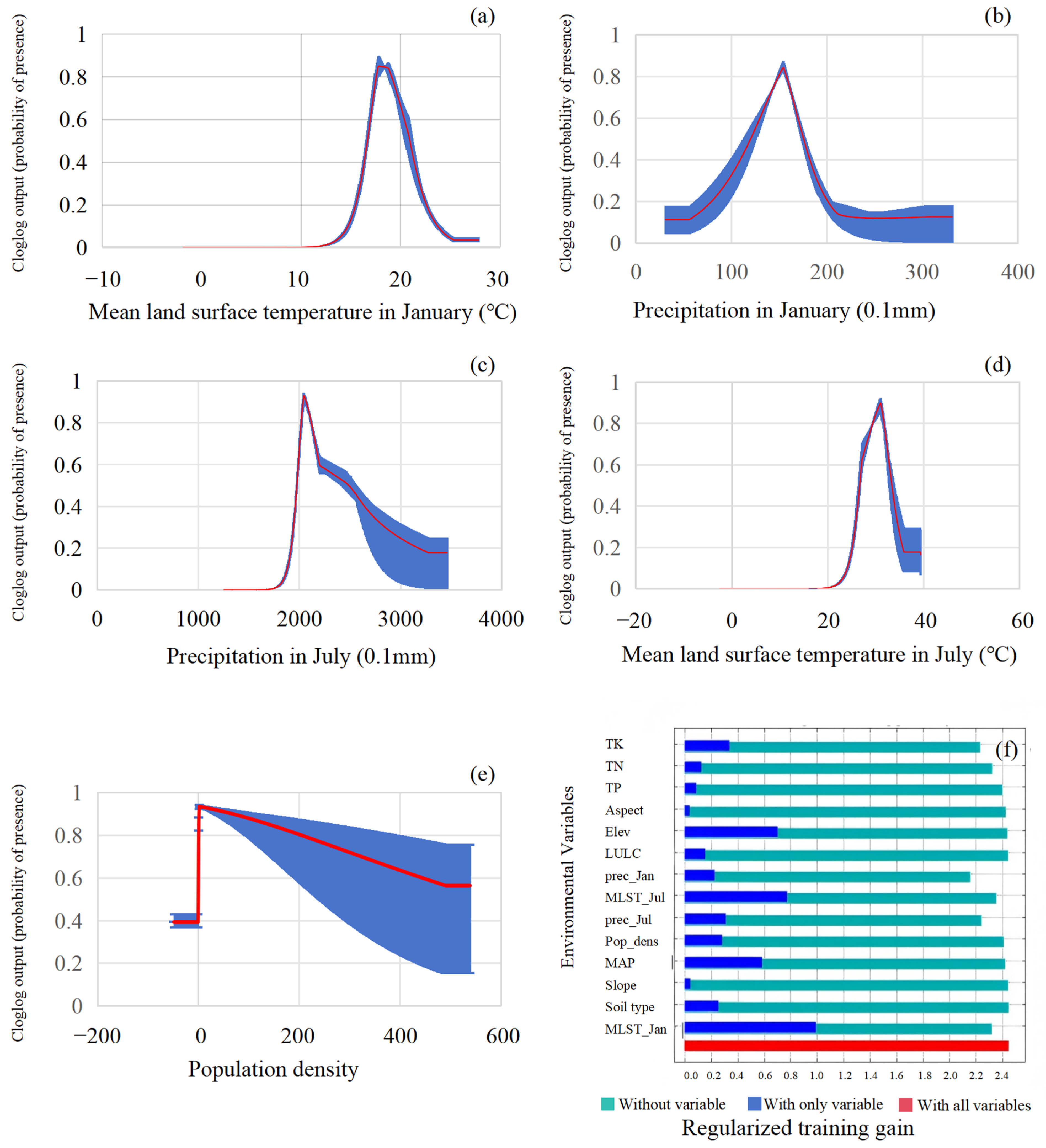
2.2. Main Factors Affecting the Distribution of C. panzhihuaensis
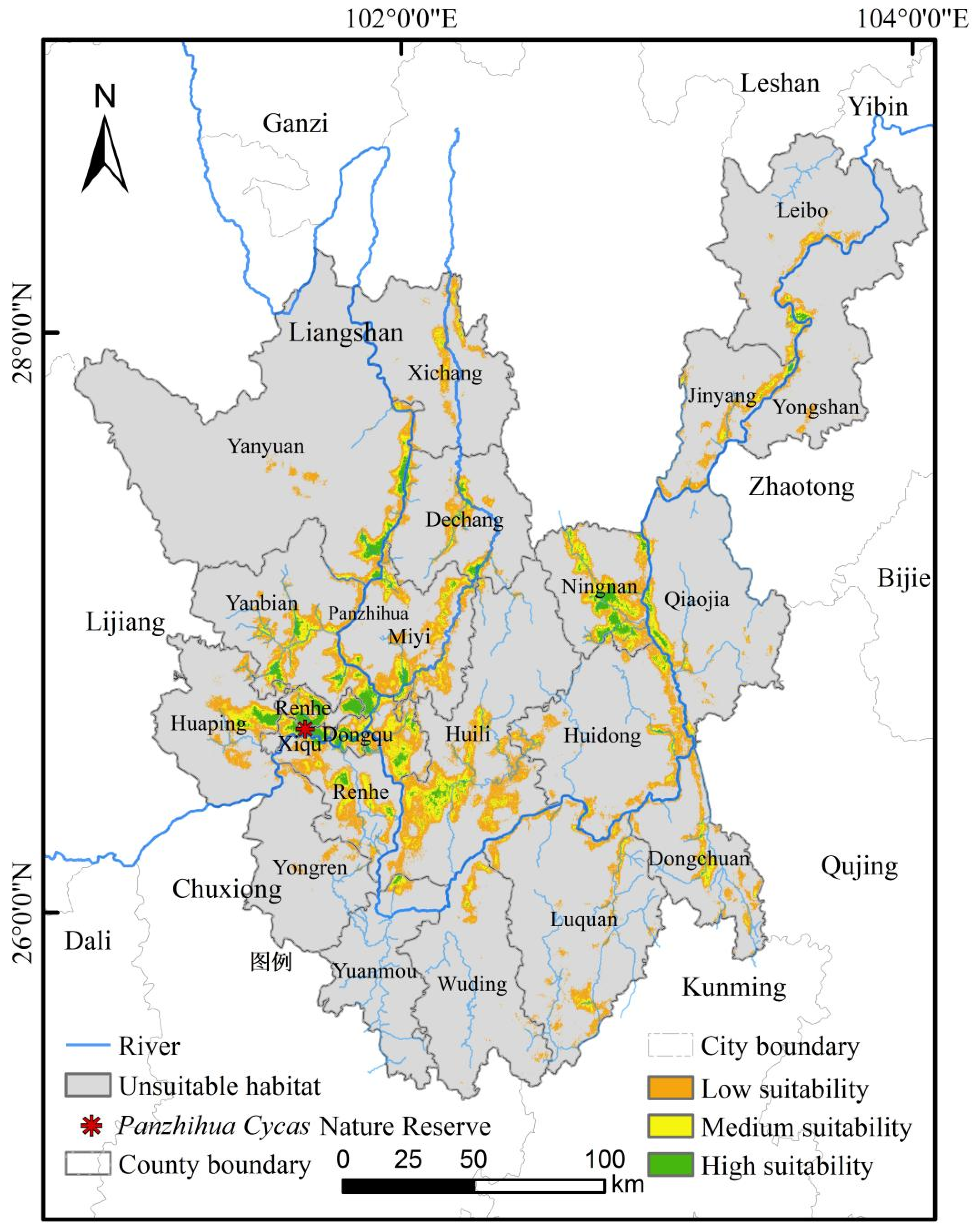
2.3. Potential Suitable Habitat of C. panzhihuaensis Under Contemporary Climate
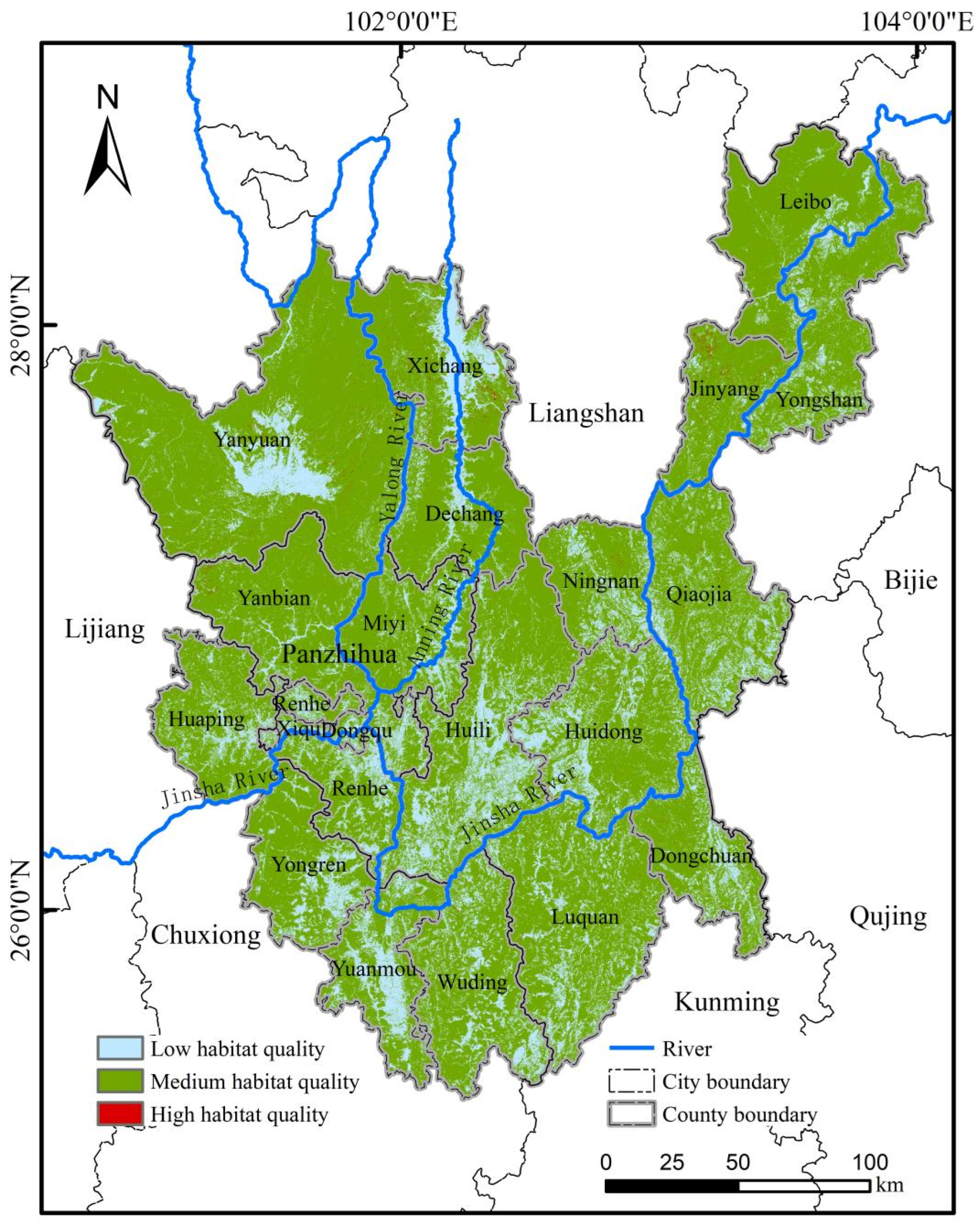
2.4. InVEST Model Habitat Quality Index
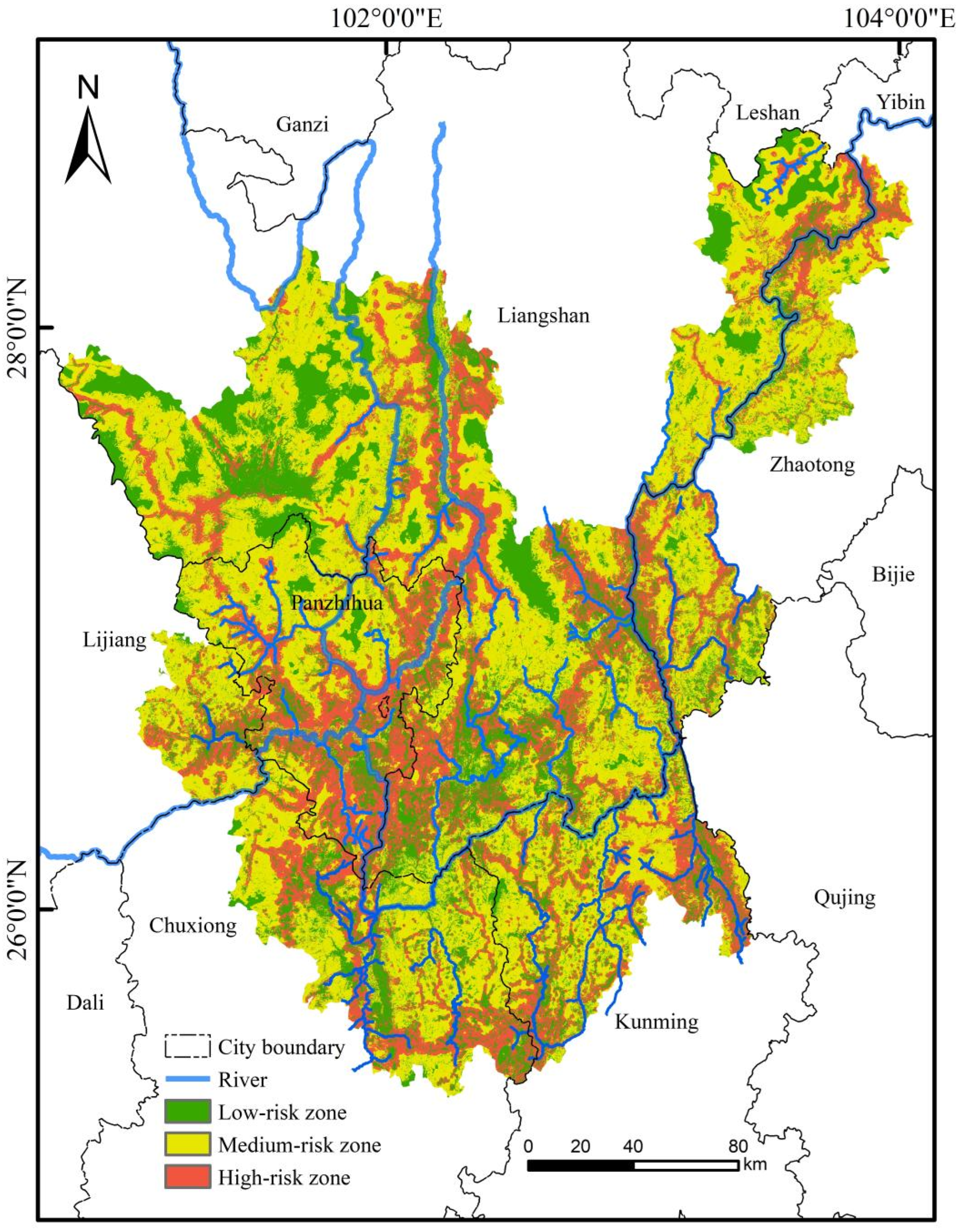
2.5. Habitat Degradation Risk Index
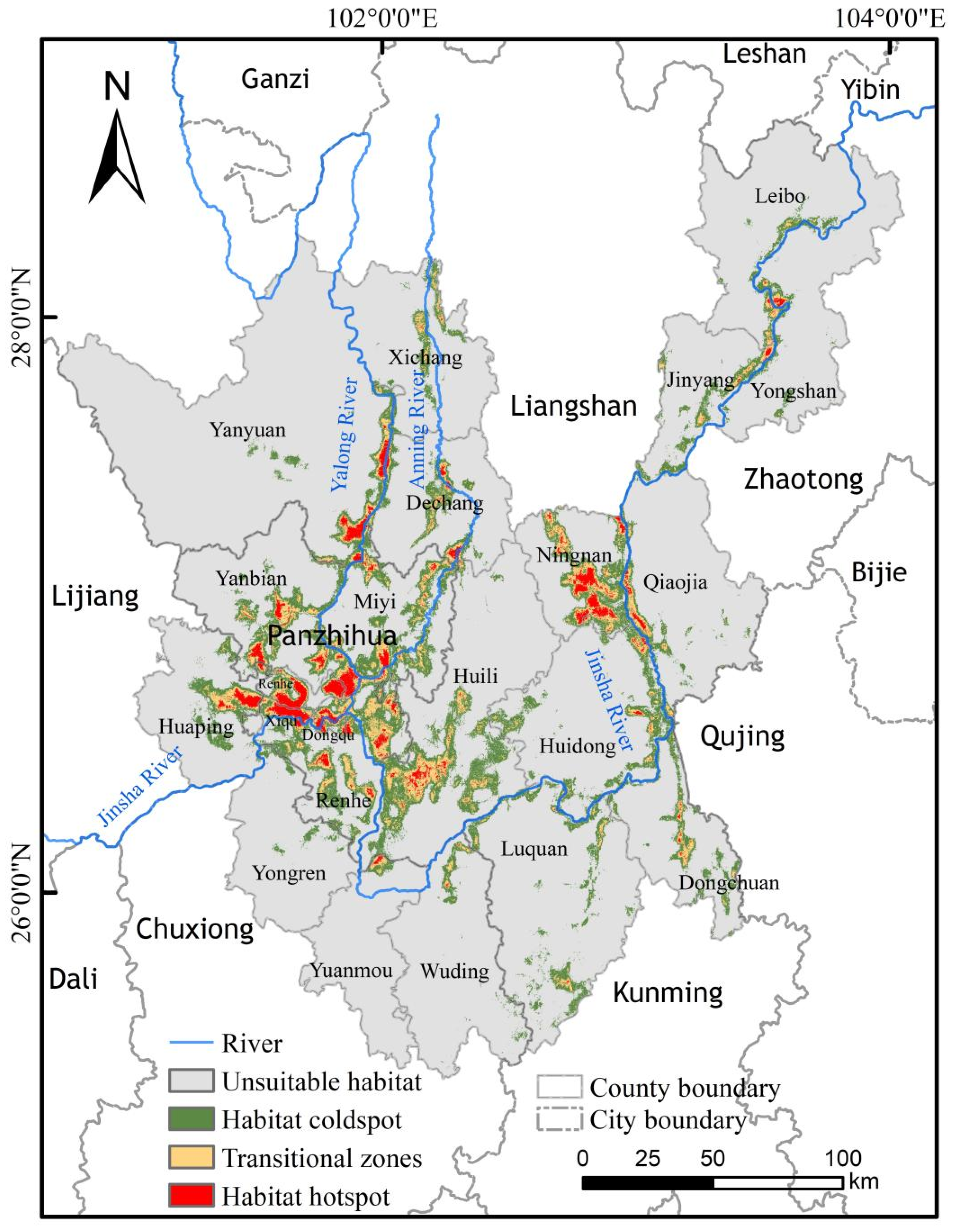
2.6. Spatial Autocorrelation Analysis of Habitat Conservation Hotspots
3. Discussion
3.1. Factors of Distribution Patterns
3.2. Spatial Decoupling of Habitat Suitability and Quality
3.3. Hierarchical Zoning Conservation Strategies
3.4. Study Limitations and Future Directions
4. Materials and Methods
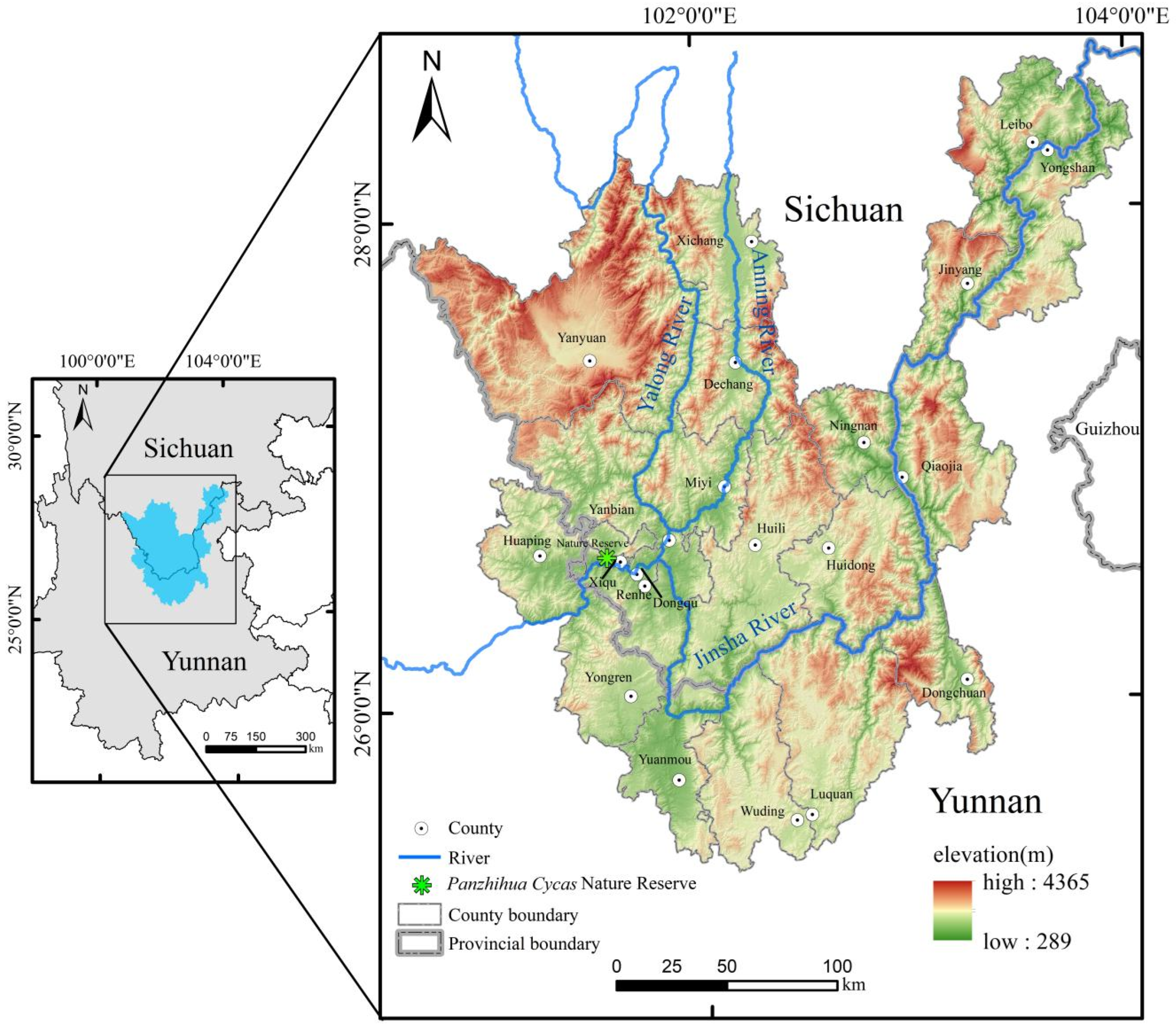
4.1. Study Area
4.2. Data Sources and Processing
4.2.1. Occurrence and Distribution Data of C. panzhihuaensis
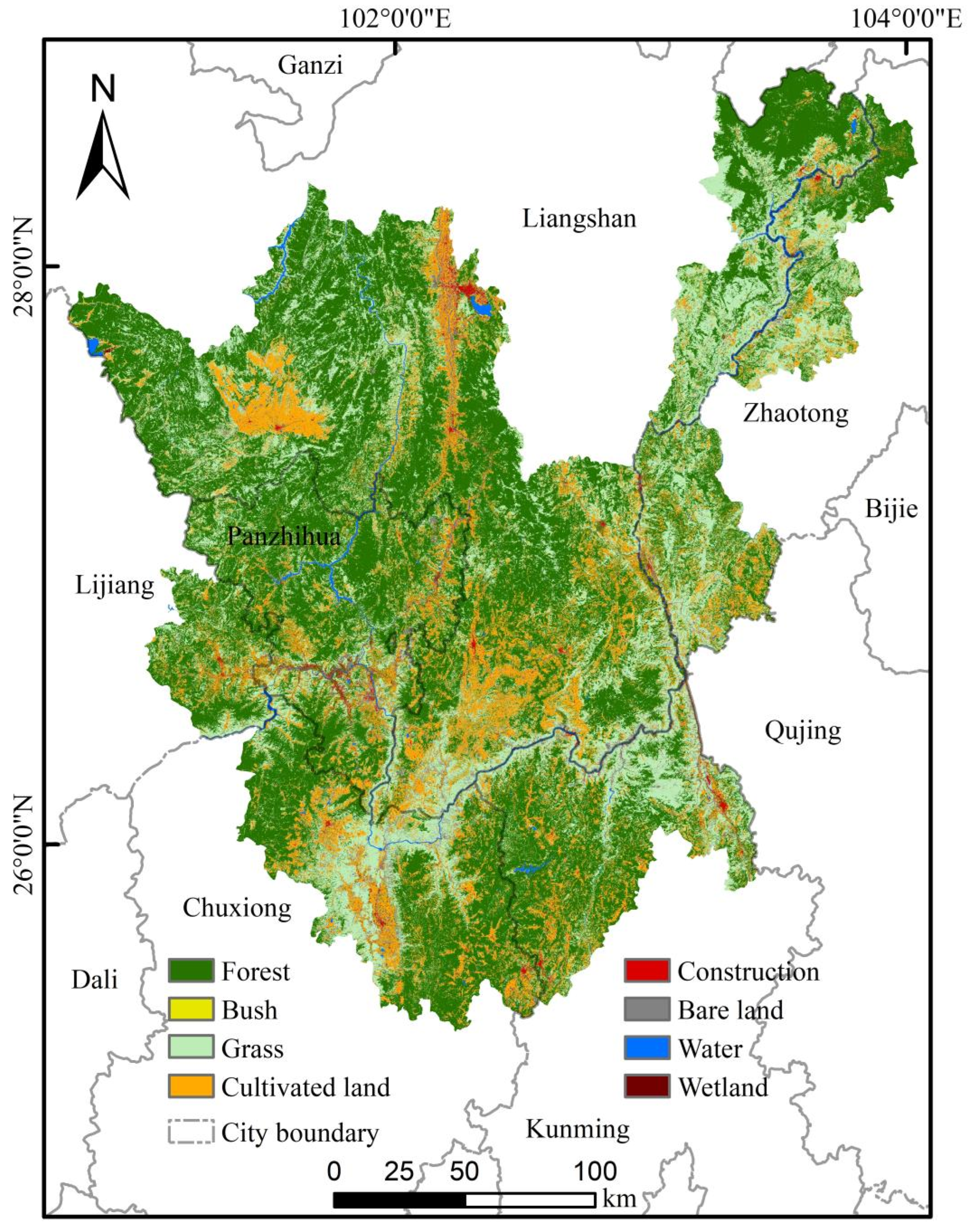
4.2.2. Environmental Data
4.2.3. Data Processing
4.3. MaxEnt-Based Prediction of Suitable Habitat
4.4. The InVEST Habitat Quality Assessment
4.5. Aggregative Computing for Conservation Hotspots
Supplementary Materials
Author Contributions
Funding
Data Availability Statement
Conflicts of Interest
References
- Terrado, M.; Sabater, S.; Chaplin-Kramer, B.; Mandle, L.; Ziv, G.; Acuña, V. Model Development for the Assessment of Terrestrial and Aquatic Habitat Quality in Conservation Planning. Sci. Total Environ. 2016, 540, 63–70. [Google Scholar] [CrossRef] [Scilit] [PubMed]
- Elith, J.; Leathwick, J.R. Species Distribution Models: Ecological Explanation and Prediction across Space and Time. Annu. Rev. Ecol. Evol. Syst. 2009, 40, 677–697. [Google Scholar] [CrossRef] [Scilit]
- Qiao, Y.; Liu, J.; Gong, X. Phylogeography of Himalrandia lichiangensis from the Dry-Hot Valleys in Southwest China. Front. Plant Sci. 2022, 13, 1002519. [Google Scholar] [CrossRef] [Scilit] [PubMed]
- Zhu, H.; Tan, Y.; Yang, Y. Review on savanna vegetation in the dry hot river valleys of southwestern China. Plant Sci. J. 2024, 42, 682–696. [Google Scholar] [CrossRef]
- Tang, Y.; Su, Z. The Research Actuality and Prospect of a Rare and Endangered Plant Named Cycas panzhihuaensis. J. Shanxi Teach. Univ. (Nat. Sci. Ed.) 2004, 18, 87–92. [Google Scholar]
- Long, C.; Yu, Z.; Yang, Y.; Shui, M. Research on Spatial Pattern and Interspecific Association of Dominant Populations in Secondary Savanna Shrub Forest in Dry-hot Valley. J. Sichuan For. Sci. Technol. 2022, 43, 44–52. [Google Scholar] [CrossRef]
- Zhou, L.; Guan, Z. Studies on the Natural Cycas Community in the Valley of Jinsha River. Acta Bot. Yunnanica 1985, 7, 153–168, 253. [Google Scholar]
- Wei, Y.; Chen, J.; Zheng, Y.; Wang, F.; Ma, H.; Wu, J. Diversity of Arbuscular Mycorrhizal Fungi in Cycas panzhihuaensis at Different Tree Ages in Dry Hot Valley. J. Northwest For. Univ. 2022, 37, 203–209. [Google Scholar] [CrossRef]
- He, Y.; Li, C. The Ecological Geographic Distribution, Spatial Pattern and Collecting History of Cycas panzhihuaensis Populations. Acta Phytoecol. Sin. 1999, 23, 23–30. [Google Scholar]
- The IUCN Red List of Threatened Species. Available online: https://www.iucnredlist.org/species/42078/69154055 (accessed on 28 September 2025).
- Xia, Z.; Ma, H.; Zheng, Y. The Physiological and Biochemical Responses of Cycas bifida and C. panzhihuaensis to Freezing Stress. J. Southwest For. Univ. (Nat. Sci.) 2020, 40, 166–173. [Google Scholar] [CrossRef]
- Yu, J.; Wang, F.; Jiang, A.; Hu, M.; Zheng, Y. Chlorophyll Fluorescence Characteristics and Lipid Metabolism in Endangered Cycas panzhihuaensis Exposed to Drought, High Temperature and Their Combination1. Plant Physiol. Biochem. 2025, 223, 109858. [Google Scholar] [CrossRef] [Scilit] [PubMed]
- Long, C.; Yu, Z.; Yang, Y.; Shui, M. Response of Main Functional Traits of Cycas panzhihuaensis to Soil Available Nutrients: A Case Study of Cycas panzhihuaensis National Nature Reserve in Sichuan Province. J. Sichuan For. Sci. Technol. 2023, 44, 55–61. [Google Scholar] [CrossRef]
- Yu, Z.; Yang, Y. A Preliminary Study on Artificial Propagation of Cycas panzhihuaensis. In Proceedings of the 4th National Academic Conference on Cycads, Gejiu, China, November 2004. [Google Scholar]
- Wu, Q.; Huang, Z.; Ma, S.; Gu, Z.; Deng, G. Study on Vegetative Propagation of Cycad Plants. J. Southwest For. Coll. 2007, 27, 33–36,40. Available online: http://xnldxb.ns.swfu.edu.cn/article/doi/10.11929/j.issn.2095-1914.2007.02.009 (accessed on 13 February 2026).
- Hao, Y.; Mo, X.; Yu, Z.; Yang, Y. Florogeographical Analysis of Spermatophytes in Cycas panzhihuaensis Assemblage. J. Sichuan For. Sci. Technol. 2011, 32, 28–33. [Google Scholar] [CrossRef]
- Negi, M.; Brahmi, M.K.; Bhardwaj, S.K.; Dogra, K.S. Spatial Distribution and Habitat Suitability of Ageratina adenophora in Himachal Pradesh: A MaxEnt-Based Approach. J. Nat. Conserv. 2026, 89, 127159. [Google Scholar] [CrossRef] [Scilit]
- Jiang, J.; Li, Y.; Hu, C.; Wang, Y.; Yang, J.; Yang, S.; Li, J.; Xu, P. Prediction of Potential Suitable Habitats for Psammosilene tunicoides in Yunnan Province Based on MaxEnt Model and GIS. For. Invent. Plan. 2025, 50, 10–15+141. Available online: http://journal.yunnanforestry.cn/ch/reader/view_abstract.aspx?file_no=20250302&flag=1 (accessed on 13 February 2026).
- Liu, Y.; Hu, Y.; He, J.; Bi, H.; Yang, H.; Yang, Y.; Yang, Z.; He, G.; He, Z. Predicting the potential distribution areas of two species of the Vaccinium genus based on MaxEnt modeling. Southwest China J. Agric. Sci. 2025, 38, 2146–2156. [Google Scholar] [CrossRef]
- Liu, R.; Jiang, X.; Dai, X.; Deng, M. Potential distribution area of Quercus cocciferoides and its response to climate change. J. Plant Resour. Environ. 2019, 28, 85–95. [Google Scholar] [CrossRef]
- Sun, X.; Jiang, Z.; Liu, F.; Zhang, D. Monitoring Spatio-Temporal Dynamics of Habitat Quality in Nansihu Lake Basin, Eastern China, from 1980 to 2015. Ecol. Indic. 2019, 102, 716–723. [Google Scholar] [CrossRef] [Scilit]
- Berta Aneseyee, A.; Noszczyk, T.; Soromessa, T.; Elias, E. The InVEST Habitat Quality Model Associated with Land Use/Cover Changes: A Qualitative Case Study of the Winike Watershed in the Omo-Gibe Basin, Southwest Ethiopia. Remote Sens. 2020, 12, 1103. [Google Scholar] [CrossRef] [Scilit]
- Xu, Y.; Gao, M.; Zhang, Z. Land Use Change and Its Impact on Habitat Quality in the Middle and Lower Reaches of the Yangtze River Based on InVEST Model. Res. Soil Water Conserv. 2024, 31, 355–364. [Google Scholar] [CrossRef]
- Liang, X.; Yuan, L.; Ning, L.; Song, C.; Cheng, C.; Wang, X. Spatial pattern of habitat quality and driving factors in Heilongjiang Province. J. Beijing Norm. Univ. (Nat. Sci.) 2020, 56, 864–872. [Google Scholar] [CrossRef]
- Luo, Q.; Hu, H.; Xu, Z.; Ding, Z.; Yang, X.; Chen, Q.; Zhang, C.; Li, A.; Zou, J.; Ye, D.; et al. Hotspots of the waterbirds diversity in Guangdong-Hong Kong-Macao Greater Bay Area based on Maxent model. Acta Ecol. Sin. 2021, 41, 7589–7598. [Google Scholar] [CrossRef] [Scilit]
- Sun, R. Evaluation of Conservation Benefits in Nature Reserves Based on the InVEST and MaxEnt Models. Master’s Thesis, Jiangxi Normal University, Nanchang, China, June 2020. [Google Scholar] [CrossRef]
- Mierayi, H.; Li, J.; Shao, C.; Jiang, X.; Zhai, X.; Liang, X.; Yierken, A.; Ayidaerhan, H.; Chu, H. Assessments of habitat qualities of desert ungulates in the Kalamari National Park based on MaxEnt-InVEST models. Nat. Prot. Areas 2025, 5, 74–88. [Google Scholar] [CrossRef]
- Ding, Y.; Yang, Y.; Peng, X.; Wang, J.; Wu, M.; Zhang, Y.; Liu, X.; Peng, P. Habitat Suitability and Driving Factors of Cycas panzhihuaensis in the Hengduan Mountains. Plants 2025, 14, 2797. [Google Scholar] [CrossRef] [Scilit] [PubMed]
- Shcheglovitova, M.; Anderson, R.P. Estimating Optimal Complexity for Ecological Niche Models: A Jackknife Approach for Species with Small Sample Sizes. Ecol. Modell. 2013, 269, 9–17. [Google Scholar] [CrossRef] [Scilit]
- Wang, X.; Duan, Y.; Jin, L.; Wang, C.; Peng, M.; Li, Y.; Wang, X.; Ma, Y. Prediction of historical, present and future distribution of Quercus sect. Heterobalanus based on the optimized MaxEnt model in China. Acta Ecol. Sin. 2023, 43, 6590–6604. Available online: https://www.ecologica.cn/stxb/article/abstract/stxb202205141353 (accessed on 13 February 2026).
- Huang, Z.; Bai, Y.; Alatalo, J.M.; Yang, Z. Mapping Biodiversity Conservation Priorities for Protected Areas: A Case Study in Xishuangbanna Tropical Area, China. Biol. Conserv. 2020, 249, 108741. [Google Scholar] [CrossRef] [Scilit]
- Ling, Z.; Lu, E.; Peng, X.; Yang, Y.; Zheng, Y. The Physiochemical Characteristics and Glycerolipid Profile of Cycas panzhihuaensis in Response to Individual and Combined Drought and Freezing Temperature Stress. Plant Physiol. Biochem. 2024, 214, 108907. [Google Scholar] [CrossRef] [Scilit]
- Ou, X. Ecological Status and Construction in the Dry-Hot Valley Regions of Yunnan Province. Resour. Environ. Yangtze Val. 1994, 3, 271–276. [Google Scholar]
- Xu, Y.; Yang, S.; Zhang, J.; Sun, Y.; Yang, X.; Ou, C. Topographic effect of county-level land-use landscape pattern in the dry-hot valley of Jinsha River, Yunnan Province. Chin. J. Ecol. 2023, 42, 1982–1992. [Google Scholar] [CrossRef]
- Yue, J.; Hu, L. Assessment of Habitat Quality of Natural Protected Areas Based on InVEST Model in Yanqing District of Beijing. For. Invent. Plan. 2023, 48, 59–66. [Google Scholar] [CrossRef]
- Newbold, T.; Hudson, L.N.; Hill, S.L.L.; Contu, S.; Lysenko, I.; Senior, R.A.; Börger, L.; Bennett, D.J.; Choimes, A.; Collen, B.; et al. Global Effects of Land Use on Local Terrestrial Biodiversity. Nature 2015, 520, 45–50. [Google Scholar] [CrossRef] [Scilit]
- Huang, P.; Huang, Q.; Zhou, X.; Wang, J. Spatial-temporal variation analysis of ecosystem service value in dry-hot valley: A case study in Ningnan County, Liangshan Prefecture. China Agric. Inform. 2024, 36, 126–138. [Google Scholar] [CrossRef]
- Li, S.; Yu, D.; Huang, T.; Hao, R. Identifying Priority Conservation Areas Based on Comprehensive Consideration of Biodiversity and Ecosystem Services in the Three-River Headwaters Region, China. J. Clean. Prod. 2022, 359, 132082. [Google Scholar] [CrossRef] [Scilit]
- Koga, K.; Kayo, C.; Quevedo, J.M.D.; Kohsaka, R. What Drives Mangrove Forest Gains? Evidence from Six Southeast Asian Countries Using Fixed Effects Panel Data Models. For. Ecol. Manag. 2026, 601, 123330. [Google Scholar] [CrossRef] [Scilit]
- Wang, Y.; Gan, J.; Chen, T.; Gong, Y.; Lu, Y.; Li, N. Preliminary Study on Reproductive Features of Reintroduction Population of Cycas debaoensis. Subtrop. Plant Sci. 2018, 47, 134–139. [Google Scholar] [CrossRef]
- Dong, X.; Gong, J.; Zhang, W.; Zhang, S.; Hu, Y.; Yang, G.; Yan, C.; Li, F.Y. Importance of Including Key Biodiversity Areas in China’s Conservation Area-Based Network. Biol. Conserv. 2024, 296, 110676. [Google Scholar] [CrossRef] [Scilit]
- Xie, C.; Li, M.; Jim, C.Y.; Chen, R. Distribution Pattern of Endangered Cycas taiwaniana Carruth. in China under Climate-Change Scenarios Using the MaxEnt Model. Plants 2025, 14, 1600. [Google Scholar] [CrossRef] [Scilit]
- Zheng, Y.; Liu, J.; Feng, X.; Gong, X. The Distribution, Diversity, and Conservation Status of Cycas in China. Ecol. Evol. 2017, 7, 3212–3224. [Google Scholar] [CrossRef] [Scilit]
- Knight, H.A.L.; Beebe, C.; Dick, C.; Maiolo-Heath, M.; Schorr, R. A Novel, Community-Based Approach to Endangered Species Recovery: The Case of the Preble’s Meadow Jumping Mouse (Zapus hudsonius Preblei). Front. Conserv. Sci. 2025, 6, 1528441. [Google Scholar] [CrossRef] [Scilit]
- Huang, B.; Hu, X.; Tang, L.; Lu, Q. Governing human-nature harmony in protected area communities: Global lessons from UNESCO’s MAB network and evidence from China’s biosphere reserves. Bull. Chin. Acad. Sci. 2025, 40, 1558–1571. [Google Scholar] [CrossRef] [Scilit]
- Jian, S.; Gong, X.; Liu, N. Reintroduction of Wild Cycas Species in China. In Conservation and Reintroduction of Rare and Endangered Plants in China; Ren, H., Ed.; Springer: Singapore, 2020; pp. 225–233. [Google Scholar] [CrossRef] [Scilit]
- Xie, C.; Jim, C.Y. Safeguarding China’s Threatened Cycads: Strategies to Combat Alarming Habitat Degradation and Anthropogenic Collection Pressure. Nat. Conserv. 2025, 59, 89–99. [Google Scholar] [CrossRef] [Scilit]
- Shimhanda, M.N.; Mogomotsi, P.K.; Rutina, L.P.; Thakadu, O.T. Exploring Stakeholder Perceptions of Wildlife Tourism in the Mudumu North Complex, Namibia, Zambezi Region, Namibia: Implications for Sustainable Community-Based Conservation. Reg. Sci. Policy Pract. 2025; in press. [CrossRef] [Scilit]
- Chen, J.; Tang, L.; Zhang, Y.; Yu, S.; Yang, H.; Chu, Y. Developing integrated protected area communities: Insights from Gaoligongshan UNESCO Biosphere Reserve, China. Bull. Chin. Acad. Sci. 2025, 40, 1614–1622. [Google Scholar] [CrossRef] [Scilit]
- Huang, Z.; Wang, Q.; Wang, J.; Fang, Z.; Wang, L.; Ali, M.; Yang, Z.; Chen, H.; Xue, S.; Zhou, Q.; et al. Integrating Biodiversity Hotspots, Ecological Gradients, and Ecosystem Services for Transboundary Conservation in the Gaoligong Mountains. Conserv. Biol. 2025, 40, e70133. [Google Scholar] [CrossRef] [Scilit]
- Wegscheider, B.; Rideout, N.K.; Monk, W.A.; Gray, M.A.; Steeves, R.; Baird, D.J. Modeling Nature-Based Restoration Potential across Aquatic–Terrestrial Boundaries. Conserv. Biol. 2025, 39, e70046. [Google Scholar] [CrossRef] [Scilit]
- Woodcock, B.A.; Waddell, E.; Weites, M.G.; Guy, M.; Freeman, M.; Park, K.; Fuentes-Montemayor, E.; Watts, K.; Barnett, R.J.; Rogerson, S.L.; et al. Restoration of Ecological Interactions: The Influence of Site and Landscape Factors. Agric. Ecosyst. Environ. 2026, 397, 110060. [Google Scholar] [CrossRef] [Scilit]
- Korpilo, S.; Jalkanen, J.; Virtanen, T.; Lehvävirta, S. Where Are the Hotspots and Coldspots of Landscape Values, Visitor Use and Biodiversity in an Urban Forest? PLoS ONE 2018, 13, e0203611. [Google Scholar] [CrossRef] [Scilit]
- Jia, Y.; Chen, S.; Wu, M.; Gu, Y.; Wei, P.; Wu, T.; Shang, Z.; Wang, S.; Yu, H. Improved Permafrost Stability by Revegetation in Extremely Degraded Grassland of the Qinghai-Tibetan Plateau. Geoderma 2023, 430, 116350. [Google Scholar] [CrossRef] [Scilit]
- Gao, R.; Yang, L.; Tian, X.; Yang, H.; Lin, Y. Redundancy analysis of the relationship between plant and environmental factors on shady and sunny unstable slope in dry-hot valley. Mt. Res. 2022, 40, 835–846. [Google Scholar] [CrossRef]
- Xiao, S.; Ji, Y.; Liu, J.; Gong, X. Genetic Characterization of the Entire Range of Cycas panzhihuaensis (Cycadaceae). Plant Divers. 2020, 42, 7–18. [Google Scholar] [CrossRef] [Scilit] [PubMed]
- Tang, C.Q.; Matsui, T.; Ohashi, H.; Dong, Y.-F.; Momohara, A.; Herrando-Moraira, S.; Qian, S.; Yang, Y.; Ohsawa, M.; Luu, H.T.; et al. Identifying Long-Term Stable Refugia for Relict Plant Species in East Asia. Nat. Commun. 2018, 9, 4488. [Google Scholar] [CrossRef] [Scilit] [PubMed]
- Li, Y.; Ma, Y.; Chen, Q.; Fan, J.; Yin, L.; Li, Q.; Shi, Y.; Gao, X.; Yang, K.; Tu, C. Spatio-temporal Evolution Characteristics and Driving Factors of Water Conservation Function in the Dry-Hot Valley Area of Jinsha River Based on InVEST Model. Environ. Sci. 2025; in press. [CrossRef] [Scilit]
- Huan-cheng, M.; McConchie, J.A. The Dry-Hot Valleys and Forestation in Southwest China. J. For. Res. 2001, 12, 35–39. [Google Scholar] [CrossRef] [Scilit]
- Chinese Virtual Herbarium (CVH). Available online: https://www.cvh.ac.cn/ (accessed on 28 September 2025).
- National Specimen Information Infrastructure (Nsii). Available online: https://www.nsii.org.cn/2017/home.php (accessed on 28 September 2025).
- Sichuan Province Nature Reserve Specimen Platform. Available online: http://bbpt.scu.edu.cn/ (accessed on 28 September 2025).
- Global Biodiversity Information Facility (GBIF). Available online: https://www.gbif.org/ (accessed on 21 January 2026).
- McAndrew, K.M.; Granger, J.J.; Ward, S.F. Environmental Niche Model for the Baldcypress Leafroller, a Significant Defoliator of Coastal Forests, under Current and Projected Climate Scenarios. Ecol. Inform. 2025, 92, 103451. [Google Scholar] [CrossRef] [Scilit]
- National Tibetan Plateau Data Center. Available online: https://data.tpdc.ac.cn/ (accessed on 15 October 2025).
- Geospatial Data Cloud of the Chinese Academy of Sciences. Available online: http://www.gscloud.cn (accessed on 15 October 2025).
- WorldPop. Available online: https://hub.worldpop.org/ (accessed on 15 October 2025).
- National Earth System Science Data Center. Available online: https://soil.geodata.cn/ (accessed on 15 October 2025).
- European Space Agency (ESA). Available online: https://esa-worldcover.org/en (accessed on 15 October 2025).
- OpenStreetMap. Available online: https://www.openstreetmap.org (accessed on 15 October 2025).
- Li, Y.; Zhu, J.; Hu, Y.; Zhang, H. Comparison Analysis on Different Spatial Interpolation Methodsto Simulate Monthly Precipitation in Sichuan Province. Res. Soil Water Conserv. 2017, 24, 151–154, 160. [Google Scholar] [CrossRef]
- Chen, C.; Huang, L.; Wang, A.; Zhang, Z.; Zhan, C.; Luo, X.; Huang, Y.; Liu, B. Optimized MaxEnt modeling of potential Chinese Pangolin (Manis pentadactyla) habitats under climate change: Implications for conservation. Acta Ecol. Sin. 2026, 46, 1408–1421. [Google Scholar] [CrossRef]
- Zhang, D.; Zeng, J.; Namaiti, A. Identification of bird conservation gaps of protected areas in high-intensity development area: A case study of Tianjin, China. Chin. J. Appl. Ecol. 2023, 34, 1621–1629. [Google Scholar] [CrossRef] [Scilit]
- Ti, Y.; Zhuang, H.; Chen, M.; Zhang, C.; Hu, F.; Zhao, Q.; Hu, Z.; Luan, X. Spatio-temporal evolution pattern of protected areas and regional habitat quality in Tianjin. Acta Ecol. Sin. 2023, 43, 2770–2780. [Google Scholar] [CrossRef] [Scilit]
- Swets, J.A. Measuring the Accuracy of Diagnostic Systems. Science 1988, 240, 1285–1293. [Google Scholar] [CrossRef] [Scilit]
- Caro, C.; Marques, J.C.; Cunha, P.P.; Teixeira, Z. Ecosystem Services as a Resilience Descriptor in Habitat Risk Assessment Using the InVEST Model. Ecol. Indic. 2020, 115, 106426. [Google Scholar] [CrossRef] [Scilit]
- Zhang, X.; Zhou, J.; Li, G.; Chen, C.; Li, M.; Luo, J. Spatial Pattern Reconstruction of Regional Habitat Quality Based on the Simulation of Land Use Changes from 1975 to 2010. J. Geogr. Sci. 2020, 30, 601–620. [Google Scholar] [CrossRef] [Scilit]
- Sharp, R.; Chaplin-Kramer, R.; Wood, S.; Guerry, A.; Tallis, H.; Ricketts, T. InVEST 3.20 User’s Guide; The Natural Capital Project; Stanford University: Stanford, CA, USA; University of Minnesota: Minneapolis, MN, USA; The Nature Conservancy: Arlington, VA, USA, 2016. [Google Scholar]
- Wang, L.; Guo, X.; Zhao, J. Key Points of Biodiversity Monitoring in Nature reserve—XishuangbannaNature reserve as an Example. Environ. Sci. Surv. 2016, 35, 9–11. [Google Scholar] [CrossRef]
- Jeong, A.; Kim, M.; Lee, S. Analysis of Priority Conservation Areas Using Habitat Quality Models and MaxEnt Models. Animals 2024, 14, 1680. [Google Scholar] [CrossRef] [Scilit]
- Chen, Y. Reconstructing the mathematical process of spatial autocorrelation based on Moran’s statistics. Geogr. Res. 2009, 28, 1449–1463. Available online: https://www.progressingeography.com/CN/abstract/abstract8728.shtml (accessed on 13 February 2026).
- Chen, Y. Identification and Optimization of Habitat Groups Under Landscape Fragmentation: A Case Study of Wuhan Metropolitan Area. Master’s Thesis, Huazhong Agricultural University, Wuhan, China, 26 June 2021. [Google Scholar] [CrossRef]



| Variables | Description and Unit | Percent Contribution (%) | Permutation Importance (%) |
|---|---|---|---|
| MLST_Jan | Mean land surface temperature in January (°C) | 36.1 | 41.3 |
| Prec_Jan | Precipitation in January (0.1 mm) | 12 | 10.1 |
| Prec_Jul | Precipitation in July (0.1 mm) | 10 | 16.1 |
| MLST_Jul | Mean land surface temperature in July (°C) | 9.6 | 11.9 |
| Population density | Number of individuals per grid cell (people/900 m2) | 7.8 | 1.2 |
| TK | Total potassium | 6 | 3.6 |
| TN | Total nitrogen | 5.3 | 7.1 |
| Soil type | Soil type | 4.4 | 0.3 |
| MAP | Mean annual precipitation (0.1 mm) | 3.2 | 3.2 |
| TP | Total phosphorus | 2.2 | 1.6 |
| Elev | Elevation (m) | 1.6 | 2.1 |
| Aspect | Aspect | 0.9 | 0.9 |
| Slope | Slope (°) | 0.5 | 0.2 |
| LULC | Land Use and Land Cover | 0.4 | 0.3 |
| Habitat Quality Classes | Value Range | Land Area (km2) | Percentage (%) |
|---|---|---|---|
| Low quality | 0–0.24 | 11,633.87 | 20.75 |
| Medium quality | 0.24–0.69 | 44,289.28 | 79.00 |
| High quality | 0.69–1.00 | 141.45 | 0.25 |
| Habitat Degradation Classes | Value Range | Land Area (km2) | Percentage (%) |
|---|---|---|---|
| Low Degradation | 0–0.12 | 14,428.96 | 25.73 |
| Medium Degradation | 0.12–0.22 | 27,006.33 | 48.17 |
| High Degradation | 0.22–0.66 | 14,629.31 | 26.10 |
| County | County Area (km2) | Hotspots (km2) | Area Occupied by the County (%) | Area Occupied by Hotspots (%) |
|---|---|---|---|---|
| Dechang | 2302.25 | 35.93 | 1.56 | 4.49 |
| Dongchuan | 1875.90 | 6.59 | 0.35 | 0.82 |
| Dongqu | 165.96 | 35.83 | 21.59 | 4.48 |
| Huaping | 2142.43 | 49.16 | 2.29 | 6.14 |
| Huidong | 3225 | 13.79 | 0.42 | 1.72 |
| Huili | 4541.26 | 43.12 | 0.94 | 5.39 |
| Jinyang | 1587.32 | 8.58 | 0.54 | 1.07 |
| Leibo | 2840.71 | 3.93 | 0.13 | 0.49 |
| Luquan | 4244.82 | 2.15 | 0.05 | 0.26 |
| Miyi | 2114.37 | 40.95 | 1.93 | 5.12 |
| Ningnan | 1676.51 | 126.22 | 7.52 | 15.78 |
| Renhe | 1734.11 | 132.06 | 7.61 | 16.51 |
| Wuding | 2952.18 | 1.29 | 0.04 | 0.16 |
| Xichang | 2663 | 2.35 | 0.08 | 0.29 |
| Xiqu | 121.67 | 51.66 | 42.45 | 6.46 |
| Yanbian | 3282.57 | 128.93 | 3.92 | 16.12 |
| Yanyuan | 8432.03 | 82.55 | 0.97 | 10.32 |
| Yongren | 2152.77 | 0.01 | 0 | 0 |
| Yongshan | 2788.92 | 9.88 | 0.35 | 1.23 |
| Yuanmou | 2026.08 | 5.23 | 0.25 | 0.65 |
| Qiaojia | 3208.46 | 19.43 | 0.6 | 2.42 |
| Threat | Max Distance (km) | Weight | Decay |
|---|---|---|---|
| Construction | 10 | 1 | exponential |
| Farmland | 5 | 0.6 | linear |
| Water | 0.1 | 1 | linear |
| Bare land | 2 | 0.3 | linear |
| Mining | 10 | 0.5 | linear |
| Railway | 8 | 0.8 | exponential |
| Expressway | 8 | 0.8 | exponential |
| City road | 6 | 0.6 | exponential |
| County road | 4 | 0.5 | exponential |
| Village road | 2 | 0.3 | exponential |
| LULC | Forest | Bush | Grass | Farmland | Construction | Bare Land | Water | Water Land | |
|---|---|---|---|---|---|---|---|---|---|
| Habitat suitability | 0.5 | 1 | 0.6 | 0 | 0 | 0 | 0 | 0 | |
| Threat factor | Construction | 0.9 | 0.8 | 0.7 | 0.2 | 0 | 0.1 | 0.4 | 0.6 |
| Farmland | 0.8 | 0.7 | 0.6 | 0 | 0.1 | 0.2 | 0.5 | 0.7 | |
| Water | 0.9 | 0.9 | 0.9 | 0.2 | 0.3 | 0.2 | 0 | 0.1 | |
| Bare land | 0.7 | 0.9 | 0.9 | 0.4 | 0.1 | 0 | 0.2 | 0.5 | |
| Mining | 0.8 | 0.9 | 0.7 | 0.3 | 0 | 0.2 | 0.9 | 0.9 | |
| Railway | 0.7 | 0.8 | 0.6 | 0.4 | 0 | 0.3 | 0.3 | 0.6 | |
| Expressway | 0.7 | 0.8 | 0.6 | 0.4 | 0 | 0.3 | 0.3 | 0.3 | |
| City road | 0.7 | 0.8 | 0.6 | 0.4 | 0 | 0.3 | 0.3 | 0.6 | |
| County road | 0.5 | 0.6 | 0.5 | 0.3 | 0 | 0.2 | 0.2 | 0.4 | |
| Village road | 0.3 | 0.4 | 0.3 | 0.2 | 0 | 0.1 | 0.1 | 0.2 |
Disclaimer/Publisher’s Note: The statements, opinions and data contained in all publications are solely those of the individual author(s) and contributor(s) and not of MDPI and/or the editor(s). MDPI and/or the editor(s) disclaim responsibility for any injury to people or property resulting from any ideas, methods, instructions or products referred to in the content. |
© 2026 by the authors. Licensee MDPI, Basel, Switzerland. This article is an open access article distributed under the terms and conditions of the Creative Commons Attribution (CC BY) license.
Share and Cite
Yang, Y.; Ding, Y.; Peng, X.; Wang, J.; Li, P.; Wu, M.; Zhang, Y.; Liu, X.; Peng, P. Integrating Habitat Suitability and Quality Assessments to Identify Conservation Priorities for Cycas panzhihuaensis. Plants 2026, 15, 670. https://doi.org/10.3390/plants15040670
Yang Y, Ding Y, Peng X, Wang J, Li P, Wu M, Zhang Y, Liu X, Peng P. Integrating Habitat Suitability and Quality Assessments to Identify Conservation Priorities for Cycas panzhihuaensis. Plants. 2026; 15(4):670. https://doi.org/10.3390/plants15040670
Chicago/Turabian StyleYang, Yuanfeng, Yuting Ding, Xuefeng Peng, Juan Wang, Peilong Li, Mengjie Wu, Ying Zhang, Xing Liu, and Peihao Peng. 2026. "Integrating Habitat Suitability and Quality Assessments to Identify Conservation Priorities for Cycas panzhihuaensis" Plants 15, no. 4: 670. https://doi.org/10.3390/plants15040670
APA StyleYang, Y., Ding, Y., Peng, X., Wang, J., Li, P., Wu, M., Zhang, Y., Liu, X., & Peng, P. (2026). Integrating Habitat Suitability and Quality Assessments to Identify Conservation Priorities for Cycas panzhihuaensis. Plants, 15(4), 670. https://doi.org/10.3390/plants15040670