Next Article in Journal
Chemical Profiling, Analgesic and Anti-Inflammatory Activities of Farsetia aegyptia and Zilla spinosa: Integrated In Vitro, In Vivo, and In Silico Studies
Previous Article in Journal
Understanding the Role of Durum Wheat Thioredoxin h-Type TdTrxh2 in Biotic Stress Tolerance
Previous Article in Special Issue
The Metabolic Diversity of Different Salsola Species Valorized Through Untargeted Metabolomics and In Vitro Bioassays: The Importance of Phenolic Constituents
 
 
Due to scheduled maintenance work on our servers, there may be short service disruptions on this website between 11:00 and 12:00 CEST on March 28th.
Article

LC-MS Profiling and Biological Activity of Unexplored Leucas nubica Benth. (Lamiaceae)

1
Department of Pharmacognosy, Faculty of Pharmacy, Medical University, 1000 Sofia, Bulgaria
2
Physiology and Biochemistry Research Laboratory, Department of Biology, Science Faculty, Selcuk University, Konya 42130, Turkey
3
Department of Botany, Faculty of Science, University of Khartoum, Khartoum P.O. Box 321, Sudan
*
Author to whom correspondence should be addressed.
Plants 2026, 15(4), 522; https://doi.org/10.3390/plants15040522

Submission received: 17 December 2025 / Revised: 28 January 2026 / Accepted: 5 February 2026 / Published: 7 February 2026

Abstract

Leucas nubica Benth. (Lamiaceae) is an annual herbaceous plant, native to east and northeast tropical Africa. The whole plant is renowned for the treatment of jaundice. The present study aimed at an in-depth phytochemical profiling and evaluation of in vitro antioxidant and enzyme inhibitory potential of methanol–aqueous extract from L. nubica aerial parts. The liquid chromatography–high-resolution mass spectrometry (LC-HRMS) experiment revealed more than 70 secondary metabolites, including carboxylic and phenolic acids, phenylethanoid, iridoid, and lignan glycosides, and flavonoids. The L. nubica extract profile was dominated by the phenylethanoid glycoside verbascoside. All annotated compounds are reported for the first time in the species. The extract actively scavenged DPPH and ABTS radicals (38.8 ± 0.1 and 36.8 ± 0.4 mg TE/g) and showed high CUPRAC (71.1 ± 1.1 mg TE/g) and moderate FRAP (44.9 ± 2.6 mg TE/g) reducing power. The L. nubica extract exhibited high inhibition towards acetylcholinesterase (2.23 ± 0.02 mg GALAE/g), butyrylcholinesterase (2.38 ± 0.04 mg GALAE/g), and tyrosinase (60.7 ± 0.6 mg KAE/g). The obtained results highlight L. nubica extract as a rich source of phenylethanoid glycosides and flavonoids with significant bioactivity and shed light into the phytochemical composition and pharmacological potential of the plant.

1. Introduction

The Leucas R. B. genus (Lamiaceaea family) includes herbs or subshrubs distributed throughout African and Asian tropical and temperate countries [1]. L. nubica Benth. is an annual herb characterized by cymes with white or pale-colored flowers and trigonous-oblong nutlets [2]. The species, commonly known as “Mayoub”, is native to east and northeast tropical Africa. The whole plant is renowned for the treatment of jaundice in the traditional medicine of eastern Sudan [3].
In a previous study of L. nubica whole-plant extracts, the total phenolic content ranged between 0.216 gallic acid/g (dichloromethane extract) and 1.015 mg gallic acid/g (methanol extract), while total flavonoids varied from 0.400 mg quercetin/g to 0.580 mg quercetin/g, respectively [3]. In the antioxidant potential assessment assays, methanol and ethyl acetate extracts scavenged DPPH radicals (47%) and DMPD (48%), respectively, whereas reducing power was estimated at 1.117 (absorbance in FRAP) and 0.361 (absorbance in PRAP), respectively. Metal chelating capacity reached 48% (ethyl acetate extract). L. nubica extracts (at 10 mg/mL) have been shown to not be cytotoxic towards human CCRF-CEM leukemia cells. On the other hand, in Africa and Asia, Leucas species, including L. aspera (Willd.) Link., L. ciliata Benth. and L. lavandulifolia Sm., are used in an ethnopharmacological approach as anti-inflammatory, antipyretic, analgesic and anti-bacterial agents [4,5,6]. Indeed, lignans, flavonoids, and isopimarane and spiro-labdane diterpenoids hold significance for their anti-inflammatory and antioxidant activity.
To the best of our knowledge, there is no data on the phytochemical composition of L. nubica. Taken together, the cited studies generated further interest in the species and prompted us to undertake in-depth profiling of secondary metabolites in L. nubica aerial parts by means of ultra-high-performance liquid chromatography coupled with hybrid quadrupole–Orbitrap high-resolution mass spectrometry. This study was combined with an assessment of antioxidant activity and enzyme inhibitory potential towards key targets in therapies, including cholinesterases, α-amylase, α-glucosidase, and tyrosinase.

2. Results and Discussion

2.1. LC-HRMS Profiling of Leucas nubica Extract

L. nubica metabolite profiling was carried out according to the Çiçek et al., 2024 approach in order to be of maximum scientific relevance [7]. Identification confidence levels were as follows: confirmed structure including confirmed stereochemistry (A2); confirmed structure except for one or more stereochemical aspects (B); tentative identification matched with a standard compound, match of at least tR, MS and MS/MS with an actual authentic standard analyzed in parallel, preferably supported by other online data (C); tentative identification based on libraries, model compounds etc. (D), relatively reliable evidence (D1); and relatively poor evidence (D2).
Based on the retention times, MS and MS/MS accurate masses, fragmentation patterns in MS/MS spectra, relative ion abundances, and comparison of retention times with reference standards and literature data, 78 metabolites were identified or tentatively annotated in L. nubica extract.

2.1.1. Sugar Acids, Saccharides, Carboxylic, and Phenolic Acids

Compounds 1–4 were tentatively annotated as xylonic acid, hexose, gluconic acid, and asystoside, while 5–8 were annotated as malic, citric/isocitric, oxaloglutaric and quinic acid, respectively. The dereplication was based on comparison of MS and MS/MS spectra with literature data (Table 1 and Table S1) [8,9]. Five hydroxybenzoic acids (11, 16, 21, 22, and 27), five hydroxycinnamic acids (9, 13, 17, 20, and 23), their glycosides (10, 14, 15, 18, 19, 24, 25, and 26), and vanillyl alcohol (12) were identified based on the comparison with reference standards and literature data in the assayed extract (Table 1 and Table S1) (Figures S1–S7) [8,9].

2.1.2. Phenylethanoid Glycosides Annotation

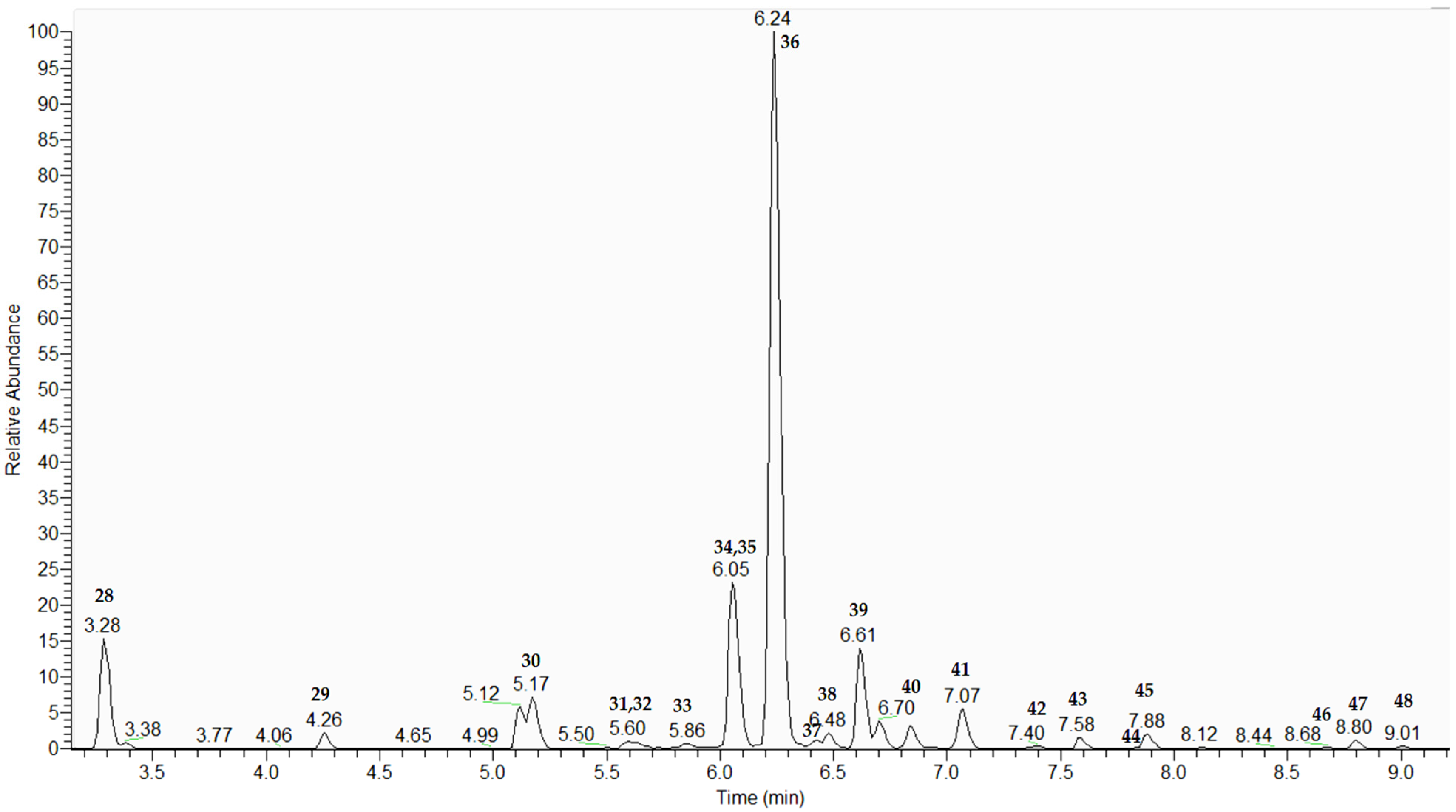
Phenylethanoid glycosides are a class of secondary metabolites usually presented in Lamiaceae species. The typical fragmentation pattern revealed losses of 162.05, 146.05, 132.02, and 162.03 Da, corresponding to hexosyl (Hex), deoxyhexosyl (dHex), pentosyl, and caffeoyl residues, respectively. Detailed discussion on the MS/MS fragmentation was previously described [9]. Among all detected compounds, 21 were classified as phenylethanoid glycosides. The extracted ion chromatogram is presented in Figure 1.
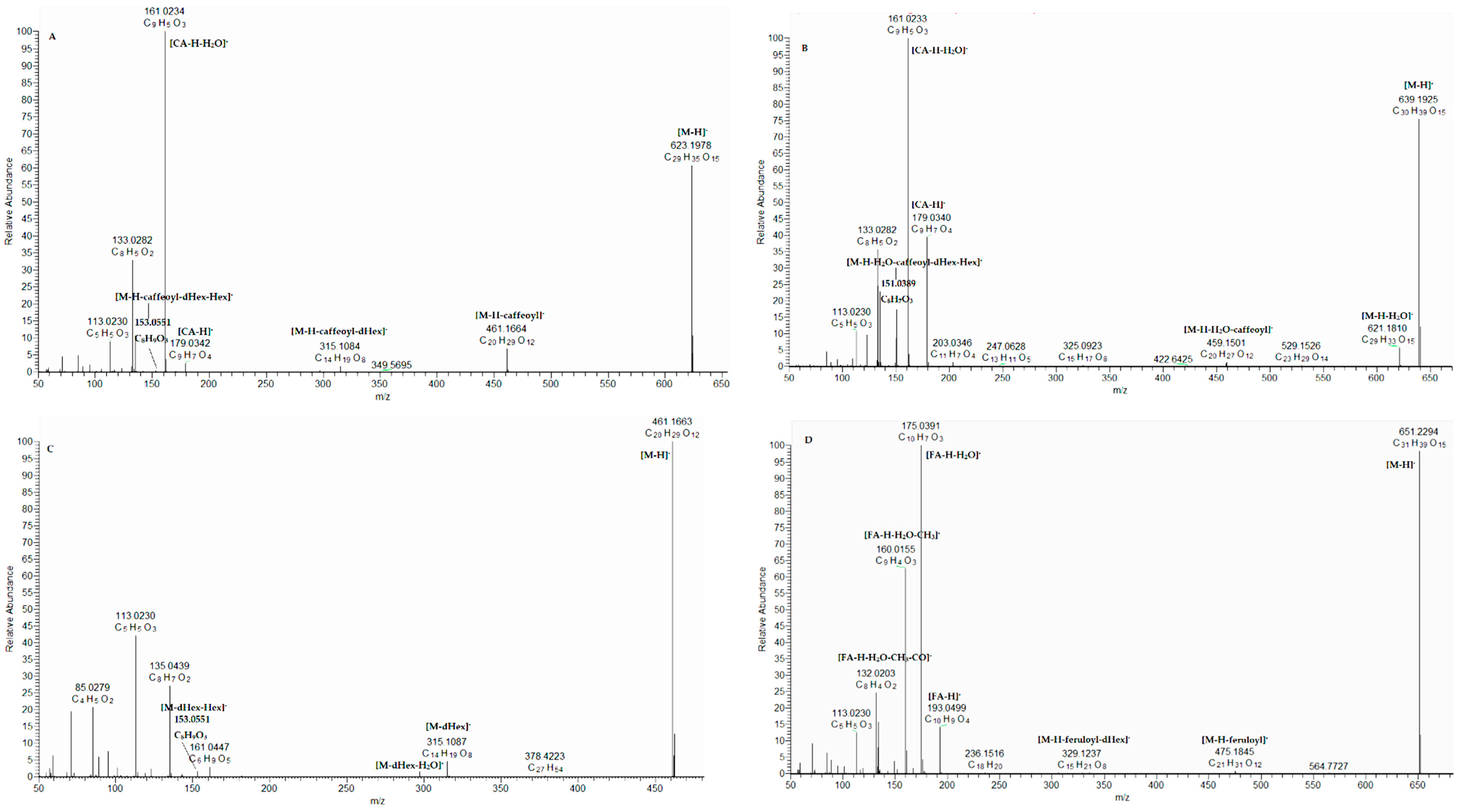
Compounds 36 and 39 with deprotonated molecular ions at m/z 623.198 shared the typical fragmentation pattern for verbascoside and isoverbascoside, with fragments at m/z 461.166 [M−H-caffeoyl] and 315.108 [M−H-caffeoyl-dHex], together with ions, corresponding to caffeic acid (CA) at m/z 179.034 [CA-H], 161.023 [CA-H-H2O], and 135.044 [CA-H-CO2] (Table S1, Figure 2A). Verbascoside (36) was unambiguously identified by comparison with the reference standard. Compounds 30/33 with [M-H] at m/z 639.193 were annotated as hydroxyverbascoside and its isomer, as they showed a similar fragmentation pattern to verbascoside, with the additional characteristic ion at m/z 151.039 corresponding to hydroxyvinyl-benzene-diol residue (Table S1, Figure 2B). In the same way, compound 32 [M-H] at m/z 667.188 was related to carboxyverbascoside based on an additional neutral loss of CO2 at m/z 623.196 (Figure S8). Compound 28 ([M-H] at m/z 461.166) shared the same fragmentation pattern except for the caffeoyl residue. Accordingly, 28 was assigned as decaffeoyl-verbascoside (Table 1, Figure 2C). Compounds 31/35 with [M-H] at m/z 785.251 differed from verbascoside with an additional hexosyl moiety and were ascribed to echinacoside and its isomer (Table 1, Figure S9). MS/MS spectrum of compound 45 afforded fragment ions at m/z 475.185 and 329.124, corresponding to the consecutive losses of feruloyl and deoxyhexosyl residues, and a base peak was consistent with dehydrated ferulic acid (FA). Thus, 45 was dereplicated as martynoside [10] (Table 1) (Figure 2D). Compounds 41 and 43 gave similar fragmentation pathways to martynoside, corroborated by the fragment ion at m/z 153.055 [M-H-feruloyl-deoxyhex-hex], corresponding to the hydroxytyrosol moiety. Thus, the compounds were dereplicated as leucoseptoside A and its isomer (Figure S10) [11]. Compounds 40 ([M-H] at m/z 769.256) and 42 ([M-H] at m/z 783.271) possessed an additional pentose in comparison with leucoseptoside and martynoside, respectively. Accordingly, they were ascribed to alyssonoside (Figure S11) [12] and leontoside B (Figure S12), respectively. Owing to the fact that compound 44 had a supplementary acetyl group compared to verbascoside, it was related to acetylvarbascoside/acetylacteoside (Figure S13). Similarly, 46 and 48 were ascribed to acetylmarthinoside and its isomer [13] (Table 1, Figure S14). Compound 29 [M-H] at m/z 475.182 yielded indicative fragment ions at m/z 167.070 [C9H11O3] and 134.036 [C9H11O3-H2O-CH3], corresponding to methoxyphenyl-hydroxyethyl residue, and 29 was annotated as darendoside B [14] (Figure S15). Compounds 34 and 38 were dereplicated as forsythoside B/samioside/lavandulifolioside based on the consecutive loss of caffeoyl residue, pentose, and deoxyhexose [10] (Figure S16). The MS/MS spectrum of 37 showed an indicative ion at m/z 323.077 [M-H-C8H10O3] and was annotated as calceolarioside [15] (Figure S17). Compound 47 [M-H] at m/z 591.208 differed from verbascoside by the absence of OH groups in the hydroxytyrosol residue and was related to jionoside C (Figure S18).

2.1.3. Iridoid and Lignan Glycosides Annotation

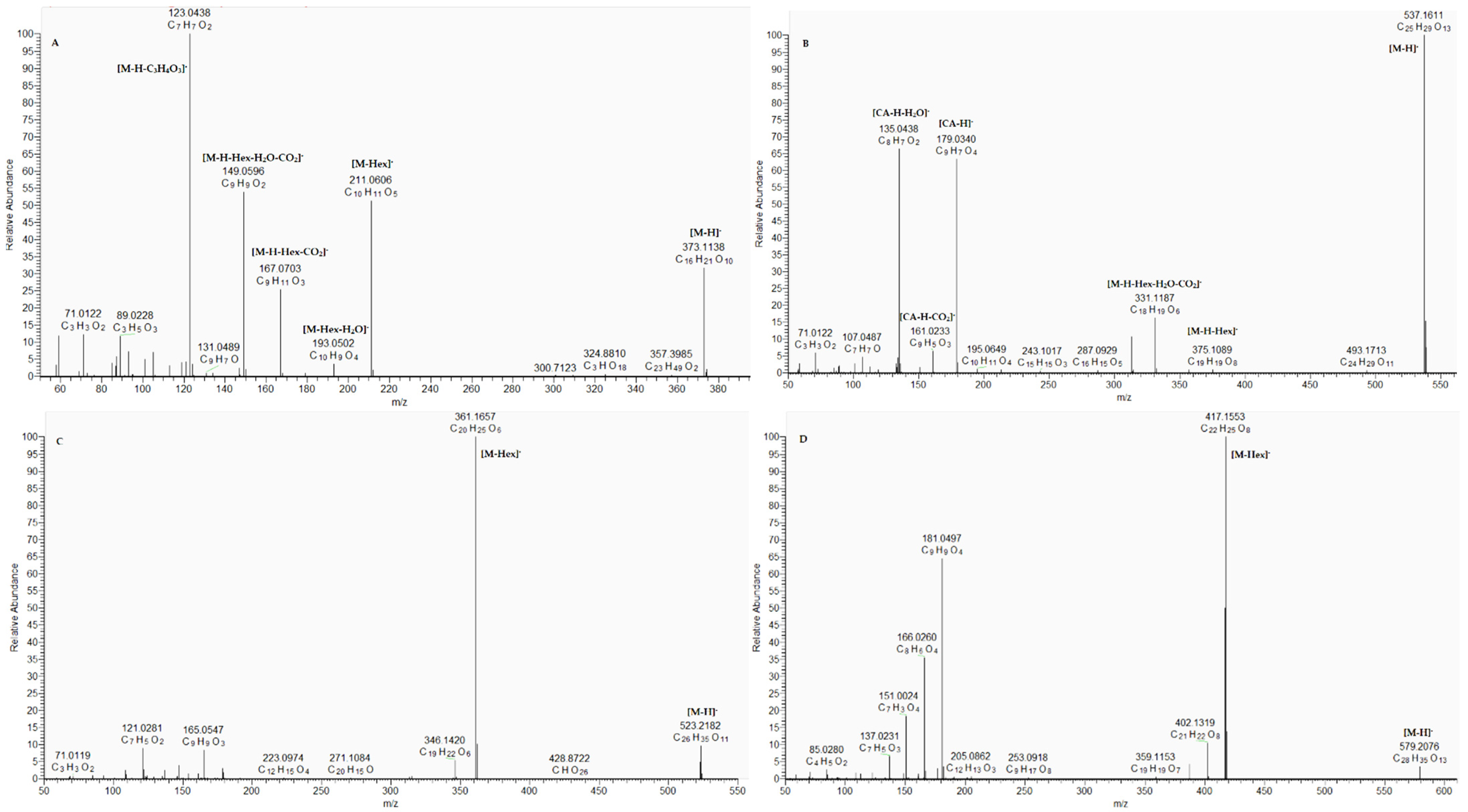
The extracted ion chromatogram of the annotated iridoid and lignan glycosides in negative ion mode is depicted in Figure S19. Compound 49 [M-H] at m/z 373.114 was dereplicated as geniposidic acid, based on the indicative ions at m/z 211.061 [M-H-Hex], 193.050 [M-H-Hex-H2O], 167.070 [M-H-Hex-CO2], 149.060 [M-H-Hex-H2O-CO2], and 123.044 [M-H-C3H4O3] [16] (Figure 3A) (Table S1). Similarly, but with an additional OH group, compound 50 was related to monotropein [17] (Figure S20). Compound 52 [M-H] at m/z 537.161 gave fragments at m/z 375.109 [M-H-Hex], 357.100 [M-H-Hex-H2O], 331.119 357.100 [M-H-Hex-H2O-CO2], and 313.108 [M-H-Hex-2H2O-CO2], together with ions at m/z 179.030 [CA-H]-, 161.023 [CA-H-CO2], and 135.044 [CA-H-H2O]. Thus, 52 was annotated as caffeoyl mussaenosidic acid [18] (Figure 3B). Based on comparison with literature data, two lignans 51 and 53 were dereplicated as secoisolariciresinol and syringaresinol O-hexosides, respectively [19] (Figure 3C,D) (Table S1).

2.1.4. Flavonoids Annotation

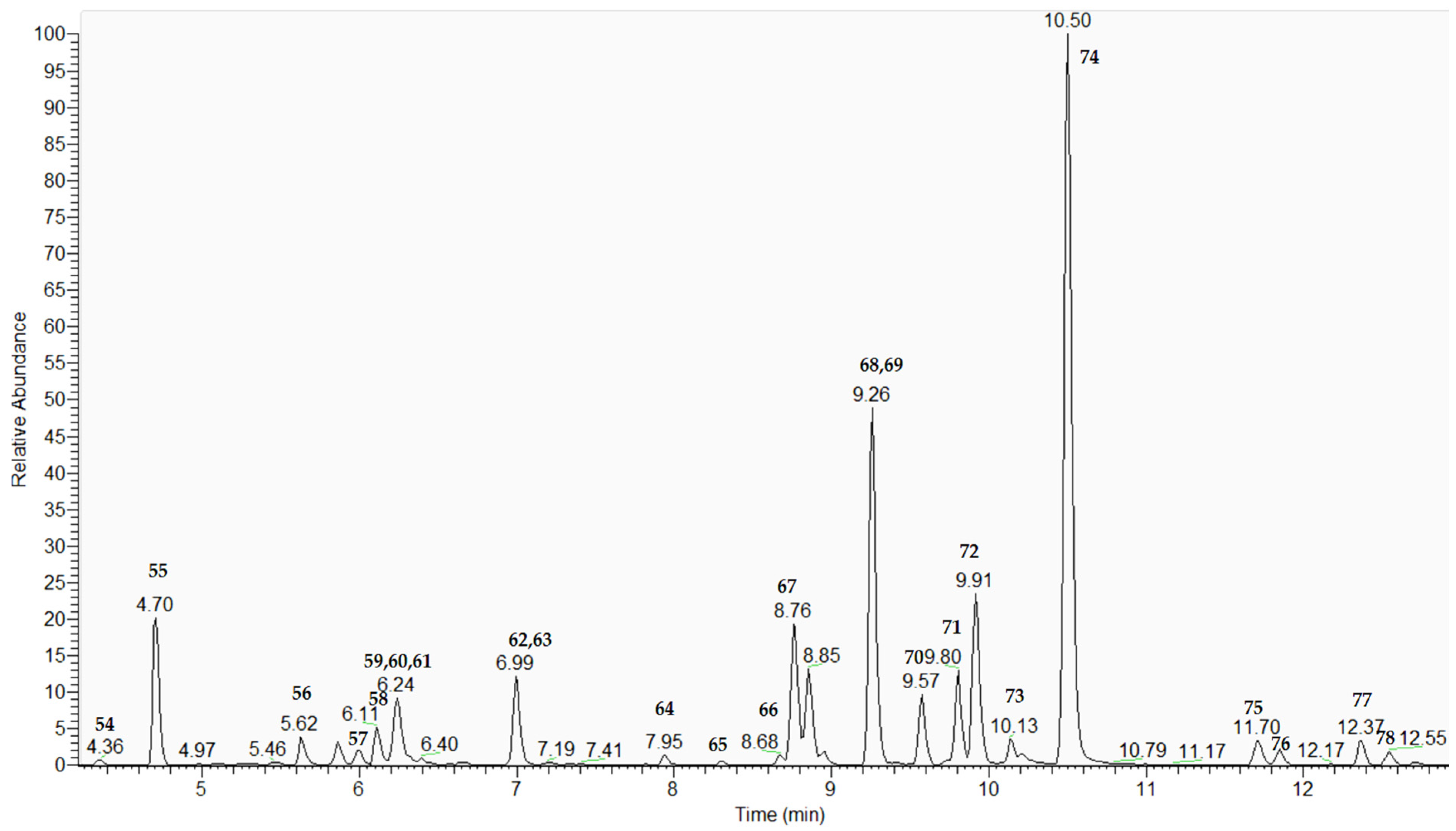
Twenty-five flavonoids belonging to the class of flavones and flavanones were annotated in L. nubica extract (Figure 4). They contain apigenin, luteolin, cirsilol, chrysoeriol, nepetin, diosmetin, velutin, naringenin, eriodictyol, an aglycone moiety and their mono-, di-, and coumaroylglycosides (Table 1 and Table S1). The flavonoids dereplication strategy was previously detailed discussed [20,21].
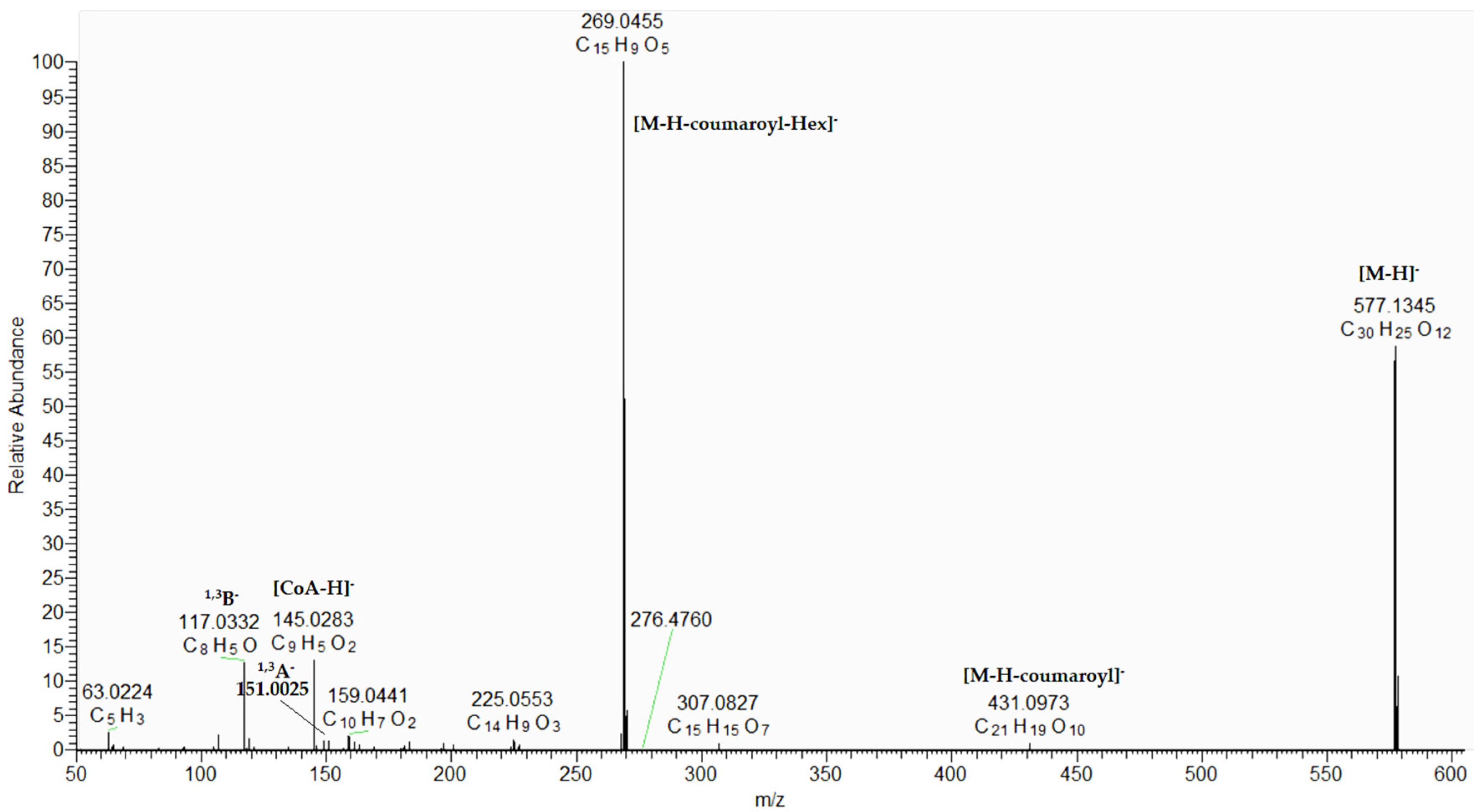
Based on the comparison with reference standards, 57, 61, 63, 64, 66, 67, 72, and 74 were unambiguously identified as isovitexin, luteolin 7-O-glucoside, apigenin 7-O-glucoside, nepetin, eriodictyol, luteolin, apigenin, and cirsiliol, respectively. The MS/MS spectra of the aforementioned compounds are presented in Figures S21–S28. Compounds 68 and 70 gave a precursor ion at [M-H] at m/z 577.135 together with fragment ions at m/z 431.098, [M-H-146.036], and 145.028 (C9H5O2), corresponding to the loss of coumaroyl residue. The base peak at m/z 269.046 [M-H-coumaroyl-Hex] and fragments at m/z 151.002 (1,3A) and 117.033 (1,3B) were due to the aglycon apigenin (Table S1).
Thus, 68/70 were annotated as apigenin 7-O-coumaroylhexoside and its isomer (Table S1, Figure 5). Similarly, 77/78 were related to apigenin 7-O-dicoumaroylhexoside (Figure S29), while 71/73 were annotated as naringenin 7-O-coumaroylhexoside and its isomer [22]. (Table 1, Figure S30).
In general, in the studied L. indica extract, 15 compounds were identified at level B, 1 at level C, 41 at level D1, and 21 at level D2 (Table 1).

2.2. Determination of Total Phenolic and Flavonoid Contents in L. nubica Extract

In this study, we determined the total phenolic and flavonoid contents of L. nubica extract, and the results are presented in Table 2. The levels of total phenolics and flavonoids were found to be 22.1 mg gallic acid equivalent per gram (GAE/g) and 4.37 mg rutin equivalent per gram (RE/g), respectively. Different results for the total bioactive compounds have been reported in the literature. Previously, Adam et al. (2018) detected total phenolic and flavonoid contents of 0.216–1.015 mg/g and 0.400–0.580 mg/g in three L. nubica extracts, respectively [3]. Another study by Ali et al. (2013) reported these values for the methanol extract of L. aspera as 131.15 mg GAE/g and 135.85 mg QE/g, respectively [23]. Furthermore, the total phenolic and flavonoid contents were found to be 164.96 mg GAE/g and 36.95 mg RE/g, respectively, in the methanol extract of L. cephalotes [24]. Chetia and Saikia (2020) investigated the total phenolic and flavonoid content of extracts from various parts of L. aspera, reporting that polar extracts were particularly rich in these bioactive compounds [25]. Hakim et al. (2021) also found that the total phenolic content was 484.88 mg GAE/100 g of fresh material in the methanol extract of L. aspera [26]. The different levels obtained in the reported results can be explained by geographical and climatic differences, as well as by the units of the used measurement.

2.3. Elucidation of Antioxidant Potential of L. nubica Extract

Plant secondary metabolites such as phenylethanoid and flavonoid glycosides are among the best-known and most active antioxidant molecules [27,28]. The current study examined the antioxidant properties of L. nubica extract using various chemical assays, including radical scavenging, reducing power and metal chelating. The results are presented in Table 2. DPPH and ABTS (•+) radicals are the most common methods used to detect the hydrogen donation ability of antioxidant compounds. In the present study, the tested extract exhibited scavenging ability against both radicals (DPPH: 38.3 mg TE/g; ABTS: 36.8 mg TE/g). Reducing power is a significant parameter in antioxidant evaluation and is related to the ability to donate electrons. CUPRAC and FRAP assays were used for the measurement of reducing power. The tested extract exhibited reduction potential (CUPRAC: 71.1 mg TE/g; FRAP: 44.9 mg TE/g). Similar to CUPRAC and FRAP assays, the phosphomolybdenum (PBD) assay involves the reduction of Mo(VI) to Mo(V) by antioxidants under acidic conditions. The ability of the tested extract in the PBD assay was 1.33 mmol TE/g. Regarding metal chelation, the chelation of ferrous ions can control the production of hydroxyl radicals in the Fenton reaction. As shown in Table 2, the tested extract exhibited metal chelating ability, with 8.91 mg EDTA/g.
Several researchers have reported the antioxidant properties of Leucas species, including L. nubica. For instance, Adam et al. (2018) studied three L. nubica extracts and found that the methanol extract exhibited the greatest DPPH scavenging ability at a concentration of 1 mg/mL [3]. Sakthidhasan et al. (2022) also investigated the antioxidant properties of L. lavandulifolia, finding that its methanol extract exhibited the best DPPH scavenging ability (IC50: 3.91 µg/mL), as well as ferric reducing ability [29]. Chew et al. (2012) evaluated the radical scavenging ability of different parts of L. aspera and found that the root displayed the best DPPH scavenging ability at a concentration of 2 mg/mL [30]. Aryal et al. (2019) revealed that the methanol extract of L. cephalotes exhibited remarkable DPPH scavenging and ferric reducing effects [24]. Gangadharan and Benny (2021) examined the different extracts of L. aspera for antioxidant properties, finding that the methanol extract possessed the highest radical scavenging and ferric reducing effects [31]. Taken together, we conclude that a polar solvent can be useful for obtaining extracts from the Leucas genus.
L. nubica contains verbascoside (VB), which has been reported to exert powerful antioxidant activity in several assays (TEAC, ORAC, HORAC, FRAP, CUPRAC) [32]. Furthermore, VB actively scavenges superoxide anion, hydrogen peroxide, nitic oxide and peroxy-nitrite radicals. Indeed, VB manifested a greater direct ROS scavenging capacity in comparison with Trolox. Thus, IC50 values of 7.6 μM for VB and 24.2 μM for Trolox were evaluated in the DPPH assay, while IC50 values of 731 μM and 1205 μM were determined for VB and Trolox, respectively, in the superoxide anion (O2) assay [33]. The same trends have been reported in a comparative study of VB and ascorbinic acid, where in DPPH, O2 and hydroxyl radical (OH) assays, IC50 values of 58.1, 24.4 and 357 μM were estimated for VB and IC50 values of 284.9, 66.1 and 1031 μM were found for ascorbinic acid [34]. Owing to the fact that hydroxyl radicals are extremely harmful, the scavenging capacity of hydroxyl radicals appears to be basically associated with the prevention of lipid peroxydation. Furthermore, VB-rich extract from Scutellaria laterifoli (485 mg/100 g dw) showed high metal chelating capacity [35]. It is worth noting that in models of H2O2-stressed HepG2 and SH-SY5Y cells, pre-treatment with VB significantly reduced intracellular ROS levels with respect to the stressed control [34]. Taken together, these results are in line with the neuroprotective effects established for nutraceutical products rich in VB from Olea europaea and Hybiscus sabdarifa in a model of oxidative stress injury in human neuroblastoma SH-SY5Y [36]. The capacity of VB to scavenge free radicals could also be related to its chemopreventive capacity in cell culture under oxidative stress, as shown in the aforementioned studies. It has been established that VB passes the blood–brain barrier, preventing ROS accumulation and preserving the antioxidant system [37].
In addition to evoking free radical scavenging, the antioxidant mechanism of VB was ascribed to the gene transcription of catalase, glutathione peroxidase and other antioxidant enzymes through the nuclear factor erythroid 2-related factor (Nrf2) pathway, which is the primary transcriptional regulator of the cellular antioxidant response [38].
In addition, verbascoside, cirsiliol, and apigenin 7-O-glucoside being among predominant flavonoids in the extract could also contribute to the antioxidant activity of the extract. It have been proven that these flavonoids neutralize reactive oxygen species and protect cells from oxidative damage by influencing antioxidant pathways (like Nrf-2/NF-κB) [39,40].

2.4. Elucidation of Enzyme Inhibitory Potential of L. nubica Extract

To provide new raw material for safer enzyme inhibitors, we studied the enzyme inhibitory properties of the L. nubica extract against cholinesterase, amylase, glucosidase, and tyrosinase. The results are presented in Table 2. The inhibitory effects on AChE and BChE were 2.23 mg GALAE/g and 2.38 mg GALAE/g, respectively. The inhibition values for amylase and glucosidase were 0.41 mmol ACAE/g and 1.62 mmol ACAE/g, respectively. Regarding tyrosinase inhibition, the extract showed an IC50 of 60.73 mg KAE/g. There are few reports on the enzyme inhibitory properties of Leucas species. In a study by Meera et al. (2017), a protein isolated from L. aspera exhibited potent amylase inhibition (90%) [41]. In another study by Verma et al. (2017), the amylase inhibitory effects of different parts of L. cephalotes were examined, and the fruits and leaves exhibited potent inhibition, with values exceeding 70% [41]. The n-hexane extract of L. cephalotes displayed an inhibitory effect on AChE with a value of 78.7%, as reported by Shahwar et al. (2012) [42]. In another study by Fatima et al. (2008), a new sterol (leucisterol) was isolated from L. urticifolia, and it exhibited a significant inhibitory effect on butyrylcholinesterase [43]. As can be seen in Table 2, the tested extract contained compounds, including apigenin, luteolin, caffeic and chlorogenic acid, which are already known to be enzyme inhibitors [44,45]. Thus, the methanol extract of L. nubica can be considered a valuable source of natural enzyme inhibitors.
It was reported that verbascoside possessed significant enzyme inhibitory activity towards acetyl cholinesterase and butyrylcholinesterase, with IC50 values of 19.9 and 35.0 μM (IC50 of bereberin was 0.09 μM) [46]. Verbascoside has promising β-secretase inhibitory activity, with an IC50 value of 6.3 nM alongside commercial olive fruit extracts (up to 20 μg) [47]. Interestingly, the cholinesterase inhibitory activity of VB was not detected in the aforementioned study. In another work, VB was tested in a wide concentration range (up to 350 μM), but the AChE inhibition did not exceed 18% (https://doi.org/10.3390/antiox9121207). On the other hand, VB-rich plant methanol extracts from Veronica teucrium and V. jacquinii at 50 mg/mL exhibited effective AChE activity (up to 35% enzyme inhibition), which pointed out the synergistic role of bioactive compounds in the extracts [48].
The data on the enzyme inhibitory activity of VB against tyrosinase are contradictory. It has been reported to have a dose-dependent activation of the enzyme, which was not pronounced in the highest concentration [34]. On the other hand, it was not detected in the study of olive fruit extracts and their main constituents [47].
Apigenin is a flavonoid with notable inhibitory activity against AChE, primarily mediated by its ability to form hydrogen bonds with key amino acid residues at the enzyme’s active site, including Ser200 and His440. Hydrophobic interactions further stabilize apigenin within the active site, resulting in a dose-dependent reduction in AChE activity with an IC50 value of 40.7 µM [44]. Recently, O-glucosides of apigenin and luteolin demonstrated weak tyrosinase and butyrylcholine esterase inhibition, while luteolin-7-O-glucoside showed a more significant inhibitory effect against acetylcholinesterase (65 ± 2%) [49].

3. Materials and Methods

3.1. Plant Material

Leucas nubica aerial parts were collected from Erkowit city (18°42′0″ N, 37°0′0″ E), eastern Sudan, during the full flowering stage, in December, 2024. The plant material was identified by Prof. Maha Kordofani (taxonomist). A voucher specimen was deposited at the Herbarium, KHU (No. LN/S18). The collected plant material was dried at room temperature (20–22 °C) and 50% relative humidity. The aerial parts were dried until a constant weight of the plant material.

3.2. Sample Extraction

Air-dried powdered aerial parts (20 g) were extracted with 50% MeOH (1:30 w/v) by ultrasound (100 kHz, ultra-sound bath Biobase UC-20C, Jinan, China) for 15 min, three times, at room temperature. The methanol was then evaporated in vacuo, and water residue was lyophilized (lyophilizer Biobase BK-FD10P) to yield crude extract of 2.6 g. Then, the lyophilized extract was dissolved in 50% methanol (0.1 mg/mL), filtered through a 0.45 μm syringe filter and subjected to UHPLC-HRMS analyses. The same extract was used for further biological tests.

3.3. Chemicals

Acetonitrile (for LC–MS), formic acid (for LC–MS) and methanol (for HPLC) were purchased from Honeywell (Charlotte, CA, USA). The reference standards were obtained from Extrasynthese (Genay, France) (for protocatechuic, o-coumaric, caffeic, p-hydroxyphenylacetic acid, gentisic acid, isovitexin, luteolin 7-O-glucoside, eriodictyol, apigenin, nepetin) and Phytolab (Vesten-bergsgreuth, Bavaria, Germany) (chlorogenic acid, verbascoside).

3.4. UHPLC-HRMS

The UHPLC-HRMS analyses were performed as previously described [50] on a Q Exactive Plus mass spectrometer (ThermoFisher Scientific, Inc., Waltham, MA, USA) with a heated electrospray ionization (HESI-II) probe in negative and positive ion modes within the m/z range from 150 to 1500. Chromatographic separation was achieved on a reversed-phase column C18 (1.8 µm, 2.1 × 100 mm), and the temperature was 40 °C. The mobile phase consisted of 0.1% formic acid in water (A) and 0.1% formic acid in acetonitrile (B), the run time was 33 min, and the flow rate and other chromatographic conditions were previously described [50]. The Xcalibur 4.2 software (ThermoScientific, Waltham, MA, USA) was used for data processing.

3.5. Assay for Total Phenolic and Flavonoid Contents

Total phenolic and flavonoid content quantification was carried out according to the methods previously described [51]. Gallic acid (GA) and rutin (RE) served as standards in the assays, and the outcomes were reported as gallic acid equivalents (GAE) and rutin equivalents. The experimental details are given in the Supplementary Materials.

3.6. Assays for In Vitro Antioxidant Capacity

The antioxidant activity of the studied extract was evaluated [52]. The DPPH, ABTS radical scavenging, CUPRAC, and FRAP test results were presented as milligrams of Trolox equivalents (TE) per gram of extract. The antioxidant potential determined by the phosphomolybdenum (PBD) assay was measured in millimoles of Trolox equivalents (TE) per gram of extract, and the metal chelating activity (MCA) was conveyed as milligrams of disodium edetate equivalents (EDTAE) per gram of extract. The experimental details are given in the Supplementary Materials.

3.7. Inhibitory Effects Against Some Key Enzymes

Enzyme inhibition experiments on the samples were conducted following established protocols [52]. Amylase and glucosidase inhibition were quantified in mmol acarbose equivalents (ACAE) per gram of extract, while acetylcholinesterase (AChE) and butyrylcholinesterase (BChE) inhibition were expressed in milligrams of galanthamine equivalents (GALAE) per gram of extract. Tyrosinase inhibition was measured in milligrams of kojic acid equivalents (KAE) per gram of extract. The experimental details are given in the Supplementary Materials.

4. Conclusions

This study is the first attempt to delineate the phytochemical profiling of the unexplored plant L. nubica. In summary, we demonstrated that the methanol–aqueous extract from the aerial parts is a rich source of phenylethanoid glycosides alongside iridoids, flavonoids and lignans. Based on UHPLC-HRMS analysis, verbascoside was among the dominant secondary metabolites together with the flavonoids cirsiliol and apigenin glycosides, correlating closely with the antioxidant effects of the plant extract. The occurrence of verbascoside supports the observed inhibitory activity towards acetyl- and butyrylcholinesterase. Furthermore, an inhibitory activity was proven against the key enzyme in melanin biosynthesis, tyrosinase. In the context of carbohydrate metabolism, the studied extract possesses promising a glucosidase inhibitory activity along with moderate α-amylase inhibition. Indeed, our findings suggest L. nubica as a hopeful candidate for the prevention of conditions associated with oxidative stress and neurodegeneration. Thus, the plant extract would need to be explored in in vitro/in vivo models in the context of neuroprotection.

Supplementary Materials

The following supporting information can be downloaded at: https://www.mdpi.com/article/10.3390/plants15040522/s1, Table S1: LC-HRMS metabolite profiling of Leucas nubica extract; Figure S1: ESI-MS/MS spectrum of protocatechuic acid (11) at m/z 153.0193; Figure S2: ESI-MS/MS spectrum of chlorogenic acid (13) at m/z 353.0878; Figure S3: ESI-MS/MS spectrum of p-coumaric acid (17) at m/z 163.0401; Figure S4: ESI-MS/MS spectrum of caffeic acid (20) at m/z 179.0350; Figure S5: ESI-MS/MS spectrum of p-hydroxyphenyl acetic acid (21) at m/z 151.0400; Figure S6: ESI-MS/MS spectrum of gentisic acid (22) at m/z 151.0400; Figure S7: ESI-MS/MS spectrum of o-coumaric acid (23) at m/z 163.0401; Figure S8: ESI-MS/MS spectrum of carboxyverbascoside (32) at m/z 667.1880; Figure S9: ESI-MS/MS spectrum of echinacoside (31) at m/z 785.2510; Figure S10: ESI-MS/MS spectrum of leucoseptoside A (41) at m/z 637.2138; Figure S11: ESI-MS/MS spectrum of alyssonoside (40) at m/z 769.2561; Figure S12: ESI-MS/MS spectrum of leontoside B (40) at m/z 783.2717; Figure S13: ESI-MS/MS spectrum of acetylvarbascoside (44) at m/z 665.2087; Figure S14: ESI-MS/MS spectrum of acetylmartynoside (46) at m/z 693.2400; Figure S15: ESI-MS/MS spectrum of darendoside B (29) at m/z 475.1821; Figure S16: ESI-MS/MS spectrum of forsythoside B/samioside/lavandulifolioside (34) at m/z 755.2404; Figure S17: ESI-MS/MS spectrum of calceolarioside (37) at m/z 477.1402; Figure S18: ESI-MS/MS spectrum of jionoside C (47) at m/z 591.2083; Figure S19: Extracted ion chromatogram (EIC) of iridoid and lignan glycosides; Figure S20: ESI-MS/MS spectrum of monotropein (50) at m/z 389.1089; Figure S21: ESI-MS/MS spectrum of isovitexin (57) at m/z 431.0984; Figure S22: ESI-MS/MS spectrum of luteolin 7-O-glucoside (61) at m/z 447.0933; Figure S23: ESI-MS/MS spectrum of apigenin 7-O-glucoside (63) at m/z 431.0984; Figure S24: ESI-MS/MS spectrum of nepetin (64) at m/z 315.0510; Figure S25: ESI-MS/MS spectrum of eriodictyol (66) at m/z 287.0561; Figure S26: ESI-MS/MS spectrum of luteolin (67) at m/z 285.0405; Figure S27: ESI-MS/MS spectrum of apigenin (72) at m/z 269.0455; Figure S28: ESI-MS/MS spectrum of cirsiliol (74) at m/z 329.0667; Figure S29: ESI-MS/MS spectrum of apigenin 7-O-dicoumaroyl-O-hexoside (77) at m/z 723.1719; Figure S30: ESI-MS/MS spectrum of naringenin 7-O-coumaroyl-O-hexoside (71) at m/z 579.1508 (mass accuracy 5 ppm) (for numbers and fragmentation patterns, see Table 1) [53].

Author Contributions

Conceptualization, R.G. and S.Y.; methodology, D.Z.-D., G.Z. and S.S.; software, D.Z.-D.; validation, D.Z.-D. and G.Z.; formal analysis, D.Z.-D. and G.Z.; investigation, S.Y., S.S. and R.G.; resources, S.Y. and S.S.; data curation, D.Z.-D.; writing—original draft preparation, D.Z.-D. and G.Z.; writing—review and editing, R.G.; visualization, D.Z.-D.; supervision, R.G.; project administration, D.Z.-D.; funding acquisition, D.Z.-D. All authors have read and agreed to the published version of the manuscript.

Funding

This research is financed by the European Union—NextGenerationEU, through the National Recovery and Resilience Plan of the Republic of Bulgaria, project BG-RRP-2.004-0004-C01 “Strategic research and innovation program for development of Medical University—Sofia”.

Data Availability Statement

The original contributions presented in the study are included in the article; further inquiries can be directed to the corresponding author.

Conflicts of Interest

The authors declare no conflicts of interest.

References

  1. The World Flora Online. Available online: www.worldforaonline.org (accessed on 1 January 2025).
  2. Elamin, H. Trees and Shrubs of Sudan; Ithaca Press: Exeter, UK, 1990; ISBN 0863721168, 9780863721168. [Google Scholar]
  3. Adam, M.; Elhassan, G.O.M.; Yagi, S.; Senol, F.S.; Orhan, I.E.; Ahmed, A.A.; Efferth, T. In Vitro Antioxidant and Cytotoxic Activities of 18 Plants from the Erkowit Region, Eastern Sudan. Nat. Prod. Bioprospect. 2018, 8, 97–105. [Google Scholar] [CrossRef]
  4. Hajare, S.K.; Khilnani, V.L.; Naik, Y.B.; Ghalsasi, Y. Pharmacological Properties of Leucas aspera: A Review. J. Nat. Remedies 2025, 305–313. [Google Scholar] [CrossRef]
  5. Manivannan, R. Isolation of Apigenin-7-O-(6″-O-E-Caffeoyl)-β-D-Glucopyranoside from Leucas aspera L. with Anti-Inflammatory and Wound Healing Activities. J. Pharm. Pharmacogn. Res. 2016, 4, 54–61. [Google Scholar] [CrossRef]
  6. Kuang, J.-C.; Cen, F.-L.; Zhang, X.; Nong, X.-H.; Zhou, X.-M.; Li, X.-B.; Yu, Z.-X.; Chen, G.-Y. Nor-Halimane and Spiro-Labdane Diterpenoids with Anti-Inflammatory Activity from Leucas Ciliata Benth. Phytochemistry 2026, 241, 114681. [Google Scholar] [CrossRef]
  7. Çiçek, S.S.; Mangoni, A.; Hanschen, F.S.; Agerbirk, N.; Zidorn, C. Essentials in the Acquisition, Interpretation, and Reporting of Plant Metabolite Profiles. Phytochemistry 2024, 220, 114004. [Google Scholar] [CrossRef]
  8. Zheleva-Dimitrova, D.; Voynikov, Y.; Gevrenova, R.; Balabanova, V. A Comprehensive Phytochemical Analysis of Sideritis Scardica Infusion Using Orbitrap UHPLC-HRMS. Molecules 2023, 29, 204. [Google Scholar] [CrossRef]
  9. Mróz, M.; Malinowska-Pańczyk, E.; Bartoszek, A.; Kusznierewicz, B. Comparative Study on Assisted Solvent Extraction Techniques for the Extraction of Biologically Active Compounds from Sideritis Raeseri and Sideritis Scardica. Molecules 2023, 28, 4207. [Google Scholar] [CrossRef]
  10. Abdel-Hady, H.; El-Sayed, M.M.; Abdel-Hady, A.A.; Hashash, M.M.; Abdel-Hady, A.M.; Aboushousha, T.; Abdel-Hameed, E.-S.S.; Abdel-Lateef, E.E.-S.; Morsi, E.A. Nephroprotective Activity of Methanolic Extract of Lantana Camara and Squash (Cucurbita pepo) on Cisplatin-Induced Nephrotoxicity in Rats and Identification of Certain Chemical Constituents of Lantana Camara by HPLC-ESI-MS. Pharmacogn. J. 2017, 10, 136–147. [Google Scholar] [CrossRef]
  11. Göğer, F.; Özek, G.; TekiN, M.; Yur, S.; Özek, T. Phytochemical Profiling and Evaluation of Marrubium Sivasense Aytaç, Akgül & Ekici for Antioxidant Activity and Inhibition Effects on α-Amylase, Lipoxygenase, Xanthine Oxidase and Tyrosinase Enzymes. J. Turk. Chem. Soc. Sect. A Chem. 2019, 6, 281–292. [Google Scholar] [CrossRef]
  12. Petreska, J.; Stefova, M.; Ferreres, F.; Moreno, D.A.; Tomás-Barberán, F.A.; Stefkov, G.; Kulevanova, S.; Gil-Izquierdo, A. Potential Bioactive Phenolics of Macedonian Sideritis Species Used for Medicinal “Mountain Tea”. Food Chem. 2011, 125, 13–20. [Google Scholar] [CrossRef]
  13. Wang, X.; Wang, J.; Guan, H.; Xu, R.; Luo, X.; Su, M.; Chang, X.; Tan, W.; Chen, J.; Shi, Y. Comparison of the Chemical Profiles and Antioxidant Activities of Different Parts of Cultivated Cistanche Deserticola Using Ultra Performance Liquid Chromatography-Quadrupole Time-of-Flight Mass Spectrometry and a 1,1-Diphenyl-2-Picrylhydrazyl-Based Assay. Molecules 2017, 22, 2011. [Google Scholar] [CrossRef] [PubMed]
  14. Guan, H.; Li, P.; Wang, Q.; Zeng, F.; Wu, J.; Zhang, F.; Liao, S.; Shi, Y. Deciphering the Chemical Constituents of Shengjiang Xiexin Decoction by Ultrahigh-performance Liquid Chromatography-quadrupole/Orbitrap High-resolution Mass Spectrometry and the Impact of 20 Characteristic Components on Multidrug Resistance-associated Protein 2 in the Vesicular Transport Assay. J. Sep. Sci. 2022, 45, 3459–3479. [Google Scholar] [CrossRef] [PubMed]
  15. Michel, T.; Khlif, I.; Kanakis, P.; Termentzi, A.; Allouche, N.; Halabalaki, M.; Skaltsounis, A.-L. UHPLC-DAD-FLD and UHPLC-HRMS/MS Based Metabolic Profiling and Characterization of Different Olea Europaea Organs of Koroneiki and Chetoui Varieties. Phytochem. Lett. 2015, 11, 424–439. [Google Scholar] [CrossRef]
  16. Gao, H.; Liu, Z.; Song, F.; Xing, J.; Zheng, Z.; Liu, S. A Strategy for Identification and Structural Characterization of Compounds from Plantago asiatica L. by Liquid Chromatography-Mass Spectrometry Combined with Ion Mobility Spectrometry. Molecules 2022, 27, 4302. [Google Scholar] [CrossRef]
  17. Zhou, Q.; Yan, H.; Li, R.; Li, X.; Wei, J. Quantitative Determination of Monotropein in Rat Plasma and Tissue by LC–MS/MS and Its Application to Pharmacokinetic and Tissue Distribution Studies. Rev. Bras. Farmacogn. 2018, 28, 451–456. [Google Scholar] [CrossRef]
  18. Fauvel, M.-T.; Bousquet-Melou, A.; Moulis, C.; Gleye, J.; Jensen, S.R. Iridoid Glucosides from Avicennia Germinans. Phytochemistry 1995, 38, 893–894. [Google Scholar] [CrossRef]
  19. Eklund, P.C.; Backman, M.J.; Kronberg, L.Å.; Smeds, A.I.; Sjöholm, R.E. Identification of Lignans by Liquid Chromatography-electrospray Ionization Ion-trap Mass Spectrometry. J. Mass Spectrom. 2008, 43, 97–107. [Google Scholar] [CrossRef]
  20. Gevrenova, R.; Kostadinova, I.; Stefanova, A.; Balabanova, V.; Zengin, G.; Zheleva-Dimitrova, D.; Momekov, G. Phytochemical Profiling, Antioxidant and Cognitive-Enhancing Effect of Helichrysum Italicum Ssp. Italicum (Roth) G. Don (Asteraceae). Plants 2023, 12, 2755. [Google Scholar] [CrossRef]
  21. Gevrenova, R.; Zheleva-Dimitrova, D.; Balabanova, V.; Voynikov, Y.; Sinan, K.I.; Mahomoodally, M.F.; Zengin, G. Integrated Phytochemistry, Bio-Functional Potential and Multivariate Analysis of Tanacetum macrophyllum (Waldst. & Kit.) Sch. Bip. and Telekia speciosa (Schreb.) Baumg. (Asteraceae). Ind. Crops Prod. 2020, 155, 112817. [Google Scholar] [CrossRef]
  22. De Rijke, E.; Out, P.; Niessen, W.M.A.; Ariese, F.; Gooijer, C.; Brinkman, U.A.T. Analytical Separation and Detection Methods for Flavonoids. J. Chromatogr. A 2006, 1112, 31–63. [Google Scholar] [CrossRef] [PubMed]
  23. Ali, M.S.; Sayeed, M.A.; Nabi, M.M.; Rahman, M.A.A. In Vitro Antioxidant and Cytotoxic Activities of Methanol Extract of Leucas aspera Leaves. J. Pharmacogn. Phytochem. 2013, 2, 8–13. [Google Scholar]
  24. Aryal, S.; Baniya, M.K.; Danekhu, K.; Kunwar, P.; Gurung, R.; Koirala, N. Total Phenolic Content, Flavonoid Content and Antioxidant Potential of Wild Vegetables from Western Nepal. Plants 2019, 8, 96. [Google Scholar] [CrossRef]
  25. Chetia, J.; Saikia, L.R. Phytochemical Analysis of Leucas aspera (Willd.) Link. from Dibrugarh. J. Sci. Res. 2020, 64, 96–103. [Google Scholar] [CrossRef]
  26. Hakim, M.A.; Polash, M.A.S.; Ashrafuzzaman, M.; Fakir, M.S.A. Screening of Bio-Active Pigments, Antioxidant Activity, Total Phenolic and Flavonoid Content of Some Economically Important Medicinal Plants for Ethno-Botanical Uses. Turk. J. Agric.-Food Sci. Technol. 2021, 9, 1767–1774. [Google Scholar] [CrossRef]
  27. Tian, X.-Y.; Li, M.-X.; Lin, T.; Qiu, Y.; Zhu, Y.-T.; Li, X.-L.; Tao, W.-D.; Wang, P.; Ren, X.-X.; Chen, L.-P. A Review on the Structure and Pharmacological Activity of Phenylethanoid Glycosides. Eur. J. Med. Chem. 2021, 209, 112563. [Google Scholar] [CrossRef]
  28. Stachelska, M.A.; Karpiński, P.; Kruszewski, B. A Comprehensive Review of Biological Properties of Flavonoids and Their Role in the Prevention of Metabolic, Cancer and Neurodegenerative Diseases. Appl. Sci. 2025, 15, 10840. [Google Scholar] [CrossRef]
  29. Periasamy, S.; Banupriya, J.; Ramasamy, R.; Byrappa, M.; Viswanathan, M. GC-MS, antibacterial and antioxidant potential of Leucas lavandulifolia Sm Periasamy Sakthidhasan, Jayaraman Banupriya, Ramasamy Rajesh, Madepalli Byrappa Gowdu Viswanathan. Int. J. Bot. Stud. 2022, 7, 264–269. [Google Scholar]
  30. Chew, A.L.; Jessica, J.J.A.; Sasidharan, S. Antioxidant and Antibacterial Activity of Different Parts of Leucas aspera. Asian Pac. J. Trop. Biomed. 2012, 2, 176–180. [Google Scholar] [CrossRef]
  31. Gangadharan, A.; Benny, P.J. Free Radical Scavenging and Elastase Inhibitory Activity of Different Extracts of Leucas aspera (Willd.) Link-An in Vitro Study. Indian J. Nat. Prod. Resour. (IJNPR) [Former. Nat. Prod. Radiance (NPR)] 2021, 12, 61–67. [Google Scholar]
  32. Alipieva, K.; Korkina, L.; Orhan, I.E.; Georgiev, M.I. Verbascoside—A Review of Its Occurrence, (Bio)Synthesis and Pharmacological Significance. Biotechnol. Adv. 2014, 32, 1065–1076. [Google Scholar] [CrossRef]
  33. Li, X.; Xie, Y.; Li, K.; Wu, A.; Xie, H.; Guo, Q.; Xue, P.; Maleshibek, Y.; Zhao, W.; Guo, J.; et al. Antioxidation and Cytoprotection of Acteoside and Its Derivatives: Comparison and Mechanistic Chemistry. Molecules 2018, 23, 498. [Google Scholar] [CrossRef] [PubMed]
  34. Burgos, C.; Muñoz-Mingarro, D.; Navarro, I.; Martín-Cordero, C.; Acero, N. Neuroprotective Potential of Verbascoside Isolated from Acanthus mollis L. Leaves through Its Enzymatic Inhibition and Free Radical Scavenging Ability. Antioxidants 2020, 9, 1207. [Google Scholar] [CrossRef] [PubMed]
  35. Kwiecień, I.; Miceli, N.; D’Arrigo, M.; Marino, A.; Ekiert, H. Antioxidant Potential and Enhancement of Bioactive Metabolite Production in In Vitro Cultures of Scutellaria lateriflora L. by Biotechnological Methods. Molecules 2022, 27, 1140. [Google Scholar] [CrossRef] [PubMed]
  36. Chiaino, E.; Micucci, M.; Cosconati, S.; Novellino, E.; Budriesi, R.; Chiarini, A.; Frosini, M. Olive Leaves and Hibiscus Flowers Extracts-Based Preparation Protect Brain from Oxidative Stress-Induced Injury. Antioxidants 2020, 9, 806. [Google Scholar] [CrossRef]
  37. Zhao, Y.; Wang, S.; Pan, J.; Ma, K. Verbascoside: A Neuroprotective Phenylethanoid Glycosides with Anti-Depressive Properties. Phytomedicine 2023, 120, 155027. [Google Scholar] [CrossRef]
  38. Rossi, R.; Mainardi, E.; Vizzarri, F.; Corino, C. Verbascoside-Rich Plant Extracts in Animal Nutrition. Antioxidants 2023, 13, 39. [Google Scholar] [CrossRef]
  39. Gao, J.; Li, H.; Wang, Z.; Jiang, G.; Pan, L.; Jiang, Z.; Lei, X. Cirsiliol Alleviates Experimental Inflammatory Bowel Disease via Restoration of Intestinal Barrier Integrity and Inhibition of NF-κB and MAPK Pathways. Sci. Rep. 2025, 15, 24408. [Google Scholar] [CrossRef]
  40. Wang, W.; Yue, R.-F.; Jin, Z.; He, L.-M.; Shen, R.; Du, D.; Tang, Y.-Z. Efficiency Comparison of Apigenin-7-O-Glucoside and Trolox in Antioxidative Stress and Anti-Inflammatory Properties. J. Pharm. Pharmacol. 2020, 72, 1645–1656. [Google Scholar] [CrossRef]
  41. Meera, C.; Meenakumari, S.; Thirumavalavan, M.; Pachaiappan, R. Isolation and Characterization of α-Amylase Inhibitor from Leucas aspera (Willd) Link: α-Amylase Assay Combined with FPLC Chromatography for Expedited Identification. J. Plant Biochem. Biotechnol. 2017, 26, 346–355. [Google Scholar] [CrossRef]
  42. Shahwar, D.; Naz, M.; Raza, M.A.; Ara, G.; Yasmeen, A.; Saeed, A.; Bokhari, S.; Ajaib, M.; Ahmad, N. Acetylcholine Esterase Inhibitory Potential and Antioxidant Activity of Various Extracts of Leucas Cephalotes and Juglans regia L. Asian J. Chem. 2012, 24, 3151–3154. [Google Scholar]
  43. Fatima, I.; Ahmad, I.; Anis, I.; Malik, A.; Afza, N.; Iqbal, L.; Latif, M. New Butyrylcholinesterase Inhibitory Steroid and Peroxy Acid from Leucas Urticifolia. Arch. Pharm. Res. 2008, 31, 999–1003. [Google Scholar] [CrossRef] [PubMed]
  44. Álvarez-Berbel, I.; Espargaró, A.; Viayna, A.; Caballero, A.B.; Busquets, M.A.; Gámez, P.; Luque, F.J.; Sabaté, R. Three to Tango: Inhibitory Effect of Quercetin and Apigenin on Acetylcholinesterase, Amyloid-β Aggregation and Acetylcholinesterase-Amyloid Interaction. Pharmaceutics 2022, 14, 2342. [Google Scholar] [CrossRef] [PubMed]
  45. Zheng, Y.; Yang, W.; Sun, W.; Chen, S.; Liu, D.; Kong, X.; Tian, J.; Ye, X. Inhibition of Porcine Pancreatic α-Amylase Activity by Chlorogenic Acid. J. Funct. Foods 2020, 64, 103587. [Google Scholar] [CrossRef]
  46. Bae, Y.H.; Cuong, T.D.; Hung, T.M.; Kim, J.A.; Woo, M.H.; Byeon, J.S.; Choi, J.S.; Min, B.S. Cholinesterase Inhibitors from the Roots of Harpagophytum procumbens. Arch. Pharm. Res. 2014, 37, 1124–1129. [Google Scholar] [CrossRef]
  47. Omar, S.H.; Scott, C.J.; Hamlin, A.S.; Obied, H.K. Biophenols: Enzymes (β-Secretase, Cholinesterases, Histone Deacetylase and Tyrosinase) Inhibitors from Olive (Olea europaea L.). Fitoterapia 2018, 128, 118–129. [Google Scholar] [CrossRef]
  48. Živković, J.Č.; Barreira, J.C.M.; Šavikin, K.P.; Alimpić, A.Z.; Stojković, D.S.; Dias, M.I.; Santos-Buelga, C.; Duletić-Laušević, S.N.; Ferreira, I.C.F.R. Chemical Profiling and Assessment of Antineurodegenerative and Antioxidant Properties of Veronica teucrium L. and Veronica jacquinii BAUMG. Chem. Biodivers. 2017, 14, e1700167. [Google Scholar] [CrossRef]
  49. Sezen Karaoğlan, E.; Hancı, H.; Koca, M.; Kazaz, C. Some Bioactivities of Isolated Apigenin-7-O-Glucoside and Luteolin-7-O-Glucoside. Appl. Sci. 2023, 13, 1503. [Google Scholar] [CrossRef]
  50. Gevrenova, R.; Zengin, G.; Balabanova, V.; Szakiel, A.; Zheleva-Dimitrova, D. Pelargonium Graveolens: Towards In-Depth Metabolite Profiling, Antioxidant and Enzyme-Inhibitory Potential. Plants 2024, 13, 2612. [Google Scholar] [CrossRef]
  51. Slinkard, K.; Singleton, V.L. Total Phenol Analysis: Automation and Comparison with Manual Methods. Am. J. Enol. Vitic. 1977, 28, 49–55. [Google Scholar] [CrossRef]
  52. Grochowski, D.M.; Uysal, S.; Aktumsek, A.; Granica, S.; Zengin, G.; Ceylan, R.; Locatelli, M.; Tomczyk, M. In Vitro Enzyme Inhibitory Properties, Antioxidant Activities, and Phytochemical Profile of Potentilla Thuringiaca. Phytochem. Lett. 2017, 20, 365–372. [Google Scholar] [CrossRef]
  53. Uysal, S.; Zengin, G.; Locatelli, M.; Bahadori, M.B.; Mocan, A.; Bellagamba, G.; De Luca, E.; Mollica, A.; Aktumsek, A. Cytotoxic and enzyme inhibitory potential of two Potentilla species (P. speciosa L. and P. reptans Willd.) and their chemical composition. Front. Pharmacol. 2017, 8, 290. [Google Scholar] [CrossRef]
Figure 1. Extracted ion chromatogram (EIC) of phenylethanoids. EIC was conducted with a mass tolerance of 5 ppm (for numbers and fragmentation patterns, see Table 1).
Plants 15 00522 g001
Figure 2. (-) ESI-MS/MS spectrum of verbascoside (36) (A), hydroxyverbascoside (30) (B), decaffeoyl-verbascoside (28) (C), and martynoside (45) (D).
Plants 15 00522 g002
Figure 3. (-) ESI-MS/MS spectrum of geniposidic acid (49) (A), caffeoyl mussaenosidic acid (52) (B), secoisolariciresinol O-hexoside (51) (C), syringaresinol O-hexosides (53) (D).
Plants 15 00522 g003
Figure 4. Extracted ion chromatogram (EIC) of flavonoids. EIC was conducted with a mass tolerance of 5 ppm (for numbers and fragmentation patterns, see Table 1).
Plants 15 00522 g004
Figure 5. (-) ESI-MS/MS spectrum of apigenin 7-O-coumaroylhaxoside (68).
Plants 15 00522 g005
Table 1. LC-HRMS metabolite profiling of Leucas nubica extract.
No.Identified/Tentatively Annotated CompoundMolecular FormulaExact Mass
[M-H]
tR
(min)
Level of Confidence [7]
Sugaracids and saccharides
1.xylonic acidC5H10O6165.04050.73D1
2.hexoseC6H12O6179.05610.79D1
3.gluconic acidC6H12O7195.05100.74D1
4.asystoside/ebracteatoside B/lunaroside C25H44O15583.26077.12D2
Carboxylic acids
5.malic acid aC4H6O5133.01420.81B
6.citric /isocitric acidC6H8O7191.01971.11D1
7.oxaloglutaric acidC7H8O7203.01971.13D1
8.quinic acidC7H12O6191.05612.34D1
Hydroxybenzoic, hydroxycinnamic, acylquinic acids, and their derivatives
9.salvianic acid AC9H10O5197.04552.63D1
10.dihydrocaffeic acid O-hexosideC15H20O9343.10352.71D2
11.protocatechuic acid aC7H6O4153.01932.95B
12.vanillyl alcocholC8H10O3153.05573.07D1
13.chlorogenic acid aC16H18O9353.08783.19B
14.peiioside BC25H38O16593.20873.26D2
15.caffeic acid O-rutinoside (swertiamacroside)C21H28O13487.14573.50D1
16.dihydroxybenzoic acidC7H6O4153.01934.14D2
17.p-coumaric acid aC9H8O3163.04014.19B
18.p-coumaric acid O-hexosideC15H18O8325.09284.20D1
19.ferulic acid O-hexosyl-deoxyhexosideC22H30O13501.16144.57D1
20.p-hydroxyphenyl acetic acid aC8H8O3151.04004.59B
21.caffeic acid aC9H8O4179.03504.61B
22.gentisic acid aC7H6O4153.01934.91B
23.o-coumaric acid aC9H8O3163.04015.72B
24.dicaffeoylhexoseC24H24O12503.11956.38D2
25.syringalide A-deoxyhexosideC29H36O14607.20326.83D2
26.dicaffeoylhexoseC24H24O12503.11957.03D2
27.hydroxybenzoic acidC7H6O3137.02447.98D2
Phenylethanoid glycosides
28.decaffeoyl aceteoside/ decaffeoyl verbasosideC20H30O12461.16643.28D1
29.darendoside BC21H32O12475.18214.26D2
30.hydroxyverbascosideC29H36O16639.19315.17D1
31.echinacosideC35H46O20785.25105.60D1
32.carboxyverbascosideC30H36O17667.18805.65E
33.hydroxyverbascoside isomerC29H36O16639.19315.86D1
34.forsythoside B/samioside/lavandulifoliosideC34H44O19755.24046.05D1
35.echinacoside isomerC35H46O20785.25106.08D1
36.verbascoside aC29H36O15623.19816.24C
37.calceolariosideC23H26O11477.14026.43D1
38.forsythoside B/samioside/lavandulifoliosideC34H44O19755.24046.48D1
39.isoverbascosideC29H36O15623.19816.61D1
40.alyssonosideC35H46O19769.25616.83D1
41.leucoseptoside AC30H38O15637.21387.07D1
42.leontoside B/stachyoside DC36H48O19783.27177.40D1
43.leucoseptoside A isomerC30H38O15637.21387.58D1
44.acetylverbascosideC31H38O16665.20877.84D2
45.martynosideC31H40O15651.22947.88D1
46.acetylmartynosideC33H42O16693.24008.68D2
47.jionoside CC29H36O13591.20838.80D2
48.acetylmartynoside isomerC33H42O16693.24009.01D2
Iridoid and lignan glycosides
49.geniposidic acidC16H22O10373.11402.70D2
50.monotropeinC16H22O11389.10893.06D2
51.secoisolariciresinol O-hexosideC26H36O11523.21855.71D1
52.caffeoyl-mussaenosidic acidC25H30O13537.16146.90D2
53.syringaresinol O-hexosideC28H36O13579.2083 6.91D1
Flavonoids
54.naringenin 6,8-C-dihexosideC27H32O15595.16684.36D1
55.apigenin 6,8-C-hexosyl hexosideC27H30O15593.15124.70D1
56.luteolin 7-O-dihexosideC27H30O16609.14615.62D2
57.isovitexin aC21H20O10431.09845.99B
58.apigenin-O-deoxyhexosylhexosideC27H28O16607.13056.11D1
59.apigenin O-hexosyl-hexosideC27H30O15593.15126.24D1
60.luteolin 7-O-hexuronideC27H30O16461.07256.23D1
61.luteolin 7-O-glucoside aC21H20O11447.09336.24B
62.luteolin 4′-O-hexosideC21H20O10447.09336.99D1
63.apigenin 7-O-glucoside aC21H20O10431.09847.00B
64.nepetin aC16H12O7315.05107.95B
65.cirsiliol-O-hexosideC23H24O12491.11958.29D1
66.eriodictyol aC15H12O6287.05618.68B
67.luteolin aC15H10O6285.04058.76B
68.apigenin 7-O-coumaroylhexosideC30H26O12577.13519.26D1
69.chrysoeriol/diosmetin O-hexosideC22H22O11461.10899.27D1
70.apigenin 7-O-coumaroylhexoside isomerC30H26O12577.13519.57D1
71.naringenin 7-O-coumaroylhexosideC30H28O12579.15089.80D1
72.apigenin aC15H10O5269.04559.91B
73.naringenin 7-O-coumaroylhexoside isomerC30H28O12579.150810.13D1
74.cirsiliol aC17H14O7329.066710.50B
75.diosmetinC16H12O6299.056111.70D1
76.velutinC17H14O6313.071811.86D1
77.apigenin 7-O-dicoumaroyl-O-hexosideC39H32O14723.171912.36D2
78.apigenin 7-O-dicoumaroyl-O-hexoside isomerC39H32O14723.171912.55D2
[M-H]: deprotonated molecular ion; exact mass: calculated mass of an ion whose elemental formula, isotopic composition and charge state are known, i.e., the theoretical mass; tR: retention time; Δ ppm: delta parts per million—a measurement of the mass accuracy, or the difference between an experimentally measured mass and its theoretically calculated mass; confidence level: B: confirmed structure except for one or more stereochemical aspects; C: tentative identification matched with a standard compound, match of at least tR, MS and MS/MS with an actual authentic standard analyzed in parallel, preferably supported by other online data; D: Tentative identification based on libraries, model compounds etc.; D1: relatively reliable evidence; D2: relatively poor evidence; E: tentative candidate or tentative identification of metabolite class [7]; a: compared to reference standard.
Table 2. Total phenolic and flavonoid contents and antioxidant and enzyme inhibitory properties of L. nubica extract.
Total Bioactive Compounds
Total phenolic content (mg GAE/g)22.1 ± 0.1
Total flavonoid content (mg RE/g)4.37 ± 0.04
Antioxidant activity 
DPPH scavenging ability (mg TE/g)38.8 ± 0.1
ABTS scavenging ability (mg TE/g)36.8 ± 0.4
CUPRAC (mg TE/g)71.1 ± 1.1
FRAP (mg TE/g)44.9 ± 2.6
Metal chelating (mg EDTAE/g)8.9 ± 0.1
Phosphomolybdenum (mmol TE/g)1.33 ± 0.02
Enzyme inhibitory properties 
AChE inhibition (mg GALAE/g)2.23 ± 0.02
BChE inhibition (mg GALAE/g)2.38 ± 0.04
Tyrosinase inhibition (mg KAE/g)60.7 ± 0.6
Amylase inhibition (mmol ACAE/g)0.41 ± 0.01
Glucosidase inhibition (mmol ACAE/g)1.62 ± 0.01
Values are reported as mean ± SD of three parallel measurements. GAE: gallic acid equivalent; RE: rutin equivalent; TE: Trolox equivalent; EDTAE: EDTA equivalent; GALAE: galanthamine equivalent; KAE: kojic acid equivalent; ACAE: acarbose equivalent.
Disclaimer/Publisher’s Note: The statements, opinions and data contained in all publications are solely those of the individual author(s) and contributor(s) and not of MDPI and/or the editor(s). MDPI and/or the editor(s) disclaim responsibility for any injury to people or property resulting from any ideas, methods, instructions or products referred to in the content.