Article

A Comparative Analysis of Dormancy and Germination of Arable Herb Seeds of Different Origins

by
D. Gergő C. Á. Szemes
1,
Luca Giuliano Bernardini
2 and
Leonid Rasran
1,*
1
Institute of Botany, Department of Ecosystem Management, Climate and Biodiversity, BOKU University Vienna, Gregor-Mendel-Straße 33, 1180 Vienna, Austria
2
Institute of Soil Research, Department of Ecosystem Management, Climate and Biodiversity, BOKU University, 1180 Vienna, Austria
*
Author to whom correspondence should be addressed.
Plants 2026, 15(3), 485; https://doi.org/10.3390/plants15030485

Submission received: 12 December 2025 / Revised: 26 January 2026 / Accepted: 29 January 2026 / Published: 4 February 2026

Abstract

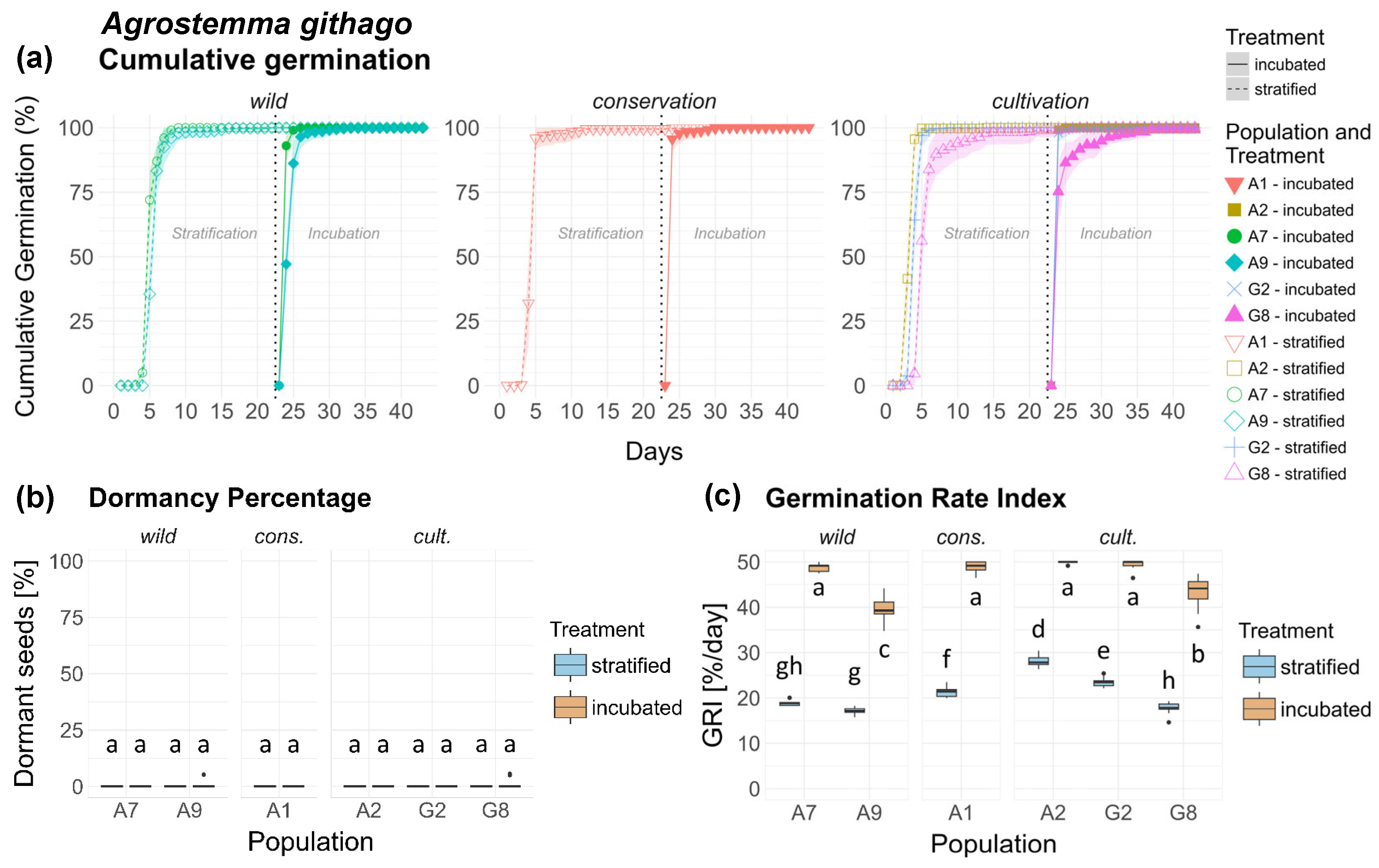
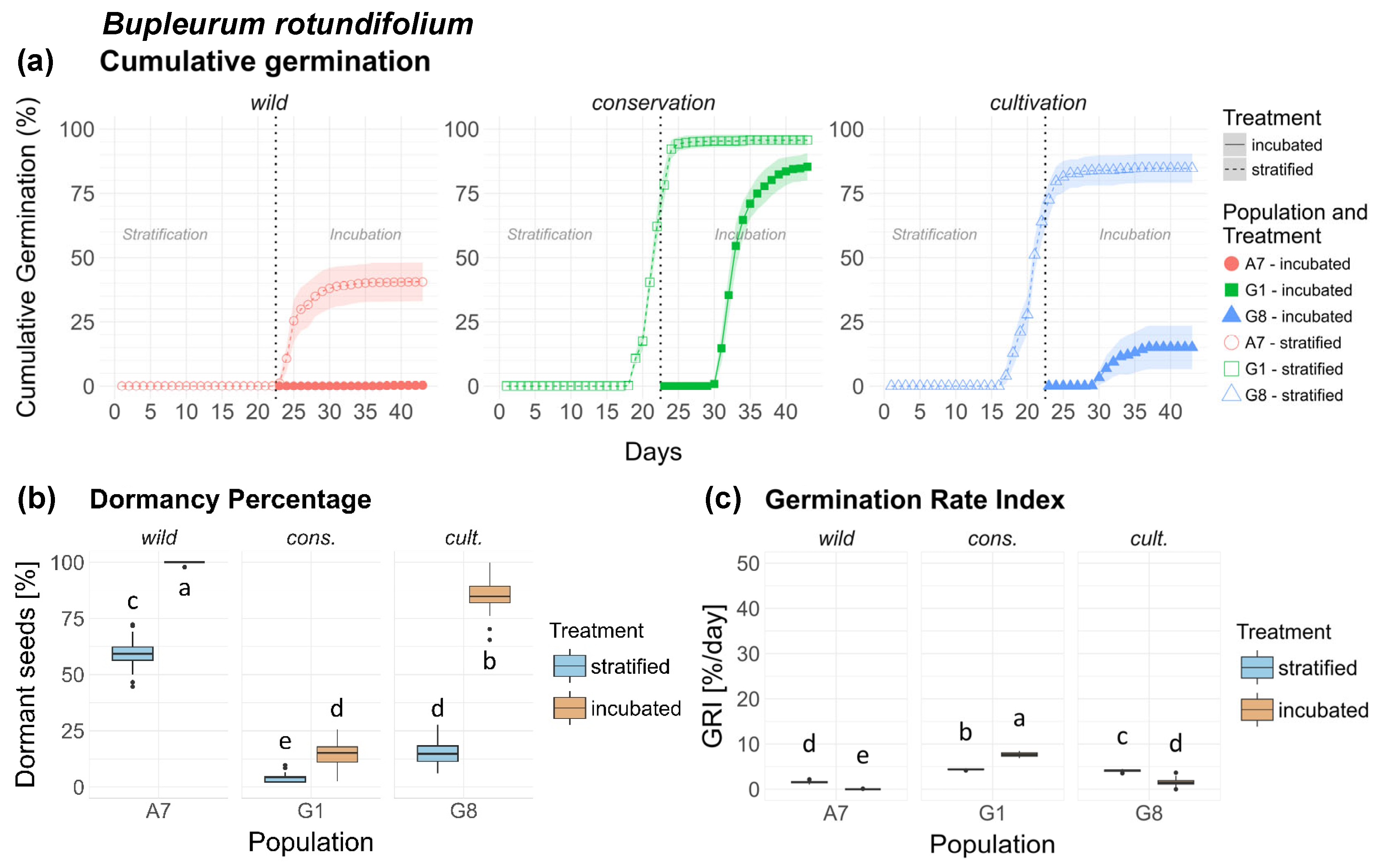
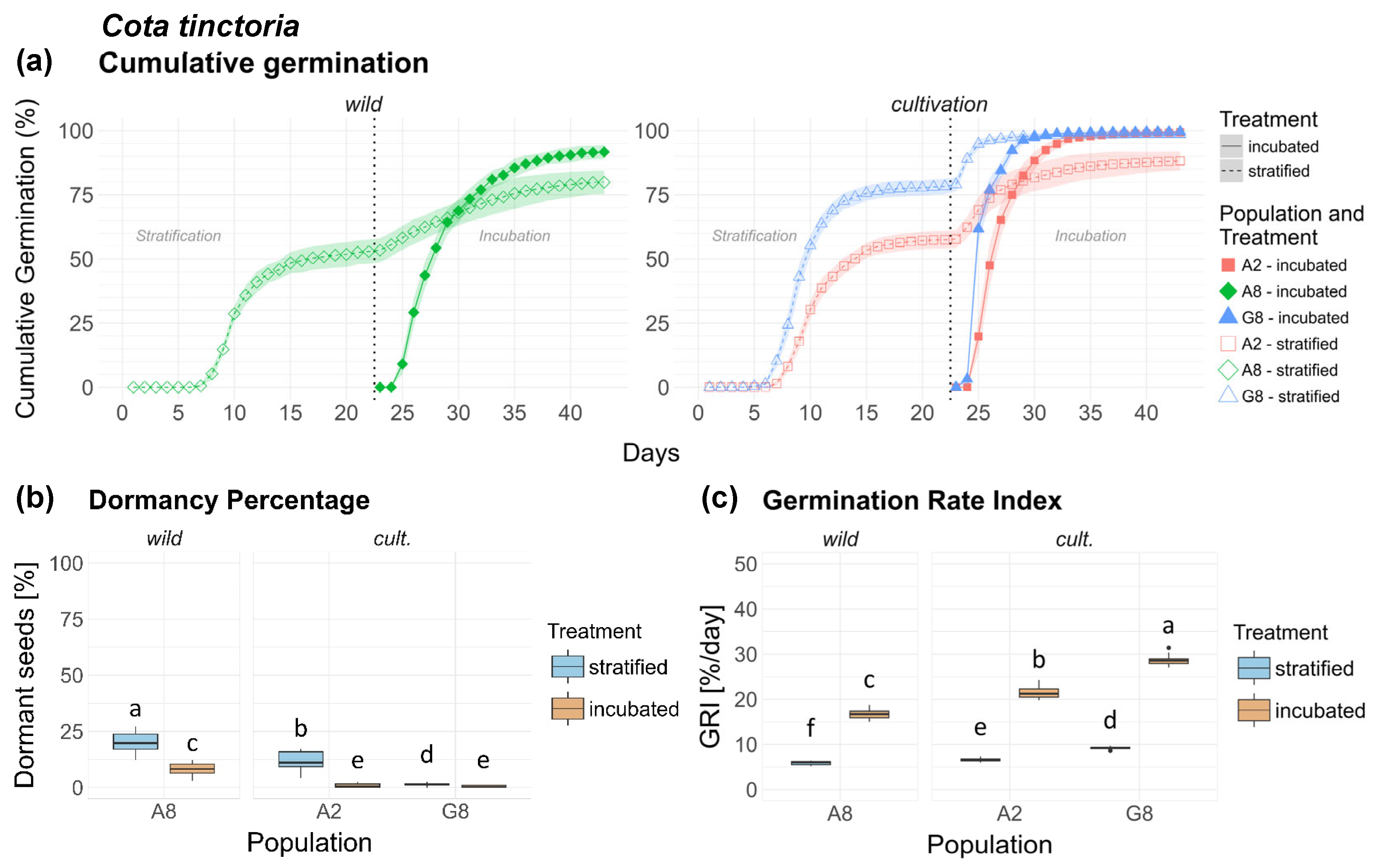
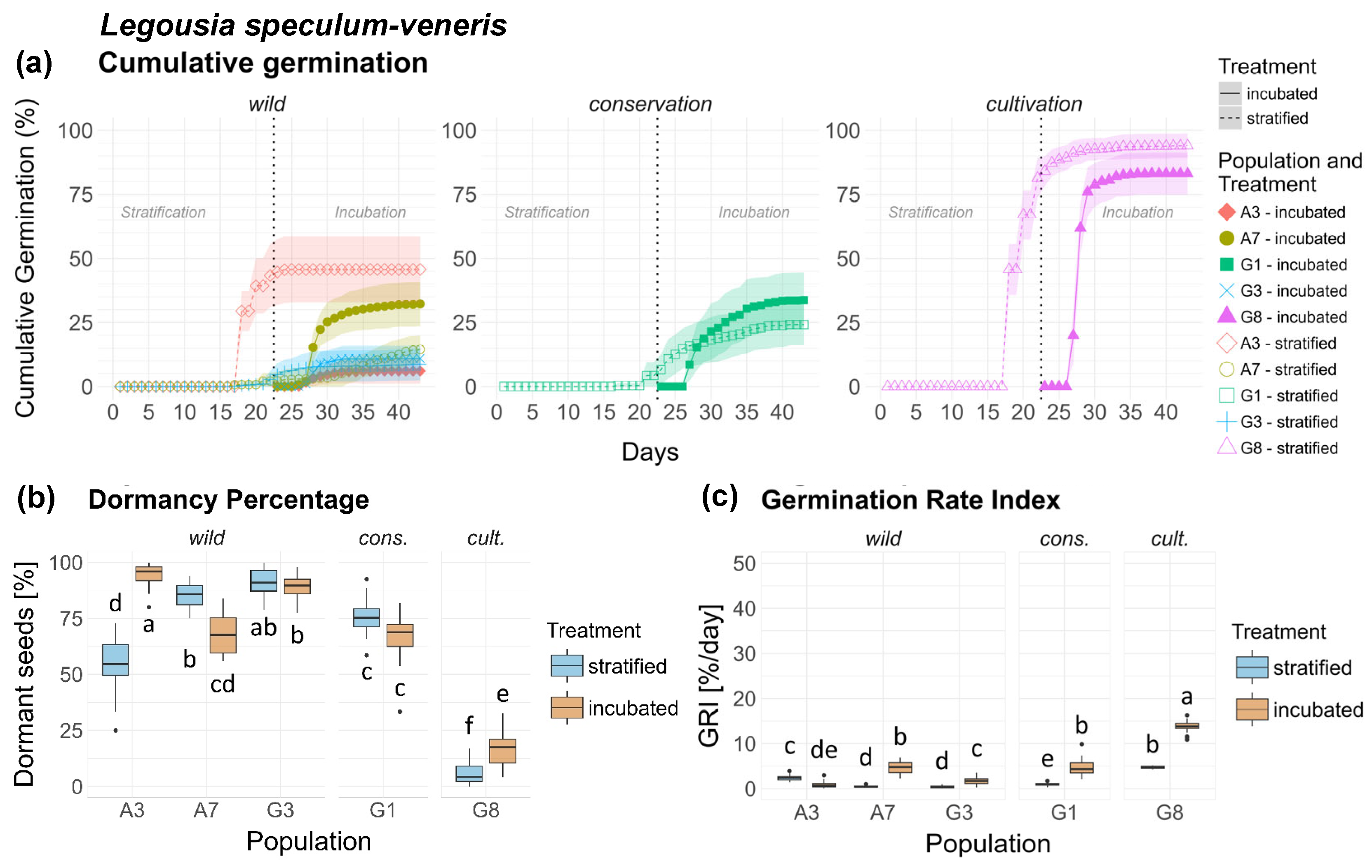
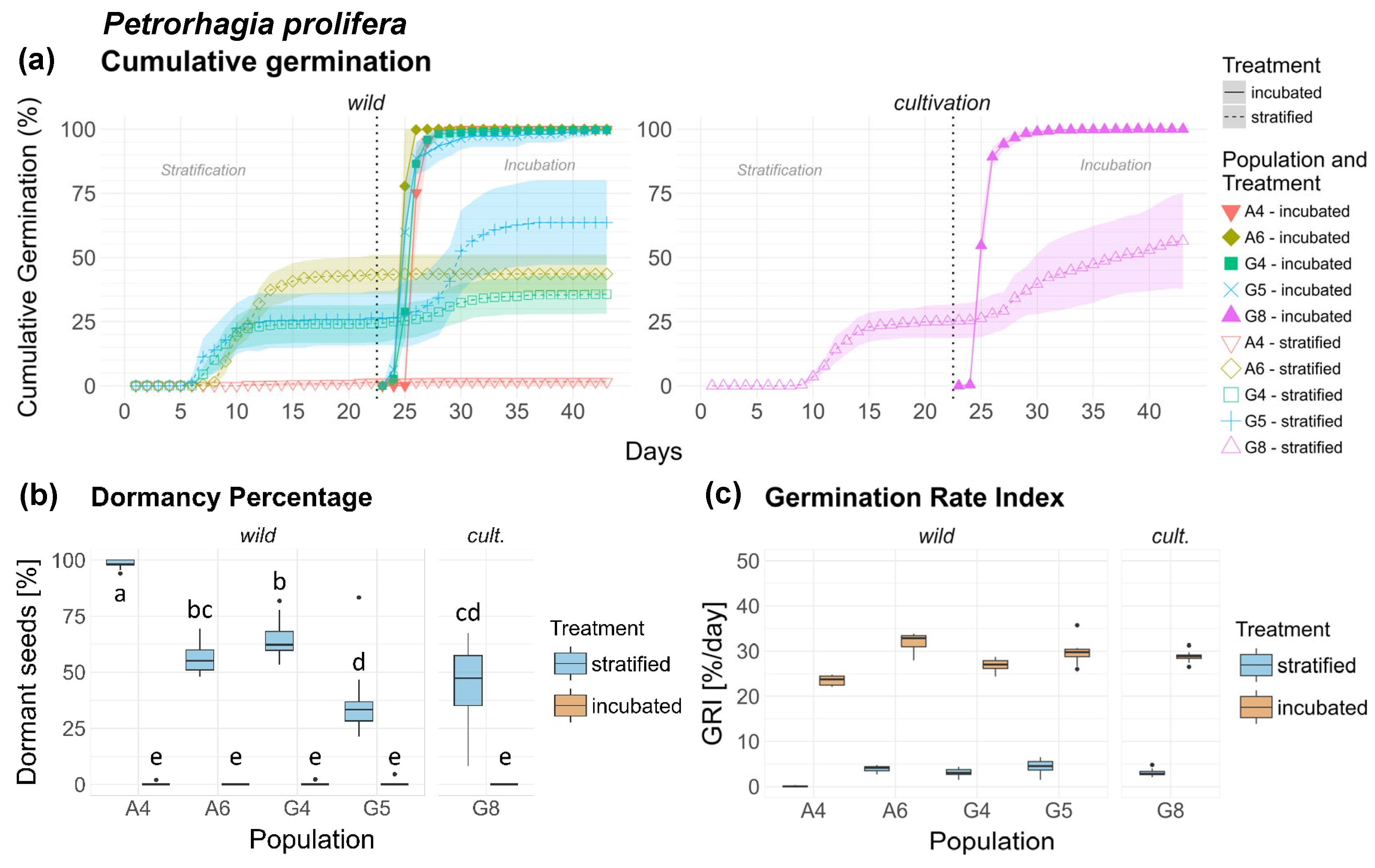
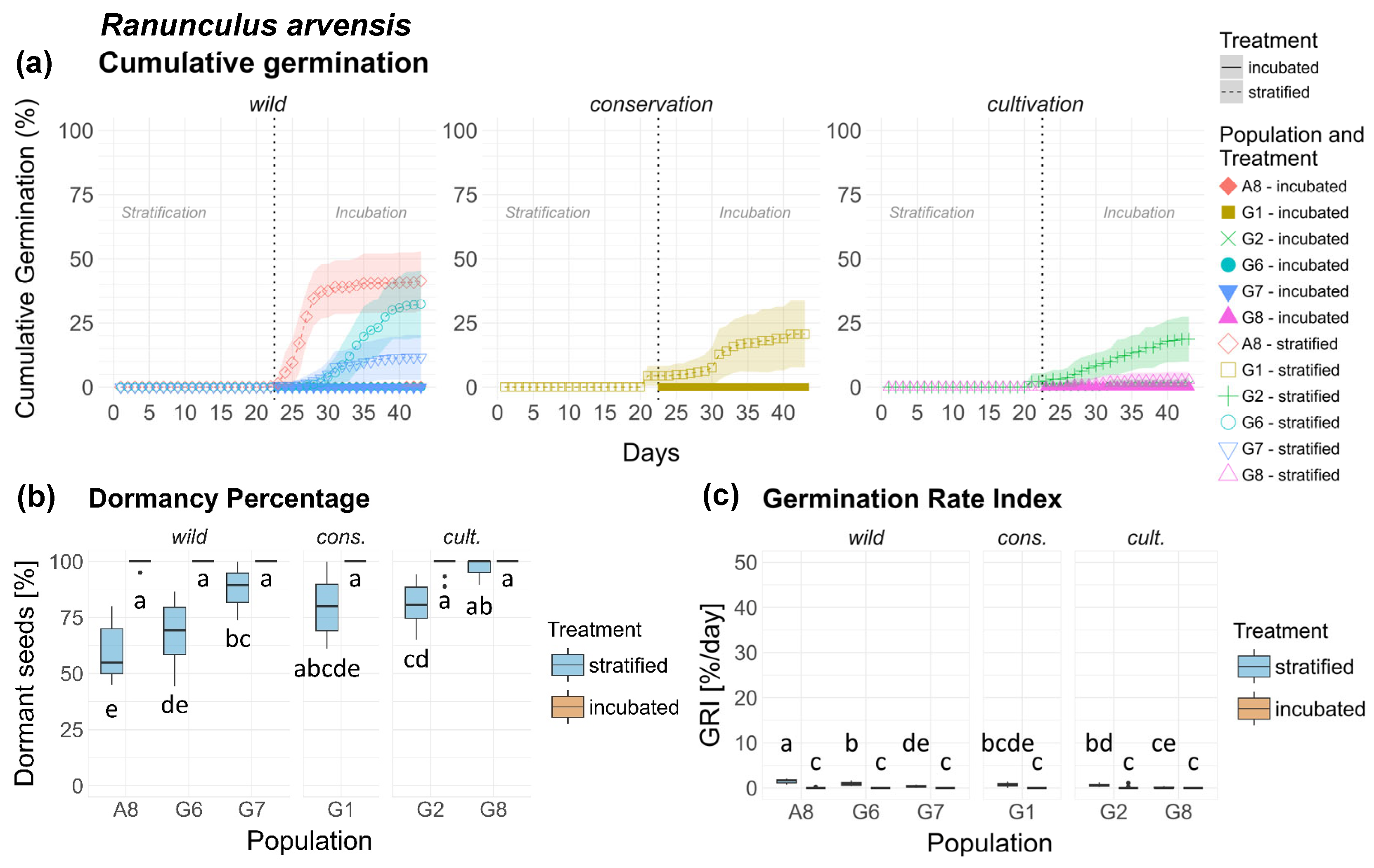
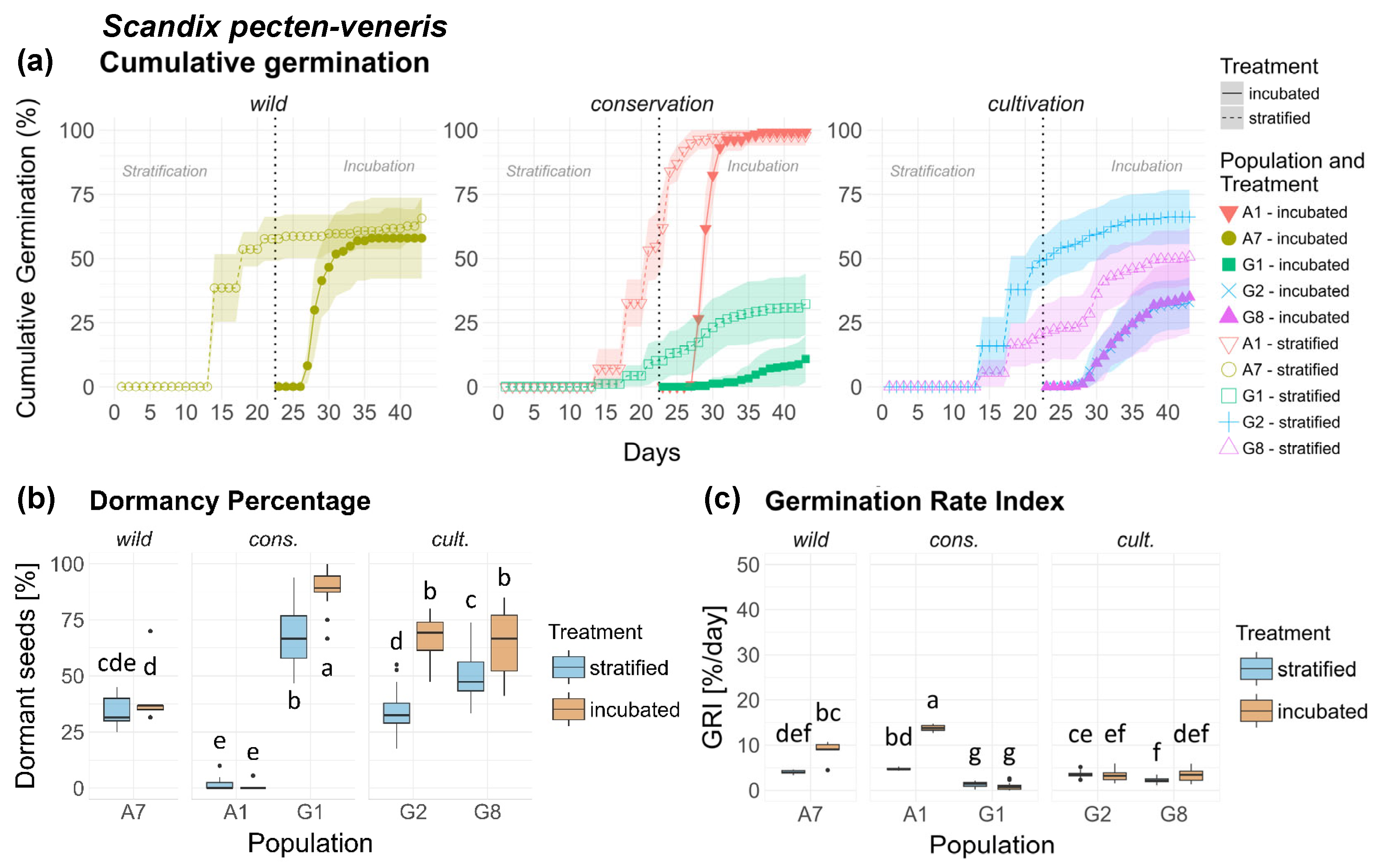
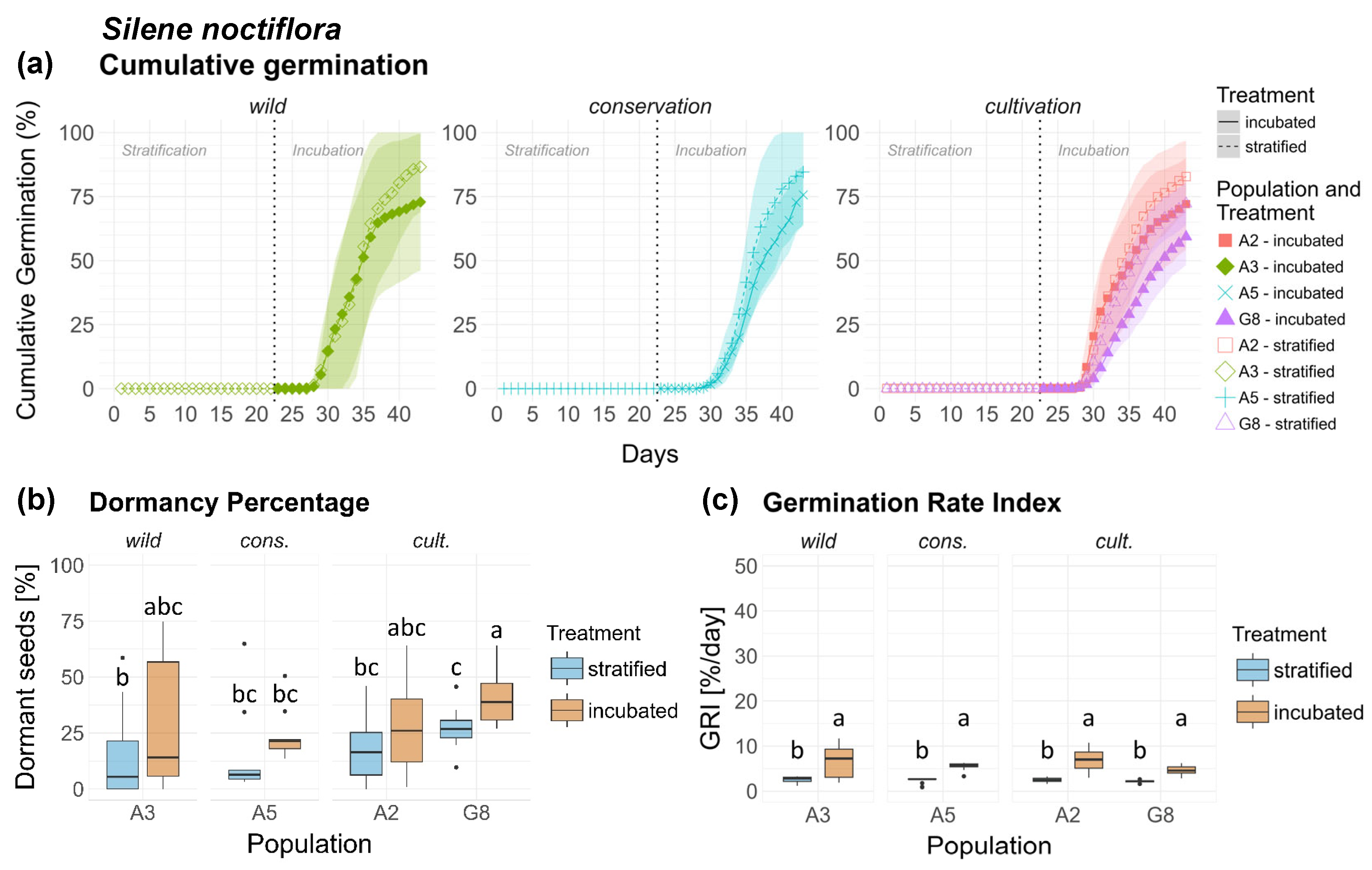
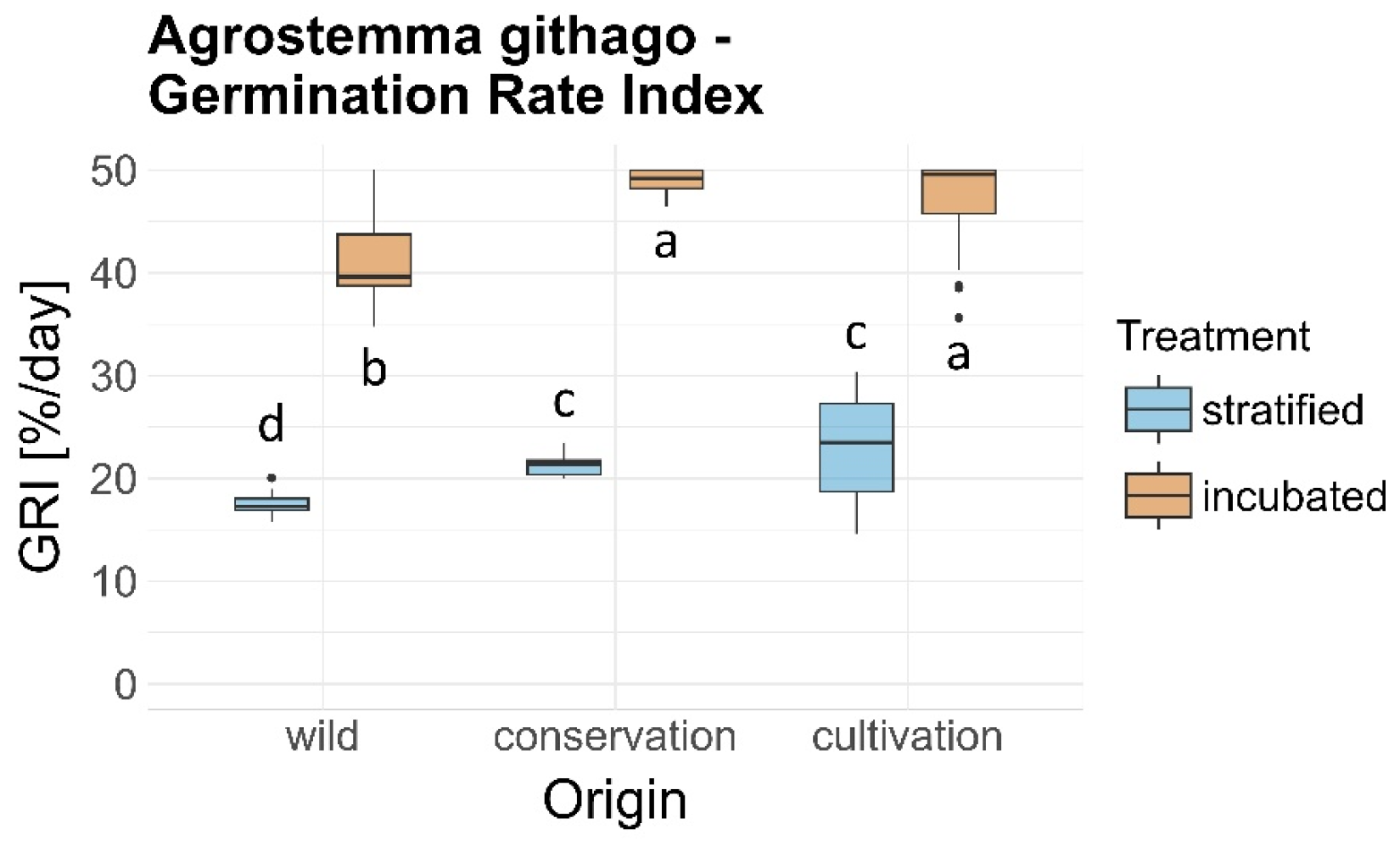
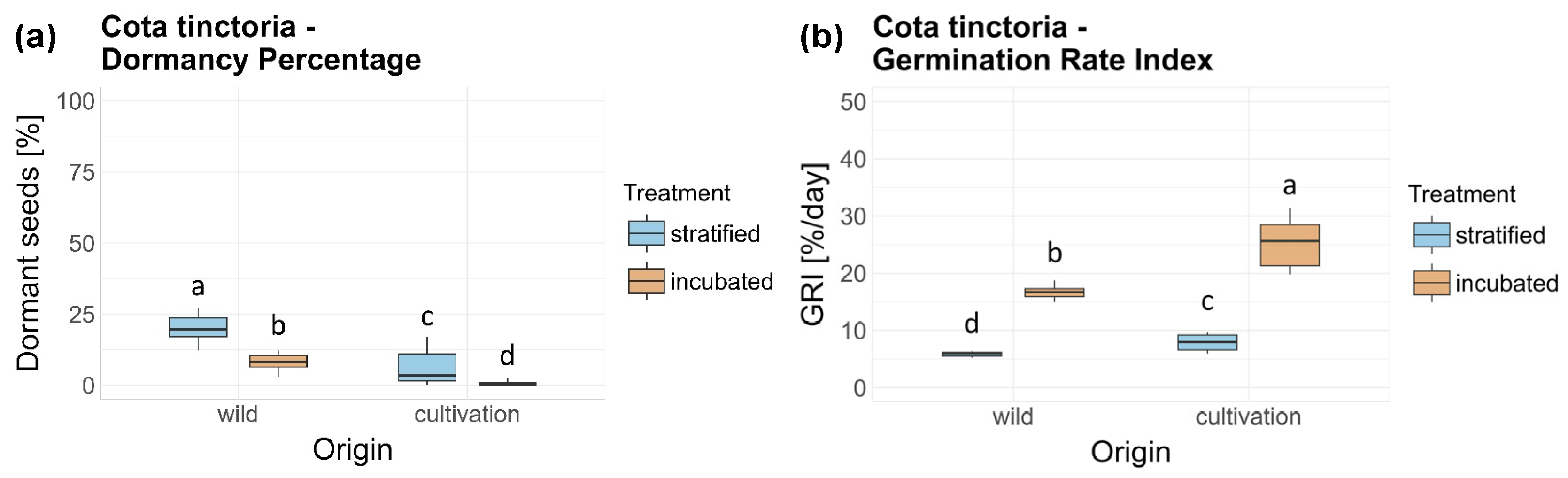
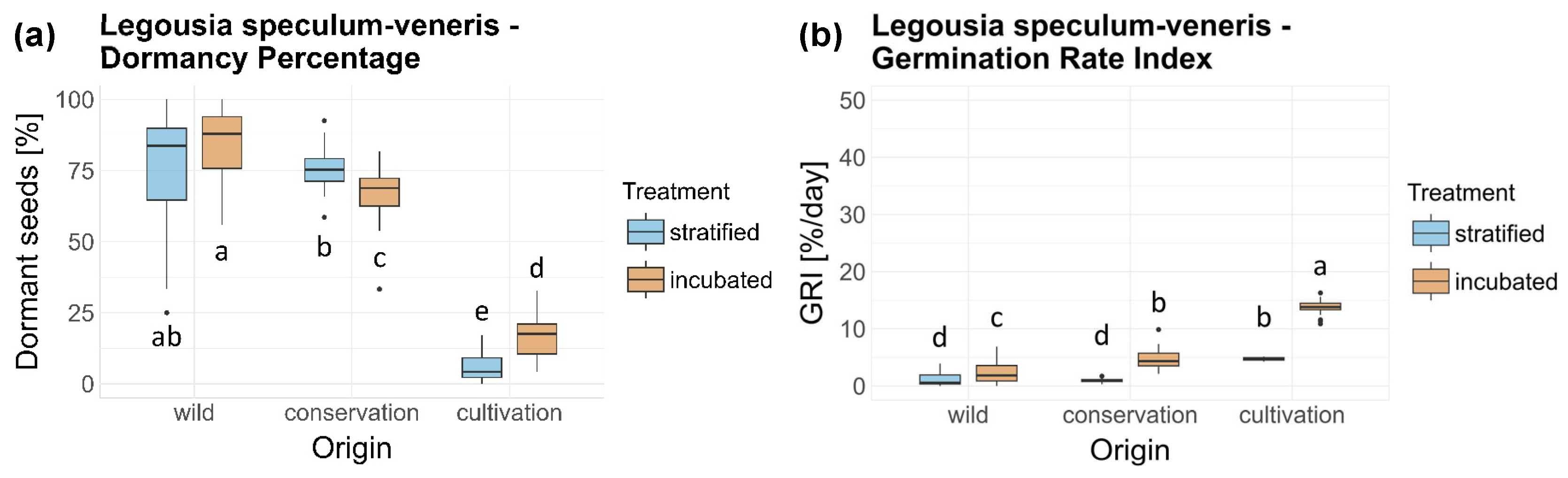
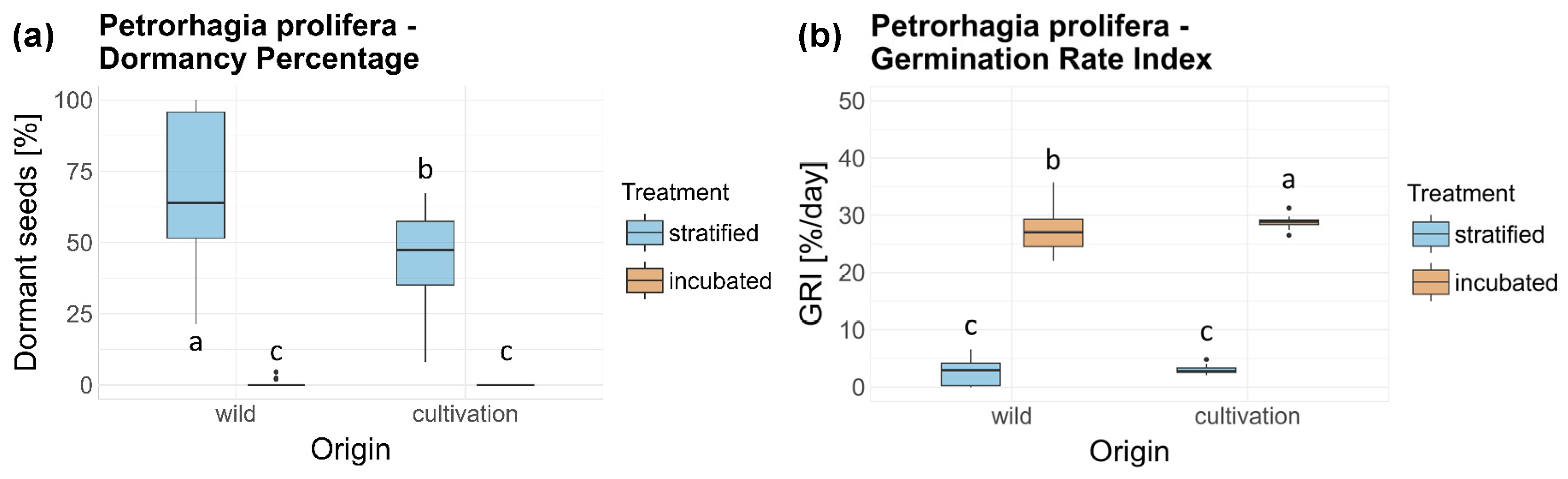
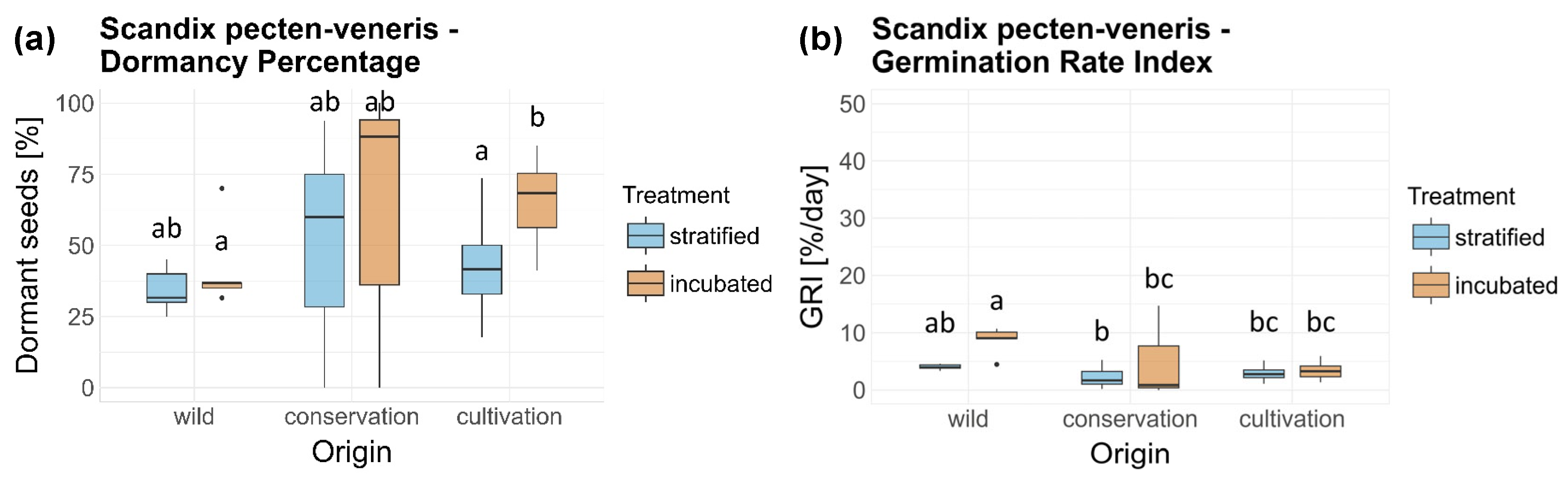
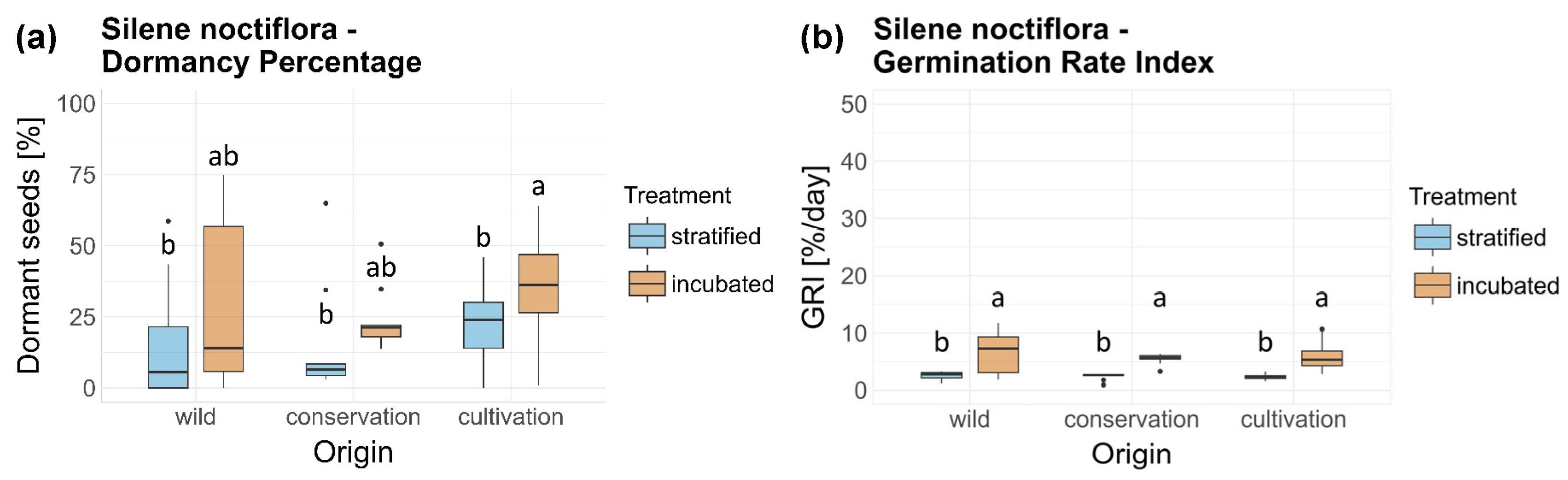
Arable herbs rank among Europe’s most endangered species groups, calling for active conservation efforts to prevent their extinction. However, wild populations often cannot supply enough seeds for sustainable propagation, requiring seeds from botanical gardens or commercial producers instead. Yet, such ex situ plant populations can exhibit signs of significantly reduced long-term fitness, including increased germination rate and reduced dormancy. We studied eight arable herbs with respect to changes in their germination behavior under ex situ conservation and cultivation. We conducted germination experiments with seeds of different origins (wild, conservation, cultivation) in climate chambers. Germination tests were divided into two temperature regimes simulating sowing in autumn and spring. Our results show that four species (Bupleurum rotundifolium, Cota tinctoria, Legousia speculum-veneris and Petrorhagia prolifera) confirm the assumption that conservation and cultivation management reduce dormancy and increase germination rate. Two species (Agrostemma githago and Silene noctiflora) showed increased germination rate in non-wild populations, and another two (Ranunculus arvensis and Scandix pecten-veneris) behaved in the opposite way, showing increased dormancy and reduced germination rate in non-wild populations. These findings highlight the importance of preserving trait variability in ex situ populations and should be taken into account when planning restoration measures for segetal flora.
Keywords: weeds; conservation; Central Europe; ex situ; stratification; trait plasticity weeds; conservation; Central Europe; ex situ; stratification; trait plasticity