A Three-Tier In Vitro Strategy for Accelerated Pine Breeding and Resistance Research Against Pine Wilt Disease
 ,
,  ,
,
Abstract
1. Introduction
2. Resolving a Foundational Debate: Establishing the Aseptic PWN as a Definitive Research Tool
2.1. Historical Controversy and Methodological Stalemate
2.2. Definitive Evidence: A Methodological Breakthrough and Systematic Validation
2.3. Implication: A Paradigm Solidified for Precision Research
3. Overview of In Vitro Approaches in Plant–Pathogen Interactions
4. An Integrated, Cross-Species Biotechnology Pipeline: From Screening to Mechanism
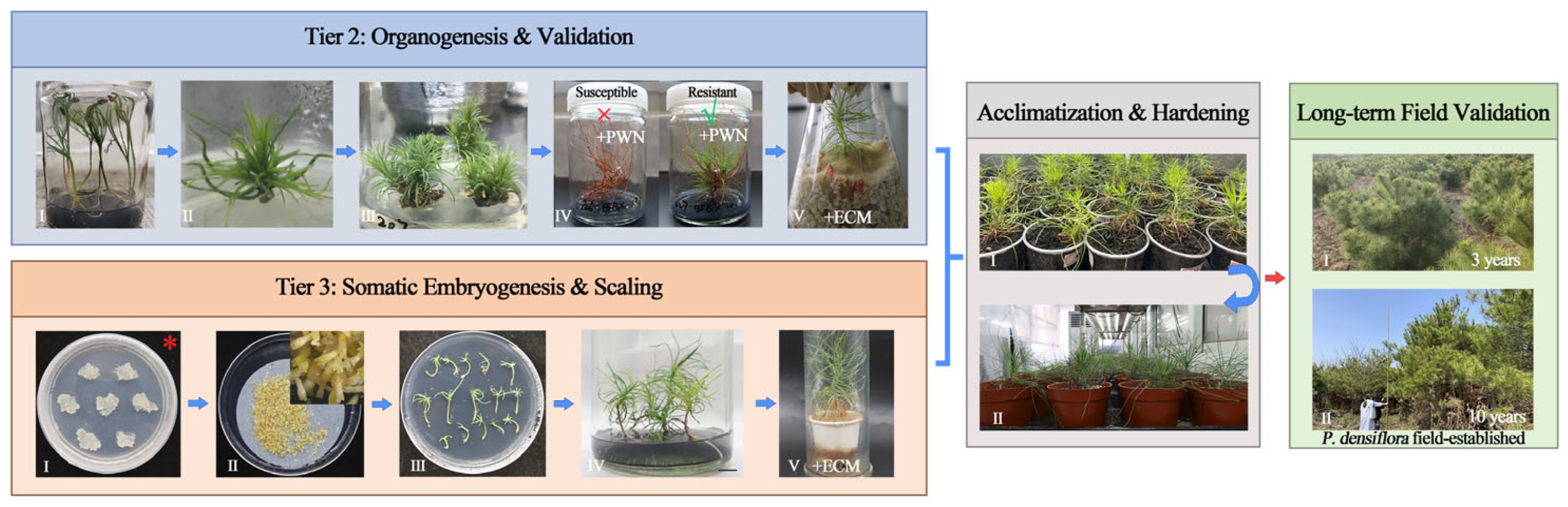
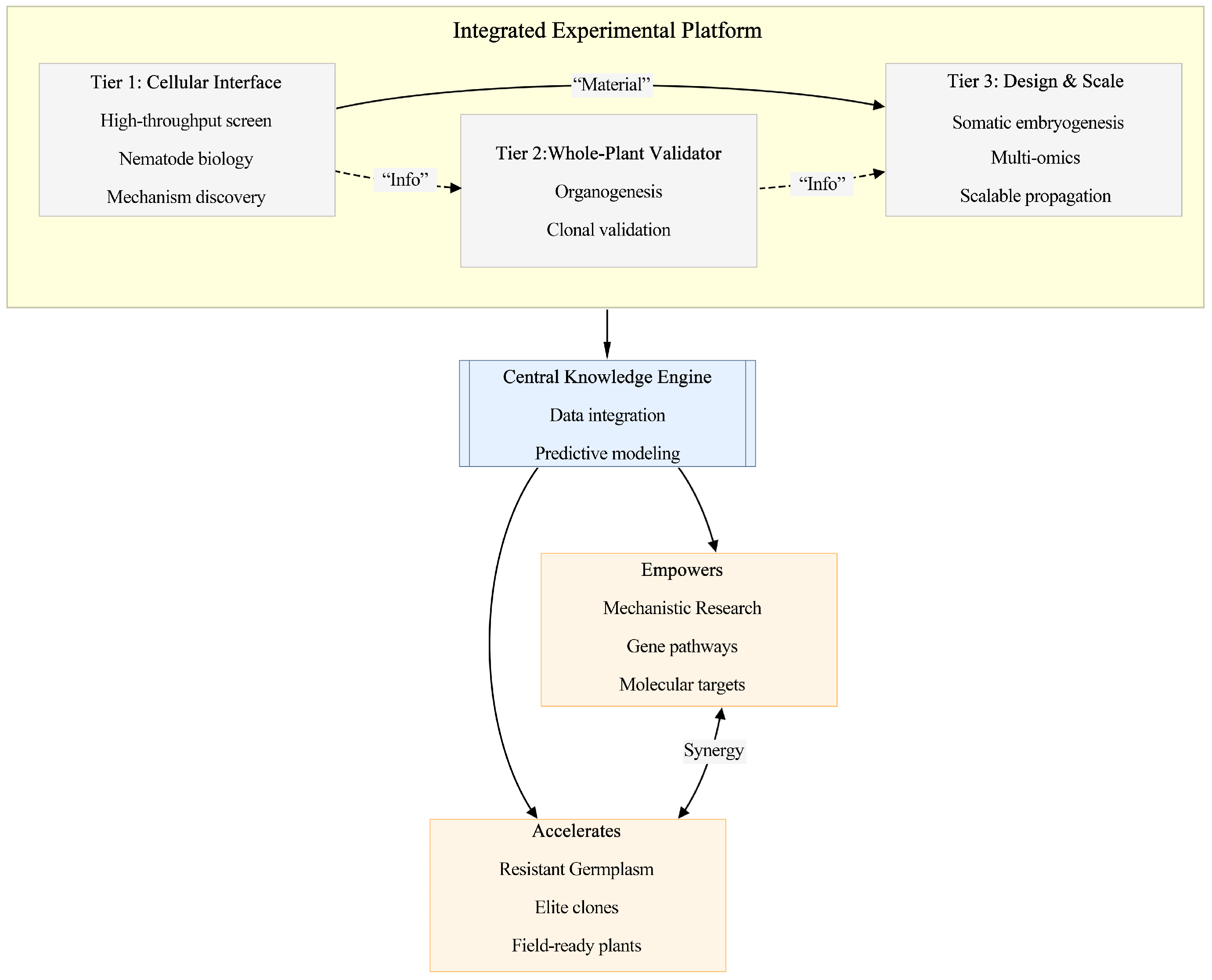
4.1. Foundational Framework: A Three-Tiered Pipeline
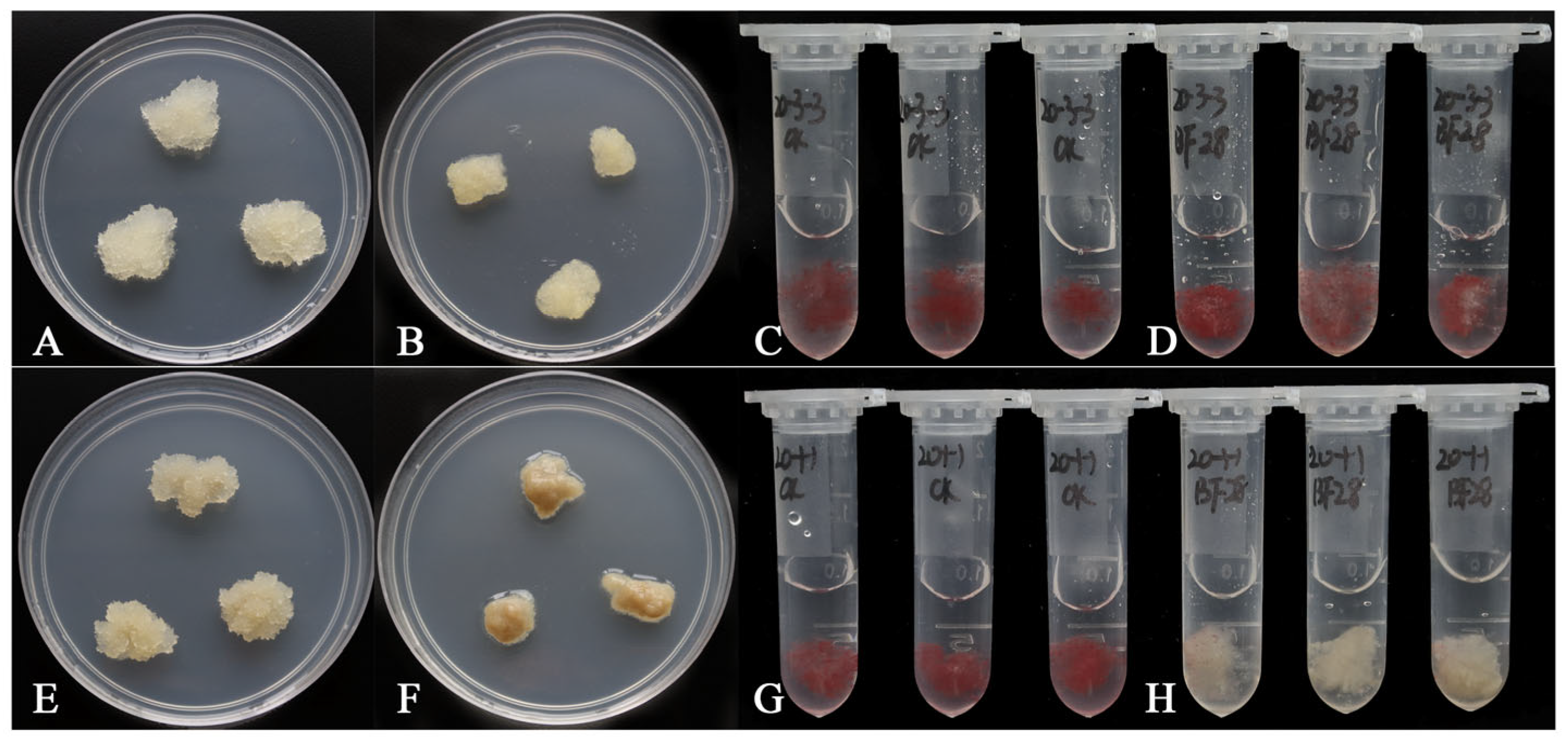
4.2. Validation in P. massoniana: A Comprehensive Model
4.3. Parallel Evidence from P. densiflora (Japanese Red Pine)
5. Critical Considerations and Technological Synergy
5.1. Ensuring Genetic Fidelity
5.2. Comparing Regeneration Pathways
6. Challenges and Future Perspectives
6.1. Translational Challenges: From Laboratory to Field
6.2. Technological Synergies and Future Directions
6.3. Advantages and Limitations of In Vitro–Based Resistance Screening
7. Conclusions
Author Contributions
Funding
Data Availability Statement
Conflicts of Interest
References
- Futai, K. Pine wilt in Japan: From first incidence to the present. In Pine Wilt Disease; Zhao, B.G., Futai, K., Sutherland, J.R., Takeuchi, Y., Eds.; Springer: Tokyo, Japan, 2008; pp. 5–12. [Google Scholar] [CrossRef]
- Ye, J.R.; Wu, X.Q. Research progress of pine wilt disease. J. China For. Pest. Dis. 2022, 41, 1–10. (In Chinese) [Google Scholar] [CrossRef]
- Mota, M.M.; Braasch, H.; Bravo, M.A.; Penas, A.C.; Burgermeister, W.; Metge, K.; Sousa, E. First report of Bursaphelenchus xylophilus in Portugal and in Europe. Nematology 1999, 1, 727–734. [Google Scholar] [CrossRef]
- Abelleira, A.; Picoaga, A.; Mansilla, J.P.; Aguin, O. Detection of Bursaphelenchus xylophilus, causal agent of pine wilt disease on Pinus pinaster in Northwestern Spain. Plant Dis. 2011, 95, 776. [Google Scholar] [CrossRef] [PubMed]
- Arbuzova, E.N.; Karagyan, G.H.; Kozyreva, N.I.; Shchukovskaya, A.G.; Ghrejyan, T.L.; Kalashian, M.Y.; Akopyan, K.V. First finding of Bursaphelenchus xylophilus in pine plantations of the Republic of Armenia. J. Nematol. 2025, 57, 20250004. [Google Scholar] [CrossRef]
- EPPO. First Report of Bursaphelenchus xylophilus in France. EPPO Reporting Service No. 11, Article 2025/263. 2025. Available online: https://gd.eppo.int/reporting/article-8278 (accessed on 16 November 2025).
- Li, S.; Sun, H.; Zhou, Y.T.; Li, X.D.; Yu, Z.J.; Dong, Z.H. Occurrence of major forest pests in China in 2021 and trend prediction in 2022. J. China For. Pest Dis. 2022, 41, 44–47. (In Chinese) [Google Scholar] [CrossRef]
- Zhou, J.; Du, J.; Bonifácio, L.; Yin, W.; Huang, L.; Ning, J.; Han, D.; Hu, J.; Song, W.; Zhao, L. Vulnerability of global pine forestry’s carbon sink to an invasive pathogen–vector system. Glob. Change Biol. 2024, 30, e17614. [Google Scholar] [CrossRef]
- Kurinobu, S. Current status of resistance breeding of Japanese pine species to pine wilt disease. For. Sci. Technol. 2008, 4, 51–57. [Google Scholar] [CrossRef]
- Back, M.A.; Bonifácio, L.; Inácio, M.L.; Mota, M.; Boag, E. Pine wilt disease: A global threat to forestry. Plant Pathol. 2024, 73, 1026–1045. [Google Scholar] [CrossRef]
- Cardoso, J.M.S.; Manadas, B.; Abrantes, I.; Robertson, L.; Arcos, S.C.; Troya, M.T.; Navas, A.; Fonseca, L. Pine wilt disease: What do we know from proteomics? BMC Plant Biol. 2024, 24, 98. [Google Scholar] [CrossRef]
- Busov, V.B.; Brunner, A.M.; Meilan, R.; Filichkin, S.; Ganio, L.; Gandhi, S.; Strauss, S.H. Genetic transformation: A powerful tool for dissection of adaptive traits in trees. New Phytol. 2005, 167, 9–18. [Google Scholar] [CrossRef]
- Xu, L.Y.; Zhang, J.; Gao, J.B.; Hao, Y.P.; Chen, X.L.; Jiang, C.W. Research progress on resistance breeding to pinewood nematodiasis in Anhui Province. Anhui For. Sci. Technol. 2013, 39, 8–10+14. (In Chinese) [Google Scholar]
- Oostlander, A.G.; Fleißner, A.; Slippers, B. Advancing forest pathology: The need for community-driven molecular experimental model systems. New Phytol. 2025, 247, 1599–1607. [Google Scholar] [CrossRef]
- Fenning, T.M. The use of tissue culture and in-vitro approaches for the study of tree diseases. Plant Cell Tissue Organ Cult. 2019, 136, 415–430. [Google Scholar] [CrossRef]
- Aoun, M.; Rioux, D.; Simard, M.; Bernier, L. Fungal colonization and host defense reactions in Ulmus americana callus cultures inoculated with Ophiostoma novo-ulmi. Phytopathology 2009, 99, 642–650. [Google Scholar] [CrossRef] [PubMed]
- Zhao, B.G.; Wang, H.L.; Han, S.F.; Han, Z.M. Distribution and pathogenicity of bacteria species carried by Bursaphelenchus xylophilus in China. Nematology 2003, 5, 899–906. [Google Scholar] [CrossRef]
- Nascimento, F.X.; Hasegawa, K.; Mota, M.; Vicente, C.S.L. Bacterial role in pine wilt disease development review and future perspectives. Environ. Microbiol. Rep. 2015, 7, 51–63. [Google Scholar] [CrossRef]
- Zhu, L.H.; Ji, J.Y.; Wu, X.Q.; Wang, Z.L.; Ye, J.R. A method for obtaining aseptic pine wood nematode. J. Northeast. For. Univ. 2011, 39, 4. (In Chinese) [Google Scholar] [CrossRef]
- Zhu, L.H.; Ye, J.; Negi, S.; Xu, X.L.; Wang, Z.L.; Ji, J.Y. Pathogenicity of aseptic Bursaphelenchus xylophilus. PLoS ONE 2012, 7, e38095. [Google Scholar] [CrossRef]
- Zhu, L.H.; Zhang, X.Y.; Xia, X.R.; Wan, Y.; Dai, S.J.; Ye, J.R. Pathogenicity of aseptic Bursaphelenchus xylophilus on Pinus massoniana. Sci. Silvae Sin. 2020, 56, 63–69. (In Chinese) [Google Scholar] [CrossRef]
- Fang, T.Y.; Liu, H.Y.; Feng, Y.; Chen, Y.M.; Ye, J.R.; Zhu, L.H. Pathogenicity of aseptic pine wood nematode on Larix principis-rupprechtii, Pinus tabuliformis and Pinus massoniana. J. Northeast. For. Univ. 2022, 50, 90–93+98. (In Chinese) [Google Scholar] [CrossRef]
- Lin, L.; Zhou, L.; Pan, J.; Kang, L.P.; Ye, J.R.; Zhu, L.H. Pathogenicity of aseptic and germ-carrying Bursaphelenchus xylophilus on Pinus densiflora. Sci. Silvae Sin. 2017, 53, 83–87. (In Chinese) [Google Scholar] [CrossRef]
- Chen, Y.M.; Xia, X.R.; Ye, J.R.; Zhu, L.H. In vitro evaluation of resistance of Pinus massoniana embryogenic callus to pine wood nematode, Bursaphelenchus xylophilus. J. Nanjing For. Univ. 2025, 49, 37–45. (In Chinese) [Google Scholar] [CrossRef]
- Han, Z.M.; Hong, Y.D.; Zhao, B.G. A study on pathogenicity of bacteria carried by pine wood nematodes. J. Phytopathol. 2003, 151, 683–689. [Google Scholar] [CrossRef]
- Kawazu, K.; Kaneko, N. Asepsis of the pine wood nematode isolate OKD-3 causes it to lose its pathogenicity. Jpn. J. Nematol. 1997, 27, 76–80. [Google Scholar] [CrossRef] [PubMed]
- Oku, H.; Shiraishi, T.; Kurozumi, S. Participation of toxin in wilting of Japanese pines caused by a nematode. Naturwissenschaften 1979, 67, 198–199. [Google Scholar] [CrossRef]
- Bolla, R.I.; Jordan, W. Cultivation of the pine wilt nematode, Bursaphelenchus xylophilus, in axenic culture. J. Nematol. 1982, 14, 377–381. [Google Scholar] [PubMed]
- Tamura, H. Pathogenicity of aseptic Bursaphelenchus xylophilus and associated bacteria to pine seedlings. Jpn. J. Nematol. 1983, 13, 1–5. [Google Scholar] [CrossRef]
- Zhao, H.; Chen, C.; Liu, S.; Liu, P.; Liu, Q.; Jian, H. Aseptic Bursaphelenchus xylophilus does not reduce the mortality of young pine tree. For. Pathol. 2013, 43, 444–454. [Google Scholar] [CrossRef]
- Sharma, N.K.; Skidmore, D.I. In vitro expression of partial resistance to Phytophthora palmivora by shoot cultures of papaya. Plant Cell Tissue Organ Cult. 1988, 14, 187–196. [Google Scholar] [CrossRef]
- Elsen, A.; Stoffelen, R.; Tuyet, N.T.; Baimey, H.; Boulois, H.D.d.; Waele, D.D. In vitro screening for resistance to Radopholus similis in Musa spp. Plant Sci. 2002, 163, 407–416. [Google Scholar] [CrossRef]
- Rodríguez, Y.; Mosqueda, M.; Companioni, B.; Arzola, M.; Borrás, O.; Pérez, M.C.; Lorenzo, J.C.; Santos, R. Bioassay for in vitro differentiation of pineapple cultivar resistance levels to heart rot disease. Vitr. Cell. Dev. Biol. Plant 2002, 38, 613–616. [Google Scholar] [CrossRef]
- Donovan, A. Screening for fire blight resistance in apple (Malus pumila) using excised leaf assays from in-vitro and in vivo grown material. Ann. Appl. Biol. 1991, 119, 59–68. [Google Scholar] [CrossRef]
- Diez, J.; Gil, L. Effects of Ophiostoma ulmi and Ophiostoma novo-ulmi culture filtrates on elm cultures from genotypes with different susceptibility to Dutch elm disease. For. Pathol. 1998, 28, 399–407. [Google Scholar] [CrossRef]
- Brisset, M.N.; Paulin, J.P.; Duron, M. Feasibility of rating fire blight susceptibility of pear cultivars (Pyrus communis) on in-vitro microcuttings. Agronomie 1988, 8, 707–710. [Google Scholar] [CrossRef]
- Zhu, L.H.; Chu, X.F.; Sun, T.Y.; Ye, J.R.; Wu, X.Q. Micropropagation of Pinus densiflora and the evaluation of nematode resistance of regenerated microshoots in vitro. J. For. Res. 2019, 30, 519–528. [Google Scholar] [CrossRef]
- Terho, M.; Pappinen, A.; von Weissenberg, K. Growth reactions of a Gremmeniella abietina isolate and Scots pine embryogenic tissue cultures differ in a host–parasite in-vitro system. For. Pathol. 2001, 30, 285–295. [Google Scholar] [CrossRef]
- Nagy, N.E.; Franceschi, V.R.; Kvaalen, H.; Solheim, H. Callus cultures and bark from Norway spruce clones show similar cellular features and relative resistance to fungal pathogens. Trees 2005, 19, 695–703. [Google Scholar] [CrossRef]
- Guo, J.Y.; Zhu, Z.H.; Chen, Y.M.; Zhu, L.H. Screen of Pinus massoniana for resistance to pinewood nematode: In vitro propagation and evaluation of regenerated microshoots. Forests 2023, 14, 1056. [Google Scholar] [CrossRef]
- Zhu, L.H.; Wu, X.Q.; Qu, H.Y.; Ji, J.; Ye, J.R. Micropropagation of Pinus massoniana and mycorrhiza formation in vitro. Plant Cell Tissue Organ Cult. 2010, 102, 121–128. [Google Scholar] [CrossRef]
- Xia, X.R.; Yang, F.; Ke, X.; Chen, Y.M.; Ye, J.R.; Zhu, L.H. Somatic embryogenesis of masson pine (Pinus massoniana): Initiation, maturation and genetic stability analysis at SSR loci. Plant Cell Tissue Organ Cult. 2021, 145, 667–677. [Google Scholar] [CrossRef]
- Chen, Y.M.; Fei, Q.; Xia, X.R.; Ke, X.; Ye, J.R.; Zhu, L.H. Pinus massoniana somatic embryo maturation, mycorrhization of regenerated plantlets and its resistance to Bursaphelenchus xylophilus. Front. Plant Sci. 2023, 14, 1130471. [Google Scholar] [CrossRef]
- Bairu, M.W.; Aremu, A.O.; Van Staden, J. Somaclonal variation in plants: Causes and detection methods. Plant Growth Regul. 2011, 63, 147–173. [Google Scholar] [CrossRef]
- Goto, S.; Thakur, R.C.; Ishii, K. Determination of genetic stability in long-term micropropagated shoots of Pinus thunbergii Parl. using RAPD markers. Plant Cell Rep. 1998, 18, 193–197. [Google Scholar] [CrossRef] [PubMed]
- Malabadi, R.; Nataraja, K. RAPD detection of somaclonal variation in cryopreserved cultures of Pinus roxburghii Sarg. Propag. Ornam. Plants 2006, 6, 114–120. [Google Scholar]
- Burg, K.; Helmersson, A.; Bozhkov, P.; Von Arnold, S. Developmental and genetic variation in nuclear microsatellite stability during somatic embryogenesis in pine. J. Exp. Bot. 2007, 58, 687–698. [Google Scholar] [CrossRef]
- Marum, L.; Rocheta, M.; Maroco, J.; Oliveira, M.M.; Miguel, C. Analysis of genetic stability at SSR loci during somatic embryogenesis in maritime pine (Pinus pinaster). Plant Cell Rep. 2009, 28, 673–682. [Google Scholar] [CrossRef]
- Klimaszewska, K.; Trontin, J.F.; Becwar, M.R.; Devillard, C.; Park, Y.S.; Lelu-Walter, M.A. Recent progress in somatic embryogenesis of four Pinus spp. Tree For. Sci. Biotechnol. 2007, 1, 11–25. [Google Scholar]
- Charity, J.A.; Holland, L.; Grace, L.J.; Walter, C. Consistent and stable expression of the nptII, uidA and bar genes in transgenic Pinus radiata after Agrobacterium tumefaciens-mediated transformation using nurse cultures. Plant Cell Rep. 2005, 23, 606−616. [Google Scholar] [CrossRef]
- Matsuhashi, S.; Hirata, A.; Akiba, M.; Nakamura, K.; Oguro, M.; Takano, K.T.; Nakao, K.; Hijioka, Y.; Matsui, T. Developing a point process model for ecological risk assessment of pine wilt disease at multiple scales. For. Ecol. Manag. 2020, 463, 118010. [Google Scholar] [CrossRef]
- Jung, B.J.; Lee, M.G.; Kim, S.W. Prediction of potential habitat of Monochamus alternatus based on shared socioeconomic pathway scenarios. Forests 2024, 15, 1563. [Google Scholar] [CrossRef]
- Ji, K.S.; Xu, L.A.; Wang, D.B.; Ni, Z.X.; Wang, Z.R. Progresses and achievements of genetic improvement on Masson pine (Pinus massoniana) in China. J. Nanjing For. Univ. (Nat. Sci. Ed.) 2022, 46, 10–22. (In Chinese) [Google Scholar] [CrossRef]
- Zhu, J.Y.; Liu, Q.H.; Diao, S.; Zhou, Z.C.; Wang, Y.D.; Ding, X.Y.; Cao, M.Y.; Luo, D.H. Development of a 101.6K liquid-phased probe for GWAS and genomic selection in pine wilt disease-resistance breeding in Masson pine. Plant Genome 2025, 18, e70005. [Google Scholar] [CrossRef] [PubMed]
- Faria, J.M.S.; Sena, I.; Vieira da Silva, I.; Ribeiro, B.; Barbosa, P.; Ascensão, L.; Bennett, R.N.; Mota, M.; Figueiredo, A.C. In vitro co-cultures of Pinus pinaster with Bursaphelenchus xylophilus: A biotechnological approach to study pine wilt disease. Planta 2015, 241, 1325–1336. [Google Scholar] [CrossRef] [PubMed]
- Sun, T.; Rahman, M.U.; Wu, X.; Ye, J. Resistant and Susceptible Pinus thunbergii Parl. Show highly divergent patterns of differentially expressed genes during the process of infection by Bursaphelenchus xylophilus. Int. J. Mol. Sci. 2023, 24, 14376. [Google Scholar] [CrossRef]
- Mohammed, G.H.; Vidaver, W.E. Root production and plantlet development in tissue-cultured conifers. Plant Cell Tissue Organ Cult. 1988, 14, 137–160. [Google Scholar] [CrossRef]
- Niemi, K.; Scagel, C.; Häggman, H. Application of ectomycorrhizal fungi in vegetative propagation of conifers. Plant Cell Tissue Organ Cult. 2004, 78, 83–91. [Google Scholar] [CrossRef]
- Niemi, K.; Häggman, H. Pisolithus tinctorius promotes germination and forms mycorrhizal structures in Scots pine somatic embryos in vitro. Mycorrhiza 2002, 12, 263–267. [Google Scholar] [CrossRef]
- Ragonezi, C.; Caldeira, A.T.; Martins, M.R.; Dias, L.S.; Santos-Silva, C.; Ganhao, E.; Miralto, O.; Pereira, I.; Louro, R.; Klimaszewska, K.; et al. Pisolithus arhizus (Scop.) Rauschert improves growth of adventitious roots and acclimatization of in vitro regenerated plantlets of Pinus pinea L. Propag. Ornam. Plants 2012, 12, 139–147. [Google Scholar] [CrossRef]
- Pullman, G.S.; Bucalo, K. Pine somatic embryogenesis: Analyses of seed tissue and medium to improve protocol development. New For. 2014, 45, 353–377. [Google Scholar] [CrossRef]
- Park, Y.S. Implementation of conifer somatic embryogenesis in clonal forestry: Technical requirements and deployment considerations. Ann. For. Sci. 2002, 59, 651–656. [Google Scholar] [CrossRef]
- Modesto, I.; Mendes, A.; Carrasquinho, I.; Miguel, C.M. Molecular defense response of pine trees (Pinus spp.) to the parasitic nematode Bursaphelenchus xylophilus. Cells 2022, 11, 3208. [Google Scholar] [CrossRef] [PubMed]
- Niu, S.; Li, J.; Bo, W.; Yang, W.; Zuccolo, A.; Giacomello, S.; Chen, X.; Han, F.; Yang, J.; Song, Y.; et al. The Chinese pine genome and methylome unveil key features of conifer evolution. Cell 2022, 185, 204–217.e14. [Google Scholar] [CrossRef] [PubMed]
- Chen, H.; Qin, X.; Chen, Y.; Zhang, H.; Feng, Y.; Tan, J.; Chen, X.; Hu, L.; Xie, J.; Xie, J.; et al. Chromosome-level genome assembly of Pinus massoniana provides insights into conifer adaptive evolution. Gigascience 2025, 14, giaf056. [Google Scholar] [CrossRef] [PubMed]
- Zimin, A.V.; Stevens, K.A.; Crepeau, M.W.; Puiu, D.; Wegrzyn, J.L.; Yorke, J.A.; Langley, C.H.; Neale, D.B.; Salzberg, S.L. An improved assembly of the loblolly pine mega-genome using long-read single-molecule sequencing. Gigascience 2017, 6, 1–4. [Google Scholar] [CrossRef]
- Zhang, Y.X.; Malzahn, A.A.; Sretenovic, S.; Qi, Y.P. The emerging and uncultivated potential of CRISPR technology in plant science. Nat. Plants 2019, 5, 778–794. [Google Scholar] [CrossRef]
- Hoengenaert, L.; Anders, C.; Van Doorsselaere, J.; Vanholme, R.; Boerjan, W. Transgene-free genome editing in poplar. New Phytol. 2025, 247, 224–232. [Google Scholar] [CrossRef]
- Zhu, J.; Lim, K.-J.; Fang, T.; Zhang, C.; Ye, J.; Zhu, L.-H. Unraveling Pinus massoniana’s defense mechanisms against Bursaphelenchus xylophilus under aseptic conditions: A transcriptomic analysis. Phytopathology 2024, 114, 2525–2535. [Google Scholar] [CrossRef]
- Thakur, M.; Sharma, D.; Sharma, S. In vitro selection and regeneration of carnation (Dianthus caryophyllus L.) plants resistant to culture filtrate of Fusarium oxysporum f. sp. dianthi. Plant Cell Rep. 2002, 20, 825–828. [Google Scholar] [CrossRef]



| Species/ Application | Tier 1: Callus Screening | Tier 2: Organogenesis Validation | Tier 3: Somatic Embryogenesis & Beyond | Key Resistant Materials/Main Findings |
|---|---|---|---|---|
| P. massoniana | Established and used for screening [24] | Established and used for screening [40] | Established; Enables mycorrhization & enhanced performance [43] | Callus: GX20-3-3; Microshoot: Clone 227; Somatic: ECL 20-1-7 |
| P. densiflora | Established the system [23] | Established and used for screening [19,20,37] | Not Reported | Microshoot: Clone 8–4 |
Disclaimer/Publisher’s Note: The statements, opinions and data contained in all publications are solely those of the individual author(s) and contributor(s) and not of MDPI and/or the editor(s). MDPI and/or the editor(s) disclaim responsibility for any injury to people or property resulting from any ideas, methods, instructions or products referred to in the content. |
© 2026 by the authors. Licensee MDPI, Basel, Switzerland. This article is an open access article distributed under the terms and conditions of the Creative Commons Attribution (CC BY) license.
Share and Cite
Zhu, Z.-H.; Liao, Y.-F.; Liao, Y.-C.-Z.; Sun, H.; Ye, J.-R.; Zhu, L.-H. A Three-Tier In Vitro Strategy for Accelerated Pine Breeding and Resistance Research Against Pine Wilt Disease. Plants 2026, 15, 246. https://doi.org/10.3390/plants15020246
Zhu Z-H, Liao Y-F, Liao Y-C-Z, Sun H, Ye J-R, Zhu L-H. A Three-Tier In Vitro Strategy for Accelerated Pine Breeding and Resistance Research Against Pine Wilt Disease. Plants. 2026; 15(2):246. https://doi.org/10.3390/plants15020246
Chicago/Turabian StyleZhu, Zi-Hui, Yan-Fei Liao, Yang-Chun-Zi Liao, Hui Sun, Jian-Ren Ye, and Li-Hua Zhu. 2026. "A Three-Tier In Vitro Strategy for Accelerated Pine Breeding and Resistance Research Against Pine Wilt Disease" Plants 15, no. 2: 246. https://doi.org/10.3390/plants15020246
APA StyleZhu, Z.-H., Liao, Y.-F., Liao, Y.-C.-Z., Sun, H., Ye, J.-R., & Zhu, L.-H. (2026). A Three-Tier In Vitro Strategy for Accelerated Pine Breeding and Resistance Research Against Pine Wilt Disease. Plants, 15(2), 246. https://doi.org/10.3390/plants15020246