A Solution to Chromium Toxicity? Unlocking the Multi-Faceted Role of Biochar


Abstract
1. Introduction
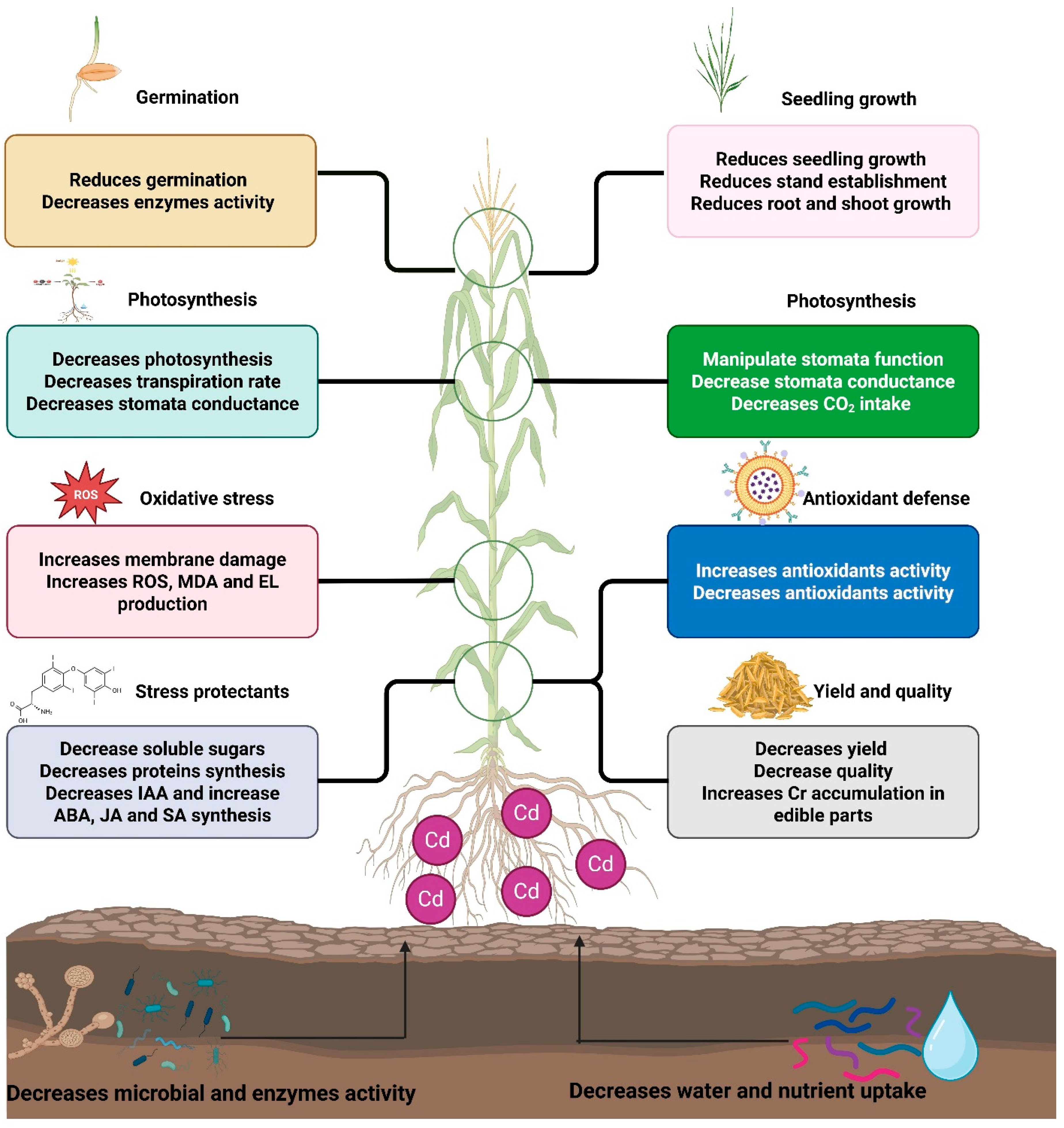
2. Mechanisms of Chromium Uptake and Its Toxic Impacts on Plants
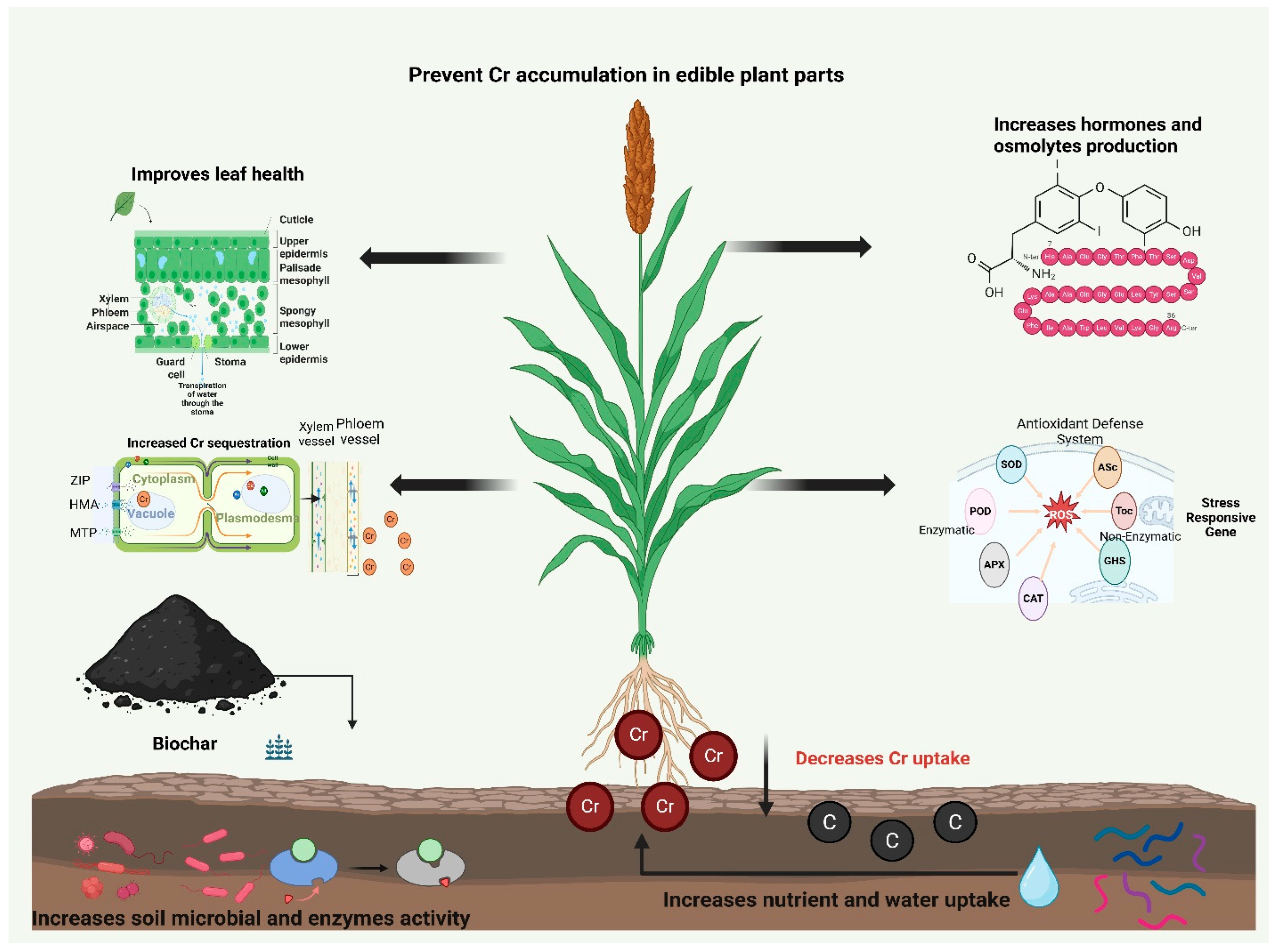
3. Role of Biochar in Mitigating Chromium Toxicity
3.1. Biochar Improves Leaf Water Status and Maintains Membrane Integrity in Response to Chromium Stress
3.2. Biochar Improves Photosynthetic Efficiency Under Chromium Stress
3.3. Biochar Improves Osmolyte Synthesis, Hormonal Balance and Antioxidant Defense in Response to Chromium Stress
3.4. Biochar Improves Nutrient Uptake and Accumulation in Plant Parts in Response to Chromium Stress
3.5. Biochar Increases Chromium Immobilization and Reduces Its Uptake to Counter Chromium Stress
3.6. Biochar Improves Soil Biological Properties and Microbial Activity to Counter Chromium Stress
3.7. Biochar Improves Growth and Yield and Decreases the Health Risk of Growing Crops in Chromium-Polluted Soils
4. Different Mechanisms Mediated by Biochar to Remove Chromium from Contaminated Environments
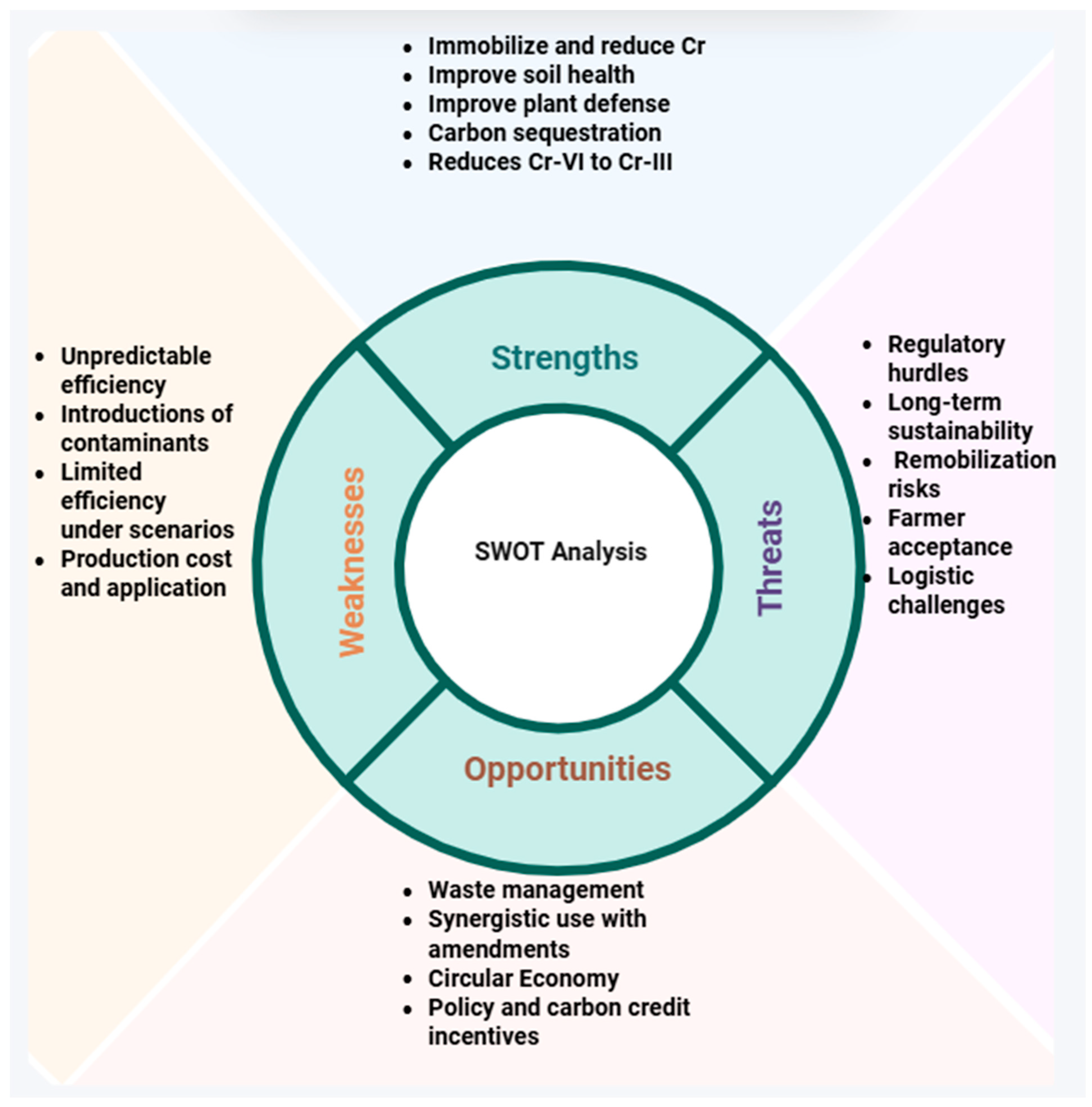
5. Practical Problems and Challenges in Remediating Polluted Soils
6. Conclusions and Future Prospective
- ➢
- Biochar promotes nutrient uptake; however, the underlying mechanisms are unknown. Therefore, studies are needed to understand these mechanisms. The effects of BC on the anatomical features of plants growing in Cr-polluted soils are known; therefore, understanding these mechanisms can provide better insights for mitigating Cr toxicity.
- ➢
- Future research should develop models linking BC properties with specific goals of reducing Cr. There is also a need to explore the “black box” of plant molecular mechanisms mediated by BC to counteract Cr toxicity. These findings help elucidate the signaling mechanism by which BC affects the expression of genes associated with hormones, antioxidant defense, and nutrient transport. Likewise, the role of BC in soil microbes in Cr-polluted soils has been poorly studied; therefore, advanced omics can be used to explore its role.
- ➢
- Long-term field trials are needed to verify the stability of Cr immobilized by BC. This can help in the development of measures to increase crop productivity in Cr-polluted soils.
- ➢
- Studies are also needed to prioritize field validations under different climate conditions to assess economic benefits and real-world efficiency. Furthermore, cost–benefit and life cycle analyses are crucial for comparing both the sustainability and practicality of simple and modified BC.
- ➢
- The input of secondary contaminants, particularly from modified BC, must be investigated to ensure environmental safety. Converting contaminated soils to fertile ones or directly restructuring microbial communities are somewhat general and are largely based on laboratory studies. The long-term stability of Cr–BC complexes under field conditions and their applicability across different soils remain unclear. Therefore, future studies should aim to explore these interactions.
- ➢
- The integration of BC with other amendments, such as microbes, nanoparticles, compost, and hormones, can create powerful strategies for the remediation of Cr-polluted soils. The source of feedstock from municipal wastes and agricultural waste should be optimized to align BC production with the principles of the circular economy, converting burden to opportunity. This can help remediate Cr-polluted soil, safeguard human health, and ensure safer and sustainable crop production.
Author Contributions
Funding
Data Availability Statement
Conflicts of Interest
References
- Ahmed, W.; Zaman, Q.U.; Mehmood, F.; Abbasi, A.; Ashraf, K.; Fatima, K.; Nazir, S.; Komal, N.; Waqas, M. The Potential of Commercial Composts in Reducing Heavy Metals and Metalloids Phytoaccumulation in Maize. Pak. J. Bot. 2023, 55, 679–687. [Google Scholar] [CrossRef] [Scilit]
- Sana, S.; Ramzan, M.; Ejaz, S.; Danish, S.; Salmen, S.H.; Ansari, M.J. Differential responses of chili varieties grown under cadmium stress. BMC Plant Biol. 2024, 24, 7. [Google Scholar] [CrossRef] [Scilit] [PubMed]
- Hossain, M.E.; Shahrukh, S.; Hossain, S.A. Chemical Fertilizers and Pesticides: Impacts on Soil Degradation, Groundwater, and Human Health in Bangladesh. In Environmental Degradation: Challenges and Strategies for Mitigation; Springer: Cham, Switzerland, 2022; pp. 63–92. [Google Scholar]
- Zhao, W.; Chen, Z.; Yang, X.; Sheng, L.; Mao, H.; Zhu, S. Metagenomics reveal arbuscular mycorrhizal fungi altering functional gene expression of rhizosphere microbial community to enhance Iris tectorum’s resistance to Cr stress. Sci. Total Environ. 2023, 895, 164970. [Google Scholar] [CrossRef] [Scilit]
- Li, M.H.; Guo, X.L.; Wei, Y.; Liu, A.J.; Lu, J.; Niu, X.Y.; Ma, Y.F.; Li, S.; Shang, Z.X.; Liu, X.P. Adsorption mechanism and structure-performance relationship of chromium ions by biochar. Water Air Soil Pollut. 2020, 231, 517. [Google Scholar] [CrossRef] [Scilit]
- Alhaji Adamu, Y.; Olaleye, A.A. Speciation, mobility and potential toxicity of metals (Cr Co, Cu and Mn) in soil samples from dumpsites in kano metropolis. FUDMA J. Sci. 2022, 6, 270–277. [Google Scholar] [CrossRef] [Scilit]
- Ali, H.H.; Ilyas, M.; Zaheer, M.S.; Hameed, A.; Ikram, K.; Khan, W.U.D.; Iqbal, R.; Awan, T.H.; Rizwan, M.; Mustafa, A.E.-Z.M.A.; et al. Alleviation of chromium toxicity in mung bean (Vigna radiata L.) using salicylic acid and Azospirillum brasilense. BMC Plant Biol. 2023, 23, 535. [Google Scholar] [CrossRef] [Scilit]
- Ahmad, M.; Rajapaksha, A.U.; Lim, J.E.; Zhang, M.; Bolan, N.; Mohan, D.; Vithanage, M.; Lee, S.S.; Ok, Y.S. Biochar as a sorbent for contaminant management in soil and water: A review. Chemosphere 2014, 99, 19–33. [Google Scholar] [CrossRef] [Scilit]
- Dheeba, B.; Sampathkumar, P.; Kannan, K. Fertilizers and Mixed Crop Cultivation of Chromium Tolerant and Sensitive Plants Under Chromium Toxicity. J. Toxicol. 2015, 2015, 367217. [Google Scholar] [CrossRef] [Scilit]
- Kumari, V.; Yadav, A.; Haq, I.; Kumar, S.; Bharagava, R.N.; Singh, S.K.; Raj, A. Genotoxicity evaluation of tannery effluent treated with newly isolated hexavalent chromium reducing. J. Environ. Manag. 2016, 183, 204–211. [Google Scholar] [CrossRef] [Scilit]
- Tumolo, M.; Ancona, V.; De Paola, D.; Losacco, D.; Campanale, C.; Massarelli, C.; Uricchio, V.F. Chromium pollution in European water, sources, health risk, and remediation strategies: An overview. Int. J. Environ. Res. Public. Health. 2020, 17, 5438. [Google Scholar] [CrossRef] [Scilit]
- Alamm, P.; Balawi, T.H.; Altalayan, F.H.; Hatamleh, A.A.; Ashraf, M.; Ahmad, P. Silicon attenuates the negative effects of chromium stress in tomato plants by modifying antioxidant enzyme activities, ascorbate–glutathione cycle and glyoxalase system. Acta Physiol. Plant. 2021, 43, 110. [Google Scholar] [CrossRef] [Scilit]
- Kushwaha, B.K.; Singh, V.P. Mitigation of chromium (VI) toxicity by additional sulfur in some vegetable crops involves glutathione and hydrogen sulfide. Plant Physiol. Biochem. 2020, 155, 952–964. [Google Scholar] [CrossRef] [Scilit] [PubMed]
- Kundu, D.; Dey, S.; Raychaudhuri, S.S. Chromium (VI)—Induced stress response in the plant Plantago ovata Forsk In Vitro. Genes Environ. 2018, 40, 21. [Google Scholar] [CrossRef] [Scilit] [PubMed]
- Kumar, V.; Suryakant, P.; Kumar, S.; Kumar, N. Effect of chromium toxicity on plants: A review. Agriways 2016, 4, 107–120. [Google Scholar]
- Gao, H.; Yang, X.; Wang, N.; Sun, M.; Xiao, Y.; Peng, F. Effects of different carbon types on the growth and chromium accumulation of peach trees under chromium stress. Agronomy 2022, 12, 2814. [Google Scholar] [CrossRef] [Scilit]
- Anwar, T.; Shehzadi, A.; Qureshi, H.; Shah, M.N.; Danish, S.; Salmen, S.H.; Ansari, M.J. Alleviation of cadmium and drought stress in wheat by improving growth and chlorophyll contents amended with GA3 enriched deashed biochar. Sci. Rep. 2023, 13, 18503. [Google Scholar] [CrossRef] [Scilit]
- Huang, M.; Hu, T.; Wang, J.; Ding, Y.; Köster, K.; Sun, L. Effects of biochar on soil carbon pool stability in the Dahurian larch (Larix gmelinii) forest are regulated by the dominant soil microbial ecological strategy. Sci. Total Environ. 2024, 951, 175725. [Google Scholar] [CrossRef] [Scilit]
- Shah, S.H.; Hussain, M.B.; Haider, G.; Ul Haq, T.; Zahir, Z.A.; Danish, S.; Paray, B.A.; Kammann, C. Acidified manure and nitrogen-enriched biochar showed short-term agronomic benefits on cotton–wheat cropping systems under alkaline arid field conditions. Sci. Rep. 2023, 13, 22504. [Google Scholar] [CrossRef] [Scilit]
- Ashraf, F.; Chen, Y. Synergistic effects of biochar and arbuscular mycorrhizal fungi on enhancing Elymus elymoides growth in saline coastal soil. Pak. J. Bot. 2023, 55, 119–126. [Google Scholar] [CrossRef] [Scilit]
- Ibrahim, M.E.H.; Ali, A.Y.A.; Elsiddig, A.M.I.; Zhou, G.S.; Nimir, N.E.A.; Agbna, G.H.D.; Zhu, G.L. Mitigation effect of biochar on sorghum seedling growth under salinity stress. Pak. J. Bot. 2021, 53, 387–392. [Google Scholar] [CrossRef] [Scilit]
- Alotaibi, M.O.; Ikram, M.; Alotaibi, N.M.; Hussain, G.S.; Ghoneim, A.M.; Younis, U.; Naz, N.; Danish, S. Examining the role of AMF-Biochar in the regulation of spinach growth attributes, nutrients concentrations, and antioxidant enzymes in mitigating drought stress. Plant Stress 2023, 10, 100205. [Google Scholar] [CrossRef] [Scilit]
- Sun, P.; Chen, Y.; Li, X.; Liu, L.; Guo, J.; Zheng, X.; Liu, X. Detoxification mechanisms of biochar on plants in chromium contaminated soil: Chromium chemical forms and subcellular distribution. Chemosphere 2023, 327, 138505. [Google Scholar] [CrossRef] [Scilit] [PubMed]
- Lalarukh, I.; Al-Dhumri, S.A.; Al-Ani, L.K.T.; Shahbaz, M.; Amjad, S.F.; Mansoora, N.; Al-Shammari, W.B.; Alhusayni, F.S.; Almutari, M.M. Combined application of poultry litter biochar with NPK fertilizer mitigates the effects of stress in wheat (Triticum aestivum L.) grown on chromium contaminated soil. Plant Soil 2022, 480, 201–212. [Google Scholar] [CrossRef] [Scilit]
- Hassan, M.U.; Barbanti, L.; Borruso, L.; Mattarelli, P.; Modesto, M.M.; Guoqin, H.; Renyan, D.; Tang, H.; Altihani, F.A. Biochar-bacteria partnership improves rice growth and soil microbial community diversity while decreasing antimony accumulation and in vitro bioaccessibility in contaminated soil. Environ. Chem. Ecotoxicol. 2025, 7, 1723–1737. [Google Scholar] [CrossRef] [Scilit]
- Kamali, M.; Sweygers, N.; Al-Salem, S.; Appels, L.; Aminabhavi, T.M.; Dewil, R. Biochar for soil applications-sustainability aspects, challenges and future prospects. Chem. Eng. J. 2022, 428, 131189. [Google Scholar] [CrossRef] [Scilit]
- Dong, M.; Jiang, M.; He, L.; Zhang, Z.; Gustave, W.; Vithanage, M.; Niazi, N.K.; Chen, B.; Zhang, X.; Wang, H.; et al. Challenges in safe environmental applications of biochar: Identifying risks and unintended consequence. Biochar 2025, 7, 12. [Google Scholar] [CrossRef] [Scilit]
- Xiang, L.; Liu, S.; Ye, S.; Yang, H.; Song, B.; Qin, F.; Shen, M.; Tan, C.; Zeng, G.; Tan, X. Potential hazards of biochar: The negative environmental impacts of biochar applications. J. Hazard. Mater. 2021, 420, 126611. [Google Scholar] [CrossRef] [Scilit]
- Schiavon, M.; Pilon-Smits, E.A.H.; Wirtz, M.; Hell, R.; Malagoli, M. Interactions Between Chromium and Sulfur Metabolism in Brassica juncea. J. Environ. Qual. 2008, 37, 1536–1545. [Google Scholar] [CrossRef] [Scilit]
- Zayed, A.M.; Terry, N. Chromium in the Environment: Factors Affecting Biological Remediation. Plant Soil 2003, 249, 139–156. [Google Scholar] [CrossRef] [Scilit]
- Yang, Y.; Ma, H.; Chen, X.; Zhu, C.; Li, X. Effect of Incineration Temperature on Chromium Speciation in Real Chromium-Rich Tannery Sludge Under Air Atmosphere. Environ. Res. 2020, 183, 109159. [Google Scholar] [CrossRef] [Scilit] [PubMed]
- Quantin, C.; Ettler, V.; Garnier, J.; Šebek, O. Sources and Extractibility of Chromium and Nickel in Soil Profiles Developed on Czech Serpentinites. Comptes Rendus Geosci. 2008, 340, 872–882. [Google Scholar] [CrossRef] [Scilit]
- Cervantes, C.; Campos-García, J.; Devars, S.; Gutiérrez-Corona, F.; Loza-Tavera, H.; Torres-Guzmán, J.C.; Moreno-Sánchez, R. Interactions of Chromium with Microorganisms and Plants. FEMS Microbiol. Rev. 2001, 25, 335–347. [Google Scholar] [CrossRef] [PubMed]
- Wallace, A.; Soufi, S.M.; Cha, J.W.; Romney, E.M. Some Effects of Chromium Toxicity on Bush Bean Plants Grown in Soil. Plant Soil 1976, 44, 471–473. [Google Scholar] [CrossRef] [Scilit]
- De Oliveira, L.M.; Ma, L.Q.; Santos, J.A.G.; Guilherme, L.R.G.; Lessl, J.T. Effects of Arsenate, Chromate, and Sulfate on Arsenic and Chromium Uptake and Translocation by Arsenic Hyperaccumulator Pteris vittata L. Environ. Pollut. 2014, 184, 187–192. [Google Scholar] [CrossRef] [Scilit]
- De Oliveira, L.M.; Gress, J.; De, J.; Rathinasabapathi, B.; Marchi, G.; Chen, Y.; Ma, L.Q. Sulfate and Chromate Increased Each Other’s Uptake and Translocation in As-Hyperaccumulator Pteris vittata. Chemosphere 2016, 147, 36–43. [Google Scholar] [CrossRef] [Scilit]
- Singh, D.; Sharma, N.L.; Singh, C.K.; Kumar Sarkar, S.; Singh, I.; Lal Dotaniya, M. Effect of Chromium (VI) Toxicity on Morpho-Physiological Characteristics, Yield, and Yield Components of Two Chickpea (Cicer arietinum L.) Varieties. PLoS ONE 2020, 15, e0243032. [Google Scholar] [CrossRef] [Scilit]
- Wani, K.I.; Naeem, M.; Aftab, T. Chromium in plant-soil nexus: Speciation, uptake, transport and sustainable remediation techniques. Environ. Pollut. 2022, 315, 120350. [Google Scholar] [CrossRef] [Scilit]
- Shahid, M.; Shamshad, S.; Rafiq, M.; Khalid, S.; Bibi, I.; Niazi, N.K.; Dumat, C.; Rashid, M.I. Chromium Speciation, Bioavailability, Uptake, Toxicity and Detoxification in Soil–Plant System: A Review. Chemosphere 2017, 178, 513–533. [Google Scholar] [CrossRef] [Scilit]
- Dotaniya, M.L.; Thakur, J.K.; Meena, V.D.; Jajoria, D.K.; Rathor, G. Chromium Pollution: A Threat to Environment—A Review. Agric. Rev. 2014, 35, 153–160. [Google Scholar] [CrossRef] [Scilit]
- Chen, H.; Dou, J.; Xu, H. Remediation of Cr (VI)-contaminated soil with cocomposting of three different biomass solid wastes. J. Soils Sediments 2018, 18, 897–905. [Google Scholar] [CrossRef] [Scilit]
- Ding, G.; Jin, Z.; Han, Y.; Sun, P.; Li, G.; Li, W. Mitigation of chromium toxicity in Arabidopsis thaliana by sulfur supplementation. Ecotoxicol. Environ. Saf. 2019, 182, 109379. [Google Scholar] [CrossRef] [Scilit] [PubMed]
- Kumar, Y.; Zhang, L.; Panigrahi, P.; Dholakia, B.B.; Dewangan, V.; Chavan, S.G.; Kunjir, S.M.; Wu, X.; Li, N.; Rajmohanan, P.R.; et al. Fusarium oxysporum mediates systems metabolic reprogramming of chickpea roots as revealed by a combination of proteomics and metabolomics. Plant Biotechnol. J. 2016, 14, 1589–1603. [Google Scholar] [CrossRef] [Scilit]
- Chow, Y.N.; Lee, L.K.; Zakaria, N.A.; Foo, K.Y. Phytotoxic effects of trivalent chromium-enriched water irrigation in Vigna unguiculata seedling. J. Clean. Prod. 2018, 202, 101–108. [Google Scholar] [CrossRef] [Scilit]
- Ertani, A.; Mietto, A.; Borin, M.; Nardi, S. Chromium in agricultural soils and crops: A review. Water Air Soil Pollut. 2017, 228, 190. [Google Scholar] [CrossRef] [Scilit]
- Basit, F.; Bhat, J.A.; Dong, Z.; Mou, Q.; Zhu, X.; Wang, Y.; Hu, J.; Jan, B.L.; Shakoor, A.; Guan, Y.; et al. Chromium toxicity induced oxidative damage in two rice cultivars and its mitigation through external supplementation of brassinosteroids and spermine. Chemosphere 2022, 302, 134423. [Google Scholar] [CrossRef] [Scilit]
- Ao, M.; Chen, X.; Deng, T.; Sun, S.; Tang, Y.; Morel, J.L.; Qiu, R.; Wang, S. Chromium biogeochemical behavior in soil–plant systems and remediation strategies: A critical review. J. Hazard. Mater. 2022, 424, 127233. [Google Scholar] [CrossRef] [Scilit]
- Panda, S.K. Chromium-mediated oxidative stress and ultrastructural changes in root cells of developing rice seedlings. J. Plant Physiol. 2007, 164, 1419–1428. [Google Scholar] [CrossRef] [Scilit] [PubMed]
- Yang, X.; Shi, Q.; Wang, X.; Zhang, T.; Feng, K.; Wang, G.; Zhao, J.; Yuan, X.; Ren, J. Melatonin-induced chromium tolerance requires hydrogen sulfide signaling in maize. Plants 2024, 13, 1763. [Google Scholar] [CrossRef] [Scilit]
- El-Ballat, E.M.; Elsilk, S.E.; Ali, H.M.; Ali, H.E.; Hano, C.; El-Esawi, M.A. Metal-resistant PGPR strain Azospirillum brasilense EMCC1454 enhances growth and chromium stress tolerance of chickpea (Cicer arietinum L.) by modulating redox potential, osmolytes, antioxidants, and stress-related gene expression. Plants 2023, 12, 2110. [Google Scholar] [CrossRef] [Scilit] [PubMed]
- Kaya, C.; Ugurlar, F.; Ashraf, M.; Alyemeni, M.N.; Moustakas, M.; Ahmad, P. 5-Aminolevulinic acid induces chromium [Cr (VI)] tolerance in tomatoes by alleviating oxidative damage and protecting photosystem II: A mechanistic approach. Plants 2023, 12, 502. [Google Scholar] [CrossRef] [Scilit]
- Alam, P.; Azzam, M.A.; Balawi, T.A.; Raja, V.; Bhat, J.A.; Ahmad, P. Mitigation of negative effects of chromium (VI) toxicity in faba bean (Vicia faba) plants through the supplementation of kinetin (KN) and gibberellic acid (GA3). Plants 2022, 11, 3302. [Google Scholar] [CrossRef] [Scilit] [PubMed]
- Basit, F.; Bhat, J.A.; Hu, J.; Kaushik, P.; Ahmad, A.; Guan, Y.; Ahmad, P. Brassinosteroid supplementation alleviates chromium toxicity in soybean (Glycine max L.) by reducing its translocation. Plants 2022, 11, 2292. [Google Scholar] [CrossRef] [Scilit]
- Yu, R.; Yang, L.; Yu, H.; Li, S.; Wang, L.; Yin, Y. Chromium Pollution and Mitigation in a Sunflower Farmland System. Agronomy 2025, 15, 464. [Google Scholar] [CrossRef] [Scilit]
- Srinivas Ravi, M.; Karthik, C.; Padikasan, I.A.; Ma, Y. Alleviation of Cr (VI) toxicity and improve phytostabilization potential of Vigna radiata using a novel Cr (VI) reducing multistress-tolerant plant growth promoting rhizobacterial strain Bacillus flexus M2. Agronomy 2022, 12, 3079. [Google Scholar] [CrossRef] [Scilit]
- Khan, A.; Khan, A.A.; Samreen, S.; Irfan, M.; Akhtar, M.S. Assessing the impact of chromium (Cr) stress on the growth, yield, and human health risk of seeds from black cumin (Nigella sativa L.) plants. Biologia 2025, 80, 805–821. [Google Scholar] [CrossRef] [Scilit]
- Iftikhar, F.; Zulfiqar, A.; Kamran, A.; Saleem, A.; Arshed, M.Z.; Zulfiqar, U.; Djalovic, I.; Prasad, P.V.V.; Soufan, W. Antioxidant Responses in Chromium-Stressed Maize as Influenced by Foliar and Root Applications of Fulvic Acid. Sci. Rep. 2025, 15, 1289. [Google Scholar] [CrossRef] [Scilit]
- Dotaniya, M.L.; Rajendiran, S.; Elanchezhian, R.; Dotaniya, C.K.; Saha, J.K. Effect of chromium and cations concentration on stress enzymes in spinach crop grown under vertisol of central India. J. Agric. Food Res. 2024, 15, 100969. [Google Scholar] [CrossRef] [Scilit]
- Ali, S.; Mir, R.A.; Tyagi, A.; Manzar, N.; Kashyap, A.S.; Mushtaq, M.; Raina, A.; Park, S.; Sharma, S.; Mir, Z.A.; et al. Chromium Toxicity in Plants: Signaling, Mitigation, and Future Perspectives. Plants 2023, 12, 1502. [Google Scholar] [CrossRef] [Scilit] [PubMed]
- Sarwar, G.; Fatima, M.; Danish, S.; Alharbi, S.A.; Ansari, M.J.; Alarfaj, A.A. Enhancing wheat growth under chromium toxicity using gibberellic acid and microbial inoculants as modulating agents. Sci. Rep. 2025, 15, 8356. [Google Scholar] [CrossRef] [Scilit] [PubMed]
- Aqeel, U.; Parwez, R.; Aftab, T.; Khan, M.M.A.; Naeem, M. Chromium oversupply induces harmful impacts on Mentha arvensis L. by destabilizing photosynthetic machinery and other physiological markers. S. Afr. J. Bot. 2023, 161, 685–695. [Google Scholar] [CrossRef] [Scilit]
- Basit, F.; Bhat, J.A.; Han, J.; Guan, Y.; Jan, B.L.; Shakoor, A.; Alansi, S. Screening of rice cultivars for Cr-stress response by using the parameters of seed germination, morpho-physiological and antioxidant analysis. Saudi J. Biol. Sci. 2022, 29, 3918–3928. [Google Scholar] [CrossRef] [Scilit]
- Irfan, M.; Ishaq, F.; Muhammad, D.; Khan, M.J.; Mian, I.A.; Dawar, K.M.; Muhammad, A.; Ahmad, M.; Anwar, S.; Ali, S.; et al. Effect of wheat straw derived biochar on the bioavailability of Pb, Cd and Cr using maize as test crop. J. Saudi Chem. Soc. 2021, 25, 101232. [Google Scholar] [CrossRef] [Scilit]
- Alwutayd, K.M.; Alghanem, S.M.S.; Alwutayd, R.; Alghamdi, S.A.; Alabdallah, N.M.; Al-Qthanin, R.N.; Sarfraz, W.; Khalid, N.; Naeem, N.; Ali, B.; et al. Mitigating chromium toxicity in rice (Oryza sativa L.) via ABA and 6-BAP: Unveiling synergistic benefits on morphophysiological traits and ASA-GSH cycle. Sci. Total Environ. 2024, 908, 168208. [Google Scholar] [CrossRef] [Scilit]
- Kaur, H.; Katyal, P.; Chandel, S.; Singh, D.; Kumar, P.; Choudhary, M. Microbes mediated alleviation of chromium (Cr VI) stress for improved phytoextraction in fodder maize (Zea mays L.) cultivar. Heliyon 2024, 10, e40361. [Google Scholar] [CrossRef] [Scilit]
- Razzaq, M.; Akram, N.A.; Ali, S.; Ashraf, M. Induction of chromium (Cr) stress tolerance in maize by foliar applied vanillic acid: Growth, gas exchange characteristics and antioxidants. Pak. J. Bot. 2023, 55, 419–428. [Google Scholar] [CrossRef] [Scilit]
- Wang, M.; Li, H.; Xu, K.; Fang, J.; Yu, C.; Zheng, W.; Ma, H. Physiological and molecular responses of tomato and citrus to chromium (III) stress at early growth stage. BMC Plant Biol. 2025, 25, 722. [Google Scholar] [CrossRef] [Scilit]
- Sharma, A.; Kapoor, D.; Wang, J.; Shahzad, B.; Kumar, V.; Bali, A.S.; Jasrotia, S.; Zheng, B.; Yuan, H.; Yan, D. Chromium bioaccumulation and its impacts on plants: An overview. Plants 2020, 9, 100. [Google Scholar] [CrossRef] [Scilit]
- Sinha, V.; Pakshirajan, K.; Chaturvedi, R. Chromium tolerance, bioaccumulation and localization in plants: An overview. J. Environ. Manag. 2018, 206, 715–730. [Google Scholar] [CrossRef] [Scilit]
- Anjum, S.A.; Ashraf, U.; Khan, I.; Saleem, M.F.; Wang, L.C. Chromium toxicity induced alterations in growth, photosynthesis, gas exchange attributes and yield formation in maize. Pak. J. Agric. Sci. 2016, 53, 751–757. [Google Scholar] [CrossRef] [Scilit]
- Srivastava, D.; Tiwari, M.; Dutta, P.; Singh, P.; Chawda, K.; Kumari, M.; Chakrabarty, D. Chromium stress in plants: Toxicity, tolerance, and phytoremediation. Sustainability 2021, 13, 4629. [Google Scholar] [CrossRef] [Scilit]
- Alharby, H.F.; Ali, S. Combined role of Fe nanoparticles (Fe NPs) and Staphylococcus aureus L. in the alleviation of chromium stress in rice plants. Life 2022, 12, 338. [Google Scholar] [CrossRef] [Scilit]
- AL-Huqail, A.A.; Alshegaihi, R.M.; Al-Malki, M.A.R.; Melebari, D.M.; Osman, H.E.S.; Alshehri, D.; Alghanem, S.M.S.; Abeed, A.H.A.; Ercisli, S.; Rastogi, A. Mitigating chromium toxicity in rice (Oryza sativa L.) via PGPR: Insights into rhizosphere microbiome, antioxidants and oxidative stress responses. Plant Growth Regul. 2025, 105, 2085–2104. [Google Scholar] [CrossRef] [Scilit]
- Deng, P.; Wan, W.; Azeem, M.; Riaz, L.; Zhang, W.; Yang, Y.; Li, C.; Yuan, W. Characterization of biochar derived from bamboo and its application to modulate the toxic effects of chromium on wheat plant. Biomass Conv. Bioref. 2024, 14, 7643–7658. [Google Scholar] [CrossRef] [Scilit]
- Ulhassan, Z.; Yang, S.; He, D.; Khan, A.R.; Salam, A.; Azhar, W.; Muhammad, S.; Ali, S.; Hamid, Y.; Khan, I.; et al. Seed priming with nanosilica effectively ameliorates chromium toxicity in Brassica napus. J. Hazard. Mater. 2023, 458, 131906. [Google Scholar] [CrossRef] [Scilit] [PubMed]
- Jain, R.; Singh, S.P.; Singh, A.; Singh, S.; Tripathi, P.; Chandra, A.; Solomon, S. Study on physio-biochemical attributes and metallothionein gene expression affected by chromium (VI) in sugarcane (Saccharum spp. hybrid). J. Environ. Biol. 2016, 37, 375–382. [Google Scholar]
- Gill, R.A.; Zhang, N.; Ali, B.; Farooq, M.A.; Xu, J.; Gill, M.B.; Mao, B.; Zhou, W. Role of exogenous salicylic acid in regulating physio-morphic and molecular changes under chromium toxicity in black-and yellow-seeded Brassica napus L. Environ. Sci. Pollut. Res. 2016, 23, 20483–20496. [Google Scholar] [CrossRef] [Scilit]
- Colzi, I.; Gonnelli, C.; Vergata, C.; Golia, G.; Coppi, A.; Castellani, M.B.; Giovino, A.; Buti, M.; Sabato, T.; Capuana, M.; et al. Transgenerational effects of chromium stress at the phenotypic and molecular level in Arabidopsis thaliana. J. Hazard. Mater. 2023, 442, 130092. [Google Scholar] [CrossRef] [Scilit]
- Wei, Y.; Zheng, N.; An, Q.; Chen, C.; Pan, J.; Wang, S.; Peng, L.; Qin, Y. Cr (VI) stress-driven enrichment of rhizosphere microbial functions and metabolic regulation synergistically reduce chromium bioavailability. J. Hazard. Mater. 2025, 501, 140786. [Google Scholar] [CrossRef] [Scilit] [PubMed]
- Xiao, W.; Zhang, Q.; Zhao, S.; Chen, D.; Gao, N.; Huang, M.; Ye, X. Citric acid secretion from rice roots contributes to reduction and immobilization of Cr (VI) by driving microbial sulfur and iron cycle in paddy soil. Sci. Total Environ. 2023, 854, 158832. [Google Scholar] [CrossRef] [Scilit]
- Bashir, M.A.; Naveed, M.; Ashraf, S.; Mustafa, A.; Ali, Q.; Rafique, M.; Alamri, S.; Siddiqui, M.H. Performance of Zea mays L. cultivars in tannery polluted soils: Management of chromium phytotoxicity through the application of biochar and compost. Physiol. Plant. 2021, 173, 129–147. [Google Scholar] [CrossRef] [Scilit]
- Sami, H.; Ashraf, K.; Sultan, K.; Alamri, S.; Abbas, M.; Javied, S.; uz Zaman, Q. Remediation potential of biochar and selenium for mitigating chromium-induced stress in spinach to minimize human health risk. S. Afr. J. Bot. 2023, 163, 237–249. [Google Scholar] [CrossRef] [Scilit]
- Younis, U.; Danish, S.; Datta, R.; Alahmadi, T.A.; Ansari, M.J. Sustainable remediation of chromium-contaminated soils: Boosting radish growth with deashed biochar and strigolactone. BMC Plant Biol. 2024, 24, 115. [Google Scholar] [CrossRef] [Scilit] [PubMed]
- Hossain, M.Z.; Bahar, M.M.; Sarkar, B.; Donne, S.W.; Ok, Y.S.; Palansooriya, K.N.; Kirkham, M.B.; Chowdhury, S.; Bolan, N. Biochar and its importance on nutrient dynamics in soil and plant. Biochar 2020, 2, 379–420. [Google Scholar] [CrossRef] [Scilit]
- Mazhar, R.; Ilyas, N.; Arshad, M.; Khalid, A. Amelioration potential of biochar for chromium stress in wheat. Pak. J. Bot. 2020, 52, 1159–1168. [Google Scholar] [CrossRef] [Scilit]
- Ramzan, M.; Jamshaid, T.; Ali, L.; Dawar, K.; Saba, R.; Jamshaid, U.; Fahad, S.; Salmen, S.H.; Ansari, M.J.; Danish, S.; et al. Modulation of sunflower growth via regulation of antioxidants, oil content and gas exchange by Arbuscular mycorrhizal fungi and quantum dot biochar under chromium stress. BMC Plant Biol. 2023, 23, 629. [Google Scholar] [CrossRef] [Scilit]
- Wang, J.; Shi, D.; Huang, C.; Zhai, B.; Feng, S. Effects of common biochar and acid-modified biochar on growth and quality of spinach in coastal saline soils. Plants 2023, 12, 3232. [Google Scholar] [CrossRef] [Scilit]
- Dong, M.; Li, W.; Qin, F.; Yue, S.; Weng, G.; Wang, M.; Shan, X.; Ahmed, W.; Mehmood, S. Biochar-amended nutrient film technique flow system effectively alleviated chromium stress in guar (Cyamopsis tetragonoloba) plants. Ind. Crops Prod. 2025, 230, 121151. [Google Scholar] [CrossRef] [Scilit]
- Xu, M.; da Silva, E.B.; Gao, P.; Liao, R.; Wu, J.; Ma, J.; Yang, G.; Zhang, X.; Xiao, Y.; Long, L. Biochar impact on chromium accumulation by rice through Fe microbial-induced redox transformation. J. Hazard. Mater. 2020, 388, 121807. [Google Scholar] [CrossRef] [Scilit]
- Yue, S.; Li, W.; Qin, F.; Dong, M.; Weng, G.; Ali, H.M.; Weng, J.; Mehmood, S. Assessment of biochar filter application in improving chromium stress tolerance and plant physiology in Chinese cabbage (Brassica rapa) under a flow-through water setup. BMC Biotechnol. 2025, 25, 74. [Google Scholar] [CrossRef] [Scilit]
- Mahar, M.I.; Hashim, M.; Dawood, M. Evaluation of ameliorative role of biochar on chromium toxicity in bottle gourd. Int. J. Biosci. 2024, 25, 85–95. [Google Scholar] [CrossRef] [Scilit]
- Ahmad, R.; Ali, S.; Abid, M.; Rizwan, M.; Ali, B.; Tanveer, A.; Ahmad, I.; Azam, M.; Ghani, M.A. Glycinebetaine alleviates the chromium toxicity in Brassica oleracea L. by suppressing oxidative stress and modulating the plant morphology and photosynthetic attributes. Environ. Sci. Pollut. Res. 2020, 27, 1101–1111. [Google Scholar] [CrossRef] [Scilit]
- Alaboudi, K.A.; Ahmed, B.; Brodie, G. Effect of biochar on Pb, Cd and Cr availability and maize growth in artificial contaminated soil. Ann. Agric. Sci. 2019, 64, 95–102. [Google Scholar] [CrossRef] [Scilit]
- Dawar, K.; Khan, A.U.; Al-Mutairi, M.; Alotaibi, M.O.; Mian, I.A.; Muhammad, A.; Alam, S.S.; Shoaib, S.; Ghoneim, A.M. Utilizing spent mushroom substrate biochar to improve Zea mays L. growth and biochemical resilience against cadmium and chromium toxicity. Sci. Rep. 2025, 15, 17511. [Google Scholar] [CrossRef] [Scilit] [PubMed]
- Zahra, A.; Kayani, S.; Shahzad, A.; Sert, T.D.; Ozcelik, H.; Qin, M.; Naeem, M.; Billah, M. Wood biochar induced metal tolerance in Maize (Zea mays L.) plants under heavy metal stress. Environ. Res. 2024, 262, 119940. [Google Scholar] [CrossRef] [Scilit] [PubMed]
- Muthusamy, L.; Rajendran, M.; Ezhilan, V.K.; Kandasamy, S.; Kaliyannan, G.; Raja, R.; Ramamoorthy, K. Amendment of biochar and thiourea-modified biochar to mitigate chromium bioavailability and toxicity by modulating oxidative stress system in Vigna radiata in chromium-contaminated agriculture soil. Environ. Sci. Pollut. Res. 2025, 32, 20427–20440. [Google Scholar] [CrossRef] [Scilit]
- Zheng, J.; Zhou, X.; Gao, Y.; Cao, C.; Hu, H.; Ye, W.; Ma, Y. Effects of fertilizers and conditioners on chromium uptake of maize in chromium-polluted farmland. Sustainability 2023, 15, 13011. [Google Scholar] [CrossRef] [Scilit]
- Jalal, F.; Ahmad, A.; Iqbal, A.; Khan, Z.H.; Fahad, S.; Tahir, N.; Said, F.; Imtiaz, M.; Khan, M.A.; Hussain, S.; et al. Biochar and plant growth-promoting rhizobacteria: A promising combination enhancing wheat (Triticum aestivum L.) growth under chromium stress. Rhizosphere 2025, 36, 101167. [Google Scholar] [CrossRef] [Scilit]
- Devi, K.; Sharma, S.; Singh, A.D.; Bhardwaj, T.; Gandhi, S.G.; Ohri, P.; Bhardwaj, R.; Alsahli, A.A.; Ahmad, P. Plant-derived biochar and salicylic acid as biostimulants for Lycopersicon esculentum under chromium toxicity conditions: Insights from physiochemical attributes, antioxidants, and relative gene expression. J. Environ. Chem. Eng. 2024, 12, 114372. [Google Scholar] [CrossRef] [Scilit]
- Dubey, P.; Roy, A.; Mishra, S.; Nand, S.; Naseem, M.; Chauhan, R.; Farooqui, A.; Patel, A.; Khare, P.; Srivastava, P.K. Mitigation of chromium toxicity in Ocimum basilicum L. under the synergistic impact of biochar and Trichoderma yunnanense (NBRICRF_97). Physiol. Mol. Biol. Plants 2025, 1–20. [Google Scholar] [CrossRef] [Scilit]
- Alami, M.M.; Aghaei-Gharachorlou, P.; Davar, R.; Rashidpour, A.; Torabian, S.; Farhangi-Abriz, S. Biochar solutions: Slow and fast pyrolysis effects on chromium stress in rapeseed roots. Plant Physiol. Biochem. 2024, 216, 109197. [Google Scholar] [CrossRef] [Scilit]
- Wen, Y.; Wu, R.; Xu, T.; Cao, R.; Song, G.; Qi, D.; Chang, W.; Li, K.; Ping, Y.; Zhang, M.; et al. AMF and biochar reshape the bacterial network in rhizosphere soil of Ricinus communis under chromium (Cr) stress and improve soil quality. J. Hazard. Mater. 2025, 492, 138122. [Google Scholar] [CrossRef] [Scilit] [PubMed]
- Seleiman, M.F.; Alotaibi, M.A.; Alhammad, B.A.; Alharbi, B.M.; Refay, Y.; Badawy, S.A. Effects of ZnO nanoparticles and biochar of rice straw and cow manure on characteristics of contaminated soil and sunflower productivity, oil quality, and heavy metals uptake. Agronomy 2020, 10, 790. [Google Scholar] [CrossRef] [Scilit]
- Murtaza, G.; Ahmed, Z.; Usman, M.; Zaman, Q.U.; Deng, G.; Chen, S.; Alwahibi, M.S.; Rizwana, H.; Iqbal, J.; Ahmad, S.; et al. Protective Effects of Multiple-Chemical Engineered Biochar On Hormonal Signaling, Antioxidant Pathways and Secondary Metabolites in Lavender Exposed to Chromium and Fluoride Toxicity. J. Crop Health. 2025, 77, 64. [Google Scholar] [CrossRef] [Scilit]
- Tang, Y.; Zuo, F.; Li, C.; Zhang, Q.; Gao, W.; Cheng, J. Combined effects of biochar and biodegradable mulch film on chromium bioavailability and the agronomic characteristics of tobacco. Sci. Rep. 2024, 14, 6867. [Google Scholar] [CrossRef] [Scilit] [PubMed]
- Khan, Z.; Fan, X.; Khan, M.N.; Khan, M.A.; Zhang, K.; Fu, Y.; Shen, H. The toxicity of heavy metals and plant signaling facilitated by biochar application: Implications for stress mitigation and crop production. Chemosphere 2022, 308, 136466. [Google Scholar] [CrossRef] [Scilit]
- Wang, S.; Gao, B.; Li, Y.; Mosa, A.; Zimmerman, A.R.; Ma, L.Q.; Harris, W.G.; Migliaccio, K.W. Manganese oxide-modified biochars: Preparation, characterization, and sorption of arsenate and lead. Bioresour. Technol. 2015, 181, 13–17. [Google Scholar] [CrossRef] [Scilit] [PubMed]
- He, Y.; Yao, Y.; Ji, Y.; Deng, J.; Zhou, G.; Liu, R.; Shao, J.; Zhou, L.; Li, N.; Zhou, X.; et al. Biochar amendment boosts photosynthesis and biomass in C3 but not C4 plants: A global synthesis. GCB Bioenergy 2020, 12, 605–617. [Google Scholar] [CrossRef] [Scilit]
- Naveed, M.; Tanvir, B.; Xiukang, W.; Brtnicky, M.; Ditta, A.; Kucerik, J.; Subhani, Z.; Nazir, M.Z.; Radziemska, M.; Saeed, Q.; et al. Cocomposted biochar enhances growth, physiological, and phytostabilization efficiency of Brassica napus and reduces associated health risks under chromium stress. Front. Plant Sci. 2021, 12, 775785. [Google Scholar] [CrossRef] [Scilit]
- Bashir, M.A.; Wang, X.; Naveed, M.; Mustafa, A.; Ashraf, S.; Samreen, T.; Nadeem, S.M.; Jamil, M. Biochar mediated-alleviation of chromium stress and growth improvement of different maize cultivars in tannery polluted soils. Int. J. Environ. Res. Public Health 2021, 18, 4461. [Google Scholar] [CrossRef] [Scilit]
- Abbas, A.; Azeem, M.; Naveed, M.; Latif, A.; Bashir, S.; Ali, A.; Ali, L. Synergistic use of biochar and acidified manure for improving growth of maize in chromium contaminated soil. Int. J. Phytoremed. 2020, 22, 52–61. [Google Scholar] [CrossRef] [Scilit]
- Li, S.; Xie, Y.; Jiang, S.; Yang, M.; Lei, H.; Cui, W.; Wang, F. Biochar decreases Cr toxicity and accumulation in sunflower grown in Cr (VI)-polluted soil. Toxics 2023, 11, 787. [Google Scholar] [CrossRef] [Scilit]
- Alaoui-Sossé, B.; Genet, P.; Vinit-Dunand, F. Effect of copper on growth in cucumber plants (Cucumis sativus) and its relationships with carbohydrate accumulation and changes in ion contents. Plant Sci. 2004, 166, 1213–1218. [Google Scholar] [CrossRef] [Scilit]
- Rosa, M.; Prado, C.; Podazza, G.; Interdonato, R.; Gonzalez, J.A.; Hilal, M.; Prado, F.E. Soluble sugars-metabolism, sensing and abiotic stress: A complex network in the life of plants. Plant Signal. Behav. 2009, 4, 388–393. [Google Scholar] [CrossRef] [Scilit] [PubMed]
- Xie, M.; Chen, W.; Lai, X.; Dai, H.; Sun, H.; Zhou, X.; Chen, T. Metabolic responses and their correlations with phytochelatins in Amaranthus hypochondriacus under cadmium stress. Environ. Pollut. 2019, 252, 1791–1800. [Google Scholar] [CrossRef] [Scilit] [PubMed]
- Guo, L.; Yang, S.; Tu, Z.; Yu, F.; Qiu, C.; Huang, G.; Fang, S. An indole-3-acetic acid inhibitor mitigated mild cadmium stress by suppressing peroxide formation in rice seedling roots. Plant Physiol. Biochem. 2024, 213, 108823. [Google Scholar] [CrossRef] [Scilit]
- Abd El-Mageed, T.A.; Gyushi, M.A.H.; Hemida, K.A.; El-Saadony, M.T.; Abd El-Mageed, S.A.; Abdalla, H.; AbuQamar, S.F.; El-Tarabily, K.A.; Abdelkhalik, A. Coapplication of effective microorganisms and nanomagnesium boosts the agronomic, physio-biochemical, osmolytes, and antioxidants defenses against salt stress in Ipomoea batatas. Front. Plant Sci. 2022, 13, 883274. [Google Scholar] [CrossRef] [Scilit] [PubMed]
- Raza, A.; Charagh, S.; Abbas, S.; Hassan, M.U.; Saeed, F.; Haider, S.; Sharif, R.; Anand, A.; Corpas, F.J.; Jin, W.; et al. Assessment of proline function in higher plants under extreme temperatures. Plant Biol. 2023, 25, 379–395. [Google Scholar] [CrossRef] [Scilit]
- Verma, V.; Ravindran, P.; Kumar, P.P. Plant hormone-mediated regulation of stress responses. BMC Plant Biol. 2016, 16, 86. [Google Scholar] [CrossRef] [Scilit]
- Zhu, Y.; Pal, S.; Xia, X. The role of hormones in plant stress: The old and new players. Plant Stress 2024, 13, 100552. [Google Scholar] [CrossRef] [Scilit]
- Ikram, M.; Ali, N.; Jan, G.; Jan, F.G.; Rahman, I.U.; Iqbal, A.; Hamayun, M. IAA producing fungal endophyte Penicillium roqueforti Thom., enhances stress tolerance and nutrients uptake in wheat plants grown on heavy metal contaminated soils. PLoS ONE 2018, 13, e0208150. [Google Scholar] [CrossRef] [Scilit]
- Bashir, M.A.; Naveed, M.; Ahmad, Z.; Gao, B.; Mustafa, A.; Núñez-Delgado, A. Combined application of biochar and sulfur regulated growth, physiological, antioxidant responses and Cr removal capacity of maize (Zea mays L.) in tannery polluted soils. J. Environ. Manag. 2020, 259, 110051. [Google Scholar] [CrossRef] [Scilit] [PubMed]
- Dai, L.; Chen, Y.; Liu, L.; Sun, P.; Liu, J.; Wang, B.; Yang, S. Effect of biochar on the uptake, translocation and phytotoxicity of chromium in a soil-barley pot system. Sci. Total Environ. 2022, 826, 153905. [Google Scholar] [CrossRef] [Scilit] [PubMed]
- Shahzad, K.; Danish, S.; Mubeen, S.; Dawar, K.; Fahad, S.; Hasnain, Z.; Almoallim, H.S. Minimization of heavy metal toxicity in radish (Raphanus sativus) by strigolactone and biochar. Sci. Rep. 2024, 14, 13616. [Google Scholar] [CrossRef] [Scilit] [PubMed]
- Li, H.; Ye, X.; Geng, Z.; Zhou, H.; Guo, X.; Zhang, Y.; Zhao, H.; Wang, G. The influence of biochar type on long-term stabilization for Cd and Cu in contaminated paddy soil. J. Hazard. Mater. 2016, 304, 40–48. [Google Scholar] [CrossRef] [Scilit]
- Rizwan, M.; Ali, S.; Qayyum, M.F.; Ibrahim, M.; Rehman, M.Z.; Abbas, T.; Ok, Y.S. Mechanisms of biochar-mediated alleviation of toxicity of trace elements in plants: A critical review. Environ. Sci. Pollut. Res. 2016, 23, 2230–2248. [Google Scholar] [CrossRef] [Scilit]
- Anwar, S.; Shah, A.A.; Yasin, N.A.; Ramzan, M.; Khan, W.U.; Kousar, S.; Hussain, M.I. Interactive potential of Bacillus megaterium A12 and biochar in chromium stress mitigation in Spinacia oleraceae: Methylglyoxal detoxification and activation of antioxidant enzymes. Pak. J. Bot. 2023, 55, 1931–1940. [Google Scholar] [CrossRef] [Scilit]
- Ullah, S.; Liu, Q.; Wang, S.; Jan, A.U.; Sharif, H.M.A.; Ditta, A.; Wang, G.; Cheng, H. Sources, impacts, factors affecting Cr uptake in plants, and mechanisms behind phytoremediation of Cr-contaminated soils. Sci. Total Environ. 2023, 899, 165726. [Google Scholar] [CrossRef] [Scilit]
- Zulfiqar, U.; Haider, F.U.; Ahmad, M.; Hussain, S.; Maqsood, M.F.; Ishfaq, M.; Shahzad, B.; Waqas, M.M.; Ali, B.; Tayyab, M.N.; et al. Chromium toxicity, speciation, and remediation strategies in soil–plant interface: A critical review. Front. Plant Sci. 2023, 13, 1081624. [Google Scholar] [CrossRef] [Scilit]
- Zha, S.; Yu, A.; Wang, Z.; Shi, Q.; Cheng, X.; Liu, C.; Deng, C.; Zeng, G.; Luo, S.; Zhao, Z.; et al. Microbial strategies for effective hexavalent chromium removal: A comprehensive review. Chem. Eng. J. 2024, 489, 151457. [Google Scholar] [CrossRef] [Scilit]
- Qin, F.; Li, W.; Dong, M.; Yue, S.; Weng, G.; Wang, M.; Shan, X.; Ahmed, W.; Weng, J.; Mehmood, S. Wedelia trilobata-derived biochar mitigates chromium toxicity and improves physiological performance in hydroponically grown Chinese cabbage. Front. Plant Sci. 2025, 16, 1624352. [Google Scholar] [CrossRef] [Scilit]
- Sani, M.N.H.; Hasan, M.; Uddain, J.; Subramaniam, S. Impact of application of Trichoderma and Biochar on growth, productivity and nutritional quality of tomato under reduced N-P-K fertilization. Ann. Agric. Sci. 2020, 65, 107–115. [Google Scholar] [CrossRef] [Scilit]
- Wei, Y.; Chu, R.; Zhang, Q.; Usman, M.; Haider, F.U.; Cai, L. Nano zero-valent iron loaded corn-straw Biochar for efficient removal of hexavalent chromium: Remediation performance and interfacial chemical behavior. RSC Adv. 2022, 12, 26953–26965. [Google Scholar] [CrossRef] [Scilit]
- Siddika, A.; Rabbani, M.G.; Parveen, Z.; Hossain, M.F. Effects of biochar and modified biochar on Chromium contaminated soil properties. AIUB J. Sci. Eng. 2023, 22, 82–93. [Google Scholar] [CrossRef] [Scilit]
- Park, J.H.; Choppala, G.K.; Bolan, N.S.; Chung, J.W.; Chuasavathi, T. Biochar reduces the bioavailability and phytotoxicity of heavy metals. Plant Soil 2011, 348, 439–451. [Google Scholar] [CrossRef] [Scilit]
- Haider, I.; Arif Ali, M.; Sanaullah, M. Change in lettuce nutrients, soil enzymes, soil microbial biomass and activities under chromium toxicity. Pak. J. Bot. 2023, 55, 89–96. [Google Scholar] [CrossRef] [Scilit] [PubMed]
- Wu, J.; Zhang, J.; Xiao, C. Focus on factors affecting pH, flow of Cr and transformation between Cr (VI) and Cr (III) in the soil with different electrolytes. Electrochim. Acta 2016, 211, 652–662. [Google Scholar] [CrossRef] [Scilit]
- Sahika, S.B.; Özge, K. Hexavalent chromium adsorption on superparamagnetic multiwall carbon nanotubes and activated carbon composites. Chem. Eng. Res. Des. 2014, 92, 2725–2733. [Google Scholar] [CrossRef] [Scilit]
- Singh, R.; Misra, V.; Singh, R.P. Removal of Cr (VI) by nanoscale zero-valent iron (nZVI) from soil contaminated with tannery wastes. Bull. Environ. Contam. Toxicol. 2012, 88, 210–214. [Google Scholar] [CrossRef] [Scilit]
- Zhong, M.; Li, M.; Tan, B.; Gao, B.; Qiu, Y.; Wei, X.; Hao, H.; Xia, Z.; Zhang, Q. Investigations of Cr (VI) removal by millet bran biochar modified with inorganic compounds: Momentous role of additional lactate. Sci. Total Environ. 2021, 793, 148098. [Google Scholar] [CrossRef] [Scilit]
- Devi, P.; Saroha, A.K. Risk analysis of pyrolyzed biochar made from paper mill effluent treatment plant sludge for bioavailability and eco-toxicity of heavy metals. Bioresour. Technol. 2014, 162, 308–315. [Google Scholar] [CrossRef] [Scilit]
- Yan, X.; An, J.; Yin, Y.; Gao, C.; Wang, B.; Wei, S. Heavy metals uptake and translocation of typical wetland plants and their ecological effects on the coastal soil of a contaminated bay in Northeast China. Sci. Total Environ. 2022, 803, 149871. [Google Scholar] [CrossRef] [Scilit]
- Rafique, M.I.; Usman, A.R.; Ahmad, M.; Al-Wabel, M.I. Immobilization and mitigation of chromium toxicity in aqueous solutions and tannery waste-contaminated soil using biochar and polymer-modified biochar. Chemosphere 2021, 266, 129198. [Google Scholar] [CrossRef] [Scilit]
- Dong, X.; Ma, L.Q.; Li, Y. Characteristics and mechanisms of hexavalent chromium removal by biochar from sugar beet tailing. J. Hazard. Mater. 2011, 190, 909–915. [Google Scholar] [CrossRef] [Scilit]
- Sehrish, A.K.; Aziz, R.; Hussain, M.M.; Rafiq, M.T.; Rizwan, M.; Muhammad, N.; Rafiq, M.K.; Sehar, A.; ud Din, J.; Al-Wabel, M.I.; et al. Effect of poultry litter biochar on chromium (Cr) bioavailability and accumulation in spinach (Spinacia oleracea) grown in Cr-polluted soil. Arab. J. Geosci. 2019, 12, 57. [Google Scholar] [CrossRef] [Scilit]
- Shan, R.; Shi, Y.; Gu, J.; Bi, J.; Yuan, H.; Luo, B.; Chen, Y. Aqueous Cr (VI) removal by biochar derived from waste mangosteen shells: Role of pyrolysis and modification on its absorption process. J. Environ. Chem. Eng. 2020, 8, 103885. [Google Scholar] [CrossRef] [Scilit]
- Zhou, L.; Liu, Y.; Liu, S.; Yin, Y.; Zeng, G.; Tan, X.; Huang, X. Investigation of the adsorption-reduction mechanisms of hexavalent chromium by ramie biochars of different pyrolytic temperatures. Bioresour. Technol. 2016, 218, 351–359. [Google Scholar] [CrossRef] [Scilit] [PubMed]
- Cao, Y.; Cheng, Q.; Bao, C.; Zhang, Z.; Wu, W.; Yang, H. Biochar mitigates Cr toxicity by improving soil properties, promoting plant growth, and reducing Cr accumulation in tropical bamboo Dendrocalamus brandisii. Ind. Crops Prod. 2025, 237, 122315. [Google Scholar] [CrossRef] [Scilit]
- Su, H.; Fang, Z.; Tsang, P.E.; Fang, J.; Zhao, D. Stabilization of nanoscale zero-valent iron with biochar for enhanced transport and in situ remediation of hexavalent chromium in soil. Environ. Pollut. 2016, 214, 94–100. [Google Scholar] [CrossRef] [Scilit]
- Chen, X.; Dai, Y.; Fan, J.; Xu, X.; Cao, X. Application of iron-biochar composite in topsoil for simultaneous remediation of chromium-contaminated soil and groundwater: Immobilization mechanism and long-term stability. J. Hazard. Mater. 2021, 405, 124226. [Google Scholar] [CrossRef] [Scilit]
- Yang, X.; Liu, J.; McGrouther, K.; Huang, H.; Lu, K.; Guo, X.; He, L.; Lin, X.; Che, L.; Ye, Z. Effect of biochar on the extractability of heavy metals (Cd, Cu, Pb, and Zn) and enzyme activity in soil. Environ. Sci. Pollut. Res. 2016, 23, 974–984. [Google Scholar] [CrossRef] [Scilit]
- Guo, M.; Song, W.; Tian, J. Biochar-facilitated soil remediation: Mechanisms and efficacy variations. Front. Environ. Sci. 2020, 8, 521512. [Google Scholar] [CrossRef] [Scilit]
- Huang, D.; Liu, L.; Zeng, G.; Xu, P.; Huang, C.; Deng, L.; Wang, R.; Wan, J. The effects of rice straw biochar on indigenous microbial community and enzymes activity in heavy metal-contaminated Sediment. Chemosphere 2017, 174, 545–553. [Google Scholar] [CrossRef] [Scilit]
- Liu, S.; Pu, S.; Deng, D.; Huang, H.; Yan, C.; Ma, H.; Razavi, B.S. Comparable effects of manure and its biochar on reducing soil Cr bioavailability and narrowing the rhizosphere extent of enzyme activities. Environ. Int. 2020, 134, 105277. [Google Scholar] [CrossRef] [Scilit] [PubMed]
- Choppala, G.; Bolan, N.; Kunhikrishnan, A.; Bush, R. Differential effect of biochar upon reduction-induced mobility and bioavailability of arsenate and chromate. Chemosphere 2016, 144, 374–381. [Google Scholar] [CrossRef] [Scilit]
- Yang, J.; Tan, X.; Shaaban, M.; Cai, Y.; Wang, B.; Peng, Q.A. Remediation of Cr (VI)-Contaminated Soil by Biochar-Supported Nanoscale Zero-Valent Iron and the Consequences for Indigenous Microbial Communities. Nanomaterials 2022, 12, 3541. [Google Scholar] [CrossRef] [Scilit] [PubMed]
- Guo, P.; Zhang, J.; Zhou, Y.; Tang, C.; Wang, X.; Gao, X.; Duan, G.; Lin, A.; Zhang, T.; Li, S. Remediation of Cr (VI)-contaminated soil by ball milling modified zero-valent iron biochar composites: Insights into long-term stability and microbial community. J. Environ. Chem. Eng. 2023, 11, 111279. [Google Scholar] [CrossRef] [Scilit]
- Yang, F.; Jiang, Y.; Dai, M.; Hou, X.; Peng, C. Active biochar-supported iron oxides for Cr (VI) removal from groundwater: Kinetics, stability and the key role of FeO in electron-transfer mechanism. J. Hazard. Mater. 2022, 424, 127542. [Google Scholar] [CrossRef] [Scilit]
- Guo, X.; Ji, Q.; Rizwan, M.; Li, H.; Li, D.; Chen, G. Effects of biochar and foliar application of selenium on the uptake and subcellular distribution of chromium in Ipomoea aquatica in chromium-polluted soils. Ecotoxicol. Environ. Saf. 2020, 206, 111184. [Google Scholar] [CrossRef] [Scilit]
- Jin, Y.; Wang, Y.; Li, X.; Luo, T.; Ma, Y.; Wang, B.; Liang, H. Remediation and its biological responses to Cd (II)-Cr (VI)-Pb (II) multicontaminated soil by supported nano zero-valent iron composites. Sci. Total Environ. 2023, 867, 161344. [Google Scholar] [CrossRef] [Scilit]
- Beller, H.R.; Han, R.; Karaoz, U.; Lim, H.; Brodie, E.L. Genomic and physiological characterization of the chromate-reducing, aquifer-derived firmicute Pelosinus sp. strain HCF1. Appl. Environ. Microbiol. 2013, 79, 63–73. [Google Scholar] [CrossRef] [Scilit]
- Gomes, A.F.; Almeida, M.C.; Sousa, E.; Resende, D.I. Siderophores and metallophores: Metal complexation weapons to fight environmental pollution. Sci. Total Environ. 2024, 932, 173044. [Google Scholar] [CrossRef] [Scilit]
- Abou Jaoude, L.; Castaldi, P.; Nassif, N. Biochar and compost as gentle remediation options for the recovery of trace elements-contaminated soils. Sci. Total Environ. 2020, 711, 134511. [Google Scholar] [CrossRef] [Scilit]
- Huang, S.; Masood, S.; Iqbal, M.M.; Naz, T.; Danish, S.; Ansari, M.J.; Salmen, S.H. Enhancing maize growth through the synergistic impact of potassium enrich biochar and spermidine. BMC Plant Biol. 2024, 24, 36. [Google Scholar] [CrossRef] [Scilit] [PubMed]
- Ali, S.; Rizwan, M.; Bano, R.; Bharwana, S.A.; Rehman, M.Z.U.; Hussain, M.B.; Al-Wabel, M.I. Effects of biochar on growth, photosynthesis, and chromium (Cr) uptake in Brassica rapa L. under Cr stress. Arab. J. Geosci. 2018, 11, 507. [Google Scholar] [CrossRef] [Scilit]
- Fan, R.; Luo, J.; Yan, S.; Zhou, Y.; Zhang, Z. Effects of biochar and super absorbent polymer on substrate properties and water spinach growth. Pedosphere 2015, 25, 737–748. [Google Scholar] [CrossRef] [Scilit]
- Mukherjee, S.; Singh, S.K.; Chatterjee, D.; Ahmad, A.; Patra, A.; Ray, M. Parthenium Biochar Reduces chromium-induced Oxidative Stress in Rice Plant (Oryza Sativa L.) Grown in Industrial Effluent Irrigated Soil. J. Soil Sci. Plant Nutr. 2025, 25, 6706–6719. [Google Scholar] [CrossRef] [Scilit]
- Al Farraj, D.A.; Nazli, F.; Hamza, M.; Ahmad, M.; Dar, A.; Hussain, A.; Adilov, M.; Yunusov, S.; Saeed, M.; Elshikh, M.S. Integrating rice straw biochar with malic acid and exopolysaccharides-producing Bacillus cereus NM28 enhances chromium stress tolerance in tomato. Int. J. Phytoremed. 2025, 27, 1–15. [Google Scholar] [CrossRef] [Scilit]
- Aziz, M.A.; Adil, B.; Ali, I.; Alghamdi, A.G. Role of biochar and PGPR in improving soil biochemical characteristics and maize growth under Cr contamination. Int. J. Phytoremed. 2025, 27, 1154–1168. [Google Scholar] [CrossRef] [Scilit] [PubMed]
- Wang, L.; Li, P.; Duan, R.; He, X. Occurrence, controlling factors and health risks of Cr6+ in groundwater in the Guanzhong Basin of China. Expo. Health 2021, 14, 239–251. [Google Scholar] [CrossRef] [Scilit]
- Lyu, H.; Tang, J.; Huang, Y.; Gai, L.; Zeng, E.Y.; Liber, K.; Gong, Y. Removal of hexavalent chromium from aqueous solutions by a novel biochar supported nanoscale iron sulfide composite. Chem. Eng. J. 2017, 322, 516–524. [Google Scholar] [CrossRef] [Scilit]
- Thangagiri, B.; Sakthivel, A.; Jeyasubramanian, K.; Seenivasan, S.; Raja, J.D.; Yun, K. Removal of hexavalent chromium by biochar derived from Azadirachta indica leaves: Batch and column studies. Chemosphere 2022, 286, 131598. [Google Scholar] [CrossRef] [Scilit]
- Mathabatha, T.I.K.; Matheri, A.N.; Belaid, M. Peanut shell-derived biochar as a low-cost adsorbent to extract cadmium, chromium, lead, copper, and zinc (heavy metals) from wastewater: Circular economy approach. Circ. Econ. Sustain. 2022, 3, 1045–1064. [Google Scholar] [CrossRef] [Scilit]
- Li, X.; Zhang, J.; Ma, J.; Liu, Q.; Shi, T.; Gong, Y.; Yang, S.; Wu, Y. Status of chromium accumulation in agricultural soils across China (1989–2016). Chemosphere 2020, 256, 127036. [Google Scholar] [CrossRef] [Scilit] [PubMed]
- El-Naggar, A.; Mosa, A.; Ahmed, N.; Niazi, N.K.; Yousaf, B.; Sarkar, B.; Rinklebe, J.; Cai, Y.; Chang, S.X. Modified and pristine biochars for remediation of chromium contamination in soil and aquatic systems. Chemosphere 2022, 303, 134942. [Google Scholar] [CrossRef] [Scilit] [PubMed]
- Mao, W.; Zhang, Y.; Luo, J.; Chen, L.; Guan, Y. Novel copolymerization of polypyrrole/polyaniline on ferrate modified biochar composites for the efficient adsorption of hexavalent chromium in water. Chemosphere 2022, 303, 135254. [Google Scholar] [CrossRef] [Scilit] [PubMed]
- Narayanasamy, S.; Sundaram, V.; Sundaram, T.; Vo, D.V.N. Biosorptive ascendency of plant based biosorbents in removing hexavalent chromium from aqueous solutions—Insights into isotherm and kinetic studies. Environ. Res. 2022, 210, 112902. [Google Scholar] [CrossRef] [Scilit] [PubMed]
- Li, H.; Dong, X.; da Silva, E.B.; de Oliveira, L.M.; Chen, Y.; Ma, L.Q. Mechanisms of metal sorption by biochars: Biochar characteristics and modifications. Chemosphere 2017, 178, 466–478. [Google Scholar] [CrossRef] [Scilit]
- Li, R.; Xian, Y.; Gao, Y.; Sun, Y.; Zhang, D.; Zhao, J. New insight into the mechanism of remediation of chromium containing soil by synergetic disposal of ferrous sulfate and digestate. Sci. Total Environ. 2022, 837, 155539. [Google Scholar] [CrossRef] [Scilit]
- Bolan, N.S.; Choppala, G.; Kunhikrishnan, A.; Park, J.; Naidu, R. Microbial transformation of trace elements in soils in relation to bioavailability and remediation. In Reviews of Environmental Contamination and Toxicology; Springer: New York, NY, USA, 2013; Volume 225, pp. 1–56. [Google Scholar]
- Choppala, G.K.; Bolan, N.S.; Megharaj, M.; Chen, Z.; Naidu, R. The influence of biochar and black carbon on reduction and bioavailability of chromate in soils. J. Environ. Qual. 2012, 41, 1175–1184. [Google Scholar] [CrossRef] [Scilit]
- Liu, L.; Sun, P.; Chen, Y.; Li, X.; Zheng, X. Distinct chromium removal mechanisms by iron-modified biochar under varying pH: Role of iron and chromium speciation. Chemosphere 2023, 331, 138796. [Google Scholar] [CrossRef] [Scilit]
- Zhu, S.; Huang, X.; Yang, X.; Peng, P.; Li, Z.; Jin, C. Enhanced transformation of Cr (VI) by heterocyclic-N within nitrogen-doped biochar: Impact of surface modulatory persistent free radicals (PFRs). Environ. Sci. Technol. 2020, 54, 8123–8132. [Google Scholar] [CrossRef] [Scilit]
- Zhao, N.; Yin, Z.; Liu, F.; Zhang, M.; Lv, Y.; Hao, Z.; Pan, G.; Zhang, J. Environmentally persistent free radicals mediated removal of Cr(VI) from highly saline water by corn straw biochars. Bioresour. Technol. 2018, 260, 294–301. [Google Scholar] [CrossRef] [Scilit]
- Liang, J.; Chen, Y.; Cai, M.; Gan, M.; Zhu, J.Y. One-pot pyrolysis of metal-embedded biochar derived from invasive plant for efficient Cr (VI) removal. J. Environ. Chem. Eng. 2021, 9, 105714. [Google Scholar] [CrossRef] [Scilit]
- Choppala, G.; Bolan, N.; Seshadri, B. Chemodynamics of chromium reduction in soils: Implications to bioavailability. J. Hazard. Mater. 2013, 261, 718–724. [Google Scholar] [CrossRef] [Scilit]
- Jia, F.X.; Yang, Q.; Liu, X.H.; Li, X.Y.; Li, B.K.; Zhang, L. Stratification of extracellular polymeric substances (EPS) for aggregated anammox microorganisms. Environ. Sci. Technol. 2017, 51, 3260–3268. [Google Scholar] [CrossRef] [Scilit]
- Xu, Z.; Xu, X.; Tao, X.; Yao, C.; Tsang, D.C.W.; Cao, X. Interaction with low molecular weight organic acids affects the electron shuttling of biochar for Cr(VI) reduction. J. Hazard. Mater. 2019, 378, 120705. [Google Scholar] [CrossRef] [Scilit]
- Lu, L.; Yu, W.; Wang, Y.; Zhang, K.; Zhu, X.; Zhang, Y.; Wu, Y.; Ullah, H.; Xiao, X.; Chen, B. Application of biochar-based materials in environmental remediation: From multilevel structures to specific devices. Biochar 2020, 2, 1–31. [Google Scholar] [CrossRef] [Scilit]
- Liu, F.; Hua, S.; Wang, C.; Qiu, M.; Jin, L.; Hu, B. Adsorption and reduction of Cr (VI) from aqueous solution using cost-effective caffeic acid functionalized corn starch. Chemosphere 2021, 279, 130539. [Google Scholar] [CrossRef] [Scilit] [PubMed]
- Yao, R.J.; Li, H.Q.; Yang, J.S.; Wang, X.P.; Xie, W.P.; Zhang, X. Biochar Addition Inhibits Nitrification by Shifting Community Structure of Ammonia-Oxidizing Microorganisms in Salt-Affected Irrigation-Silting Soil. Microorganisms 2022, 10, 436. [Google Scholar] [CrossRef] [Scilit] [PubMed]
- Liu, S.J.; Liu, Y.G.; Tan, X.F.; Zeng, G.M.; Zhou, Y.H.; Liu, S.B.; Yin, Z.H.; Jiang, L.H.; Li, M.F.; Wen, J. The effect of several activated biochars on Cd immobilization and microbial community composition during in situ remediation of heavy metal contaminated sediment. Chemosphere 2018, 208, 655–664. [Google Scholar] [CrossRef] [Scilit]
- Wang, Y.; Liu, Y.; Zhan, W.; Zheng, K.; Wang, J.; Zhang, C.; Chen, R. Stabilization of heavy metal-contaminated soils by biochar: Challenges and recommendations. Sci. Total Environ. 2020, 729, 139060. [Google Scholar] [CrossRef] [Scilit] [PubMed]



| Plant Type | Chromium Stress | Growth Media | Effects on Plant Functioning | References |
|---|---|---|---|---|
| Maize | 100 μM for seven days | Hydroponic | Cr decreased the plant growth by increasing O2•−, H2O2, and MDA production. | [49] |
| Chickpea | 130 and 260 µM two times per week | Soil | Cr decreased, growth, minerals acquisition, and photosynthetic pigments by increasing ROS production. | [50] |
| Tomato | 50 µM for two weeks | Hydroponic | Cr decreased plant growth by increasing H2O2, MDA, and EL production. | [51] |
| Faba bean | 300 μM two days per week | Soil | Cr decreased faba bean growth and biomass by inhibiting photosynthesis and increasing MDA (216.11%), H2O2 (230.16%), EL (293.30%) production. | [52] |
| Soybean | 100 µM with a nutrient media solution for 7 days | Hydroponic | Cr reduced the soybean growth and yield by decreasing germination, chlorophyll synthesis, nutrient uptake and increasing oxidative damages. | [53] |
| Sunflower | 250 mg kg−1 | Soil | Chromium stress decreased photosynthesis, plant growth, and increased dopamine secretion in rhizosphere. | [54] |
| Mungbean | 250 mg kg−1 | Soil | Chromium decreased growth by increasing H2O2 production and Cr accumulation in plant parts. | [55] |
| Peach | 100 and 150 mg kg−1 | Soil | Cr stress inhibited the chlorophyll content, increased MDA production, Moreover, Cr first increased CAT, POD, and SOD activities and then decreased. | [16] |
| Black cumin | 1.5–4 mM L−1 | Soil | Notably, 4 mM Cr decreased the chlorophyll (67%) synthesis, and seed yield (43–71%), while increased Cr contents in seed surpassing WHO threshold level of 1.5 mg kg−1. | [56] |
| Maize | 100 and 300 µM for 5 weeks | Soil | Cr stress decreased plant height, leaf area, chlorophyll synthesis, and increased H2O2, MDA, and EL production. | [57] |
| Spinach | 50 and 100 mg kg−1 | Soil | Cr decreased the growth and biomass and enhanced the SOD, and CAT activities. | [58] |
| Mungbean | 300, and 400 mg kg−1 | Soil | Cr stress decreased growth rate (82.34%), by decreasing chlorophyll synthesis, APX, CAT, POD and SOD activity. | [59] |
| Wheat | 300, and 600 mg kg−1 | Soil | A marked reduction in growth and photosynthetic traits were caused by Cr. | [60] |
| Mint | 10–60 mg kg−1 | Soil | Notably, Cr stress (60 mg kg−1) decreased the plant height, (42.8%), plant fresh weight (40.9%), and herbage yield (26.6%) by decreasing photosynthetic pigments and increasing Cr accumulation and oxidative damages. | [61] |
| Rice | 50–400 μM for seven days | Hydroponic | Cr stress decreased seed germination, shoot length, biomass production, carotenoids, photosynthetic rate, transpiration rate, by increasing H2O2, MDA, and EL production. | [62] |
| Maize | 50 mg kg−1 | Soil | Cr decreased plant height, biomass production and nutrients accumulation in maize seedlings. | [63] |
| Rice | 100 μM | Soil | Cr stress decreased the rice growth and productivity by decreasing gas exchange traits, and oxidative stress biomarkers. | [64] |
| Maize | 100 mg L−1 | Soil | Cr reduced the germination attributes, biomass production by decreasing chlorophyll contents and increasing oxidative damages. | [65] |
| Maize | 100 and 500 µM | Soil | Cr stress significantly decreased gas exchange attributes, nonenzymatic compounds, plant growth and increased oxidative damages. | [66] |
| Tomato | 100 and 500 mg L−1 | Soil | Notable 500 mg L−1 decreased the germination (41.9%), growth, and activity of Escherichia coli, Agrobacterium rhizogenes, and Agrobacterium tumefaciens. | [67] |
| Plant Type | Chromium Stress | Growth Media | Biochar Application | Effects on Plant Functioning | References |
|---|---|---|---|---|---|
| Rice | 300 mg kg−1 | Soil | 1% | Biochar addition increased the root biomass (23–65%) and decreased root Cr contents (46–74%) by increasing soil organic matter availability, organic matter contents. | [89] |
| Brassica | 20 mg L−1 | Hydroponic | 0.5–2.5 g L−1 | Biochar supply (2.5 mg L−1) enhanced the plant growth, mitigated the oxidative damages by increasing soluble sugars (52.8%), protein contents (114.4%), and decreasing Cr accumulation. | [90] |
| Bottle gourd | 100 mg kg−1 | Soil | 2% | Biochar increased vine length, fresh and dry biomass, chlorophyll synthesis and membrane stability. | [91] |
| Wheat | 5, 10, 20 and 40 mg L−1 | Petri dish | 0.2 g per dish | Biochar enhanced plant dry biomass (250%) and decreased the Cr accumulation. | [92] |
| Maize | 600 mg kg−1 | Soil | 1.0, 2.5, 5.0 and 10% | Biochar enhanced maize growth by increasing, soil pH, organic matter and nutrients availability, and transforming Cr(III) into Cr(VI). | [93] |
| Maize | 5 and 150 mg kg−1 | Soil | 0.5, 1, 1.5, and 2% | Biochar (2%) addition increased root biomass (99.7%), grain yield (98.2%), by increasing chlorophyll synthesis, antioxidants activity and decrease Cr accumulation in roots and shoots. | [94] |
| Maize | 20 mg kg−1 | Soil | 0.50 mg kg−1 | Biochar supply increased root length (23%), shoot length (23%), by increasing POD (40%), CAT (41%) activity and decreasing the Cr accumulation. | [95] |
| Mungbean | 25 mg kg−1 | Soil | 5% | Biochar enhanced the germination, plant biomass, photosynthetic pigments, and antioxidants activities (CAT, POD and SOD). | [96] |
| Maize | 255 mg kg−1 | Soil | 4500 kg ha−1 | Biochar enhanced the maize growth and yield and by decreasing Cr accumulation. | [97] |
| Wheat | 75 and 150 mg kg−1 | Soil | 20 g kg−1 | Biochar plant growth by increasing chlorophyll-a (155%), chlorophyll-b (41%), proline (60.2%), phenolics (96.4%) synthesis and decreasing Cr accumulation. | [98] |
| Wheat | 50, 100 and 200 mg kg−1 | Soil | 10% | Biochar decreased the MDA production, by increasing POD, CAT, SOD and H2O2 activities. | [74] |
| Tomato | 0.25 mM | Soil | 10 g kg−1 soil | Biochar mitigated the Cr toxicity by decreasing H2O2, MDA, EL production and increasing antioxidants gene expression. | [99] |
| Basil | 429.85 mg kg−1 | Soil | 0.5% | Biochar improved soil quality by decreasing Cr uptake and increasing Mg, and Fe concentration in plants tissues | [100] |
| Brassica | 100 and 200 mg kg−1 | Soil | 30 g kg−1 soil | Biochar increased soil pH, nutrient uptake and reduced the Cr availability and its absorption. | [101] |
| Ricinus communis | 150 mg kg−1 | Soil | 20 g kg−1 soil | Biochar enhanced plant growth, soil quality index, and relative abundance of Arthrobacteria. | [102] |
| Sunflower | 14.34 mg kg−1 | Soil | 8.0 t ha−1 | Biochar addition decreased the Cr toxicity and enhanced yield and yield traits, nutrient availability, and seed quality. | [103] |
| Lavender | 50 mg kg−1 | Soil | 30 g kg−1 soil | Biochar decreased Cr accumulation in leaves (39–60%), increased soil nutrient availability, photosynthetic pigments, IAA synthesis (15–29%) synthesis and decreased synthesis of jasmonic acid (4–17%), salicylic acid (29–49%), and abscisic acid (30–66%). | [104] |
| Tobacco | 150 mg kg−1 | Soil | 4 g kg−1 soil | Biochar application decreased extractable Cr in soils by increasing the Cr adsorption, and soil enzymes activity. | [105] |
Disclaimer/Publisher’s Note: The statements, opinions and data contained in all publications are solely those of the individual author(s) and contributor(s) and not of MDPI and/or the editor(s). MDPI and/or the editor(s) disclaim responsibility for any injury to people or property resulting from any ideas, methods, instructions or products referred to in the content. |
© 2026 by the authors. Licensee MDPI, Basel, Switzerland. This article is an open access article distributed under the terms and conditions of the Creative Commons Attribution (CC BY) license.
Share and Cite
Hassan, M.U.; Su, Q. A Solution to Chromium Toxicity? Unlocking the Multi-Faceted Role of Biochar. Plants 2026, 15, 234. https://doi.org/10.3390/plants15020234
Hassan MU, Su Q. A Solution to Chromium Toxicity? Unlocking the Multi-Faceted Role of Biochar. Plants. 2026; 15(2):234. https://doi.org/10.3390/plants15020234
Chicago/Turabian StyleHassan, Muhammad Umair, and Qitao Su. 2026. "A Solution to Chromium Toxicity? Unlocking the Multi-Faceted Role of Biochar" Plants 15, no. 2: 234. https://doi.org/10.3390/plants15020234
APA StyleHassan, M. U., & Su, Q. (2026). A Solution to Chromium Toxicity? Unlocking the Multi-Faceted Role of Biochar. Plants, 15(2), 234. https://doi.org/10.3390/plants15020234