Exogenous Nano-Silicon Treatment Improved the Low-Temperature Tolerance of Rice Seedlings


Abstract
1. Introduction
2. Results
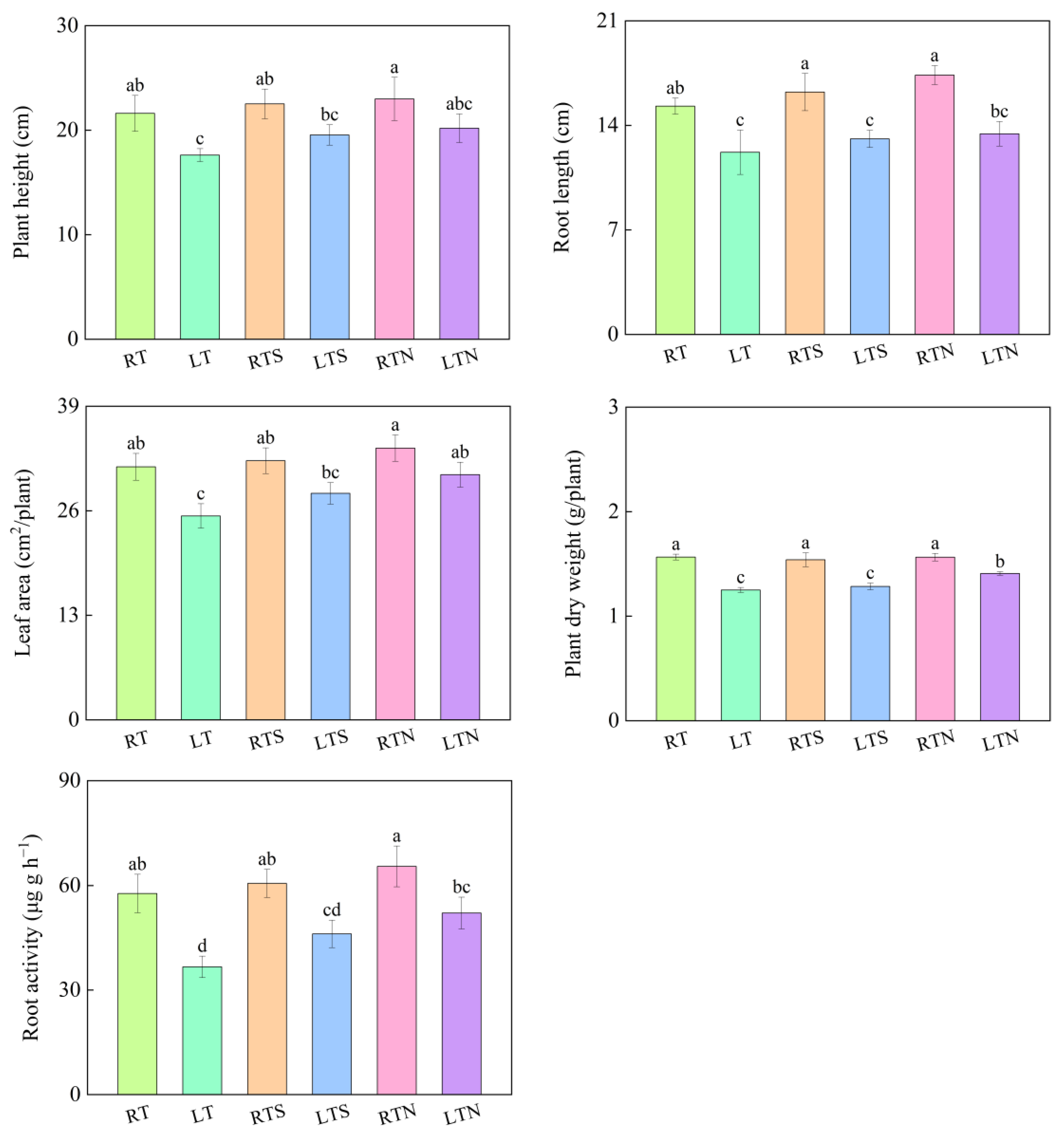
2.1. Effects of Exogenous Silicon on Rice Growth Under Low Temperature Conditions
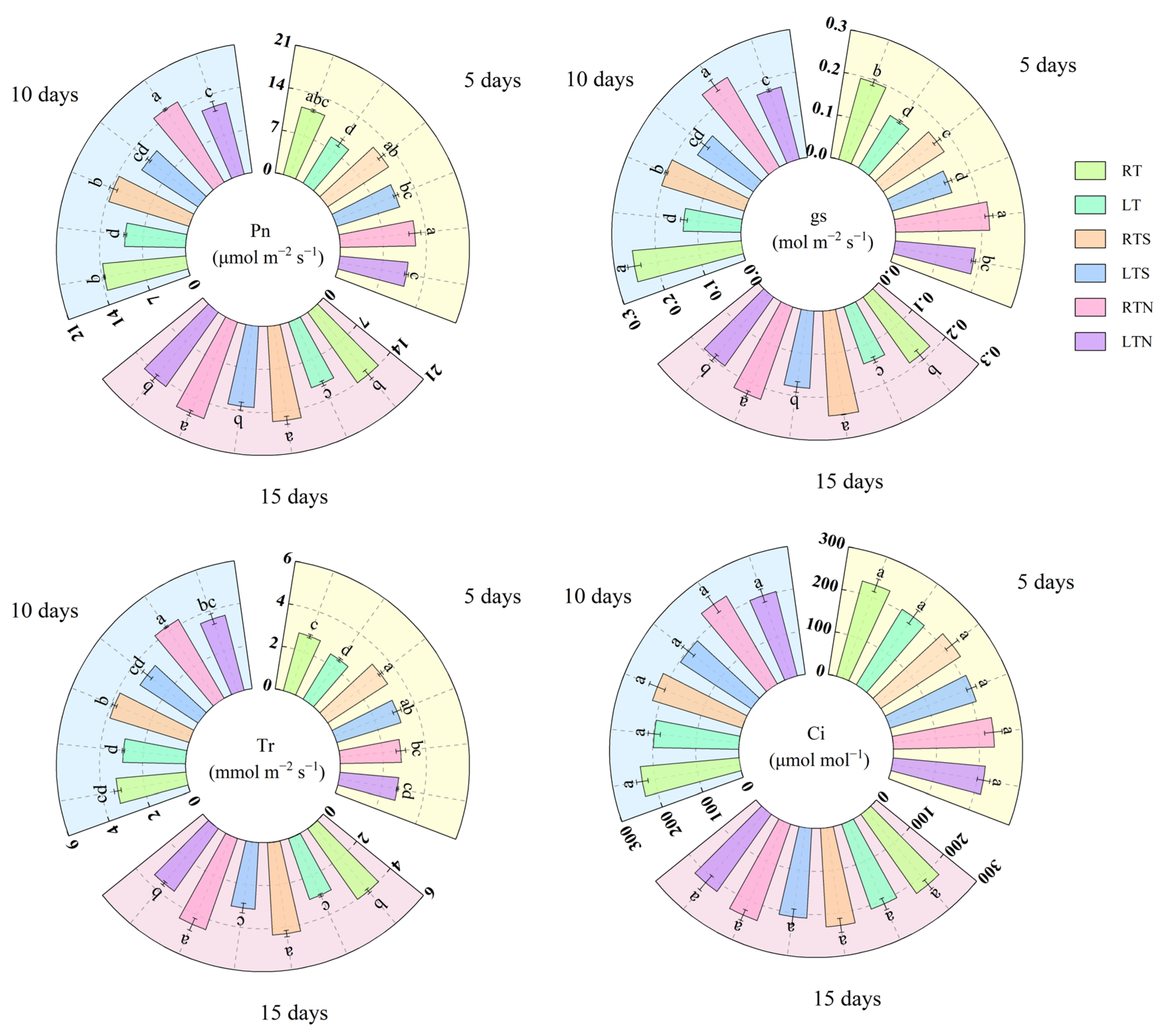
2.2. Effects of Exogenous Silicon on Photosynthetic Parameters of Rice Under Low Temperature Conditions
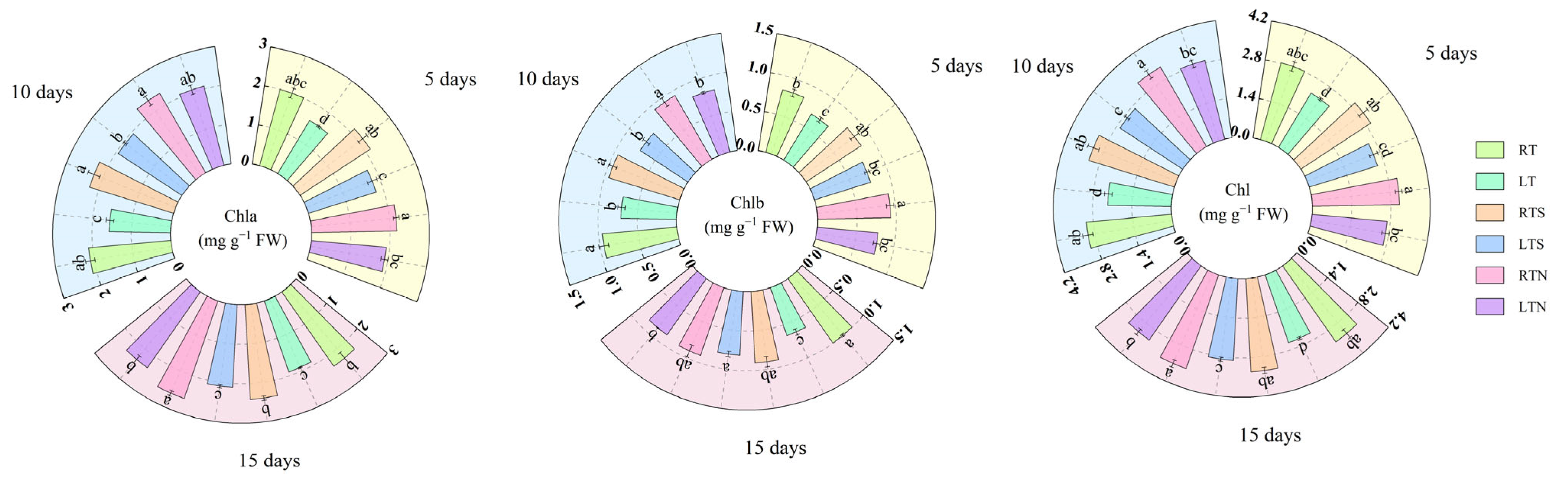
2.3. Effects of Exogenous Silicon on Chlorophyll Content in Rice Under Low Temperature Conditions
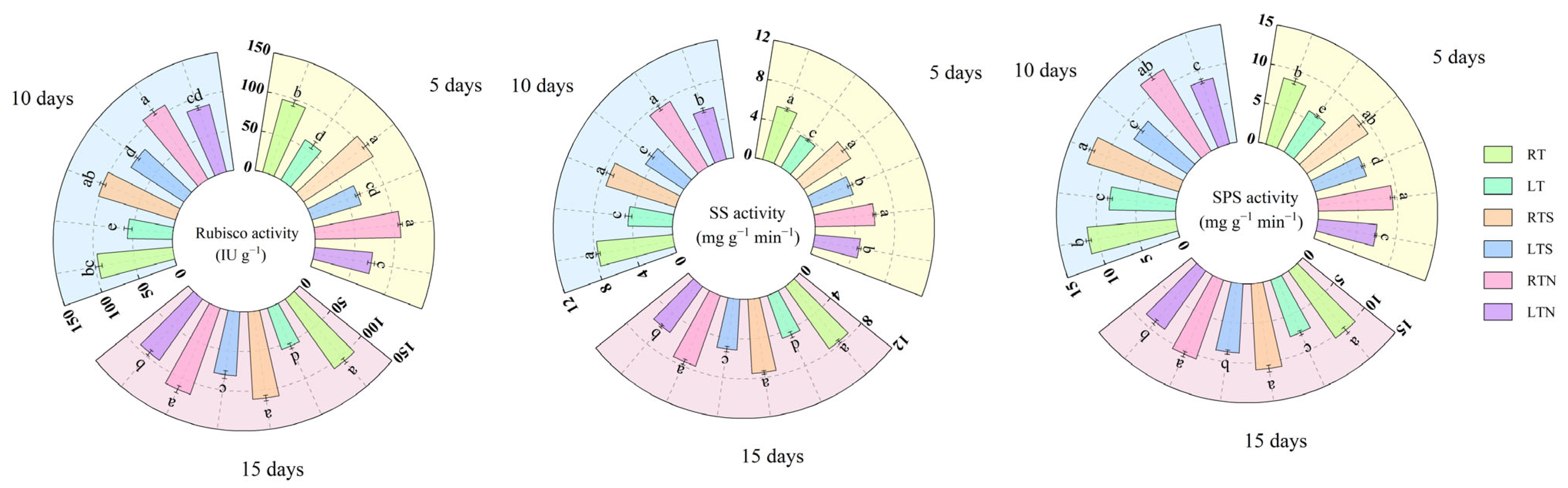
2.4. Effects of Exogenous Silicon on Enzyme Activities Related to Glucose Metabolism in Rice Under Low Temperature Conditions
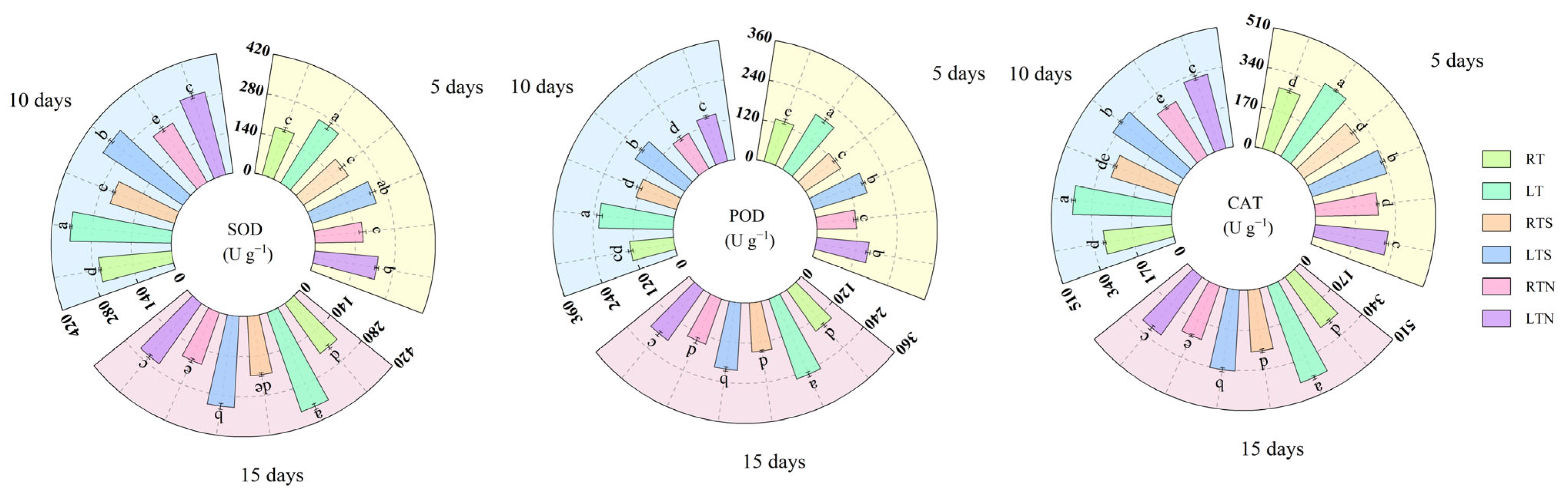
2.5. Effects of Exogenous Silicon on Antioxidant Enzyme Activities in Rice Under Low Temperature Conditions
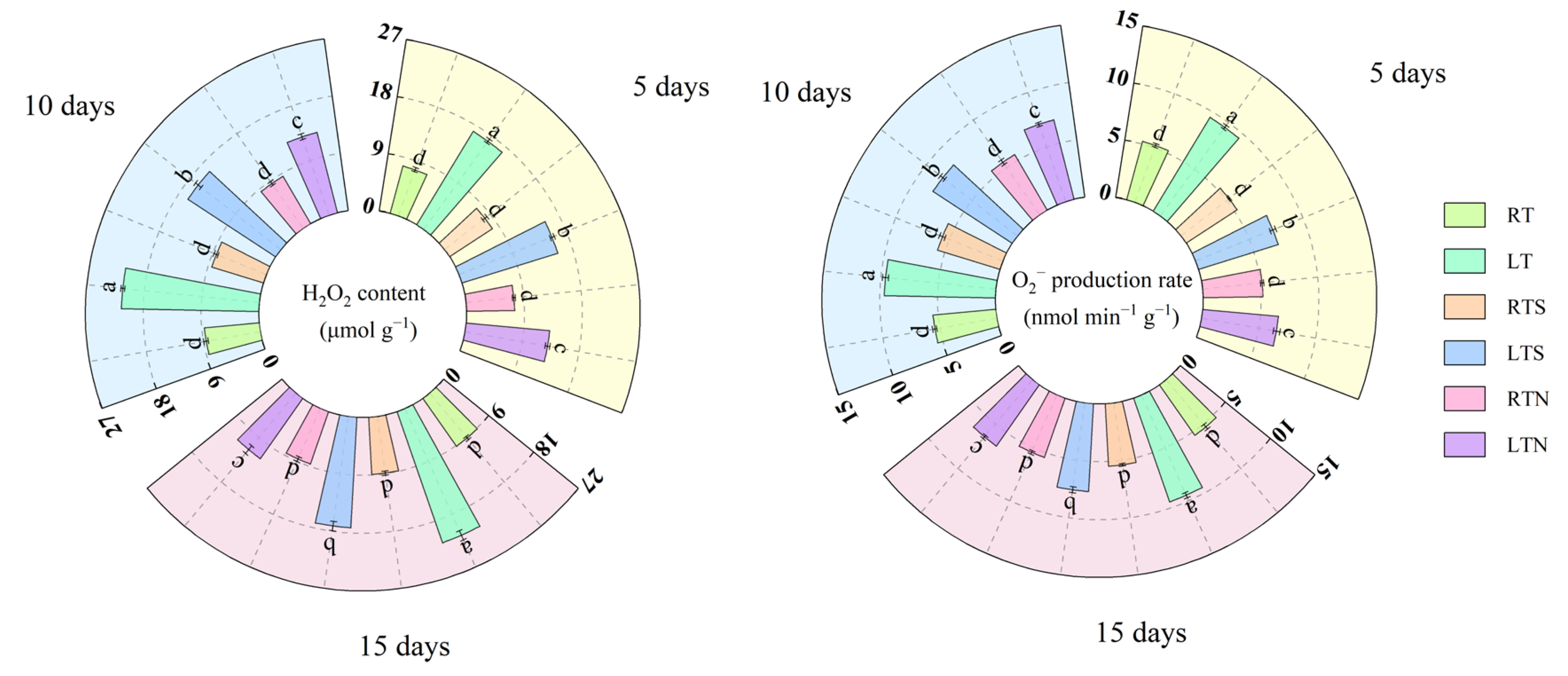
2.6. Effect of Exogenous Silicon on Reactive Oxygen Species (ROS) in Rice Under Low Temperature Conditions
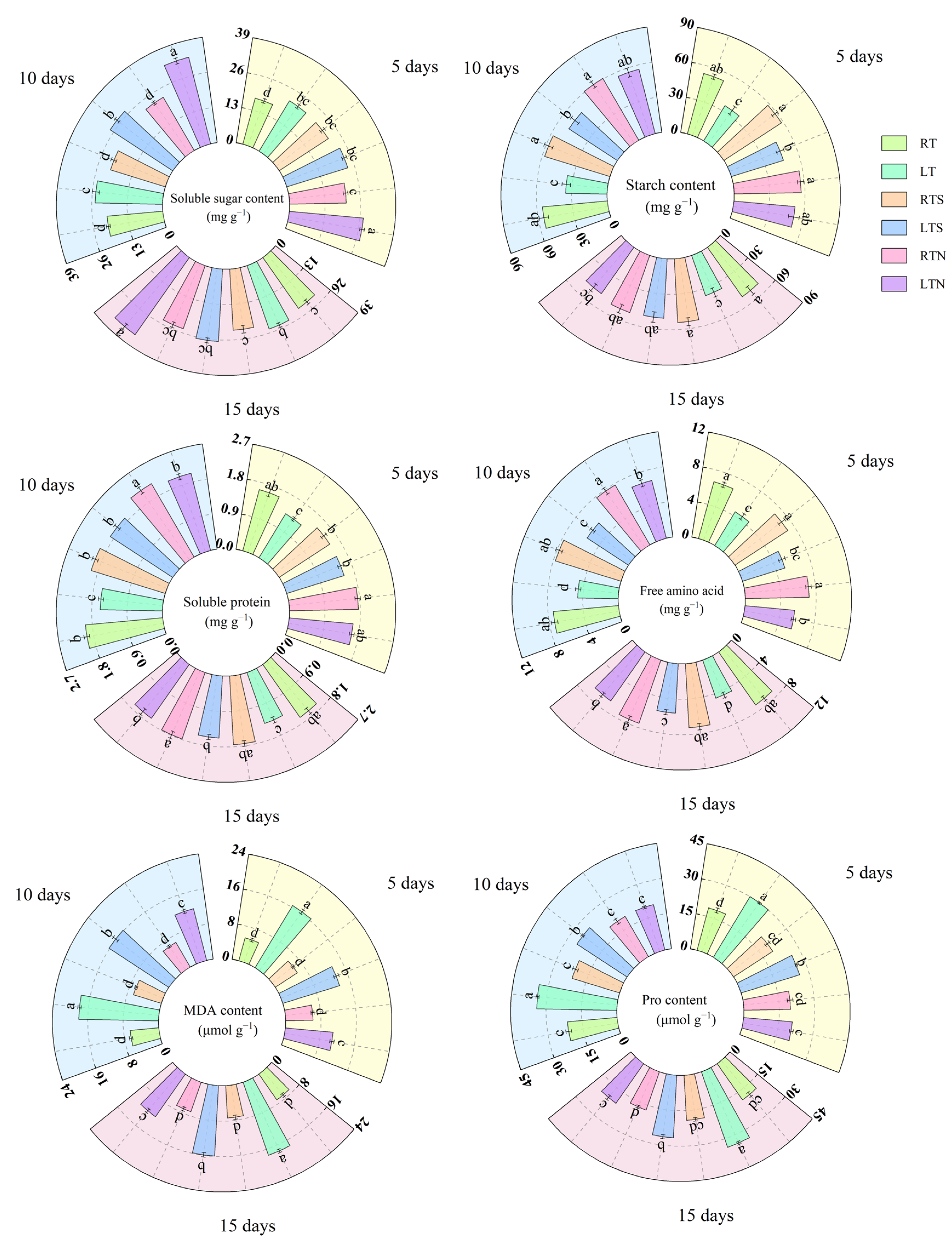
2.7. Effect of Exogenous Silicon on Osmotic Regulation Substances in Rice Under Low Temperature Conditions
2.8. Effect of Exogenous Silicon on Rice Yield Under Low Temperature Conditions
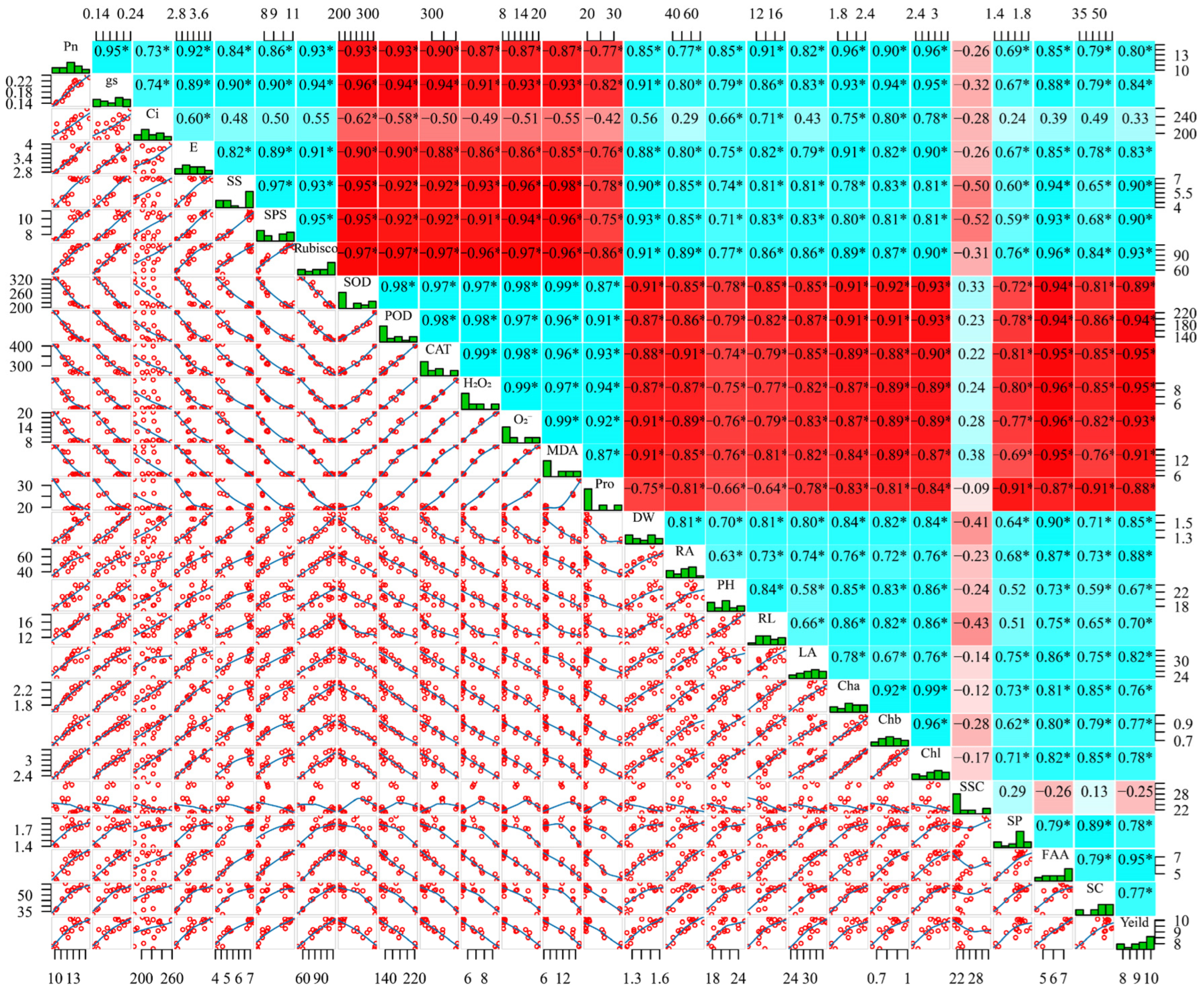
2.9. Correlation Analysis
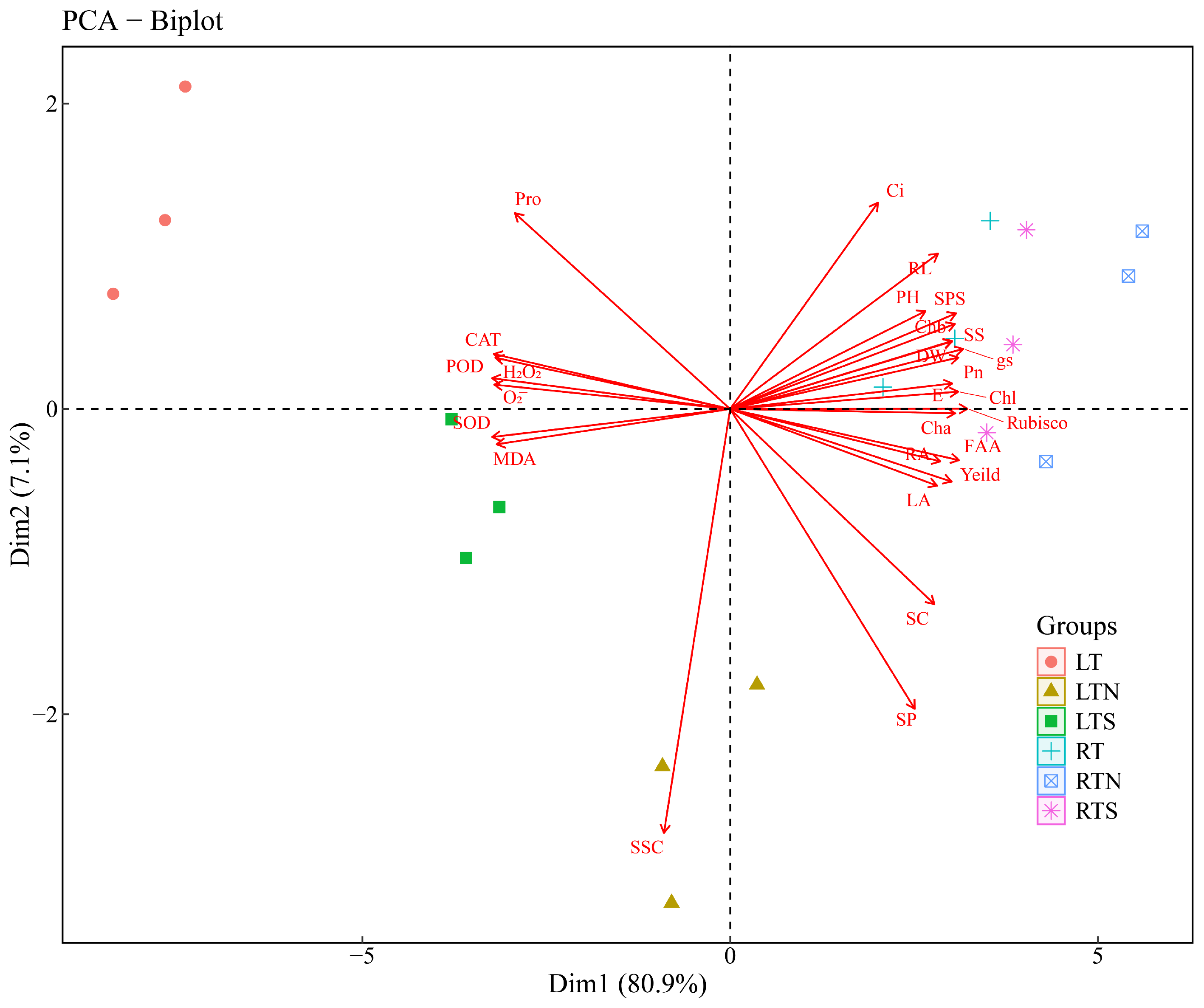
2.10. Principal Component Analysis
3. Discussion
4. Materials and Methods
4.1. Test Materials
4.2. Experimental Design
4.3. Measurement Indicators and Methods
4.3.1. Determination of Rice Growth Indicators
4.3.2. Measurement of Photosynthetic Characteristics and Chlorophyll Content
4.3.3. Determination of Glucose Metabolism Enzyme Activity
4.3.4. Determination of Antioxidant Enzyme Activity and Substance Content
4.3.5. Yield and Yield Components
4.4. Statistical Analysis
5. Conclusions
Author Contributions
Funding
Data Availability Statement
Acknowledgments
Conflicts of Interest
References
- Ma, Y.; Dai, X.; Xu, Y.; Luo, W.; Zheng, X.; Zeng, D.; Pan, Y.; Lin, X.; Liu, H.; Zhang, D. COLD1 confers chilling tolerance in rice. Cell 2015, 160, 1209–1221. [Google Scholar] [CrossRef] [PubMed]
- Luo, W.; Huan, Q.; Xu, Y.; Qian, W.; Chong, K.; Zhang, J. Integrated global analysis reveals a vitamin E-vitamin K1 sub-network, downstream of COLD1, underlying rice chilling tolerance divergence. Cell Rep. 2021, 36, 109397. [Google Scholar] [CrossRef] [PubMed]
- Hussain, S.; Khan, F.; Hussain, H.A.; Nie, L. Physiological and biochemical mechanisms of seed priming-induced chilling tolerance in rice cultivars. Front. Plant Sci. 2016, 7, 116. [Google Scholar] [CrossRef] [PubMed]
- Gad, A.G.; Habiba; Zheng, X.; Miao, Y. Low light/darkness as stressors of multifactor-induced senescence in rice plants. Int. J. Mol. Sci. 2021, 22, 3936. [Google Scholar] [CrossRef] [PubMed]
- Bonnecarrère, V.; Borsani, O.; Díaz, P.; Capdevielle, F.; Blanco, P.; Monza, J. Response to photoxidative stress induced by cold in japonica rice is genotype dependent. Plant Sci. 2011, 180, 726–732. [Google Scholar] [CrossRef] [PubMed]
- Zhang, S.; Tao, F.; Zhang, Z. Changes in extreme temperatures and their impacts on rice yields in southern China from 1981 to 2009. Field Crops Res. 2016, 189, 43–50. [Google Scholar] [CrossRef]
- Wang, W.; Chen, Q.; Hussain, S.; Mei, J.; Dong, H.; Peng, S.; Huang, J.; Cui, K.; Nie, L. Pre-sowing seed treatments in direct-seeded early rice: Consequences for emergence, seedling growth and associated metabolic events under chilling stress. Sci. Rep. 2016, 6, 19637. [Google Scholar] [CrossRef] [PubMed]
- Shi, Y.; Phan, H.; Liu, Y.; Cao, S.; Zhang, Z.; Chu, C.; Schläppi, M.R. Glycosyltransferase OsUGT90A1 helps protect the plasma membrane during chilling stress in rice. J. Exp. Bot. 2020, 71, 2723–2739. [Google Scholar] [CrossRef] [PubMed]
- Zu, X.; Luo, L.; Wang, Z.; Gong, J.; Yang, C.; Wang, Y.; Xu, C.; Qiao, X.; Deng, X.; Song, X. A mitochondrial pentatricopeptide repeat protein enhances cold tolerance by modulating mitochondrial superoxide in rice. Nat. Commun. 2023, 14, 6789. [Google Scholar] [CrossRef] [PubMed]
- Sun, T.; Ruan, J.; Cao, T.; Yao, L.; Zhao, Z.; Zhang, J.; Li, J.; Deng, A.; Chen, H.; Gao, X. Effects of low-temperature stress during rice heading stage on carbon and nitrogen allocation in paddy eco-system of northeastern China. Front. Plant Sci. 2025, 16, 1484734. [Google Scholar] [CrossRef] [PubMed]
- National Bureau of Statistics of China (NBSC). China Statistics Yearbook; China Statistics Press: Beijing, China, 2023. [Google Scholar]
- Yuan, M.; Cai, C.; Wang, X.; Li, G.; Wu, G.; Wang, J.; Geng, W.; Liu, G.; Zhu, J.; Sun, Y. Warm air temperatures increase photosynthetic acclimation to elevated CO2 concentrations in rice under field conditions. Field Crops Res. 2021, 262, 108036. [Google Scholar] [CrossRef]
- Tao, F.; Zhang, S.; Zhang, Z. Changes in rice disasters across China in recent decades and the meteorological and agronomic causes. Reg. Environ. Change 2013, 13, 743–759. [Google Scholar] [CrossRef]
- Van Bruggen, A.H.; He, M.M.; Shin, K.; Mai, V.; Jeong, K.; Finckh, M.; Morris, J., Jr. Environmental and health effects of the herbicide glyphosate. Sci. Total Environ. 2018, 616, 255–268. [Google Scholar] [CrossRef] [PubMed]
- Martini, L.F.D.; Burgos, N.R.; Noldin, J.A.; de Avila, L.A.; Salas, R.A. Absorption, translocation and metabolism of bispyribac-sodium on rice seedlings under cold stress. Pest Manag. Sci. 2015, 71, 1021–1029. [Google Scholar] [CrossRef] [PubMed]
- Ma, J.F.; Yamaji, N. A cooperative system of silicon transport in plants. Trends Plant Sci. 2015, 20, 435–442. [Google Scholar] [CrossRef] [PubMed]
- Gaur, S.; Kumar, J.; Kumar, D.; Chauhan, D.K.; Prasad, S.M.; Srivastava, P.K. Fascinating impact of silicon and silicon transporters in plants: A review. Ecotoxicol. Environ. Saf. 2020, 202, 110885. [Google Scholar] [CrossRef] [PubMed]
- Ma, J.F.; Tamai, K.; Yamaji, N.; Mitani, N.; Konishi, S.; Katsuhara, M.; Ishiguro, M.; Murata, Y.; Yano, M. A silicon transporter in rice. Nature 2006, 440, 688–691. [Google Scholar] [CrossRef] [PubMed]
- Ma, J.F.; Yamaji, N.; Mitani, N.; Tamai, K.; Konishi, S.; Fujiwara, T.; Katsuhara, M.; Yano, M. An efflux transporter of silicon in rice. Nature 2007, 448, 209–212. [Google Scholar] [CrossRef] [PubMed]
- Ma, J.F.; Yamaji, N. Silicon uptake and accumulation in higher plants. Trends Plant Sci. 2006, 11, 392–397. [Google Scholar] [CrossRef] [PubMed]
- Rajeshkumar, R.; Moorthy, P.S.; Raveendran, M.; Karthikeyan, G.; Gomathi, V.; Djanaguiraman, M.; Rajkishore, S.; Abinaya, K. Mitigating plant viruses through nanoparticles: Mechanisms, applications and future perspectives. Plant Nano Biol. 2025, 12, 100155. [Google Scholar] [CrossRef]
- Wu, H.; Li, Z. Recent advances in nano-enabled agriculture for improving plant performance. Crop J. 2022, 10, 1–12. [Google Scholar] [CrossRef]
- Fitiyani, H.; Haryanti, S. The effect of using nanosilica fertilizer on growth tomato plant (Solanum lycopersicum L.). Bull. Anat. Physiol. 2016, 24, 34–41. [Google Scholar]
- Yan, G.; Huang, Q.; Zhao, S.; Xu, Y.; He, Y.; Nikolic, M.; Nikolic, N.; Liang, Y.; Zhu, Z. Silicon nanoparticles in sustainable agriculture: Synthesis, absorption, and plant stress alleviation. Front. Plant Sci. 2024, 15, 1393458. [Google Scholar] [CrossRef] [PubMed]
- Hamoud, Y.A.; Zia-ur-Rehman, M.; Kakakhel, I.A.M.; Usman, M.; Rizwan, M.; Shaghaleh, H.; Mohiuddin, G.; Alzahrani, Y.M.; Alharby, H.F.; Alsamadany, H. Comparative effects of micron-sized silicon sources and Si nanoparticles on growth, defense system and cadmium accumulation in wheat (Triticum aestivum L.) cultivated in Cd contaminated soil. Environ. Technol. Innov. 2024, 36, 103855. [Google Scholar] [CrossRef]
- Zhu, P.; Chen, S.; Shi, Y. Assessment of nano silicon fertilizer effects on soil nutrients, enzyme activities, and microbial communities. Environ. Sci. Nano 2024, 11, 3124–3136. [Google Scholar] [CrossRef]
- Seyed Hajizadeh, H.; Azizi, S.; Rasouli, F.; Kaya, O. Evaluation of nano-silicon efficiency on compatible solutes and nutrient status of Damask rose affected by in vitro simulated drought stress. Chem. Biol. Technol. Agric. 2023, 10, 22. [Google Scholar] [CrossRef]
- Yusuf, M.; Khan, T.A.; AlBlooshi, F.S.; Alharmoudi, A.; AlAlawi, M.S.; Alshkeili, A.M.; Albedwawi, A.; Masih, J.; Alghfeli, M.M.B. Unveiling the protective role of silicon dioxide nanoparticles against copper-induced oxidative damage in soybean plants through altered proline metabolism and antioxidants. Plant Nano Biol. 2025, 12, 100149. [Google Scholar] [CrossRef]
- Zhao, P.; Cao, L.; Ma, D.; Zhou, Z.; Huang, Q.; Pan, C. Translocation, distribution and degradation of prochloraz-loaded mesoporous silica nanoparticles in cucumber plants. Nanoscale 2018, 10, 1798–1806. [Google Scholar] [CrossRef] [PubMed]
- Cui, J.; Liu, T.; Li, F.; Yi, J.; Liu, C.; Yu, H. Silica nanoparticles alleviate cadmium toxicity in rice cells: Mechanisms and size effects. Environ. Pollut. 2017, 228, 363–369. [Google Scholar] [CrossRef] [PubMed]
- Rastogi, A.; Tripathi, D.K.; Yadav, S.; Chauhan, D.K.; Živčák, M.; Ghorbanpour, M.; El-Sheery, N.I.; Brestic, M. Application of silicon nanoparticles in agriculture. 3 Biotech 2019, 9, 90. [Google Scholar] [CrossRef] [PubMed]
- Bilal, S.; Khan, T.; Asaf, S.; Khan, N.A.; Saad Jan, S.; Imran, M.; Al-Rawahi, A.; Khan, A.L.; Lee, I.J.; Al-Harrasi, A. Silicon-induced morphological, biochemical and molecular regulation in Phoenix dactylifera L. under low-temperature stress. Int. J. Mol. Sci. 2023, 24, 6036. [Google Scholar] [CrossRef] [PubMed]
- Moradtalab, N.; Weinmann, M.; Walker, F.; Höglinger, B.; Ludewig, U.; Neumann, G. Silicon improves chilling tolerance during early growth of maize by effects on micronutrient homeostasis and hormonal balances. Front. Plant Sci. 2018, 9, 420. [Google Scholar] [CrossRef] [PubMed]
- Liang, Y.; Liu, H.; Fu, Y.; Li, P.; Li, S.; Gao, Y. Regulatory effects of silicon nanoparticles on the growth and photosynthesis of cotton seedlings under salt and low-temperature dual stress. BMC Plant Biol. 2023, 23, 504. [Google Scholar] [CrossRef] [PubMed]
- Rezghiyan, A.; Esmaeili, H.; Farzaneh, M.; Rezadoost, H. The interaction effect of water deficit stress and nanosilicon on phytochemical and physiological characteristics of hemp (Cannabis sativa L.). Plant Physiol. Biochem. 2024, 217, 109298. [Google Scholar] [CrossRef] [PubMed]
- Barrero-Gil, J.; Huertas, R.; Rambla, J.L.; Granell, A.; Salinas, J. Tomato plants increase their tolerance to low temperature in a chilling acclimation process entailing comprehensive transcriptional and metabolic adjustments. Plant Cell Environ. 2016, 39, 2303–2318. [Google Scholar] [CrossRef] [PubMed]
- He, Q.; Liu, Y.; Chang, B.; Yang, R.; Guo, S.; Gao, J.; Khan, A.; Zhang, R.; Shi, Y.; Zhang, Y. Exogenous nano-silicon treatment enhanced the low temperature tolerance of tomato seedlings. Plant Nano Biol. 2025, 13, 100183. [Google Scholar] [CrossRef]
- Dehghanipoodeh, S.; Ghobadi, C.; Baninasab, B.; Gheysari, M.; Shiranibidabadi, S. Effect of silicon on growth and development of strawberry under water deficit conditions. Hortic. Plant J. 2018, 4, 226–232. [Google Scholar] [CrossRef]
- Zhu, J.; Zhang, K.X.; Wang, W.S.; Gong, W.; Liu, W.C.; Chen, H.G.; Xu, H.H.; Lu, Y.T. Low temperature inhibits root growth by reducing auxin accumulation via ARR1/12. Plant Cell Physiol. 2015, 56, 727–736. [Google Scholar] [CrossRef] [PubMed]
- Arif, Y.; Singh, P.; Bajguz, A.; Alam, P.; Hayat, S. Silicon mediated abiotic stress tolerance in plants using physio-biochemical, omic approach and cross-talk with phytohormones. Plant Physiol. Biochem. 2021, 166, 278–289. [Google Scholar] [CrossRef] [PubMed]
- Wang, Q.; Zhao, H.; Jiang, J.; Xu, J.; Xie, W.; Fu, X.; Liu, C.; He, Y.; Wang, G. Genetic architecture of natural variation in rice nonphotochemical quenching capacity revealed by genome-wide association study. Front. Plant Sci. 2017, 8, 1773. [Google Scholar] [CrossRef] [PubMed]
- Marchiori, P.E.; Machado, E.C.; Ribeiro, R.V. Photosynthetic limitations imposed by self-shading in field-grown sugarcane varieties. Field Crops Res. 2014, 155, 30–37. [Google Scholar] [CrossRef]
- Chen, H.; Wu, W.; Du, K.; Yang, J.; Kang, X. CCT39 transcription factor promotes chlorophyll biosynthesis and photosynthesis in poplar. Plant Cell Environ. 2025, 48, 3136–3150. [Google Scholar] [CrossRef] [PubMed]
- Qiu, Z.; Li, J.; Zhang, M.; Bi, Z.; Li, Z. He–Ne laser pretreatment protects wheat seedlings against cadmium-induced oxidative stress. Ecotoxicol. Environ. Saf. 2013, 88, 135–141. [Google Scholar] [CrossRef] [PubMed]
- Akhtar, N.; Ilyas, N.; Hayat, R.; Yasmin, H.; Noureldeen, A.; Ahmad, P. Synergistic effects of plant growth promoting rhizobacteria and silicon dioxide nano-particles for amelioration of drought stress in wheat. Plant Physiol. Biochem. 2021, 166, 160–176. [Google Scholar] [CrossRef] [PubMed]
- Haghighi, M.; Pessarakli, M. Influence of silicon and nano-silicon on salinity tolerance of cherry tomatoes (Solanum lycopersicum L.) at early growth stage. Sci. Hortic. 2013, 161, 111–117. [Google Scholar] [CrossRef]
- Rastogi, A.; Yadav, S.; Hussain, S.; Kataria, S.; Hajihashemi, S.; Kumari, P.; Yang, X.; Brestic, M. Does silicon really matter for the photosynthetic machinery in plants? Plant Physiol. Biochem. 2021, 169, 40–48. [Google Scholar] [CrossRef] [PubMed]
- Redondo-Gómez, S.; Mateos-Naranjo, E.; Davy, A.J.; Fernández-Muñoz, F.; Castellanos, E.M.; Luque, T.; Figueroa, M.E. Growth and photosynthetic responses to salinity of the salt-marsh shrub Atriplex portulacoides. Ann. Bot. 2007, 100, 555–563. [Google Scholar] [CrossRef] [PubMed]
- He, Y.; Yu, C.; Zhou, L.; Chen, Y.; Liu, A.; Jin, J.; Hong, J.; Qi, Y.; Jiang, D. Rubisco decrease is involved in chloroplast protrusion and Rubisco-containing body formation in soybean (Glycine max.) under salt stress. Plant Physiol. Biochem. 2014, 74, 118–124. [Google Scholar] [CrossRef] [PubMed]
- Pereira, L.F.; Martins, S.C.V.; Aucique-Pérez, C.E.; Silva, E.T.; Ávila, R.T.; DaMatta, F.M.; Rodrigues, F.Á. Silicon alleviates mesophyll limitations of photosynthesis on rice leaves infected by Monographella albescens. Theor. Exp. Plant Physiol. 2020, 32, 163–174. [Google Scholar] [CrossRef]
- Pang, Z.; Chen, J.; Wang, T.; Gao, C.; Li, Z.; Guo, L.; Xu, J.; Cheng, Y. Linking plant secondary metabolites and plant microbiomes: A review. Front. Plant Sci. 2021, 12, 621276. [Google Scholar] [CrossRef] [PubMed]
- Li, Z.; Cornelis, J.T.; Linden, C.V.; Van Ranst, E.; Delvaux, B. Neoformed aluminosilicate and phytogenic silica are competitive sinks in the silicon soil–plant cycle. Geoderma 2020, 368, 114308. [Google Scholar] [CrossRef]
- Li, Y.; Xi, K.; Liu, X.; Han, S.; Han, X.; Li, G.; Yang, L.; Ma, D.; Fang, Z.; Gong, S. Silica nanoparticles promote wheat growth by mediating hormones and sugar metabolism. J. Nanobiotechnol. 2023, 21, 2. [Google Scholar] [CrossRef] [PubMed]
- Zhu, J.; Qi, J.; Fang, Y.; Xiao, X.; Li, J.; Lan, J.; Tang, C. Characterization of sugar contents and sucrose metabolizing enzymes in developing leaves of Hevea brasiliensis. Front. Plant Sci. 2018, 9, 58. [Google Scholar] [CrossRef] [PubMed]
- Sun, M.; Wang, C.; Zhang, G.; Cao, H.; Wang, F.; Li, M.; Ge, S. Melatonin mitigates root growth inhibition and carbon-nitrogen metabolism imbalance in apple rootstock M9T337 under high nitrogen stress. Front. Plant Sci. 2024, 15, 1482351. [Google Scholar] [CrossRef] [PubMed]
- Fanourakis, D.; Aliniaeifard, S.; Sellin, A.; Giday, H.; Körner, O.; Nejad, A.R.; Delis, C.; Bouranis, D.; Koubouris, G.; Kambourakis, E. Stomatal behavior following mid-or long-term exposure to high relative air humidity: A review. Plant Physiol. Biochem. 2020, 153, 92–105. [Google Scholar] [CrossRef] [PubMed]
- Basu, S.; Kumar, G. Exploring the significant contribution of silicon in regulation of cellular redox homeostasis for conferring stress tolerance in plants. Plant Physiol. Biochem. 2021, 166, 393–404. [Google Scholar] [CrossRef] [PubMed]
- Luo, B.; Guang, M.; Yun, W.; Ding, S.; Ren, S.; Gao, H. Camellia sinensis chloroplast fluoride efflux gene CsABCB9 is involved in the fluoride tolerance mechanism. Int. J. Mol. Sci. 2022, 23, 7756. [Google Scholar] [CrossRef] [PubMed]
- Chopra, J.; Kaur, N.; Gupta, A.K. Ontogenic changes in enzymes of carbon metabolism in relation to carbohydrate status in developing mungbean reproductive structures. Phytochemistry 2000, 53, 539–548. [Google Scholar] [CrossRef] [PubMed]
- Li, S.; Jiang, H.; Wang, J.; Wang, Y.; Pan, S.; Tian, H.; Duan, M.; Wang, S.; Tang, X.; Mo, Z. Responses of plant growth, physiological, gas exchange parameters of super and non-super rice to rhizosphere temperature at the tillering stage. Sci. Rep. 2019, 9, 10618. [Google Scholar] [CrossRef] [PubMed]
- Zhang, Z. Experimental Techniques in Plant Physiology; Jilin University Press: Changchun, China, 2008. [Google Scholar]
- Li, H. Principles and Techniques of Plant Physiology and Biochemistry Experiments; Higher Education Press: Beijing, China, 2000. [Google Scholar]
- Yoshida, S. Determination of sugar and starch in plant tissue. In Laboratory Manual Physiological Studies of Rice; International Rice Research Institute: Los Baños, Philippines, 1976. [Google Scholar]
- Pucher, G.W.; Vickery, H.B. Determination of starch in plant tissues. Ind. Eng. Chem. Anal. Ed. 1936, 8, 92–97. [Google Scholar] [CrossRef]




| Treatment | Effective Panicle Number (×104/ha) | Spikelets per Panicle | Seed Setting Rate (%) | 1000-Grain Weight (g) | Yield (t/ha) |
|---|---|---|---|---|---|
| RT | 370.41 ± 1.70 a | 122.24 ± 2.01 a | 94.36 ± 0.78 a | 23.5 ± 0.07 d | 9.84 ± 0.21 a |
| LT | 321.45 ± 4.58 d | 110.67 ± 1.71 c | 88.25 ± 1.05 c | 25.43 ± 0.12 a | 7.79 ± 0.19 c |
| RTS | 372.65 ± 7.89 a | 123.70 ± 2.46 a | 94.46 ± 1.40 a | 23.54 ± 0.07 d | 9.86 ± 0.41 a |
| LTS | 335.87 ± 3.35 c | 115.93 ± 2.05 b | 91.49 ± 0.49 b | 24.92 ± 0.10 b | 8.88 ± 0.28 b |
| RTN | 371.86 ± 3.31 a | 123.97 ± 2.18 a | 94.8 ± 0.53 a | 23.56 ± 0.04 d | 9.92 ± 0.08 a |
| LTN | 346.29 ± 2.87 b | 120.63 ± 2.00 a | 92.82 ± 0.41 ab | 24.37 ± 0.04 c | 9.15 ± 0.13 b |
| Temperature Group | Treatment |
|---|---|
| RT | Spray distilled water + 26 °C/20 °C day/night temperature |
| LT | Spray distilled water + 14 °C/20 °C day/night temperature |
| RTS | Spray 100 mg/L Na2SiO3 + 26 °C/20 °C day/night temperature |
| LTS | Spray 100 mg/L Na2SiO3 + 14 °C/10 °C day/night temperature |
| RTN | Spray 100 mg/L SiO2-NPs + 26 °C/20 °C day/night temperature |
| LTN | Spray 100 mg/L SiO2 NPs + 14 °C/10 °C day/night temperature |
Disclaimer/Publisher’s Note: The statements, opinions and data contained in all publications are solely those of the individual author(s) and contributor(s) and not of MDPI and/or the editor(s). MDPI and/or the editor(s) disclaim responsibility for any injury to people or property resulting from any ideas, methods, instructions or products referred to in the content. |
© 2026 by the authors. Licensee MDPI, Basel, Switzerland. This article is an open access article distributed under the terms and conditions of the Creative Commons Attribution (CC BY) license.
Share and Cite
Ma, K.; Liu, X.; Qi, Z.; Zhou, Y.; Xu, H.; Ma, Y. Exogenous Nano-Silicon Treatment Improved the Low-Temperature Tolerance of Rice Seedlings. Plants 2026, 15, 1983. https://doi.org/10.3390/plants15131983
Ma K, Liu X, Qi Z, Zhou Y, Xu H, Ma Y. Exogenous Nano-Silicon Treatment Improved the Low-Temperature Tolerance of Rice Seedlings. Plants. 2026; 15(13):1983. https://doi.org/10.3390/plants15131983
Chicago/Turabian StyleMa, Ke, Xin Liu, Zexin Qi, Yuanyuan Zhou, Heping Xu, and Yao Ma. 2026. "Exogenous Nano-Silicon Treatment Improved the Low-Temperature Tolerance of Rice Seedlings" Plants 15, no. 13: 1983. https://doi.org/10.3390/plants15131983
APA StyleMa, K., Liu, X., Qi, Z., Zhou, Y., Xu, H., & Ma, Y. (2026). Exogenous Nano-Silicon Treatment Improved the Low-Temperature Tolerance of Rice Seedlings. Plants, 15(13), 1983. https://doi.org/10.3390/plants15131983