Molecular Basis and Mechanistic Insights into Ascophyllum nodosum Extract-Mediated Regulation of Plant Growth, Nutrient Acquisition, and Stress Responses

 ,
,  , and
, and 
Abstract
1. Introduction
2. Biochemical Composition and Functional Constituents of ANE
3. Extraction-Dependent Variation in ANE Composition and Mechanistic Consequences
4. Molecular Mechanisms of ANE Action
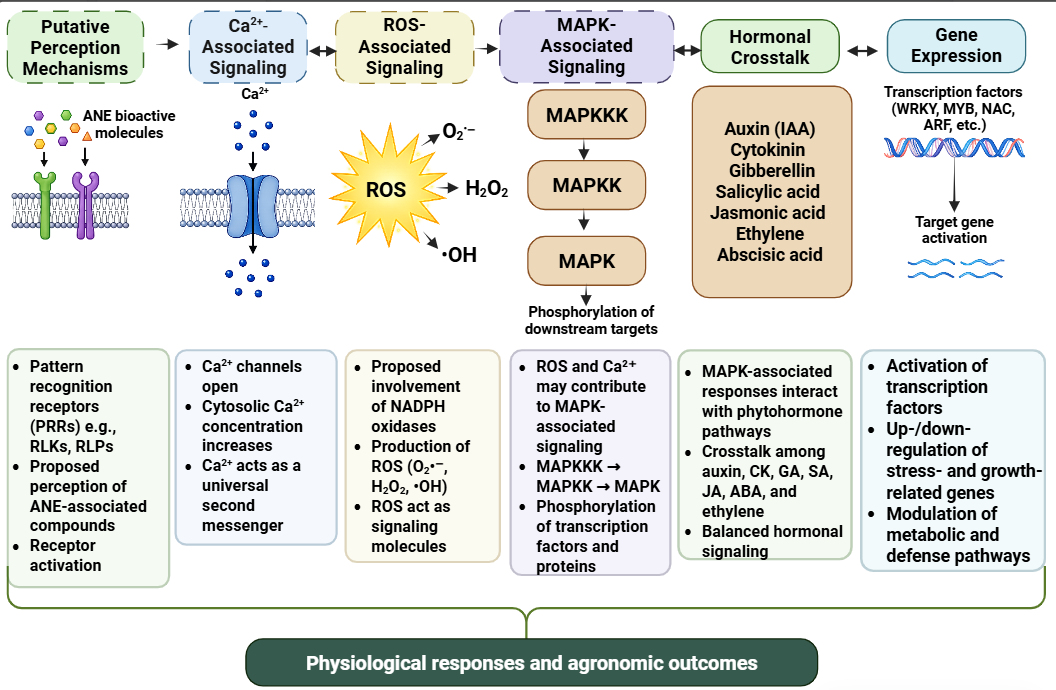
4.1. Signal Perception and Early Cellular Responses
4.2. Hormonal Crosstalk and Growth Regulation
4.3. Transcriptional Reprogramming and Gene Regulatory Pathways
4.4. Stress Signaling and Defense Activation
4.5. Modulation of Root Architecture and Nutrient Uptake
4.6. ANE-Mediated Rhizosphere Microbiome Interactions
5. Agronomic Outcomes: Linking Molecular Mechanisms to Plant Performance
6. Integrated Functional Pathway of ANE Action
7. Challenges and Limitations
7.1. Variability in Extract Composition and Lack of Standardization
7.2. Limited Understanding of Molecular Mechanisms
7.3. Complexity of Multi-Component Interactions
7.4. Inconsistencies in Experimental Design and Reporting
7.5. Field–Laboratory Discrepancies
7.6. Limited Integration of Multi-Omics Approaches
7.7. Challenges in Dose Optimization and Application Strategies
7.8. Regulatory and Commercial Constraints
- Substantial compositional variability among formulations, and
- Regulatory pathways that emphasize functional claims over detailed molecular characterization.
8. Conclusions
Author Contributions
Funding
Data Availability Statement
Acknowledgments
Conflicts of Interest
References
- Renganathan, P.; Astorga-Eló, M.; Gaysina, L.A.; Puente, E.O.; Sainz-Hernández, J.C. Nitrogen fixation by diazotrophs: A sustainable alternative to synthetic fertilizers in hydroponic cultivation. Sustainability 2025, 17, 5922. [Google Scholar] [CrossRef]
- Renganathan, P.; Gaysina, L.A.; Rueda-Puente, E.O. Microbial biofertilizers for salinity stress mitigation in hydroponic systems. Curr. Issues Mol. Biol. 2025, 47, 1029. [Google Scholar] [CrossRef] [PubMed]
- Prabhaharan, R.; Borboa-Flores, J.; Rosas-Burgos, E.C.; Cárdenas-López, J.L.; Ortega-García, J.; Rueda-Puente, E.O. Phaseolus acutifolius associated with Bacillus amyloliquefaciens and Azospirillum halopraeferens under salinity conditions. Biotecnia 2019, 21, 127–132. [Google Scholar]
- Renganathan, P.; Bustamante, G.A.; Ruíz, F.E.; Puente, E.O. Microbial diversity and functional profiles of three commercial biofertilizers and impacts on the bacterial communities of avocado’s soil rhizosphere. Cienc. Tecnol. Agropecu. 2024, 25, 2. [Google Scholar] [CrossRef]
- Rueda-Puente, E.O.; Prabhaharan, R.; Murillo-Amador, B.; Ruiz-Espinoza, F.; Puente, M.; Valdez-Cepeda, R.D. Ameliorative effects of salt resistance on physiological parameters in the halophyte Salicornia bigelovii Torr. with plant growth-promoting rhizobacteria. Afr. J. Biotechnol. 2013, 12, 34. [Google Scholar] [CrossRef]
- Renganathan, P.; Puente, E.O.; Sukhanova, N.V.; Gaysina, L.A. Hydroponics with microalgae and cyanobacteria: Emerging trends and opportunities in modern agriculture. BioTech 2024, 13, 27. [Google Scholar] [CrossRef] [PubMed]
- Renganathan, P.; Borboa-Flores, J.; Rosas-Burgos, E.C.; Cárdenas-López, J.L.; Murillo-Amador, B.; Ortega-García, J.; Rueda-Puente, E.O. Inoculation of nitrogen-fixing halobacteria in the contribution to tolerance to salt stress in bean tepary. Rev. Mex. Cienc. Agríc. 2018, 9, 4289–4300. [Google Scholar]
- Yusupova, A.; Kartabayeva, B.; Sushchenko, R.; Gaysina, K.; Renganathan, P.; Gaysina, L.A. Antifungal Potential of Cyanobacterium Nostoc sp. BCAC 1226 Suspension as a Biocontrol Agent Against Phytopathogenic Fungi and Oomycetes. Appl. Microbiol. 2025, 5, 46. [Google Scholar] [CrossRef]
- Khan, W.; Rayirath, U.P.; Subramanian, S.; Jithesh, M.N.; Rayorath, P.; Hodges, D.M.; Critchley, A.T.; Craigie, J.S.; Norrie, J.; Prithiviraj, B. Seaweed extracts as biostimulants of plant growth and development. J. Plant Growth Regul. 2009, 28, 386–399. [Google Scholar] [CrossRef]
- Kumari, S.; Sehrawat, K.D.; Phogat, D.; Sehrawat, A.R.; Chaudhary, R.; Sushkova, S.N.; Voloshina, M.S.; Rajput, V.D.; Shmaraeva, A.N.; Marc, R.A.; et al. Ascophyllum nodosum (L.) Le Jolis, a pivotal biostimulant toward sustainable agriculture: A comprehensive review. Agriculture 2023, 13, 1179. [Google Scholar] [CrossRef]
- Chauhan, B.S.; Singh, Y.P. Phytochemistry and pharmacological advances of Ascophyllum nodosum in the management of human diseases: A comprehensive review. Phytomed. Plus 2025, 5, 100718. [Google Scholar]
- Pereira, L.F.; Arenas, F.; Seabra, R.; da Silva, R.; Monteiro, C.; Pereira, J.; Vale, C.G.; Serôdio, J.; Frankenbach, S.; Ghiglione, V.; et al. Simulated intertidal heat stress on the brown seaweed Ascophyllum nodosum demonstrates differential population sensitivity to future climate. J. Ecol. 2025, 113, 1504–1520. [Google Scholar] [CrossRef]
- Anjana, K.; Arunkumar, K. Brown algae biomass for fucoxanthin, fucoidan and alginate: Update review on structure, biosynthesis, biological activities and extraction valorisation. Int. J. Biol. Macromol. 2024, 280, 135632. [Google Scholar] [CrossRef] [PubMed]
- Ummat, V.; Sivagnanam, S.P.; Rameshkumar, S.; Pednekar, M.; Fitzpatrick, S.; Rai, D.K.; Padamati, R.B.; O’Donnell, C.; Tiwari, B.K. Sequential extraction of fucoidan, laminarin, mannitol, alginate and protein from brown macroalgae Ascophyllum nodosum and Fucus vesiculosus. Int. J. Biol. Macromol. 2024, 256, 128195. [Google Scholar] [CrossRef] [PubMed]
- Gómez-Mascaraque, L.G.; Martínez-Sanz, M.; Martínez-López, R.; Martínez-Abad, A.; Panikuttira, B.; López-Rubio, A.; Tuohy, M.G.; Hogan, S.A.; Brodkorb, A. Characterization and gelling properties of a bioactive extract from Ascophyllum nodosum obtained using a chemical-free approach. Curr. Res. Food Sci. 2021, 4, 354–364. [Google Scholar] [CrossRef] [PubMed]
- Santaniello, A.; Scartazza, A.; Gresta, F.; Loreti, E.; Biasone, A.; Di Tommaso, D.; Piaggesi, A.; Perata, P. Ascophyllum nodosum seaweed extract alleviates drought stress in Arabidopsis by affecting photosynthetic performance and related gene expression. Front. Plant Sci. 2017, 8, 1362. [Google Scholar] [CrossRef] [PubMed]
- Aziz, A.; Poinssot, B.; Daire, X.; Adrian, M.; Bézier, A.; Lambert, B.; Joubert, J.M.; Pugin, A. Laminarin elicits defense responses in grapevine and induces protection against Botrytis cinerea and Plasmopara viticola. Mol. Plant Microbe Interact. 2003, 16, 1118–1128. [Google Scholar] [PubMed]
- Sun, G.; Xiao, Y.; Yin, H.; Yu, K.; Wang, Y.; Wang, Y. Oligosaccharide elicitors in plant immunity: Molecular mechanisms and disease resistance strategies. Plant Commun. 2025, 6, 101469. [Google Scholar] [CrossRef] [PubMed]
- Bojorges, H.; López-Rubio, A.; Martínez-Abad, A.; Fabra, M.J. Overview of alginate extraction processes: Impact on alginate molecular structure and techno-functional properties. Trends Food Sci. Technol. 2023, 140, 104142. [Google Scholar] [CrossRef]
- Ali, O.; Ramsubhag, A.; Jayaraman, J. Biostimulatory activities of Ascophyllum nodosum extract in tomato and sweet pepper crops in a tropical environment. PLoS ONE 2019, 14, e0216710. [Google Scholar] [CrossRef] [PubMed]
- Ahmed, M.; Ullah, H.; Piromsri, K.; Tisarum, R.; Cha-Um, S.; Datta, A. Effects of an Ascophyllum nodosum seaweed extract application dose and method on growth, fruit yield, quality, and water productivity of tomato under water-deficit stress. S. Afr. J. Bot. 2022, 151, 95–107. [Google Scholar] [CrossRef]
- Shukla, P.S.; Prithiviraj, B. Ascophyllum nodosum biostimulant improves the growth of Zea mays grown under phosphorus impoverished conditions. Front. Plant Sci. 2021, 11, 601843. [Google Scholar] [CrossRef] [PubMed]
- Kumar, G.; Nanda, S.; Singh, S.K.; Kumar, S.; Singh, D.; Singh, B.N.; Mukherjee, A. Seaweed extracts: Enhancing plant resilience to biotic and abiotic stresses. Front. Mar. Sci. 2024, 11, 1457500. [Google Scholar] [CrossRef]
- Renaut, S.; Masse, J.; Norrie, J.P.; Blal, B.; Hijri, M. A commercial seaweed extract structured microbial communities associated with tomato and pepper roots and significantly increased crop yield. Microb. Biotechnol. 2019, 12, 1346–1358. [Google Scholar] [CrossRef] [PubMed]
- Selvaraj, V.K.; Patel, J.S.; Hui, J.P.; Zhang, J.; Berrué, F.; Prithiviraj, B. Ascophyllum nodosum-based plant biostimulant shapes the bacterial community in the rhizosphere of corn. BMC Plant Biol. 2025, 25, 1263. [Google Scholar] [PubMed]
- De Saeger, J.; Van Praet, S.; Vereecke, D.; Park, J.; Jacques, S.; Han, T.; Depuydt, S. Toward the molecular understanding of the action mechanism of Ascophyllum nodosum extracts on plants. J. Appl. Phycol. 2020, 32, 573–597. [Google Scholar]
- Ahchouch, F.Z.; Borjas, A.; Boulaflous-Stevens, A.; Dupuits, C.; Mouzeyar, S.; Roche, J.; Delattre, C. The interactions of carbohydrate-based biostimulants with roots: From perception to response. Polysaccharides 2026, 7, 24. [Google Scholar] [CrossRef]
- Ali, O.; Ramsubhag, A.; Daniram Benn, R.S.; Jayaraman, J. Transcriptomic changes induced by applications of a commercial extract of Ascophyllum nodosum on tomato plants. Sci. Rep. 2022, 12, 8042. [Google Scholar] [CrossRef] [PubMed]
- Bertoldo, G.; Chiodi, C.; Della Lucia, M.C.; Borella, M.; Ravi, S.; Baglieri, A.; Lucenti, P.; Ganasula, B.K.; Mulagala, C.; Squartini, A.; et al. Brown seaweed extract application influences auxin- and ABA-related gene expression, root development, and sugar yield in Beta vulgaris L. Plants 2023, 12, 843. [Google Scholar] [PubMed]
- Sivagnanam, S.P.; Alaydi, H.; Cabral, E.M.; Poojary, M.M.; Karuppusamy, S.; Tiwari, B.K. Ultrasound, microwave and enzyme-assisted multiproduct biorefinery of Ascophyllum nodosum. Food Chem. 2024, 433, 137259. [Google Scholar]
- Pei, B.; Zhang, Y.; Liu, T.; Cao, J.; Ji, H.; Hu, Z.; Wu, X.; Wang, F.; Lu, Y.; Chen, N.; et al. Effects of seaweed fertilizer application on crop yield and quality under field conditions in China: A meta-analysis. PLoS ONE 2024, 19, e0307517. [Google Scholar] [CrossRef] [PubMed]
- Gonçalves, B.; Santos, M.; Silva, V.; Rodrigues, A.; Oliveira, I.; Lopes, T.; Sujeeth, N.; Guinan, K.J. Biostimulants in fruit crop production: Impacts on growth, yield, and fruit quality. Horticulturae 2025, 11, 1452. [Google Scholar] [CrossRef]
- González-Morales, S.; Solís-Gaona, S.; Valdés-Caballero, M.V.; Juárez-Maldonado, A.; Loredo-Treviño, A.; Benavides-Mendoza, A. Transcriptomics of biostimulation of plants under abiotic stress. Front. Genet. 2021, 12, 583888. [Google Scholar] [CrossRef] [PubMed]
- Xie, C.; Leeming, M.G.; Michell, B.J.; Ashokkumar, M.; Suleria, H.A.R. Investigating the effects of structural variance on the bioactive performance of brown seaweed-derived sulfated polysaccharides via molecular docking. Algal Res. 2026, 96, 104690. [Google Scholar] [CrossRef]
- Meresa, B.K.; Ayimut, K.M.; Weldemichael, M.Y.; Geberemedhin, K.H.; Kassegn, H.H.; Geberemikael, B.A.; Egigu, E.M. Carbohydrate elicitor-induced plant immunity: Advances and prospects. Heliyon 2024, 10, e34871. [Google Scholar] [CrossRef] [PubMed]
- Allahgholi, L.; Sardari, R.R.; Hakvåg, S.; Ara, K.Z.; Kristjansdottir, T.; Aasen, I.M.; Fridjonsson, O.H.; Brautaset, T.; Hreggvidsson, G.O.; Karlsson, E.N. Composition analysis and minimal treatments to solubilize polysaccharides from the brown seaweed Laminaria digitata for microbial growth of thermophiles. J. Appl. Phycol. 2020, 32, 1933–1947. [Google Scholar] [CrossRef]
- Gauthier, A.; Trouvelot, S.; Kelloniemi, J.; Frettinger, P.; Wendehenne, D.; Daire, X.; Joubert, J.M.; Ferrarini, A.; Delledonne, M.; Flors, V.; et al. The sulfated laminarin triggers a stress transcriptome before priming the SA- and ROS-dependent defenses during grapevine induced resistance against Plasmopara viticola. PLoS ONE 2014, 9, e88145. [Google Scholar] [CrossRef] [PubMed]
- Wang, L.; Wang, L.; Yan, C.; Fu, Y.; Yang, J.F.; Ma, J.; Song, S. Structural characterization of a fucoidan from Ascophyllum nodosum and comparison of its protective effect against cellular oxidative stress with its analogues. Int. J. Biol. Macromol. 2023, 239, 124295. [Google Scholar] [CrossRef] [PubMed]
- Rincón-Cervera, M.A.; de Burgos-Navarro, I.; Chileh-Chelh, T.; Belarbi, E.H.; Álvarez-Corral, M.; Carmona-Fernández, M.; Ezzaitouni, M.; Guil-Guerrero, J.L. The agronomic potential of the invasive brown seaweed Rugulopteryx okamurae: Optimisation of alginate, mannitol, and phlorotannin extraction. Plants 2024, 13, 3539. [Google Scholar] [CrossRef] [PubMed]
- De Bhowmick, G.; Rai, D.K.; Olatunji, O.; Kilcawley, K.; Skibinska, I.; Shannon, E.; Kennedy, D.; Walsh, D.; Mora, L.; Hayes, M. Development and characterisation of brown seaweed hydrolysates and fermentates with potential to reduce enteric methane. Sci. Rep. 2025, 15, 21445. [Google Scholar] [CrossRef] [PubMed]
- Wang, S.; Qiu, Y.; Zhu, F. A comparative review of red, green, and brown seaweed: Bioactive components, health effects, and machine learning approaches. Food Res. Int. 2026, 234, 118420. [Google Scholar] [CrossRef] [PubMed]
- Rabhi, M.L.; Derbak, L.; Bendif, H.; Boufahja, F.; Abu-Elsaoud, A.M.; Garzoli, S. Seaweed-derived biostimulants for sustainable crop production: A review. J. Biotechnol. 2025, 408, 201–216. [Google Scholar] [CrossRef] [PubMed]
- Craigie, J.S. Seaweed extract stimuli in plant science and agriculture. J. Appl. Phycol. 2011, 23, 371–393. [Google Scholar]
- Kadam, S.U.; O’Donnell, C.P.; Rai, D.K.; Hossain, M.B.; Burgess, C.M.; Walsh, D.; Tiwari, B.K. Laminarin from Irish brown seaweeds Ascophyllum nodosum and Laminaria hyperborea: Ultrasound-assisted extraction, characterization and bioactivity. Mar. Drugs 2015, 13, 4270–4280. [Google Scholar] [PubMed]
- Rajauria, G.; Ravindran, R.; Garcia-Vaquero, M.; Rai, D.K.; Sweeney, T.; O’Doherty, J. Purification and molecular characterization of fucoidan isolated from Ascophyllum nodosum brown seaweed grown in Ireland. Mar. Drugs 2023, 21, 315. [Google Scholar] [CrossRef] [PubMed]
- Chadwick, M.; Carvalho, L.G.; Vanegas, C.; Dimartino, S. A comparative review of alternative fucoidan extraction techniques from seaweed. Mar. Drugs 2025, 23, 27. [Google Scholar] [CrossRef] [PubMed]
- Flórez-Fernández, N.; Vaamonde-García, C.; Torres, M.D.; Buján, M.; Muíños, A.; Muiños, A.; Lamas-Vázquez, M.J.; Meijide-Faílde, R.; Blanco, F.J.; Domínguez, H. Relevance of the extraction stage on the anti-inflammatory action of fucoidans. Pharmaceutics 2023, 15, 808. [Google Scholar] [CrossRef] [PubMed]
- Obluchinskaya, E.D.; Pozharitskaya, O.N.; Gorshenina, E.V.; Daurtseva, A.V.; Flisyuk, E.V.; Generalova, Y.E.; Terninko, I.I.; Shikov, A.N. Ascophyllum nodosum (Linnaeus) Le Jolis from Arctic: Its biochemical composition, antiradical potential, and human health risk. Mar. Drugs 2024, 22, 48. [Google Scholar] [CrossRef] [PubMed]
- Olaetxea, M.; Garnica, M.; Erro, J.; Sanz, J.; Monreal, G.; Zamarreño, A.M.; García-Mina, J.M. The plant growth-promoting effect of an Ascophyllum nodosum (L.) extract derives from the interaction of its components and involves salicylic-, auxin- and cytokinin-signaling pathways. Chem. Biol. Technol. Agric. 2024, 11, 190. [Google Scholar]
- Felicia, W.X.; Rovina, K.; Zuldin, W.H.; Suriati, L.; Huda, N.; Nurdiani, R. Sustainable valorization of alginate: A review of green extraction, structure–function relationships, and next-generation food applications. Food Bioprocess Technol. 2026, 19, 97. [Google Scholar]
- Rahman, M.M.; Shahid, M.A.; Hossain, M.T.; Sheikh, M.S.; Rahman, M.S.; Uddin, N.; Rahim, A.; Khan, R.A.; Hossain, I. Sources, extractions, and applications of alginate: A review. Discov. Appl. Sci. 2024, 6, 443. [Google Scholar] [CrossRef]
- Muñoz-Gambino, L.; López-Zamora, L.; Romero-De la Vega, G.; Ortiz-Celiseo, A. Optimization of sodium alginate extraction from the aquatic plant Elodea densa using a Box–Behnken surface design. J. Quant. Stat. Anal. 2025, 12, e21229110. [Google Scholar]
- Koh, C.C.; Hii, S.L.; Moh, T.S.; Woo, K.K. Brown seaweed polysaccharide extraction: Enzyme-assisted techniques and magnetic nanoparticle-based immobilization. Open Biotechnol. J. 2025, 19, e18740707416530. [Google Scholar]
- Kenny, H.M.; Reynolds, C.M.; Garcia-Vaquero, M.; Feeney, E.L. Keeping an eye on alginate: Innovations and opportunities for sustainable production and diverse applications. Carbohydr. Polym. 2025, 366, 123902. [Google Scholar] [CrossRef] [PubMed]
- Mabate, B.; Pletschke, B.I. Sequential and enzyme-assisted extraction of algal bioproducts from Ecklonia maxima. Enzym. Microb. Technol. 2024, 173, 110364. [Google Scholar] [CrossRef] [PubMed]
- Calvo, P.; Nelson, L.; Kloepper, J.W. Agricultural uses of plant biostimulants. Plant Soil 2014, 383, 3–41. [Google Scholar] [CrossRef]
- Nguyen, T.T.; Mikkelsen, M.D.; Tran, V.H.; Trang, V.T.; Rhein-Knudsen, N.; Holck, J.; Rasin, A.B.; Cao, H.T.; Van, T.T.; Meyer, A.S. Enzyme-assisted fucoidan extraction from brown macroalgae Fucus distichus subsp. evanescens and Saccharina latissima. Mar. Drugs 2020, 18, 296. [Google Scholar] [CrossRef] [PubMed]
- Boulogne, I.; Mirande-Ney, C.; Bernard, S.; Bardor, M.; Mollet, J.C.; Lerouge, P.; Driouich, A. Glycomolecules: From “sweet immunity” to “sweet biostimulation”? Physiol. Plant. 2024, 176, e14640. [Google Scholar] [CrossRef] [PubMed]
- Kahlon, P.S.; Förner, A.; Muser, M.; Oubounyt, M.; Gigl, M.; Hammerl, R.; Baumbach, J.; Hückelhoven, R.; Dawid, C.; Stam, R. Laminarin-triggered defence responses are geographically dependent in natural populations of Solanum chilense. J. Exp. Bot. 2023, 74, 3240–3254. [Google Scholar] [CrossRef] [PubMed]
- Lewis, D.C.; Stevens, D.M.; Little, H.; Coaker, G.L.; Bostock, R.M. Overlapping local and systemic defense induced by an oomycete fatty acid MAMP and brown seaweed extract in tomato. Mol. Plant-Microbe Interact. 2023, 36, 359–371. [Google Scholar] [CrossRef] [PubMed]
- Rasul, F.; Gupta, S.; Olas, J.J.; Gechev, T.; Sujeeth, N.; Mueller-Roeber, B. Priming with a seaweed extract strongly improves drought tolerance in Arabidopsis. Int. J. Mol. Sci. 2021, 22, 1469. [Google Scholar] [CrossRef] [PubMed]
- Mandal, A.; Sharangi, A.B.; Al-Keridis, L.A.; Rab, S.O.; Alshammari, N.; Saeed, M.; Alshammari, M.; Alabdallahd, N.M. The magic of seaweed (Ascophyllum nodosum) extract in influencing the dynamics of yield, quality, and storage behavior of garlic. Front. Plant Sci. 2025, 16, 1636319. [Google Scholar] [CrossRef] [PubMed]
- Mughunth, R.J.; Velmurugan, S.; Mohanalakshmi, M.; Vanitha, K.J. A review of seaweed extract’s potential as a biostimulant to enhance growth and mitigate stress in horticultural crops. Sci. Hortic. 2024, 334, 113312. [Google Scholar] [CrossRef]
- Jithesh, M.N.; Shukla, P.S.; Kant, P.; Joshi, J.; Critchley, A.T.; Prithiviraj, B. Physiological and transcriptomic analyses reveal that Ascophyllum nodosum extracts induce salinity tolerance in Arabidopsis by regulating the expression of stress-responsive genes. J. Plant Growth Regul. 2019, 38, 463–478. [Google Scholar]
- Ertani, A.; Francioso, O.; Tinti, A.; Schiavon, M.; Pizzeghello, D.; Nardi, S. Evaluation of seaweed extracts from Laminaria and Ascophyllum nodosum spp. as biostimulants in Zea mays L. using a combination of chemical, biochemical and morphological approaches. Front. Plant Sci. 2018, 9, 428. [Google Scholar] [CrossRef] [PubMed]
- Shukla, P.S.; Shotton, K.; Norman, E.; Neily, W.; Critchley, A.T.; Prithiviraj, B. Seaweed extract improves drought tolerance of soybean by regulating stress-response genes. AoB Plants 2018, 10, plx051. [Google Scholar] [PubMed]
- do Rosário Rosa, V.; Dos Santos, A.L.; da Silva, A.A.; Sab, M.P.; Germino, G.H.; Cardoso, F.B.; de Almeida Silva, M. Increased soybean tolerance to water deficiency through biostimulant based on fulvic acids and Ascophyllum nodosum (L.) seaweed extract. Plant Physiol. Biochem. 2021, 158, 228–243. [Google Scholar] [CrossRef] [PubMed]
- Islam, M.T.; Arioli, T.; Cahill, D.M. Seaweed extract-stimulated priming in Arabidopsis thaliana and Solanum lycopersicum. Plants 2021, 10, 2476. [Google Scholar] [CrossRef] [PubMed]
- Patel, J.S.; Selvaraj, V.; Gunupuru, L.R.; Rathor, P.K.; Prithiviraj, B. Combined application of Ascophyllum nodosum extract and chitosan synergistically activates host defense of peas against powdery mildew. BMC Plant Biol. 2020, 20, 113. [Google Scholar] [CrossRef] [PubMed]
- Goñi, O.; Fort, A.; Quille, P.; McKeown, P.C.; Spillane, C.; O’Connell, S. Comparative transcriptome analysis of two Ascophyllum nodosum extract biostimulants: Same seaweed but different. J. Agric. Food Chem. 2016, 64, 2980–2989. [Google Scholar] [CrossRef] [PubMed]
- Hernández-Herrera, R.M.; Sánchez-Hernández, C.V.; Palmeros-Suárez, P.A.; Ocampo-Alvarez, H.; Santacruz-Ruvalcaba, F.; Meza-Canales, I.D.; Becerril-Espinosa, A. Seaweed extract improves growth and productivity of tomato plants under salinity stress. Agronomy 2022, 12, 2495. [Google Scholar] [CrossRef]
- Bahmani, R.; Prithiviraj, B. A plant biostimulant prepared from Ascophyllum nodosum induces flowering by regulating the MIR156-mediated age pathway in Arabidopsis. Physiol. Plant. 2024, 176, e14531. [Google Scholar] [PubMed]
- Mattner, S.W.; Villalta, O.N.; McFarlane, D.J.; Islam, M.T.; Arioli, T.; Cahill, D.M. The biostimulant effect of an extract from Durvillaea potatorum and Ascophyllum nodosum is associated with the priming of reactive oxygen species in strawberry in south-eastern Australia. J. Appl. Phycol. 2023, 35, 1789–1800. [Google Scholar] [CrossRef]
- Bajpai, S.; Shukla, P.S.; Asiedu, S.; Pruski, K.; Prithiviraj, B. A biostimulant preparation of brown seaweed Ascophyllum nodosum suppresses powdery mildew of strawberry. Plant Pathol. J. 2019, 35, 406–416. [Google Scholar] [CrossRef] [PubMed]
- Ali, N.; Ramkissoon, A.; Ramsubhag, A.; Jayaraj, J. Ascophyllum extract application causes reduction of disease levels in field tomatoes grown in a tropical environment. Crop Prot. 2016, 83, 67–75. [Google Scholar] [CrossRef]
- Bahmani, R.; Rathor, P.; More, P.; Prithiviraj, B. Synergistic activation of grapevine defense mechanisms against downy mildew by Ascophyllum nodosum extract and Pseudomonas fluorescens CHA0. Front. Plant Sci. 2025, 16, 1568426. [Google Scholar] [CrossRef] [PubMed]
- Drygaś, B.; Piechowiak, T.; Balawejder, M.; Matłok, N.; Kreczko, J.; Puchalski, C. The eliciting effect of aqueous extracts from Ascophyllum nodosum algae on the cultivation of arugula (Eruca sativa Mill.) microgreens. Sustainability 2024, 16, 7436. [Google Scholar] [CrossRef]
- Silva, M.B.; Silva, V.N.; Vieira, L.C. Biopriming of sweet pepper and tomato seeds with Ascophyllum nodosum. Rev. Fac. Nac. Agron. Medellín 2021, 74, 9423–9430. [Google Scholar] [CrossRef]
- Constantin, D.C.; Scurtu, I.; Sbîrciog, G.; Dorobanţu, A. Effects of seaweed extract for seed priming of tomatoes and eggplant on seed germination and seedling vigor. In IX South-Eastern Europe Symposium on Vegetables and Potatoes; ISHS: Bucharest, Romania, 2023; pp. 511–518. [Google Scholar]
- Hoang, E.; Stephenson, P. Ascophyllum nodosum SWE enhances root anatomy, but not POD activity in both a salt-tolerant and salt-sensitive soybean (Glycine max) variety exposed to salt stress. Microbiol. Biol. 2024, 2024, 10-7912. [Google Scholar]
- Ghaderiardakani, F.; Collas, E.; Damiano, D.K.; Tagg, K.; Graham, N.S.; Coates, J.C. Effects of green seaweed extract on Arabidopsis early development suggest roles for hormone signalling in plant responses to algal fertilisers. Sci. Rep. 2019, 9, 1983. [Google Scholar] [CrossRef] [PubMed]
- Pacheco, A.C.; Sobral, L.A.; Gorni, P.H.; Carvalho, M.E. Ascophyllum nodosum extract improves phenolic compound content and antioxidant activity of the medicinal and functional food plant Achillea millefolium L. Aust. J. Crop Sci. 2019, 13, 418–423. [Google Scholar]
- Hines, S.; van der Zwan, T.; Shiell, K.; Shotton, K.; Prithiviraj, B. Alkaline extract of the seaweed Ascophyllum nodosum stimulates arbuscular mycorrhizal fungi and their endomycorrhization of plant roots. Sci. Rep. 2021, 11, 13491. [Google Scholar] [CrossRef] [PubMed]
- Łangowski, Ł.; Goñi, O.; Ikuyinminu, E.; Feeney, E.; O’Connell, S. Investigation of the direct effect of a precision Ascophyllum nodosum biostimulant on nitrogen use efficiency in wheat seedlings. Plant Physiol. Biochem. 2022, 179, 44–57. [Google Scholar] [CrossRef] [PubMed]
- Quille, P.; Claffey, A.; Feeney, E.; Kacprzyk, J.; Ng, C.K.; O’Connell, S. The effect of an engineered biostimulant derived from Ascophyllum nodosum on grass yield under a reduced nitrogen regime in an agronomic setting. Agronomy 2022, 12, 463. [Google Scholar] [CrossRef]
- Shahzad, R.; Harlina, P.W.; Gallego, P.P.; Flexas, J.; Ewas, M.; Leiwen, X.; Karuniawan, A. The seaweed Ascophyllum nodosum-based biostimulant enhances salt stress tolerance in rice (Oryza sativa L.) by remodeling physiological, biochemical, and metabolic responses. J. Plant Interact. 2023, 18, 2266514. [Google Scholar] [CrossRef]
- Rinaldi, L.K.; Calandrelli, A.; Miamoto, A.; Dias-Arieira, C.R. Application of Ascophyllum nodosum extract and its nutrient components for the management of Meloidogyne javanica in soybean. Chil. J. Agric. Res. 2023, 83, 127–136. [Google Scholar] [CrossRef]
- Goñi, O.; Łangowski, Ł.; Feeney, E.; Quille, P.; O’Connell, S. Reducing nitrogen input in barley crops while maintaining yields using an engineered biostimulant derived from Ascophyllum nodosum to enhance nitrogen use efficiency. Front. Plant Sci. 2021, 12, 664682. [Google Scholar] [CrossRef] [PubMed]
- Berendsen, R.L.; Pieterse, C.M.J.; Bakker, P.A.H.M. The rhizosphere microbiome and plant health. Trends Plant Sci. 2012, 17, 478–486. [Google Scholar] [CrossRef] [PubMed]
- Sehrawat, A.R.; Verma, N.; Sehrawat, K.D.; Pandey, D. Biological potential of Ascophyllum nodosum extract on rhizobial diversity in nodules of mothbean Vigna aconitifolia Jacq. via amplified ribosomal DNA restriction analysis. J. Environ. Biol. 2021, 42, 1526–1533. [Google Scholar]
- Renganathan, P.; Yakupova, A.; Filippov, A.; Larionova, I.; Sushchenko, R.; Mufazalova, A.; Khilazhetdinova, L.; Gaysina, K.; Gaysina, L.A. Strain-specific microalgal and cyanobacterial suspensions modulate germination kinetics and early seedling vigor in cucumber. Horticulturae 2026, 12, 414. [Google Scholar] [CrossRef]
- Bosmaia, T.C.; Agarwal, P.; Dangariya, M.; Khedia, J.; Gangapur, D.R.; Agarwal, P.K. Transcriptomic analysis towards identification of defence-responsive genes and pathways upon application of Sargassum seaweed extract on tomato plants infected with Macrophomina phaseolina. 3 Biotech 2023, 13, 179. [Google Scholar] [CrossRef] [PubMed]
- Ali, O.; Farrell, A.D.; Ramsubhag, A.; Jayaraman, J. Beneficial effects of an Ascophyllum nodosum extract on tomato (Solanum lycopersicum L.) during water stress. J. Appl. Phycol. 2024, 36, 385–397. [Google Scholar] [CrossRef]
- Du Jardin, P. Plant biostimulants: Definition, concept, main categories and regulation. Sci. Hortic. 2015, 196, 3–14. [Google Scholar] [CrossRef]
- Chrysargyris, A.; Xylia, P.; Anastasiou, M.; Pantelides, I.; Tzortzakis, N. Effects of Ascophyllum nodosum seaweed extracts on lettuce growth, physiology and fresh-cut salad storage under potassium deficiency. J. Sci. Food Agric. 2018, 98, 5861–5872. [Google Scholar] [CrossRef] [PubMed]
- Yao, Y.; Wang, X.; Chen, B.; Zhang, M.; Ma, J. Seaweed extract improved yields, leaf photosynthesis, ripening time, and net returns of tomato (Solanum lycopersicum Mill.). ACS Omega 2020, 5, 4242–4249. [Google Scholar] [CrossRef] [PubMed]
- Doğan, O.; Yazar, K. Effect of different seaweed extracts on yield, quality and physiological characteristics of the Alphonse Lavallée (Vitis vinifera L.) grape variety. Horticulturae 2025, 11, 1118. [Google Scholar] [CrossRef]
- Subramaniyan, L.; Veerasamy, R.; Prabhakaran, J.; Selvaraj, A.; Algarswamy, S.; Karuppasami, K.M.; Thangavel, K.; Nalliappan, S. Biostimulation effects of seaweed extract (Ascophyllum nodosum) on phytomorpho-physiological, yield, and quality traits of tomato (Solanum lycopersicum L.). Horticulturae 2023, 9, 348. [Google Scholar] [CrossRef]
- Shukla, P.S.; Mantin, E.G.; Adil, M.; Bajpai, S.; Critchley, A.T.; Prithiviraj, B. Ascophyllum nodosum-based biostimulants: Sustainable applications in agriculture for the stimulation of plant growth, stress tolerance, and disease management. Front. Plant Sci. 2019, 10, 655. [Google Scholar] [CrossRef] [PubMed]
- Frioni, T.; VanderWeide, J.; Palliotti, A.; Tombesi, S.; Poni, S.; Sabbatini, P. Foliar vs. soil application of Ascophyllum nodosum extracts to improve grapevine water stress tolerance. Sci. Hortic. 2021, 277, 109807. [Google Scholar] [CrossRef]
- Cano-Benitez, M.; Gross-Urrego, J.A.; Pantoja-Benavides, A.D.; Moreno-Poveda, G.A.; Ramírez-Godoy, A.; Chávez-Arias, C.C.; Restrepo-Díaz, H. Doses and application method of seaweed extract to enhance physiological behavior in different ‘Hass’ avocado stages in tropical environments. J. Agric. Sci. 2024, 162, 507–520. [Google Scholar]
- Ciriello, M.; Fusco, G.M.; Woodrow, P.; Carillo, P.; Rouphael, Y. Unravelling the nexus of plant response to non-microbial biostimulants under stress conditions. Plant Stress 2024, 11, 100421. [Google Scholar] [CrossRef]
- Perumal, P.K.; Singhania, R.R.; Raj, T.; Chen, C.W.; Dong, C.D.; Patel, A.K. From seaweed to superfood: Next-generation fucoidan extraction, structural and bioactivity evaluation for sustainable health solutions. Int. J. Biol. Macromol. 2025, 308, 142710. [Google Scholar] [CrossRef] [PubMed]
- Zayed, A.; El-Aasr, M.; Ibrahim, A.R.; Ulber, R. Fucoidan characterization: Determination of purity and physicochemical and chemical properties. Mar. Drugs 2020, 18, 571. [Google Scholar] [CrossRef] [PubMed]
- Juarez-Portilla, C.; Olivares-Banuelos, T.; Molina-Jimenez, T.; Sánchez-Salcedo, J.A.; Del Moral, D.I.; Meza-Menchaca, T.; Flores-Munoz, M.; Lopez-Franco, O.; Roldan-Roldan, G.; Ortega, A.; et al. Seaweed-derived compounds modulating effects on signal transduction pathways: A systematic review. Phytomedicine 2019, 63, 153016. [Google Scholar] [CrossRef] [PubMed]
- Kim, J.H.; Lee, J.O.; Moon, J.W.; Kang, M.J.; Byun, W.S.; Han, J.A.; Kim, S.J.; Park, S.H.; Kim, H.S. Laminarin from Salicornia herbacea stimulates glucose uptake through AMPK-p38 MAPK pathways in L6 muscle cells. Nat. Prod. Commun. 2020, 15, 1934578X20901409. [Google Scholar] [CrossRef]
- Ghosh, S.; Debnath, I.; Bhunia, S.; Nandi, S.; Ashique, S.; Nayak, A.; Mallick, S.; Basak, S. Decoding natural products for neuroprotection: Pathway networks and structural insights for drug development. Chin. Herb. Med. 2025, 17, 643–672. [Google Scholar] [CrossRef] [PubMed]
- Villa e Vila, V.; Piedade, S.M.; Bouix, C.P.; Rezende, R.; Wenneck, G.S.; Terassi, D.D.; Matumoto-Pintro, P.T.; Marques, P.A. Use of a biostimulant based on seaweed extract as a sustainable input to enhance the quality of solanaceous seedlings. Horticulturae 2024, 10, 642. [Google Scholar] [CrossRef]
- Villa e Vila, V.; Rezende, R.; Marques, P.A.; Wenneck, G.S.; Nocchi, R.C.; Terassi, D.D.; Andrean, A.F.; Matumoto-Pintro, P.T. Seaweed extract of Ascophyllum nodosum applied in tomato crop as a biostimulant for improving growth, yield and soil fertility in subtropical condition. J. Appl. Phycol. 2023, 35, 2531–2541. [Google Scholar] [CrossRef]
- Patel, J.S.; Selvaraj, V.; More, P.; Bahmani, R.; Borza, T.; Prithiviraj, B. A plant biostimulant from Ascophyllum nodosum potentiates plant growth promotion and stress protection activity of Pseudomonas protegens CHA0. Plants 2023, 12, 1208. [Google Scholar] [CrossRef] [PubMed]
- Jacomassi, L.M.; Viveiros, J.D.; Oliveira, M.P.; Momesso, L.; de Siqueira, G.F.; Crusciol, C.A.C. A seaweed extract-based biostimulant mitigates drought stress in sugarcane. Front. Plant Sci. 2022, 13, 865291. [Google Scholar] [CrossRef] [PubMed]
- Oliveira, A.F.R.; Silva, M.P.D.; Santos, C.C.; Oliveira Júnior, E.C.; Novaes, L.S.; Martins, L.O.M.; Santos, H.L.D.; Silverio, J.M.; Scalon, S.P.Q. Seed priming with Ascophyllum nodosum (L.) Le Jolis extract macroalgae in soybean. Braz. J. Biol. 2024, 84, e286941. [Google Scholar] [CrossRef] [PubMed]
- Papoui, E.; Koukounaras, A. Evaluation of Ascophyllum nodosum and Sargassum spp. seaweed extracts’ effect on germination of tomato under salinity stress. Horticulturae 2025, 11, 290. [Google Scholar] [CrossRef]
- Pereira, S.; Rodrigues, J.; Sujeeth, N.; Guinan, K.J.; Gonçalves, B. Optimizing strawberry growth: Impact of irrigation and biostimulant application on physiology and fruit quality. Plant Stress 2025, 15, 100715. [Google Scholar] [CrossRef]
- Coutinho, A.; Chemello, S.; Borges, D.; Arenas, F.; Sousa-Pinto, I.; Costa, I. Influence of light intensity and temperature on the development of early life stages of Ascophyllum nodosum (Phaeophyceae). Phycology 2025, 5, 4. [Google Scholar] [CrossRef]
- Anjos Neto, A.P.; Oliveira, G.R.; Mello, S.D.; Silva, M.S.; Gomes-Junior, F.G.; Novembre, A.D.; Azevedo, R.A. Seed priming with seaweed extract mitigates heat stress in spinach: Effect on germination, seedling growth and antioxidant capacity. Bragantia 2020, 79, 502–511. [Google Scholar] [CrossRef]
- Carvalho, M.E.; de Camargo, P.R.; Gaziola, S.A.; Azevedo, R.A. Is seaweed extract an elicitor compound? Changing proline content in drought-stressed bean plants. Comun. Sci. 2018, 9, 292–297. [Google Scholar] [CrossRef]
- Traversari, S.; Cacini, S.; Nesi, B. Seaweed extracts as substitutes of synthetic hormones for rooting promotion in rose cuttings. Horticulturae 2022, 8, 561. [Google Scholar] [CrossRef]
- Zhang, X.; Taylor, Z.; Goatley, M.; Booth, J.; Brown, I.; Kosiarski, K. Seaweed extract-based biostimulant impacts on nitrate reductase activity and root viability of ultradwarf bermudagrass subjected to heat and drought stress. HortScience 2022, 57, 1328–1333. [Google Scholar] [CrossRef]
- Seyed Hajizadeh, H.; Azizi, S.; Aghaee, A.; Karakus, S.; Kaya, O. Nano-silicone and Ascophyllum nodosum-based biostimulant down-regulates the negative effect of in vitro induced salinity in Rosa damascena. BMC Plant Biol. 2023, 23, 560. [Google Scholar] [PubMed]
- Thamvithayakorn, P.; Phosri, C.; Robinson-Boyer, L.; Limnonthakul, P.; Doonan, J.H.; Suwannasai, N. The synergistic impact of a novel plant growth-promoting rhizobacterial consortium and Ascophyllum nodosum seaweed extract on rhizosphere microbiome dynamics and growth enhancement in Oryza sativa L. RD79. Agronomy 2024, 14, 2698. [Google Scholar] [CrossRef]
- David, F.; Joseph, A.V.; Kuotsu, N.R. Effect of seaweed extracts on growth and yield of China aster cv. Arka Archana under Prayagraj agro-climatic conditions. Int. J. Plant Soil Sci. 2023, 35, 157–165. [Google Scholar]
- Vogel, C.; Marcotte, E.M. Insights into the regulation of protein abundance from proteomic and transcriptomic analyses. Nat. Rev. Genet. 2012, 13, 227–232. [Google Scholar] [CrossRef] [PubMed]
- Nair, P.; Kandasamy, S.; Zhang, J.; Ji, X.; Kirby, C.; Benkel, B.; Hodges, M.D.; Critchley, A.T.; Hiltz, D.; Prithiviraj, B. Transcriptional and metabolomic analysis of Ascophyllum nodosum-mediated freezing tolerance in Arabidopsis thaliana. BMC Genom. 2012, 13, 643. [Google Scholar]
- Ali, J.; Jan, I.; Ullah, H.; Ahmed, N.; Alam, M.; Ullah, R.; El-Sharnouby, M.; Kesba, H.; Shukry, M.; Sayed, S.; et al. Influence of Ascophyllum nodosum extract foliar spray on the physiological and biochemical attributes of okra under drought stress. Plants 2022, 11, 790. [Google Scholar] [CrossRef] [PubMed]
- Ali, O.; Ramsubhag, A.; Jayaraman, J. Ascophyllum nodosum (Linnaeus) Le Jolis seaweed extract improves seed germination in tomato and sweet pepper under NaCl-induced salt stress. Trop. Agric. 2018, 95, 141–148. [Google Scholar]
- Kanojia, A.; Lyall, R.; Sujeeth, N.; Alseekh, S.; Martínez-Rivas, F.J.; Fernie, A.R.; Gechev, T.S.; Petrov, V. Physiological and molecular insights into the effect of a seaweed biostimulant on enhancing fruit yield and drought tolerance in tomato. Plant Stress 2024, 14, 100692. [Google Scholar] [CrossRef]
- Ali, O.; Ramsubhag, A.; Jayaraman, J. Transcriptome-wide modulation by Sargassum vulgare and Acanthophora spicifera extracts results in a prime-triggered plant signalling cascade in tomato and sweet pepper. AoB Plants 2022, 14, plac046. [Google Scholar] [PubMed]
- Verma, N.; Sehrawat, K.D.; Mundlia, P.; Sehrawat, A.R.; Choudhary, R.; Rajput, V.D.; Minkina, T.; van Hullebusch, E.D.; Siddiqui, M.H.; Alamri, S. Potential use of Ascophyllum nodosum as a biostimulant for improving the growth performance of Vigna aconitifolia (Jacq.) Marechal. Plants 2021, 10, 2361. [Google Scholar] [CrossRef] [PubMed]
- Hamouda, M.M.; Saad-Allah, K.M.; Gad, D. Potential of seaweed extract on growth, physiological, cytological and biochemical parameters of wheat (Triticum aestivum L.) seedlings. J. Soil Sci. Plant Nutr. 2022, 22, 1818–1831. [Google Scholar] [CrossRef]
- Econ Market Research. Seaweed Extracts Biostimulant Market Size, Share, Trends, Growth, and Industry Analysis, by Species (Brown Algae, Red Algae, Green Algae), by Crop Type (Fruits and Vegetables, Cereals and Grains, Oilseeds and Pulses, Turf and Ornamentals, and Others), by Form (Liquid and Dry), by Application Method (Foliar Treatment, Soil Treatment, and Seed Treatment), by End User, Distribution Channel, and Regional Analysis, Forecast 2026–2035. Available online: https://www.econmarketresearch.com/industry-report/seaweed-extracts-biostimulant-market (accessed on 11 March 2026).
- Ramdin, T.M.; Ali, O.; Ramsubhag, A.; Jayaraman, J. Sargassum spp. and Ascophyllum nodosum seaweed extract formulations improve plant growth and alter the bacterial dynamics in hydroponically cultivated lettuce. J. Appl. Phycol. 2024, 36, 3769–3782. [Google Scholar] [CrossRef]
- Ramteke, S.D.; Langote, A.; Gavali, A.H.; Khalate, S.; Bhagwat, S.R.; Kalbhor, J.N. Efficacy of Ascophyllum nodosum seaweed extracts on growth, yield and quality parameters in Thompson Seedless grapes. J. Exp. Agric. Int. 2024, 46, 290–297. [Google Scholar] [CrossRef]
- European Parliament; Council of the European Union. Regulation (EU) 2019/1009 of the European Parliament and of the Council of 5 June 2019 laying down rules on the making available on the market of EU fertilising products and amending Regulations (EC) No 1069/2009 and (EC) No 1107/2009 and repealing Regulation (EC) No 2003/2003. Off. J. Eur. Union 2019, L170, 1–114. Available online: https://eur-lex.europa.eu/legal-content/EN/TXT/?uri=CELEX:32019R1009 (accessed on 24 April 2026). [CrossRef]
- Data Bridge Market Research. Global Seaweed Extracts Biostimulant Market Size, Share and Trends Analysis Report—Industry Overview and Forecast to 2032. Available online: https://www.databridgemarketresearch.com/reports/global-seaweed-extracts-biostimulant-market (accessed on 11 March 2026).
- DataM Intelligence. Biostimulants Market Size, Share Analysis, Growth Insights and Forecast 2025–2032. Available online: https://www.datamintelligence.com/research-report/biostimulants-market (accessed on 11 March 2026).
- European Commission; CORDIS. Project ID 315579: Reporting. Community Research and Development Information Service (CORDIS), European Commission. Available online: https://cordis.europa.eu/project/id/315579/reporting (accessed on 24 April 2026).
- Asha, P.; Ajish, M.; Uma, M.T.; Rajeswari, R.; Yasodha, P.; Kumar, S.; Malini, N.; Suresh, J.; Baskar, M.; Aruna, P.; et al. A sustainable approach to enhancing fruit production and quality through seaweed-based biostimulants. Plant Sci. Today 2025, 12, 1–12. Available online: https://horizonepublishing.com/index.php/PST/article/view/9420 (accessed on 12 March 2026).
- Lauzon-Guay, J.S.; Ugarte, R.A.; Morse, B.L.; Robertson, C.A. Biomass and height of Ascophyllum nodosum after two decades of continuous commercial harvesting in eastern Canada. J. Appl. Phycol. 2021, 33, 1695–1708. [Google Scholar] [CrossRef]
- Markets and Markets Research Pvt. Ltd. Biostimulants Market Is Anticipated to Hit US$5.6 Billion by 2026 Globally, Says MarketsandMarkets™. GlobeNewswire. 11 November 2022. Available online: https://www.globenewswire.com/news-release/2022/11/11/2554306/0/en/Biostimulants-Market-is-Anticipated-to-Hit-US-5-6-billion-by-2026-Globally-says-MarketsandMarkets.html (accessed on 24 April 2026).
- MarketsandMarkets™. Biostimulants Market by Active Ingredients (Humic Substances, Seaweed Extracts, Amino Acids, Minerals and Vitamins), Crop Type, Mode of Application (Foliar Treatment, Soil Treatment, Seed Treatment), Form, and Region—Global Forecast to 2030. Available online: https://www.marketsandmarkets.com/Market-Reports/biostimulant-market-1081.html (accessed on 24 April 2026).
- Nikoogoftar-Sedghi, M.; Rabiei, V.; Razavi, F.; Molaei, S.; Khadivi, A. The effect of foliar application of Ascophyllum nodosum (L.) Le Jol. seaweed extract on biochemical traits related to abiotic stresses in pistachio (Pistacia vera L. cv. Kaleh-Ghoochi). BMC Plant Biol. 2023, 23, 635. [Google Scholar] [CrossRef] [PubMed]
- Rashidy, R.I.; Abdel-Rahman, S.S.; Soliman, W.S.; Gahory, A.A. Effect of seaweed extract from Ascophyllum nodosum on the growth, flowering, bulb productivity and chemical compositions in tuberose (Polianthes tuberosa L.) in Aswan, Egypt. Aswan Univ. J. Environ. Stud. 2024, 5, 472–482. [Google Scholar]
- Sabnam, S.; Mondal, A.; Paul, S. Advancing seed priming with algal extracts: A review of mechanistic roles in seed germination and plant growth. Explor. Environ. Resour. 2025, 2, 025120025. [Google Scholar] [CrossRef]
- Tirki, S.; Gantait, S.S. Efficacy of Panchagavya, Jeevambrut and Ascophyllum nodosum on growth, flowering and yield of chrysanthemum cv. Poornima White. J. Ornam. Hortic. 2021, 24, 47–52. [Google Scholar] [CrossRef]
- Ugarte, R.; Sharp, G. Management and production of the brown algae Ascophyllum nodosum in the Canadian Maritimes. J. Appl. Phycol. 2012, 24, 409–416. [Google Scholar]


| Class | Major Constituents | Principal Functional Roles * | References |
|---|---|---|---|
| Structural polysaccharides | Alginates | Water retention, cation binding, rhizosphere conditioning, nutrient retention, generation of bioactive oligosaccharides associated with elicitor activity | [14,15,43] |
| Storage polysaccharides | Laminarin | Defense priming, stress-associated signaling responses, ROS production, immune responses, stress adaptation | [17,26,44] |
| Sulfated polysaccharides | Fucoidan | Antioxidant activity, redox balance, defense responses, stress adaptation | [45,46,47] |
| Osmolytes | Mannitol | Osmotic adjustment, ROS buffering, drought and salinity tolerance | [14,36,39] |
| Phenolic compounds | Phlorotannins | Antioxidant defense, redox homeostasis, ROS scavenging | [40,41,48] |
| Pigments (carotenoids) | Fucoxanthin and related carotenoids | Photoprotection, membrane stabilization, antioxidant activity | [13,15] |
| Phytohormone-like compounds | Auxin-, cytokinin-, gibberellin-, and salicylate-related compounds | Hormonal regulation, root development, growth responses, stress resilience | [9,42,49] |
| Mineral fraction | K, Ca, Mg, Na, P, Fe, Zn, Mn | Contribution to ionic balance and metabolic function; not considered the primary basis of ANE biostimulant activity | [10,14,43] |
| Proteins and amino acids | Soluble proteins, peptides, free amino acids | Metabolic constituents and potential signaling-related precursors involved in cellular metabolism | [10,43] |
| Lipid fraction | Fatty acids and membrane lipids | Membrane integrity, signaling precursors, stress tolerance | [10,43] |
| Extraction Method | Major Recovered Fractions | Structural/Functional Effects | Potential Mechanistic Implications | References |
|---|---|---|---|---|
| Alkaline extraction | Alginates; soluble polysaccharides | Partial depolymerization under high pH; enrichment of structural polysaccharides | May alter molecular weight distribution and availability of signaling-associated polysaccharide fractions | [43,47,56] |
| Acid extraction | Fucoidan-rich and laminarin-related fractions | Alters the sulfation pattern and polymer size | May influence elicitor-associated activity through modification of structural features linked to biological responses | [45,46,47] |
| Hot-water/aqueous extraction | Water-soluble polysaccharides, phenolics, minerals | Produces chemically heterogeneous crude extracts | Generates complex formulations with multiple potential signaling and regulatory constituents | [9,43,56] |
| Cold-water extraction | Low molecular weight metabolites; phenolics | Preserves heat-sensitive compounds | Preserves metabolites potentially associated with redox regulation and stress-responsive pathways | [47,56] |
| Enzyme-assisted extraction | Polysaccharides, phenolics, intracellular metabolites | Preserves structural integrity under mild conditions | May improve preservation of bioactive structures associated with signaling responses | [47,53,57] |
| Ultrasound-assisted extraction | Polysaccharides, phenolics, soluble metabolites | Enhances cell disruption and mass transfer | May alter the relative abundance of signaling-associated metabolites through enhanced extraction efficiency | [30,44] |
| Microwave-assisted extraction | Phenolics, pigments, soluble carbohydrates | Rapid thermal disruption of biomass | May modify the composition of recovered metabolites and influence biological activity | [30,50] |
| Supercritical fluid extraction | Lipids, pigments, antioxidants | Selective recovery of nonpolar metabolites | Facilitates enrichment of antioxidant- and lipid-associated constituents with potential regulatory functions | [30,50] |
| Sequential/biorefinery extraction | Alginates, fucoidan, phenolics, minerals | Recovery of multiple functional components | Supports development of chemically characterized formulations for structure–function studies | [14,55] |
| Regulatory Process | Representative Genes/Pathways | Major ANE-Induced Responses | Biological Relevance | Evidence Type * | References |
|---|---|---|---|---|---|
| Early elicitor signaling | Cytosolic Ca2+ flux, oxidative burst, extracellular alkalinization, MAPK activation | Association with early signaling responses including Ca2+ flux, ROS generation, and MAPK activation | Signal amplification and defense initiation | Primarily derived from purified ANE-derived polysaccharides (e.g., laminarin) with limited supporting evidence from whole ANE studies | [17,26] |
| MAPK signaling | MAPK-associated kinase pathways | Modulation of MAPK-associated stress and defense signaling | Integration of extracellular signals with transcriptional regulation | Transcriptomic, signaling, and purified polysaccharide studies | [28,92] |
| Hormonal signaling | Auxin, cytokinin, JA, SA, ET, ABA pathways | Modulation of hormone-responsive pathways | Regulation of growth, development, and tolerance | Transcriptomic and gene-expression studies | [28,29,49] |
| Auxin-responsive development | AUX/IAA, ARF-related pathways | Increased expression of auxin-responsive genes | Root development and developmental plasticity | Gene-expression and developmental studies | [29] |
| Nutrient transport | NRT1.1, NRT2.1, BnSultr4.1 | Increased expression of nutrient transporter genes | Improved nutrient uptake and use efficiency | Whole ANE studies with gene-expression support | [20,84] |
| Nitrogen assimilation | NR, NiR, GS, GOGAT | Association with nitrogen assimilation-related pathways | Improved nitrogen metabolism and nutrient-use efficiency | Whole ANE studies, biochemical assays, and gene-expression analyses | [84] |
| Carbon metabolism and photosynthesis | Photosynthesis-associated genes, Calvin cycle pathways | Association with changes in carbon metabolism and photosynthetic processes | Biomass accumulation and growth enhancement | Transcriptomic and physiological studies | [28] |
| Redox and antioxidant regulation | SOD, CAT, POD, APX, glutathione pathway | Association with antioxidant responses and redox regulation | ROS detoxification and stress tolerance | Biochemical, physiological, and oxidative stress studies | [28,93] |
| Phenylpropanoid and secondary metabolism | PAL, phenylpropanoid biosynthesis genes | Increased expression of phenylpropanoid-associated pathways and secondary metabolism | Antioxidant accumulation and defense reinforcement | Transcriptomic, metabolomic, and physiological studies | [28,77] |
| Pathogenesis-related defense | PR proteins, chitinase, β-1,3-glucanase, ISR/SAR markers | Association with defense-related gene expression and enzyme activity | Immune priming and pathogen resistance | Whole ANE studies and purified polysaccharide studies; mechanistic pathways incompletely resolved | [17,23,73] |
| Global transcriptional regulation | Differentially expressed genes (DEGs) | Differential gene expression and transcriptional responses | Integration of growth- and stress-related gene networks | Transcriptomic studies (RNA-seq and DEG analyses) | [28,64,70] |
| Crop System | Application Strategy | Major Agronomic Responses | Functional Relevance | References |
|---|---|---|---|---|
| Tomato (Solanum lycopersicum) | Foliar spray; soil drench | Increased plant growth, biomass accumulation, fruit yield, and drought tolerance | Improved growth regulation and stress tolerance | [20,21] |
| Lettuce (Lactuca sativa) | Hydroponic supplementation | Increased leaf area and fresh biomass | Enhanced vegetative growth and nutrient-use efficiency | [95] |
| Maize (Zea mays) | Root application | Enhanced root growth and nutrient uptake under phosphorus limitation | Improved nutrient acquisition and root plasticity | [22] |
| Arabidopsis (Arabidopsis thaliana) | Media supplementation | Increased root branching and stress-responsive molecular regulation | Model system validation of ANE-mediated signaling responses | [81,99] |
| Wheat and cereals | Foliar application | Improved nutrient-use efficiency and maintenance of yield under reduced nitrogen input | Enhanced nutrient metabolism and agronomic sustainability | [85] |
| Grapevine (Vitis vinifera) | Foliar application | Improved photosynthesis, yield, and stress tolerance | Enhanced physiological performance under field conditions | [97,100] |
| Strawberry (Fragaria × ananassa) | Foliar application | Increased phenolic and flavonoid accumulation | Improved fruit quality and antioxidant metabolism | [74] |
| Okra (Abelmoschus esculentus) | Foliar application | Enhanced chlorophyll content, antioxidant activity, and drought tolerance | Improved abiotic stress resilience | [28] |
| Avocado (Persea americana cv. Hass) | Foliar application | Increased biomass accumulation, gas exchange, and yield | Improved physiological performance and productivity | [101] |
| Major Challenge | Key Limitation | Priority Research Needs | References |
|---|---|---|---|
| Extract variability and lack of standardization | Compositional heterogeneity associated with biomass source, seasonal variation, extraction methodology, and formulation characteristics | Batch fingerprinting, compositional standards, reference materials, and activity-based validation assays | [43,46,47] |
| Unresolved perception mechanisms | Lack of identified receptors and ligand-specific recognition pathways for ANE-derived bioactive compounds | Receptor identification, ligand-binding studies, mutant analysis, live-cell imaging, and structure–activity investigations | [26,105] |
| Incomplete signaling and transcriptional networks | Limited understanding of interactions among Ca2+, ROS, MAPK-associated pathways, hormonal regulation, and transcriptional responses | Time-resolved phosphoproteomics, biosensors, network analysis, functional genomics, and genetic validation | [28,92] |
| Multi-component interaction complexity | Difficulty distinguishing synergistic, additive, and antagonistic effects among ANE constituents | Bioassay-guided fractionation, factorial mixture studies, machine learning-assisted interaction analysis, and causal modeling | [49,110] |
| Limited multi-omics integration | Insufficient integration of transcriptomics, proteomics, metabolomics, phosphoproteomics, ionomics, and microbiome analyses | Systems-biology approaches and integrated multi-omics platforms for identification of regulatory hubs and biomarkers | [28,123] |
| Experimental inconsistency and dose dependency | Variation in dose, application strategy, environmental conditions, and extract characterization limits reproducibility | Harmonized reporting frameworks, dose normalization, standardized protocols, and mechanistically informed dose–response models | [56,94,99] |
| Field validation and environmental complexity | Controlled-environment responses do not always predict field performance because of G × E × M interactions and microbiome effects | Multilocation field trials integrating molecular, microbiome, environmental, and agronomic datasets | [43,99,122] |
| Standardization-to-deployment gap | Limited linkage among molecular characterization, mechanistic validation, product standardization, and field performance | Integrated compositional, molecular, and agronomic validation frameworks supporting evidence-based product development | [94,134,141] |
Disclaimer/Publisher’s Note: The statements, opinions and data contained in all publications are solely those of the individual author(s) and contributor(s) and not of MDPI and/or the editor(s). MDPI and/or the editor(s) disclaim responsibility for any injury to people or property resulting from any ideas, methods, instructions or products referred to in the content. |
© 2026 by the authors. Licensee MDPI, Basel, Switzerland. This article is an open access article distributed under the terms and conditions of the Creative Commons Attribution (CC BY) license.
Share and Cite
Renganathan, P.; Gaysina, L.A.; Sainz-Hernández, J.C.; Puente, E.O.R. Molecular Basis and Mechanistic Insights into Ascophyllum nodosum Extract-Mediated Regulation of Plant Growth, Nutrient Acquisition, and Stress Responses. Plants 2026, 15, 1913. https://doi.org/10.3390/plants15121913
Renganathan P, Gaysina LA, Sainz-Hernández JC, Puente EOR. Molecular Basis and Mechanistic Insights into Ascophyllum nodosum Extract-Mediated Regulation of Plant Growth, Nutrient Acquisition, and Stress Responses. Plants. 2026; 15(12):1913. https://doi.org/10.3390/plants15121913
Chicago/Turabian StyleRenganathan, Prabhaharan, Lira A. Gaysina, Juan Carlos Sainz-Hernández, and Edgar Omar Rueda Puente. 2026. "Molecular Basis and Mechanistic Insights into Ascophyllum nodosum Extract-Mediated Regulation of Plant Growth, Nutrient Acquisition, and Stress Responses" Plants 15, no. 12: 1913. https://doi.org/10.3390/plants15121913
APA StyleRenganathan, P., Gaysina, L. A., Sainz-Hernández, J. C., & Puente, E. O. R. (2026). Molecular Basis and Mechanistic Insights into Ascophyllum nodosum Extract-Mediated Regulation of Plant Growth, Nutrient Acquisition, and Stress Responses. Plants, 15(12), 1913. https://doi.org/10.3390/plants15121913