Article

Chemical Profile and Evaluation of the Growth-Inhibitory, Anti-Inflammatory, and Antioxidant Activity Potential of Polar Extracts of Reseda alba L. (Resedaceae)


1
Department of Drug and Health Sciences, University of Catania, Viale A. Doria 6, 95125 Catania, Italy
2
Department of Pharmacy, University of Salerno, 84084 Fisciano, Italy
3
Department of Pharmacy, Health and Nutritional Sciences, University of Calabria, 87036 Rende, Italy
4
Department of Biology, Ecology, and Earth Science, University of Calabria, 87036 Rende, Italy
*
Author to whom correspondence should be addressed.
These authors contributed equally to this work.
Plants 2026, 15(12), 1821; https://doi.org/10.3390/plants15121821 (registering DOI)
Submission received: 6 May 2026 / Revised: 6 June 2026 / Accepted: 10 June 2026 / Published: 12 June 2026
(This article belongs to the Section Phytochemistry)

Abstract

This study provides a comprehensive evaluation of the chemical composition and the biological properties of Reseda alba L., commonly known as white mignonette. Extracts obtained from leaves (L), flowers (F), stems (S), and immature fruits (Fr) by ultrasound-assisted extraction (UAE) were assessed for their antioxidant, anti-inflammatory, and growth-inhibitory activity, and chemically characterized by an analytical approach based on liquid chromatography/electrospray/high-resolution tandem–mass spectrometry (LC-ESI/HRMS/MS). The resulting chromatographic profile revealed 30 major constituents belonging to the flavonoids, glucosinolates, phenolic acids, and polar lipids, as well as hydroxy fatty acid classes. Naringenin-di-C-glucoside, isorhamnetin-O-deoxyhexosyl-hexoside, kaempferol-O-dideoxyhexosyl-hexoside, and isorhamnetin O-dideoxyhexoside are reported here for the first time in the genus Reseda. The Fr extract exhibited the highest anti-inflammatory and radical scavenging properties, likely due to its higher flavonoid content compared to the other extracts. On the other hand, the F extract significantly reduced the viability of colorectal adenocarcinoma (CaCo-2) and hepatocarcinoma (HepG-2) cells. Lactate dehydrogenase (LDH) release assay showed that the treatments with R. alba did not induce the release of the marker enzyme in CaCo-2 and HepG-2 cells, suggesting the involvement of a different cell death pathway. Overall, the bioactivities observed among the different plant organs highlight the beneficial potential of R. alba and provide a rationale for future bioactivity-guided isolation studies.

1. Introduction

Cancer is a major global health problem and one of the leading causes of death worldwide. It includes over 200 types that require extensive healthcare resources for diagnosis and treatment [1]. Among them, colorectal cancer is still a major global burden, ranking third in incidence and second in cancer mortality, with 1.9 million new cases reported in 2020 [2]. Its distribution varies geographically and is influenced by daily habits, with increasing rates among younger individuals in developed countries [3]. Liver cancer, primarily hepatocellular carcinoma, is also a leading cause of cancer death, with over 900,000 new cases annually. It is most prevalent in territories with high exposure to viral hepatitis and other risk factors, while its rise in Western countries is linked to metabolic disorders.
Despite significant progress in treatment, prognosis remains poor due to late diagnosis and frequent recurrence. One of the most common malignancies in women is breast cancer, mainly treated with surgery and systemic therapies. However, the efficacy of chemotherapy is often limited by drug resistance, side effects, and recurrence [1], prompting growing interest in natural compounds for their multi-target activity and lower toxicity.
Notwithstanding the recent advances in the field of chemically synthetic/synthesized compounds, nature remains the main supplier of bioactive molecules.
The research of natural products is a valuable approach for the discovery and development of novel biologically active compounds possessing unique structures and mechanisms of action [4]. Natural compounds have been shown to mediate, modulate, or enhance the action of anti-cancer drugs by affecting DNA damage repair mechanisms, cell cycle progression, apoptosis, migratory properties, the immune response, and other processes. Moreover, they act as sensitizers of anti-cancer treatments by reducing therapy resistance and/or lowering adverse effects. The antioxidant, anti-inflammatory, and immunomodulatory effects of natural compounds can further support anti-cancer treatments by reducing side effects.
Reseda is the largest genus of the family Resedaceae [5]. Many Reseda species are restricted to the Mediterranean basin, while four species, such as R. alba, R. lutea, R. luteola, and R. phyteuma are distributed worldwide [6]. Several Reseda species have been investigated for their bioactivity, revealing promising anti-inflammatory, antioxidant, cytotoxic, and antibacterial properties [5,7,8,9,10,11,12]. Among these, R. lutea, also known as R. vulgaris, is the most investigated species. It is known not only for its antioxidant and antidiabetic activities but also for its potential anti-cancer properties [13,14,15].
In the present work, the aerial parts (leaves, flowers, stems, and immature fruits) of R. alba have been investigated for their chemical profile and bioactivity. R. alba is an annual or perennial species, known as white mignonette or white upright mignonette. The species’ native distribution includes numerous countries and territories bordering the Mediterranean Sea and adjacent regions, from Morocco and Spain to Lebanon and Syria. The leaves are deeply divided into many lanceolate–oblong lobes. The inflorescence is a dense, terminal, spike-like raceme that can occupy a significant portion of the upper stem. The fruit is an erect capsule, typically cylindric to ovoid–oblong in shape. Recently, this Reseda species has been investigated for its phytochemical composition and its potential inhibitory effects on enzymes (tyrosinases, cholinesterases, and α-amylase), antioxidant activity, as well as diuretic activity [16,17].
To the best of our knowledge, no previous studies have explored the cytotoxic and anti-inflammatory potential activities of R. alba, making the present work the first report on these biological effects. Accordingly, this study was designed to evaluate, for the first time, the growth-inhibitory effects of R. alba leaf, flower, stem, and immature fruit extracts on the human breast cancer cell line MCF-7, human colon carcinoma cells CaCo-2, and human hepatoma cell line HepG-2. The in vitro antioxidant and anti-inflammatory effects by applying a multi-target approach were also studied. In parallel, a comprehensive and comparative liquid chromatography/electrospray/high-resolution tandem–mass spectrometry (LC-ESI/HRMS/MS) characterization of the polar extracts of R. alba was performed to assess R. alba extracts as a potential source of bioactive compounds with health-promoting applications, particularly in the context of diseases with high social impact, such as cancer.

2. Results and Discussion

2.1. Extraction Yield and Chemical Profile

Flowers (F), leaves (L), stems (S), and immature fruits (Fr) of R. alba were subjected to ultrasound-assisted extraction (UAE) using methanol as solvent.
UAE is a novel method, belonging to the so-called green chemistry that enables the extraction of bioactive molecules requiring lower energy costs and amounts of solvent, and preserving the integrity of these compounds [18]. In recent years, UAE has been used for the extraction of different bioactive compounds such as phenolic compounds, terpenes, and polysaccharides, among others [19]. Herein, the best extraction yields were obtained with flowers and leaves with values of 12.2 and 11.7%, respectively (Table 1).
The extracts of R. alba were analyzed for their total content of phenols, flavonoids, and carotenoids (Table 1). Spectrophotometric determination of the total phenol and flavonoid content evidenced the following trend: immature fruits (Fr) > stems (S) > leaves (L) > flowers (F). The highest amount of both phenolic and flavonoid compounds was detected in the fruit extract (Fr) with a TPC of 30.9 mg chlorogenic acid equivalents/g of plant materials and a TFC of 17.7 mg quercetin equivalents/g of plant materials. Differently, the lowest values were found in F (flower extract) with a TPC of 10.2 mg chlorogenic acid equivalents/g of plant materials and a TFC of 7.8 mg quercetin equivalents/g of plant materials. The TCC is in the range 2.6–6.1 mg equivalents of β-carotene/g of plant materials.
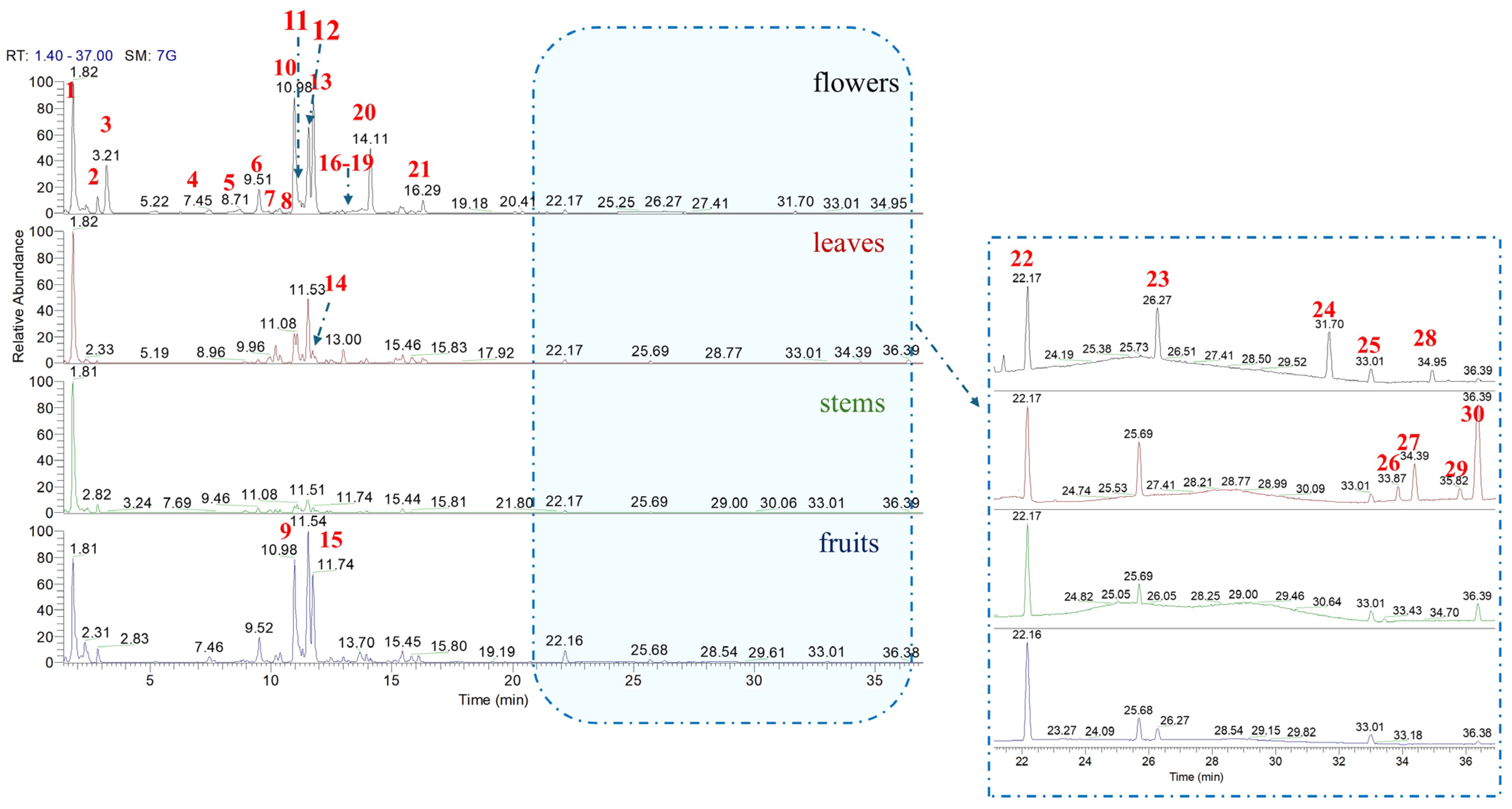
To characterize the constituents of R. alba extracts, an analytical approach based on liquid chromatography/electrospray/high-resolution tandem–mass spectrometry (LC-ESI/HRMS/MS) was applied. Analyses were performed in negative ionization mode, enabling the detection of analytes either as deprotonated molecules ([M − H]) or as formic acid adducts ([(M + FA) − H]). The resulting chromatographic profile (Figure 1) revealed the presence of 30 major constituents (Figure 1 and Table 2).
Putative identification of metabolites was performed based on LC-ESI/HRMS/MS data, fragmentation patterns, and comparison with reports from the literature.
A summary of the identified compounds—including retention times, molecular ion m/z values (negative mode), and characteristic MS/MS fragments—is provided in Table 2.
All compounds were detected within the first 37 min of the chromatographic run and were mainly identified as flavonoids, glucosinolates, phenolic acids, polar lipids, and hydroxy fatty acids. The chromatographic method enabled the detection of sucrose (1), with a m/z value of 341.1079 [20]. The predominant class of compounds detected by LC-ESI/HRMS/MS consisted of glycosylated flavonoid derivatives (compounds 5, 815, 17, and 20), as supported by their characteristic MS/MS fragmentation patterns [21]. In particular, the identification of compounds 815, 17, and 20 was supported by their retention times and characteristic MS/MS fragment ions. Diagnostic ions were observed at m/z 301 (compound 8, corresponding to the quercetin aglycone), m/z 285 (compounds 9, 1115, and 20, corresponding to the kaempferol aglycone), and m/z 315 (compounds 10 and 17, corresponding to the isorhamnetin aglycone), consistent with the respective flavonoid aglycones [22,23,24] (Table 2). The identification of these compounds as O-glycosylated flavonoids was supported by the occurrence of characteristic product ions arising from neutral losses of 162 Da (hexose), 146 Da (deoxyhexose), and 132 Da (pentose), together with a neutral loss of 308 D indicative of the concomitant loss of hexose and deoxyhexose moieties [22] (Figure S1). Differently, the characteristic product ions detected at m/z 475.1239 [M − H − 120], 457.1118 [M − H − 120 − 18], 415.1026 [M − H − 120 − 60], 385.0922 [M − H − 210], and 355.0712 [M − H − 240] in the tandem mass spectrum of compound 5, along with the absence of the aglycone main peak, suggested for this metabolite a di-C-glycoside nature [23,24]. Among the flavonoid derivatives, compounds 8, 13, 15, and 20 were previously reported in R. alba flowers [16,25,26], while compounds 12 and 14 were identified in R. luteola aerial parts [15,27,28].
Compounds 5, 10, 11, and 17 are reported here for the first time in the genus Reseda.
Notably, LC-ESI/HRMS/MS analysis revealed the presence of glucosinolate derivatives (compounds 3, 4, 6, and 16) (Table 2). Glucosinolates are sulfur- and nitrogen-containing secondary metabolites widely distributed in plants. Structurally, they share a common β-D-thioglucopyranose moiety (C6H11O5S), while structural diversity arises from variations in their aglycone side chains. Based on the nature of these side chains, glucosinolates are generally classified as alkyl, aliphatic, alkenyl, hydroxyalkenyl, aromatic, or indole derivatives [29]. The above-mentioned compounds exhibited diagnostic fragment ions at m/z 75, 97, and 259, corresponding to [C2H3SO], [HSO4], and [C6H11O9S], respectively [30]. Accordingly, compounds 3, 4, 6, and 16 were putatively assigned as glucoconringiin, butyl-glucosinolate, glucotropaeolin, and gluconasturtiin, respectively. The reported glucosinolate compounds were previously described in R. alba extracts [5,25].
Moreover, putative annotation of phenolic glycoside derivatives was performed based on LC-ESI/HRMS/MS data and comparison with reports from the literature.
Compound 7 was tentatively assigned, based on MS/MS fragmentation patterns, as vanillic acid-O-hexoside [20], and is reported here for the first time in a Reseda species. In addition, the phenylpropanoid derivative coniferyl alcohol-O-deoxyhexoside (18) is reported here for the first time in this genus [31]. Furthermore, LC-ESI/HRMS/MS profiling revealed the presence of azelaic acid (19), nonanedioic acid, and 6-gingerol (22) identified through MS/MS analysis and reported here for the first time in the genus Reseda [20,32].
Finally, LC-ESI/HRMS/MS analysis enabled the tentative assignment of primary metabolites in the extracts. These compounds included a lyso-phosphatidylcholine (23) and several oxylipins (21, 2430).
The LC-ESI/HRMS/MS spectra acquired for these latter compounds displayed characteristic fragmentation patterns of oxylipins. This class of hydroxylated fatty acids differs in the degree of unsaturation and number of hydroxyl groups, and is derived from the oxidative metabolism of essential polyunsaturated fatty acids (PUFAs), such as α-linolenic acid (ALA, 18:3 ω-3) and linoleic acid (LA, 18:2 ω-6).
According to data from the literature, the positions of hydroxyl groups and double bonds along the fatty acyl chain can be tentatively assigned based on characteristic product ions and diagnostic neutral losses generated by molecular rearrangements involving both the head and terminal portions of the acyl chain. Accordingly, compound 21 was tentatively identified as 9,12,13-trihydroxyoctadecenoic acid, for the first time reported in the genus Reseda. Regioisomeric hydroxy fatty acids (HFAs) have the same molecular mass and generate identical deprotonated ions ([M − H]) under negative electrospray ionization. Therefore, they cannot be distinguished at the MS1 level. However, tandem mass spectrometry (MS/MS) reveals distinct and reproducible fragmentation patterns that enable identification of the hydroxyl position. In particular, a position-specific α-cleavage generally occurs adjacent to the carbon bearing the hydroxyl group.
According to the literature, the simultaneous observation of an intense neutral loss of water (−18 Da) and a prominent fragment at m/z 59 or 71 provides strong evidence for β-hydroxylation (3-hydroxy fatty acids). In contrast, detection of a fragment at m/z 75, together with weak or limited dehydration, supports α-hydroxylation (2-hydroxy fatty acids) [33,34]. Based on these fragmentation patterns, compounds 2430 were structurally assigned as reported in Table 2. This is the first report of this class of compounds [34] in the genus Reseda. Finally, analysis of compound 23 indicated that it belongs to the lysophosphatidylcholine (l-PC) class, based on the presence of a diagnostic ion at m/z 184, corresponding to a phosphocholine unit [24]. In negative ion mode, the compound also showed a major fragment corresponding to a neutral loss of 60 Da (C2H4O2), which can be attributed to the formation of the [(M − 15) − H] ion via methyl loss from the choline head group and concomitant release of neutral methyl formate, consistent with the reported formation of [(M + FA) − H] formate adducts for phosphatidylcholine derivatives [24]. To the best of our knowledge, this is the first report of an LPC in the Reseda genus.
Table 2. Metabolites identified in R. alba extracts by LC-ESI/HRMS/MS analysis.
n.RtMol Formula[M − H]ΔppmMS/MSNameFLSFrReference
11.82C12H22O11341.10790.12179.0549Sucrosexxxx[20]
22.34C9H19O11P333.0586−3.58241.0111, 152.9946, 78.9577Glycerophosphoryl inositolxxxx[35]
33.21C11H21O10NS2390.05250.45259.0125, 195.0322, 96.9587, 74.9896Glucoconringiinxx-x[30]
47.45C11H21O9NS2374.05791.31274.9897, 259.0126, 195.0327, 96.9587, 74.9896Butyl-glucosinolatexxxx[30]
58.97 *C27H32O15595.16661.37475.1239, 457.1118, 415.1026, 385.0922, 313.0712Naringenin-di-C-glucosidexxxx[23]
69.51C14H19O9NS2408.04180.59259.0128, 96.9587, 74.9896Glucotropaeolinxx--[30]
79.91C14H18O9329.08731.74167.0337Vanillic acid-O-hexosidexxx-[20]
810.20C27H30O16609.14520.31301.0493Rutinxxxx[29]
910.98C27H30O15593.1495−1.04285.0542Kaempferol-O-rutinoside xxxx[24]
1011.08C28H32O16623.1605−0.23477.1034, 315.0507Isorhamnetin-O-deoxyhexosyl-hexosidexxxx[29]
1111.22C33H40O19739.20830.41593.1508, 285.0398Kaempferol-O-dideoxyhexosyl-hexosidexxxx[29]
1211.30C38H48O23871.2501−0.16725.1930, 563.1384, 430.0899, 285.0396Kaempferol-O-dideoxyhexosyl-pentosyl-hexosidexxxxFigure S1
1311.55C21H20O10431.1111−4.19285.0544Kaempferol-O-deoxyhexosidexxxx[22]
1411.56C32H38O18709.1965−1.31563.1395, 431.0896, 285.0319Kaempferol-O-dideoxyhexosyl-pentosidexxxx[29]
1511.74 *C27H30O14577.1682−4.53431.0971, 285.0544Kaempferitrinxxxx[22]
1611.80C15H21O9NS2422.05770.67274.9900, 259.0120, 195.0327, 96.9587, 74.9895Gluconasturtiinxxx-[30]
1711.87C28H32O15607.16580.14461.1079, 315.0505Isorhamnetin O-dideoxyhexosidexxxx[29]
1812.48C16H22O8341.12361.39179.0702Coniferyl alcohol-O-deoxyhexosidexxxx[31]
1914.11C9H16O4187.09650.31169.0856, 125.0958Azelaic acidxxxx[32]
2015.34C21H20O10431.11180.65285.0545Kaempferol-O-deoxyhexosidexxxx[22]
2116.29C18H34O5329.23292.09311.2229, 293.2111, 229.1441, 201.1121, 171.10299,12,13-Trihydroxyoctadecenoic acidxxxx[20]
2222.17C17H26O4293.17562.20236.1047, 221.1539, 205.12136-gingerolxxxx[20]
2326.27C24H50O7NP540.3293 #−2.97480.3075, 255.2326, 224.0645, 184.1734Lyso-phosphatidylcholine (16:0)xxxx[20]
2431.70C16H32O3271.22732.06225.2221, 75.01252-Hydroxyhexadecanoic acidxxxx[24]
2533.01C16H32O3271.22721.58253.2235, 225.2221, 59.01293-Hydroxyhexadecanoic acidxxxx[24]
2633.87 **C19H36O3311.25851.31267.2687, 239.2366, 71.01223-Hydroxynonadecenoic acidxxxx[34]
2734.39 **C19H38O3313.27400.87283.2639, 75.00752-Hydroxynonadecanoic acidxxxx[36]
2834.95C18H36O3299.25830.63253.2542, 59.01233-Hydroxyoctadecanoic acidxxxx[34]
2935.82 **C19H38O3313.27400.95283.2692, 59.00733-Hydroxynonadecanoic acidxxxx[36]
3036.39 **C20H40O3327.2894−0.01309.0127, 116.5926, 59.01253-Hydroxyeicosanoic acidxxxx[34]
The bold formatting was used to indicate the numbers corresponding to the compounds identified through LC-ESI/HRMS/MS analysis. F: flowers extract; L: leaves extract; S: stems extract; Fr: immature fruits extract; # related to [(M + FA) − H]; Rt related to flowers extract; * Rt related to fruits extract; ** Rt related to leaves extract. The symbol ‘x’ indicates that the compound was detected in the extract, whereas the symbol ‘–’ indicates that the compound was not detected.
With reference to the two main classes of specialized metabolites—namely glucosinolates and glycosylated flavonoids—the evaluation of the relative signal intensities of the individual metabolites across the different extracts indicated that glucosinolates were more abundant in the flowers compared to the other plant matrices (Table S1, Supplementary Materials). Glycosylated flavonoids were present at nearly comparable levels in all extracts, with the exception of the extract obtained from the stems.
The analysis of the existing literature highlights the presence of only a few studies aimed at assessing the chemical composition of R. alba. Among them, Soliman et al. [26] identified in the aerial parts of R. alba from Egypt nine flavonoids, such as quercetin, luteolin, kaempferol, rutin, kaempferol 3-O-rhamnoside, luteolin 7-O-rhamnoside, luteolin 7-O-glucoside, luteolin 7-O-(6″O-E-p-coumaroyl)-β-d-glucopyranoside, and kaempferol-3-O-β-d-glucopyranosyl-(1‴-2″)-O-α-l-rhamnopyranoside, and three phenolic acids such as p-hydroxy benzoic acid, chlorogenic acid, and p-coumaric acid.
More recently, caffeic acid, protocatechuic acid, syringic acid, ferulic acid, rosmarinic acid, 6,7-dihydroxycoumarin, coumarin, rutin, and luteolin were identified in R. alba aerial parts collected in Algeria [16]. The aqueous extract of the aerial parts of R. alba collected in Morocco showed the presence of caffeic acid, p-coumaric acid, benzoic acid, gallic acid, vanillic acid, catechin, syringic acid, vanillin, quercetin, and rutin [17].
Ðulovíc et al. [5] analyzed the glucosinolate profiles of R. alba from Croatia. In R. alba flower, leaf, stem, and root, five glucosinolates, such as glucoconringiin, gluconasturtiin, glucobrassicin, neoglucobrassicin, and isobutyl glucosinolate, were identified. Gluconasturtiin was not found in the flower. In contrast, the chemical profiles of some Reseda species, such as R. arabica, R. luteola, R. lutea, R. odorata, R. muricata, R. phyteuma, and R. villosa, have been investigated [5,35,36,37,38,39,40,41,42,43,44,45].
Pagnotta et al. [46] investigated the presence of glucosinolates in R. lutea considering their accumulation pattern and profile during flowering time. The uncommon 2-(α-l-rhamnopyranosyloxy)benzyl glucosinolate, identified as the main glucosinolate in R. lutea, reached its highest content in the racemes during the full flowering stage. Its content decreased during late flowering, when the presence of 3-hydroxybenzyl glucosinolate increased.

2.2. Cell Viability

To offer an evidence-based framework for the potential safe and beneficial application of R. alba, the potential cytotoxic effects on normal (HFF1) and cancer (MCF-7, CaCo-2 and HepG-2) cells were herein investigated by measuring cell viability. None of the tested extracts affected the viability of HFF1 cells, used to test the safety in normal cells. Among species of the genus Reseda, several have been reported to possess relevant biological activities, including antitumor potential. In particular, R. lutea has been shown to exert anti-proliferative effects on different tumor cell lines, an activity generally attributed to its rich phytochemical profile, especially in flavonoids and other phenolic compounds [13,27]. However, no previous data were available regarding the antitumor properties of R. alba.
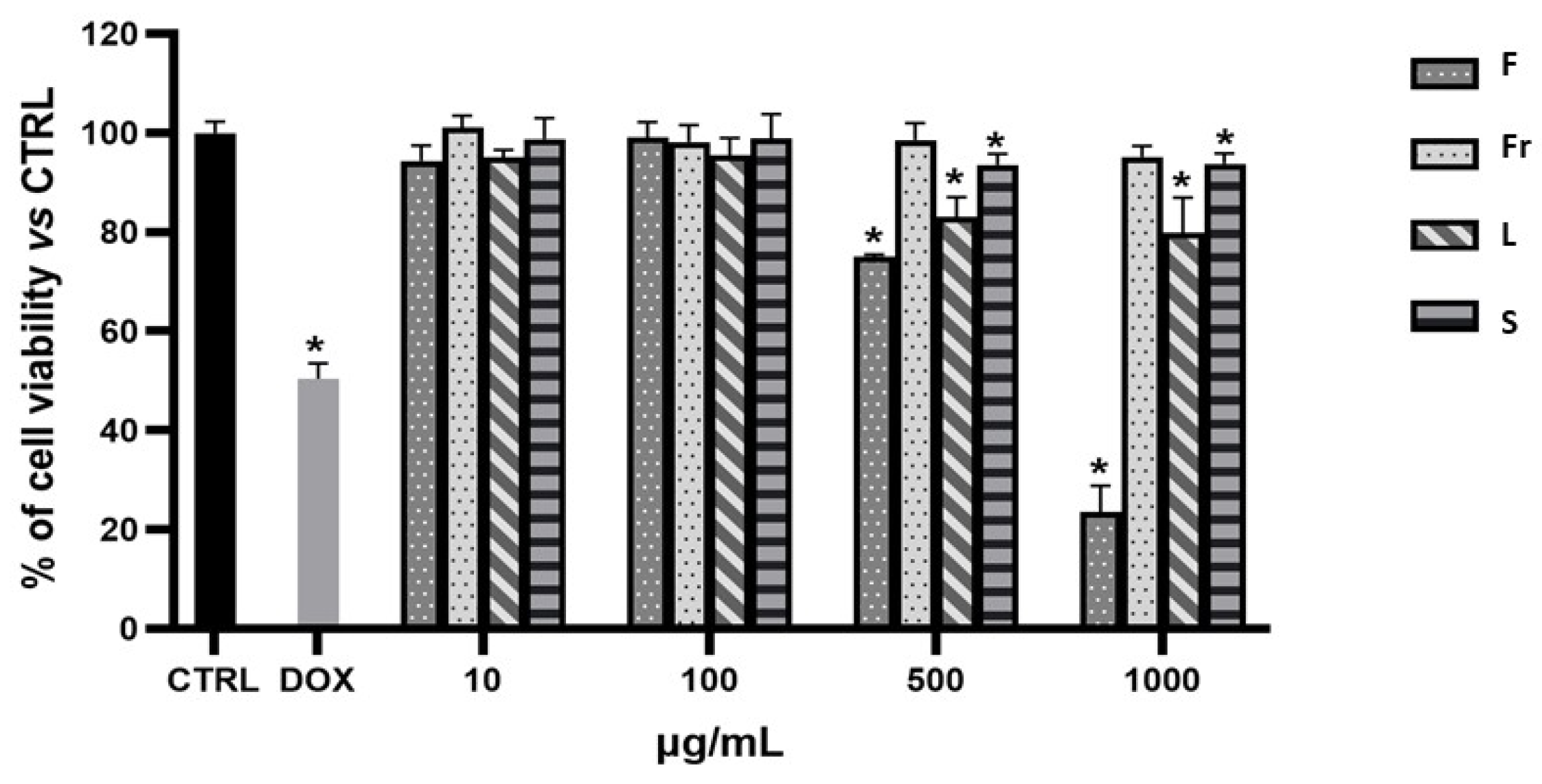
In the present study, the methanol extracts of R. alba did not significantly affect the viability of MCF-7 breast cancer cells after 72 h of treatment, except at the highest concentrations tested (500–1000 μg/mL) (Figure 2).
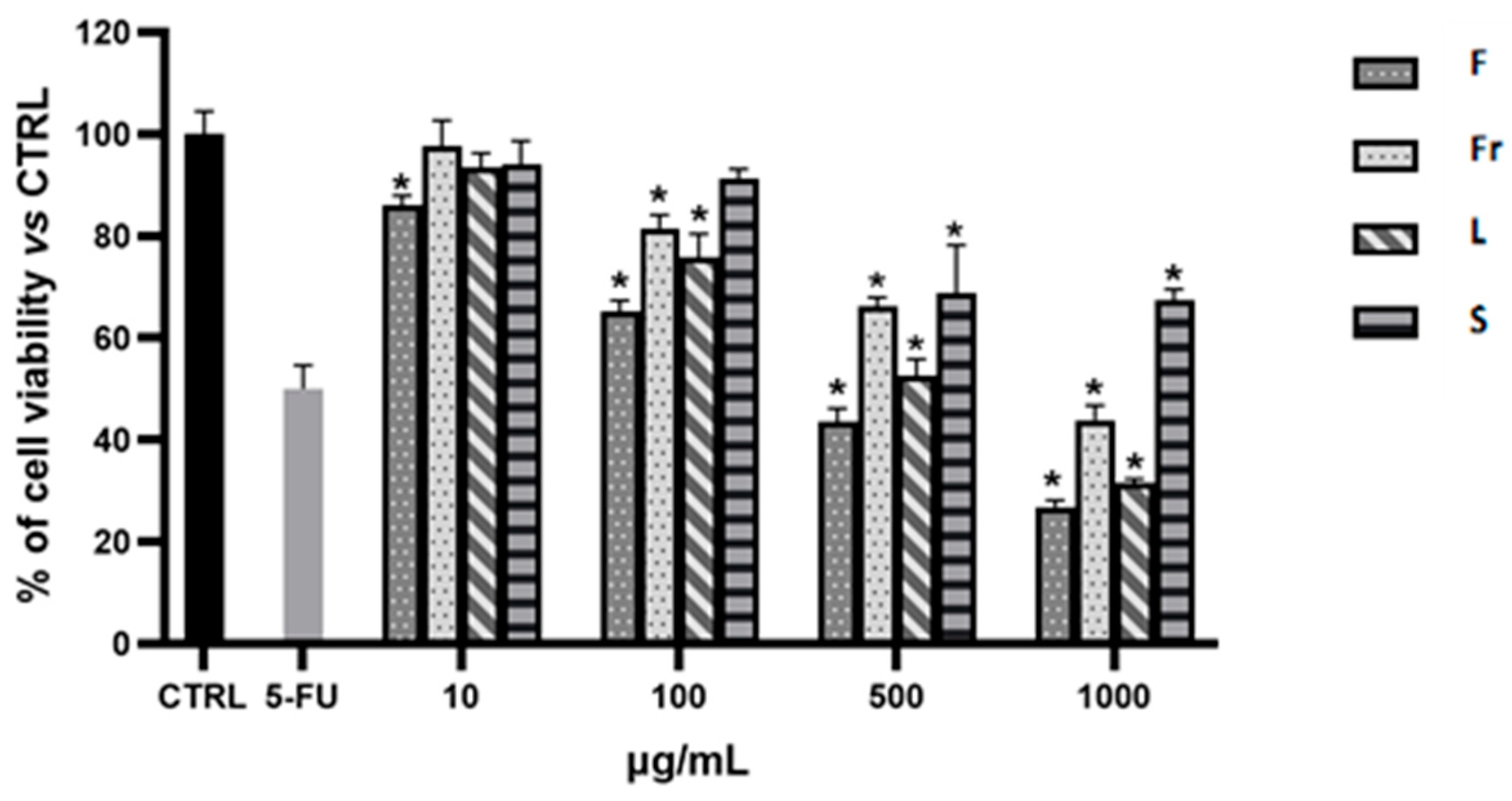
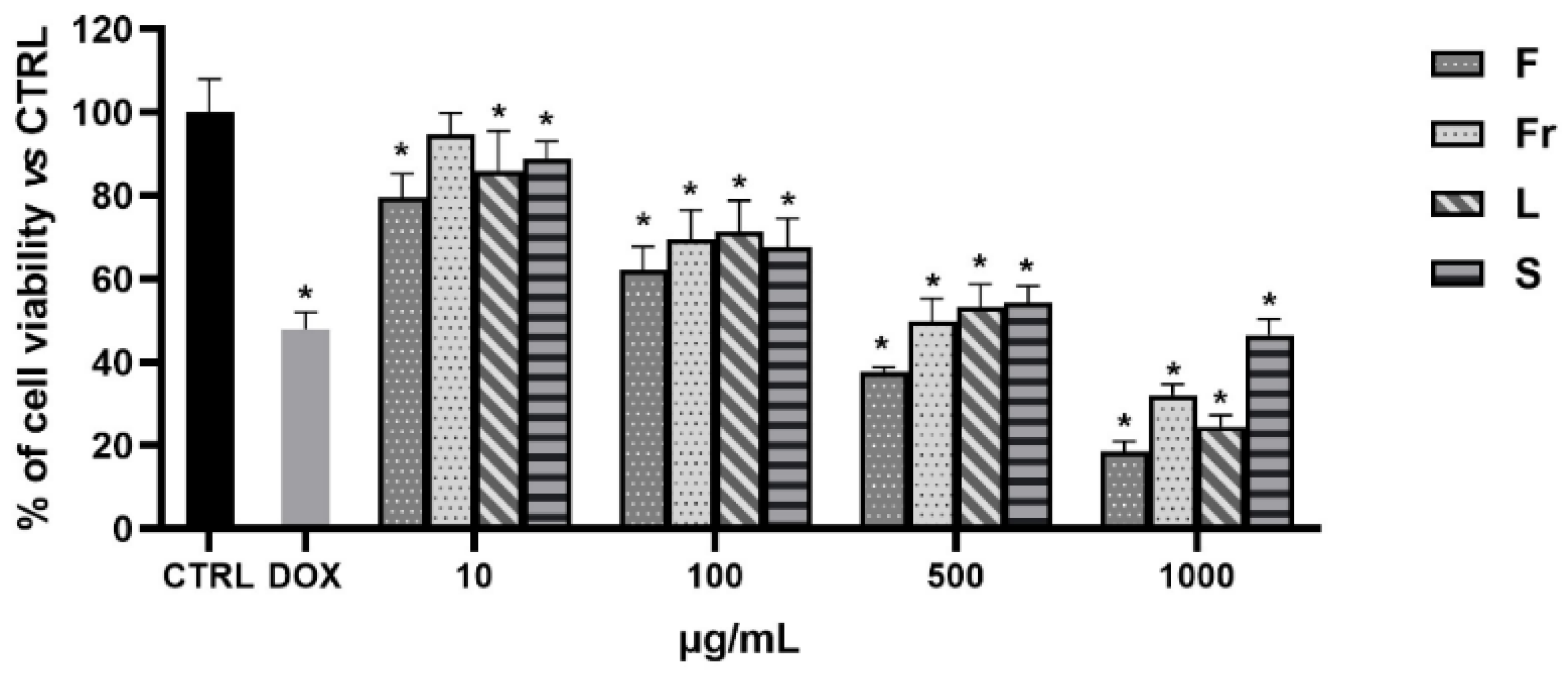
In contrast, the same treatments markedly reduced the viability of CaCo-2 and HepG-2 cells in a concentration-dependent manner, with effects detectable from 10 μg/mL, principally for the F and L extracts (Figure 3 and Figure 4). Particularly, F extract was the most effective, obtaining a decrease in cell viability of approximately 60% at 500 μg/mL, followed by L, Fr, and S extracts. No toxic effects were observed for any of the extracts after 24 h and 48 h of exposure. IC50 values for R. alba extracts, doxorubicin (DOX), and 5-fluorouracil (5-FU) are reported in Table 3.
This specific selective decrease in cell viability suggests a cell line-specific response, probably driven by intrinsic differences in cellular metabolism and drug resistance mechanisms [47]. The lower sensitivity observed in MCF-7 cells may be attributed to their well-documented capacity to develop resistance to xenobiotics, including plant-derived compounds [15]. This interpretation is consistent with previous findings demonstrating that CaCo-2 cells are more susceptible than MCF-7 cells to natural extracts [48]. Therefore, the differential response reported here likely represents a combination of pharmacodynamic factors and tumor-specific cellular characteristics.
The distinct suppression of cell viability seen across the tested cell lines may be related to differences in the qualitative phytochemical composition of the various R. alba extracts. Notably, the most active extracts (F and L) are characterized by the presence of specific metabolites, such as glucotropaeolin, which is exclusively detected in these fractions, as well as gluconasturtiin and glucochondringiin, which are also found in Fr and S extracts, as shown in Table 2.
Although R. alba remains poorly investigated, species within the genus Reseda are known to contain bioactive compounds, including phenolic acids, flavonoids, and glucosinolates [27]. These classes of metabolites are widely recognized for their roles in anti-cancer mechanisms, including inhibition of cell proliferation, induction of apoptosis, and modulation of oxidative stress [49].
In particular, glucosinolates and their hydrolysis products, such as isothiocyanates, have been widely investigated for their chemopreventive and antiproliferative properties. Consistently, glucotropaeolin, a benzyl glucosinolate, has been reported to exert growth-inhibitory effects against hepatocellular carcinoma and colon adenocarcinoma cell lines [50,51]. This evidence is particularly relevant to the present findings, as it supports the hypothesis that glucosinolate-derived compounds in R. alba may contribute to the observed reduced viability in CaCo-2 cells.
Furthermore, flavonoids identified in R. alba extracts, including kaempferol and isorhamnetin derivatives, are known to act through multiple molecular pathways, such as induction of cell cycle arrest and activation of apoptotic cascades. These effects are commonly mediated by the modulation of pro- and anti-apoptotic proteins (e.g., Bax and Bcl-2) and the activation of caspases [52,53].
Although these mechanisms were not directly investigated in the present study, they represent plausible pathways underlying the observed reduced cell viability. Overall, R. alba shows selective growth-inhibitory effects in colon cancer cells, supporting its potential as a source of bioactive compounds. Further studies are needed to identify the active metabolites and clarify their mechanisms of action.

2.3. Lactate Dehydrogenase (LDH) Release Quantification

Although there are many assays to detect apoptosis, relatively few tests are available to recognize necrosis. A key feature of necrotic cells is the permeabilization of the plasma membrane. This event can be quantified by measuring the release of lactate dehydrogenase (LDH), which is a cytoplasmic enzyme that catalyzes, during glycolysis, the interconversions of pyruvate to L-lactate and NADH to NAD+, and during the Cori cycle, the reverse reactions. Cellular injury, whether resulting from internal processes or external factors, can lead to the release of lactate dehydrogenase (LDH) from the cytoplasm into the surrounding medium.
Owing to its stability in culture conditions, LDH is widely utilized as a dependable biomarker for assessing cell and tissue damage, as well as cytotoxicity. Therefore, measuring LDH release is a useful method to detect necrosis [54].
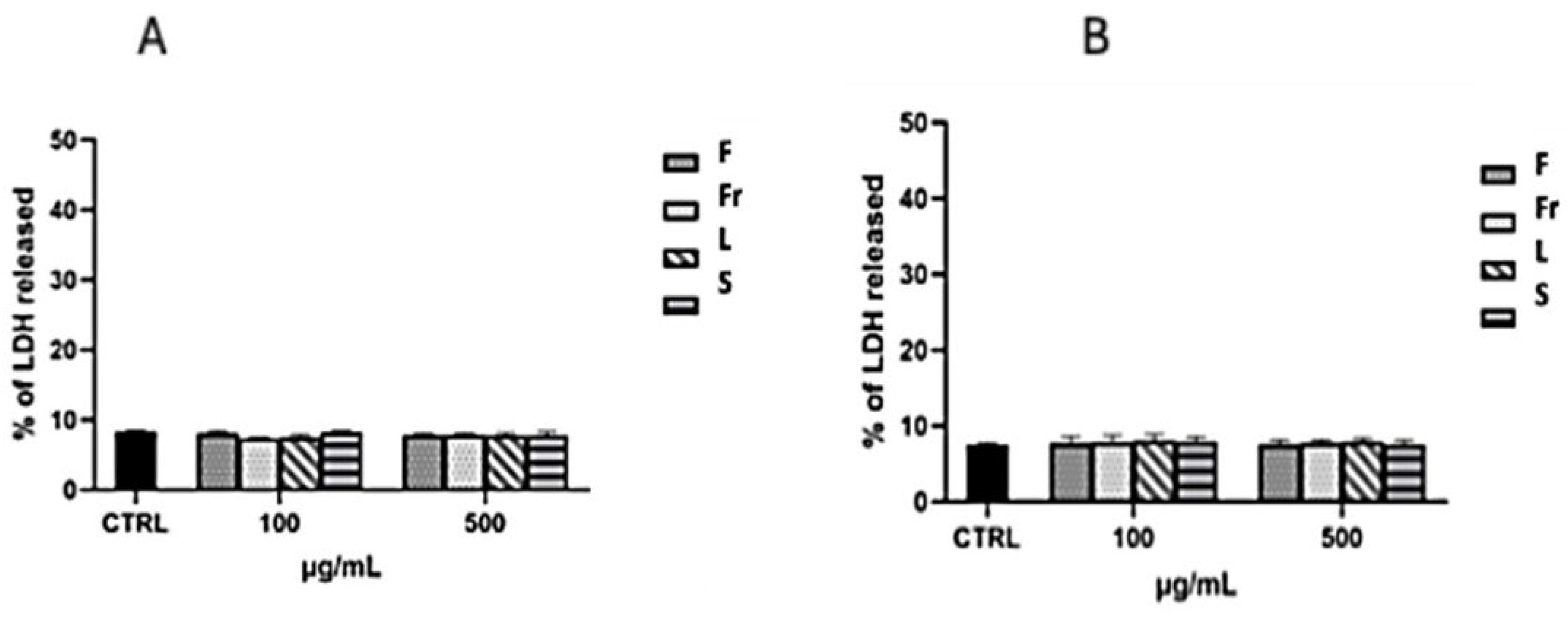
In our study, the LDH release assay showed that the treatments with R. alba extracts did not induce the release of the marker enzyme in CaCo-2 and HepG-2 cells (Figure 5), allowing us to hypothesize the involvement of a different cell death pathway.
Numerous studies have shown that polyphenols can block anti-apoptotic factors and/or activate pro-apoptotic molecules [55].
A recent review reported apoptosis as a probable mechanism of cell death implicated in the anti-proliferative effects of R. lutea and R. odorata against various types of human cancers [56]. R. luteola extract has been shown to have anti-proliferative and pro-apoptotic effects on PHA-stimulated peripheral blood mononuclear cells. The author attributed this effect to the flavonoid fraction, particularly luteolin and its derivatives [57]. Our findings suggest that the growth-inhibitory effects of the different R. alba extracts on CaCo-2 cells are not related to necrotic cell death, but rather to a different type of cell death [58]. This activity appears to be linked to specific secondary metabolites, whose concentrations vary across the different fractions that together form a distinctive phytocomplex—particularly potent in the F extract.

2.4. Anti-Inflammatory Activity

Plants have long been recognized as an important reservoir of biologically active molecules whose beneficial effects in the prevention and/or treatment of different pathological conditions are mainly associated with their anti-inflammatory and antioxidant activities. In particular, phenolic compounds have emerged as promising agents due to their ability to modulate cellular pathways involved in oxidative stress and inflammation. These compounds can influence the activity and expression of several pro-inflammatory enzymes, including cyclooxygenase (COX), lipoxygenase (LOX), and nitric oxide synthase (NOS). NOS catalyzes the production of nitric oxide (NO), a key inflammatory mediator whose excessive production has been associated with chronic inflammation and tissue damage. Through the inhibition of these enzymatic pathways and the scavenging of reactive oxygen species, phenols may exert protective effects against inflammation-related disorders [59].
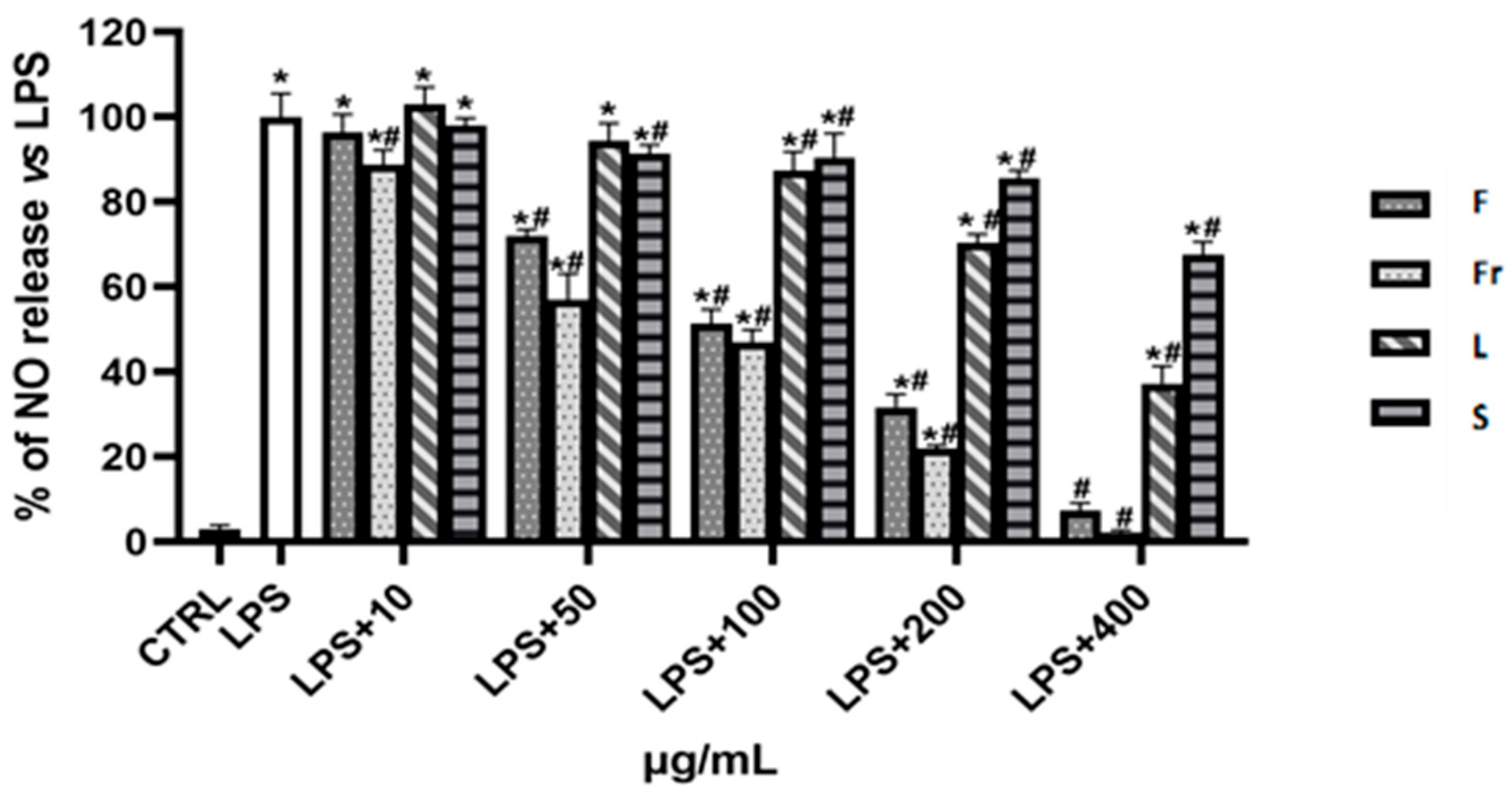
Herein, the investigated extracts showed NO inhibitory activity on RAW 264.7 cells as an in vitro model of LPS-induced inflammation. Notably, Fr extract elicited the highest effect, inhibiting NO production by 50% at the concentration of 62.50 µg/mL in LPS-activated RAW 264.7 cells (Figure 6).
The remaining extracts (F, L, and S) also exhibited inhibitory activity, although to a lesser extent, with S and L extracts generally showing moderate effects at intermediate and higher concentrations. Overall, these results suggest that all extracts possess anti-inflammatory potential, with Fr extract being the most effective in suppressing LPS-induced NO production in macrophages.
The highest anti-inflammatory activity exerted by Fr extract is likely associated with its greater flavonoid content compared to the other extracts. These findings, together with the lack of toxicity of the different extracts on human fibroblasts and murine macrophages, support the pharmacological activity of R. alba extract in the treatment of inflammatory skin disorders.
Previous phytochemical studies on Reseda species, especially on R. luteola, have highlighted a rich profile of phenolic constituents, principally flavonoids, including luteolin-7-O-glucoside, apigenin-7-O-glucoside, and several quercetin and kaempferol derivatives. These flavonoids are reported as promising anti-inflammatory compounds [60]. Luteolin, a flavonoid identified in R. odorata, has been reported to display a concentration-dependent anti-inflammatory activity in macrophages through the inhibition of NO production [56].

2.5. Antioxidant Properties

The antioxidant efficacy of a compound depends on several factors, including its chemical structure, concentration, reaction kinetics, temperature, substrate characteristics, and the presence of synergistic or pro-oxidant compounds [61]. For these reasons, herein, the antioxidant activity of R. alba extracts was evaluated using a multi-target approach by applying different tests such as ABTS, FRAP, and β-carotene bleaching assays. Free radical scavenging activity of the R. alba extracts was evaluated using the ABTS test. FRAP test was used to quantify the ferric reducing antioxidant power, while the β-carotene bleaching test was employed to investigate the ability of R. alba extracts to inhibit lipid peroxidation. Results are reported in Table 4.
The relative antioxidant activity of R. alba extracts to scavenge the radical ABTS+ has been compared with ascorbic acid, used as a positive control (IC50 of 1.7 μg/mL). In this assay, the most promising extracts, which exhibited the highest total phenolic and flavonoid contents, are Fr and S with IC50 values of 3.9 and 4.0 μg/mL, respectively.
The most active extract in inhibiting lipid peroxidation is the extract of leaves with an IC50 of 37.6 μg/mL after 30 min of incubation.
A comparable activity was observed for S and Fr extracts. In the FRAP test, values in the range of 16.7–39.5 μM Fe (II)/g were found. The most active sample was the extract of R. alba stems (39.5 μM Fe (II)/g), followed by flowers and leaves (21.7 μM Fe (II)/g).
The available literature shows that the antioxidant activity of only three Reseda species, namely R. alba, R. lutea, and R. muricata, has been investigated to date. These species exhibited noteworthy antioxidant properties, although this activity strongly depends on the extraction solvent and plant material used. Table 5 summarizes data reported in the literature on the antioxidant properties of Reseda species.
The antioxidant activity of R. lutea ethanol and aqueous extracts, explored by DPPH, ABTS, Fe2+ chelating, Fe3+ reduction, CUPRAC, and FRAP tests [15], revealed a generally moderate antioxidant activity. Differences depending on both the extraction solvent and the test used are evident. In particular, the ethanol extract showed higher radical scavenging activity compared to the aqueous one.
The extracts of R. alba [16] showed more evident antioxidant effects compared to R. lutea and R. muricata, especially in ABTS and FRAP tests. Among the tested extracts, the ethyl acetate fraction of R. alba exhibited remarkable ABTS scavenging activity with an IC50 value of 13.57 µg/mL, while the dichloromethane extract displayed the strongest reducing power in the FRAP assay with an A0.50 value of 4.30 µg/mL.
Nacer et al. [16] investigated extracts from whole aerial parts of R. alba. In contrast, the present study provides, for the first time, a comparative evaluation of extracts obtained from different parts of this species, such as leaves, flowers, stems, and immature fruits. This organ-specific approach allowed the identification of differences in both chemical profile and biological effects, highlighting the contribution of individual plant organs to the biological potential of this species.

3. Materials and Methods

3.1. Plant Materials

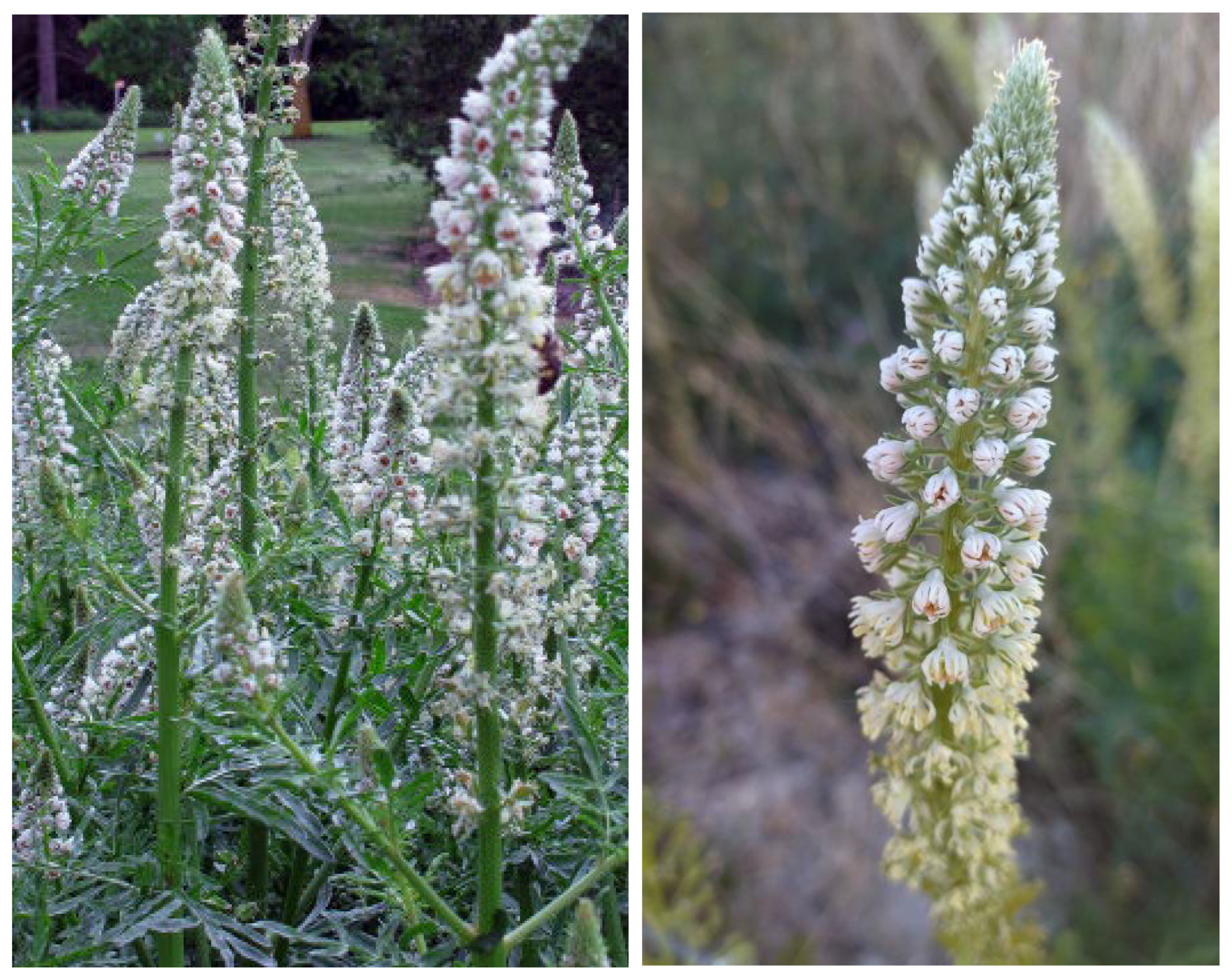
Flowers, leaves, stems, and immature fruits of R. alba (Figure 7) were randomly harvested from 10 plants in the full flowering stage in April 2024 in Calabria (San Lucido, Cosenza, Southern Italy, along the coastal road between San Lucido and Paola, railway embankment, 2 m; WGS84: 39.318594° N, 16.044151° E) by Prof. Nicodemo G. Passalacqua, who botanically identified the species.
Before extraction, the plant materials were checked to verify the integrity and absence of contamination.
A voucher specimen is deposited in the Herbarium of the University of Calabria under the registration number n. CLU 26306. Before extraction, samples were checked to verify the integrity and absence of contamination.

3.2. Chemicals and Reagents

Solvents (methanol, water, and acetonitrile) were purchased from VWR International s.r.l. (Milan, Italy). Solvents for LC-ESI/HRMS/MS analysis (methanol, water, acetonitrile, formic acid) were purchased from Merck (Milan, Italy). Chlorogenic acid, quercetin, β-carotene, ascorbic acid, 2,2′-azino-bis(3-ethylbenzothiazoline-6-sulfonic acid (ABTS) solution, aluminum chloride solution, formic acid, Folin–Ciocalteau reagent, sodium carbonate, 3-(4,5-dimethylthiazol-2-yl)-2,5-diphenyl tetrazolium bromide (MTT), butylated hydroxytoluene (BHT), iron(III) chloride solution, 2,2-diphenyl-1-picrylhydrazyl (DPPH), Tween 20, linoleic acid, dimethyl sulfoxide (DMSO), Dulbecco’s Modified Eagle Medium (DMEM), propyl gallate, Griess reagent, β-nicotinamide adenine dinucleotide, reduced disodium salt (NADH), lipopolysaccharides (LPS), doxorubicin, and 5-fluorouracil were purchased from Sigma-Aldrich S.p.a. (Milan, Italy).

3.3. Sample Preparation

The fresh flowers (250 g), leaves (250 g), stems (250 g), and immature fruits (120 g) of R. alba were subjected to ultrasound-assisted extraction (UAE) by using methanol as solvent. A Branson 3800 ultrasonic system, series CPXH (130 W, 40 kHz frequency) (Milan, Italy), was used. For each sample, three cycles were done, each of 1 h (3 × 900 mL for flowers, leaves, and stems; 3 × 500 mL for immature fruits).
At the end of the extraction procedure, solutions were filtered and evaporated using a rotary evaporator at 35 °C in order to obtain the total extract. Extracts were stored in brown glass bottles, hermetically sealed, and kept at −20 °C until chemical and biological assays.

3.4. Total Phenolic, Flavonoid, and Carotenoid Content

The Total Phenolic Content (TPC) was assessed by using the Folin–Ciocalteau method [63], based on reducing tungstate and/or molybdate in the Folin–Ciocalteau reagent by phenols in an alkaline medium, resulting in a blue-colored solution. In brief, the extract at a concentration of 1.5 mg/mL was mixed with 0.2 mL of Folin–Ciocalteau reagent, 2 mL of water, and 1 mL of 15% sodium carbonate. After incubation at 25 °C for 2 h, the absorbance was read at 765 nm by using a UV−vis Jenway 6003 spectrophotometer (Milan, Italy). Chlorogenic acid was used as a standard for comparison, and the results are expressed in milligrams of chlorogenic acid equivalents/g of plant material. All determinations were performed in triplicate.
The Total Flavonoid Content (TFC) was determined using the technique based on the formation of a coordination complex involving the Al3+ cation [61]. This assay enables the quantification of the Total Flavonoid Content present in the sample; however, it does not permit the identification or characterization of individual flavonoid compounds. It is also unsuitable for the determination of certain flavonoid subtypes, such as isoflavones, where specific ring substitutions do not allow for complexation with Al3+. The sample at a concentration of 1.5 mg/mL was mixed with 2% aluminum chloride solution and incubated at 25 °C. After 15 min, the absorbance was measured at 510 nm. Quercetin was used as a standard for comparison, and the results are expressed in milligrams of quercetin equivalents/g of plant materials. All determinations were performed in triplicate.
The Total Carotenoid Content (TCC) was determined as previously described [61]. Briefly, 1 mL of the extract at a concentration of 1.5 mg/mL was added to 0.5 mL of NaCl 5% solution, vortexed for 30 s and centrifuged at 4500 rpm for 10 min. After dilution with n-hexane, the absorbance of the supernatant was read at 460 nm. β-Carotene was used as a standard for comparison, and the results are expressed in milligrams of β-carotene equivalent/g of plant materials. All determinations were performed in triplicate.

3.5. LC-ESI/HRMS/MS Analysis

Qualitative analysis using UHPLC–(−)ESI–Q Exactive MS/MS was carried out using an ultra-high-performance liquid chromatography system (UltiMate 3000, Dionex, Sunnyvale, CA, USA) coupled to an electrospray ionization source and a high-resolution Q Exactive mass spectrometer (Thermo Fisher Scientific, Waltham, MA, USA). The extracts were prepared in methanol–water (1:1, v/v) at a final concentration of 1.0 mg/mL, and a 5 μL aliquot was injected for LC-HRMS analysis.
The mass analyzer was calibrated in accordance with the manufacturer’s guidelines using a standard calibration solution containing sodium dodecyl sulfate, sodium taurocholate, and Ultramark 1621. Data acquisition and processing were performed using the manufacturer’s proprietary software, as previously described [64,65].
Chromatographic separation was achieved on a Luna C18 column (5 μm, 150 × 2.1 mm; Phenomenex, Milan, Italy) operated at a flow rate of 0.2 mL/min. The mobile phase consisted of water with 0.1% formic acid (solvent A) and acetonitrile with 0.1% formic acid (solvent B). The gradient program began at 5% B, increased linearly to 95% over 35 min and was held at this % for 5 min before returning to initial conditions within 5 min. The ESI source was operated with a capillary voltage of −48 V, a tube lens voltage of −176.47 V, and an ion source temperature of 280 °C. Nitrogen was used as the sheath and auxiliary gas at flow rates of 15 and 5, respectively.
Full-scan MS data were acquired over an m/z range of 120–1400. MS/MS experiments were conducted in data-dependent acquisition mode, in which the most intense precursor ions were selected for fragmentation using a normalized collision energy of 30%. Instrument control, data acquisition, and data analysis were performed using Xcalibur software.

3.6. Cell Cultures

Human foreskin fibroblast cell line HFF-1 (SCRC-1041, ATCC®, Rockville, MD, USA) and mouse leukemic monocyte-macrophage cells RAW 264.7 (91062702, Sigma-Aldrich Milan, Italy) were grown in Dulbecco’s Modified Eagle Medium (DMEM) containing 10% v/v FBS, 1 mmol/L sodium pyruvate, 4 mM L-glutamine, streptomycin (10 μg/mL), and penicillin (100 U/mL). The human breast cancer cell line MCF-7 (HTB-22, ATCC®, Rockville, MD, USA), human colon carcinoma cells CaCo-2 (HTB-37, ATCC®, Rockville, MD, USA) and human hepatoma cell line HepG-2 (HTB-37, ATCC®, Rockville, MD, USA), were cultured in MEM supplemented with 10% v/v FBS, 1 mmol/L sodium pyruvate, 2 mmol/L L-glutamine, streptomycin (10 μg/mL), penicillin (100 U/mL), and 1% non-essential amino acids. To ensure consistent experimental conditions across all experiments, cell lines were plated at a constant density of 8 × 10³ cells/well and kept at 37 °C in an incubator humidified with 5% CO2. HFF-1 cells were employed as a human model for preliminary toxicity screening; RAW 264.7 cells were used as an in vitro model of LPS-induced inflammation, while MCF-7, CaCo-2 and HepG-2 cells were used as in vitro preliminary screens of anti-cancer activities.

3.7. MTT Test

R. alba extracts at concentrations of 10, 100, 500, and 1000 μg/mL were applied to HFF-1, RAW 264.7, MCF-7, CaCo-2 and HepG-2 cell lines for 24, 48, and 72 h. The MTT assay measures a cell’s capacity to metabolize 3-(4,5-dimethylthiazol-2-yl)-2,5-diphenyl tetrazolium bromide (MTT) using mitochondrial succinic dehydrogenase. Once inside the cells, MTT reaches the mitochondria and is converted into formazan, an insoluble colored product [48]. The quantity of live cells is commensurate with the amount of formazan. With a microplate spectrophotometer reader (Titertek Multiskan, Flow Laboratories, Helsinki, Finland), the absorbance of the converted formazan was determined at 570 nm. Doxorubicin and 5-fluorouracil were used as reference compounds in MCF-7, HepG-2 and CaCo-2, respectively. Wells containing only culture medium (without cells) were used as a blank control to account for background absorbance. The average absorbance value of these blank wells was subtracted from the optical density values of all experimental wells before calculating cell viability. Results are expressed as percentage of cell viability compared with untreated control cells and presented as the mean ± SD of four independent experiments.

3.8. Lactate Dehydrogenase (LDH) Release Assay

To evaluate cell membrane integrity and quantify cell necrosis resulting from membrane rupture, a lactate dehydrogenase (LDH) release assay was performed. CaCo-2 and HepG-2 cells were seeded in 24-well plates at 1 × 10⁵ cells/well and, after 24 h, treated with R. alba extracts at 100 and 500 µg/mL for 72 h. After incubation, the culture medium was collected, and cells were lysed for 1 h with a digitonin solution (2.5 mg/mL) to estimate the released and intracellular LDH, respectively. Specifically, LDH activity was measured spectrophotometrically at 340 nm by monitoring the decrease in NADH absorbance, which is directly proportional to enzyme activity. The reaction mixture consisted of sodium pyruvate (1.0 mM), NADH (0.2 mM), and biological sample (30 µL of cell lysate or 100 µL of cell medium) in potassium phosphate buffer (100 mM, pH 7.5).
The total LDH amount was defined as the sum of the enzyme activity measured in both the culture medium and the cell lysate. The percentage of released LDH was calculated as the ratio of extracellular LDH activity to total LDH activity. Data are reported as the percentage of total LDH released ± SD of three independent experiments.

3.9. Nitric Oxide (NO) Inhibitory Activity

The inhibitory effect of R. alba extracts on NO generation was evaluated by measuring the amount of nitrite using Griess reagent [63]. LPS (2 µg/mL) was used to activate RAW 264.7 cells for two hours following a 24 h pre-treatment with distinct concentrations of R. alba extracts (10, 50, 100, 200, and 400 µg/mL). In short, following the treatments, the reaction mixture composed of 250 µL of culture media and 250 µL of Griess reagent was incubated for 10 min at room temperature [63]. Griess reagent is used in the experiment to assess the nitrite diazo-coupling reaction. Using a Synergy HT plate reader (BioTek Instruments, Inc., Winooski, VT, USA), the amount of nitrite in the culture medium was measured at 540 nm.

3.10. Antioxidant Assays

A number of assays have been introduced to measure the antioxidant activity of plant-based phytochemicals. The antioxidant activity depends on their chemical structure. Specifically, it depends on their ability to delocalize the unpaired electron within the aromatic structure, to donate hydrogen with electron, and metal chelation.
Herein, R. alba extracts have been subjected to different assays to study their potential antioxidant activity, such as the ABTS test, FRAP test, and β-carotene bleaching test.
In the ABTS assay, the pre-formed radical monocation of 2,2′-azinobis-(3-ethylbenzothiazoline-6-sulfonic acid) is generated by oxidation of ABTS with potassium persulfate and is reduced in the presence of such hydrogen-donating antioxidants. In short, a solution of the ABTS radical cation was prepared by mixing ABTS solution 7 mM with potassium persulfate 2.45 mM and stored at room temperature in the dark. After 12 h, a mixture of the sample (at concentrations in the range 1–400 µg/mL) and diluted ABTS solution was prepared. After 6 min, the absorbance was read at 734 nm. Ascorbic acid was used as the positive control. Data are reported as IC50 values ± SD of three independent experiments [63].
In the FRAP test, FRAP reagent was prepared by mixing tripyridyltriazine (TPTZ) solution 10 mM with HCl 40 mM, acetate buffer (pH 3.6) and iron(III) chloride 20 mM [63]. A mixture of sample (at a concentration of 2.5 mg/mL), water, and FRAP reagent was prepared and incubated for 30 min at 25 °C. The absorbance was measured at 595 nm. The value was. Butylated hydroxytoluene (BHT) was used as a positive control. Data are expressed as μM Fe(II)/g ± SD of three independent experiments.
The protection of lipid peroxidation was tested by applying the β-carotene bleaching assay. As previously described, an emulsion containing β-carotene, Tween 20, and linoleic acid was mixed with the samples at concentrations in the range of 5–100 μg/mL [63]. The absorbance was read at 470 nm after 30 min of incubation at 45 °C. Propyl gallate was used as a positive control. Data are reported as IC50 values ± SD of three independent experiments.

3.11. Statistical Analysis

Data are expressed as means ± standard deviations (SDs). GraphPad Prism 4.0 Software (San Diego, CA, USA) was used to calculate the concentration giving 50% inhibition (IC50). In both antioxidant assays and enzyme inhibition tests, differences within and between groups were evaluated by ANOVA followed by the Tukey test. In cell culture-based tests, differences between means were analyzed by Student’s t-test.

4. Conclusions

Although significant progress has been made in the development of novel pharmaceutical agents, natural sources continue to provide a rich reservoir of structurally diverse and biologically active compounds with relevant therapeutic potential. In particular, natural products play a crucial role in the discovery of new lead compounds for the prevention and treatment of complex diseases, including cancer and chronic inflammatory disorders, which remain major global health challenges. In this context, R. alba has appeared as a promising candidate for health-related applications.
The present paper offers the first in-depth study of the biological potential of R. alba extracts and their fractions as potential anti-inflammatory, antioxidant and growth-inhibitory agents, emphasizing organ-specific activities and showing novel biological insights. This organ-specific approach allowed the identification of marked differences in both chemical composition and biological activities, highlighting the contribution of individual plant organs to the overall biological potential of the species. Overall, the flower extract demonstrated the highest cytostatic activity against CaCo-2 colorectal cancer cells and HepG-2 hepatocellular carcinoma cells.
On the other hand, among the extracts tested for their potential anti-inflammatory properties using an in vitro model of LPS-induced inflammation with RAW 264.7 macrophages, the Fr extract showed the most significant activity, reducing NO production by 50% at a concentration of 62.50 µg/mL. This enhanced effect is likely related to its higher flavonoid content, suggesting a key role of these compounds in modulating inflammatory responses. Importantly, no cytotoxic effects on human fibroblasts and murine macrophages were found, supporting their safety profile and potential suitability for topical applications. The antioxidant potential of R. alba extracts was demonstrated through a multi-target analytical approach, including ABTS radical scavenging, FRAP reducing power, and β-carotene bleaching assays. The results revealed that the extracts possess significant antioxidant activity, although with different effectiveness depending on the plant part and the assay applied. Among the tested samples, the Fr and S extracts exhibited the strongest ABTS radical scavenging activity. Conversely, the L extract showed the highest ability to inhibit lipid peroxidation after 30 min of incubation.
These results highlight the biological potential of R. alba extracts, particularly the F and Fr extracts. Further studies are warranted to elucidate the molecular mechanisms involved and to evaluate their efficacy in in vivo models.

Supplementary Materials

The following supporting information can be downloaded at: https://www.mdpi.com/article/10.3390/plants15121821/s1, Table S1: relative peak intensity of metabolites identified in R. alba extracts by LC-ESI/HRMS/MS analysis. Figure S1: ESI–Q Exactive MS/MS spectrum of compound 12 (A) and its corresponding MS/MS spectrum (B) in negative ion mode.

Author Contributions

Conceptualization and Supervision, R.T.; Methodology, A.C., M.R.L., S.P. and R.T.; Collection and Botanical Identification, N.G.P.; Formal Analysis, E.P., G.A.M., A.C., D.C. and A.N.; Validation, R.T., M.R.L. and S.P.; Writing—Original Draft Preparation, A.C., M.R.L., S.P., N.G.P. and R.T.; Writing—Review and Editing, E.P., G.A.M., A.C., A.N., N.G.P., M.R.L., D.C., S.P. and R.T. All authors have read and agreed to the published version of the manuscript.

Funding

This research received no external funding.

Data Availability Statement

The original contributions presented in this study are included in the article/Supplementary Material. Further inquiries can be directed to the corresponding author.

Acknowledgments

The authors thank Gaia Ursino for her technical support.

Conflicts of Interest

The authors declare no conflicts of interest.

Abbreviations

The following abbreviations are used in this manuscript:
A0.50Concentration Producing an Absorbance of 0.50
ABTS2,2-Azino-bis (3-ethylbenzothiazoline-6-sulfonic acid)
BHAButylated Hydroxyanisole
BHTButylhydroxytoluene
CAEChlorogenic Acid Equivalents
COXCyclooxygenase
CRCColorectal Cancer
CUPRAC CUPric Reducing Antioxidant Capacity
DOXDoxorubicin
DPPH1,1-Diphenyl-2-picrylhydrazyl
DMEM Dulbecco’s Modified Eagle Medium
5-FLU5-Fluorouracil
FRAPFerric Reducing Antioxidant Power
HFF-1Human Foreskin Fibroblast
IC50Half Maximal Inhibitory Concentration
LC-ESI/HRMS/MSLiquid Chromatography/Electrospray/High-Resolution Tandem–Mass Spectrometry
LDHLactic Dehydrogenase
LOXLipoxygenase
LPSLipopolysaccharide
MTT3-(4,5-dimethylthiazol-2-yl)-2,5-diphenyl tetrazolium bromide
NONitric Oxide
NOXNitric Oxide Synthase
PGPropyl Gallate
PUFAsPolyunsaturated Fatty Acids
QEQuercetin Equivalents
SDStandard Deviation
TCCTotal Carotenoid Content
TFCTotal Flavonoid Content
TPCTotal Phenolic Content

References

  1. Ferlay, J.; Colombet, M.; Soerjomataram, I.; Parkin, D.M.; Piñeros, M.; Znaor, A.; Bray, F. Cancer statistics for the year 2020: An overview. Int. J. Cancer 2021, 149, 778–789. [Google Scholar] [CrossRef]
  2. Siegel, R.L.; Wagle, N.S.; Cercek, A.; Smith, R.A.; Jemal, A. Colorectal cancer statistics, 2023. CA A Cancer J. Clin. 2023, 73, 233–254. [Google Scholar] [CrossRef]
  3. Noel, B.; Singh, S.K.; Lillard, J.W., Jr.; Singh, R. Role of natural compounds in preventing and treating breast cancer. Front. Biosci. 2020, 12, 137–160. [Google Scholar] [CrossRef] [PubMed]
  4. Dehelean, C.A.; Marcovici, I.; Soica, C.; Mioc, M.; Coricovac, D.; Iurciuc, S.; Cretu, O.M.; Pinzaru, I. Plant-derived anti-cancer compounds as new perspectives in drug discovery and alternative therapy. Molecules 2021, 26, 1109. [Google Scholar] [CrossRef]
  5. Ðulovíc, A.; Tomaš, J.; Blaževíc, I. Glucosinolates in wild-growing Reseda spp. from Croatia. Molecules 2023, 28, 1753. [Google Scholar] [CrossRef] [PubMed]
  6. Martín-Bravo, S.; Meimberg, H.; Luceño, M.; Märkl, W.; Valcárcel, V.; Bräuchler, C.; Vargas, P.; Heubl, G. Molecular systematics and biogeography of Resedaceae based on ITS and trnL-F sequences. Mol. Phylogenet. Evol. 2007, 44, 1105–1120. [Google Scholar] [CrossRef]
  7. Kumarasamy, Y.; Cox, P.J.; Jaspars, M.; Nahar, L.; Sarker, S.D. Screening seeds of Scottish plants for antibacterial activity. J. Ethnopharmacol. 2002, 83, 73–77. [Google Scholar] [CrossRef]
  8. Benmerache, A.; Berrehal, D.; Khalfallah, A.; Kabouche, A.; Semra, Z.; Kabouche, Z. Antioxidant, antibacterial activities and flavonoids of Reseda phyteuma L. Pharm. Lett. 2012, 4, 1863–1867. [Google Scholar]
  9. Susplugas, P.; Mongold, J.J.; Taillade, C.; Serrano, J.J. Anti-inflammatory and analgesic activity of Reseda phyteuma. Plantes Med. Phytother. 1993, 26, 375–382. [Google Scholar]
  10. Moghaddam, N.S.; Eryılmaz, M.; Altanlar, N.; Yıldırım, O. Antimicrobial screening of some selected Turkish medicinal plants. Pak. J. Pharm. Sci. 2019, 32, 947–951. [Google Scholar] [PubMed]
  11. Asadi-Samani, M.; Khaledi, M.; Khaledi, F.; Samarghandian, S.; Gholipour, A. Phytochemical properties and antibacterial effects of Salvia multicaulis Vahl., Euphorbia microsciadia Boiss., and Reseda lutea on Staphylococcus aureus and Acinetobacter baumanii. Jundishapur J. Nat. Pharm. Prod. 2019, 14, e63640. [Google Scholar] [CrossRef]
  12. Abdalrahman, K.S.; Güneş, M.G.; Shomali, N.; Işgör, B.S.; Yildirim, Ö. Screening effects of methanol extracts of Diplotaxis tenuifolia and Reseda lutea on enzymatic antioxidant defense systems and aldose reductase activity. Turk. J. Pharm. Sci. 2018, 15, 97–102. [Google Scholar] [CrossRef] [PubMed]
  13. Radulović, N.S.; Zlatković, D.B.; Ilić-Tomić, T.; Senerović, L.; Nikodinovic-Runic, J. Cytotoxic effect of Reseda lutea L.: A case of forgotten remedy. J. Ethnopharmacol. 2014, 153, 125–132. [Google Scholar] [CrossRef]
  14. Kim, S.S.; Seo, J.Y.; Lim, S.S.; Suh, H.J.; Kim, L.; Kim, J.S. Neuroprotective effect of Reseda luteola L. extract in a mouse neuronal cell model. Food Sci. Biotechnol. 2015, 24, 333–339. [Google Scholar] [CrossRef]
  15. Kiziltas, H. Comprehensive evaluation of Reseda lutea L. (wild mignonette) and 7 isolated flavonol glycosides: Determination of antioxidant activity, anti-Alzheimer, antidiabetic and cytotoxic effects with in vitro and in silico methods. Turk. J. Chem. 2022, 46, 1185–1198. [Google Scholar] [CrossRef]
  16. Nacer, M.; Kalla, A.; Tamfu, A.N.; Boudiba, S.; Hanini, K.; Hioun, S.; Messaoudi, M.; Atoki, A.V.; Kucukaydin, S.; Latifa, K.; et al. Phenolic profile of different solvent extracts of Reseda alba L. and evaluation of anti-quorum sensing, antioxidant, and enzyme inhibition activities. Front. Nutr. 2025, 12, 1699534. [Google Scholar] [CrossRef]
  17. Takie, M.; El-Mernissi, R.; Naji, D.; El Hajjaji, M.A.; Messkini, M.; Idrissi, A.M.; Chebaibi, S.; Hajji, L.; Lyoussi, B.; Benjelloun, A.S. Potassium-sparing diuretic efficacy of Reseda alba extract: In vivo validation and mechanistic insight via molecular docking. Sci. Afr. 2026, 31, e03252. [Google Scholar] [CrossRef]
  18. Kumara, K.; Srivastava, S.; Sharanagat, V.S. Ultrasound assisted extraction (UAE) of bioactive compounds from fruit and vegetable processing by-products: A review. Ultrason. Sonochem. 2021, 70, 105325. [Google Scholar] [CrossRef] [PubMed]
  19. Yusoff, I.M.; Taher, Z.M.; Rahmat, Z.; Chua, L.S. A review of ultrasound-assisted extraction for plant bioactive compounds: Phenolics, flavonoids, thymols, saponins and proteins. Food Res. Int. 2022, 157, 111268. [Google Scholar] [CrossRef]
  20. Pino, R.; Tundis, R.; Sicari, V.; Mincione, A.; Gattuso, A.; La Torre, C.; Fazio, A.; Piacente, S.; Masullo, M.; Cerulli, A.; et al. Comprehensive LC-ESI-HRMS/MS profiling and assessment of texture, predicted glycaemic index, antioxidant activity and digestive enzyme inhibition of gluten- and lactose-free cookies enriched with pomegranate by-products. Foods 2026, 15, 457. [Google Scholar] [CrossRef]
  21. Cerulli, A.; Napolitano, A.; Masullo, M.; Hošek, J.; Pizza, C.; Piacente, S. Chestnut shells (Italian cultivar “Marrone di Roccadaspide” PGI): Antioxidant activity and chemical investigation with in depth LC-HRMS/MSn rationalization of tannins. Food Res. Int. 2020, 129, 108787. [Google Scholar] [CrossRef]
  22. Yang, P.; Lv, H.D.; Wu, J.; Long, F.; Zhou, J.; Wu, C.Y.; Xu, J.D.; Zhou, S.S.; Xiao, Q.L.; Li, S.L.; et al. LC–MS-based serum pharmacochemistry combined with network pharmacology and pharmacodynamics to evaluate the role of macromolecular components in TCMs’ decoction: A case study on Qi-Huo-Yi-Fei decoction for COPD therapy. Phytochem. Anal. 2025, 36, 2148–2181. [Google Scholar] [CrossRef]
  23. Li, M.; Wei, Z.-C.; Zhang, F.-X.; Li, H.-J. Phytochemical analysis of Semen Hoveniae and its potential mechanism against alcoholic liver disease via an integrated approach combining UHPLC-Q-TOF MS, network pharmacology, and molecular docking. Rapid Commun. Mass Spectrom. 2025, 39, e10097. [Google Scholar] [CrossRef]
  24. Cerulli, A.; Napolitano, A.; Hošek, J.; Masullo, M.; Pizza, C.; Piacente, S. Antioxidant and in vitro preliminary anti-inflammatory activity of Castanea sativa (Italian cultivar “Marrone di Roccadaspide” PGI) burs, leaves, and chestnuts extracts and their metabolite profiles by LC-ESI/LTQ-Orbitrap/MS/MS. Antioxidants 2021, 10, 278. [Google Scholar] [CrossRef] [PubMed]
  25. Hafez, S.S. Chemical and biological investigation of Reseda alba L. (family Resedaceae). Egypt. J. Biomed. Sci. 2004, 15, 207–223. [Google Scholar]
  26. Soliman, R.F.; Haggag, E.G.; Mahmoud, I.I.; Badary, O.A. Phytochemical and biological study of Reseda alba L. growing in Egypt. Bull. Fac. Pharm. Cairo Univ. 2004, 42, 203–218. [Google Scholar]
  27. Kızıltaş, H.; Küçüksolak, M.; Duman, S.; Bedir, E. Flavonol glycosides from Reseda lutea L. Phytochem. Lett. 2019, 30, 150–153. [Google Scholar] [CrossRef]
  28. van der Klift, E.; Villela, A.; Derksen, G.C.H.; Lankhorst, P.P.; van Beek, T.A. Microextraction of Reseda luteola-dyed wool and qualitative analysis of its flavones by UHPLC-UV, NMR and MS. Molecules 2021, 26, 3787. [Google Scholar] [CrossRef]
  29. Loizzo, M.R.; Napolitano, A.; Bruno, M.; Geraci, A.; Schicchi, R.; Leporini, M.; Tundis, R.; Piacente, S. LC-ESI/HRMS analysis of glucosinolates, oxylipins and phenols in Italian rocket salad (Diplotaxis erucoides subsp. erucoides (L.) DC.) and evaluation of its healthy potential. J. Sci. Food Agric. 2021, 101, 5872–5879. [Google Scholar] [CrossRef] [PubMed]
  30. Bennett, R.N.; Mellon, F.A.; Rosa, E.A.S.; Perkins, L.; Kroon, P.A. Profiling glucosinolates, flavonoids, alkaloids, and other secondary metabolites in tissues of Azima tetracantha L. (Salvadoraceae). J. Agric. Food Chem. 2004, 52, 5856–5862. [Google Scholar] [CrossRef]
  31. Speeckaert, N.; Adamou, N.M.; Hassane, H.A.; Baldacci-Cresp, F.; Mol, A.; Goeminne, G.; Boerjan, W.; Duez, P.; Hawkins, S.; Neutelings, G.; et al. Characterization of the UDP-glycosyltransferase UGT72 family in poplar and identification of genes involved in the glycosylation of Monolignols. Int. J. Mol. Sci. 2020, 21, 5018. [Google Scholar] [CrossRef] [PubMed]
  32. Garofalo, G.; Gaglio, R.; Viola, E.; Loizzo, M.R.; Badalamenti, N.; Bruno, M.; Sottile, F.; Sicari, V.; Cerulli, A.; Piacente, S.; et al. Industrial upcycling of almond skin through production of novel brioches. J. Agric. Food Res. 2024, 16, 101143. [Google Scholar] [CrossRef]
  33. Kokotou, M.G.; Mantzourani, C.; Bourboula, A.; Mountanea, O.G.; Kokotos, G. A Liquid Chromatography-High Resolution Mass Spectrometry (LC-HRMS) method for the determination of free hydroxy fatty acids in cow and goat milk. Molecules 2020, 25, 3947. [Google Scholar] [CrossRef]
  34. Li, J.; Xu, J.; Zhang, R.; Hao, Y.; He, J.; Chen, Y.; Jiao, G.; Abliz, Z. Strategy for global profiling and identification of 2- and 3-hydroxy fatty acids in plasma by UPLC–MS/MS. Anal. Chem. 2020, 92, 5143–5151. [Google Scholar] [CrossRef] [PubMed]
  35. Dai, W.; Qi, D.; Yang, T.; Lv, H.; Guo, L.; Zhang, Y.; Zhu, Y.; Peng, Q.; Xie, D.; Tan, J.; et al. Nontargeted Analysis Using Ultraperformance Liquid Chromatography–Quadrupole Time-of-Flight Mass Spectrometry uncovers the effects of harvest season on the metabolites and taste quality of tea (Camellia sinensis L.). J. Agric. Food Chem. 2015, 63, 9869–9878. [Google Scholar] [CrossRef]
  36. Özen, H.Ç.; Başshan, M.; Keskin, C.; Toker, Z. Fatty acid and 3-hydroxy fatty acid composition of two Hypericum species from Turkey. Eur. J. Lipid Sci. Technol. 2004, 106, 68–70. [Google Scholar] [CrossRef]
  37. Berrahal, D.; Kabouche, A.; Kabouche, Z.; Bruneau, C. Flavonoid glycosides from Reseda villosa (Resedaceae). Biochem. Syst. Ecol. 2006, 34, 777–779. [Google Scholar] [CrossRef]
  38. Berrehal, D.; Khalfallah, A.; Kabouche, A.; Karioti, A.; Bilia, A.R.; Goren, A.C.; Kabouche, Z. Flavononol glycosides of Reseda arabica (Resedaceae). Rec. Nat. Prod. 2012, 6, 368–370. [Google Scholar]
  39. Cristea, D.; Bareau, I.; Vilarem, G. Identification and quantitative HPLC analysis of the main flavonoids present in weld (Reseda luteola L.). Dye. Pigment. 2003, 57, 267–272. [Google Scholar] [CrossRef]
  40. El-Sayad, N.H.; Omara, N.M.; Yosef, A.K.; Farag, A.M.; Mabry, T.J. Kaempferol triosides from Reseda muricata. Phytochemistry 2001, 57, 575–578. [Google Scholar] [CrossRef] [PubMed]
  41. Lutfullin, K.L.; Tadzhibaev, M.M.; Abdullaev, U.A.; Malikov, V.M.; Yunusov, S.Y. Alkaloids of Reseda luteola. Chem. Nat. Compd. 1976, 12, 559–563. [Google Scholar] [CrossRef]
  42. Noori, M.; Dehshiri, M.M.; Ghorbani, M. Investigation of leaf flavonoids of Reseda (Tourn.) et L. (Resedaceae) Members in Markazi Province, Iran. J. Med. Plants By-Prod. 2012, 1, 171–176. [Google Scholar]
  43. Olsen, O.; Sørensen, H. Isolation of glucosinolates and the identification of O-(α-L-rhamnopyranosyloxy) benzylglucosinolate from Reseda odorata. Phytochemistry 1979, 18, 1547–1552. [Google Scholar] [CrossRef]
  44. Rzadkowska-Bodalska, H. Flavonoids in flowers of weld (Reseda lutea). P.3. Identification of compound C. Diss. Pharm. Pharmacol. 1969, 21, 169–172. [Google Scholar]
  45. Gmelin, R.; Kjær, A. 2-Hydroxy-2-methylpropyl glucosinolate in Reseda alba. Phytochemistry 1970, 9, 599–600. [Google Scholar] [CrossRef]
  46. Pagnotta, E.; Montaut, S.; Matteo, R.; Rollin, P.; Nuzillard, J.-M.; Lazzeri, L.; Bagatta, M. Glucosinolates in Reseda lutea L.: Distribution in plant tissues during flowering time. Biochem. Syst. Ecol. 2020, 90, 104043. [Google Scholar] [CrossRef]
  47. Zaal, E.A.; Berkers, C.R. The Influence of metabolism on drug response in cancer. Front. Oncol. 2018, 8, 500. [Google Scholar] [CrossRef]
  48. Malfa, G.A.; Tomasello, B.; Acquaviva, R.; Genovese, C.; La Mantia, A.; Cammarata, F.P.; Ragusa, M.; Renis, M.; Di Giacomo, C. Betula etnensis Raf. (Betulaceae) extract induced HO-1 expression and ferroptosis cell death in human colon cancer cells. Int. J. Mol. Sci. 2019, 20, 2723. [Google Scholar] [CrossRef]
  49. Bonta, R.K. Dietary phenolic acids and flavonoids as potential anti-cancer agents: Current state of the art and future perspectives. Anticancer Agents Med. Chem. 2020, 20, 29–48. [Google Scholar] [CrossRef] [PubMed]
  50. Kołodziejski, D.; Koss-Mikołajczyk, I.; Glatt, H.; Bartoszek, A. The comparison of cytotoxic and genotoxic activities of glucosinolates, isothiocyanates, and indoles. Sci. Rep. 2022, 12, 4875. [Google Scholar] [CrossRef]
  51. Lenzi, R.M.; Campestrini, L.H.; Semprebon, S.C.; Paschoal, J.A.R.; Silva, M.A.G.; Zawadzki-Baggio, S.F.; Mantovani, M.S.; Petkowicz, C.L.O.; Maurer, J.B.B. Glucosinolate-enriched fractions from Maca (Lepidium meyenii) exert myrosinase-dependent cytotoxic effects against HepG2/C3A and HT29 tumor cell lines. Nutr. Cancer 2022, 74, 1322–1337. [Google Scholar] [CrossRef]
  52. Nguyen, T.T.; Tran, E.; Ong, C.K.; Lee, S.K.; Do, P.T.; Huynh, T.T.; Nguyen, T.H.; Lee, J.J.; Tan, Y.; Ong, C.S.; et al. Kaempferol-induced growth inhibition and apoptosis in A549 lung cancer cells is mediated by activation of MEK-MAPK. J. Cell. Physiol. 2003, 197, 110–121. [Google Scholar] [CrossRef]
  53. Park, C.; Cha, H.J.; Choi, E.O.; Lee, H.; Hwang-Bo, H.; Ji, S.Y.; Kim, M.Y.; Kim, S.Y.; Hong, S.H.; Cheong, J.; et al. Isorhamnetin induces cell cycle arrest and apoptosis via reactive oxygen species-mediated AMP-Activated Protein kinase signaling pathway activation in human bladder cancer cells. Cancers 2019, 11, 1494. [Google Scholar] [CrossRef]
  54. Ka-Ming Chan, F.; Moriwaki, K.; De Rosa, M.J. Detection of necrosis by release of lactate dehydrogenase (LDH) activity methods. Mol. Biol. 2013, 979, 65–70. [Google Scholar]
  55. Chimento, A.; De Luca, A.; D’Amico, M.; De Amicis, F.; Pezzi, V. The Involvement of natural polyphenols in molecular mechanisms inducing apoptosis in tumor cells: A promising adjuvant in cancer therapy. Int. J. Mol. Sci. 2023, 24, 1680. [Google Scholar] [CrossRef]
  56. Al-Snafi, A.E. Constituents and biological effects of Reseda lutea and Reseda odorata grown in Iraq. Int. J. Biol. Pharm. Sci. Arch. 2022, 3, 56–63. [Google Scholar] [CrossRef]
  57. Woelfle, U.; Simon-Haarhaus, B.; Merfort, I.; Schempp, C.M. Reseda luteola L. extract displays antiproliferative and pro-apoptotic activities that are related to its major flavonoids. Phytother. Res. 2010, 24, 1033–1036. [Google Scholar] [CrossRef]
  58. Vetrivel, P.; Kim, S.M.; Saralamma, V.V.G.; Ha, S.E.; Kim, E.H.; Min, T.S.; Kim, G.S. Function of flavonoids on different types of programmed cell death and its mechanism: A review. J. Biomed. Res. 2019, 33, 363–370. [Google Scholar] [CrossRef]
  59. Cheon, B.S.; Kim, Y.H.; Son, K.S.; Chang, H.W.; Kang, S.S.; Kim, H.P. Effects of prenylated flavonoids and biflavonoids on lipopolysaccharide-induced nitric oxide production from the mouse macrophage cell line RAW 264.7. Planta Med. 2000, 66, 596–600. [Google Scholar] [CrossRef]
  60. Middleton, E.; Kandaswami, C.; Theoharides, T.C. The effects of plant flavonoids on mammalian cells: Implications for inflammation, heart disease, and cancer. Pharmacol. Rev. 2000, 52, 673–751. [Google Scholar] [CrossRef]
  61. Munteanu, I.G.; Apetrei, C. Analytical methods used in determining antioxidant activity: A review. Int. J. Mol. Sci. 2021, 22, 3380. [Google Scholar] [CrossRef]
  62. Ullah, R.; Alqahtani, A.S. GC-MS analysis, heavy metals, biological, and toxicological evaluation of Reseda muricata and Marrubium vulgare methanol extracts. Evid. Based Complement. Altern. Med. 2022, 2022, 2284328. [Google Scholar] [CrossRef]
  63. Leporini, M.; Loizzo, M.R.; Sicari, V.; Pellicanò, T.M.; Reitano, A.; Dugay, A.; Deguin, B.; Tundis, R. Citrus × clementina Hort. juice enriched with its by-products (peels and leaves): Chemical composition, in vitro bioactivity, and impact of processing. Antioxidants 2020, 9, 298. [Google Scholar] [CrossRef]
  64. Ghara, A.R.; Ghadi, F.E.; Hossaini, S.H.; Piacente, S.; Cerulli, A.; Alizadeh, A.; Mirmahmoudi, R. Antioxidant and antidiabetic effect of Capparis decidua edgew (Forssk.) extract on liver and pancreas of streptozotocin-induced diabetic rats. J. Appl. Biotechnol. Rep. 2021, 8, e110647. [Google Scholar]
  65. Zanrè, V.; Campagnari, R.; Cerulli, A.; Masullo, M.; Cardile, A.; Piacente, S.; Menegazzi, M. Salviolone from Salvia miltiorrhiza roots impairs cell cycle progression, colony formation, and metalloproteinase-2 activity in A375 melanoma cells: Involvement of P21(Cip1/Waf1) expression and STAT3 phosphorylation. Int. J. Mol. Sci. 2022, 23, 1121. [Google Scholar] [CrossRef]
Figure 1. LC-ESI/HRMS profile of R. alba extracts in negative ion mode.
Plants 15 01821 g001
Figure 2. Cell viability assessed by MTT assay in MCF-7 cells: untreated control (CTRL), treated with doxorubicin (DOX) (positive control), and treated with various concentrations of R. alba extracts (F: flowers; L: leaves; S: stems; Fr: immature fruits) (10, 100, 500, and 1000 µg/mL) for 72 h. Values are the mean ± standard deviation (SD) of five experiments in triplicate. * Significant vs. untreated control cells: p ≤ 0.001.
Plants 15 01821 g002
Figure 3. Cell viability assessed by MTT assay in CaCo-2 cells: untreated control (CTRL), treated with 5-fluorouracil (5-FU) (positive control), and treated with various concentrations of R. alba extracts (F: flowers; L: leaves; S: stems; Fr: immature fruits) (10, 100, 500, and 1000 µg/mL) for 72 h. Values are the mean ± SD of five experiments in triplicate. * Significant vs. untreated control cells: p ≤ 0.001.
Plants 15 01821 g003
Figure 4. Cell viability assessed by MTT assay in HepG-2 cells: untreated control (CTRL), treated with DOX (positive control), and treated with various concentrations of R. alba extracts (F: flowers; L: leaves; S: stems; Fr: immature fruits) (10, 100, 500, and 1000 µg/mL) for 72 h. Values are the mean ± SD of five experiments in triplicate. * Significant vs. untreated control cells: p ≤ 0.001.
Plants 15 01821 g004
Figure 5. LDH release in CaCo-2 (A) and HepG-2 cells (B): untreated control (CTRL) and treated for 72 h with the R. alba extracts (100–500 μg/mL) (F: flowers; L: leaves; S: stems; Fr: immature fruits). Values are the mean ± SD of five experiments in triplicate.
Plants 15 01821 g005
Figure 6. S: stems; Fr: immature fruits; F: flowers; L: Leaves. RAW 264.7 untreated cells (CTRL), LPS-treated for 2 h, and pre-treated with the R. alba extracts (10–50–100–200–400 μg/mL) for 24 h. Values are the mean ± SD of five experiments in triplicate. * Significant vs. LPS-treated cells: p < 0.001. # Significant vs. untreated control cells: p ≤ 0.001.
Plants 15 01821 g006
Figure 7. Reseda alba L. (Resedaceae) from Calabria, Southern Italy.
Plants 15 01821 g007
Table 1. Extraction yield and total phytochemical content of R. alba extracts.
R. albaExtraction Yield (%)TPC 1TFC 2TCC 3
Stems (S)9.9 b20.1 ± 1.2 b9.8 ± 1.2 b5.6 ± 0.4 a
Immature fruits (Fr)5.3 c30.9 ± 1.7 a17.7 ± 0.5 a3.1 ± 0.2 b
Flowers (F)12.2 a10.2 ± 1.4 d7.8 ± 0.3 c2.6 ± 0.2 b
Leaves (L)11.7 a15.3 ± 0.8 c9.1 ± 0.5 b6.1 ± 0.3 a
Sign.*****
Values are the means of three experiments ± standard deviation (SD). 1 TPC: Total Phenolic Content, mg equivalents of chlorogenic acid/g of plant materials. 2 TFC: Total Flavonoid Content, mg equivalents of quercetin/g of plant materials. 3 TCC: Total Carotenoid Content, mg equivalents of β-carotene/g of plant materials. Statistical analyses using ANOVA were followed by Tukey’s post hoc test. Results followed by letters are significant at ** p ≤ 0.01; * p ≤ 0.05.
Table 3. IC50 values (concentration that inhibits 50% of the cell viability, μg/mL) at 72 h of R. alba extracts and positive control (doxorubicin, DOX: MCF-7, HepG-2; 5-fluorouracil, 5-FU: CaCo-2) on three cancer cell lines.
Cell LineR. alba ExtractsPositive Control
F Fr L S
MCF-7N.D. aN.D. aN.D. aN.D. a19.0 ± 1.5
CaCo-2326 ± 20850 ± 22608 ± 18N.D. a10.0 ± 1.0
HepG-2390.30 ± 16592.89± 19541.39 ± 11764.87 ± 220.85 ± 0.1
F: flowers; L: leaves; S: stems; Fr: immature fruits. Values are the mean ± SD of five experiments in triplicate. a not determinable.
Table 4. Antioxidant activity of R. alba extracts.
R. alba ExtractFRAP Test
μM Fe (II)/g a
ABTS Test
IC50 (μg/mL)
β-Carotene Bleaching Test
IC50 (μg/mL)
30 min60 min
Stems (S)39.5 ± 1.8 a4.0 ± 0.5 a71.7 ± 2.2 b91.6 ± 2.8 b
Immature fruits (Fr)16.7 ± 1.0 c3.9 ± 0.4 a72.2 ± 2.5 b85.6 ± 2.6 a
Flowers (F)21.7 ± 1.5 b21.3 ± 0.9 c>100 >100
Leaves (L)21.7 ± 1.1 b5.5 ± 0.6 b37.6 ± 1.0 a>100
Sign.******
Values are the means of three experiments ± SD. Ascorbic acid was used as a positive control in ABTS (IC50 1.7 μg/mL), propyl gallate in β-carotene bleaching test (IC50 0.09 and 1.0 μg/mL after 30 and 60 min of incubation), and butylhydroxytoluene (BHT) in the FRAP test (IC50 63.3 μg/mL). Statistical analyses using ANOVA were followed by Tukey’s post hoc test. Results with superscript letters are significant at ** p ≤ 0.01; * p ≤ 0.05.
Table 5. Data reported in the literature on antioxidant effects of Reseda species.
SpeciesPlant PartExtractTestActivity
IC50 (µg/mL)
Reference
R. albaaerial partsDichloromethaneDPPH26.16 [16]
Ethyl acetateDPPH88.66 [16]
n-ButanolDPPH72.14[16]
DichloromethaneABTS31.33[16]
Ethyl acetateABTS13.57[16]
n-ButanolABTS22.74[16]
DichloromethaneFRAP4.30 a[16]
Ethyl acetateFRAP37.77 a [16]
n-ButanolFRAP94.33 a[16]
DichloromethaneCUPRAC78.22 a[16]
Ethyl acetateCUPRAC86.59 a[16]
n-ButanolCUPRAC69.70 a[16]
DichloromethaneGOR50.12 [16]
Ethyl acetateGOR47.76[16]
n-ButanolGOR38.47[16]
R. luteaaerial partsEthanolDPPH231.0[15]
AqueousDPPH346.50[15]
flowersAqueousDPPH13.4% b [15]
R. muricataaerial partsMethanolDPPH154.80 [62]
GOR: Galvinoxyl radical; CUPRAC: CUPric Reducing Antioxidant Capacity; a A0.50: effective concentration producing an absorbance of 0.50 (µg/mL); b % of inhibition.
Disclaimer/Publisher’s Note: The statements, opinions and data contained in all publications are solely those of the individual author(s) and contributor(s) and not of MDPI and/or the editor(s). MDPI and/or the editor(s) disclaim responsibility for any injury to people or property resulting from any ideas, methods, instructions or products referred to in the content.