Article

Development of Hexaploid Wheat Germplasm with Resistance to Both Powdery Mildew and Stripe Rust by Introgression of Pm60 and YrU1 from Triticum urartu


1
State Key Laboratory of High-Efficiency Production of Wheat-Maize Double Cropping, Frontiers Science Center for Molecular Design Breeding, Key Laboratory of Crop Heterosis and Utilization (MOE), Beijing Key Laboratory of Crop Genetic Improvement, China Agricultural University, Beijing 100193, China
2
Triticeae Research Institute, Sichuan Agricultural University, Chengdu 611130, China
3
State Key Laboratory of Crop Gene Exploration and Utilization in Southwest China, Sichuan Agricultural University, Chengdu 611130, China
4
State Key Laboratory of Seed Innovation, Instiute of Genetics and Developmental Bidlogy, Chinese Academy of Sciences, Beijing 100101, China
5
The Industrial Crop Institute, Shanxi Agricultural University, Taiyuan 030031, China
6
Department of Evolutionary and Environmental Biology and the Institute of Evolution, University of Haifa, Mt. Carmel, Haifa 3498838, Israel
*
Authors to whom correspondence should be addressed.
Plants 2026, 15(12), 1802; https://doi.org/10.3390/plants15121802
Submission received: 7 May 2026 / Revised: 7 June 2026 / Accepted: 8 June 2026 / Published: 11 June 2026
(This article belongs to the Special Issue Genetic Improvement and Stress Resistance of Wheat)

Abstract

Wheat powdery mildew and stripe rust, caused by Blumeria graminis f. sp. tritici (Bgt) and Puccinia striiformis f. sp. tritici (Pst), respectively, are two devastating diseases that threaten global wheat production. Long-term reliance on a limited number of resistance genes can accelerate resistance breakdown. Triticum urartu (2n = 14, AuAu), the progenitor of the wheat A subgenome, serves as a valuable gene pool for disease resistance. In this study, we identified three T. urartu accessions exhibiting high resistance to Bgt and Pst. Molecular marker analysis indicated that PI 428215 and PI 428315 carry Pm60b, whereas CITR 17664 carries both Pm60 and YrU1. Durum–T. urartu amphiploids (AABBAuAu) displayed resistance responses identical to their T. urartu parent and were used as bridges to transfer these resistance genes into a common wheat (AABBDD) background. Using marker-assisted selection (MAS), recurrent backcrossing, selfing, and phenotypic screening, we developed wheat lines carrying Pm60, Pm60b, YrU1, or Pm60 + YrU1. Segregation analysis in backcross-derived populations supported the functionality of these genes in the common wheat background. The selected introgression lines have high resistance to Bgt and Pst and showed no obvious adverse agronomic effects, providing useful germplasm for wheat disease resistance breeding. This study used a “multi-resistance, multi-combination” pyramiding strategy by MAS to introduce resistance genes from wild wheat into common wheat.

1. Introduction

Common wheat (Triticum aestivum L.) is a staple food for more than one-third of the global population, making its stable production critical to global food security [1]. However, wheat production is severely threatened by fungal diseases, including powdery mildew, caused by Blumeria graminis f. sp. tritici (Bgt), and stripe rust, caused by Puccinia striiformis f. sp. tritici (Pst). Epidemics of these diseases can cause yield losses of 10–50%, and under severe conditions, may result in complete crop failure [2,3]. Deployment of resistance genes in wheat cultivars is the most economical, effective, and environmentally friendly strategy for disease control. Nevertheless, the ongoing evolution and virulence shifts within pathogen populations frequently compromise the effectiveness of widely deployed resistance genes. The powdery mildew resistance gene Pm3 and its alleles have largely failed due to rapid pathogen evolution [4]. Similarly, the wheat cultivar Bima 1, widely grown in China in the 1950s, lost stripe rust resistance after the emergence of race CYR18, which overcame Yr1 [5]. These cases show that long-term reliance on a limited number of resistance genes can lead to resistance breakdown. Therefore, the discovery, introgression, and deployment of more effective resistance genes are critical to wheat disease management.
Wild relatives of wheat harbor extensive genetic diversity and represent important reservoirs of disease resistance genes. Triticum urartu (genome AuAu), the progenitor of the A subgenome of common wheat [6], is an especially valuable germplasm resource for wheat improvement. In recent years, several resistance genes have been cloned from T. urartu, demonstrating its breeding potential. For example, Zou et al. isolated the powdery mildew resistance gene Pm60 from the T. urartu accession PI 428309 [7]. Pm60 encodes a coiled-coil nucleotide-binding site leucine-rich repeat (CC-NBS-LRR, CNL) protein that confers strong resistance to the Bgt isolate E09. Further haplotype analysis revealed multiple functional alleles at the Pm60 locus, with Pm60b showing a resistance spectrum distinct from that of Pm60 [8]. The stripe rust resistance gene YrU1, cloned from the same donor T. urartu accession PI 428309 [9], encodes a structurally unique CNL protein that harbors an N-terminal ankyrin-repeat (ANK) domain and a C-terminal WRKY domain. Resistance evaluations showed that YrU1 confers effective resistance against multiple prevalent Pst races in China, including CYR32 and CYR33. However, YrU1 has not been introgressed into a common wheat background, which limits its exploitation in wheat breeding.
Genes derived from T. urartu cannot be directly utilized in breeding because crossing with common wheat is often hindered by post-pollination reproductive barriers, making it difficult to obtain fertile offspring. To overcome this challenge, researchers have developed two main introgression strategies. For example, Zou et al. introgressed Pm60 from T. urartu into the common wheat cultivars Chinese Spring and Mingxian 169 using optimized immature embryo rescue technique combined with successive backcrossing. Zhang et al. proposed a “durum as a bridge” strategy and achieved the introgression of Pm60 into hexaploid wheat with backcrossing [10]. The feasibility of such introgression strategies was demonstrated in earlier studies that transferred stem rust resistance genes Sr21 [11], Sr22 [12], and Sr35 [13] as well as leaf rust resistance gene Lr63 [14] from Triticum monococcum, another A-genome donor, into common wheat. However, following alien gene introgression through distant hybridization, large donor chromosomal segments may flank the target gene, a phenomenon known as linkage drag, and these segments may carry deleterious alleles affecting agronomic traits. For instance, the Pm13 [15] from Aegilops longissima was transferred into wheat over 30 years ago but has not been widely utilized in breeding programs, largely due to linkage drag associated with its introgressed segment [16]. Therefore, developing resistant germplasm with acceptable agronomic performance requires repeated backcrossing, selfing, and combined genotypic and phenotypic selection.
Pyramiding multiple resistance genes into one cultivar provides simultaneous resistance to multiple diseases and reduces the use of fungicides targeting those diseases [17]. This approach is therefore important for green and efficient breeding. The elite wheat cultivar Guinong 29 pyramids powdery mildew resistance genes Pm2 and Pm21 with the stripe rust resistance gene Yr26 and adult-plant slow-rusting genes for leaf rust, achieving synergistic improvement in multi-disease resistance together with superior agronomic and yield traits [18], thereby reducing the need for repeated fungicide applications. However, conventional breeding methods are inefficient for selecting individuals carrying multiple target genes. Marker-assisted selection (MAS) overcomes these limitations by enabling accurate genotyping of breeding materials in early generations and precise tracking of target gene introgression and pyramiding, thereby improving breeding efficiency. Integrating MAS with speed breeding, for example, reduced the time required to develop BC2 near-isogenic lines by 53% while achieving more than 91.5% recovery of the recurrent-parent genome [19].
In this study, using synthetic amphidiploid wheat (SAW) lines as a bridge, we transferred the powdery mildew resistance genes Pm60 and Pm60b and the stripe rust resistance gene YrU1 from multiple T. urartu accessions into hexaploid wheat. Through successive crossing, MAS, selfing, disease resistance evaluation, fertility screening, and field assessment, we obtained stable introgression lines carrying different gene combinations (Pm60, Pm60b, YrU1, and Pm60 + YrU1). These lines showed strong resistance and no obvious adverse agronomic effects under the tested conditions, providing valuable materials for wheat disease resistance breeding.

2. Materials and Methods

2.1. Plant Materials

The original donors of the resistance genes used in this study were the T. urartu accessions CITR 17664 (Baal Bek-Bashari, Lebanon), PI 428215 (Mardin, Turkey), and PI 428315 (Baal Bek-Bashari, Lebanon) (Table S1). The hexaploid wheat varieties Xuezao and Fielder, both susceptible to powdery mildew and stripe rust, were used as recurrent parents for trait improvement. All T. urartu and hexaploid wheat materials used in this study were provided and maintained by the Wheat Research Center of China Agricultural University.

2.2. Breeding Pipeline

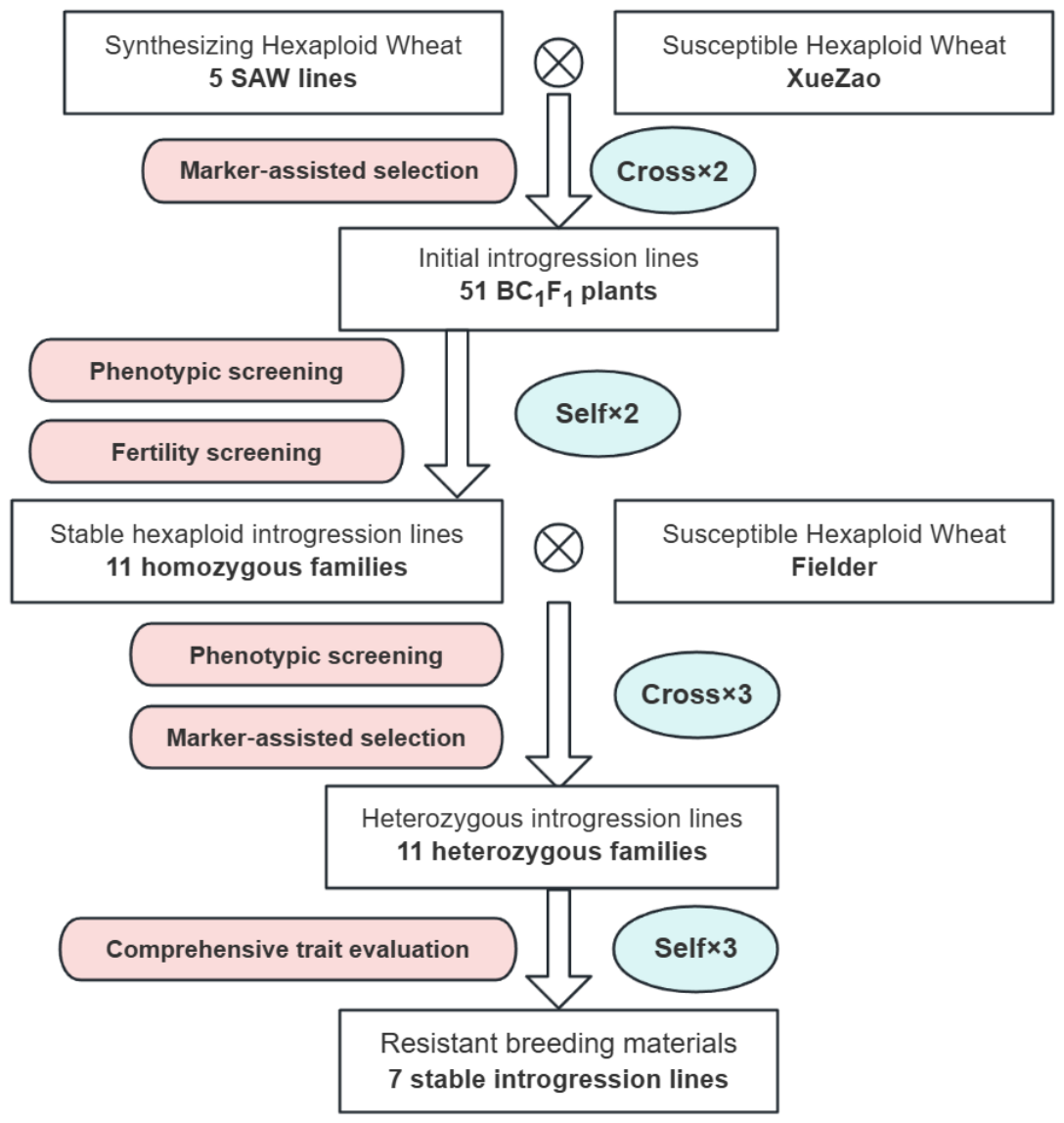
The breeding pipeline for developing resistant breeding materials in this study is illustrated in Figure 1. Five synthetic amphidiploid wheat lines (SAW1, SAW2, SAW9, SAW10, and SAW14) carrying the target resistance genes were used as donor parents. After two successive crosses with the susceptible hexaploid wheat line XueZao, combined with MAS, BC1F1 initial introgression lines were obtained. Selected plants were then selfed for two generations, accompanied by disease resistance evaluation and fertility screening, resulting in stable hexaploid introgression lines (including 1P-3, 1P-5, 2P-1, 3P-3, etc.). To further improve agronomic traits, these stable introgression lines were backcrossed three times with the spring wheat cultivar Fielder, with MAS and phenotypic screening at each generation, generating BC2F1 heterozygous introgression lines. Finally, BC2F1 plants were selfed for three generations and subjected to comprehensive trait evaluation, leading to the selection of resistant breeding materials.

2.3. Molecular Marker Analysis

Total genomic DNA was extracted from leaf tissue using the CTAB protocol. At each generation, the resistance genes were tracked using the markers M-Pm60 [7] and M-YrU1 [9] (primer sequences are listed in Supplementary Table S3). The amplified fragment of YrU1 is 1738 bp, that of Pm60 is 1551 bp, and that of Pm60b is 1791 bp. PCR was performed in a 20 μL reaction mixture containing 10 μL of 2× Taq PCR StarMix (GenStar, Beijing, China), 1 μL of DNA template (50–100 ng/μL), 2 μL of primer mix (forward and reverse, 2 μM each), and 7 μL of ddH2O. The amplification program was as follows: initial denaturation at 94 °C for 5 min, 34 cycles of denaturation at 94 °C for 30 s, annealing at 58 °C for 30 s, and extension at 72 °C for 1 min 30 s, followed by a final extension at 72 °C for 5 min. The PCR products were separated on 1% agarose gels by electrophoresis at a constant voltage of 200 V for 8 min.

2.4. Evaluation of Powdery Mildew Resistance

The powdery mildew race E09, which has been maintained in the pathogen identification greenhouse of the Wheat Research Center at China Agricultural University, was used for all powdery mildew resistance assessments in this study. All seedlings to be inoculated were grown under uniform greenhouse conditions. At the two-leaf stage, seedlings were continuously inoculated with race E09 by the dusting method using spores propagated on susceptible XueZao plants [20]. Disease responses were evaluated 15 days after inoculation using a 0–4 infection-type (IT) scale: IT 0, immune; IT 0; necrotic flecks; IT 1, high resistance; IT 2, moderate resistance; IT 3, moderate susceptibility; IT 4, high susceptibility [21]. The adult-plant resistance to wheat powdery mildew was evaluated at the Shangzhuang Experimental Station of China Agricultural University. Natural disease pressure was provided by spreader rows of XueZao inoculated with Bgt E09, while uninoculated XueZao served as the susceptible control. Disease assessments were performed multiple times from heading through grain filling, and disease responses were recorded using the same procedure described above.

2.5. Evaluation of Stripe Rust Resistance

The stripe rust race CYR34 was used in all seedling-stage stripe rust resistance evaluations. Seedlings of the test materials were grown under uniform greenhouse conditions. When the plants reached the two- to five-leaf stage, they were inoculated with an aqueous suspension of urediniospores (collected from the susceptible cultivar MX169) in isododecane (4:1, v/v) using a pneumatic spray gun. After inoculation, plants were placed in a dew chamber at 10 °C in the dark for 24 h and then transferred to two growth cabinets with different temperature regimes: a low-temperature treatment (10–15 °C) and a high-temperature treatment (10–30 °C). Both cabinets were set to a 16 h light/8 h dark photoperiod, with temperature gradually increasing from the minimum at 2:00 a.m. to the maximum at 2:00 p.m. Infection types (IT) were recorded 18–21 days post-inoculation using a 0–9 scale [22]. Adult-plant resistance to stripe rust was evaluated at the Wenjiang Experimental Station of Sichuan Agricultural University. Spreader rows of the highly susceptible cultivar XueZao were planted every 20–30 rows and around the plots to ensure uniform inoculum distribution. The spreader rows were artificially inoculated with a mixture of prevalent Pst races (CYR32, CYR33, and CYR34) at the tillering to stem elongation stage. Disease assessments were performed multiple times at different stages, from heading to grain filling, at 7–10-day intervals, and the final assessment was conducted when the susceptible control XueZao showed maximum disease severity (≥80% on flag leaves).

2.6. Determination and Calculation of Selfed Seed Set per Plant

Prior to flowering, the main stem spike or a representative tiller spike of each test plant was bagged with a parchment paper bag (or cellophane bag) to prevent cross-pollination by foreign pollen, allowing natural self-pollination. One to two spikes per plant were bagged. After grain maturity, the bagged spikes were harvested. The total number of florets (after removing the two underdeveloped spikelets at the base and the two at the tip, the sum of the two basal florets per remaining spikelet was counted) and the number of filled grains were recorded. The selfed seed set percentage was calculated using the following formula:
Selfed seed set (%) = (Number of filled grains/Total number of florets) × 100%
The average seed set percentage of 2–3 spikes per plant was taken as the selfed seed set for that plant. In this study, plants with selfed seed set ≥50% were considered to have normal fertility and were retained for subsequent generations; those with <50% selfed seed set were discarded.

2.7. Agronomic Trait Evaluation

Agronomic trait evaluation of hexaploid introgression lines was conducted during the 2024–2025 growing season at the Shangzhuang Experimental Station of China Agricultural University in Beijing. For each line, 15 seeds were uniformly sown in rows of 1.5 m in length with 0.3 m spacing. At maturity, 4–5 plants were randomly selected from each line, and morphological traits were evaluated, including plant height, tiller number, spike length, number of spikelets per spike, number of grains per spike, and thousand-grain weight. Statistical analysis was performed to compare the agronomic traits of each introgression line with the control Fielder. Student’s t-test was applied to assess the significance of differences, and p-values < 0.05 were considered statistically significant. The results are presented as mean ± standard deviation (SD).

3. Results

3.1. Resistance Evaluation of T. urartu and Development of Synthetic Amphidiploid Wheat

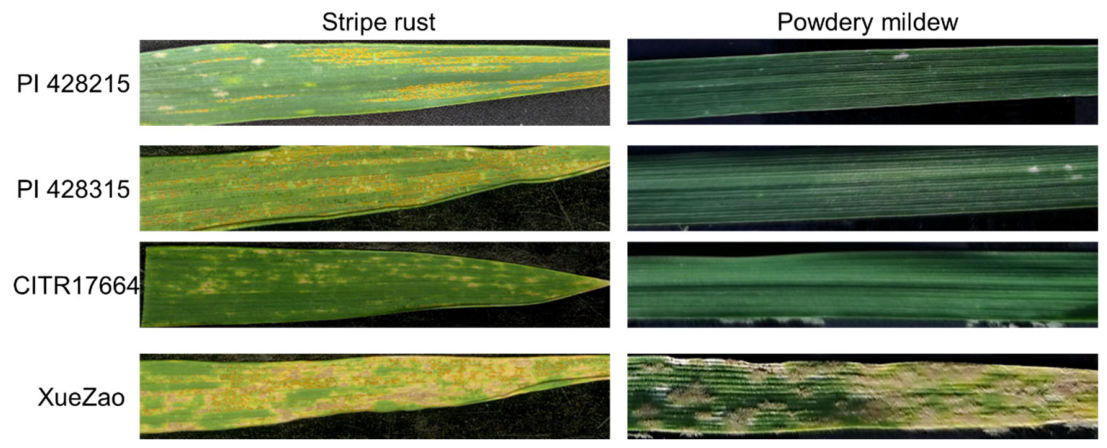
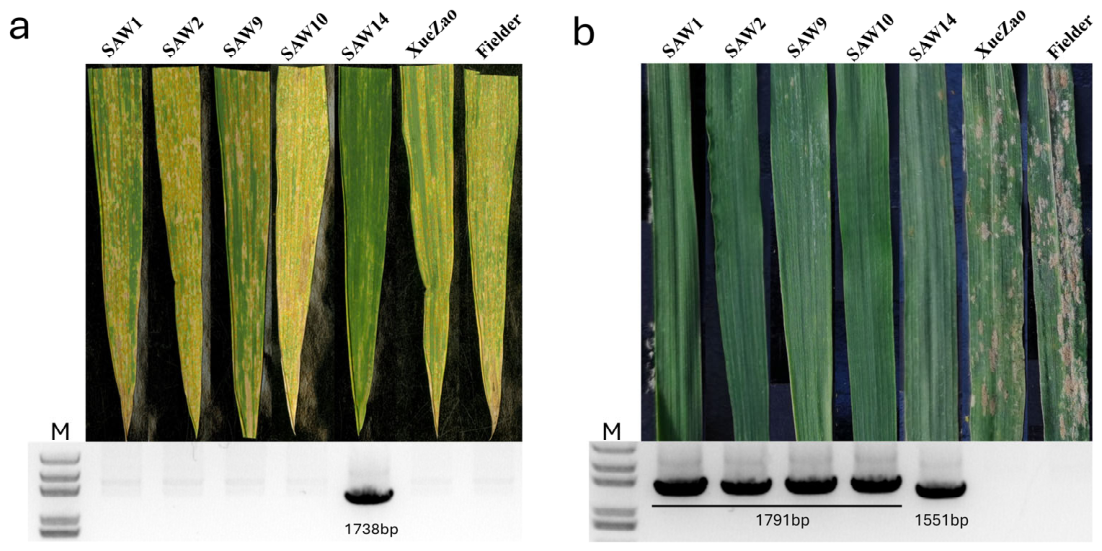
Zhao et al. reported that T. urartu accession CITR 17664 carries Pm60, while PI 428215 and PI 428315 carry Pm60b [23]. Using the functional marker M-YrU1 of the stripe rust resistance gene YrU1, we detected that CITR 17664 also carries YrU1. Resistance evaluation showed that PI 428215, PI 428315, and CITR 17664 were resistant to powdery mildew, and CITR 17664 was also resistant to stripe rust (Figure 2). Previously, Zhang et al. used the durum wheat (AABB) cultivar Mo75 as a bridge parent [10]. The powdery mildew-resistant T. urartu accessions CITR 17664, PI 428215, and PI 428315 were used as male parents to pollinate Mo75. The resulting hybrid progenies were treated with colchicine, generating a series of synthetic amphidiploid wheat (SAW) lines (AABBAuAu, 2n = 6x = 42), which can serve as bridging lines to introgress desirable genes from T. urartu into cultivated wheat. Five SAW lines, SAW1, SAW2, SAW9, SAW10, and SAW14 with high seed set, were selected as donor materials (Table S2). Phenotyping results showed that SAW1, SAW2, SAW9, SAW10, and SAW14 all exhibited immunity-level resistance to powdery mildew Bgt E09, and SAW14 also displayed immunity-level resistance to stripe rust (mixed races CYR32, CYR33, and CYR34) (Figure 3).

3.2. Introgression of Resistance Genes into Hexaploid Wheat via Synthetic Amphidiploid

From crosses between XueZao and the five SAW lines, 98 BC2F1 plants were obtained. Molecular marker analysis showed that 13 plants carried YrU1, 28 carried Pm60b, 10 carried Pm60, and six carried both Pm60 and YrU1 (Figure S1). All plants in the BC1F2 generation were genotyped using the markers M-YrU1 and M-Pm60. Plants lacking the target resistance genes or exhibiting a selfed seed set rate of less than 50% were discarded. The BC1F3 plants were inoculated with Pst CYR34 and Bgt E09. The homozygous resistant BC1F3 lines were selected by phenotyping and marker analysis. From these, 11 families (Table 1) were selected for further development of hexaploid disease-resistant germplasm. The selected families were stable for disease resistance but still exhibited wild wheat traits to varying degrees, such as low selfed seed set, tall plant height, and brittle rachis, and need to break linkage drag further (Figure S2).

3.3. Successive Backcrossing and Selfing to Break Linkage Drag

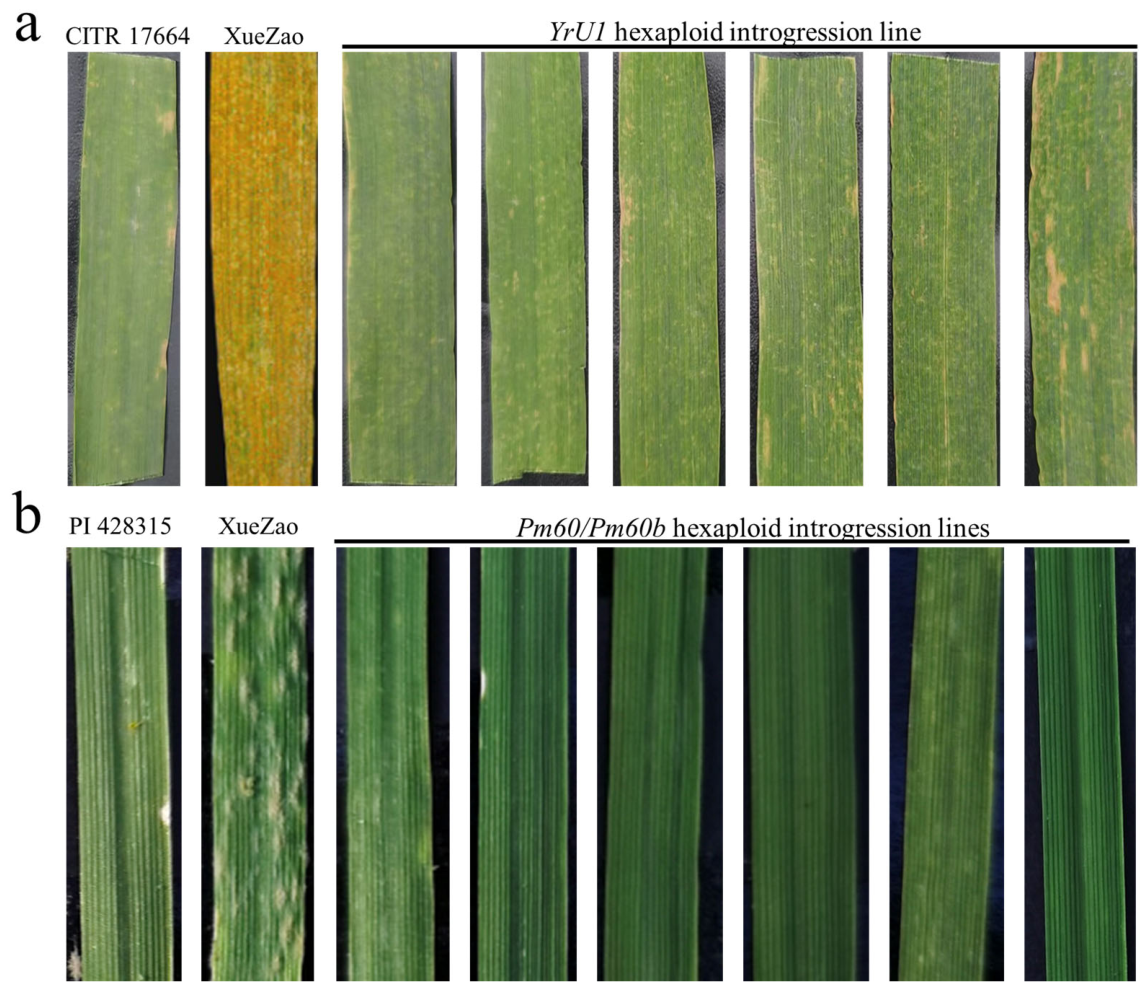
To break linkage drag, we continued to backcross the 11 selected introgression lines to the spring wheat cultivar Fielder to accelerate the breeding process. In the greenhouse, three successive crosses were performed using Fielder as the male parent with these 11 introgression lines, and at each generation, molecular marker detection and resistance evaluation were performed. Throughout the successive backcrossing process, we found that the hexaploid wheat genetic background did not compromise the resistance functions of Pm60, Pm60b, or YrU1; the backcross progenies exhibited resistance levels comparable to those of the original donor accessions (Figure 4). After two successive rounds of backcrossing, we selected 20 lines based on selfed seed set, spike morphology, and plant architecture for further advancement in the next generation. Ultimately, stable hexaploid wheat introgression lines carrying Pm60, Pm60b, YrU1, and Pm60 + YrU1 were obtained at the BC2F4 generation, which could be used as pre-breeding lines to improve wheat disease resistance.

3.4. Linkage Analysis of Resistance Genes and Phenotypes in the BC1F1 Generation

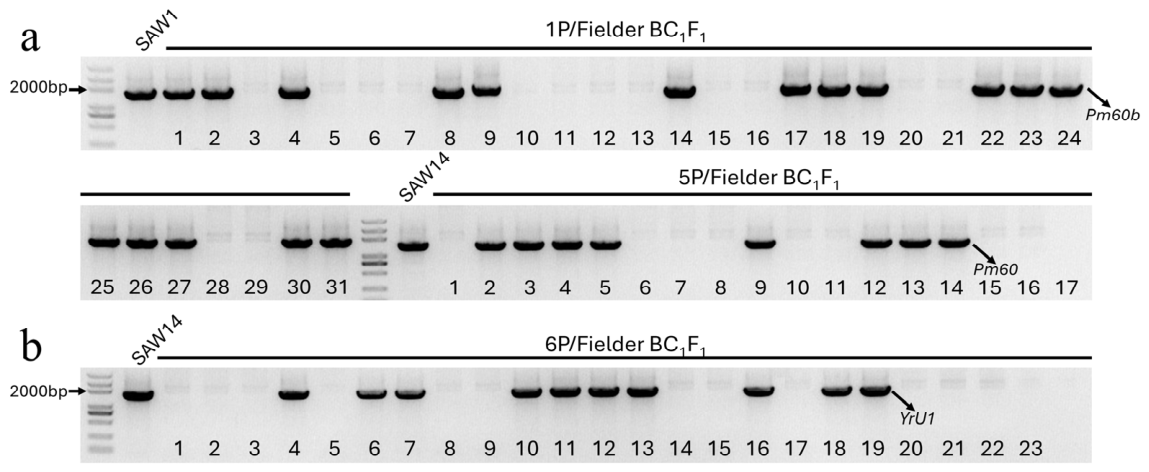
During the process of backcrossing, we performed linkage analysis of Pm60, Pm60b, and YrU1 with phenotypes and investigated their segregation ratios in the BC1F1 generation. Among the 40 families examined, 34 fitted the expected 1:1 segregation ratio of resistant to susceptible plants, indicating that powdery mildew resistance and stripe rust resistance were each controlled by a single major gene in these populations. Moreover, the disease resistance phenotypes of individual plants were fully consistent with the genotyping results obtained using the M-Pm60 and M-YrU1 markers. Representative marker detection results and segregation patterns are shown in Figure 5 and Table 2.

3.5. Field Evaluation of Stable Resistant Introgression Lines Without Linkage Drag

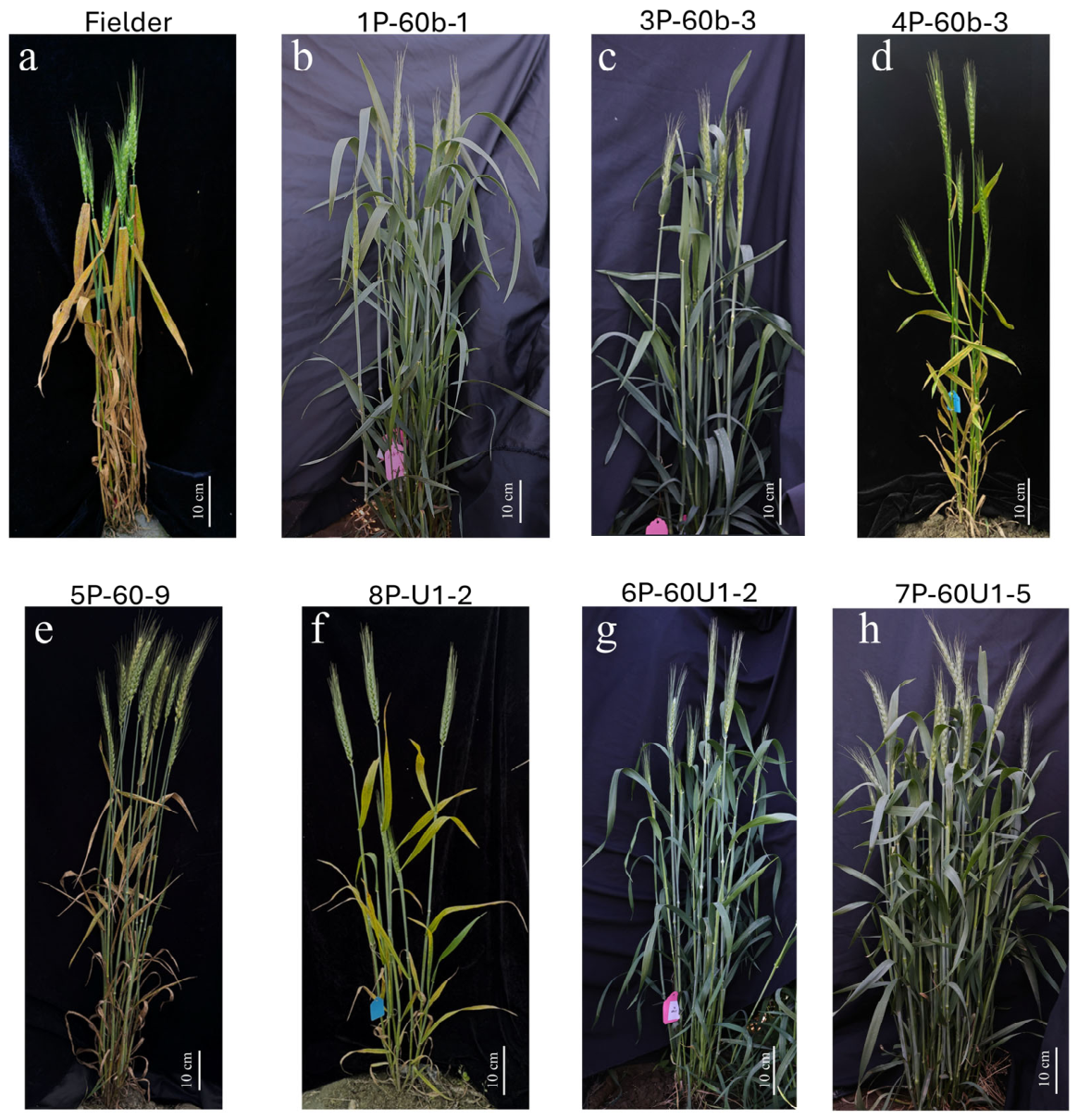
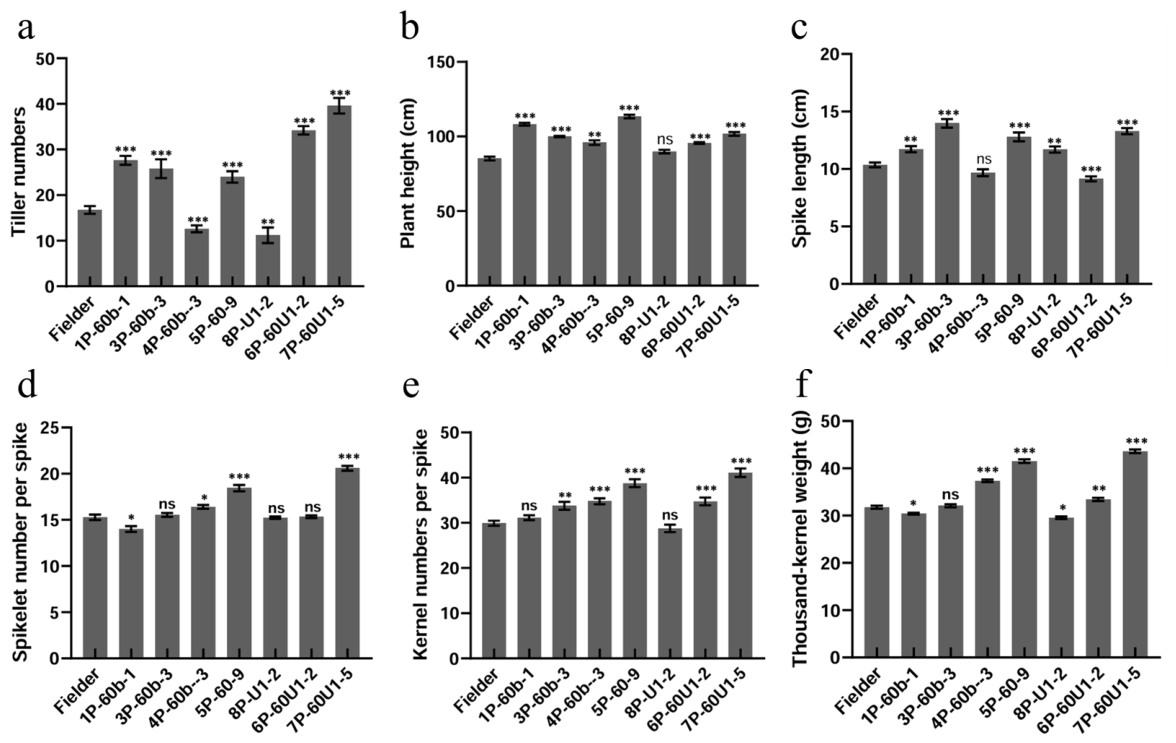
After three generations of greenhouse screening and MAS, we obtained stable inherited lines with normal fertility, including 10 lines carrying Pm60, eight lines carrying Pm60b, 13 lines carrying YrU1, and eight lines carrying Pm60 + YrU1. Despite multiple generations of backcrossing with hexaploid wheat, some resistant introgression lines still retained T. urartu-like phenotypes in plant architecture, spike morphology, and grain traits, likely due to suppressed recombination caused by local chromosomal differences and linkage drag in the genomic regions flanking the target genes Pm60 and YrU1. Therefore, we selected 77 lines encompassing four resistance gene combinations under field conditions. These lines showed immunity-level resistance to the target diseases and no obvious adverse agronomic effects under the tested field conditions, and were designated as novel disease-resistant germplasm (Figure 6). During the 2024–2025 growing season, systematic evaluation of field agronomic traits was conducted on these novel disease-resistant germplasm lines (Figure 7; Table S4).

4. Discussion

As the progenitor of the A subgenome of common wheat, T. urartu represents an underutilized but important gene pool for disease resistance breeding. Compared with more distantly related wild species such as rye (Secale cereale) and Dasypyrum villosum, the high homology between T. urartu and the wheat A-genome facilitates homologous recombination [24], allowing rapid reduction in alien segments and elimination of linkage drag in fewer backcross generations. Earlier studies successfully transferred stem rust resistance genes Sr21, Sr22, and Sr35 from Triticum monococcum (another A-genome donor) into common wheat using conventional crossing and backcrossing strategies [11,12,13]. These pioneering works demonstrated the feasibility of introgressing resistance genes from diploid A-genome species into hexaploid wheat. In recent years, several resistance genes have been cloned from T. urartu, including the powdery mildew resistance gene Pm60 and its functional alleles Pm60a and Pm60b, as well as the stripe rust resistance gene YrU1. Notably, a single T. urartu accession can carry multiple resistance genes against different pathogens, which provides an ideal starting point for a “multi-resistance, multi-combination” pyramiding strategy. Pyramiding multiple resistance genes from the same donor into common wheat not only enables the resulting variety to resist multiple diseases but also greatly reduces the reliance on chemical fungicides. In the present study, T. urartu accessions carrying different Pm60 alleles and YrU1 were used to develop hexaploid wheat lines with resistance to powdery mildew, stripe rust, or both diseases.
In distant hybridization, reproductive barriers are the primary obstacle to gene introgression. Using tetraploid wheat as a bridge—first crossing it with T. urartu followed by chromosome doubling to create a synthetic amphidiploid (AABBAuAu) and then crossing this with common wheat—is an effective strategy to overcome this barrier. This strategy has been applied to introgress resistance genes from multiple wild relatives into wheat. For example, the stripe rust resistance gene YrAS2388 [25] and the pre-harvest sprouting resistance gene RSP from Aegilops tauschii have been introduced into wheat via synthetic hexaploid wheat bridges and have become important resources for wheat improvement. The powdery mildew resistance gene PmNCA6 [26] from Triticum boeoticum has also been introgressed through this pathway. Using this synthetic amphidiploid bridge approach, we introgressed Pm60, Pm60b and YrU1 into a hexaploid wheat background, demonstrating the effectiveness of the “durum as a bridge” strategy for utilizing genes derived from T. urartu.
However, linkage drag frequently occurs during alien introgression, as donor segments may carry hitchhiking sequences. The introgression of rye chromosome 1R carrying Pm8 and Yr9 significantly enhanced wheat disease resistance and yield, but also caused minor quality defects due to linkage drag [27,28]. Similarly, Pm13 from Aegilops longissima was transferred into wheat over 30 years ago but has not been widely used, largely due to linkage drag [16]. Therefore, when creating introgression lines carrying alien resistance genes, the potential impact of linkage drag must be fully recognized, and targeted measures, such as multi-generation backcrossing, must be taken to eliminate it.
Efficient selection methods are essential for introgressing novel genes from wild relatives into cultivated wheat. MAS enables accurate identification of target genes in early generations, preventing individuals lacking the desired genes from consuming breeding resources. However, marker-based selection alone is insufficient. Because alien gene expression may be affected by genetic background or position effects, multi-generation phenotypic evaluation is needed to confirm stable resistance [29]. Phenotypic evaluation also captures gene-by-environment interactions and provides direct evidence for selection decisions [30]. Combining MAS with phenotypic evaluation improves selection efficiency while ensuring functional integrity of the introgressed genes.
Eliminating or reducing linkage drag is central to practical use of introgressed genes. Multi-generation backcrossing is the primary means of reducing donor segment size, but the number of backcross generations must be balanced against breeding efficiency and background recovery. Our results support a phased strategy: in early generations, MAS for foreground selection to eliminate non-carriers or poor-fertility individuals, and in later generations, selection for agronomic traits such as selfed seed set, spike morphology, and plant architecture. This phased strategy—“marker selection in early generations, phenotypic selection in advanced generations”—maximizes breeding efficiency while minimizing linkage drag. Moreover, the homology between T. urartu and the wheat A-genome offers a natural advantage in accelerating the reduction in donor segments through homologous recombination. After multiple rounds of backcrossing and selfing, this study obtained stable hexaploid introgression lines carrying Pm60, Pm60b, YrU1, or Pm60 + YrU1 that showed immunity-level resistance to powdery mildew and stripe rust and no obvious adverse agronomic effects under the tested conditions. These lines can be used as donor parents to improve elite cultivars and to develop varieties with dual resistance and this technical pipeline can also be extended to other wild relatives and resistance genes.

Supplementary Materials

The following supporting information can be downloaded at: https://www.mdpi.com/article/10.3390/plants15121802/s1, Table S1: Information and disease resistance evaluation of T. urartu accessions; Table S2: Evaluation of powdery mildew resistance, leaf rust resistance, and self-fertility rate of synthetic amphidiploid wheat (SAW) lines; Table S3: Information of functional markers for YrU1 and Pm60; Table S4: Investigation of agronomic traits in resistant introgression lines; Figure S1: Presence of resistance genes YrU1, Pm60b, and Pm60 in primary introgression lines; Figure S2: Comparison of field plant architecture at the same growth stage between common hexaploid wheat and primary introgression lines. (a) Common hexaploid wheat; (b,c) primary introgression lines with obvious linkage drag.

Author Contributions

W.P., Y.L. and C.X. conceived and designed the research. W.P., J.Y. and Q.Z. performed the chromosome doubling experiments to generate the synthetic amphiploids. W.P., J.Y., B.Z. and J.Z. performed the greenhouse and field hybridization work. W.P., J.S., and N.L. conducted the field phenotypic investigation. W.P., B.Z. and W.W. completed the greenhouse resistance identification. Z.Y. and J.Y. assisted in the molecular identification of the disease resistance gene. W.P. analyzed the data and drafted the manuscript. T.F., J.M. and Y.L. revised the manuscript. C.X., Y.L. and W.G. jointly supervised the project and acquired the funding. All authors have read and agreed to the published version of the manuscript.

Funding

This research was funded by the Biological Breeding-National Science and Technology Major Project (2023ZD04025), National Natural Science Foundation of China (W2531022), Pinduoduo-China Agricultural University Research Fund, Grant No. PC2024A02001, the Israel Innovation Authority (IIA) as part of the NIFA-BARD-IIA Food and Nutrition joint initiative (Grant No. 79526), the Sichuan Science and Technology Program (2024NSFSC1968).

Data Availability Statement

The genotype data and the plant materials reported in this study are available upon request.

Acknowledgments

We thank Zhang Zhen (Ph.D. student, College of Agronomy, China Agricultural University) for his assistance with stripe rust evaluation and field phenotyping, and the Shangzhuang Experimental Station of China Agricultural University for technical support in field management.

Conflicts of Interest

The authors declare that they have no conflicts of interest.

References

  1. Lang, D.; Appels, R.; Rigault, P.; Kanyuka, K.; Twardziok, S.; Melonek, J.; Gutierrez-Gonzalez, J.; Lux, T.; Hernandez, P.; Fischer, I.; et al. Shifting the Limits in Wheat Research and Breeding Using a Fully Annotated Reference Genome. Science 2018, 361, eaar7191. [Google Scholar] [CrossRef]
  2. Chen, X. Pathogens Which Threaten Food Security: Puccinia Striiformis, the Wheat Stripe Rust Pathogen. Food Sec. 2020, 12, 239–251. [Google Scholar] [CrossRef]
  3. Savary, S.; Willocquet, L.; Pethybridge, S.J.; Esker, P.; McRoberts, N.; Nelson, A. The Global Burden of Pathogens and Pests on Major Food Crops. Nat. Ecol. Evol. 2019, 3, 430–439. [Google Scholar] [CrossRef]
  4. Bourras, S.; Kunz, L.; Xue, M.; Praz, C.R.; Müller, M.C.; Kälin, C.; Schläfli, M.; Ackermann, P.; Flückiger, S.; Parlange, F.; et al. The AvrPm3-Pm3 Effector-NLR Interactions Control Both Race-Specific Resistance and Host-Specificity of Cereal Mildews on Wheat. Nat. Commun. 2019, 10, 2292. [Google Scholar] [CrossRef]
  5. Zhao, J.; Kang, Z. Fighting Wheat Rusts in China: A Look Back and into the Future. Phytopathol. Res. 2023, 5, 6. [Google Scholar] [CrossRef]
  6. Ling, H.-Q.; Zhao, S.; Liu, D.; Wang, J.; Sun, H.; Zhang, C.; Fan, H.; Li, D.; Dong, L.; Tao, Y.; et al. Draft Genome of the Wheat A-Genome Progenitor Triticum urartu. Nature 2013, 496, 87–90. [Google Scholar] [CrossRef]
  7. Zou, S.; Wang, H.; Li, Y.; Kong, Z.; Tang, D. The NBLRR Gene Pm60 Confers Powdery Mildew Resistance in Wheat. New Phytol. 2018, 218, 298–309. [Google Scholar] [CrossRef] [PubMed]
  8. Zou, S.; Shi, W.; Ji, J.; Wang, H.; Tang, Y.; Yu, D.; Tang, D. Diversity and Similarity of Wheat Powdery Mildew Resistance among Three Allelic Functional Genes at the Pm60 Locus. Plant J. 2022, 110, 1781–1790. [Google Scholar] [CrossRef]
  9. Wang, H.; Zou, S.; Li, Y.; Lin, F.; Tang, D. An Ankyrin-Repeat and WRKY-Domain-Containing Immune Receptor Confers Stripe Rust Resistance in Wheat. Nat. Commun. 2020, 11, 1353. [Google Scholar] [CrossRef] [PubMed]
  10. Zhang, Q.; Li, Y.; Li, Y.; Fahima, T.; Shen, Q.; Xie, C. Introgression of the Powdery Mildew Resistance Genes Pm60 and Pm60b from Triticum Urartu to Common Wheat Using Durum as a ‘Bridge’. Pathogens 2021, 11, 25. [Google Scholar] [CrossRef] [PubMed]
  11. T The, T. Chromosome Location of Genes Conditioning Stem Rust Resistance Transferred from Diploid to Hexaploid Wheat. Nat. New Biol. 1973, 241, 256. [Google Scholar] [CrossRef]
  12. T The, T.; McIntosh, R. Cytogenetical Studies in Wheat VIII. Telocentric Mapping and Linkage Studies Involving Sr22 and Other Genes in Chromosome 7AL. Aust. J. Biol. Sci. 1975, 28, 531–538. [Google Scholar] [CrossRef]
  13. McIntosh, R.; Dyck, P.; Cusick, J.; Milne, D. Cytogenetical Studies in Wheat. XIII: Sr 35―A Third Gene from Triticum monococcum for Resistance to Puccinia Graminis Tritici. Z. Pflanzenzücht. 1984, 92, 1–14. [Google Scholar]
  14. Kolmer, J.A.; Anderson, J.A.; Flor, J.M. Chromosome Location, Linkage with Simple Sequence Repeat Markers, and Leaf Rust Resistance Conditioned by Gene Lr63 in Wheat. Crop Sci. 2010, 50, 2392–2395. [Google Scholar] [CrossRef]
  15. Li, H.; Men, W.; Ma, C.; Liu, Q.; Dong, Z.; Tian, X.; Wang, C.; Liu, C.; Gill, H.S.; Ma, P.; et al. Wheat Powdery Mildew Resistance Gene Pm13 Encodes a Mixed Lineage Kinase Domain-like Protein. Nat. Commun. 2024, 15, 2449. [Google Scholar] [CrossRef]
  16. Ning, S.; Wang, X.; Ma, C.; Liao, J.; Ye, F.; Li, S.; Fan, C.; Cui, Q.; Wang, X.; Song, D.; et al. Development and Characterization of Small Translocations between the Pm13 Introgression from Aegilops longissima and Wheat Homoeologous A, B and D Chromosomes. BMC Plant Biol. 2025, 25, 179. [Google Scholar] [CrossRef]
  17. Mundt, C.C. Pyramiding for Resistance Durability: Theory and Practice. Phytopathology 2018, 108, 792–802. [Google Scholar] [CrossRef]
  18. Xi, W.; Hao, C.; Li, T.; Wang, H.; Zhang, X. Transcriptome Analysis of Roots from Wheat (Triticum aestivum L.) Varieties in Response to Drought Stress. Int. J. Mol. Sci. 2023, 24, 7245. [Google Scholar] [CrossRef] [PubMed]
  19. Cha, J.-K.; Park, H.; Kwon, Y.; Lee, S.-M.; Jang, S.-G.; Kwon, S.-W.; Lee, J.-H. Synergizing Breeding Strategies via Combining Speed Breeding, Phenotypic Selection, and Marker-Assisted Backcrossing for the Introgression of Glu-B1i in Wheat. Front. Plant Sci. 2024, 15, 1402709. [Google Scholar] [CrossRef]
  20. Bapela, T.; Shimelis, H.; Terefe, T.; Bourras, S.; Sánchez-Martín, J.; Douchkov, D.; Desiderio, F.; Tsilo, T.J. Breeding Wheat for Powdery Mildew Resistance: Genetic Resources and Methodologies—A Review. Agronomy 2023, 13, 1173. [Google Scholar] [CrossRef]
  21. Saari, E.; Prescott, J.M. A Scale for Appraising the Foliar Intensity of Wheat Diseases. Plant Dis. Report. 1975, 59, 377–380. [Google Scholar]
  22. Line, R.F.; Qayoum, A. Virulence, Aggressiveness, Evolution, and Distribution of Races of “Puccinia Striiformis” (The Cause of Stripe Rust of Wheat) in North America, 1968–87; Technical Bulletin—United States Department of Agriculture: Washington, DC, USA, 1992. [Google Scholar]
  23. Zhao, F.; Li, Y.; Yang, B.; Yuan, H.; Jin, C.; Zhou, L.; Pei, H.; Zhao, L.; Li, Y.; Zhou, Y.; et al. Powdery Mildew Disease Resistance and Marker-Assisted Screening at the Pm60 Locus in Wild Diploid Wheat Triticum urartu. Crop J. 2020, 8, 252–259. [Google Scholar] [CrossRef]
  24. Ling, H.-Q.; Ma, B.; Shi, X.; Liu, H.; Dong, L.; Sun, H.; Cao, Y.; Gao, Q.; Zheng, S.; Li, Y.; et al. Genome Sequence of the Progenitor of Wheat A Subgenome Triticum Urartu. Nature 2018, 557, 424–428. [Google Scholar] [CrossRef] [PubMed]
  25. Huang, L.; Zhang, L.-Q.; Liu, B.-L.; Yan, Z.-H.; Zhang, B.; Zhang, H.-G.; Zheng, Y.-L.; Liu, D.-C. Molecular Tagging of a Stripe Rust Resistance Gene in Aegilops tauschii. Euphytica 2011, 179, 313–318. [Google Scholar] [CrossRef]
  26. Wan, W.; Zhao, R.; Zhao, P.; Tang, Q.; Lv, G.; Chen, T.; Wang, L.; Zang, S.; Wu, R.; Wang, Z.; et al. MutExomeSeq Accelerates the Cloning of PmNCA6 Conferring Powdery Mildew Resistance from Triticum boeoticum. Engineering, 2026; in press. [CrossRef]
  27. Mater, Y.; Baenziger, S.; Gill, K.; Graybosch, R.; Whitcher, L.; Baker, C.; Specht, J.; Dweikat, I. Linkage Mapping of Powdery Mildew and Greenbug Resistance Genes on Recombinant 1RS from “Amigo” and “Kavkaz” Wheat–Rye Translocations of Chromosome 1RS.1AL. Genome 2004, 47, 292–298. [Google Scholar] [CrossRef]
  28. Kaur, R.; Vyas, P.; Sharma, P.; Sheikh, I.; Kumar, R.; Dhaliwal, H.S. Marker-Assisted Breeding of Recombinant 1RS.1BL Chromosome for Improvement of Bread Making Quality and Yield of Wheat (Triticum aestivum L.). In Applications of Biotechnology for Sustainable Development; Mukhopadhyay, K., Sachan, A., Kumar, M., Eds.; Springer: Singapore, 2017. [Google Scholar] [CrossRef]
  29. Mao, H.; Jiang, C.; Tang, C.; Nie, X.; Du, L.; Liu, Y.; Cheng, P.; Wu, Y.; Liu, H.; Kang, Z.; et al. Wheat Adaptation to Environmental Stresses under Climate Change: Molecular Basis and Genetic Improvement. Mol. Plant 2023, 16, 1564–1589. [Google Scholar] [CrossRef] [PubMed]
  30. Han, L.; Wang, X.; Benke, R.; Tibbs-Cortes, L.E.; Zhao, P.; Sanguinet, K.A.; Zhang, Z.; Xu, S.; Yu, J.; Li, X. Integrated Phenomic and Genomic Analyses Unveil Modes of Altered Phenotypic Plasticity during Wheat Improvement. Genome Biol. 2025, 26, 256. [Google Scholar] [CrossRef]
Figure 1. Development and screening pipeline of resistant breeding materials.
Plants 15 01802 g001
Figure 2. Adult-stage evaluation of stripe rust and powdery mildew resistance in T. urartu accessions PI 428215, PI 428315, and CITR 17664. Mixed races of Pst (CYR32, CYR33, CYR34) and Bgt E09 were used under field conditions.
Plants 15 01802 g002
Figure 3. Resistance evaluation and marker detection of synthetic hexaploid wheat. (a) Adult-stage response of synthetic hexaploid wheat lines and recurrent parents to mixed races of stripe rust (CYR32, CYR33, and CYR34); SAW14 (highly resistant); SAW1, SAW2, SAW9, SAW10, XueZao, and Fielder (highly susceptible). (b) Adult-stage response of synthetic hexaploid wheat lines and recurrent parents to Bgt E09 of powdery mildew (Bgt); SAW1, SAW2, SAW9, SAW10, and SAW14 (highly resistant); XueZao and Fielder (highly susceptible); M, marker; expected fragment sizes: 1738 bp (YrU1), 1791 bp (Pm60b), and 1551 bp (Pm60).
Plants 15 01802 g003
Figure 4. Comparison of resistance between disease-resistant introgression lines and resistant Triticum urartu parents. (a) Phenotypes of hexaploid introgression lines carrying YrU1 after inoculation with mixed races of Pst (CYR32, CYR33, and CYR34); (b) phenotypes of hexaploid introgression lines carrying Pm60 and Pm60b after inoculation with Bgt E09.
Plants 15 01802 g004
Figure 5. Marker detection of BC1F1 segregating population. (a) PCR-amplification of M-Pm60 in 1P/Fielder BC1F1 and 5P/Fielder BC1F1. SAW1 and SAW14 were used as the positive control. (b) PCR-amplification of M-YrU1 in 6P/Fielder BC1F1. SAW14 was used as the positive control. Numbers 1–31, 1–17, and 1–23 indicate lane numbers for three different families.
Plants 15 01802 g005
Figure 6. Plant morphology of resistant introgression lines. (a) Susceptible control Fielder. (bd) Pm60b introgression lines. (e) Pm60 introgression lines. (f) YrU1 introgression lines. (g,h) Pm60 + YrU1 introgression lines. Scale bars, 10 cm.
Plants 15 01802 g006
Figure 7. Comparison of key agronomic traits between resistant introgression lines and the recurrent parent Fielder. (a) Tiller number; (b) plant height; (c) spike length; (d) spikelet number per spike; (e) kernel number per spike; (f) thousand-kernel weight. Bars represent mean values (n = 10) and error bars indicate standard deviation (SD). Asterisks denote significant differences compared to Fielder (control) determined by Student’s t-test: * p < 0.05, ** p < 0.01, *** p < 0.001; ns = not significant.
Plants 15 01802 g007
Table 1. Phenotypic investigation of initial introgression lines.
No.PedigreeYellow Rust Response (IT)Powdery Mildew Response (IT)Resistance GeneSelf-Fertility RateBrittle Rachis
1P-3(Mo75/PI 428215) × XueZao *2 F370Pm60b61.29%No
1P-5(Mo75/PI 428215) × XueZao *2 F380Pm60b53.53%No
2P-1(Mo75/PI 428315) × XueZao *2 F380Pm60b74.51%No
3P-3(Mo75/CITR 17664) × XueZao *2 F304YrU158.41%Yes
3P-17(Mo75/CITR 17664) × XueZao *2 F304YrU161.29%No
4P-1(Mo75/PI 428315) × XueZao *2 F380Pm60b60.64%Yes
5P-7(Mo75/CITR 17664) × XueZao *2 F380Pm6076.77%No
6P-6(Mo75/CITR 17664) × XueZao *2 F300YrU1 + Pm6054.44%No
6P-9(Mo75/CITR 17664) × XueZao *2 F300YrU1 + Pm6062.64%No
7P-6(Mo75/CITR 17664) × XueZao *2 F370Pm6061.97%No
8P-3(Mo75/CITR 17664) × XueZao *2 F300YrU1 + Pm6076.54%No
Note: *2 indicates two successive crosses with the corresponding male parent.
Table 2. Resistant and susceptible segregation in the BC1F1 population.
No.Female (♀)Male (♂)Number of Seedlingsχ2(1:1)p-Value
ResistantSusceptible
1PF-BC1F1(Mo75/PI 428215) × XueZao *2 F3/FielderFielder17140.2900.590
4PF-BC1F1(Mo75/CITR 17664) × XueZao *2 F3/FielderFielder890.0590.808
6PF-BC1F1(Mo75/CITR 17664) × XueZao *2 F3/FielderFielder10130.3910.532
Note: *2 indicates two successive crosses with the corresponding male parent.
Disclaimer/Publisher’s Note: The statements, opinions and data contained in all publications are solely those of the individual author(s) and contributor(s) and not of MDPI and/or the editor(s). MDPI and/or the editor(s) disclaim responsibility for any injury to people or property resulting from any ideas, methods, instructions or products referred to in the content.