Genome-Wide Characterization of CAPE-Producing PR1 Genes Reveals Regulator-Dependent Expression and Abiotic Stress-Associated Functions in Nicotiana tabacum

 ,
,  , and
, and
Abstract
1. Introduction
2. Results
2.1. Genome-Wide Identification and Characterization of NtCAPE Genes
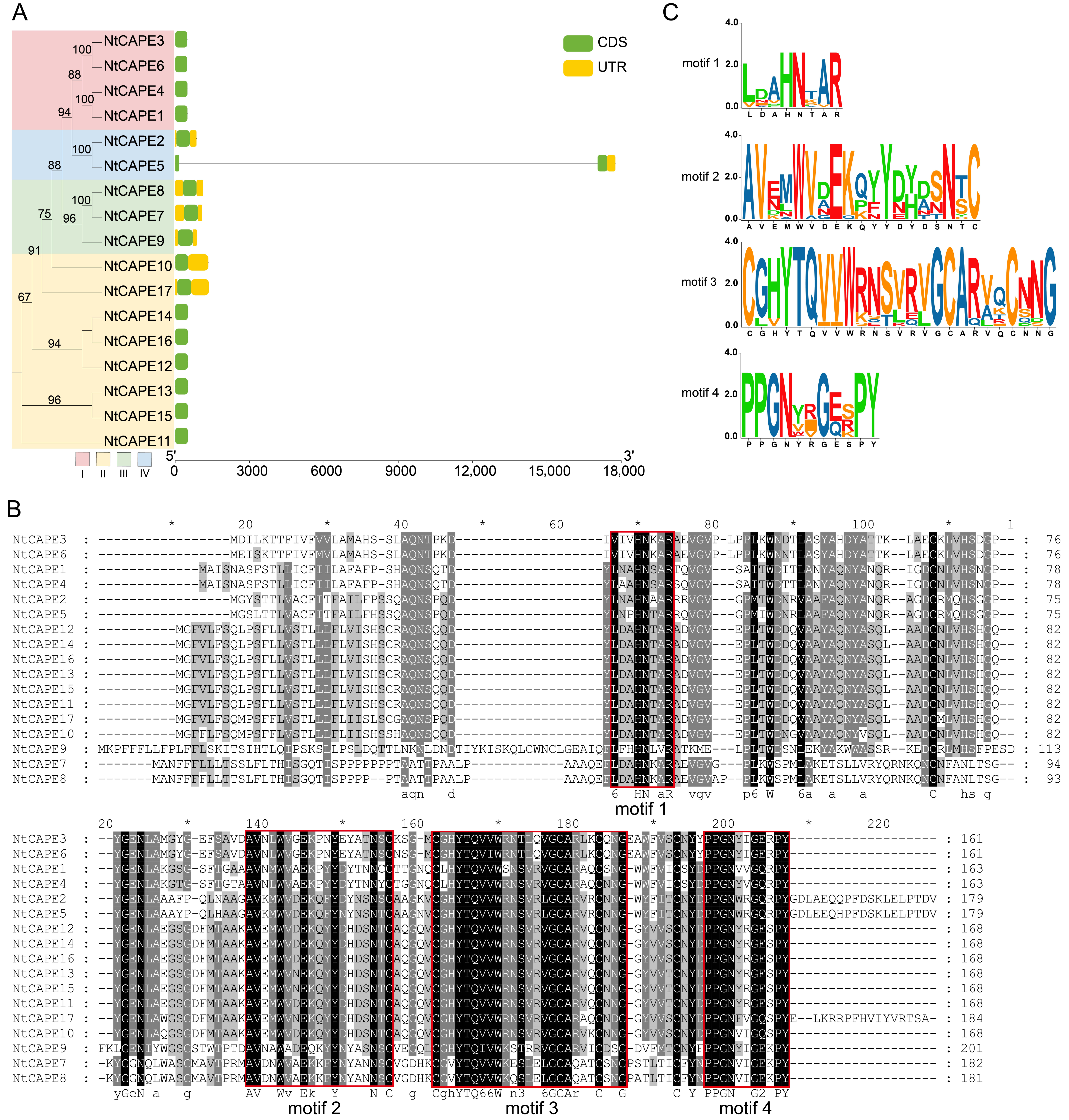
2.2. Phylogenetic Relationships, Gene Structure, and Conserved Motifs of NtCAPE Genes
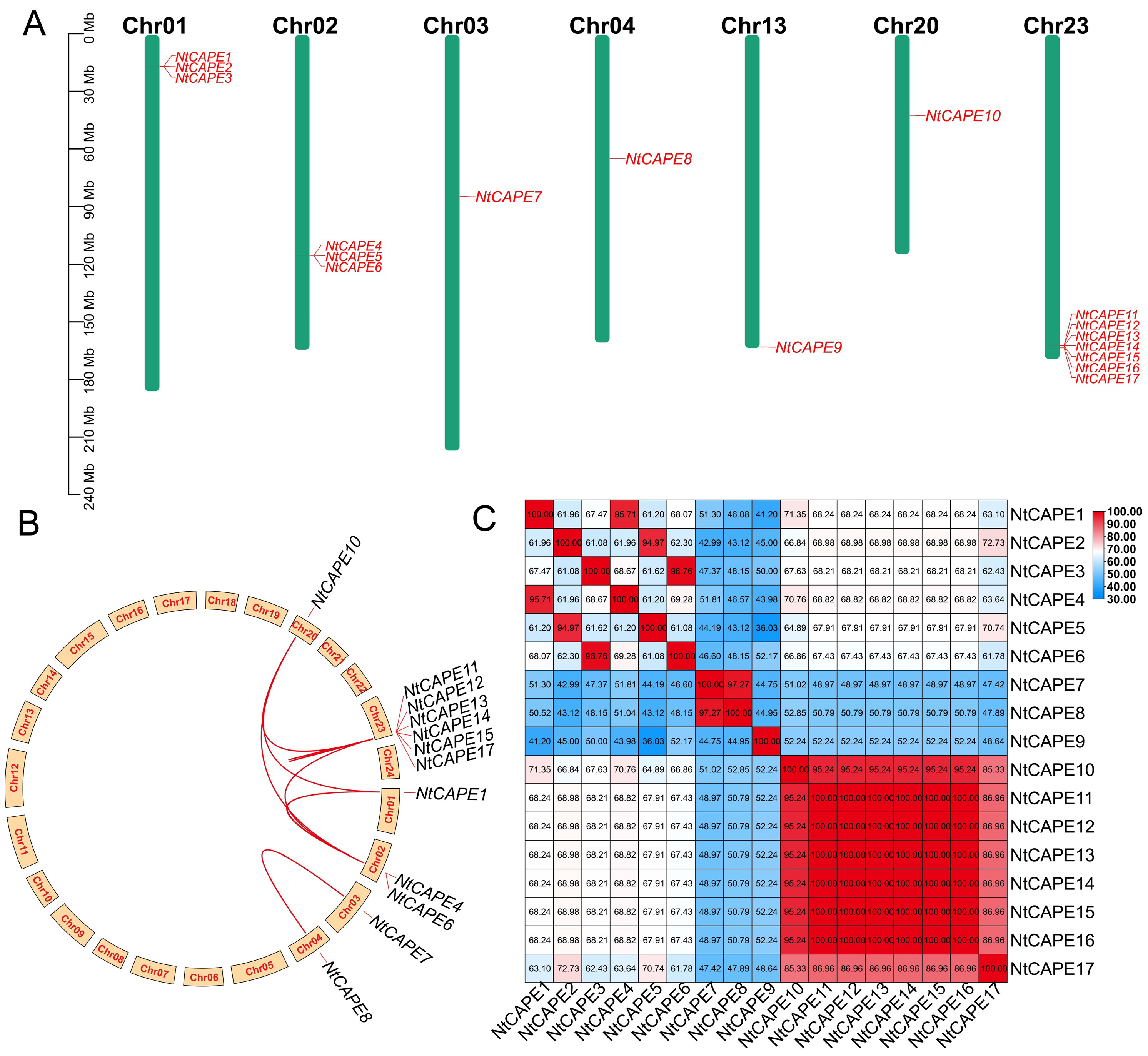
2.3. Chromosomal Distribution, Synteny Analysis, and Pairwise Sequence Similarity of NtCAPE Genes
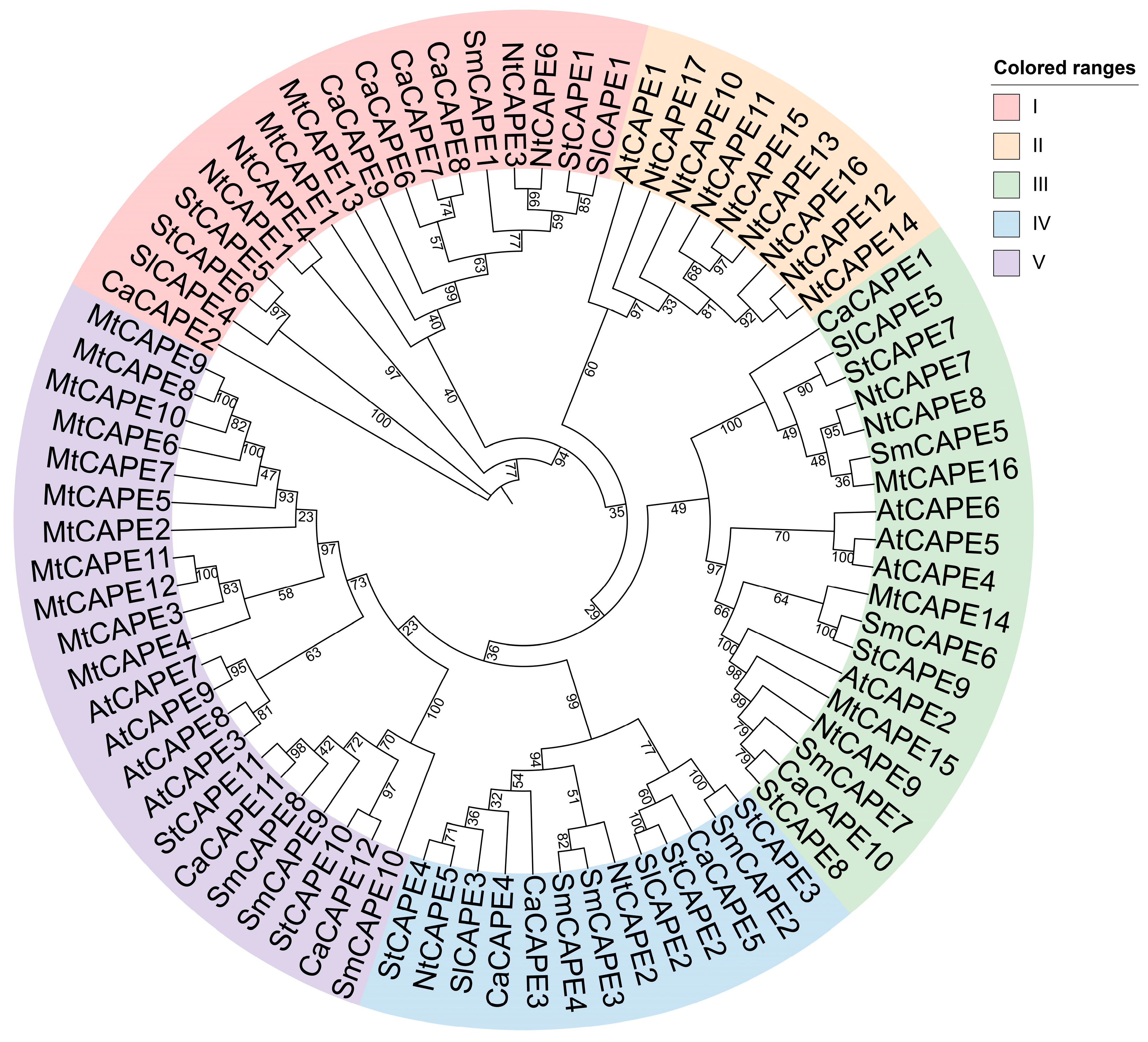
2.4. Phylogenetic Analysis of CAPE-Producing PR1 Proteins Across Different Plant Species
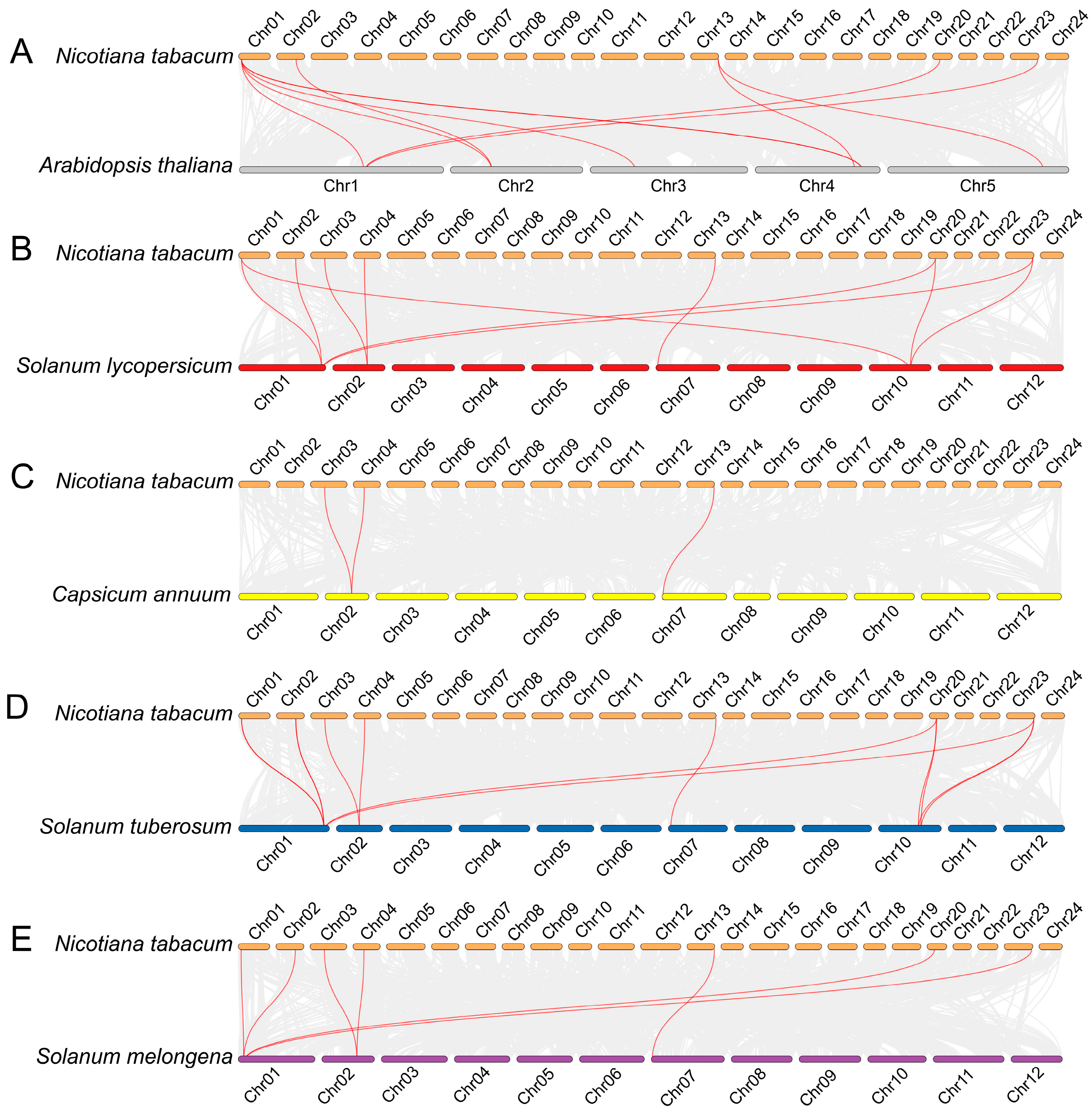
2.5. Comparative Synteny Analysis of NtCAPE Genes Across Plant Species
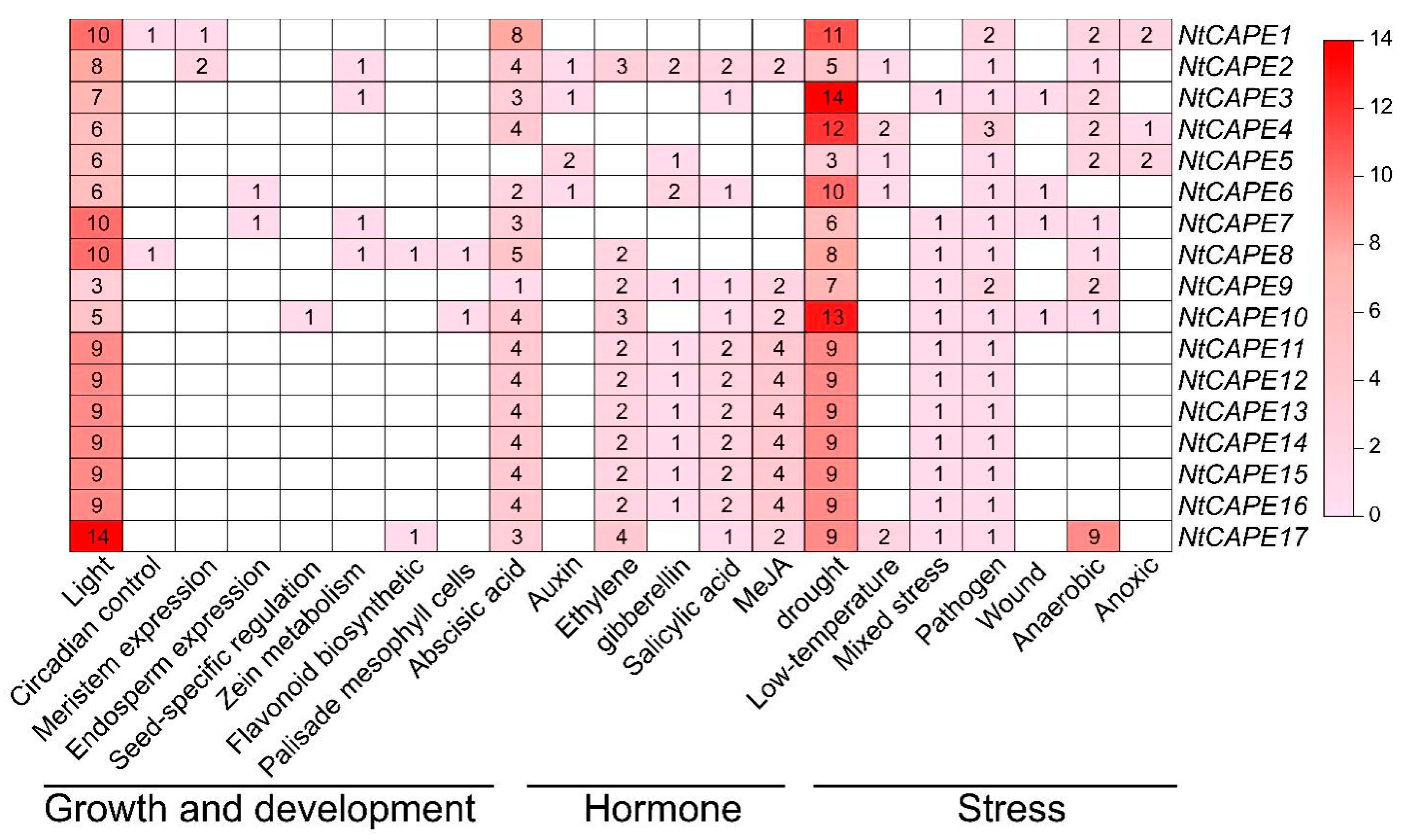
2.6. Cis-Acting Regulatory Elements in NtCAPE Gene Promoters
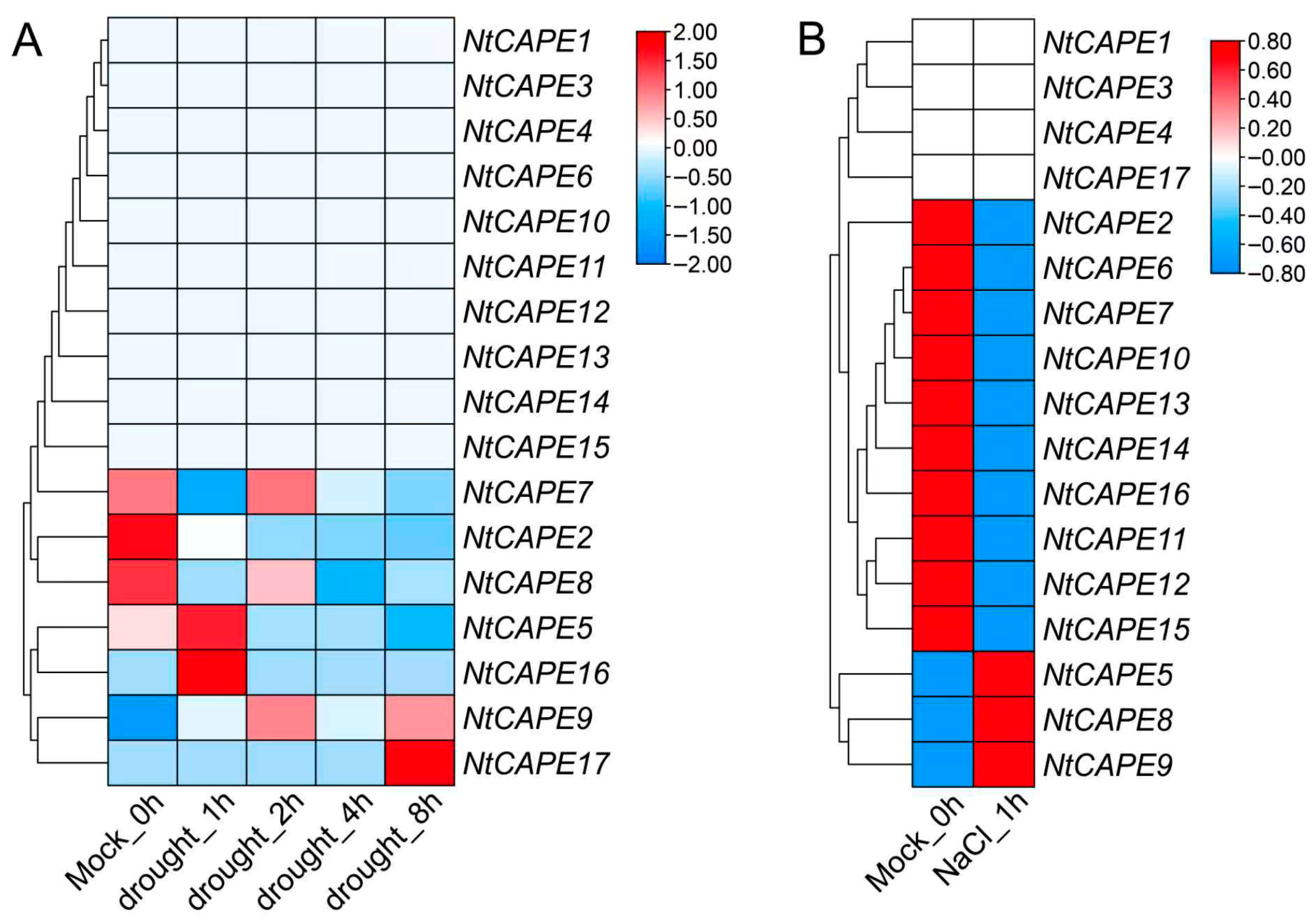
2.7. Descriptive Expression Profiling of NtCAPE Genes Under Water-Deficit Stress and Salinity Stress Based on Public RNA-Seq Data
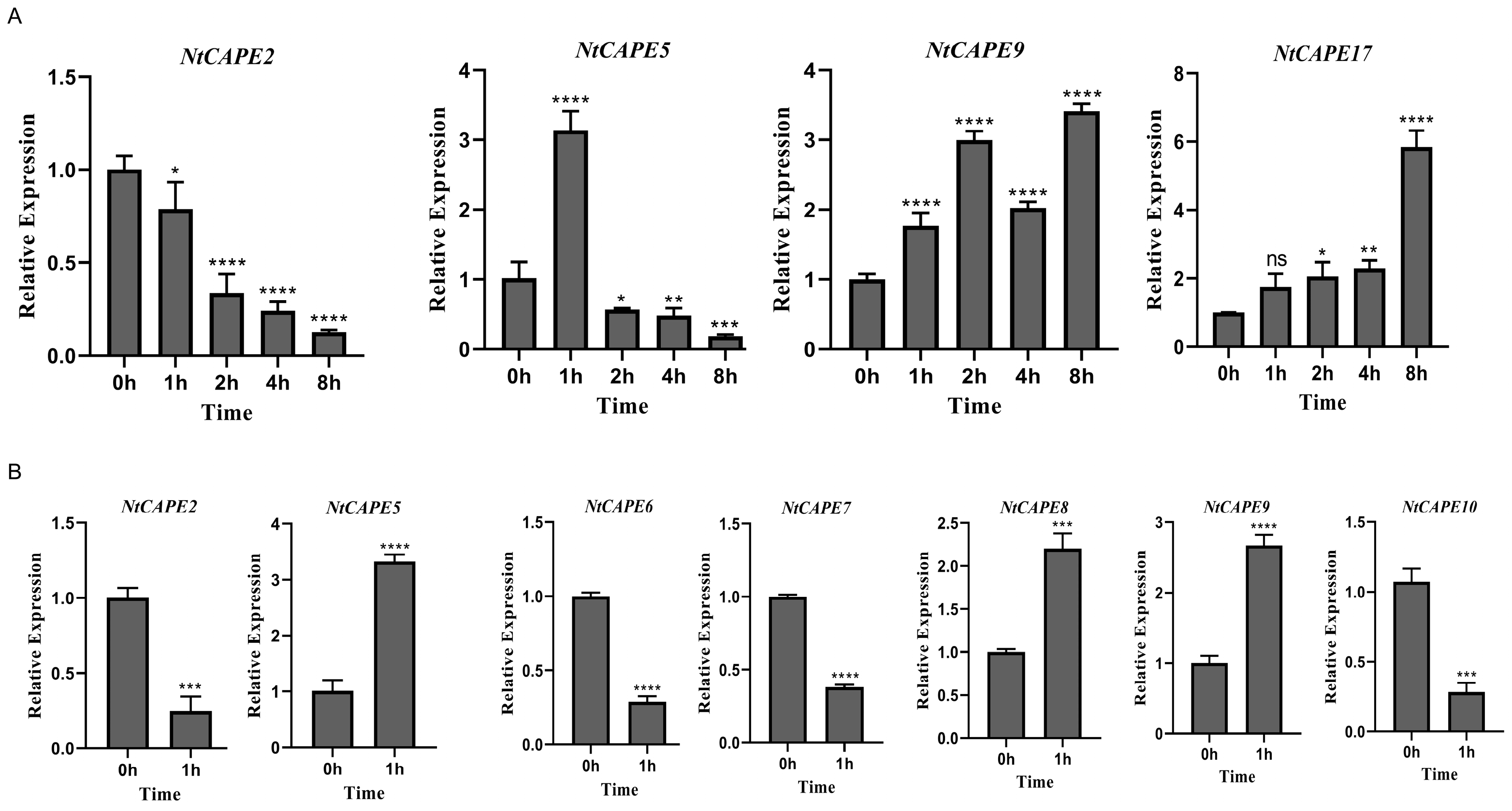
2.8. qRT-PCR Validation of NtCAPE Gene Expression Under Water-Deficit Stress and Salinity Stress
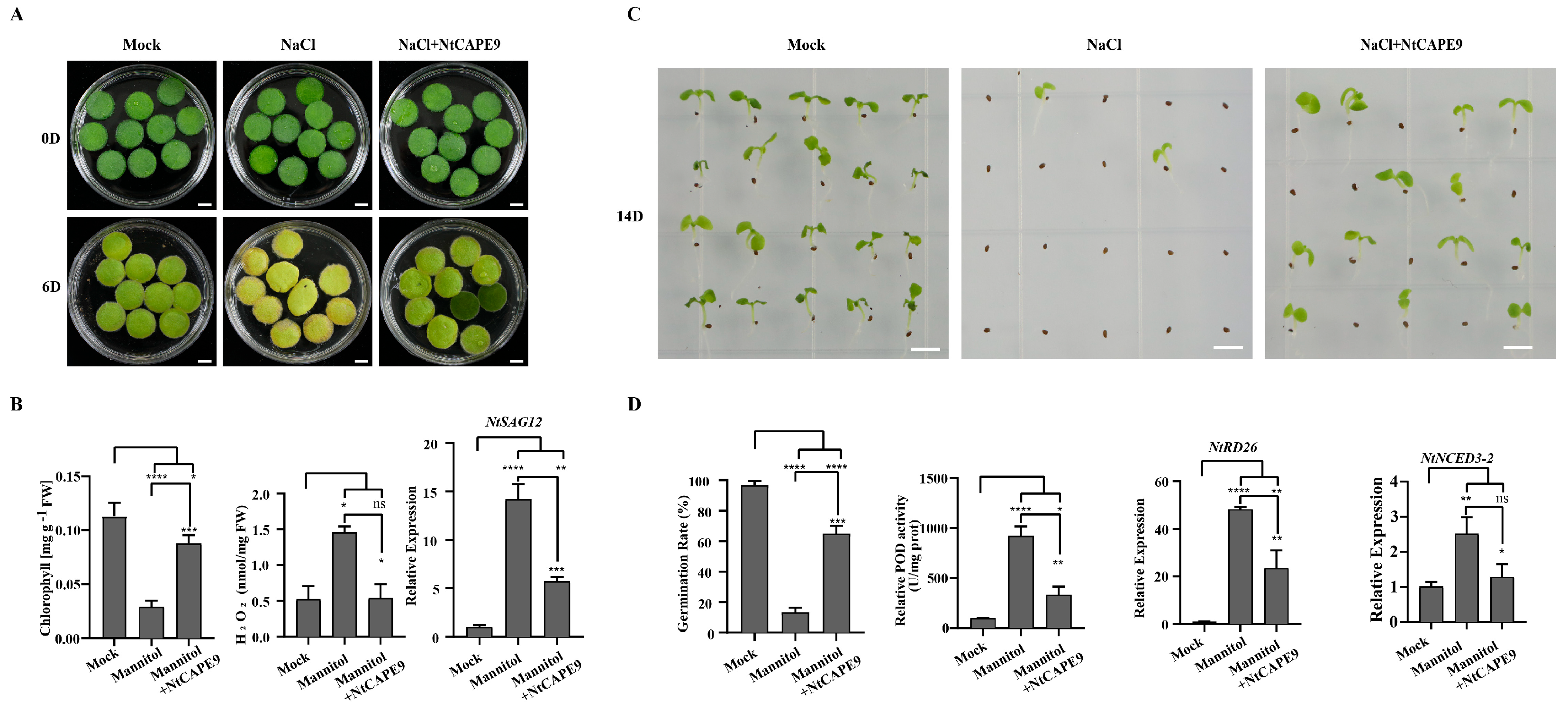
2.9. NtCAPE9 Alleviates Salinity-Stress-Induced Yellowing and Promotes Seed Germination in Tobacco
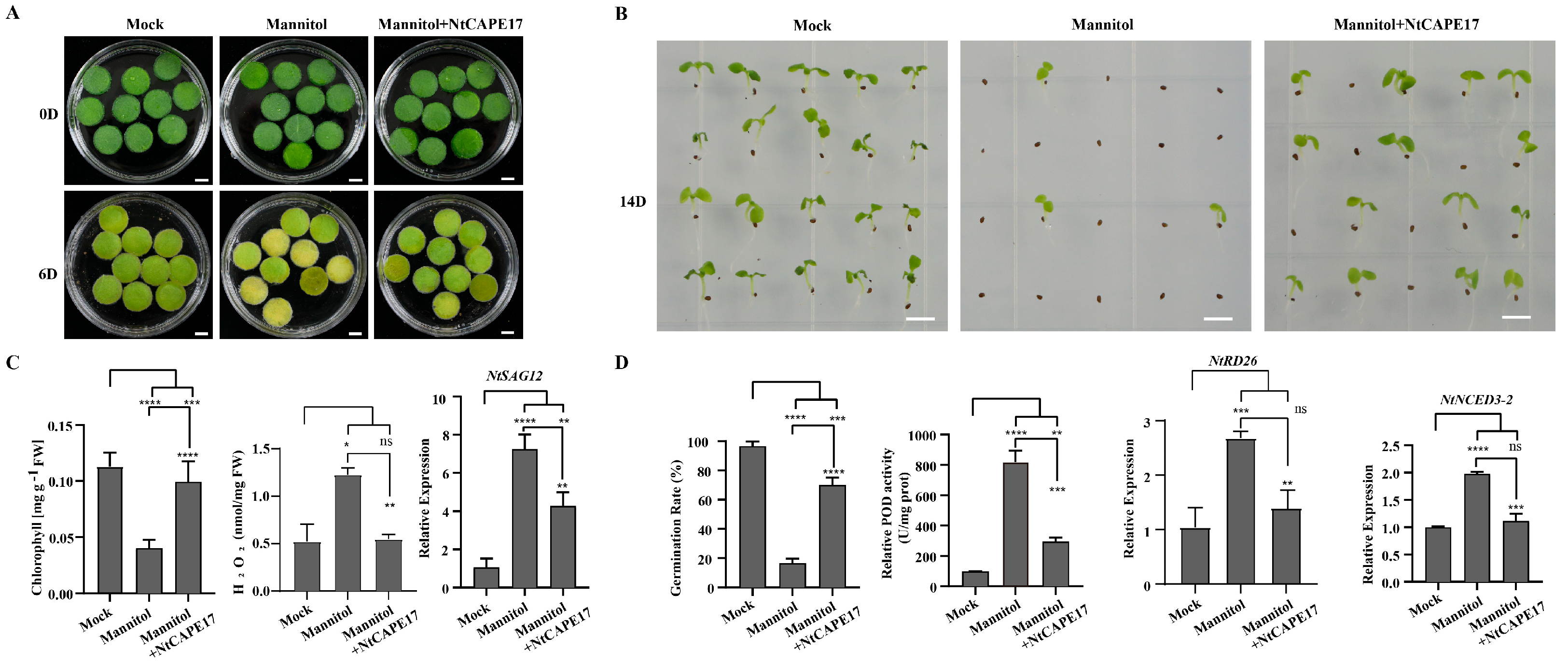
2.10. Role of NtCAPE17 Peptide in the Osmotic Stress Response of Tobacco
3. Discussion
4. Materials and Methods
4.1. Plant Growth and Treatment
4.2. Genome-Wide Identification of NtCAPE Genes
4.3. Physicochemical Properties, Phylogenetic Relationships, Gene Structure, and Conserved Motifs Analysis
4.4. Chromosomal Locations and Gene Duplications Analysis
4.5. Prediction and Classification of Cis-Regulatory Elements
4.6. Expression Analysis of NtCAPE Genes Under Abiotic Stress
4.7. Validation of RNA-Seq Data by qRT-PCR Analysis
4.8. Functional Characterization of NtCAPE Peptides Under Salinity and Osmotic Stress Conditions
5. Conclusions
Supplementary Materials
Author Contributions
Funding
Data Availability Statement
Conflicts of Interest
References
- Tolosa, L.N.; Zhang, Z. The role of major transcription factors in Solanaceous food crops under different stress conditions: Current and future perspectives. Plants 2020, 9, 56. [Google Scholar] [CrossRef] [PubMed]
- Thilakarathne, A.S.; Liu, F.; Zou, Z. Plant Signaling Hormones and Transcription Factors: Key Regulators of Plant Responses to Growth, Development, and Stress. Plants 2025, 14, 1070. [Google Scholar] [CrossRef]
- Gao, Y.; Ma, X.; Zhang, Z.; Wang, Y. Adversity Response: Multiple Defense Mechanisms Mediated by Plant Hormones in Regulating ROS Networks. J. Plant Growth Regul. 2026, 45, 1724–1735. [Google Scholar] [CrossRef]
- Kapoor, B.; Kumar, P.; Sharma, R.; Kumar, A. Regulatory interactions in phytohormone stress signaling implying plants resistance and resilience mechanisms. J. Plant Biochem. Biotechnol. 2021, 30, 813–828. [Google Scholar] [CrossRef]
- Javed, T.; Wang, W.; Yang, B.; Shen, L.; Sun, T.; Gao, S.J.; Zhang, S. Pathogenesis related-1 proteins in plant defense: Regulation and functional diversity. Crit. Rev. Biotechnol. 2025, 45, 305–313. [Google Scholar] [CrossRef]
- Han, Z.; Xiong, D.; Schneiter, R.; Tian, C. The function of plant PR1 and other members of the CAP protein superfamily in plant–pathogen interactions. Mol. Plant Pathol. 2023, 24, 651–668. [Google Scholar] [CrossRef]
- Jiang, H.; Xia, Y.; Zhang, S.; Zhang, Z.; Feng, H.; Zhang, Q.; Chen, X.; Xiao, J.; Yang, S.; Zeng, M. The CAP superfamily protein PsCAP1 secreted by Phytophthora triggers immune responses in Nicotiana benthamiana through a leucine-rich repeat receptor-like protein. New Phytol. 2023, 240, 784–801. [Google Scholar] [CrossRef]
- Zhang, W.; Planas-Marquès, M.; Liang, M.; Zhang, Q.; Vermeulen, A.; Kaschani, F.; Kaiser, M.; Takken, F.L.; Coll, N.S.; Valls, M. The CAPE1 peptide confers resistance against bacterial wilt in tomato. J. Exp. Bot. 2025, 76, 4340–4358. [Google Scholar] [CrossRef]
- Chen, Y.L.; Lin, F.W.; Cheng, K.T.; Chang, C.H.; Hung, S.C.; Efferth, T.; Chen, Y.R. XCP1 cleaves Pathogenesis-related protein 1 into CAPE9 for systemic immunity in Arabidopsis. Nat. Commun. 2023, 14, 4697. [Google Scholar] [CrossRef]
- Liu, Y.; Jackson, E.; Liu, X.; Huang, X.; van der Hoorn, R.A.; Zhang, Y.; Li, X. Proteolysis in plant immunity. Plant Cell 2024, 36, 3099–3115. [Google Scholar] [CrossRef]
- Li, J.; Wang, C.; Yang, L.; Qiu, F.; Li, Y.; Zheng, Y.; Liu, S.; Song, L.; Liang, W. Enhancing tomato resistance by exploring early defense events against Fusarium wilt disease. Phytopathol. Res. 2023, 5, 24. [Google Scholar] [CrossRef]
- Li, J.J.; Luo, C.; Yang, X.Z.; Peng, L.H.; Lu, T.T.; Yang, J.H.; Zhang, X.J.; Xie, Y.Q.; Yang, Z.Y.; Xu, F. Genome-wide identification of the mango pathogenesis-related 1 (PR1) gene family and functional analysis of MiPR1A genes in transgenic Arabidopsis. Sci. Hortic. 2023, 321, 112254. [Google Scholar] [CrossRef]
- Ma, L.; Meng, Q.; Shi, F.; Liu, J.; Li, Y.; Liu, C.; Liu, X.; Su, B.; He, C.; Ji, C. Genome-wide analysis of maize PR-1 gene family and expression profiles induced by plant hormones and fungal phytopathogens. Am. J. Transl. Res. 2022, 14, 8315. [Google Scholar]
- Irigoyen, M.L.; Garceau, D.C.; Bohorquez-Chaux, A. Genome-wide analyses of cassava Pathogenesis-related (PR) gene families reveal core. BMC Genom. 2020, 21, 1. [Google Scholar] [CrossRef]
- Wufuerjiang, A.; Sai, J.; Wen, Y.; Wang, L.; Chen, C.; Li, X.; Tian, J. Genome-wide identification of the PR-1 gene family in Pyrus betulaefolia bunge and its expression analysis under fire blight stress. Int. J. Mol. Sci. 2025, 26, 5074. [Google Scholar] [CrossRef] [PubMed]
- Zribi, I.; Ghorbel, M.; Haddaji, N.; Besbes, M.; Brini, F. Genome-wide identification and expression profiling of pathogenesis-related protein 1 (PR-1) genes in durum wheat (Triticum durum desf.). Plants 2023, 12, 1998. [Google Scholar] [CrossRef]
- Sherazi, S.; Shafiq, M.; Ahmed, H.; Ahmad, J.; Hammad, M.; Sanam, A.; Rehan, M.; Tufail, M.; Hayyat, Q. Genome-wide analysis of pathogenesis-related protein 1 (pr1) genes reveals structural and expression diversity in Pisum sativum. Bull. Biol. All. Sci. Res. 2026, 2026, 117. [Google Scholar] [CrossRef]
- Kumari, D.; Prasad, B.D.; Dwivedi, P.; Sahni, S.; Kumar, M.; Alamri, S.; Adil, M.F.; Alakeel, K.A. Comprehensive analysis of transcription factor binding sites and expression profiling of rice pathogenesis related genes (OsPR1). Front. Plant Sci. 2024, 15, 1463147. [Google Scholar] [CrossRef]
- Almeida-Silva, F.T.M. Venancio Pathogenesis-related protein 1 (PR-1) genes in soybean: Genome-wide identification, structural analysis and expression profiling under multiple biotic and abiotic stresses. Gene 2022, 809, 146013. [Google Scholar] [CrossRef] [PubMed]
- Akbudak, M.A.; Yildiz, S.; Filiz, E. Pathogenesis related protein-1 (PR-1) genes in tomato (Solanum lycopersicum L.): Bioinformatics analyses and expression profiles in response to water-deficit stress. Genomics 2020, 112, 4089–4099. [Google Scholar] [CrossRef]
- Li, Z.T.; Dhekney, S.A.; Gray, D.J. PR-1 gene family of grapevine: A uniquely duplicated PR-1 gene from a Vitis interspecific hybrid confers high level resistance to bacterial disease in transgenic tobacco. Plant Cell Rep. 2011, 30, 1–11. [Google Scholar] [CrossRef]
- Zhang, Q.; Guo, N.; Zhang, Y.; Yu, Y.; Liu, S. Genome-wide characterization and expression analysis of pathogenesis-related 1 (PR-1) gene family in tea plant (Camellia sinensis (L.) O. Kuntze) in response to blister-blight disease stress. Int. J. Mol. Sci. 2022, 23, 1292. [Google Scholar] [CrossRef]
- Neves, J.; Sampaio, M.; Séneca, A.; Pereira, S.; Pissarra, J.; Pereira, C. Abiotic stress triggers the expression of genes involved in protein storage vacuole and exocyst-mediated routes. Int. J. Mol. Sci. 2021, 22, 10644. [Google Scholar] [CrossRef]
- Breen, S.; Williams, S.J.; Outram, M.; Kobe, B.; Solomon, P.S. Emerging insights into the functions of pathogenesis-related protein 1. Trends Plant Sci. 2017, 22, 871–879. [Google Scholar] [CrossRef]
- Chen, Y.L.; Lee, C.Y.; Cheng, K.T.; Chang, W.H.; Huang, R.N.; Nam, H.G.; Chen, Y.R. Quantitative peptidomics study reveals that a wound-induced peptide from PR-1 regulates immune signaling in tomato. Plant Cell 2014, 26, 4135–4148. [Google Scholar] [CrossRef]
- Barrett, L.W.; Fletcher, S.; Wilton, S.D. Regulation of eukaryotic gene expression by the untranslated gene regions and other non-coding elements. Cell. Mol. Life Sci. 2012, 69, 3613–3634. [Google Scholar] [CrossRef] [PubMed]
- Flagel, L.E.; Wendel, J.F. Gene duplication and evolutionary novelty in plants. New Phytol. 2009, 183, 557–564. [Google Scholar] [CrossRef]
- Panchy, N.; Lehti-Shiu, M.; Shiu, S.H. Evolution of gene duplication in plants. Plant Physiol. 2016, 171, 2294–2316. [Google Scholar] [CrossRef] [PubMed]
- Tornero, P.; Gadea, J.; Conejero, V.; Vera, P. Two PR-1 genes from tomato are differentially regulated and reveal a novel mode of expression for a pathogenesis-related gene during the hypersensitive response and development. Mol. Plant-Microbe Interact. 1997, 10, 624–634. [Google Scholar] [CrossRef]
- Ali, S.; Tyagi, A.; Bae, H. ROS interplay between plant growth and stress biology: Challenges and future perspectives. Plant Physiol. Biochem. 2023, 203, 108032. [Google Scholar] [CrossRef] [PubMed]
- Ali, M.; Kaderbek, T.; Khan, M.A.; Skalicky, M.; Brestic, M.; Elsabagh, M.; El Sabagh, A. Biosynthesis and multifaceted roles of reactive species in plant defense mechanisms during environmental cues. Plant Stress 2025, 18, 101102. [Google Scholar] [CrossRef]
- Chien, P.-S.; Nam, H.G.; Chen, Y.-R. A salinity-regulated peptide derived from the CAP superfamily protein negatively regulates salinity-stress tolerance in Arabidopsis. J. Exp. Bot. 2015, 66, 5301–5313. [Google Scholar] [CrossRef]
- Datta, T.; Kumar, R.S.; Sinha, H.; Trivedi, P.K. Small but mighty: Peptides regulating abiotic stress responses in plants. Plant Cell Environ. 2024, 47, 1207–1223. [Google Scholar] [CrossRef]
- Ji, C.; Li, H.; Zhang, Z.; Peng, S.; Liu, J.; Zhou, Y.; Yang, Y.; Han, H. The power of small signaling peptides in crop and horticultural plants. Crop J. 2025, 13, 656–667. [Google Scholar] [CrossRef]
- Qiu, L.; Lu, R.; Zhang, Z.; Nie, J.; Wang, Y.; Liu, J.; Han, H. Small signaling peptides define leaf longevity. Front. Plant Sci. 2025, 16, 1616650. [Google Scholar] [CrossRef]
- Ali, M.; Wang, Z.; Guo, Q.; Wang, Y.; Cai, Y.; Du, J.; Pi, E.; Ding, P.; Shen, J. Mapping plant cell-type-specific responses to environmental stresses. Trends Plant Sci. 2026, in press. [Google Scholar] [CrossRef]
- Coggill, P.; Finn, R.D.; Bateman, A. Identifying protein domains with the Pfam database. Curr. Protoc. Bioinform. 2008, 23, 2.5.1–2.5.17. [Google Scholar] [CrossRef] [PubMed]
- Wang, J.; Zhang, Q.; Tung, J.; Zhang, X.; Liu, D.; Deng, Y.; Tian, Z.; Chen, H.; Wang, T.; Yin, W. High-quality assembled and annotated genomes of Nicotiana tabacum and Nicotiana benthamiana reveal chromosome evolution and changes in defense arsenals. Mol. Plant 2024, 17, 423–437. [Google Scholar] [CrossRef] [PubMed]
- Letunic, I.; Goodstadt, L.; Dickens, N.J.; Doerks, T.; Schultz, J.; Mott, R.; Ciccarelli, F.; Copley, R.R.; Ponting, C.P.; Bork, P. Recent improvements to the SMART domain-based sequence annotation resource. Nucleic Acids Res. 2002, 30, 242–244. [Google Scholar] [CrossRef]
- Gasteiger, E.; Hoogland, C.; Gattiker, A.; Duvaud, S.E.; Wilkins, M.R.; Appel, R.D.; Bairoch, A. Protein identification and analysis tools on the ExPASy server. In The Proteomics Protocols Handbook; Humana Press, Springer: Totowa, NJ, USA, 2005; pp. 571–607. [Google Scholar]
- Yu, C.S.; Chen, Y.C.; Lu, C.H.; Hwang, J.K. Prediction of protein subcellular localization. Proteins Struct. Funct. Bioinform. 2006, 64, 643–651. [Google Scholar] [CrossRef] [PubMed]
- Tamura, K.; Stecher, G.; Kumar, S. MEGA11: Molecular evolutionary genetics analysis version 11. Mol. Biol. Evol. 2021, 38, 3022–3027. [Google Scholar] [CrossRef] [PubMed]
- Hu, B.; Jin, J.; Guo, A.Y.; Zhang, H.; Luo, J.; Gao, G. GSDS 2.0: An upgraded gene feature visualization server. Bioinformatics 2015, 31, 1296–1297. [Google Scholar] [CrossRef]
- Bailey, T.L.; Johnson, J.; Grant, C.E.; Noble, W.S. The MEME suite. Nucleic Acids Res. 2015, 43, W39–W49. [Google Scholar] [CrossRef]
- Chen, C.; Chen, H.; Zhang, Y.; Thomas, H.R.; Frank, M.H.; He, Y.; Xia, R. TBtools: An integrative toolkit developed for interactive analyses of big biological data. Mol. Plant 2020, 13, 1194–1202. [Google Scholar] [CrossRef]
- Lescot, M.; Dehais, P.; Thijs, G.; Marchal, K.; Moreau, Y.; Van de Peer, Y.; Rouze, P.; Rombauts, S. PlantCARE, a database of plant cis-acting regulatory elements and a portal to tools for in silico analysis of promoter sequences. Nucleic Acids Res. 2002, 30, 325–327. [Google Scholar] [CrossRef]
- Rombauts, S.; Dehais, P.; Van Montagu, M.; Rouze, P. PlantCARE, a plant cis-acting regulatory element database. Nucleic Acids Res. 1999, 27, 295–296. [Google Scholar] [CrossRef] [PubMed]
- Schmittgen, T.D.; Livak, K.J. Analyzing real-time PCR data by the comparative CT method. Nat. Protoc. 2008, 3, 1101–1108. [Google Scholar] [CrossRef]
- Guo, Y.; Gan, S. AtNAP, a NAC family transcription factor, has an important role in leaf senescence. Plant J. 2006, 46, 601–612. [Google Scholar] [CrossRef] [PubMed]
- Wen, L.; Liu, T.; Deng, Z.; Zhang, Z.; Wang, Q.; Wang, W.; Li, W.; Guo, Y. Characterization of NAC transcription factor NtNAC028 as a regulator of leaf senescence and stress responses. Front. Plant Sci. 2022, 13, 941026. [Google Scholar] [CrossRef] [PubMed]



| Gene Name | Sequence ID | C-Terminal CAPE Sequences | Number of AA | Molecular Weight | Theoretical pI | Instability Index | Aliphatic Index | Grand Average of Hydropathicity | Predicted Subcellular Localization |
|---|---|---|---|---|---|---|---|---|---|
| NtCAPE1 | Nta01g05380.1 | PPGNVVGQRPY | 163 | 17,840.89 | 6.86 | 16.66 | 70.67 | −0.116 | Vacuole. |
| NtCAPE2 | Nta01g05390.1 | PPGNWRGQRPY | 179 | 19,963.29 | 8.48 | 44.52 | 57.32 | −0.488 | Vacuole. |
| NtCAPE3 | Nta01g05410.1 | PPGNYIGERPY | 161 | 17,887.38 | 6.5 | 23.31 | 77.52 | −0.177 | Vacuole. |
| NtCAPE4 | Nta02g21320.1 | PPGNYVGQRPY | 163 | 17,973.97 | 7.58 | 22.18 | 68.9 | −0.213 | Vacuole. |
| NtCAPE5 | Nta02g21330.1 | PPGNWRGQRPY | 179 | 20,112.45 | 7.62 | 37.11 | 60.56 | −0.516 | Vacuole. |
| NtCAPE6 | Nta02g21350.1 | PPGNYIGERPY | 161 | 17,906.36 | 6.5 | 24.24 | 73.91 | −0.216 | Vacuole. |
| NtCAPE7 | Nta03g09700.1 | PPGNVIGEKPY | 182 | 19,717.54 | 8.74 | 35.12 | 71.37 | −0.172 | Vacuole. |
| NtCAPE8 | Nta04g09480.1 | PPGNVIGEKPY | 181 | 19,665.51 | 8.92 | 37.33 | 70.72 | −0.143 | Vacuole. |
| NtCAPE9 | Nta13g23100.1 | PPGNYIGEKPY | 201 | 23,316.64 | 7.55 | 38.08 | 72.79 | −0.327 | Vacuole. |
| NtCAPE10 | Nta20g10300.1 | PPGNVIGQSPY | 168 | 18,499.51 | 5.26 | 29.31 | 70.77 | −0.223 | Vacuole. |
| NtCAPE11 | Nta23g22890.1 | PPGNYRGESPY | 168 | 18,587.53 | 4.83 | 24.34 | 71.37 | −0.303 | Vacuole. |
| NtCAPE12 | Nta23g22900.1 | PPGNYRGESPY | 168 | 18,573.5 | 4.83 | 26.79 | 71.37 | −0.304 | Vacuole. |
| NtCAPE13 | Nta23g22910.1 | PPGNYRGESPY | 168 | 18,586.55 | 4.96 | 25.24 | 71.37 | −0.303 | Vacuole. |
| NtCAPE14 | Nta23g22920.1 | PPGNYRGESPY | 168 | 18,573.5 | 4.83 | 26.79 | 71.37 | −0.304 | Vacuole. |
| NtCAPE15 | Nta23g22930.1 | PPGNYRGESPY | 168 | 18,586.55 | 4.96 | 25.24 | 71.37 | −0.303 | Vacuole. |
| NtCAPE16 | Nta23g22940.1 | PPGNYRGESPY | 168 | 18,573.5 | 4.83 | 26.79 | 71.37 | −0.304 | Vacuole. |
| NtCAPE17 | Nta23g23130.1 | PPGNFVGQSPY | 184 | 20,411.85 | 5.34 | 38.35 | 72.07 | −0.16 | Vacuole. |
Disclaimer/Publisher’s Note: The statements, opinions and data contained in all publications are solely those of the individual author(s) and contributor(s) and not of MDPI and/or the editor(s). MDPI and/or the editor(s) disclaim responsibility for any injury to people or property resulting from any ideas, methods, instructions or products referred to in the content. |
© 2026 by the authors. Licensee MDPI, Basel, Switzerland. This article is an open access article distributed under the terms and conditions of the Creative Commons Attribution (CC BY) license.
Share and Cite
Wu, Y.; Zhang, Z.; Hunpatin, O.S.; Liu, Z.; Naznin, S.; Liu, T.; Wang, J.; Cao, S.; Zhang, Z.; Guo, Y.; et al. Genome-Wide Characterization of CAPE-Producing PR1 Genes Reveals Regulator-Dependent Expression and Abiotic Stress-Associated Functions in Nicotiana tabacum. Plants 2026, 15, 1801. https://doi.org/10.3390/plants15121801
Wu Y, Zhang Z, Hunpatin OS, Liu Z, Naznin S, Liu T, Wang J, Cao S, Zhang Z, Guo Y, et al. Genome-Wide Characterization of CAPE-Producing PR1 Genes Reveals Regulator-Dependent Expression and Abiotic Stress-Associated Functions in Nicotiana tabacum. Plants. 2026; 15(12):1801. https://doi.org/10.3390/plants15121801
Chicago/Turabian StyleWu, Yuanxin, Zhongqi Zhang, Oluwaseyi Setonji Hunpatin, Zhongyang Liu, Shamima Naznin, Tao Liu, Jie Wang, Songxiao Cao, Zenglin Zhang, Yongfeng Guo, and et al. 2026. "Genome-Wide Characterization of CAPE-Producing PR1 Genes Reveals Regulator-Dependent Expression and Abiotic Stress-Associated Functions in Nicotiana tabacum" Plants 15, no. 12: 1801. https://doi.org/10.3390/plants15121801
APA StyleWu, Y., Zhang, Z., Hunpatin, O. S., Liu, Z., Naznin, S., Liu, T., Wang, J., Cao, S., Zhang, Z., Guo, Y., Akher, S. A., & Zhang, Z. (2026). Genome-Wide Characterization of CAPE-Producing PR1 Genes Reveals Regulator-Dependent Expression and Abiotic Stress-Associated Functions in Nicotiana tabacum. Plants, 15(12), 1801. https://doi.org/10.3390/plants15121801