Article

Botrytis elliptica Infection Induces LhSorPALs Expression in Lilium: Overexpression of LhSorPAL1 and LhSorPAL2 Enhances Disease Resistance via Phenylpropane Metabolite Accumulation


1
Chongqing Engineering Research Center for Floriculture, Key Laboratory of Agricultural Biosafety and Green Production of Upper Yangtze River (Ministry of Education), College of Horticulture and Landscape Architecture, Southwest University, Chongqing 400715, China
2
Flower Research Institute, Yunnan Academy of Agricultural Sciences, Kunming 650205, China
*
Authors to whom correspondence should be addressed.
Plants 2026, 15(12), 1797; https://doi.org/10.3390/plants15121797
Submission received: 8 May 2026 / Revised: 2 June 2026 / Accepted: 9 June 2026 / Published: 11 June 2026

Abstract

Phenylalanine ammonia-lyase (PAL) is the rate-limiting enzyme in the phenylpropane metabolic pathway, which is crucial for plant disease resistance. However, the functional roles of specific PAL members in lily defense against gray mold (Botrytis elliptica) remain unclear. Using the resistant lily cultivar ‘Sorbonne’, metabolomics analysis revealed that phenylpropane metabolites were significantly induced upon pathogen infection. Combined second- and third-generation transcriptome sequencing identified eight PAL family members. Among them, LhSorPAL1 and LhSorPAL2 were strongly induced by B. elliptica and were selected for further analysis. Both recombinant proteins exhibited PAL enzymatic activity catalyzing cinnamic acid production from L-phenylalanine. Overexpression of LhSorPAL1 or LhSorPAL2 in lily via Agrobacterium-mediated transformation had no obvious effect on plant growth but significantly increased the accumulation of lignin, flavonoids, and total phenols upon pathogen challenge, leading to enhanced resistance to gray mold. Conversely, antisense expression of LhSorPAL1 or LhSorPAL2 reduced the accumulation of these metabolites. Promoter analysis revealed that both LhSorPAL1pro and LhSorPAL2pro contain methyl jasmonate (MeJA)-, abscisic acid (ABA)-, and transcription factor-binding cis-elements. Collectively, these results demonstrate that LhSorPAL1 and LhSorPAL2 positively regulate lily resistance to B. elliptica by promoting phenylpropane metabolism, providing candidate genes for molecular breeding.

1. Introduction

Lily (Lilium spp.) is a bulbous perennial herb [1]. Owing to its diverse morphology, vibrant flower colors, and strong fragrance, lily possesses exceptional ornamental value and holds a prominent position in the global floriculture market, ranking among the top five cut flowers worldwide [2]. However, lily production is severely threatened by gray mold caused by B. elliptica, one of the most destructive diseases affecting lilies, leading to substantial economic losses [3]. Therefore, understanding the molecular mechanisms underlying lily resistance to B. elliptica is of great importance for breeding resistant cultivars and reducing reliance on chemical fungicides.
Plants are constantly exposed to various biotic stresses, including pathogen attack, in their natural environment. To counteract these challenges, they have evolved multiple defense strategies [4,5]. The production of secondary metabolites plays a central role in these processes, as many aspects of plant defense against pathogen attack are mediated by these compounds [5,6]. Plant secondary metabolites are considered essential for plant adaptation and defense. These metabolites are synthesized via secondary metabolic pathways, among which the phenylpropanoid pathway is one of the most important. This pathway produces various defense-related compounds, including lignin and flavonoids, thereby enhancing plant disease resistance through physical barrier reinforcement or direct antimicrobial activity [7,8].
Phenylalanine ammonia-lyase (PAL) is a key rate-limiting enzyme in the phenylpropanoid pathway. It is an oligomeric enzyme typically composed of four subunits, with a molecular weight ranging from 300 to 340 kDa [9]. PAL catalyzes the deamination of L-phenylalanine to produce trans-cinnamic acid, the first step of the phenylpropanoid pathway, thereby laying the foundation for subsequent metabolic reactions [10]. The number of PAL genes varies greatly among plant species, and PAL is typically encoded by a multigene family whose members exhibit distinct expression patterns and functional characteristics [11]. For example, Arabidopsis thaliana contains 4 PAL members [12], Camellia sinensis has 7 [13], and cucumber has 15 members [14]. Functional divergence among PAL family members has been widely documented. In Arabidopsis, cold stress significantly upregulates PAL1 and PAL2, whereas PAL3 and PAL4 show no marked response [15]. The AmPAL gene from Astragalus enhances salt, alkali, and drought tolerance in transgenic tobacco [16]. In potato, the StPAL gene may be involved in defense mechanisms against high-temperature and drought stress [17].
Furthermore, PAL is recognized as a key component of plant defense against a wide range of biotic stresses [7]. In tomato infected with root-knot nematodes, SlPAL5, SlPAL8, SlPAL11, and SlPAL12 are significantly upregulated, while SlPAL3, SlPAL4, and SlPAL6 are downregulated [18]. In rice, among the nine OsPAL genes, OsPAL6 and OsPAL8 are specifically expressed in stems and leaf sheaths; overexpression of OsPAL8 enhances resistance of susceptible rice varieties to brown planthopper (BPH), whereas overexpression of OsPAL6 reduces resistance [19]. Enhanced expression of SlPAL2 in tomato increases resistance to bacterial canker [20], while SlPAL3 may be associated with resistance to leaf spot [21]. In wheat, AevPAL1 confers resistance to cereal cyst nematode by influencing the synthesis of salicylic acid (SA) and downstream secondary metabolites [22]. Heterologous expression of ShPAL in tobacco significantly reduces lesion area, indicating that PAL plays a vital role in plant defense [23].
Despite extensive studies on PAL genes in various plant species and their demonstrated roles in plant defense through multiple pathways, research on PAL in Lilium remains limited. Existing studies have largely treated PAL as a biochemical entity, such as an enzyme or a metabolic indicator, rather than investigating it at the gene level. Studies have found that PAL activity shows no significant correlation with disease resistance in lily leaves following B. elliptica infection [24]. In contrast, in ‘Sorbonne’ lily leaves infected with LMoV, PAL activity, as well as total phenolic and flavonoid concentrations, was significantly increased [25]. At the transcriptomic level, a recent multi-omics study identified PAL as a key gene involved in lily defense against cotton aphids (Aphis gossypii), but did not further characterize its function [26]. Specifically, how PAL genes participate in disease resistance by regulating the phenylpropanoid pathway has not yet been clearly elucidated, and the molecular mechanisms of LhSorPALs remain to be investigated.
In our preliminary experiments using the highly resistant lily cultivar ‘Sorbonne’, metabolomic analysis after B. elliptica infection revealed a significant increase in phenylpropanoid metabolites, suggesting their involvement in lily resistance to gray mold.
To further investigate whether PAL genes enhance lily resistance to gray mold and to elucidate their molecular mechanisms and regulatory pathways, we identified eight PAL genes from the lily transcriptome database and characterized their phylogenetic relationships, tissue-specific expression, and response patterns to pathogen infection and phytohormones. LhSorPAL1 and LhSorPAL2, which were significantly induced by B elliptica, were selected for functional studies. We then performed recombinant protein enzyme activity assays, constructed overexpression and antisense expression vectors, and generated transgenic lilies via genetic transformation of embryogenic callus. Functional disease resistance assays were conducted on the transgenic lines, and the promoter activities of LhSorPAL1 and LhSorPAL2 were analyzed. This study aims to characterize the function and mechanism of PAL genes in lily, thereby advancing our understanding of the biosynthesis and regulatory mechanisms of the phenylpropanoid pathway and providing a valuable reference for future research on the roles of secondary metabolites in plant growth, development, and stress responses.

2. Results

2.1. Identification and Phylogenetic Analysis of the PAL Gene Family in Lily

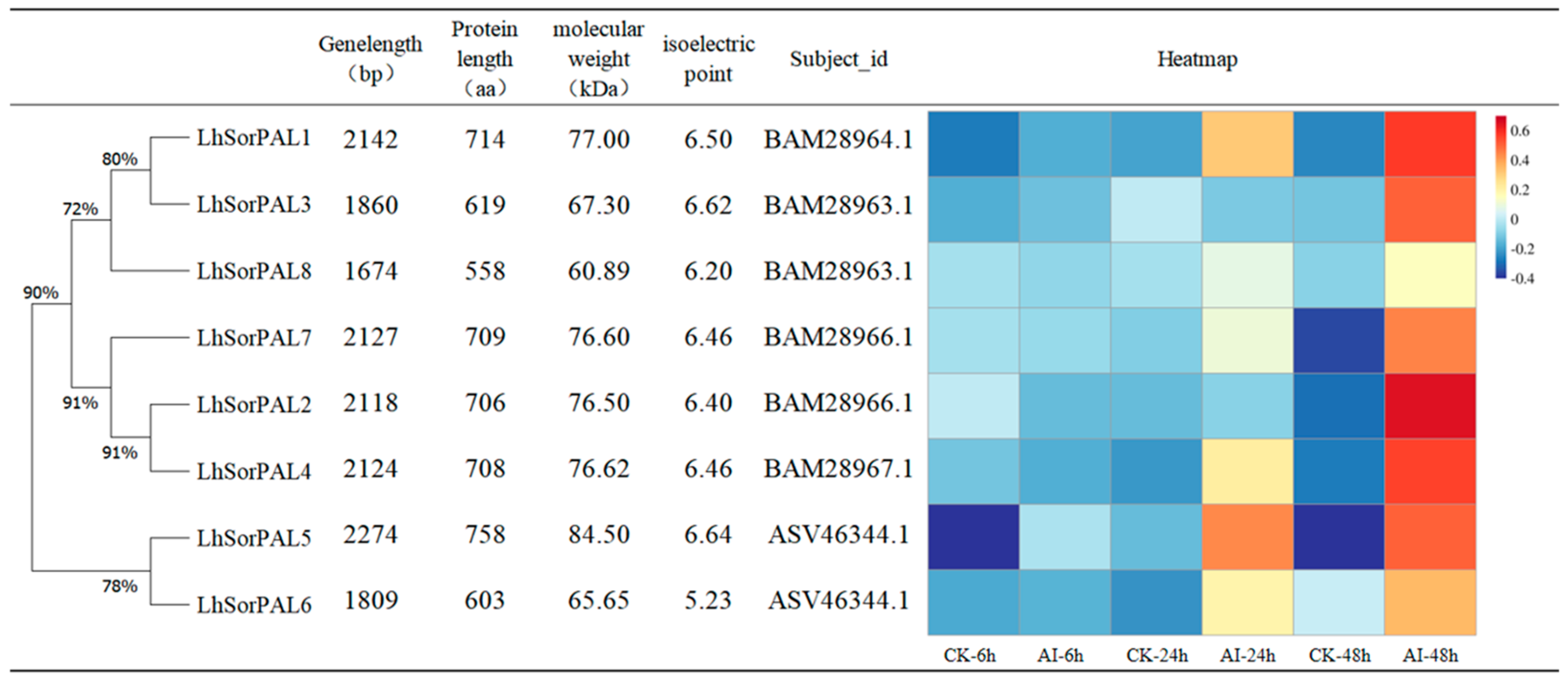
Using second- and third-generation full-length transcriptomic data from ‘Sorbonne’ lily leaves infected by B. elliptica [27,28], we obtained the full-length sequences of eight LhSorPALs genes. Their physicochemical properties, including open reading frame (ORF) length, amino acid sequence length, protein molecular weight, and isoelectric point, were predicted and analyzed. The full-length sequences of the eight LhSorPALs genes ranged from 1674 bp to 2274 bp, with deduced amino acid lengths ranging from 558 to 758, protein molecular weights ranging from 60.89 kDa to 84.5 kDa, and isoelectric points ranging from 5.23 to 6.64. Phylogenetic analysis revealed that the eight LhSorPALs genes were broadly divided into three clades (Figure 1): LhSorPAL1, LhSorPAL3, and LhSorPAL8 formed one cluster; LhSorPAL2, LhSorPAL4, and LhSorPAL7 formed a second cluster; and LhSorPAL5 and LhSorPAL6 formed a separate cluster relatively distant from the others.
To assess the expression levels of the eight PAL genes following B. elliptica inoculation, a heatmap was generated based on fragments per kilobase of transcript per million mapped reads (FPKM) values at 6, 24, and 48 h post-inoculation (hpi), corresponding to the early, middle, and late stages of infection (Figure 1). Most PAL genes exhibited significant expression differences between the inoculated (AI) and the mock-treated control (CK), and these differences increased over time. With the exception of LhSorPAL2 and LhSorPAL3, all other genes were significantly induced as early as 24 hpi. Notably, LhSorPAL1 and LhSorPAL2 showed the highest expression levels among all genes at 48 hpi, with highly significant differences between the inoculated and control samples.

2.2. Expression Profiles of LhSorPAL Genes in Different Tissues and in Response to B. elliptica Infection

2.2.1. Tissue-Specific Expression of LhSorPAL Genes

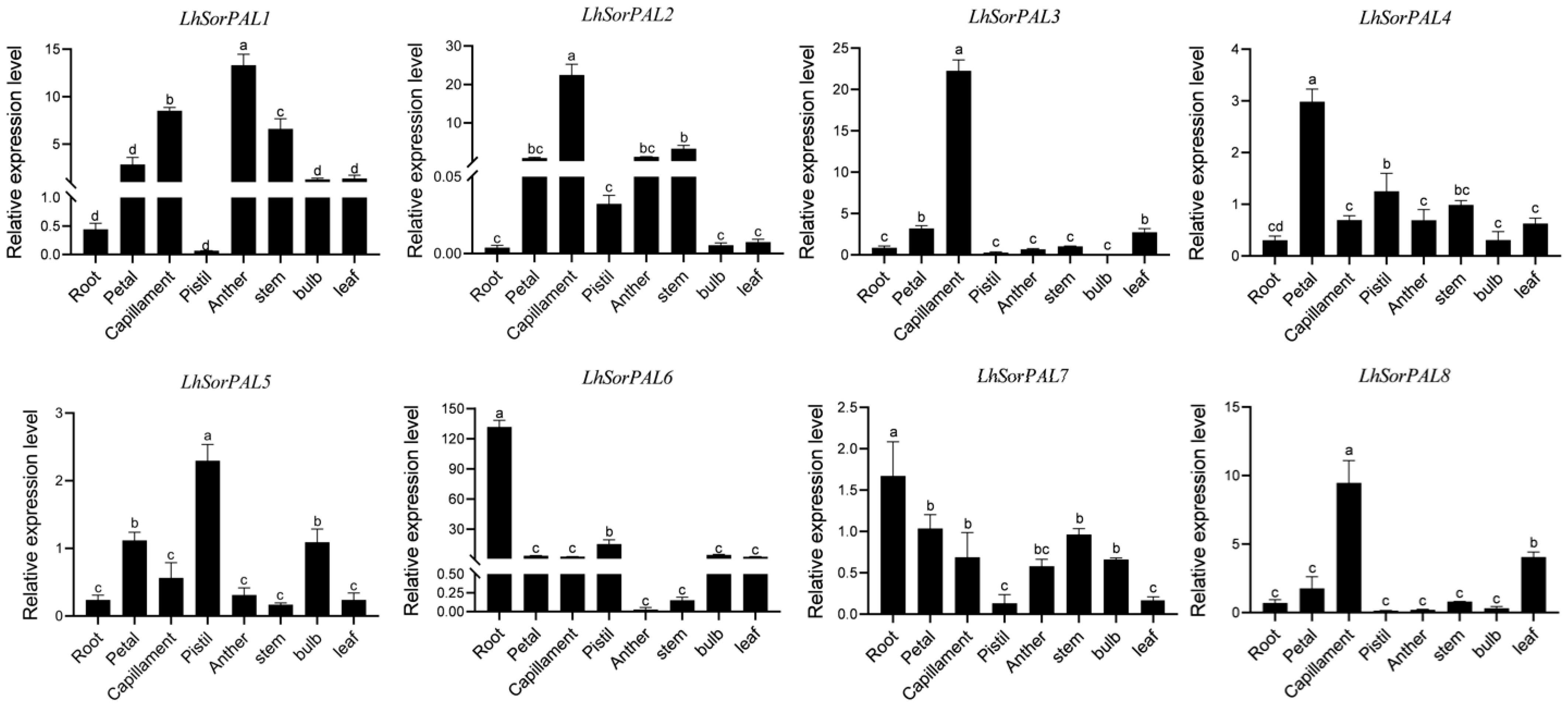
To investigate the potential functions of LhSorPAL genes in lily growth and development, we examined their expression profiles across various tissues using qRT-PCR (Figure 2). The eight LhSorPAL genes exhibited tissue-specific expression patterns: LhSorPAL1 through LhSorPAL5 and LhSorPAL8 showed higher expression levels in floral tissues, whereas LhSorPAL6 and LhSorPAL7 were predominantly expressed in roots. These distinct expression patterns suggest that LhSorPAL genes may play diverse roles in lily growth and development.

2.2.2. Expression of LhSorPAL Genes in Response to B. elliptica Infection

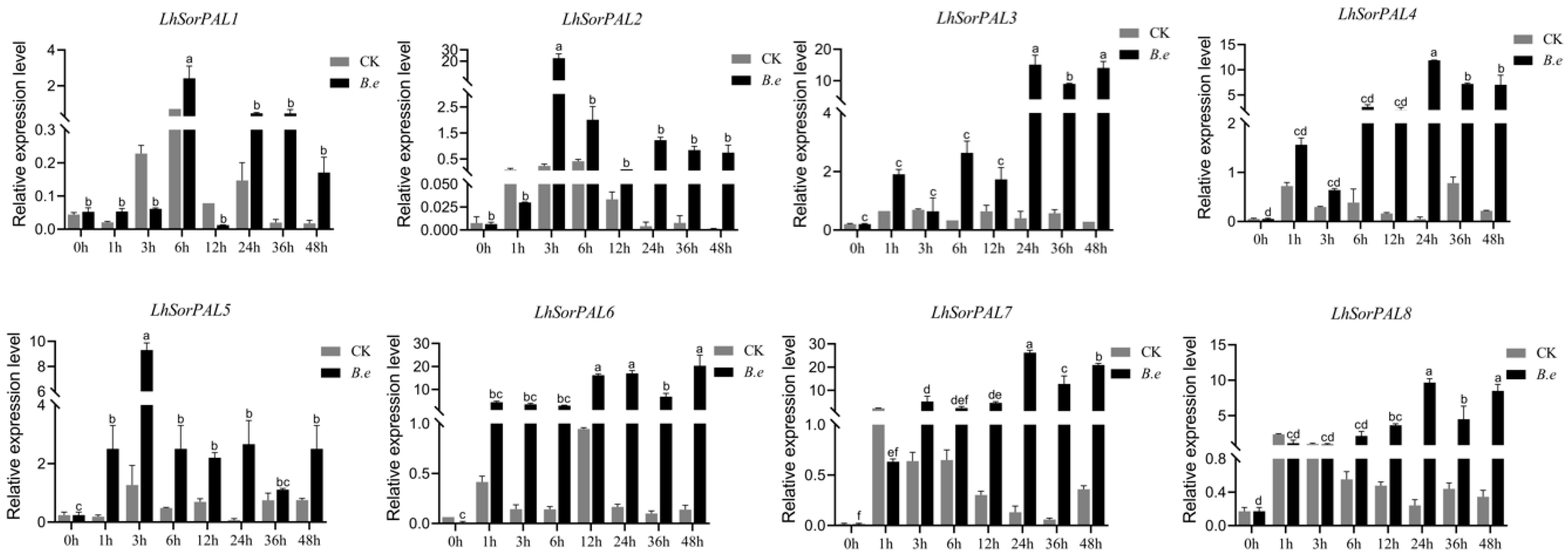
To validate and extend the transcriptome-based expression data (Figure 1), we performed qRT-PCR to examine the expression profiles of the eight LhSorPAL genes in response to B. elliptica infection. Expression levels were compared between inoculated (AI) and mock-treated control (CK) tissues at different time points post-inoculation (Figure 3). The eight LhSorPAL genes were induced to varying degrees upon infection. LhSorPAL2 and LhSorPAL5 reached peak expression at 3 hpi, and LhSorPAL1 peaked at 6 hpi, whereas LhSorPAL3, LhSorPAL4, LhSorPAL6, LhSorPAL7 and LhSorPAL8 were induced at later stages of infection. These results indicate that LhSorPAL genes are responsive to B. elliptica infection and may play a role in lily defense against this pathogen. To determine whether the responsiveness of LhSorPAL genes is specific to B. elliptica or represents a broader defense mechanism, we also examined their expression upon infection with Botrytis cinerea, a gray mold fungus with a broader host spectrum. All eight LhSorPAL genes were induced by B. cinerea as well, but with different temporal patterns, suggesting that LhSorPALs may play a broader role in lily defense against fungal pathogens (Figure S1).

2.3. Hormone Response Patterns of LhSorPAL Genes

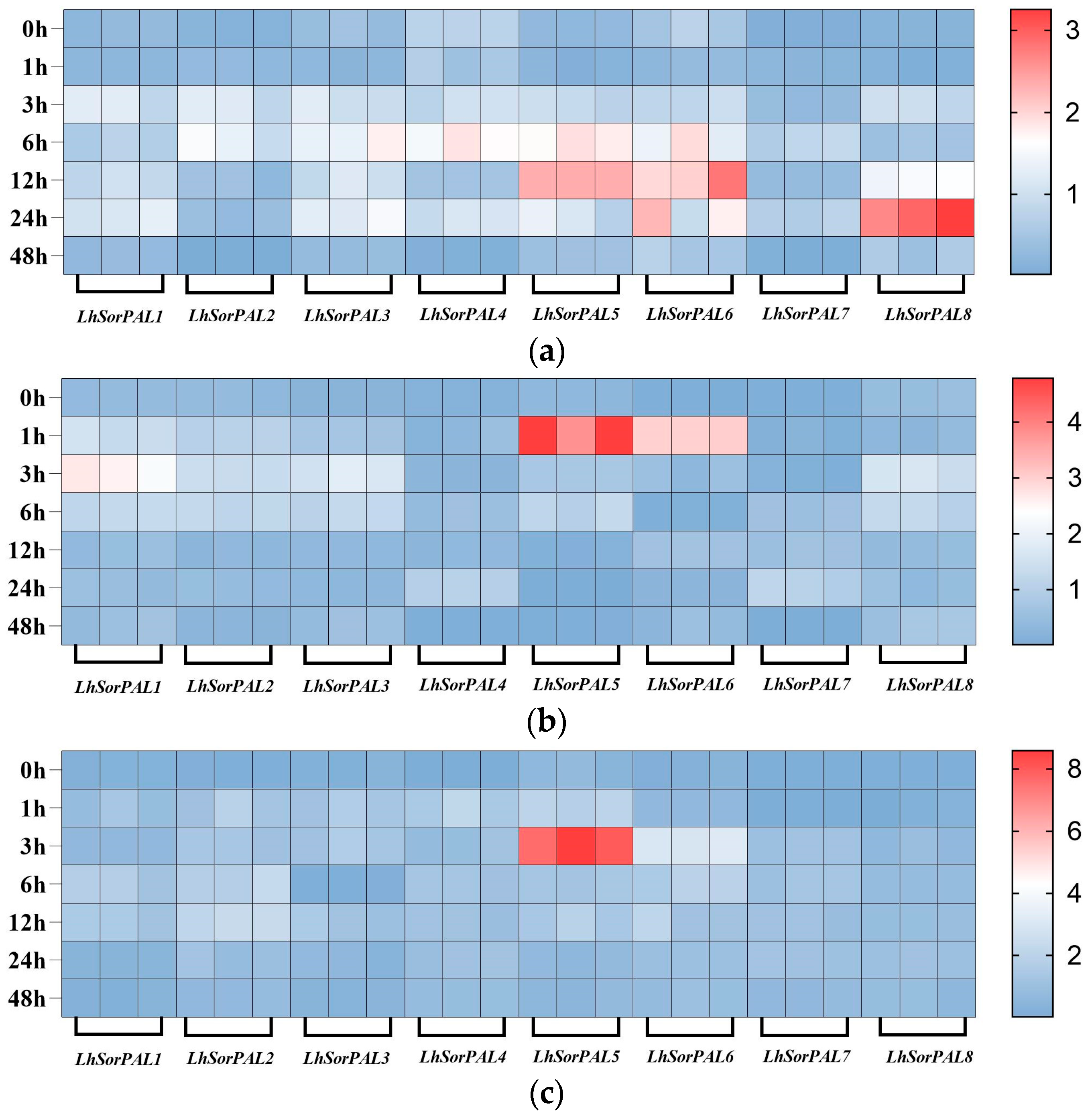
To investigate the hormonal regulation of LhSorPAL genes, we examined their expression in response to salicylic acid (SA), methyl jasmonate (MeJA), and abscisic acid (ABA) at 0, 1, 3, 6, 12, 24, and 48 h post-treatment. The expression patterns of the eight LhSorPAL genes under each hormone treatment are presented as heatmaps (Figure 4). The eight LhSorPAL genes exhibited distinct temporal response patterns to these phytohormones. Some genes showed early and transient induction, whereas others displayed sustained or delayed responses. These results indicate that LhSorPAL genes are differentially regulated by defense-related and abiotic stress hormones, suggesting their potential involvement in diverse hormone-mediated signaling pathways.

2.4. Recombinant Expression and Enzymatic Characterization of LhSorPAL1 and LhSorPAL2

To investigate the function of LhSorPAL genes in lily, we selected representative members from different phylogenetic clades for cloning. LhSorPAL1 from Clade I and LhSorPAL2 from Clade II were successfully cloned (Figure S2) and used as representatives for functional characterization.
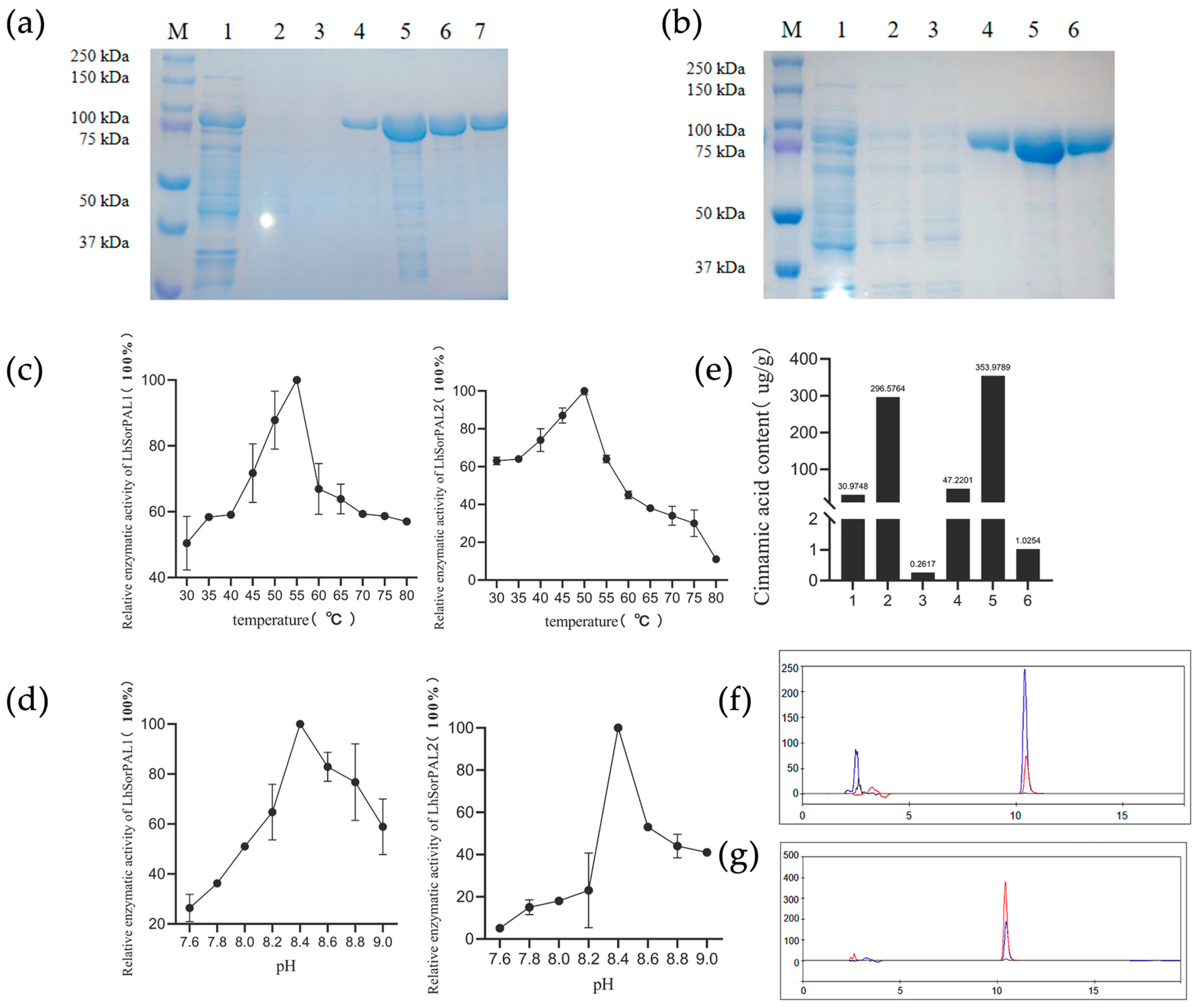
To investigate the enzymatic properties of LhSorPAL1 and LhSorPAL2, we constructed prokaryotic expression vectors, expressed the recombinant proteins in E. coli BL21(DE3), and purified the enzymes. Both enzymes showed maximal activity at pH 8.8, with LhSorPAL1 exhibiting optimal activity at 55 °C and LhSorPAL2 at 50 °C. Activity assays confirmed that both recombinant proteins catalyze the deamination of L-phenylalanine to produce trans-cinnamic acid (Figure 5). These results demonstrate that both LhSorPAL1 and LhSorPAL2 encode functional PAL enzymes capable of initiating the phenylpropanoid pathway.

2.5. Overexpression of LhSorPAL1 and LhSorPAL2 in Lily Enhances Resistance to B. elliptica

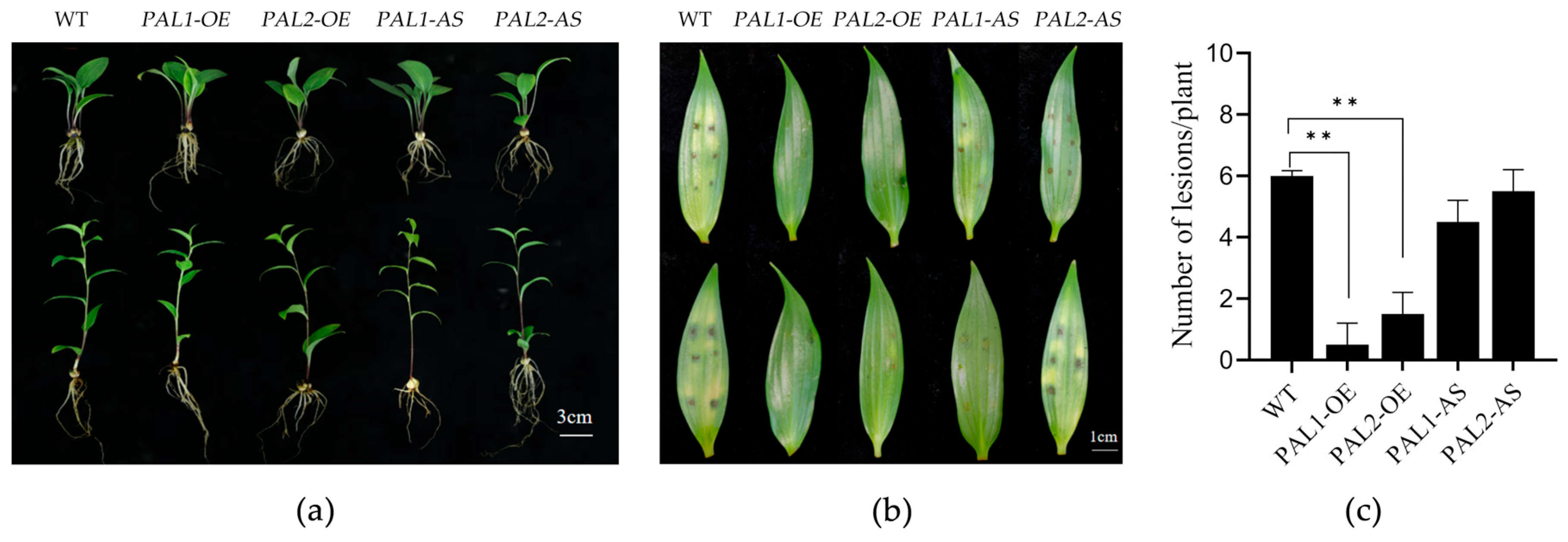
To investigate their roles in disease resistance, we constructed overexpression and antisense expression vectors for LhSorPAL1 and LhSorPAL2 and introduced them into lily via Agrobacterium-mediated transformation (Figure S3). The transgenic lines showed no obvious growth or morphological differences compared to wild-type plants (Figure 6). The transgenic lines and wild-type controls were inoculated with B. elliptica. Disease symptoms were assessed at 96 hpi. WT leaves developed numerous lesions and yellowing, whereas overexpression lines exhibited only mild lesions. In contrast, antisense expression lines showed more severe lesions (Figure 6). Consistent with these phenotypes, chlorophyll content was significantly higher in overexpression lines and significantly lower in antisense lines compared to wild-type controls after infection (Figure S4). These results indicate that overexpression of LhSorPAL1 or LhSorPAL2 confers enhanced resistance to B. elliptica in lily.
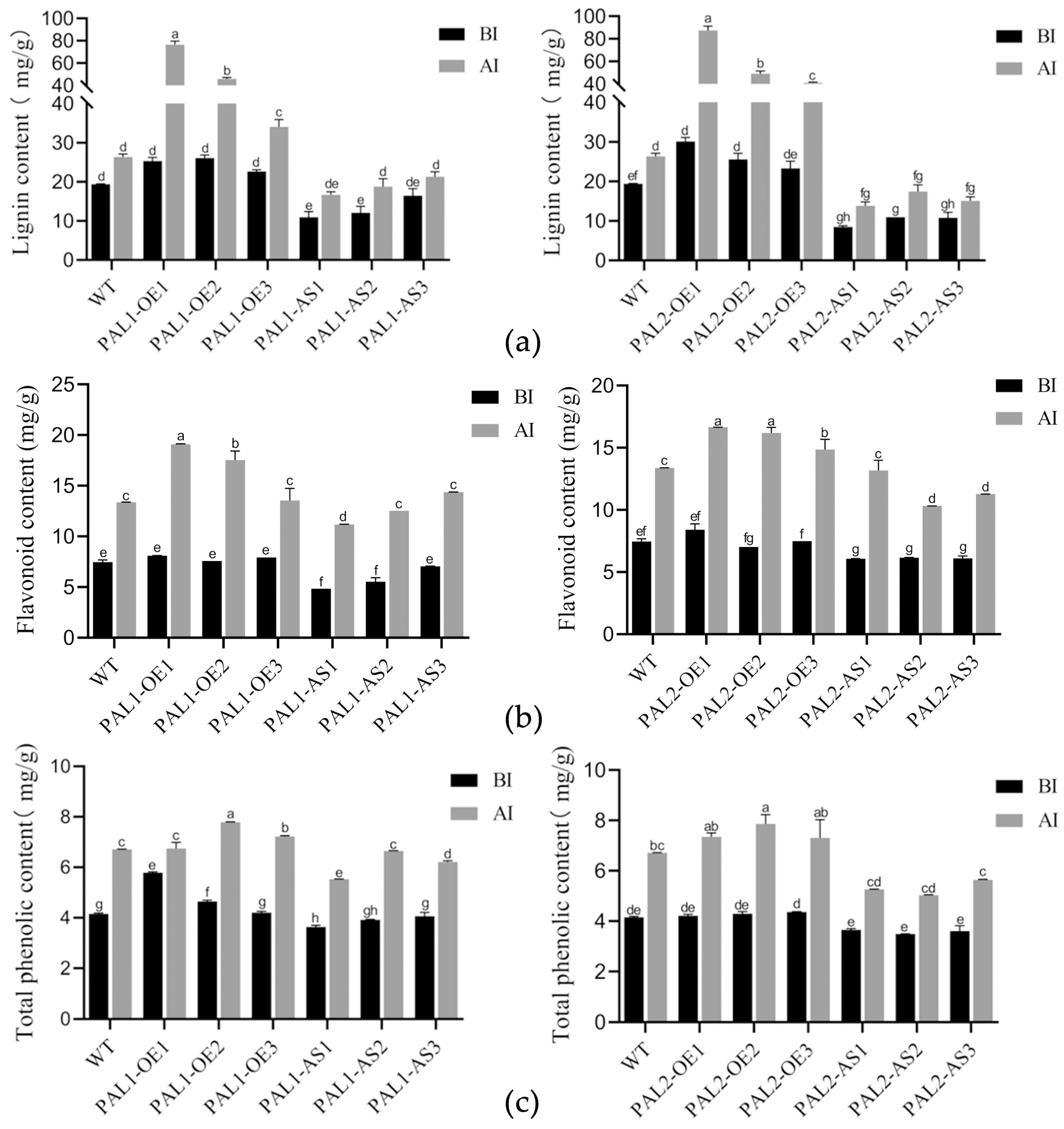
To understand how LhSorPAL1 and LhSorPAL2 affect disease resistance, we measured the accumulation of key phenylpropanoid metabolites—lignin, flavonoids, and total phenolics—in transgenic lines after B. elliptica infection. Overexpression lines accumulated significantly higher levels of these metabolites, whereas antisense lines showed reduced accumulation or no significant change (Figure 7). These results indicate that LhSorPAL1 and LhSorPAL2 positively regulate lily resistance to B. elliptica by promoting phenylpropanoid metabolism.

2.6. Promoter Analysis of LhSorPAL1 and LhSorPAL2

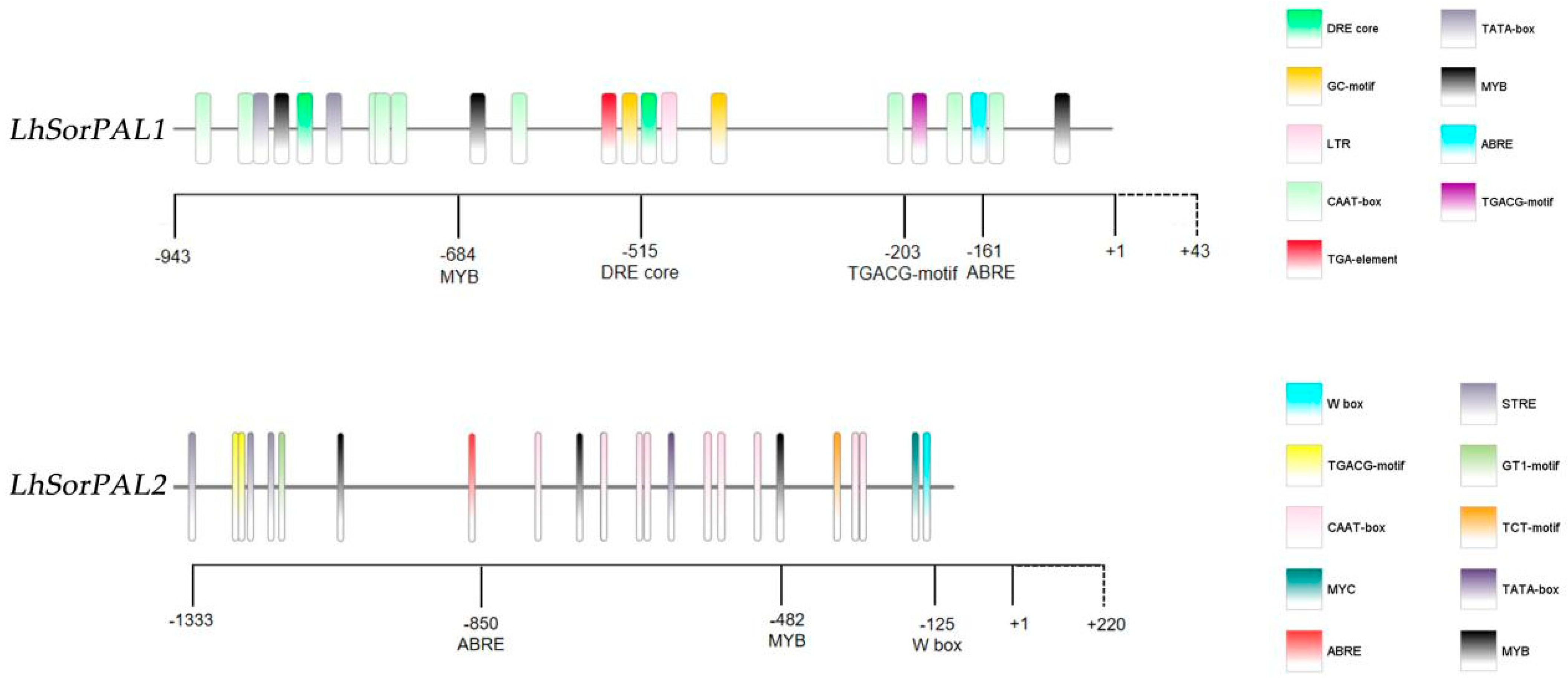
To gain insight into the transcriptional regulation of LhSorPAL1 and LhSorPAL2, we cloned their promoter regions (Figure S5). Sequence analysis revealed that both promoters contain multiple cis-regulatory elements, including the MeJA-responsive TGACG-motif, the ABA-responsive ABRE, and W-boxes involved in SA responsiveness (Figure 8; Tables S1 and S2). Notably, this finding is consistent with the results in Section 2.3, which show that LhSorPAL1 and LhSorPAL2 are induced by SA, MeJA and ABA (Figure 4). Overall, this result provides potential transcriptional evidence for the hormonal regulation of these two genes, further supporting their role in lily resistance against B. elliptica.

3. Discussion

Lily is an important ornamental crop with substantial economic value. However, lily production is severely threatened by various diseases, particularly gray mold caused by Botrytis species. Prolonged use of chemical pesticides has led to the emergence of resistant pathogen strains [29]. Therefore, identifying disease-resistance genes through genetic engineering represents a promising strategy to enhance lily resistance.
Through second- and third-generation transcriptomic analyses, we identified the phenylalanine ammonia-lyase (PAL) gene family involved in the phenylpropanoid pathway associated with gray mold resistance in lily. PALs are typically encoded by multigene families, and the number of PAL genes varies considerably among plant species. In this study, we identified eight PAL genes in the ‘Sorbonne’ lily. By comparison, 14 PAL genes have been reported in potato [17], 11 in ginkgo [30], and seven in alfalfa [31]. Protein domain analysis revealed that all eight LhSorPAL proteins contain the conserved PAL-HAL domain. However, their expression patterns showed marked tissue specificity, which is consistent with observations in tea, where seven CsPAL genes also exhibited tissue-specific expression [13]. These results suggest that the divergent expression patterns of PAL family members may be closely associated with functional differentiation during plant development and stress responses.
The dynamic expression of plant PAL genes during pathogen infection is closely associated with their roles in disease resistance. In this study, infection by both B. cinerea and B. elliptica activated the expression of LhSorPAL genes in ‘Sorbonne’ lily. Upon B. cinerea infection, LhSorPAL1, 2, 4, 6, 7, and 8 were significantly upregulated as early as 1 hpi, followed by a rapid decline, exhibiting characteristics of an early defense response. This rapid induction pattern contrasts with that of the cucumber CsPAL gene during powdery mildew infection, which showed significant upregulation only at 16 hpi and peaked at 24 hpi [32], suggesting that different pathogen effectors may regulate PAL expression through distinct signaling pathways. In contrast, upon B. elliptica infection, LhSorPAL genes exhibited a sustained induction pattern.
Plant hormones play a crucial role in regulating plant growth, development, and adaptation to biotic and abiotic stresses [33]. Environmental factors and endogenous signals together constitute the regulatory network governing PAL gene expression. In this study, treatments with SA, MeJA, and ABA all induced differential expression of LhSorPAL genes, consistent with findings in walnut [34] and Dendrobium [35]. This indicates that LhSorPAL expression is integrated into multiple hormone signaling pathways. SA and JA are important defense signaling molecules that both contribute to plant resistance against pathogens. The fact that both SA and JA induced LhSorPAL expression is consistent with previous studies in maize [36], cucumber [37], and tomato [38], suggesting that in lily, SA and JA signaling pathways may not be strictly antagonistic but rather cooperate to activate defense responses against B. elliptica. ABA, a key hormone in abiotic stress responses such as drought and high salinity, also induced LhSorPAL expression in this study. This finding is consistent with the observation that elevated ABA levels in Brassica napus contribute to enhanced resistance against Leptosphaeria maculans [39]. As representative genes of the LhSorPAL family, LhSorPAL1 and LhSorPAL2 both contain the MeJA-responsive TGACG-motif and the ABA-responsive ABRE element in their promoters. Additionally, the promoter of LhSorPAL2 contains a W-box element involved in SA responsiveness. These findings suggest that LhSorPALs may be directly regulated by these phytohormones at the transcriptional level.
In this study, we generated transgenic lily lines overexpressing or antisense-expressing LhSorPAL1 and LhSorPAL2. No obvious phenotypic differences were observed between transgenic and wild-type plants under normal growth conditions. This may reflect a strategy in which LhSorPAL1 and LhSorPAL2 prioritize chemical defense over morphological changes. The role of PAL genes in disease resistance appears to be conserved across species. In pear, overexpression of PbPAL in Arabidopsis led to increased vessel wall thickness and higher lignin content [33]. In rice, OsPAL RNAi lines showed reduced lignin content and increased susceptibility to planthoppers compared to wild-type plants [19]. In our study, lily lines overexpressing LhSorPAL1 or LhSorPAL2 exhibited increased levels of lignin, flavonoids, and total phenolics after B. elliptica infection. Moreover, a correlation was observed between lesion expansion and lignin accumulation rate. Similar results have been reported in citrus, where the CsPAL gene family enhanced fruit resistance to Penicillium by increasing flavonoid and total phenolic content [40]. In contrast, antisense lines in our study showed relatively modest phenotypic changes. However, PAL silencing has been reported to have pronounced effects in other species. For example, suppression of PAL1 in Capsicum led to a significant reduction in PAL activity and SA accumulation, thereby increasing susceptibility to Xanthomonas campestris [41].

4. Materials and Methods

4.1. Plant Materials

Lilium ‘Sorbonne’ bulbs were purchased from the Netherlands and grown in a greenhouse at Southwest University under controlled conditions (25 °C, 16 h light/8 h dark photoperiod, 20,000 Ix). Plants were cultivated in a peat soil:perlite:vermiculite mixture (1:1:1, v/v/v).

4.2. Strains and Vectors

B. elliptica (ACCC No. 36423) was purchased from the China Agricultural Microbial Strain Preservation and Management Centre (CAMSMC). B. cinerea was kindly provided by the School of Plant Protection, Southwest University, China. Both fungal strains were cultured on potato dextrose agar (PDA) medium (Hopebio, Qingdao, China) at 25 °C in the dark. The plant expression vector pVM01-GFP, which carries glyphosate and kanamycin resistance, was kindly provided by the Maize Experimental Group, College of Agronomy and Biotechnology, Southwest University. The pET-32a(+) vector was from the laboratory stock. pMD19-T vector was purchased from TaKaRa (Dalian, China). Escherichia coli DH5α and E. coli BL21(DE3) were purchased from TsingkeBiotech (Beijing, China). Agrobacterium tumefaciens strain EHA105 (rifampicin-resistant) was purchased from Weidi Biotech (Shanghai, China).

4.3. Identification and Bioinformatics Analysis of the LhSorPAL Gene Family

Full-length sequences of PAL genes were obtained from the second- and third-generation full-length transcriptome databases of ‘Sorbonne’ lily and translated into amino acid sequences. The resulting sequences were compared and analyzed using NCBI BLAST (https://blast.ncbi.nlm.nih.gov/Blast.cgi, accessed on 10 June 2024) to identify conserved domains. Sequences containing complete conserved domains were retained as candidate LhSorPAL genes. Phylogenetic tree analysis was performed using MEGA 6.0, and multiple amino acid sequence alignment was conducted using DNAMAN 8.0 software.

4.4. Characterisation of Induced Expression and Analysis of Tissue Expressivity of LhSorPALs Gene in Lily

For tissue-specific expression analysis, bulbs, scales, leaves, stems, roots, petals, anthers, and filaments were collected from ‘Sorbonne’ lily plants at full flowering stage. All samples were immediately frozen in liquid nitrogen and stored at −80 °C.
B. elliptica and B. cinerea were cultured on PDA medium at 25 °C for 7 days. Mycelial discs (1 cm in diameter) were prepared and inoculated onto mature leaves of ‘Sorbonne’ lily. BPlain agar discs were used as controls. Leaf samples were collected at 0, 1, 3, 6, 12, 24, and 48 hpi. For each time point, three leaves were randomly pooled as one biological replicate, and three independent replicates were performed. All samples were immediately frozen in liquid nitrogen and stored at −80 °C.
For hormone treatments, after selecting uniformly sized ‘Sorbonne’ lily tissue-cultured plantlets, they were pre-cultured in sterile water for 24 h. They were then transferred to solutions containing 100 μM MeJA, 200 μM SA, or 1 mM ABA for 30 min. After treatment, the plantlets were returned to sterile water for further incubation. Leaves were collected at 0, 1, 3, 6, 12, 24, and 48 h after treatment. Three biological replicates were performed for each treatment. Samples were flash-frozen in liquid nitrogen and stored at −80 °C.
Total RNA was extracted using TRIzol™ reagent (Thermo Fisher Scientific, Waltham, MA, USA) following the manufacturer‘s instructions. First-strand cDNA was synthesized using the All-in-One First-Strand Synthesis MasterMix (with dsDNase) reverse transcription kit (Yugong Biotech, Lianyungang, China). Gene-specific primers for the eight LhSorPAL genes were designed using Primer Premier 6.0 software based on transcriptome sequences (Table 1). qRT-PCR was performed using SsoFast EvaGreen Supermix (Bio-Rad, Hercules, CA, USA) under the following conditions: 95 °C for 30 s, followed by 40 cycles of 95 °C for 5 s and 58 °C for 5 s. The qRT-PCR system used was a CFX96 Touch Real-Time PCR Detection System (Bio-Rad, Hercules, CA, USA). Each reaction was performed with three technical replicates.

4.5. Cloning of LhSorPAL1 and LhSorPAL2 Genes

Gene-specific primers for LhSorPAL1 and LhSorPAL2 were designed using Primer Premier 6.0 based on the transcriptome sequences (Table 2). PCR amplification was performed using the above cDNA as a template on a Bio-Rad thermal cycler (Bio-Rad, Hercules, CA, USA). The thermal cycling conditions were as follows: 94 °C for 5 min; 32 cycles of 94 °C for 30 s, 50 °C for 30 s, and 72 °C for 2 min 30 s; and a final extension at 72 °C for 10 min. The PCR products were separated by electrophoresis on a 1% agarose gel, and the target fragments were excised and purified. The purified fragments were ligated into the pMD19-T vector and transformed into E. coli competent cells. Positive clones were identified by PCR and confirmed by Sanger sequencing (Tsingke Biotechnology Co., Chongqing, China). Sequence alignment was performed using MegAlign Pro 17.6 to obtain the final coding sequences.

4.6. Prokaryotic Expression and Recombinant Protein Analysis of LhSorPAL1 and LhSorPAL2

Primers containing homologous arms were designed based on the coding sequences of LhSorPAL1 and LhSorPAL2 (Table 2). The pET-32a(+) vector was digested with restriction enzymes and gel-purified. The target fragments were amplified by PCR and assembled into the linearized vector using homologous recombination. The recombinant plasmids were transformed into E. coli DH5α, and positive clones were confirmed by Sanger sequencing. The resulting plasmids were designated as pET32a(+)-LhSorPAL1 and pET32a(+)-LhSorPAL2.
The recombinant plasmids pET32a(+)-LhSorPAL1, pET32a(+)-LhSorPAL2, and the empty pET32a(+) vector were transformed into E. coli strain BL21(DE3) for protein expression. Transformed cells were cultured at 37 °C with shaking at 180 rpm until the OD600 reached 0.6–0.8, as measured with a 722S visible spectrophotometer (Lengguang Technology, Shanghai, China). Protein expression was then induced with 0.02 mM IPTG (isopropyl-β-D-thiogalactopyranoside, Promega, Madison, WI, USA) at 28 °C with shaking at 180 rpm for 8 h. After induction, the bacterial cells were harvested by centrifugation at 12,000 rpm for 2 min. The supernatant was discarded, and the pellet was resuspended in PBS buffer (pH 7.4). The resuspended pellet was mixed with 4× SDS-PAGE loading buffer at a 3:1 ratio (v/v) in a sterile 1.5 mL tube, heated at 100 °C for 10 min, and centrifuged at 12,000 rpm for 2 min. The supernatant (10 μL) was subjected to SDS-PAGE electrophoresis. The recombinant protein was then purified using a His-tag protein purification kit (Beyotime Biotech, Shanghai, China) for subsequent activity assays.

4.7. Determination of Recombinant PAL Enzyme Activity

To determine the optimal pH and temperature for enzyme activity, the reaction mixture contained 900 μL of 0.1 M boric acid buffer (pH 7.4–9.0), 100 μL of 0.01 M L-phenylalanine substrate (dissolved in 0.1 M boric acid buffer, pH 8.8), and 100 μL of recombinant LhSorPAL1 or LhSorPAL2 protein. The reaction was incubated at 35 °C for 5 min, and absorbance at 290 nm (OD290) was measured using a microplate reader. For temperature optimization, the reaction was performed at temperatures ranging from 30 °C to 80 °C at optimal pH. The highest activity was defined as 100%, and relative activities were calculated accordingly. A control without enzyme was included. All experiments were performed in triplicate.
To analyze the reaction products, 100 μL of LhSorPAL1 or LhSorPAL2 enzyme solution was added to 100 μL of 0.01 M L-phenylalanine substrate (pre-incubated at 55 °C for LhSorPAL1 or 50 °C for LhSorPAL2 for 10 min), making a total reaction volume of 1 mL. The mixture was gently mixed and incubated at the respective temperature for 5 min and 12 min. A control without enzyme was included. An aliquot of the reaction mixture was sent to Chongqing Huakaifeichuang Biotechnology (Chongqing, China) for external analysis, and the remaining sample was analyzed by high-performance liquid chromatography (HPLC) using a Rigol L3000 system (Rigol, Beijing, China) equipped with a Sepax C18 reversed-phase column (250 mm × 4.6 mm, 5 μm).

4.8. Construction of Plant Overexpression and Antisense Expression Vectors for LhSorPAL1 and LhSorPAL2

For overexpression vector construction, BamHI was selected as the restriction site, and gene-specific primers were designed accordingly. For antisense expression vector construction, BamHI and SacI were selected as restriction sites, and the corresponding primers were designed (Table 3). Vector construction was performed following the method described in Section 4.6. The resulting vectors were designated as OE-pVM01-LhSorPAL1, OE-pVM01-LhSorPAL2, Anti-pVM01-LhSorPAL1, and Anti-pVM01-LhSorPAL2.

4.9. Genetic Transformation and Identification of Transgenic Lily Lines

The recombinant plasmids were introduced into Agrobacterium tumefaciens strain EHA105 using the freeze–thaw method according to the manufacturer’s instructions and confirmed by PCR. For genetic transformation, embryogenic calli derived from lily scales were incubated with the Agrobacterium suspension (OD600 = 0.6–0.8) on a low-speed shaker in the dark for 2–3 h. The calli were then transferred to co-culture medium and incubated in the dark for 3 days. After co-culture, the tissues were washed with 500 mg/L cefotaxime (Cef) solution and transferred to screening medium I for 15 days in the dark, followed by screening medium II under light conditions. Newly formed calli were subsequently transferred to screening medium III to induce bud differentiation, with subculturing every 20–30 days. After 60 days, the regenerated shoots were transferred to rooting medium, and putative transgenic plantlets were obtained. The compositions of all media are provided in Table 4.
Genomic DNA was extracted from the putative transgenic plantlets using the CTAB method, and PCR was performed to confirm the integration of the transgenes. Total RNA was extracted from PCR-positive plants using Trizol reagent, reverse-transcribed into cDNA, and subjected to qRT-PCR analysis as described in Section 4.4. Wild-type plants were used as controls to compare the expression levels of LhSorPAL1 and LhSorPAL2 in the transgenic lines.

4.10. Disease Resistance Assay of Transgenic Lily Lines Against B. elliptica

One-year-old tissue-cultured plantlets were taken out, washed with water to remove residual medium, and transplanted to the culture room. The substrate consisted of peat soil:perlite:vermiculite (1:1:1, v/v/v). Plants were grown at 25 °C under a 16 h light/8 h dark photoperiod with a light intensity of 20,000 lx. After one month, phenotypic observations were recorded, and growth parameters including plant height, leaf length, leaf width, root length, and bulb diameter, as well as the numbers of leaves and roots, were measured. Ten plantlets were randomly selected from each transgenic line and the wild-type control.
For disease resistance assays, healthy transgenic lines (both overexpression and antisense) were selected. Leaves were excised from the petiole, wrapped with sterile water-moistened cotton, and placed on cutting discs lined with filter paper. B. elliptica was cultured on PDA medium for 7 days, and mycelial discs (6 mm in diameter) were prepared using a hole puncher. The mycelial discs were placed upside down on the leaves. A small amount of sterile water was sprayed onto the leaves, and the cutting discs were sealed with plastic wrap. Inoculated leaves were incubated in the dark at 25 °C with 60% humidity for 96 h. Wild-type leaves inoculated with blank PDA discs served as controls. Three plants per line and three leaves per plant were used. Disease symptoms were photographed, and lesion areas were measured.
For physiological measurements, fresh leaf samples were collected. Half were used for chlorophyll content determination, and the other half were dried for measurement of lignin, flavonoids, and total phenolics. Chlorophyll content was determined using the acetone–ethanol extraction method [42]. Lignin content was determined using the acetyl bromide method [43]. Total flavonoid content was measured using the aluminum chloride colorimetric method [44]. Total phenolic content was measured using the Folin–Ciocalteu colorimetric method [45].

4.11. Promoter Element Analysis of the LhSorPAL1 and LhSorPAL2 Genes

The promoter fragments were cloned using a chromosome walking approach with the KX Genome Walking Kit (ZT601, Zoman Biotech, Beijing, China). Based on the validated known sequences, forward-specific primers were designed to amplify the unknown upstream regions (Table 5). The PCR products were separated by electrophoresis on a 1% agarose gel, and the target fragments were excised and purified. The purified fragments were ligated into the pMD19-T cloning vector and transformed into E. coli DH5α competent cells. Positive clones were screened and confirmed by Sanger sequencing. The cis-regulatory elements in the promoter sequences were predicted using the online software PlantCARE (http://bioinformatics.psb.ugent.be/webtools/plantcare/html/, accessed 5 December 2024).

4.12. Statistical Analysis

All data are presented as mean ± SD from three biological replicates. Student’s t-test was used for two-group comparisons, and one-way ANOVA with Tukey’s post hoc test was used for multiple comparisons. Differences were considered significant at p < 0.05. All statistical analyses were performed using GraphPad Prism 9.5.

5. Conclusions

In this study, we systematically characterized the PAL gene family in lily and functionally validated two members, LhSorPAL1 and LhSorPAL2, in resistance against B. elliptica. Eight PAL genes were identified from transcriptomic data and classified into three phylogenetic clades. Among them, LhSorPAL1 and LhSorPAL2 were successfully cloned and shown to encode functional PAL enzymes. Overexpression of the LhSorPAL1 and LhSorPAL2 genes in lily significantly enhanced resistance to B. elliptica, whereas antisense expression compromised disease resistance. Mechanistically, LhSorPAL1 and LhSorPAL2 promoted the accumulation of lignin, flavonoids, and total phenolics, key metabolites of the phenylpropanoid pathway. Furthermore, both promoters contained MeJA- and ABA-responsive cis-elements, suggesting potential transcriptional regulation by these phytohormones. Together, these findings demonstrate that LhSorPAL1 and LhSorPAL2 positively regulate lily resistance to B. elliptica by promoting phenylpropane metabolism, providing candidate genes for molecular breeding of disease-resistant lily cultivars.

Supplementary Materials

The following supporting information can be downloaded at: https://www.mdpi.com/article/10.3390/plants15121797/s1.

Author Contributions

Conceptualization, S.S. and D.L.; methodology, Q.D.; validation, Y.Z. and D.L.; formal analysis, Y.Z., X.Z. and Z.Z.; investigation, L.T.; resources, Q.D. and S.S.; data curation, Y.Z. and L.T.; writing—original draft preparation, Y.Z. and L.T.; writing—review and editing, Y.Z. and D.L.; visualization, Y.Z.; supervision, J.L. and D.L.; project administration, D.L.; funding acquisition, S.S. All authors have read and agreed to the published version of the manuscript.

Funding

This research was funded by the Chongqing Municipal Special Fund for Technological Innovation and Application Development, through the key Project, grant number CSTB2023TIAD-LUX0005.

Data Availability Statement

All data supporting the findings of this study are included within the article and its Supplementary Materials. Additional datasets or raw data are available from the corresponding author upon reasonable request.

Conflicts of Interest

The authors declare no conflicts of interest.

Abbreviations

The following abbreviations are used in this manuscript:
AgrobacteriumAgrobacterium tumefaciens
ABAAbscisic acid
AIAfter B. elliptica inoculation treatment
ASAntisense expression strain
B. cinereaBotrytis cinerea
B. ellipticaBotrytis elliptica
BastaGlufosinate-ammonium
BIBefore B. elliptica inoculation treatment
CbCarbenicillin
CefCefotaxime
CKMock-treated control
E.coliEscherichia coli
FPKMFragments per kilobase of transcript per million mapped reads
HPLCHigh-performance liquid chromatography
hpiHours post-inoculation
IPTGIsopropyl-β-D-thiogalactopyranoside
MeJAMethyl jasmonate
MES2-(N-morpholino)ethanesulfonic acid
MSMurashige and Skoog basal medium
MWmolecular weight
NAA1-Naphthaleneacetic acid
OEOverexpression strain
ORFOpen reading frame
PALPhenylalanine ammonia-lyase
PDAPotato dextrose agar
PIIsoelectric point
PICPicloram
SASalicylic acid
TDZThidiazuron
WTWild type
6-BA6-Benzylaminopurine

References

  1. Chen, Y.; Lu, X.; Gao, T.; Zhou, Y. The Scent of Lily Flowers: Advances in the Identification, Biosynthesis, and Regulation of Fragrance Components. Int. J. Mol. Sci. 2025, 26, 468. [Google Scholar] [CrossRef] [PubMed]
  2. Xue, L.; Dai, J.; Fu, R.; Wu, N.; Yu, J.; Dong, J.; Yang, T.; Fan, J. Functional Studies on the LiAG1 Gene of Lilium ‘Ice Pink Queen’ in Flower Development. Plants 2025, 14, 323. [Google Scholar] [CrossRef]
  3. Li, B.; Wan, J.; Sha, J.; Tian, M.; Wang, M.; Zhang, X.; Sun, W.; Mao, Y.; Min, J.; Qin, Y.; et al. Genomics assisted functional characterization of Bacillus velezensis E as a biocontrol and growth promoting bacterium for lily. Front. Microbiol. 2022, 13, 976918. [Google Scholar] [CrossRef]
  4. Kumar, P.; Kumar, D.; Pal, S.; Singh, S. Plant secondary metabolites in defense against phytopathogens: Mechanisms, biosynthesis, and applications. Physiol. Mol. Plant Pathol. 2025, 138, 102639. [Google Scholar] [CrossRef]
  5. Tenenboim, H.; Brotman, Y. Omic Relief for the Biotically Stressed: Metabolomics of Plant Biotic Interactions. Trends Plant Sci. 2016, 21, 781–791. [Google Scholar] [CrossRef]
  6. Jamwal, K.; Bhattacharya, S.; Puri, S. Plant growth regulator mediated consequences of secondary metabolites in medicinal plants. J. Appl. Res. Med. Aroma 2018, 9, 26–38. [Google Scholar] [CrossRef]
  7. Dong, N.; Lin, H. Contribution of phenylpropanoid metabolism to plant development and plant—Environment interactions. J. Integr. Plant Biol. 2021, 63, 180–209. [Google Scholar] [CrossRef]
  8. Yang, J.; Zhang, Y.; Jia, J.; Wang, C.; Fu, Y. Flavonoid-Lignin Crosstalk: Engineering Metabolic Flux for Optimised Plant Growth and Stress Resilience. Plant Cell Environ. 2025, 48, 8141–8160. [Google Scholar] [CrossRef]
  9. Hyun, M.W.; Yun, Y.H.; Kim, J.Y.; Kim, S.H. Fungal and Plant Phenylalanine Ammonia-lyase. Mycobiology 2011, 39, 257–265. [Google Scholar] [CrossRef] [PubMed]
  10. Barros, J.; Dixon, R.A. Plant Phenylalanine/Tyrosine Ammonia-lyases. Trends Plant Sci. 2020, 25, 66–79. [Google Scholar] [CrossRef] [PubMed]
  11. Zhang, X.; Liu, C. Multifaceted Regulations of Gateway Enzyme Phenylalanine Ammonia-Lyase in the Biosynthesis of Phenylpropanoids. Mol. Plant 2015, 8, 17–27. [Google Scholar] [CrossRef]
  12. Huang, J.; Gu, M.; Lai, Z.; Fan, B.; Shi, K.; Zhou, Y.-H.; Yu, J.-Q.; Chen, Z. Functional Analysis of the Arabidopsis PAL Gene Family in Plant Growth, Development, and Response to Environmental Stress. Plant Physiol. 2010, 153, 1526–1538. [Google Scholar] [CrossRef]
  13. Jin, S.; Ye, N.; Chen, X.; Wang, P.; Gu, M.; Hou, B.; Zhang, C.; Zheng, Y.; Sun, Y. Identification of PAL genes related to anthocyanin synthesis in tea plants and its correlation with anthocyanin content. Hortic. Plant J. 2022, 8, 381–394. [Google Scholar] [CrossRef]
  14. Gu, J.; Sohail, H.; Qiu, L.; Chen, C.; Yue, H.; Li, Z.; Yang, X.; Zhang, L. Genome-Wide Characterization and Expression Analysis of CsPALs in Cucumber (Cucumis sativus L.) Reveal Their Potential Roles in Abiotic Stress and Aphid Stress Tolerance. Plants 2024, 13, 2537. [Google Scholar] [CrossRef] [PubMed]
  15. Olsen, K.M.; Lea, U.S.; Slimestad, R.; Verheul, M.; Lillo, C. Differential expression of four Arabidopsis PAL genes; PAL1 and PAL2 have functional specialization in abiotic environmental-triggered flavonoid synthesis. J. Plant Physiol. 2008, 165, 1491–1499. [Google Scholar] [CrossRef]
  16. Fan, L.; Shi, G.; Yang, J.; Liu, G.; Niu, Z.; Ye, W.; Wu, S.; Wang, L.; Guan, Q. A Protective Role of Phenylalanine Ammonia-Lyase from Astragalus membranaceus against Saline-Alkali Stress. Int. J. Mol. Sci. 2022, 23, 15686. [Google Scholar] [CrossRef]
  17. Mo, F.; Li, L.; Zhang, C.; Yang, C.; Chen, G.; Niu, Y.; Si, J.; Liu, T.; Sun, X.; Wang, S.; et al. Genome-Wide Analysis and Expression Profiling of the Phenylalanine Ammonia-Lyase Gene Family in Solanum tuberosum. Int. J. Mol. Sci. 2022, 23, 6833. [Google Scholar] [CrossRef]
  18. Zhang, F.; Wang, J.; Li, X.; Zhang, J.; Liu, Y.; Chen, Y.; Yu, Q.; Li, N. Genome-wide identification and expression analyses of phenylalanine ammonia-lyase gene family members from tomato (Solanum lycopersicum) reveal their role in root-knot nematode infection. Front. Plant Sci. 2023, 14, 1204990. [Google Scholar] [CrossRef] [PubMed]
  19. He, J.; Liu, Y.; Yuan, D.; Duan, M.; Liu, Y.; Shen, Z.; Yang, C.; Qiu, Z.; Liu, D.; Wen, P.; et al. An R2R3 MYB transcription factor confers brown planthopper resistance by regulating the phenylalanine ammonia-lyase pathway in rice. Proc. Natl. Acad. Sci. USA 2020, 117, 271–277. [Google Scholar] [CrossRef]
  20. Rivera-Toro, D.M.; de Folter, S.; Alvarez-Venegas, R. CRISPR/dCas12a-mediated activation of SlPAL2 enhances tomato resistance against bacterial canker disease. PLoS ONE 2025, 20, e0320436. [Google Scholar] [CrossRef] [PubMed]
  21. Silva, B.N.; Picanco, B.M.; Hawerroth, C.; Silva, L.C.; Rodrigues, F.Á. Physiological and biochemical insights into induced resistance on tomato against septoria leaf spot by a phosphite combined with free amino acids. Physiol. Mol. Plant Pathol. 2022, 120, 101854. [Google Scholar] [CrossRef]
  22. Zhang, H.; Huang, Q.; Yi, L.; Song, X.; Li, L.; Deng, G.; Liang, J.; Chen, F.; Yu, M.; Long, H. PAL—Mediated SA biosynthesis pathway contributes to nematode resistance in wheat. Plant J. 2021, 107, 698–712. [Google Scholar] [CrossRef] [PubMed]
  23. Way, H.M.; Kazan, K.; Mitter, N.; Goulter, K.C.; Birch, R.G.; Manners, J.M. Constitutive expression of a phenylalanine ammonia-lyase gene from Stylosanthes humilis in transgenic tobacco leads to enhanced disease resistance but impaired plant growth. Physiol. Mol. Plant Pathol. 2002, 60, 275–282. [Google Scholar] [CrossRef]
  24. Liu, G.; Su, X.; Guan, L.; Hu, F. Comparison of Defensive Enzyme Activities in the Leaves of Seven Oriental Lily Hybrids after Inoculation with Botrytis elliptica. J. Am. Soc. Hortic. Sci. 2019, 144, 55–62. [Google Scholar] [CrossRef]
  25. Zhang, Y.; Xie, Z.; Kutcher, H.R.; Wang, Y.; Wang, R.; Guo, Z. Photosynthetic Pigment Content, Phenol and Flavonoid Concentration, and Defense Enzyme Activity of Oriental Lily (Lilium auratum L. cv. Sorbonne) Infected with Lily Mottle Virus. Philipp. Agric. Sci. 2014, 97, 60–66. [Google Scholar]
  26. Zhou, L.; Wang, E.; Yang, Y.; Yang, P.; Xu, L.; Ming, J. Antioxidant Enzyme, Transcriptomic, and Metabolomic Changes in Lily (Lilium spp.) Leaves Induced by Aphis gossypii Glover. Genes 2024, 15, 1124. [Google Scholar] [CrossRef]
  27. Chai, N.; Xu, J.; Zuo, R.; Sun, Z.; Cheng, Y.; Sui, S.; Li, M.; Liu, D. Metabolic and Transcriptomic Profiling of Lilium Leaves Infected With Botrytis elliptica Reveals Different Stages of Plant Defense Mechanisms. Front. Plant Sci. 2021, 12, 730620. [Google Scholar] [CrossRef]
  28. Du, W.; Chai, N.; Sun, Z.; Wang, H.; Liu, S.; Sui, S.; Luo, L.; Liu, D. Full-Length Transcriptome Characterization and Functional Analysis of Pathogenesis-Related Proteins in Lilium Oriental Hybrid ‘Sorbonne’ Infected with Botrytis elliptica. Int. J. Mol. Sci. 2023, 24, 425. [Google Scholar] [CrossRef]
  29. Mao, Y.; Meng, X.; Zhang, Z.; Zhang, L.; Feng, Y.; Wang, T.; Zhang, J.; Cai, Y.; Wang, J.; Sheng, G.; et al. Genetic variation of drug target CYP51 conferring resistance to ergosterol biosynthesis inhibitors in Botrytis cinerea, causing lily gray mould. Ind. Crop Prod. 2024, 208, 117797. [Google Scholar] [CrossRef]
  30. Gao, X.; Hu, Y.; Xu, Z.; Peng, D.; Guo, Q. Expression profiling of the phenylalanine ammonia-lyase (PAL) gene family in ginkgo biloba L. Plant Signal Behav. 2023, 18, 2271807. [Google Scholar] [CrossRef]
  31. Feng, Y.; Huang, Q.; Zhang, R.; Li, J.; Luo, K.; Chen, Y. Molecular characterisation of PAL gene family reveals their role in abiotic stress response in lucerne (Medicago sativa). Crop Pasture Sci. 2022, 73, 300–311. [Google Scholar] [CrossRef]
  32. Gao, H.; Zhang, R.; Xu, X.; Qi, X.; Xu, Q.; Chen, X. Cloning and expression analysis of cucumber phenylalanine ammonia-lyase gene CsPAL in response to powdery mildew infection. Mol. Plant Breed. 2019, 17, 1757–1762. [Google Scholar] [CrossRef]
  33. Li, G.; Wang, H.; Cheng, X.; Su, X.; Zhao, Y.; Jiang, T.; Jin, Q.; Lin, Y.; Cai, Y. Comparative genomic analysis of the PAL genes in five Rosaceae species and functional identification of Chinese white pear. PeerJ 2019, 7, e8064. [Google Scholar] [CrossRef]
  34. Jin, Q.; Yao, Y.; Cai, Y.; Lin, Y. Molecular Cloning and Sequence Analysis of a Phenylalanine Ammonia-Lyase Gene from Dendrobium. PLoS ONE 2013, 8, e62352. [Google Scholar] [CrossRef]
  35. Xu, F.; Deng, G.; Cheng, S.; Zhang, W.; Huang, X.; Li, L.; Cheng, H.; Rong, X.; Li, J. Molecular Cloning, Characterization and Expression of the Phenylalanine Ammonia-Lyase Gene from Juglans regia. Molecules 2012, 17, 7810–7823. [Google Scholar] [CrossRef] [PubMed]
  36. Hamidi, S.M.; Gogoi, R.; Kumar, A.; Singh, A.; Yadav, R.; Dorjee, L. Tackling banded leaf and sheath blight disease of maize through activation of host defense. Front. Agron. 2023, 5, 1229717. [Google Scholar] [CrossRef]
  37. Yuan, M.; Huang, Y.; Ge, W.; Jia, Z.; Song, S.; Zhang, L.; Huang, Y. Involvement of jasmonic acid, ethylene and salicylic acid signaling pathways behind the systemic resistance induced by Trichoderma longibrachiatum H9 in cucumber. BMC Genom. 2019, 20, 144. [Google Scholar] [CrossRef]
  38. Jogaiah, S.; Abdelrahman, M.; Tran, L.P.; Ito, S. Different mechanisms of Trichoderma virens-mediated resistance in tomato against Fusarium wilt involve the jasmonic and salicylic acid pathways. Mol. Plant Pathol. 2018, 19, 870–882. [Google Scholar] [CrossRef]
  39. Zou, Z.; Liu, F.; Huang, S.; Fernando, W.G.D. BnTX1—BnNCED3 interaction contributes to the ABA biosynthesis response in the Brassica napus—Leptosphaeria maculans pathosystem. Plant Pathol. 2024, 73, 1859–1873. [Google Scholar] [CrossRef]
  40. Wei, L.; Wang, W.; Li, T.; Chen, O.; Yao, S.; Deng, L.; Zeng, K. Genome-wide identification of the CsPAL gene family and functional analysis for strengthening green mold resistance in citrus fruit. Postharvest Biol. Technol. 2023, 196, 112178. [Google Scholar] [CrossRef]
  41. Kim, D.S.; Hwang, B.K. An important role of the pepper phenylalanine ammonia-lyase gene (PAL1) in salicylic acid-dependent signalling of the defence response to microbial pathogens. J. Exp. Bot. 2014, 65, 2295–2306. [Google Scholar] [CrossRef] [PubMed]
  42. Xiang, F.; Li, W.; Liu, H.Y.; Shang, R.; Wang, Y.; Jing, P. Comparative Study on Determination Methods of Chlorophyll Content in Tea Leaves. Tea Commun. 2016, 43, 37–40. [Google Scholar]
  43. Wang, J.Q.; Cao, D.Y.; Zhang, Y. Acetyl Bromide Test Method for Determining Amount of Lignin in Cottonseed Coat. Text. Res. 2013, 34, 12–16. [Google Scholar] [CrossRef]
  44. Chang, C.C.; Yang, M.H.; Wen, H.M.; Chern, J.-C. Estimation of total flavonoid content in propolis by two complementary colorimetric methods. J. Food Drug Anal. 2002, 10, 178–182. [Google Scholar]
  45. Singleton, V.L.; Orthofer, R.; Lamuela-Raventós, R.M. Analysis of total phenols and other oxidation substrates and antioxidants by means of Folin-Ciocalteu reagent. In Methods in Enzymology; Academic Press: Cambridge, MA, USA, 1999; Volume 299, pp. 152–178. [Google Scholar]
Figure 1. Phylogenetic relationships, protein sequence features, and expression profiles of LhSorPALs genes. Phylogenetic tree of the eight LhSorPAL proteins constructed using the neighbor-joining method. Amino acid length, molecular weight (MW), and theoretical isoelectric point (pI) of each LhSorPAL protein. Heatmap showing expression levels (FPKM, log2-transformed) of the eight LhSorPALs genes at 6, 24, and 48 hpi with B. elliptica. AI, after B. elliptica inoculation treatment; CK, mock-treated control.
Plants 15 01797 g001
Figure 2. Tissue-specific expression of LhSorPAL genes in lily. Data are mean ± SD (n = 3). Different letters indicate significant differences (p < 0.05).
Plants 15 01797 g002
Figure 3. Time course of the level of the LhSorPAL genes in ‘Sorbonne’ after infection with B. elliptica. Expression levels of eight LhSorPAL genes were measured by qRT-PCR at 0, 1, 3, 6, 12, 24, 36, and 48 hpi. Each panel represents one gene. Data are presented as mean ± SD (n = 3). Different lowercase letters above the bars indicate significant differences among time points for each gene (p < 0.05).
Plants 15 01797 g003
Figure 4. Expression patterns of LhSorPAL genes in response to hormone treatments. Heatmaps showing expression levels of eight LhSorPAL genes in response to (a) salicylic acid (SA), (b) methyl jasmonate (MeJA), and (c) abscisic acid (ABA) at 0, 1, 3, 6, 12, 24, and 48 h post-treatment. Red indicates upregulation; blue indicates downregulation. Each heatmap uses an independent color scale. Data represent mean values from three biological replicates.
Plants 15 01797 g004
Figure 5. Analysis of recombinant protease activities of LhSorPAL1 and LhSorPAL2. (a) SDS-PAGE analysis of expressed and purification of recombinant pET32a(+)-LhSorPAL1. M: Protein molecular quality standard; 1: cell lysate; 2: flow through; 3: wash; 4–7: elution. (b) SDS-PAGE analysis of expressed and purification of recombinant pET32a(+)-LhSorPAL2. 1: cell lysate; 2: flow through; 3: wash; 4–6: elution. (c) Effect of pH on the enzymatic reactions of LhSorPAL1 and LhSorPAL2 in lilies. (d) Effect of Temperature on the Enzymatic Reactions of Lily LhSorPAL1 and LhSorPAL2. (e) HPLC detection of LhSorPAL1 and LhSorPAL2 enzymatic reaction products: 1: LhSorPAL1 reacted at 55 °C for 5 min; 2: LhSorPAL1 fully reacted at 55 °C; 4: LhSorPAL2 reacted at 50 °C for 5 min; 5: LhSorPAL2 fully reacted at 50 °C; 3, 6: blank control. (f) LhSorPAL1 high-performance liquid chromatography data: blue peak line: reaction sample; red peak line: cinnamic acid standard; black peak line: blank control. (g) LhSorPAL2 HPLC data: blue peak line: reaction sample; red peak line: cinnamic acid standard; black peak line: blank control.
Plants 15 01797 g005
Figure 6. Analysis of fungal resistance of transgenic lilies. (a) Phenotypic observations of wild-type and transgenic lilies. (b) Disease symptoms of wild-type and transgenic lily leaves after B. elliptica inoculation. (c) Quantification of lesion areas. Data are presented as mean ± SD (n ≥ 3). Asterisks indicate statistically significant differences compared to the wild-type control (** p < 0.01). WT: wild type. OE: overexpression strain. AS: antisense expression strain. Due to the consistent phenotypes observed among independent transgenic lines, only one representative line per construct, exhibiting typical phenotype and good growth, is shown.
Plants 15 01797 g006
Figure 7. Accumulation of phenylpropanoid metabolites in wild-type and transgenic lily lines after B. elliptica infection. (a) Lignin content of LhSorPAL1 and LhSorPAL2 overexpression and antisense plants. (b) Flavonoid content of LhSorPAL1 and LhSorPAL2 overexpression and antisense plants. (c) Total phenol content of LhSorPAL1 and LhSorPAL2 overexpression and antisense plants. WT: wild type. OE: overexpression strain. AS: antisense expression strain. BI: before B. elliptica inoculation treatment. AI: after B. elliptica inoculation treatment. Three biological replicates were performed for each treatment. Different lowercase letters indicate statistically significant differences between groups (p < 0.05).
Plants 15 01797 g007
Figure 8. Analysis and segmentation of promoter sequences.
Plants 15 01797 g008
Table 1. Primer information of LhSorPALs gene.
GeneSequence of Forward Primer 5′-3′The Sequence of Reverse Primer 5′-3′
qLhSorPAL1GCCACTGAAGCATTCCGTCTAGCGCAAGGACAGCGAGGATGTTAGC
qLhSorPAL2CCTGTCACCAACCACGTTCAGAGCACTGCCTCCGCTGTCTTCCTA
qLhSorPAL3TCGGGAAGCTCATGTTTGCTCTGCCCCCTTGAAGCCATAA
qLhSorPAL4CAAGGGAGCTGAGATTGCCACTCGACGAGATCAACCCGAG
qLhSorPAL5TGACTCAAACATCCTCGCCCTGGCCAGGGTGATGCTTAAG
qLhSorPAL6GTGTATGAGGAGGCGATGGGACCCCCTACCACTAGTCGAC
qLhSorPAL7CAAGGGAGCTGAGATTGCCAGGTTTGAACTTGGACTCGGTT
qLhSorPAL8CTCGCCGGAAGCTCATACATCGACGAGATCAACCCGAGAG
qLhSorEF (reference gene)GTTGTGGCTGTGGAGGAAGAAGAGGACGCAGAACCAAAGAGAGTATCCC
Table 2. Primers for prokaryotic expression vector construction.
NameSequence (5′-3′)
LhSorPAL1-FATGGCATCAAAGGACAGCTCC
LhSorRAL1-RGTCTCTGGATTCTTGTATGCTG
LhSorPAL2-FCCTCCTACTCCTCTCCTTCAAC
LhSorRAL2-RCAGCTTAATATAATCACGGTGGG
LhSorPAL1-BamHI-FaaggccatggctgatatcGGATCCatggcacacattgtctgc
LhSorPAL1-HindIII-RgtgctcgagtgcggccgcAAGCTTtcaacaaatcgggagcggc
LhSorPAL2-BamHI-FaaggccatggctgatatcGGATCCatgggacatgtcaacggt
LhSorPAL2-HindIII-RgtgctcgagtgcggccgcAAGCTTttagctgatgggaagggga
Table 3. Primers for plant expression vector construction.
NameSequence (5′-3′)
OE-LhSorPAL1-BamHI-FtgtttggtgttacttGGATCCatggcacacattgtctgc
OE-LhSorPAL1-BamHI-RcaccatgagctcgatGGATCCacaaatcgggagcggc
OE-LhSorPAL2-BamHI-FtgtttggtgttacttggatccGGATCCatgggacatgtcaacggt
OE-LhSorPAL2-BamHI-RcaccatgagctcgatGGATCCgctgatgggaagggga
AS-LhSorPAL1-SacI-FtgctcaccatgagctcAATGGGAGTCAATGGGGAGCTG
AS-LhSorPAL1-BamHI-RgtttggtgttacttggatccTCAACAAATCGGGAGCGGCGCG
AS-LhSorPAL2-SacI-FtgctcaccatgagctcGTTGCGAACACGGTAAAGCAGG
AS-LhSorPAL2-BamHI-RgtttggtgttacttggatccTTAGCTGATGGGAAGGGGAGCA
Table 4. Formulation of the medium.
Culture Medium NameCulture Medium Formulation
Infection SuspensionMS + 1.0 mg/L PIC + 10 mmol/L MES + 100 μmol/L AS
Co-culture mediumMS + 1.0 mg/L PIC + 30 g/L sucrose + 10 mmol/L MES + 100 μmol/L AS
screening medium IMS + 1.0 mg/L PIC + 500 mg/L Cb + 30 g/L sucrose + 9 g/L agar
screening medium IIMS + 1.0 mg/L PIC + 500 mg/L Cb + 2.5 mg/L Basta + 30 g/L sucrose + 9 g/L agar
screening medium IIIMS + 2.0 mg/L 6-BA + 0.2 mg/L NAA + 2.5 mg/L Basta + 30 g/L sucrose + 9 g/L agar
rooting mediumMS + 0.01 mg/L TDZ + 0.2 mg/L NAA + 30 g/L sucrose + 9 g/L agar
Abbreviations: PIC, picloram; MES, 2-(N-morpholino)ethanesulfonic acid; AS, acetosyringone; Cb, carbenicillin; Basta, glufosinate-ammonium; 6-BA, 6-benzylaminopurine; NAA, 1-naphthaleneacetic acid; TDZ, thidiazuron.
Table 5. Primers for promoter cloning.
NameSequence (5′-3′)
LhSorPAL1-SP1CTCCTCCGACAGCTCGACCTTCACC
LhSorPAL1-SP2GGTGGTGCGATTAGAGGGTGCAAGTCTT
LhSorPAL1-SP3CCATCTGTCTAACTTCATCAAGATGGCTTCC
LhSorPAL1-SP4CGTGGGTGAACCGTTTAGGTGAGA
LhSorPAL1-SP5GCGGTGGTGGCTCCACTACATT
LhSorPAL1-FGATGAAGTTAGACAGATGGCAGCAGAA
LhSorPAL1-BAAGCTCAGAACATTTAAAAACA
LhSorPAL2-SP1TGCTTGGTCCTCCGGTGAGAAGTG
LhSorPAL2-SP2CGGTCCCCATGCTCATGCTGTTAATC
LhSorPAL2-SP3AATCACCCACTCACTGCTCGCCTTCAC
LhSorPAL2-SP4AGGTTCTTGTTCGTAATCCTGCTTGA
LhSorPAL2-SP5CGCGGTCAGGACGAGCATAGC
LhSorPAL2-BTGGAACCGATTTGAAGAA
Disclaimer/Publisher’s Note: The statements, opinions and data contained in all publications are solely those of the individual author(s) and contributor(s) and not of MDPI and/or the editor(s). MDPI and/or the editor(s) disclaim responsibility for any injury to people or property resulting from any ideas, methods, instructions or products referred to in the content.