Immersion Frequency Optimisation and Species-Specific Metabolic Profiles of Colchicum autumnale and Colchicum bivonae in Temporary Immersion Systems

 ,
,  ,
,  , ,
, , 
Abstract
1. Introduction
2. Results
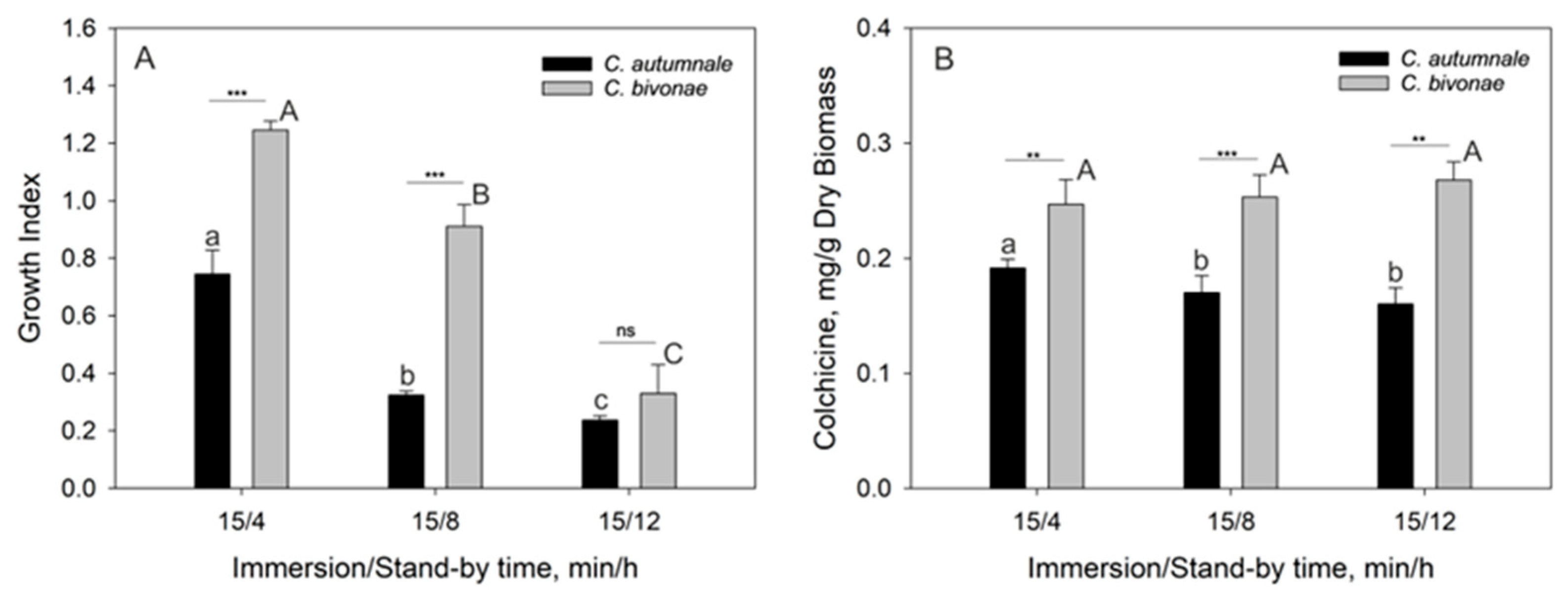
2.1. Optimisation of Shoot Growth and Colchicine Accumulation in Temporary Immersion Systems
2.2. Comprehensive Metabolite Profiling Under Optimised TIS Conditions
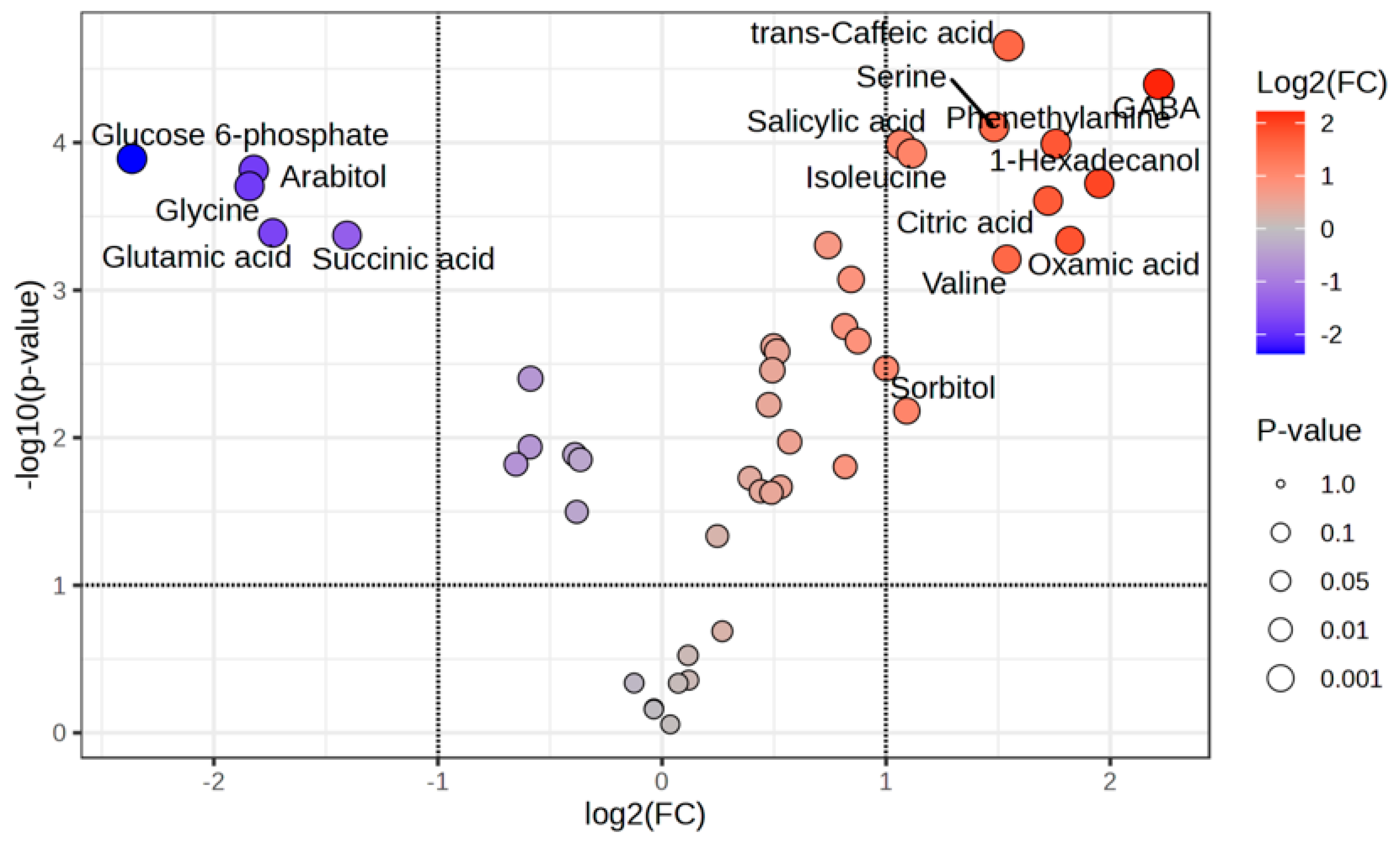
2.3. Differential Metabolite Expression Between Species
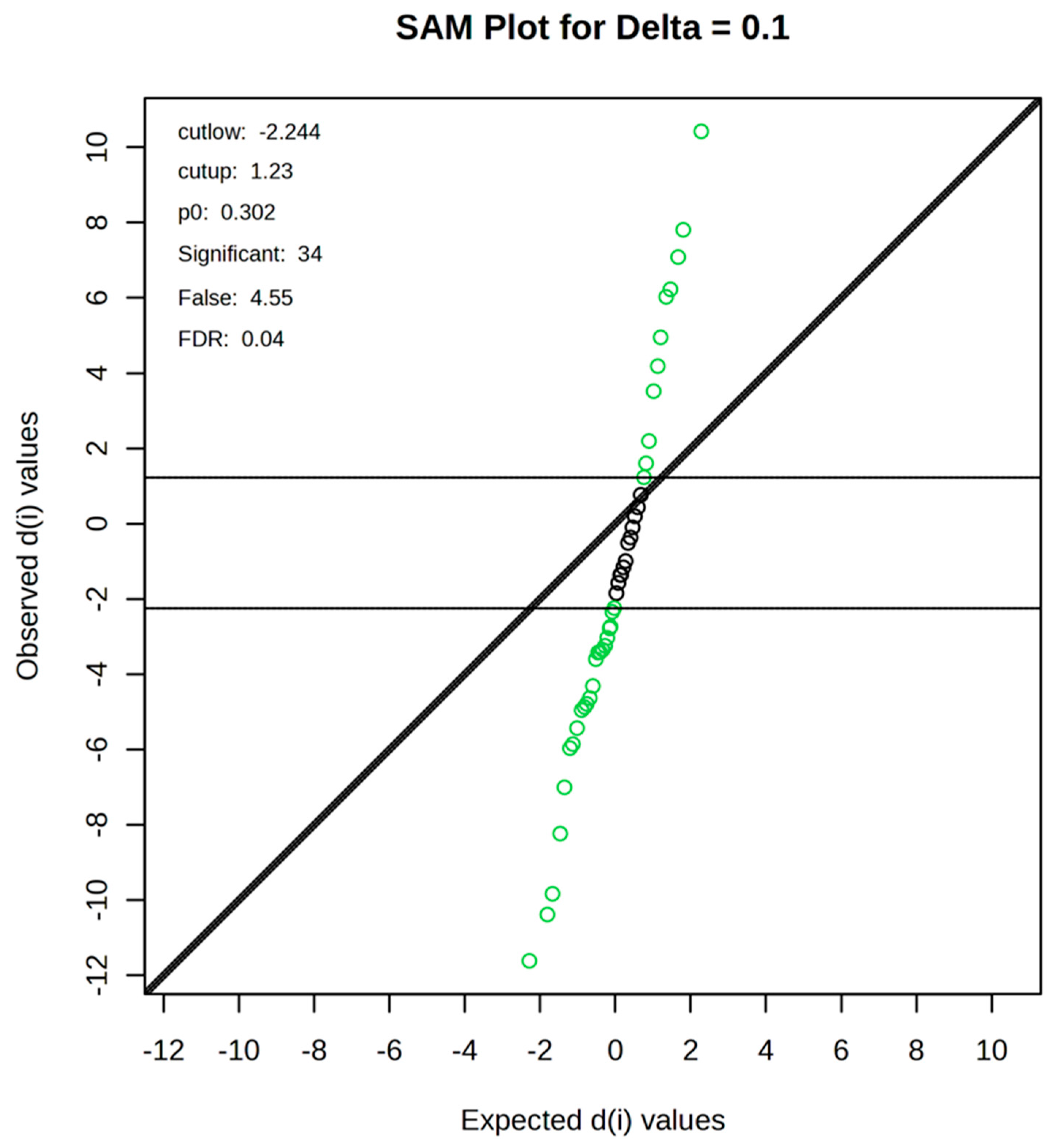
2.4. Significance Analysis of Metabolomics (SAM)
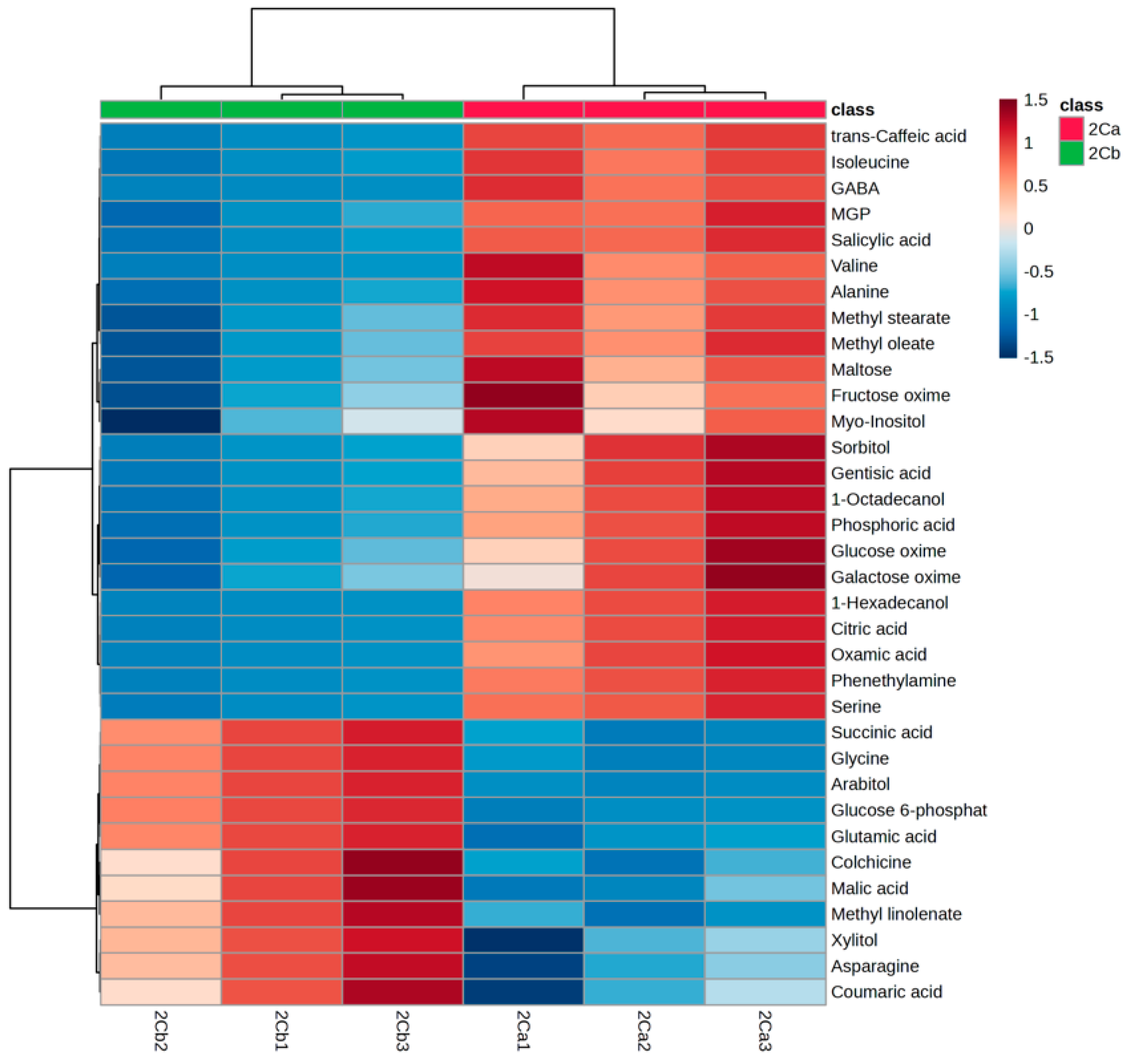
2.5. Hierarchical Clustering of Species-Specific Metabolite Profiles
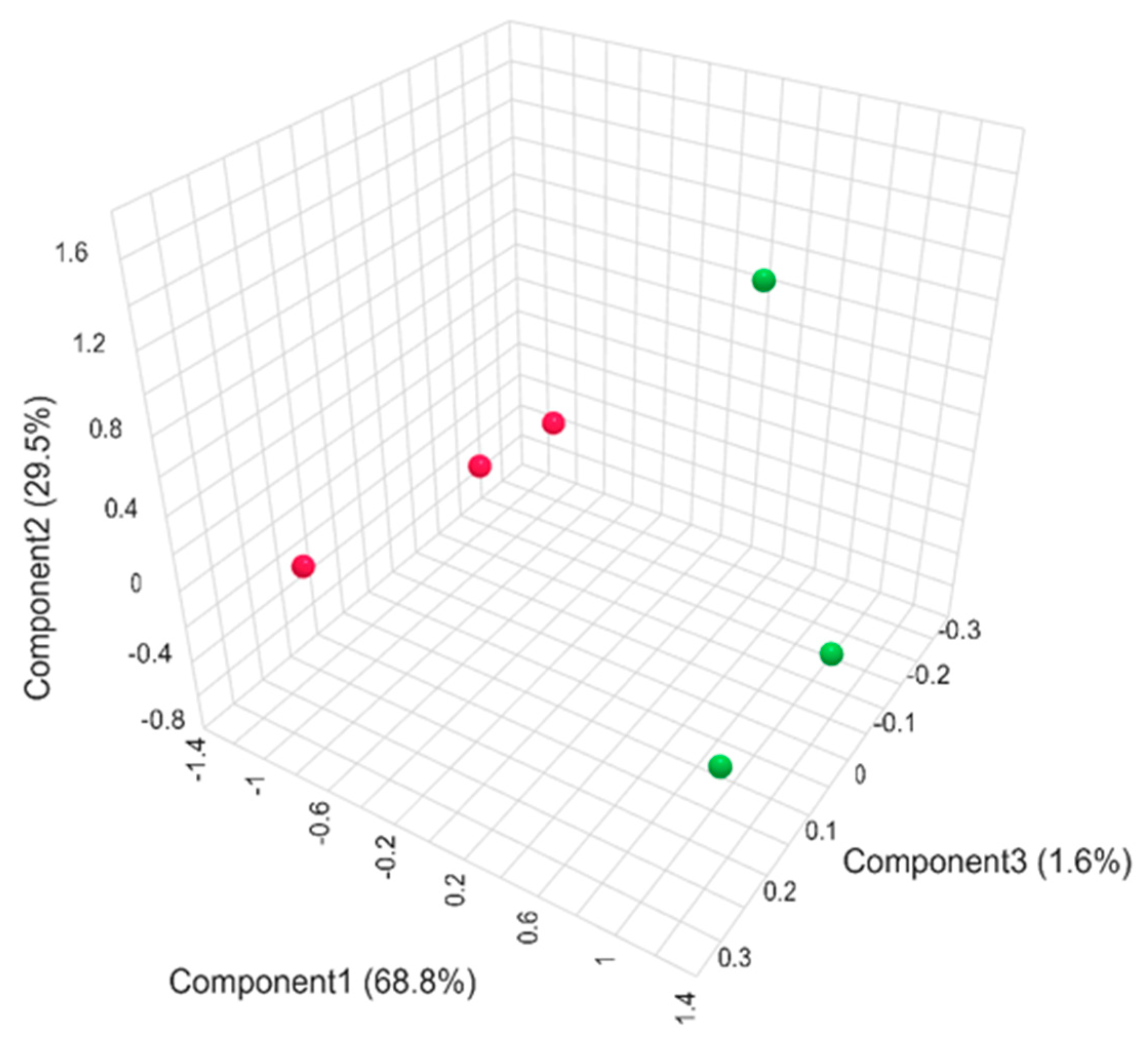
2.6. Least Squares Discriminant Analysis
3. Discussion
3.1. Optimisation of TIS Regimes for Colchicum Cultivation
3.2. Integrated Metabolomic Composition and Species Differentiation
3.3. Carbohydrate Metabolism
3.4. Amino Acid Profiles and Nitrogen Assimilation
3.5. Organic Acid Flux and the TCA Cycle Dynamics
3.6. Secondary Metabolism in TISs
3.7. Biomarker Identification and Biotechnological Implications
3.8. Limitations and Future Directions
4. Materials and Methods
4.1. Plant Material and Establishment of In Vitro Cultures
4.2. Temporary Immersion System (TIS) Setup and Culture Conditions
4.3. Biomass Growth Assessment
4.4. Metabolite Extraction and GC-MS Analysis
4.5. Metabolite Identification and Quantification
4.6. Data Preprocessing and Statistical Analysis
5. Conclusions
Supplementary Materials
Author Contributions
Funding
Data Availability Statement
Conflicts of Interest
Abbreviations
| BAP | 6-Benzylaminopurine |
| DB | Dry biomass |
| FDR | False discovery rate |
| FDB | Final dry biomass |
| FW | Fresh weight |
| G6P | Glucose-6-phosphate |
| GABA | γ-Aminobutyric acid |
| GC-MS | Gas chromatography-mass spectrometry |
| GI | Growth index |
| HCA | Hierarchical clustering analysis |
| IDB | Initial dry biomass |
| MS | Murashige and Skoog |
| NAA | α-Naphthaleneacetic acid |
| PCA | Principal component analysis |
| PLS-DA | Partial least squares discriminant analysis |
| RI | Retention index |
| RITA® | Recipient for Temporary Immersion (bioreactor) |
| SAM | Significance analysis of metabolomics |
| TCA | Tricarboxylic acid |
| TIS | Temporary immersion system |
| UV | Unit variance |
| VIP | Variable importance in projection |
References
- Natural Resources Conservation Service—Plants Database: Camassia leichtlinii (Baker) S. Watson. USDA. Available online: https://plants.sc.egov.usda.gov/plant-profile/cale5 (accessed on 1 August 2025).
- Alkadi, H.; Khubeiz, M.J.; Jbeily, R. Colchicine: A Review on Chemical Structure and Clinical Usage. Infect. Disord. Drug Targets 2018, 18, 105–121. [Google Scholar] [CrossRef]
- Dubashynskaya, N.V.; Bokatyi, A.N.; Galagudza, M.M.; Skorik, Y.A. Revitalizing Colchicine: Novel Delivery Platforms and Derivatives to Expand Its Therapeutic Potential. Int. J. Mol. Sci. 2025, 26, 7591. [Google Scholar] [CrossRef]
- Bhattacharyya, B.; Panda, D.; Gupta, S.; Banerjee, M. Anti-mitotic activity of colchicine and the structural basis for its interaction with tubulin. Med. Res. Rev. 2008, 28, 155–183. [Google Scholar] [CrossRef]
- Dalbeth, N.; Lauterio, T.J.; Wolfe, H.R. Mechanism of action of colchicine in the treatment of gout. Clin. Ther. 2014, 36, 1465–1479. [Google Scholar] [CrossRef]
- Özen, S.; Batu, E.D.; Demir, S. Familial Mediterranean Fever: Recent Developments in Pathogenesis and New Recommendations for Management. Front. Immunol. 2017, 8, 253. [Google Scholar] [CrossRef]
- Dasgeb, B.; Kornreich, D.; McGuinn, K.; Okon, L.; Brownell, I.; Sackett, D.L. Colchicine: An ancient drug with novel applications. Br. J. Dermatol. 2018, 178, 350–356. [Google Scholar] [CrossRef]
- Nett, R.S.; Lau, W.; Sattely, E.S. Discovery and engineering of colchicine alkaloid biosynthesis. Nature 2020, 584, 148–153. [Google Scholar] [CrossRef]
- Nett, R.S.; Sattely, E.S. Total Biosynthesis of the Tubulin-Binding Alkaloid Colchicine. J. Am. Chem. Soc. 2021, 143, 19454–19465. [Google Scholar] [CrossRef] [PubMed]
- Chen, J.; Liu, T.; Dong, X.; Hu, Y. Recent development and SAR analysis of colchicine binding site inhibitors. Mini Rev. Med. Chem. 2009, 9, 1174–1190. [Google Scholar] [CrossRef] [PubMed]
- Rather, R.A.; Bano, H.; Firoz, A.; Mohammed Ali, H.; Bhat, M.A.; Padder, S.A.; Nafees, H.; Hakeem, K.R. The Assessment of Morphological Diversity of Colchicum luteum L., An Economically Important Threatened Medicinal Plant of Kashmir Himalaya. Sustainability 2022, 14, 1327. [Google Scholar] [CrossRef]
- Poutaraud, A.; Girardin, P. Influence of chemical characteristics of soil on mineral and alkaloid seed contents of Colchicum autumnale. Environ. Exp. Bot. 2005, 54, 101–108. [Google Scholar] [CrossRef]
- Berkov, S.; Ivanov, I.; Georgiev, V.; Codina, C.; Pavlov, A. Galanthamine biosynthesis in plant in vitro systems. Eng. Life Sci. 2014, 14, 643–650. [Google Scholar] [CrossRef]
- Georgiev, V.; Ivanov, I.; Pavlov, A. Recent Progress in Amaryllidaceae Biotechnology. Molecules 2020, 25, 4670. [Google Scholar] [CrossRef]
- Wawrosch, C.; Zotchev, S.B. Production of bioactive plant secondary metabolites through in vitro technologies-status and outlook. Appl. Microbiol. Biotechnol. 2021, 105, 6649–6668. [Google Scholar] [CrossRef] [PubMed]
- Verpoorte, R.; Contin, A.; Memelink, J. Biotechnology for the production of plant secondary metabolites. Phytochem. Rev. 2002, 1, 13–25. [Google Scholar] [CrossRef]
- Wijerathna-Yapa, A.; Hiti-Bandaralage, J.; Pathirana, R. Harnessing metabolites from plant cell tissue and organ culture for sustainable biotechnology. Plant Cell Tissue Organ Cult. (PCTOC) 2025, 162, 55. [Google Scholar] [CrossRef]
- Georgiev, V.; Schumann, A.; Pavlov, A.; Bley, T. Temporary immersion systems in plant biotechnology. Eng. Life Sci. 2014, 14, 607–621. [Google Scholar] [CrossRef]
- Vidal, N.; Sánchez, C. Use of bioreactor systems in the propagation of forest trees. Eng. Life Sci. 2019, 19, 896–915. [Google Scholar] [CrossRef]
- Escalona, M.; Lorenzo, J.C.; González, B.; Daquinta, M.; González, J.L.; Desjardins, Y.; Borroto, C.G. Pineapple (Ananas comosus L. Merr) micropropagation in temporary immersion systems. Plant Cell Rep. 1999, 18, 743–748. [Google Scholar] [CrossRef]
- Watt, M.P. The status of temporary immersion system (TIS) technology for plant micropropagation. Afr. J. Biotechnol. 2012, 11, 14025–14035. [Google Scholar] [CrossRef]
- Malik, M.; Tomiak, E.; Pawłowska, B. Effect of Liquid Culture Systems (Temporary Immersion Bioreactor and Rotary Shaker) Used During Multiplication and Differentiation on Efficiency of Repetitive Somatic Embryogenesis of Narcissus L. ‘Carlton’. Agronomy 2025, 15, 85. [Google Scholar] [CrossRef]
- Thakore, D.; Srivastava, A.K.; Sinha, A.K. Mass production of Ajmalicine by bioreactor cultivation of hairy roots of Catharanthus roseus. Biochem. Eng. J. 2017, 119, 84–91. [Google Scholar] [CrossRef]
- Paek, K.Y.; Chakrabarty, D.; Hahn, E.J. Application of bioreactor systems for large scale production of horticultural and medicinal plants. Plant Cell Tissue Organ Cult. 2005, 81, 287–300. [Google Scholar] [CrossRef]
- Sharma, S.; Gupta, S.; Kumari, D.; Kothari, S.L.; Jain, R.; Kachhwaha, S. Exploring Plant Tissue Culture and Steviol Glycosides Production in Stevia rebaudiana (Bert.) Bertoni: A Review. Agriculture 2023, 13, 475. [Google Scholar] [CrossRef]
- Hall, R.D. Plant metabolomics: From holistic hope, to hype, to hot topic. New Phytol. 2006, 169, 453–468. [Google Scholar] [CrossRef]
- Lisec, J.; Schauer, N.; Kopka, J.; Willmitzer, L.; Fernie, A.R. Gas chromatography mass spectrometry-based metabolite profiling in plants. Nat. Protoc. 2006, 1, 387–396. [Google Scholar] [CrossRef]
- Frolova, N.; Bilova, T.; Silinskaia, S.; Orlova, A.; Gurina, A.; Frolov, A. Gas Chromatography–Mass Spectrometry (GC-MS) in the Plant Metabolomics Toolbox: GC-MS in Multi-Platform Metabolomics and Integrated Multi-Omics Research. Int. J. Mol. Sci. 2026, 27, 1343. [Google Scholar] [CrossRef] [PubMed]
- Roessner, U.; Wagner, C.; Kopka, J.; Trethewey, R.N.; Willmitzer, L. Technical advance: Simultaneous analysis of metabolites in potato tuber by gas chromatography-mass spectrometry. Plant J. 2000, 23, 131–142. [Google Scholar] [CrossRef] [PubMed]
- Kopka, J. Gas Chromatography Mass Spectrometry. In Plant Metabolomics; Saito, K., Dixon, R.A., Willmitzer, L., Eds.; Springer: Berlin/Heidelberg, Germany, 2006; pp. 3–20. [Google Scholar]
- De Luca, V.; St Pierre, B. The cell and developmental biology of alkaloid biosynthesis. Trends Plant Sci. 2000, 5, 168–173. [Google Scholar] [CrossRef]
- Goossens, A.; Häkkinen, S.T.; Laakso, I.; Seppänen-Laakso, T.; Biondi, S.; De Sutter, V.; Lammertyn, F.; Nuutila, A.M.; Söderlund, H.; Zabeau, M.; et al. A functional genomics approach toward the understanding of secondary metabolism in plant cells. Proc. Natl. Acad. Sci. USA 2003, 100, 8595–8600. [Google Scholar] [CrossRef]
- Gulsoy-Toplan, G.; Goger, F.; Yildiz-Pekoz, A.; Gibbons, S.; Sariyar, G.; Mat, A. Chemical Constituents of the Different Parts of Colchicum micranthum and C. chalcedonicum and their Cytotoxic Activities. Nat. Prod. Commun. 2018, 13, 1934578X1801300506. [Google Scholar] [CrossRef]
- Franková, L.; Cibírová, K.; Bóka, K.; Gašparíková, O.; Pšenák, M. Protein reutilisation in corms of Colchicum autumnale. Biologia 2006, 61, 97–102. [Google Scholar] [CrossRef]
- Yasemin, S.; Beruto, M. A Review on Flower Bulb Micropropagation: Challenges and Opportunities. Horticulturae 2024, 10, 284. [Google Scholar] [CrossRef]
- Ellington, E.; Adserias, T.; Coma, A.; Bastida, J.; Viladomat, F.; Codina, C. Effect of paclobutrazol on in vitro culture of colchicum autumnale corms. In III International Symposium on In Vitro Culture and Horticultural Breeding; ISHS: Leuven, Belgium, 1997; pp. 131–134. [Google Scholar]
- Szewczyk, A.; Trepa, M.; Zych, D. Optimization of the Production of Secondary Metabolites from Furanocoumarin and Furoquinoline Alkaloid Groups in In Vitro Ruta corsica Cultures Grown in Temporary Immersion Bioreactors. Molecules 2024, 29, 5261. [Google Scholar] [CrossRef]
- Thanonkeo, S.; Kitwetcharoen, H.; Thanonkeo, P.; Klanrit, P. Temporary Immersion Bioreactor (TIB) System for Large-Scale Micropropagation of Musa sp. cv Kluai Numwa Pakchong 50. Horticulturae 2024, 10, 1030. [Google Scholar] [CrossRef]
- Espinosa-Leal, C.A.; Puente-Garza, C.A.; García-Lara, S. In vitro plant tissue culture: Means for production of biological active compounds. Planta 2018, 248, 1–18. [Google Scholar] [CrossRef] [PubMed]
- Fernie, A.R.; Carrari, F.; Sweetlove, L.J. Respiratory metabolism: Glycolysis, the TCA cycle and mitochondrial electron transport. Curr. Opin. Plant Biol. 2004, 7, 254–261. [Google Scholar] [CrossRef] [PubMed]
- Fernie, A.R.; Cavalcanti, J.H.F.; Nunes-Nesi, A. Metabolic Roles of Plant Mitochondrial Carriers. Biomolecules 2020, 10, 1013. [Google Scholar] [CrossRef]
- Maeda, H.; Dudareva, N. The shikimate pathway and aromatic amino Acid biosynthesis in plants. Annu. Rev. Plant Biol. 2012, 63, 73–105. [Google Scholar] [CrossRef]
- Lea, P.J.; Sodek, L.; Parry, M.A.J.; Shewry, P.R.; Halford, N.G. Asparagine in plants. Ann. Appl. Biol. 2007, 150, 1–26. [Google Scholar] [CrossRef]
- Dietz, K.J.; Mittler, R.; Noctor, G. Recent Progress in Understanding the Role of Reactive Oxygen Species in Plant Cell Signaling. Plant Physiol. 2016, 171, 1535–1539. [Google Scholar] [CrossRef] [PubMed]
- Hasanuzzaman, M.; Nahar, K.; Anee, T.I.; Fujita, M. Glutathione in plants: Biosynthesis and physiological role in environmental stress tolerance. Physiol. Mol. Biol. Plants 2017, 23, 249–268. [Google Scholar] [CrossRef]
- Bown, A.W.; Shelp, B.J. Plant GABA: Not Just a Metabolite. Trends Plant Sci. 2016, 21, 811–813. [Google Scholar] [CrossRef]
- Ramos-Ruiz, R.; Martinez, F.; Knauf-Beiter, G. The effects of GABA in plants. Cogent Food Agric. 2019, 5, 1670553. [Google Scholar] [CrossRef]
- Sweetlove, L.J.; Beard, K.F.; Nunes-Nesi, A.; Fernie, A.R.; Ratcliffe, R.G. Not just a circle: Flux modes in the plant TCA cycle. Trends Plant Sci. 2010, 15, 462–470. [Google Scholar] [CrossRef]
- Ochoa-Villarreal, M.; Howat, S.; Hong, S.; Jang, M.O.; Jin, Y.W.; Lee, E.K.; Loake, G.J. Plant cell culture strategies for the production of natural products. BMB Rep. 2016, 49, 149–158. [Google Scholar] [CrossRef]
- Zhao, J.; Davis, L.C.; Verpoorte, R. Elicitor signal transduction leading to production of plant secondary metabolites. Biotechnol. Adv. 2005, 23, 283–333. [Google Scholar] [CrossRef]
- Vogt, T. Phenylpropanoid biosynthesis. Mol. Plant 2010, 3, 2–20. [Google Scholar] [CrossRef]
- Cheynier, V.; Comte, G.; Davies, K.M.; Lattanzio, V.; Martens, S. Plant phenolics: Recent advances on their biosynthesis, genetics, and ecophysiology. Plant Physiol. Biochem. 2013, 72, 1–20. [Google Scholar] [CrossRef] [PubMed]
- Schauer, N.; Fernie, A.R. Plant metabolomics: Towards biological function and mechanism. Trends Plant Sci. 2006, 11, 508–516. [Google Scholar] [CrossRef] [PubMed]
- Georgiev, M.I.; Weber, J.; Maciuk, A. Bioprocessing of plant cell cultures for mass production of targeted compounds. Appl. Microbiol. Biotechnol. 2009, 83, 809–823. [Google Scholar] [CrossRef]
- Murashige, T.; Skoog, F. A Revised Medium for Rapid Growth and Bio Assays with Tobacco Tissue Cultures. Physiol. Plant. 1962, 15, 473–497. [Google Scholar] [CrossRef]
- Dixon, R.A. Isolation and maintenance of callus and cell suspension cultures. In Plant Cell Culture: A Practical Approach; Dixon, R.A., Ed.; Oxford IRL Press: Oxford, UK, 1985; pp. 1–20. [Google Scholar]
- Dincheva, I.; Badjakov, I.; Georgiev, V.; Semerdjieva, I.; Vrancheva, R.; Ivanov, I.; Pavlov, A. Comprehensive GC-MS Characterization and Histochemical Assessment of Various Parts of Three Colchicum Species from Bulgarian Flora. Plants 2025, 14, 270. [Google Scholar] [CrossRef]
- Hummel, J.; Strehmel, N.; Selbig, J.; Walther, D.; Kopka, J. Decision tree supported substructure prediction of metabolites from GC-MS profiles. Metabolomics 2010, 6, 322–333. [Google Scholar] [CrossRef] [PubMed]
- van den Berg, R.A.; Hoefsloot, H.C.; Westerhuis, J.A.; Smilde, A.K.; van der Werf, M.J. Centering, scaling, and transformations: Improving the biological information content of metabolomics data. BMC Genom. 2006, 7, 142. [Google Scholar] [CrossRef]
- Singh, P.; Engel, J.; Jansen, J.; de Haan, J.; Buydens, L.M. Dissimilarity based Partial Least Squares (DPLS) for genomic prediction from SNPs. BMC Genom. 2016, 17, 324. [Google Scholar] [CrossRef][Green Version]
- Chong, I.-G.; Jun, C.-H. Performance of some variable selection methods when multicollinearity is present. Chemom. Intell. Lab. Syst. 2005, 78, 103–112. [Google Scholar] [CrossRef]
- Pang, Z.; Lu, Y.; Zhou, G.; Hui, F.; Xu, L.; Viau, C.; Spigelman, A.F.; MacDonald, P.E.; Wishart, D.S.; Li, S.; et al. MetaboAnalyst 6.0: Towards a unified platform for metabolomics data processing, analysis and interpretation. Nucleic Acids Res. 2024, 52, W398–W406. [Google Scholar] [CrossRef] [PubMed]



| Response | F-Value | p-Value |
|---|---|---|
| Growth index | ||
| Immersion | 159.62 | 0 |
| Species | 73.28 | 0 |
| Immersion * Specie | 13.12 | 0.003 |
| Colchicine | ||
| Immersion | 0.33 | 0.572 |
| Species | 130.37 | 0 |
| Immersion * Specie | 8.93 | 0.01 |
| Metabolite | VIP Score | Fold Change (Cb/Ca) | Metabolic Class |
|---|---|---|---|
| Glucose-6-phosphate | 2.01 | 5.11 | Sugar phosphate |
| Citric acid | 1.85 | 0.39 | Organic acid (TCA) |
| Asparagine | 1.67 | 2.05 | Amino acid (N storage) |
| GABA | 1.52 | 0.25 | Stress metabolite |
| Sucrose | 1.48 | 1.43 | Disaccharide |
| Pyroglutamic acid | 1.41 | 0.6 | Stress-related amino acid |
| Malic acid | 1.35 | 0.59 | Organic acid (TCA) |
| Glycine | 1.28 | 1.49 | Amino acid |
| Colchicine | 1.22 | 1.32 | Alkaloid |
| Salicylic acid | 1.18 | 2.33 | Phenolic compound |
| Metabolic Feature | C. bivonae | C. autumnale |
|---|---|---|
| Carbon Strategy | Carbohydrate-rich (sucrose, glucose, sorbitol) | Organic acid-rich (citrate, malate, succinate) |
| Nitrogen Strategy | Asparagine, glycine, glutamic acid | Pyroglutamic acid, GABA, serine |
| Energy Metabolism | High glycolytic flux (G6P elevation) | High TCA cycle activity |
| Secondary Metabolism | Higher colchicine, enriched phenolic acids | Lower colchicine, fewer phenolic acids |
| Metabolic Consistency | Tight clustering, stable metabolome | Broader dispersion, variable sugar pools |
| Stress Signature | Low | High (GABA, pyroglutamic acid) |
Disclaimer/Publisher’s Note: The statements, opinions and data contained in all publications are solely those of the individual author(s) and contributor(s) and not of MDPI and/or the editor(s). MDPI and/or the editor(s) disclaim responsibility for any injury to people or property resulting from any ideas, methods, instructions or products referred to in the content. |
© 2026 by the authors. Licensee MDPI, Basel, Switzerland. This article is an open access article distributed under the terms and conditions of the Creative Commons Attribution (CC BY) license.
Share and Cite
Dincheva, I.; Badjakov, I.; Georgiev, V.; Vrancheva, R.; Ivanov, I.; Georgieva, L.; Pavlov, A. Immersion Frequency Optimisation and Species-Specific Metabolic Profiles of Colchicum autumnale and Colchicum bivonae in Temporary Immersion Systems. Plants 2026, 15, 1710. https://doi.org/10.3390/plants15111710
Dincheva I, Badjakov I, Georgiev V, Vrancheva R, Ivanov I, Georgieva L, Pavlov A. Immersion Frequency Optimisation and Species-Specific Metabolic Profiles of Colchicum autumnale and Colchicum bivonae in Temporary Immersion Systems. Plants. 2026; 15(11):1710. https://doi.org/10.3390/plants15111710
Chicago/Turabian StyleDincheva, Ivayla, Ilian Badjakov, Vasil Georgiev, Radka Vrancheva, Ivan Ivanov, Liliya Georgieva, and Atanas Pavlov. 2026. "Immersion Frequency Optimisation and Species-Specific Metabolic Profiles of Colchicum autumnale and Colchicum bivonae in Temporary Immersion Systems" Plants 15, no. 11: 1710. https://doi.org/10.3390/plants15111710
APA StyleDincheva, I., Badjakov, I., Georgiev, V., Vrancheva, R., Ivanov, I., Georgieva, L., & Pavlov, A. (2026). Immersion Frequency Optimisation and Species-Specific Metabolic Profiles of Colchicum autumnale and Colchicum bivonae in Temporary Immersion Systems. Plants, 15(11), 1710. https://doi.org/10.3390/plants15111710