Article

Seasonal Variation and Genetic Evaluation of Needle Catechin Content in Half-Sib Families of Pinus taeda


1
College of Forestry and Landscape Architecture, South China Agricultural University, Guangzhou 510642, China
2
Guangdong Key Laboratory for Innovative Development and Utilization of Forest Plant Germplasm, Guangzhou 510642, China
3
State Key Laboratory of Tree Genetics and Breeding, Research Institute of Forestry, Chinese Academy of Forestry, Beijing 100091, China
4
Liaoning Provincial Research Institute of Poplar, Gaizhou 115213, China
*
Authors to whom correspondence should be addressed.
These authors contributed equally to this work.
Plants 2026, 15(11), 1666; https://doi.org/10.3390/plants15111666

Submission received: 30 April 2026 / Revised: 22 May 2026 / Accepted: 27 May 2026 / Published: 29 May 2026
(This article belongs to the Special Issue Research on Genetic Breeding and Biotechnology of Forest Trees)

Abstract

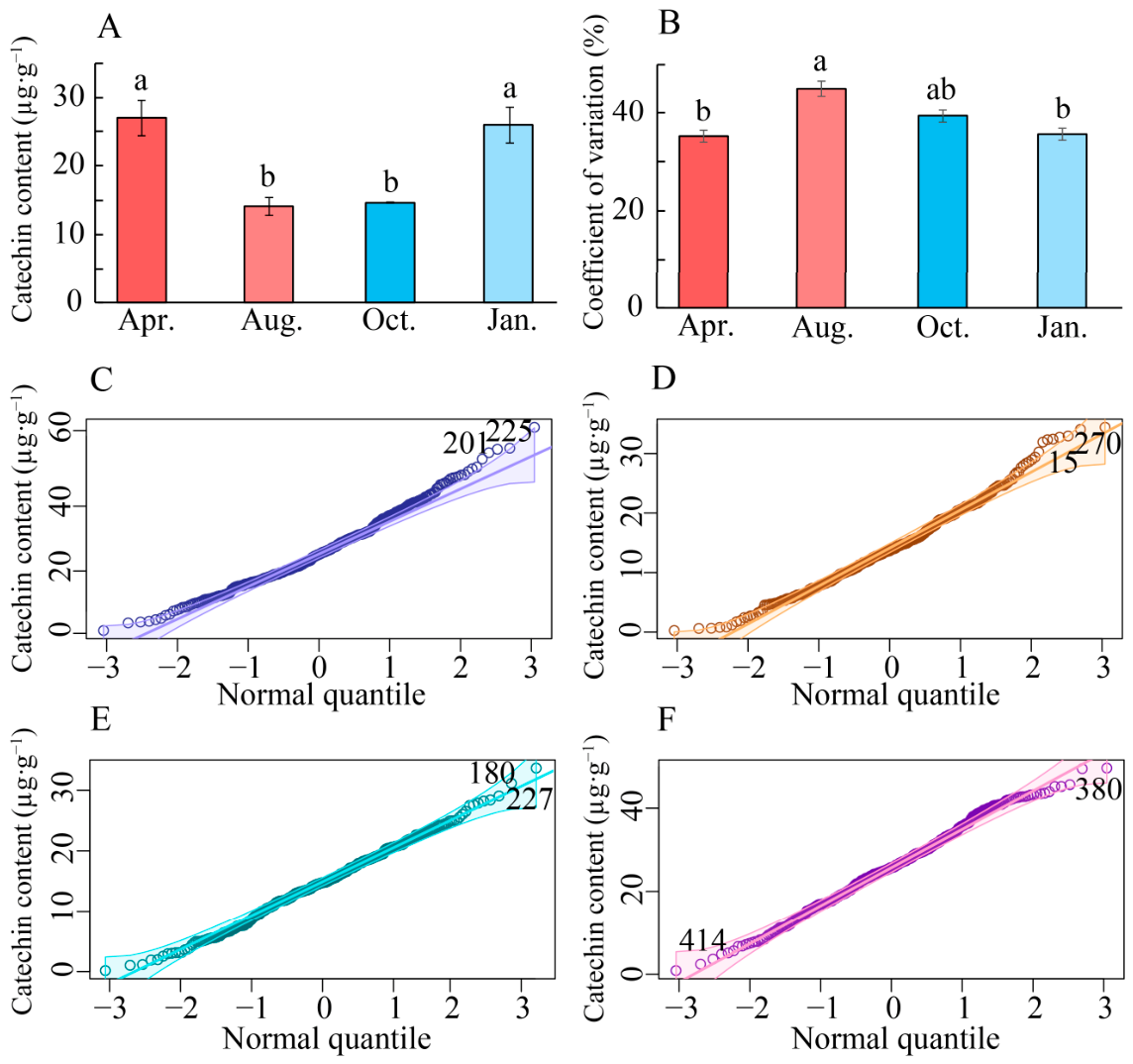
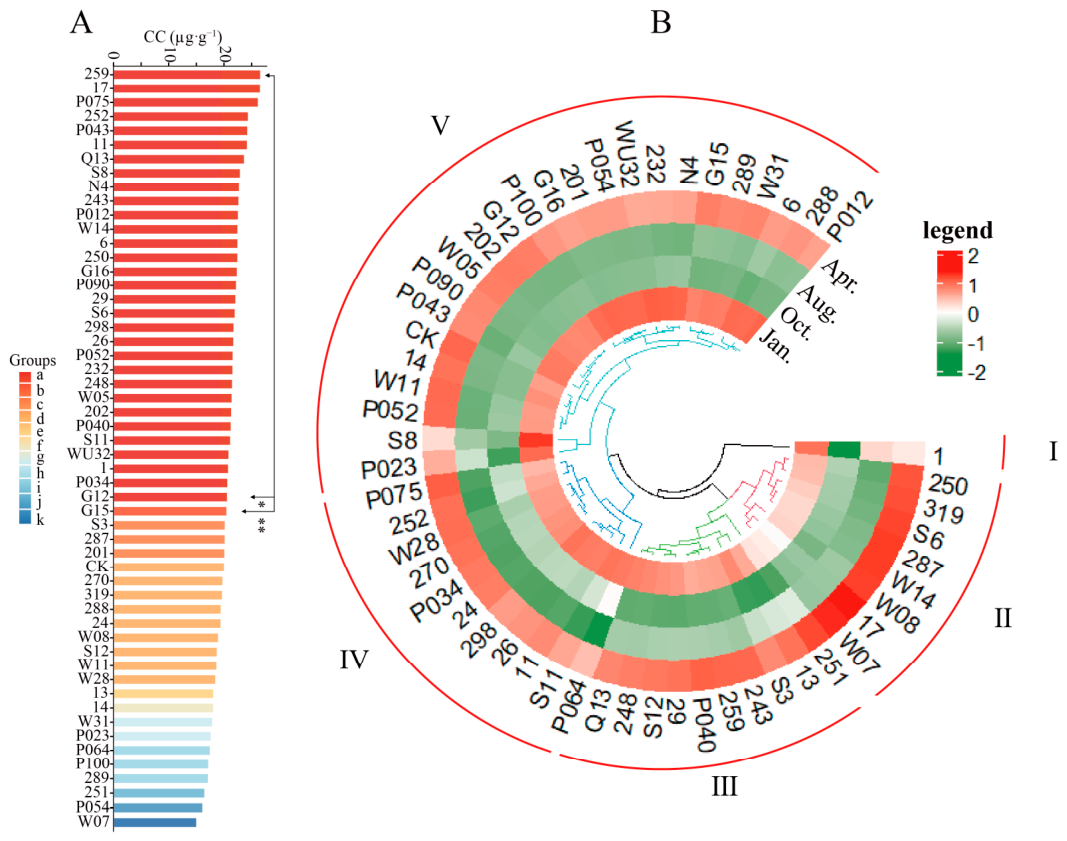
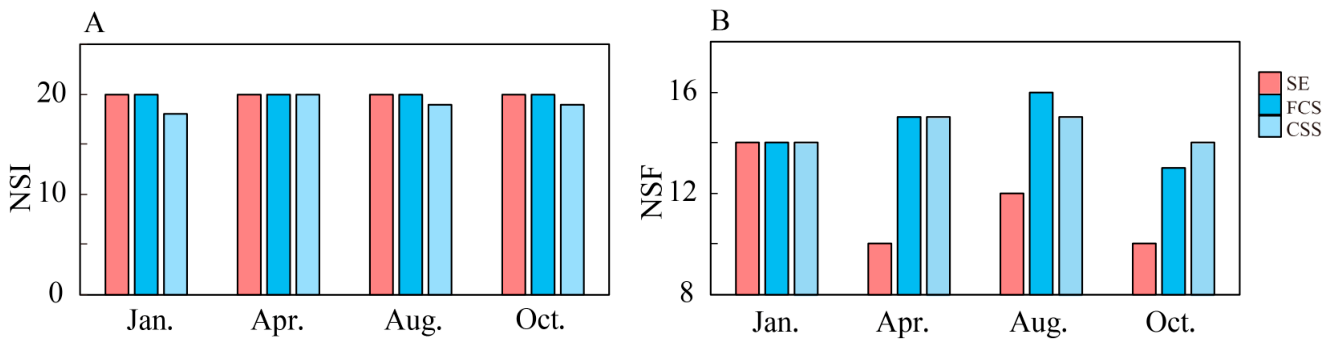
The biosynthesis and accumulation of plant secondary metabolites are tightly regulated by environmental fluctuations, serving as a crucial interface mediating plant–environment interactions. Nevertheless, the phenotypic instability of secondary metabolism-related traits induced by environmental variability has hampered the precise breeding of stress-resistant cultivars. Pinus taeda is an key timber tree species in southern China, and its foliar catechins exhibit substantial stress-resistant potential. However, phenotypic variation driven by seasonal changes has limited the germplasm innovation and genetic selection of this species. In this study, 54 half-sib families of P. taeda were used as experimental materials. Combined with near-infrared spectroscopy (NIRS) and the BLUP model, we systematically analyzed the seasonal variation characteristics, genetic parameters of catechin content (CC), and genetic gains under different breeding strategies across four seasons. Our results demonstrated that family and season had extremely significant effects on CC (p < 0.001), whereas the season × family interaction effect was not significant, indicating that the genetic expression of CC is stable across seasons. CC was higher in spring and winter but lower in summer and autumn; specifically, the mean CC in summer was 47% lower than the peak value in spring (26.95 ± 0.46 μg·g−1), reflecting a resource trade-off between growth and defense metabolism. Genetic parameter analysis revealed that family-mean heritability (0.373–0.714) was higher than individual heritability and within-family heritability, with August identified as the optimal selection season. The maximum genetic gain across the three breeding strategies (individual selection, family selection, and combined selection) reached 7.86%, among which individual selection exhibited the smallest fluctuation in genetic gain. Finally, three superior families and 14 superior individuals were screened out. This study elucidates the seasonal genetic pattern of foliar CC in P. taeda, clarifies the optimal selection stage and efficient breeding strategies, and provides theoretical guidance and material support for the genetic improvement, germplasm innovation, and resource utilization of secondary metabolic traits in this ecologically and economically important tree species.
Keywords: Pinus taeda; catechin content; BLUP model; selection strategy; family effect Pinus taeda; catechin content; BLUP model; selection strategy; family effect