3.1. The Taste and Aroma Sensory Characteristics of FLZY and FDDB
‘Fuding Dabaicha’ is the most widely planted national-level tea plant cultivar in China and is suitable for processing various types of green tea. As a publicly known and commonly used cultivar, it is extensively cultivated in the Fuliang tea production area [
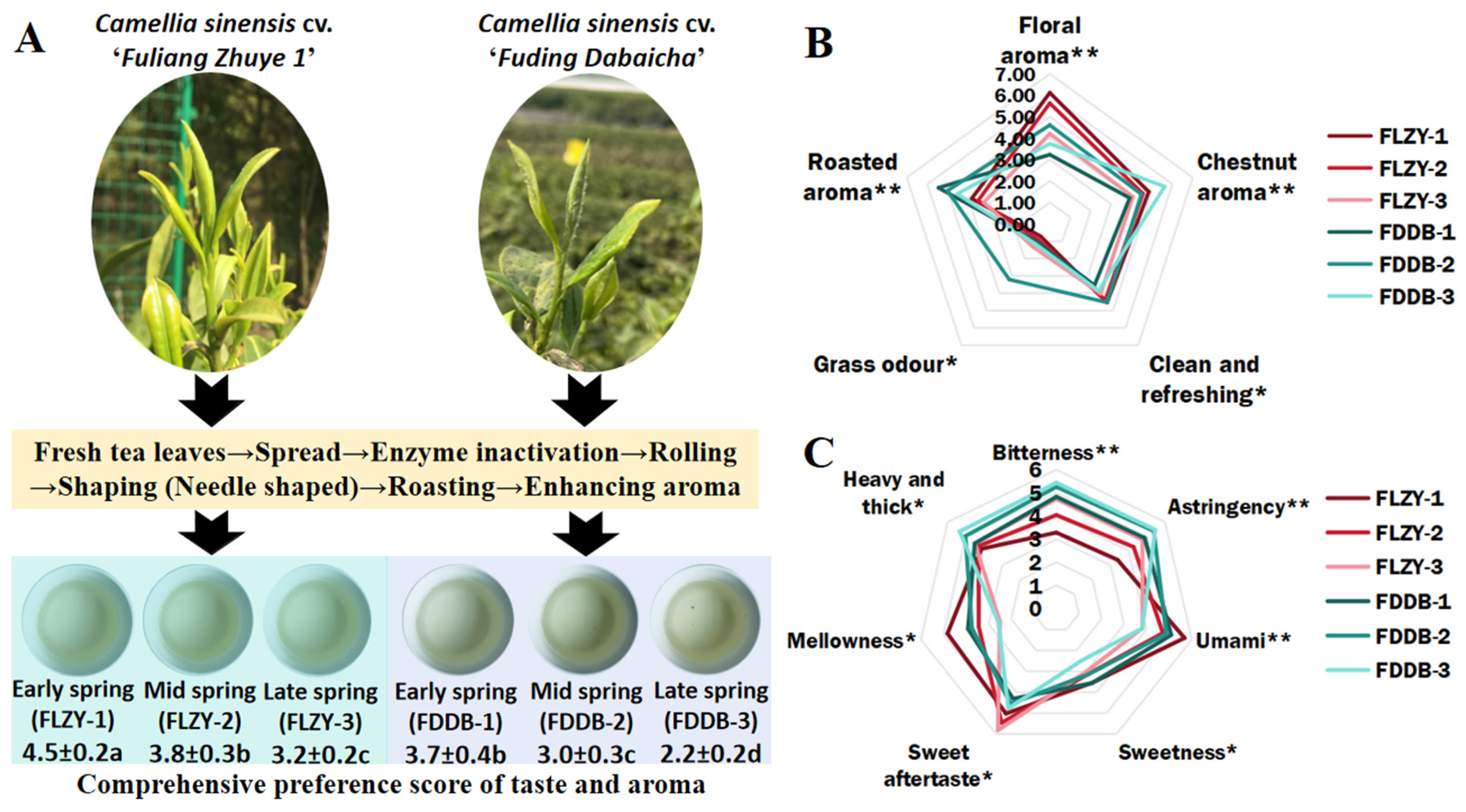
4]. Therefore, this study used ‘Fuding Dabaicha’ (FDDB) as a control to investigate the flavor and characteristic metabolites of ‘Fuliang Zhuye 1’ (FLZY). The comprehensive preference score for the taste and aroma of FLZY (mean 3.83) exceeded that of FDDB (mean 2.97) (
p < 0.05) (
Figure 1A), suggesting the superior quality of FLZY. From early to late spring, the comprehensive preference score for FLZY gradually decreased, a trend also observed for FDDB. This is consistent with previously reported findings for the geographical indication product “Longjing green tea,” where the quality of early spring tea is higher than that of mid-spring and late spring tea [
24].
For FLZY, the intensity of the floral aroma was the highest (mean 5.32) and was greater than that of FDDB (mean 3.86) (
p < 0.05) (
Figure 1B;
Table S2). A floral aroma is a typical characteristic of traditional high-quality Fuliang tea [
3], suggesting that FLZY is suitable for producing such tea. In contrast, the typical aroma characteristic of FDDB was a roasted aroma, which showed the strongest intensity (mean 5.00) and exceeded that in FLZY (mean 3.52) (
p < 0.05). The “clean and refreshing” attribute was more intense in FLZY than in FDDB, whereas the “chestnut-like” aroma was more intense in FDDB. Although FDDB exhibited a stronger “grassy” odor than FLZY, the absolute intensity of this odor was low. From early to late spring, the intensities of the floral, chestnut-like, clean and refreshing, and roasted aromas in FLZY gradually weakened, while the grassy odor intensified. Previous studies indicate that floral, clean and refreshing, and chestnut-like aromas contribute positively to the aroma quality of green tea, whereas a grassy odor has a negative effect [
34]. These seasonal changes may contribute to a decline in the aroma quality of FLZY over the spring season.
The unique taste characteristic of FLZY was a strong “sweet aftertaste”, which had the highest intensity (mean 5.43) and was greater than that in FDDB (mean 4.55) (
p < 0.05). Conversely, the intensities of “bitterness” (mean 4.02) and “astringency” (mean 4.14) were lowest in FLZY and were lower than those in FDDB (
p < 0.05) (
Figure 1C;
Table S3). FLZY also showed slightly stronger “umami”, “sweetness”, and “mellowness” than FDDB, while FDDB scored higher for “heavy and thick” (
p < 0.05). Mellowness and a sweet aftertaste are typical taste characteristics of traditional high-quality Fuliang tea [
3]. In addition to its pronounced sweet aftertaste, FLZY also exhibited relatively strong umami and mellowness, suggesting an improvement in taste quality compared to traditional Fuliang tea. The influence of seasonal progression on the taste attributes was consistent for both cultivars: from early to late spring, the intensities of umami, sweetness, and mellowness gradually weakened, while the intensities of bitterness, astringency, sweet aftertaste, and heavy and thick notes gradually increased (
p < 0.05).
Overall, FLZY can produce higher-quality Fuliang tea. Its unique flavor profile is characterized by an extremely strong floral aroma and sweet aftertaste, coupled with relatively weak bitterness and astringency. Spring seasonal changes reduce the quality of FLZY, primarily due to the gradual weakening of floral aroma, umami, sweetness, and mellowness, alongside the gradual increase in grassy odor, bitterness, and astringency.
3.2. The Metabolite Basis of the Unique Aroma of FLZY
A total of 223 volatile metabolites were identified, including 41 aldehydes, 37 terpenoids, 34 esters, 31 heterocyclic compounds, 29 alcohols, 17 ketones, 15 aromatics, 10 phenols, and 9 acids (
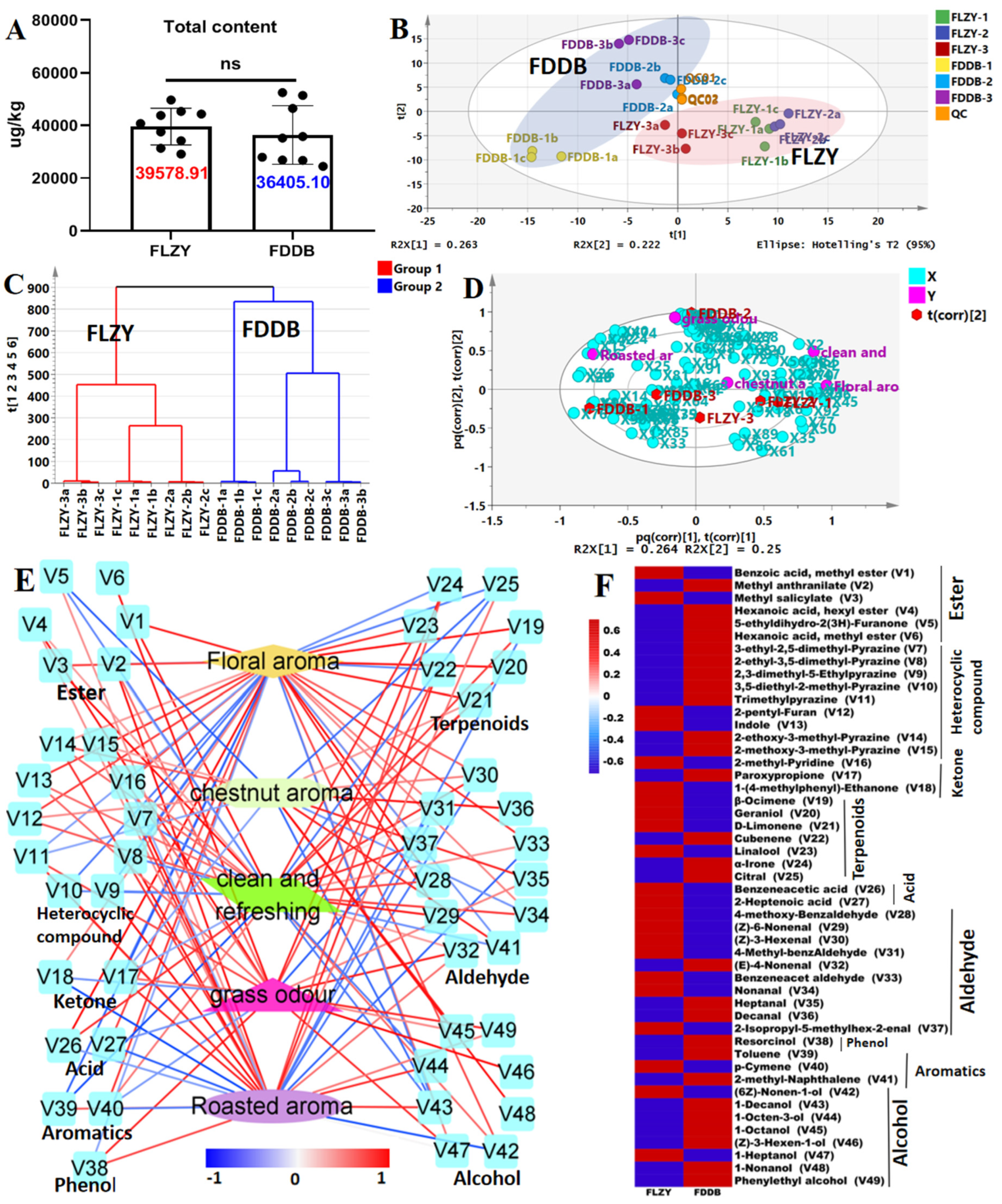
Table S4). Although the total amount of volatile metabolites did not differ between FLZY and FDDB (
p > 0.05), the content in FLZY (39,578.91 µg/kg) was higher than that in FDDB (36,405.10 µg/kg) (
Figure 2A). This provides a quantitative basis for the better aroma quality of FLZY. In FLZY, terpenoids (mean 22.61%) and aldehydes (22.61%) accounted for a relatively high proportion of the total volatile metabolite content, whereas in FDDB, heterocyclic compounds (25.86%) constituted the highest proportion. Terpenoids and aldehydes are typically associated with prominent floral and fruity aromas, while heterocyclic compounds are generally linked to roasted aromas [
9]. This may explain why FLZY is dominated by floral notes and FDDB by roasted notes.
PCA effectively separated FLZY and FDDB samples, indicating significant differences in their volatile metabolite profiles (
Figure 2B). HCA also classified the two cultivars into distinct categories (
Figure 2C), suggesting that the cultivar effect on volatile metabolites was greater than that of spring seasonal changes.
To explore the metabolic basis of FLZY’s unique aroma, a PLS-DA model was established (
Figure S1). Based on the criteria of variable importance in projection (VIP) > 1 and q < 0.05 [
35], 95 differential volatile metabolites were identified (
Table S5). These metabolites may be associated with the distinct aroma of FLZY. To assess their contribution to specific aroma sub-attributes, correlation analysis and an O2PLS model were employed. The O2PLS loading plot showed that FLZY samples from all three periods clustered in the same quadrant as the “floral aroma” attribute, whereas FDDB samples were closer to the “roasted aroma” attribute (
Figure 2D). This suggests that volatile metabolites in FLZY may contribute to its floral aroma, while those in FDDB may contribute to its roasted aroma, consistent with the sensory analysis results. Using O2PLS-VIP > 1, correlation coefficient |r| ≥ 0.7 and
p < 0.05 as screening criteria [
30], 49 volatile metabolites were identified as contributors to the five aroma sub-attributes.
Figure 2E and
Table S6 present the correlations between these 49 key aroma metabolites and the aroma attributes.
Compounds that contributed positively to the floral aroma included geraniol, linalool, phenylacetaldehyde, indole, 2-pentyl-furan,
β-ocimene, phenylacetic acid, 4-methoxy-benzaldehyde, and D-limonene, all of which are known for their floral notes [
32] (
Table S4). The contents of these nine components were higher in FLZY than in FDDB (q < 0.05) (
Figure 2F). Specifically, geraniol and phenylacetic acid contents in FLZY were 4.52 and 3.19 times those in FDDB, respectively (
Table S6). Although the key floral compounds vary among green tea types, geraniol and linalool are often core contributors [
36]. In FLZY, the synergistic effect of these two core compounds with the other seven components may contribute to its distinctive floral fragrance. The accumulated terpenoid floral compounds (geraniol, linalool,
β-ocimene, D-limonene) in FLZY are primarily synthesized from precursors such as geranyl pyrophosphate catalyzed by terpene synthases [
28]. They are often stored in non-volatile glycoside-bound forms (e.g., β-primeverosides) and hydrolyzed by
β-primeverosidase during processing to release free volatiles [
18]. The phenylpropanoid/benzenoid compounds (benzeneacetaldehyde, benzeneacetic acid, 4-methoxybenzaldehyde) are derived from phenylalanine via phenylalanine ammonia-lyase and subsequent enzymatic reactions [
19]. Indole is produced through the tryptophan metabolic pathway, while 2-pentyl-furan originates from the lipoxygenase pathway [
28]. These pathways may act synergistically to contribute to the unique floral aroma of FLZY.
Fifteen compounds contributed positively to the roasted aroma, primarily including 2-ethoxy-3-methyl-pyrazine, 2-methoxy-3-methyl-pyrazine, 3-ethyl-2,5-dimethyl-pyrazine, 1-octen-3-ol, citral, 2-ethyl-3,5-dimethyl-pyrazine, 5-ethyldihydro-2(3H)-furanone, and 1-decanol. The contents of these components were all higher in FDDB than in FLZY (q < 0.05) (
Figure 2F). Pyrazines and furans are known for their roasted aroma characteristics [
37], while 1-octen-3-ol and 1-decanol impart fatty notes (
Table S4). Studies suggest that fatty notes can directly enhance the intensity of a roasted aroma [
32].
The primary compounds that contributed positively to the chestnut-like aroma were 1-octanol, heptanal, 2-methyl-naphthalene, decanal, and 1-nonanol, all of which were less abundant in FLZY than in FDDB (q < 0.05). Thirteen compounds contributed to the “clean and refreshing” attribute, mainly (Z)-3-hexenal, nonanal, methyl salicylate, linalool, and D-limonene, with higher contents in FLZY. Nine compounds contributed positively to the grassy odor, primarily 1-heptanol, (Z)-3-hexen-1-ol, (E)-4-nonenal, α-irone, and phenylethyl alcohol. Except for 1-heptanol, the contents of these components were higher in FDDB than in FLZY. Previous research has identified 1-heptanol and (Z)-3-hexen-1-ol as major sources of grassy odor in green tea [
38], while the other three components may influence this attribute through interactive effects.
In summary, tea plant cultivar differences had a greater impact on the volatile metabolites of Fuliang tea than seasonal changes. Forty-nine important aroma metabolites were associated with the formation of FLZY’s unique aroma profile. The high accumulation of the nine metabolites that are positively associated with floral aroma in FLZY may contribute to the intense floral character of this tea. Further analysis, such as rOAV and GC-O, was conducted to screen for key aroma components.
3.3. Identification of Key Aroma Metabolites in FLZY
Using GC-O, 26, 28, and 27 volatile metabolites were detected in FLZY-1, FLZY-2, and FLZY-3, respectively, with diverse aroma characteristics such as floral, fruity, sweet, roasted, and green notes. In tea, a volatile metabolite with a rOAV greater than 1 is considered a key aroma component, as its aroma is perceivable [
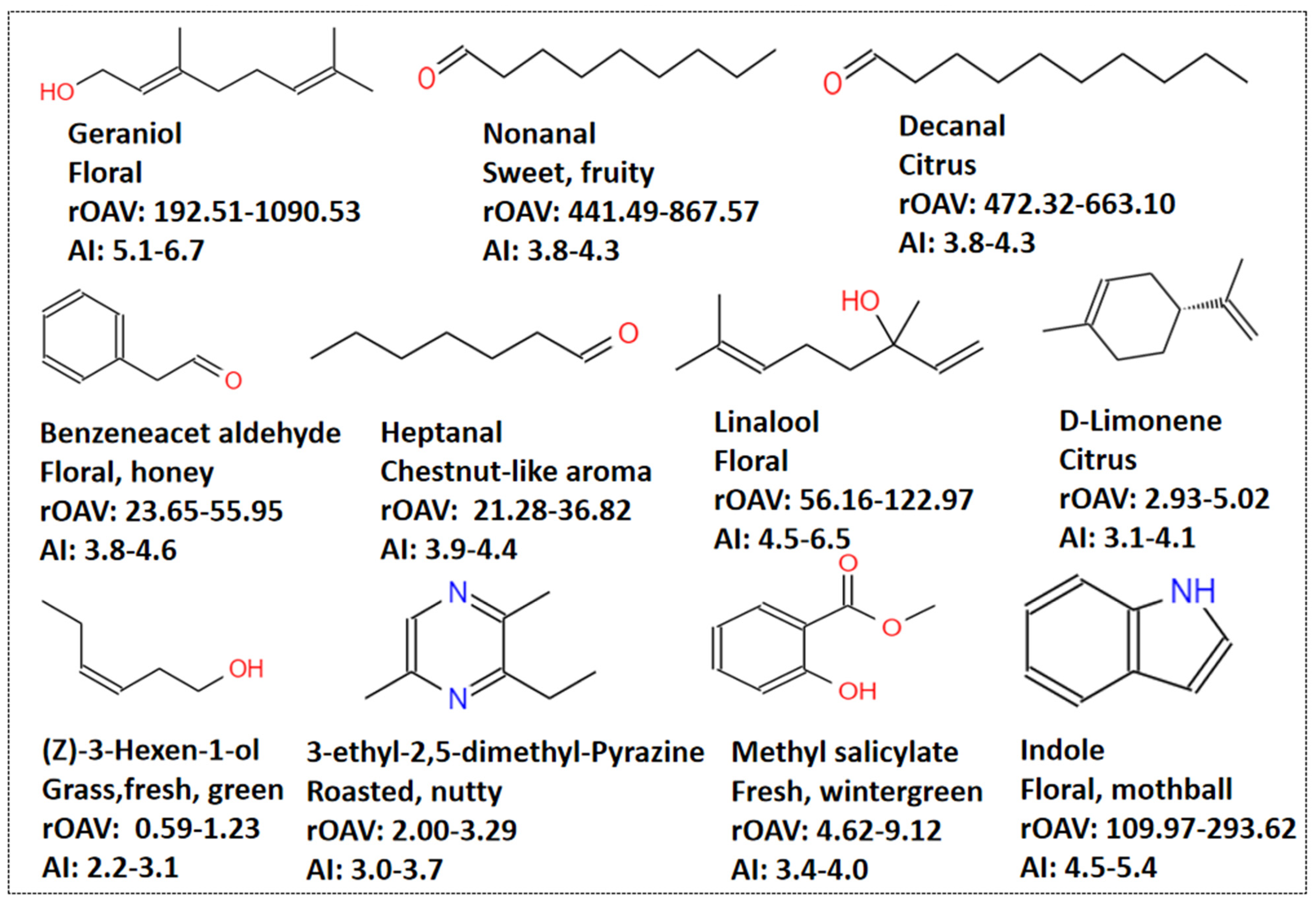
32]. By querying the aroma thresholds of each volatile metabolite in water, their rOAVs were calculated. Across the three FLZY samples, 11 volatile metabolites had an rOAV > 1. All 11 were among the aroma metabolites detected by GC-O and were also included in the 49 important aroma metabolites screened by O2PLS, suggesting that they may be key aroma components of FLZY.
Figure 3 presents the aroma intensity (AI), GC-O-perceived aroma characteristics, and rOAV of these 11 components. In the O2PLS model, geraniol, linalool, indole, benzeneacetaldehyde, and D-limonene contributed positively to floral aroma. Except for D-limonene, the aroma characteristics of the other four components detected by GC-O were floral. Among them, geraniol, linalool, and indole exhibited the strongest AI values (greater than 4.5). Furthermore, geraniol (mean content: 4864.02 µg/kg) and indole (mean content: 8600.79 µg/kg) were the most abundant aroma components in FLZY (
Table S4). The aroma characteristic of D-limonene detected by GC-O was citrus-like; this component may interact with floral compounds to enhance the overall floral fragrance. These five components may form the core skeleton of FLZY’s floral aroma. In other green teas, geraniol is typically found in higher content, while indole content is relatively lower [
33]. However, in FLZY, the indole content was 1.77 times that of geraniol. Indole is recognized as a characteristic floral component in Oolong tea, where it is often present in relatively high concentrations [
39]. Thus, the high indole content in FLZY may impart a distinctive floral character.
In the GC-O analysis, heptanal exhibited a chestnut-like aroma, methyl salicylate was fresh and wintergreen-like, (Z)-3-hexen-1-ol was grassy, and 3-ethyl-2,5-dimethyl-pyrazine was roasted. According to O2PLS, decanal and heptanal contributed to chestnut aroma; nonanal and methyl salicylate contributed to clean and refreshing notes; (Z)-3-hexen-1-ol contributed to grassy odor; and 3-ethyl-2,5-dimethyl-pyrazine contributed to roasted aroma. These components may constitute the core skeleton for the chestnut, clean and refreshing, grassy, and roasted aroma notes in FLZY. In conclusion, these 11 key aroma components may play a dominant role in the formation of FLZY’s unique aroma profile.
3.4. The Metabolite Basis of the Unique Taste of FLZY
A total of 279 non-volatile metabolites were identified (
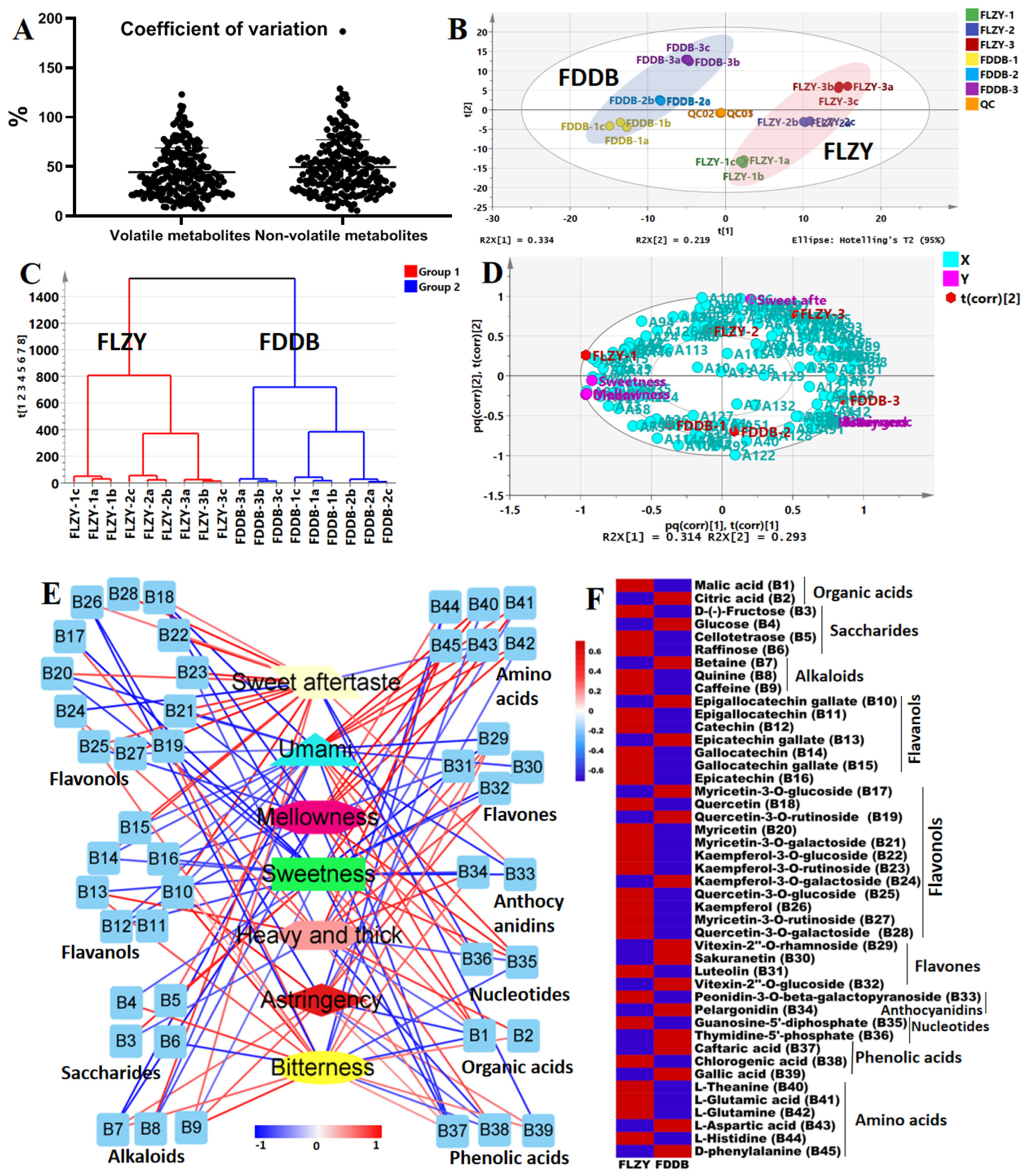
Table S9), categorized as 85 flavonoids, 48 nucleotides, 35 organic acids, 22 amino acids, 22 phenolic acids, 19 saccharides, 19 saponins, 10 tannins, 9 alkaloids, 7 lipids, and 3 vitamins. Based on the coefficient of variation, the influence of cultivar differences on non-volatile metabolites (average CV: 44.40%) was greater than on volatile metabolites (average CV: 40.56%) in FLZY (
Figure 4A), suggesting a greater potential for improving non-volatile metabolites in tea plants.
The results of PCA and HCA were consistent, clearly distinguishing the samples of the two cultivars into two separate groups (
Figure 4B,C). This indicates that the non-volatile metabolites of the two cultivars differ substantially and that the differences in non-volatile metabolites driven by the tea plant cultivar itself have a greater impact than the seasonal variation in spring. This finding is similar to the results of the volatile metabolite analysis described above (
Figure 2B,C). Previous studies have shown that differences in flavor metabolites due to cultivars cannot be fully compensated by cultivation or processing techniques. For example, L-theanine accumulation is more influenced by cultivar than by other factors [
40], which is consistent with the results of this study.
To explore the metabolic basis of FLZY’s unique taste, a PLS-DA model was established (
Figure S2). Based on the criteria of VIP > 1 and q < 0.05 [
35], 134 differential non-volatile metabolites were screened (
Table S10), which may contribute to FLZY’s distinctive taste. To investigate their specific contributions to taste sub-attributes, correlation analysis and an O2PLS model were performed. The O2PLS loading plot showed that the three FLZY samples were closely associated with sweet aftertaste, umami, sweetness, and mellowness, whereas the three FDDB samples were closer to bitterness, astringency, and heavy and thick mouthfeel (
Figure 4D). This result is consistent with the aforementioned taste sensory analysis. Using O2PLS-VIP > 1, correlation coefficient |r| ≥ 0.7 and
p < 0.05 as screening criteria [
30], 45 metabolites were identified as contributors to the seven taste sub-attributes.
Figure 4E and
Table S11 show the correlations between these 45 important taste metabolites and the seven taste sub-attributes.
Flavonol glycosides and catechins, including kaempferol-3-
O-glucoside, myricetin-3-
O-rutinoside, EGC, quercetin-3-
O-galactoside, kaempferol-3-
O-rutinoside, quinine, myricetin-3-
O-galactoside, GC, GCG, peonidin-3-
O-beta-galactopyranoside, quercetin-3-
O-glucoside, myricetin, and kaempferol, contributed positively to a sweet aftertaste. Their reported taste characteristics are velvety-like astringency, bitterness, and astringency [
30]. Sweet aftertaste is not directly induced by sugars but is a delayed sweet sensation resulting from the combined effects of diminishing bitterness/astringency, the release of potential sweet compounds, and taste contrast in the oral cavity. It is a highly important and pleasant characteristic of high-quality green tea [
21]. Some studies also indicate that flavonol glycosides can be hydrolyzed in the mouth to release glycosyl groups, which then interact with catechins, amino acids, and organic acids to produce a sweet aftertaste [
8]. The contents of these 13 components were higher in FLZY than in FDDB, which may be a key reason for FLZY’s pronounced sweet aftertaste.
The main compounds contributing to umami were L-theanine, L-glutamine, guanosine-5′-diphosphate, L-glutamic acid, L-aspartic acid, and thymidine-5′-phosphate, whose taste characteristics are primarily umami and sweet [
30]. Except for L-aspartic acid and thymidine-5′-phosphate, the contents of the other four were higher in FLZY than in FDDB (q < 0.05). Key contributors to sweetness included L-glutamic acid, guanosine-5′-diphosphate, L-theanine, cellotetraose, chlorogenic acid, and D-(
−)-fructose, all of which were more abundant in FLZY. Compounds contributing to mellowness were L-theanine, guanosine-5′-diphosphate, L-glutamine, L-aspartic acid, malic acid, raffinose, and L-histidine (q < 0.05). Except for L-aspartic acid, the contents of the other six were higher in FLZY. Major contributors to bitterness were EGCG, caffeine, betaine, vitexin-2′-
O-rhamnoside, and GA, which are characterized mainly by bitterness and astringency [
8]. All five were more abundant in FDDB. Key contributors to astringency were EGCG, kaempferol-3-
O-galactoside, myricetin-3-
O-glucoside, catechin, and EC, also associated with bitterness and astringency [
8]. Except for catechin, the other four were higher in FDDB. Components contributing to heavy and thick included glucose, D-phenylalanine, vitexin-2”-
O-glucoside, ECG, quercetin-3-
O-rutinoside, pelargonidin, EGCG, citric acid, sakuranetin, quercetin, caftaric acid, and luteolin. Except for quercetin and luteolin, the other 10 were more abundant in FDDB (q < 0.05).
In summary, tea plant cultivar differences had a substantial impact on the non-volatile metabolite profiles of Fuliang tea. Forty-five important taste metabolites were associated with the formation of FLZY’s unique taste. Thirteen taste components (mainly flavonols and their glycosides) with positive contributions to sweet aftertaste were highly accumulated in FLZY, potentially explaining its strong sweet aftertaste. Subsequently, absolute quantification and Dot analysis of taste metabolites were performed to screen for key taste components.
3.5. Identification of Key Taste Metabolites in FLZY
Absolute quantitative analysis was performed on forty-eight non-volatile metabolites (
Table S12). Macroscopically, the average contents of tea polyphenols and total catechins in FLZY were 199.80 mg/g and 117.92 mg/g, respectively, both lower than those in FDDB. The average total free amino acid content in FLZY was 40.25 mg/g, higher than that in FDDB (38.72 mg/g). The average total flavonol glycoside content in FLZY was 4.89 mg/g, which was 2.08 times higher than that in FDDB (2.35 mg/g). High levels of tea polyphenols and catechins impart bitterness and astringency to tea infusions, whereas high free amino acid content contributes to umami and briskness [
7]. The relatively higher free amino acid content combined with lower tea polyphenol and catechin levels in FLZY may contribute to its superior taste quality. The absolute metabolite concentrations were consistent with the trends observed in the aforementioned metabolomics data.
The concentrations of kaempferol-3-
O-rutinoside, quercetin-3-
O-galactoside, myricetin-3-
O-rutinoside, and kaempferol-3-
O-glucoside in FLZY were 11.75, 3.73, 2.33, and 2.24 times higher than those in FDDB, respectively. Kaempferol-3-
O-rutinoside was the most abundant flavonol glycoside in FLZY (average 2.35 mg/g), compared to only 0.20 mg/g in FDDB. Its content in Longjing green tea is approximately 0.05 mg/g [
41]. Therefore, FLZY may be a cultivar that specifically accumulates kaempferol-3-
O-rutinoside. Consistent with previous analyses, this compound enhanced the sweet aftertaste, potentially explaining the notably strong sweet aftertaste of FLZY.
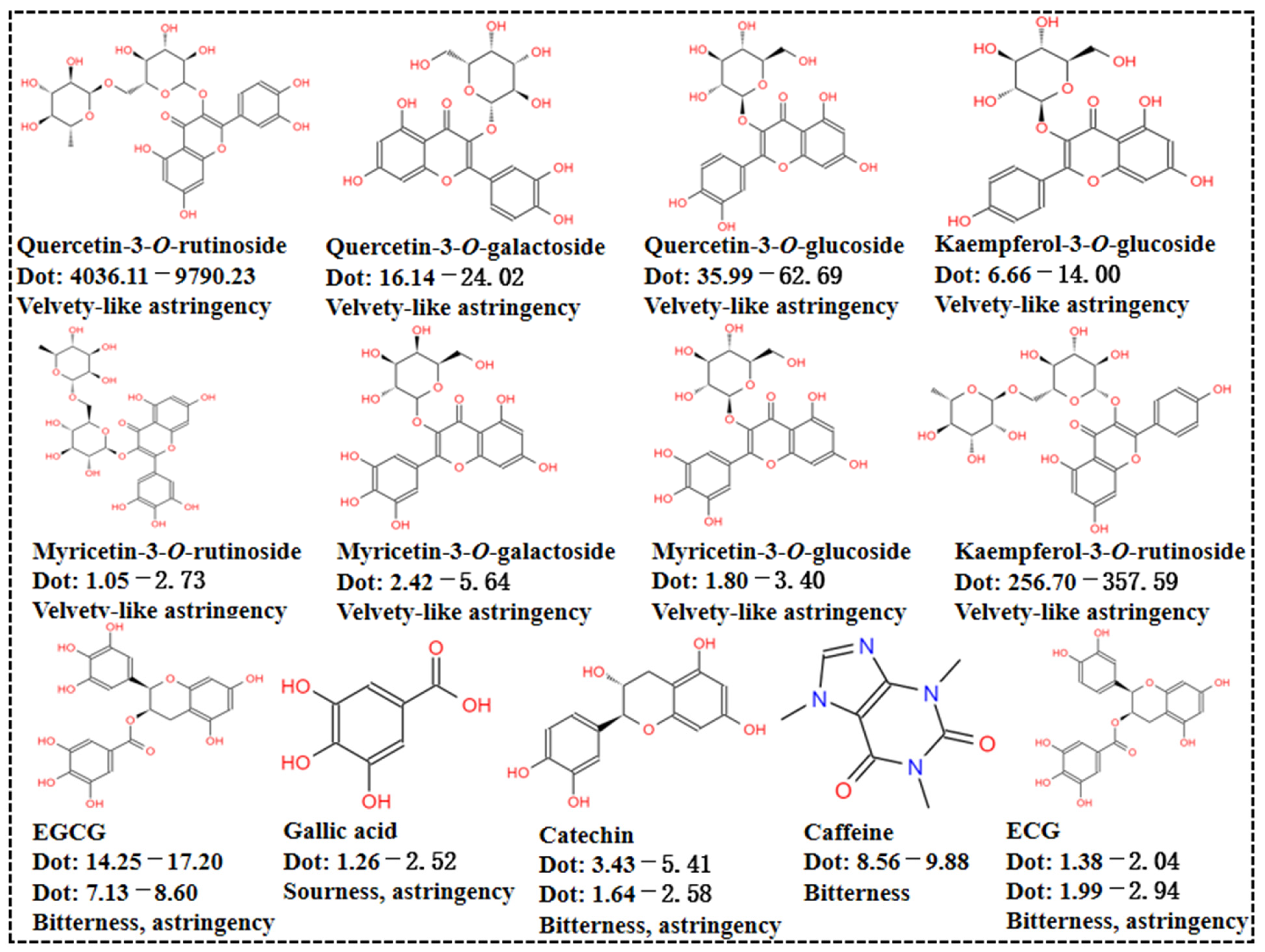
A metabolite with a Dot value > 1 is considered a key taste component, indicating its concentration in the tea infusion is perceptible [
8]. In FLZY, 13 metabolites had Dot > 1 (
Figure 5;
Table S12), including 8 flavonol glycosides, 3 catechins, GA, and caffeine. These components may play important roles in the distinctive taste of FLZY. The eight flavonol glycosides primarily impart a velvety astringency [
8]. Further analysis revealed that, except for kaempferol-3-
O-galactoside and quercetin-3-
O-rutinoside, which contributed key bitterness and astringency, the other six flavonol glycosides were key contributors to sweet aftertaste.
Among all metabolites, quercetin-3-
O-rutinoside had the highest Dot value, ranging from 4036.11 to 9790.2. This compound also exhibits high Dot values in other teas, for example, 26,707.12 in Longjing tea [
41]. In FLZY, the Dot value range for kaempferol-3-
O-rutinoside was 256.70–357.59. In contrast, its Dot value in other teas is typically below 20 or 10 (e.g., <10 in Longjing tea) [
41]. This suggests that kaempferol-3-
O-rutinoside may contribute to the sweet aftertaste of FLZY.
Components with 1 > Dot > 0.1 primarily influence tea taste through interactions with other compounds [
30]. In FLZY, compounds with Dot values between 0.1 and 1 were mainly umami- or sweetness-contributing amino acids and organic acids. These sub-threshold compounds may interact with key taste metabolites, contributing to FLZY’s unique taste profile.
3.6. Verification of Key Flavor Metabolites via Flavor Recombination and Omission Experiments
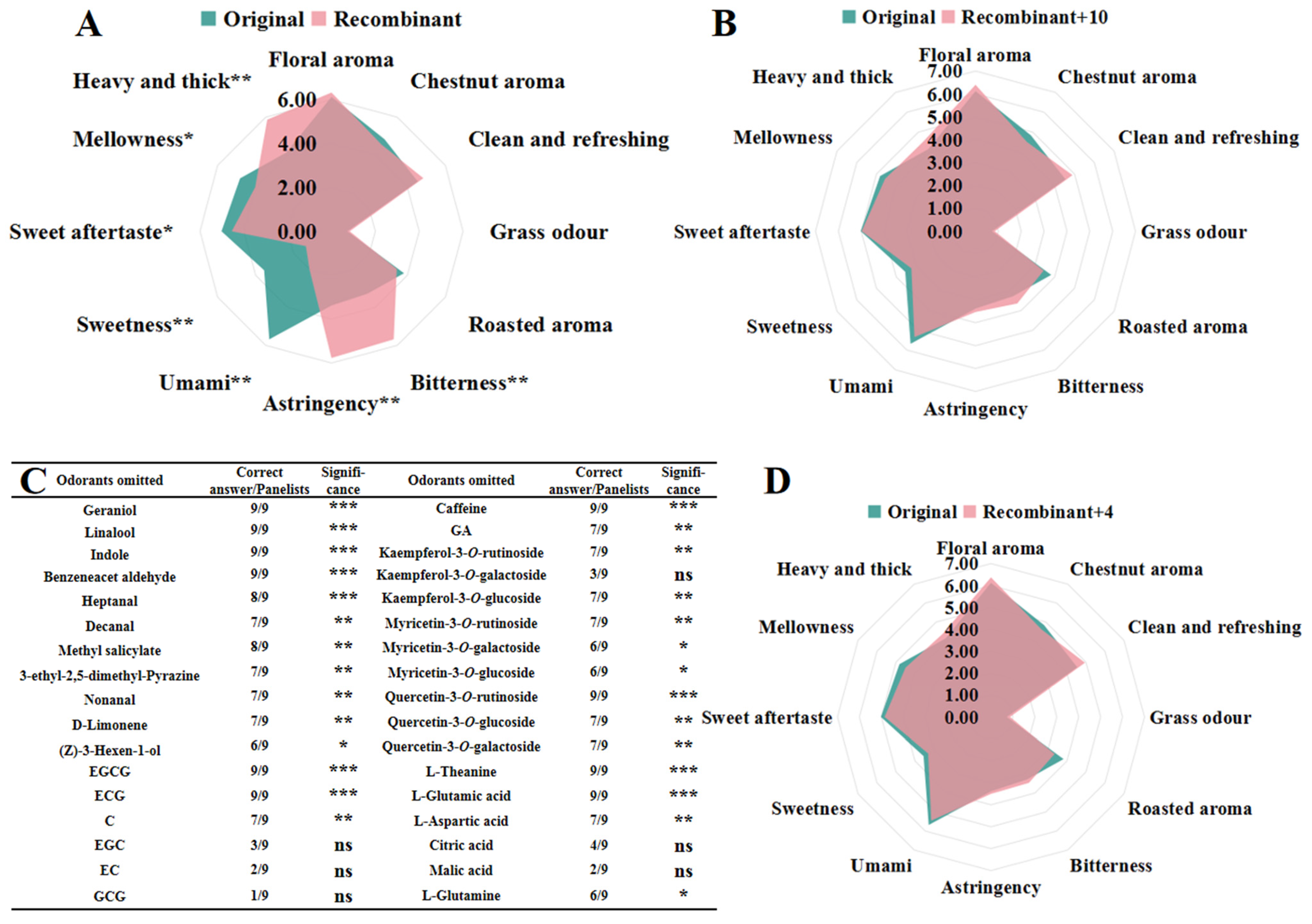
To verify the accuracy of the 11 key aroma and 13 key taste components identified above, flavor recombination and omission experiments were conducted. Using FLZY-1 (the highest quality FLZY sample) as the control (Original), a recombinant sample (Recombinant) was prepared by adding the 11 key aroma and 13 key taste components at their respective concentrations found in the FLZY-1 infusion to pure water. QDA was used to evaluate 5 aroma and 7 taste sub-attributes. The intensities of the five aroma sub-attributes were very similar between the Recombinant and Original samples; although not perfectly overlapping, no significant differences were observed (
p > 0.05). However, significant differences were found for all seven taste sub-attributes (
p < 0.05) (
Figure 6A). Bitterness, astringency, and “heavy and thick” mouthfeel were higher in the Recombinant, while umami, sweetness, mellowness, and sweet aftertaste were lower compared to the Original (
p < 0.05). This suggested that the 13 key taste components selected based on Dot > 1 were insufficient to fully reconstruct the taste. Previous studies have shown that components with Dot < 1 may also contribute to the overall taste of teas like CTC black tea [
42]. Therefore, we hypothesized that components in FLZY with Dot < 1 might also play key roles.
To test this, a second recombinant sample (Recombinant+10) was prepared by adding, in addition to the original 24 key components, 10 taste components with Dot values between 0.1 and 1 found in FLZY-1. These were: L-theanine, L-glutamic acid, L-aspartic acid, L-glutamine, EGC, EC, GCG, kaempferol-3-
O-galactoside, citric acid, and malic acid. QDA evaluation revealed that both the aroma and taste profiles of Recombinant+10 and Original were very similar, with no significant differences for any sub-attribute (
p > 0.05) (
Figure 6B). The addition of these 10 components was associated with increased umami, sweetness, mellowness, and sweet aftertaste and decreased bitterness, astringency, and “heavy and thick” mouthfeel (
p < 0.05), suggesting that some components with Dot < 1 are key flavor contributors.
Omission experiments were then conducted to investigate the contribution of individual components. In a three-alternative forced-choice test, each of the 11 aroma and 23 taste components was omitted sequentially. If the number of correct judgments by the 9 evaluators reached statistical significance, the omitted component was deemed a key flavor component, as its absence caused a significant change in flavor [
28]. The results showed that 28 components reached significance (
p < 0.05): all 11 aroma components and 17 taste components (
Figure 6C). This indicated that the initially selected 11 aroma and 13 taste components (Dot > 1) were indeed key. Among the 10 components with Dot < 1 tested, 4 showed significant differences when omitted: L-theanine and L-glutamic acid (
p < 0.001), L-aspartic acid and L-glutamine (
p < 0.01). The other 6 components (EGC, EC, GCG, kaempferol-3-
O-galactoside, citric acid, malic acid) showed no significant difference (
p > 0.05), indicating they are not key taste components.
Consequently, a third recombinant sample (Recombinant+4) was prepared by adding only the 4 newly suggested key components (L-theanine, L-glutamic acid, L-aspartic acid, L-glutamine) along with the original 24 key components to pure water. QDA showed no significant differences between Recombinant+4 and Original for any aroma or taste sub-attribute (
p > 0.05) (
Figure 6D), further suggesting the key roles of these four amino acids. Their addition was associated with increased umami, sweetness, mellowness, and sweet aftertaste in the recombinant by 171.1%, 145.2%, 11.9%, and 6.6%, respectively, and decreased bitterness, astringency, and “heavy and thick” mouthfeel by 39.1%, 39.3%, and 25.2%, respectively.
In conclusion, the three recombination experiments and the omission experiments collectively identified 28 key flavor components for FLZY. Among these, the four amino acids with Dot < 1—L-theanine, L-glutamic acid, L-aspartic acid, and L-glutamine—appeared to play important roles in enhancing umami, sweetness, mellowness, and sweet aftertaste while reducing bitterness, astringency, and “heavy and thick” mouthfeel in FLZY.
It should be noted that the nominal concentrations were based on the levels originally detected in the FLZY-1 tea infusions. A limitation of this study is the lack of independent analytical validation for the final concentrations in the recombination buffers. Additionally, we did not statistically evaluate potential synergistic or antagonistic interactions among metabolites in our recombination and omission experiments. Therefore, whether the observed flavor contributions are additive or involve non-linear interactions remains unknown, and future studies using factorial designs or mixture models are required to address this question.
3.7. Metabolic Pathways of Key Flavor Metabolites in FLZY and the Influence of Spring Seasonal Changes
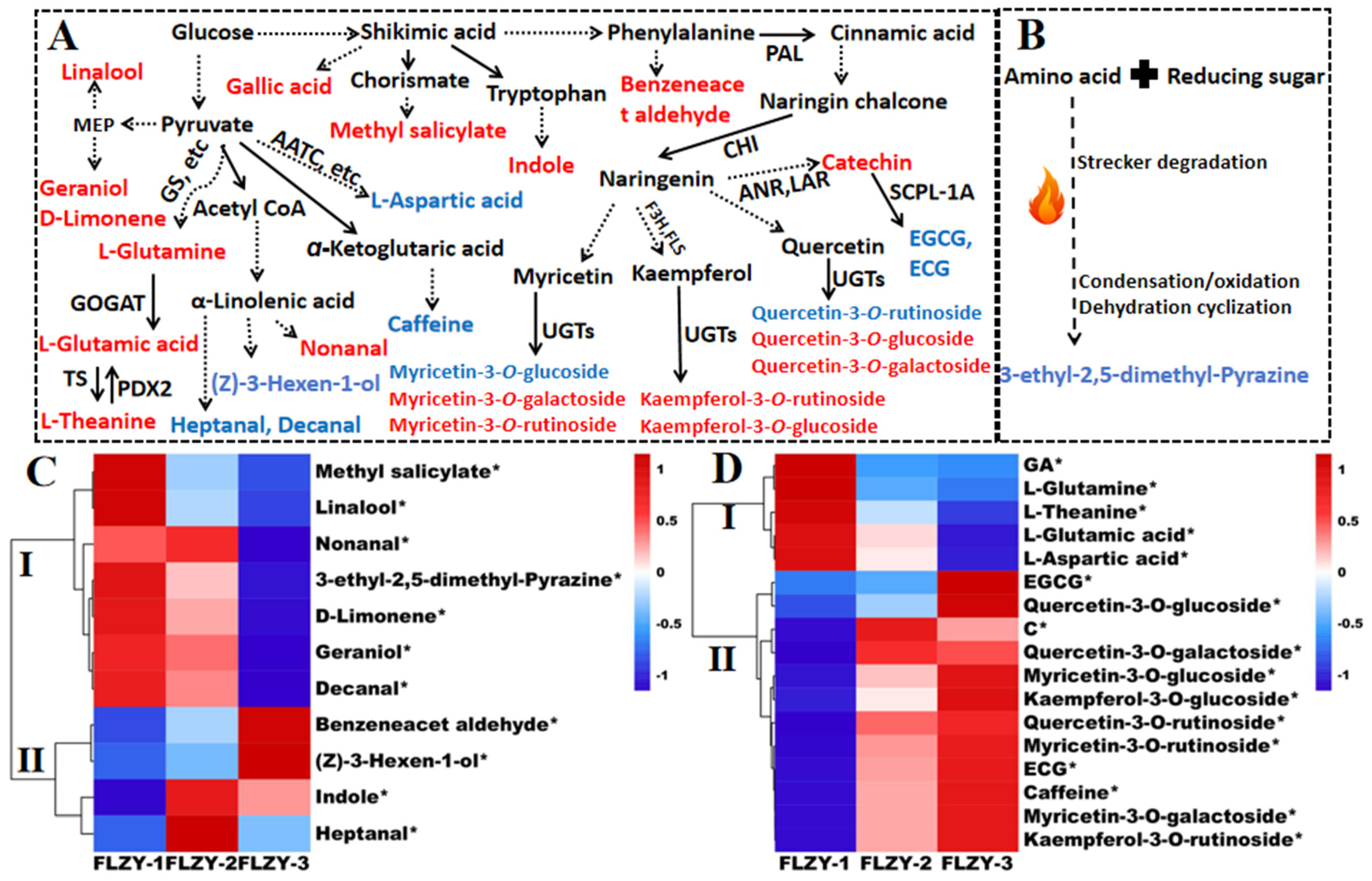
Figure 7A illustrates the metabolic pathways of 28 key flavor metabolites in tea plants. Catechins and flavonol glycosides are primarily synthesized through the flavonoid pathway [
31]. In FLZY, flavonol glycosides and non-ester catechins showed high accumulation, whereas ester catechins showed low accumulation. This may be attributed to the relatively high expression of UDP-glucose flavonoid-3-
O-glucosyl transferases (UGTs) and anthocyanidin reductase (ANR), coupled with the relatively low expression of serine carboxypeptidase-like clade 1A (SCPL-1A). The contents of L-theanine, L-glutamic acid, and L-glutamine were elevated, which speculatively may be related to high expression of glutamate synthase (GOGAT), theanine synthetase (TS), and glutamine synthetase (GS). Linalool, geraniol, and D-limonene were present in relatively high amounts, whereas (Z)-3-hexen-1-ol, heptanal, and decanal were relatively low. This pattern might be associated with a relatively active methylerythritol phosphate (MEP) pathway and a comparatively weak
α-linolenic acid metabolism pathway.
Figure 7B shows 3-ethyl-2,5-dimethyl-pyrazine, which is generated during the heat treatment of green tea processing. It is formed via the Strecker degradation of amino acids and reducing sugars under heating conditions [
37]. Although FLZY exhibited relatively high amino acid content, its glucose content was low, which may help explain its low pyrazine content. Overall, core pathways—including phenylalanine metabolism, flavonoid biosynthesis, amino acid metabolism,
α-linolenic acid metabolism, and MEP metabolism in tea plants, as well as Strecker degradation during tea processing—may have played an important role in shaping the unique flavor profile of FLZY.
3.8. Influence of Spring Seasonal Changes on Key Flavor Metabolites in FLZY
In the QDA, spring seasonal changes were found to alter the flavor of FLZY. Furthermore, the influence of seasonal variation on key flavor metabolites was analyzed. The effect of spring seasonal changes on 11 key aroma components could be classified into two categories (
Figure 7C). The first category included seven key aroma components that showed a decreasing trend from early to late spring (
p < 0.05): geraniol, linalool, and D-limonene, which contribute to floral aroma; 3-ethyl-2,5-dimethyl-pyrazine, which contributes to roasted aroma; and methyl salicylate and nonanal, which contribute to clean and refreshing notes. The second category comprised four key aroma components that exhibited an increasing trend (
p < 0.05), including (Z)-3-hexen-1-ol, which contributes to grassy odor; heptanal, associated with chestnut aroma; and indole and benzaldehyde, which contribute to floral aroma. Previous studies have confirmed that tea aroma is highest in autumn, followed by spring and summer, and weakens from spring to summer [
43], which is consistent with the findings of this study. In spring, many floral aroma metabolites in FLZY decreased seasonally, which may reduce its overall aromatic quality.
The influence of spring seasonal changes on 17 key taste components could also be divided into two categories (
Figure 7D). The first category included five key taste components with a decreasing trend (
p < 0.05): L-theanine, L-glutamine, L-glutamic acid, and L-aspartic acid, which contribute to umami and sweetness. The second category consisted of 12 taste components with an increasing trend (
p < 0.05), primarily including flavonol glycosides that contribute to a sweet aftertaste, as well as catechins and caffeine that contribute to astringency, bitterness, and heavy and thick characteristics. Previous studies have reported that from early to late spring, carbon metabolism and flavonoid biosynthesis gradually increase, while nitrogen metabolism and amino acid synthesis weaken. This leads to an upward trend in flavonoid content and a downward trend in amino acids in tea plants [
24]. Additionally, recent research has shown that the high expression of
CsTHS1 and
CsGDH2.1 downregulates theanine content in tea plants during late spring [
44], which is consistent with the results of this study.
In summary, metabolites that contribute key superior flavor attributes (e.g., floral aroma and umami) decrease seasonally in spring, while those contributing to grassy odor, astringency, and bitterness increase seasonally. These seasonal changes may contribute to a decline in the flavor quality of FLZY.




 and
and