Vegetation-Mediated Soil Organic Carbon Differentiation and Carbon Sequestration Strategies in a Typical Wetland of the North China Plain
 ,
,
Abstract
1. Introduction
2. Results
2.1. SOC Fractions Distribution
2.2. Soil Physicochemical Properties and Enzyme Activities
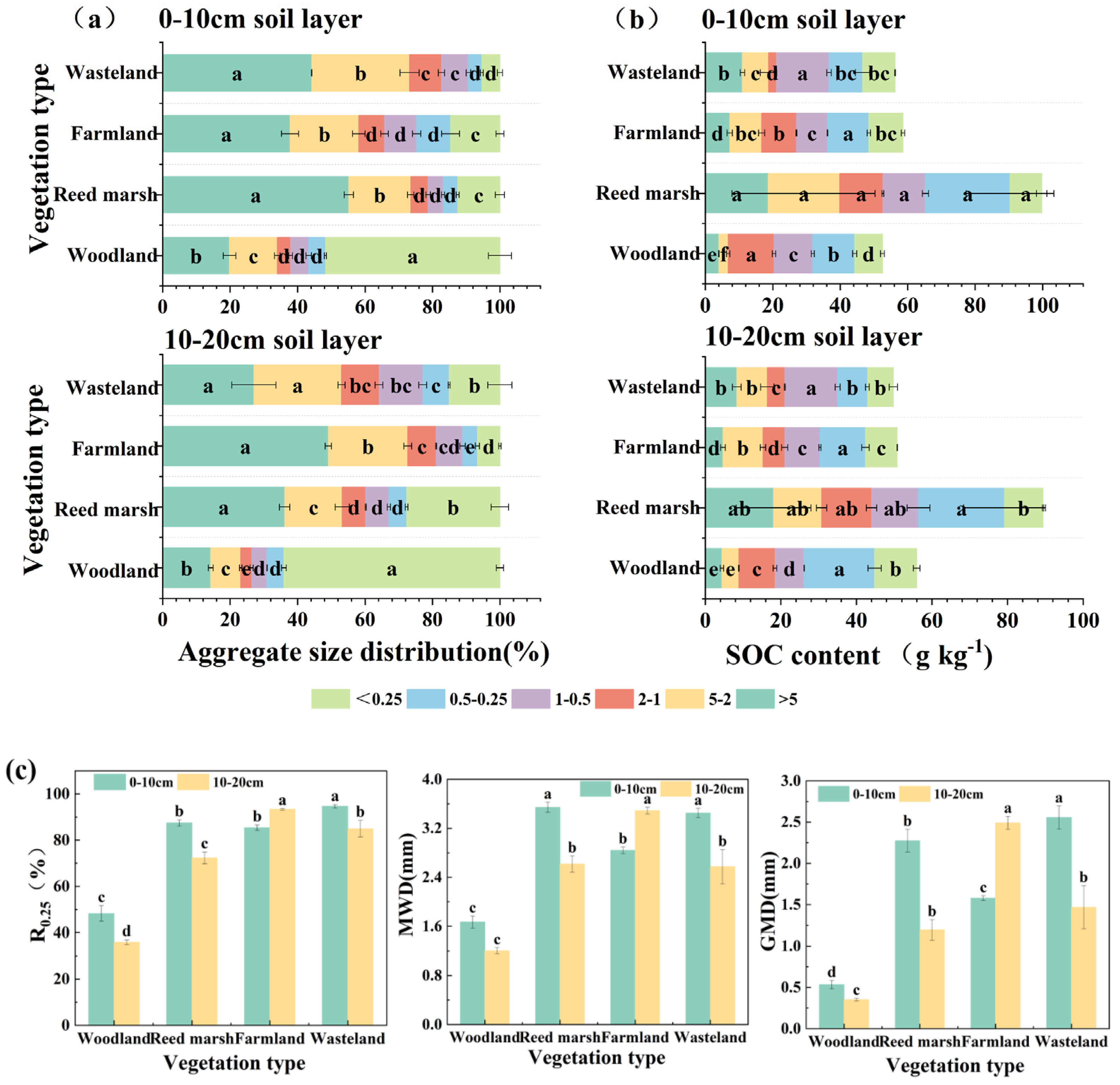
2.3. Soil Aggregate Distribution and SOC in Aggregate
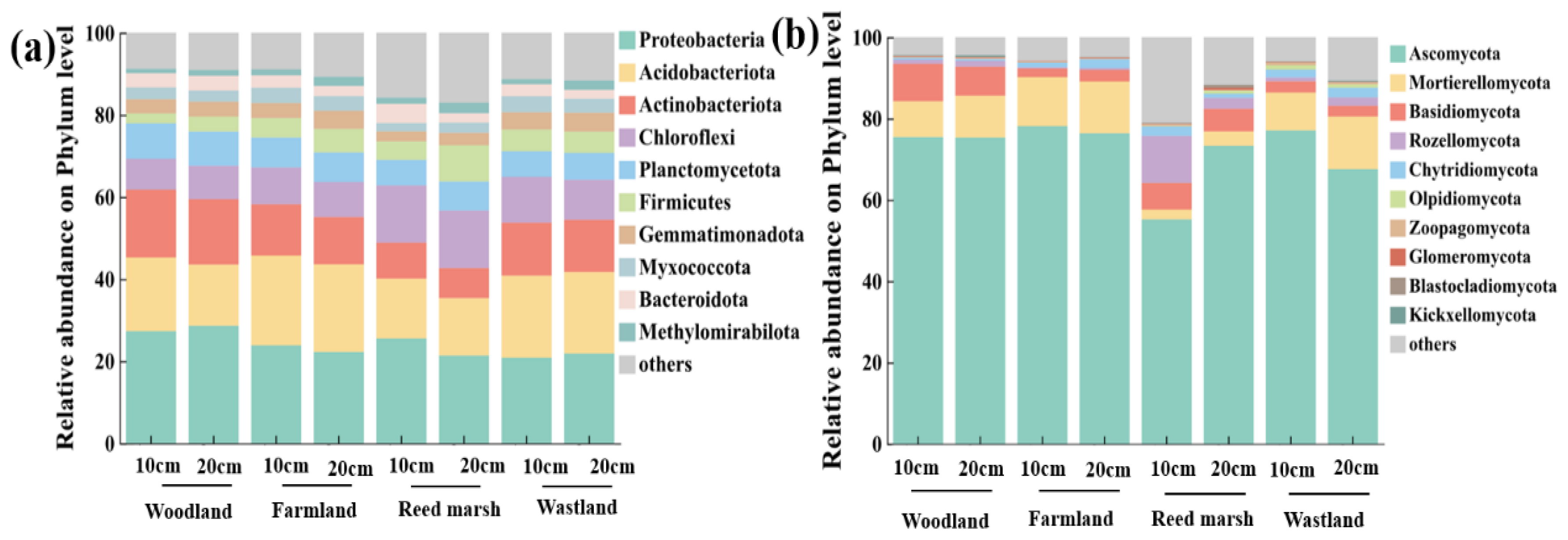
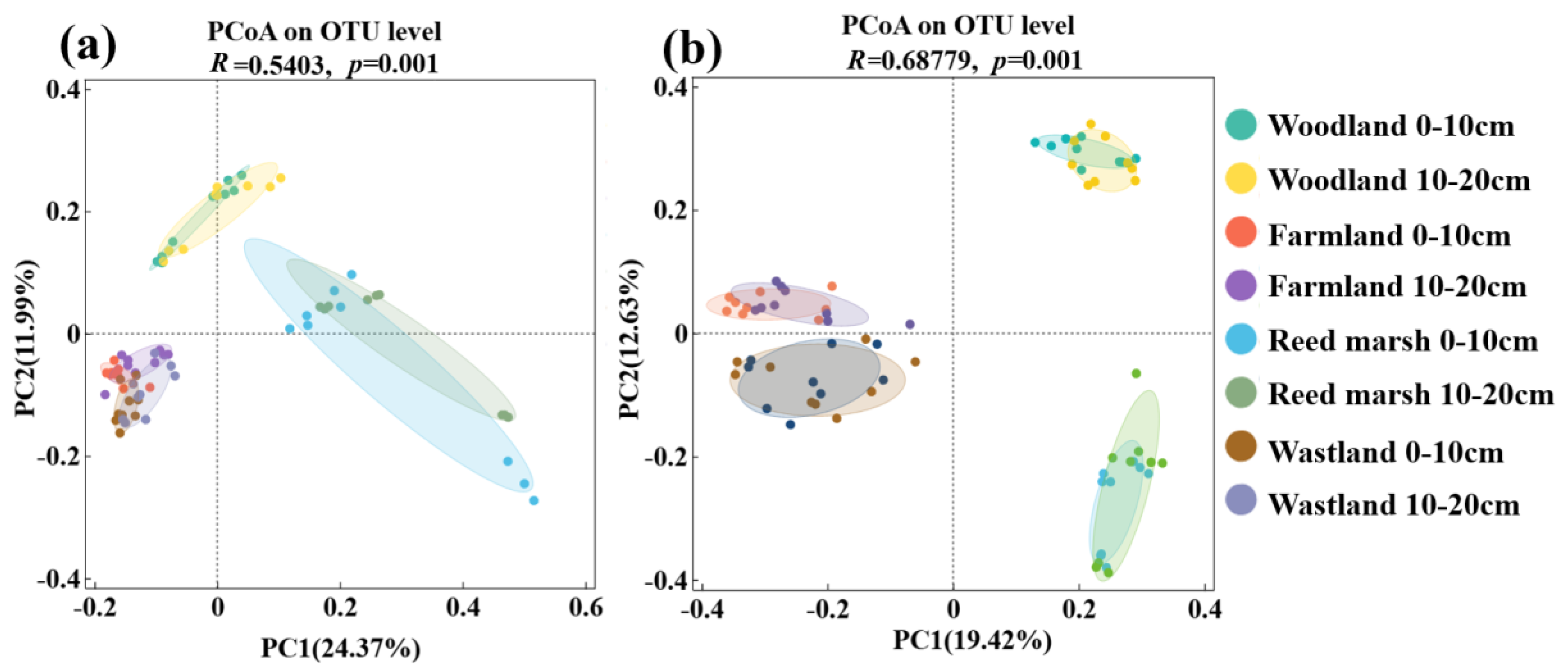
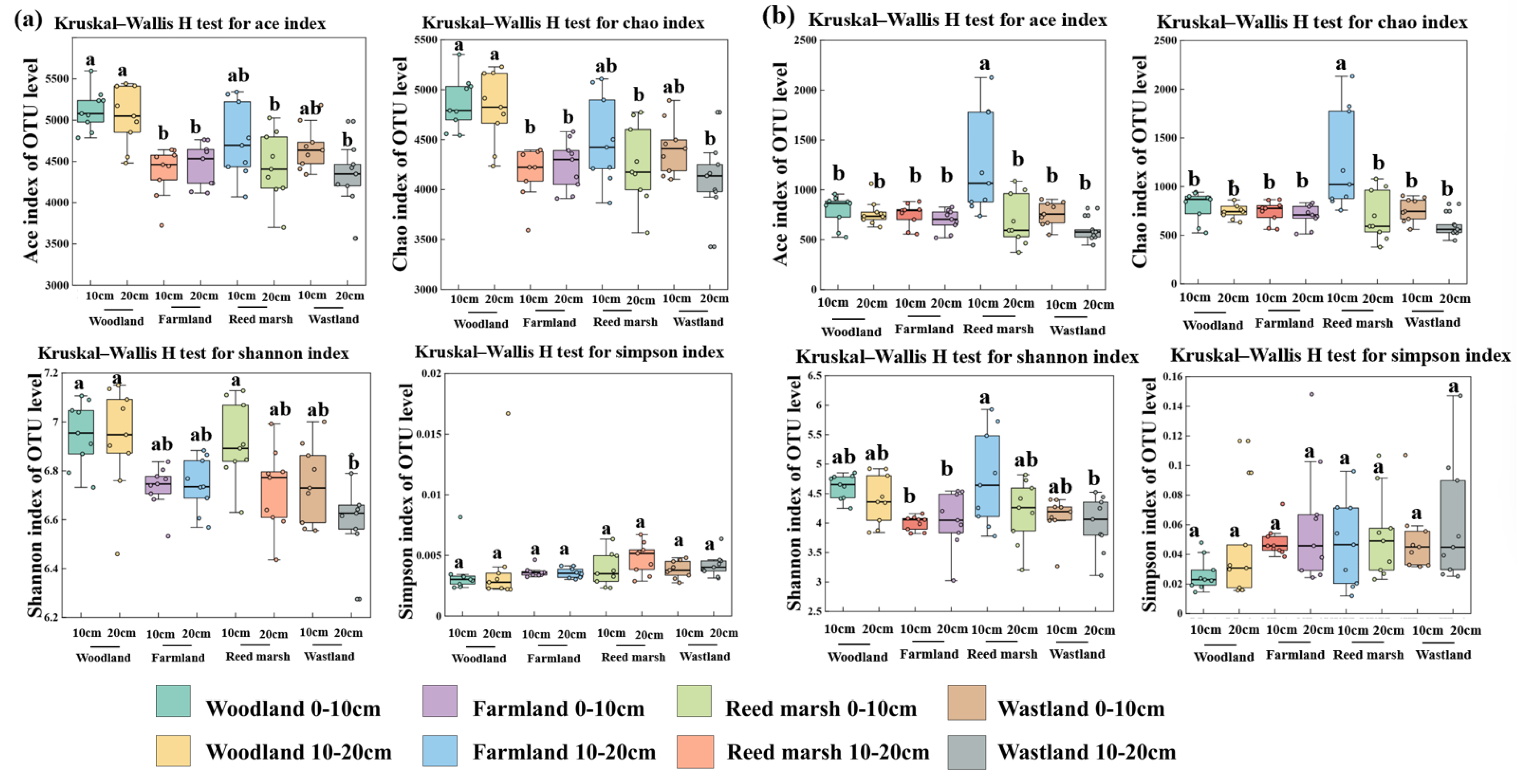
2.4. Bacterial and Fungal Community Composition and Diversity
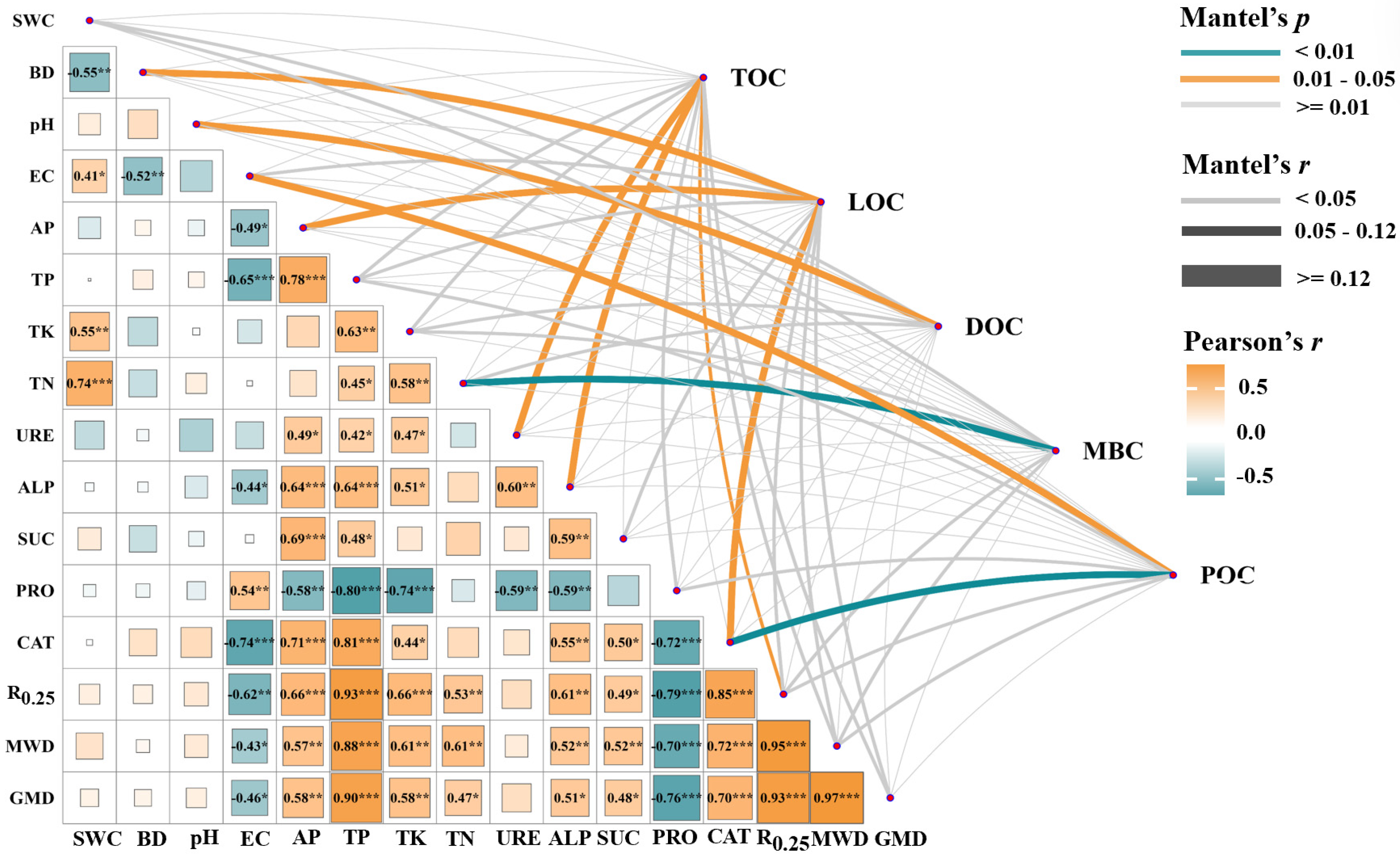
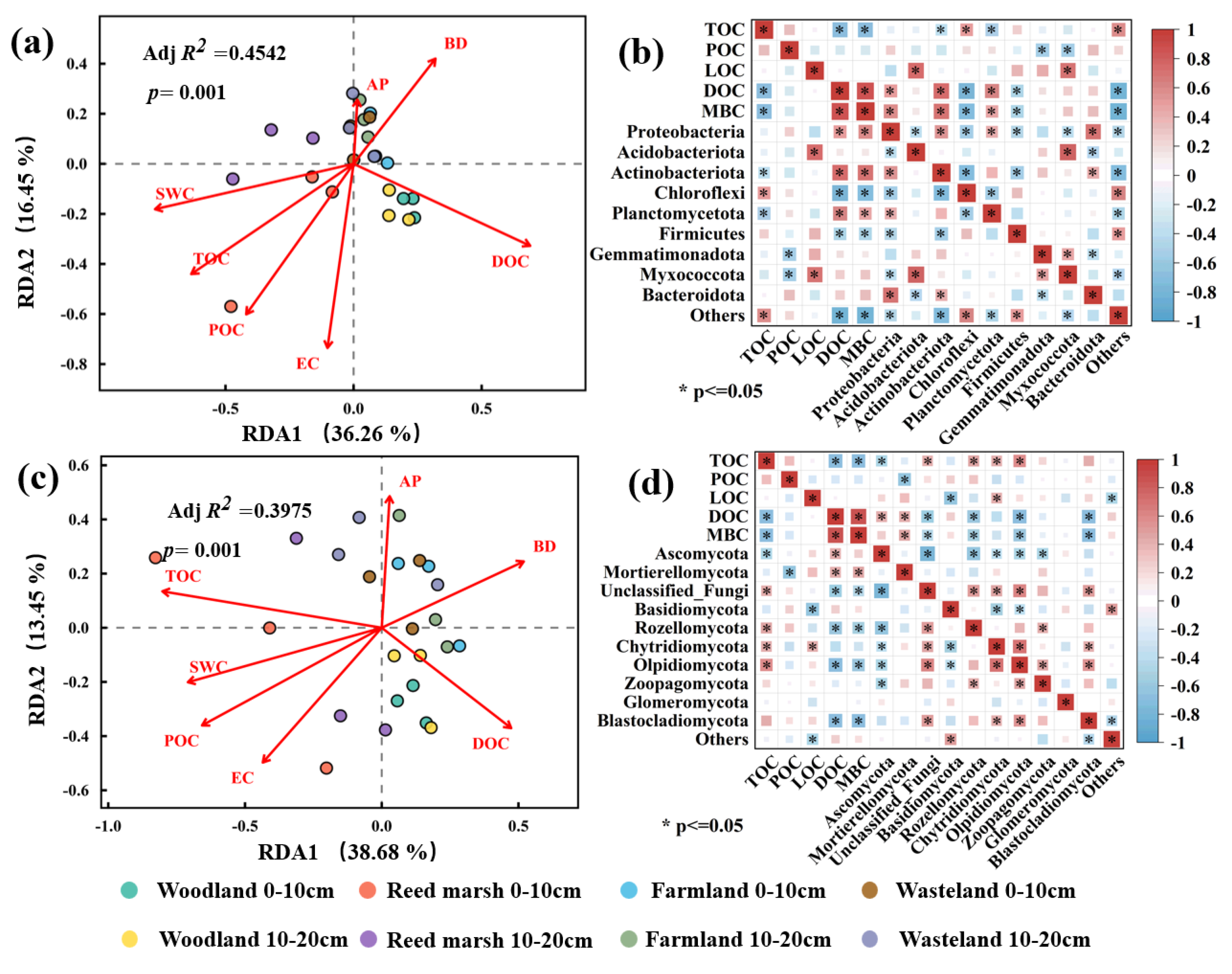
2.5. Coupling Relationships Among Soil Physicochemical Properties, Aggregate Stability, Enzyme Activities, Microbial Communities, and SOC Fractions Differentiation
3. Discussion
3.1. Regulatory Mechanisms of Soil Physicochemical Properties on SOC Fractions
3.2. Physical Protection Mechanisms of Soil Aggregate on Soil Fractions
3.3. Microbial Mechanisms Underlying SOC Fractions Distribution
3.4. Restoration Strategies of Hengshui Lake Wetlands
4. Materials and Methods
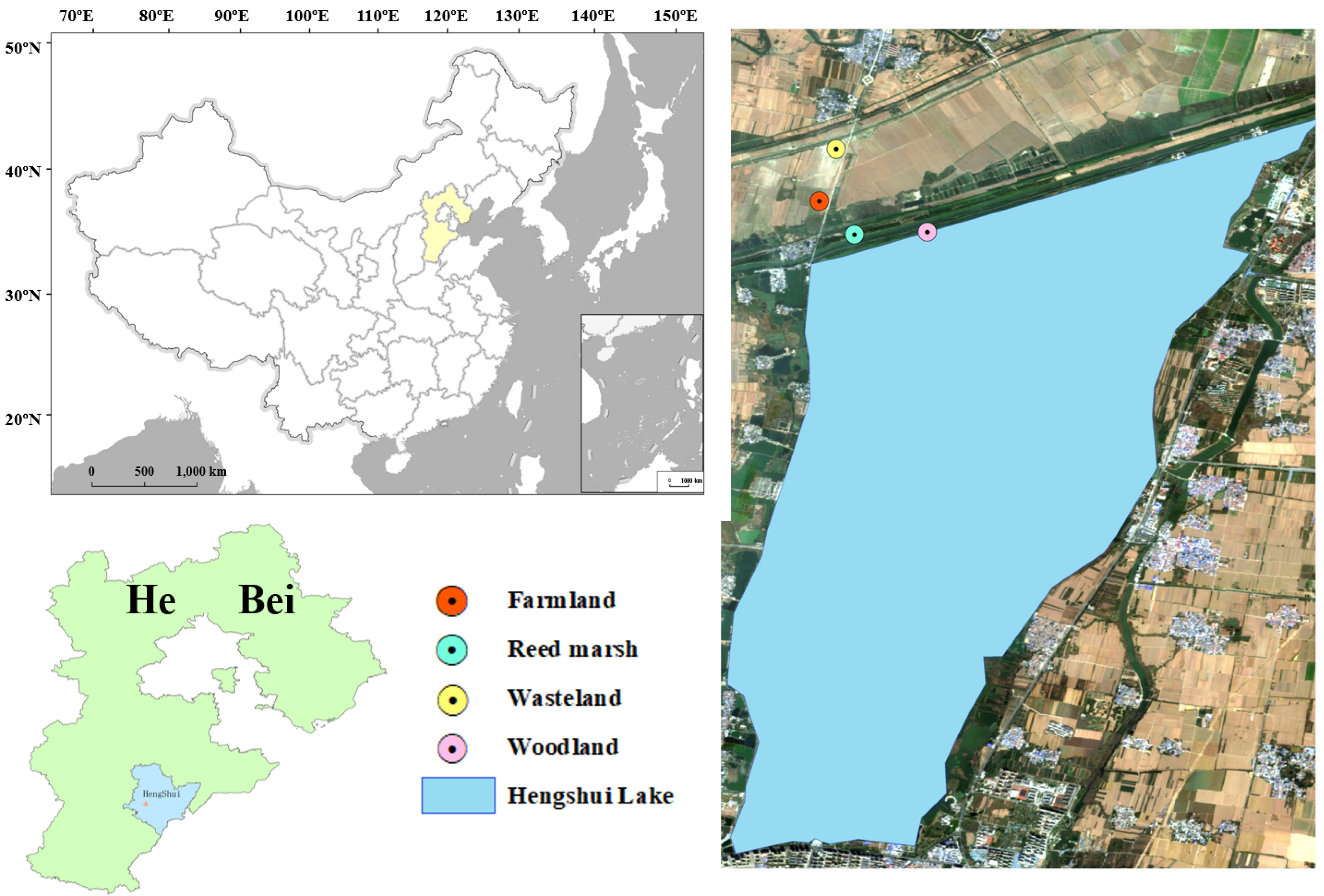
4.1. Study Area
4.2. Sampling Design and Soil Collection
4.3. Analysis of Soil Physicochemical Properties, SOC Fractions and Enzyme Activity
4.4. Soil Aggregate Fractionation and Stability Evaluation
4.5. DNA Extraction, PCR Amplification, and High-Throughput Sequencing
4.6. Sequencing Data Processing
4.7. Statistical Analysis
5. Conclusions
Author Contributions
Funding
Data Availability Statement
Acknowledgments
Conflicts of Interest
References
- Griscom, B.W.; Adams, J.; Ellis, P.W.; Houghton, R.A.; Lomax, G.; Miteva, D.A.; Schlesinger, W.H.; Shoch, D.; Siikamäki, J.V.; Smith, P.; et al. Natural climate solutions. Proc. Natl. Acad. Sci. USA 2017, 114, 11645–11650. [Google Scholar] [CrossRef]
- Ni, B.B.; Yu, X.F.; Duan, X.; Zou, Y.C. Wetland soil organic carbon balance is reversed by old carbon and iron oxide additions. Front. Microbiol. 2023, 14, 1327265. [Google Scholar] [CrossRef]
- Chen, H.; Xu, X.; Fang, C.; Li, B.; Nie, M. Differences in the temperature dependence of wetland CO2 and CH4 emissions vary with water table depth. Nat. Clim. Change 2021, 11, 766–771. [Google Scholar] [CrossRef]
- Chen, B.; Zhang, M.Q.; Yang, R.; Tang, W.L. Spatiotemporal variations in the carbon sequestration capacity of plateau lake wetlands regulated by land use control under policy guidance. Land 2023, 12, 1695. [Google Scholar] [CrossRef]
- Ji, H.; Han, J.G.; Xue, J.M.; Hatten, J.A.; Wang, M.H.; Guo, Y.H.; Li, P.P. Soil organic carbon pool and chemical composition under different types of land use in wetland: Implication for carbon sequestration in wetlands. Sci. Total Environ. 2020, 716, 136996. [Google Scholar] [CrossRef]
- Moreno-Mateos, D.; Power, M.E.; Comín, F.A.; Yockteng, R. Structural and functional loss in restored wetland ecosystems. PLoS Biol. 2012, 10, e1001247. [Google Scholar] [CrossRef]
- Kayranli, B.; Scholz, M.; Mustafa, A.; Hedmark, Å. Carbon storage and fluxes within freshwater wetlands: A critical review. Wetlands 2009, 30, 111–124. [Google Scholar] [CrossRef]
- Blanco-Canqui, H.; Shapiro, C.A.; Wortmann, C.S.; Drijber, R.A.; Mamo, M.; Shaver, T.M.; Ferguson, R.B. Soil Organic Carbon: The value to soil properties. J. Soil Water Conserv. 2013, 68, 129–134. [Google Scholar] [CrossRef]
- Lehmann, J.; Kleber, M. The contentious nature of soil organic matter. Nature 2015, 528, 60–68. [Google Scholar] [CrossRef] [PubMed]
- Averill, C.; Turner, B.L.; Finzi, A.C. Mycorrhiza-mediated competition between plants and decomposers drives soil carbon storage. Nature 2014, 505, 543. [Google Scholar] [CrossRef]
- Jobbágy, E.G.; Jackson, R.B. The vertical distribution of soil organic carbon and its relation to climate and vegetation. Ecol. Appl. 2000, 10, 423–436. [Google Scholar] [CrossRef]
- Liu, X.; Li, L.; Qi, Z.; Han, J.; Zhu, Y. Land-use impacts on profile distribution of labile and recalcitrant carbon in the Ili river valley, Northwest China. Sci. Total Environ. 2017, 586, 1038–1045. [Google Scholar] [CrossRef] [PubMed]
- Ren, Y.X.; Mao, D.H.; Abdalla, M.; Li, X.Y.; Shi, X.Y.; Xi, Y.B.; Chen, X.X.; Wang, Z.M.; Smith, P. Conservation and restoration can offset over half of the carbon emissions from wetland conversion in China. Environ. Sci. Technol. 2026, 60, 3994–4003. [Google Scholar] [CrossRef] [PubMed]
- Mortensen, E.O.; Abalos, D.; Engedal, T.; Lægsgaard, A.K.; Enggrob, K.; Mueller, C.W. Smart mixture design can steer the fate of root-derived carbon into mineral-associated and particulate organic matter in intensively managed grasslands. Glob. Change Biol. 2025, 31, e70117. [Google Scholar] [CrossRef]
- Yang, B.; Zhai, J.; He, M.J.; Ma, R.H.; Li, Y.S.; Zhang, H.Y.; Guo, J.C.; Hu, Z.H.; Zhang, W.H.; Bai, J.H. Linking soil properties and bacterial communities with organic matter carbon during vegetation succession. Plants 2025, 14, 937. [Google Scholar] [CrossRef] [PubMed]
- Georgiou, K.; Angers, D.A.; Champiny, R.E.; Cotrufo, M.F.; Craig, M.E.; Doetterl, S.; Grandy, A.S.; Lavallee, J.M.; Lin, Y.; Lugato, E.; et al. Soil carbon saturation: What do we really know? Glob. Change Biol. 2025, 31, e70197. [Google Scholar] [CrossRef]
- Cao, X.Q.; Xu, Y.T.; Wang, F.; Zhang, Z.L.; Xu, X.N. Changes of soil organic carbon and aggregate stability along elevation gradient in Cunninghamia lanceolata plantations. Sci. Rep. 2024, 14, 31778. [Google Scholar] [CrossRef]
- Zhu, L.X.; Xiao, Q.; Cheng, H.Y.; Shi, B.J.; Shen, Y.F.; Li, S.Q. Seasonal dynamics of soil microbial activity after biochar addition in a dryland maize field in North-Western China. Ecol. Eng. 2017, 104, 141–149. [Google Scholar] [CrossRef]
- Li, J.; Wen, Y.C.; Li, X.H.; Li, Y.T.; Zhang, Y.; Wang, X.; Liang, W.; Liu, X. Soil labile organic carbon fractions and soil organic carbon stocks as affected by long-term organic and mineral fertilization regimes in the North China Plain. Soil Tillage Res. 2018, 175, 281–290. [Google Scholar] [CrossRef]
- Bardgett, R.D.; Mommer, L.; de Vries, F.T. Going underground: Root traits as drivers of ecosystem processes. Trends Ecol. Evol. 2014, 29, 692–699. [Google Scholar] [CrossRef]
- Cotrufo, M.F.; Wallenstein, M.D.; Boot, C.M.; Denef, K.R.; Frey, S.D.; Megonigal, J.P.; Parton, W.J.; Hart, S.C. The microbial efficiency-matrix stabilization (MEMS) framework integrates plant litter decomposition with soil organic matter stabilization: Do labile plant inputs form stable soil organic matter? Glob. Change Biol. 2013, 19, 988–995. [Google Scholar] [CrossRef]
- Liang, C.; Schimel, J.P.; Jastrow, J.D. The importance of anabolism in microbial control over soil carbon storage. Nat. Microbiol. 2017, 2, 17105. [Google Scholar] [CrossRef]
- Rötzer, M.; Braunmiller, H.; Lehndorff, E.; Ray, N.; Scheibe, A.; Prechtel, A. Coupled C and N turnover in a dynamic pore scale model reveal the impact of exudate quality on microbial necromass formation. Soil 2026, 12, 205–226. [Google Scholar] [CrossRef]
- Peng, Y.Y.; Huang, J.L.; Peng, Y.Q.; Peng, Y.; Li, S.X.; Da Bu, X.T. Comparing the linkages between carbon components and soil aggregates in vegetable fields to continuous input of different carbon sources. PLoS ONE 2025, 20, e0323028. [Google Scholar] [CrossRef] [PubMed]
- Sokol, N.W.; Bradford, M.A. Microbial formation of stable soil carbon is more efficient from belowground than aboveground input. Nat. Geosci. 2019, 12, 46–50. [Google Scholar] [CrossRef]
- Ahmed, S.; Sarker, S.K.; Kamruzzaman, M.; Ema, J.A.; Naabeh, C.S.S.; Cudjoe, E.; Chowdhury, F.I.; Pretzsch, H. How biotic, abiotic, and functional variables drive belowground soil carbon stocks along stress gradient in the Sundarbans mangrove forest? J. Environ. Manag. 2023, 337, 117772. [Google Scholar] [CrossRef]
- Hassani, A.; Smith, P.; Shokri, N. Negative correlation between soil salinity and soil organic carbon variability. Proc. Natl. Acad. Sci. USA 2024, 121, e2317332121. [Google Scholar] [CrossRef] [PubMed]
- Guo, W.Z.; Meng, C.Z.; Zhang, Y.T.; Li, Y.Y. Multi-year carbon stock study of wetland ecosystem in Hengshui Lake national nature reserve. Desalin. Water Treat. 2023, 298, 223–241. [Google Scholar] [CrossRef]
- Government of Hengshui Municipal City. Hebei Hengshui Lake National Nature Reserve Special Plan (2018–2035); Government of Hengshui Municipal City: Hengshui, China, 2018.
- Ren, Q.; Yuan, J.; Wang, J.; Liu, X.; Ma, S.; Zhou, L.; Miao, L.; Zhang, J. Water level has higher influence on soil organic carbon and microbial community in Poyang Lake wetland than vegetation type. Microorganisms 2022, 10, 131. [Google Scholar] [CrossRef]
- Six, J.; Conant, R.T.; Paul, E.A.; Paustian, K. Stabilization mechanisms of soil organic matter: Implications for C-saturation of soils. Plant Soil 2002, 241, 155–176. [Google Scholar] [CrossRef]
- Cao, Q.; Wang, H.; Zhang, Y.; Lal, R.; Wang, R.; Ge, X.; Liu, J. Factors affecting distribution patterns of organic carbon in sediments at regional and national scales in China. Sci. Rep. 2017, 7, 5497. [Google Scholar] [CrossRef] [PubMed]
- Li, Y.; Wu, H.; Wang, J.; Cui, L.; Tian, D.; Wang, J.; Zhang, X.; Yan, L.; Yan, Z.; Zhang, K. Plant biomass and soil organic carbon are main factors influencing dry-season ecosystem carbon rates in the coastal zone of the Yellow River Delta. PLoS ONE 2019, 14, e0210768. [Google Scholar] [CrossRef] [PubMed]
- Wang, Y.C.; Bao, H.; Kavana, D.J.; Li, Y.C.; Li, X.Y.; Yan, L.L.; Xu, W.J.; Yu, B. Effects of vegetation types and soil properties on regional soil carbon and nitrogen in salinized reservoir wetland, Northeast China. Plants 2023, 12, 3767. [Google Scholar] [CrossRef] [PubMed]
- Freeman, C.; Ostle, N.; Kang, H. An enzymic ‘latch’ on a global carbon store. Nature 2001, 409, 149. [Google Scholar] [CrossRef] [PubMed]
- Regier, P.; Briceno, H.; Jaffé, R. Long-term environmental drivers of DOC fluxes: Linkages between management, hydrology and climate in a subtropical coastal estuary. Estuar. Coast. Shelf Sci. 2016, 182, 112–122. [Google Scholar] [CrossRef]
- Allison, S.D.; Wallenstein, M.D.; Bradford, M.A. Soil-carbon response to warming dependent on microbial physiology. Nat. Geosci. 2010, 3, 336–340. [Google Scholar] [CrossRef]
- Rath, K.M.; Rousk, J. Salt effects on the soil microbial decomposer community and their role in organic carbon cycling: A review. Soil Biol. Biochem. 2015, 81, 108–123. [Google Scholar] [CrossRef]
- Keiluweit, M.; Wanzek, T.; Kleber, M.; Nico, P.; Fendorf, S. Anaerobic microsites have an unaccounted role in soil carbon stabilization. Nat. Commun. 2017, 8, 1771. [Google Scholar] [CrossRef]
- Yang, C.; Lv, D.T.; Jiang, S.Y.; Lin, H.; Sun, J.Q.; Li, K.J.; Sun, J. Soil salinity regulation of soil microbial carbon metabolic function in the Yellow River Delta, China. Sci. Total Environ. 2021, 790, 148258. [Google Scholar] [CrossRef]
- Olk, D.C.; Bloom, P.R.; De Nobili, M.; Chen, Y.; McKnight, D.M.; Wells, M.J.M.; Weber, J. Using humic fractions to understand natural organic matter processes in soil and water: Selected studies and applications. J. Environ. Qual. 2019, 48, 1633–1643. [Google Scholar] [CrossRef]
- Piccolo, A. In memoriam Prof. F.J. Stevenson and the question of humic substances in soil. Chem. Biol. Technol. Agric. 2016, 3, 23. [Google Scholar] [CrossRef]
- Gerke, J. The central role of soil organic matter in soil fertility and carbon storage. Soil Syst. 2022, 6, 33. [Google Scholar] [CrossRef]
- Goranov, A.I.; Chen, H.; Duan, J.; Myneni, S.C.B.; Hatcher, P.G. Potentially massive and global non-pyrogenic production of condensed “black” carbon through biomass oxidation. Environ. Sci. Technol. 2024, 58, 2750–2761. [Google Scholar] [CrossRef] [PubMed]
- Lehmann, J.; Hansel, C.; Kaiser, C.; Kleber, M.; Maher, K.; Manzoni, S.; Nunan, N.; Reichstein, M.; Schimel, J.P.; Torn, M.S.; et al. Persistence of soil organic carbon caused by functional. Nat. Geosci. 2020, 13, 529–534. [Google Scholar] [CrossRef]
- Zhang, Q.; Feng, J.; Wu, J.J.; Zhang, D.D.; Chen, Q.; Li, Q.X.; Long, C.Y.; Feyissa, A.; Cheng, X.L. Variations in carbon-decomposition enzyme activities respond differently to land use change in central China. Land Degrad. Dev. 2019, 30, 459–469. [Google Scholar] [CrossRef]
- Dungait, J.A.J.; Hopkins, D.W.; Gregory, A.S.; Whitmore, A.P. Soil organic matter turnover is coverned by accessibility not recalcitrance. Glob. Change Biol. 2012, 18, 1781–1796. [Google Scholar] [CrossRef]
- Laganière, J.; Angers, D.A.; Paré, D. Carbon accumulation in agricultural soils after afforestation: A meta-analysis. Glob. Change Biol. 2010, 16, 439–453. [Google Scholar] [CrossRef]
- Liu, Y.Z.; Zhao, C.C.; Guo, J.W.; Zhang, L.N.; Xuan, J.; Chen, A.Q.; You, C.M. Short-term phosphorus addition augments the effects of nitrogen addition on soil respiration in a typical steppe. Sci. Total Environ. 2021, 761, 143211. [Google Scholar] [CrossRef]
- Fontaine, S.; Barot, S.; Barré, P.; Bdioui, N.; Mary, B.; Rumpel, C. Stability of organic carbon in deep soil layers controlled by fresh carbon supply. Nature 2007, 450, 277–280. [Google Scholar] [CrossRef]
- Kuzyakov, Y.; Blagodatskaya, E. Microbial hotspots and hot moments in soil: Concept & review. Soil Biol. Biochem. 2015, 83, 184–199. [Google Scholar]
- Li, Q.; Shi, J.; Li, G.; Hu, J.; Ma, R. Extracellular enzyme stoichiometry and microbial resource limitation following various grassland reestablishment in abandoned cropland. Sci. Total Environ. 2023, 870, 161746. [Google Scholar] [CrossRef]
- Li, Y.; Sang, J.; Zou, C.; Zhang, Q.; Yang, Q.; Xu, G.; Kim, D.G.; Denton, M.D.; Carmona, C.R.; Zhao, H.; et al. Impacts of conversion of cropland to grassland on the C-N-P stoichiometric dynamics of soil, microorganisms, and enzymes across China: A synthesis. Catena 2024, 246, 108456. [Google Scholar] [CrossRef]
- Moorhead, D.L.; Sinsabaugh, R.L. A theoretical model of litter decay and microbial interaction. Ecol. Monogr. 2006, 76, 151–174. [Google Scholar] [CrossRef]
- Sinsabaugh, R.L.; Lauber, C.L.; Weintraub, M.N.; Ahmed, B.; Allison, S.D.; Crenshaw, C.; Contosta, A.R.; Cusack, D.; Frey, S.; Gallo, M.E.; et al. Stoichiometry of soil enzyme activity at global scale. Ecol. Lett. 2008, 11, 1252–1264. [Google Scholar] [CrossRef]
- Mooshammer, M.; Wanek, W.; Hammerle, I.; Fuchslueger, L.; Hofhansl, F.; Knoltsch, A.; Schnecker, J.; Takriti, M.; Watzka, M.; Wild, B.; et al. Adjustment of microbial nitrogen use efficiency to carbon: Nitrogen imbalances regulate soil nitrogen cycling. Nat. Commun. 2014, 5, 3694. [Google Scholar] [CrossRef]
- Schmidt, M.W.I.; Torn, M.S.; Abiven, S.; Dittmar, T.; Guggenberger, G.; Janssens, I.A.; Kleber, M.; Kögel-Knabner, I.; Lehmann, J.; Manning, D.A.C.; et al. Persistence of soil organic matter as an ecosystem property. Nature 2011, 478, 49–56. [Google Scholar] [CrossRef]
- Baumert, V.L.; Vasilyeva, N.A.; Vladimirov, A.A.; Meier, I.C.; Kögel-Knabner, I.; Mueller, C.W. Root exudates induce soil macroaggregation facilitated by fungi in subsoil. Front. Environ. Sci. 2018, 6, 14. [Google Scholar] [CrossRef]
- Lavallee, J.M.; Soong, J.L.; Cotrufo, M.F. Conceptualizing soil organic matter into particulate and mineral-associated forms to address global change in the 21st century. Glob. Change Biol. 2020, 26, 261–273. [Google Scholar] [CrossRef] [PubMed]
- Abbaslou, H.; Hadifard, H.; Ghanizadeh, A.R. Effect of Cations and Anions on Flocculation of Dispersive Clayey Soils. Heliyon 2020, 6, e03462. [Google Scholar] [CrossRef]
- Yuan, H.M.; Zhang, A.Q.; Zhu, C.K.; Dang, H.K.; Zheng, C.L.; Zhang, J.P.; Cao, C.Y. Saline water irrigation changed the stability of soil aggregates and crop yields in a winter wheat-summer maize rotation system. Agronomy 2024, 14, 2564. [Google Scholar] [CrossRef]
- Sanderman, J.; Hengl, T.; Fiske, G.J. Soil carbon debt of 12,000 years of human land use. Proc. Natl. Acad. Sci. USA 2017, 114, 9575–9580. [Google Scholar] [CrossRef] [PubMed]
- Paustian, K.; Lehmann, J.; Ogle, S.; Reay, D.; Robertson, G.P.; Smith, P. Climate-smart soils. Nature 2016, 532, 49–57. [Google Scholar] [CrossRef]
- Kravchenko, A.N.; Guber, A.K.; Razavi, B.S.; Koestel, J.; Quigley, M.Y.; Robertson, G.P.; Kuzyakov, Y. Microbial spatial footprint as a driver of soil carbon stabilization. Nat. Commun. 2019, 10, 3121. [Google Scholar] [CrossRef]
- Kothawala, D.N.; Stedmon, C.A.; Muller, R.A.; Weyhenmeyer, G.A.; Kohler, S.J.; Tranvik, L.J. Controls of dissolved organic matter quality: Evidence from a large-scale boreal lake survey. Glob. Change Biol. 2014, 20, 1101–1114. [Google Scholar] [CrossRef]
- Falkowski, P.J.; Fenchel, T.; Delong, E.F. The microbial engines that drive earth’s biogeochemical cycles. Microb. Ecol. 2008, 320, 1034–1039. [Google Scholar] [CrossRef]
- Wardle, D.A.; Bardgett, R.D.; Klironomos, J.N.; Setälä, H.; van der Putten, W.H.; Wall, D.H. Ecological linkages between aboveground and belowground biota. Science 2004, 304, 1629–1633. [Google Scholar] [CrossRef]
- Graaff, M.A.D.; Classen, A.T.; Castro, H.F.; Schadt, C.W. Labile soil carbon inputs mediate the soil microbial community composition and plant residue decomposition rates. New Phytol. 2010, 188, 1055–1064. [Google Scholar] [CrossRef] [PubMed]
- Zheng, H.; Liu, D.; Liao, X.; Miao, Y.; Li, Y.; Li, J.; Yuan, J.; Chen, Z.; Ding, W. Field-aged biochar enhances soil organic carbon by increasing recalcitrant organic carbon fractions and making microbial communities more conducive to carbon sequestration. Agric. Ecosyst. Environ. 2022, 340, 108177. [Google Scholar] [CrossRef]
- Manzoni, S.; Taylor, P.; Richter, A.; Porporato, A.; Agren, G.I. Environmental and stoichiometric controls on microbial carbon-use efficiency in soils. New Phytol. 2012, 196, 79–91. [Google Scholar] [CrossRef]
- McLauchlan, K. The nature and longevity of agricultural impacts on soil carbon and nutrients: A review. Ecosystems 2006, 9, 1364–1382. [Google Scholar] [CrossRef]
- Fierer, N.; Bradford, M.A.; Jackson, R.B. Toward an ecological classification of soil bacteria. Ecology 2007, 88, 1354–1364. [Google Scholar] [CrossRef]
- Lange, M.; Eisenhauer, N.; Sierra, C.A.; Bessler, H.; Engels, C.; Griffiths, R.I.; Mellado-Vazquez, P.G.; Malik, A.A.; Roy, J.; Scheu, S.; et al. Plant diversity increases soil microbial activity and soil carbon storage. Nat. Commun. 2015, 6, 6707. [Google Scholar] [CrossRef]
- Kallenbach, C.M.; Frey, S.D.; Grandy, A.S. Direct evidence for microbial-derived soil organic matter formation and its ecophysiological controls. Nat. Commun. 2016, 7, 13125. [Google Scholar] [CrossRef]
- Liang, C.; Amelung, W.; Lehmann, J.; Kastner, M. Quantitative assessment of microbial necromass contribution to soil organic matter. Glob. Change Biol. 2019, 25, 3578–3590. [Google Scholar] [CrossRef]
- Wang, Y.Y.; Gao, Y.; Zheng, H.D.; Wang, R.K.; Ge, Z.W.; Miao, Z.M. Biochar enhances soil organic carbon by stabilizing microbial necromass carbon in saline-alkaline topsoil. Agronomy 2025, 15, 2472. [Google Scholar] [CrossRef]
- Bao, S.D. Methods for Agricultural Chemical Analysis of Soil; Agricultural Press: Beijing, China, 2000. [Google Scholar]
- Vance, E.D.; Brookes, P.C.; Jenkinson, D.S. An extraction method for measuring soil microbial biomass C. Soil Biol. Biochem. 1987, 19, 703–707. [Google Scholar] [CrossRef]
- Blair, G.J.; Lefroy, R.D.B.; Lisle, L. Soil carbon fractions based on their degree of oxidation, and the development of a carbon management index for agricultural systems. Aust. J. Agric. Res. 1995, 46, 1459–1466. [Google Scholar] [CrossRef]
- Guan, S.Y. Soil Enzymes and Their Research Methods; Agricultural Press: Beijing, China, 1986. [Google Scholar]
- Ding, J.; Yu, S. Structural and functional characteristics of soil microbial communities in forest–wetland ecotones: A case study of the Lesser Khingan Mountains. Life 2025, 15, 570. [Google Scholar] [CrossRef]
- Kang, E.; Li, Y.; Zhang, X.D.; Yan, Z.Q.; Wu, H.D.; Li, M.; Yan, L.; Zhang, K.R.; Wang, J.Z.; Kang, X.M. Soil pH and nutrients shape the vertical distribution of microbial communities in an alpine wetland. Sci. Total Environ. 2021, 774, 145780. [Google Scholar] [CrossRef]
- Chen, S.; Zhou, Y.; Chen, Y.; Gu, J. fastp: An ultra-fast all-in-one FASTQ preprocessor. Bioinformatics 2018, 34, i884–i890. [Google Scholar] [CrossRef]
- Magoč, T.; Salzberg, S.L. FLASH: Fast length adjustment of short reads to improve genome assemblies. Bioinformatics 2011, 27, 2957–2963. [Google Scholar] [CrossRef]
- Edgar, R.C. UPARSE: Highly Accurate OTU sequences from microbial amplicon reads. Nat. Methods 2013, 10, 996–998. [Google Scholar] [CrossRef]
- Wang, Q.; Garrity, G.M.; Tiedje, J.M.; Cole, J.R. Naive bayesian classifier for rapid assignment of rRNA sequences into the new bacterial taxonomy. Appl. Environ. Microbiol. 2007, 73, 5261–5267. [Google Scholar] [CrossRef]
- Schloss, P.D.; Westcott, S.L.; Ryabin, T.; Hall, J.R.; Hartmann, M.; Hollister, E.B.; Lesniewski, R.A.; Oakley, B.B.; Parks, D.H.; Robinson, C.J.; et al. Introducing mothur: Open-source, platform-independent, community-supported software for describing and comparing microbial communities. Appl. Environ. Microbiol. 2009, 75, 7537–7541. [Google Scholar] [CrossRef]





| Index | Soil Depth (cm) | Woodland | Reed Marsh | Farmland | Wasteland |
|---|---|---|---|---|---|
| TOC (g kg−1) | 0–10 | 7.81 ± 0.33 b | 15.92 ± 1.62 a | 7.41 ± 0.08 b | 8.71 ± 0.35 b |
| 10–20 | 6.69 ± 0.61 a | 9.35 ± 2.37 a | 8.38 ± 1.05 a | 8.49 ± 1.57 a | |
| POC (g kg−1) | 0–10 | 4.41 ± 0.74 b | 6.65 ± 0.88 a | 2.33 ± 0.02 c | 1.71 ± 0.41 c |
| 10–20 | 1.60 ± 0.22 c | 3.26 ± 0.16 a | 2.18 ± 0.18 b | 1.47 ± 0.15 c | |
| LOC (g kg−1) | 0–10 | 1.45 ± 0.23 d | 2.06 ± 0.15 c | 3.66 ± 0.32 a | 2.69 ± 0.26 b |
| 10–20 | 0.85 ± 0.09 b | 0.88 ± 0.15 b | 3.42 ± 0.85 a | 2.68 ± 0.36 a | |
| DOC (mg kg−1) | 0–10 | 239.75 ± 12.47 a | 85.89 ± 2.73 d | 155.39 ± 13.61 b | 127.23 ± 7.37 c |
| 10–20 | 309.39 ± 49.08 a | 86.46 ± 2.97 c | 164.80 ± 22.20 b | 97.44 ± 8.74 c | |
| MBC (mg kg−1) | 0–10 | 558.28 ± 33.05 a | 451.64 ± 56.99 b | 530.21 ± 28.87 a | 215.93 ± 15.83 c |
| 10–20 | 489.66 ± 64.67 a | 233.51 ± 32.59 b | 407.54 ± 46.29 a | 198.23 ± 33.45 b |
| Index | Soil Depth (cm) | Woodland | Reed Marsh | Farmland | Wasteland |
|---|---|---|---|---|---|
| SWC (%) | 0–10 | 13.43 ± 0.49 b | 44.93 ± 5.19 a | 14.73 ± 1.06 b | 16.66 ± 0.27 b |
| 10–20 | 18.43 ± 2.45 bc | 42.05 ± 0.25 a | 14.87 ± 2.48 c | 23.89 ± 5.48 b | |
| BD (g cm−3) | 0–10 | 1.33 ± 0.06 b | 0.96 ± 0.10 c | 1.58 ± 0.16 a | 1.36 ± 0.01 b |
| 10–20 | 1.29 ± 0.11 b | 1.31 ± 0.03 b | 1.55 ± 0.11 a | 1.30 ± 0.02 b | |
| pH | 0–10 | 8.71 ± 0.18 a | 8.80 ± 0.38 a | 8.83 ± 0.11 a | 8.65 ± 0.33 a |
| 10–20 | 8.73 ± 0.19 a | 8.98 ± 0.24 a | 9.05 ± 0.04 a | 8.84 ± 0.22 a | |
| EC (μs cm−1) | 0–10 | 372.94 ± 97.09 a | 462.33 ± 54.33 a | 91.91 ± 16.44 b | 155.20 ± 17.12 b |
| 10–20 | 454.56 ± 137.78 a | 285.22 ± 21.19 b | 86.96 ± 12.712 c | 134.47 ± 15.16 c | |
| TN (g kg−1) | 0–10 | 0.61 ± 0.03 c | 1.30 ± 0.14 a | 1.06 ± 0.05 b | 1.09 ± 0.19 b |
| 10–20 | 0.55 ± 0.12 c | 1.39 ± 0.29 a | 0.84 ± 0.11 b | 0.78 ± 0.05 b | |
| TP (g kg−1) | 0–10 | 0.47 ± 0.04 d | 0.82 ± 0.01 c | 0.92 ± 0.05 b | 1.09 ± 0.07 a |
| 10–20 | 0.44 ±0.02 d | 0.70 ± 0.00 c | 0.89 ± 0.05 a | 0.81 ± 0.02 b | |
| AP (mg kg−1) | 0–10 | 4.33 ±0.86 c | 8.40 ± 0.05 b | 12.63 ± 1.01 a | 11.33 ± 1.46 a |
| 10–20 | 4.44 ±0.61 b | 4.49 ± 0.29 b | 7.25 ± 0.34 a | 7.94 ± 0.09 a | |
| TK (g kg−1) | 0–10 | 3.12 ±0.27 d | 15.51 ± 0.08 b | 7.48 ± 0.16 c | 17.95 ± 0.87 a |
| 10–20 | 4.77 ±0.01 d | 15.01 ± 0.25 b | 7.68 ± 1.20 c | 16.97 ± 0.60 a | |
| 10–20 | 0.88 ±0.08 c | 1.67 ± 0.23 b | 2.05 ± 0.03 a | 2.01 ± 0.22 a |
| Index | Soil Depth (cm) | Woodland | Reed Marsh | Farmland | Wasteland |
|---|---|---|---|---|---|
| URE (mg g−1 d−1) | 0–10 | 0.46 ± 0.03 b | 0.53 ± 0.03 b | 0.53 ± 0.02 b | 1.31 ± 0.46 a |
| 10–20 | 0.55 ± 0.01 b | 0.11 ± 0.01 d | 0.34 ±0.02 c | 1.03 ± 0.04 a | |
| PRO (mg g−1 d−1) | 0–10 | 0.24 ± 0.03 a | 0.14 ± 0.01 b | 0.17 ± 0.03 b | 0.10 ± 0.01 c |
| 10–20 | 0.22 ± 0.01 a | 0.20 ± 0.03 a | 0.14 ± 0.02 b | 0.10 ± 0.02 c | |
| ALP (mg g−1 d−1) | 0–10 | 1.28 ± 0.22 b | 1.58 ± 0.12 ab | 1.70 ± 0.18 a | 1.74 ± 0.20 a |
| 10–20 | 1.13 ± 0.13 b | 1.26 ± 0.24 ab | 1.31 ± 0.18 ab | 1.65 ± 0.26 a | |
| SUC (mg g−1 d−1) | 0–10 | 15.76 ± 1.18 d | 35.92 ± 0.18 a | 31.72 ± 1.21 b | 21.15 ± 1.89 c |
| 10–20 | 13.06 ± 1.02 b | 9.76 ± 0.27 c | 16.66 ± 1.12 a | 19.24 ± 2.81 a | |
| CAT (mL g−1 20 min−1) | 0–10 | 0.67 ± 0.09 c | 1.64 ± 0.09 b | 2.29 ± 0.04 a | 1.74 ± 0.04 b |
| 10–20 | 0.88 ± 0.08 c | 1.67 ± 0.23 b | 2.05 ± 0.03 a | 2.01 ± 0.22 a |
Disclaimer/Publisher’s Note: The statements, opinions and data contained in all publications are solely those of the individual author(s) and contributor(s) and not of MDPI and/or the editor(s). MDPI and/or the editor(s) disclaim responsibility for any injury to people or property resulting from any ideas, methods, instructions or products referred to in the content. |
© 2026 by the authors. Licensee MDPI, Basel, Switzerland. This article is an open access article distributed under the terms and conditions of the Creative Commons Attribution (CC BY) license.
Share and Cite
Shi, Z.; Wang, Y.; Li, X.; Zhang, N.; Li, S.; Wang, Y.; Lin, H.; Dong, Y.; Zhou, H.; Wu, D.; et al. Vegetation-Mediated Soil Organic Carbon Differentiation and Carbon Sequestration Strategies in a Typical Wetland of the North China Plain. Plants 2026, 15, 1524. https://doi.org/10.3390/plants15101524
Shi Z, Wang Y, Li X, Zhang N, Li S, Wang Y, Lin H, Dong Y, Zhou H, Wu D, et al. Vegetation-Mediated Soil Organic Carbon Differentiation and Carbon Sequestration Strategies in a Typical Wetland of the North China Plain. Plants. 2026; 15(10):1524. https://doi.org/10.3390/plants15101524
Chicago/Turabian StyleShi, Zonglin, Yan Wang, Xiaoshuang Li, Na Zhang, Sisi Li, Yue Wang, Hongjun Lin, Yuhong Dong, Hongju Zhou, Dayong Wu, and et al. 2026. "Vegetation-Mediated Soil Organic Carbon Differentiation and Carbon Sequestration Strategies in a Typical Wetland of the North China Plain" Plants 15, no. 10: 1524. https://doi.org/10.3390/plants15101524
APA StyleShi, Z., Wang, Y., Li, X., Zhang, N., Li, S., Wang, Y., Lin, H., Dong, Y., Zhou, H., Wu, D., & Cheng, M. (2026). Vegetation-Mediated Soil Organic Carbon Differentiation and Carbon Sequestration Strategies in a Typical Wetland of the North China Plain. Plants, 15(10), 1524. https://doi.org/10.3390/plants15101524