Microbial Heterogeneity Regulates C, N, and P Cycling Responses to Precipitation in Casuarina equisetifolia Forests

 , ,
, ,
Abstract
1. Introduction
2. Materials and Methods
2.1. Overview of the Study Area
2.2. Environmental Factor Monitoring and Sample Collection
2.3. Measurement of Physicochemical Properties of C. equisetifolia Forest Soil Samples
2.4. DNA Extraction and Metagenomic Sequencing of C. equisetifolia Forest Soil Samples
2.5. Data Processing and Analysis
3. Results
3.1. Characteristics and Importance of Environmental Factors in C. equisetifolia Forests Along a Precipitation Gradient
3.1.1. Characteristics of Environmental Factors Along a Precipitation Gradient
3.1.2. Correlation Between Environmental Factors and Soil Microbial Diversity Indices
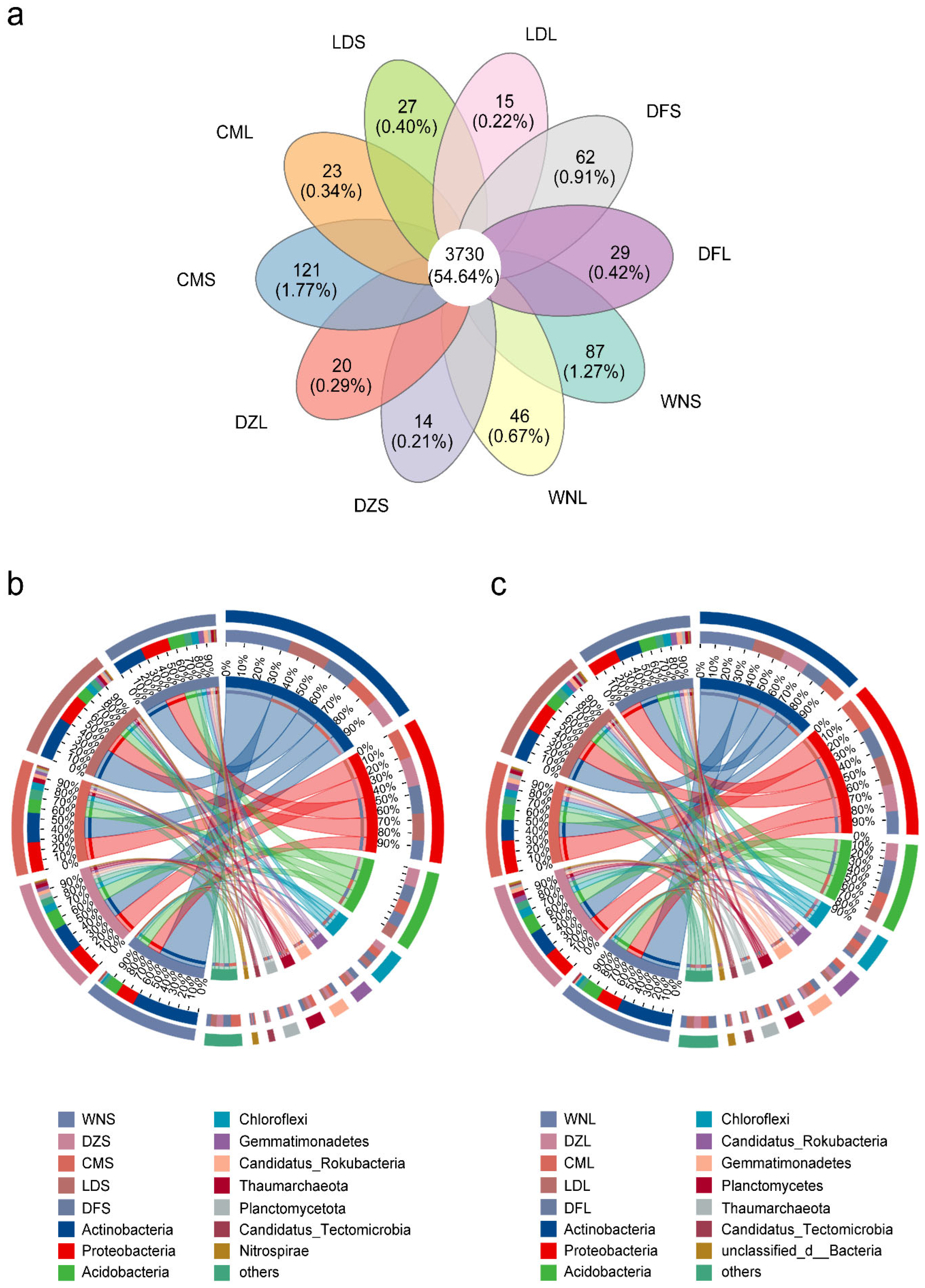
3.2. Soil Microbial Community Composition Along the Precipitation Gradient
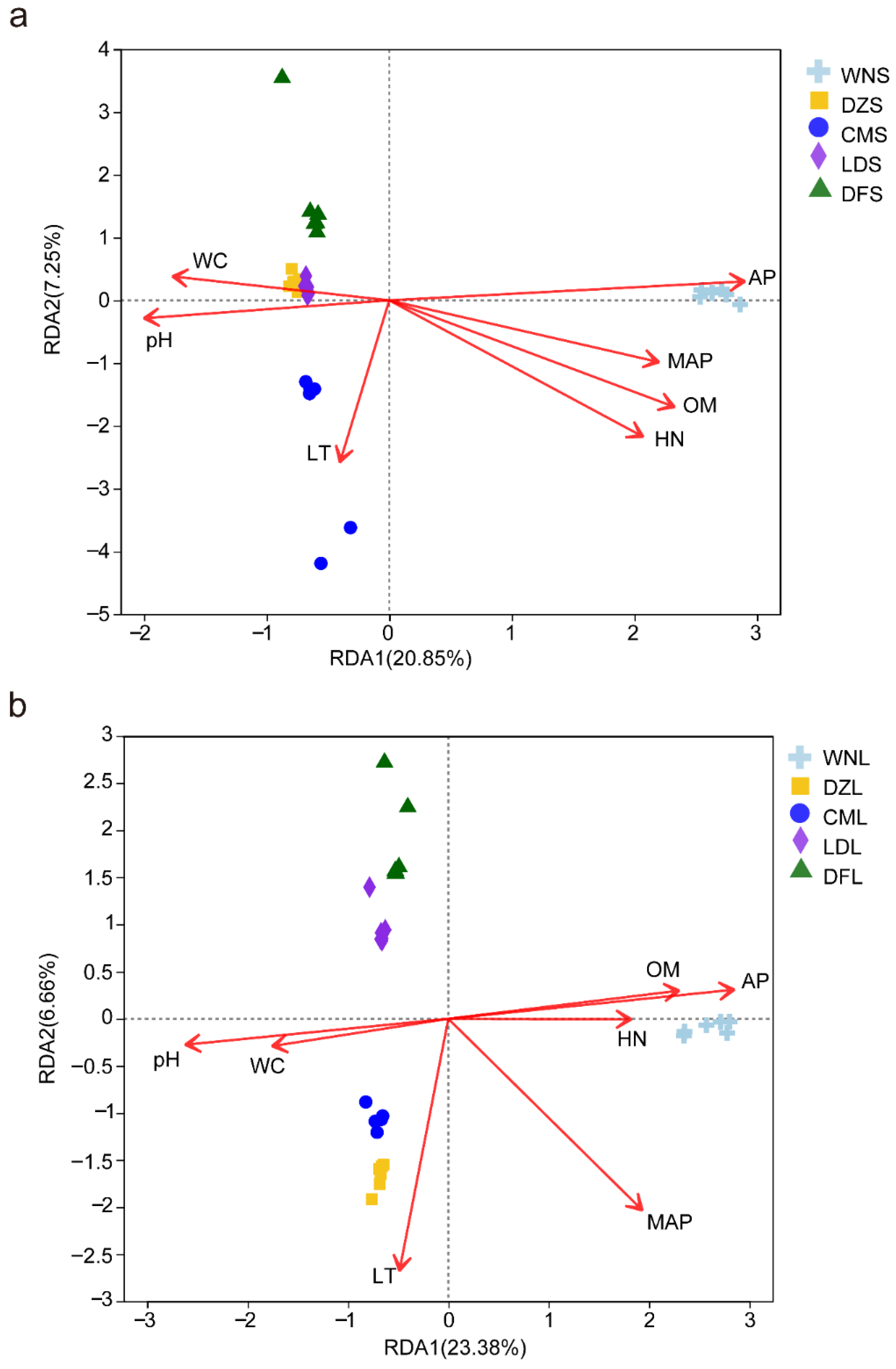
3.3. Correlation Analysis Between Soil Microorganisms and Environmental Factors
3.4. Differential Analysis of C, N, and P Cycling-Related Functional Genes and Functional Microorganisms in C. equisetifolia Forest Soils
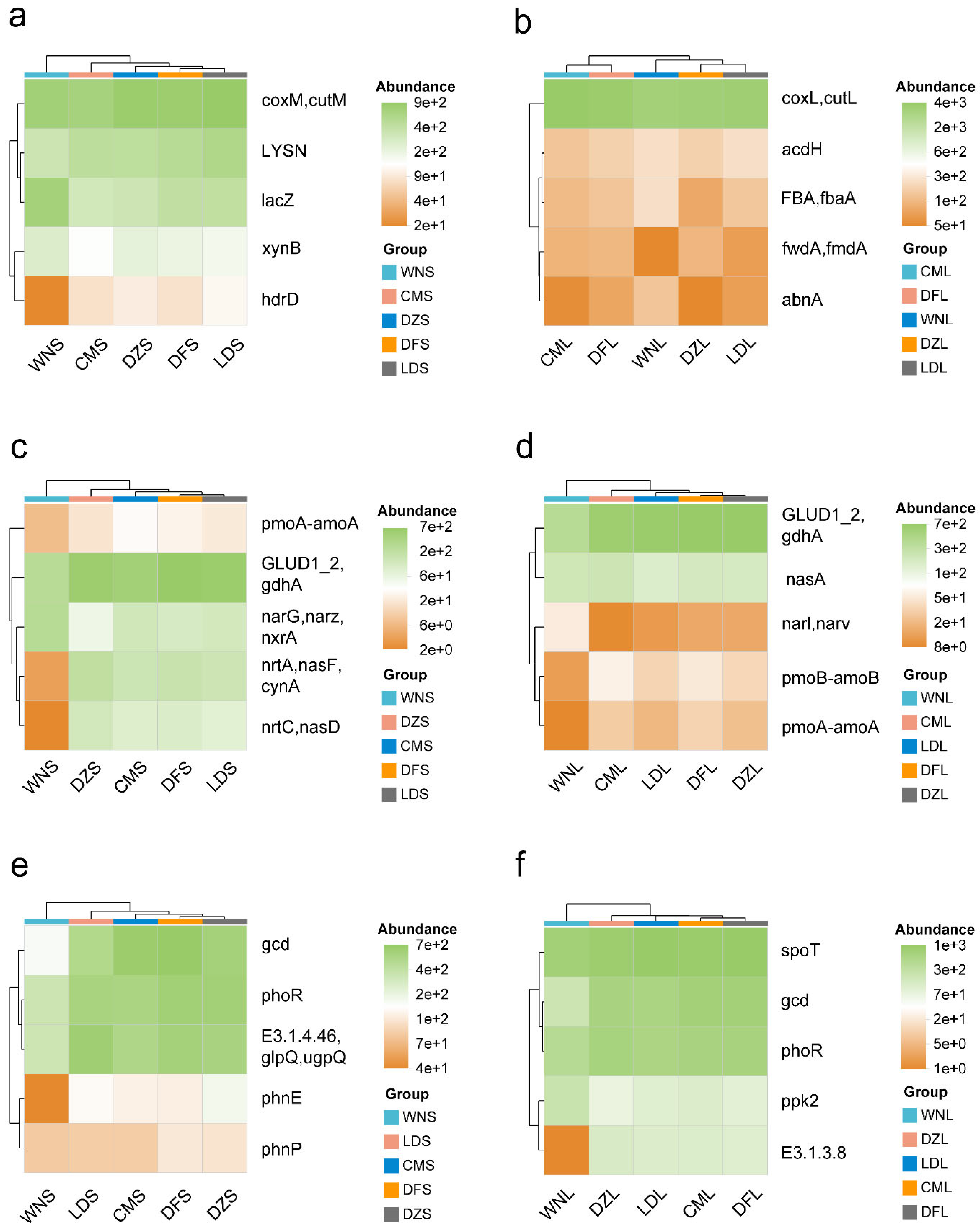
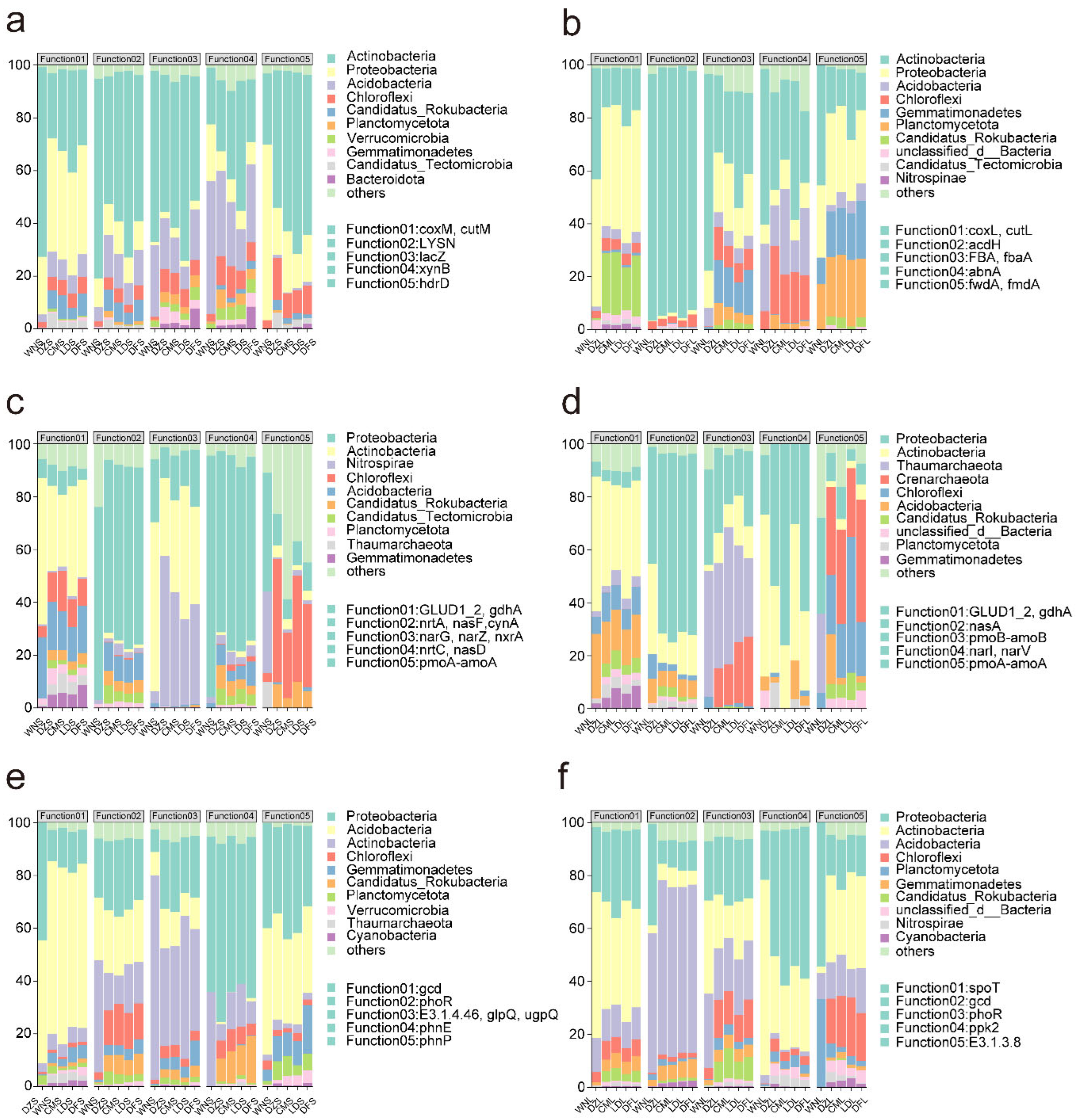
3.4.1. Distribution of Key Functional Genes Across Samples
3.4.2. Microbial Contributions of Key Functional Genes
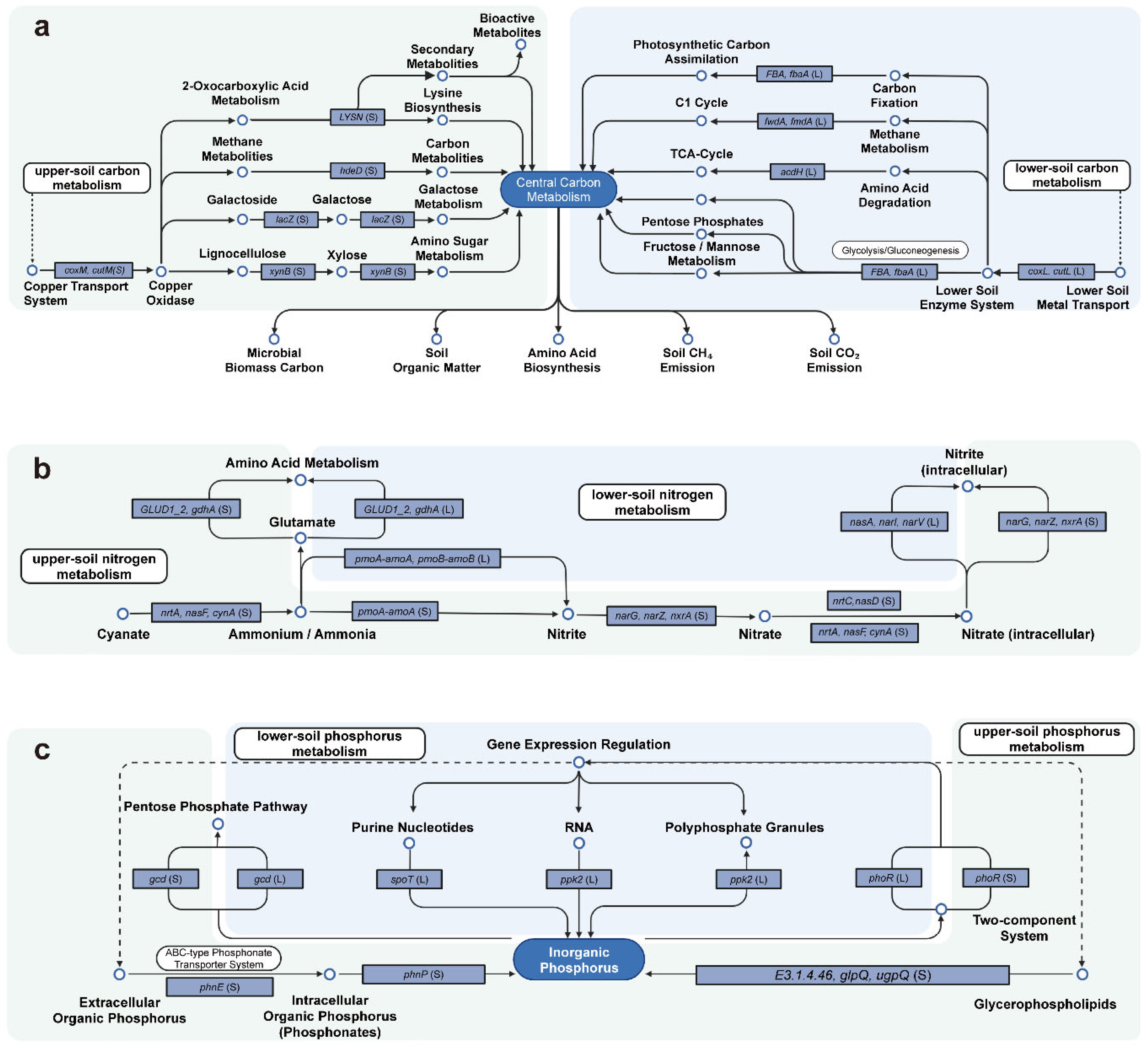
3.5. C, N, and P Metabolism Processes Associated with Key Functional Genes
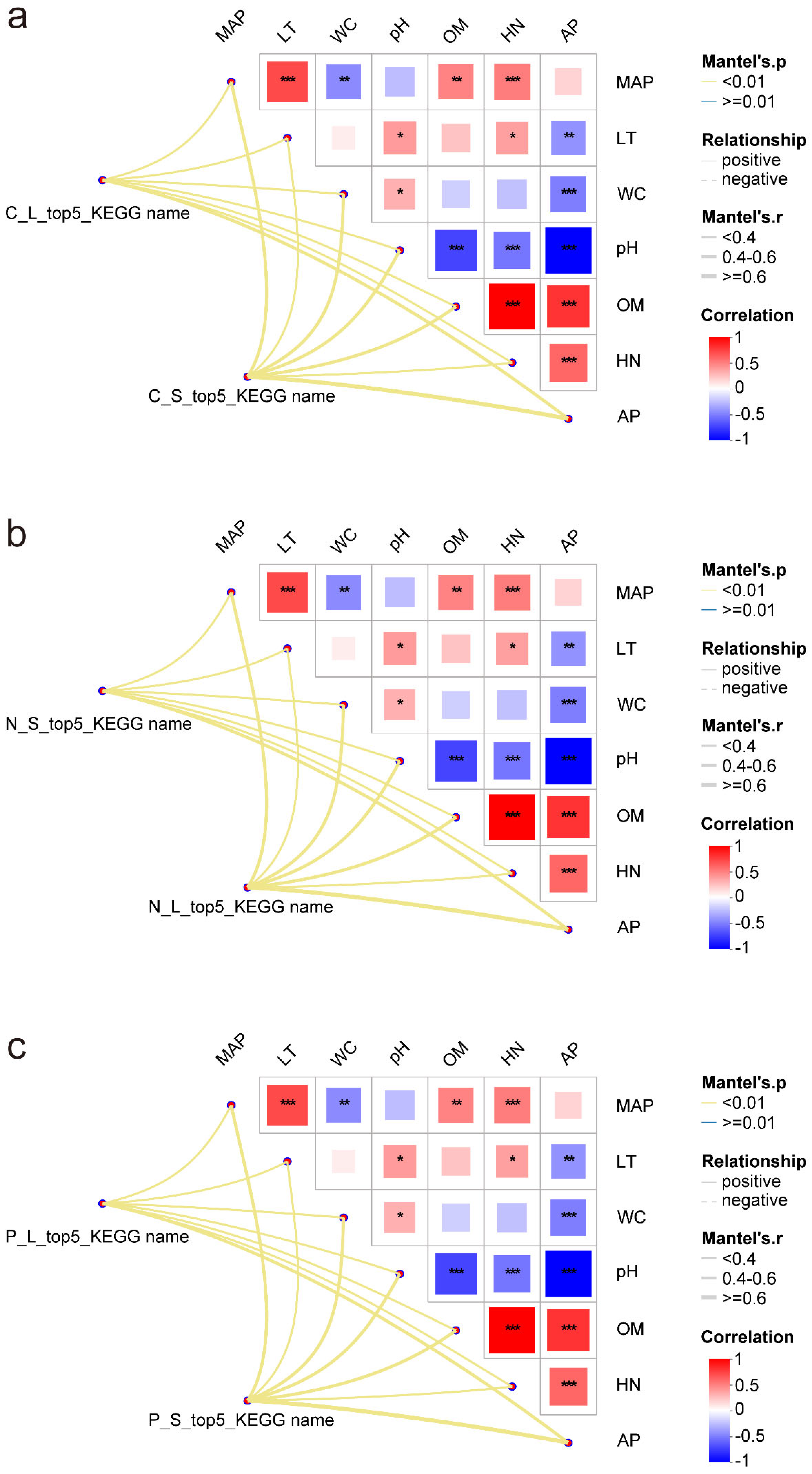
3.6. Correlation Analysis Between Key Functional Genes and Environmental Factors
4. Discussion
4.1. Patterns of Change in Soil Microorganisms of C. equisetifolia Forests Along a Precipitation Gradient
4.2. Patterns of Functional Gene Responses to Precipitation Change
4.3. Correlations Among Microorganisms, Functional Genes, and Important Environmental Factors
4.4. Limitations and Perspectives
5. Conclusions
Supplementary Materials
Author Contributions
Funding
Data Availability Statement
Acknowledgments
Conflicts of Interest
Abbreviations
| MAP | Mean Annual Precipitation |
| MAAT | Mean Annual Air Temperature |
| LT | Litter Thickness |
| WC | Soil Water Content |
| ST | Soil Temperature |
| pH | Soil pH |
| OM | Soil Organic Matter |
| OC | Soil Organic Carbon |
| TN | Total Nitrogen |
| HN | Hydrolyzable Nitrogen |
| AP | Available Phosphorus |
| MBC | Microbial Biomass Carbon |
| MBN | Microbial Biomass Nitrogen |
| MBP | Microbial Biomass Phosphorus |
References
- Wan, J.; Zhang, B.; Yang, X.; Liu, J.; Chen, X.; Deng, J. Characteristics of typhoon disaster in Hainan Province. Pearl River 2016, 37, 45–48. [Google Scholar]
- Stamou, G.P.; Monokrousos, N.; Papapostolou, A.; Papatheodorou, E.M. Recurring heavy rainfall resulting in degraded-upgraded phases in soil microbial networks that are reflected in soil functioning. Soil Ecol. Lett. 2023, 5, 220161. [Google Scholar] [CrossRef]
- Luo, Y. Sustainability associated coastal eco-environmental problems and coastal science development in China. Bull. Chin. Acad. Sci. 2016, 31, 1133–1142. [Google Scholar]
- Harris, L.R.; Bessinger, M.; Dayaram, A.; Holness, S.; Kirkman, S.; Livingstone, T.C.; Lombard, A.T.; Lück-Vogel, M.; Pfaff, M.; Sink, K.J.; et al. Advancing land-sea integration for ecologically meaningful coastal conservation and management. Biol. Conserv. 2019, 237, 81–89. [Google Scholar] [CrossRef]
- Wei, B.; Li, Y.; Suo, A.; Zhang, Z.; Xu, Y.; Chen, Y. Spatial suitability evaluation of coastal zone, and zoning optimisation in ningbo, China. Ocean Coast. Manag. 2021, 204, 105507. [Google Scholar] [CrossRef]
- Li, J.L.; Tian, P.; Li, C.D.; Gong, H.B. Land-sea economic relations and land spaceutilization based on land-sea coordination: Research status, problems and future priorities. J. Nat. Resour. 2022, 37, 924–941. [Google Scholar]
- Wu, S.; Xing, C.; Zhu, J. Analysis of climate characteristics in Hainan Island. J. Trop. Biol. 2022, 13, 315–323. [Google Scholar]
- Yao, L.; Wang, X.; Zhang, J.; Yao, F. Analysis of spatio-temporal variation and driving forces of leaf area index in Hainan Island over the last 20 years based on MODIS data. Chin. J. Eco-Agric. 2024, 32, 1719–1730. [Google Scholar]
- Liu, C.; Ran, Y.; Tao, Y.; Ning, X.; Bai, L.; Ye, H.; Li, X.; Li, L. The present situation investigation of coastline Casuarina forest in Hainan Island. For. Resour. Manag. 2013, 102–106+118. [Google Scholar] [CrossRef]
- Chen, Q.; Long, C.; Men, X.; Chang, K.; Bao, Y.; Cheng, X. Substrate and microorganism-driven shape seasonal variations in soil denitrification rates along altitudes in alpine mountains. J. Plant Ecol. 2025, 18, rtaf109. [Google Scholar] [CrossRef]
- Zhang, D.; Li, J.; Zhang, Z.; Cheng, X. Drivers of microbial necromass carbon and its contribution to soil organic carbon along an elevational gradient. J. Plant Ecol. 2025, 18, rtaf119. [Google Scholar] [CrossRef]
- Bahram, M.; Hildebrand, F.; Forslund, S.K.; Anderson, J.L.; Soudzilovskaia, N.A.; Bodegom, P.M.; Bengtsson-Palme, J.; Anslan, S.; Coelho, L.P.; Harend, H.; et al. Structure and function of the global topsoil microbiome. Nature 2018, 560, 233–237. [Google Scholar] [CrossRef]
- Zhang, K.; Ni, Y.; Liu, X.; Chu, H. Microbes changed their carbon use strategy to regulate the priming effect in an 11-year nitrogen addition experiment in grassland. Sci. Total Environ. 2020, 727, 138645. [Google Scholar] [CrossRef]
- Huang, Q.; Huang, Y.; Wang, B.; Dippold, M.A.; Li, H.; Li, N.; Jia, P.; Zhang, H.; An, S.; Kuzyakov, Y. Metabolic pathways of CO2 fixing microorganisms determined C-fixation rates in grassland soils along the precipitation gradient. Soil Biol. Biochem. 2022, 172, 108764. [Google Scholar] [CrossRef]
- Wang, W.; Hou, Y.; Pan, W.; Vinay, N.; Mo, F.; Liao, Y.; Wen, X. Continuous application of conservation tillage affects in situ N2O emissions and nitrogen cycling gene abundances following nitrogen fertilization. Soil Biol. Biochem. 2021, 157, 108239. [Google Scholar] [CrossRef]
- Zhang, S.; Ye, G.; Xu, J.; Lin, W.; Ling, G.; Tan, F.; Fu, Z.; Li, Y.; Chen, S.; Huang, R.; et al. Studies on regeneration methods, species selection and complete set of techniques of forestation of C. equisetifolia protection forest in the coast zone. Prot. For. Sci. Technol. 2000, 51–63. [Google Scholar] [CrossRef]
- Zhang, S.; Tan, F.; Lin, W.; Chen, S.; Li, Y. Afforestation and root system growth characteristics of C. equisetifolia clones grown on the sandy land in the draught in the coastal zone. Sci. Silvae Sin. 2005, 41, 85–90. [Google Scholar]
- Li, Q.; Mo, Q.; Wang, F.; Li, Y.; Xu, X.; Zou, B.; Li, X. Nutrient utilization by Casuarina equisetifolia plantation of different ages in the tropical coastal area of South China. Chin. J. Appl. Environ. Biol. 2015, 21, 139–146. [Google Scholar] [CrossRef]
- Wu, E.; Liu, Q.; Wang, M. Dynamics of litter biomass and nutrient return in C. equisetifolia plantation as windbreak on the North Hainan Island. J. South China Norm. Univ. (Nat. Sci. Ed.) 2012, 44, 123–128. [Google Scholar]
- Wu, E.; Liu, Q.; Wang, X.; Huang, Y.C. Litter decomposition and dynamics of soil nutrients in C. equisetifolia plantation on the coast of Hainan Island. Hubei Agric. Sci. 2013, 52, 60–64. [Google Scholar]
- Wang, H.; Dai, H.; Wang, P.; Liu, Z.; Wei, J.; Kang, W. Chemical constituents from litters of C. equisetifolia and their biological activity. Nat. Prod. Res. Dev. 2018, 30, 390–395. [Google Scholar]
- Wang, H. Secondary Metabolites of Litter of C. equisetifolia and Their Biological Activities. Master’s Thesis, Hainan Normal University, Haikou, China, 2019. [Google Scholar]
- Zhang, Y. Bacterial Diversity Within and Outside of Litter and Allelopathic Potential of Their Metabolites in C. equisetifolia Woodland of Different Stand Ages. Master’s Thesis, Hainan Normal University, Haikou, China, 2020. [Google Scholar]
- Zuo, L. Fungal Diversity Within and Outside of Litter and Allelopathic Potential of Their Metabolites in C. equisetifolia Woodland of Different Stand Ages. Master’s Thesis, Hainan Normal University, Haikou, China, 2020. [Google Scholar]
- Chen, P.; Huang, R.; Zuo, L.Z.; Zhang, Y.Q.; Li, L. Allelopathic potential of root endophytic bacterial metabolites on seeds germination of C. equisetifolia. Allelopath. J. 2021, 55, 261–276. [Google Scholar] [CrossRef]
- Xu, Z.; Zuo, L.; Zhang, Y.; Huang, R.; Li, L. Is allelochemical synthesis in Casuarina equisetifolia plantation related to litter microorganisms? Front. Plant Sci. 2022, 13, 1022984. [Google Scholar] [CrossRef] [PubMed]
- Lin, Q. Driving Factors of Rhizosphere Microbial Community Assembly in C. equisetifolia and Their Relationship with Seed Germination. Master’s Thesis, Hainan Normal University, Haikou, China, 2023. [Google Scholar]
- Probst, P.; Wright, M.N.; Boulesteix, A. Hyperparameters and tuning strategies for random forest. WIREs Data Min. Knowl. Discov. 2019, 9, e1301. [Google Scholar] [CrossRef]
- Zhai, C.; Han, L.; Xiong, C.; Ge, A.; Yue, X.; Li, Y.; Zhou, Z.; Feng, J.; Ru, J.; Song, J.; et al. Soil microbial diversity and network complexity drive the ecosystem multifunctionality of temperate grasslands under changing precipitation. Sci. Total Environ. 2024, 906, 167217. [Google Scholar] [CrossRef]
- Hu, B.; Li, W. Independent and Interactive Effects of Precipitation Intensity and Duration on Soil Microbial Communities in Forest and Grassland Ecosystems of China: A Meta-Analysis. Microorganisms 2025, 13, 1915. [Google Scholar] [CrossRef]
- Arunrat, N.; Mhuantong, W.; Sereenonchai, S. Land-use legacies shape soil microbial communities and nutrient cycling functions in rotational shifting cultivation fields of Northern Thailand. Microb. Ecol. 2025, 88, 102. [Google Scholar] [CrossRef] [PubMed]
- Craig, M.E.; Geyer, K.M.; Beidler, K.V.; Brzostek, E.R.; Frey, S.D.; Stuart Grandy, A.; Liang, C.; Phillips, R.P. Fast-decaying plant litter enhances soil carbon in temperate forests but not through microbial physiological traits. Nat. Commun. 2022, 13, 1229. [Google Scholar] [CrossRef]
- Kim, H.-S.; Lee, S.-H.; Jo, H.Y.; Finneran, K.T.; Kwon, M.J. Diversity and composition of soil Acidobacteria and Proteobacteria communities as a bacterial indicator of past land-use change from forest to farmland. Sci. Total Environ. 2021, 797, 148944. [Google Scholar] [CrossRef]
- Bhatti, A.A.; Haq, S.; Bhat, R.A. Actinomycetes benefaction role in soil and plant health. Microb. Pathog. 2017, 111, 458–467. [Google Scholar] [CrossRef]
- Selim, M.S.M.; Abdelhamid, S.A.; Mohamed, S.S. Secondary metabolites and biodiversity of actinomycetes. J. Genet. Eng. Biotechnol. 2021, 19, 72. [Google Scholar] [CrossRef]
- Siro, G.; Pipite, A.; Christi, K.; Srinivasan, S.; Subramani, R. Marine actinomycetes associated with stony corals: A potential hotspot for specialized metabolites. Microorganisms 2022, 10, 1349. [Google Scholar] [CrossRef]
- Li, Y.; Pan, F.; Yao, H. Response of symbiotic and asymbiotic nitrogen-fixing microorganisms to nitrogen fertilizer application. J. Soils Sediments 2019, 19, 1948–1958. [Google Scholar] [CrossRef]
- Laichao, S.; Zhanhai, N.; Shiliang, C.; Shilei, Z.; Ziyuan, Q.; Yu, W.; Xuewen, H.; Zhaotang, D.; Qingping, M. Effects of pea-tea intercropping on rhizosphere soil microbial communities. Plant Soil 2025, 506, 125–135. [Google Scholar] [CrossRef]
- Reis, P.J.M.; Homem, V.; Alves, A.; Vilar, V.J.P.; Manaia, C.M.; Nunes, O.C. Insights on sulfamethoxazole bio-transformation by environmental proteobacteria isolates. J. Hazard. Mater. 2018, 358, 310–318. [Google Scholar] [CrossRef]
- Emenike, C.U.; Agamuthu, P.; Fauziah, S.H.; Omo-Okoro, P.N.; Jayanthi, B. Enhanced bioremediation of metal-contaminated soil by consortia of proteobacteria. Water Air Soil Pollut. 2023, 234, 731. [Google Scholar] [CrossRef]
- Lu, W.; Zheng, Y.; Wang, Y.; Song, J.; Weng, Y.; Ma, W.; Arslan, M.; Gamal El-Din, M.G.; Wang, D.; Wang, Q.; et al. Survival strategies and assembly mechanisms of microbial communities in petroleum-contaminated soils. Environ. Res. 2024, 262, 119857. [Google Scholar] [CrossRef] [PubMed]
- Hausmann, B.; Pelikan, C.; Herbold, C.W.; Köstlbacher, S.; Albertsen, M.; Eichorst, S.A.; Glavina del Rio, T.; Huemer, M.; Nielsen, P.H.; Rattei, T.; et al. Peatland Acidobacteria with a dissimilatory sulfur metabolism. ISME J. 2018, 12, 1729–1742. [Google Scholar] [CrossRef]
- De Chaves, M.G.; Silva, G.G.Z.; Rossetto, R.; Edwards, R.A.; Tsai, S.M.; Navarrete, A.A. Acidobacteria subgroups and their metabolic potential for carbon degradation in sugarcane soil amended with vinasse and nitrogen fertilizers. Front. Microbiol. 2019, 10, 1680. [Google Scholar] [CrossRef]
- Ivanova, A.A.; Zhelezova, A.D.; Chernov, T.I.; Dedysh, S.N. Linking ecology and systematics of Acidobacteria: Distinct habitat preferences of the Acidobacteriia and Blastocatellia in tundra soils. PLoS ONE 2020, 15, e0230157. [Google Scholar] [CrossRef]
- Giguere, A.T.; Eichorst, S.A.; Meier, D.V.; Herbold, C.W.; Richter, A.; Greening, C.; Woebken, D. Acidobacteria are active and abundant members of diverse atmospheric H2-oxidizing communities detected in temperate soils. ISME J. 2021, 15, 363–376. [Google Scholar] [CrossRef]
- Sikorski, J.; Baumgartner, V.; Birkhofer, K.; Boeddinghaus, R.S.; Bunk, B.; Fischer, M.; Fösel, B.U.; Friedrich, M.W.; Göker, M.; Hölzel, N.; et al. The evolution of ecological diversity in Acidobacteria. Front. Microbiol. 2022, 13, 715637. [Google Scholar] [CrossRef] [PubMed]
- Kuramae, E.E.; Yergeau, E.; Wong, L.C.; Pijl, A.S.; Van Veen, J.A.; Kowalchuk, G.A. Soil characteristics more strongly influence soil bacterial communities than land-use type. FEMS Microbiol. Ecol. 2012, 79, 12–24. [Google Scholar] [CrossRef] [PubMed]
- Navarrete, A.A.; Venturini, A.M.; Meyer, K.M.; Klein, A.M.; Tiedje, J.M.; Bohannan, B.J.M.; Nüsslein, K.; Tsai, S.M.; Rodrigues, J.L.M. Differential response of acidobacteria subgroups to forest-to-pasture conversion and their biogeographic patterns in the western Brazilian Amazon. Front. Microbiol. 2015, 6, 1443. [Google Scholar] [CrossRef]
- Fan, Z.; Tu, Z.; Li, F.; Qin, Y.; Deng, D.; Zeng, D.; Sun, X.; Zhao, Q.; Hu, Y. Experimental manipulation of precipitation affects soil nitrogen availability in semiarid Mongolian pine (Pinus sylvestris var. mongolica) plantation. Water 2017, 9, 208. [Google Scholar] [CrossRef]
- Ugawa, S.; Inagaki, Y.; Karibu, F.; Tateno, R. Effects of soil compaction by a forestry machine and slash dispersal on soil N mineralization in Cryptomeria japonica plantations under high precipitation. New For. 2020, 51, 887–907. [Google Scholar] [CrossRef]
- Zhou, T.; Han, C.; Qiao, L.; Ren, C.; Wen, T.; Zhao, C. Seasonal dynamics of soil water content in the typical vegetation and its response to precipitation in a semi-arid area of Chinese Loess Plateau. J. Arid Land 2021, 13, 1015–1025. [Google Scholar] [CrossRef]
- Tang, S.; Ma, Q.; Marsden, K.A.; Chadwick, D.R.; Luo, Y.; Kuzyakov, Y.; Wu, L.; Jones, D.L. Microbial community succession in soil is mainly driven by carbon and nitrogen contents rather than phosphorus and sulphur contents. Soil Biol. Biochem. 2023, 180, 109019. [Google Scholar] [CrossRef]




Disclaimer/Publisher’s Note: The statements, opinions and data contained in all publications are solely those of the individual author(s) and contributor(s) and not of MDPI and/or the editor(s). MDPI and/or the editor(s) disclaim responsibility for any injury to people or property resulting from any ideas, methods, instructions or products referred to in the content. |
© 2026 by the authors. Licensee MDPI, Basel, Switzerland. This article is an open access article distributed under the terms and conditions of the Creative Commons Attribution (CC BY) license.
Share and Cite
Zuo, L.; Xing, K.; Wu, K.; Wang, Y.; Wang, X.; Zhang, H.; Li, L. Microbial Heterogeneity Regulates C, N, and P Cycling Responses to Precipitation in Casuarina equisetifolia Forests. Plants 2026, 15, 1420. https://doi.org/10.3390/plants15101420
Zuo L, Xing K, Wu K, Wang Y, Wang X, Zhang H, Li L. Microbial Heterogeneity Regulates C, N, and P Cycling Responses to Precipitation in Casuarina equisetifolia Forests. Plants. 2026; 15(10):1420. https://doi.org/10.3390/plants15101420
Chicago/Turabian StyleZuo, Linzhi, Kaixiong Xing, Kai Wu, Ying Wang, Xiaoming Wang, Hang Zhang, and Lei Li. 2026. "Microbial Heterogeneity Regulates C, N, and P Cycling Responses to Precipitation in Casuarina equisetifolia Forests" Plants 15, no. 10: 1420. https://doi.org/10.3390/plants15101420
APA StyleZuo, L., Xing, K., Wu, K., Wang, Y., Wang, X., Zhang, H., & Li, L. (2026). Microbial Heterogeneity Regulates C, N, and P Cycling Responses to Precipitation in Casuarina equisetifolia Forests. Plants, 15(10), 1420. https://doi.org/10.3390/plants15101420