Chemical Profile and In Vitro Protective Effects of Minthostachys verticillata (Griseb.) Epling Aqueous Extract in Intestinal Inflammatory Environments

 , , , and
Abstract
1. Introduction
2. Results
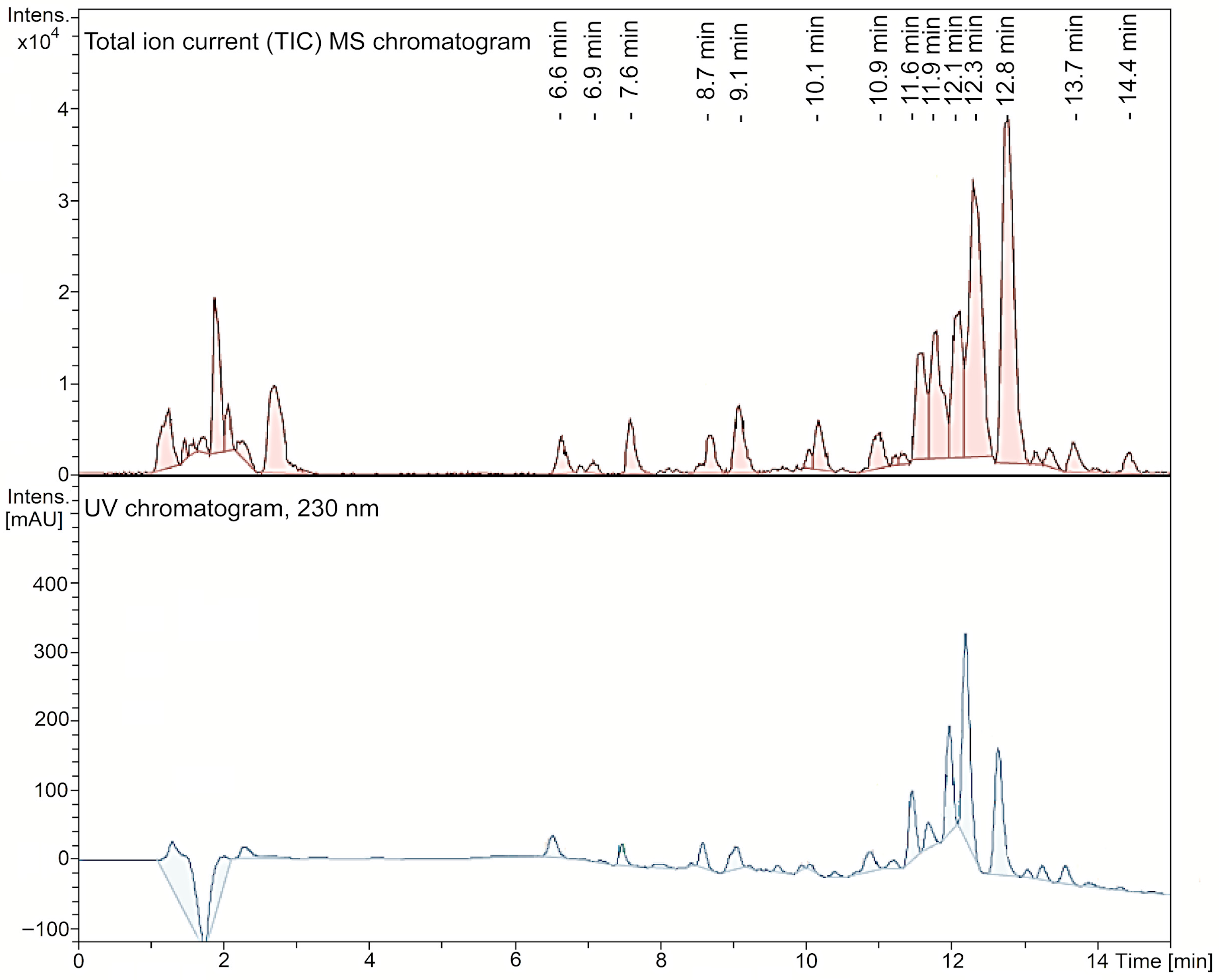
2.1. Phytochemical Profile
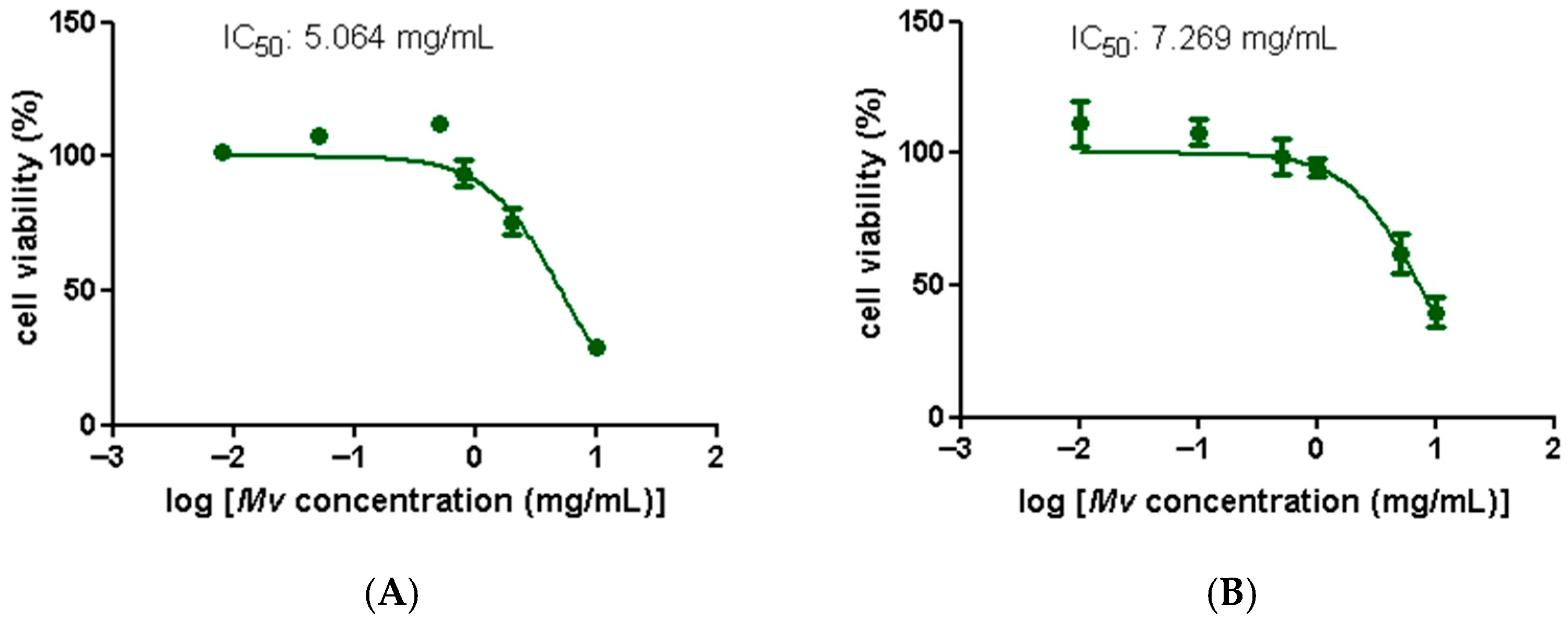
2.2. Cytotoxicity
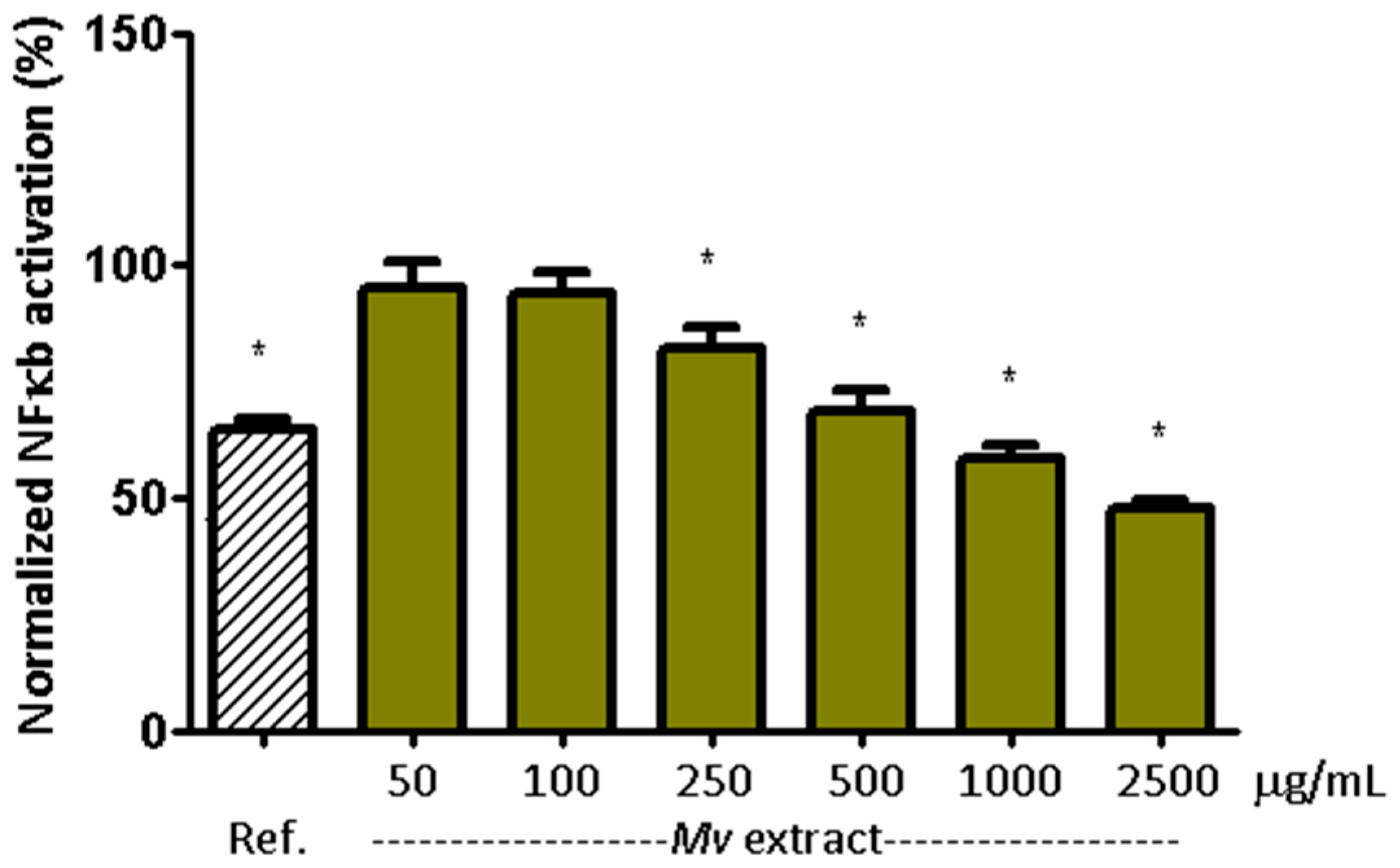
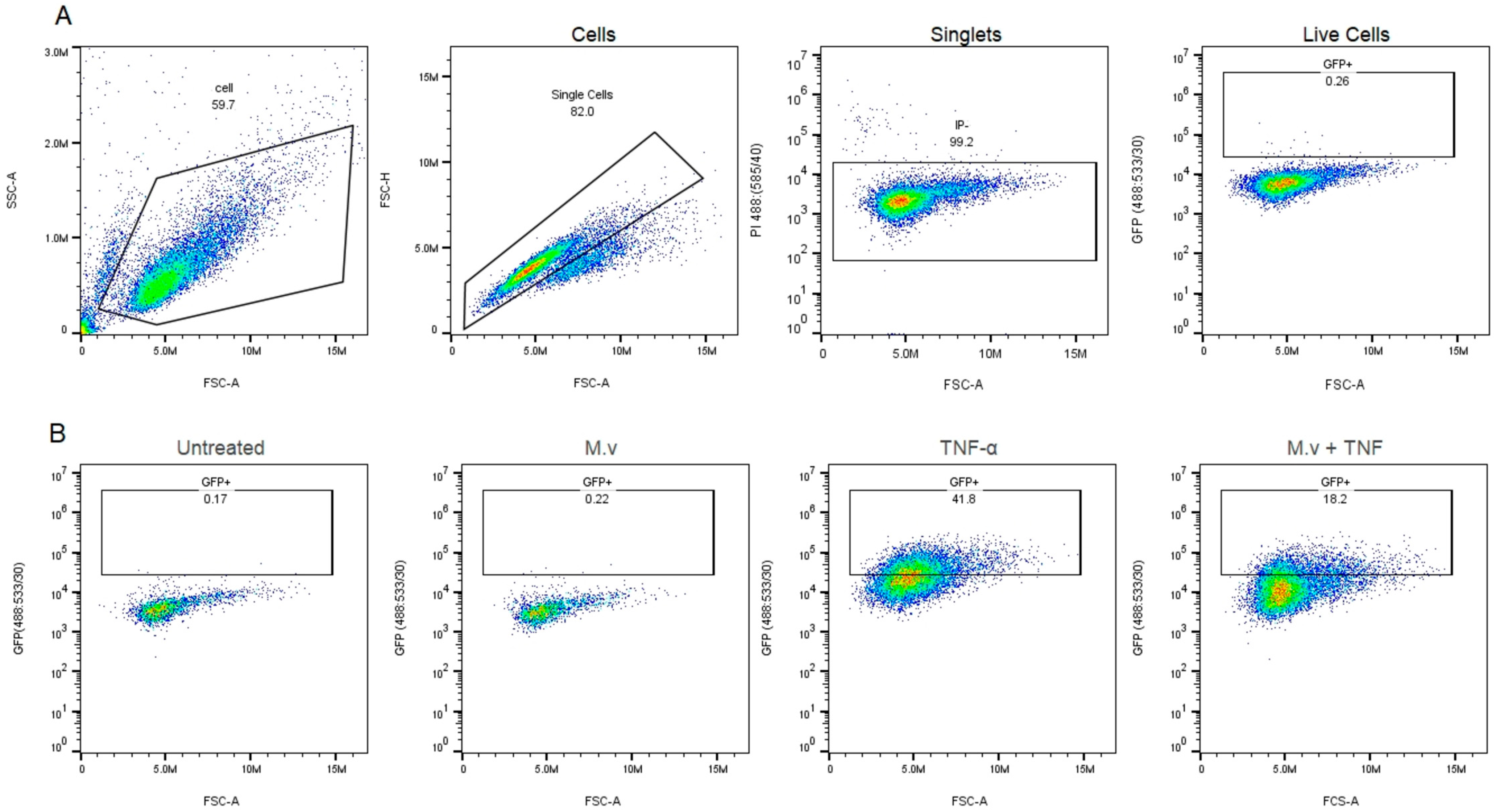
2.3. NF-κB Pathway Modulation
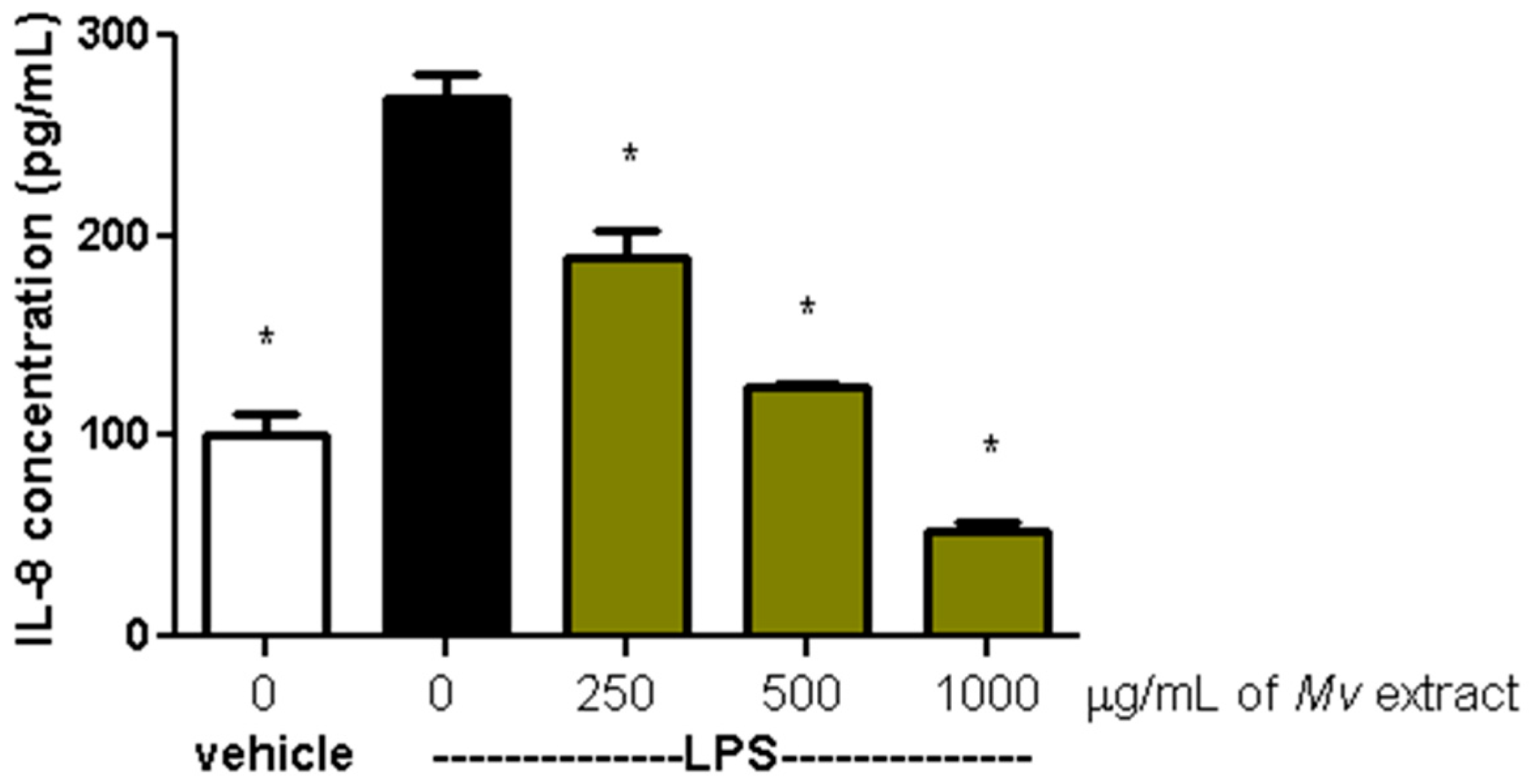
2.4. IL-8 Production
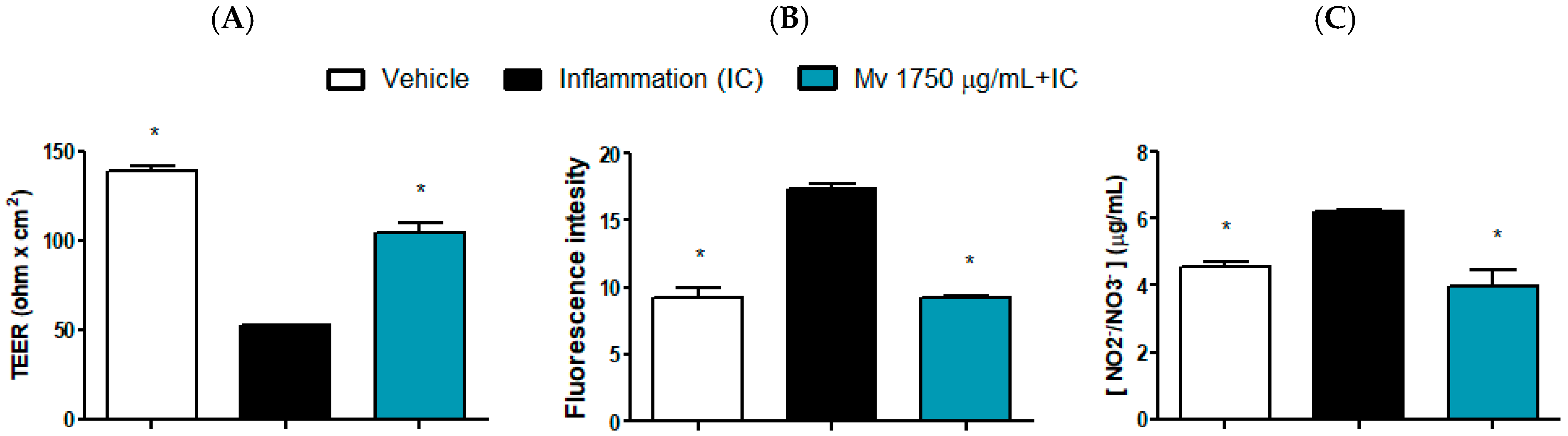
2.5. Intestinal Barrier Functionality
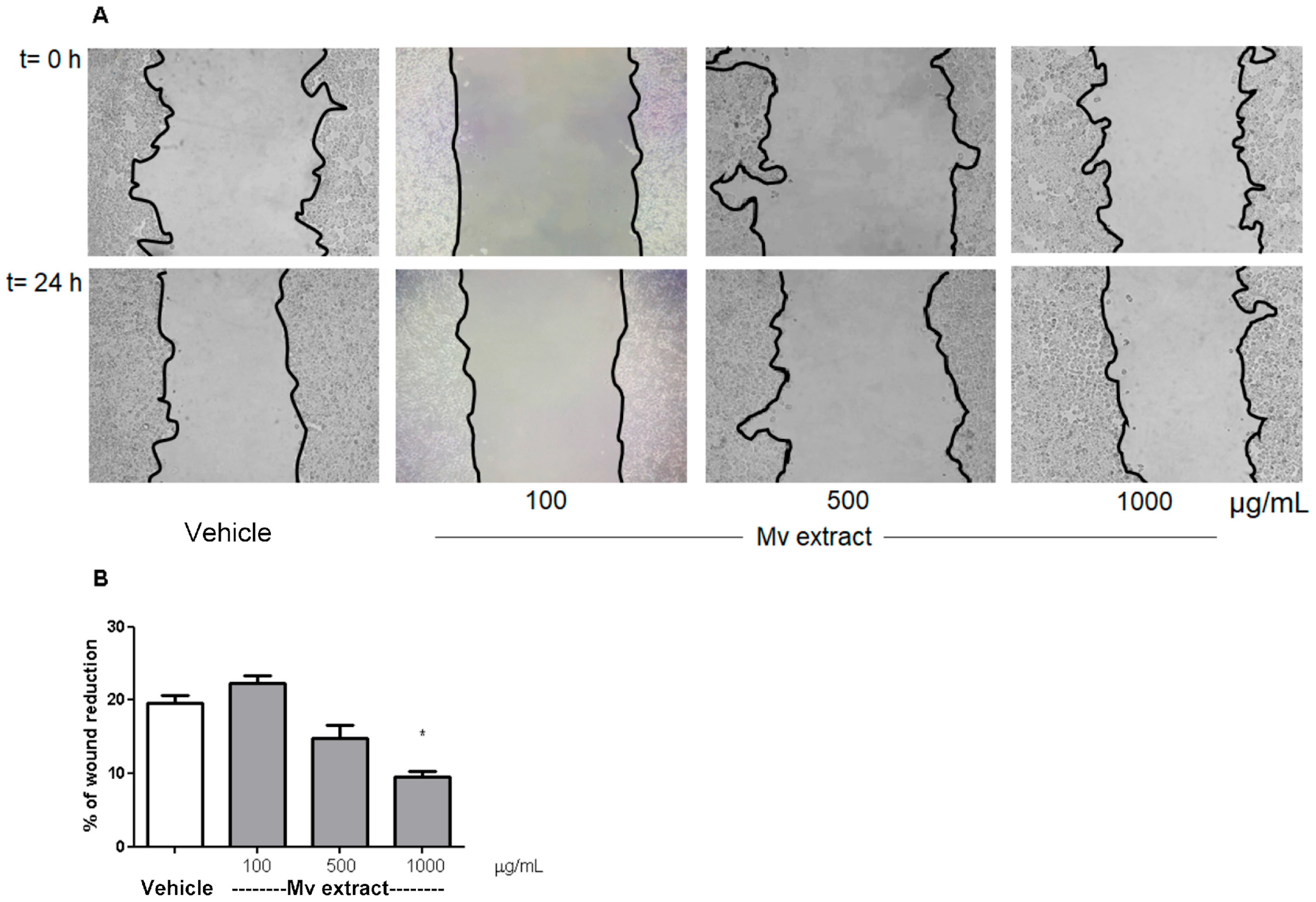
2.6. In Vitro Cell Migration
3. Discussion
4. Materials and Methods
4.1. Drugs and Materials
4.2. Plant Material and Extract Preparation
4.3. Phytochemical Profiling of the Extract
4.4. Cell Lines and Culture Medium
4.5. Cytotoxicity Assay
4.6. Modulation of NF-κB Pathway
4.7. IL-8 Production by LPS
4.8. Transepithelial Electrical Resistance (TEER)
4.9. Fluorescein Isothiocyanate-Dextran (FITC-D) Assay
4.10. Nitric Oxide (NO) Production Measurement
4.11. Scratch Assay
4.12. Statistical Analysis
5. Conclusions
Author Contributions
Funding
Data Availability Statement
Conflicts of Interest
Abbreviations
| ADAM-17 | A disintegrin and metalloproteinase domain 17 |
| Akt | Protein Kinase B |
| AMPK | AMP-activated protein kinase |
| BAY 11-7082 | NF-κB translocation inhibitor |
| Caco-2 | Human colon adenocarcinoma cell line |
| COX-2 | Cyclooxygenase-2 |
| EGFR | Epidermal Growth Factor Receptor |
| EMT | Epithelial–mesenchymal transition |
| ERK-1/2 | Extracellular signal-Regulated Kinase 1/2 |
| FITC | Fluorescein isothiocyanate |
| GSK-3β | Glycogen Synthase Kinase 3 beta |
| HPLC | High-performance liquid chromatography |
| HT-29 | Human colorectal adenocarcinoma cell line |
| HT29-NF-κB-hrGFP | Human epithelial NF-κB reporter cell line |
| IBD | Inflammatory bowel disease |
| IBS | Inflammatory bowel syndrome |
| IC | Inflammatory cocktail (IFN-γ, TNF-α and IL-1β) |
| IC50 | Half maximal inhibitory concentration |
| IFN-γ | Interferon gamma |
| IKK | Inhibitor of κB Kinase |
| IL-1β/8/12/23 | Interleukin-1β/8/12/23 |
| iNOS | Inducible nitric oxide synthase |
| LPS | Lipopolysaccharides |
| MAPK | Mitogen-Activated Protein Kinase |
| MEK | Mitogen-activated protein kinase/extracellular signal-regulated kinase kinase |
| MMP-2/9 | Matrix metalloproteinases-2/9 |
| Nrf-2 | Nuclear factor erythroid-2-related factor 2 |
| mTOR | Mammalian target of rapamycin |
| Mv | Minthostachys verticillata |
| NF-κB | Nuclear factor kappa B |
| NLRP3 | NOD-like receptor pyrin domain 3 |
| NOD-2 | Nucleotide-binding oligomerization domain-containing protein 2 |
| PI3K | Phosphoinositide 3-kinase |
| RAF | Rapidly Accelerated Fibrosarcoma quinase |
| RECK | Reversion-inducing Cysteine-rich Protein with Kazal Motifs |
| SEM | Standard error of the mean |
| STAT3 | Signal transducer and activator of transcription 3 |
| TLR-4 | Toll–like receptor 4 |
| TNF-α | Tumor necrosis factor alpha |
| TNFR | TNF-α receptor |
| VEGR-2 | Vascular Endothelial Growth Factor Receptor-2 |
| Wnt | Wingless/Integrated |
Appendix A

References
- Bischoff, S.C.; Barbara, G.; Buurman, W.; Ockhuizen, T.; Schulzke, J.D.; Serino, M.; Tilg, H.; Watson, A.; Wells, J.M. Intestinal permeability—A new target for disease prevention and therapy. BMC Gastroenterol. 2014, 14, 189. [Google Scholar] [CrossRef] [Scilit]
- Kelly, C.J.; Zheng, L.; Campbell, E.L.; Saeedi, B.; Scholz, C.C.; Bayless, A.J.; Wilson, K.E.; Glover, L.E.; Kominsky, D.J.; Magnuson, A.; et al. Crosstalk between microbiota-derived short-chain fatty acids and intestinal epithelial HIF augments tissue barrier function. Cell Host Microbe 2015, 17, 662–671. [Google Scholar] [CrossRef] [Scilit] [PubMed]
- Fukui, H. Increased Intestinal Permeability and Decreased Barrier Function: Does It Really Influence the Risk of Inflammation? Inflamm. Intest. Dis. 2016, 1, 135–145. [Google Scholar] [CrossRef] [Scilit]
- Liu, T.; Zhang, L.; Joo, D.; Sun, S.C. NF-κB signaling in inflammation. Signal Transduct. Target. Ther. 2017, 2, 17023. [Google Scholar] [CrossRef] [Scilit]
- Ashton, J.J.; Seaby, E.G.; Beattie, R.M.; Ennis, S. NOD2 in Crohn’s Disease-Unfinished Business. J Crohn’s Colitis 2023, 17, 450–458. [Google Scholar] [CrossRef] [Scilit] [PubMed]
- Candelli, M.; Franza, L.; Pignataro, G.; Ojetti, V.; Covino, M.; Piccioni, A.; Gasbarrini, A.; Franceschi, F. Interaction between Lipopolysaccharide and Gut Microbiota in Inflammatory Bowel Diseases. Int. J. Mol. Sci. 2021, 22, 6242. [Google Scholar] [CrossRef] [Scilit]
- Axelrad, J.E.; Lichtiger, S.; Yajnik, V. Inflammatory bowel disease and cancer: The role of inflammation, immunosuppression, and cancer treatment. World J. Gastroenterol. 2016, 22, 4794–4801. [Google Scholar] [CrossRef] [Scilit]
- Laredo, V.; García-Mateo, S.; Martínez-Domínguez, S.J.; López de la Cruz, J.; Gargallo-Puyuelo, C.J.; Gomollón, F. Risk of Cancer in Patients with Inflammatory Bowel Diseases and Keys for Patient Management. Cancers 2023, 15, 871. [Google Scholar] [CrossRef] [Scilit]
- Mishra, R.; Dhawan, P.; Srivastava, A.S.; Singh, A.B. Inflammatory bowel disease: Therapeutic limitations and prospective of the stem cell therapy. World J. Stem Cells 2020, 12, 1050–1066. [Google Scholar] [CrossRef] [Scilit] [PubMed]
- McDougall, G.J. Phenolic-enriched foods: Sources and processing for enhanced health benefits. Proc. Nutr. Soc. 2017, 76, 163–171. [Google Scholar] [CrossRef] [Scilit]
- Bernardi, S.; Del Bo’, C.; Marino, M.; Gargari, G.; Cherubini, A.; Andrés-Lacueva, C.; Hidalgo-Liberona, N.; Peron, G.; González-Dominguez, R.; Kroon, P.; et al. Polyphenols and Intestinal Permeability: Rationale and Future Perspectives. J. Agric. Food Chem. 2020, 68, 1816–1829. [Google Scholar] [CrossRef] [Scilit]
- Alonso, J.; Desmarchelier, C. Plantas Medicinales Autóctonas de la Argentina. Bases Científicas para su Aplicación en Atención Primaria de Salud, 1st ed.; Corpus: Buenos Aires, Argentina, 2015; pp. 495–498. [Google Scholar]
- Puentes, J.P.; Arenas, P.M.; Hurrell, A. Lamiaceae medicinales y aromáticas comercializadas en el Área Metropolitana de Buenos Aires, Argentina. Bonplandia 2020, 29, 5–20. [Google Scholar] [CrossRef] [Scilit]
- Comisión Permanente Farmacopea Argentina. Peperina Mynthostachys. In Farmacopea Argentina, 6th ed.; Ministerio de Salud y Medio Ambiente: Buenos Aires, Argentina, 1978; pp. 736–738. [Google Scholar]
- Cariddi, L.; Escobar, F.; Moser, M.; Panero, A.; Alaniz, F.; Zygadlo, J.; Sabini, L.; Maldonado, A. Monoterpenes isolated from Minthostachys verticillata (Griseb.) Epling essential oil modulates immediate-type hypersensitivity responses in vitro and in vivo. Planta Med. 2011, 77, 1687–1694. [Google Scholar] [CrossRef] [Scilit]
- Escobar, F.M.; Sabini, M.C.; Cariddi, L.N.; Sabini, L.I.; Mañas, F.; Cristofolini, A.; Bagnis, G.; Gallucci, M.N.; Cavaglieri, L.R. Safety assessment of essential oil from Minthostachys verticillata (Griseb.) Epling (peperina): 90-days oral subchronic toxicity study in rats. Regul. Toxicol. Pharmacol. 2015, 71, 1–7. [Google Scholar] [CrossRef] [Scilit]
- Montironi, I.D.; Campra, N.A.; Arsaute, S.; Cecchini, M.E.; Raviolo, J.M.; Vanden Braber, N.; Barrios, B.; Montenegro, M.; Correa, S.; Grosso, M.C.; et al. Minthostachys verticillata Griseb (Epling.) (Lamiaceae) essential oil orally administered modulates gastrointestinal immunological and oxidative parameters in mice. J. Ethnopharmacol. 2022, 290, 115078. [Google Scholar] [CrossRef] [Scilit]
- Arsaute, S.; Reinoso, E.B.; Cecchini, M.E.; Montironi, I.D.; Roma, D.A.; DÉramo, F.; Moressi, M.; Decara, L.; Macchiavelli, J.; Ariño, A.; et al. Effects of intramammary infusion of Minthostachys verticillata essential oil in cows at drying-off on microbiological and immunological parameters, and milk quality during the subsequent lactation. Vet. Res. Commun. 2025, 49, 140. [Google Scholar] [CrossRef] [Scilit]
- Bravi, V.S.; Silvero C, M.J.; Bustos, P.S.; Luján, M.C.; Ortega, M.G.; Becerra, M.C. Silver nanoparticle disinfectant synthesized with aqueous extract of Minthostachys verticillata (Griseb.) Epling (Lamiaceae). Microb. Pathog. 2025, 208, 107990. [Google Scholar] [CrossRef] [Scilit] [PubMed]
- Rodríguez Basso, A.; Carranza, A.; Zainutti, V.M.; Bach, H.; Gorzalczany, S.B. Pharmacological activity of peperina (Minthostachys verticillata) on gastrointestinal tract. J. Ethnopharmacol. 2021, 269, 113712. [Google Scholar] [CrossRef] [Scilit]
- Xie, X.; Miao, J.; Sun, W.; Huang, J.; Li, D.; Li, S.; Tong, L.; Sun, G. Simultaneous determination and pharmacokinetic study of four phenolic acids in rat plasma using UFLC–MS/MS after intravenous administration of salvianolic acid for injection. J. Pharm. Biomed. Anal. 2017, 134, 53–59. [Google Scholar] [CrossRef] [Scilit] [PubMed]
- Zhu, Z.; Zhang, H.; Zhao, L.; Dong, X.; Li, X.; Chai, Y.; Zhang, G. Rapid separation and identification of phenolic and diterpenoid constituents from Radix Salvia miltiorrhizae by high-performance liquid chromatography diode-array detection, electrospray ionization time-of-flight mass spectrometry and electrospray ionization quadrupole ion trap mass spectrometry. Rapid Commun. Mass Spectrom. 2007, 21, 1855–1865. [Google Scholar] [CrossRef] [Scilit]
- Faraone, I.; Russo, D.; Chiummiento, L.; Fernandez, E.; Choudhary, A.; Monné, M.; Milella, L.; Rai, D.K. Phytochemicals of Minthostachys diffusa Epling and their health-promoting bioactivities. Foods 2020, 9, 144. [Google Scholar] [CrossRef] [Scilit]
- Sharma, Y.; Velamuri, R.; Fagan, J.; Schaefer, J. Full-spectrum analysis of bioactive compounds in rosemary (Rosmarinus officinalis L.) as influenced by different extraction methods. Molecules 2020, 25, 4599. [Google Scholar] [CrossRef] [Scilit]
- Bravo, L.; Goya, L.; Lecumberri, E. LC/MS characterization of phenolic constituents of mate (Ilex paraguariensis, St. Hil.) and its antioxidant activity compared to commonly consumed beverages. Food Res. Int. 2007, 40, 393–405. [Google Scholar] [CrossRef] [Scilit]
- Clifford, M.N.; Knight, S.; Kuhnert, N. Discriminating between the six isomers of dicaffeoylquinic acid by LC-MSn. J. Agric. Food Chem. 2005, 53, 3821–3832. [Google Scholar] [CrossRef] [Scilit]
- Chandradevan, M.; Simoh, S.; Mediani, A.; Ismail, N.H.; Ismail, I.S.; Abas, F. UHPLC-ESI-Orbitrap-MS analysis of biologically active extracts from Gynura procumbens (Lour.) Merr. and Cleome gynandra L. leaves. Evid. Based Complement. Altern. Med. 2020, 2020, 3238561. [Google Scholar] [CrossRef] [Scilit]
- Barros, L.; Dueñas, M.; Dias, M.I.; Sousa, M.J.; Santos-Buelga, C.; Ferreira, I.C. Phenolic profiles of cultivated, in vitro cultured and commercial samples of Melissa officinalis L. infusions. Food Chem. 2013, 136, 1–8. [Google Scholar] [CrossRef] [Scilit]
- Afonso, A.F.; Pereira, O.R.; Fernandes, Â.; Calhelha, R.C.; Silva, A.M.; Ferreira, I.C.; Cardoso, S.M. Phytochemical composition and bioactive effects of Salvia africana, Salvia officinalis ‘Icterina’ and Salvia mexicana aqueous extracts. Molecules 2019, 24, 4327. [Google Scholar] [CrossRef] [Scilit] [PubMed]
- Hu, P.; Liang, Q.L.; Luo, G.A.; Zhao, Z.Z.; Jiang, Z.H. Multi-component HPLC fingerprinting of Radix Salviae Miltiorrhizae and its LC-MS-MS identification. Chem. Pharm. Bull. 2005, 53, 677–683. [Google Scholar] [CrossRef] [Scilit] [PubMed]
- Taghouti, M.; Martins-Gomes, C.; Schäfer, J.; Santos, J.A.; Bunzel, M.; Nunes, F.M.; Silva, A.M. Chemical characterization and bioactivity of extracts from Thymus mastichina: A Thymus with a distinct salvianolic acid composition. Antioxidants 2019, 9, 34. [Google Scholar] [CrossRef] [Scilit] [PubMed]
- Kindl, M.; Bucar, F.; Jelić, D.; Brajša, K.; Blažeković, B.; Vladimir-Knežević, S. Comparative study of polyphenolic composition and anti-inflammatory activity of Thymus species. Eur. Food Res. Technol. 2019, 245, 1951–1962. [Google Scholar] [CrossRef] [Scilit]
- Pereira, O.R.; Peres, A.M.; Silva, A.M.; Domingues, M.R.; Cardoso, S.M. Simultaneous characterization and quantification of phenolic compounds in Thymus x citriodorus using a validated HPLC–UV and ESI–MS combined method. Food Res. Int. 2013, 54, 1773–1780. [Google Scholar] [CrossRef] [Scilit]
- Nuengchamnong, N.; Krittasilp, K.; Ingkaninan, K. Characterisation of phenolic antioxidants in aqueous extract of Orthosiphon grandiflorus tea by LC–ESI-MS/MS coupled to DPPH assay. Food Chem. 2011, 127, 1287–1293. [Google Scholar] [CrossRef] [Scilit]
- Flegkas, A.; Milosević Ifantis, T.; Barda, C.; Samara, P.; Tsitsilonis, O.; Skaltsa, H. Antiproliferative activity of (−)-rabdosiin isolated from Ocimum sanctum L. Medicines 2019, 6, 37. [Google Scholar] [CrossRef] [Scilit]
- Trifan, A.; Wolfram, E.; Esslinger, N.; Grubelnik, A.; Skalicka-Woźniak, K.; Minceva, M.; Luca, S.V. Globoidnan A, rabdosiin and globoidnan B as new phenolic markers in European-sourced comfrey (Symphytum officinale L.) root samples. Phytochem. Anal. 2021, 32, 482–494. [Google Scholar] [CrossRef] [Scilit]
- Döring, A.S.; Petersen, M. Production of caffeic, chlorogenic and rosmarinic acids in plants and suspension cultures of Glechoma hederacea. Phytochem. Lett. 2014, 10, cxi–cxvii. [Google Scholar] [CrossRef] [Scilit]
- Lee, J.; Rhee, M.H.; Kim, E.; Cho, J.Y. BAY 11-7082 is a broad-spectrum inhibitor with anti-inflammatory activity against multiple targets. Mediators Inflamm. 2012, 2012, 416036. [Google Scholar] [CrossRef] [Scilit]
- Di Nunzio, M.; Valli, V.; Tomás-Cobos, L.; Tomás-Chisbert, T.; Murgui-Bosch, L.; Danesi, F.; Bordoni, A. Is cytotoxicity a determinant of the different in vitro and in vivo effects of bioactives? BMC Complement. Altern. Med. 2017, 17, 453. [Google Scholar] [CrossRef] [Scilit] [PubMed]
- Panaro, M.A.; Carofiglio, V.; Acquafredda, A.; Cavallo, P.; Cianciulli, A. Anti-inflammatory effects of resveratrol occur via inhibition of lipopolysaccharide-induced NF-κB activation in Caco-2 and SW480 human colon cancer cells. Br. J. Nutr. 2012, 108, 1623–1632. [Google Scholar] [CrossRef] [Scilit] [PubMed]
- Mastropietro, G.; Tiscornia, I.; Perelmuter, K.; Astrada, S.; Bollati-Fogolín, M. HT-29 and Caco-2 reporter cell lines for functional studies of nuclear factor kappa B activation. Mediat. Inflamm. 2015, 2015, 860534. [Google Scholar] [CrossRef] [Scilit]
- He, X.; Cui, L.H.; Wang, X.H.; Yan, Z.H.; Li, C.; Gong, S.D.; Zheng, Y.; Luo, Z.; Wang, Y. Modulation of inflammation by toll-like receptor 4/nuclear factor-kappa B in diarrhea-predominant irritable bowel syndrome. Oncotarget 2017, 8, 113957. [Google Scholar] [CrossRef] [Scilit]
- Guak, H.; Krawczyk, C.M. Implications of cellular metabolism for immune cell migration. Immunology 2020, 161, 200–208. [Google Scholar] [CrossRef] [Scilit]
- Zhang, Y.; Zhai, W.; Fan, M.; Wu, J.; Wang, C. Salvianolic Acid B Significantly Suppresses the Migration of Melanoma Cells via Direct Interaction with β-Actin. Molecules 2024, 29, 906. [Google Scholar] [CrossRef] [Scilit]
- Teng, M.; Hu, C.; Yang, B.; Xiao, W.; Zhou, Q.; Li, Y.; Li, Z. Salvianolic acid B targets mortalin and inhibits the migration and invasion of hepatocellular carcinoma via the RECK/STAT3 pathway. Cancer Cell Int. 2021, 21, 654. [Google Scholar] [CrossRef] [Scilit]
- Li, C.; Xu, Q.; Jiang, S.; Liu, D.; Tang, C.; Yang, W. Anticancer Effects of Salvianolic Acid A through Multiple Signaling Pathways (Review). Mol. Med. Rep. 2025, 32, 176. [Google Scholar] [CrossRef] [Scilit] [PubMed]
- Ben Sghaier, M.; Pagano, A.; Mousslim, M.; Ammari, Y.; Kovacic, H.; Luis, J. Rutin Inhibits Proliferation, Attenuates Superoxide Production and Decreases Adhesion and Migration of Human Cancerous Cells. Biomed. Pharmacother. 2016, 84, 1972–1978. [Google Scholar] [CrossRef] [Scilit]
- Alharbi, H.O.A.; Anwar, S.; Rahmani, A.H. The Potential Role of Rutin, a Flavonoid, in the Management of Cancer through Modulation of Cell Signaling Pathways. Open Life Sci. 2025, 20, 20251181. [Google Scholar] [CrossRef] [Scilit]
- Imani, A.; Maleki, N.; Bohlouli, S.; Kouhsoltani, M.; Sharifi, S.; Maleki Dizaj, S. Molecular Mechanisms of Anticancer Effect of Rutin. Phytother. Res. 2021, 35, 2500–2513. [Google Scholar] [CrossRef] [Scilit]
- Huang, L.; Chen, J.; Quan, J.; Xiang, D. Rosmarinic Acid Inhibits Proliferation and Migration, Promotes Apoptosis and Enhances Cisplatin Sensitivity of Melanoma Cells through Inhibiting ADAM17/EGFR/AKT/GSK3β Axis. Bioengineered 2021, 12, 3065–3076. [Google Scholar] [CrossRef] [Scilit] [PubMed]
- Han, Y.H.; Kee, J.Y.; Hong, S.H. Rosmarinic Acid Activates AMPK to Inhibit Metastasis of Colorectal Cancer. Front. Pharmacol. 2018, 9, 68. [Google Scholar] [CrossRef] [Scilit] [PubMed]
- Nguyen, V.; Taine, E.G.; Meng, D.; Cui, T.; Tan, W. Chlorogenic Acid: A Systematic Review on the Biological Functions, Mechanistic Actions, and Therapeutic Potentials. Nutrients 2024, 16, 924. [Google Scholar] [CrossRef] [Scilit]
- Lee, J.; Han, S.I.; Yun, J.H.; Kim, J.H. Quercetin 3-O-Glucoside Suppresses Epidermal Growth Factor-Induced Migration by Inhibiting EGFR Signaling in Pancreatic Cancer Cells. Tumour Biol. 2015, 36, 9385–9393. [Google Scholar] [CrossRef] [Scilit]
- Keddy, P.G.; Dunlop, K.; Warford, J.; Samson, M.L.; Jones, Q.R.; Rupasinghe, H.V.; Robertson, G.S. Neuroprotective and anti-inflammatory effects of the flavonoid-enriched fraction AF4 in a mouse model of hypoxic-ischemic brain injury. PLoS ONE 2012, 7, e51324. [Google Scholar] [CrossRef] [Scilit] [PubMed]
- Trivellini, A.; Lucchesini, M.; Maggini, R.; Mosadegh, H.; Villamarin, T.S.S.; Vernieri, P.; Mensuali-Sodi, A.; Pardossi, A. Lamiaceae phenols as multifaceted compounds: Bioactivity, industrial prospects and role of “positive-stress”. Ind. Crops Prod. 2016, 83, 241–254. [Google Scholar] [CrossRef] [Scilit]
- Choi, H.G.; Tran, P.T.; Lee, J.H.; Min, B.S.; Kim, J.A. Anti-inflammatory activity of caffeic acid derivatives isolated from the roots of Salvia miltiorrhiza Bunge. Arch. Pharm. Res. 2018, 41, 64–70. [Google Scholar] [CrossRef] [Scilit]
- Elshamy, S.; Abdel Motaal, A.; Abdel-Halim, M.; Medhat, D.; Handoussa, H. Potential neuroprotective activity of Mentha longifolia L. in aluminum chloride-induced rat model of Alzheimer’s disease. J. Food Biochem. 2021, 45, 1770. [Google Scholar] [CrossRef] [Scilit] [PubMed]
- Sheng, X.; Wang, L.; Zhan, P.; He, W.; Tian, H.; Liu, J. Thyme (Thymus quinquecostatus Celak) Polyphenol-Rich Extract (TPE) Alleviates HFD-Induced Liver Injury in Mice by Inactivating the TLR4/NF-κB Signaling Pathway through the Gut–Liver Axis. Foods 2023, 12, 3074. [Google Scholar] [CrossRef] [Scilit]
- Zhou, Z.; He, W.; Tian, H.; Zhan, P.; Liu, J. Thyme (Thymus vulgaris L.) polyphenols ameliorate DSS-induced ulcerative colitis of mice by mitigating intestinal barrier damage, regulating gut microbiota, and suppressing TLR4/NF-κB-NLRP3 inflammasome pathways. Food Funct. 2023, 14, 1113–1132. [Google Scholar] [CrossRef] [Scilit]
- Bouzaiene, N.N.; Jaziri, S.K.; Kovacic, H.; Chekir-Ghedira, L.; Ghedira, K.; Luis, J. The effects of caffeic, coumaric and ferulic acids on proliferation, superoxide production, adhesion and migration of human tumor cells in vitro. Eur. J. Pharmacol. 2015, 766, 99–105. [Google Scholar] [CrossRef] [Scilit]
- Zielińska, D.; Zieliński, H.; Laparra-Llopis, J.M.; Szawara-Nowak, D.; Honke, J.; Giménez-Bastida, J.A. Caffeic acid modulates processes associated with intestinal inflammation. Nutrients 2021, 13, 554. [Google Scholar] [CrossRef] [Scilit]
- Luo, P.; Tan, Z.; Zhang, Z.; Li, H.; Mo, Z. Inhibitory effects of salvianolic acid B on the high glucose-induced mesangial proliferation via NF-κB-dependent pathway. Biol. Pharm. Bull. 2008, 31, 1381–1386. [Google Scholar] [CrossRef] [Scilit]
- Zhang, Y.; Feng, X.; Du, M.; Ding, J.; Liu, P. Salvianolic acid B attenuates the inflammatory response in atherosclerosis by regulating MAPKs/NF-κB signaling pathways in LDLR-/-mice and RAW264. 7 cells. Int. J. Immunopathol. Pharmacol. 2022, 36, 03946320221079468. [Google Scholar] [CrossRef] [Scilit] [PubMed]
- Zhao, Y.; Shao, C.; Zhou, H.; Yu, L.; Bao, Y.; Mao, Q.; Yang, J.; Wan, H. Salvianolic acid B inhibits atherosclerosis and TNF-α-induced inflammation by regulating NF-κB/NLRP3 signaling pathway. Phytomedicine 2023, 119, 155002. [Google Scholar] [CrossRef] [Scilit] [PubMed]
- Gautam, R.; Singh, M.; Gautam, S.; Rawat, J.K.; Saraf, S.A.; Kaithwas, G. Rutin attenuates intestinal toxicity induced by Methotrexate linked with anti-oxidative and anti-inflammatory effects. BMC Complement. Med. Ther. 2016, 16, 99. [Google Scholar] [CrossRef] [Scilit] [PubMed]
- Sun, C.L.; Wei, J.; Bi, L.Q. Rutin attenuates oxidative stress and proinflammatory cytokine level in adjuvant induced rheumatoid arthritis via inhibition of NF-κB. Pharmacology 2017, 100, 40–49. [Google Scholar] [CrossRef] [Scilit]
- Mittal, R.; Kumar, A.; Singh, D.P.; Bishnoi, M.; Nag, T.C. Ameliorative potential of rutin in combination with nimesulide in STZ model of diabetic neuropathy: Targeting Nrf2/HO-1/NF-κB and COX signalling pathway. Inflammopharmacology 2018, 26, 755–768. [Google Scholar] [CrossRef] [Scilit]
- Chen, S.; Liu, H.; Zhang, J.; Zhou, B.; Zhuang, S.; He, X.; Wang, T.; Wang, C. Effects of different levels of rutin on growth performance, immunity, intestinal barrier and antioxidant capacity of broilers. Ital. J. Anim. Sci. 2022, 21, 1390–1401. [Google Scholar] [CrossRef] [Scilit]
- Yan, X.; Zhai, Y.; Zhou, W.; Qiao, Y.; Guan, L.; Liu, H.; Jiang, J.; Peng, L. Intestinal Flora Mediates Antiobesity Effect of Rutin in High-Fat-Diet Mice. Mol. Nutr. Food Res. 2022, 66, 2100948. [Google Scholar] [CrossRef] [Scilit]
- Comisión Permanente Farmacopea Argentina. 1050. Formas Farmacéuticas. In Farmacopea Argentina, 7th ed.; Ministerio de Salud de la Nación: Buenos Aires, Argentina, 2013; Volume 4, pp. 232–241. [Google Scholar]
- Fernández, S.; Carreras, T.; Castro, R.; Perelmuter, K.; Giorgi, V.; Vila, A.; Rosales, A.; Pazos, M.; Moyna, G.; Carrera, I.; et al. A comparative study of supercritical fluid and ethanol extracts of cannabis inflorescences: Chemical profile and biological activity. J. Supercrit. Fluids 2022, 179, 105385. [Google Scholar] [CrossRef] [Scilit]
- Valdez, J.C.; Cho, J.; Bolling, B.W. Aronia berry inhibits disruption of Caco-2 intestinal barrier function. Arch. Biochem. Biophys. 2020, 688, 108409. [Google Scholar] [CrossRef] [Scilit]
- Catanzaro, D.; Rancan, S.; Orso, G.; Dall’Acqua, S.; Brun, P.; Giron, M.C.; Montopoli, M. Boswellia serrata Preserves Intestinal Epithelial Barrier from Oxidative and Inflammatory Damage. PLoS ONE 2015, 10, e0125375. [Google Scholar] [CrossRef] [Scilit]
- Yang, H.S.; Haj, F.G.; Lee, M.; Kang, I.; Zhang, G.; Lee, Y. Laminaria japonica Extract Enhances Intestinal Barrier Function by Altering Inflammatory Response and Tight Junction-Related Protein in Lipopolysaccharide-Stimulated Caco-2 Cells. Nutrients 2019, 11, 1001. [Google Scholar] [CrossRef] [Scilit] [PubMed]
- Sathiyamoorthy, J.; Sudhakarn, N. In vitro Cytotoxicity and Apoptotic Assay in HT-29 Cell Line Using Ficus hispida Linn: Leaves Extract. Pharmacogn. Mag. 2018, 13, S756–S761. [Google Scholar] [CrossRef] [Scilit] [PubMed]
- GraphPad Prism, version 5.04 for Windows; GraphPad Software, Inc.: Boston, MA, USA, 2025.
- R Core Team. R: A language and Environment for Statistical Computing; R Foundation for Statistical Computing: Vienna, Austria, 2018. [Google Scholar]




| Peak Number | Retention Time (min) | [M-H]- (m/z) | Proposed Identity | Area of Identified Peaks at 230 nm (%) | Reference |
|---|---|---|---|---|---|
| 1 | 6.6 | 417 | Salvianolic acid D | 3.1 | [21,22] |
| 2 | 6.9 | 359 | Rosmarinic acid | 0.1 | [23,24] |
| 3 | 7.6 | 353 | 3-Caffeoylquinic acid (chlorogenic acid) | 1.6 | [25,26] |
| 4 | 8.7 | 353 | 4-Caffeoylquinic acid | 2.6 | [25,26] |
| 5 | 9.1 | 387 | Methyl caffeate dimer | 4.2 | [27] |
| 6 | 10.1 | 597 | Yunnaneic acid F | 1.3 | [28,29] |
| 7 | 10.9 | 717 | Salvianolic acid B/E isomer 2 | 3.9 | [30,31] |
| 8 | 11.6 | 609 | Rutin | 9.8 | [23,25] |
| 9 | 11.9 | 463 | Quercetine-3-O-glucoside | 7.7 | [23,25] |
| 10 | 12.1 | 537 | Isomelitric acid A (caffeoylrosmarinic acid) | 18.0 | [32,33] |
| 11 | 12.3 | 719 | Sagerinic acid | 29.4 | [28,34] |
| 12 | 12.8 | 717 | Salvianolic acid B | 15.7 | [24,30] |
| 13 | 13.7 | 493 | Salvianolic acid A | 2.6 | [28,30] |
| 14 | 14.4 | 717 | Rabdosiin | 0.1 | [35,36] |
Disclaimer/Publisher’s Note: The statements, opinions and data contained in all publications are solely those of the individual author(s) and contributor(s) and not of MDPI and/or the editor(s). MDPI and/or the editor(s) disclaim responsibility for any injury to people or property resulting from any ideas, methods, instructions or products referred to in the content. |
© 2025 by the authors. Licensee MDPI, Basel, Switzerland. This article is an open access article distributed under the terms and conditions of the Creative Commons Attribution (CC BY) license.
Share and Cite
Rodríguez-Basso, A.G.; Prado, H.J.; Matulewicz, M.C.; Perelmuter, K.; Pagotto, R.; Bach, H.; Gorzalczany, S.B.; Bollati-Fogolín, M. Chemical Profile and In Vitro Protective Effects of Minthostachys verticillata (Griseb.) Epling Aqueous Extract in Intestinal Inflammatory Environments. Plants 2026, 15, 69. https://doi.org/10.3390/plants15010069
Rodríguez-Basso AG, Prado HJ, Matulewicz MC, Perelmuter K, Pagotto R, Bach H, Gorzalczany SB, Bollati-Fogolín M. Chemical Profile and In Vitro Protective Effects of Minthostachys verticillata (Griseb.) Epling Aqueous Extract in Intestinal Inflammatory Environments. Plants. 2026; 15(1):69. https://doi.org/10.3390/plants15010069
Chicago/Turabian StyleRodríguez-Basso, Angeles Gloria, Héctor Juan Prado, María Cristina Matulewicz, Karen Perelmuter, Romina Pagotto, Hernán Bach, Susana Beatriz Gorzalczany, and Mariela Bollati-Fogolín. 2026. "Chemical Profile and In Vitro Protective Effects of Minthostachys verticillata (Griseb.) Epling Aqueous Extract in Intestinal Inflammatory Environments" Plants 15, no. 1: 69. https://doi.org/10.3390/plants15010069
APA StyleRodríguez-Basso, A. G., Prado, H. J., Matulewicz, M. C., Perelmuter, K., Pagotto, R., Bach, H., Gorzalczany, S. B., & Bollati-Fogolín, M. (2026). Chemical Profile and In Vitro Protective Effects of Minthostachys verticillata (Griseb.) Epling Aqueous Extract in Intestinal Inflammatory Environments. Plants, 15(1), 69. https://doi.org/10.3390/plants15010069