Article

N6-Methyladenosine (m6A) Methylation-Mediated Transcriptional Regulation in Maize Root Response to Salt Stress

1
College of Agronomy, Gansu Agricultural University, Lanzhou 730070, China
2
Gansu Provincial Key Laboratory of Aridland Crop Science, Gansu Agricultural University, Lanzhou 730070, China
*
Author to whom correspondence should be addressed.
Plants 2026, 15(1), 36; https://doi.org/10.3390/plants15010036

Submission received: 10 November 2025 / Revised: 10 December 2025 / Accepted: 17 December 2025 / Published: 22 December 2025
(This article belongs to the Section Plant Response to Abiotic Stress and Climate Change)

Abstract

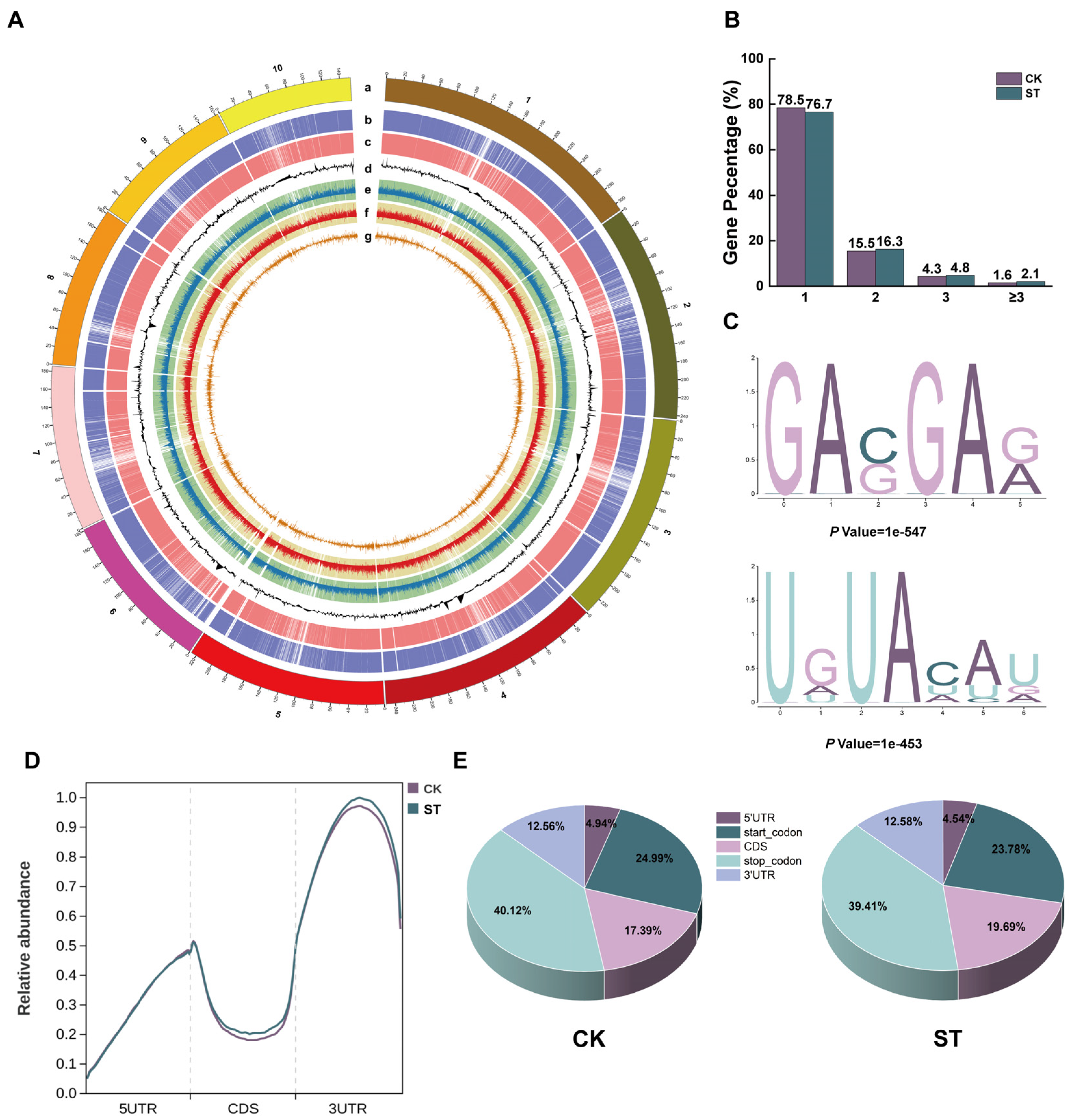
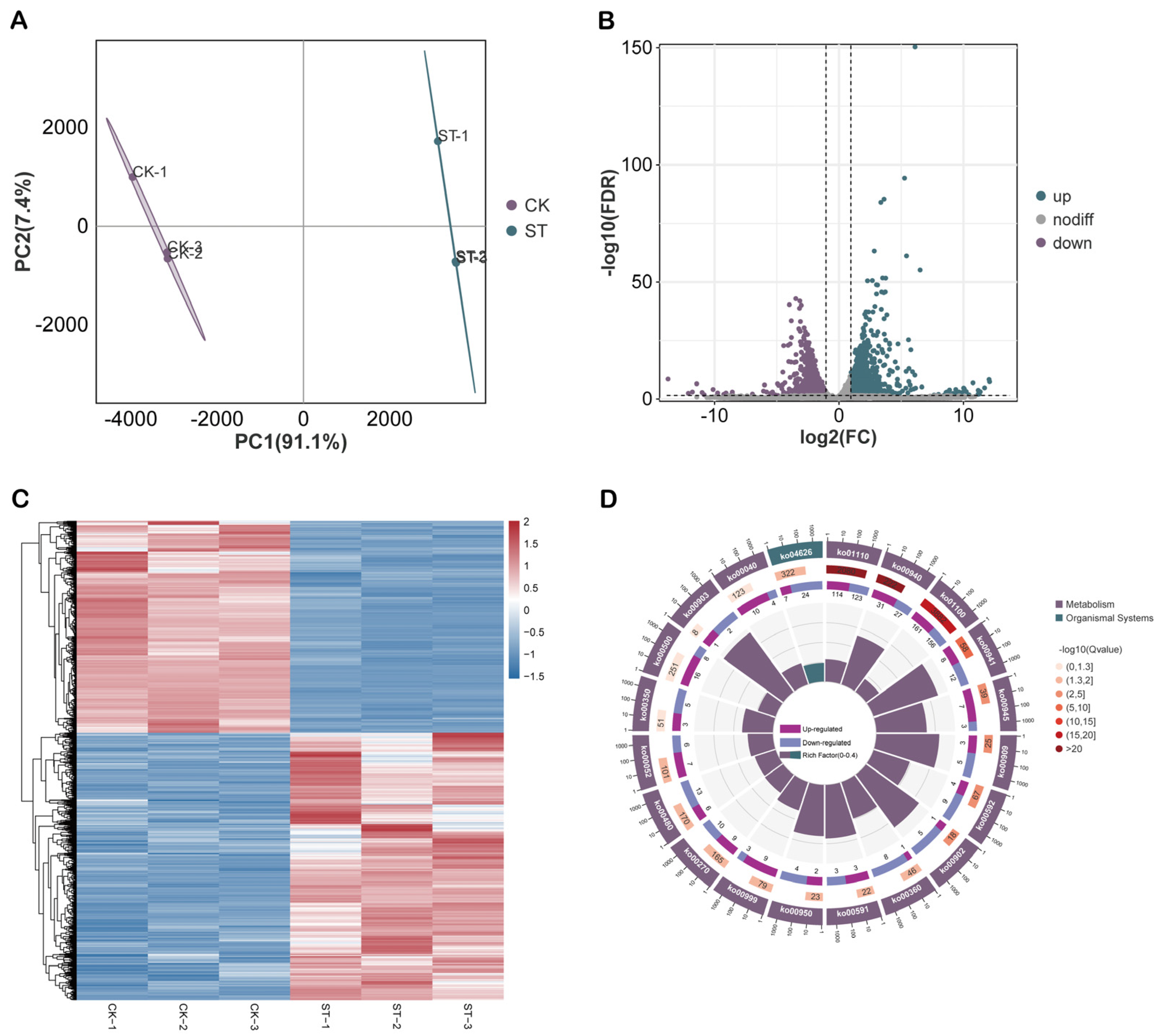
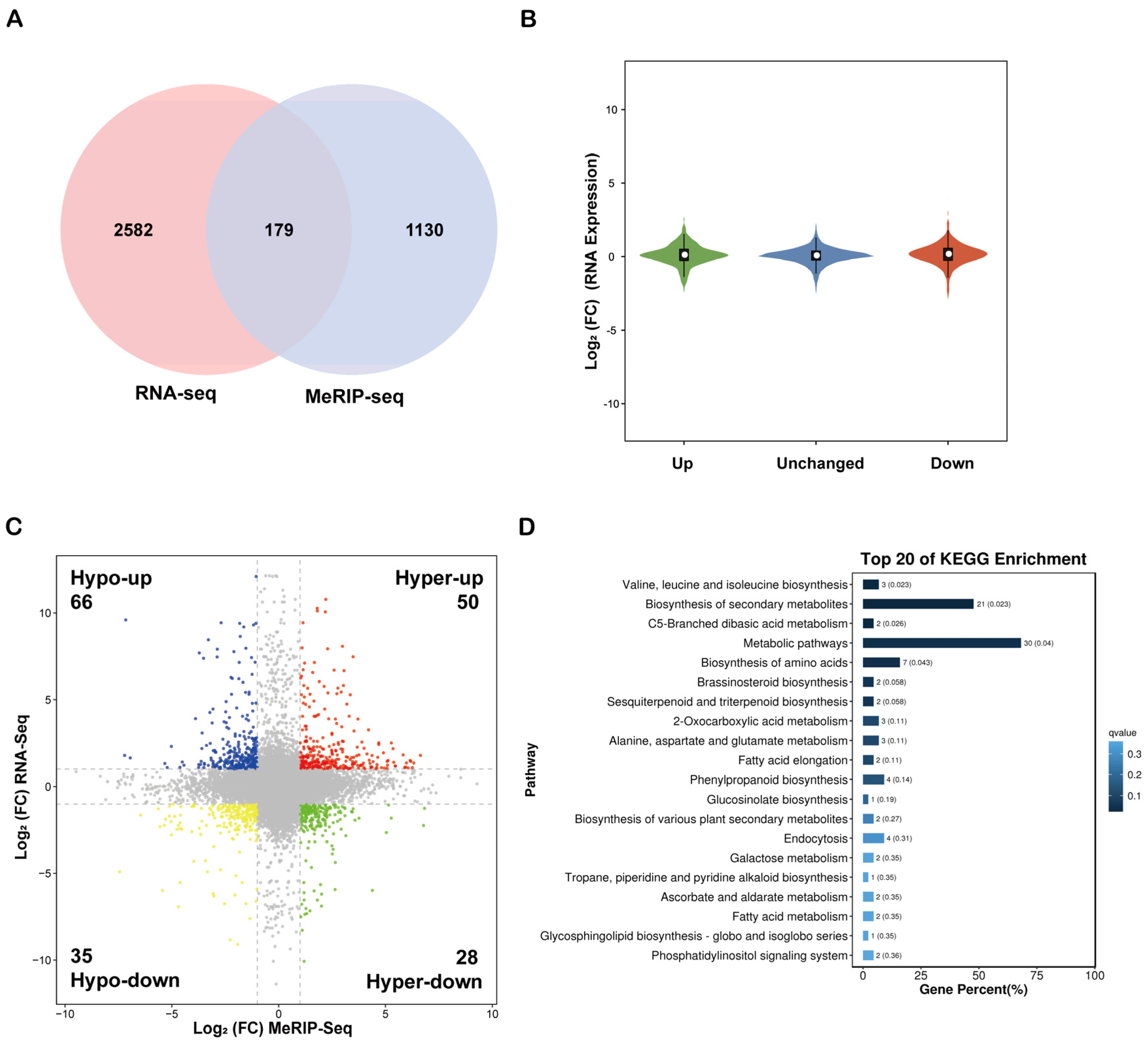
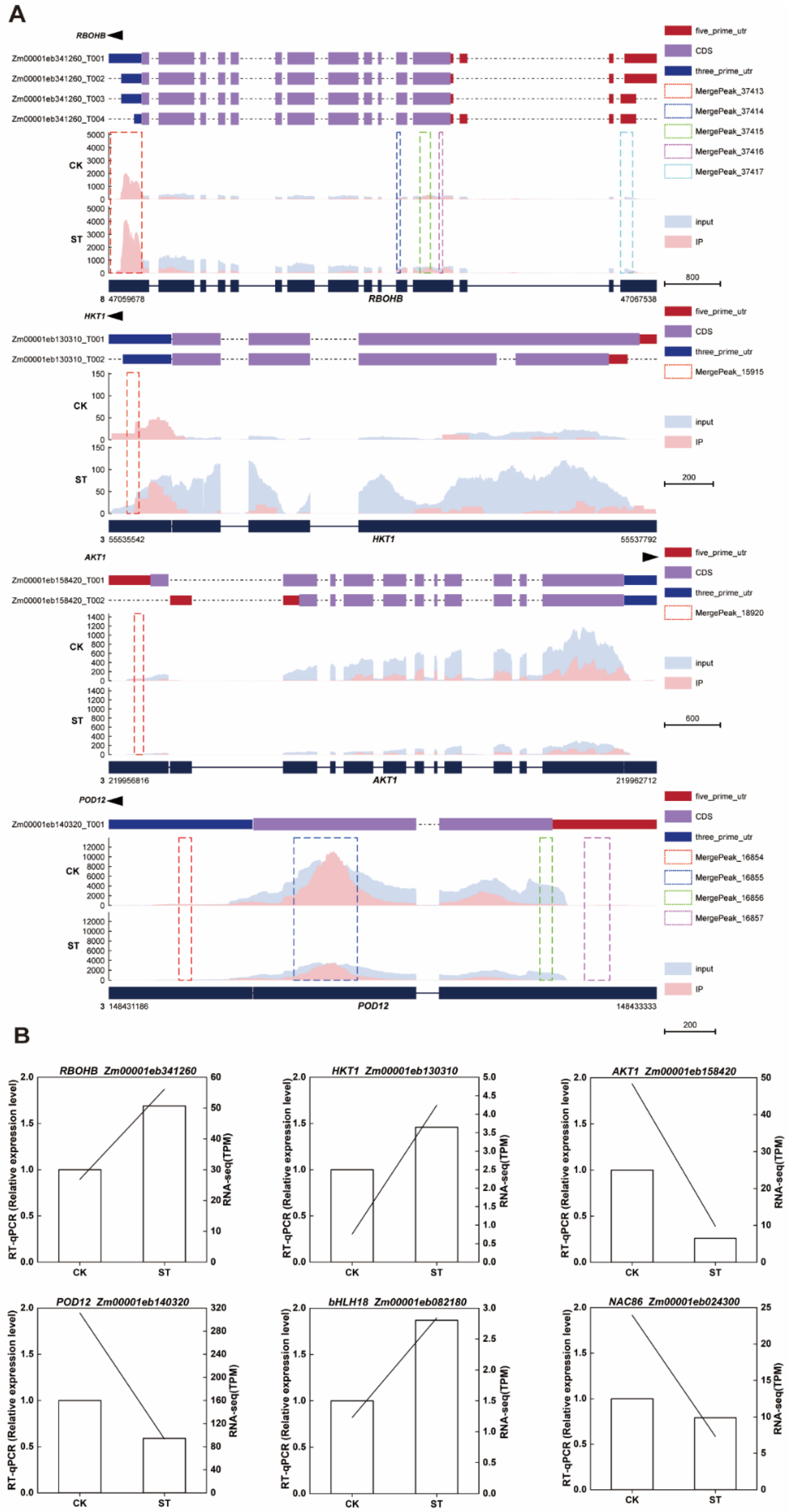
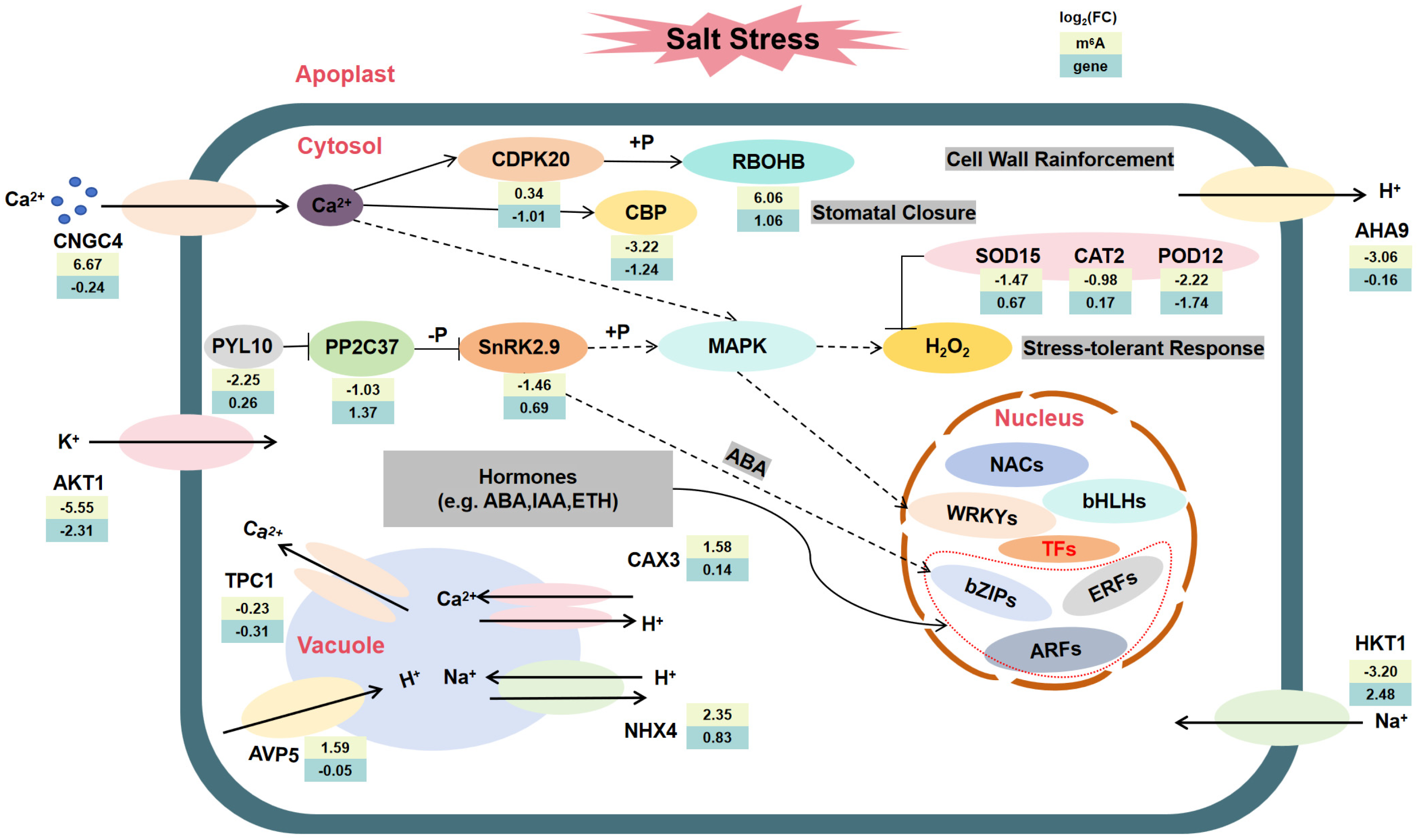
Salt stress represents a significant abiotic factor that constrains maize growth. Epigenetic modifications play a crucial role in enabling plants to respond effectively to such stresses. Among these alterations, m6A methylation, which is the most common post-transcriptional modification of eukaryotic mRNA, shows dynamic variations that are closely linked to stress responses. In this study, we conducted a transcriptome-wide m6A methylation analysis on maize roots from the inbred line PH4CV, following treatment with 180 mM NaCl. The results identified 1309 differentially m6A methylated peaks (DMPs) and 2761 differentially expressed genes (DEGs) under salt stress conditions. Association analysis revealed that 179 DEGs contain DMPs. Key pathways involved in stress responses, including Ca2+ signaling transduction and ABA signaling, as well as ion homeostasis regulation (involving AKT, HKT, and other families) and the reactive oxygen species scavenging system (including POD, SOD, and CAT), play crucial roles in coping with salt stress. Furthermore, we identified a total of 26 m6A-related genes, comprising 7 eraser genes, 10 reader genes, and 9 writer genes. Notably, several key salt-responsive genes, such as RBOHB, AKT1, HKT1, and POD12, are correlated with m6A modification. This study provides a comprehensive map of m6A methylation dynamics in maize roots under salt stress, laying a foundational resource for future investigations into the epigenetic regulation of salt tolerance in maize.
Keywords: salt stress; m6A methylation; transcriptional regulation; stress response; molecular mechanism salt stress; m6A methylation; transcriptional regulation; stress response; molecular mechanism