Bioactive Metabolites from Aerial Parts of Plantago indica L.: Structural Elucidation and Integrated In Vitro/In Vivo Assessment of Anti-Inflammatory and Wound-Healing Efficacy

 , ,
, ,  ,
,
Abstract
1. Introduction
2. Results
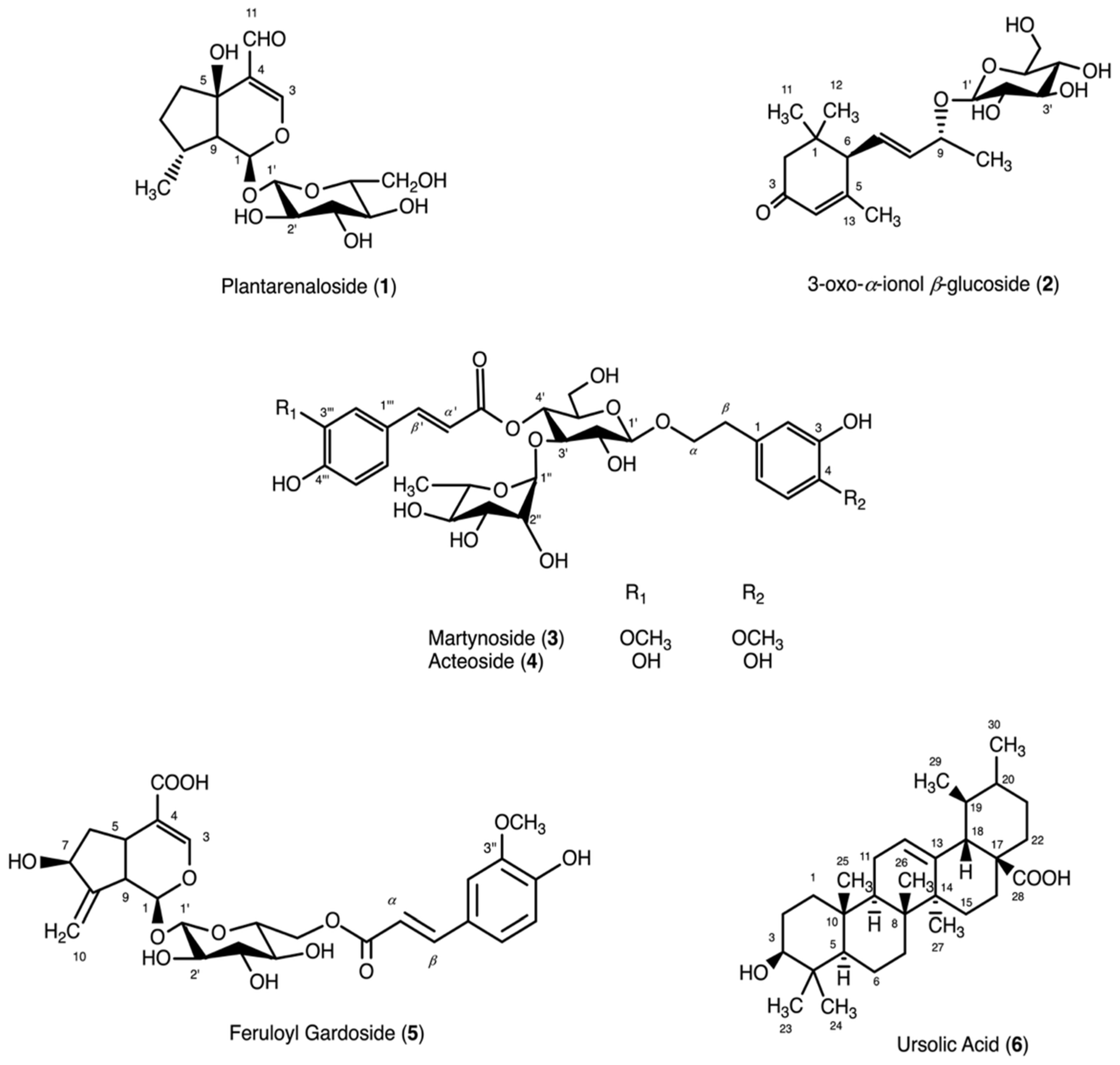
2.1. Characterization of the Isolated Compounds
2.2. In Vivo Biological Activities
2.2.1. Acetic Acid-Induced Capillary Permeability Results
2.2.2. Linear Incision Wound Model
2.2.3. Circular Excision Wound Model
2.3. In Vitro Biological Activities
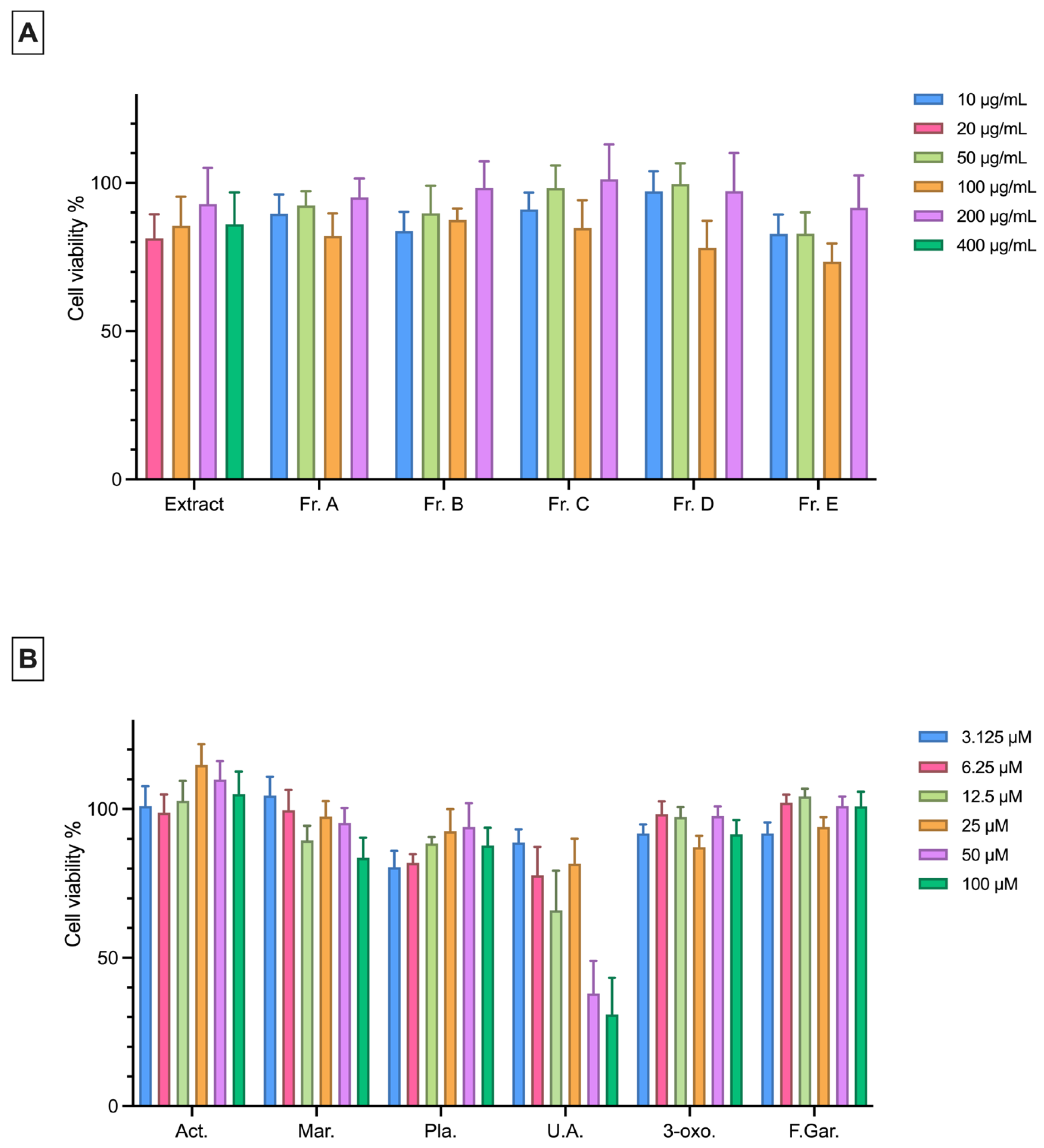
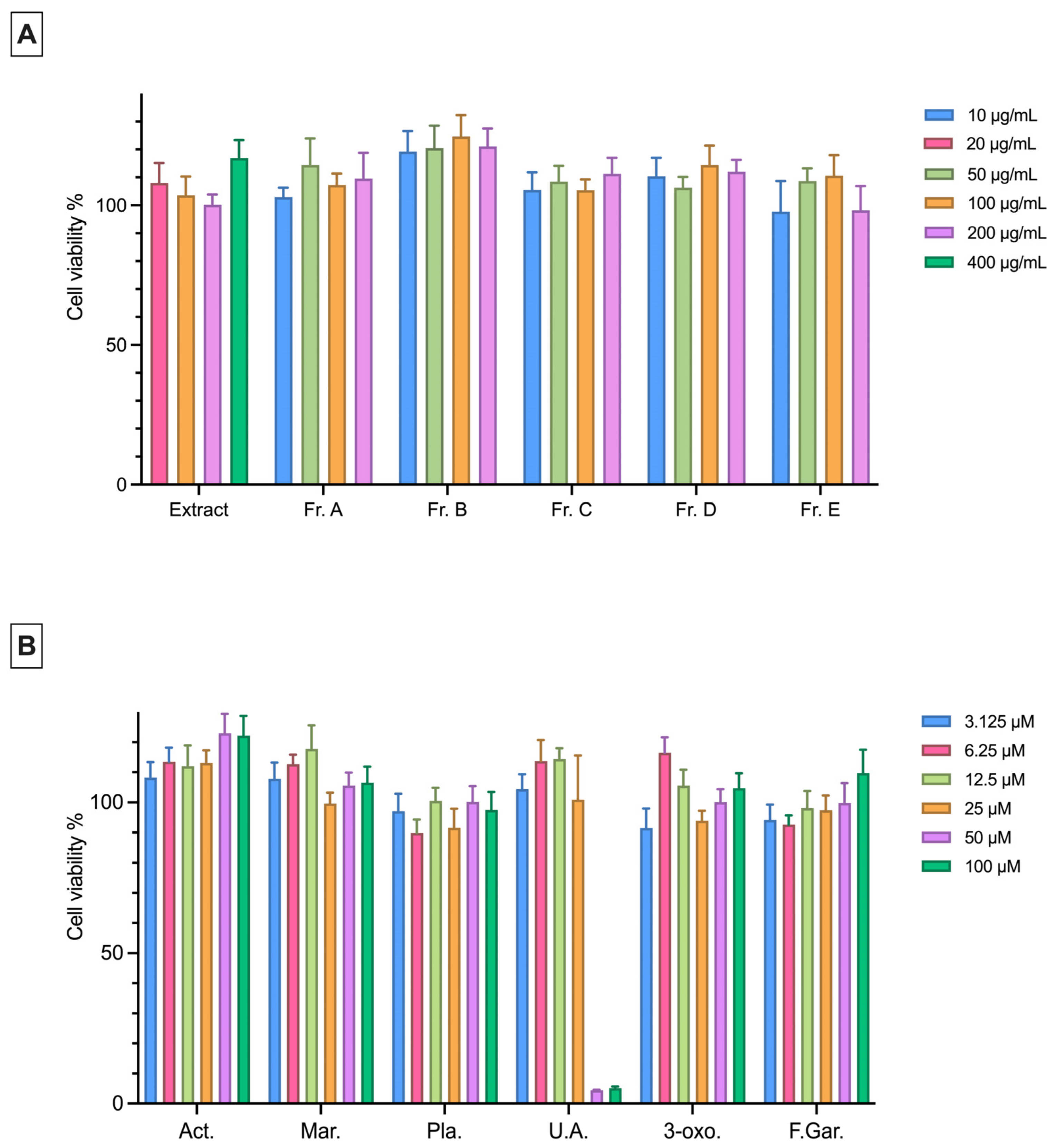
2.3.1. Cell Viability Assay (MTT)
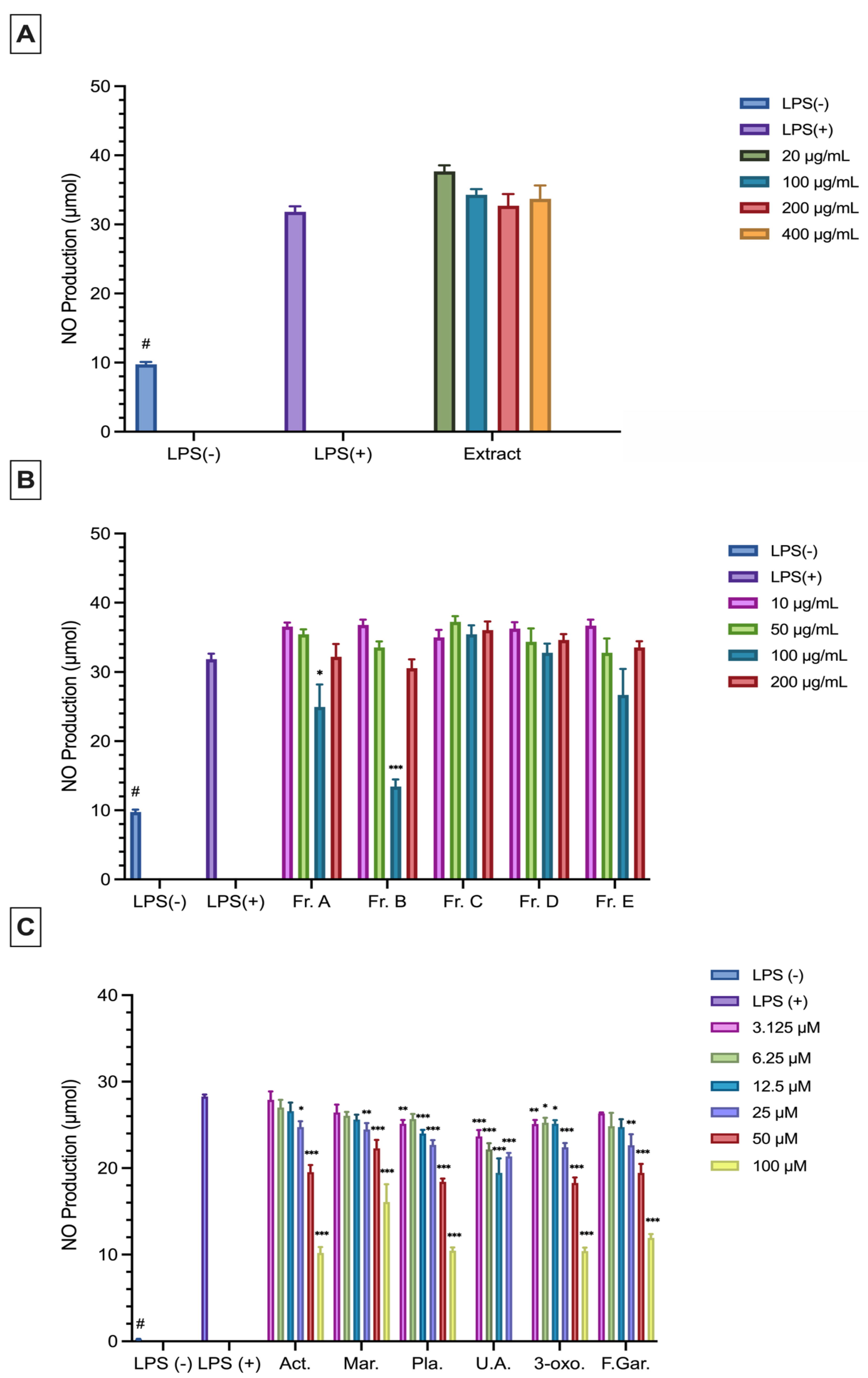
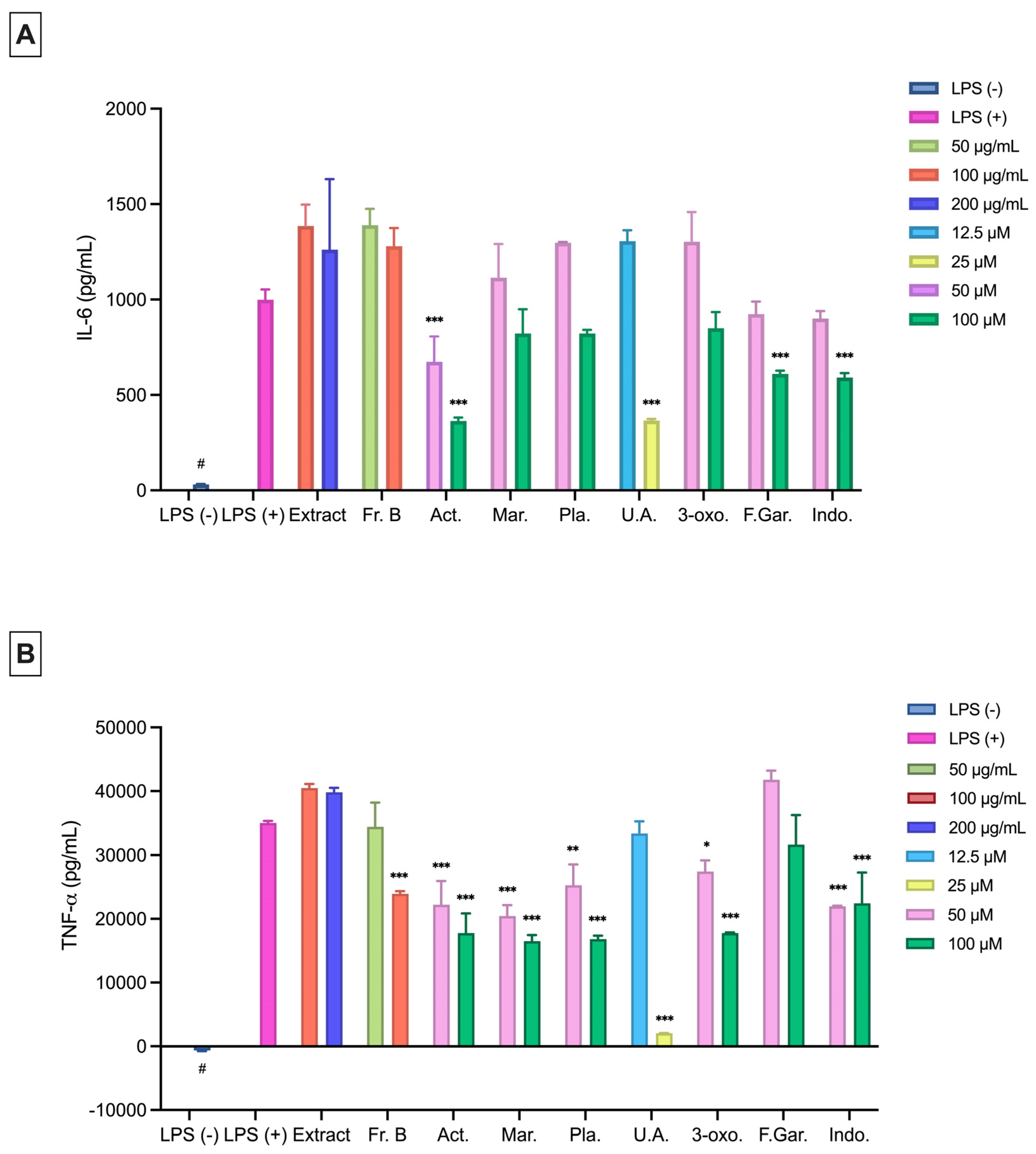
2.3.2. Effects on LPS-Induced NO, IL-6, and TNF-α Cytokine Production
2.3.3. Scratch Assay Results
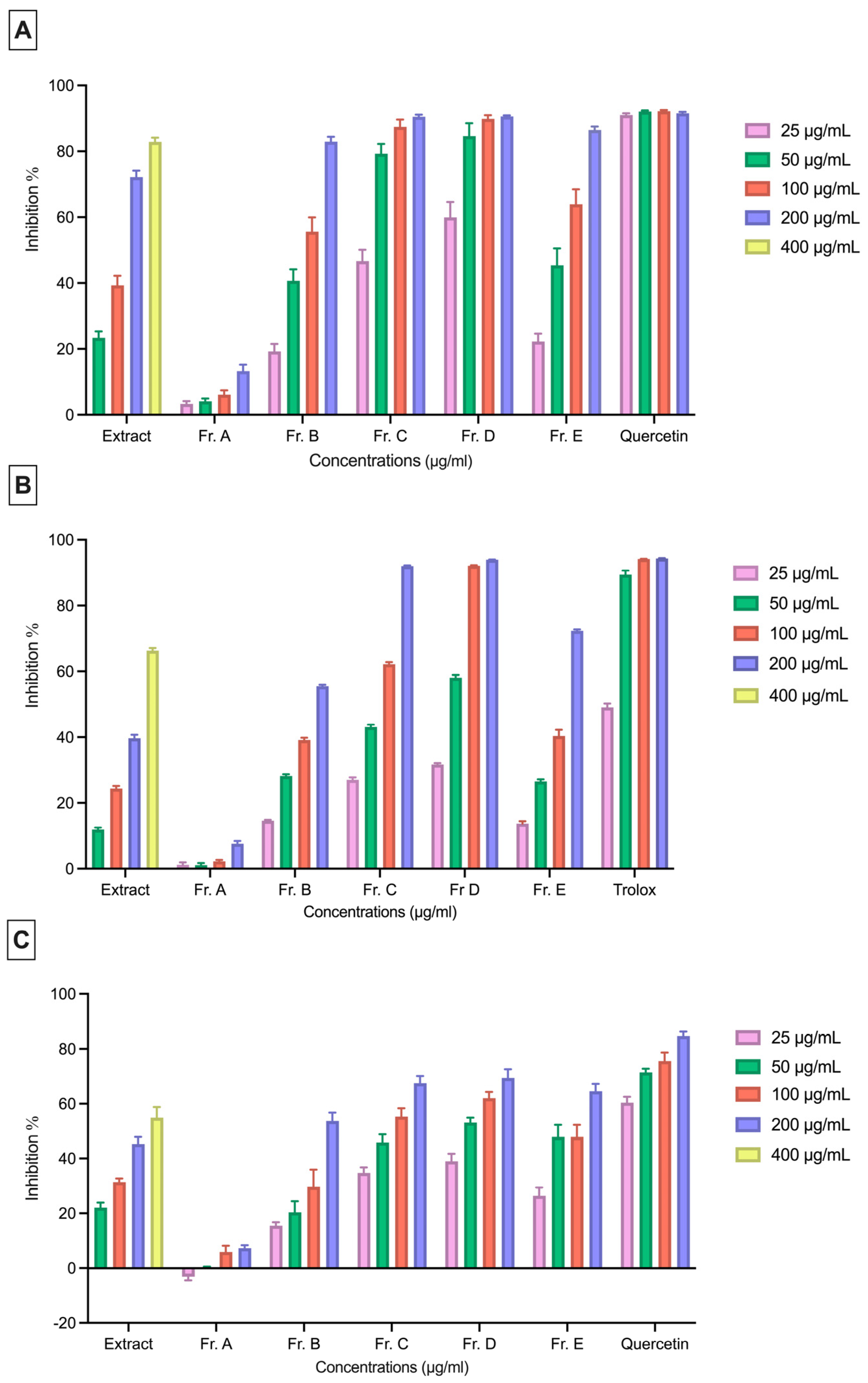
2.3.4. Antioxidant Activity
3. Discussion
4. Materials and Methods
4.1. Plant Material
4.2. Chemicals, Reagents and Instruments
4.3. Extraction, Fractionation, and Isolation Process
4.4. In Vivo Assays
4.4.1. Animals
4.4.2. Preparation of Test Samples
4.4.3. Acetic Acid-Induced Capillary Permeability
4.4.4. Linear Incision Wound Model
4.4.5. Circular Excision Wound Model
4.5. In Vitro Assays
4.5.1. Cell Culture
4.5.2. Cell Viability
4.5.3. LPS-Induced NO, IL-6, and TNF-α Production in the RAW 264.7 Macrophages
4.5.4. Scratch Assay
4.5.5. Antioxidant Activity
Determination of the DPPH Radical Scavenging Activity
Determination of the ABTS Radical Scavenging Activity
Determination of the SO Radical Scavenging Activity
4.6. Statistical Analysis
5. Conclusions
Supplementary Materials
Author Contributions
Funding
Institutional Review Board Statement
Data Availability Statement
Conflicts of Interest
Abbreviations
| ABTS | 2,2′-azino-bis(3-ethylbenzothiazoline-6-sulfonic acid) |
| CMC | Carboxymethyl Cellulose |
| DMEM | Dulbecco’s Modified Eagle Medium |
| DMSO | Dimethyl Sulfoxide |
| DPPH | 2,2-Diphenyl-1-picrylhydrazyl |
| ELISA | Enzyme Linked Immunosorbent Assay |
| EtOH | Ethanol |
| FBS | Fetal Bovine Serum |
| HPLC | High-Performance Liquid Chromatography |
| IC50 | Inhibitory Concentration 50% |
| IL-1β | Interleukin-1 beta |
| IL-6 | Interleukin-6 |
| LPS | Lipopolysaccharides |
| MeOH | Methanol |
| MTT | 3-(4,5-dimethylthiazol-2-yl)-2,5-diphenyl tetrazolium bromide |
| NaOH | Sodium Hydroxide |
| NBT | Nitro Blue Tetrazolium |
| NMR | Nuclear Magnetic Resonance |
| NO | Nitric oxide |
| PBS | Phosphate Buffered Saline |
| SCC | Silica Gel Column Chromatography |
| SEM | Standard Error of the Mean |
| SO | Superoxide |
| TLC | Thin-Layer Chromatography |
| TNF-α | Tumor Necrosis Factor alpha |
References
- WFO. Plantago L. POWO. Available online: https://powo.science.kew.org/taxon/urn:lsid:ipni.org:names:30001135-2 (accessed on 2 December 2025).
- Tutel, B.; Kandemir, İ.; Kus, S.; Kence, A. Classification of Turkish Plantago L. species using numerical taxonomy. Turk. J. Bot. 2005, 29, 51–61. [Google Scholar]
- Zhakipbekov, K.; Turgumbayeva, A.; Issayeva, R.; Kipchakbayeva, A.; Kadyrbayeva, G.; Tleubayeva, M.; Akhayeva, T.; Tastambek, K.; Sainova, G.; Serikbayeva, E.; et al. Antimicrobial and other biomedical properties of extracts from Plantago major, Plantaginaceae. Pharmaceuticals 2023, 16, 1092. [Google Scholar] [CrossRef] [Scilit]
- Dong, Y.; Hou, Q.; Sun, M.; Sun, J.; Zhang, B. Targeted isolation of antioxidant constituents from Plantago asiatica L. and in vitro activity assay. Molecules 2020, 25, 1825. [Google Scholar] [CrossRef] [Scilit] [PubMed]
- Gurbuz, I.; Gencler Ozkan, A.M.; Akaydin, G.; Salihoglu, E.; Gunbatan, T.; Demirci, F.; Yesilada, E. Folk medicine in Duzce Province (Turkey). Turk. J. Bot. 2019, 43, 769–784. [Google Scholar] [CrossRef] [Scilit]
- Karakaya, S.; Polat, A.; Aksakal, O.; Sumbullu, Y.Z.; Incekara, U. Ethnobotanical study of medicinal plants in Aziziye district (Erzurum, Turkey). Turk. J. Pharm. Sci. 2020, 17, 211–220. [Google Scholar] [CrossRef] [Scilit] [PubMed]
- Kilic, M.; Yildiz, K.; Kilic, F.M. Traditional uses of medicinal plants in Artuklu, Turkey. Hum. Ecol. Rev. 2020, 48, 619–632. [Google Scholar] [CrossRef] [Scilit]
- Baytop, T. Türkiye’de Bitkiler ile Tedavi Geçmişten Günümüze, 2nd ed.; Nobel Tıp Kitapevleri: İstanbul, Türkiye, 1999; p. 380. [Google Scholar]
- Goncalves, S.; Romano, A. The medicinal potential of plants from the genus Plantago (Plantaginaceae). Ind. Crops Prod. 2016, 83, 213–226. [Google Scholar] [CrossRef] [Scilit]
- Hammami, S.; Debbabi, H.; Jlassi, I.; Joshi, R.K.; Mokni, R.E. Chemical composition and antimicrobial activity of essential oil from the al parts of Plantago afra L. (Plantaginaceae) growing wild in Tunisia. S. Afr. J. Bot. 2020, 132, 410–414. [Google Scholar] [CrossRef] [Scilit]
- Budzianowska, A.; Toton, E.; Romaniuk-Drapala, A.; Kikowska, M.; Budzianowski, J. Cytotoxic effect of phenylethanoid glycosides isolated from Plantago lanceolata L. Life 2023, 13, 556. [Google Scholar] [CrossRef] [Scilit]
- Farcas, A.D.; Zagrean-Tuza, C.; Vlase, L.; Gheldiu, A.M.; Parvu, M.; Mot, A.C. Epr fingerprinting and antioxidant response of four selected Plantago species. Stud. Univ. Babes-Bol. Chem. 2020, 65, 209–220. [Google Scholar] [CrossRef] [Scilit]
- Pesantes-Sangay, S.J.; Calla-Poma, R.D.; Requena-Mendizabal, M.F.; Alvino-Vales, M.I.; Millones-Gomez, P.A. Chemical composition and antibacterial effect of Plantago major extract on periodontal pathogens. Pesqui. Bras. Odontopediatria Clin. Integr. 2020, 20, e0012. [Google Scholar] [CrossRef] [Scilit]
- Alsaraf, K.M.; Mohammad, M.H.; Al-Shammari, A.M.; Abbas, I.S. Selective cytotoxic effect of Plantago lanceolata L. against breast cancer cells. J. Egypt. Natl. Cancer Inst. 2019, 31, 10. [Google Scholar] [CrossRef] [Scilit] [PubMed]
- Dong, C.L.; Qin, Y.; Ma, J.X.; Cui, W.Q.; Chen, X.R.; Hou, L.Y.; Chen, X.Y.; God’spower, B.O.; Eliphaz, N.; Qin, J.J.; et al. The active ingredients identification and antidiarrheal mechanism analysis of Plantago asiatica L. superfine powder. Front. Pharmacol. 2021, 11, 612478. [Google Scholar] [CrossRef] [Scilit]
- Zhao, H.; Wang, Q.H.; Sun, Y.P.; Yang, B.Y.; Wang, Z.B.; Chai, G.F.; Guan, Y.Z.; Zhu, W.G.; Shu, Z.P.; Lei, X.; et al. Purification, characterization and immunomodulatory effects of Plantago depressa polysaccharides. Carbohydr. Polym. 2014, 112, 63–72. [Google Scholar] [CrossRef] [Scilit]
- Fu, Y.S.; Lue, S.I.; Lin, S.Y.; Luo, C.L.; Chou, C.C.; Weng, C.F. Plantago asiatica seed extracts alleviated blood pressure in phase I-spontaneous hypertension rats. Molecules 2019, 24, 1734. [Google Scholar] [CrossRef] [Scilit] [PubMed]
- Farcas, A.D.; Mot, A.C.; Parvu, A.E.; Al Toma, V.; Popa, M.A.; Mihai, M.C.; Sevastre, B.; Roman, I.; Vlase, L.; Parvu, M. In vivo pharmacological and anti-inflammatory evaluation of Xerophyte Plantago sempervirens Crantz. Oxid. Med. Cell. Longev. 2019, 2019, 5049643. [Google Scholar] [CrossRef] [Scilit]
- Genc, Y.; Harput, U.S.; Saracoglu, I. Active compounds isolated from Plantago subulata L. via wound healing and antiinflammatory activity guided studies. J. Ethnopharmacol. 2019, 241, 112030. [Google Scholar] [CrossRef] [Scilit] [PubMed]
- Sperotto, N.D.D.; Steffens, L.; Verissimo, R.M.; Henn, J.G.; Peres, V.F.; Vianna, P.; Chies, J.A.B.; Roehe, A.; Saffi, J.; Moura, D.J. Wound healing and anti-inflammatory activities induced by a Plantago australis hydroethanolic extract standardized in verbascoside. J. Ethnopharmacol. 2018, 225, 178–188. [Google Scholar] [CrossRef] [Scilit]
- Barua, C.C.; Pal, S.K.; Roy, J.D.; Buragohain, B.; Talukdar, A.; Barua, A.G.; Borah, P. Studies on the anti-inflammatory properties of Plantago erosa leaf extract in rodents. J. Ethnopharmacol. 2011, 134, 62–66. [Google Scholar] [CrossRef] [Scilit]
- Hussan, F.; Mansor, A.S.; Hassan, S.N.; Tengku Nor Effendy Kamaruddin, T.N.; Budin, S.B.; Othman, F. Anti-inflammatory property of Plantago major leaf extract reduces the inflammatory reaction in experimental acetaminophen-induced liver injury. Evid. Based Complement. Altern. Med. 2015, 2015, 347861. [Google Scholar] [CrossRef] [Scilit]
- Majkic, T.; Bekvalac, K.; Beara, I. Plantain (Plantago L.) species as modulators of prostaglandin E2 and thromboxane A2 production in inflammation. J. Ethnopharmacol. 2020, 262, 113140. [Google Scholar] [CrossRef] [Scilit]
- Zubair, M.; Ekholm, A.; Nybom, H.; Renvert, S.; Widen, C.; Rumpunen, K. Effects of Plantago major L. leaf extracts on oral epithelial cells in a scratch assay. J. Ethnopharmacol. 2012, 141, 825–830. [Google Scholar] [CrossRef] [Scilit]
- Taskova, R.; Evstatieva, L.; Handjieva, N.; Popov, S. Iridoid patterns of genus Plantago L. and their systematic significance. Z. Naturforsch C J. Biosci. 2002, 57, 42–50. [Google Scholar] [CrossRef] [Scilit] [PubMed]
- Ozcan, T. Fatty acid composition of seed oils in some sand dune vegetation species from Turkey. Chem. Nat. Compd. 2014, 50, 804–809. [Google Scholar] [CrossRef] [Scilit]
- Harput, U.S.; Genc, Y.; Saracoglu, I. Cytotoxic and antioxidative activities of Plantago lagopus L. and characterization of its bioactive compounds. Food Chem. Toxicol. 2012, 50, 1554–1559. [Google Scholar] [CrossRef] [Scilit] [PubMed]
- Ukaegbu, K.; Allen, E.; Svoboda, K.K.H. Reactive oxygen species and antioxidants in wound healing: Mechanisms and therapeutic totential. Int. Wound J. 2025, 22, e70330. [Google Scholar] [CrossRef] [Scilit]
- Hunt, M.; Torres, M.; Bachar-Wikstrom, E.; Wikstrom, J.D. Cellular and molecular roles of reactive oxygen species in wound healing. Commun. Biol. 2024, 7, 1534. [Google Scholar] [CrossRef] [Scilit]
- Andrzejewska-Golec, E.; Ofterdinger-Daegel, S.; Calis, I.; Swiatek, L. Chemotaxonomic aspects of iridoids occurring in Plantago subg. psyllium (Plantaginaceae). Plant Syst. Evol. 1993, 185, 85–89. [Google Scholar] [CrossRef] [Scilit]
- Pabst, A.; Barron, D.; Semon, E.; Schreier, P. Two diastereomeric 3-oxo-α-ionol β-D-glucosides from raspberry fruit. Phytochemistry 1992, 31, 1649–1652. [Google Scholar] [CrossRef] [Scilit]
- Calıs, I.; Saracoglu, I.; Shizuka, K.; Sansei, N. Phenylpropanoid glycosides isolated from Rhynchocorys stricta Scrophulariaceae. Turk. J. Med. Sci. 1988, 12, 234–238. [Google Scholar]
- Chen, X.; Cao, Y.G.; Ren, Y.J.; Liu, Y.L.; Fan, X.L.; He, C.; Li, X.D.; Ma, X.Y.; Zheng, X.K.; Feng, W.S. Ionones and lignans from the fresh roots of Rehmannia glutinosa. Phytochemistry 2022, 203, 113423. [Google Scholar] [CrossRef] [Scilit] [PubMed]
- Seebacher, W.; Simic, N.; Weis, R.; Saf, R.; Kunert, O. Complete assignments of 1H and 13C NMR resonances of oleanolic acid, 18α-oleanolic acid, ursolic acid and their 11-oxo derivatives. Magn. Reson. Chem. 2003, 41, 636–638. [Google Scholar] [CrossRef] [Scilit]
- Küpeli Akkol, E.; Renda, G.; İlhan, M.; Yazıcı Bektaş, N. Wound healing acceleration and anti-inflammatory potential of Prunella vulgaris L.: From conventional use to preclinical scientific verification. J. Ethnopharmacol. 2022, 295, 115411. [Google Scholar] [CrossRef] [Scilit] [PubMed]
- Küpeli Akkol, E.; Subaş, T.; Özgen, U.; Süntar, I.; Ilhan, M.; Keleş, H. Effects of aphthoquinones from the roots of Onosma armeniacum Klokov on wound healing. Chem. Biodivers. 2024, 21, e202301946. [Google Scholar] [CrossRef] [Scilit]
- Ferrazzano, G.F.; Cantile, T.; Roberto, L.; Ingenito, A.; Catania, M.R.; Roscetto, E.; Palumbo, G.; Zarrelli, A.; Pollio, A. Determination of the in vitro and in vivo antimicrobial activity on salivary streptococci and lactobacilli and chemical characterisation of the phenolic content of a Plantago lanceolata infusion. Biomed. Res. Int. 2015, 2015, 286817. [Google Scholar] [CrossRef] [Scilit]
- Tinkov, A.A.; Nemereshina, O.N.; Popova, E.V.; Polyakova, V.S.; Gritsenko, V.A.; Nikonorov, A.A. Plantago maxima leaves extract inhibits adipogenic action of a high-fat diet in female Wistar rats. Eur. J. Nutr. 2014, 53, 831–842. [Google Scholar] [CrossRef] [Scilit]
- Patil, K.R.; Mahajan, U.B.; Unger, B.S.; Goyal, S.N.; Belemkar, S.; Surana, S.J.; Ojha, S.; Patil, C.R. Animal models of inflammation for screening of anti-inflammatory drugs: Implications for the discovery and development of phytopharmaceuticals. Int. J. Mol. Sci. 2019, 20, 4367. [Google Scholar] [CrossRef] [Scilit]
- Mesquita, L.M.S.; Da Rocha, C.Q.; Affonso, L.H.L.; Cerulli, A.; Piacente, S.; Tangerina, M.M.P.; Martins, M.B.G.; Vilegas, W. Phenolic isomers from Plantago catharinea leaves: Isolation, identification, quantification and in vitro antioxidant activity. Nat. Prod. Commun. 2017, 12, 409–412. [Google Scholar] [CrossRef] [Scilit]
- Pereira, C.G.; Custodio, L.; Rodrigues, M.J.; Neng, N.R.; Nogueira, J.M.F.; Carlier, J.; Costa, M.C.; Varela, J.; Barreira, L. Profiling of antioxidant potential and phytoconstituents of Plantago coronopus. Braz. J. Biol. 2017, 77, 632–641. [Google Scholar] [CrossRef] [Scilit] [PubMed]
- Kuranel, E.; Akkol Kupeli, E.K.; Suntar, İ.; Gursoy, S.; Keles, H.; Aktay, G. Investigating biological activity potential of Plantago lanceolata L. in healing of skin wounds by a preclinical research. Turk. J. Pharm. Sci. 2016, 13, 135–144. [Google Scholar] [CrossRef] [Scilit]
- Kovac, I.; Durkac, J.; Holly, M.; Jakubcova, K.; Perzel’ova, V.; Mucaji, P.; Svajdlenka, E.; Sabol, F.; Legath, J.; Belak, J.; et al. Plantago lanceolata L. water extract induces transition of fibroblasts into myofibroblasts and increases tensile strength of healing skin wounds. J. Pharm. Pharmacol. 2015, 67, 117–125. [Google Scholar] [CrossRef] [Scilit] [PubMed]
- Thome, R.G.; dos Santos, H.B.; dos Santos, F.V.; Oliveira, R.J.D.; de Camargos, L.F.; Pereira, M.N.; Longatti, T.R.; Souto, C.M.; Franco, C.S.; Schüffner, R.D.A.; et al. Evaluation of healing wound and genotoxicity potentials from extracts hydroalcoholic of Plantago major and Siparuna guianensis. Exp. Biol. Med. 2012, 237, 1379–1386. [Google Scholar] [CrossRef] [Scilit]
- Mazumder, K.; Tanaka, K.; Fukase, K. Cytotoxic activity of ursolic acid derivatives obtained by isolation and oxidative derivatization. Molecules 2013, 18, 8929–8944. [Google Scholar] [CrossRef] [Scilit] [PubMed]
- Viljoen, A.; Mncwangi, N.; Vermaak, I. Anti-inflammatory iridoids of botanical origin. Curr. Med. Chem. 2012, 19, 2104–2127. [Google Scholar] [CrossRef] [Scilit]
- Domingues, M.; Keck, S.A.; Jeffery, E.; Cespedes, C.L. Effects of extracts, flavonoids and iridoids from Penstemon gentianoides (Plantaginaceae) on inhibition of inducible nitric oxide synthase (iNOS), cyclooxygenase-2 (COX-2) in LPS-Activated RAW 264.7 macrophage cells and their antioxidant activity. Bol. Latinoam. Caribe Plantas Med. Aromat. 2010, 9, 397–413. [Google Scholar]
- Zhao, J.; Zheng, H.; Sui, Z.; Jing, F.; Quan, X.; Zhao, W.; Liu, G. Ursolic acid exhibits anti-inflammatory effects through blocking TLR4-MyD88 pathway mediated by autophagy. Cytokine 2019, 123, 154726. [Google Scholar] [CrossRef] [Scilit] [PubMed]
- Sołtys, A.; Galanty, A.; Grabowska, K.; Paśko, P.; Zagrodzki, P.; Podolak, I. Multidirectional effects of terpenoids from Sorbus intermedia (EHRH.) PERS fruits in cellular model of benign prostate hyperplasia. Pharmaceuticals 2023, 16, 965. [Google Scholar] [CrossRef] [Scilit]
- Yang, J.-R.; Zhu, Y.-T.; Zeng, Y.-Q.; Li, H.-Q.; Li, C.-H.; Gao, J.-M. Three new ionone glycosides from Rhododendron capitatum Maxim. Molecules 2024, 29, 2462. [Google Scholar] [CrossRef] [Scilit]
- Whittle, B.A. The use of changes in capillary permeability in mice to distinguish between narcotic and nonnarcotic alalgesics. Br. J. Pharmacol. 1964, 22, 246–253. [Google Scholar] [CrossRef] [Scilit]
- Ayaz, F.; Küpeli Akkol, E.; Gören Nezhun, G.; Calıs, I.; Gürağaç Dereli, F.; Duman, H.; Choudhary, M.I.; Küçükboyacı, N. Bioassay-guided isolation and identification of anti-inflammatory sesquiterpene lactones from Chrysophthalmum montanum (DC.) Boiss. Rec. Nat. Prod. 2019, 14, 48–56. [Google Scholar] [CrossRef] [Scilit]
- Ilhan, M.; Gürağaç Dereli, F.T.; Tümen, I.; Küpeli Akkol, E. Anti-inflammatory and antinociceptive features of Bryonia alba L.: As a possible alternative in treating rheumatism. Open Chem. 2019, 17, 23–30. [Google Scholar] [CrossRef] [Scilit]
- Suntar, I.; Kupeli Akkol, E.; Senol, F.S.; Keles, H.; Orhan, I.E. Investigating wound healing, tyrosinase inhibitory and antioxidant activities of the ethanol extracts of Salvia cryptantha and Salvia cyanescens using in vivo and in vitro experimental models. J. Ethnopharmacol. 2011, 135, 71–77. [Google Scholar] [CrossRef] [Scilit]
- Kupeli Akkol, E.; Koca, U.; Pesin, I.; Yilmazer, D. Evaluation of the wound healing potential of Achillea biebersteinii Afan. (Asteraceae) by in vivo excision and incision models. Evid. Based Complement. Altern. Med. 2011, 2011, 474026. [Google Scholar] [CrossRef] [Scilit] [PubMed]
- Mossman, T. Rapid colorimetric assay for cellular growth and survival: Application to proliferation and cytotoxicity assays. J. Immunol. Methods 1983, 65, 55–63. [Google Scholar] [CrossRef] [Scilit] [PubMed]
- Dogan, Z.; Telli, G.; Tel, B.C.; Saracoglu, I. Scutellaria brevibracteata Stapf and active principles with anti-inflammatory effects through regulation of NF-kappa B/COX-2/iNOS pathways. Fitoterapia 2022, 158, 105159. [Google Scholar] [CrossRef] [Scilit] [PubMed]
- Green, L.C.; Wagner, D.A.; Glogowski, J.; Skipper, P.L.; Wishnok, J.S.; Tannenbaum, S.R. Analysis of nitrate, nitrite, and [15N] nitrate in biological fluids. Anal. Biochem. 1982, 126, 131–138. [Google Scholar] [CrossRef] [Scilit]
- Li, H.; Feng, J.X.; Liu, C.; Hou, S.T.; Meng, J.L.; Liu, J.Y.; Zilong, S.; Chang, M.C. Polysaccharides from an edible mushroom, Hericium erinaceus, alleviate ulcerative colitis in mice by inhibiting the NLRP3 inflammasomes and reestablish intestinal homeostasis. Int. J. Biol. Macromol. 2024, 267, 131251. [Google Scholar] [CrossRef] [Scilit]
- Xu, F.J.; Yang, L.; Qu, A.L.; Li, D.B.; Yu, M.F.; Zheng, S.J.; Ruan, X.; Wang, Q. A design of Tetrastigma hemsleyanum’s flavonoid loaded polyvinylpyrrolidone nanoparticles for improving its bioavailability and biological activities. Food Chem. 2025, 473, 143099. [Google Scholar] [CrossRef] [Scilit]
- Jagiello, K.; Uchanska, O.; Matyja, K.; Jackowski, M.; Wiatrak, B.; Kubasiewicz-Ross, P.; Karuga-Kuzniewska, E. Supporting the wound healing process-curcumin, resveratrol and baicalin in in vitro wound healing studies. Pharmaceuticals 2023, 16, 82. [Google Scholar] [CrossRef] [Scilit]
- Bakeshlouy Afshar, M.; Poursattar Marjani, A.; Gozali Balkanloo, P. Introducing graphene quantum dots in decomposable wheat starch-gelatin based nano-biofilms. Sci. Rep. 2024, 14, 2069. [Google Scholar] [CrossRef] [Scilit]
- Baliyan, S.; Mukherjee, R.; Priyadarshini, A.; Vibhuti, A.; Gupta, A.; Pandey, R.P.; Chang, C.M. Determination of antioxidants by DPPH radical scavenging activity and quantitative phytochemical analysis of Ficus religiosa. Molecules 2022, 27, 1326. [Google Scholar] [CrossRef] [Scilit] [PubMed]



| Material | Extract Type | Dose (mg/kg) | Evans Blue Dye Concentration (μg/mL) ± SEM | Inhibition (%) |
|---|---|---|---|---|
| Control | 10.91 ± 1.13 | |||
| Plantago indica | MeOH | 100 | 8.01 ± 0.72 | 26.6 * |
| 80% EtOH | 100 | 7.06 ± 0.33 | 35.3 ** | |
| Water | 100 | 9.27 ± 0.29 | 15.0 | |
| Indomethacin | 10 | 5.01 ± 0.39 | 54.1 *** |
| Material | Extract Type | Tensile Strength ± SEM | (Tensile Strength %) |
|---|---|---|---|
| Vehicle | - | 18.25 ± 3.37 | - |
| Negative Control | - | 19.73 ± 2.61 | - |
| Plantago indica | MeOH | 21.82 ± 2.20 | 19.6 |
| 80% EtOH | 23.09 ± 2.05 | 26.5 * | |
| Water | 17.12 ± 2.07 | 6.2 | |
| Madecassol® | - | 24.49 ± 1.15 | 34.2 ** |
| Material | Extract Type | Wound Area (mm2) ± SEM (Contraction%) | ||||||
|---|---|---|---|---|---|---|---|---|
| Day 0 | Day 2 | Day 4 | Day 6 | Day 8 | Day 10 | Day 12 | ||
| Vehicle | 18.27 ± 2.13 | 18.34 ± 2.90 | 16.25 ± 1.86 | 14.26 ± 1.93 | 8.21 ± 1.34 | 5.08 ± 1.23 | 4.22 ± 0.91 | |
| Negative Control | 18.34 ± 2.19 | 19.07 ± 2.46 | 16.92 ± 2.11 | 13.67 ± 1.71 | 9.83 ± 1.62 | 7.21 ± 1.32 | 4.80 ± 1.16 | |
| Plantago indica | MeOH | 19.09 ± 3.16 | 15.02 ± 1.61 (18.1) | 14.37 ± 1.58 (11.5) | 10.18 ± 1.12 (28.6) * | 5.15 ± 1.03 (37.3) * | 3.37 ± 0.98 (33.7) * | 3.16 ± 0.12 (25.1) |
| 80% EtOH | 18.13 ± 2.24 | 15.38 ± 2.07 (16.1) | 13.51 ± 1.14 (16.8) | 9.94 ± 1.36 (30.2) * | 5.07 ± 1.16 (38.2) * | 3.43 ± 1.05 (32.4) * | 2.63 ± 0.38 (37.7) * | |
| Water | 19.07 ± 2.68 | 17.92 ± 2.08 (2.3) | 11.43 ± 1.93 (8.8) | 13.49 ± 1.56 (5.3) | 7.28 ± 1.53 (11.3) | 4.36 ± 0.59 (14.1) | 3.71 ± 0.20 (12.0) | |
| Madecassol® | 18.34 ± 2.01 | 14.23 ± 2.34 (22.5) | 11.37 ± 2.02 (30.0) * | 7.16 ± 1.92 (49.7) ** | 4.03 ± 0.97 (50.9) ** | 1.18 ± 0.24 (76.8) *** | 0.00 ± 0.00 (100.00) *** | |
| Materials | Statistical Mean ± SEM (Closure %) | |||
|---|---|---|---|---|
| 20 μg/mL | 100 μg/mL | 200 μg/mL | 400 μg/mL | |
| Extract | 18.30 ± 1.07 | 30.83 ± 3.34 ** | 10.63 ± 0.61 | 12.32 ± 2.00 |
| 10 μg/mL | 50 μg/mL | 100 μg/mL | 200 μg/mL | |
| Fr. A | −0.05 ± 2.13 | 11.19 ± 0.92 | 14.31 ± 0.62 | 7.26 ± 1.69 |
| Fr. B | 90.83 ± 5.45 *** | 71.70 ± 2.93 *** | 58.39 ± 1.25 *** | 47.07 ± 6.70 *** |
| Fr. C | 31.25 ± 2.93 ** | 37.40 ± 2.55 *** | 25.55 ± 1.14 ** | 36.02 ± 1.90 *** |
| Fr. D | 57.89 ± 2.82 *** | 11.54 ± 1.52 | 56.58 ± 2.80 *** | 45.47 ± 2.30 *** |
| Fr. E | 3.43 ± 1.77 | −0.95 ± 3.09 | 11.98 ± 1.17 | 8.99 ± 1.39 |
| FBS (+) | 90.04 ± 5.08 | |||
| FBS (−) | 5.62 ± 1.75 | |||
| Materials | Statistical Mean ± SEM (Closure %) | |||||
|---|---|---|---|---|---|---|
| 3.125 μM | 6.25 μM | 12.5 μM | 25 μM | 50 μM | 100 μM | |
| Act. | 35.09 ± 1.20 *** | 53.35 ± 1.24 *** | 38.82 ± 2.13 *** | 50.12 ± 1.12 *** | 19.95 ± 0.71 *** | 62.58 ± 0.85 *** |
| Mar. | 66.13 ± 1.94 *** | 66.11 ± 2.21 *** | 57.00 ± 2.14 *** | 34.42 ± 1.99 *** | 33.89 ± 1.31 *** | 14.71 ± 1.11 *** |
| Pla. | 24.99 ± 0.53 *** | 44.78 ± 1.55 *** | 50.28 ± 0.79 *** | 26.62 ± 1.14 *** | 29.33 ± 1.10 *** | 15.86 ± 0.87 *** |
| U.A. | 17.55 ± 1.02 *** | 2.61 ± 0.57 | 13.36 ± 0.33 * | 6.54 ± 0.55 | 3.07 ± 0.69 | 13.05 ± 1.08 ** |
| 3-oxo. | 42.47 ± 1.19 *** | 62.71 ± 3.84 *** | 75.20 ± 2.00 *** | 60.28 ± 2.04 *** | 4.69 ± 0.80 | 30.85 ± 1.60 *** |
| F.Gar. | 26.17 ± 1.17 *** | 20.21 ± 0.83 *** | 26.16 ± 1.41 *** | 21.45 ± 1.32 *** | 43.95 ± 1.45 *** | 33.80 ± 0.64 *** |
| FBS (+) | 96.84 ± 2.01 | |||||
| FBS (−) | 4.99 ± 1.70 | |||||
Disclaimer/Publisher’s Note: The statements, opinions and data contained in all publications are solely those of the individual author(s) and contributor(s) and not of MDPI and/or the editor(s). MDPI and/or the editor(s) disclaim responsibility for any injury to people or property resulting from any ideas, methods, instructions or products referred to in the content. |
© 2026 by the authors. Licensee MDPI, Basel, Switzerland. This article is an open access article distributed under the terms and conditions of the Creative Commons Attribution (CC BY) license.
Share and Cite
Bacanak, H.; Dogan, Z.; Küpeli Akkol, E.; Nagatsu, A.; Saracoglu, I. Bioactive Metabolites from Aerial Parts of Plantago indica L.: Structural Elucidation and Integrated In Vitro/In Vivo Assessment of Anti-Inflammatory and Wound-Healing Efficacy. Plants 2026, 15, 141. https://doi.org/10.3390/plants15010141
Bacanak H, Dogan Z, Küpeli Akkol E, Nagatsu A, Saracoglu I. Bioactive Metabolites from Aerial Parts of Plantago indica L.: Structural Elucidation and Integrated In Vitro/In Vivo Assessment of Anti-Inflammatory and Wound-Healing Efficacy. Plants. 2026; 15(1):141. https://doi.org/10.3390/plants15010141
Chicago/Turabian StyleBacanak, Hilal, Zeynep Dogan, Esra Küpeli Akkol, Akito Nagatsu, and Iclal Saracoglu. 2026. "Bioactive Metabolites from Aerial Parts of Plantago indica L.: Structural Elucidation and Integrated In Vitro/In Vivo Assessment of Anti-Inflammatory and Wound-Healing Efficacy" Plants 15, no. 1: 141. https://doi.org/10.3390/plants15010141
APA StyleBacanak, H., Dogan, Z., Küpeli Akkol, E., Nagatsu, A., & Saracoglu, I. (2026). Bioactive Metabolites from Aerial Parts of Plantago indica L.: Structural Elucidation and Integrated In Vitro/In Vivo Assessment of Anti-Inflammatory and Wound-Healing Efficacy. Plants, 15(1), 141. https://doi.org/10.3390/plants15010141