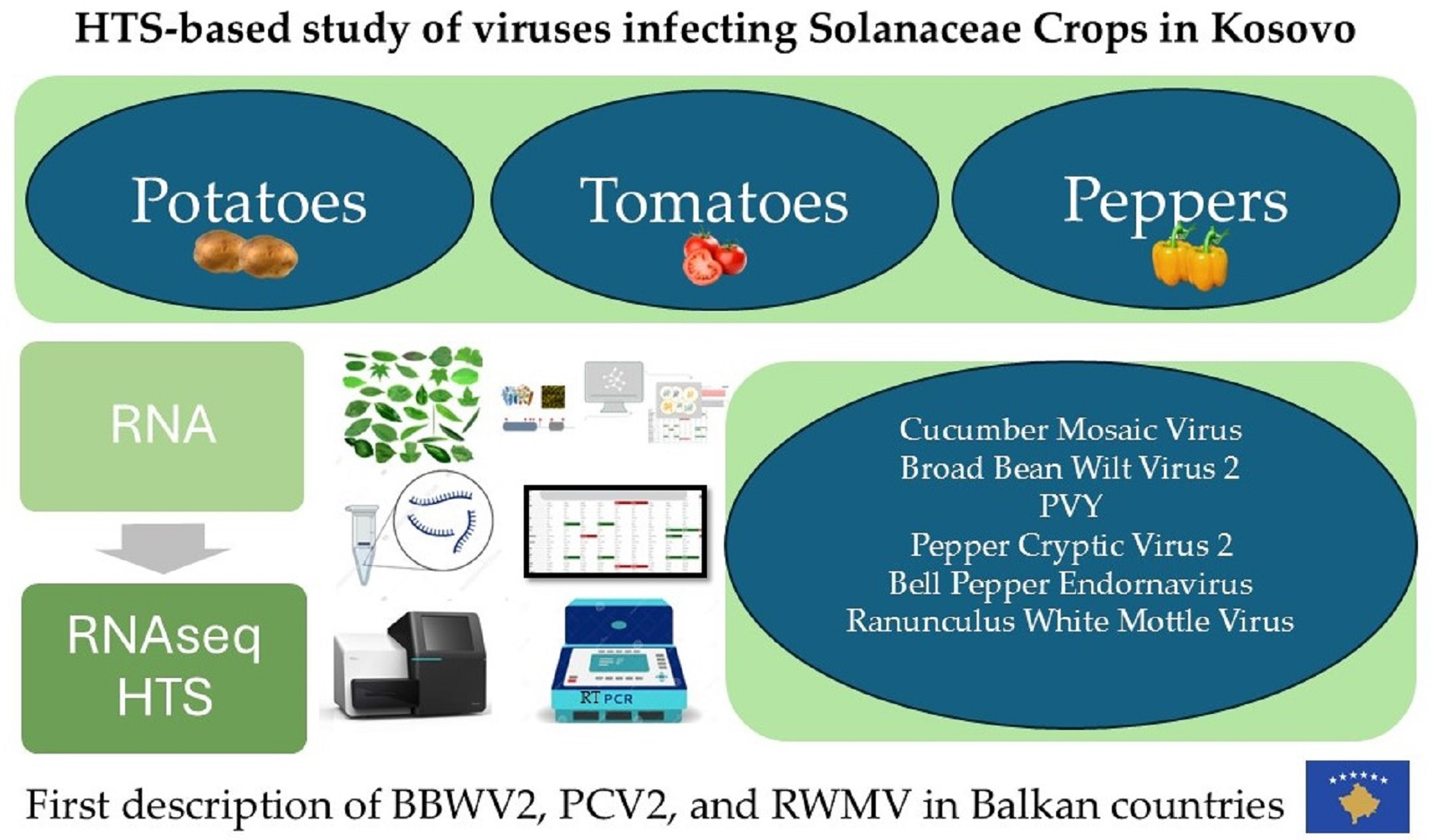
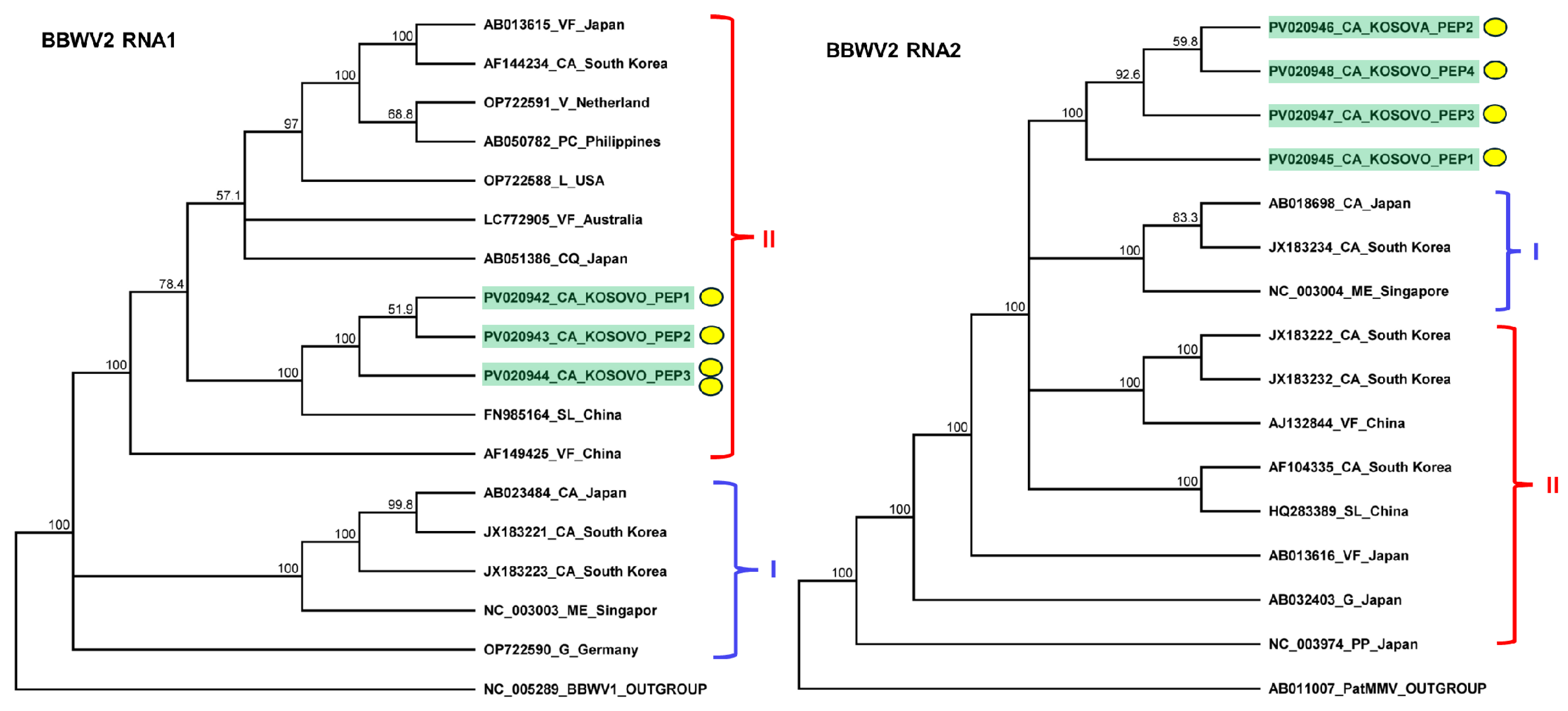
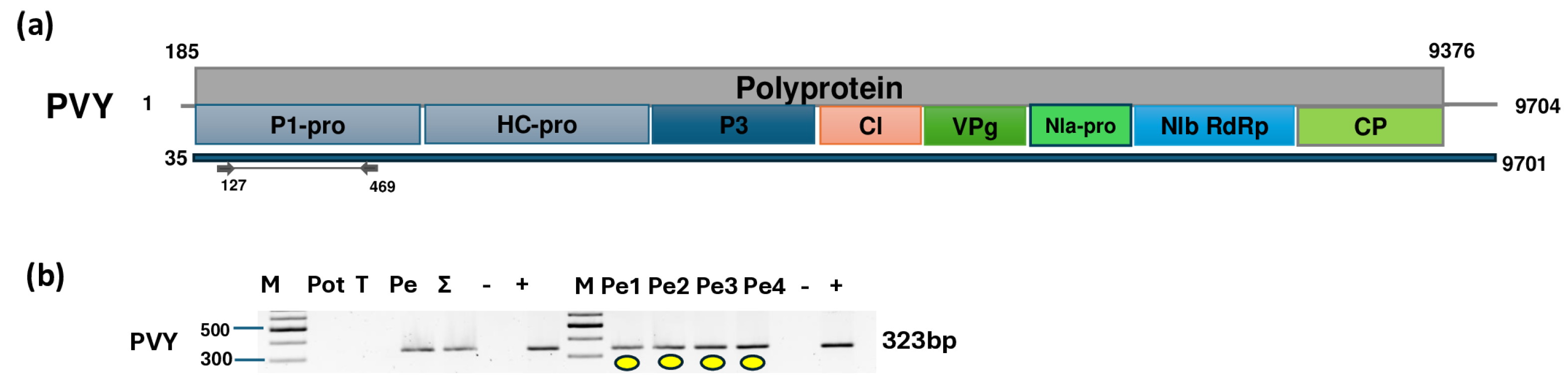
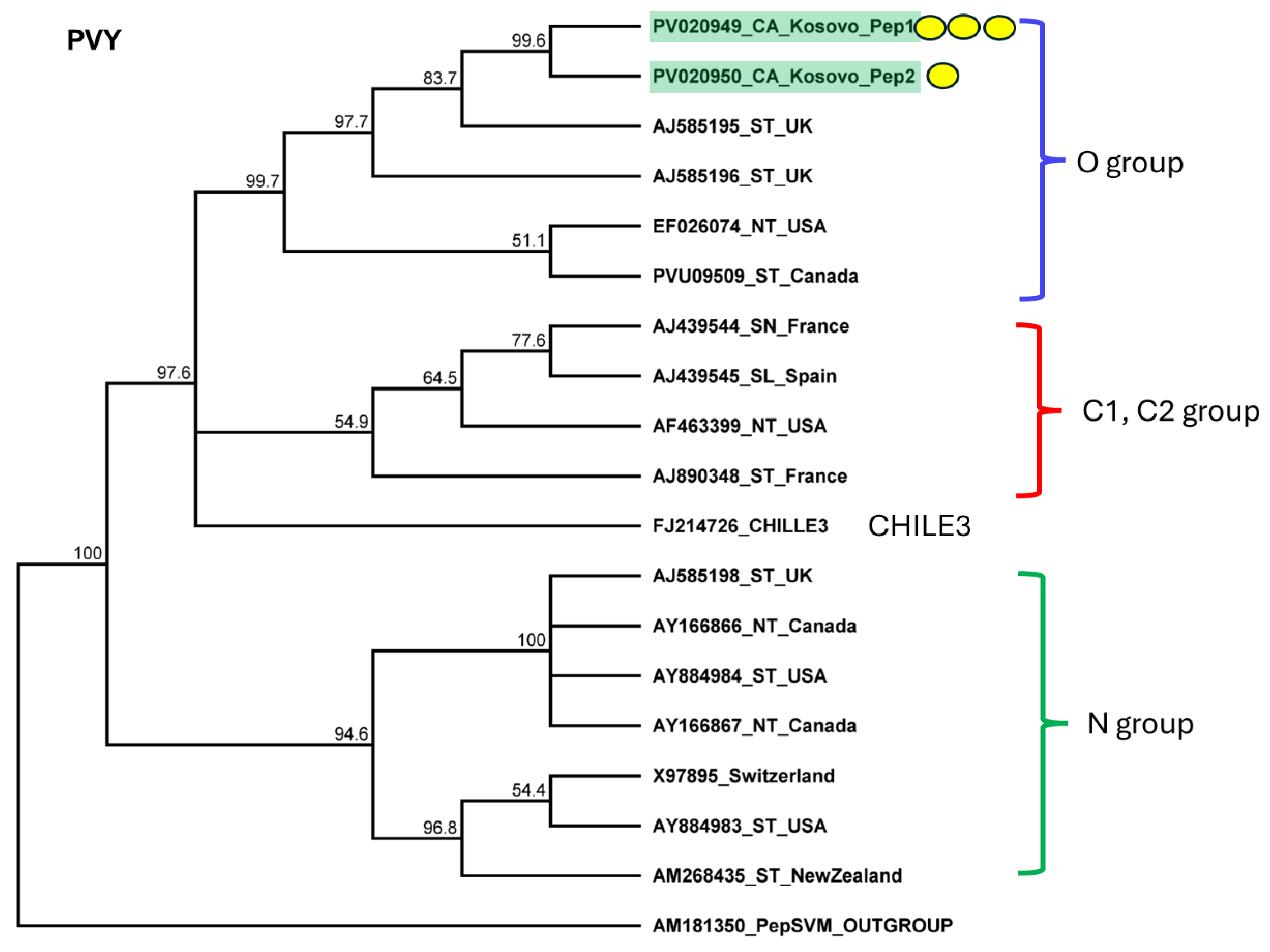
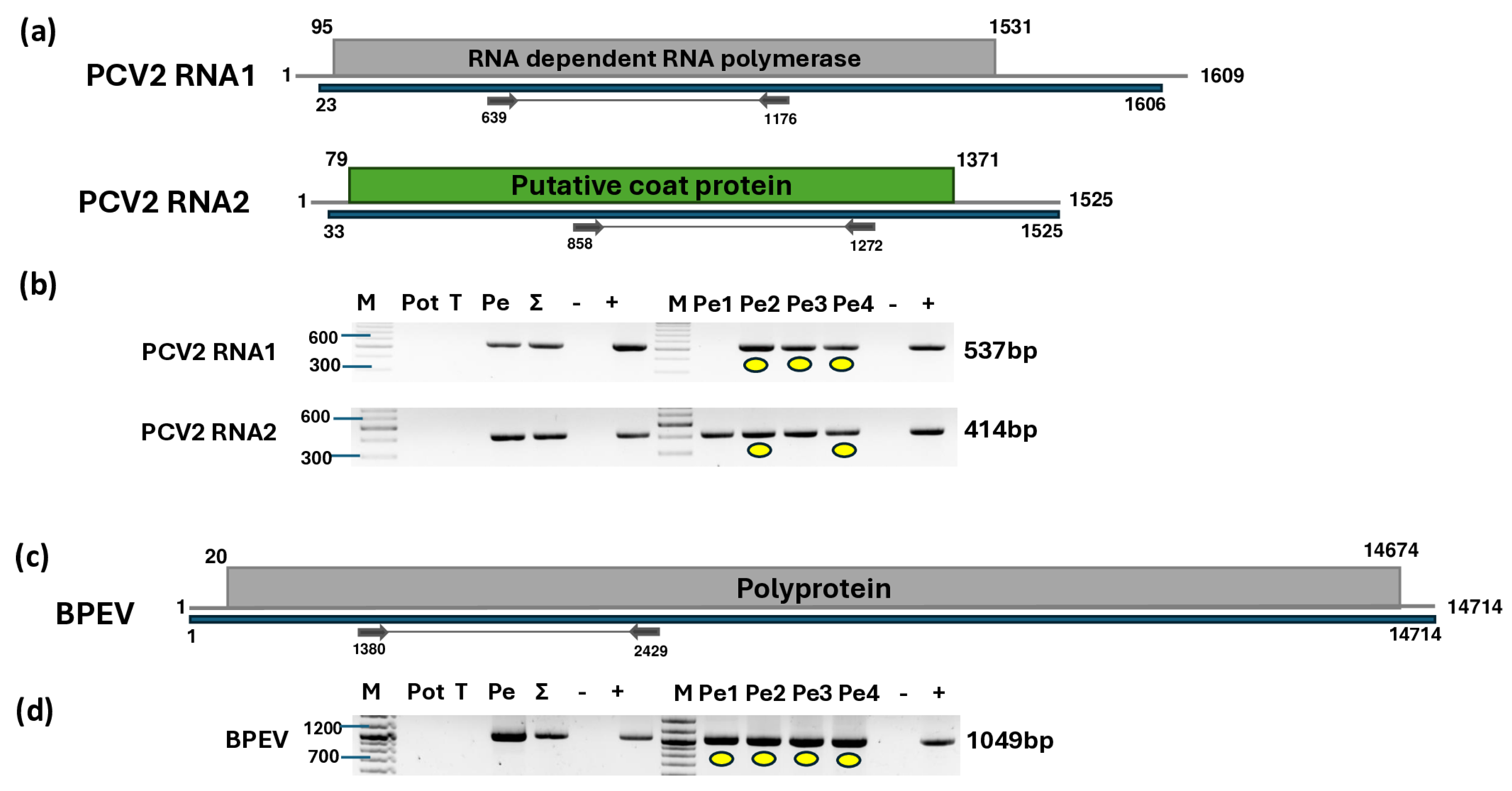
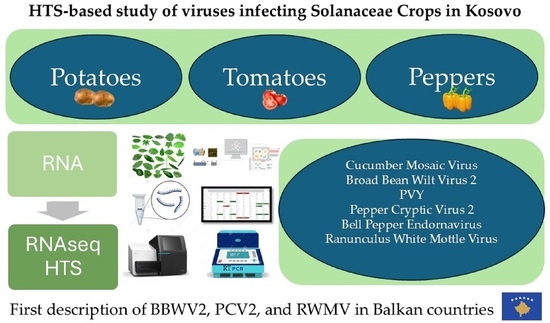
The First High-Throughput Sequencing-Based Study of Viruses Infecting Solanaceous Crops in Kosovo Reveals Multiple Infections in Peppers by Six Plant Viruses



Abstract
Share and Cite
Ismajli, B.; Galbács, Z.N.; Takács, A.P.; Várallyay, É. The First High-Throughput Sequencing-Based Study of Viruses Infecting Solanaceous Crops in Kosovo Reveals Multiple Infections in Peppers by Six Plant Viruses. Plants 2025, 14, 1273. https://doi.org/10.3390/plants14091273
Ismajli B, Galbács ZN, Takács AP, Várallyay É. The First High-Throughput Sequencing-Based Study of Viruses Infecting Solanaceous Crops in Kosovo Reveals Multiple Infections in Peppers by Six Plant Viruses. Plants. 2025; 14(9):1273. https://doi.org/10.3390/plants14091273
Chicago/Turabian StyleIsmajli, Burim, Zsuzsanna N. Galbács, András Péter Takács, and Éva Várallyay. 2025. "The First High-Throughput Sequencing-Based Study of Viruses Infecting Solanaceous Crops in Kosovo Reveals Multiple Infections in Peppers by Six Plant Viruses" Plants 14, no. 9: 1273. https://doi.org/10.3390/plants14091273
APA StyleIsmajli, B., Galbács, Z. N., Takács, A. P., & Várallyay, É. (2025). The First High-Throughput Sequencing-Based Study of Viruses Infecting Solanaceous Crops in Kosovo Reveals Multiple Infections in Peppers by Six Plant Viruses. Plants, 14(9), 1273. https://doi.org/10.3390/plants14091273