Thermal Processing Techniques Differentially Modulate Phytochemicals, Antioxidant Potential, and Genoprotective Effects of Kale (Brassica oleracea var. acephala) and Chard (Beta vulgaris L. var. cycla)


Abstract
1. Introduction
2. Results and Discussion
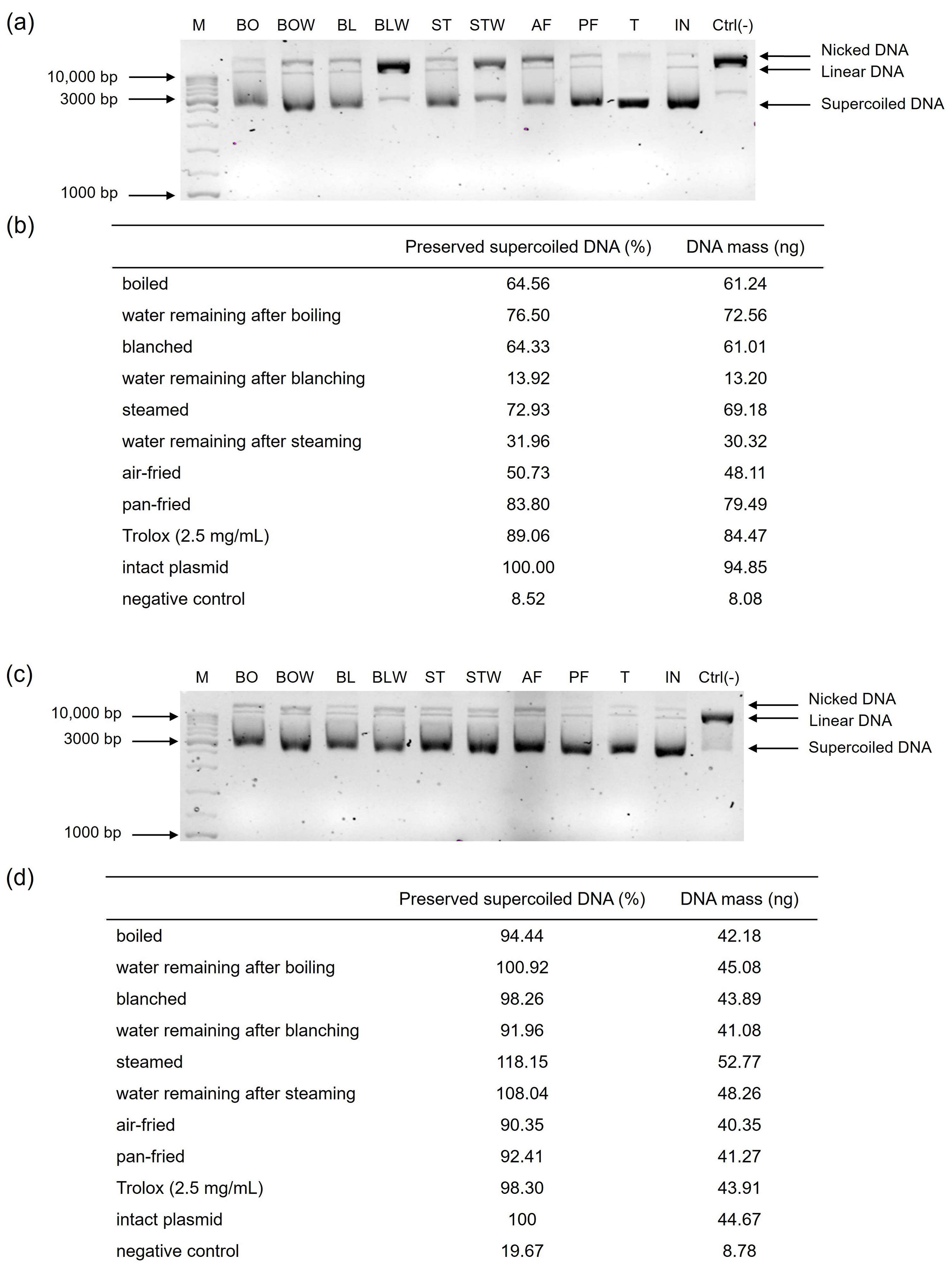
2.1. Genoprotective Effects of Kale and Chard Subjected to Different Thermal Processing Techniques
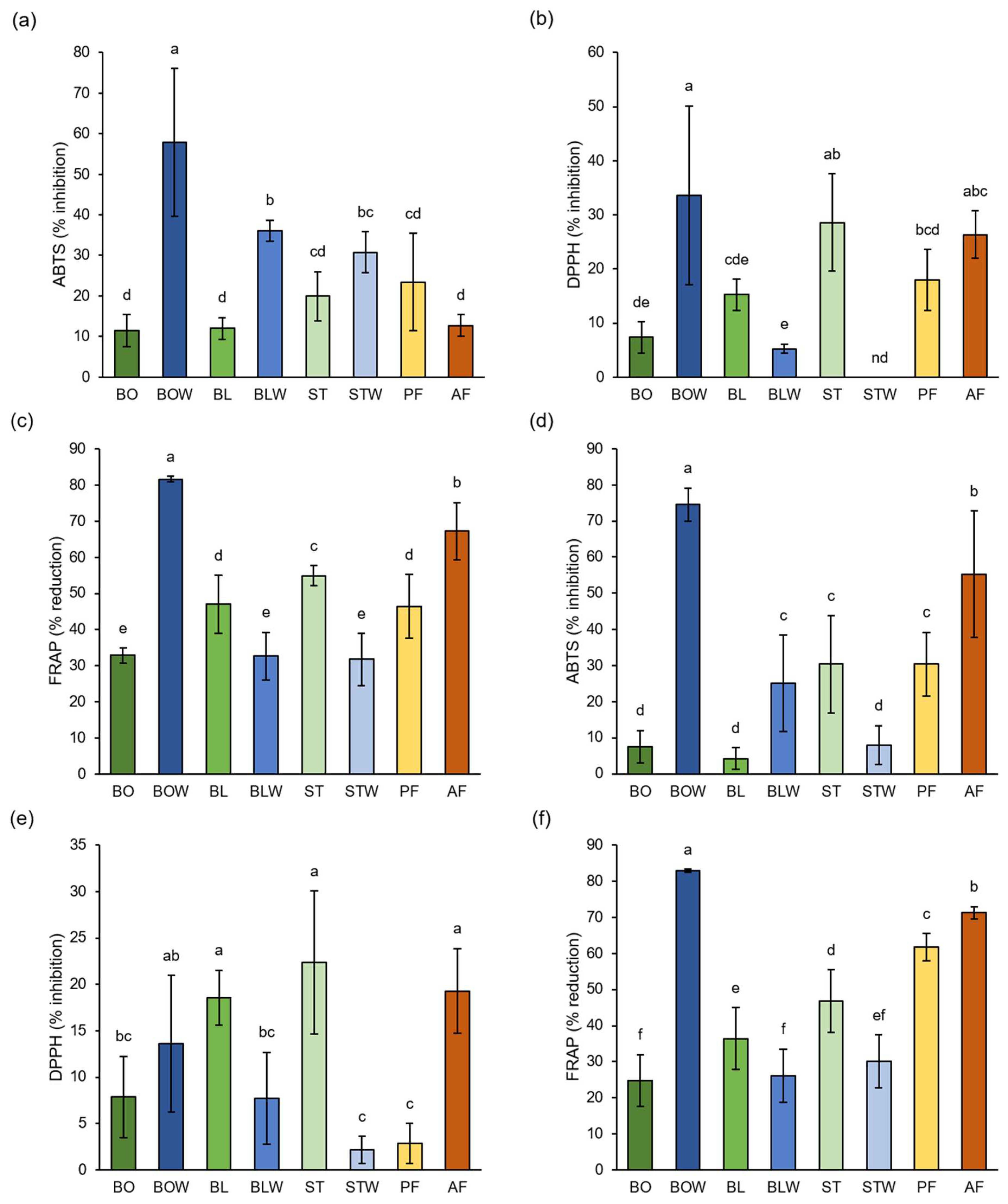
2.2. Influence of Different Thermal Processing Techniques on the Antioxidant Potential of Kale and Chard
2.3. Influence of Different Heat Treatment Techniques on Specialized Metabolites in Kale and Chard
2.4. Changes in Soluble Sugar Content and Hydrogen Peroxide of Kale and Chard Under Different Thermal Processes
2.5. Influence of Thermal Processing Techniques on Chlorophyll, Carotenoids, and Porphyrins in Kale and Chard
2.6. Chemometric Analysis
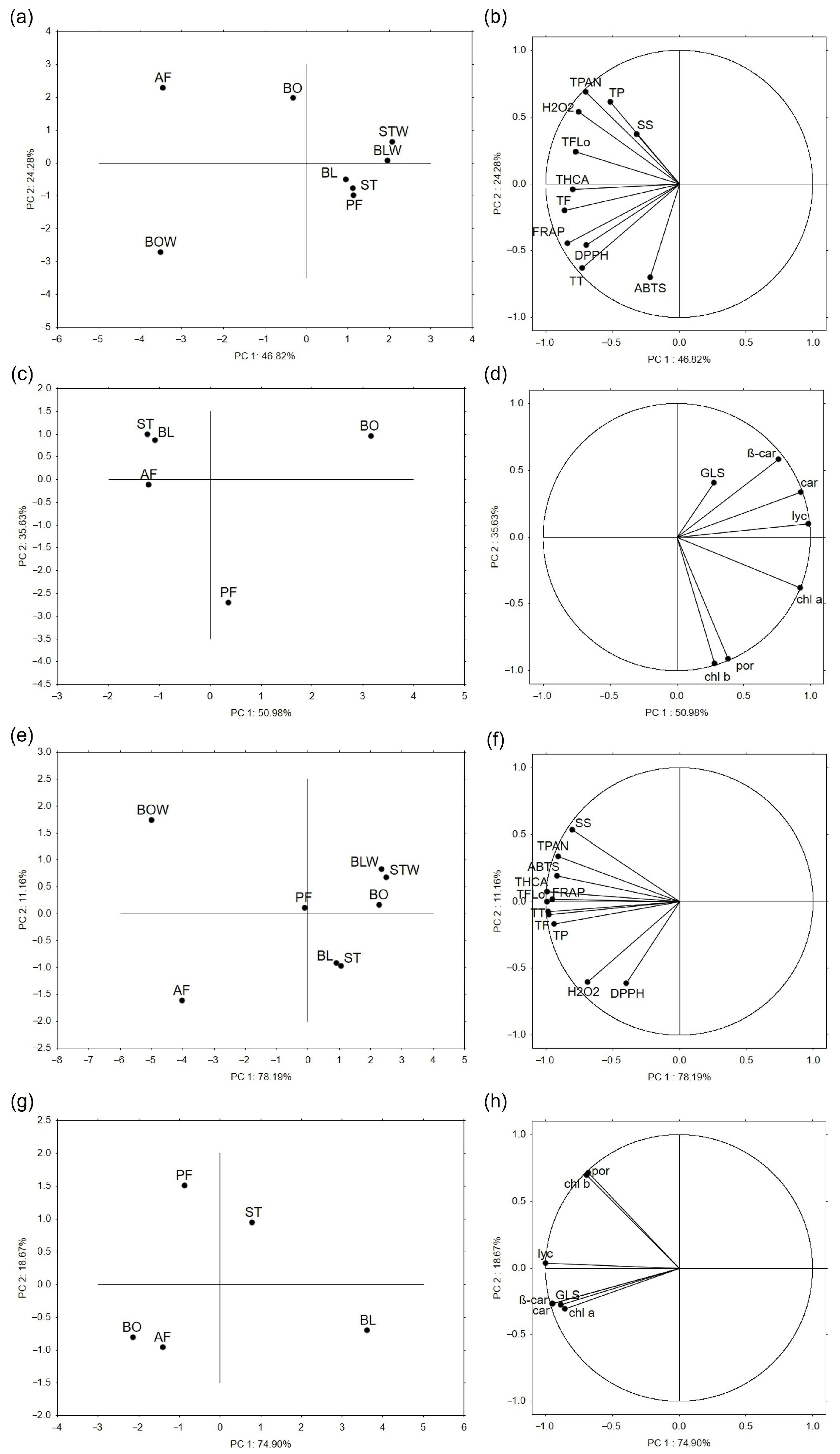
2.6.1. Principal Component Analysis
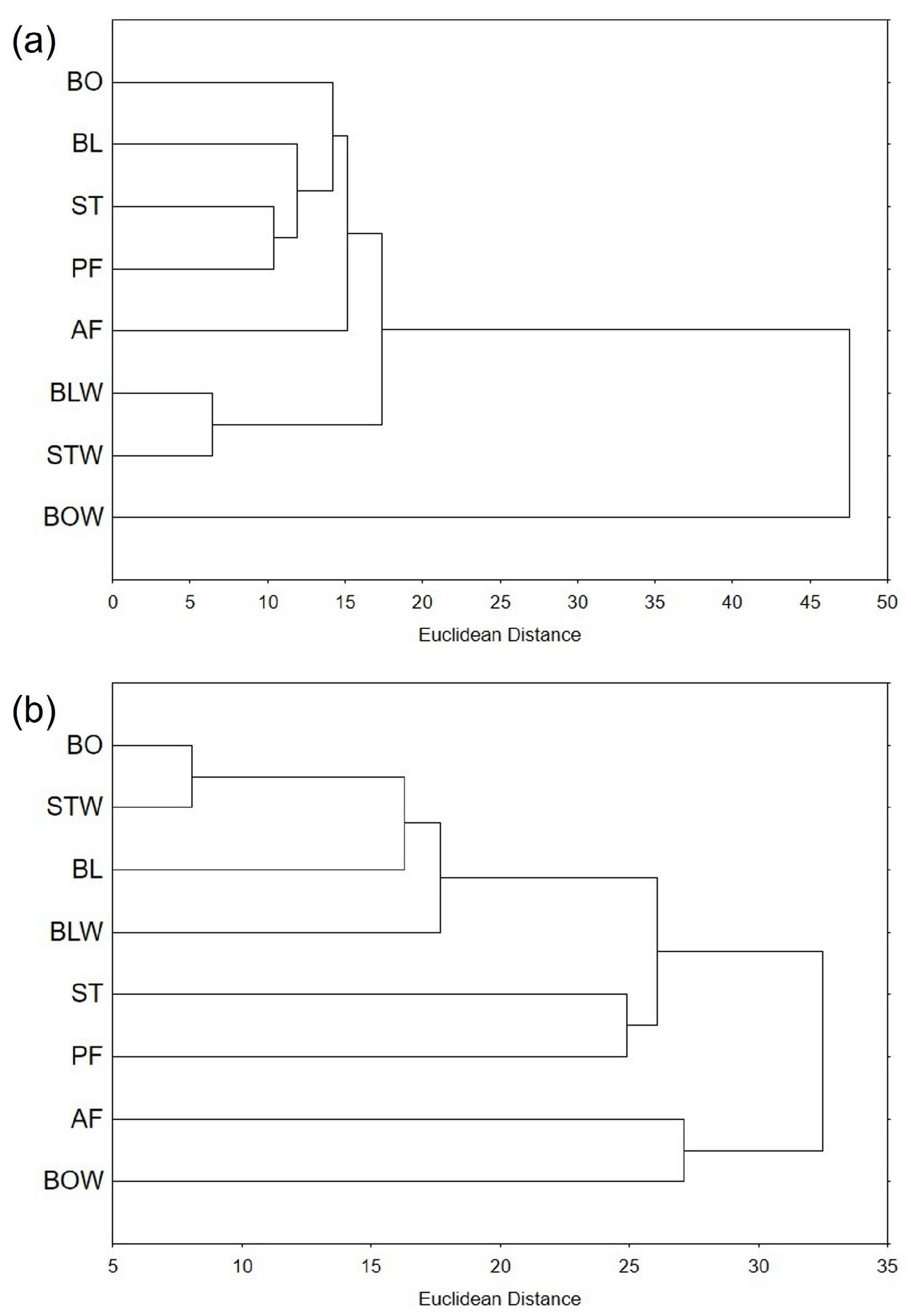
2.6.2. Hierarchical Clustering
2.6.3. Pearson’s Correlation Analysis
3. Materials and Methods
3.1. Vegetable Samples
3.2. Applied Cooking Techniques of Kale and Chard
3.3. Plasmid DNA Extraction
3.4. DNA Nicking Protection Assay Using Fenton’s Reagent
3.5. Determination of Antioxidant Capacity
3.6. Quantification of Polyphenolic Bioactive Compounds and Total Intact Glucosinolates
3.7. Measurement of Soluble Sugars and Hydrogen Peroxide Content
3.8. Analysis of Photosynthetic Pigments (Chlorophyll and Carotenoids) and Porphyrins
3.9. Statistical Analysis
4. Conclusions
Supplementary Materials
Author Contributions
Funding
Data Availability Statement
Acknowledgments
Conflicts of Interest
Abbreviations
| ABTS | 2,2′-azino-bis(3-ethylbenzothiazoline-6-sulfonic acid) |
| DPPH | Ferric reducing antioxidant power |
| FRAP | 2,2-diphenyl-1-picrylhydrazy |
| ROS | Reactive oxygen species |
| PCA | Principal component analysis |
| BO | Boiled |
| BOW | Water remaining after boiling |
| BL | Blanched |
| BLW | Water remaining after blanching |
| ST | Steamed |
| STW | Water remaining after steaming |
| PF | Blanched and then pan-fried |
| AF | Air-fried |
| GAE | Gallic acid equivalents |
| fw | Fresh weight |
| QE | Quercetin equivalents |
| CatE | Catechin equivalents |
| CAE | Caffeic acid equivalents |
| TP | Total phenolics |
| TT | Total tannins |
| TPAN | Total proanthocyanidins |
| TF | Total flavonoids |
| TFlo | Total flavonols |
| THCA | Total hydroxycinnamic acids |
| SucE | Sucrose equivalents |
| SS | Soluble sugars |
| SinE | Sinigrin equivalents |
| β-car | β-carotene |
| car | Carotenoids |
| chl a | Chlorophyll a |
| chl b | Chlorophyll b |
| GLS | Total intact glucosinolates |
| lyc | Lycopene |
| por | Porphyrins |
References
- World Health Organization. Global Status Report on Noncommunicable Diseases 2014; World Health Organization: Geneva, Switzerland, 2014. [Google Scholar]
- World Health Organization. Fruit and Vegetables for Health: Report of a Joint FAO/WHO Workshop; World Health Organization: Geneva, Switzerland, 2004. [Google Scholar]
- National Health and Medical Research Council. Australian Dietary Guidelines; National Health and Medical Research Council: Canberra, Australia, 2013. [Google Scholar]
- Syed, R.U.; Moni, S.S.; Break, M.K.B.; Khojali, W.M.A.; Jafar, M.; Alshammari, M.D.; Abdelsalam, K.; Taymour, S.; Alreshidi, K.S.M.; Elhassan Taha, M.M.; et al. Broccoli: A multi-faceted vegetable for health: An in-depth review of its nutritional attributes, antimicrobial abilities, and anti-inflammatory properties. Antibiotics 2023, 12, 1157. [Google Scholar] [CrossRef]
- Boivin, D.; Lamy, S.; Lord-Dufour, S.; Jackson, J.; Beaulieu, E.; Côté, M.; Moghrabi, A.; Barrette, S.; Gingras, D.; Béliveau, R. Antiproliferative and antioxidant activities of common vegetables: A comparative study. Food Chem. 2009, 112, 374–380. [Google Scholar] [CrossRef]
- Abellán, A.; Domínguez-Perles, R.; Moreno, D.A.; García-Viguera, C. Sorting out the value of cruciferous sprouts as sources of bioactive compounds for nutrition and health. Nutrients 2019, 11, 429. [Google Scholar] [CrossRef]
- Šamec, D.; Urlić, B.; Salopek-Sondi, B. Kale (Brassica oleracea var. acephala) as a superfood: Review of the scientific evidence behind the statement. Crit. Rev. Food Sci. Nutr. 2019, 59, 2411–2422. [Google Scholar] [CrossRef]
- Lemos, M.; Santin, J.R.; Júnior, L.C.K.; Niero, R.; De Andrade, S.F. Gastroprotective activity of hydroalcoholic extract obtained from the leaves of Brassica oleracea var. acephala DC in different animal models. J. Ethnopharmacol. 2011, 138, 503–507. [Google Scholar] [CrossRef] [PubMed]
- Kuerban, A.; Yaghmoor, S.S.; Almulaiky, Y.Q.; Mohamed, Y.A.; Razvi, S.S.I.; Hasan, M.N.; Moselhy, S.S.; Al-Ghafari, A.B.; Alsufiani, H.M.; Kumosani, T.A.; et al. Therapeutic effects of phytochemicals of Brassicaceae for management of obesity. J. Pharm. Res. Int. 2017, 19, 1–11. [Google Scholar] [CrossRef]
- Olsen, H.; Aaby, K.; Borge, G.I.A. Characterization and quantification of flavonoids and hydroxycinnamic acids in curly kale (Brassica oleracea L. convar. acephala var. sabellica) by HPLC-DAD-ESI-MSN. J. Agric. Food Chem. 2009, 57, 2816–2825. [Google Scholar] [CrossRef]
- Melrose, J. The glucosinolates: A sulphur glucoside family of mustard anti-tumour and antimicrobial phytochemicals of potential therapeutic application. Biomedicines 2019, 7, 62. [Google Scholar] [CrossRef]
- Ferreres, F.; Fernandes, F.; Sousa, C.; Valentão, P.; Pereira, J.A.; Andrade, P.B. Metabolic and bioactivity insights into Brassica oleracea var. acephala. J. Agric. Food Chem. 2009, 57, 8884–8892. [Google Scholar] [CrossRef] [PubMed]
- Ozsoy-Sacan, O.; Karabulut-Bulan, O.; Bolkent, S.; Yanardag, R.; Ozgey, Y. Effects of chard (Beta vulgaris L. var cicla) on the liver of the diabetic rats: A morphological and biochemical study. Biosci. Biotechnol. Biochem. 2004, 68, 1640–1648. [Google Scholar] [CrossRef]
- Zeller, W.; Rudolph, K.; Hoppe, H.H. Effect of the Pseudomonas phaseolicola-toxin on the composition of lipids in leaves of swiss chard (Beta vulgaris L.). J. Phytopathol. 1977, 89, 296–305. [Google Scholar] [CrossRef]
- Fager, E.E.C.; Olson, O.E.; Burris, R.H.; Elvehjem, C.A. Folic acid in vegetables and certain other plant materials. J. Food Sci. 1949, 14, 1–8. [Google Scholar] [CrossRef]
- Saini, R.K.; Keum, Y.S. Significance of genetic, environmental, and pre- and postharvest factors affecting carotenoid contents in crops: A review. J. Agric. Food Chem. 2018, 66, 5310–5325. [Google Scholar] [CrossRef] [PubMed]
- Juániz, I.; Ludwig, I.A.; Bresciani, L.; Dall’Asta, M.; Mena, P.; Del Rio, D.; Cid, C.; de Peña, M.P. Bioaccessibility of (poly)phenolic compounds of raw and cooked cardoon (Cynara cardunculus L.) after simulated gastrointestinal digestion and fermentation by human colonic microbiota. J. Funct. Foods 2017, 32, 195–207. [Google Scholar] [CrossRef]
- Palermo, M.; Pellegrini, N.; Fogliano, V. The effect of cooking on the phytochemical content of vegetables. J. Sci. Food Agric. 2014, 94, 1057–1070. [Google Scholar] [CrossRef]
- Miškec, K.; Frlin, M.; Šola, I. Impact of different thermal processing techniques on the phytochemical composition, antioxidant capacity, and DNA-protective properties of broccoli. Appl. Sci. 2025, 15, 7469. [Google Scholar] [CrossRef]
- Wang, Z.; Kwan, M.L.; Pratt, R.; Roh, J.M.; Kushi, L.H.; Danforth, K.N.; Zhang, Y.; Ambrosone, C.B.; Tang, L. Effects of cooking methods on total isothiocyanate yield from cruciferous vegetables. Food Sci. Nutr. 2020, 8, 5673. [Google Scholar] [CrossRef]
- Yuan, G.F.; Sun, B.; Yuan, J.; Wang, Q.M. Effects of different cooking methods on health-promoting compounds of broccoli. J. Zhejiang Univ. Sci. B 2009, 10, 580–588. [Google Scholar] [CrossRef]
- Razzak, A.; Mahjabin, T.; Khan, M.R.M.; Hossain, M.; Sadia, U.; Zzaman, W. Effect of cooking methods on the nutritional quality of selected vegetables at Sylhet city. Heliyon 2023, 9, e21709. [Google Scholar] [CrossRef] [PubMed]
- Severini, C.; Giuliani, R.; De Filippis, A.; Derossi, A.; De Pilli, T. Influence of different blanching methods on colour, ascorbic acid and phenolics content of broccoli. J. Food Sci. Technol. 2015, 53, 501. [Google Scholar] [CrossRef] [PubMed]
- Mugo, B.M.; Kiio, J.; Munyaka, A. Effect of blanching time–temperature on potassium and vitamin retention/loss in kale and spinach. Food Sci. Nutr. 2024, 12, 5403. [Google Scholar] [CrossRef]
- Ahmed, F.A.; Ali, R.F.M. Bioactive compounds and antioxidant activity of fresh and processed white cauliflower. BioMed Res. Int. 2013, 2013, 367819. [Google Scholar] [CrossRef]
- Moreno, D.A.; López-Berenguer, C.; García-Viguera, C. Effects of stir-fry cooking with different edible oils on the phytochemical composition of broccoli. J. Food Sci. 2007, 72, S064–S068. [Google Scholar] [CrossRef]
- Nandasiri, R.; Semenko, B.; Wijekoon, C.; Suh, M. Air-frying is a better thermal processing choice for improving antioxidant properties of Brassica vegetables. Antioxidants 2023, 12, 490. [Google Scholar] [CrossRef] [PubMed]
- Fadairo, O.; Nandasiri, R.; Alashi, A.M.; Eskin, N.A.M.; Thiyam-Höllander, U. Air frying pretreatment and the recovery of lipophilic sinapates from the oil fraction of mustard samples. J. Food Sci. 2021, 86, 3810–3823. [Google Scholar] [CrossRef] [PubMed]
- Fadairo, O.S.; Nandasiri, R.; Nguyen, T.; Eskin, N.A.M.; Aluko, R.E.; Scanlon, M.G. Improved extraction efficiency and antioxidant activity of defatted canola meal extract phenolic compounds obtained from air-fried seeds. Antioxidants 2022, 11, 2411. [Google Scholar] [CrossRef] [PubMed]
- Koklesova, L.; Liskova, A.; Samec, M.; Qaradakhi, T.; Zulli, A.; Smejkal, K.; Kajo, K.; Jakubikova, J.; Behzadi, P.; Pec, M.; et al. Genoprotective activities of plant natural substances in cancer and chemopreventive strategies in the context of 3P medicine. EPMA J. 2020, 11, 261–287. [Google Scholar] [CrossRef] [PubMed]
- Valverde, M.; Lozano-Salgado, J.; Fortini, P.; Rodriguez-Sastre, M.A.; Rojas, E.; Dogliotti, E. Hydrogen peroxide-induced DNA damage and repair through the differentiation of human adipose-derived mesenchymal stem cells. Stem Cells Int. 2018, 2018, 1615497. [Google Scholar] [CrossRef]
- Akdaş, Z.Z.; Bakkalbaşı, E. Influence of different cooking methods on color, bioactive compounds, and antioxidant activity of kale. Int. J. Food Prop. 2017, 20, 877–887. [Google Scholar] [CrossRef]
- Murador, D.C.; Mercadante, A.Z.; De Rosso, V.V. Cooking techniques improve the levels of bioactive compounds and antioxidant activity in kale and red cabbage. Food Chem. 2016, 196, 1101–1107. [Google Scholar] [CrossRef]
- Turkmen, N.; Sari, F.; Velioglu, Y.S. The effect of cooking methods on total phenolics and antioxidant activity of selected green vegetables. Food Chem. 2005, 93, 713–718. [Google Scholar] [CrossRef]
- Huang, D.; Boxin, O.U.; Prior, R.L. The chemistry behind antioxidant capacity assays. J. Agric. Food Chem. 2005, 53, 1841–1856. [Google Scholar] [CrossRef]
- Prior, R.L.; Wu, X.; Schaich, K. Standardized methods for the determination of antioxidant capacity and phenolics in foods and dietary supplements. J. Agric. Food Chem. 2005, 53, 4290–4302. [Google Scholar] [CrossRef]
- Jiménez-Monreal, A.M.; García-Diz, L.; Martínez-Tomé, M.; Mariscal, M.; Murcia, M.A. Influence of cooking methods on antioxidant activity of vegetables. J. Food Sci. 2009, 74, H97–H103. [Google Scholar] [CrossRef]
- Mehić, E.; Kazazić, M. Influence of processing on antioxidant activity and phenolic content of swiss chard (Beta vulgaris L. subsp. cicla). Educa 2021, 14, 21–24. [Google Scholar]
- Tamanna, N.; Mahmood, N. Food processing and Maillard reaction products: Effect on human health and nutrition. Int. J. Food Sci. 2015, 2015, 526762. [Google Scholar] [CrossRef] [PubMed]
- Shahidi, F.; Yeo, J.D. Insoluble-bound phenolics in food. Molecules 2016, 21, 1216. [Google Scholar] [CrossRef] [PubMed]
- Kähkönen, M.P.; Hopia, A.I.; Vuorela, H.J.; Rauha, J.P.; Pihlaja, K.; Kujala, T.S.; Heinonen, M. Antioxidant activity of plant extracts containing phenolic compounds. J. Agric. Food Chem. 1999, 47, 3954–3962. [Google Scholar] [CrossRef] [PubMed]
- Almeida, D.; Petropoulos, S.A.; da Silveira, T.F.F.; Pires, T.C.S.P.; Ferreira, I.C.F.R.; Fernandes, Â.; Barros, L. Exploring the biochemical profile of Beta vulgaris L.: A comparative study of beetroots and Swiss chard. Plants 2025, 14, 591. [Google Scholar] [CrossRef]
- Gudiño, I.; Casquete, R.; Martín, A.; Wu, Y.; Benito, M.J. Comprehensive analysis of bioactive compounds, functional properties, and applications of broccoli by-products. Foods 2024, 13, 3918. [Google Scholar] [CrossRef]
- Ayaz, F.A.; Hayirlioglu-Ayaz, S.; Alpay-Karaoglu, S.; Grúz, J.; Valentová, K.; Ulrichová, J.; Strnad, M. Phenolic acid contents of kale (Brassica oleraceae L. var. acephala DC.) extracts and their antioxidant and antibacterial activities. Food Chem. 2008, 107, 19–25. [Google Scholar] [CrossRef]
- Mota, F.L.; Queimada, A.J.; Pinho, S.P.; Macedo, E.A. Aqueous solubility of some natural phenolic compounds. Ind. Eng. Chem. Res. 2008, 47, 5182–5189. [Google Scholar] [CrossRef]
- Sun, L.; Bai, X.; Zhuang, Y. Effect of different cooking methods on total phenolic contents and antioxidant activities of four Boletus mushrooms. J. Food Sci. Technol. 2012, 51, 3362. [Google Scholar] [CrossRef]
- Dewanto, V.; Xianzhong, W.; Adom, K.K.; Liu, R.H. Thermal processing enhances the nutritional value of tomatoes by increasing total antioxidant activity. J. Agric. Food Chem. 2002, 50, 3010–3014. [Google Scholar] [CrossRef]
- Pathiraja, D.; Wanasundara, J.P.D.; Elessawy, F.M.; Purves, R.W.; Vandenberg, A.; Shand, P.J. Water-soluble phenolic compounds and their putative antioxidant activities in the seed coats from different lentil (Lens culinaris) genotypes. Food Chem. 2023, 407, 135145. [Google Scholar] [CrossRef]
- Paciulli, M.; Ganino, T.; Carini, E.; Pellegrini, N.; Pugliese, A.; Chiavaro, E. Effect of different cooking methods on structure and quality of industrially frozen carrots. J. Food Sci. Technol. 2016, 53, 2443. [Google Scholar] [CrossRef] [PubMed]
- Mawlong, I.; Sujith Kumar, M.S.; Gurung, B.; Singh, K.H.; Singh, D. A simple spectrophotometric method for estimating total glucosinolates in mustard de-oiled cake. Int. J. Food Prop. 2017, 20, 3274–3281. [Google Scholar] [CrossRef]
- Dubois, M.; Gilles, K.A.; Hamilton, J.K.; Rebers, P.A.; Smith, F. Colorimetric method for determination of sugars and related substances. Anal. Chem. 2002, 28, 350–356. [Google Scholar] [CrossRef]
- Tsamesidis, I.; Kalogianni, E.P. The in vitro, ex vivo, and in vivo effect of edible oils: A review on cell interactions. Pharmaceutics 2023, 15, 869. [Google Scholar] [CrossRef]
- Cattivelli, A.; Nissen, L.; Casciano, F.; Tagliazucchi, D.; Gianotti, A. Impact of cooking methods of red-skinned onion on metabolic transformation of phenolic compounds and gut microbiota changes. Food Funct. 2023, 14, 3509–3525. [Google Scholar] [CrossRef]
- Ruiz, A.; Aguilera, A.; Ercoli, S.; Parada, J.; Winterhalter, P.; Contreras, B.; Cornejo, P. Effect of the frying process on the composition of hydroxycinnamic acid derivatives and antioxidant activity in flesh colored potatoes. Food Chem. 2018, 268, 577–584. [Google Scholar] [CrossRef]
- Fombang, E.N.; Nobossé, P.; Mbofung, C.M.F.; Singh, D. Impact of post harvest treatment on antioxidant activity and phenolic profile of Moringa oleifera lam leaves. Food Prod. Process Nutr. 2021, 3, 22. [Google Scholar] [CrossRef]
- Narra, F.; Piragine, E.; Benedetti, G.; Ceccanti, C.; Florio, M.; Spezzini, J.; Troisi, F.; Giovannoni, R.; Martelli, A.; Guidi, L. Impact of thermal processing on polyphenols, carotenoids, glucosinolates, and ascorbic acid in fruit and vegetables and their cardiovascular benefits. Compr. Rev. Food Sci. Food Saf. 2024, 23, e13426. [Google Scholar] [CrossRef]
- Salamatullah, A.M.; Ahmed, M.A.; Alkaltham, M.S.; Hayat, K.; Aloumi, N.S.; Al-Dossari, A.M.; Al-Harbi, L.N.; Arzoo, S. Effect of air-frying on the bioactive properties of eggplant (Solanum melongena L.). Processes 2021, 9, 435. [Google Scholar] [CrossRef]
- Tanaka, T.; Matsuo, Y.; Saito, Y. Solubility of tannins and preparation of oil-soluble derivatives. J. Oleo Sci. 2018, 67, 1179–1187. [Google Scholar] [CrossRef] [PubMed]
- Nie, F.; Liu, L.; Cui, J.; Zhao, Y.; Zhang, D.; Zhou, D.; Wu, J.; Li, B.; Wang, T.; Li, M.; et al. Oligomeric proanthocyanidins: An updated review of their natural sources, synthesis, and potentials. Antioxidants 2023, 12, 1004. [Google Scholar] [CrossRef] [PubMed]
- Natella, F.; Belelli, F.; Ramberti, A.; Scaccini, C. Microwave and traditional cooking methods: Effect of cooking on antioxidant capacity and phenolic compounds content of seven vegetables. J. Food Biochem. 2010, 34, 796–810. [Google Scholar] [CrossRef]
- Abdel-Massih, R.M.; Debs, E.; Othman, L.; Attieh, J.; Cabrerizo, F.M. Glucosinolates, a natural chemical arsenal: More to tell than the myrosinase story. Front. Microbiol. 2023, 14, 1130208. [Google Scholar] [CrossRef]
- Baenas, N.; Marhuenda, J.; García-Viguera, C.; Zafrilla, P.; Moreno, D.A. Influence of cooking methods on glucosinolates and isothiocyanates content in novel cruciferous foods. Foods 2019, 8, 257. [Google Scholar] [CrossRef]
- Korus, A.; Słupski, J.; Gebczyński, P.; Banaś, A. Effect of preliminary processing and method of preservation on the content of glucosinolates in kale (Brassica oleracea L. var. acephala) leaves. LWT Food Sci. Technol. 2014, 59, 1003–1008. [Google Scholar] [CrossRef]
- Ortega-Hernández, E.; Antunes-Ricardo, M.; Jacobo-Velázquez, D.A. Improving the health-benefits of kales (Brassica oleracea L. var. acephala DC) through the application of controlled abiotic stresses: A review. Plants 2021, 10, 2629. [Google Scholar] [CrossRef] [PubMed]
- Zhang, J.J.; Ji, R.; Hu, Y.Q.; Chen, J.C.; Ye, X.Q. Effect of three cooking methods on nutrient components and antioxidant capacities of bamboo shoot (Phyllostachys praecox C.D. Chu et C.S. Chao). J. Zhejiang Univ. Sci. B 2011, 12, 752. [Google Scholar] [CrossRef] [PubMed]
- He, S.; He, S.; Niu, L.; Sun, C.; Zeng, Z.; Xiao, J. Effects of different roasting conditions on sugars profile, volatile compounds, carotenoids and antioxidant activities of orange-fleshed sweet potato. Food Chem. X 2025, 25, 102201. [Google Scholar] [CrossRef]
- Zielinska, S.; Staniszewska, I.; Cybulska, J.; Zdunek, A.; Szymanska-Chargot, M.; Zielinska, D.; Liu, Z.L.; Xiao, H.W.; Pan, Z.; Zielinska, M. The effect of high humidity hot air impingement blanching on the changes in cell wall polysaccharides and phytochemicals of okra pods. J. Sci. Food Agric. 2022, 102, 5965–5973. [Google Scholar] [CrossRef]
- Nyman, M.; Nylander, T.; Asp, N.-G. Degradation of water-soluble fibre polysaccharides in carrots after different types of processing. Food Chem. 1993, 47, 169–176. [Google Scholar] [CrossRef]
- Francisco, M.; Velasco, P.; Moreno, D.A.; García-Viguera, C.; Cartea, M.E. Cooking methods of Brassica rapa affect the preservation of glucosinolates, phenolics and vitamin C. Food Res. Int. 2010, 43, 1455–1463. [Google Scholar] [CrossRef]
- Bartosz, G.; Rajzer, K.; Grzesik-Pietrasiewicz, M.; Sadowska-Bartosz, I. Hydrogen peroxide is formed upon cooking of vegetables. Acta Biochim. Pol. 2022, 69, 471–474. [Google Scholar] [CrossRef]
- Kachhadiya, S.; Kumar, N.; Seth, N. Process kinetics on physico-chemical and peroxidase activity for different blanching methods of sweet corn. J. Food Sci. Technol. 2018, 55, 4823–4832. [Google Scholar] [CrossRef]
- Pellegrini, N.; Chiavaro, E.; Gardana, C.; Mazzeo, T.; Contino, D.; Gallo, M.; Riso, P.; Fogliano, V.; Porrini, M. Effect of different cooking methods on color, phytochemical concentration, and antioxidant capacity of raw and frozen Brassica vegetables. J. Agric. Food Chem. 2010, 58, 4310–4321. [Google Scholar] [CrossRef]
- Mayeaux, M.; Xu, Z.; King, J.M.; Prinyawiwatkul, W. Effects of cooking conditions on the lycopene content in tomatoes. J. Food Sci. 2006, 71, C461–C464. [Google Scholar] [CrossRef]
- Dell Aglio, E. Carotenoid composition affects thylakoid morphology and membrane fluidity. Plant Physiol. 2020, 185, 21. [Google Scholar] [CrossRef] [PubMed]
- Shi, K.; Hu, T.; Zhang, P.; Zhang, S.; Xu, Y.; Zhang, Z.; Pan, S. Thermal conditions and active substance stability affect the isomerization and degradation of lycopene. Food Res. Int. 2022, 162, 111987. [Google Scholar] [CrossRef] [PubMed]
- Evans, J.D. Straightforward Statistics for the Behavioral Sciences; Brooks/Cole Publishing: Pacific Grove, CA, USA, 1996. [Google Scholar]
- Kadooka, C.; Oka, T. Construction of a cosmid-based ultraefficient genomic library system for filamentous fungi of the genus Aspergillus. J. Fungi 2024, 10, 188. [Google Scholar] [CrossRef]
- Jana Lang, T.; Brodsky, S.; Manadre, W.; Vidavski, M.; Valinsky, G.; Mindel, V.; Ilan, G.; Carmi, M.; Jonas, F.; Barkai, N. Massively parallel binding assay (MPBA) reveals limited transcription factor binding cooperativity, challenging models of specificity. Nucleic Acids Res. 2024, 52, 12227–12243. [Google Scholar] [CrossRef]
- Šola, I.; Vujčić Bok, V.; Pinterić, M.; Auer, S.; Ludwig-Müller, J.; Rusak, G. Improving the phytochemical profile and bioactivity of chinese cabbage sprouts by interspecific transfer of metabolites. Food Res. Int. 2020, 137, 109726. [Google Scholar] [CrossRef]
- Galvão, M.A.M.; de Arruda, A.O.; Bezerra, I.C.F.; Ferreira, M.R.A.; Soares, L.A.L. Evaluation of the Folin-Ciocalteu method and quantification of total tannins in stem barks and pods from Libidibia ferrea (Mart. Ex Tul) L. P. Queiroz. Braz. Arch. Biol. Technol. 2018, 61, e18170586. [Google Scholar] [CrossRef]
- Weidner, S.; Karolak, M.; Karamać, M.; Amarowicz, R. Phenolic compounds and properties of antioxidants in grapevine roots (Vitis vinifera L.) under drought stress followed by recovery. Acta Soc. Bot. Pol. 2011, 78, 97–103. [Google Scholar] [CrossRef]
- Zhishen, J.; Mengcheng, T.; Jianming, W. The determination of flavonoid contents in mulberry and their scavenging effects on superoxide radicals. Food Chem. 1999, 64, 555–559. [Google Scholar] [CrossRef]
- Junglee, S.; Urban, L.; Sallanon, H.; Lopez-Lauri, F.; Junglee, S.; Urban, L.; Sallanon, H.; Lopez-Lauri, F. Optimized assay for hydrogen peroxide determination in plant tissue using potassium iodide. Am. J. Analyt Chem. 2014, 5, 730–736. [Google Scholar] [CrossRef]
- Sumanta, N.; Imranul Haque, C.; Nishika, J.; Suprakash, R. Spectrophotometric analysis of chlorophylls and carotenoids from commonly grown fern species by using various extracting solvents. Res. J. Chem. Sci. 2014, 4, 63–69. [Google Scholar]
- Lichtenthaler, H.K. Chlorophylls and carotenoids: Pigments of photosynthetic biomembranes. Methods Enzymol. 1987, 148, 350–382. [Google Scholar]



| (a) | TP (mg GAE/g fw) | TT (mg GAE/g fw) | TPAN (mg CatE/g fw) | TF (mg QE/g fw) | TFlo (mg QE/g fw) | THCA (mg CAE/g fw) | GLS (mg SinE/g fw) |
| BO | 0.43 ± 0.24 a | 0.09 ± 0.02 bcd | 0.09 ± 0.03 b | 0.52 ± 0.10 b | 0.16 ± 0.08 c | 1.56 ± 0.60 b | 1.21 ± 0.72 a |
| BOW | 0.35 ± 0.06 abc | 0.25 ± 0.09 a | 0.06 ± 0.02 c | 0.99 ± 0.28 a | 0.29 ± 0.05 b | 2.20 ± 0.36 a | |
| BL | 0.15 ± 0.08 c | 0.12 ± 0.09 bcd | 0.02 ± 0.02 de | 0.10 ± 0.04 c | 0.30 ± 0.15 b | 1.53 ± 0.37 b | 1.25 ± 0.91 a |
| BLW | 0.31 ± 0.13 abc | 0.07 ± 0.03 cd | 0.04 ± 0.02 cde | 0.17 ± 0.05 c | 0.16 ± 0.07 c | 0.51 ± 0.26 c | |
| ST | 0.20 ± 0.12 bc | 0.11 ± 0.04 bcd | 0.03 ± 0.02 cde | 0.22 ± 0.11 c | 0.04 ± 0.02 c | 0.25 ± 0.18 c | 1.30 ± 0.84 a |
| STW | 0.39 ± 0.28 ab | 0.05 ± 0.02 d | 0.05 ± 0.01 cd | 0.23 ± 0.14 c | 0.07 ± 0.06 c | 0.68 ± 0.52 c | |
| PF | 0.16 ± 0.08 c | 0.16 ± 0.05 b | 0.02 ± 0.01 e | 0.16 ± 0.02 c | 0.12 ± 0.11 c | 0.51 ± 0.30 c | 1.22 ± 0.88 a |
| AF | 0.48 ± 0.17 a | 0.14 ± 0.05 bc | 0.15 ± 0.05 a | 0.51 ± 0.15 b | 0.50 ± 0.04 a | 1.56 ± 0.31 b | 1.14 ± 0.82 a |
| (b) | TP (mg GAE/g fw) | TT (mg GAE/g fw) | TPAN (mg CatE/g fw) | TF (mg QE/g fw) | TFlo (mg QE/g fw) | THCA (mg CAE/g fw) | GLS (mg SinE/g fw) |
| BO | 0.26 ± 0.12 c | 0.10 ± 0.06 bcd | 0.05 ± 0.02 cd | 0.38 ± 0.08 c | 0.22 ± 0.16 c | 0.92 ± 0.41 de | 1.41 ± 1.03 a |
| BOW | 0.80 ± 0.06 a | 0.43 ± 0.17 a | 0.46 ± 0.22 a | 1.74 ± 0.28 a | 1.57 ± 0.07 a | 7.83 ± 0.35 a | |
| BL | 0.52 ± 0.16 b | 0.19 ± 0.09 b | 0.10 ± 0.01 cd | 0.76 ± 0.37 b | 0.29 ± 0.22 bc | 1.81 ± 1.00 cd | 1.14 ± 0.84 a |
| BLW | 0.19 ± 0.11 c | 0.03 ± 0.03 d | 0.15 ± 0.11 c | 0.19 ± 0.06 c | 0.09 ± 0.06 c | 0.37 ± 0.33 e | |
| ST | 0.32 ± 0.13 c | 0.17 ± 0.09 bc | 0.03 ± 0.01 d | 0.36 ± 0.03 c | 0.33 ± 0.16 bc | 0.94 ± 0.58 de | 1.17 ± 0.94 a |
| STW | 0.34 ± 0.18 c | 0.07 ± 0.04 cd | 0.05 ± 0.02 cd | 0.34 ± 0.11 c | 0.14 ± 0.09 c | 0.54 ± 0.35 de | |
| PF | 0.57 ± 0.23 b | 0.18 ± 0.07 bc | 0.12 ± 0.03 cd | 0.81 ± 0.12 b | 0.52 ± 0.27 b | 2.66 ± 0.58 c | 1.36 ± 1.01 a |
| AF | 0.88 ± 0.21 a | 0.37 ± 0.17 a | 0.29 ± 0.15 b | 1.86 ± 0.14 a | 1.49 ± 0.60 a | 6.49 ± 2.39 b | 1.49 ± 1.08 a |
| (a) | SS (mg SucE/g fw) | H2O2 (mM/g fw) | (b) | SS (mg SucE/g fw) | H2O2 (mM/g fw) |
|---|---|---|---|---|---|
| BO | 2.50 ± 0.28 de | 1.47 ± 0.38 a | BO | 0.91 ± 0.57 b | 2.11 ± 1.02 d |
| BOW | 0.72 ± 0.62 ef | 0.91 ± 0.18 b | BOW | 11.33 ± 5.68 a | 4.09 ± 2.38 c |
| BL | 3.02 ± 0.61 d | 0.37 ± 0.15 c | BL | 0.93 ± 0.38 b | 3.58 ± 1.24 c |
| BLW | 3.51 ± 0.27 d | 0.28 ± 0.12 c | BLW | 1.25 ± 0.36 b | 0.61 ± 0.11 e |
| ST | 10.95 ± 4.71 b | 0.39 ± 0.10 c | ST | 1.09 ± 0.79 b | 3.82 ± 0.61 c |
| STW | 0.14 ± 0.06 f | 0.41 ± 0.21 c | STW | 0.33 ± 0.23 b | 0.37 ± 0.23 e |
| PF | 5.98 ± 1.60 c | 0.74 ± 0.30 b | PF | 1.86 ± 1.31 b | 7.45 ± 1.46 b |
| AF | 15.30 ± 0.83 a | 1.64 ± 0.19 a | AF | 2.67 ± 1.47 b | 14.96 ± 3.14 a |
| (a) | Porphyrins | Chlorophyll a | Chlorophyll b | Carotenoids | β-Carotene | Lycopene |
| BO | 34.83 ± 9.02 b | 21.95 ± 5.67 a | 4.63 ± 1.04 ab | 9.91 ± 3.71 a | 0.99 ± 0.32 a | 1.48 ± 0.42 a |
| BL | 11.91 ± 2.67 b | 2.03 ± 0.75 b | 1.36 ± 0.14 ab | 0.53 ± 0.05 b | 0.46 ± 0.41 ab | 0.12 ± 0.03 b |
| ST | 6.09 ± 1.74 b | 1.64 ± 0.26 b | 0.34 ± 0.23 b | 1.11 ± 0.64 b | 0.14 ± 0.07 b | 0.20 ± 0.10 b |
| PF | 92.54 ± 31.68 a | 16.96 ± 3.37 a | 18.91 ± 11.42 a | 0.86 ± 0.00 b | nd | 0.49 ± 0.16 b |
| AF | 17.00 ± 7.87 b | 5.50 ± 0.95 b | 2.70 ± 0.67 ab | 1.21 ± 0.37 b | 0.16 ± 0.01 b | 0.27 ± 0.04 b |
| (b) | Porphyrins | Chlorophyll a | Chlorophyll b | Carotenoids | β-Carotene | Lycopene |
| BO | 76.43 ± 34.07 a | 56.84 ± 23.91 a | 12.33 ± 6.25 a | 22.65 ± 7.55 a | 1.66 ± 0.15 a | 2.86 ± 0.72 a |
| BL | 40.53 ± 0.50 a | 23.89 ± 6.38 a | 5.68 ± 0.36 a | 6.64 ± 0.40 a | 0.71 ± 0.05 a | 1.25 ± 0.12 a |
| ST | 82.68 ± 16.73 a | 40.14 ± 20.70 a | 13.01 ± 0.86 a | 12.05 ± 7.19 a | 0.92 ± 0.90 a | 2.05 ± 0.97 a |
| PF | 111.69 ± 31.73 a | 33.79 ± 0.18 a | 14.68 ± 3.65 a | 14.41 ± 1.12 a | 1.34 ± 0.28 a | 2.55 ± 0.04 a |
| AF | 77.68 ± 15.98 a | 45.90 ± 6.75 a | 9.91 ± 1.73 a | 18.54 ± 5.68 a | 1.67 ± 0.33 a | 2.63 ± 0.49 a |
Disclaimer/Publisher’s Note: The statements, opinions and data contained in all publications are solely those of the individual author(s) and contributor(s) and not of MDPI and/or the editor(s). MDPI and/or the editor(s) disclaim responsibility for any injury to people or property resulting from any ideas, methods, instructions or products referred to in the content. |
© 2025 by the authors. Licensee MDPI, Basel, Switzerland. This article is an open access article distributed under the terms and conditions of the Creative Commons Attribution (CC BY) license (https://creativecommons.org/licenses/by/4.0/).
Share and Cite
Frlin, M.; Miškec, K.; Šola, I. Thermal Processing Techniques Differentially Modulate Phytochemicals, Antioxidant Potential, and Genoprotective Effects of Kale (Brassica oleracea var. acephala) and Chard (Beta vulgaris L. var. cycla). Plants 2025, 14, 3808. https://doi.org/10.3390/plants14243808
Frlin M, Miškec K, Šola I. Thermal Processing Techniques Differentially Modulate Phytochemicals, Antioxidant Potential, and Genoprotective Effects of Kale (Brassica oleracea var. acephala) and Chard (Beta vulgaris L. var. cycla). Plants. 2025; 14(24):3808. https://doi.org/10.3390/plants14243808
Chicago/Turabian StyleFrlin, Marta, Karlo Miškec, and Ivana Šola. 2025. "Thermal Processing Techniques Differentially Modulate Phytochemicals, Antioxidant Potential, and Genoprotective Effects of Kale (Brassica oleracea var. acephala) and Chard (Beta vulgaris L. var. cycla)" Plants 14, no. 24: 3808. https://doi.org/10.3390/plants14243808
APA StyleFrlin, M., Miškec, K., & Šola, I. (2025). Thermal Processing Techniques Differentially Modulate Phytochemicals, Antioxidant Potential, and Genoprotective Effects of Kale (Brassica oleracea var. acephala) and Chard (Beta vulgaris L. var. cycla). Plants, 14(24), 3808. https://doi.org/10.3390/plants14243808