Article

Response of Lodging Resistance and Grain Yield to EDAH and Different Fertilization Combinations in Maize (Zea mays L.)

1
Jiangsu Key Laboratory of Crop Genetics and Physiology, Jiangsu Co-Innovation Center for Modern Production Technology of Grain Crops, Yangzhou University, Yangzhou 225009, China
2
Joint International Research Laboratory of Agriculture and Agri-Product Safety, The Ministry of Education of China, Yangzhou University, Yangzhou 225009, China
*
Author to whom correspondence should be addressed.
Plants 2025, 14(23), 3707; https://doi.org/10.3390/plants14233707
Submission received: 3 November 2025 / Revised: 21 November 2025 / Accepted: 1 December 2025 / Published: 4 December 2025

Abstract

Stalk lodging is one of the major constraints limiting global maize yield. Chemical regulation and fertilization are essential agronomic practices that play critical roles in improving maize yield and lodging resistance. This study aimed to investigate the effects of different fertilization methods on maize plant morphology, stem mechanical properties and chemical composition, and yield under spraying chemical regulator (EDAH, consist of 27% ethephon and 3% DA-6). The experiment was conducted from 2023 to 2025, using Jiangyu668 (JY668) and Jiangyu877 (JY877) with different plant heights. Three fertilization methods (no fertilization, N0; conventional fertilization, N15; and slow-release fertilization, SN15) were set up. Chemical regulation and fertilization methods had significant effects on plant morphology, stem mechanical properties and chemical composition, lodging rate, and grain yield. The combination of spraying EDAH and slow-release fertilization optimized ear position coefficient and gravity center, decreased stem–leaf angle, and increased leaf orientation value, which was beneficial for improving leaf photosynthetic capacity. EDAH and slow-release fertilization also increased the stem internode diameter and aerial root layers; enhanced bending resistance and puncture strength; and increased cellulose, hemicellulose, and lignin contents and the lodging resistance index. These changes synergistically increased grain number and weight, ultimately increased maize yield, and decreased the lodging rate. CSN15 had highest yield and lowest lodging rate in different years and varieties. SN15 increased yield by 10.58% compared with N15, and CSN15 increased yield by 10.53% compared with CN15. JY877, as a medium- to high-stem maize variety, had better performance in plant morphology and yield than JY668 (dwarf maize variety) under EDAH and slow-release fertilization. These findings demonstrate that the strategy of combining chemical regulation and slow-release fertilization represents an optimal management approach for enhancing grain yield by optimizing plant morphology and improving stem mechanical properties and stem chemical composition in maize production. This strategy can increase agricultural productivity by enhancing yield and lodging resistance and provide significant environmental benefits and a scientific basis for agronomic practice recommendations.

1. Introduction

The frequent occurrence of extreme weather events and lodging in crops has posed significant challenges to crop stability and high-yield production, thereby threatening global food security [1]. As the world’s second largest maize producer, China has contributed 23% of the global maize output and has played a critical role in stabilizing global maize supply [2]. Increasing planting density is a vital approach to improving maize yields. However, high-density planting often results in competition for water, nutrients, and light, which leads to plant lodging [3,4]. Maize lodging significantly reduced grain yield, caused economic losses, deteriorated grain quality, complicated crop management, hindered mechanized harvesting, and increased harvesting costs [5,6,7]. Currently, three main strategies exist for mitigating maize lodging domestically and internationally. One key approach focuses on breeding lodging-resistant varieties with well-developed root systems, strong stems, and shorter plant heights [8,9]. The second strategy focuses on spraying chemical regulators to optimize plant morphology, enhance stem mechanical strength, improve the anatomical and biochemical properties of stems, and increase root anchorage capacity, thereby strengthening lodging resistance [10,11]. The third approach emphasizes adopting efficient fertilizer management strategies [5], improving yield and N use efficiency while simultaneously reducing the risk of stem lodging [12,13].
Chemical regulation technology modulates endogenous hormone levels in plants, precisely influencing growth and development to achieve stable yields, improved quality, and enhanced stress resistance [4,14,15], and is widely applied in agricultural production. In maize cultivation, chemical regulation enhanced lodging resistance by modifying morphological, physiological, and biochemical characteristics, thereby improving light use efficiency [16] and strengthening root support capacity [6,8,14,17]. A commonly used chemical regulator including 27% ethephon and 3% DA-6 (EDAH) is widely applied to enhance maize yield and lodging resistance [18,19]. EDAH significantly reduced maize plant height and the length of basal internodes while increasing stem diameter and the dry matter weight of the basal internodes [6,20,21]. Mechanical properties of maize basal internodes, such as bending resistance and puncture strength, were also enhanced, accompanied by significant increases in diameter and dry matter weight from the third to fifth internodes [11,22,23], and the stem cross-sectional area, cortex thickness, and both the number and area of vascular bundles were markedly increased [18,19]. These improvements directly strengthened stem mechanical resistance, contributing to enhanced lodging resistance [24]. EDAH delayed ear leaf senescence, increased the chlorophyll content [19,25], and optimized canopy light distribution. Characterized by a reduction in leaf area of the middle and lower canopy and an expansion in leaf area of the upper canopy, this distribution pattern established a foundation for improved photosynthetic efficiency and increased grain yield [22,26,27]. EDAH significantly enhanced the content of structural carbohydrates, including cellulose, hemicellulose, and lignin, in maize stems [18,19,28]. These structural components enhanced stem mechanical integrity, thereby improving its lodging resistance [29]. Meanwhile, the accumulation of non-structural carbohydrates (such as glucose and starch) provided nutritional reserves for maize plants [6,30], thereby promoting stress recovery, delayed senescence, and increased grain yield [1]. Under high planting density, root spatial expansion was restricted, leading to reduced anchorage capacity [10,31]. EDAH significantly enhanced root quantity, diameter, angle, volume, and dry weight [32,33]. This optimization strengthened root anchorage capacity and promoted functional coordination between roots and shoots, thereby providing critical support for stable yield, increasing productivity, and enhancing lodging resistance [4,14,18].
Efficient fertilizer management also played a critical role in maintaining or improving crop yield and quality, enhancing fertilizer use efficiency, and strengthening plant resistance [34]. Slow-release fertilizer application was an effective nutrient management strategy that not only enhanced nutrient use efficiency and maize yield but also significantly reduced labor costs [35]. In addition, slow-release fertilizers released N more gradually during the early growth stages of crops, which effectively delayed excessive elongation of basal internodes in maize, thereby reducing the risk of lodging [36]. Previous research showed that the application of slow-release fertilizers significantly improved soil properties by enhancing aggregate stability, reducing bulk density, promoting microbial activity, and increasing soil nutrient content [37,38,39]. Under medium planting density, one-time application of slow-release fertilizer promoted dry matter accumulation during the grain-filling stage and facilitated its efficient translocation to maize grains. Slow-release fertilizer also delayed leaf senescence and improved the source–sink ratio and harvest index, thereby significantly increasing grain yield [40,41]. By optimizing the synchronization of N supply and demand, slow-release fertilizer significantly reduced maize plant and ear height [13]; optimized the morphological characteristics of the second, third, and fourth basal internode; and significantly enhanced stem mechanical properties [42,43].
Although numerous studies have reported the regulatory effects of chemical growth regulators on lodging resistance in maize, as well as the impacts of different fertilization methods on maize growth and development, the combined effects of fertilization regimes and EDAH spraying on maize yield and lodging-related traits remain unclear. Therefore, this study aimed to systematically evaluate the effects of different fertilization methods (slow-release fertilizer and conventional fertilizer) combined with EDAH application on grain yield, plant morphology, stem mechanical properties, and stem chemical composition in two maize hybrids (JY668 and JY877). Furthermore, the study sought to elucidate the mechanisms underlying improvements in lodging resistance and yield potential, thereby providing theoretical and technical support for the cultivation of high-yielding, efficient, and lodging-resistant maize.

2. Results

2.1. Grain Yield and Yield Components

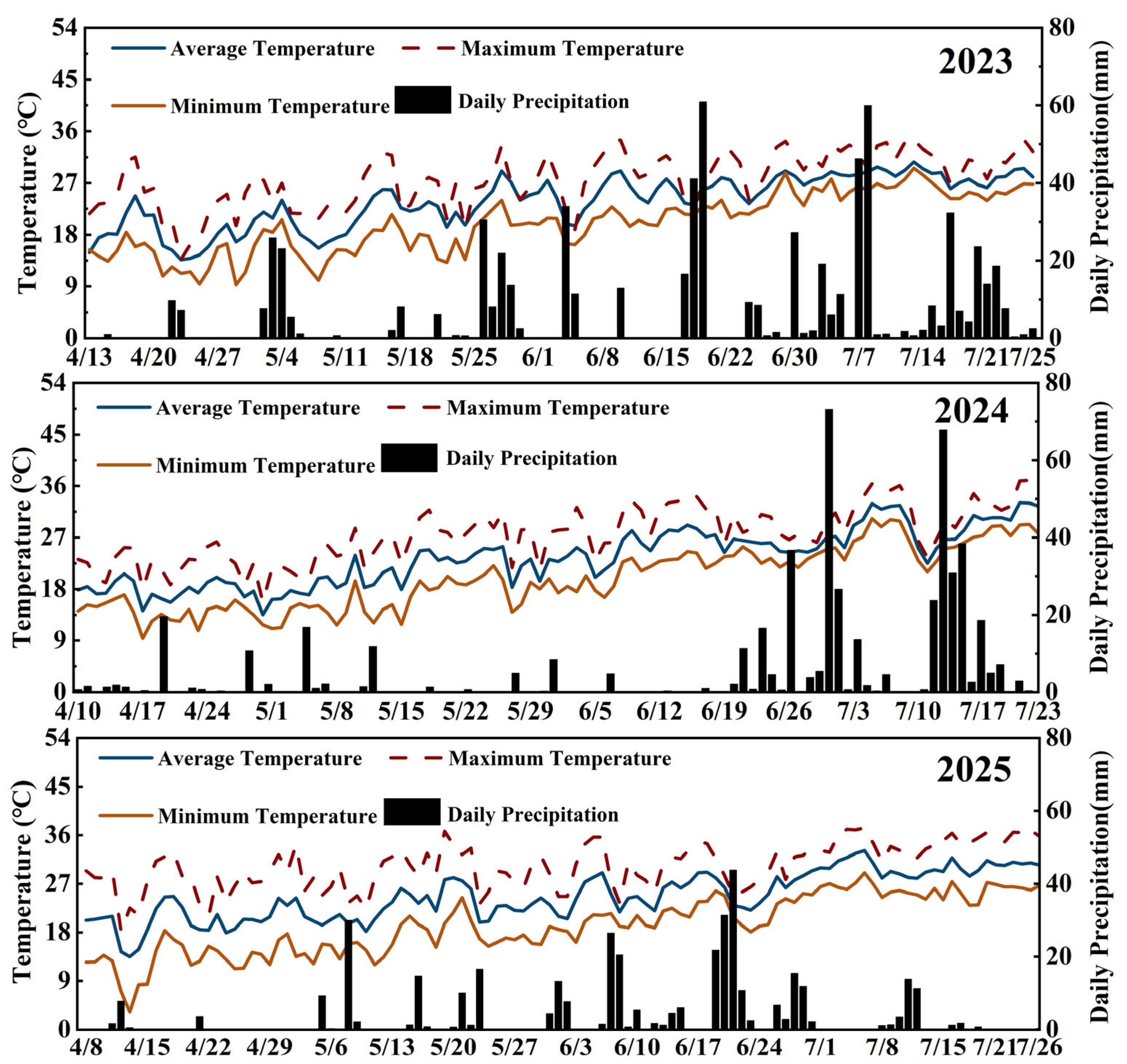
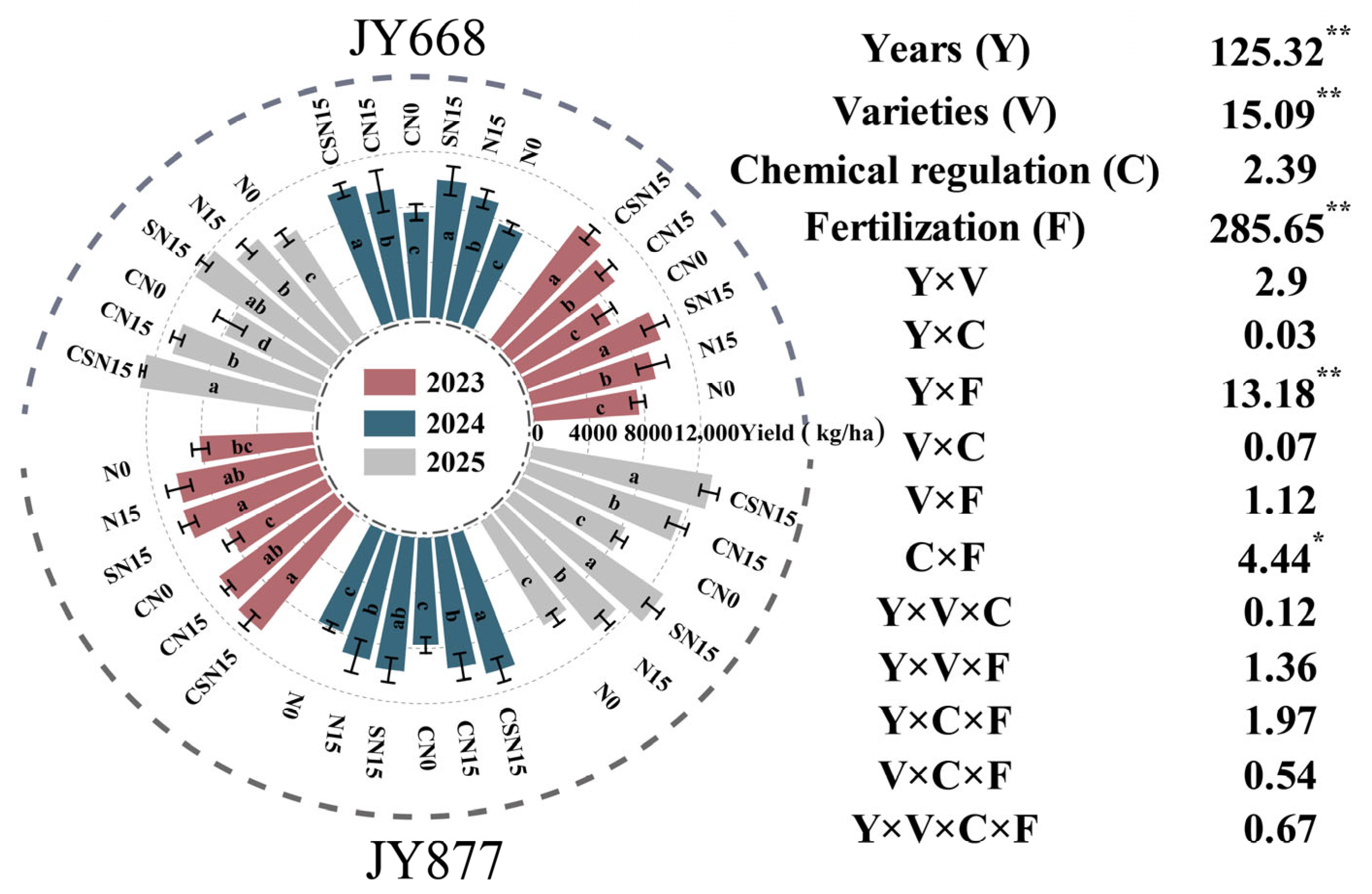
Varieties, fertilization methods, and years significantly influenced maize yield (Figure 1). Fertilization methods significantly increased maize yield, with SN15 having the highest yield. The average yields of SN15 were 12.3% (JY668) and 8.9% (JY877) higher than N15. The yields of CSN15 were 11.9% (JY668) and 9.2% (JY877) higher than CN15. The average yield of CSN15 was 3.6% higher than SN15, and that of CN15 was 3.7% higher than N15, but there was no significant difference. The highest yield was observed under the CSN15 treatment in JY877, mainly due to the synergistic effect of EDAH and fertilization methods, which increased the number and weight of grains per ear (Table 1). JY877 had a higher average yield than JY668. The highest yield was recorded in 2025, whereas the lowest was recorded in 2024, which may be attributed to excessive precipitation (401.35 mm) during the tasseling to maturity period (June 18 to July 23) in 2024 (Figure 2).

2.2. Plant and Ear Height and Gravity Center Height

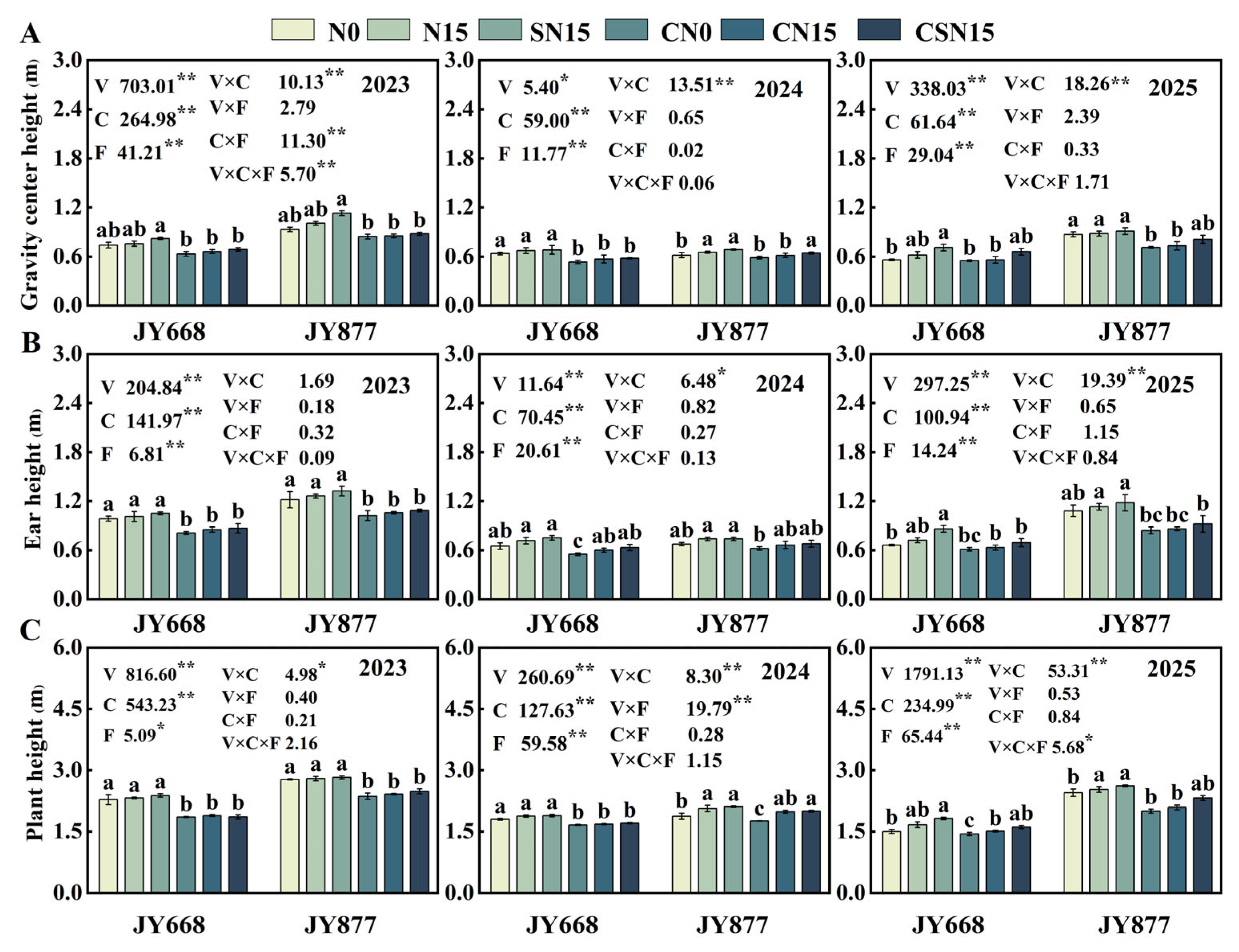
Spraying EDAH significantly decreased plant and ear height and gravity center height (p < 0.01). Average plant height, ear height, and gravity center height decreased by 13.2%, 15.6%, and 12.3% for JY668 and by 11.9%, 17.2%, and 13.2% for JY877. Plant height, ear height, and gravity center height in CSN15 decreased by 12.2%, 17.4%, and 13.9% compared to SN15, and those of CN15 decreased by 12.7%, 16.4%, and 12.9% compared to N15 (Figure 3). Fertilization methods had significant effects on plant height, ear height, and gravity center height (p < 0.01). Specifically, SN15 increased plant height, ear height, and gravity center height by 2.9%, 7.1%, and 7.9% in JY668 and by 3.5%, 3.7%, and 6.8% in JY877 compared to N15. There were significant differences in plant height, ear height, and gravity center height between the two varieties, with JY877 being higher than JY668. Overall, plant height, ear height, and gravity center height were the highest in 2023 and the lowest in 2024. This variation may be associated with environmental changes caused by increased precipitation and elevated temperatures during the critical growth period in 2024 (Figure 2).

2.3. Stem–Leaf Angle and Leaf Orientation Value

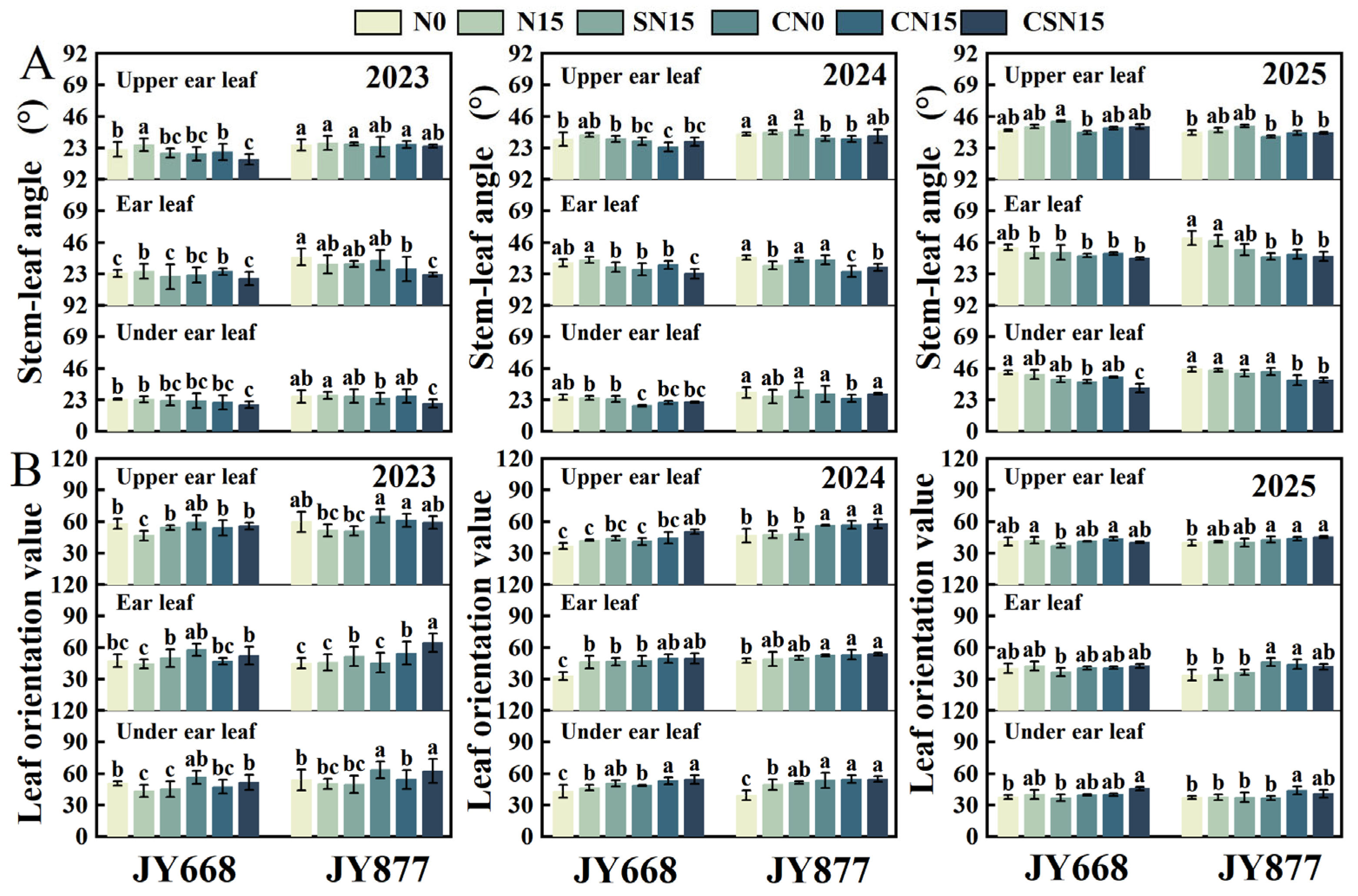
Spraying EDAH decreased the stem–leaf angle of the upper ear leaf (14.4%), ear leaf (9.5%), and under ear leaf (9.8%) in JY668, and in JY877, the decreases were 9.8%, 16.2%, and 8.3%, respectively (Figure 4A). Compared to N15, SN15 decreased the upper-ear and ear stem–leaf angles by 11.9% and 12.9% in JY668, respectively. Fertilization methods had no significant effect on the stem–leaf angle of JY877. Compared to CN15, CSN15 decreased the upper-ear and ear stem–leaf angles by 11.2% and 16.3% in JY668 and decreased the ear and under-ear stem–leaf angles by 2.6% and 2.4% in JY877, respectively. Compared to SN15, CSN15 decreased the stem–leaf angle of the upper-ear leaf (12.7%), ear leaf (14.8%), and under-ear leaf (12.3%). Compared to N15, CN15 decreased the stem–leaf angle of the upper-ear leaf (14.2%), ear leaf (11.1%), and under-ear leaf (6.1%). The stem–leaf angle of JY877 was generally greater than that of JY668. For both varieties, the overall pattern of the stem–leaf angle was ear leaf > upper leaf > lower leaf. The largest stem–leaf angle was observed in 2025, whereas the smallest occurred in 2023.
Spraying EDAH increased the leaf orientation value by 8.7% (upper-ear leaf), 10.4% (ear leaf), and 10.2% (under-ear leaf) in JY668 and by 14.4%, 16.2%, and 14.6% in JY877 (Figure 4B). Compared to CN15, CSN15 increased the leaf orientation values by 3.0% (upper-ear leaf), 5.2% (ear leaf), and 4.1% (under-ear leaf). Compared to SN15, CSN15 increased the leaf orientation values of the upper-ear leaf (14.5%), ear leaf (14.2%), and under-ear leaf (16.1%). Compared to N15, CN15 increased the leaf orientation values of the upper-ear leaf (13.0%), ear leaf (10.3%), and under-ear leaf (8.8%). Fertilization methods had no significant effect on the leaf orientation value. The leaf orientation value of JY877 was greater than that of JY668, with the highest value observed in 2023 and the lowest in 2025.

2.4. Internode Traits and Aerial Root Layers

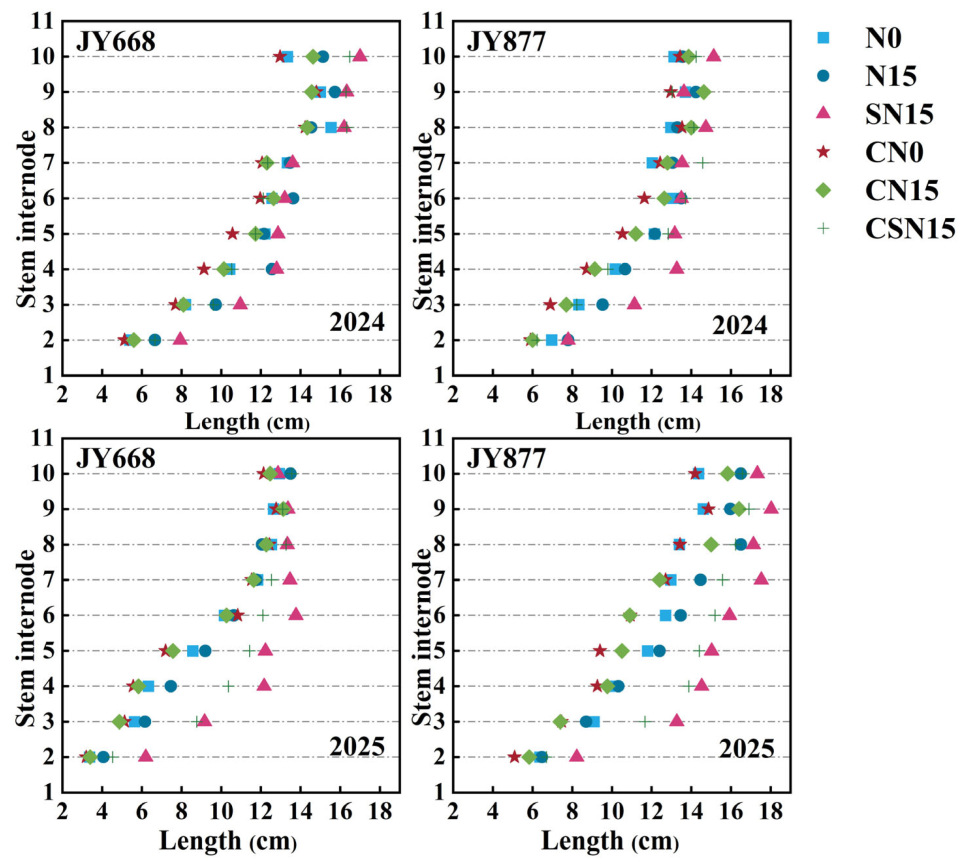
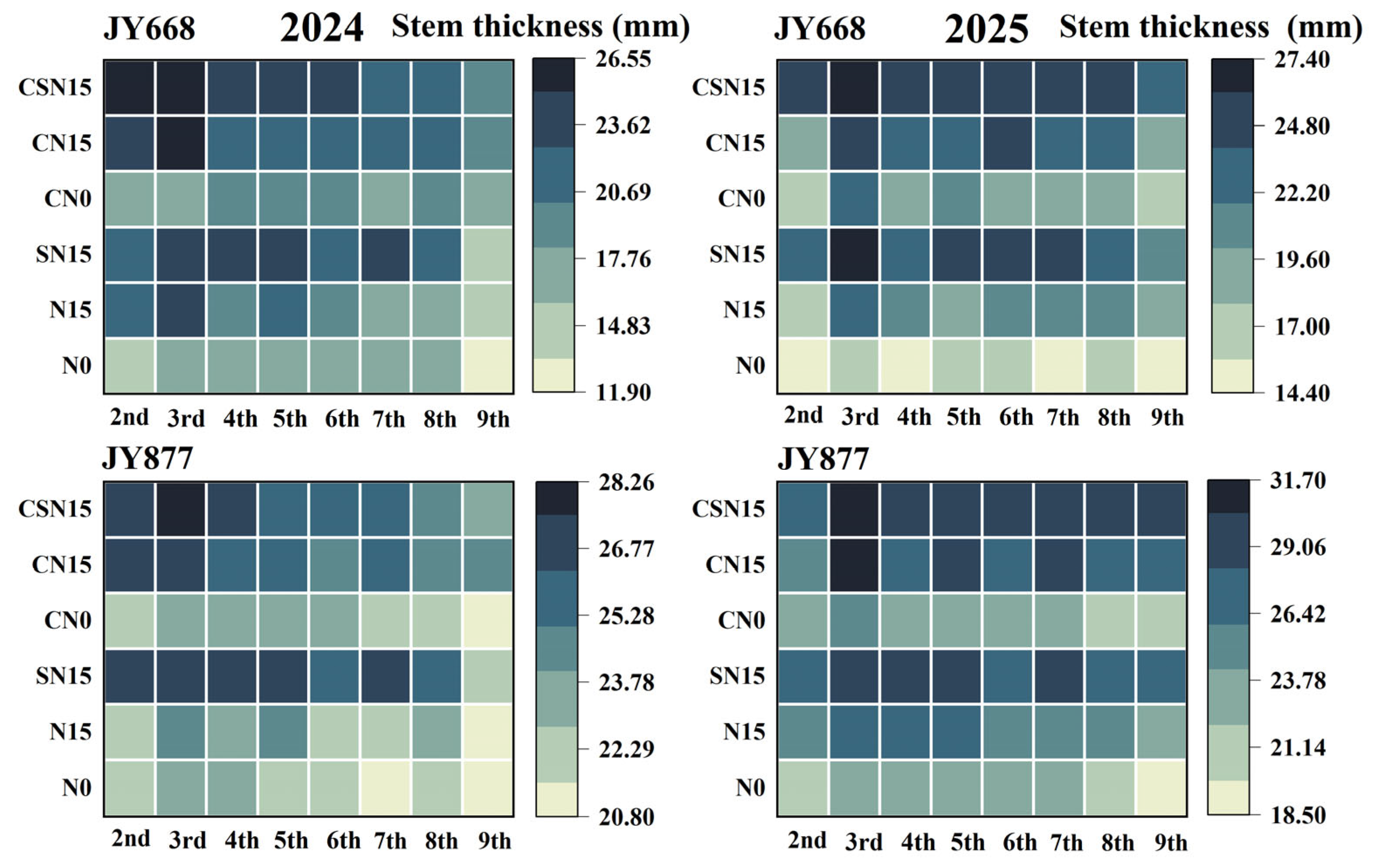
Spraying EDAH significantly decreased the maize internode length (Figure 5), mainly affecting the 2nd–5th internodes. Specifically, the lengths of the 2nd–5th internodes decreased by 15.2%, 11.4%, 16.5%, and 10.4% in JY668 and by 14.1%, 12.2%, 6.8%, and 12.4% in JY877, respectively. Compared with N15, SN15 mainly increased the length of the 2nd–5th internodes, with increases of 20.4%, 30.4%, 25.1%, and 17.7%, respectively. Spraying EDAH increased the maize internode diameter (Figure 6); compared with SN15, CSN15 increased the diameter of the 2nd–4th internodes by 6.7%, 6.1%, and 2.6%, respectively, and compared with N15, CN15 increased the diameter of the 2nd–5th internodes by 9.8%, 11.0%, 5.6%, and 7.4%, respectively. These results indicate that spraying EDAH primarily enhanced the diameter of the 2nd–4th internodes. Fertilization methods significantly affected the internode diameter. Compared with N15, SN15 increased the diameter of the 2nd–7th internodes by 12.4%, 7.1%, 12.0%, 9.0%, 8.6%, and 10.6%, respectively. Spraying EDAH had significant effects on the dry weight, length, diameter, and dry weight per unit length of the third internode (Table 2), with the dry weight per unit length increasing by 53.5% (JY668) and 24.3% (JY877). Compared with CN15, CSN15 increased the dry weight per unit length by 18.9%. Overall, the dry weight per unit length of JY877 was higher than that of JY668, and it was higher in 2025 than 2024.
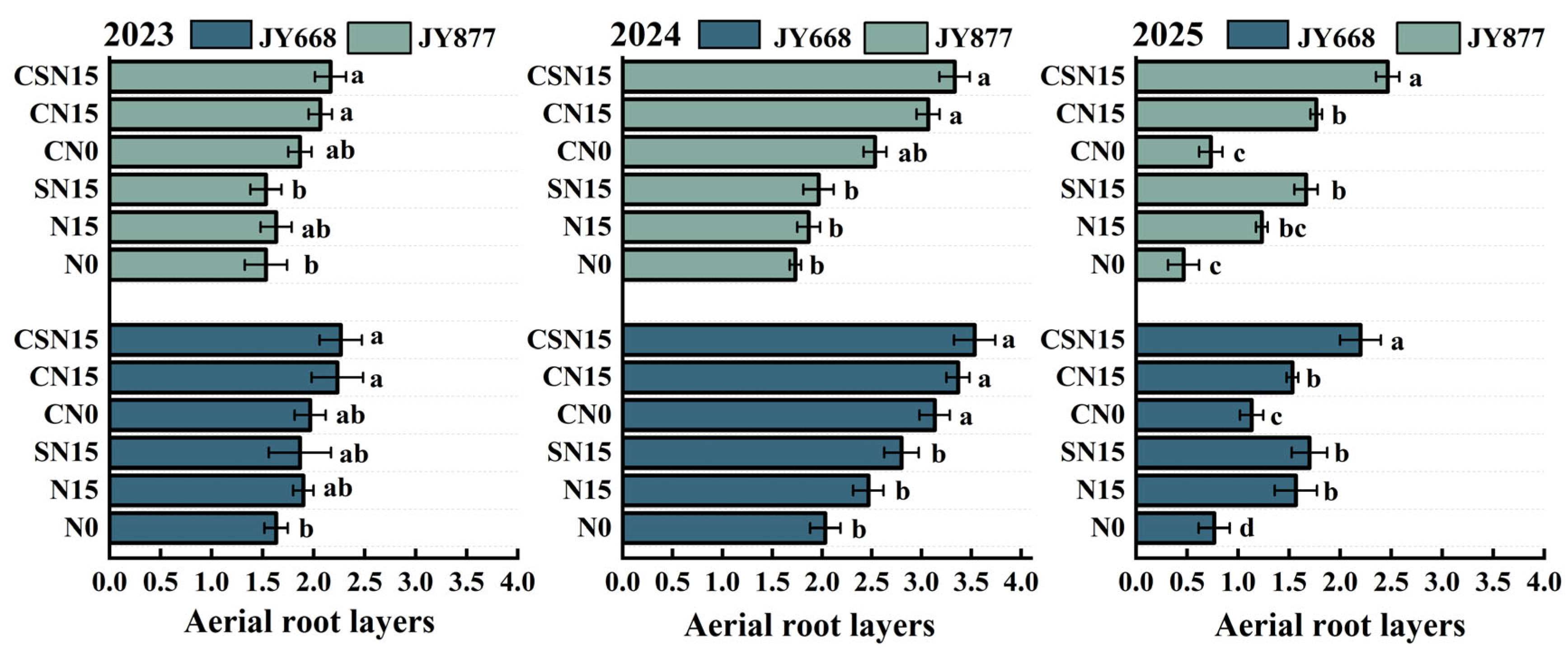
Spraying EDAH increased the average number of aerial root layers by 0.51 in JY668 and by 0.71 in JY877 (Figure 7). CSN15 increased the number of aerial root layers by 0.74 compared to SN15, and CN15 increased the number by 0.56 compared to N15. JY668 exhibited 0.25 more aerial root layers than JY877 on the two-year average. Overall, the number of aerial root layers was the highest in 2024 and the lowest in 2023, which may be related to differences in cumulative temperature and precipitation from the jointing stage to the flowering stage. During this period in 2023, the cumulative temperature and total precipitation were 1323.7 °C and 236.1 mm (April 13 to June 13), whereas in 2024, they were 1264.3 °C and 96.9 mm (April 10 to June 10). The higher temperature and precipitation during this growth may have inhibited aerial root formation in 2023 (Figure 2).

2.5. Stem Mechanical Properties

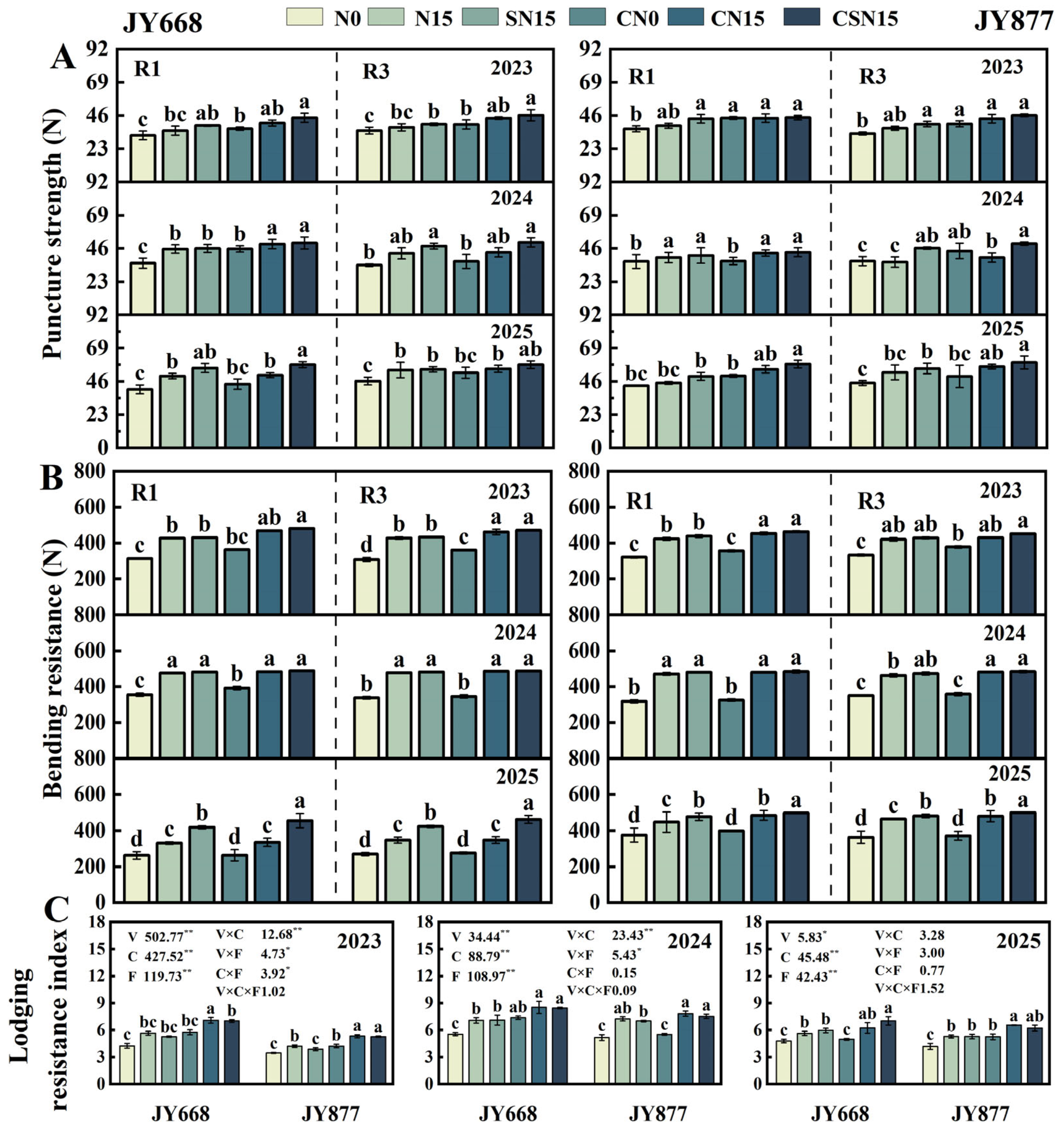
EDAH and fertilization methods had significant effects on bending resistance and puncture strength (Figure 8). Spraying EDAH increased bending resistance and puncture strength by 6.1% and 9.3% in JY668 and by 4.6% and 11.7% in JY877, respectively. Compared with N15, SN15 increased bending resistance and puncture strength by 7.4% and 6.5% in JY668 and by 3.3% and 10.4% in JY877, respectively. Compared with CN15, CSN15 increased bending resistance and puncture strength by 6.2% and 7.6%, respectively; compared with SN15, CSN15 increased these traits by 6.5% and 8.4%, respectively. Compared with N15, CN15 increased bending resistance and puncture strength by 3.9% and 6.5%, respectively. JY877 exhibited higher bending resistance than JY668, while puncture strength showed no significant difference between varieties. Under CSN15 treatment, both JY668 and JY877 reached the highest levels of bending resistance and puncture strength. Bending resistance was the highest in 2024 and the lowest in 2025, whereas puncture strength was the highest in 2025 and the lowest in 2023.
EDAH, fertilization methods, and varieties had significant effects on the lodging resistance index (p < 0.01). Spraying EDAH increased the lodging resistance index by 21.7% in JY668 and 17.5% in JY877. Compared with SN15, CSN15 increased the lodging resistance index by 20.3%, while compared with N15, CN15 increased it by 18.3%. Compared with N15, SN15 increased puncture strength by 18.9% in JY668 and by 17.1% in JY877. JY668 exhibited a higher lodging resistance index than JY877. Across years, the lodging resistance index was the highest in 2024 and the lowest in 2023.

2.6. Stem Chemical Composition

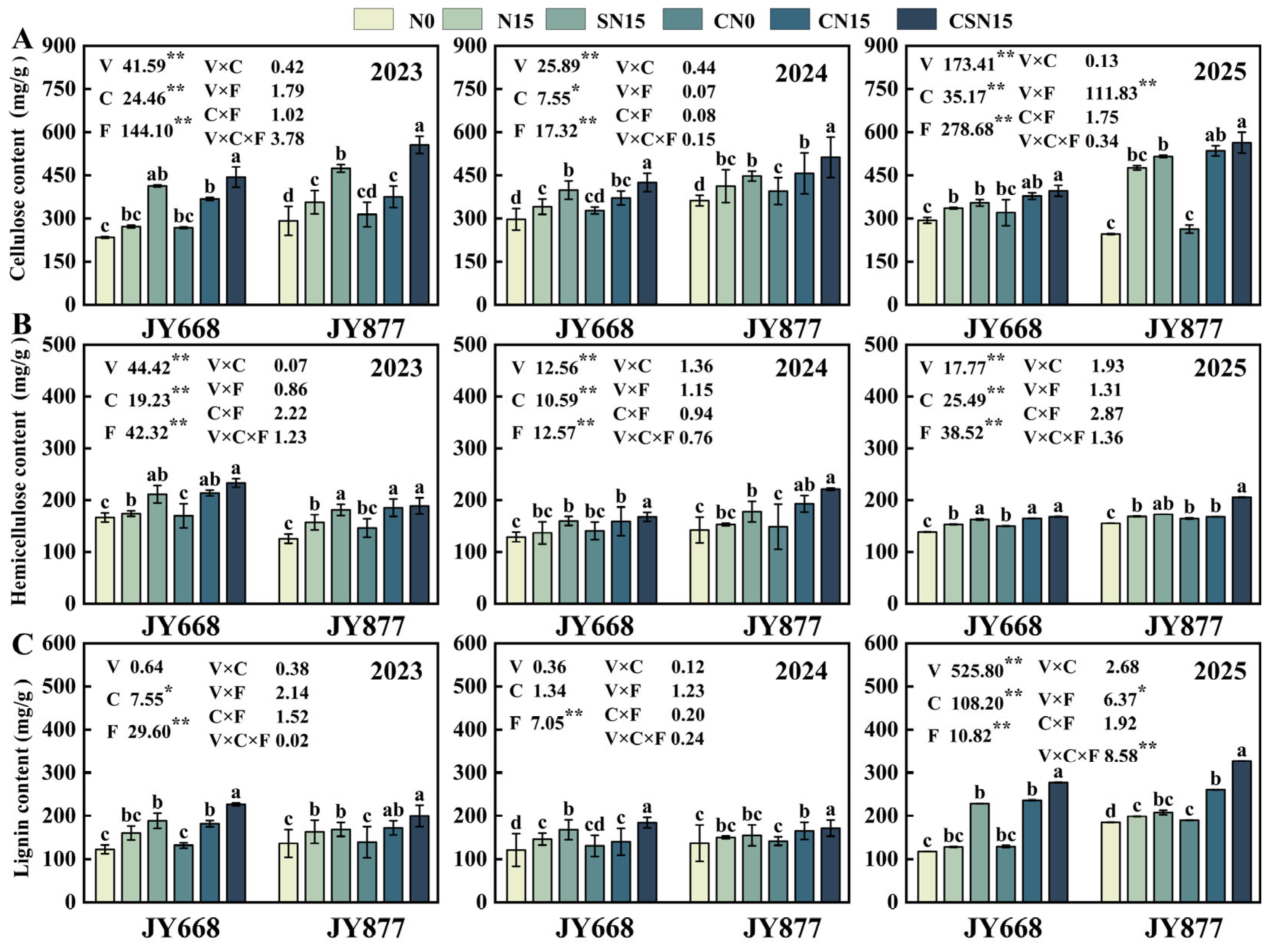
EDAH and fertilization methods had significant effects on cellulose, hemicellulose and lignin contents in the third internode of maize (Figure 9). Spraying EDAH increased cellulose, hemicellulose, and lignin contents by 12.2%, 9.4%, and 8.7% in JY668 and by 10.9%, 13.1%, and 7.9% in JY877 between two-year averages. Compared to N15, SN15 increased cellulose, hemicellulose, and lignin contents by 22.9%, 15.1%, and 3.5% in JY668 and by 15.4%, 11.0%, and 3.8% in JY877. Compared to CN15, CSN15 increased cellulose, hemicellulose, and lignin contents by 16.6%, 9.3%, and 19.9%, respectively. Compared to N15, CN15 increased cellulose, hemicellulose, and lignin contents by 13.3%, 14.9%, and 22.1%. Compared to SN15, CSN15 increased cellulose, hemicellulose, and lignin contents by 11.3%, 11.2%, and 24.2%, respectively. CSN15 treatment had the highest cellulose, hemicellulose, and lignin contents both in JY668 and JY877. Cellulose and hemicellulose contents differed significantly between the two varieties (p < 0.01), with those in JY877 being higher than in JY668. Lignin showed no significant difference between 2023 and 2024 (p > 0.05). The cellulose content was the highest in 2024 and the lowest in 2023. The hemicellulose content was the highest in 2023 and the lowest in 2024. The lignin content was the highest in 2025 and the lowest in 2024.

2.7. Lodging Rate

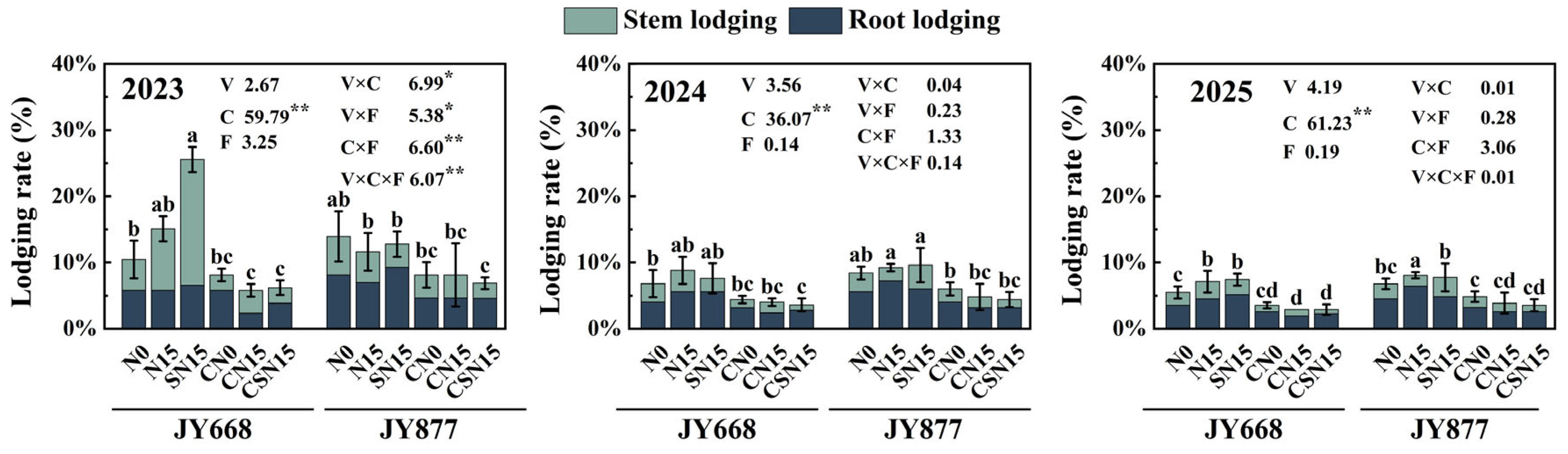
EDAH had a significant effect on the lodging rate (p < 0.01). Spraying EDAH reduced the lodging rate of JY668 and JY877 by 56.0% and 42.6%, respectively (Figure 10). Compared with CN15, CSN15 reduced the lodging rate of JY877 by 11.7%, while no significant effect was observed in JY668. Compared with N15, CN15 reduced the lodging rate by 50.7%, and compared with SN15, CSN15 reduced the lodging rate by 61.1%. The lowest lodging rates for both JY668 and JY877 were observed under the CSN15 treatment. In 2024 and 2025, JY877 exhibited higher lodging rates than JY668. In 2023, JY668 showed higher lodging rates under the SN15 and N15 treatments, which may have been due to the occurrence of stem rot at maturity. Overall, lodging incidence was higher in 2023 than in 2024 and 2025, which may be related to higher precipitation during the growing season (Figure 2).

2.8. Correlation Analysis and Path Analysis

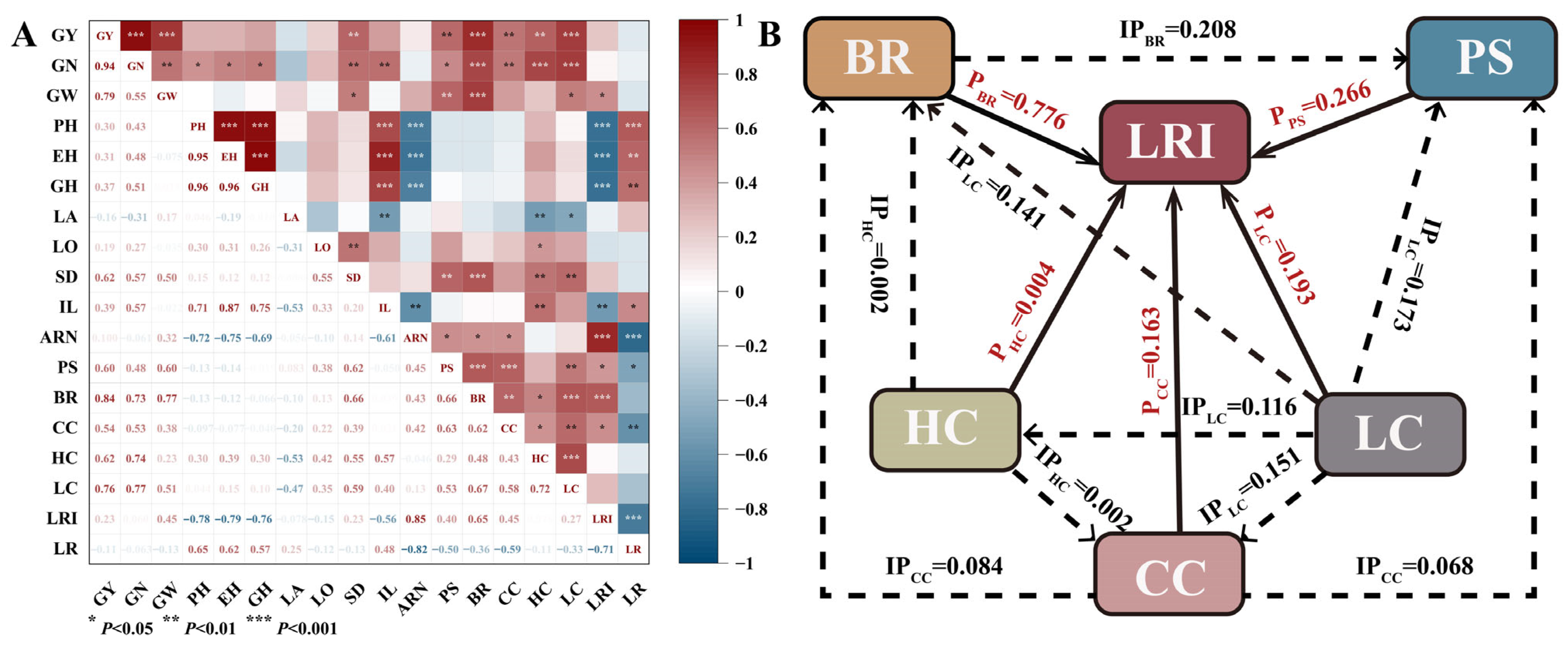
Under the experimental conditions, the maize yield was significantly positively correlated with the grain number and 1000-grain weight. The diameter of the third internode, puncture strength, bending resistance, and the contents of cellulose, hemicellulose, and lignin, as well as the number of aerial root layers, were all positively correlated with grain yield (Figure 11A). Plant height, ear height, and center of gravity height were significantly negatively correlated with the lodging resistance index (LRI) and positively correlated with lodging rate. Maize yield was negatively correlated with the lodging rate.
Bending resistance (BR) had the largest direct effect on the LRI (0.776). The direct path coefficients of puncture strength (PS), cellulose (CC), hemicellulose (HC), and lignin (LC) were 0.266, 0.163, 0.004, and 0.193, respectively. Cellulose indirectly affected the LRI by influencing BR and PS, with indirect effect coefficients of 0.084 and 0.068, respectively. Lignin indirectly affected the LRI through BR and PS, with indirect effect coefficients of 0.141 and 0.173. Hemicellulose had no significant indirect effect on the LRI via BR and PS. Overall, BR contributed the most to lodging resistance, followed by PS (Figure 11B).

3. Discussion

3.1. Maize Yield Response to EDAH and Different Fertilization Combinations

Chemical regulation and fertilization management exerted significant impacts on maize yield [42,44]. Previous studies have explored the effects of chemical regulation on maize yield, and some research suggested that EDAH not only enhanced lodging resistance but also promoted grain filling [4,19] and increased the grain number and weight, thereby boosting yield [11,14,29]. This study demonstrated that spraying EDAH increased the grain number and weight, ultimately enhancing maize yield, which is consistent with previous findings. Other studies also showed that early application of EDAH in conditions with low lodging risk directs more assimilates to basal stems, resulting in thicker basal stems and enhanced lodging resistance; however, this process reduced dry matter allocation to ears, leading to fewer grains per ear and ultimately causing yield reduction [13,45]. Slow-release fertilizer was widely adopted to narrow the yield gap with potential maize yield and enhanced nutrient use efficiency, offering advantages in increasing grain production and reducing labor costs [46]. Slow-release fertilization synchronizes nitrogen release with crop demand and effectively reduces ammonia volatilization, nitrate leaching, and gaseous nitrogen losses, thereby improving fertilizer use efficiency and mitigating environmental risks associated with conventional nitrogen management [47,48]. The combined application of EDAH and slow-release nitrogen fertilization may improve nitrogen use efficiency, reduce fertilizer inputs, and decrease ammonia volatilization, nitrate leaching, and greenhouse gas emissions. A previous study using 15N labeling revealed that slow-release fertilizer aligned its nutrient release pattern with crop demand and significantly improved maize yield and fertilizer use efficiency compared to conventional fertilizer [49]. This study indicated that under the same N rate (225 kg/ha), one-time application of slow-release fertilizer improved maize lodging resistance and increased yield, consistent with previous studies. Furthermore, this experiment demonstrated that spraying EDAH did not significantly increase maize yield under the same fertilization treatment; however, the combined application of EDAH spraying and slow-release fertilization increased the grain number per ear and 1000-grain weight, ultimately improving maize yield compared with conventional fertilization (Figure 12).

3.2. Plant Morphology Response to EDAH and Different Fertilization Combinations

Spraying plant growth regulators improved plant morphological structure [11,50], decreased plant and ear height and gravity center height [18,29], and contributed to reducing the lodging rate of maize [51]. A possible reason was that lower ear height and gravity center height reduced the force exerted on the basal internode under external forces [52,53,54]. Upright leaf posture improved lodging resistance, while prostrated leaf posture reduced lodging resistance under high-density planting [27,55]. Upright leaf posture was conducive to forming a compact plant morphology, thereby effectively reducing the lodging rate [51]. Chemical regulation reduced stem–leaf angle above the ear leaf [51], thereby enhancing lodging resistance. EDAH increased the number, diameter, angle, volume, and dry weight of supporting roots, enhancing the root support capacity [4,14,33]. This study demonstrated that the combined application of EDAH and slow-release fertilization significantly reduced the stem–leaf angle, increased the leaf orientation value, and optimized leaf architecture, resulting in a more compact plant morphology and improved light distribution. In this study, EDAH combined with slow-release fertilization significantly promoted dry matter accumulation in the basal third internode (Table 1), primarily increased the diameter of the second to fourth internodes (Figure 6), and shortened the length of the second to fifth internodes (Figure 5), thereby reducing plant height and center of gravity, optimizing overall plant architecture, and significantly decreasing the lodging rate. The results of this experiment demonstrate that EDAH and slow-release fertilization significantly increased the number of aerial root layers and enhanced stem mechanical strength, which facilitated the efficient transport of water, nutrients, and photosynthetic products, further strengthened lodging resistance, and ultimately improved maize yield. Overall, the combined application of EDAH and slow-release fertilization optimized plant morphological structure and effectively improved maize lodging resistance, consistent with previous studies (Figure 12).

3.3. Lodging Resistance Response to EDAH and Different Fertilization Combinations

Lignin and cellulose contents, as major components of the cell wall, are crucial for plant vigor and resistance to biotic and abiotic stresses, including lodging [36]. The relative proportion of hemicellulose to cellulose influences the arrangement of microfibrils and the compactness of cell wall complexes, thereby modulating stem thickness, elasticity, and bending resistance [56,57,58,59]. Previous studies have shown that chemical regulation treatments can enhance the expression of enzymes involved in the biosynthetic pathways of lignin monomers, such as PAL, 4CL, and CAD, thereby increasing the contents of lignin, cellulose, and hemicellulose in the basal third internode of maize [60,61,62] and significantly reducing the lodging rate [4]. The results of this study indicate that the combination of spraying EDAH and slow-release fertilization significantly increased the cellulose, hemicellulose, and lignin contents in the basal internodes. Chemical components (cellulose, hemicellulose, and lignin) indirectly influence the lodging resistance index by affecting mechanical strength (bending resistance and puncture strength) (Figure 11). The mechanical strength of basal internodes increased after rapid elongation and thickening [21]. Applying EDAH during the optimal growth stage of the crop can modulate endogenous hormones and promote the expression of genes associated with secondary cell wall thickening [19,22], resulting in a shortened basal internode length [63], thereby increasing cell wall thickness and the degree of lignification and enhancing the mass of basal internode [17,51], which contributes to enhancing maize lodging resistance [12]. Slow-release fertilizer significantly increased the bending resistance and puncture strength of the second, third, and fourth internodes in maize [12], which also improved N supply–demand synchronization, providing a material basis for increased lignin, cellulose, and hemicellulose contents [22,64,65]. This effect not only results from a stable nitrogen supply but is also closely associated with the nitrogen-mediated coupling of carbon and nitrogen metabolism in the phenylpropanoid pathway during lignin biosynthesis [59]. An adequate and balanced nitrogen supply promotes the synthesis of amino acids (such as phenylalanine), thereby providing the basis for the accumulation of lignin precursors [62], and increased the mass density of the internodes [5,58]. Our study indicated that EDAH combined with slow-release fertilization increased the dry weight per unit length of the basal third internode, leading to stem thickening and further enhancing the puncture strength and bending resistance of the third internode. This consequently reduced the lodging rate and increased the lodging resistance index, with bending resistance having the largest direct effect on the lodging resistance index (Figure 11). Furthermore, this treatment significantly increased the contents of cellulose, hemicellulose, and lignin in the basal internodes. Changes in these structural carbohydrates were significantly positively correlated with bending resistance and puncture strength, with lignin exerting the greatest indirect effect on the lodging resistance index through bending resistance and puncture strength (Figure 11), indicating their key role in improving stem mechanical strength. Overall, the combined application of EDAH and slow-release fertilization enhanced stem chemical composition and mechanical strength, ultimately improving maize lodging resistance (Figure 12).

4. Materials and Methods

4.1. Experimental Site

The field experiments were conducted at Yangzhou University experimental farm (Yangzhou, Jiangsu Province) from 2023 to 2025. Experimental soil was sandy loam, and the pH, organic matter, total N, alkali-hydrolyzable N, available phosphorus, and available potassium in tillage layer (0–20 cm) were 7.5, 12.0 g/kg, 0.7 g/kg, 67.3 mg/kg, 24.8 mg/kg, and 43.1 mg/kg in 2023; 7.1, 12.3 g/kg, 0.8 g/kg, 70.5 mg/kg, 24.3 mg/kg, and 40.9 mg/kg in 2024; and 7.6, 12.5 g/kg, 0.9 g/kg, 80.5 mg/kg, 26.3 mg/kg, and 43.9 mg/kg in 2025. Meteorological data during the maize growing periods are shown in Figure 2. The total accumulated temperature and precipitation during the growing season were 2478.8 °C and 678.5 mm in 2023, 2467.0 °C and 499.8 mm in 2024, and 2715.6 °C and 383.6 mm in 2025. Temperature and precipitation data were obtained from the NASA POWER Data Access Viewer (DAV) (https://power.larc.nasa.gov) for the period of 2023–2025. Daily maximum, minimum, and average temperatures, as well as daily precipitation, were used to evaluate the effects of environmental conditions on maize growth, yield, and lodging resistance under different treatments.

4.2. Experimental Design

Two maize varieties, Jiangyu668 (JY668) and Jiangyu877 (JY877), were selected as experimental materials. Plant heights in the approval announcement of JY668 and JY877 were 223 and 246 cm, and ear heights were 96.1 and 96.0 cm. Treatments were arranged in a split–split plot design in the three-year experiment. Two maize varieties represented the main plot, and the split plot was assigned with spraying EDAH and no EDAH. Fertilization treatments, comprising no fertilization (N0), conventional fertilization (N15), and slow-release compound fertilization (SN15), were assigned to the split–split plot level of the experimental design. EDAH (27% ethephon and 3% DA-6), sourced from Anhui Lantian Agricultural Development Co., Ltd., Hefei, China, was uniformly applied to all maize leaves at the eighth extended leaf stage with a concentration of 3.75 mL/L. N15 treatment was applied at a concentration of 500 kg/ha conventional compound fertilizer (N-P2O5-K2O = 15-15-15) at sowing and 326 kg/ha conventional urea (N = 46%) at the sixth extended leaf stage. SN15 was applied at a concentration of 833.5 kg/ha slow-release compound fertilizer (N-P2O5-K2O = 27-9-9) at the sowing stage. All fertilizers were supplied by Jiangsu Zhongdong Fertilizer Co., Ltd. (Changzhou, Jiangsu, China). Each plot was 10 m long and 9.6 m wide with 16 rows (spacing of 0.4 and 0.8 m). The planting density was 75,000 plants/ha. Seeds were sown at a depth of 3–5 cm on 13 April 2023, 10 April 2024, and 8 April 2025. The harvest dates were 25 July 2023, 23 July 2024, and 26 July 2025, respectively. The depth of furrow fertilization was 10 cm. Other field management followed farmers’ conventional practices. Weed control was implemented using a combination of a pre-emergence residual herbicide and a single post-emergence application at the fifth leaf stage. All maize seeds were treated with Acceleron™ (containing difenoconazole, fludioxonil, metalaxyl-M, and thiamethoxam) prior to sowing, and phoxim was applied to the soil of each plot at sowing to control corn rootworms [46].

4.3. Sampling and Measurements

4.3.1. Grain Yield and Its Components

At maturity, three sampling points were selected in each plot, and 10 consecutive ears were harvested from each point. A total of 30 harvested ears were air-dried and hand-threshed. Measurements included 1000-grain weight, grain number per ear, and moisture content. Grain yield was calculated and adjusted to a standard moisture content of 14%.

4.3.2. Plant Morphology

Ten consecutive plants were selected from each plot to measure the plant height, ear height, center of gravity height, length, and diameter of the third basal internode at silking stage (R1). Then, ten plants were cut at the base and tied at their center using a thin string. The string position was adjusted until the plant remained perfectly horizontal, with the distance from the base to the string’s position recorded as the center of gravity height. As maize stems are elliptical, internode diameter was determined using a vernier caliper by recording both the major and minor axes of internode cross-section, and the average of these two values represented the third internode diameter. At the milk stage (R3), 30 consecutive plants were selected from each plot to determine the number of aerial root layers, and 10 consecutive plants were selected to determine the leaf–stem angle and leaf orientation value. Leaf–stem angles (A) were measured using a protractor at ear leaf, above ear leaf, and below ear leaf. A measuring tape was used to record the straight-line distance from the leaf base to the highest point of the leaf (Lf) and the leaf length (L). These measurements were used to calculate the leaf orientation value.
L e a f   o r i e n t a t i o n   v a l u e L O V = 90 ° A × L f L

4.3.3. Stem Mechanical Properties and Lodging Rate

Three representative and uniformly grown plants per plot were selected to measure puncture strength by a portable plant lodging resistance tester (Zhejiang Top Cloud-agri Technology Co., Ltd., Hangzhou, China), which was specifically designed for assessing crop lodging resistance. The puncture probe measured stem puncture strength at upper, middle, and lower sections of the third internode, aligned perpendicular to the stem. The highest value recorded during probe penetration of stem epidermis was defined as puncture strength. After leaves, leaf sheaths, stems, and ears were removed, the bending resistance was measured immediately. During measurement, prepared stems were positioned on a stand designed for a lodging resistance tester. A bending resistance probe applied a uniform and gradual downward force at the midpoint of the third internode from base [42]. The maximum value recorded at point of internode failure was defined as bending resistance. The lodging resistance index was calculated based on bending resistance and the height of the stem gravity center [12]. After testing, third internodes from the base were individually collected, oven-dried at 60 °C, and ground into a powder for analyzing cellulose, hemicellulose, and lignin contents according to a previous study [17]. At maturity, three central double rows were selected for investigation. The number of plants exhibiting stem lodging and root lodging was recorded separately, and the lodging rate was calculated [11].
L o d g i n g   r a t e ( % )   =   ( N u m b e r   o f   l o d g e d   p l a n t s / T o t a l   n u m b e r   o f   p l a n t s   p e r   p l o t )   ×   100 %
Lodging   resistance   index = b e n d i n g resistance   of   basal   internodes   /   center   of   gravity   height

4.4. Statistical Analysis

Statistical analysis and significance tests were performed using SPSS 27 (IBM Corp., Armonk, NY, USA). Multiple comparisons among treatment means were performed using Tukey’s HSD post hoc test. Data organization was conducted using Excel 2019 (Microsoft Corp., Redmond, WA, USA). Correlation analysis between lodging resistance-related traits and yield was carried out using Origin 2021 (Origin Lab Corp., Northampton, MA, USA), which was also utilized to create visualization graphs for experimental indicators.

5. Conclusions

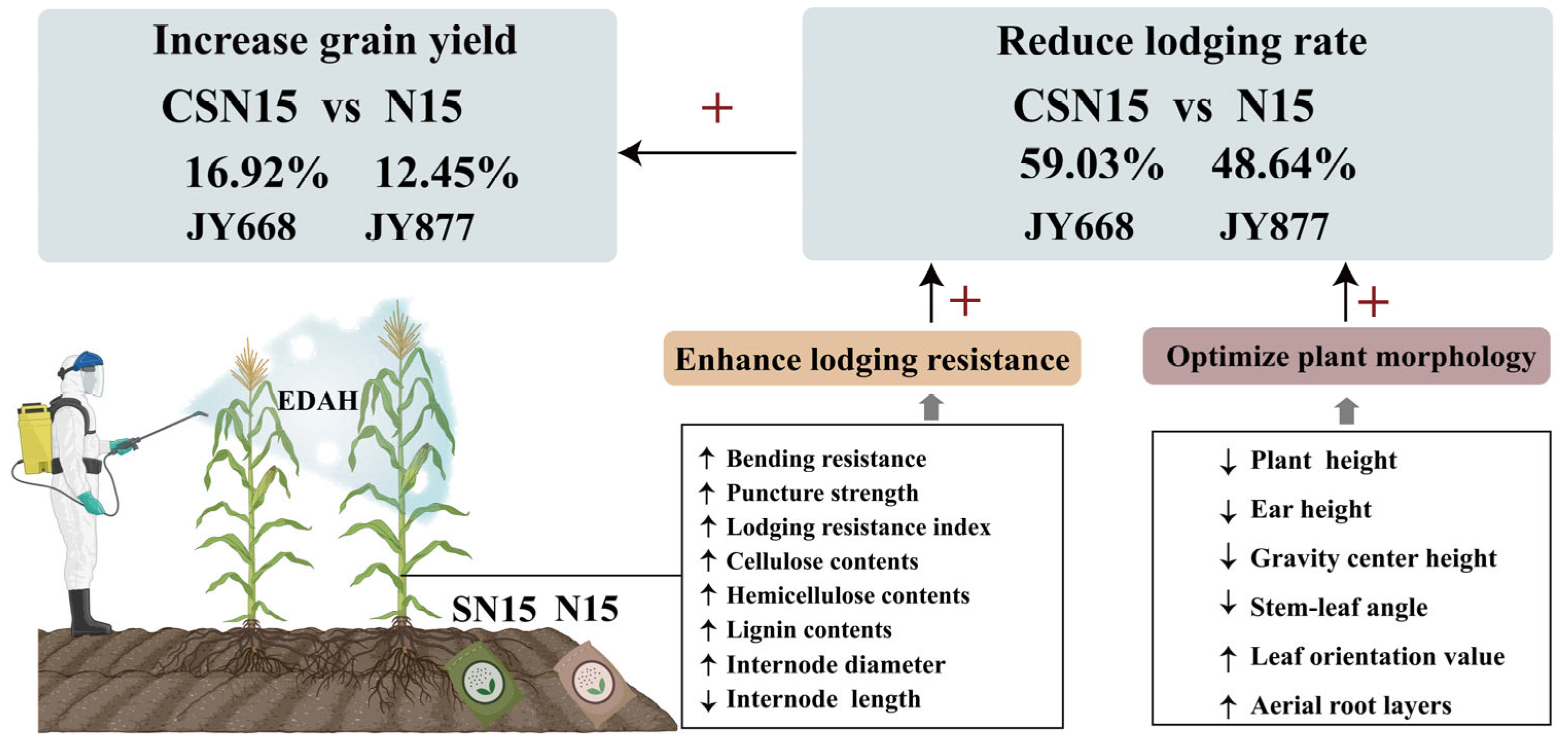
This study demonstrated that the combined application of EDAH spraying and slow-release fertilization improved maize plant morphology, enhanced lodging resistance, and increased grain yield (Figure 12). This integrated strategy lowered the plant gravity center and stem–leaf angle, optimized leaf spatial distribution, and increased internode diameter and the number of aerial root layers. It also promoted the accumulation of structural components, including cellulose, hemicellulose, and lignin, thereby strengthening stem mechanical properties and increasing the lodging resistance index. These improvements reduced lodging occurrence and enhanced the grain number and weight. Overall, this combined management approach effectively improved lodging resistance and yield potential in maize, providing theoretical and technical support for green and high-yield maize production. This integrated management strategy may also have potential applicability in other maize-growing regions, although its broader effectiveness requires further verification under diverse environmental conditions.

Author Contributions

Conceptualization, Y.W. (Yuru Wang) and G.L.; methodology, Y.W. (Yuru Wang) and G.L.; formal analysis, Y.W. (Yuru Wang); investigation, Y.W. (Yuru Wang), Y.W. (Yifei Wang), C.J., Y.L., and G.Y.; resources, G.L., D.L., and J.G.; data curation, Y.W. (Yuru Wang), Y.W. (Yifei Wang), C.J., and Y.L.; writing—original draft preparation, Y.W. (Yuru Wang); writing—review and editing, G.L.; visualization, Y.W. (Yuru Wang); supervision, G.L. and D.L.; project administration, G.L. and D.L.; funding acquisition, D.L. and G.L. All authors have read and agreed to the published version of the manuscript.

Funding

This research was funded by the Jiangsu Agricultural Industry Technology System of China (JATS [2023]454, JATS [2022]497), the Jiangsu Agriculture Science and Technology Innovation Fund (CX [23]3117), the Jiangsu Agricultural Major Technology Collaborative Promotion Program Project (2024-ZYXT-03-2), the Priority Academic Program Development of Jiangsu Higher Education Institutions (PAPD), and the Blue project of Yangzhou university.

Data Availability Statement

Informed consent was obtained from all subjects involved in the study. All the data and code used in this study can be requested by email to the corresponding author, Guanghao Li, at guanghaoli@yzu.edu.cn.

Conflicts of Interest

The authors declare no conflicts of interest.

References

  1. Yang, L.; Liu, J.; Li, N.; Pei, Y.; Peng, J.; Wang, Z. An Integrated Strategy Coordinating Endogenous and Exogenous Approaches to Alleviate Crop Lodging. Plant Stress 2023, 9, 100197. [Google Scholar] [CrossRef]
  2. Peng, Q.; Shen, R.; Li, X.; Ye, T.; Dong, J.; Fu, Y.; Yuan, W. A Twenty-Year Dataset of High-Resolution Maize Distribution in China. Sci. Data 2023, 10, 658. [Google Scholar] [CrossRef] [PubMed]
  3. Luo, N.; Meng, Q.; Feng, P.; Qu, Z.; Yu, Y.; Liu, D.L.; Müller, C.; Wang, P. China Can Be Self-Sufficient in Maize Production by 2030 with Optimal Crop Management. Nat. Commun. 2023, 14, 2637. [Google Scholar] [CrossRef] [PubMed]
  4. Liu, X.; Gu, W.; Li, C.; Li, J.; Wei, S. Effects of Nitrogen Fertilizer and Chemical Regulation on Spring Maize Lodging Characteristics, Grain Filling and Yield Formation under High Planting Density in Heilongjiang Province, China. J. Integr. Agric. 2021, 20, 511–526. [Google Scholar] [CrossRef]
  5. Ahmad, I.; Batyrbek, M.; Ikram, K.; Ahmad, S.; Kamran, M.; Misbah; Khan, R.S.; Hou, F.; Han, Q. Nitrogen Management Improves Lodging Resistance and Production in Maize (Zea Mays L.) at a High Plant Density. J. Integr. Agric. 2023, 22, 417–433. [Google Scholar] [CrossRef]
  6. Niu, Y.; Chen, T.; Zhao, C.; Zhou, M. Lodging Prevention in Cereals: Morphological, Biochemical, Anatomical Traits and Their Molecular Mechanisms, Management and Breeding Strategies. Field Crops Res. 2022, 289, 108733. [Google Scholar] [CrossRef]
  7. Shah, L.; Yahya, M.; Shah, S.M.A.; Nadeem, M.; Ali, A.; Ali, A.; Wang, J.; Riaz, M.W.; Rehman, S.; Wu, W.; et al. Improving Lodging Resistance: Using Wheat and Rice as Classical Examples. Int. J. Mol. Sci. 2019, 20, 4211. [Google Scholar] [CrossRef]
  8. Xue, J.; Xie, R.; Zhang, W.; Wang, K.; Hou, P.; Ming, B.; Gou, L.; Li, S. Research Progress on Reduced Lodging of High-Yield and -Density Maize. J. Integr. Agric. 2017, 16, 2717–2725. [Google Scholar] [CrossRef]
  9. Zhang, W.; Yu, C.; Zhang, K.; Zhou, Y.; Tan, W.; Zhang, L.; Li, Z.; Duan, L. Plant Growth Regulator and Its Interactions with Environment and Genotype Affect Maize Optimal Plant Density and Yield. Eur. J. Agron. 2017, 91, 34–43. [Google Scholar] [CrossRef]
  10. Berry, P.M.; Baker, C.J.; Hatley, D.; Dong, R.; Wang, X.; Blackburn, G.A.; Miao, Y.; Sterling, M.; Whyatt, J.D. Development and Application of a Model for Calculating the Risk of Stem and Root Lodging in Maize. Field Crops Res. 2021, 262, 108037. [Google Scholar] [CrossRef]
  11. Huang, G.; Liu, Y.; Guo, Y.; Peng, C.; Tan, W.; Zhang, M.; Li, Z.; Zhou, Y.; Duan, L. A Novel Plant Growth Regulator Improves the Grain Yield of High-Density Maize Crops by Reducing Stalk Lodging and Promoting a Compact Plant Type. Field Crops Res. 2021, 260, 107982. [Google Scholar] [CrossRef]
  12. Liu, S.; Pubu, C.; Li, Y.; Zhang, Y.; Yang, S.; Zhu, Y.; Chen, L.; Zhang, G.; Han, J. Optimal N Fertilizer Management Method for Improving Maize Lodging Resistance and Yields by Combining Controlled-Release Urea and Normal Urea. Eur. J. Agron. 2024, 156, 127159. [Google Scholar] [CrossRef]
  13. Zhang, P.; Gu, S.; Wang, Y.; Xu, C.; Zhao, Y.; Liu, X.; Wang, P.; Huang, S. The Relationships between Maize (Zea Mays L.) Lodging Resistance and Yield Formation Depend on Dry Matter Allocation to Ear and Stem. Crop J. 2023, 11, 258–268. [Google Scholar] [CrossRef]
  14. Sun, N.; Chen, X.; Zhao, H.; Meng, X.; Bian, S. Effects of Plant Growth Regulators and Nitrogen Management on Root Lodging Resistance and Grain Yield under High-Density Maize Crops. Agronomy 2022, 12, 2892. [Google Scholar] [CrossRef]
  15. Wen, W.; Gu, S.; Xiao, B.; Wang, C.; Wang, J.; Ma, L.; Wang, Y.; Lu, X.; Yu, Z.; Zhang, Y.; et al. In Situ Evaluation of Stalk Lodging Resistance for Different Maize (Zea Mays L.) Cultivars Using a Mobile Wind Machine. Plant Methods 2019, 15, 96. [Google Scholar] [CrossRef] [PubMed]
  16. Xue, J.; Gou, L.; Shi, Z.; Zhao, Y.; Zhang, W. Effect of Leaf Removal on Photosynthetically Active Radiation Distribution in Maize Canopy and Stalk Strength. J. Integr. Agric. 2017, 16, 85–96. [Google Scholar] [CrossRef]
  17. Kong, F.; Liu, F.; Li, X.; Yin, P.; Lan, T.; Feng, D.; Song, B.; Lei, E.; Li, Z.; Wang, X.; et al. Ecological Factors Regulate Stalk Lodging within Dense Planting Maize. Field Crops Res. 2024, 317, 109529. [Google Scholar] [CrossRef]
  18. Zhang, Q.; Zhang, L.; Evers, J.; van der Werf, W.; Zhang, W.; Duan, L. Maize Yield and Quality in Response to Plant Density and Application of a Novel Plant Growth Regulator. Field Crops Res. 2014, 164, 82–89. [Google Scholar] [CrossRef]
  19. Xu, C.; Gao, Y.; Tian, B.; Ren, J.; Meng, Q.; Wang, P. Effects of EDAH, a Novel Plant Growth Regulator, on Mechanical Strength, Stalk Vascular Bundles and Grain Yield of Summer Maize at High Densities. Field Crops Res. 2017, 200, 71–79. [Google Scholar] [CrossRef]
  20. Stubbs, C.J.; Kunduru, B.; Bokros, N.; Verges, V.; Porter, J.; Cook, D.D.; DeBolt, S.; McMahan, C.; Sekhon, R.S.; Robertson, D.J. Moving toward Short Stature Maize: The Effect of Plant Height on Maize Stalk Lodging Resistance. Field Crops Res. 2023, 300, 109008. [Google Scholar] [CrossRef]
  21. Zhan, X.; Kong, F.; Liu, Q.; Lan, T.; Liu, Y.; Xu, J.; Ou, Q.; Chen, L.; Kessel, G.; Kempenaar, C.; et al. Maize Basal Internode Development Significantly Affects Stalk Lodging Resistance. Field Crops Res. 2022, 286, 108611. [Google Scholar] [CrossRef]
  22. Gong, L.; Qu, S.; Huang, G.; Guo, Y.; Zhang, M.; Li, Z.; Zhou, Y.; Duan, L. Improving Maize Grain Yield by Formulating Plant Growth Regulator Strategies in North China. J. Integr. Agric. 2021, 20, 622–632. [Google Scholar] [CrossRef]
  23. Zhang, P.; Gu, S.; Wang, Y.; Yang, R.; Yan, Y.; Zhang, S.; Sheng, D.; Cui, T.; Huang, S.; Wang, P. Morphological and Mechanical Variables Associated with Lodging in Maize (Zea Mays L.). Field Crops Res. 2021, 269, 108178. [Google Scholar] [CrossRef]
  24. Tao, Y.; Li, Z.; Shah, F.; Wu, W. Optimizing Biomass Allocation for Optimum Balance of Seed Yield and Lodging Resistance in Rapeseed. Field Crops Res. 2024, 316, 109493. [Google Scholar] [CrossRef]
  25. Wang, Y.; Sheng, Z.; Qv, S.; Zhu, A.; Li, W. Effects of “Yuhuangjin” Spraying on Lodging Resistance and Yield of Summer Maize. J. Maize Sci. 2021, 29, 83–89. [Google Scholar]
  26. Li, Z.; Zhang, Q.; Li, J.; Yang, X.; Wu, Y.; Zhang, Z.; Wang, S.; Wang, H.; Zhang, Y. Solar-Induced Chlorophyll Fluorescence and Its Link to Canopy Photosynthesis in Maize from Continuous Ground Measurements. Remote Sens. Environ. 2020, 236, 111420. [Google Scholar] [CrossRef]
  27. Xue, J.; Gou, L.; Zhao, Y.; Yao, M.; Yao, H.; Tian, J.; Zhang, W. Effects of Light Intensity within the Canopy on Maize Lodging. Field Crops Res. 2016, 188, 133–141. [Google Scholar] [CrossRef]
  28. Ahmad, I.; Kamran, M.; Ali, S.; Bilegjargal, B.; Cai, T.; Ahmad, S.; Meng, X.; Su, W.; Liu, T.; Han, Q. Uniconazole Application Strategies to Improve Lignin Biosynthesis, Lodging Resistance and Production of Maize in Semiarid Regions. Field Crops Res. 2018, 222, 66–77. [Google Scholar] [CrossRef]
  29. Li, C.; Chang, Y.; Luo, Y.; Li, W.; Jin, M.; Wang, Y.; Cui, H.; Sun, S.; Li, Y.; Wang, Z. Nitrogen Regulates Stem Lodging Resistance by Breaking the Balance of Photosynthetic Carbon Allocation in Wheat. Field Crops Res. 2023, 296, 108908. [Google Scholar] [CrossRef]
  30. Wu, Y.; Zhao, B.; Li, Q.; Kong, F.; Du, L.; Zhou, F.; Shi, H.; Ke, Y.; Liu, Q.; Feng, D.; et al. Non-Structural Carbohydrates in Maize with Different Nitrogen Tolerance Are Affected by Nitrogen Addition. PLoS ONE 2019, 14, e0225753. [Google Scholar] [CrossRef]
  31. Zhang, P.; Wang, Y.; Sheng, D.; Zhang, S.; Gu, S.; Yan, Y.; Zhao, F.; Wang, P.; Huang, S. Optimizing Root System Architecture to Improve Root Anchorage Strength and Nitrogen Absorption Capacity under High Plant Density in Maize. Field Crops Res. 2023, 303, 109109. [Google Scholar] [CrossRef]
  32. Zhang, P.; Yan, Y.; Gu, S.; Wang, Y.; Xu, C.; Sheng, D.; Li, Y.; Wang, P.; Huang, S. Lodging Resistance in Maize: A Function of Root–Shoot Interactions. Eur. J. Agron. 2022, 132, 126393. [Google Scholar] [CrossRef]
  33. Wang, X.; Song, G.; Shah, S.; Ren, H.; Ren, B.; Zhang, J.; Liu, P.; Zhao, B. The Potential of EDAH in Promoting Kernel Formation and Grain Yield in Summer Maize. Field Crops Res. 2024, 319, 109655. [Google Scholar] [CrossRef]
  34. Abbasi, M.K.; Tahir, M.M.; Rahim, N. Effect of N Fertilizer Source and Timing on Yield and N Use Efficiency of Rainfed Maize (Zea Mays L.) in Kashmir–Pakistan. Geoderma 2013, 195–196, 87–93. [Google Scholar] [CrossRef]
  35. Li, G.; Fu, P.; Cheng, G.; Lu, W.; Lu, D. Delaying Application Time of Slow-Release Fertilizer Increases Soil Rhizosphere Nitrogen Content, Root Activity, and Grain Yield of Spring Maize. Crop J. 2022, 10, 1798–1806. [Google Scholar] [CrossRef]
  36. Zheng, W.; Liu, Z.; Zhang, M.; Shi, Y.; Zhu, Q.; Sun, Y.; Zhou, H.; Li, C.; Yang, Y.; Geng, J. Improving Crop Yields, Nitrogen Use Efficiencies, and Profits by Using Mixtures of Coated Controlled-Released and Uncoated Urea in a Wheat-Maize System. Field Crops Res. 2017, 205, 106–115. [Google Scholar] [CrossRef]
  37. Bian, W.; An, L.; Zhang, S.; Feng, J.; Sun, D.; Yao, Y.; Shen, T.; Yang, Y.; Zhang, M. The Long-Term Effects of Microplastics on Soil Organomineral Complexes and Bacterial Communities from Controlled-Release Fertilizer Residual Coating. J. Environ. Manag. 2022, 304, 114193. [Google Scholar] [CrossRef]
  38. Gao, Y.; Song, X.; Zheng, W.; Wu, L.; Chen, Q.; Yu, X.; Li, Z.; Li, R.; Gao, F.; Tian, H.; et al. The Controlled-Release Nitrogen Fertilizer Driving the Symbiosis of Microbial Communities to Improve Wheat Productivity and Soil Fertility. Field Crops Res. 2022, 289, 108712. [Google Scholar] [CrossRef]
  39. Zheng, W.; Sui, C.; Liu, Z.; Geng, J.; Tian, X.; Yang, X.; Li, C.; Zhang, M. Long-Term Effects of Controlled-Release Urea on Crop Yields and Soil Fertility under Wheat–Corn Double Cropping Systems. Agron. J. 2016, 108, 1703–1716. [Google Scholar] [CrossRef]
  40. Li, G.; Cheng, G.; Li, L.; Lu, D.; Lu, W. Effects of Slow-Released Fertilizer on Maize Yield, Biomass Production, and Source-Sink Ratio at Different Densities. J. Plant Nutr. 2020, 43, 725–738. [Google Scholar] [CrossRef]
  41. Meng, Q.; Yue, S.; Hou, P.; Cui, Z.; Chen, X. Improving Yield and Nitrogen Use Efficiency Simultaneously for Maize and Wheat in China: A Review. Pedosphere 2016, 26, 137–147. [Google Scholar] [CrossRef]
  42. Xue, J.; Gao, S.; Fan, Y.; Li, L.; Ming, B.; Wang, K.; Xie, R.; Hou, P.; Li, S. Traits of Plant Morphology, Stalk Mechanical Strength, and Biomass Accumulation in the Selection of Lodging-Resistant Maize Cultivars. Eur. J. Agron. 2020, 117, 126073. [Google Scholar] [CrossRef]
  43. Li, C.; Li, C. Ridge-Furrow with Plastic Film Mulching System Decreases the Lodging Risk for Summer Maize Plants under Different Nitrogen Fertilization Rates and Varieties in Dry Semi-Humid Areas. Field Crops Res. 2021, 263, 108056. [Google Scholar] [CrossRef]
  44. Guo, J.; Wang, Y.; Blaylock, A.D.; Chen, X. Mixture of Controlled Release and Normal Urea to Optimize Nitrogen Management for High-Yielding (>15 Mg ha−1) Maize. Field Crops Res. 2017, 204, 23–30. [Google Scholar] [CrossRef]
  45. Zhao, J.; Lai, H.; Bi, C.; Zhao, M.; Liu, Y.; Li, X.; Yang, D. Effects of Paclobutrazol Application on Plant Architecture, Lodging Resistance, Photosynthetic Characteristics, and Peanut Yield at Different Single-Seed Precise Sowing Densities. Crop J. 2023, 11, 301–310. [Google Scholar] [CrossRef]
  46. Li, G.; Cheng, G.; Lu, W.; Lu, D. Differences of Yield and Nitrogen Use Efficiency under Different Applications of Slow Release Fertilizer in Spring Maize. J. Integr. Agric. 2021, 20, 554–564. [Google Scholar] [CrossRef]
  47. Azeem, B.; KuShaari, K.; Man, Z.B.; Basit, A.; Thanh, T.H. Review on Materials & Methods to Produce Controlled Release Coated Urea Fertilizer. J. Control. Release 2014, 181, 11–21. [Google Scholar] [CrossRef]
  48. He, J.; Wang, Y.; Li, H.; Ma, J.; Yue, X.; Liang, X.; Hong, Y.; Wang, F.; Hu, C.; Liu, R. Controlled-Release Fertilizer Improving Paddy Yield and Nitrogen Use Efficiency by Reducing Soil Residual Nitrogen and Leaching Losses in the Yellow River Irrigation Area. Plants 2025, 14, 408. [Google Scholar] [CrossRef]
  49. Chalk, P.M.; Craswell, E.T.; Polidoro, J.C.; Chen, D. Fate and Efficiency of 15N-Labelled Slow- and Controlled-Release Fertilizers. Nutr. Cycl. Agroecosystems 2015, 102, 167–178. [Google Scholar] [CrossRef]
  50. Ma, D.; Xie, R.; Liu, X.; Niu, X.; Hou, P.; Wang, K.; Lu, Y.; Li, S. Lodging-Related Stalk Characteristics of Maize Varieties in China since the 1950s. Crop Sci. 2014, 54, 2805–2814. [Google Scholar] [CrossRef]
  51. Shah, A.N.; Tanveer, M.; Abbas, A.; Yildirim, M.; Shah, A.A.; Ahmad, M.I.; Wang, Z.; Sun, W.; Song, Y. Combating Dual Challenges in Maize Under High Planting Density: Stem Lodging and Kernel Abortion. Front. Plant Sci. 2021, 12, 699085. [Google Scholar] [CrossRef] [PubMed]
  52. Piñera-Chavez, F.J.; Berry, P.M.; Foulkes, M.J.; Molero, G.; Reynolds, M.P. Avoiding Lodging in Irrigated Spring Wheat. II. Genetic Variation of Stem and Root Structural Properties. Field Crops Res. 2016, 196, 64–74. [Google Scholar] [CrossRef]
  53. Qian, R.; Guo, R.; Guo, G.; Ren, X.; Chen, X.; Jia, Z. Impact of Straw and Its Derivatives on Lodging Resistance and Yield of Maize (Zea Mays L.) under Rainfed Areas. Eur. J. Agron. 2024, 153, 127055. [Google Scholar] [CrossRef]
  54. Zhao, B.; Wang, B.; Li, Z.; Guo, T.; Zhao, J.; Guan, Z.; Liu, K. Identification and Characterization of a New Dwarf Locus DS-4 Encoding an Aux/IAA7 Protein in Brassica Napus. Theor. Appl. Genet. 2019, 132, 1435–1449. [Google Scholar] [CrossRef]
  55. Wu, W.; Ma, B.-L. Erect–Leaf Posture Promotes Lodging Resistance in Oat Plants under High Plant Population. Eur. J. Agron. 2019, 103, 175–187. [Google Scholar] [CrossRef]
  56. Wang, C.; Hu, D.; Liu, X.; She, H.; Ruan, R.; Yang, H.; Yi, Z.; Wu, D. Effects of Uniconazole on the Lignin Metabolism and Lodging Resistance of Culm in Common Buckwheat (Fagopyrum esculentum M.). Field Crops Res. 2015, 180, 46–53. [Google Scholar] [CrossRef]
  57. Zheng, M.; Chen, J.; Shi, Y.; Li, Y.; Yin, Y.; Yang, D.; Luo, Y.; Pang, D.; Xu, X.; Li, W.; et al. Manipulation of Lignin Metabolism by Plant Densities and Its Relationship with Lodging Resistance in Wheat. Sci. Rep. 2017, 7, 41805. [Google Scholar] [CrossRef]
  58. Zhang, R.; Jia, Z.; Ma, X.; Ma, H.; Zhao, Y. Characterising the Morphological Characters and Carbohydrate Metabolism of Oat Culms and Their Association with Lodging Resistance. Plant Biol. 2020, 22, 267–276. [Google Scholar] [CrossRef]
  59. Mengistie, E.; McDonald, A.G. Effect of Cell Wall Compositions on Lodging Resistance of Cereal Crops: Review. J. Agric. Sci. 2023, 161, 794–807. [Google Scholar] [CrossRef]
  60. Kamran, M.; Ahmad, I.; Wang, H.; Wu, X.; Xu, J.; Liu, T.; Ding, R.; Han, Q. Mepiquat Chloride Application Increases Lodging Resistance of Maize by Enhancing Stem Physical Strength and Lignin Biosynthesis. Field Crops Res. 2018, 224, 148–159. [Google Scholar] [CrossRef]
  61. Kamran, M.; Ahmad, I.; Wu, X.; Liu, T.; Ding, R.; Han, Q. Application of Paclobutrazol: A Strategy for Inducing Lodging Resistance of Wheat through Mediation of Plant Height, Stem Physical Strength, and Lignin Biosynthesis. Environ. Sci. Pollut. Res. 2018, 25, 29366–29378. [Google Scholar] [CrossRef]
  62. Li, Q.; Fu, C.; Liang, C.; Ni, X.; Zhao, X.; Chen, M.; Ou, L. Crop Lodging and The Roles of Lignin, Cellulose, and Hemicellulose in Lodging Resistance. Agronomy 2022, 12, 1795. [Google Scholar] [CrossRef]
  63. Zhao, Y.; Lv, Y.; Zhang, S.; Ning, F.; Cao, Y.; Liao, S.; Wang, P.; Huang, S. Shortening Internodes Near Ear: An Alternative to Raise Maize Yield. J. Plant Growth Regul. 2022, 41, 628–638. [Google Scholar] [CrossRef]
  64. Li, B.; Gao, F.; Ren, B.; Dong, S.; Liu, P.; Zhao, B.; Zhang, J. Lignin Metabolism Regulates Lodging Resistance of Maize Hybrids under Varying Planting Density. J. Integr. Agric. 2021, 20, 2077–2089. [Google Scholar] [CrossRef]
  65. Zhang, A.; Hu, Z.; Hu, X.; Zhao, T.; Wang, Y.; Li, Y.; Wang, Y.; Peng, L.; Ren, X. Large-Scale Screening of Diverse Barely Lignocelluloses for Simultaneously Upgrading Biomass Enzymatic Saccharification and Plant Lodging Resistance Coupled with near-Infrared Spectroscopic Assay. Ind. Crops Prod. 2023, 194, 116324. [Google Scholar] [CrossRef]
Figure 1. Response of maize yield to EDAH and different fertilization combinations from 2023 to 2025. N0: no fertilization; N15: conventional fertilization; SN15: one-time application of slow-release fertilizer; CN0: spraying EDAH under no fertilization; CN15: spraying EDAH under conventional fertilization; CSN15: spraying EDAH under one-time application of slow-release fertilizer. Multiple comparisons among treatment means were performed using Tukey’s HSD post hoc test. Error bars represent the mean ± SD. Different letters indicate significant differences among treatments. * and ** denote significance at p < 0.05 and p < 0.01 probability levels, respectively.
Plants 14 03707 g001
Figure 2. Temperature and precipitation during maize growing seasons from 2023 to 2025.
Plants 14 03707 g002
Figure 3. Response of maize plant and ear height and gravity center height to EDAH and different fertilization combinations from 2023 to 2025. N0: no fertilization; N15: conventional fertilization; SN15: one-time application of slow-release fertilizer; CN0: spraying EDAH under no fertilization; CN15: spraying EDAH under conventional fertilization; CSN15: spraying EDAH under one-time application of slow-release fertilizer. Multiple comparisons among treatment means were performed using Tukey’s HSD post hoc test. Error bars represent the mean ± SD. Lowercase letters indicate significant differences (p < 0.05) among different fertilization treatments within the same variety under chemical regulation. * and ** denote significance at p < 0.05 and p < 0.01 probability levels, respectively. (A) Gravity center height; (B) ear height; (C) plant height.
Plants 14 03707 g003
Figure 4. Response of maize stem–leaf angle and leaf orientation value to EDAH and different fertilization combinations from 2023 to 2025. N0: no fertilization; N15: conventional fertilization; SN15: one-time application of slow-release fertilizer; CN0: spraying EDAH under no fertilization; CN15: spraying EDAH under conventional fertilization; CSN15: spraying EDAH under one-time application of slow-release fertilizer. Multiple comparisons among treatment means were performed using Tukey’s HSD post hoc test. Error bars represent the mean ± SD. (A) stem–leaf angle; (B) leaf orientation value. Lowercase letters indicate significance at p < 0.05.
Plants 14 03707 g004
Figure 5. Response of maize stem internode length to EDAH and different fertilization combinations in 2024 and 2025. N0: no fertilization; N15: conventional fertilization; SN15: one-time application of slow-release fertilizer; CN0: spraying EDAH under no fertilization; CN15: spraying EDAH under conventional fertilization; CSN15: spraying EDAH under one-time application of slow-release fertilizer.
Plants 14 03707 g005
Figure 6. Response of maize internode diameter to EDAH and different fertilization combinations in 2024 and 2025. N0: no fertilization; N15: conventional fertilization; SN15: one-time application of slow-release fertilizer; CN0: spraying EDAH under no fertilization; CN15: spraying EDAH under conventional fertilization; CSN15: spraying EDAH under one-time application of slow-release fertilizer.
Plants 14 03707 g006
Figure 7. Response of maize root aerial layers to EDAH and different fertilization combinations from 2023 to 2025. N0: no fertilization; N15: conventional fertilization; SN15: one-time application of slow-release fertilizer; CN0: spraying EDAH under no fertilization; CN15: spraying EDAH under conventional fertilization; CSN15: spraying EDAH under one-time application of slow-release fertilizer. Multiple comparisons among treatment means were performed using Tukey’s HSD post hoc test. Error bars represent the mean ± SD. Lowercase letters indicate significant differences (p < 0.05) among different fertilization treatments within the same variety under chemical regulation.
Plants 14 03707 g007
Figure 8. Response of maize stem mechanical strength to EDAH and different fertilization combinations from 2023 to 2025. Values are presented as mean ± SD (n = 3). N0: no fertilization; N15: conventional fertilization; SN15: one-time application of slow-release fertilizer; CN0: spraying EDAH under no fertilization; CN15: spraying EDAH under conventional fertilization; CSN15: spraying EDAH under one-time application of slow-release fertilizer; R1: silking stage; R3: milk stage. Multiple comparisons among treatment means were performed using Tukey’s HSD post hoc test. Lowercase letters indicated significant differences (p < 0.05) among different fertilization treatments within the same variety under chemical regulation. * and ** denote significance at p < 0.05 and p < 0.01 probability levels, respectively. (A) Puncture strength; (B) bending resistance; (C) lodging resistance index.
Plants 14 03707 g008
Figure 9. Response of stem chemical composition to EDAH and different fertilization combinations from 2023 to 2025 in spring maize. N0: no fertilization; N15: conventional fertilization; SN15: one-time application of slow-release fertilizer; CN0: spraying EDAH under no fertilization; CN15: spraying EDAH under conventional fertilization; CSN15: spraying EDAH under one-time application of slow-release fertilizer. Multiple comparisons among treatment means were performed using Tukey’s HSD post hoc test. Error bars represent the mean ± SD. Lowercase letters indicate significant differences (p < 0.05) among different fertilization treatments within the same variety under chemical regulation. * and ** denote significance at p < 0.05 and p < 0.01 probability levels, respectively. (A) Cellulose content; (B) hemicellulose content; (C) lignin content.
Plants 14 03707 g009
Figure 10. Response of maize lodging rate to EDAH and different fertilization combinations from 2023 to 2025. N0: no fertilization; N15: conventional fertilization; SN15: one-time application of slow-release fertilizer; CN0: spraying EDAH under no fertilization; CN15: spraying EDAH under conventional fertilization; CSN15: spraying EDAH under one-time application of slow-release fertilizer. Multiple comparisons among treatment means were performed using Tukey’s HSD post hoc test. Error bars represent the mean ± SD. Lowercase letters indicate the analysis of differences in total lodging rate (p < 0.05) among different fertilization treatments within the same variety under chemical regulation. * and ** denote significance at p < 0.05 and p < 0.01 probability levels, respectively.
Plants 14 03707 g010
Figure 11. Correlation analysis and path analysis between maize yield and lodging resistance traits. GY, grain yield. GN, grain number per ear. GW, 1000-grain weight. PH, plant height. EH, ear height. GH, gravity center height. LA, stem–leaf angle. LO, leaf orientation value. SD, diameter of third internode stem. IL, length of third internode stem. ARN, number of aerial root layers. PS, puncture strength. BR, bending resistance. CC, cellulose content. HC, hemicellulose content. LC, lignin content. LRI, lodging resistance index. LR, lodging rate. P, direct path coefficient. IP, indirect path coefficient. PA, direct path coefficient of A on lodging resistance index. IPAB, indirect path coefficient of A on B. *, ** and *** denoted significance at p < 0.05 and p < 0.01 and p < 0.001 probability levels, respectively. (A) Correlation analysis; (B) path analysis.
Plants 14 03707 g011
Figure 12. Response of lodging resistance and grain yield to EDAH and different fertilization combinations in spring maize.
Plants 14 03707 g012
Table 1. Response of maize yield and its components to EDAH and different fertilization combinations in maize from 2023 to 2025.
YearVarietyTreatmentRow NumberGrains Per RowGrain Number Per Ear1000-Grain Weight
(g)
2023JY668N014.67c28.25b414.33c252.46c
N1515.33ab30.58ab468.94bc267.95b
SN1514.67c33.83a496.17b284.56a
CN014.67c27.42b402.11c255.56c
CN1515.33ab31.25ab479.17bc270.28ab
CSN1516.67a30.94ab515.11a278.38ab
JY877N015.33ab27.69b424.58c264.13b
N1516.44a30.86ab507.67ab274.66ab
SN1516.22a31.86ab516.84a274.51ab
CN015.56ab26.53b412.94c266.14b
CN1516.00a31.89ab510.24a276.24ab
CSN1515.33ab33.75a517.33a286.37a
2024JY668N013.78b29.33b404.15bc262.28c
N1514.22a32.04a455.64ab273.79b
SN1514.44a31.37ab453.13ab300.66a
CN013.56b29.15b395.17c262.73c
CN1513.44b34.04a457.63ab280.60ab
CSN1514.22a33.70a479.34a289.19ab
JY877N013.67b29.85b407.98bc264.02c
N1513.22b32.93a435.35b289.82ab
SN1514.00a33.33a466.67ab284.34ab
CN014.00a28.63b400.81bc264.18c
CN1514.00a33.15a464.07ab280.13ab
CSN1514.22a33.82a480.92a294.73a
2025JY668N015.40c35.10b540.20d231.10b
N1515.00c39.33a587.33c239.08b
SN1515.40c39.87a610.33c266.90a
CN016.40b28.57d467.93e231.95b
CN1515.40c38.77b596.00c227.76b
CSN1516.20b40.53a656.40b266.73a
JY877N016.60b33.43c555.00d218.11c
N1516.00b36.97b607.93c253.28ab
SN1517.00a39.27a667.67a271.60a
CN016.60b32.80c550.74d208.52c
CN1516.80b36.33b611.07c236.05b
CSN1518.20a37.07b674.00a254.70ab
ANOVA
Years (Y)202315.52b30.40c472.12b270.94b
202413.90c31.78b441.74c278.87a
202516.25a36.50a593.72a247.15c
Variety (V)JY66814.93b33.00a493.28b263.44b
JY87715.51a32.79b511.77a264.53a
Fertilization (F)N015.02b29.73c447.99c248.43c
N1515.10a34.01a515.09b264.14b
SN1515.55a34.94a544.49a279.39a
Chemical regulation (C)C015.08b33.10a501.11b265.18a
C15.37a32.68b503.94a262.79b
Years (Y) 145.96 **350.63 **349.42 **397.35 **
Varieties (V) 27.27 **0.9412.69 **5.25 *
Chemical regulation (C) 7.54 **4.33 *0.722.76
Fertilization (F) 7.45 **247.01 **122.57 **425.74 **
Y × V 12.23 **3.97 *3.73 *3.83 *
Y × C 4.18 *10.58 **0.241.33
Y × F 2.296.17 **5.52 **23.28 **
V × C 0.140.790.050.32
V × F 0.021.010.1613.54 **
C × F 1.5710.96 **4.48 *2.46
Y × V × C 5.66 **5.73 **0.303.35 *
Y × V × F 2.275.89 **0.9715.46 **
Y × C × F 0.491.171.403.96 **
V × C × F 2.302.532.779.08 **
Y × V × C × F 2.368.12 **1.232.99
Note: Values are presented as mean ± SD (n = 9). N0: no fertilization; N15: conventional fertilization; SN15: one-time application of slow-release fertilizer; CN0: spraying EDAH under no fertilization; CN15: spraying EDAH under conventional fertilization; CSN15: spraying EDAH under one-time application of slow-release fertilizer; C: Chemical regulation; C0: no chemical regulation. Multiple comparisons among treatment means were performed using Tukey’s HSD post hoc test. Different letters indicate significant differences among treatments. * and ** denote significance at p < 0.05 and p < 0.01 probability levels, respectively.
Table 2. Response of maize third internode traits to EDAH and fertilization from 2023 to 2025.
ANOVA2023 2024 2025
TDW
(g)
TIL
(cm)
TSD
(mm)
LDW
(g/cm)
TDW
(g)
TIL
(cm)
TSD
(mm)
LDW
(g/cm)
TDW
(g)
TIL
(cm)
TSD
(mm)
LDW
(g/cm)
Variety (V)JY6685.76a12.55b24.27b0.46a4.11a9.16a22.20b0.45a4.11a9.16a22.20b0.45a
JY8775.50b12.65a24.42a0.43b3.76b8.47b25.81a0.44b7.12a9.6a28.06a0.78a
Fertilization (F)N04.47c12.02c23.55c0.37c2.91c7.95c20.18c0.37b4.78c6.83b21.95c0.70b
N155.68b12.55b24.19b0.46b4.13b8.77b25.08b0.48a5.55b6.78c26.74b0.82a
SN156.73a13.23a25.30a0.51a4.77a9.73a26.75a0.49b6.77a10.72a28.73a0.64b
Chemical
regulation (C)
C04.98b12.88a23.87b0.39b3.63b9.26a23.41b0.39c5.28b8.67a24.56b0.59b
C6.27a12.32b24.82a0.51a4.24a8.37b24.6a0.50a6.12a7.55b27.05a0.85a
F-value
Varieties (V)1.71 0.32 1.01 1.46 0.85 5.32 *47.45 **0.01 131.88 **203.76 **346.506 **0.00
Chemical regulation (C)41.74 **10.23 **43.68 **41.67 **2.67 8.86 **5.13 *5.58 *11.51 **28.94 **106.598 **95.09 **
Fertilization (F)42.98 **15.80 **50.52 **18.47 **8.46 **11.92 **56.60 **3.03 21.99 **156.02 **276.267 **3.35
V × C1.42 0.06 7.87 *0.95 0.00 0.04 0.08 0.01 7.51 *3.48 7.343 *0.00
V × F1.47 0.43 10.76 **0.80 2.54 3.34 12.90 **0.77 5.42 *1.82 5.319 *0.00
C × F5.43 *0.86 14.7 **3.32 0.02 0.19 1.29 0.03 4.47 *0.19 3.732 *14.02 **
V × C × F0.82 0.44 11.54 **0.52 0.24 0.75 0.42 0.04 0.87 0.87 10.889 **0.00
Note: TDW: third internode dry weight; IL: length of third internode; SD: diameter of third internode stem; LDW: dry weight per unit length; LDW = TDW/IL [4]; N0: no fertilization; N15: conventional fertilization; SN15: one-time application of slow-release fertilizer; C: chemical regulation; C0: no chemical regulation. Multiple comparisons among treatment means were performed using Tukey’s HSD post hoc test. Lowercase letters indicate the significance at p < 0.05. * and ** denote significance at p < 0.05 and p < 0.01 probability levels, respectively.
Disclaimer/Publisher’s Note: The statements, opinions and data contained in all publications are solely those of the individual author(s) and contributor(s) and not of MDPI and/or the editor(s). MDPI and/or the editor(s) disclaim responsibility for any injury to people or property resulting from any ideas, methods, instructions or products referred to in the content.