Rhizofungus Aspergillus terreus Mitigates Heavy Metal Stress-Associated Damage in Triticum aestivum L.


 , ,
, ,  , ,
, ,  , ,
, ,  and
and
Abstract
1. Introduction
2. Results
2.1. Rhizospheric Fungus Isolation and Screening Against Heavy Metal Tolerance
2.2. Assay for Plant Growth Promoting Potential of the Isolated Fungi
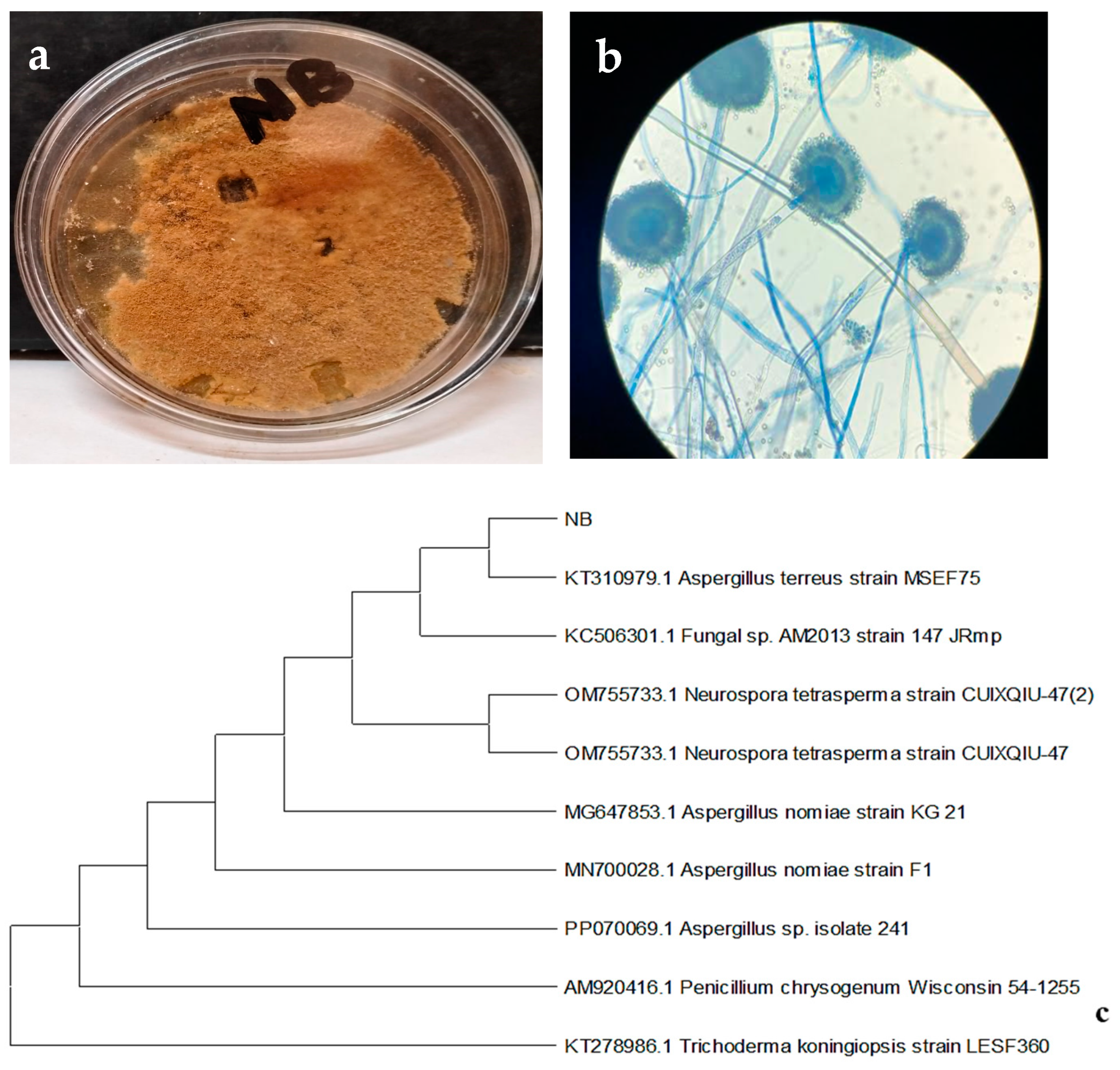
2.3. Characterization of the Selected Isolate
2.4. Identification Based on ITS Sequences and Phylogenetic Analysis
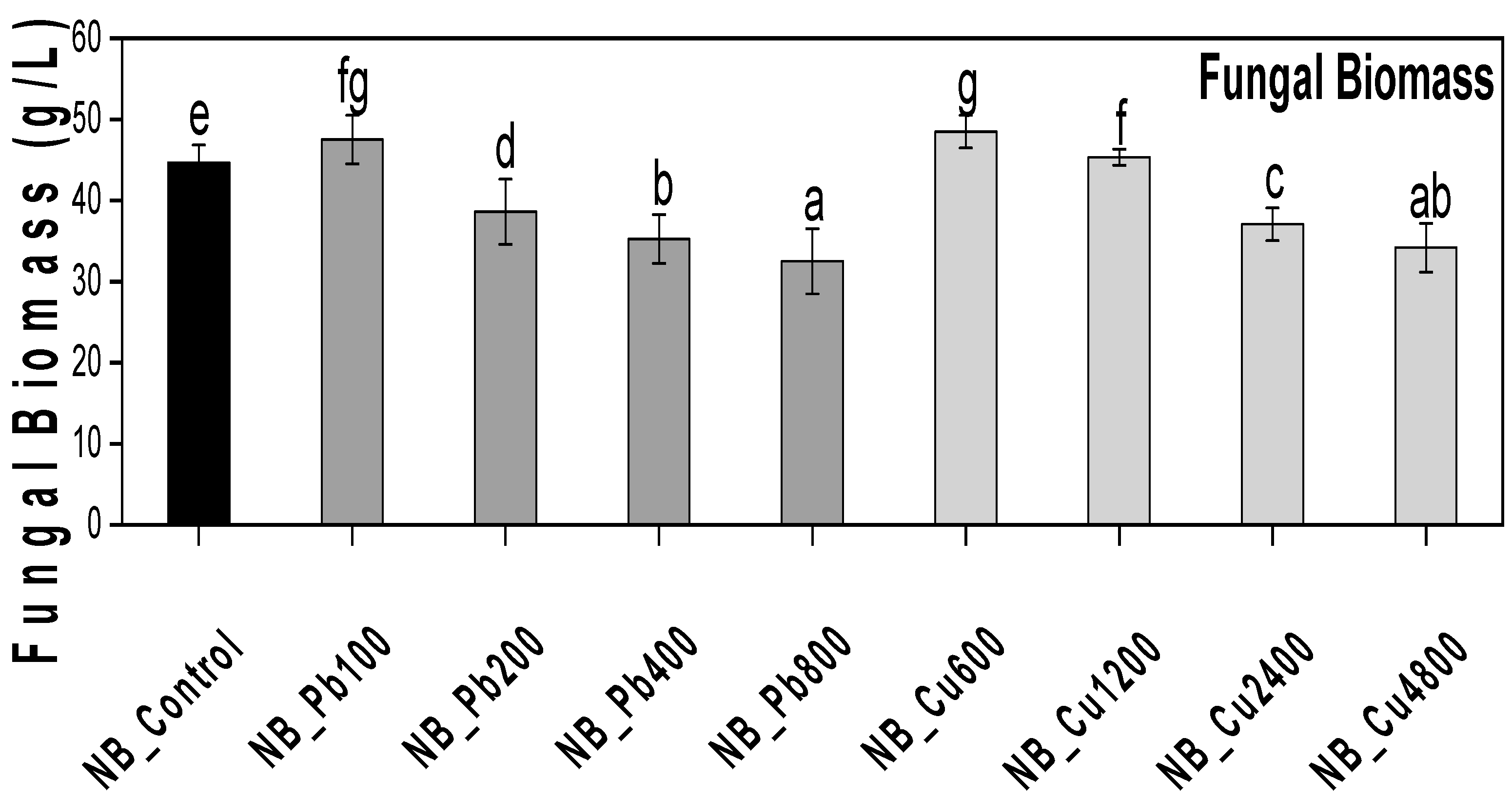
2.5. Effect of Lead Acetate and Copper Sulfate on Fungal Growth
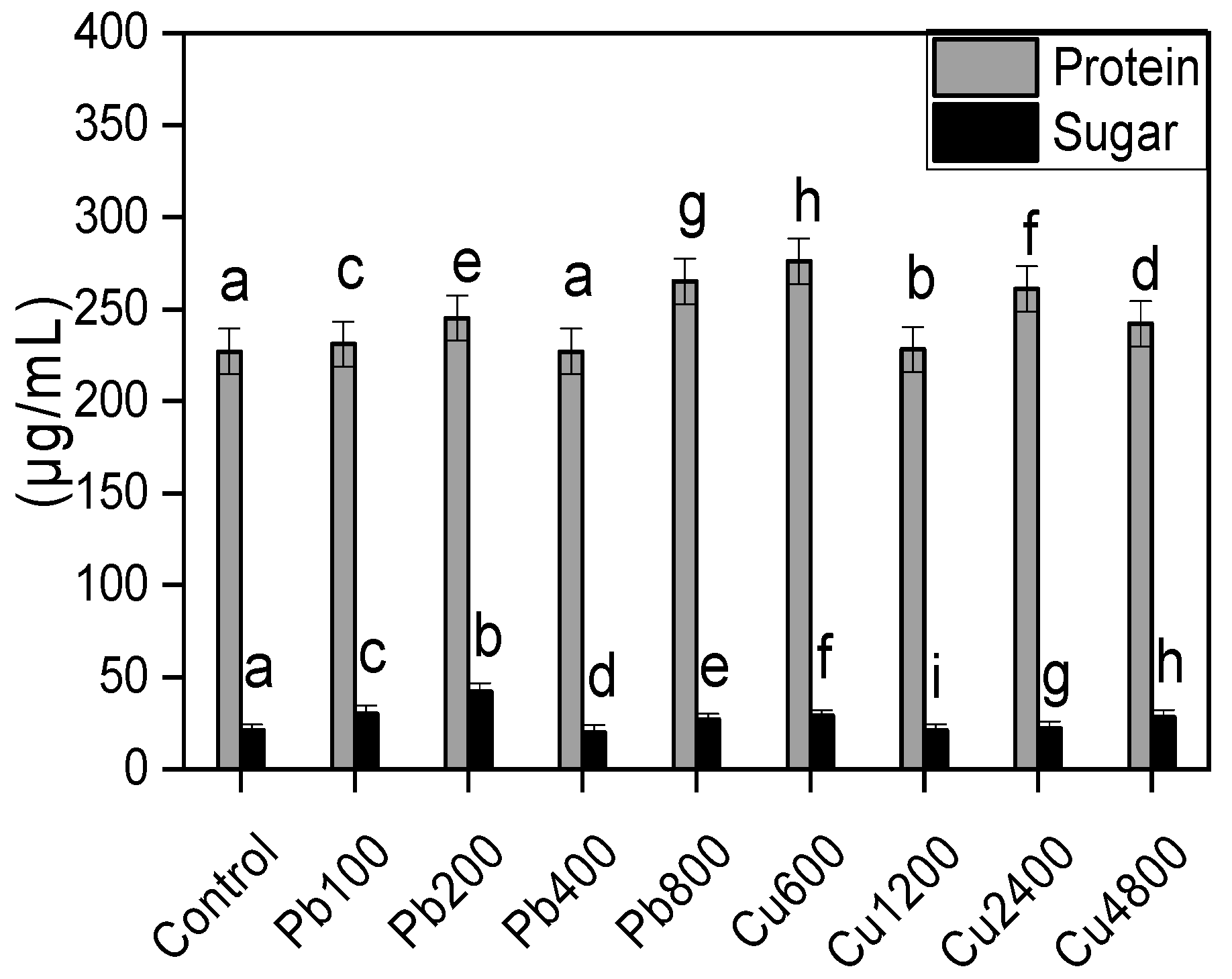
2.6. Release of Sugars and Proteins by the Rhizofungus
3. Growth of T. aestivum under Various Conditions
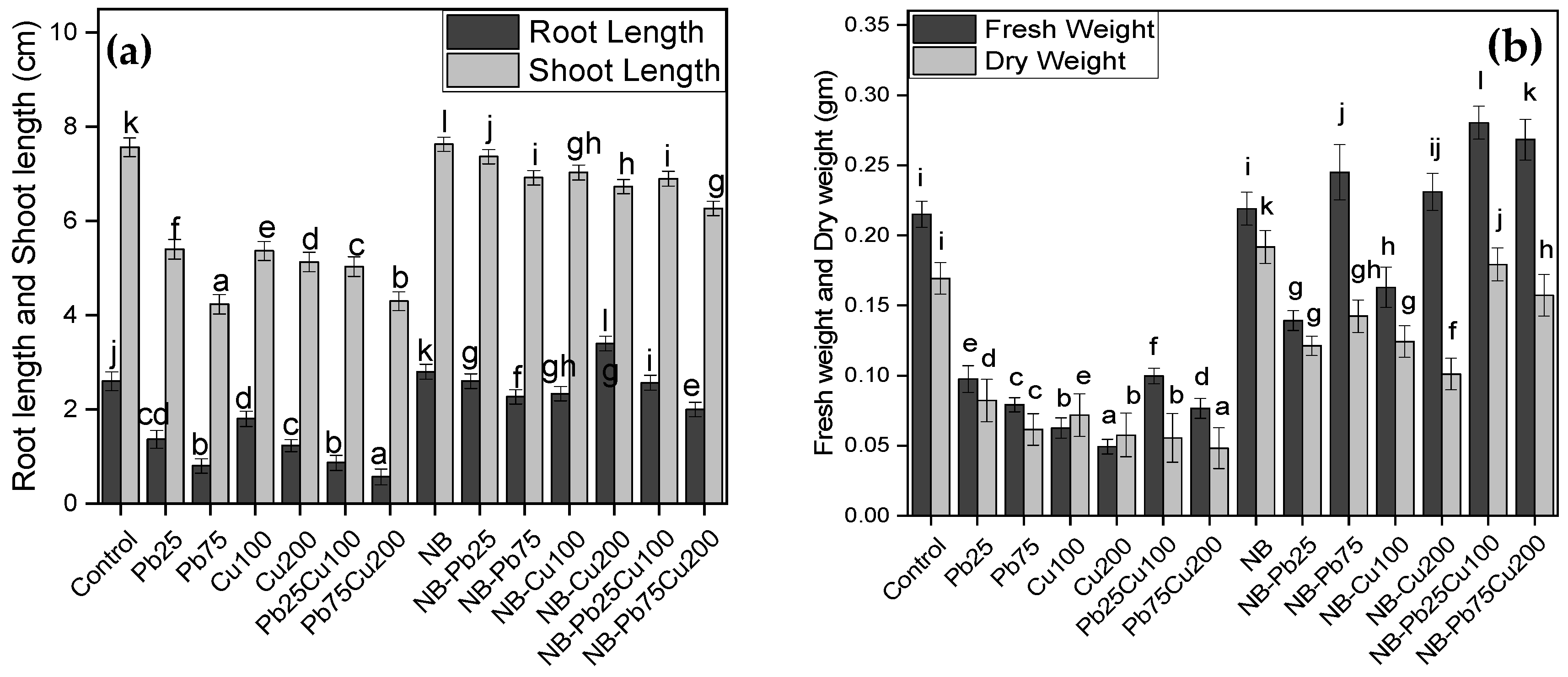
3.1. Shoot Length and Root Length
3.2. Fresh Weight and Dry Weight
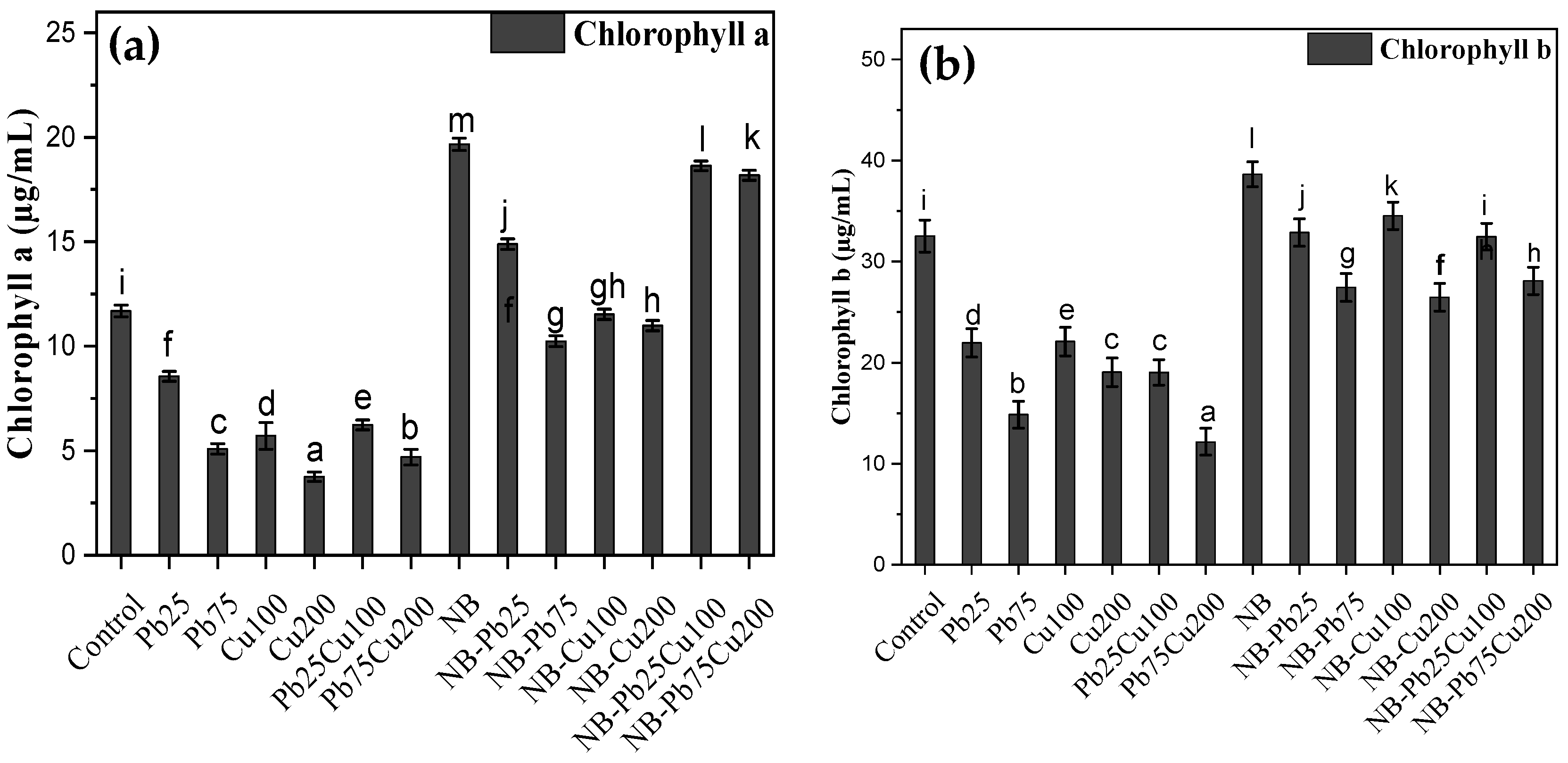
3.3. Chlorophyll a and b
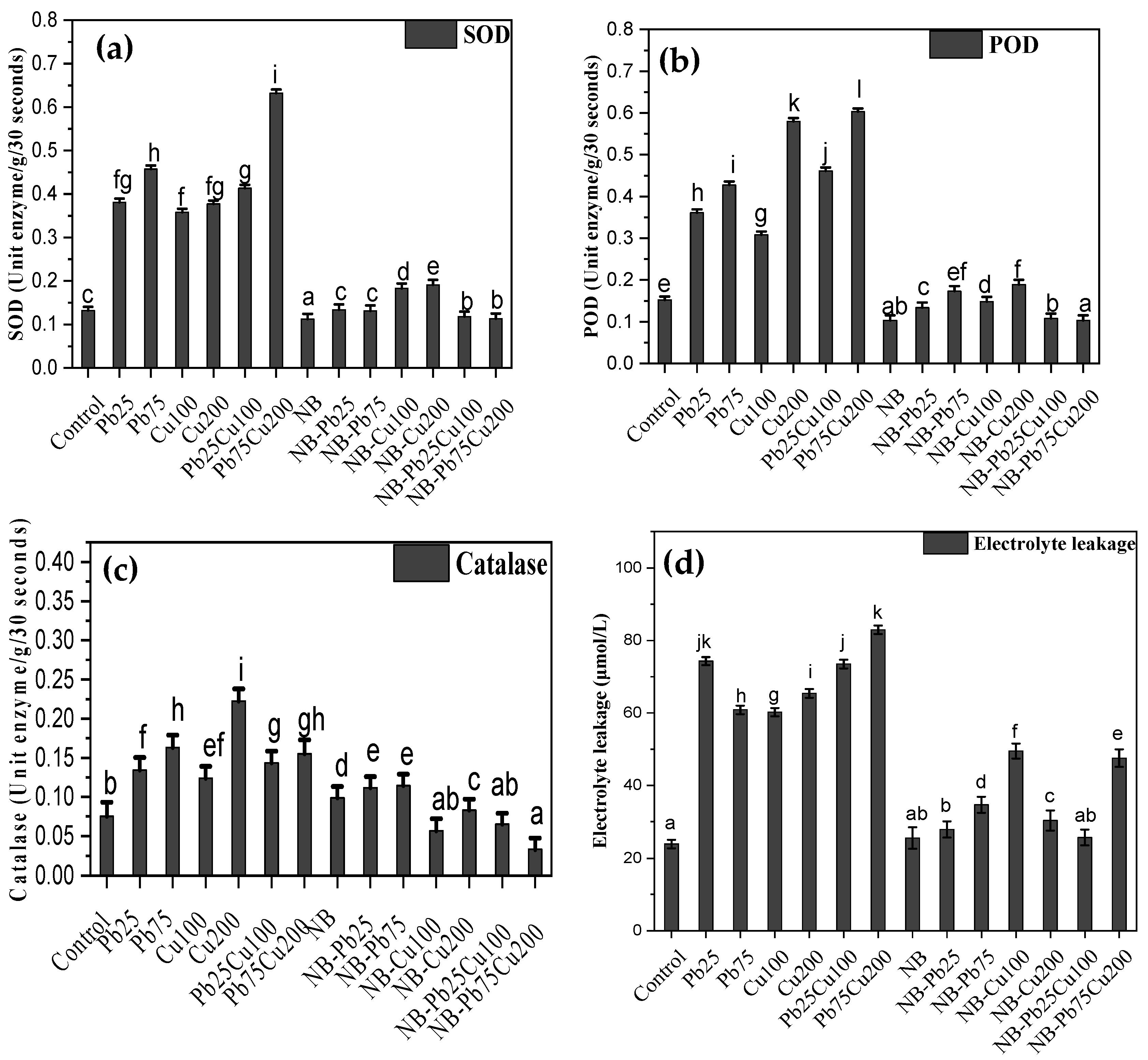
3.4. SOD, POD, CAT, and Electrolyte Leakage
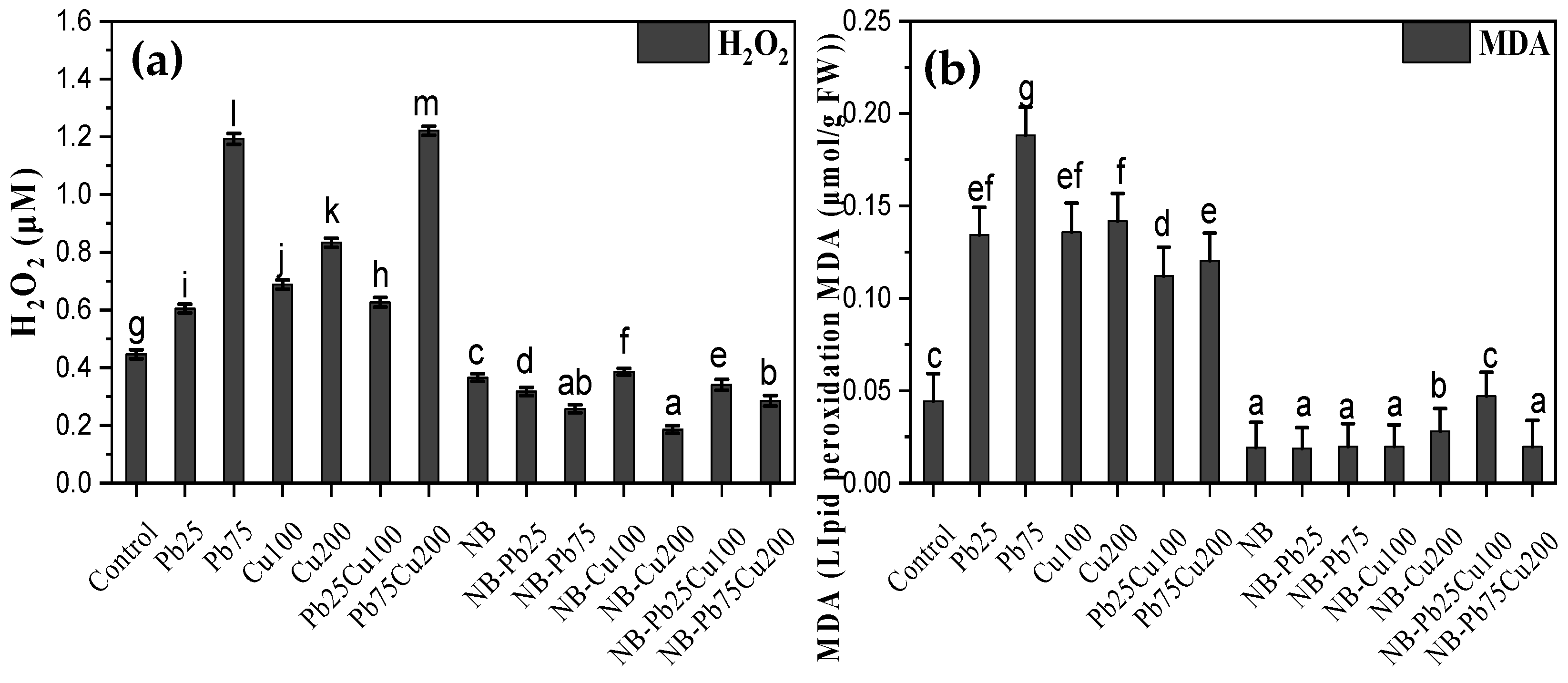
3.5. H2O2 and MDA Content
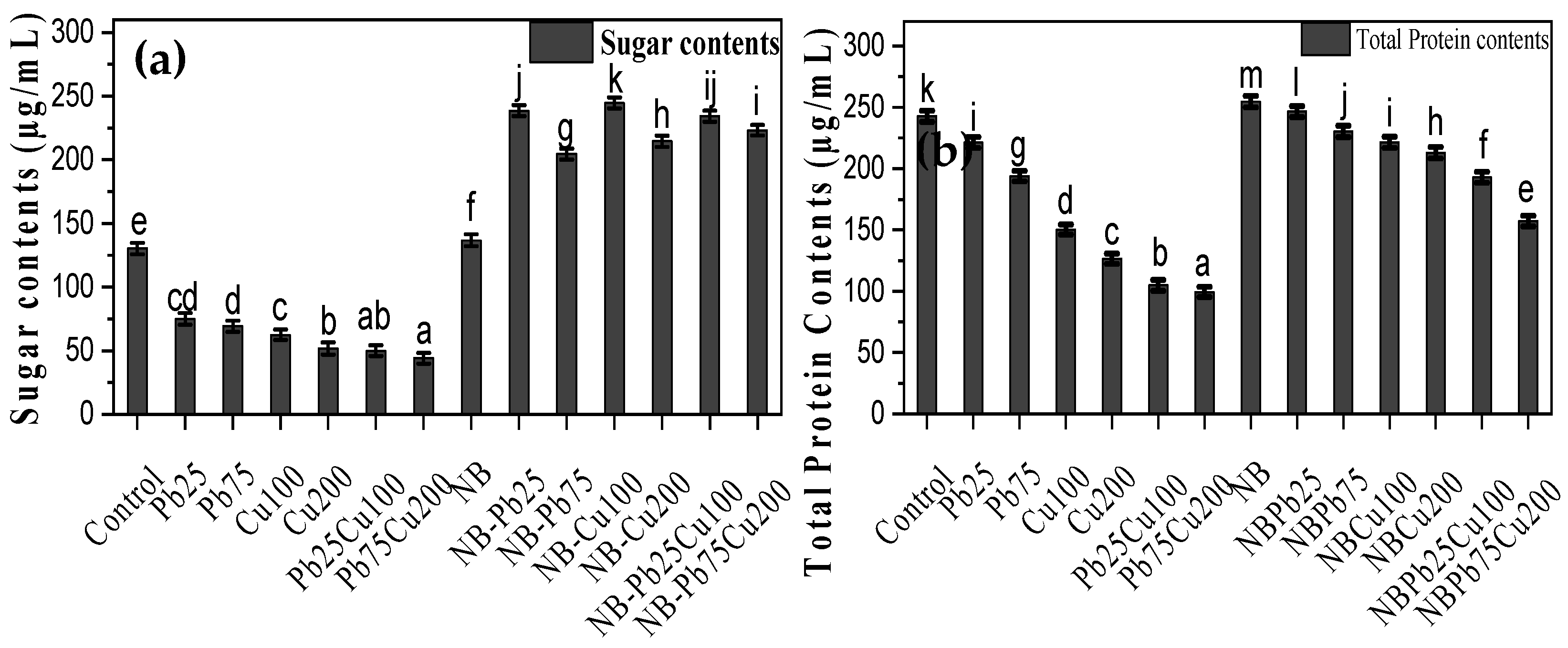
3.6. Sugar and Protein Content in Triticum aestivum L.
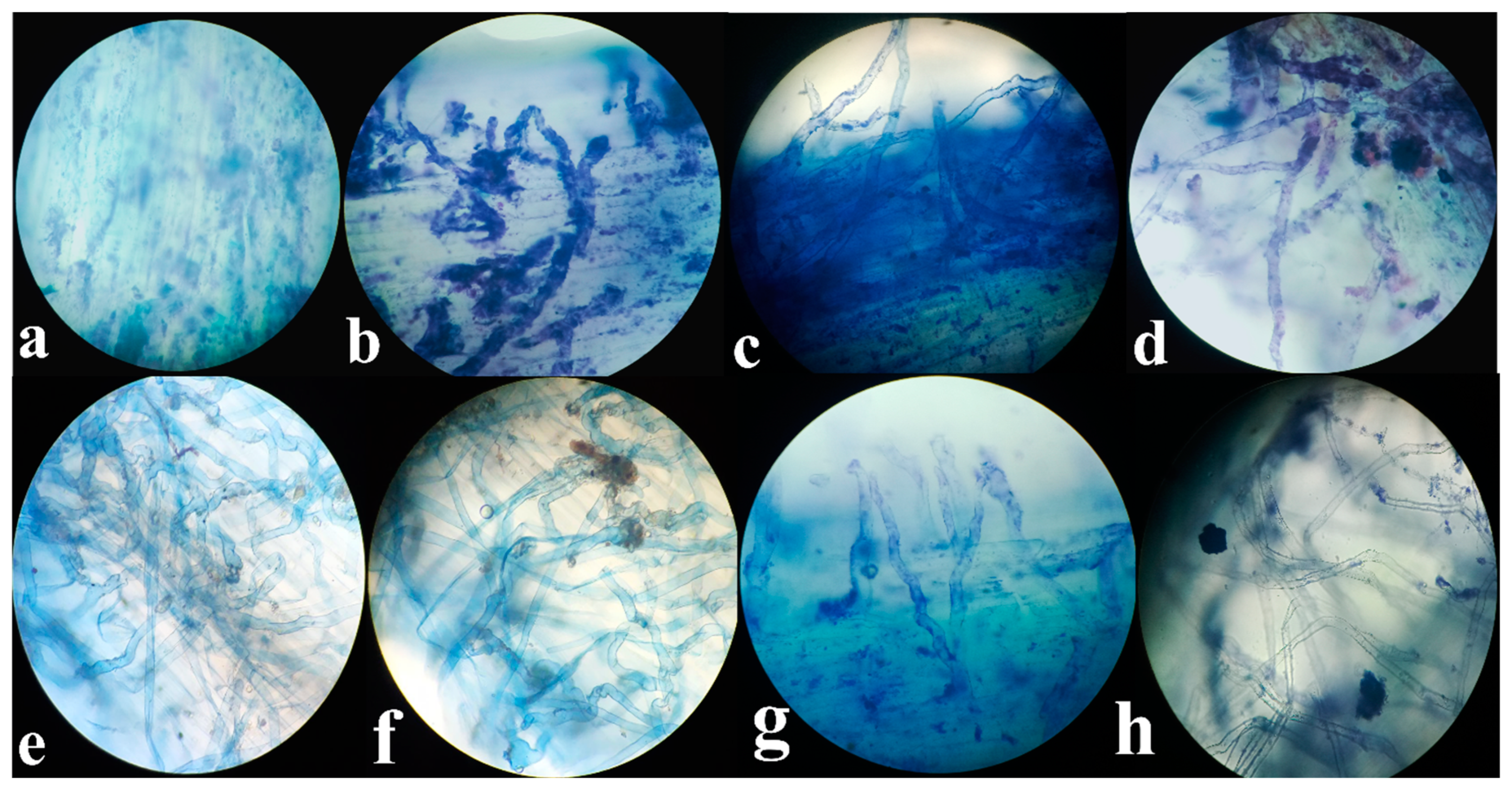
3.7. Rhizofungal Colonization in Roots of T. aestivum L.
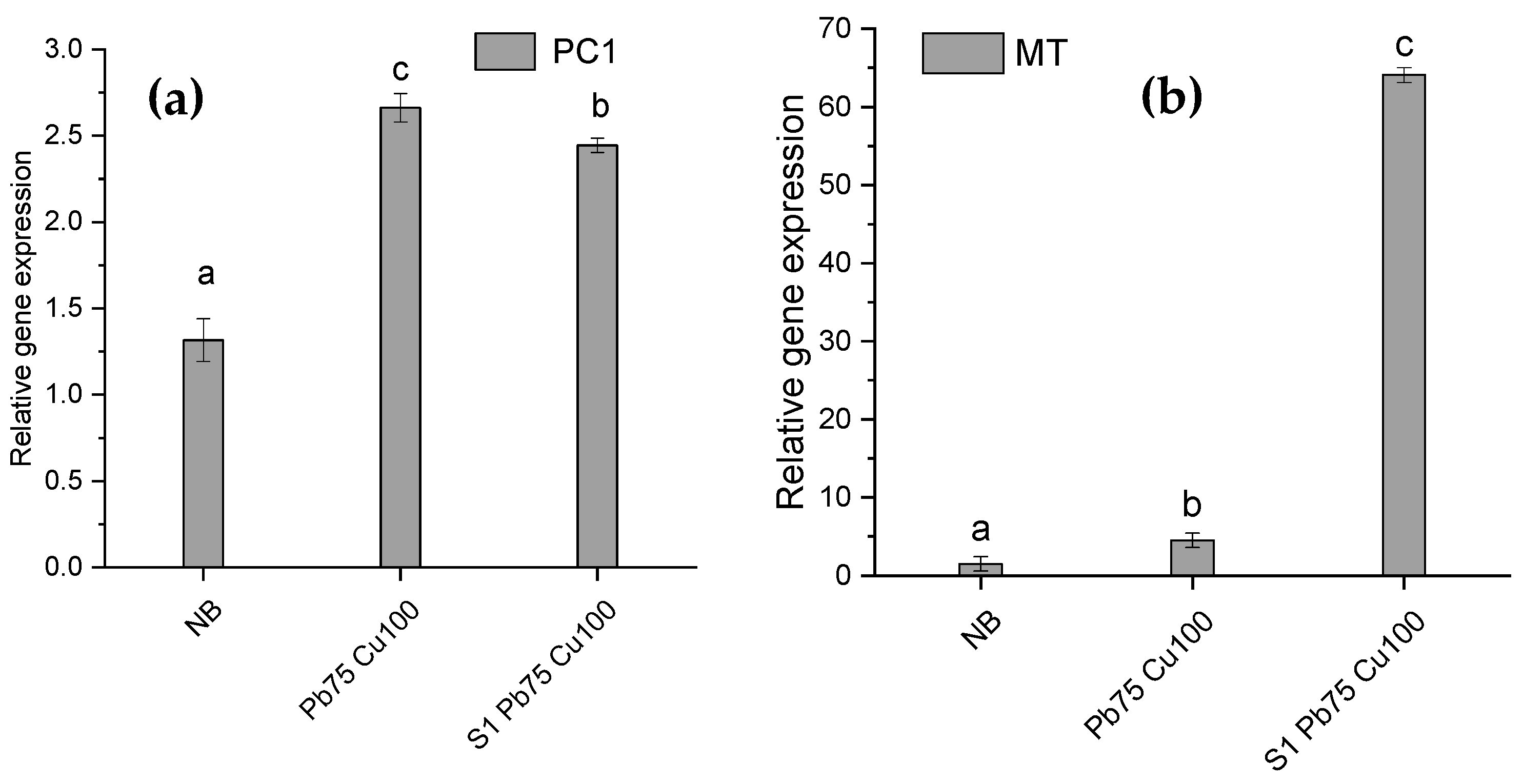
3.8. Expression of Phytochelatin and Metallothionein Genes under Heavy Metal Stress
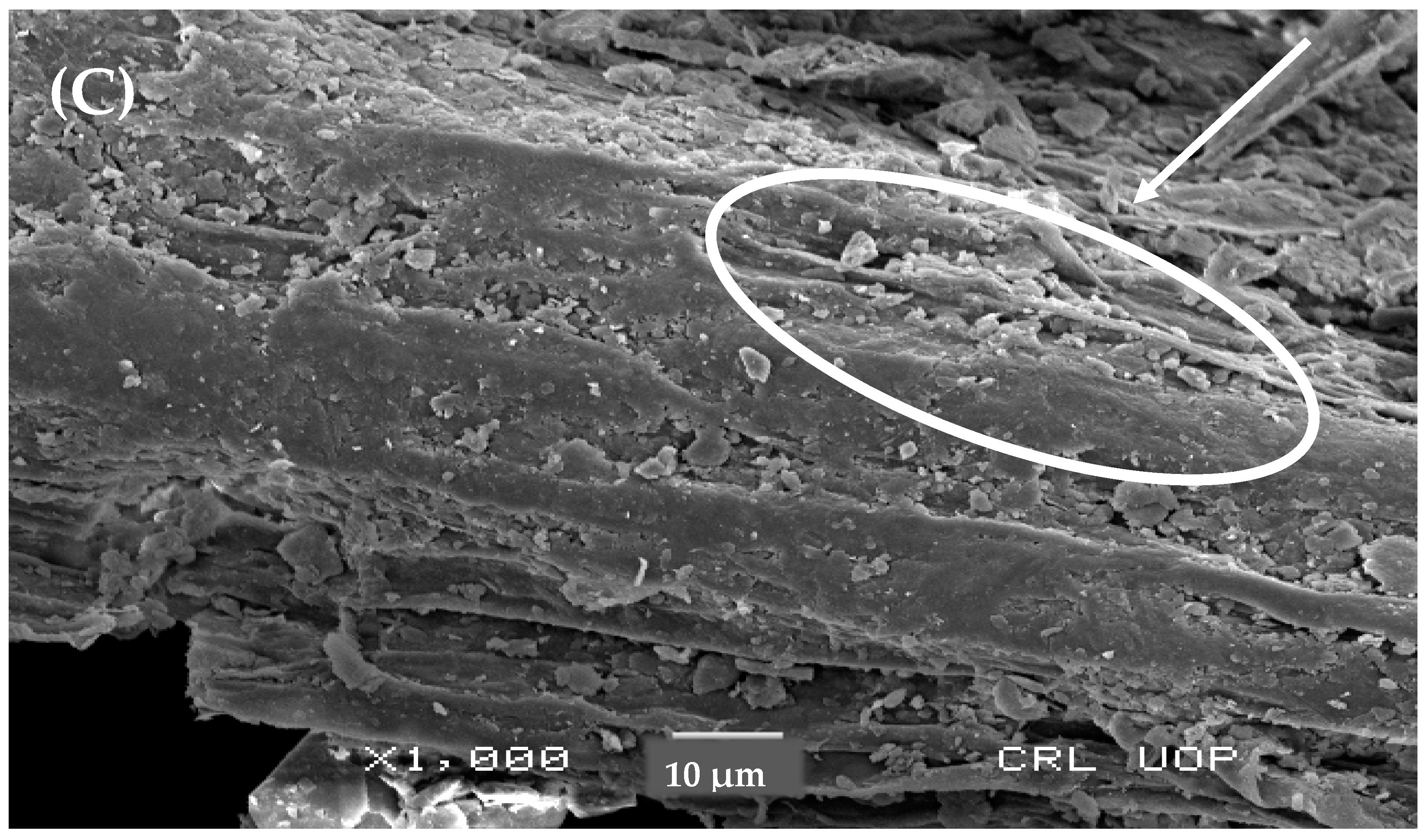
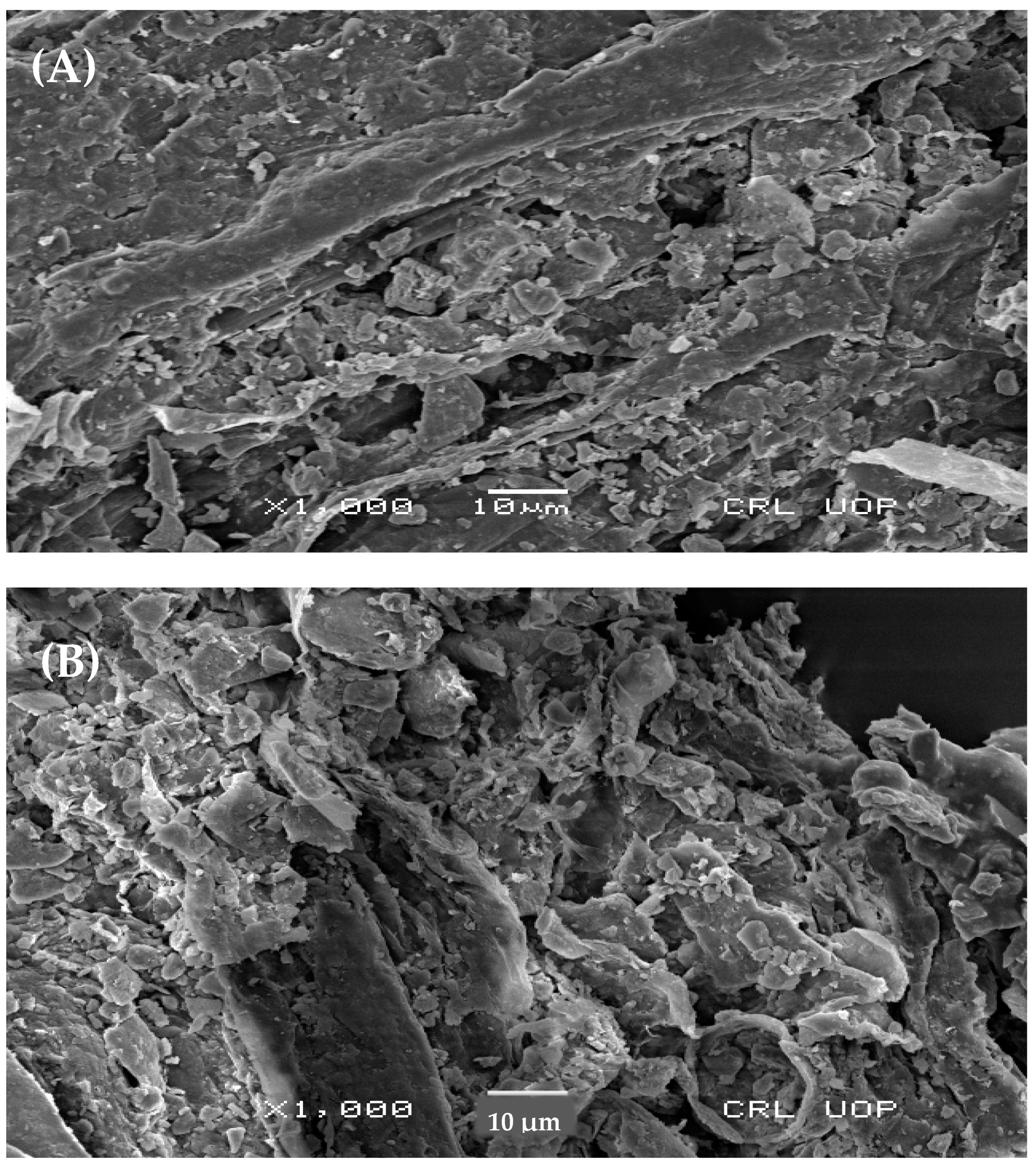
3.9. Scanning Electron Microscopy of Triticum aestivum L. Roots
3.10. Energy Dispersion Spectroscopy
4. Discussion
5. Materials and Methods
5.1. Isolation and Culturing of Rhizofungal Strains
5.2. Assessment of Fungal Isolates for Cu and Pb Tolerance
5.3. Molecular Identification of Rhizospheric Fungal Isolate
5.4. Experimental Design of Plant–Microbe Interaction Experiment
5.5. Growth Parameters of Wheat Seedlings
5.6. Estimation of Antioxidant Enzymes
5.7. Electrolyte Leakage
5.8. H2O2 Determination
5.9. The Malonaldehyde Content Analysis
5.10. Sugar and Protein Content
5.11. Root Colonization
5.12. Amplification of MT1 and PCS1 Genes
5.13. Expression Analysis of MT1 and PCS1 in T. aestivum L. under Lead and Copper Stress Condition
5.14. Scanning Electron Microscopy
5.15. Energy-Dispersion Spectroscopy (EDS)
5.16. Statistical Analysis
6. Conclusions
Supplementary Materials
Author Contributions
Funding
Informed Consent Statement
Data Availability Statement
Acknowledgments
Conflicts of Interest
References
- UNICEF. The State of Food Security and Nutrition in the World 2023; UNICEF: New York, NY, USA, 2023. [Google Scholar]
- Nagajyoti, P.C.; Lee, K.D.; Sreekanth, T.V.M. Heavy metals, occurrence and toxicity for plants: A review. Environ. Chem. Lett. 2010, 8, 199–216. [Google Scholar] [CrossRef]
- Zhang, M.; Wang, J. Copper bioavailability, uptake, toxicity, and tolerance in plants: A comprehensive review. Sci. Total Environ. 2019, 658, 618–629. [Google Scholar]
- Hall, J.Á. Cellular mechanisms for heavy metal detoxification and tolerance. J. Exp. Bot. 2002, 53, 1–11. [Google Scholar] [CrossRef] [PubMed]
- Chandra, R.; Kang, H. Mixed heavy metal stress on photosynthesis, transpiration rate, and chlorophyll content in poplar hybrids. For. Sci. Technol. 2015, 12, 55–61. [Google Scholar] [CrossRef]
- Sharma, P.; Dubey, R.S. Lead toxicity in plants. Braz. J. Plant Physiol. 2005, 17, 35–52. [Google Scholar] [CrossRef]
- Guo, Z.; Gao, Y.; Yuan, X.; Yuan, M.; Huang, L.; Wang, S.; Liu, C.E.; Duan, C. Effects of heavy metals on stomata in plants: A review. Int. J. Mol. Sci. 2023, 24, 9302. [Google Scholar] [CrossRef] [PubMed]
- Waterlot, C.; Pruvot, C.; Marot, F.; Douay, F. Impact of a phosphate amendment on the environmental availability and phytoavailability of Cd and Pb in moderately and highly carbonated kitchen garden soils. Pedosphere 2017, 27, 588–605. [Google Scholar] [CrossRef]
- Pandey, N.; Pathak, G.C.; Pandey, D.K.; Pandey, R. Heavy metals, Co, Ni, Cu, Zn and Cd, produce oxidative damage and evoke differential antioxidant responses in spinach. Braz. J. Plant Physiol. 2009, 21, 103–111. [Google Scholar] [CrossRef]
- Rahman, S.U.; Qin, A.; Zain, M.; Mushtaq, Z.; Mehmood, F.; Riaz, L.; Naveed, S.; Ansari, M.J.; Saeed, M.; Ahmad, I.; et al. Pb uptake, accumulation, and translocation in plants: Plant physiological, biochemical, and molecular response: A review. Heliyon 2024, 10, e27724. [Google Scholar] [CrossRef]
- Porter, S.K.; Scheckel, K.G.; Impellitteri, C.A.; Ryan, J.A. Toxic metals in the environment: Thermodynamic considerations for possible immobilization strategies for Pb, Cd, As, and Hg. Crit. Rev. Environ. Sci. Technol. 2004, 34, 495–604. [Google Scholar] [CrossRef]
- Koren’kov, V.D.; Bylina, N.N. Copper in soils and its bioavailability. Environ. Sci. Pollut. Res. 2009, 16, 579–585. [Google Scholar]
- Juang, K.W.; Lo, Y.C.; Chen, T.H.; Chen, B.C. Effects of copper on root morphology, cations accumulation, and oxidative stress of grapevine seedlings. Bull. Environ. Contam. Toxicol. 2019, 102, 873–879. [Google Scholar] [CrossRef] [PubMed]
- Arnon, D.I. Copper enzymes in isolated chloroplasts. Polyphenoloxidase in Beta vulgaris. Plant Physiol. 1949, 24, 1–15. [Google Scholar] [CrossRef] [PubMed]
- Hassan, W.; Zahra, Q.A.; Attia, K.A.; Bashir, S.; Fiaz, S.; Mohammed, A.A.; Mohy-Ud-Din, W.; Aslam, Z.; Hafez, Y.M.; Chen, Z. Assessing the impact of copper toxicity on soil ecosystems and barley growth: Identification of robust indicators. Environ. Monit. Assess. 2025, 197, 563. [Google Scholar] [CrossRef] [PubMed]
- Azhar, U.; Ahmad, H.; Shafqat, H.; Babar, M.; Munir, H.M.S.; Sagir, M.; Arif, M.; Hassan, A.; Rachmadona, N.; Rajendran, S.; et al. Remediation techniques for elimination of heavy metal pollutants from soil: A review. Environ. Res. 2022, 214, 113918. [Google Scholar] [CrossRef] [PubMed]
- Jeyakumar, P.; Debnath, C.; Vijayaraghavan, R.; Muthuraj, M. Trends in bioremediation of heavy metal contaminations. Environ. Eng. Res. 2023, 28, 220631. [Google Scholar]
- Mohapatra, D.; Rath, S.K.; Mohapatra, P.K. Soil fungi for bioremediation of pesticide toxicants: A perspective. Geomicrobiol. J. 2022, 39, 352–372. [Google Scholar]
- Dhalaria, R.; Kumar, D.; Kumar, H.; Nepovimova, E.; Kuča, K.; Torequl Islam, M.; Verma, R. Arbuscular mycorrhizal fungi as potential agents in ameliorating heavy metal stress in plants. Agronomy 2020, 10, 815. [Google Scholar] [CrossRef]
- Bi, Y.; Xiao, L.; Liu, R. Response of arbuscular mycorrhizal fungi and phosphorus solubilizing bacteria to remediation abandoned solid waste of coal mine. Int. J. Coal Sci. Technol. 2019, 6, 603–610. [Google Scholar] [CrossRef]
- Hassan, N.; Khalaphallah, R. Root rot/wilt incidence of Phaseolus vulgaris and antagonistic effect of Trichoderma spp. and Aspergillus terreus isolated from rhizosphere soil. SVU Int. J. Agric. Sci. 2023, 5, 26–37. [Google Scholar]
- Wijeratne, E.K.; Turbyville, T.J.; Zhang, Z.; Bigelow, D.; Pierson, L.S.; VanEtten, H.D.; Whitesell, L.; Canfield, L.M.; Gunatilaka, A.L. Cytotoxic constituents of Aspergillus terreus from the rhizosphere of Opuntia versicolor of the Sonoran desert. J. Nat. Prod. 2003, 66, 1567–1573. [Google Scholar] [CrossRef] [PubMed]
- Gao, H.; Guo, W.; Wang, Q.; Zhang, L.; Zhu, M.; Zhu, T.; Gu, Q.; Wang, W.; Li, D. Aspulvinones from a mangrove rhizosphere soil-derived fungus Aspergillus terreus Gwq-48 with anti-influenza A viral (H1N1) activity. Bioorg. Med. Chem. Lett. 2013, 23, 1776–1778. [Google Scholar] [PubMed]
- Akbar, M.; El-Sabrout, A.M.; Shokralla, S.; Mahmoud, E.A.; Elansary, H.O.; Akbar, F.; Din, B.U.; Haroon, U.; Ali, M.; Saleem, H.; et al. Preservation and recovery of metal-tolerant fungi from industrial soil and their application to improve germination and growth of wheat. Sustainability 2022, 14, 5531. [Google Scholar] [CrossRef]
- Afzal, S.; Chaudhary, N.; Singh, N.K. Role of soluble sugars in metabolism and sensing under abiotic stress. In Plant Growth Regulators: Signalling Under Stress Conditions; Springer: Cham, Switzerland, 2021; pp. 305–334. [Google Scholar]
- Cobbett, C.; Goldsbrough, P. Phytochelatins and metallothioneins: Roles in heavy metal detoxification and homeostasis. Annu. Rev. Plant Biol. 2002, 53, 159–182. [Google Scholar] [CrossRef] [PubMed]
- Rahim, W.; Khan, M.; Al Azzawi, T.N.I.; Pande, A.; Methela, N.J.; Ali, S.; Imran, M.; Lee, D.S.; Lee, G.M.; Mun, B.G.; et al. Exogenously applied sodium nitroprusside mitigates lead toxicity in rice by regulating antioxidants and metal stress-related transcripts. Int. J. Mol. Sci. 2022, 23, 9729. [Google Scholar] [CrossRef] [PubMed]
- Demidchik, V.; Straltsova, D.; Medvedev, S.S.; Pozhvanov, G.A.; Sokolik, A.; Yurin, V. Stress-induced electrolyte leakage: The role of K+-permeable channels and involvement in programmed cell death and metabolic adjustment. J. Exp. Bot. 2014, 65, 1259–1270. [Google Scholar] [PubMed]
- Li, H.; Guo, C.; Su, F.; Li, L. Effects of cadmium on superoxide dismutase activity in reed leaves. Nat. Environ. Pollut. Technol. 2022, 21, 1389–1393. [Google Scholar] [CrossRef]
- Kong, W.; Liu, F.; Zhang, C.; Zhang, J.; Feng, H. Non-destructive determination of malondialdehyde (MDA) distribution in oilseed rape leaves by laboratory scale NIR hyperspectral imaging. Sci. Rep. 2016, 6, 35393. [Google Scholar] [CrossRef] [PubMed]
- Chi, M.H.; Park, S.Y.; Lee, Y.H. A quick and safe method for fungal DNA extraction. Plant Pathol. J. 2009, 25, 108–111. [Google Scholar] [CrossRef]
- Asim, S.; Hussain, A.; Murad, W.; Hamayun, M.; Iqbal, A.; Rehman, H.; Tawab, A.; Irshad, M.; Alataway, A.; Dewidar, A.Z.; et al. Endophytic Fusarium oxysporum GW controlling weed and an effective biostimulant for wheat growth. Front. Plant Sci. 2022, 13, 922343. [Google Scholar] [CrossRef] [PubMed]
- Tamura, K.; Dudley, J.; Nei, M.; Kumar, S. MEGA4: Molecular evolutionary genetics analysis (MEGA) software version 4.0. Mol. Biol. Evol. 2007, 24, 1596–1599. [Google Scholar] [CrossRef] [PubMed]
- Alici, E.H.; Arabaci, G. Determination of SOD, POD, PPO and CAT enzyme activities in Rumex obtusifolius L. Annu. Res. Rev. Biol. 2016, 11, 1–7. [Google Scholar]
- Bajji, M.; Kinet, J.M.; Lutts, S. The use of the electrolyte leakage method for assessing cell membrane stability as a water stress tolerance test in durum wheat. Plant Growth Regul. 2002, 36, 61–70. [Google Scholar] [CrossRef]
- Velikova, V.; Yordanov, I.; Edreva, A. Oxidative stress and some antioxidant systems in acid rain-treated bean plants: Protective role of exogenous polyamines. Plant Sci. 2000, 151, 59–66. [Google Scholar]
- Heath, R.L.; Packer, L. Photoperoxidation in isolated chloroplasts. I. Kinetics and stoichiometry of fatty acid peroxidation. Arch. Biochem. Biophys. 1968, 125, 189–198. [Google Scholar] [PubMed]
- Dubois, M.; Gilles, K.A.; Hamilton, J.K.; Rebers, P.T.; Smith, F. Colorimetric method for determination of sugars and related substances. Anal. Chem. 1956, 28, 350–356. [Google Scholar] [CrossRef]
- Bradford, M.M. A rapid and sensitive method for the quantitation of microgram quantities of protein utilizating the principle of protein dyes binding. Anal. Biochem. 1976, 72, 248–254. [Google Scholar] [PubMed]
- Larone, D.H. Medically Important Fungi: A Guide to Identification; Elsevier: New York, NY, USA, 1987. [Google Scholar]







| Condition | Treatments | µg/mL |
|---|---|---|
| Normal condition | Control | Untreated |
| Copper and lead stress | Pb25 | 25 µg/mL |
| Pb75 | 75 µg/mL | |
| Cu100 | 100 µg/mL | |
| Cu200 | 200 µg/mL | |
| Pb25 + Cu100 | 25 µg/mL + 100 µg/mL | |
| Pb75 + Cu200 | 75 µg/mL + 200 µg/mL | |
| Fungal inoculation | NB (Rhizofungus) | 5 g |
| NB + Pb25 | 25 µg/mL | |
| NB + Pb75 | 75 µg/mL | |
| NB + Cu100 | 100 µg/mL | |
| NB + Cu200 | 200 µg/mL | |
| NB + Pb25 + Cu100 | 25 µg/mL + 100 µg/mL | |
| NB + Pb75 + Cu200 | 75 µg/mL + 200 µg/mL |
Disclaimer/Publisher’s Note: The statements, opinions and data contained in all publications are solely those of the individual author(s) and contributor(s) and not of MDPI and/or the editor(s). MDPI and/or the editor(s) disclaim responsibility for any injury to people or property resulting from any ideas, methods, instructions or products referred to in the content. |
© 2024 by the authors. Licensee MDPI, Basel, Switzerland. This article is an open access article distributed under the terms and conditions of the Creative Commons Attribution (CC BY) license (https://creativecommons.org/licenses/by/4.0/).
Share and Cite
Dilawar, N.; Hamayun, M.; Iqbal, A.; Lee, B.; Ali, S.; Ahmad, A.; Alrefaei, A.F.; Faraj, T.K.; Kim, H.-Y.; Hussain, A. Rhizofungus Aspergillus terreus Mitigates Heavy Metal Stress-Associated Damage in Triticum aestivum L. Plants 2024, 13, 2643. https://doi.org/10.3390/plants13182643
Dilawar N, Hamayun M, Iqbal A, Lee B, Ali S, Ahmad A, Alrefaei AF, Faraj TK, Kim H-Y, Hussain A. Rhizofungus Aspergillus terreus Mitigates Heavy Metal Stress-Associated Damage in Triticum aestivum L. Plants. 2024; 13(18):2643. https://doi.org/10.3390/plants13182643
Chicago/Turabian StyleDilawar, Naveen, Muhammad Hamayun, Amjad Iqbal, Bokyung Lee, Sajid Ali, Ayaz Ahmad, Abdulwahed Fahad Alrefaei, Turki Kh. Faraj, Ho-Youn Kim, and Anwar Hussain. 2024. "Rhizofungus Aspergillus terreus Mitigates Heavy Metal Stress-Associated Damage in Triticum aestivum L." Plants 13, no. 18: 2643. https://doi.org/10.3390/plants13182643
APA StyleDilawar, N., Hamayun, M., Iqbal, A., Lee, B., Ali, S., Ahmad, A., Alrefaei, A. F., Faraj, T. K., Kim, H.-Y., & Hussain, A. (2024). Rhizofungus Aspergillus terreus Mitigates Heavy Metal Stress-Associated Damage in Triticum aestivum L. Plants, 13(18), 2643. https://doi.org/10.3390/plants13182643