
Article

Plant Genotype Shapes the Soil Nematode Community in the Rhizosphere of Tomatoes with Different Resistance to Meloidognye incognita

1
College of Biology and Food Engineering, China Three Gorges University, Yichang 443005, China
2
School of Advanced Agriculture and Bioengineering, Yangtze Normal University, Chongqing 408102, China
3
Henan Engineering Research Center of Biological Pesticide & Fertilizer Development and Synergistic Application, Henan Institute of Science and Technology, Xinxiang 453600, China
*
Author to whom correspondence should be addressed.
Plants 2023, 12(7), 1528; https://doi.org/10.3390/plants12071528

Submission received: 14 February 2023 / Revised: 28 March 2023 / Accepted: 29 March 2023 / Published: 1 April 2023
(This article belongs to the Special Issue Interactions between Crops and Obligate Plant Pathogenic Parasites)

Abstract

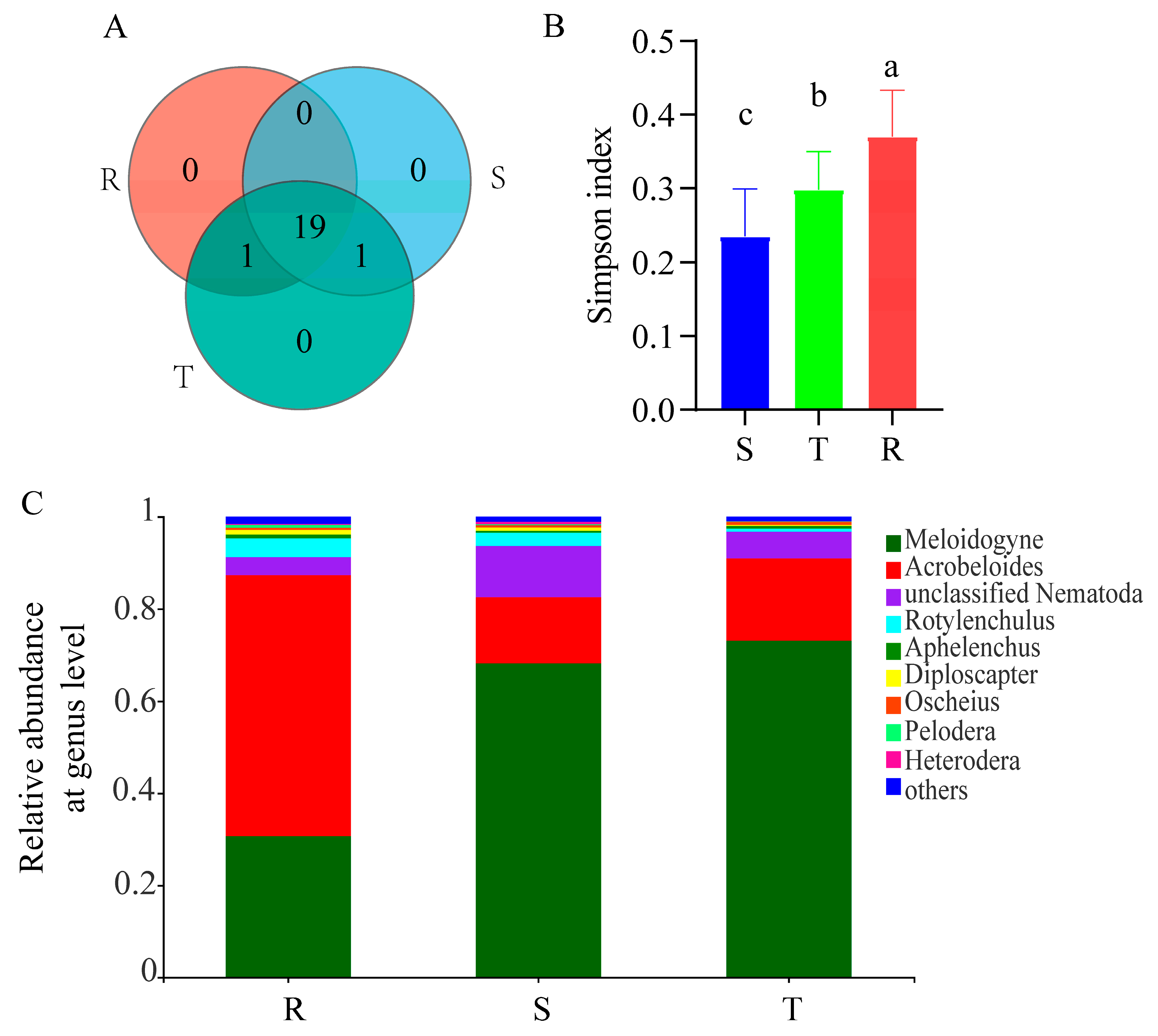
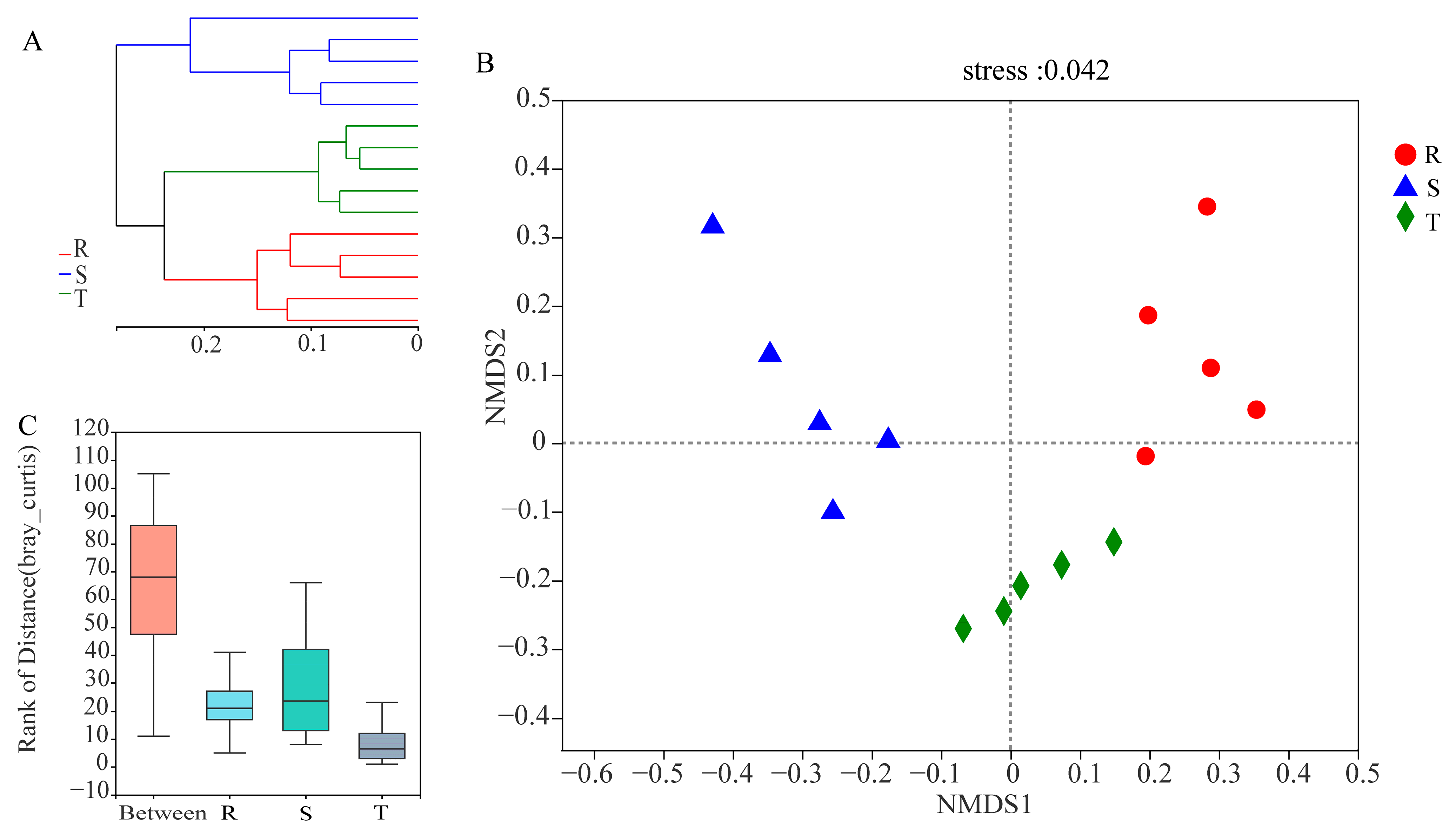
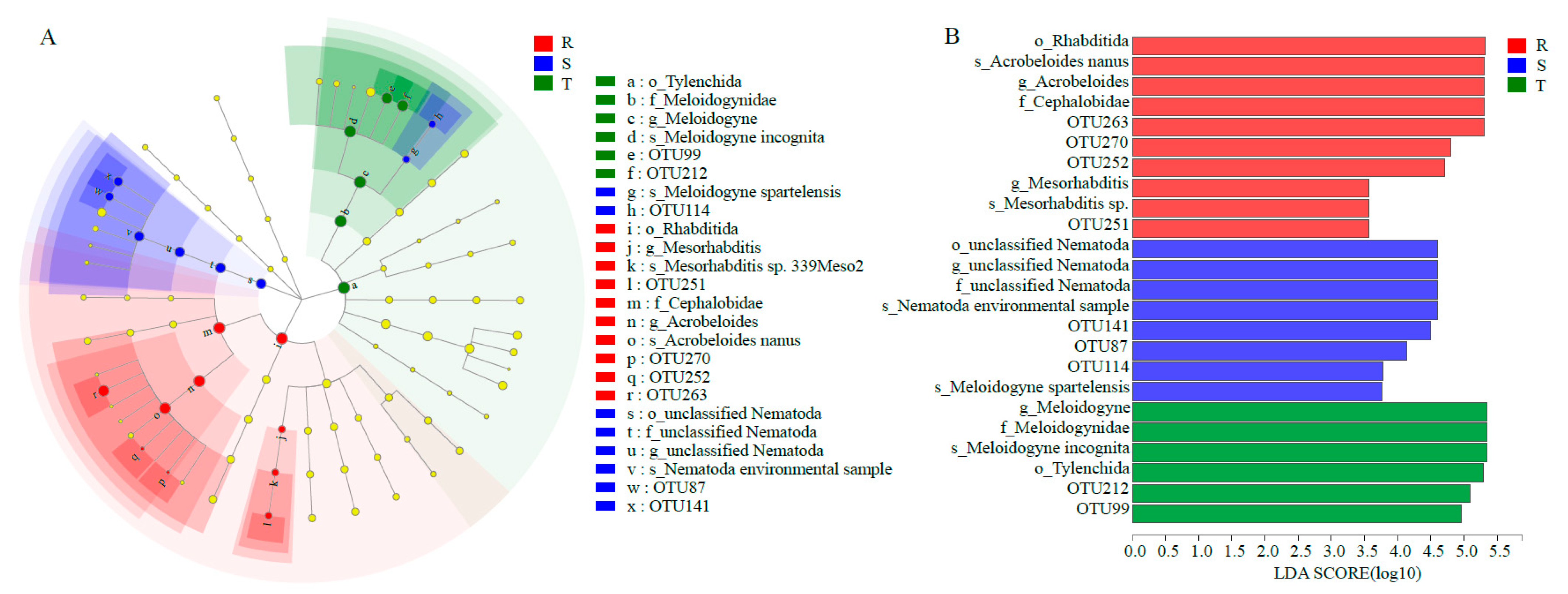
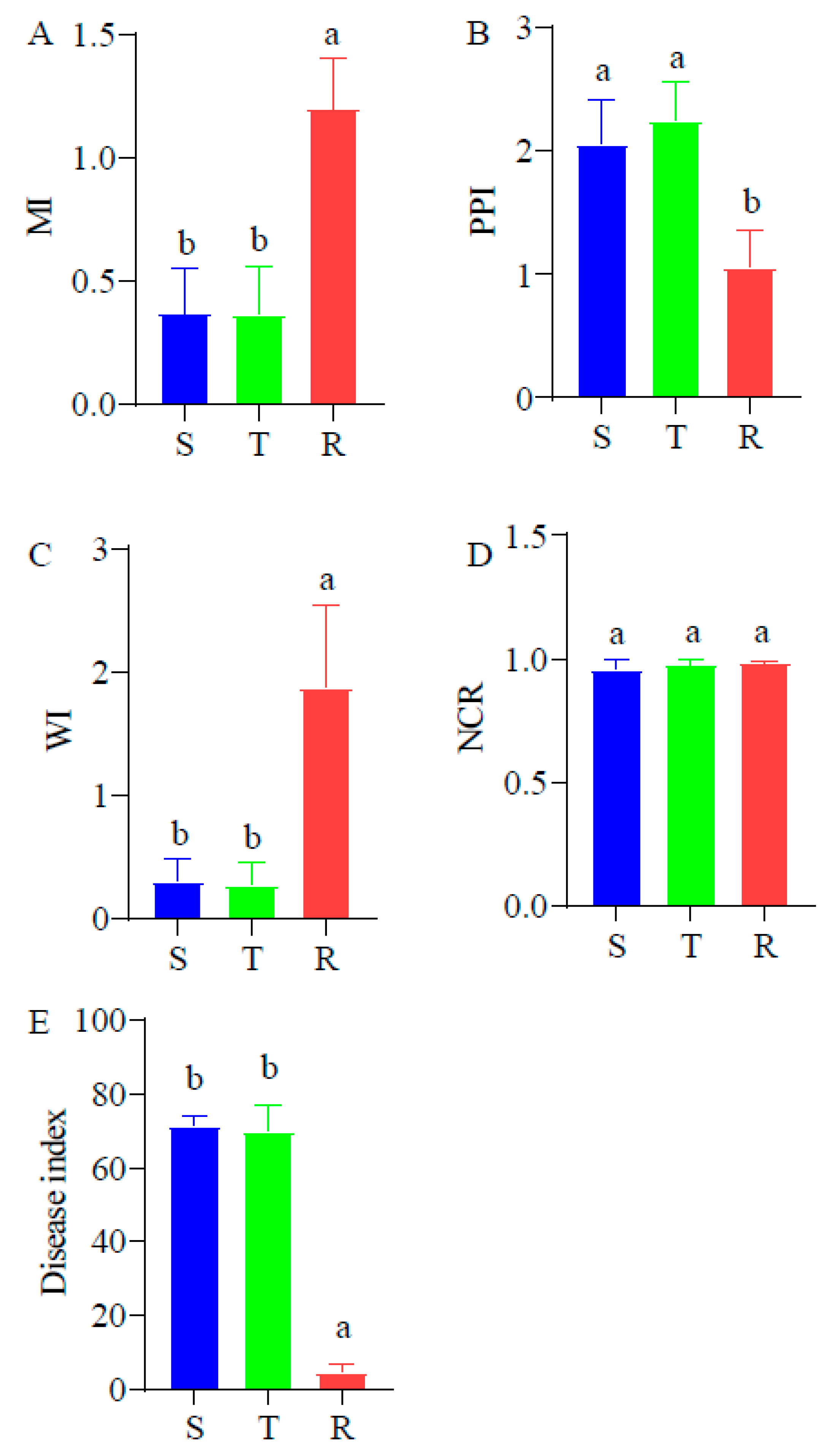
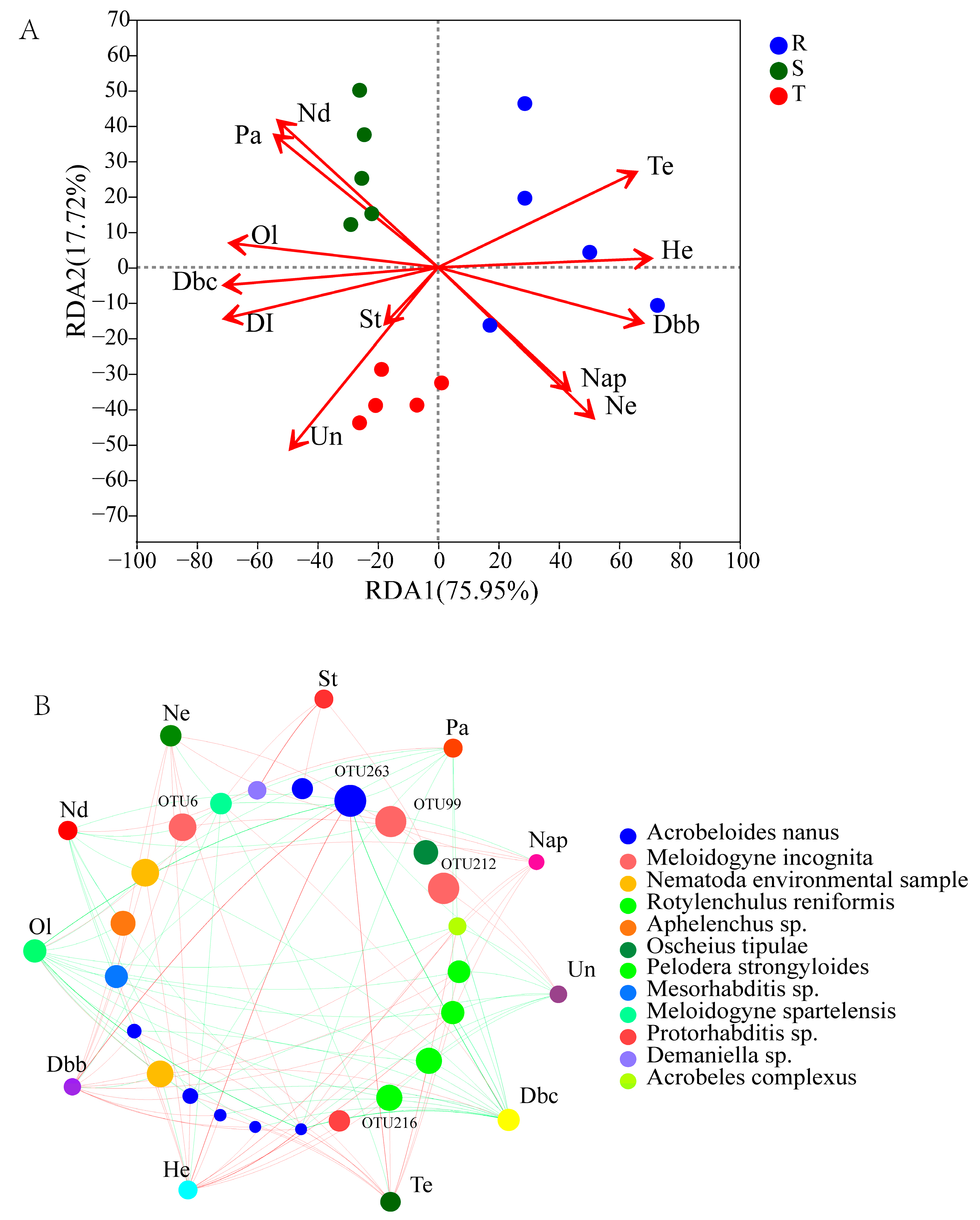
Soil nematodes are considered indicators of soil quality due to their immediate responses to changes in the soil environment and plants. However, little is known about the effects of plant genotypes on the soil nematode community. To elucidate this, high-throughput sequencing and gas chromatography/mass spectrometry analysis was conducted to analyze the soil nematode community and the structure of root exudates in the rhizosphere of tomatoes with different resistance to Meloidognye incognita. The dominant soil nematode group in the soil of resistant tomatoes was Acrobeloides, while the soil nematode group in the rhizosphere of the susceptible and tolerant tomatoes was Meloidognye. Hierarchical clustering analysis and non-metric multidimensional scaling showed that the three soil nematode communities were clustered into three groups according to the resistance level of the tomato cultivars. The soil nematode community of the resistant tomatoes had a higher maturity index and a low plant-parasite index, Wasilewska index and disease index compared to the values of the susceptible and tolerant tomatoes. Redundancy analysis revealed that the disease index and root exudates were strongly related to the soil nematode community of three tomato cultivars. Taken together, the resistance of the tomato cultivars and root exudates jointly shapes the soil nematode community. This study provided a valuable contribution to understanding the mechanism of plant genotypes shaping the soil nematode community.
Keywords: soil nematode; root exudate; tomato; cultivar; resistance soil nematode; root exudate; tomato; cultivar; resistance