Review

Plant Essential Oils as Biopesticides: Applications, Mechanisms, Innovations, and Constraints

1
Department of Botany, Faculty of Science, Panjab University, Chandigarh 160014, India
2
Department of Biotechnology, Vels Institute of Science, Technology & Advanced Studies, Pallavaram, Chennai 600117, India
3
Department of Environment Studies, Faculty of Science, Panjab University, Chandigarh 160014, India
4
Department of Botany, Khalsa College for Women, Civil Lines, Ludhiana 141001, India
*
Authors to whom correspondence should be addressed.
Plants 2023, 12(16), 2916; https://doi.org/10.3390/plants12162916

Submission received: 18 July 2023 / Revised: 1 August 2023 / Accepted: 10 August 2023 / Published: 10 August 2023
(This article belongs to the Section Phytochemistry)

Abstract

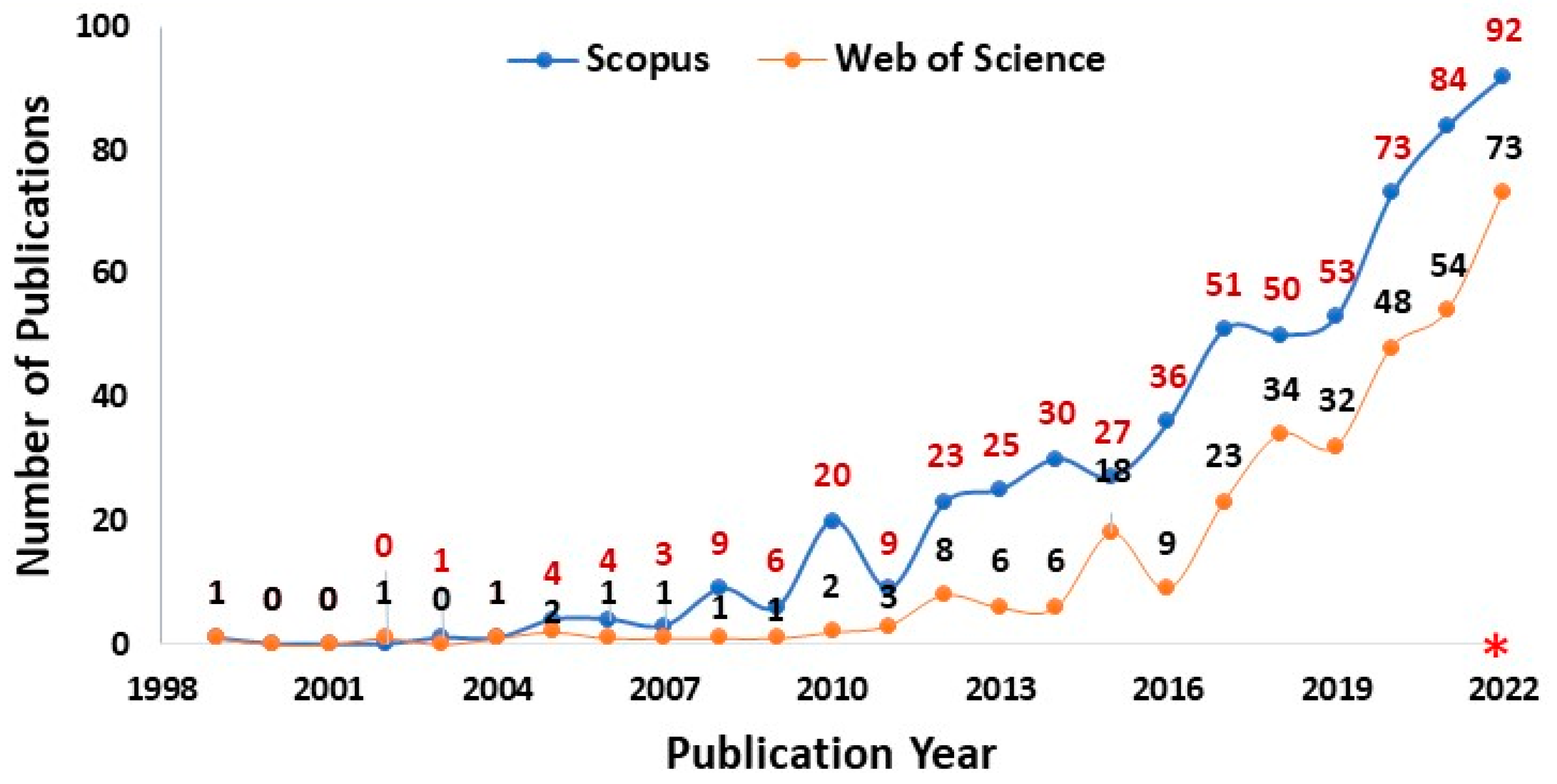
The advent of the “Green Revolution” was a great success in significantly increasing crop productivity. However, it involved high ecological costs in terms of excessive use of synthetic agrochemicals, raising concerns about agricultural sustainability. Indiscriminate use of synthetic pesticides resulted in environmental degradation, the development of pest resistance, and possible dangers to a variety of nontarget species (including plants, animals, and humans). Thus, a sustainable approach necessitates the exploration of viable ecofriendly alternatives. Plant-based biopesticides are attracting considerable attention in this context due to their target specificity, ecofriendliness, biodegradability, and safety for humans and other life forms. Among all the relevant biopesticides, plant essential oils (PEOs) or their active components are being widely explored against weeds, pests, and microorganisms. This review aims to collate the information related to the expansion and advancement in research and technology on the applications of PEOs as biopesticides. An insight into the mechanism of action of PEO-based bioherbicides, bioinsecticides, and biofungicides is also provided. With the aid of bibliometric analysis, it was found that ~75% of the documents on PEOs having biopesticidal potential were published in the last five years, with an annual growth rate of 20.51% and a citation per document of 20.91. Research on the biopesticidal properties of PEOs is receiving adequate attention from European (Italy and Spain), Asian (China, India, Iran, and Saudi Arabia), and American (Argentina, Brazil, and the United States of America) nations. Despite the increasing biopesticidal applications of PEOs and their widespread acceptance by governments, they face many challenges due to their inherent nature (lipophilicity and high volatility), production costs, and manufacturing constraints. To overcome these limitations, the incorporation of emerging innovations like the nanoencapsulation of PEOs, bioinformatics, and RNA-Seq in biopesticide development has been proposed. With these novel technological interventions, PEO-based biopesticides have the potential to be used for sustainable pest management in the future.
Keywords: agricultural sustainability; botanical pesticides; encapsulation; nanoformulations; plant extracts; weed management agricultural sustainability; botanical pesticides; encapsulation; nanoformulations; plant extracts; weed management