Article

Evaluation of Trichoderma spp. on Fusarium oxysporum f. sp. asparagi and Fusarium wilt Control in Asparagus Crop


Department of Agricultural Production, Escuela Superior de Ingeniería Agronómica, Alimentaria y de Biosistemas, Universidad Politécnica de Madrid, 28040 Madrid, Spain
*
Author to whom correspondence should be addressed.
Plants 2023, 12(15), 2846; https://doi.org/10.3390/plants12152846

Submission received: 31 May 2023 / Revised: 27 July 2023 / Accepted: 31 July 2023 / Published: 1 August 2023
(This article belongs to the Special Issue Biological Control of Plant Diseases —Volume II)

Abstract

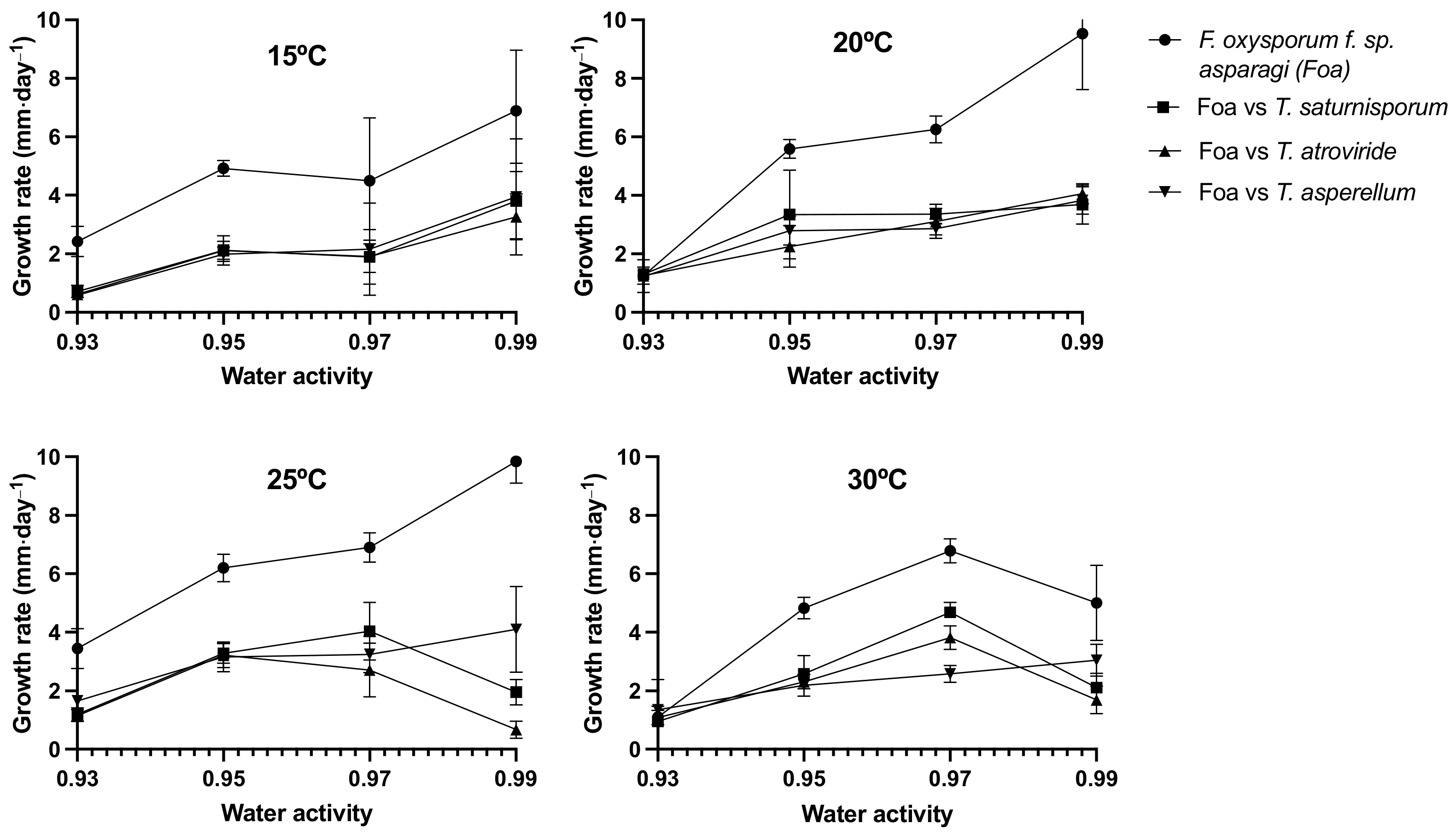
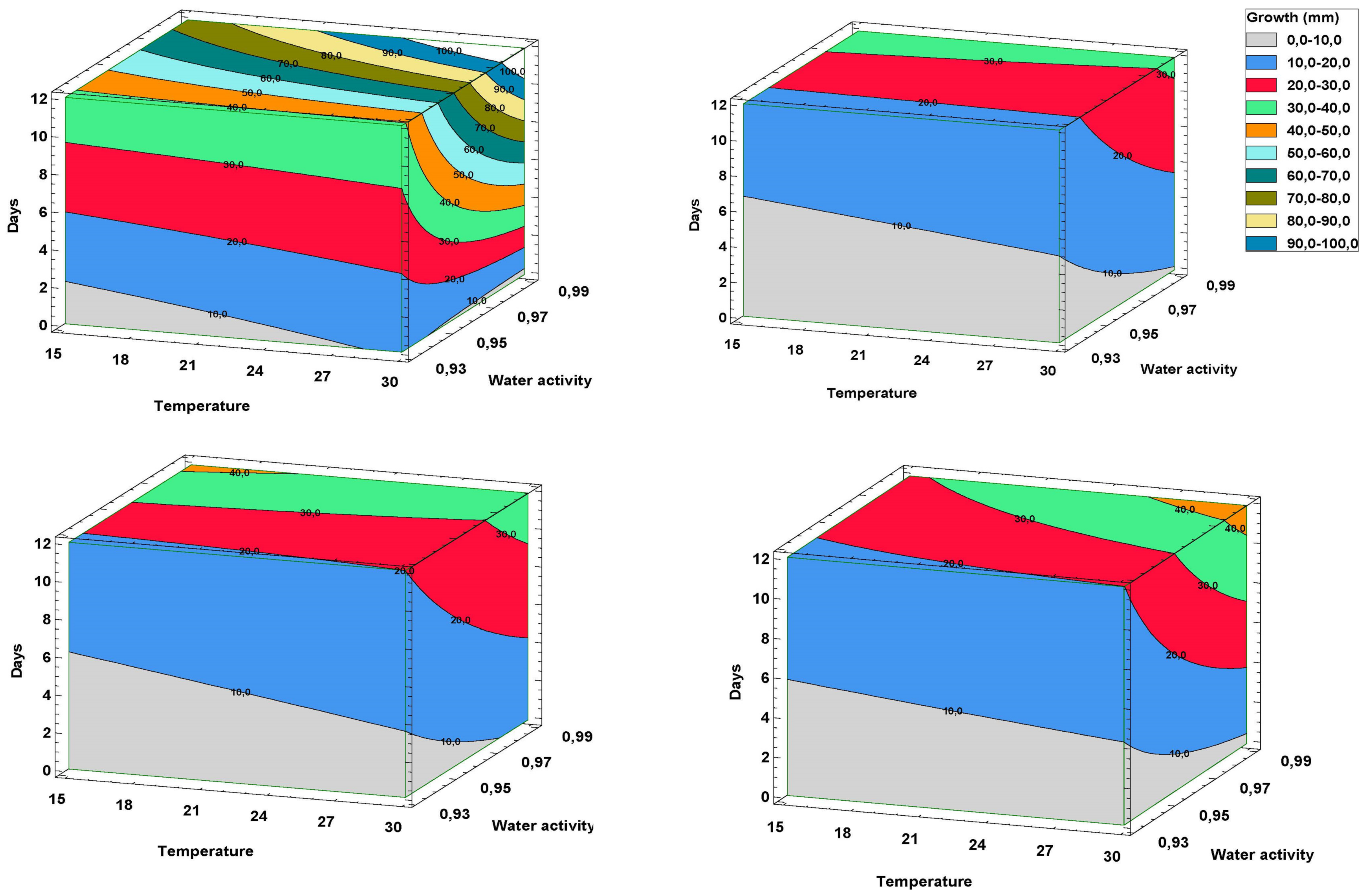
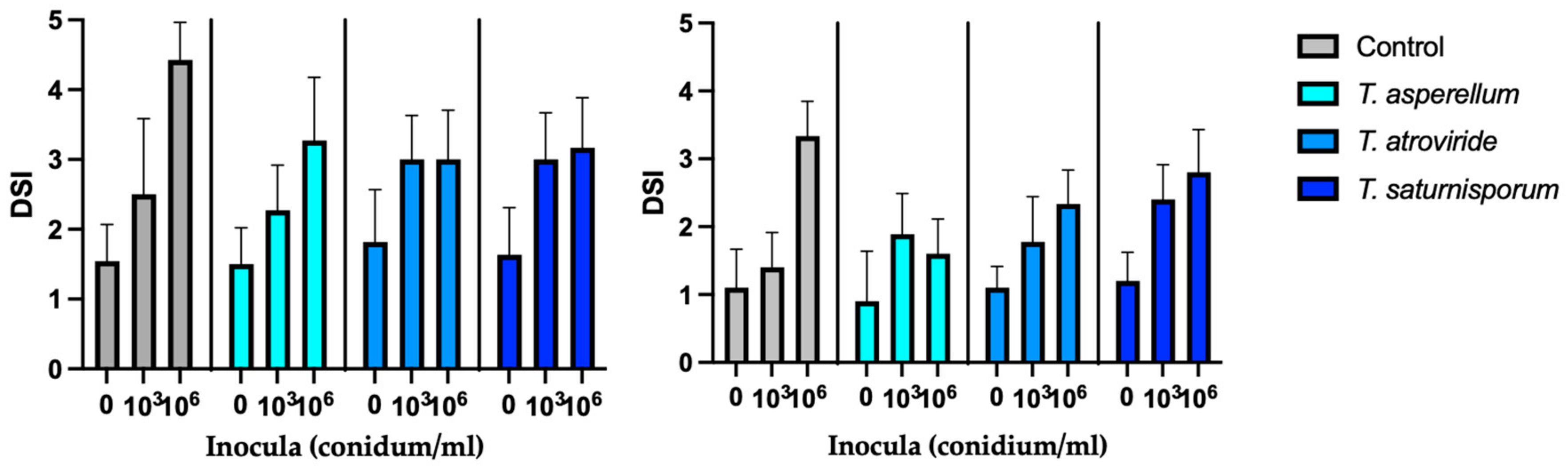
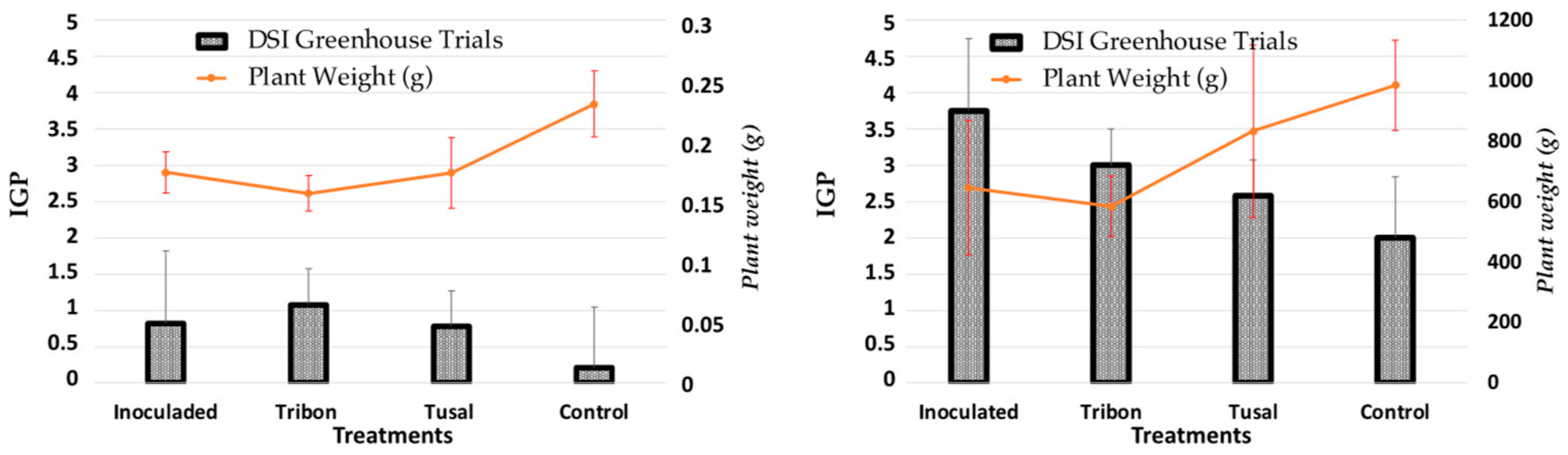
Among the key diseases affecting the asparagus crop (Asparagus officinalis L.), vascular wilting of asparagus caused by Fusarium oxysporum f. sp. asparagi stands out worldwide. This disease significantly shortens the longevity of the crop and limits economic production. Traditional control measures have been largely ineffective, and chemical control methods are difficult to apply, making biological control approaches, specifically the use of Trichoderma, an economical, effective, and risk-free alternative. This study aimed to identify the main factors that affect the efficacy of biopesticides studied as Biological Control Agents (BCAs) against Fusarium wilt in asparagus and to assess the efficacy of Trichoderma-based biopesticides under greenhouse and semi-field conditions. We evaluated the response of three Trichoderma spp. (T. atroviride, T. asperellum, and T. saturnisporum) to environmental variables, such as temperature and water activity, and their antagonistic capacity against Fusarium oxysporum f. sp. asparagi. All three Trichoderma species inhibited the growth of the pathogen in vitro. A decrease in water activity led to a greater reduction in the growth rate. The efficacy of the three biological control agents decreased with higher temperatures, resulting in minimal inhibition, particularly under conditions of restricted available water in the environment. The effect of the fungal inoculum density was also analyzed at two different temperatures. A direct correlation between the amount of inoculum and the score on the Disease Severity Index (DSI) was observed. A notable reduction in DSI was evident in treatments with high inoculum density (106 conidium/mL) for all three species of Trichoderma tested at both temperatures. In greenhouse and semi-field tests, we observed less disease control than expected, although T. asperellum and T. atroviride showed lower disease severity indices and increased the dry weight of seedlings and crowns, whereas T. saturnisporum resulted in the highest disease rate and lowest dry weight. This work highlights that the efficacy of Trichoderma as BCAs is influenced by various factors, including the quantity of soil inocula, and environmental conditions. The study findings have strong implications for selecting appropriate Trichoderma species for controlling specific pathogens under specific environmental conditions.
Keywords: biological control agents; commercial biopesticides; rhizosphere colonization; soilborne disease biological control agents; commercial biopesticides; rhizosphere colonization; soilborne disease