Article

Some Physiological Effects of Nanofertilizers on Wheat-Aphid Interactions

1
Department of Plant Protection, Faculty of Agriculture and Natural Resources, University of Mohaghegh Ardabili, Ardabil 5619911367, Iran
2
Department of Agronomy and Plant Breeding, Faculty of Agriculture, University of Tabriz, Tabriz 5137779619, Iran
3
Department of Plant Sciences, Moghan College of Agriculture and Natural Resources, University of Mohaghegh Ardabili, Ardabil 5697194781, Iran
4
Department of Biological, Chemical and Pharmacological Sciences and Technology-Botany Section, The University of Palermo, 38-90123 Palermo, Italy
*
Authors to whom correspondence should be addressed.
Plants 2023, 12(14), 2602; https://doi.org/10.3390/plants12142602

Submission received: 30 May 2023 / Revised: 24 June 2023 / Accepted: 3 July 2023 / Published: 10 July 2023
(This article belongs to the Special Issue Insect-Plant Interaction)

Abstract

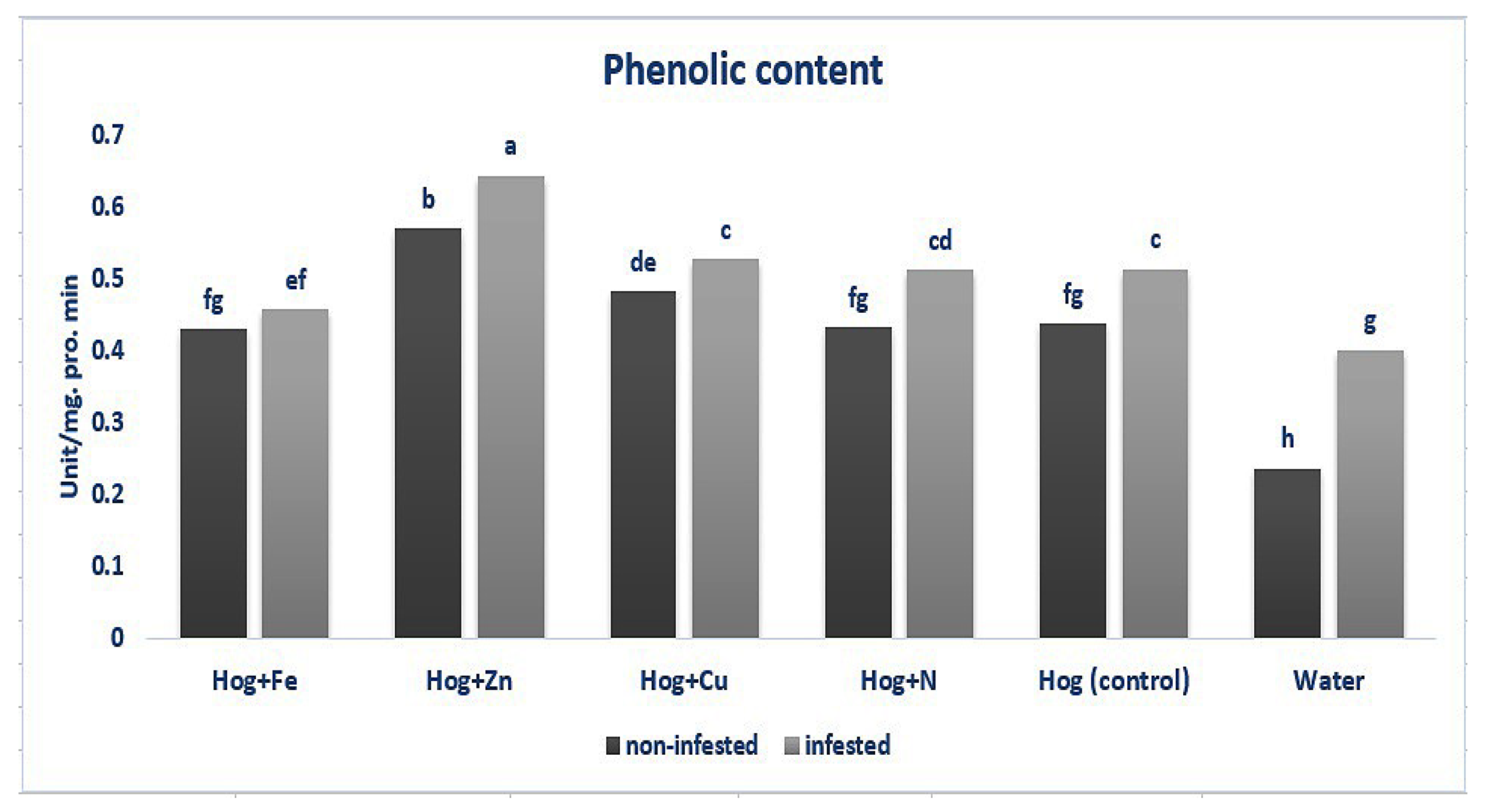
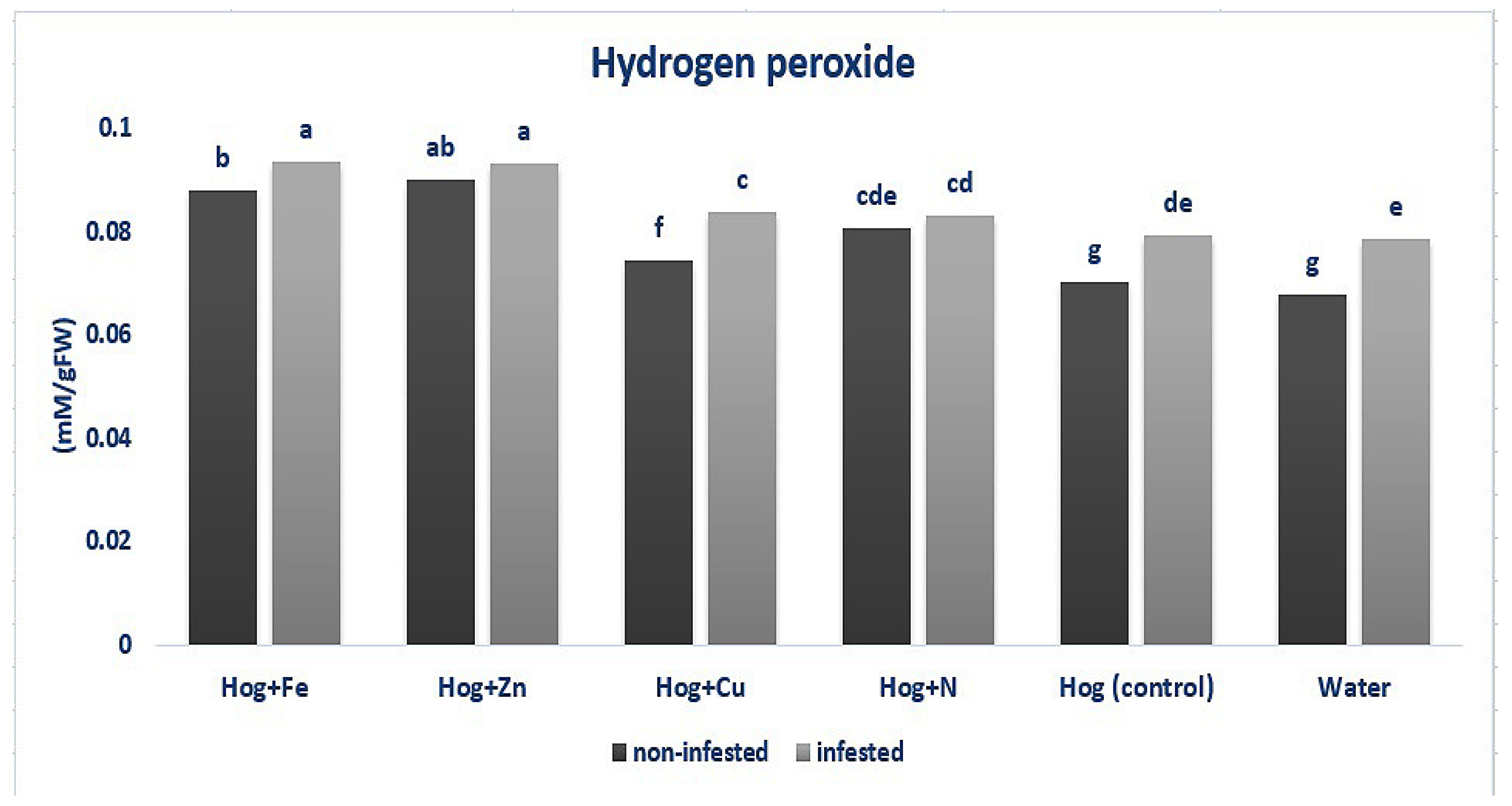
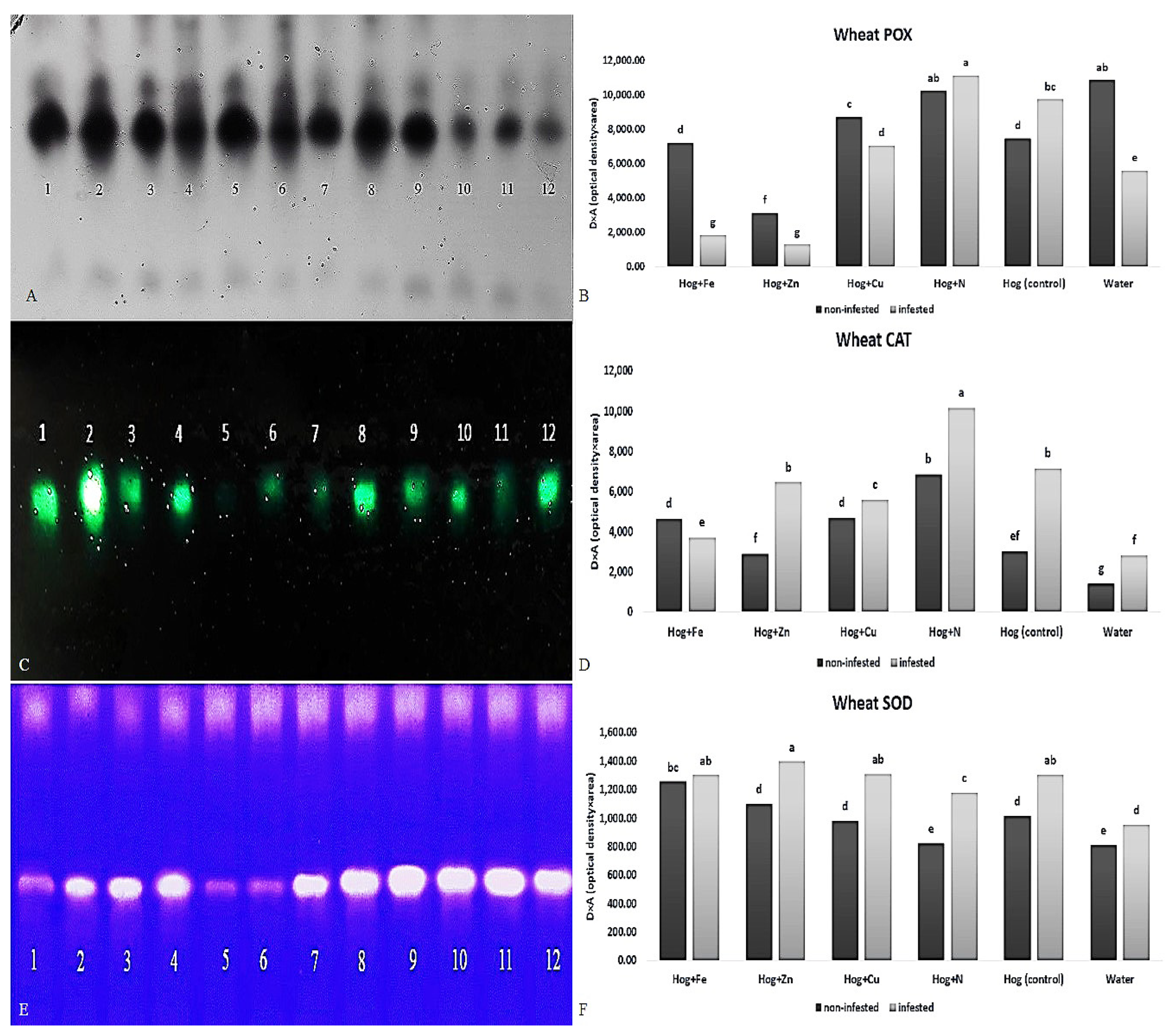
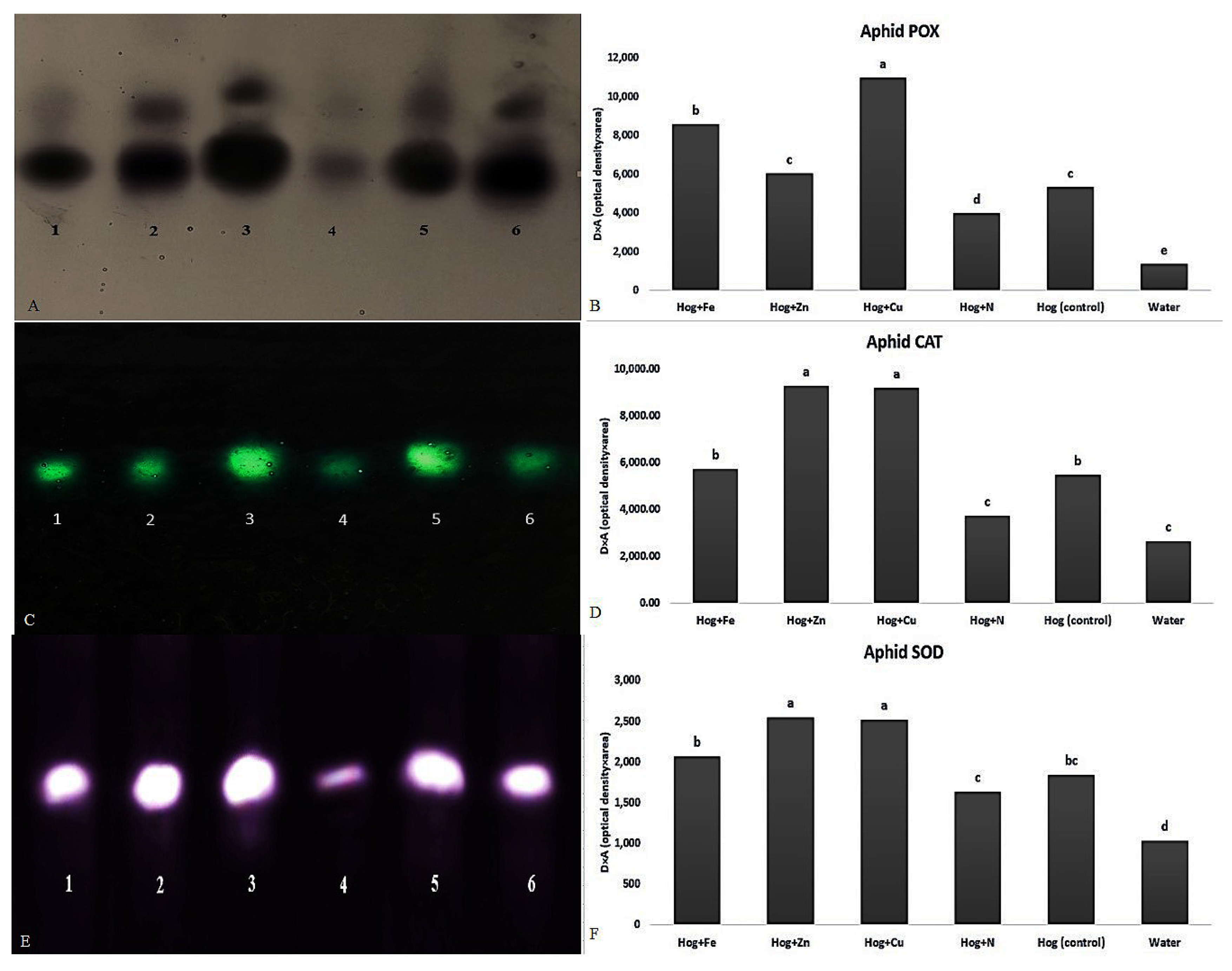
The increasing use of nanofertilizers in modern agriculture and their impact on crop yield and pest management require further research. In this study, the effects of nano-Fe, -Zn, and -Cu (which are synthesized based on nanochelating technology), and urea (N) fertilizers on the antioxidant activities of wheat plants (cv. Chamran), and the wheat green aphid Schizaphis graminum (Rondani) are investigated. The authors observed the highest levels of phenolics in non-infested nano-Zn-treated plants (26% higher compared with control). The highest H2O2 levels are in the infested and non-infested nano-Zn-treated and infested nano-Fe-treated plants (in infested nano-Zn and nano-Fe treated plants, 18% and non-infested nano-Zn-treated plants, 28% higher compared with control). The highest peroxidase (POX) activity is observed in the infested and non-infested N-treated and non-infested water-treated plants (almost 14%, 37%, and 46% higher than control, respectively). The lowest activity is in the infested plants’ nano-Zn and -Fe treatments (almost 7 and 5 folds lower compared to the control, respectively). The highest and lowest catalase (CAT) activity are in the infested N-treated plants (almost 42% higher than control) and water-treated plants, respectively. The infested nano-Zn, -Fe, -Cu and Hoagland-treated plants showed the highest superoxide dismutase (SOD) activity. Regarding the antioxidant enzyme activities of S. graminum, the highest POX activity is in the nano-Cu treatment (more than two folds higher compared with control); the highest CAT and SOD activities are in the nano-Cu and -Zn treatments. It can be concluded that the application of nanofertilizers caused increasing effects on the wheat plant’s antioxidant system and its resistance to S. graminum.
Keywords: nanotechnology; antioxidant enzyme; wheat; Schizaphis graminum; environmental health nanotechnology; antioxidant enzyme; wheat; Schizaphis graminum; environmental health