An Overview of Genus Malachra L.—Ethnobotany, Phytochemistry, and Pharmacological Activity

 , , , , , and
Abstract
1. Introduction
2. Material and Methods
- Websites where the names of the species mentioned in this review have validated geographic distribution, and are recognized as taxonomic and botanical World Plants (www.worldplants.de), including World Flora Online (WFO) (http://www.worldfloraonline.org/, accessed on 1 March 2022), World Checklist of Vascular Plants (WCVP) (https://wcvp.science.kew.org/, accessed on 1 March 2022), Plants of the World Online (https://powo.science.kew.org/, accessed on 1 March 2022), Catálogo de plantas y líquenes de Colombia (http://catalogoplantasdecolombia.unal.edu.co/, accessed on 1 March 2022), Tropicos (https://www.tropicos.org/home, accessed on 1 March 2022), Tramil (https://www.tramil.net/es, accessed on 1 March 2022), Angiosperm Phylogeny (http://www.mobot.org/MOBOT/research/APweb/, accessed on 1 March 2022), and Global Biodiversity Information Facility (https://www.gbif.org/, accessed on 1 March 2022).
- Articles, abstracts, and university repositories with descriptions of phytoconstituents using clear methodology for obtaining extracts, fractions, compounds, and plant part used.
- Articles, abstracts, and university repositories with pharmacological and biological descriptions using clear methodology in the evaluation of doses, concentrations, biological models used, and controls.
3. Taxonomy the Genus Malachra
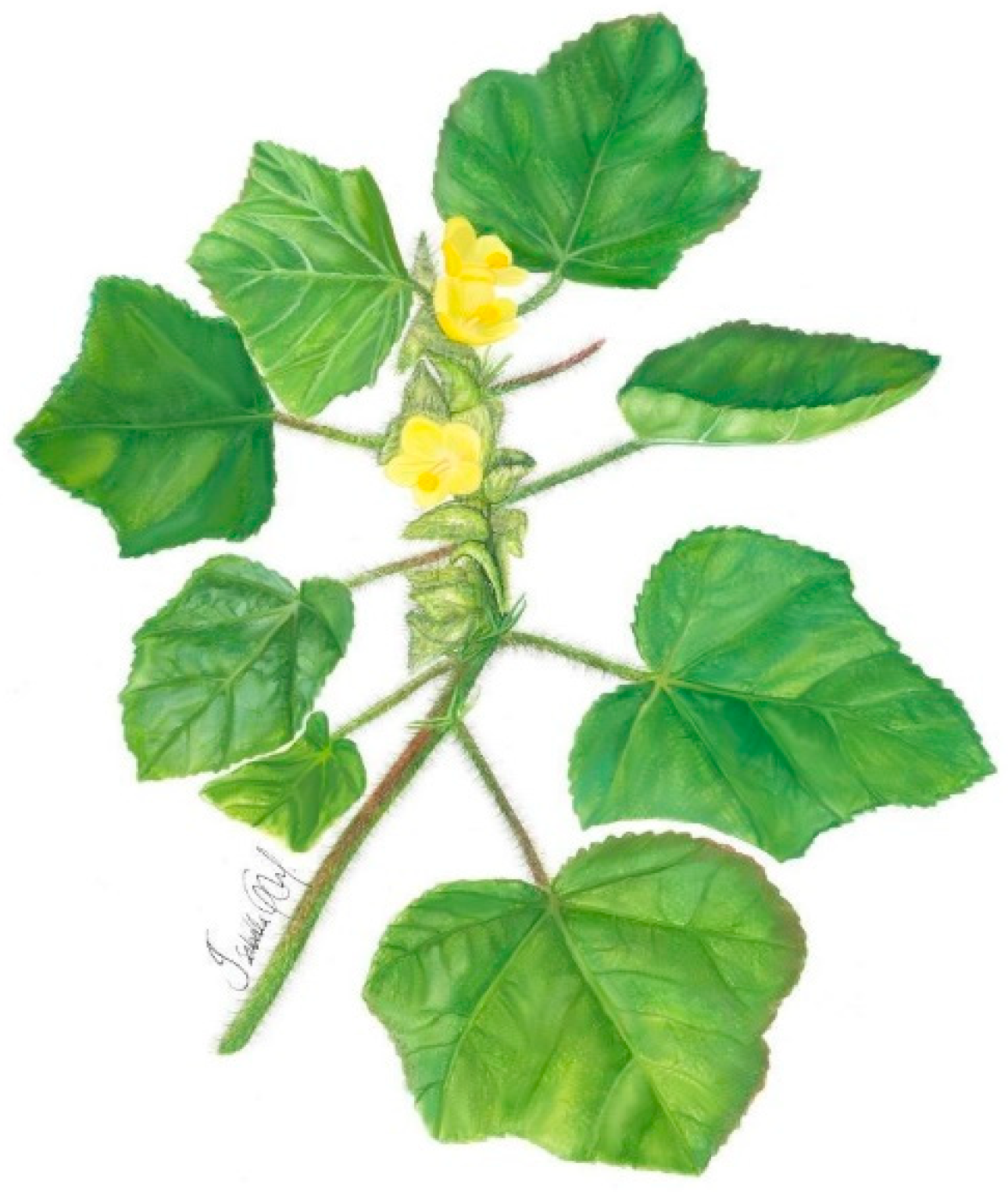
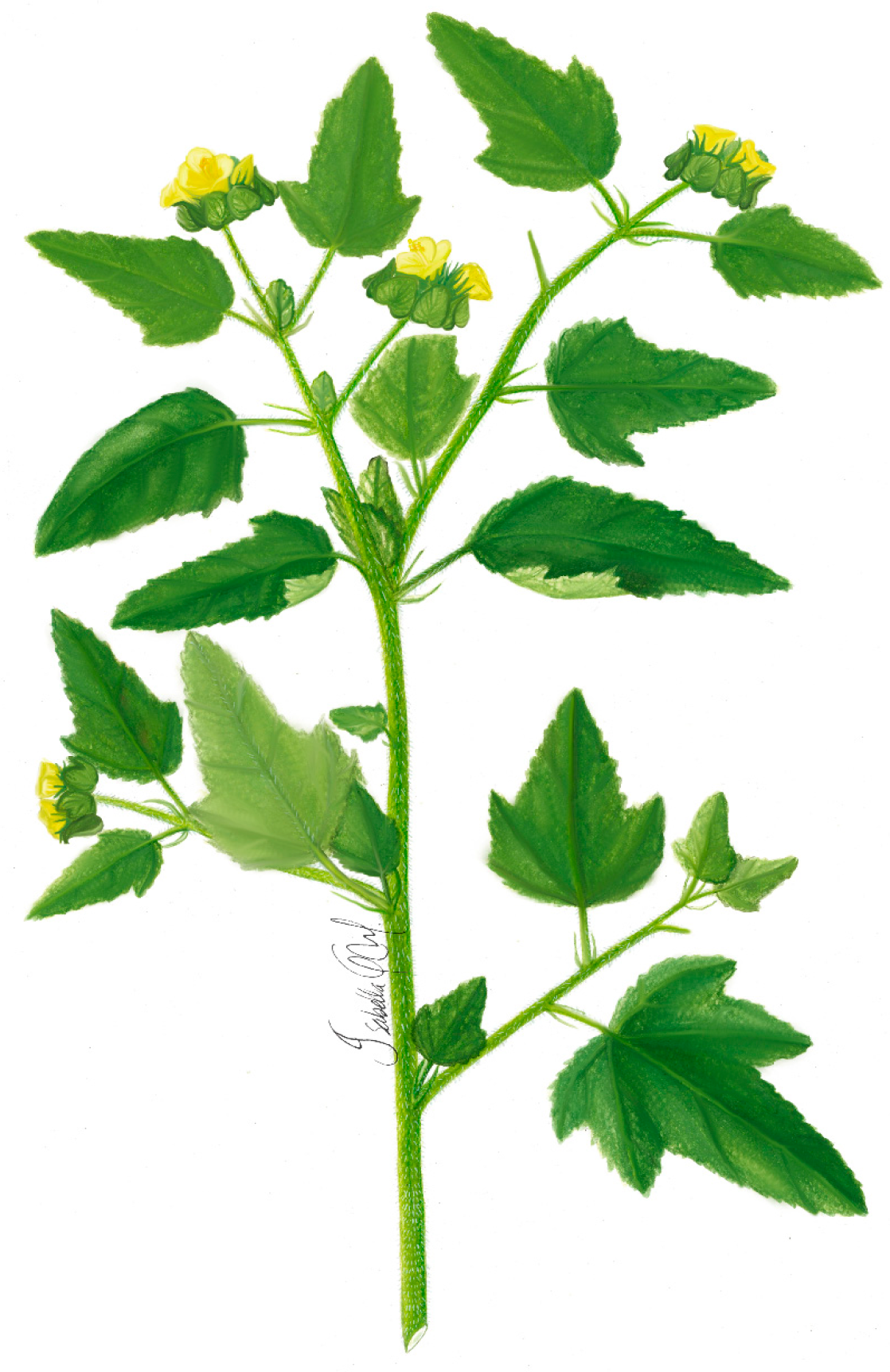
4. Botanical Description of the Species of the Genus Malachra L.
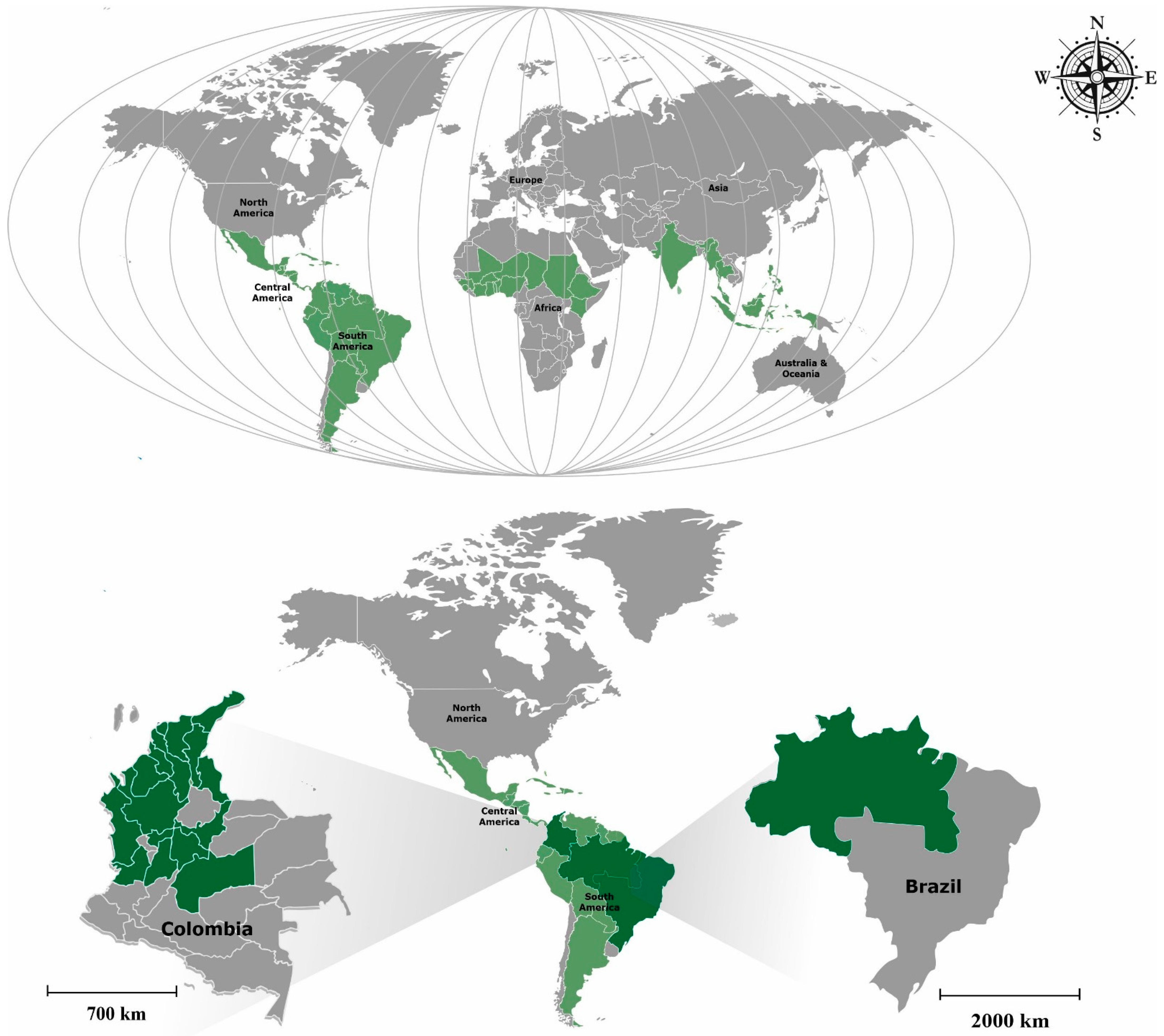
5. Geographical Distribution of the Genus Malachra L.
6. Species of the Genus Malachra L. with Ethnobotanical Use
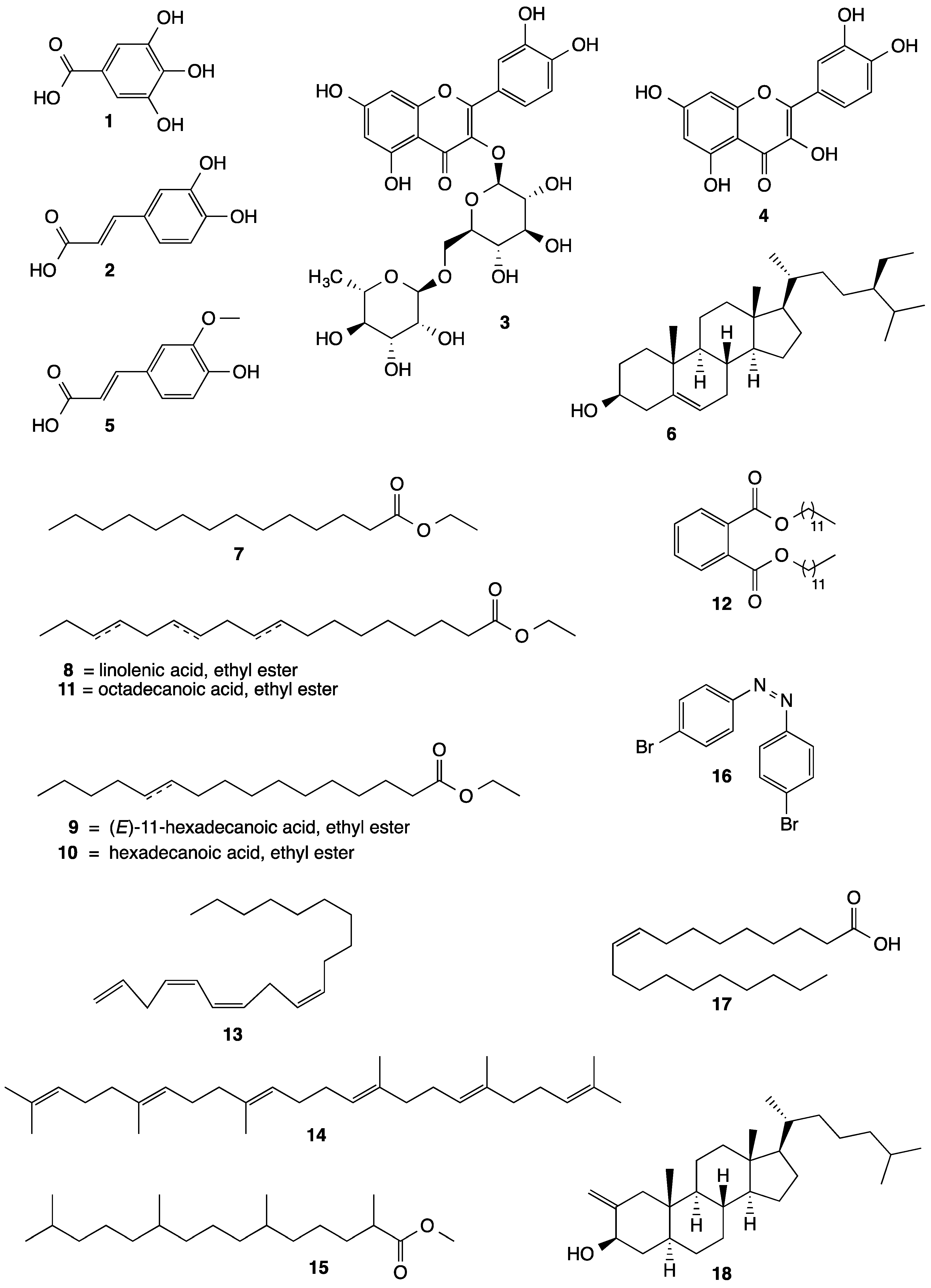
7. Phytochemistry Species of the Genus Malachra L.
8. Species of the Genus Malachra L. with Pharmacological Activity
9. Conclusions
Author Contributions
Funding
Institutional Review Board Statement
Informed Consent Statement
Data Availability Statement
Acknowledgments
Conflicts of Interest
References
- Gómez-Estrada, H.; Díaz-Castillo, F.; Franco-Ospina, L.; Mercado-Camargo, J.; Guzmán-Ledezma, J.; Medina, J.D.; Gaitán-Ibarra, R. Folk medicine in the northern coast of Colombia: An overview. J. Ethnobiol. Ethnomed. 2011, 7, 27. [Google Scholar] [CrossRef]
- World Health Organization. WHO Global Report on Traditional and Complementary Medicine. 2019. Available online: https://books.google.com.co/books?hl=es&lr=&id=WHOyDwAAQBAJ&oi=fnd&pg=PP1&dq=World+Health+Organization+(WHO)+medical+traditional&ots=h2ipw5cQpI&sig=2pW6jgNRbJp0W1Agx9UJG6aEf7k#v=onepage&q=World%20Health%20Organization%20(WHO)%20medical%20traditional&f=false (accessed on 10 February 2022).
- Anand, U.; Jacobo-Herrera, N.; Altemimi, A.; Lakhssassi, N. A Comprehensive Review on Medicinal Plants as Antimicrobial Therapeutics: Potential Avenues of Biocompatible Drug Discovery. Metabolites 2019, 9, 258. [Google Scholar] [CrossRef]
- Yuan, H.; Ma, Q.; Ye, L.; Piao, G. The Traditional Medicine and Modern Medicine from Natural Products. Molecules 2016, 21, 559. [Google Scholar] [CrossRef]
- Muñoz, D.; Cuca, L. Cytotoxic compounds from plant sources and their relationship with inhibitor of apoptosis proteins. Rev. Colom. Cancerol. 2016, 20, 124–134. [Google Scholar] [CrossRef]
- Coello-Cedeño, D. Alcaloides de la Chavelita (Catharanthus roseus) Agentes quimioterapéuticos en la lucha contra el Cáncer. Researchgate 2019, 12, 317–330. [Google Scholar] [CrossRef]
- Ershad, M.; Meredith, A.; Shah, N.; Khalid, M.M. Cardioactive Steroid Toxicity; StatPearls Publishing: Treasure Island, FL, USA, 2022. [Google Scholar]
- Hyuga, M.; Oshima, N.; Amakura, Y.; Hakamatsuka, T.; Goda, Y.; Hanawa, T.; Kobayashi, Y. Ephedrine Alkaloids-Free Ephedra Herb Extract, EFE, Has No Adverse Effects Such as Excitation, Insomnia, and Arrhythmias. Biol. Pharm. Bull. 2018, 41, 247–253. [Google Scholar] [CrossRef]
- Cheong, D.H.J.; Tan, D.W.S.; Wong, F.W.S.; Tran, T. Anti-malarial drug, artemisinin and its derivatives for the treatment of respiratory diseases. Pharmacol. Res. 2020, 158, 104901. [Google Scholar] [CrossRef]
- Montinari, M.R.; Minelli, S.; De Caterina, R. The first 3500 years of aspirin history from its roots—A concise summary. Vascul. Pharmacol. 2019, 113, 1–8. [Google Scholar] [CrossRef]
- Devereaux, A.L.; Mercer, S.L.; Cunningham, C.W. DARK Classics in Chemical Neuroscience: Morphine. ACS Chem. Neurosci. 2018, 9, 2395–2407. [Google Scholar] [CrossRef]
- Cervantes-Ceballos, L.; Sánchez-Hoyos, F.; Gómez-Estrada, H. Antibacterial activity of Cordia dentata Poir, Heliotropium indicum Linn and Momordica charantia Linn from the Northern Colombian Coast. Revista Colombiana de Ciencias Químico-Farmacéuticas 2017, 42, 143–159. [Google Scholar] [CrossRef]
- Tran, N.; Pham, B.; Le, L. Bioactive Compounds in Anti-Diabetic Plants: From Herbal Medicine to Modern Drug Discovery. Biology 2020, 9, 252. [Google Scholar] [CrossRef]
- Germosén Robineau, L.; García González, M.; Morón, F.; Costaguta, M.; Delens, M.; Olmedo, D.; Gómez-Estrada, H.A. Farmacopea Vegetal Caribeña; University of Cartagena, Editorial University of Cartagena: Cartagena, Colombia, 2017; ISBN 978-958-5439-06-1. [Google Scholar]
- Germosén-Robineau, L. Farmacopea Vegetal Caribeña, Segunda edición; TRAMIL (Pharmacopée traditionnelle Caraïbe); Editorial Universitaria UNAN-León: León, Nicaragua, 2005; Available online: https://www.tramil.net/es/publicaciones_tramil.html (accessed on 12 February 2022).
- Hassler, Michael (2004–2022): World Plants. Synonymic Checklist and Distribution of the World Flora. Version 14.1. Available online: www.worldplants.de (accessed on 21 September 2022).
- World Flora Online (WFO). Malachra L. 2022. Available online: http://www.worldfloraonline.org/taxon/wfo-4000022923 (accessed on 21 September 2022).
- Govaerts, R.; Nic Lughadha, E.; Black, N.; Turner, R.; Paton, A. The World Checklist of Vascular Plants (WCVP), a continuously updated resource for exploring global plant diversity. Sci. Data 2021, 8, 215. [Google Scholar] [CrossRef]
- Christenhusz, J.M.; Byng, J.W. The number of known plants species in the world and its annual increase. J. Phytotaxa. 2016, 261, 201–217. [Google Scholar] [CrossRef]
- Christenhusz, M.J.M.; Fay, M.F.; Chase, M.W. Plants of the World. An Illustrated Encyclopedia of Vascular Plants: 1-792; Kew Publishing, The university of Chicago Press: Chicago, IL, USA, 2017; Available online: https://powo.science.kew.org/taxon/urn:lsid:ipni.org:names:28016-1 (accessed on 30 August 2022).
- The IUCN Red List of Threatened Species. Version 2022-1. Available online: https://www.iucnredlist.org/ (accessed on 30 September 2022).
- Guerreo, T.; Vejarano, P.; Ochoa, R. Tamizaje fitoquímico y cuantificación de flavonoides totales de las hojas y flores de Malachra alceifolia Jacq. Ethnobot. Res. Appl. 2018, 4, 70–75. Available online: https://revistas.unas.edu.pe/index.php/revia/article/view/73 (accessed on 21 August 2022).
- Sindhu, L.; Neelamegam, R. HPLC determination of flavonoids in the methanol extracts of Malachra capitata (L). WJPPS 2015, 4, 1495–1503. Available online: https://storage.googleapis.com/journaluploads/wjpps/article_issue/1438403289.pdf (accessed on 21 August 2022).
- Sindhu, L.; Neelamegam, R. Evaluation of phytochemical profile in ethanol extracts of Malachra capitata (L.) by GC-MS analysis. World J. Pharm. Res. 2015, 4, 1342–1353. [Google Scholar]
- Jadhav, R.; Parihar, S. Isolation and Study of β-sitosterol the Unsaponifiable Matter from the Plant Malachra capitata (Linn). Biomed. Pharmacol. J. 2014, 7, 285–287. [Google Scholar] [CrossRef]
- Saleem, H.; Sarfraz, M.; Ahsan, H.M.; Khurshid, U.; Kazmi, S.A.J.; Zengin, G.; Locatelli, M.; Ahmad, I.; Abdallah, H.H.; Mahomoodally, M.F.; et al. Secondary metabolites profiling, biological activities and computational studies of Abutilon figarianum Webb (Malvaceae). Processes 2020, 8, 336. [Google Scholar] [CrossRef]
- Dipak, K.; Rupali, S.; Syed, I.; Bhadange, D.G. Phytochemical screening of eight traditionally used ethnomedicinal plants from Akola District (M.S.) India. Int. J. Pharma Bio Sci. 2010, 1, 253–256. Available online: https://www.ijpbs.net/abstract.php?article=NDE= (accessed on 30 August 2022).
- Pratyusha, S.; Jayasri, P.; Elumalai, A. Study on phytochemical profile and antiulcerogenic effect of Malachra capitata (L.) in albino Wistar rats. Int. J. Preclin. Pharm. Res. 2012, 3, 97–103. Available online: http://www.preclinicaljournal.com/download.php?id=116&f=116_97-103.pdf (accessed on 30 August 2022).
- Ragasa, C.; Hofileña, J.; Co, A.; Rideout, J. Antifungal diacetylglycerols from Malachra fasciata and Pithecolobium dulce. Chem. Res. 2005, 19, 1–5. Available online: https://acquire.cqu.edu.au/articles/journal_contribution/Antifungal_diacetyglycerols_from_Malachra_fasciata_and_Pithecolobium_dulce/13398602 (accessed on 30 March 2022).
- Ragasa, C.; Peñalosa, B.; Rideout, J.A. A bioactive dipeptide derivate from Malachra fasciata. Philipp. J. Sci. 1998, 127, 267–276. Available online: https://inis.iaea.org/search/search.aspx?orig_q=RN:30051341 (accessed on 30 March 2022).
- Kvist, L.; Christensen, S.; Rasmussen, H.; Mejia, K.; Gonzalez, A. Identification and evaluation of Peruvian plants used to treat malaria and leishmaniasis. J. Ethnopharmacol. 2006, 106, 390–402. [Google Scholar] [CrossRef] [PubMed]
- López-Cuesta, B. Studio Ethnobotanics of Plants Against Malaria. 2017. Available online: http://147.96.70.122/web/TFG/TFG/Memoria/Beatriz%20Cuesta%20Lopez.pdf (accessed on 22 March 2022).
- Ruiz, L.; Ruiz, L.; Maco, M.; Cobos, M.; Gutierrez-Choquevilca, A.-L.; Roumy, V. Plants used by native Amazonian groups from the Nanay River (Peru) for the treatment of malaria. J. Ethnopharmacol. 2011, 133, 917–921. [Google Scholar] [CrossRef]
- Odonne, G.; Valadeau, C.; Alban-Castillo, J.; Stien, D.; Sauvain, M.; Bourdy, G. Medical ethnobotany of the Chayahuita of the Paranapura basin (Peruvian Amazon). J. Ethnopharmacol. 2013, 146, 127–153. [Google Scholar] [CrossRef]
- Delgado-Paredes, G.; Delgado-Rojas, P.; Rojas-Idrogo, C. Peruvian Medicinal Plants and Cosmopolitan Plants with Potential use in the Treatment of Respiratory Diseases and COVID-19. Int. J. Plant Anim. Environ. Sci. 2021, 11, 295–321. [Google Scholar] [CrossRef]
- Bojórquez., G.; Esqueda-Esquivel, V.; Balbuena-Melgarejo, A.; Rosales-Robles, E.; Sánchez-Nava, S.; Santillanes-Navidad, R.; Zita-Padilla, G. Maleza asociada a potreros de colima y costa de Jalisco, México. Manejo Y Control. De Malezas En Latinoamérica. 2011. Available online: https://somecima.com/wp-content/uploads/2018/07/2013.pdf (accessed on 25 January 2022).
- Fernández-Hernández, D.M. Butterflies of the agricultural experiment station of tropical roots and tubers, and Santa Ana, Camagüey, Cuba: An annotated list. Acta Zool. Mex. 2007, 23, 43–75. Available online: http://www.acuedi.org/ddata/F3057.pdf (accessed on 25 January 2022). [CrossRef][Green Version]
- Cabrera, E. Caracterización De La Vegetación Natural De Sucesión Primaria En El Parque Nacional Volcán Pacaya Y Laguna De Calderas, Guatemala. 2006. Available online: https://repositorio.catie.ac.cr/bitstream/handle/11554/4580/Caracterizacion_de_la_vegetacion_natural.pdf?sequence=1&isAllowed=y (accessed on 25 January 2022).
- Lima, L.F.; Oliveira, J.O.; Carneiro, J.N.P.; Lima, C.N.F.; Coutinho, H.D.M.; Morais-Braga, M.F.B. Ethnobotanical and antimicrobial activities of the Gossypium (Cotton) genus: A review. J. Ethnopharmacol. 2021, 279, 114363. [Google Scholar] [CrossRef]
- Stevens, P.F. Angiosperm Phylogeny Website. Version 14, July 2017 and Continuously Updated Since. Will Do. Available online: http://www.mobot.org/MOBOT/research/APweb/ (accessed on 10 June 2022).
- Medicinal Plant Names Services (M.P.N.S.). Malachra. 2022. Available online: http://mpns.kew.org/mpns-portal/ (accessed on 11 January 2022).
- Plants of the World Online (P.O.W.O.). Malachra. 2022. Available online: www.plantsoftheworldonline.org (accessed on 11 February 2022).
- Tropicos.org. Missouri Botanical Garden. Available online: http://www.tropicos.org/Name/19601021 (accessed on 1 July 2022).
- World Flora Online. Malachra alceifolia Jacq. 2022. Available online: http://www.worldfloraonline.org/taxon/wfo-0000449783 (accessed on 30 June 2022).
- World Flora Online. Malachra capitata (L.) L. 2022. Available online: http://www.worldfloraonline.org/taxon/wfo-0000449780 (accessed on 1 July 2022).
- World Flora Online. Malachra fasciata Jacq. 2022. Available online: http://www.worldfloraonline.org/taxon/wfo-0000449806 (accessed on 1 July 2022).
- World Flora Online. Malachra radiata (L.) L. 2022. Available online: http://www.worldfloraonline.org/taxon/wfo-0000449849 (accessed on 1 July 2022).
- The Global Biodiversity Information Facility (G.B.I.G.). Malachra. 2022. Available online: www.gbif.org (accessed on 11 February 2022).
- The International Plant Names Index and World Checklist of Vascular Plants 2022. Available online: https://powo.science.kew.org/taxon/urn:lsid:ipni.org:names:25960-1 (accessed on 22 August 2022).
- Bernal, R.; Gradstein, S.R.; Celis, M. (Eds.) Catálogo de Plantas y Líquenes de Colombia. In Instituto de Ciencias Naturales; Universidad Nacional de Colombia: Bogotá, Colombia, 2015; Available online: http://catalogoplantasdecolombia.unal.edu.co (accessed on 1 July 2022).
- Organización Mundial de la Salud. Estrategia De La OMS Sobre Medicina Tradicional 2002–2005. Available online: http://apps.who.int/iris/bitstream/handle/10665/67314/WHO_EDM_TRM_2002.1_spa.pdf;jsessionid=007D5B498F9F504213736D6236E9E05E?sequence=1 (accessed on 22 August 2022).
- Organización Mundial De La Salud. Medicina tradicional. 56ª Asamblea Mundial De La Salud. A56/18 Punto 14.10 Del Orden Del Día Provisional 31 De Marzo De 2003. Available online: https://apps.who.int/gb/ebwha/pdf_files/WHA56/sa5618.pdf (accessed on 22 August 2022).
- Avinash-Deodhar, K. A systematic review of Malachra capitata: Medicinal properties and constituents. Asian J. Sci. Technol. 2016, 7, 3310–3313. Available online: https://www.journalajst.com/systematic-review-malachra-capitata-medicinal-properties-and-constituents (accessed on 25 August 2022).
- Sanyal, S. Morpho-Taxonomic Studies of Some Members of Malvales (Cronquist, 1981) Occurring in Saltlake City, North 24 Parganas, West Bengal. Int. J. Innov. Res. Sci. Eng. Tech. 2016, 5, 8564–8572. Available online: http://www.ijirset.com/upload/2016/may/245_MORPHO_TAXONOMIC_new.pdf (accessed on 25 August 2022).
- Vibrant, H. Malachra capitata. 2010. Available online: http://www.conabio.gob.mx/malezasdemexico/malvaceae/Malachracapitata/fichas/ficha.htm (accessed on 11 February 2022).
- Caballero-Serrano, V.; McLaren, B.; Carrasco, J.C.; Alday, J.G.; Fiallos, L.; Amigo, J.; Onaindia, M. Traditional ecological knowledge and medicinal plant diversity in Ecuadorian Amazon home gardens. Glob. Ecol. Conserv. 2019, 17, e00524. [Google Scholar] [CrossRef]
- Lagos-Castillo, C. Plantas Medicinales utilizadas en el tratamiento ginecológico en Leticia y Puerto Nariño (Amazonas, Colombia). Universidad del Bosque. Etnobiología 2015, 13, 53–72. Available online: https://dialnet.unirioja.es/servlet/articulo?codigo=5294496 (accessed on 25 August 2022).
- Abat, J.K.; Kumar, S.; Mohanty, A. Ethnomedicinal, phytochemical and ethnopharmacological aspects of four medicinal plants of Malvaceae used in Indian traditional medicines: A Review. Medicines 2017, 4, 75. [Google Scholar] [CrossRef] [PubMed]
- Varma, N. Phytoconstituents and their mode of extractions: An overview. Res. J. Chem. Environ. Sci. 2016, 4, 8–15. Available online: http://www.aelsindia.com/rjcesapril2016/2.pdf (accessed on 25 August 2022).
- Najmi, A.; Javed, S.A.; Al Bratty, M.; Alhazmi, H.A. Modern Approaches in the Discovery and Development of Plant-Based Natural Products and Their Analogues as Potential Therapeutic Agents. Molecules 2022, 27, 349. [Google Scholar] [CrossRef] [PubMed]
- Batiha, G.E.S.; Beshbishy, A.A.; Tayebwa, D.S.; Shaheen, M.H.; Yokoyama, N.; Igarashi, I. Inhibitory effects of Uncaria tomentosa bark, Myrtus communis roots, Origanum vulgare leaves and Cuminum cyminum seeds extracts against the growth of Babesia and Theileria in vitro. Jap. J. Vet. Parasitol. 2018, 17, 1–13. [Google Scholar]
- Kahkeshani, N.; Farzaei, F.; Fotouhi, M.; Alavi, S.S.; Bahramsoltani, R.; Naseri, R.; Momtaz, S.; Abbasabadi, Z.; Rahimi, R.; Farzaei, M.H.; et al. Pharmacological effects of gallic acid in health and diseases: A mechanistic review. Iran. J. Basic Med. Sci. 2019, 22, 225–237. [Google Scholar] [CrossRef]
- Ojeaburu, S.I.; Oriakhi, K. Hepatoprotective, antioxidant and, anti-inflammatory potentials of gallic acid in carbon tetrachloride-induced hepatic damage in Wistar rats. Toxicol. Rep. 2021, 8, 177–185. [Google Scholar] [CrossRef]
- Goudarzi, M.; Kalantar, M.; Kalantar, H. The Hepatoprotective Effect of Gallic Acid on Mercuric Chloride-Induced Liver Damage in Rats. Jundishapur J. Nat. Pharm. Prod. 2017, 12, e12345. [Google Scholar] [CrossRef]
- Kępa, M.; Miklasińska-Majdanik, M.; Wojtyczka, R.D.; Idzik, D.; Korzeniowski, K.; Smoleń-Dzirba, J.; Wąsik, T.J. Antimicrobial Potential of Caffeic Acid against Staphylococcus aureus Clinical Strains. BioMed Res. Int. 2018, 2018, 7413504. [Google Scholar] [CrossRef]
- Anand David, A.V.; Arulmoli, R.; Parasuraman, S. Overviews of biological importance of quercetin: A bioactive flavonoid. Pharmacogn. Rev. 2016, 10, 84–89. [Google Scholar] [CrossRef] [PubMed]
- Pramanik, P.K.; Chakraborti, S.; Bagchi, A.; Chakraborti, T. Bioassay-based Corchorus capsularis L. leaf-derived β-sitosterol exerts antileishmanial effects against Leishmania donovani by targeting trypanothione reductase. Sci. Rep. 2020, 10, 20440. [Google Scholar] [CrossRef]
- Application and Its Preparation of the Aurantiamide Acetate in Anti-Influenza virus Medicament. Patent CN106431960B, 6 November 2018. Available online: https://patents.google.com/patent/CN106431960B/en (accessed on 25 August 2022).
- Batiha, G.E.; Alkazmi, L.M.; Wasef, L.G.; Beshbishy, A.M.; Nadwa, E.H.; Rashwan, E.K. Syzygium aromaticum L. (Myrtaceae): Traditional Uses, Bioactive Chemical Constituents, Pharmacological and Toxicological Activities. Biomolecules 2020, 10, 202. [Google Scholar] [CrossRef] [PubMed]
- Beshbishy, A.M.; Batiha, G.E.S.; Adeyemi, O.S.; Yokoyama, N.; Igarashi, I. Inhibitory effects of methanolic Olea europaea and acetonic Acacia laeta on the growth of Babesia and Theileria. Asian Pac. J. Trop. Med. 2019, 12, 425–434. [Google Scholar]
- Salazar-Gómez, L.; Pérez-Coronado, J. Evaluación in vitro Del Efecto Antibacteriano De Los Extractos Etanólicos De Maclura tinctoria Linn, Cassia fistula Linn. Y Malachra alceifolia Jacq, Y Su Contribución a La Formulación De Un Fitoterapéutico Para El Tratamiento Del Acné. 2018. Available online: http://hdl.handle.net/11227/7008 (accessed on 9 September 2021).
- Gopi, G.; Jayasri, P.; Elumalai, A. Anti-epileptic activity of Malachra capitata (L) on maximal electroshock (MES) and Pentylenetetrazole (PTZ) induce seizures models. Int. J. Pharmacol. Toxicol. 2012, 2, 104–108. Available online: http://www.ijidd.com/File_Folder/76-80.pdf (accessed on 22 September 2022).
- Anil-Kumar, V.; Prunachander, K.; Vasudevamurthy, V.; Kannappan, N.; Spandana, V. Anti-oxidante activity of Malachra capitata (L) against Carbon Tetrachloride (CCL4) induce erythrocyte damage in rats. Int. J. Pharmacol. Res. 2012, 2, 74–78. [Google Scholar]
- Sriam, N.; Vinoth-Kumar, K.; Mantry, S.; Sakthivel, S.; Shiva-Prasad, P. Hepatoprotective effect of Malachra capitata (L) against Carbon Tetrachloride induced hepatotoxicity in wistar albino rats. Int. J. Pharm. Rev. Res. 2012, 2, 106–110. Available online: https://file:///D:/Documents/Downloads/HEPATOPROTECTIVE_EFFECT_OF_MALACHRA_CAPI.pdf (accessed on 22 September 2022).
- Srirangam, G.M.; Rao, P. Synthesis and characterization of silver nanoparticles from the leaf extract of against Malachra capitata. RJC 2017, 10, 46–53. [Google Scholar] [CrossRef]
- Naik, R.M.; Ahmed, S.; Venkatalakshmi, K. Preliminary Phytochemistry and Anti-Microbial Activity of Malachra capitata Plant. Am. J. PharmTech Res. 2018, 8, 258–263. Available online: http://ajptr.com/assets/upload/publish_article/AJPTR-83022_443.pdf (accessed on 22 September 2022). [CrossRef]
- De Araújo, V.O.; Neto, T.S.O.; Simões, S.V.D.; da Silva, T.K.F.; Riet-Correa, F.; Lucena, R.B. Primary photosensitization and contact dermatitis caused by Malachra fasciata Jacq. N.V. (Malvaceae) in sheep. Toxicon 2017, 138, 184–187. [Google Scholar] [CrossRef]

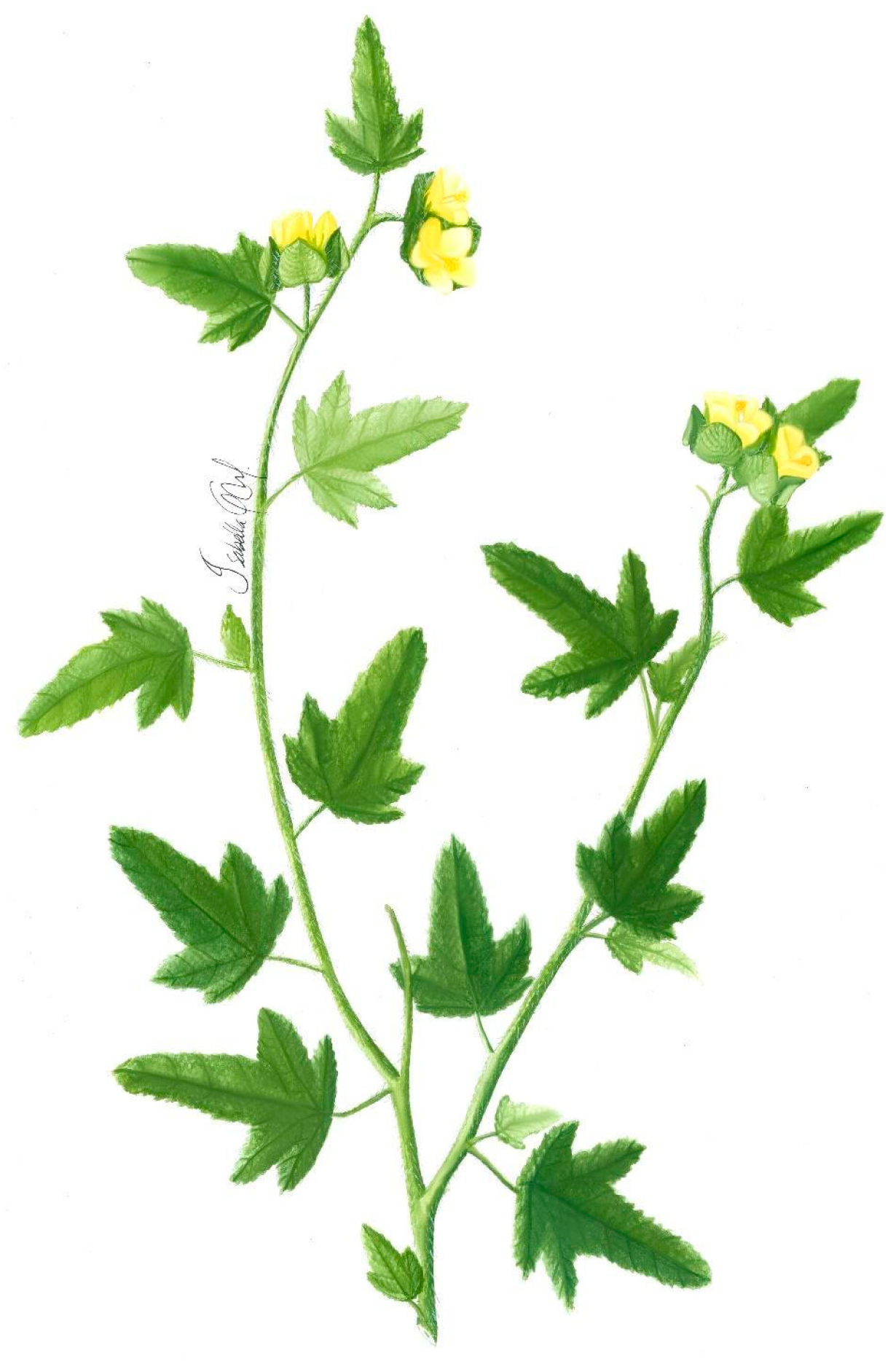

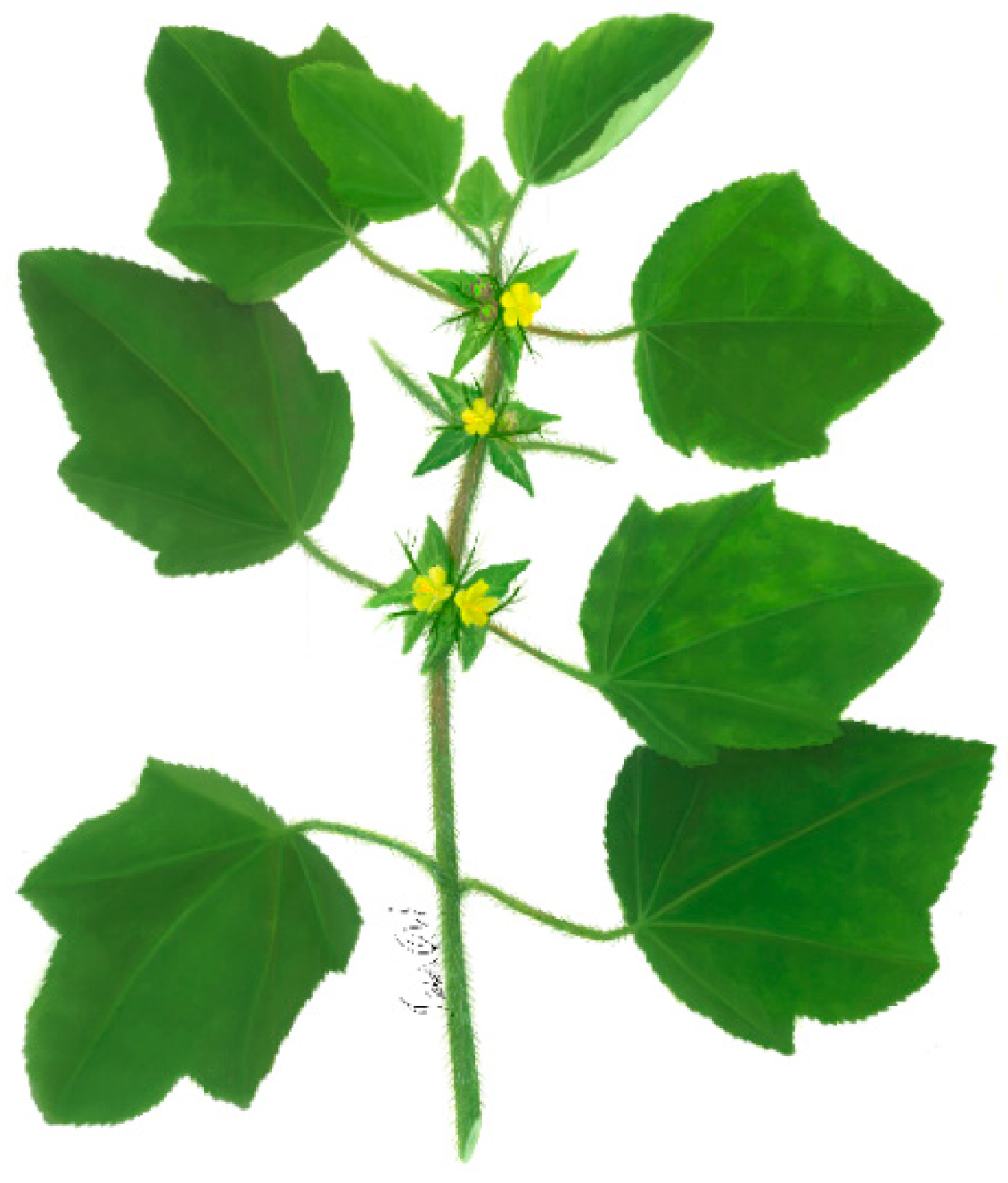
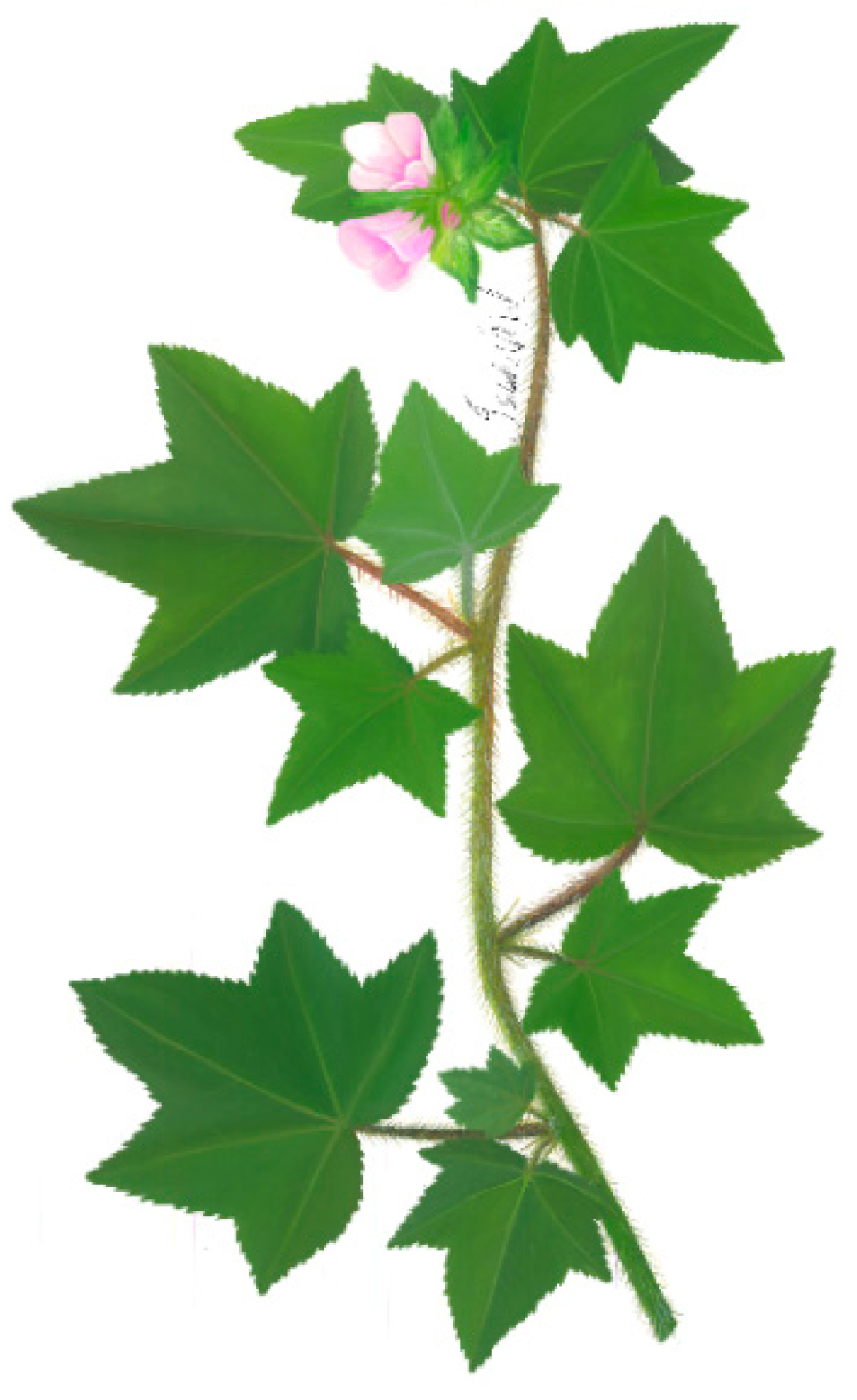



| Genus | Species | Scientific Name Status | ||
|---|---|---|---|---|
| Accepted | Ambiguous | Unchecked | ||
| Malachra L. | Malachra alceifolia Jacq. | |||
| Malachra capitata L. | ||||
| Malachra digitata C.Presl. | ||||
| Malachra fasciata Jacq. | ||||
| Malachra helodes Mart. | ||||
| Malachra lobata L. | ||||
| Malachra officinalis Klotzsch. | ||||
| Malachra plumosa Desr. | ||||
| Malachra radiata L. | ||||
| Malachra rosea Hoffmans. | ||||
| Malachra ruderalis Gürke. | ||||
| Malachra rudis Benth. | ||||
| Malachra texana A.Gray. | ||||
| Malachra triloba [Desf.] | ||||
| Malachra urens Poit. ex Ledeb. y Alderstam. | ||||
| Malachra urticifolia C.Presl. | ||||
| Malachra viminea Fisch. ex Steud. | ||||
| Genus | Species | Taxonomic Synonyms |
|---|---|---|
| Malachra L. | Malachra alceifolia Jacq. | Malachra alceifolia var. alceifolia Malachra alceifolia var. conglomerata (Turcz.) Hochr. Malachra alceifolia var. rotundifolia (Schrank) Gürke. Malachra conglomerata Turcz. Malachra hispida Sessé & Moc. Malachra rotundifolia Schrank. Urena capitata var. alceifolia (Jacq.) M. Gómez. |
| Malachra capitata L. | Malachra heptaphylla A. St.-Hil. Malachra heptaphylla Fisch. Malachra mexicana Schrad. Malachra palmata Moench. Malachra velutina Triana & Planch. Sida capitata L. Urena capitata (L.) M.Gómez. Urena capitata var. capitata Urena moenchii M.Gómez. | |
| Malachra fasciata Jacq. | Malachra alceifolia var. fasciata (Jacq.) A.Robyns. Malachra fasciata var. lineariloba (Turcz.) Gürke. Malachra horrida (Span.) Miq. Malachra humilis Benth. Malachra kegeliana Garcke. Malachra lineariloba Turcz. Malva horrida Span. | |
| Malachra helodes Mart. | No synonyms | |
| Malachra radiata L. | Malachra bracteata Cav. Sida radiata L. Urena radiata (L.) M. Gómez. | |
| Malachra rudis Benth. | Malachra poeppigii Gürke. | |
| Malachra urens Poit. ex Ledeb. y Alderstam. | Urena urens (Poit. ex Ledeb. & Alderstam) M. Gómez. |
| Species | Countries |
|---|---|
| Malachra alceifolia Jacq. | Belize, Brazil, Costa Rica, Colombia, Ecuador, Guyana, Guatemala, French Guiana, Ghana, Granada, India, Jamaica, Martinique, Mexico, Peru, Panama, Philippines, Puerto Rico, Suriname, Thailand and Venezuela, |
| Malachra capitata (L.) L. | Belize, Bolivia, Brazil, Costa Rica, Colombia, Ecuador, Guatemala, Guadalupe, Honduras, Mexico, Nicaragua, Peru, Panama, Puerto Rico and Thailand. |
| Malachra fasciata Jacq. | Belize, Bolivia, Brazil, Colombia, Costa Rica, Cuba, Dominican Re-public, Ecuador, El Salvador, French Guiana, Guatemala, Guyana, Haiti, Honduras, Jamaica, Leeward Isle, Mexico, Nicaragua, Pana-ma, Puerto Rico, Suriname, Trinidad-Tobago, Venezuela, Wind-ward Isle |
| Malachra radiata (L.) L. | Argentina, Benin, Bolivia, Brazil, Burkina, Chad, Colombia, Congo, Costa Rica, Cuba, Dominican Republic, El Salvador, Ghana, Guya-na, Haiti, Honduras, Ivory Coast, Jamaica, Mali, Mexico, Nicaragua, Niger, Nigeria, Panama, Paraguay, Peru, Puerto Rico, Senegal, Su-dan, Surinam, Togo, Venezuela |
| Malachra ruderalis Gürke. | Bolivia, Brazil, Colombia, Ecuador, Peru |
| Malachra rudis Benth. | Colombia, Ecuador, Peru. |
| Malachra urens Poit. ex Ledeb. & Alderstam. | Bahamas, Cuba, Dominican Republic, Florida, Haiti, Jamaica, Puerto Rico |
| Malachra helodes Mart. | Brazil |
| Scientific Name | Vernacular Name | Habit | Geographical Distribution | Ecology (IUCN) * | Conserv. Status (IUCN) ** |
|---|---|---|---|---|---|
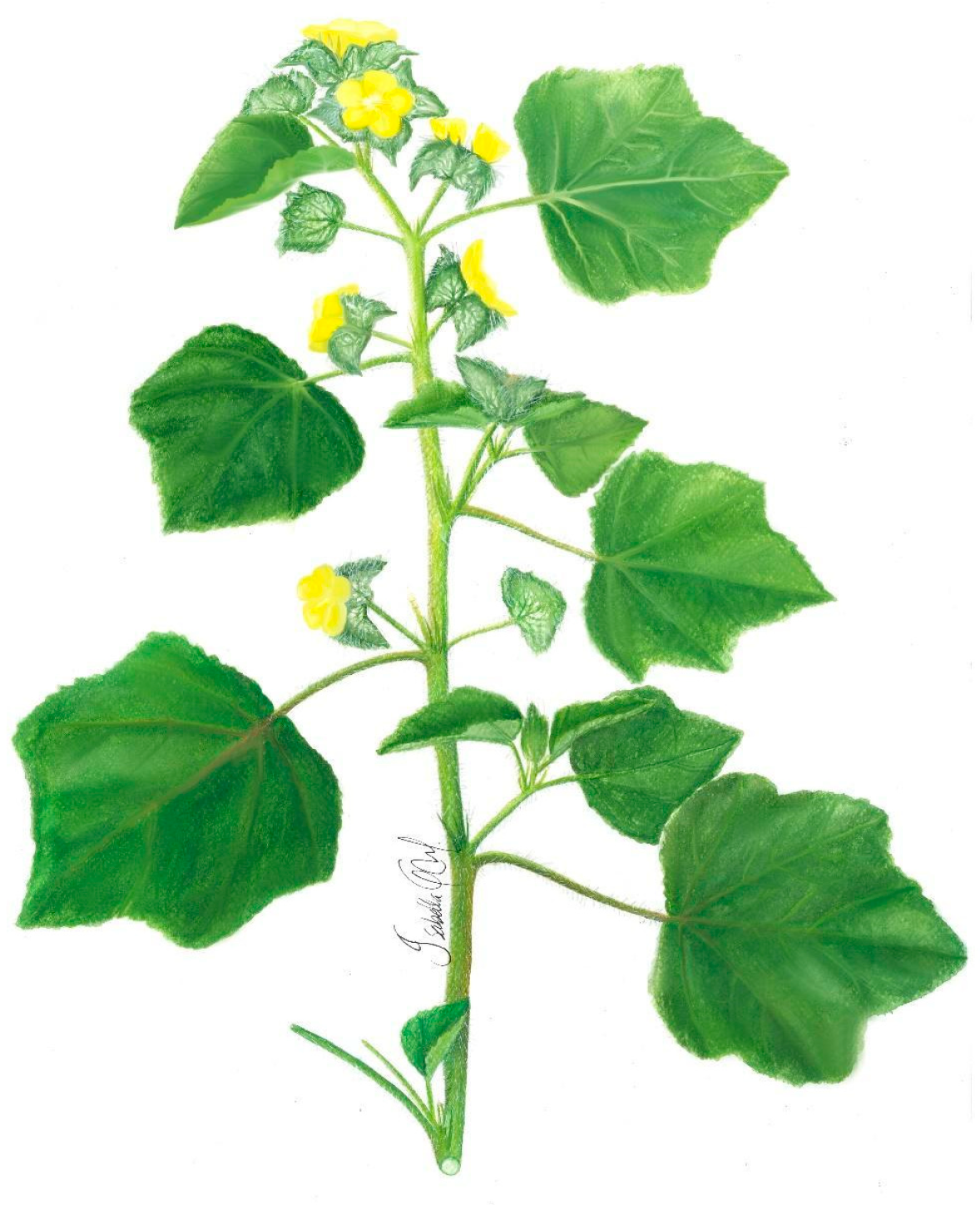
| Malachra alceifolia Jacq. | malauya, malva | Herb, subshrub | Native to Colombia, biogeographic region: Andean, Caribbean, Pacific 0–1800 m.a.s.l | Forest, woodland, savanna, shrubland, wetlands (inland), artificial–terrestrial. | LC (Least concern) |
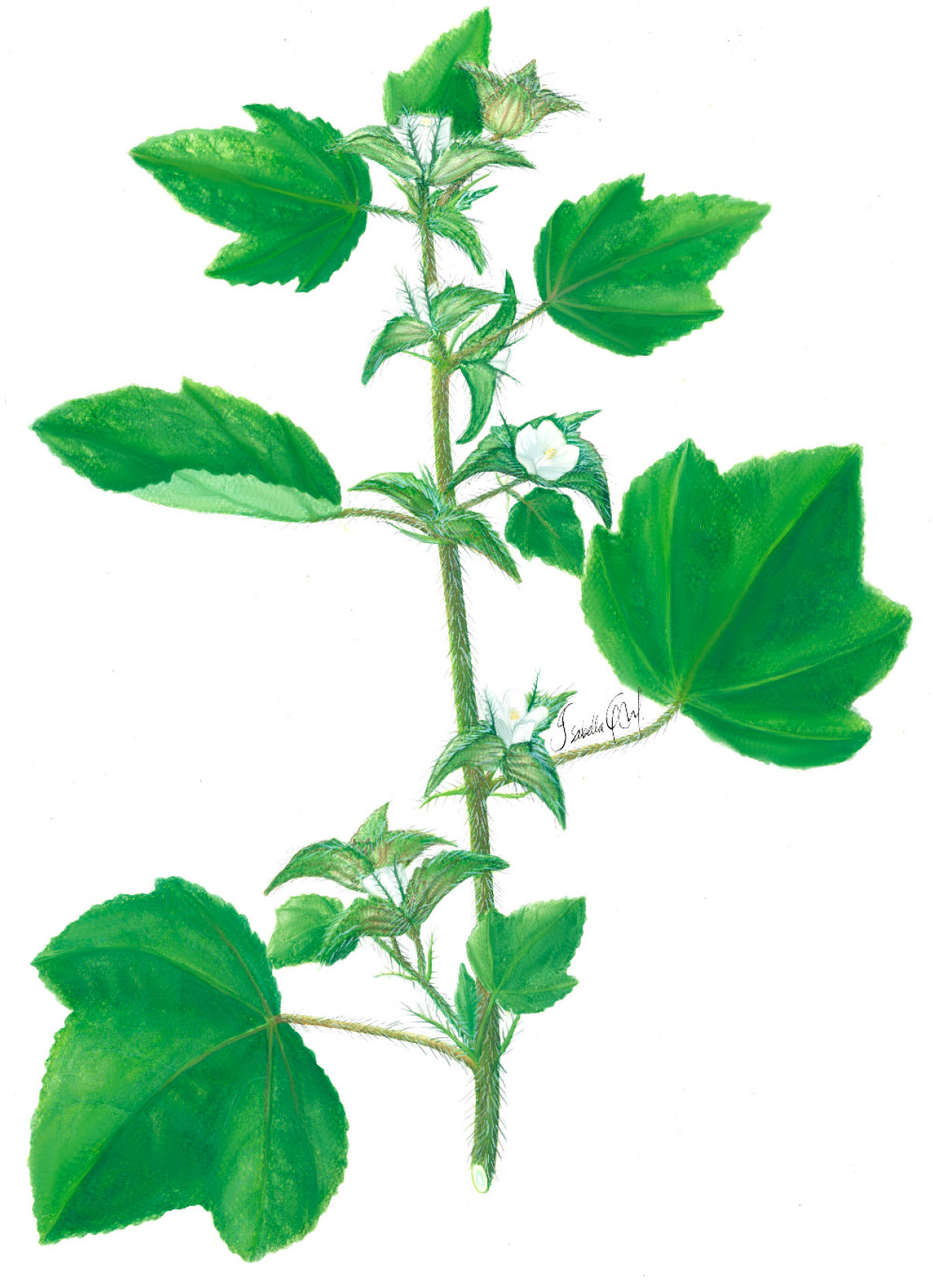
| Malachra capitata (L.) L. | malva, malvavisco | Herb, subshrub | Native to Colombia, biogeographic region: Andean, Caribbean, Pacific, Magdalena valley 200–1480 m.a.s.l | Forest, woodland, shrubland, artificial–terrestrial. | Not evaluated |
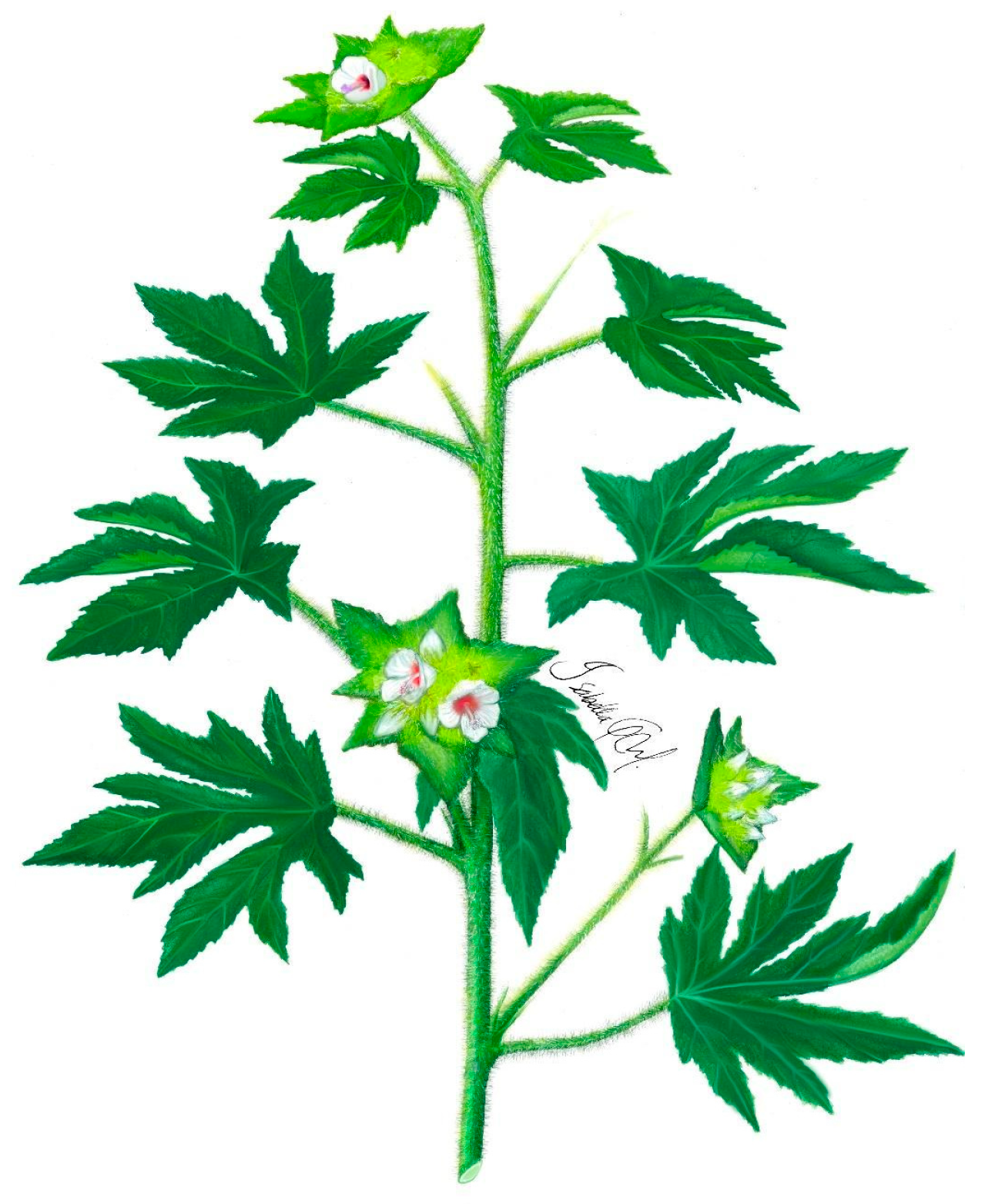
| Malachra fasciata Jacq. | malva peluda, mano de muerto | Herb, subshrub | Native to Colombia, biogeographic region: Caribbean, Orinoquia, Magdalena valley 30–830 m.a.s.l | savanna, shrubland | Not evaluated |
| Malachra radiata (L.) L. | malva pata de gallina | Shrub | Native to Colombia, biogeographic region: Caribbean, Amazonia 0–200 m.a.s.l | Savanna | Not evaluated |
| Malachra ruderalis Gürke. | escoba, malva | Subshrub | Native to Colombia, biogeographic region: Andean, Pacific 5–1100 m.a.s.l | No report | Not evaluated |
| Malachra rudis Benth. | malva cimarrona, malva peluda, malvón | Subshrub | Native to Colombia, biogeographic region: Andean, Caribbean, Pacific, Magdalena valley, Amazonia 0–2330 m.a.s.l | Forest, woodland, savanna, shrubland, wetlands (inland), artificial–terrestrial | Not evaluated |
| Malachra Species | Vernacular Name | Part Used (Condition) | Principal Medicinal Indication/ | Mode of Preparation | Way of Administration | Country | Reference |
|---|---|---|---|---|---|---|---|
| Malachra alceifolia Jacq. | Malva | Leaf | Inflammation and clogged nose | Decoction | Orally | Colombia | [1] |
| Leaf and shoots | Malaria | Decoction | Orally | Peru | [31,32,33] | ||
| Leaf | Childbirth, kidney disorder | Leaves minced with an egg-white (and soap) in water: bath | Bath | Perú | [34] | ||
| Drunk headache, kidney disorder | leaves minced with Citrus aurantifolia fruit juice and water | Bath | Perú | [34] | |||
| Headache, malaria, and fever | Leaves minced in water: bath | Bath | Perú | [34] | |||
| Headache | leaves infused and applied as a poultice | Application locally | Perú | [34] | |||
| Malachra capitata (L.) L. | Malva of Horse, Malva-Xiu, Malachra, Yellow leaf bract, Brazil jute. | Roots, leaf | Pain, diarrhea, convulsion, hepatic cirrhosis, inflammation, pyrexia, ulcer, dementia, treatment of wounds, gastric disorders, jaundice embrocations for rheumatism lumbago, and febrifuge | Infusion, decoction | Orally | India, Perú | [53,54,55] |
| Leaf | Childbirth, malaria, headache, and fever | Infusion, decoction | Orally | Perú | [34] | ||
| Malachra fasciata Jacq. | dead hand, hairy grass, malva Brava, wild okra. | Roots, leaf | Emollients, hemorrhoids, fever, and impotence | Infusion, decoction | Orally | Philippine’s | [29] |
| Leaf | Gonorrhea, rheumatism, demulcent, and diuretic | Decoction | No report | No report | [30] | ||
| Malachra ruderalis Gürke. | Malva | Roots, fresh or dried | diseases of the respiratory tract: fever, cough, sore throat, flu, colds, pneumonia, whooping cough, pulmonary diseases, and COVID-19 | Infusion, decoction | Orally | Perú | [35] |
| Flowers | Stomach problems, diarrhea, fever, skin spots, skin infections, gastritis, and stress | No report | No report | Ecuador | [56] | ||
| Whole plant | Inflammation and vaginal infection | Decoction | No report | Colombia | [57] |
| Malachra species | Plant Part Used | Phytoconstituents | Reference |
|---|---|---|---|
| Malachra alceifolia Jacq. | Leaf | Flavonoids, steroids, triterpenes anthocyanins, leucoanthocyanins, saponins | [22] |
| Flowers | Flavonoids, steroids, triterpenes anthocyanins, leucoanthocyanins | ||
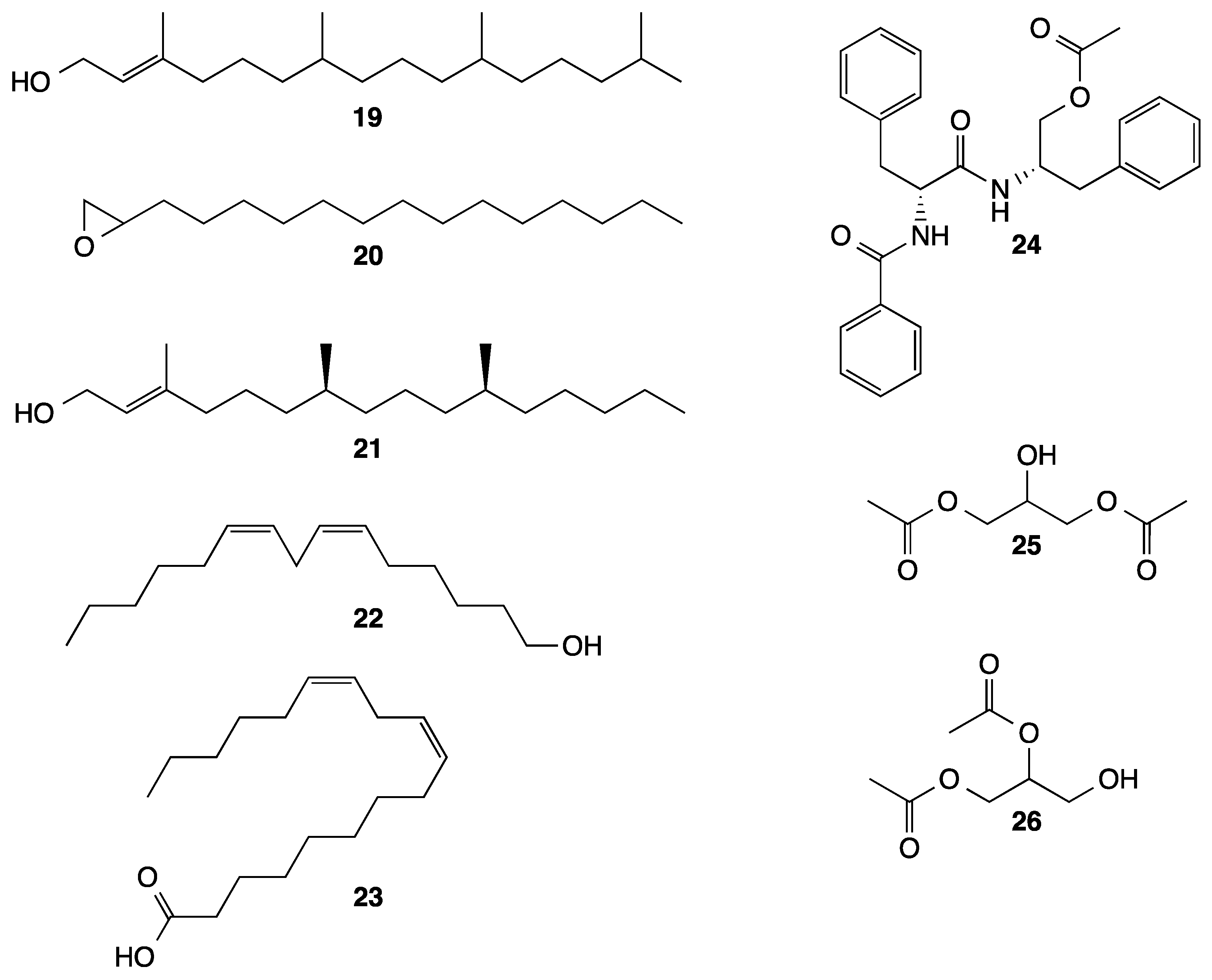
| Malachra capitata (L.) L. | Root | Gallic acid (1), caffeic acid (2), rutin (3), quercetin (4), ferulic acid (5) | [23,24] |
| Leaf | Rutin, ferulic acid | ||
| Stem | Gallic acid | ||
| Whole plant | β-Sitosterol (6) | [25] | |
| Root | Carbohydrates, phenols, flavonoids, glycosides, triterpenes, alkaloids, tannins, saponins | [23,24] | |
| Root | Tetradecanoic acid, ethyl ester (7); | [23,24] | |
| linolenic acid, ethyl ester (8); | |||
| (E)-11-hexadecenoic acid, ethyl ester (9); | |||
| hexadecanoic acid, ethyl ester (10); | |||
| octadecanoic acid, ethyl ester (11); | |||
| didecyl phthalate (12); | |||
| (Z,Z,Z)-1,4,6,9-nonadecatetraene (13); | |||
| squalene (14) | |||
| Stem | Tetradecanoic acid, ethyl ester; | [27,28] | |
| pentadecanoic acid, 2,6,10,14- tetramethyl methyl ester (15); | |||
| linolenic acid, methyl ester; | |||
| (E)-11-hexadecenoic acid, ethyl ester; | |||
| octadecanoic acid, ethyl ester; | |||
| (Z,Z,Z)-1,4,6,9-nonadecatetraene | |||
| azobenzene, 4,4′-dibromo- (16); | |||
| squalene | |||
| oleic acid (17) | |||
| Cholestan-3-ol, 2-methylene-(3β,5α)- (18); | |||
| Leaf | Tetradecanoic acid, ethyl ester | [27,28] | |
| 3,7,11,15-tetramethyl-2-hexadecen-1-ol (19); | |||
| Oxirane, tetradecyl- (20); | |||
| (E)-11-hexadecenoic acid, ethyl ester | |||
| Hexadecanoic acid, ethyl ester | |||
| Phytol (21); | |||
| (Z,Z) 6,9 pentadecadien-1-ol (22); | |||
| (Z,Z) 9,12-octadecadienoic acid (23); | |||
| octadecanoic acid, ethyl ester; | |||
| squalene | |||
| Leaf | Flavonoids, glycosides, triterpenes, alkaloids, tannins, saponins, phlobatannins | [27,28] | |
| Malachra fasciata Jacq. | Leaf | Aurantiamide acetate (24) | [29] |
| Leaf | 1,3-Diacylglycerol (25) 1,2-Diacylglycerol (26) | [30] |
| Malachra Species | Plant Part Used | Extract/Compounds | Pharmacological Activity | Concentration | Method | Major Findings | Reference |
|---|---|---|---|---|---|---|---|
| M. alceifolia Jacq. | Leaf | Ethanolic | Antiplasmodial | 10 µg/mL | In vitro Plasmodium falciparum 152.2 ± 28.6 nM Chloroquine control | Inhibitory activity on P. falciparum ferriprotoporphyrin biomineralization inhibition | [31,32] |
| Shoot | Ethanolic | Antiplasmodial | 77 µg/mL | In vitro Plasmodium falciparum (3D7) chloroquine (concentration no report) | Inhibitory activity on P. falciparum | [33] | |
| M. capitata (L.) L. | Leaf | Ethanolic | Antibacterial | 62.5 ppm | In vitro MIC | Inhibition of the growth of Propionibacterium acnes (ATCC 6919) | [71] |
| Shoot | Aqueous | Antidiarrhoeal | 200 and 400 mg/kg | In vivo oral administration to Wistar rats; castor oil-induced diarrhoea, enteropooling, and small intestinal transit; 5 mL/kg, p.o diphenoxlate control | Decreases intestinal transit | [72] | |
| Aqueous | Anti-epileptic | 250 and 500 mg/kg | In vivo maximal electroshock (MES) and pentylenetetrazole (PTZ)-induced seizuresmodels in albino Wistar rats, pentylenetetrazol control | Anticonvulsant activity against MES and PTZ animal models | [72] | ||
| Aqueous | Anti-ulcerogenic | 200 mg/kg and 400 mg/kg | In vivo oral administration to Wistar rats pylorus ligated model, 50mg/kg, p.o ranitidine control | Reduce the gastric acid secretion of pylorus | [72] | ||
| Aqueous | Antioxidant | 200 and 400 mg/kg | In vivo oral administration to Wistar rats | Inhibit the accumulation of lipid peroxidation product, superoxide dismutase, and catalase activities | [73] | ||
| Aqueous | Hepatoprotective | 100, 200 and 400 mg/kg | In vivo oral administration to Wistar rats, carbon tetrachloride CCl4 induced hepatotoxicity | Reduced levels of the hepatic enzymes SGOT, SGPT, alkaline phosphatase (ALP), and acid phosphatase (ACP) | [74] | ||
| Leaf silver nanoparticles (AgNPs) | n-hexane | Antibacterial | 1 mM | In vitro MIC | Nanoparticles bactericidal Bacillus subtillis, Micrococcus Luteus, Staphylococcus aureus and Pseudomonas aeruginosa | [75] | |
| Leaf | Methanolic, Chloroform Benzene | Antibacterial | 50 mg/mL | In vitro MIC | Inhibition of the growth of Escherichia coli Listeria monocytogenes | [76] | |
| Malachra fasciata Jacq. | Leaf | Chloroform/ Aurantiamide acetate | Antimicrobial | 80 μg | In vitro MIC | Inhibition of the growth of P. aeruginosa, B. subtilis, C. albicans, | [29] |
| Leaf | Unknown | Phototoxic (photosensitization) | Unknown | In vivo sheep females and male | Cause of primary photodermatitis in sheep ingestion leaf | [77] | |
| Leaf | Chloroform | Antifungal | 30 µg | In vitro MIC | Inhibition of the growth of Aspergillus niger | [29] | |
| Leaf | -(-)loliolide | Antimutagenic | 8 mg/kg | In vitro micronucleus test induced using mitomycin C, 32% | Reduce the number of micronucleated polychromatic erythrocytes (MPCE) | [30] |
Publisher’s Note: MDPI stays neutral with regard to jurisdictional claims in published maps and institutional affiliations. |
© 2022 by the authors. Licensee MDPI, Basel, Switzerland. This article is an open access article distributed under the terms and conditions of the Creative Commons Attribution (CC BY) license (https://creativecommons.org/licenses/by/4.0/).
Share and Cite
Cervantes-Ceballos, L.; Sánchez-Hoyos, J.; Sanchez-Hoyos, F.; Torres-Niño, E.; Mercado-Camargo, J.; Echeverry-Gómez, A.; Jotty Arroyo, K.; del Olmo-Fernández, E.; Gómez-Estrada, H. An Overview of Genus Malachra L.—Ethnobotany, Phytochemistry, and Pharmacological Activity. Plants 2022, 11, 2808. https://doi.org/10.3390/plants11212808
Cervantes-Ceballos L, Sánchez-Hoyos J, Sanchez-Hoyos F, Torres-Niño E, Mercado-Camargo J, Echeverry-Gómez A, Jotty Arroyo K, del Olmo-Fernández E, Gómez-Estrada H. An Overview of Genus Malachra L.—Ethnobotany, Phytochemistry, and Pharmacological Activity. Plants. 2022; 11(21):2808. https://doi.org/10.3390/plants11212808
Chicago/Turabian StyleCervantes-Ceballos, Leonor, Jorge Sánchez-Hoyos, Fredys Sanchez-Hoyos, Erick Torres-Niño, Jairo Mercado-Camargo, Amparo Echeverry-Gómez, Karick Jotty Arroyo, Esther del Olmo-Fernández, and Harold Gómez-Estrada. 2022. "An Overview of Genus Malachra L.—Ethnobotany, Phytochemistry, and Pharmacological Activity" Plants 11, no. 21: 2808. https://doi.org/10.3390/plants11212808
APA StyleCervantes-Ceballos, L., Sánchez-Hoyos, J., Sanchez-Hoyos, F., Torres-Niño, E., Mercado-Camargo, J., Echeverry-Gómez, A., Jotty Arroyo, K., del Olmo-Fernández, E., & Gómez-Estrada, H. (2022). An Overview of Genus Malachra L.—Ethnobotany, Phytochemistry, and Pharmacological Activity. Plants, 11(21), 2808. https://doi.org/10.3390/plants11212808