Article

The Taxonomically Richest Liverwort Hemiboreal Flora in Eurasia Is in the South Kurils

1
Laboratory of Cryptogamic Biota, Botanical Garden-Institute FEB RAS, Makovskogo Street 142, 690024 Vladivostok, Russia
2
AXiiO Oy Company, Helsinki XR Center, Hämeentie, 135 A, 00560 Helsinki, Finland
3
Team of National Ecosystem Survey, National Institute of Ecology, Seocheon 33657, Korea
*
Authors to whom correspondence should be addressed.
Plants 2022, 11(17), 2200; https://doi.org/10.3390/plants11172200

Submission received: 9 July 2022 / Revised: 21 August 2022 / Accepted: 23 August 2022 / Published: 25 August 2022
(This article belongs to the Special Issue Diversity, Ecology and Taxonomy of Cryptogams)

Abstract

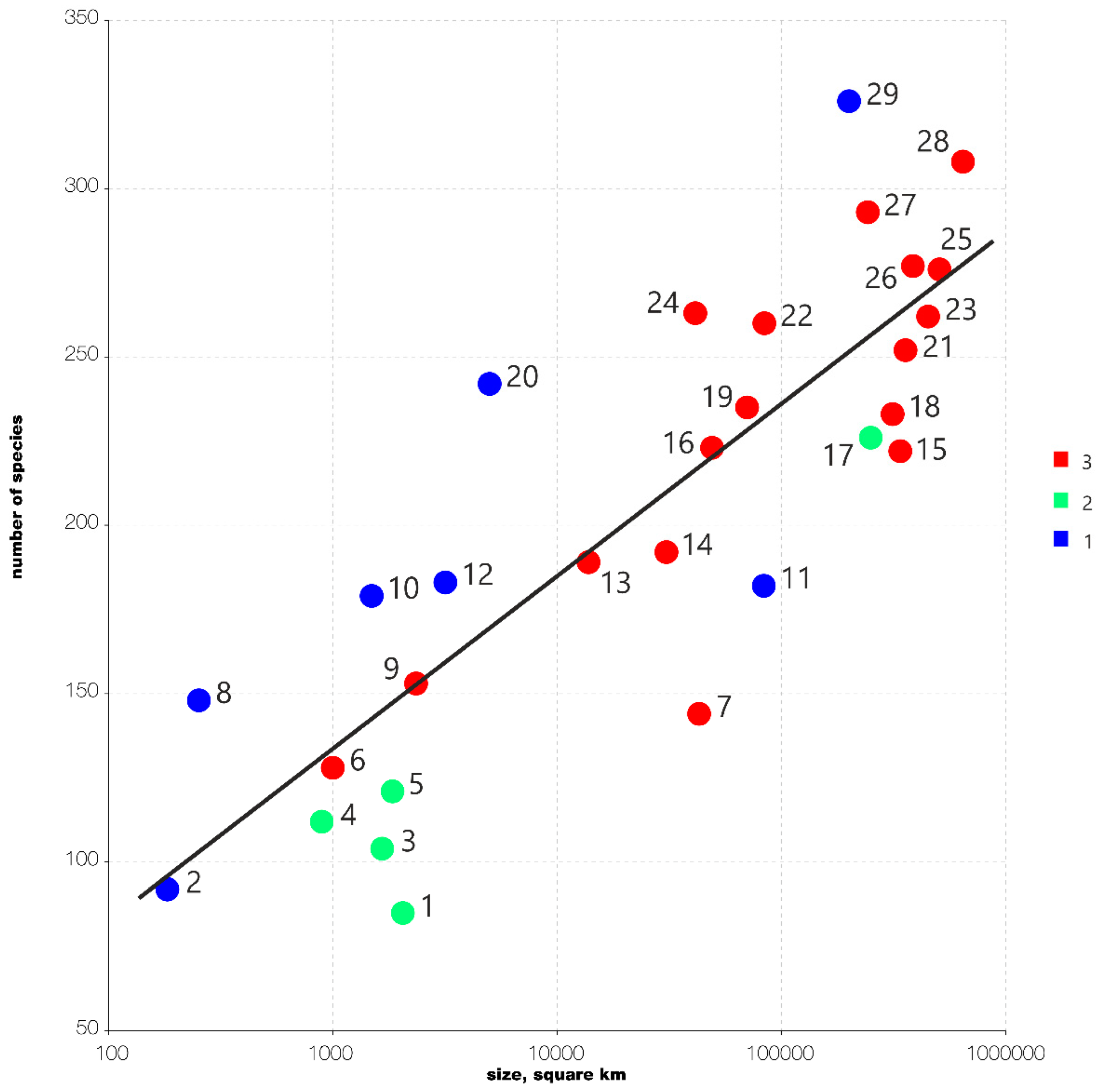
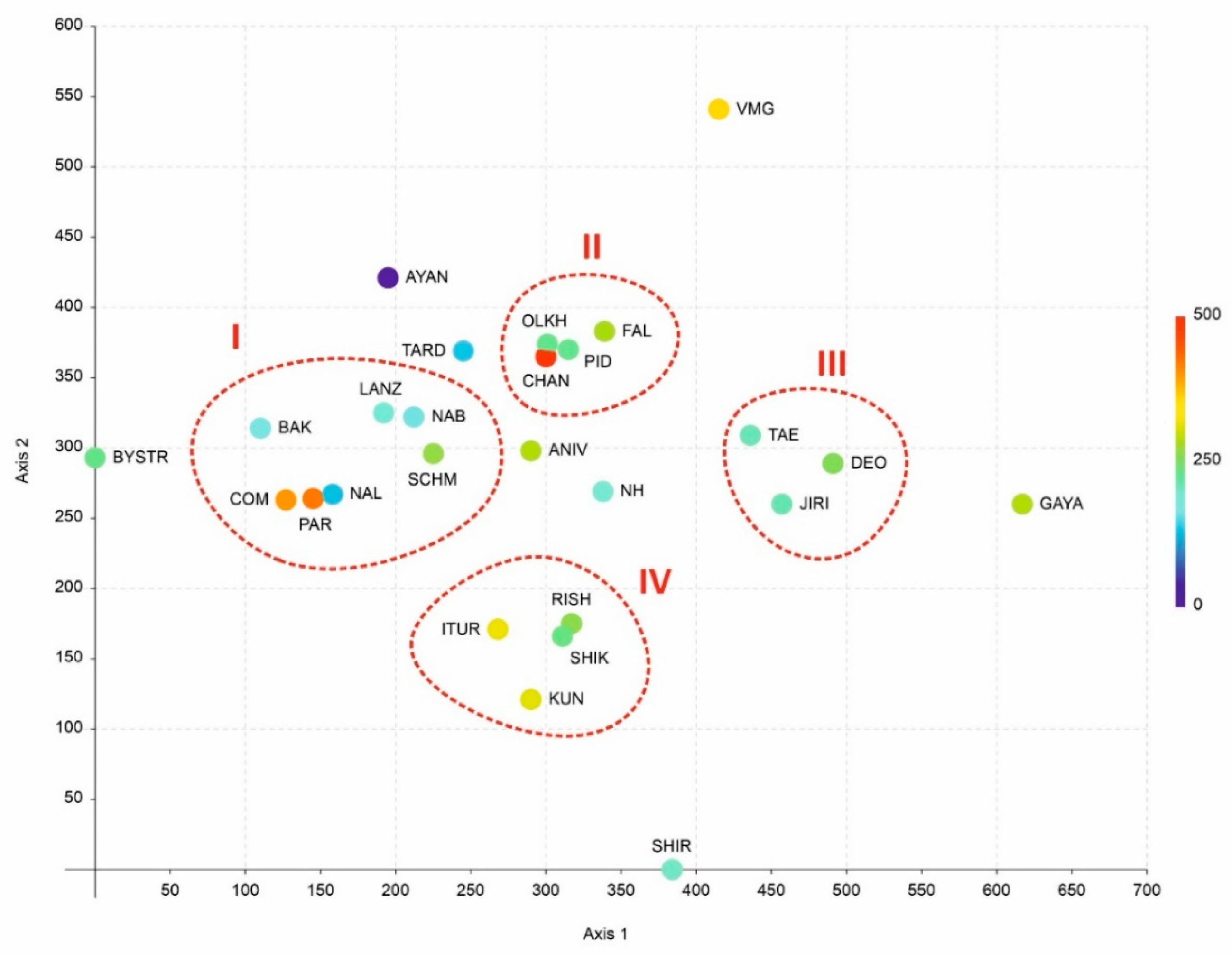
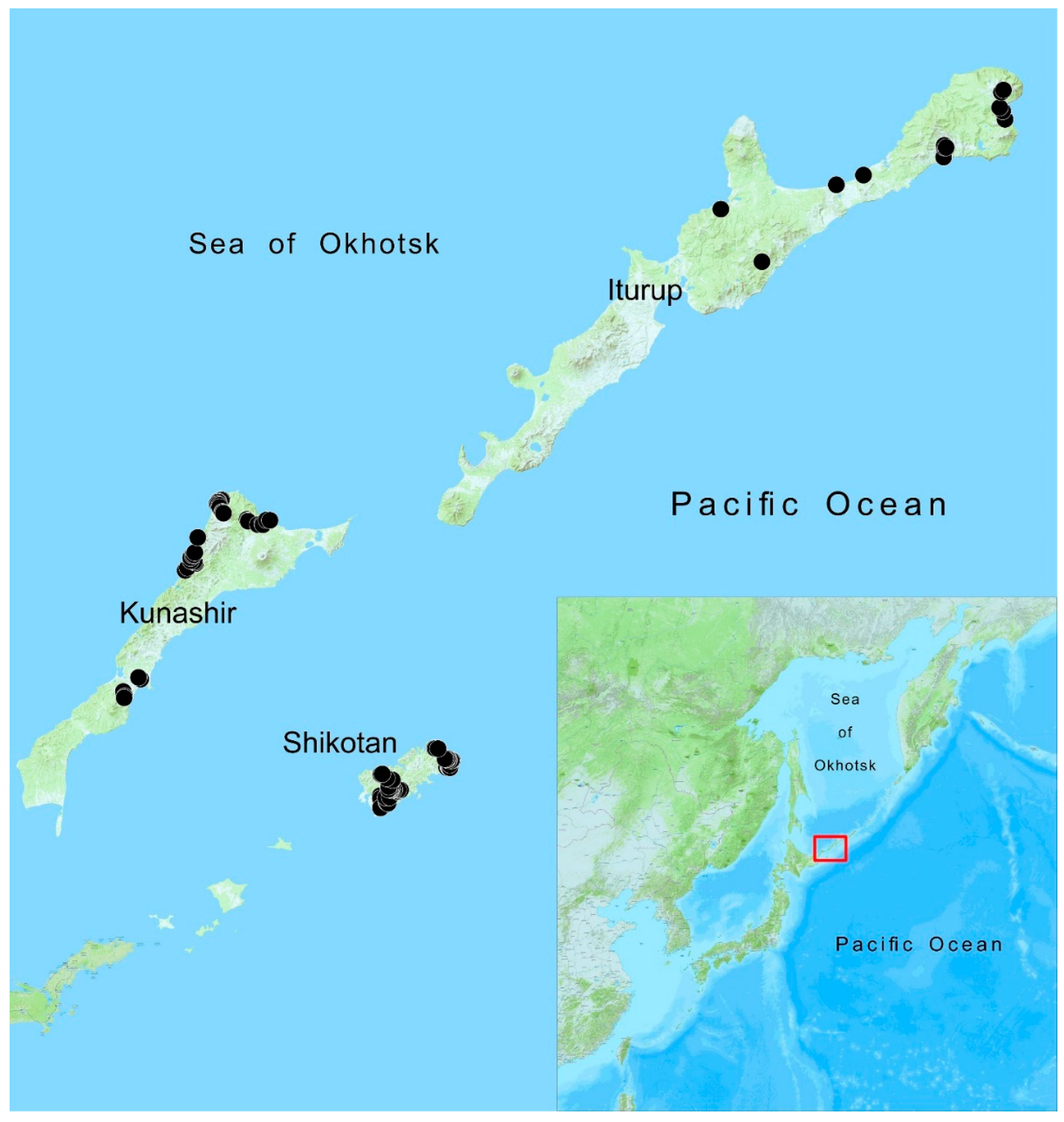
The long coexistence of various floral elements, landscape diversity, and island isolation led to the formation of the richest Eurasian hemiboreal liverwort flora in the southern Kurils. This land that covers less than 5000 square kilometres and houses 242 species and two varieties of liverworts and hornworts. The flora ‘core’ is represented by hemiboreal East Asian and boreal circumpolar taxa. Other elements that have noticeable input in the flora formation are cool-temperate East Asian hypoarctomontane circumpolar and arctomontane. The distribution of some species is restricted to the thermal pools near active or dormant volcanoes or volcanic ash deposits; such species generally provide specificity to the flora. Despite the territorial proximity, the climate of each considered island is characterized by features that, in the vast majority of cases, distinguish it from the climate of the neighbouring island. The last circumstance may inspire the difference in the liverwort taxonomic composition of each of the islands. The comparison of the taxonomic composition of district floras in the Amphi-Pacific hemiarctic, boreal, and cool-temperate Asia revealed four main focal centres: East Kamchatka Peninsula and Sakhalin Island, the southern Sikhote-Alin and the East Manchurian Mountains, the mountains of the southern part of the Korean Peninsula, and the South Kurils plus northern Hokkaido. The remaining floras involved in the comparison occupy an intermediate position between these four centres.
Keywords: liverworts; diversity; distribution patterns; East Asia; Pacific; hemiboreal zone liverworts; diversity; distribution patterns; East Asia; Pacific; hemiboreal zone