Article

Combining Genetic and Multidimensional Analyses to Identify Interpretive Traits Related to Water Shortage Tolerance as an Indirect Selection Tool for Detecting Genotypes of Drought Tolerance in Wheat Breeding

by
Ibrahim Al-Ashkar
1,2,*,
Nasser Al-Suhaibani
1,
Kamel Abdella
1,
Mohammed Sallam
1,
Majed Alotaibi
1 and
Mahmoud F. Seleiman
1,3,*
1
Plant Production Department, College of Food and Agriculture Sciences, King Saud University, Riyadh 11451, Saudi Arabia
2
Agronomy Department, Faculty of Agriculture, Al-Azhar University, Cairo 11651, Egypt
3
Department of Crop Sciences, Faculty of Agriculture, Menoufia University, Shibin El-Kom 32514, Egypt
*
Authors to whom correspondence should be addressed.
Plants 2021, 10(5), 931; https://doi.org/10.3390/plants10050931

Submission received: 30 March 2021 / Revised: 25 April 2021 / Accepted: 28 April 2021 / Published: 7 May 2021

Abstract

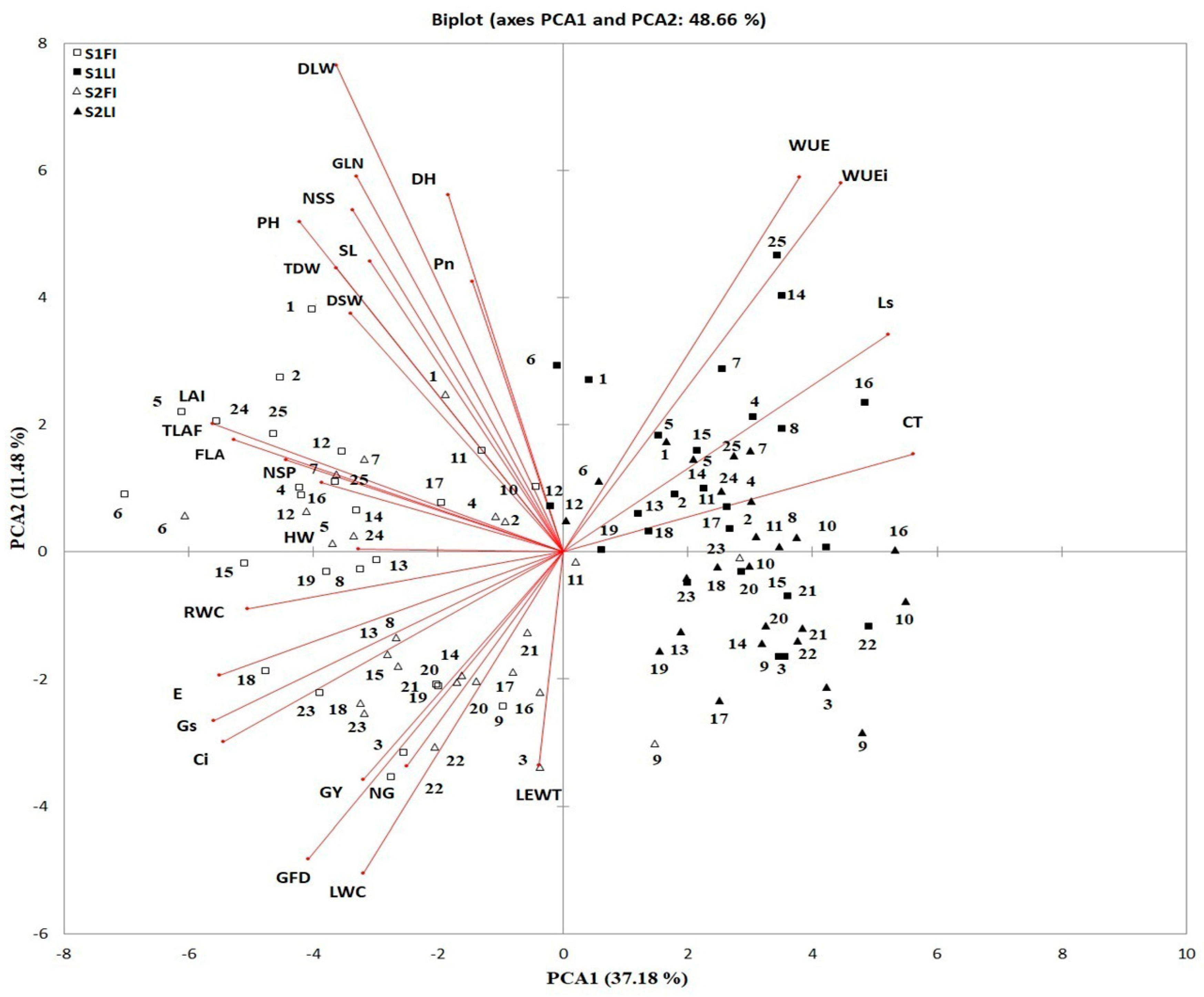
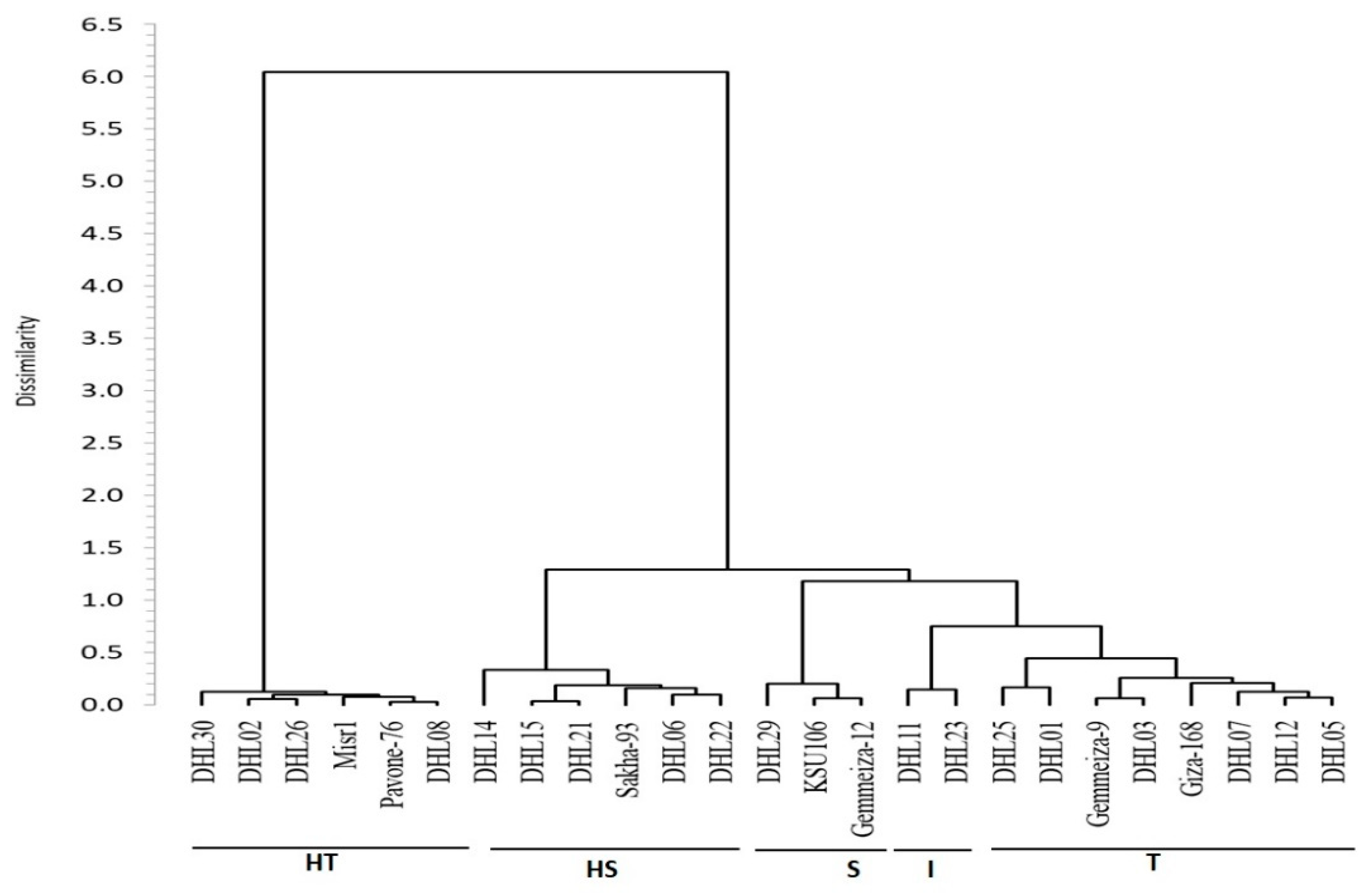
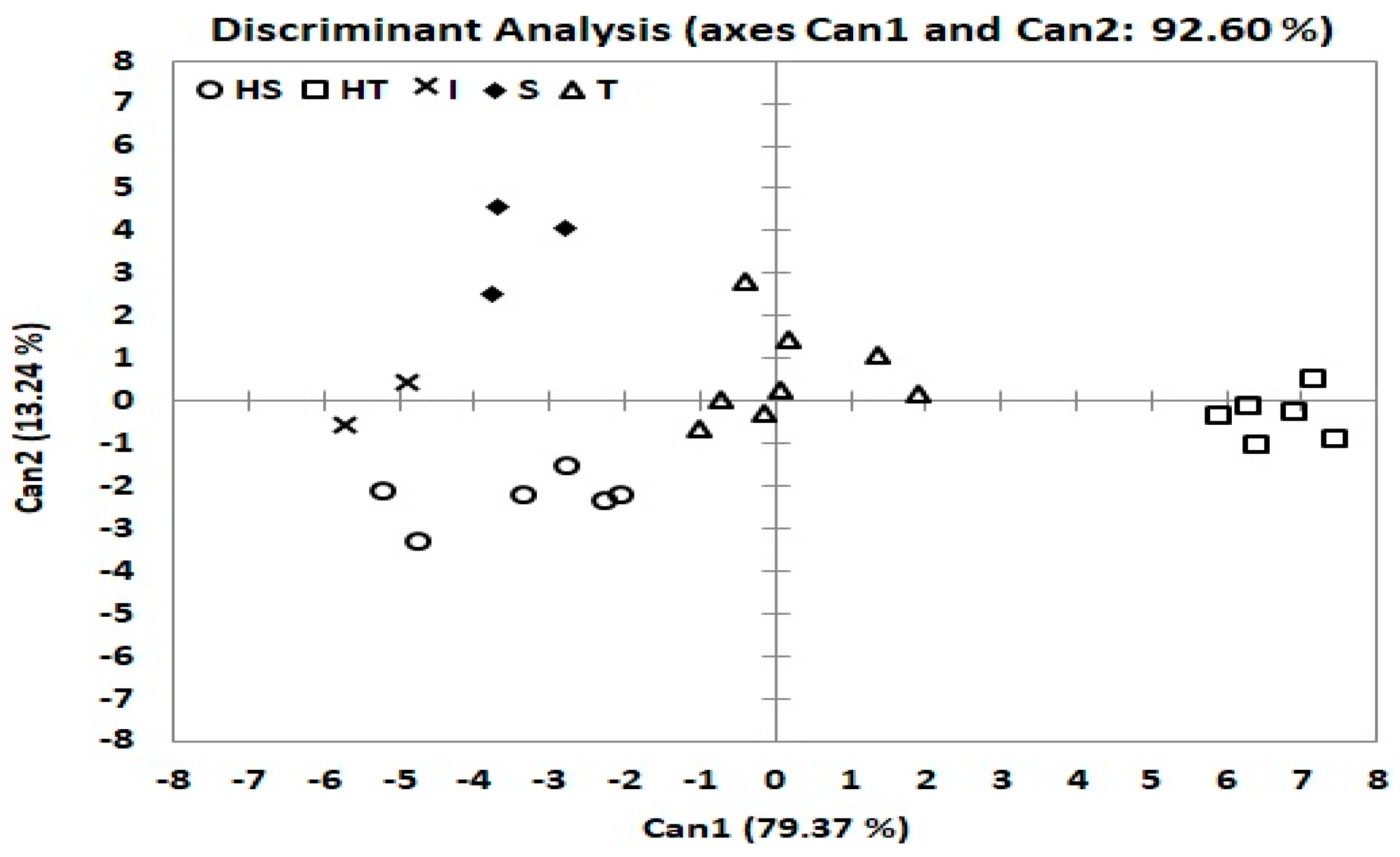
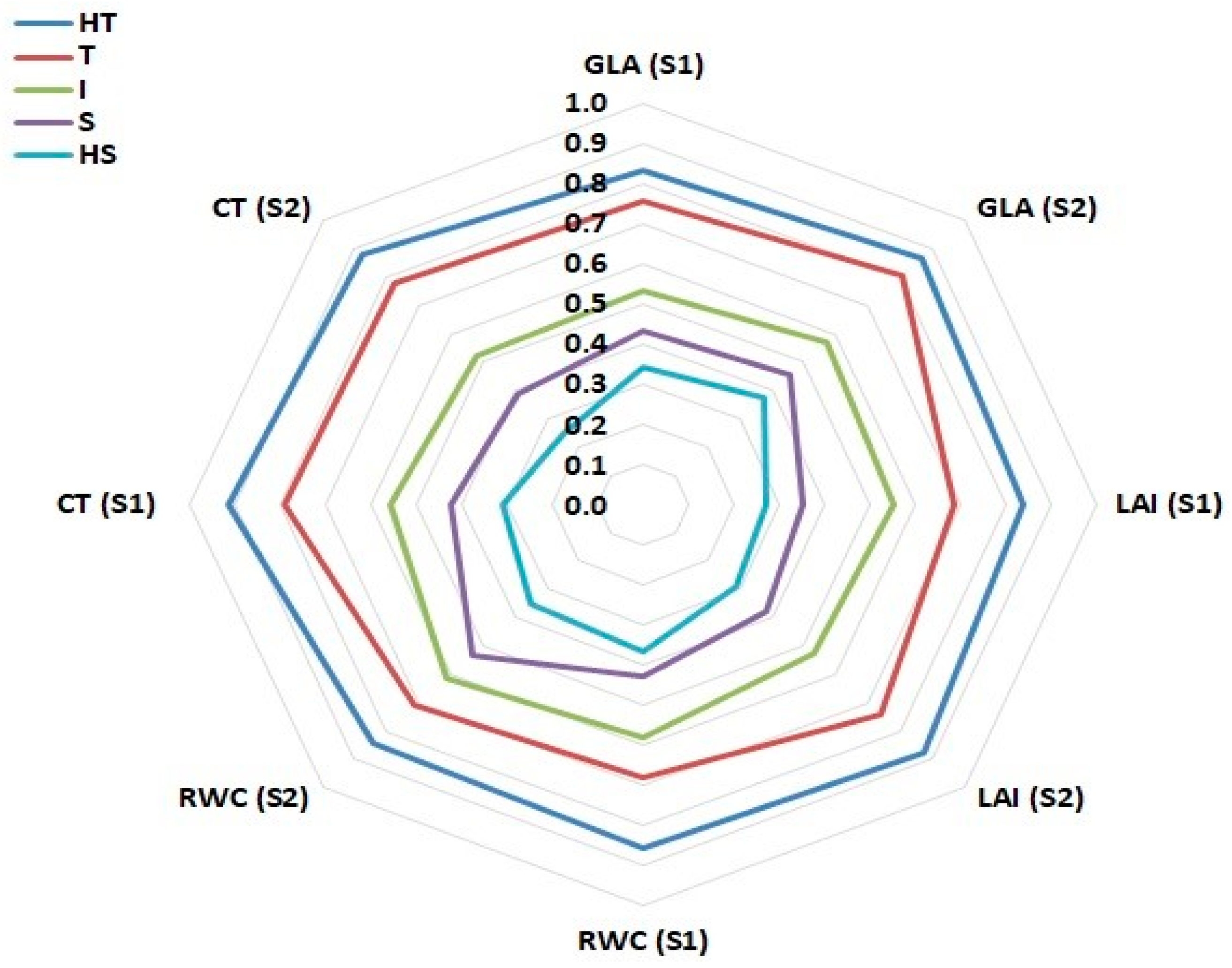
Water shortages have direct adverse effects on wheat productivity and growth worldwide, vertically and horizontally. Productivity may be promoted using water shortage-tolerant wheat genotypes. High-throughput tools have supported plant breeders in increasing the rate of stability of the genetic gain of interpretive traits for wheat productivity through multidimensional technical methods. We used 27 agrophysiological interpretive traits for grain yield (GY) of 25 bread wheat genotypes under water shortage stress conditions for two seasons. Genetic parameters and multidimensional analyses were used to identify genetic and phenotypic variations of the wheat genotypes used, combining these strategies effectively to achieve a balance. Considerable high genotypic variations were observed for 27 traits. Eleven interpretive traits related to GY had combined high heritability (h2 > 60%) and genetic gain (>20%), compared to GY, which showed moderate values both for heritability (57.60%) and genetic gain (16.89%). It was determined that six out of eleven traits (dry leaf weight (DLW), canopy temperature (CT), relative water content (RWC), flag leaf area (FLA), green leaves area (GLA) and leaf area index (LAI)) loaded the highest onto PC1 and PC2 (with scores of >0.27), and five of them had a positive trend with GY, while the CT trait had a negative correlation determined by principal component analysis (PCA). Genetic parameters and multidimensional analyses (PCA, stepwise regression, and path coefficient) showed that CT, RWC, GLA, and LAI were the most important interpretive traits for GY. Selection based on these four interpretive traits might improve genetic gain for GY in environments that are vulnerable to water shortages. The membership index and clustering analysis based on these four traits were significantly correlated, with some deviation, and classified genotypes into five groups. Highly tolerant, tolerant, intermediate, sensitive and highly sensitive clusters represented six, eight, two, three and six genotypes, respectively. The conclusions drawn from the membership index and clustering analysis, signifying that there were clear separations between the water shortage tolerance groups, were confirmed through discriminant analysis. MANOVA indicated that there were considerable variations between the five water shortage tolerance groups. The tolerated genotypes (DHL02, DHL30, DHL26, Misr1, Pavone-76 and DHL08) can be recommended as interesting new genetic sources for water shortage-tolerant wheat breeding programs.
Keywords: water shortage stress; bread wheat; interpretive traits; agrophysiological traits; genetic parameters; multidimensional analysis water shortage stress; bread wheat; interpretive traits; agrophysiological traits; genetic parameters; multidimensional analysis