Article

LED and HPS Supplementary Light Differentially Affect Gas Exchange in Tomato Leaves

by
Onofrio Davide Palmitessa
1,2,*,
Aina E. Prinzenberg
2,3,
Elias Kaiser
2 and
Ep Heuvelink
2
1
Department of Agricultural and Environmental Science, University of Bari Aldo Moro, 70126 Bari, Italy
2
Horticulture and Product Physiology, Wageningen University and Research, PO Box 16, 6700 AA Wageningen, The Netherlands
3
Plant Breeding Laboratory, Wageningen University and Research, PO Box 386, 6700 AJ Wageningen, The Netherlands
*
Author to whom correspondence should be addressed.
Plants 2021, 10(4), 810; https://doi.org/10.3390/plants10040810

Submission received: 13 March 2021 / Revised: 12 April 2021 / Accepted: 16 April 2021 / Published: 20 April 2021

Abstract

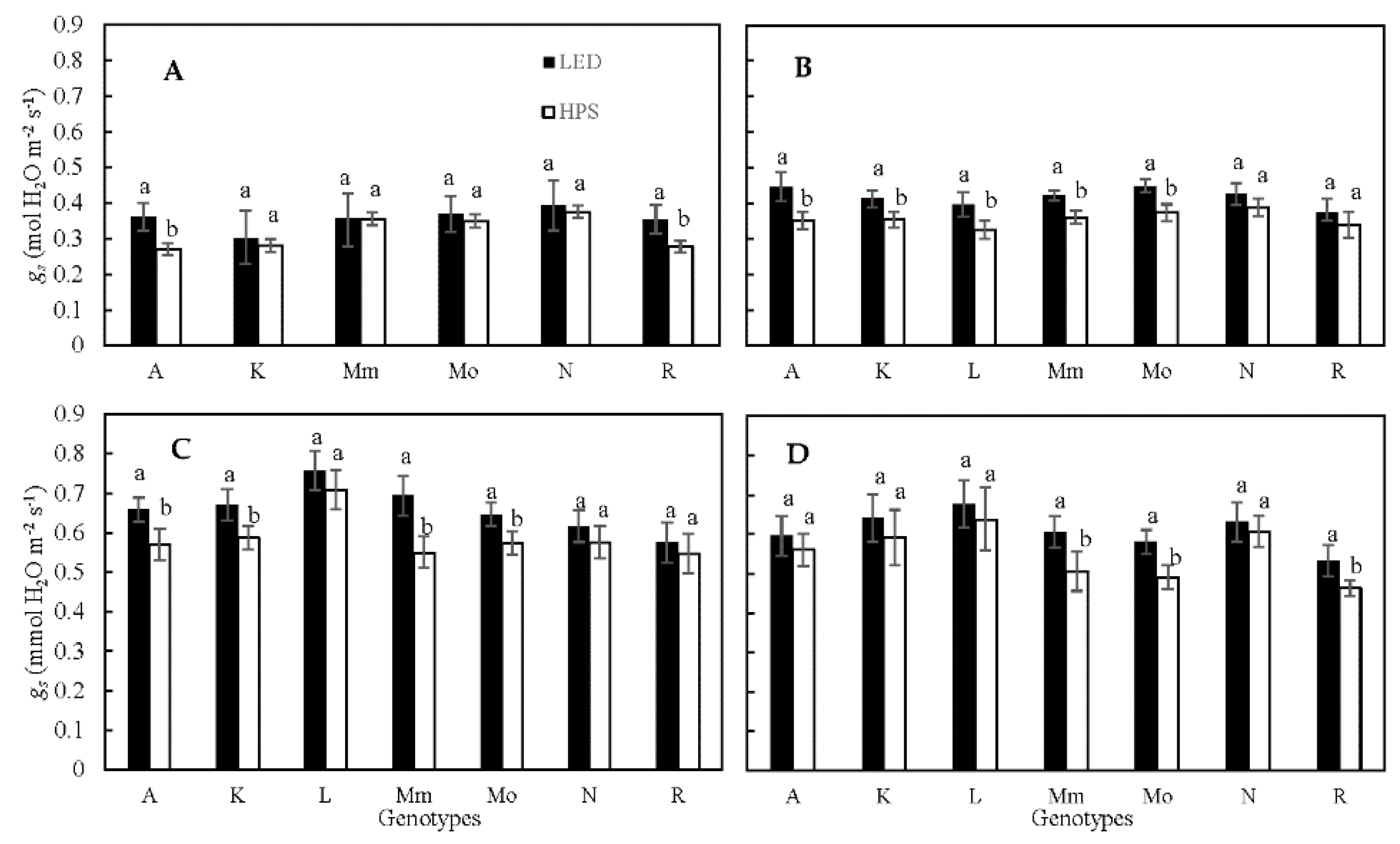
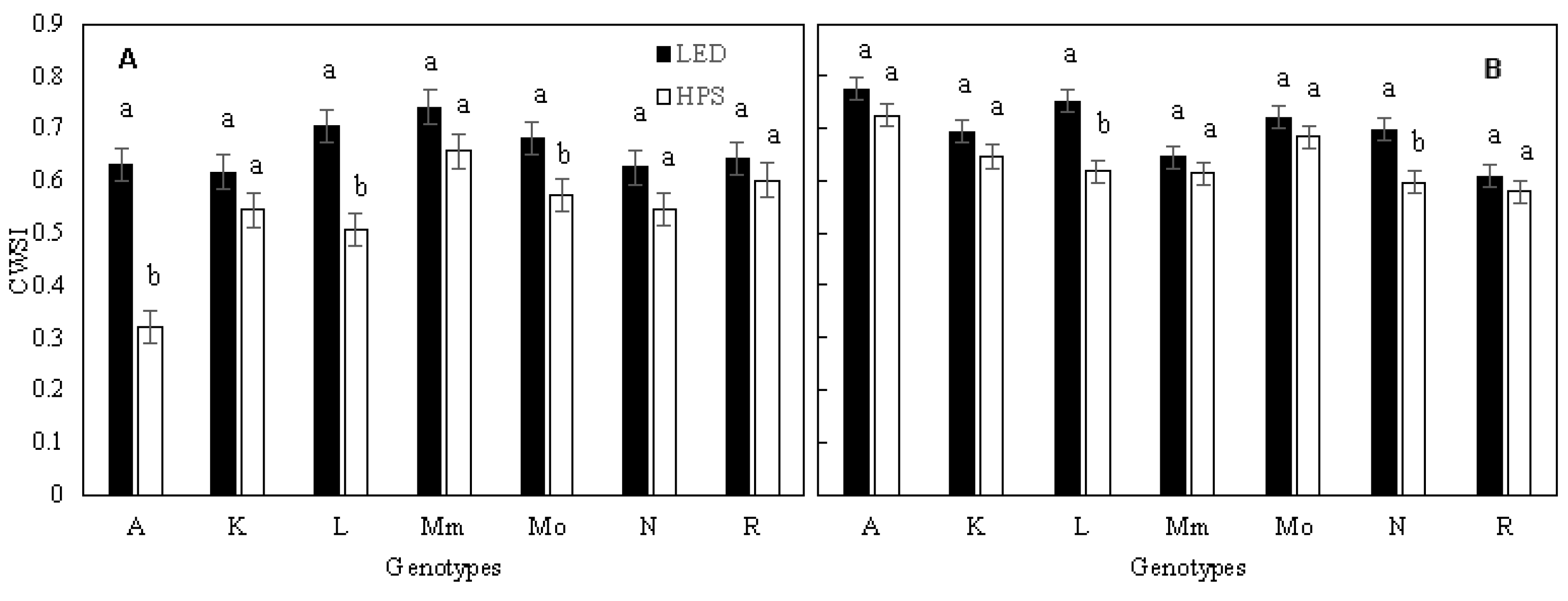
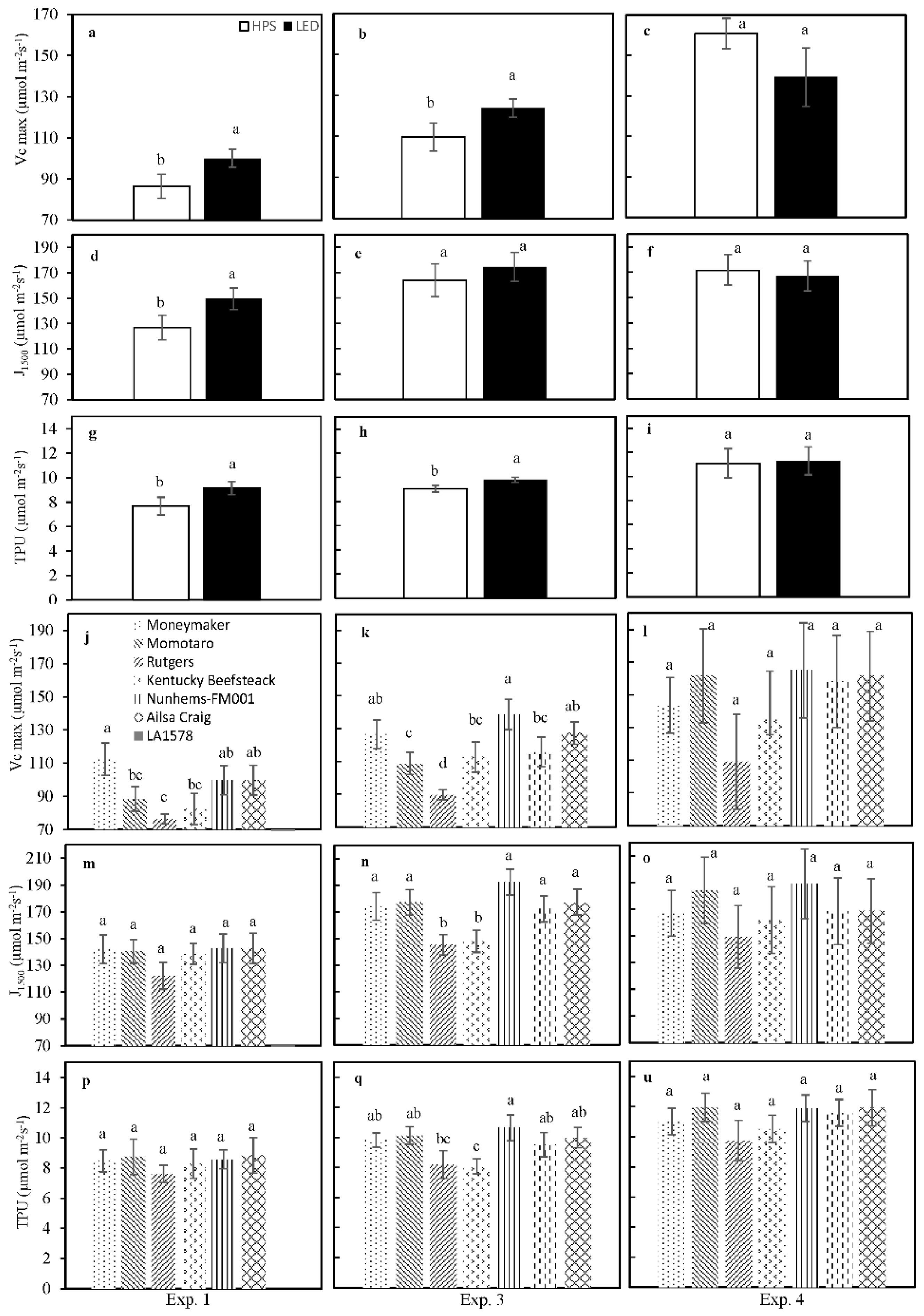
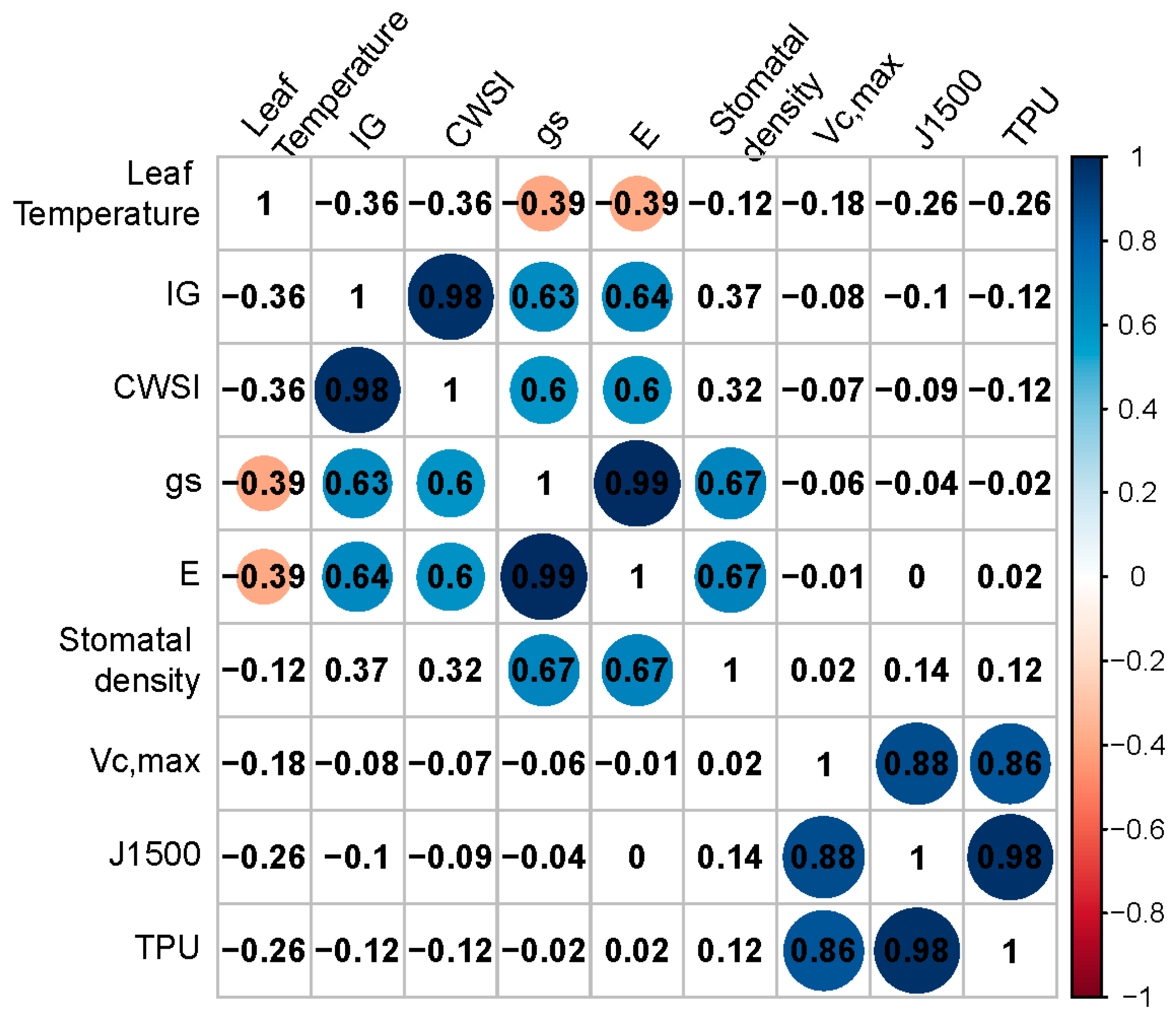
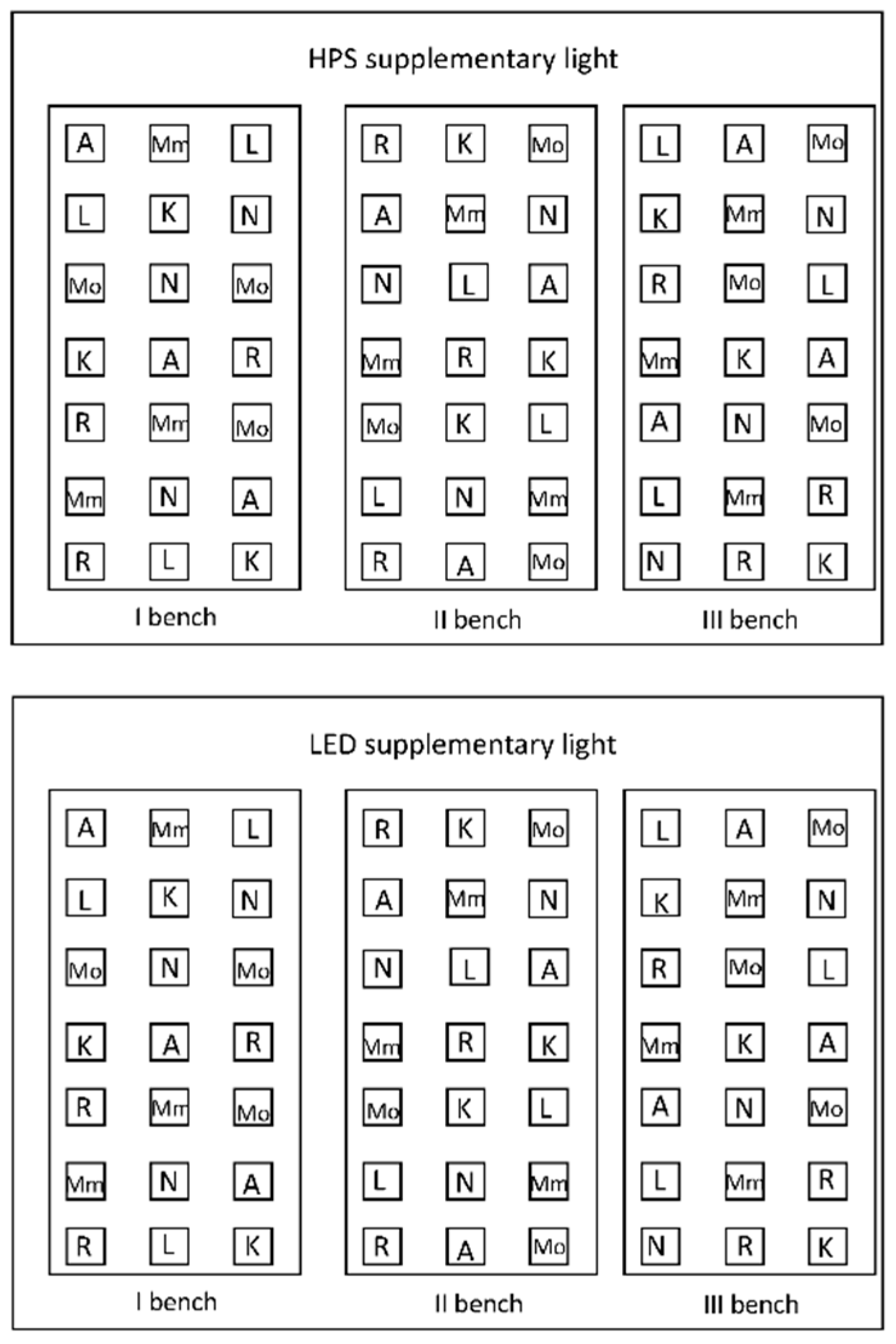
Using light emitting diodes (LED) instead of conventionally used high pressure sodium (HPS) lamps as a supplemental light source in greenhouses results in a higher efficacy (µmol light per J electricity) and makes it possible to customize the light spectrum. To explore the effects of LED and HPS on gas exchange, thermal relations, photosynthesis, and water status of young tomato plants, seven genotypes were grown in a greenhouse under LED (95% red, 5% blue) or HPS lamps in four experiments differing in the fraction of lamp light over natural light. HPS lights emit a broader spectrum of red (40%), green–yellow (50%), blue (5%), and far-red (5%) and a substantial amount of infrared radiation (heat). Young tomato plants grown under LED showed lower leaf temperature and higher stomatal density, stomatal conductance (gs) and transpiration rate (E) than plants grown under HPS; this may be due to the different supplemental light spectrum. The young plants grown under LED tended to have increased photosynthetic capacity. Furthermore, the water stress indices CWSI and IG, which were obtained using thermal imaging, were positively correlated with gas exchange-derived gs and E, putting forward the use of thermal imaging for the phenotyping of transpiration. Under LED light, photosynthetic gas exchange was generally increased, which agreed with the water stress indices. The extent of this increase was genotype-dependent. All differences between LED and HPS were smaller in the experiments where the fraction of lamp light over natural light was smaller.
Keywords: greenhouse; photosynthesis; stomatal conductance; thermal imaging; transpiration rate; leaf temperature greenhouse; photosynthesis; stomatal conductance; thermal imaging; transpiration rate; leaf temperature