


Thermal Stresses in Maize: Effects and Management Strategies

 , ,
, ,  ,
,  , and
, and
Abstract
1. Introduction
2. Maize Growth under Temperature Extremes

| Growth Stages | Threshold Min. Temperature (°C) | Threshold Max. Temperature (°C) | Symptoms |
|---|---|---|---|
| Sowing–Emergence | 10 ± 2.2 | 40 ± 2.1 | Growth rate is severely decreased |
| Sowing–Tasseling | 9 ± 2.7 | 39 ± 0.6 | Abnormal tassel growth |
| Anthesis | 8 ± 0.5 | 37 ± 1.4 | Pollination failure may occur |
| Grain filling | 8 ± 2.0 | 36 ± 1.4 | Substantial decrease in starch and sucrose production |
| Whole maize crop | 6 ± 1.1 | 42 ± 3.3 | Low crop performance/Crop failure |
2.1. High Temperature Impacts
2.2. Low Temperature Impacts
3. Strategies to Mitigate the Effects of Temperature Fluctuations
3.1. Climate-Smart Agronomic Practices
3.2. Use of Plant Growth Regulators
3.3. Breeding for Thermal Tolerance
3.3.1. Breeding for Heat Tolerance
3.3.2. Breeding for Cold Tolerance
| Inbred Line/Hybrid | Trait | Stress | Crop Region | Reference |
|---|---|---|---|---|
| Parents: B76, Tx205 Inbred lines: C273A, BR1, B105C, C32B, S1W, and C2A554-4 | Low leaf firing and tassel blast | Heat tolerance | Texas, USA | [52] |
| Hybrids: YH-1898, KJ. Surabhi, FH-793, ND-6339, NK-64017 | Improved grain yield | Heat tolerance | Punjab, Pakistan | [111] |
| ZPBL 1304 | Heat shock protein | Heat tolerance | South Dakota, USA | [112] |
| Howling Mob | Emergence and shootrRoot dry weight | Cold tolerance | Wisconsin, USA | [107] |
| EP80 x Puenteareas | Emergence | Cold tolerance | Spain | [113] |
| Hybrids: AR1262, DKC6697, DKC6804, and M2V707 | Leaf and root weights and root length | Cold tolerance | Mississippi, USA | [106] |
| Papirika | Relative tassel length | Cold tolerance | Hokkaido, Japan | [54] |
3.4. Molecular Approaches
3.4.1. Marker-Assisted Selection (MAS)
3.4.2. QTL Mapping for Candidate Genes
3.4.3. Transcriptomics
3.4.4. Map-Based Cloning
3.4.5. Genome Editing
4. Limitations in Crop Improvement
5. Conclusions
Author Contributions
Funding
Institutional Review Board Statement
Informed Consent Statement
Data Availability Statement
Conflicts of Interest
References
- Raza, A.; Razzaq, A.; Mehmood, S.S.; Zou, X.; Zhang, X.; Lv, Y.; Xu, J. Impact of climate change on crops adaptation and strategies to tackle its outcome: A review. Plants 2019, 8, 34. [Google Scholar] [CrossRef] [Scilit]
- Hunter, M.C.; Smith, R.G.; Schipanski, M.E.; Atwood, L.W.; Mortensen, D.A. Agriculture in 2050: Recalibrating targets for sustainable intensification. Bioscience 2017, 67, 386–391. [Google Scholar] [CrossRef] [Scilit]
- Wang, X.; Fan, J.; Xing, Y.; Xu, G.; Wang, H.; Deng, J.; Wang, Y.; Zhang, F.; Li, P.; Li, Z. Chapter three—The effects of mulch and nitrogen fertilizer on the soil environment of crop plants. In Advances Agronomy; Sparks, D.L., Ed.; Academic Press: Cambridge, MA, USA, 2019; Volume 153, pp. 121–173. [Google Scholar]
- Long, S.P.; Ort, D.R. More than taking the heat: Crops and global change. Curr. Opin. Plant Biol. 2010, 13, 240–247. [Google Scholar] [CrossRef] [Scilit] [PubMed]
- Bajželj, B.; Richards, K.S.; Allwood, J.M.; Smith, P.; Dennis, J.S.; Curmi, E.; Gilligan, C.A. Importance of food-demand management for climate mitigation. Nat. Clim. Chang. 2014, 4, 924. [Google Scholar] [CrossRef] [Scilit]
- Ummenhofer, C.C.; Meehl, G.A. Extreme weather and climate events with ecological relevance: A review. Philos. Trans. R. Soc. Biol. Sci. 2017, 372, 20160135. [Google Scholar] [CrossRef] [Scilit] [PubMed]
- Change, I.C. The Physical Science Basis. Contribution of Working Group I to the Fourth Assessment Report of the Intergovernmental Panel on Climate Change; Manning, M., Chen, Z., Marquis, M., Averyt, K.B., Tignor, M., Miller, H.L., Eds.; Cambridge University Press: Cambridge, UK; New York, NY, USA, 2007; Volume 996. [Google Scholar]
- Zafar, S.A.; Hameed, A.; Nawaz, M.A.; Wei, M.; Noor, M.A.; Hussain, M. Mechanisms and molecular approaches for heat tolerance in rice (Oryza sativa L.) under climate change scenario. J. Integr. Agric. 2018, 17, 726–738. [Google Scholar] [CrossRef] [Scilit]
- Wattoo, F.M.; Rana, R.M.; Fiaz, S.; Zafar, S.A.; Noor, M.A.; Hassan, H.M.; Bhatti, M.H.; Rehman, S.U.; Anis, G.B.; Amir, R.M. Identification of drought tolerant maize genotypes and seedling based morpho-physiological selection indices for crop improvement. Sains Malays. 2018, 47, 295–302. [Google Scholar]
- Hussain, H.A.; Shengnan, M.; Hussain, S.; Ashraf, U.; Zhang, Q.; Anjum, S.A.; Ali, I.; Wang, L. Individual and concurrent effects of drought and chilling stresses on morpho-physiological characteristics and oxidative metabolism of maize cultivars. bioRxiv 2019, 829309. [Google Scholar] [CrossRef] [Scilit]
- Schauberger, B.; Archontoulis, S.; Arneth, A.; Balkovic, J.; Ciais, P.; Deryng, D.; Elliott, J.; Folberth, C.; Khabarov, N.; Müller, C. Consistent negative response of US crops to high temperatures in observations and crop models. Nat. Commun. 2017, 8, 13931. [Google Scholar] [CrossRef] [Scilit]
- Neild, R.E.; Newman, J.E. Growing Season Characteristics and Requirements in the Corn Belt; Cooperative Extension Service, Iowa State University: Ames, IA, USA, 1987. [Google Scholar]
- Farooq, M.; Aziz, T.; Basra, S.; Cheema, M.; Rehman, H. Chilling tolerance in hybrid maize induced by seed priming with salicylic acid. J. Agron. Crop Sci. 2008, 194, 161–168. [Google Scholar] [CrossRef] [Scilit]
- Gourdji, S.M.; Sibley, A.M.; Lobell, D.B. Global crop exposure to critical high temperatures in the reproductive period: Historical trends and future projections. Environ. Res. Lett. 2013, 8, 024041. [Google Scholar] [CrossRef] [Scilit]
- Izaurralde, R.C.; Thomson, A.M.; Morgan, J.; Fay, P.; Polley, H.; Hatfield, J.L. Climate impacts on agriculture: Implications for forage and rangeland production. Agron. J. 2011, 103, 371–381. [Google Scholar] [CrossRef] [Scilit]
- Siebers, M.H.; Slattery, R.A.; Yendrek, C.R.; Locke, A.M.; Drag, D.; Ainsworth, E.A.; Bernacchi, C.J.; Ort, D.R. Simulated heat waves during maize reproductive stages alter reproductive growth but have no lasting effect when applied during vegetative stages. Agric. Ecosyst. Environ. 2017, 240, 162–170. [Google Scholar] [CrossRef] [Scilit]
- Foyer, C.H.; Vanacker, H.; Gomez, L.D.; Harbinson, J. Regulation of photosynthesis and antioxidant metabolism in maize leaves at optimal and chilling temperatures. Plant Physiol. Biochem. 2002, 40, 659–668. [Google Scholar] [CrossRef] [Scilit]
- Waqas, M.A.; Khan, I.; Akhter, M.J.; Noor, M.A.; Ashraf, U. Exogenous application of plant growth regulators (PGRs) induces chilling tolerance in short-duration hybrid maize. Environ. Sci. Pollut. Res. 2017, 24, 11459–11471. [Google Scholar] [CrossRef] [Scilit]
- Tao, Z.-q.; Chen, Y.-q.; Li, C.; Zou, J.-x.; Yan, P.; Yuan, S.-f.; Wu, X.; Sui, P. The causes and impacts for heat stress in spring maize during grain filling in the North China Plain—A review. J. Integr. Agric. 2016, 15, 2677–2687. [Google Scholar] [CrossRef] [Scilit]
- Sandhu, S.; Singh, J.; Kaur, P.; Gill, K. Heat stress in field crops: Impact and management approaches. In Advances in Crop Environment Interaction; Springer: Singapore, 2018; pp. 181–204. [Google Scholar]
- Rafique, S. Differential expression of leaf proteome of tolerant and susceptible maize (Zea mays L.) genotypes in response to multiple abiotic stresses. Biochem. Cell Biol. 2019, 97, 581–588. [Google Scholar] [CrossRef] [Scilit] [PubMed]
- Hussain, H.A.; Hussain, S.; Khaliq, A.; Ashraf, U.; Anjum, S.A.; Men, S.; Wang, L. Chilling and drought stresses in crop plants: Implications, cross talk, and potential management opportunities. Front. Plant Sci. 2018, 9, 393. [Google Scholar] [CrossRef] [Scilit] [PubMed]
- Zafar, S.A.; Patil, S.B.; Uzair, M.; Fang, J.; Zhao, J.; Guo, T.; Yuan, S.; Uzair, M.; Luo, Q.; Shi, J.; et al. Degenerated panicle and partial sterility 1 (DPS1) encodes a cystathionine beta-synthase domain containing protein required for anther cuticle and panicle development in rice. New Phytol. 2020, 225, 356–375. [Google Scholar] [CrossRef] [Scilit]
- Hussain, H.A.; Men, S.; Hussain, S.; Chen, Y.; Ali, S.; Zhang, S.; Zhang, K.; Li, Y.; Xu, Q.; Liao, C. Interactive effects of drought and heat stresses on morpho-physiological attributes, yield, nutrient uptake and oxidative status in maize hybrids. Sci. Rep. 2019, 9, 3890. [Google Scholar] [CrossRef] [Scilit]
- Sánchez, B.; Rasmussen, A.; Porter, J.R. Temperatures and the growth and development of maize and rice: A review. Glob. Chang. Biol. 2014, 20, 408–417. [Google Scholar] [CrossRef] [Scilit]
- Lesk, C.; Rowhani, P.; Ramankutty, N. Influence of extreme weather disasters on global crop production. Nature 2016, 529, 84. [Google Scholar] [CrossRef] [Scilit] [PubMed]
- Shim, D.; Lee, K.-J.; Lee, B.-W. Response of phenology-and yield-related traits of maize to elevated temperature in a temperate region. Crop J. 2017, 5, 305–316. [Google Scholar] [CrossRef] [Scilit]
- Hussain, T.; Khan, I.A.; Malik, M.A.; Ali, Z. Breeding potential for high temperature tolerance in corn (Zea mays L.). Pak. J. Bot. 2006, 38, 1185. [Google Scholar]
- Neiff, N.; Trachsel, S.; Valentinuz, O.R.; Balbi, C.N.; Andrade, F.H. High temperatures around flowering in maize: Effects on photosynthesis and grain yield in three genotypes. Crop Sci. 2016, 56, 2702–2712. [Google Scholar] [CrossRef] [Scilit]
- Edreira, J.R.; Carpici, E.B.; Sammarro, D.; Otegui, M. Heat stress effects around flowering on kernel set of temperate and tropical maize hybrids. Field Crops Res. 2011, 123, 62–73. [Google Scholar] [CrossRef] [Scilit]
- Lizaso, J.; Ruiz-Ramos, M.; Rodríguez, L.; Gabaldon-Leal, C.; Oliveira, J.; Lorite, I.; Sánchez, D.; García, E.; Rodríguez, A. Impact of high temperatures in maize: Phenology and yield components. Field Crops Res. 2018, 216, 129–140. [Google Scholar] [CrossRef] [Scilit]
- Wang, Y.; Tao, H.; Tian, B.; Sheng, D.; Xu, C.; Zhou, H.; Huang, S.; Wang, P. Flowering dynamics, pollen, and pistil contribution to grain yield in response to high temperature during maize flowering. Environ. Exp. Bot. 2019, 158, 80–88. [Google Scholar] [CrossRef] [Scilit]
- Alam, M.A.; Seetharam, K.; Zaidi, P.H.; Dinesh, A.; Vinayan, M.T.; Nath, U.K. Dissecting heat stress tolerance in tropical maize (Zea mays L.). Field Crops Res. 2017, 204, 110–119. [Google Scholar] [CrossRef] [Scilit]
- Tian, B.; Zhu, J.; Nie, Y.; Xu, C.; Meng, Q.; Wang, P. Mitigating heat and chilling stress by adjusting the sowing date of maize in the North China Plain. J. Agron. Crop Sci. 2019, 205, 77–87. [Google Scholar] [CrossRef] [Scilit]
- Yang, H.; Huang, T.; Ding, M.; Lu, D.; Lu, W. High temperature during grain filling impacts on leaf senescence in waxy maize. Agron. J. 2017, 109, 906–916. [Google Scholar] [CrossRef] [Scilit]
- Hussain, S.; Khaliq, A.; Ali, B.; Hussain, H.A.; Qadir, T.; Hussain, S. Temperature extremes: Impact on rice growth and development. In Plant Abiotic Stress Tolerance; Springer: Cham, Switzerland, 2019; pp. 153–171. [Google Scholar]
- Boehlein, S.K.; Liu, P.; Webster, A.; Ribeiro, C.; Suzuki, M.; Wu, S.; Guan, J.C.; Stewart, J.D.; Tracy, W.F.; Settles, A.M. Effects of long-term exposure to elevated temperature on Zea mays endosperm development during grain fill. Plant J. 2019, 99, 23–40. [Google Scholar] [CrossRef] [Scilit] [PubMed]
- Barnabás, B.; Jäger, K.; Fehér, A. The effect of drought and heat stress on reproductive processes in cereals. Plant Cell Environ. 2008, 31, 11–38. [Google Scholar] [CrossRef] [Scilit]
- Yamori, W.; Hikosaka, K.; Way, D.A. Temperature response of photosynthesis in C3, C4, and CAM plants: Temperature acclimation and temperature adaptation. Photosynth. Res. 2014, 119, 101–117. [Google Scholar] [CrossRef] [Scilit]
- Morell, M.; Rahman, S.; Regina, A.; Appels, R.; Li, Z. Wheat starch biosynthesis. Euphytica 2001, 119, 55–58. [Google Scholar] [CrossRef] [Scilit]
- Yamakawa, H.; Hirose, T.; Kuroda, M.; Yamaguchi, T. Comprehensive expression profiling of rice grain filling-related genes under high temperature using DNA microarray. Plant Physiol. 2007, 144, 258–277. [Google Scholar] [CrossRef] [Scilit]
- Commuri, P.; Jones, R.J. High temperatures during endosperm cell division in maize. Crop Sci. 2001, 41, 1122–1130. [Google Scholar] [CrossRef] [Scilit]
- Lu, D.; Cai, X.; Yan, F.; Sun, X.; Wang, X.; Lu, W. Effects of high temperature after pollination on physicochemical properties of waxy maize flour during grain development. J. Sci. Food Agric. 2014, 94, 1416–1421. [Google Scholar] [CrossRef] [Scilit]
- Cárcova, J.; Otegui, M.E. Ear temperature and pollination timing effects on maize kernel set. Crop Sci. 2001, 41, 1809–1815. [Google Scholar] [CrossRef] [Scilit]
- Cicchino, M.; Edreira, J.; Uribelarrea, M.; Otegui, M. Heat stress in field-grown maize: Response of physiological determinants of grain yield. Crop Sci. 2010, 50, 1438–1448. [Google Scholar] [CrossRef] [Scilit]
- Yang, H.; Gu, X.-t.; Ding, M.-q.; Lu, W.-p.; Lu, D.-l. Weakened carbon and nitrogen metabolisms under post-silking heat stress reduce the yield and dry matter accumulation in waxy maize. J. Integr. Agric. 2019, 19, 78–88. [Google Scholar] [CrossRef] [Scilit]
- Thompson, L.M. Weather variability, climatic change, and grain production. Science 1975, 188, 535–541. [Google Scholar] [CrossRef] [Scilit]
- Lobell, D.B.; Bänziger, M.; Magorokosho, C.; Vivek, B. Nonlinear heat effects on African maize as evidenced by historical yield trials. Nat. Clim. Chang. 2011, 1, 42. [Google Scholar] [CrossRef] [Scilit]
- Thakur, P.; Kumar, S.; Malik, J.A.; Berger, J.D.; Nayyar, H. Cold stress effects on reproductive development in grain crops: An overview. Environ. Exp. Bot. 2010, 67, 429–443. [Google Scholar] [CrossRef] [Scilit]
- Wijewardana, C.; Henry, W.B.; Hock, M.W.; Reddy, K.R. Growth and physiological trait variation among corn hybrids for cold tolerance. Can. J. Plant Sci. 2016, 96, 639–656. [Google Scholar] [CrossRef] [Scilit]
- Farooq, M.; Aziz, T.; Wahid, A.; Lee, D.-J.; Siddique, K.H. Chilling tolerance in maize: Agronomic and physiological approaches. Crop Pasture Sci. 2009, 60, 501–516. [Google Scholar] [CrossRef] [Scilit]
- Chen, J.; Xu, W.; Velten, J.; Xin, Z.; Stout, J. Characterization of maize inbred lines for drought and heat tolerance. J. Soil Water Conserv. 2012, 67, 354–364. [Google Scholar] [CrossRef] [Scilit]
- Hund, A.; Richner, W.; Soldati, A.; Fracheboud, Y.; Stamp, P. Root morphology and photosynthetic performance of maize inbred lines at low temperature. Eur. J. Agron. 2007, 27, 52–61. [Google Scholar] [CrossRef] [Scilit]
- Hayashi, T. Varietal difference in the effects of low temperature on tassel development in hybrid maize. Plant Prod. Sci. 2016, 19, 230–237. [Google Scholar] [CrossRef] [Scilit]
- Hayashi, T.; Makino, T.; Sato, N.; Deguchi, K. Barrenness and changes in tassel development and flowering habit of hybrid maize associated with low air temperatures. Plant Prod. Sci. 2015, 18, 93–98. [Google Scholar] [CrossRef] [Scilit]
- Panison, F.; Sangoi, L.; Kolling, D.F.; Coelho, C.M.M.d.; Durli, M.M. Épocas de colheita e desempenho agronômico de híbridos de milho com ciclos de crescimento contrastantes. Acta Sci. Agron. 2016, 38, 219–226. [Google Scholar] [CrossRef] [Scilit]
- Liu, Y.; Liang, J.; Sun, L.; Yang, X.; Li, D. Group 3 LEA protein, ZmLEA3, is involved in protection from low temperature stress. Front. Plant Sci. 2016, 7, 1011. [Google Scholar] [CrossRef] [Scilit] [PubMed]
- Rymen, B.; Fiorani, F.; Kartal, F.; Vandepoele, K.; Inzé, D.; Beemster, G.T. Cold nights impair leaf growth and cell cycle progression in maize through transcriptional changes of cell cycle genes. Plant Physiol. 2007, 143, 1429–1438. [Google Scholar] [CrossRef] [Scilit] [PubMed]
- Bano, S.; Aslam, M.; Saleem, M.; Basra, S.; Aziz, K. Evaluation of maize accessions under low temperature stress at early growth stages. J. Anim. Plant Sci. 2015, 25, 392–400. [Google Scholar]
- Riva-Roveda, L.; Escale, B.; Giauffret, C.; Périlleux, C. Maize plants can enter a standby mode to cope with chilling stress. BMC Plant Biol. 2016, 16, 212. [Google Scholar] [CrossRef] [Scilit]
- Sun, J.; Zheng, T.; Yu, J.; Wu, T.; Wang, X.; Chen, G.; Tian, Y.; Zhang, H.; Wang, Y.; Terzaghi, W. TSV, a putative plastidic oxidoreductase, protects rice chloroplasts from cold stress during development by interacting with plastidic thioredoxin Z. New Phytol. 2017, 215, 240–255. [Google Scholar] [CrossRef] [Scilit]
- Bilska-Kos, A.; Solecka, D.; Dziewulska, A.; Ochodzki, P.; Jończyk, M.; Bilski, H.; Sowiński, P. Low temperature caused modifications in the arrangement of cell wall pectins due to changes of osmotic potential of cells of maize leaves (Zea mays L.). Protoplasma 2017, 254, 713–724. [Google Scholar] [CrossRef] [Scilit]
- Lukatkin, A. Contribution of oxidative stress to the development of cold-induced damage to leaves of chilling-sensitive plants: 3. Injury of cell membranes by chilling temperatures. Russ. J. Plant Physiol. 2003, 50, 243–246. [Google Scholar] [CrossRef] [Scilit]
- Liu, Q.; Hallerman, E.; Peng, Y.; Li, Y. Development of Bt rice and Bt maize in China and their efficacy in target pest control. Int. J. Mol. Sci. 2016, 17, 1561. [Google Scholar] [CrossRef] [Scilit]
- Esim, N.; Atici, Ö. Relationships between some endogenous signal compounds and the antioxidantsystem in response to chilling stress in maize (Zea mays L.) seedlings. Turk. J. Bot. 2016, 40, 37–44. [Google Scholar] [CrossRef] [Scilit]
- Apel, K.; Hirt, H. Reactive oxygen species: Metabolism, oxidative stress, and signal transduction. Annu. Rev. Plant Biol. 2004, 55, 373–399. [Google Scholar] [CrossRef] [Scilit] [PubMed]
- Hasanuzzaman, M.; Bhuyan, M.H.M.B.; Zulfiqar, F.; Raza, A.; Mohsin, S.M.; Mahmud, J.A.; Fujita, M.; Fotopoulos, V. Reactive oxygen species and antioxidant defense in plants under abiotic stress: Revisiting the crucial role of a universal defense regulator. Antioxidants 2020, 9, 681. [Google Scholar] [CrossRef] [Scilit]
- Yan, G.U.; Cao, M.K.; Zhang, Y.Q.; Sun, Y.; Wen-He, H.U.; Chun-Sheng, W.U. Effects of low temperature on photosynthetic fluorescence and enzyme activity of carbon metabolism of maize at booting stage. J. Plant Physiol. 2015, 51, 941–948. [Google Scholar]
- Steward, P.R.; Dougill, A.J.; Thierfelder, C.; Pittelkow, C.M.; Stringer, L.C.; Kudzala, M.; Shackelford, G.E. The adaptive capacity of maize-based conservation agriculture systems to climate stress in tropical and subtropical environments: A meta-regression of yields. Agric. Ecosyst. Environ. 2018, 251, 194–202. [Google Scholar] [CrossRef] [Scilit]
- Xiukang, W.; Zhanbin, L.; Yingying, X. Effects of mulching and nitrogen on soil temperature, water content, nitrate-N content and maize yield in the Loess Plateau of China. Agric. Water Manag. 2015, 161, 53–64. [Google Scholar] [CrossRef] [Scilit]
- Caubel, J.; de Cortazar-Atauri, I.G.; Vivant, A.; Launay, M.; de Noblet-Ducoudré, N. Assessing future meteorological stresses for grain maize in France. Agric. Syst. 2018, 159, 237–247. [Google Scholar] [CrossRef] [Scilit]
- Liu, Z.; Hubbard, K.G.; Lin, X.; Yang, X. Negative effects of climate warming on maize yield are reversed by the changing of sowing date and cultivar selection in Northeast China. Glob. Chang. Biol. 2013, 19, 3481–3492. [Google Scholar] [CrossRef] [Scilit]
- Lana, M.A.; Vasconcelos, A.C.F.; Gornott, C.; Schaffert, A.; Bonatti, M.; Volk, J.; Graef, F.; Kersebaum, K.C.; Sieber, S. Is dry soil planting an adaptation strategy for maize cultivation in semi-arid Tanzania? Food Secur. 2018, 10, 897–910. [Google Scholar] [CrossRef] [Scilit]
- Liu, Q.; Zou, Y.; Liu, X.; Linge, N. A survey on rainfall forecasting using artificial neural network. Int. J. Educ. Sci. 2019, 11, 240–249. [Google Scholar] [CrossRef] [Scilit]
- Challinor, A.J.; Koehler, A.-K.; Ramirez-Villegas, J.; Whitfield, S.; Das, B. Current warming will reduce yields unless maize breeding and seed systems adapt immediately. Nat. Clim. Chang. 2016, 6, 954. [Google Scholar] [CrossRef] [Scilit]
- Waqas, M.A.; Kaya, C.; Riaz, A.; Farooq, M.; Nawaz, I.; Wilkes, A.; Li, Y. Potential mechanisms of abiotic stress tolerance in crop plants induced by thiourea. Front. Plant Sci. 2019, 10, 1336. [Google Scholar] [CrossRef] [Scilit] [PubMed]
- Wimalasekera, R. Role of seed quality in improving crop yields. In Crop Production and Global Environmental Issues; Springer: Cham, Switzerland, 2015; pp. 153–168. [Google Scholar]
- Hussain, H.A.; Hussain, S.; Anjum, S.A.; Hussain, S. Seed priming toward enhanced chilling tolerance in field crops: An overview. In Priming and Pretreatment of Seeds and Seedlings; Springer: Singapore, 2019; pp. 265–286. [Google Scholar]
- Hussain, S.; Khan, F.; Hussain, H.A.; Nie, L. Physiological and biochemical mechanisms of seed priming-induced chilling tolerance in rice cultivars. Front. Plant Sci. 2016, 7, 116. [Google Scholar] [CrossRef] [Scilit]
- Imran, M.; Mahmood, A.; Römheld, V.; Neumann, G. Nutrient seed priming improves seedling development of maize exposed to low root zone temperatures during early growth. Eur. J. Agron. 2013, 49, 141–148. [Google Scholar] [CrossRef] [Scilit]
- Li, Z.; Xu, J.; Gao, Y.; Wang, C.; Guo, G.; Luo, Y.; Huang, Y.; Hu, W.; Sheteiwy, M.S.; Guan, Y. The synergistic priming effect of exogenous salicylic acid and H2O2 on chilling tolerance enhancement during maize (Zea mays L.) seed germination. Front. Plant Sci. 2017, 8, 1153. [Google Scholar] [CrossRef] [Scilit]
- Li, L.; Hu, J.; Zhu, Z.; Nkeshimana, J. The effects of seed film coating with cold-tolerant agents on physiology and biochemistry changes of supersweet corn in low temperature stress. J. Zhejiang Univ. Agric. Life Sci. 2004, 30, 311–317. [Google Scholar]
- Guan, Y.; Li, Z.; He, F.; Huang, Y.; Song, W.; Hu, J. “On-off” thermoresponsive coating agent containing salicylic acid applied to maize seeds for chilling tolerance. PLoS ONE 2015, 10, e0120695. [Google Scholar] [CrossRef] [Scilit]
- Lizárraga-Paulín, E.-G.; Miranda-Castro, S.-P.; Moreno-Martínez, E.; Lara-Sagahón, A.-V.; Torres-Pacheco, I. Maize seed coatings and seedling sprayings with chitosan and hydrogen peroxide: Their influence on some phenological and biochemical behaviors. J. Zhejiang Univ. Sci. B 2013, 14, 87–96. [Google Scholar] [CrossRef] [Scilit] [PubMed]
- Oláh, C.; Ludmerszki, E.; Rácz, I.; Balassa, G.; Rudnóy, S. S-methylmethionine-salicylate pretreatment reduces low temperature stress in maize. Russ. J. Plant Physiol. 2018, 65, 63–68. [Google Scholar] [CrossRef] [Scilit]
- Sharif, R.; Xie, C.; Zhang, H.; Arnao, M.B.; Ali, M.; Ali, Q.; Muhammad, I.; Shalmani, A.; Nawaz, M.A.; Chen, P. Melatonin and its effects on plant systems. Molecules 2018, 23, 2352. [Google Scholar] [CrossRef] [Scilit]
- Nawaz, M.A.; Huang, Y.; Bie, Z.; Ahmed, W.; Reiter, R.J.; Niu, M.; Hameed, S. Corrigendum: Melatonin: Current status and future perspectives in plant science. Front. Plant Sci. 2016, 7, 714. [Google Scholar] [CrossRef] [Scilit]
- Ahmad, I.; Basra, S.M.A.; Akram, M.; Wasaya, A.; Ansar, M.; Hussain, S.; Iqbal, A.; Hussain, S.A. Improvement of antioxidant activities and yield of spring maize through seed priming and foliar application of plant growth regulators under heat stress conditions. Semin. Ciências Agrárias 2017, 38, 47–56. [Google Scholar] [CrossRef] [Scilit]
- Ahmad, I.; Basra, S.M.A.; Wahid, A. Exogenous application of ascorbic acid, salicylic acid and hydrogen peroxide improves the productivity of hybrid maize at low temperature stress. Int. J. Agric. Biol. 2014, 16, 825–830. [Google Scholar]
- ur Rehman, H.; Iqbal, H.; Basra, S.M.; Afzal, I.; Farooq, M.; Wakeel, A.; Ning, W. Seed priming improves early seedling vigor, growth and productivity of spring maize. J. Integr. Agric. 2015, 14, 1745–1754. [Google Scholar] [CrossRef] [Scilit]
- Bakhtavar, M.A.; Afzal, I.; Basra, S.M.A.; Noor, M.A. Physiological strategies to improve the performance of spring maize (Zea mays L.) planted under early and optimum sowing conditions. PLoS ONE 2015, 10, e0124441. [Google Scholar] [CrossRef] [Scilit]
- Afzal, I.; Noor, M.; Bakhtavar, M.; Ahmad, A.; Haq, Z. Improvement of spring maize performance through physical and physiological seed enhancements. Seed Sci. Technol. 2015, 43, 238–249. [Google Scholar] [CrossRef] [Scilit]
- Naveed, M.; Ahsan, M.; Akram, H.M.; Aslam, M.; Ahmed, N. Genetic effects conferring heat tolerance in a cross of tolerant × susceptible maize (Zea mays L.) genotypes. Front. Plant Sci. 2016, 7, 729. [Google Scholar] [CrossRef] [Scilit]
- Zafar, S.A.; Hameed, A.; Ashraf, M.; Khan, A.S.; Qamar, Z.U.; Li, X.; Siddique, K.H.M. Agronomic, physiological and molecular characterisation of rice mutants revealed the key role of reactive oxygen species and catalase in high-temperature stress tolerance. Funct. Plant Biol. 2020, 47, 440–453. [Google Scholar] [CrossRef] [Scilit]
- Cairns, J.E.; Prasanna, B. Developing and deploying climate-resilient maize varieties in the developing world. Curr. Opin. Plant Biol. 2018, 45, 226–230. [Google Scholar] [CrossRef] [Scilit]
- Edmeades, G.; Bolaños, J.; Hernandez, M.; Bello, S. Causes for silk delay in a lowland tropical maize population. Crop Sci. 1993, 33, 1029–1035. [Google Scholar] [CrossRef] [Scilit]
- Roitsch, T.; Cabrera-Bosquet, L.; Fournier, A.; Ghamkhar, K.; Jiménez-Berni, J.; Pinto, F.; Ober, E.S. Review: New sensors and data-driven approaches—A path to next generation phenomics. Plant Sci. 2019, 282, 2–10. [Google Scholar] [CrossRef] [Scilit]
- Chenu, K.; Van Oosterom, E.J.; McLean, G.; Deifel, K.S.; Fletcher, A.; Geetika, G.; Tirfessa, A.; Mace, E.S.; Jordan, D.R.; Sulman, R.; et al. Integrating modelling and phenotyping approaches to identify and screen complex traits: Transpiration efficiency in cereals. J. Exp. Bot. 2018, 69, 3181–3194. [Google Scholar] [CrossRef] [Scilit] [PubMed]
- Atlin, G.N.; Cairns, J.E.; Das, B. Rapid breeding and varietal replacement are critical to adaptation of cropping systems in the developing world to climate change. Glob. Food Secur. 2017, 12, 31–37. [Google Scholar] [CrossRef] [Scilit] [PubMed]
- Takai, T.; Adachi, S.; Taguchi-Shiobara, F.; Sanoh-Arai, Y.; Iwasawa, N.; Yoshinaga, S.; Hirose, S.; Taniguchi, Y.; Yamanouchi, U.; Wu, J. A natural variant of NAL1, selected in high-yield rice breeding programs, pleiotropically increases photosynthesis rate. Sci. Rep. 2013, 3, 2149. [Google Scholar] [CrossRef] [Scilit]
- Rehman, S.U.; Bilal, M.; Rana, R.M.; Tahir, M.N.; Shah, M.K.N.; Ayalew, H.; Yan, G. Cell membrane stability and chlorophyll content variation in wheat (Triticum aestivum) genotypes under conditions of heat and drought. Crop Pasture Sci. 2016, 67, 712–718. [Google Scholar] [CrossRef] [Scilit]
- Zafar, S.A.; Noor, M.A.; Waqas, M.A.; Wang, X.; Shaheen, T.; Raza, M. Temperature Extremes in Cotton Production and Mitigation Strategies. Past, Present and Future Trends in Cotton Breeding; Rahman, M.R., Zafar, Y., Eds.; IntechOpen: London, UK, 2018; pp. 65–91. [Google Scholar]
- Cerrudo, D.; González, L.P.; Lugo, M.J.; Trachsel, S. Stay-green and associated vegetative indices to breed maize adapted to heat and combined heat-drought stresses. Remote Sens. 2017, 9, 235. [Google Scholar] [CrossRef] [Scilit]
- Niazi, I.A.K.; Rauf, S.; da Silva, J.A.T.; Munir, H. Comparison of teosinte (Zea mexicana L.) and inter-subspecific hybrids (Zea mays L. × Zea mexicana) for high forage yield under two sowing regimes. Crop Pasture Sci. 2015, 66, 49–61. [Google Scholar] [CrossRef] [Scilit]
- Reeves, R.G. The use of teosinte in the improvement of corn inbreds. Agron. J. 1950, 42, 248–251. [Google Scholar] [CrossRef] [Scilit]
- Wijewardana, C.; Hock, M.; Henry, B.; Reddy, K.R. Screening corn hybrids for cold tolerance using morphological traits for early-season seeding. Crop Sci. 2015, 55, 851–867. [Google Scholar] [CrossRef] [Scilit]
- Revilla, P.; Hotchkiss, J.; Tracy, W. Cold tolerance evaluation in a diallel among open-pollinated sweet corn cultivars. Hortscience 2003, 38, 88–91. [Google Scholar] [CrossRef] [Scilit]
- Shi, Y.; Li, G.; Tian, Z.; Wang, Z.; Wang, X.; Zhu, Y.; Chen, Y.; Guo, S.; Qi, J.; Zhang, X. Genetic dissection of seed vigour traits in maize (Zea mays L.) under low-temperature conditions. J. Genet. 2016, 95, 1017–1022. [Google Scholar] [CrossRef] [Scilit]
- Eagles, H.; Brooking, I. Populations of maize with more rapid and reliable seedling emergence than cornbelt dents at low temperatures. Euphytica 1981, 30, 755–763. [Google Scholar] [CrossRef] [Scilit]
- Bhosale, S.; Rymen, B.; Beemster, G.; Melchinger, A.; Reif, J. Chilling tolerance of central European maize lines and their factorial crosses. Ann. Bot. 2007, 100, 1315–1321. [Google Scholar] [CrossRef] [Scilit] [PubMed]
- Rahman, S.U.; Arif, M.; Hussain, K.; Hussain, S.; Mukhtar, T.; Razaq, A.; Iqbal, R.A. Evaluation of maize hybrids for tolerance to high temperature stress in central Punjab. Am. J. Bioeng. Biotechnol. 2013, 1, 30–36. [Google Scholar] [CrossRef] [Scilit]
- Ristic, Z.; Yang, G.; Martin, B.; Fullerton, S. Evidence of association between specific heat-shock protein (s) and the drought and heat tolerance phenotype in maize. J. Plant Physiol. 1998, 153, 497–505. [Google Scholar] [CrossRef] [Scilit]
- Rodríguez, V.; Butrón, A.; Sandoya, G.; Ordás, A.; Revilla, P. Combining maize base germplasm for cold tolerance breeding. Crop Sci. 2007, 47, 1467–1474. [Google Scholar] [CrossRef] [Scilit]
- Ku, L.; Tian, L.; Su, H.; Wang, C.; Wang, X.; Wu, L.; Shi, Y.; Li, G.; Wang, Z.; Wang, H. Dual functions of the ZmCCT-associated quantitative trait locus in flowering and stress responses under long-day conditions. BMC Plant Biol. 2016, 16, 239. [Google Scholar] [CrossRef] [Scilit]
- Verschwele, A. Is there a weed shift in Roundup Ready maize? In Proceedings of the 21ème Conférence du COLUMA. Journées Internationales sur la Lutte contre les Mauvaises Herbes, Dijon, France, 8–9 December 2010; pp. 110–119. [Google Scholar]
- Shokat, S.; Sehgal, D.; Vikram, P.; Liu, F.; Singh, S. Molecular markers associated with agro-physiological traits under terminal drought conditions in bread wheat. Int. J. Mol. Sci. 2020, 21, 3156. [Google Scholar] [CrossRef] [Scilit]
- Gazal, A.; Dar, Z.; Wani, S.; Lone, A.; Shikari, A.; Ali, G.; Abidi, I. Molecular breeding for enhancing resilience against biotic and abiotic stress in major cereals. SABRAO J. Breed. Genet. 2016, 48, 1–32. [Google Scholar]
- Frey, F.P.; Presterl, T.; Lecoq, P.; Orlik, A.; Stich, B. First steps to understand heat tolerance of temperate maize at adult stage: Identification of QTL across multiple environments with connected segregating populations. Theor. Appl. Genet. 2016, 129, 945–961. [Google Scholar] [CrossRef] [Scilit]
- Rodríguez, V.M.; Soengas, P.; Alonso-Villaverde, V.; Sotelo, T.; Cartea, M.E.; Velasco, P. Effect of temperature stress on the early vegetative development of Brassica oleracea L. BMC Plant Biol. 2015, 15, 145. [Google Scholar] [CrossRef] [Scilit]
- Fracheboud, Y.; Ribaut, J.M.; Vargas, M.; Messmer, R.; Stamp, P. Identification of quantitative trait loci for cold-tolerance of photosynthesis in maize (Zea mays L.). J. Exp. Bot. 2002, 53, 1967–1977. [Google Scholar] [CrossRef] [Scilit] [PubMed]
- Ye, C.; Tenorio, F.A.; Argayoso, M.A.; Laza, M.A.; Koh, H.-J.; Redoña, E.D.; Jagadish, K.S.; Gregorio, G.B. Identifying and confirming quantitative trait loci associated with heat tolerance at flowering stage in different rice populations. BMC Genet. 2015, 16, 41. [Google Scholar] [CrossRef] [Scilit] [PubMed]
- Revilla, P.; Rodríguez, V.M.; Ordás, A.; Rincent, R.; Charcosset, A.; Giauffret, C.; Melchinger, A.E.; Schön, C.-C.; Bauer, E.; Altmann, T. Association mapping for cold tolerance in two large maize inbred panels. BMC Plant Biol. 2016, 16, 127. [Google Scholar] [CrossRef] [Scilit] [PubMed]
- Yan, J.; Wu, Y.; Li, W.; Qin, X.; Wang, Y.; Yue, B. Genetic mapping with testcrossing associations and F 2: 3 populations reveals the importance of heterosis in chilling tolerance at maize seedling stage. Sci. Rep. 2017, 7, 3232. [Google Scholar] [CrossRef] [Scilit] [PubMed]
- Hu, G.; Li, Z.; Lu, Y.; Li, C.; Gong, S.; Yan, S.; Li, G.; Wang, M.; Ren, H.; Guan, H.; et al. Genome-wide association study identified multiple genetic loci on chilling resistance during germination in maize. Sci. Rep. 2017, 7, 10840. [Google Scholar] [CrossRef] [Scilit]
- Liu, Y.; Wang, L.; Zhang, T.; Yang, X.; Li, D. Functional characterization of KS-type dehydrin ZmDHN13 and its related conserved domains under oxidative stress. Sci. Rep. 2017, 7, 7361. [Google Scholar] [CrossRef] [Scilit]
- Wang, C.-T.; Ru, J.-N.; Liu, Y.-W.; Li, M.; Zhao, D.; Yang, J.-F.; Fu, J.-D.; Xu, Z.-S. Maize WRKY transcription factor ZmWRKY106 confers drought and heat tolerance in transgenic plants. Int. J. Mol. Sci. 2018, 19, 3046. [Google Scholar] [CrossRef] [Scilit]
- Song, X.; Weng, Q.; Zhao, Y.; Ma, H.; Song, J.; Su, L.; Yuan, J.; Liu, Y. Cloning and expression analysis of ZmERD3 gene from Zea mays. Iran. J. Biotechnol. 2018, 16, e1593. [Google Scholar] [CrossRef] [Scilit] [PubMed]
- Ma, H.; Liu, C.; Li, Z.; Ran, Q.; Xie, G.; Wang, B.; Fang, S.; Chu, J.; Zhang, J. ZmbZIP4 contributes to stress resistance in maize by regulating ABA synthesis and root development. Plant Physiol. 2018, 178, 753–770. [Google Scholar] [CrossRef] [Scilit]
- Gao, J.; Wang, S.; Zhou, Z.; Wang, S.; Dong, C.; Mu, C.; Song, Y.; Ma, P.; Li, C.; Wang, Z.; et al. Linkage mapping and genome-wide association reveal candidate genes conferring thermotolerance of seed-set in maize. J. Exp. Bot. 2019, 70, 4849–4864. [Google Scholar] [CrossRef] [Scilit]
- Ahmed, S.; Rashid, M.A.R.; Zafar, S.A.; Azhar, M.T.; Waqas, M.; Uzair, M.; Rana, I.A.; Azeem, F.; Chung, G.; Ali, Z.; et al. Genome-wide investigation and expression analysis of APETALA-2 transcription factor subfamily reveals its evolution, expansion and regulatory role in abiotic stress responses in Indica Rice (Oryza sativa L. ssp. indica). Genomics 2021, 113, 1029–1043. [Google Scholar] [CrossRef] [Scilit]
- Shi, J.; Yan, B.; Lou, X.; Ma, H.; Ruan, S. Comparative transcriptome analysis reveals the transcriptional alterations in heat-resistant and heat-sensitive sweet maize (Zea mays L.) varieties under heat stress. BMC Plant Biol. 2017, 17, 26. [Google Scholar] [CrossRef] [Scilit]
- Sobkowiak, A.; Jończyk, M.; Jarochowska, E.; Biecek, P.; Trzcinska-Danielewicz, J.; Leipner, J.; Fronk, J.; Sowiński, P. Genome-wide transcriptomic analysis of response to low temperature reveals candidate genes determining divergent cold-sensitivity of maize inbred lines. Plant Mol. Biol. 2014, 85, 317–331. [Google Scholar] [CrossRef] [Scilit] [PubMed]
- Li, Z.; Hu, G.; Liu, X.; Zhou, Y.; Li, Y.; Zhang, X.; Yuan, X.; Zhang, Q.; Yang, D.; Wang, T. Transcriptome sequencing identified genes and gene ontologies associated with early freezing tolerance in maize. Front. Plant Sci. 2016, 7, 1477. [Google Scholar] [CrossRef] [Scilit] [PubMed]
- Di Fenza, M.; Hogg, B.; Grant, J.; Barth, S. Transcriptomic response of maize primary roots to low temperatures at seedling emergence. PeerJ 2017, 5, e2839. [Google Scholar] [CrossRef] [Scilit]
- Chun, Y.; Fang, J.; Zafar, S.A.; Shang, J.; Zhao, J.; Yuan, S.; Li, X. Mini Seed 2 (MIS2) encodes a receptor-like kinase that controls grain size and shape in rice. Rice 2020, 13, 7. [Google Scholar] [CrossRef] [Scilit] [PubMed]
- Silva-Neta, I.; Pinho, E.; Veiga, A.; Pìnho, R.; Guimarães, R.; Caixeta, F.; Santos, H.; Marques, T. Expression of genes related to tolerance to low temperature for maize seed germination. Genet. Mol. Res. 2015, 14, 2674–2690. [Google Scholar] [CrossRef] [Scilit]
- Lee, J.; Lim, Y.-P.; Han, C.-T.; Nou, I.-S.; Hur, Y. Genome-wide expression profiles of contrasting inbred lines of Chinese cabbage, Chiifu and Kenshin, under temperature stress. Genes Genom. 2013, 35, 273–288. [Google Scholar] [CrossRef] [Scilit]
- Wang, X.; Shan, X.; Xue, C.; Wu, Y.; Su, S.; Li, S.; Liu, H.; Jiang, Y.; Zhang, Y.; Yuan, Y. Isolation and functional characterization of a cold responsive phosphatidylinositol transfer-associated protein, ZmSEC14p, from maize (Zea may L.). Plant Cell Rep. 2016, 35, 1671–1686. [Google Scholar] [CrossRef] [Scilit] [PubMed]
- Zafar, S.A.; Zaidi, S.S.-e.-A.; Gaba, Y.; Singla-Pareek, S.L.; Dhankher, O.P.; Li, X.; Mansoor, S.; Pareek, A. Engineering abiotic stress tolerance via CRISPR/Cas-mediated genome editing. J. Exp. Bot. 2020, 71, 470–479. [Google Scholar] [CrossRef] [Scilit] [PubMed]
- Zaidi, S.S.-e.-A.; Mukhtar, M.S.; Mansoor, S. Genome editing: Targeting susceptibility genes for plant disease resistance. Trends Biotechnol. 2018, 36, 898–906. [Google Scholar] [CrossRef] [Scilit]
- Wang, Y.; Cheng, X.; Shan, Q.; Zhang, Y.; Liu, J.; Gao, C.; Qiu, J.-L. Simultaneous editing of three homoeoalleles in hexaploid bread wheat confers heritable resistance to powdery mildew. Nat. Biotechnol. 2014, 32, 947. [Google Scholar] [CrossRef] [Scilit] [PubMed]
- Pyott, D.E.; Sheehan, E.; Molnar, A. Engineering of CRISPR/Cas9-mediated potyvirus resistance in transgene-free Arabidopsis plants. Mol. Plant Pathol. 2016, 17, 1276–1288. [Google Scholar] [CrossRef] [Scilit]
- Shi, J.; Gao, H.; Wang, H.; Lafitte, H.R.; Archibald, R.L.; Yang, M.; Hakimi, S.M.; Mo, H.; Habben, J.E. ARGOS 8 variants generated by CRISPR-Cas9 improve maize grain yield under field drought stress conditions. Plant Biotechnol. J. 2017, 15, 207–216. [Google Scholar] [CrossRef] [Scilit]
- Shi, J.; Habben, J.E.; Archibald, R.L.; Drummond, B.J.; Chamberlin, M.A.; Williams, R.W.; Lafitte, H.R.; Weers, B.P. Overexpression of ARGOS genes modifies plant sensitivity to ethylene, leading to improved drought tolerance in both arabidopsis and maize. Plant Physiol. 2015, 169, 266–282. [Google Scholar] [CrossRef] [Scilit]
- Klap, C.; Yeshayahou, E.; Bolger, A.M.; Arazi, T.; Gupta, S.K.; Shabtai, S.; Usadel, B.; Salts, Y.; Barg, R. Tomato facultative parthenocarpy results from Sl AGAMOUS-LIKE 6 loss of function. Plant Biotechnol. J. 2017, 15, 634–647. [Google Scholar] [CrossRef] [Scilit] [PubMed]
- Woo, J.W.; Kim, J.; Kwon, S.I.; Corvalan, C.; Cho, S.W.; Kim, H.; Kim, S.G.; Kim, S.T.; Choe, S.; Kim, J.S. DNA-free genome editing in plants with preassembled CRISPR-Cas9 ribonucleoproteins. Nat. Biotechnol. 2015, 33, 1162–1164. [Google Scholar] [CrossRef] [Scilit] [PubMed]
- Svitashev, S.; Schwartz, C.; Lenderts, B.; Young, J.K.; Cigan, M.A. Genome editing in maize directed by CRISPR-Cas9 ribonucleoprotein complexes. Nat. Commun. 2016, 7, 13274. [Google Scholar] [CrossRef] [Scilit] [PubMed]
- Zhang, Y.; Liang, Z.; Zong, Y.; Wang, Y.; Liu, J.; Chen, K.; Qiu, J.-L.; Gao, C. Efficient and transgene-free genome editing in wheat through transient expression of CRISPR/Cas9 DNA or RNA. Nat. Commun. 2016, 7, 12617. [Google Scholar] [CrossRef] [Scilit]
- Shokat, S.; Großkinsky, D.K. Tackling salinity in sustainable agriculture—What developing countries may learn from approaches of the developed world. Sustainability 2019, 11, 4558. [Google Scholar] [CrossRef] [Scilit]
- Tandzi, N.L.; Mutengwa, C.S. Estimation of maize (Zea mays L.) yield per harvest area: Appropriate methods. Agronomy 2020, 10, 29. [Google Scholar] [CrossRef] [Scilit]
- Mngqawa, P.; Mangena-Netshikweta, L.M.; Katerere, D.R. Grain production by rural subsistence farmers in selected districts of Limpopo and Mpumalanga Provinces South Africa. PULA Botsw. J. Afr. Stud. 2016, 30, 49–63. [Google Scholar]
- Harrison, L.; Michaelsen, J.; Funk, C.; Husak, G. Effects of temperature changes on maize production in Mozambique. Clim. Res. 2011, 46, 211–222. [Google Scholar] [CrossRef] [Scilit]
- Ribaut, J.M.; de Vicente, M.C.; Delannay, X. Molecular breeding in developing countries: Challenges and perspectives. Curr. Opin. Plant Biol. 2010, 13, 213–218. [Google Scholar] [CrossRef] [Scilit]
- Wang, Y.; Yu, H.; Tian, C.; Sajjad, M.; Gao, C.; Tong, Y.; Wang, X.; Jiao, Y. Transcriptome association identifies regulators of wheat spike architecture. Plant Physiol. 2017, 175, 746–757. [Google Scholar] [CrossRef] [Scilit] [PubMed]
- Zaidi, S.S.-E.A.; Naqvi, R.Z.; Asif, M.; Strickler, S.; Shakir, S.; Shafiq, M.; Khan, A.M.; Amin, I.; Mishra, B.; Mukhtar, M.S.; et al. Molecular insight into cotton leaf curl geminivirus disease resistance in cultivated cotton (Gossypium hirsutum). Plant Biotechnol. J. 2020, 18, 691–706. [Google Scholar] [CrossRef] [Scilit] [PubMed]
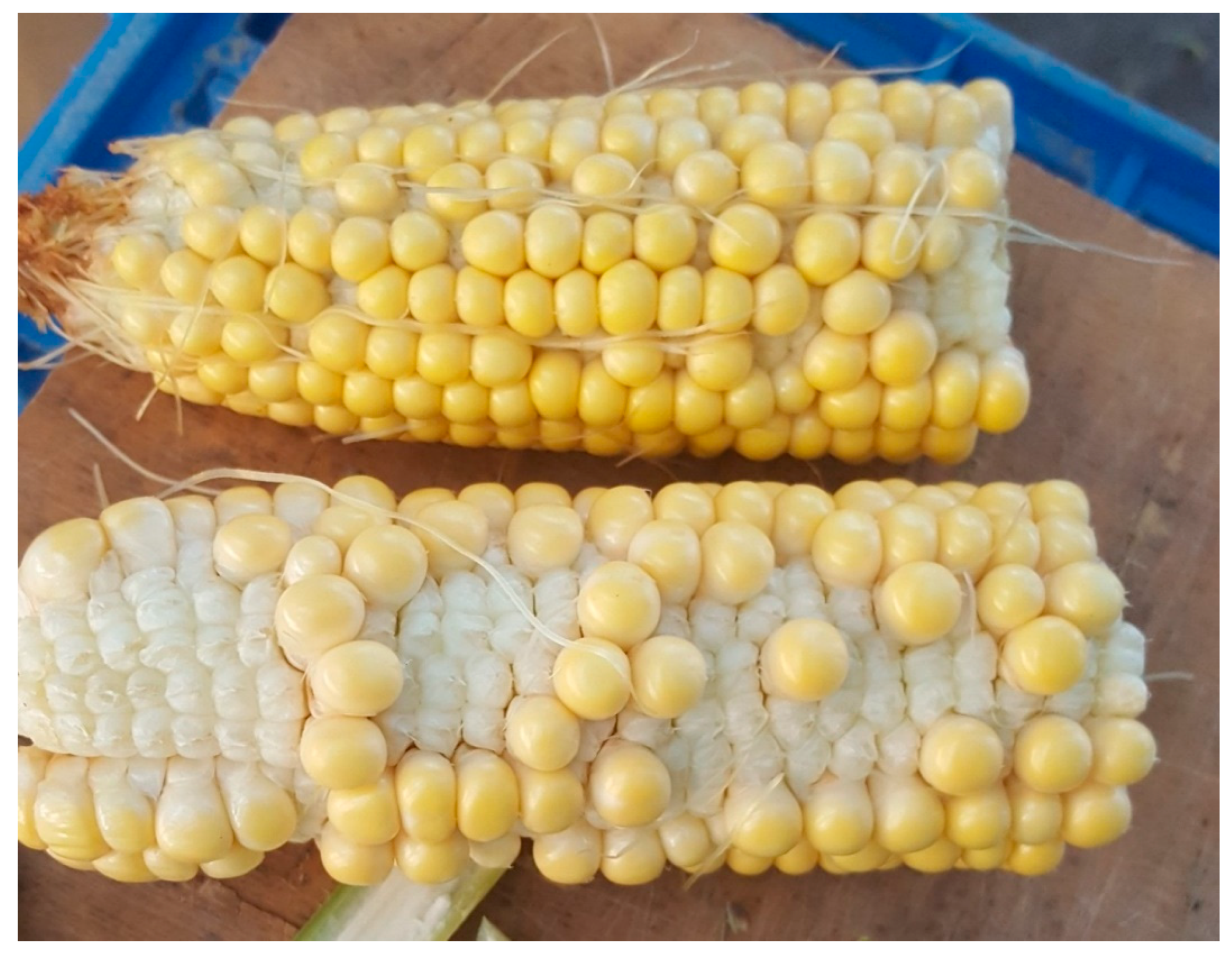
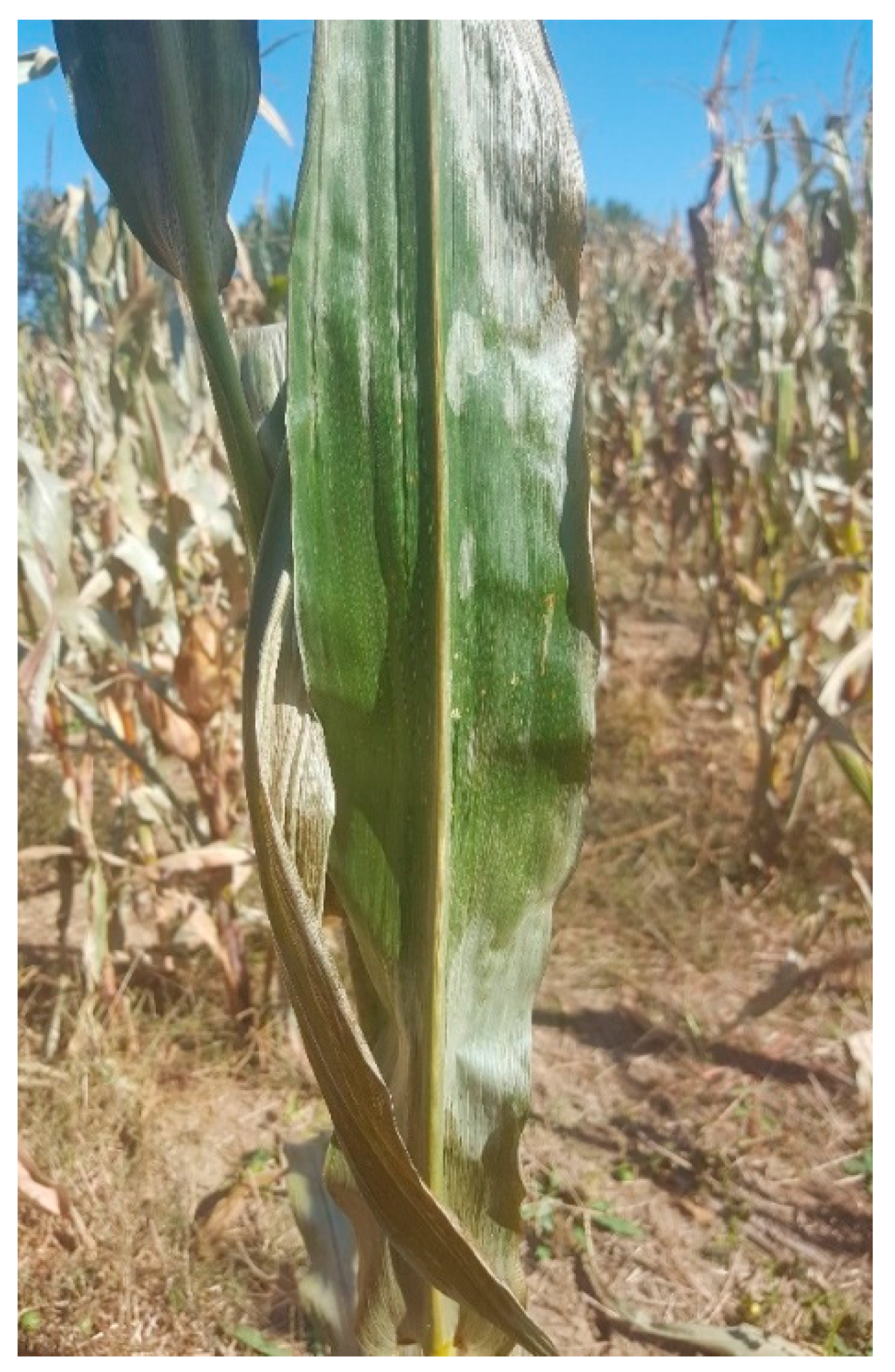
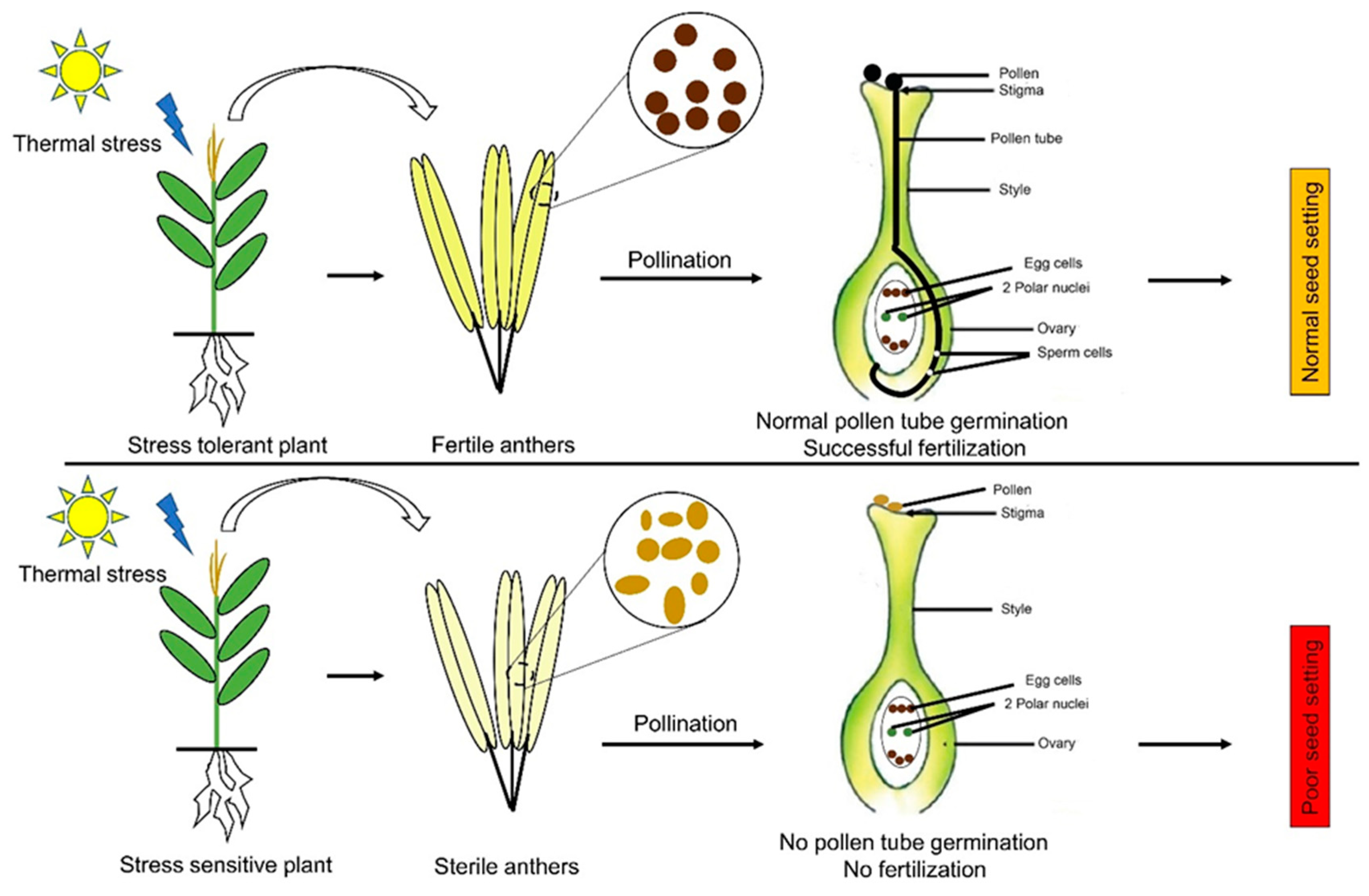
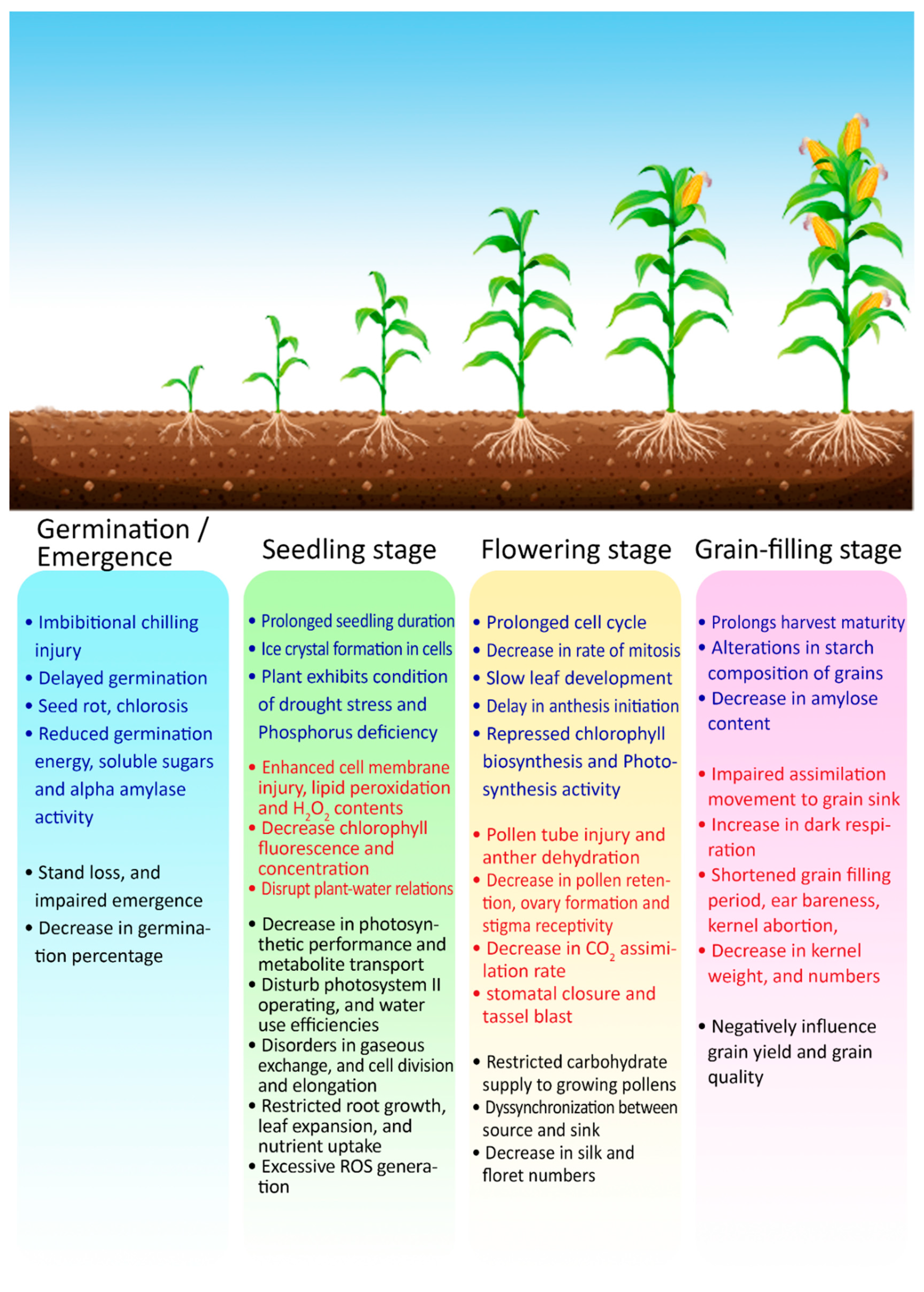
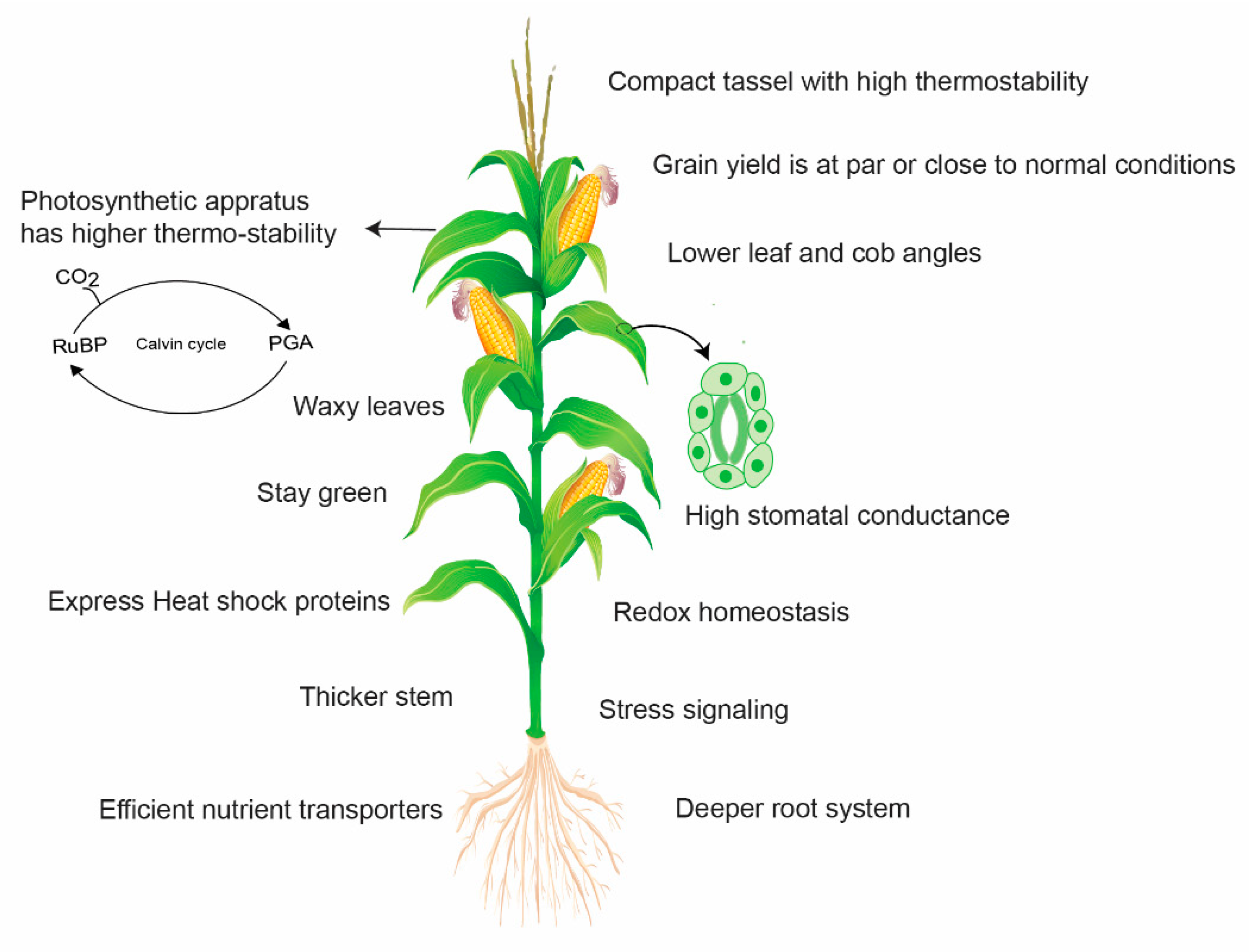
| Growth Stage | Temperature | Yield Reduction (%) | Country/Region | References |
|---|---|---|---|---|
| Silking | 6 °C above ambient canopy temperature for 3 days | 13% | USA | [16] |
| Grain filling | 35 °C | 31% | China | [35] |
| Pre- and post-flowering | 33 to 36 °C | 10–45% | Argentina | [29] |
| Tasseling stage | 30–38 °C for 15 days | 14–17% | China | [24] |
| Grain filling | 28–32 °C | 10% | US corn belt | [47] |
| Reproductive stages | Each degree above 30 °C | 1–1.7% | Africa | [48] |
| Strategy | Plant Growth Regulators | Concentration | Suboptimal Temperature and Growth Stage | Indicators of Stress Alleviation | Increment in Yield (%) | Reference |
|---|---|---|---|---|---|---|
| Seed priming | Fe | 8.5 mM | Chilling (12 °C) stress at seedling stage | Better early seedling growth, germination, and nutrient uptake | 13 | [80] |
| Seed priming | SA | 20 mg L−1 | Chilling (10 °C) stress at seedling stage | Improved antioxidant enzymatic activities, water status, chlorophyll contents, and membranes structure | 25 | [89] |
| Seed priming | CaCl2 | 2.2% | Chilling (12 °C) stress at seedling stage | Improved leaf expansion; net assimilation | 12 | [90] |
| Seed priming | Kinetin | 100 mg L−1 | Heat stress (38 °C) at reproductive stage | improved stand establishment and phenolic contents and increased leaf area expansion and grain filling period | 18 | [91] |
| Magnetic seed stimulation | - | 150 mT for three minutes | Chilling stress (≤10 °C) at stand establishment | Improved chlorophyll, phenolics, and gaseous exchange attributes | 20 | [92] |
| Foliar application | Thiourea | 0.1% | Chilling stress (≤12 °C) at reproductive stage | Improved crop growth rate, water use efficiency, photosynthetic rate, and dry matter accumulation | 21 | [18] |
| Foliar application | Moringa leaf extract | 3% | Heat stress (38 °C) at reproductive stage | Increase in leaf expansion and grain filling duration | 17 | [91] |
| Foliar application | AsA | 20 mg L−1 | Heat stress (38 °C) at reproductive stage | Increase in antioxidant activities and membrane stability | 23 | [88] |
| Foliar application | H2O2 | 20 mg L−1 | Heat stress (38 °C) at reproductive stage | Enhanced SOD, CAT, and POD activities and grain weight | 23 | [88] |
| Gene | Target Trait | Effect of Gene | Approach Used to Characterize Gene Function | Reference |
|---|---|---|---|---|
| ZmDHN13 | Abiotic stresses | Oxidative balance | Over-expression | [125] |
| ZmWRKY106 | Heat tolerance | Reactive oxygen species (ROS) scavenging | Over-expression | [126] |
| ZmERD3 | Heat and cold | mRNA accumulation | qRT-PCR | [127] |
| ZmbZIP4 | Abiotic stresses | Abscisic acid (ABA) synthesis | Immunoprecipitation sequencing | [128] |
| GRMZM2G377194 | Thermo-tolerance | Increased seed set | Quantitative trait locus (QTL) mapping plus genome-wide association studies (GWAS) | [129] |
| GRMZM2G060349 | Thermo-tolerance | Increased seed set | QTL mapping plus GWAS | [129] |
| GRMZM2G122199 | Thermo-tolerance | Increased seed set | QTL mapping plus GWAS | [129] |
| GRMZM2G026892 | Thermo-tolerance | Increased seed set | QTL mapping plus GWAS | [129] |
| GRMZM2G148998 | Heat tolerance | High grain yield | QTL mapping and potential gene analysis | [118] |
| GRMZM2G115658 | Heat tolerance | High grain yield | QTL mapping and potential gene analysis | [118] |
| GRMZM2G537291 | Heat tolerance | High grain yield | QTL mapping and potential gene analysis | [118] |
| GRMZM2G324886 | Heat tolerance | High grain yield | QTL mapping and potential gene analysis | [118] |
| GRMZM2G436710 | Heat tolerance | High grain yield | QTL mapping and potential gene analysis | [118] |
| GRMZM2G094990 | Heat tolerance | High grain yield | QTL mapping and potential gene analysis | [118] |
| GRMZM2G178486 | Cold tolerance | Improved germination | Gene cloning plus GWAS | [124] |
| GRMZM5G806387 | Cold tolerance | Improved germination | Gene cloning plus GWAS | [124] |
| GRMZM2G148793 | Cold tolerance | Improved germination | Gene cloning plus GWAS | [124] |
Publisher’s Note: MDPI stays neutral with regard to jurisdictional claims in published maps and institutional affiliations. |
© 2021 by the authors. Licensee MDPI, Basel, Switzerland. This article is an open access article distributed under the terms and conditions of the Creative Commons Attribution (CC BY) license (http://creativecommons.org/licenses/by/4.0/).
Share and Cite
Waqas, M.A.; Wang, X.; Zafar, S.A.; Noor, M.A.; Hussain, H.A.; Azher Nawaz, M.; Farooq, M. Thermal Stresses in Maize: Effects and Management Strategies. Plants 2021, 10, 293. https://doi.org/10.3390/plants10020293
Waqas MA, Wang X, Zafar SA, Noor MA, Hussain HA, Azher Nawaz M, Farooq M. Thermal Stresses in Maize: Effects and Management Strategies. Plants. 2021; 10(2):293. https://doi.org/10.3390/plants10020293
Chicago/Turabian StyleWaqas, Muhammad Ahmed, Xiukang Wang, Syed Adeel Zafar, Mehmood Ali Noor, Hafiz Athar Hussain, Muhammad Azher Nawaz, and Muhammad Farooq. 2021. "Thermal Stresses in Maize: Effects and Management Strategies" Plants 10, no. 2: 293. https://doi.org/10.3390/plants10020293
APA StyleWaqas, M. A., Wang, X., Zafar, S. A., Noor, M. A., Hussain, H. A., Azher Nawaz, M., & Farooq, M. (2021). Thermal Stresses in Maize: Effects and Management Strategies. Plants, 10(2), 293. https://doi.org/10.3390/plants10020293

